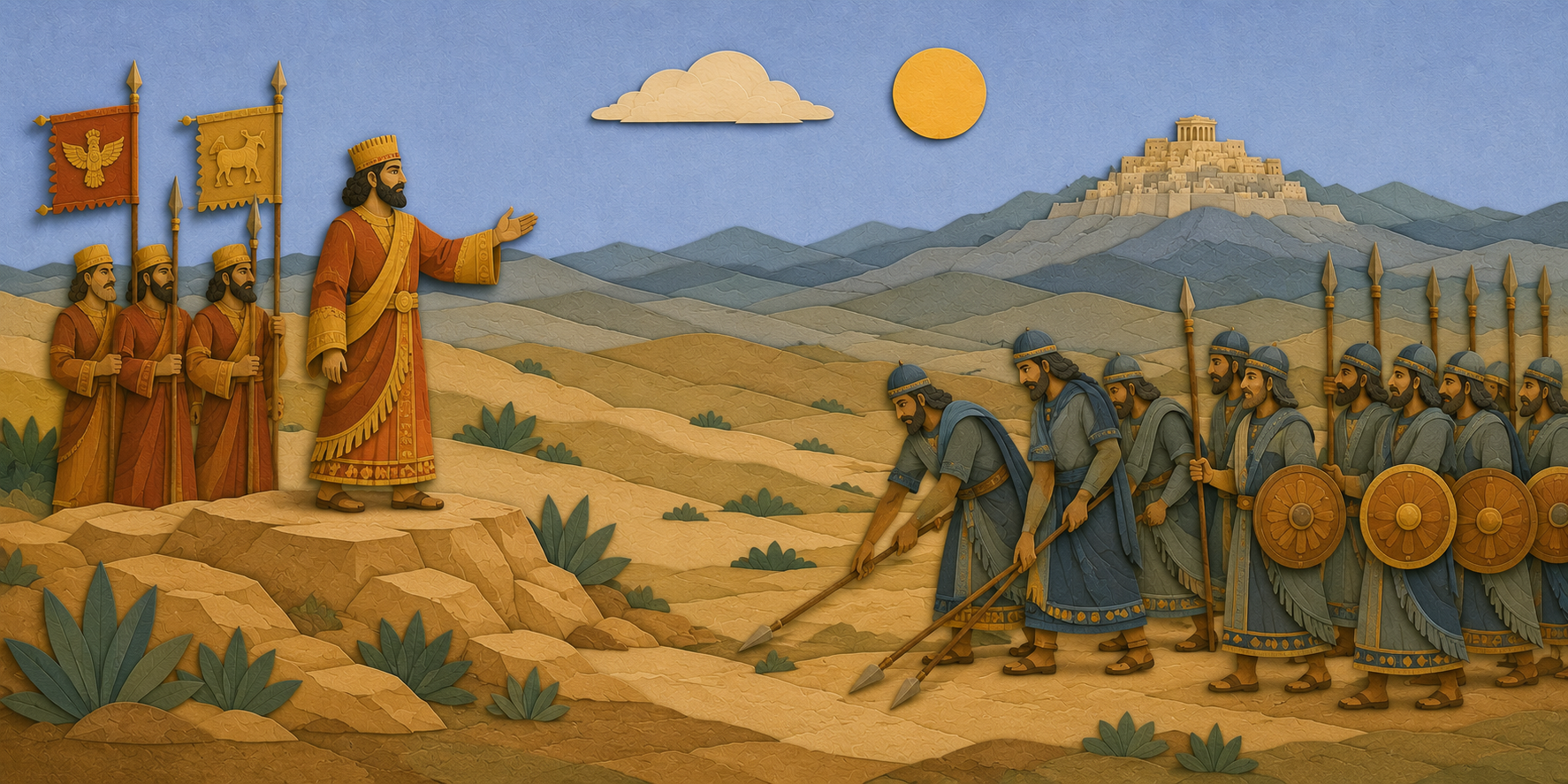
From Persis to Empire
How a highland people on the edge of the map became the largest empire the world had yet seen
When Judah went into exile, Persia was nobody. It was a cluster of herding and farming clans in the mountains of southwestern Iran — subjects of their more powerful cousins the Medes, barely a footnote in the archives of Babylon. Then, within the lifetime of a single man, that footnote became the master of the entire Near East, from the Aegean coast toward the Indus — and the deliverer who sent Judah home. That man was Cyrus the Great. The empire he founded is the Achaemenid Empire (say it: uh-KEE-muh-nid), named for Achaemenes (Old Persian Haxāmaniš), the royal forefather the dynasty claimed as its founder. And that empire is the world that Ezra, Nehemiah, Esther, and the later chapters of Daniel all move within.
This guide is background for the return from exile — the second half of the story the Babylon guide begins. Babylon carried Judah away; Persia brought Judah back. Understanding Persia is understanding how the Old Testament ends: not in the ashes of Jerusalem, but in a rebuilt temple, a restored wall, and a Jewish queen in a foreign palace.
Who Were the Persians?
The Persians and their close kin the Medes were Iranian peoples. They spoke an Indo-European language — a distant relative of Sanskrit, Greek, and Latin, and quite unrelated to the Semitic languages (Akkadian, Aramaic, Hebrew) of Mesopotamia and Canaan. Their ancestors had migrated down onto the Iranian plateau from the Eurasian steppe in the second millennium BC — herders and horsemen, settling among older peoples. By the time they enter history, the Medes had built a kingdom centered on Ecbatana (modern Hamadan) and had helped Babylon destroy Assyria in 612 BC (see the Babylon timeline). The Persians, meanwhile, held the southern region of Persis (modern Fars, around Shiraz) as Median vassals.
The Bible files them together from the start: “the law of the Medes and Persians” (Daniel 6:8), “the Persians and the Medes” (Esther 1:19). And Daniel’s vision of the two-horned ram makes the relationship exact: “The ram which thou sawest having two horns are the kings of Media and Persia” (Daniel 8:20) — one horn higher than the other, and coming up last. That is Persia: the junior partner, rising to dominate the senior.
A different kind of empire: Assyria and Babylon had ruled by terror and deportation. They smashed rebellious peoples, uprooted whole populations (Judah among them), and planted them far from home. Persia, by deliberate policy, did the opposite. It let subject peoples keep their gods, their customs, and their local leaders — and, famously, it sent the deported home to rebuild their own temples. This was not sentimentality. It was a shrewd governing philosophy that bought loyalty cheaply across an impossibly diverse empire (see Section 03). But for one small people, that policy was salvation — and their scriptures never forgot it.
The Rise of Cyrus (559–530 BC)
Cyrus II became king of Persis around 559 BC. He was still a vassal of the Median king Astyages — and, by later Greek tradition, Astyages was his own grandfather. Around 553 BC Cyrus rebelled. Then came a stroke that stunned the age: the Median army defected to him mid-battle. By 550 BC he had taken Ecbatana and the Median empire with it, uniting Medes and Persians under one crown. He was only beginning.
Over the next decade Cyrus conquered in every direction:
- Lydia (c. 547/546 BC) — the fabulously wealthy kingdom of King Croesus in western Anatolia (modern Turkey), giving Persia the Greek cities of the Aegean coast and setting up the later Greco-Persian wars.
- The eastern provinces — Cyrus expanded east across the Iranian plateau, probably bringing Gandhara, near the Indus, under Persian rule.1
- Babylon (539 BC) — the great prize. The Neo-Babylonian empire, ruled by the unpopular absentee king Nabonidus and his regent son Belshazzar, fell to Cyrus almost without a fight: one battle upriver at Opis, and the greatest walled city on earth opened its gates (see the Babylon kings page and Section 05).
With Babylon fell everything Babylon had ruled — including the exiled community of Judah, who now had a new master. And this master, in his first year as king, issued a decree that would change their history: return home and rebuild the house of your God (Ezra 1:1–4).
The King Isaiah Named
Here the biblical text does something it does nowhere else. It names a pagan emperor — by name — and calls him the LORD’s chosen instrument, generations before he was born. Isaiah calls Cyrus “my shepherd” who “shall perform all my pleasure” (Isaiah 44:28). Then he goes further — astonishingly further. He calls Cyrus “his anointed”, the LORD’s mashiach (מָשִׁיחַ, the word behind “Messiah”), “whose right hand I have holden, to subdue nations before him” (Isaiah 45:1). It is the only time Scripture applies that title to a Gentile. The full weight of it — a foreign king as the Lord’s anointed shepherd — belongs to Section 05. Here it is enough to see that the Bible frames Persia’s whole rise around a single purpose: “he shall build my city, and he shall let go my captives” (Isaiah 45:13).
A note on the scholarly conversation: start with the puzzle. Isaiah 44–45 names Cyrus precisely — a king who, on the traditional reading, would not be born for generations. How could Isaiah know his name?
There are two main answers. Many modern Bible scholars have long argued that Isaiah 40–66 was written by a later, exile-era author — a “Second Isaiah” — after Cyrus had appeared. Others hold the traditional view: this is genuine predictive prophecy from Isaiah himself. Many Latter-day Saint readers stand here, alongside the Book of Mormon’s own witness that Isaiah’s words, or a portion thereof, were on the brass plates Lehi carried from Jerusalem c. 600 BC (1 Nephi 19:23; 2 Nephi 25).
Either way, the theological claim the text is making is the same, and it is unmistakable: the rise of Persia was not an accident of history but the hand of God arranging deliverance for His covenant people. That is the lens this guide reads Persia through, while presenting the historical evidence honestly on its own terms.
The Shape of What Follows
Cyrus founded the empire. Four of his successors carry the rest of the biblical story, and it helps to meet them now (the full sequence is Section 02):
| Persian king | Reign (BC) | In the Bible |
|---|---|---|
| Cyrus II (the Great) | 559–530 | Decree of return; the temple foundation (Ezra 1; Isaiah 44–45; Daniel 1:21; 10:1) |
| Cambyses II | 530–522 | Not named; conquered Egypt (background to the Elephantine Jews, a Jewish community in Egypt) |
| Darius I (the Great) | 522–486 | Temple completed in his 6th year (Ezra 5–6; Haggai; Zechariah) |
| Xerxes I (Ahasuerus) | 486–465 | The king of the book of Esther |
| Artaxerxes I | 465–424 | Sends Ezra, then Nehemiah, to Jerusalem (Ezra 7; Nehemiah 2) |
Five kings, five biblical books touched, and one long thread running through them all: the God of a captive people quietly steering the greatest empire on earth toward their restoration.
The Empires in Sequence
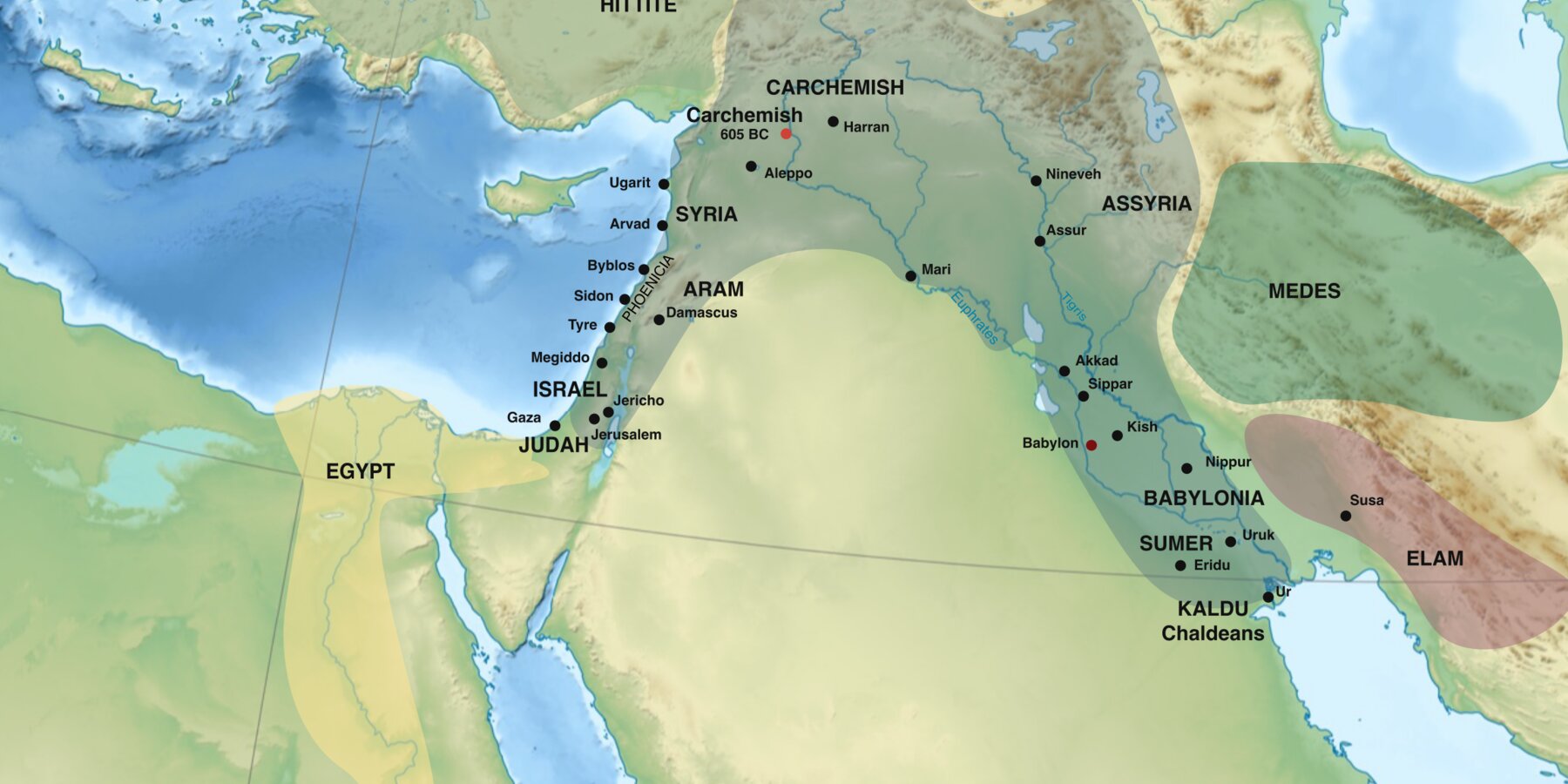
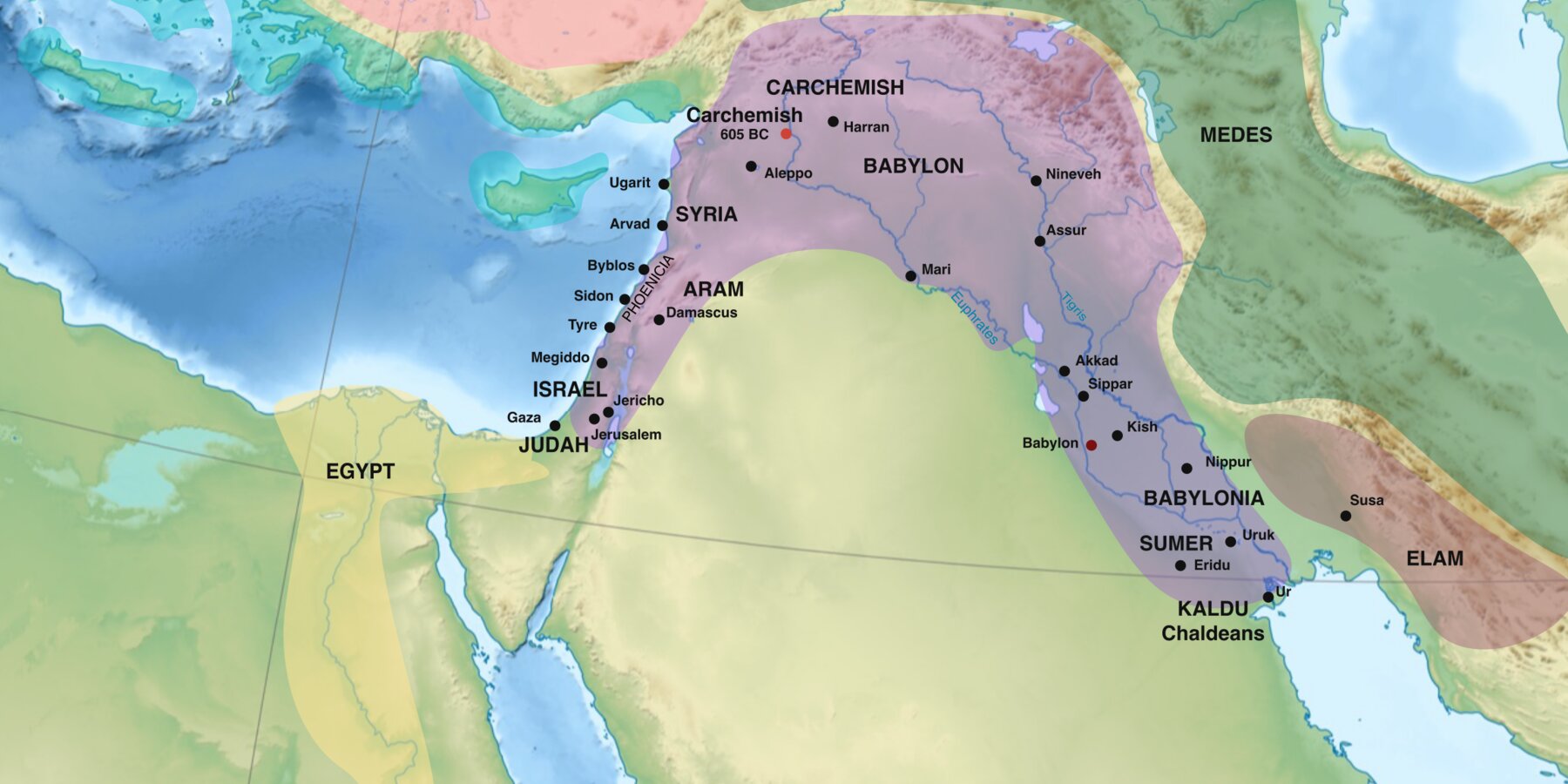
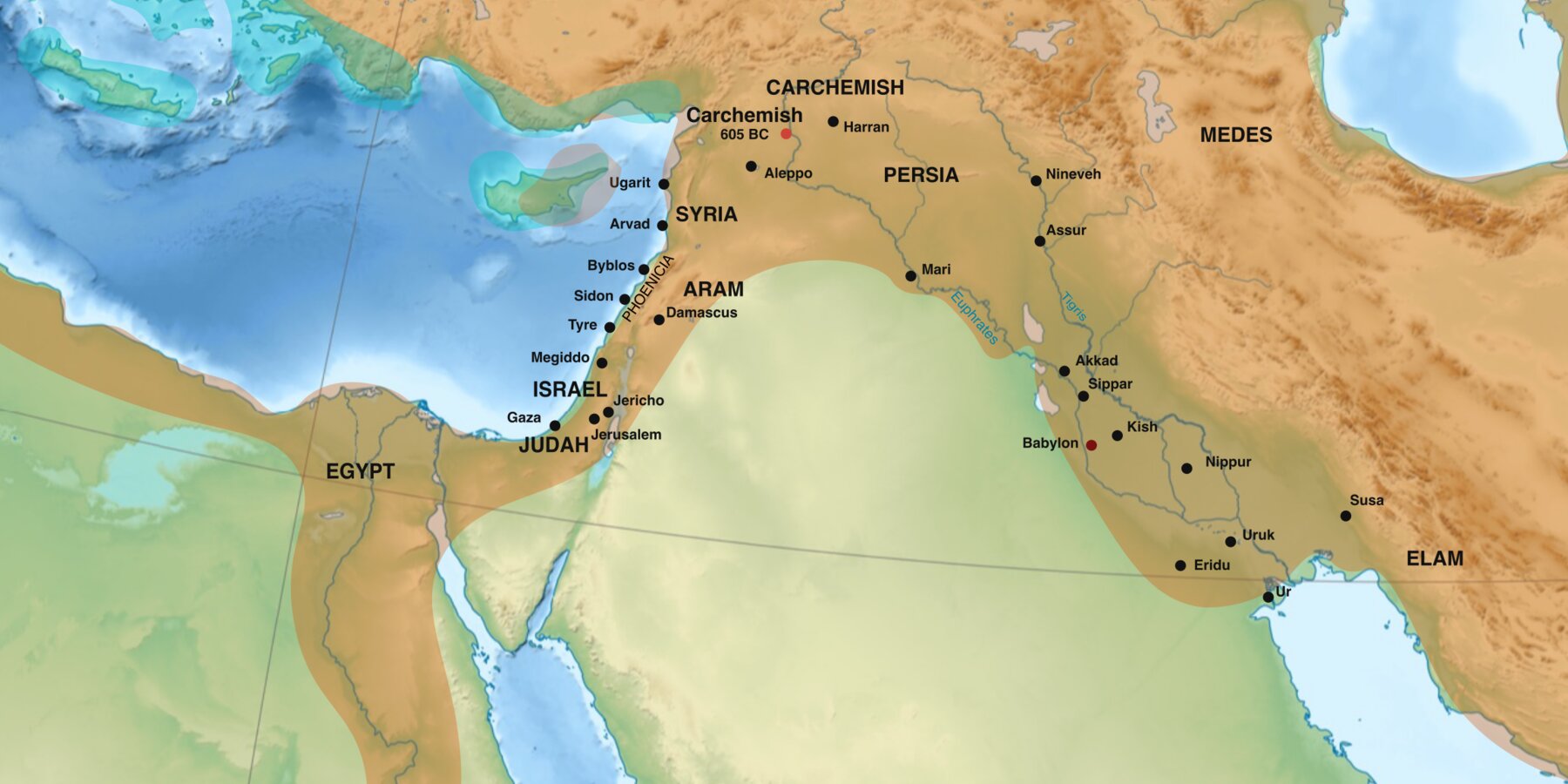
Three empires held the Near East across two centuries — Assyria, Babylon, and finally Persia, the power that sent the exiles home.
Sources and Further Reading
- Pierre Briant, From Cyrus to Alexander: A History of the Persian Empire (Eisenbrauns, 2002) — The monumental standard history of the Achaemenid Empire.
- Amélie Kuhrt, The Persian Empire: A Corpus of Sources from the Achaemenid Period (Routledge, 2007) — The essential sourcebook, with the inscriptions and documents in translation.
- Matt Waters, Ancient Persia: A Concise History of the Achaemenid Empire, 550–330 BCE (Cambridge University Press, 2014) — The best one-volume introduction.
- Lisbeth S. Fried, The Priest and the Great King: Temple-Palace Relations in the Persian Empire (Eisenbrauns, 2004) — On Persia’s handling of subject temples, including Jerusalem.
- Josef Wiesehöfer, Ancient Persia: From 550 BC to 650 AD (I. B. Tauris, 2001) — Accessible survey placing the Achaemenids in the longer Iranian story.
Cyrus’s eastern conquests are reconstructed from later evidence. Muhammad A. Dandamayev infers that Gandhara was already under Persian rule before Darius. The evidence supports expansion in stages, but it does not establish a precise eastern frontier for Cyrus. ↩
Online Resources:
- WHE — Cyrus the Great (CC BY-NC-SA 4.0)
- WHE — Achaemenid Empire
- Livius.org — the Achaemenids — Jona Lendering’s well-sourced articles and translated inscriptions.