Babylon: The Empire and the Exile
A deep-dive cultural guide to Babylon — the land, the kings, the religion, the learning, the city, and the exile that reshaped Israel forever. Essential background for 2 Kings 24–25, Jeremiah, Ezekiel, Daniel, and the opening of the Book of Mormon.
A Note on This Guide
Babylon enters Israel’s story late — and then takes it over. For most of the Old Testament, the great city on the Euphrates is a distant name: the plain of Shinar, the tower, the homeland Abraham left. Then, in a single generation, it becomes everything: the army at the wall, the road into exile, the rivers where Judah wept, and the empire whose fall the prophets staked their credibility on.
Understanding Babylon is essential for reading the end of 2 Kings honestly, and for reading everything that end produced: Jeremiah’s letters, Ezekiel’s visions, Daniel’s court stories, Psalm 137’s grief, and the Book of Mormon’s opening chapters, which begin in Zedekiah’s Jerusalem with the Babylonian crisis already breaking. The exile was Israel’s catastrophe; it was also, in the hands of the Lord, Israel’s refining — the furnace out of which came a people of scripture, Sabbath, and covenant who could keep the faith anywhere on earth.
We approach Babylon’s history, religion, and scholarship with respect for the evidence (archaeological, textual, and scriptural) and with an eye toward what that evidence reveals about the God who called his people out of Ur at the beginning, sustained them by the Chebar in the middle, and still says, in the latest of the latter days, go ye out from Babylon.
How This Guide Is Organized
This supplement is divided into twelve sections. The first two build the framework (the land and the long arc of its history), and everything else stands on them. Read them in the order shown, or jump to whatever pulls at you.
The Framework

The stoneless, treeless floodplain that produced the world’s first cities: two unruly rivers, the canal civilization they demanded, and why every army from Babylon reached Jerusalem “out of the north.”
Four thousand years in one arc: Hammurabi’s first Babylon, the long centuries of prestige without power, the fires of the Assyrian era — and the seventy-year empire that took Judah captive, dated to the day by its own chronicles.
The Empire
Judah’s last forty years turned on one question — Egypt or Babylon? Its kings kept betting on Egypt, the prophets said Babylon, and every wrong bet ended at a siege wall. The why behind the timeline and the kings.
Nebuchadnezzar & the Kings of Babylon
The rebel who courted Hezekiah, the founder who broke Assyria, the builder-king who burned Jerusalem — and Belshazzar, the regent the skeptics said never existed, until the tablets named him.
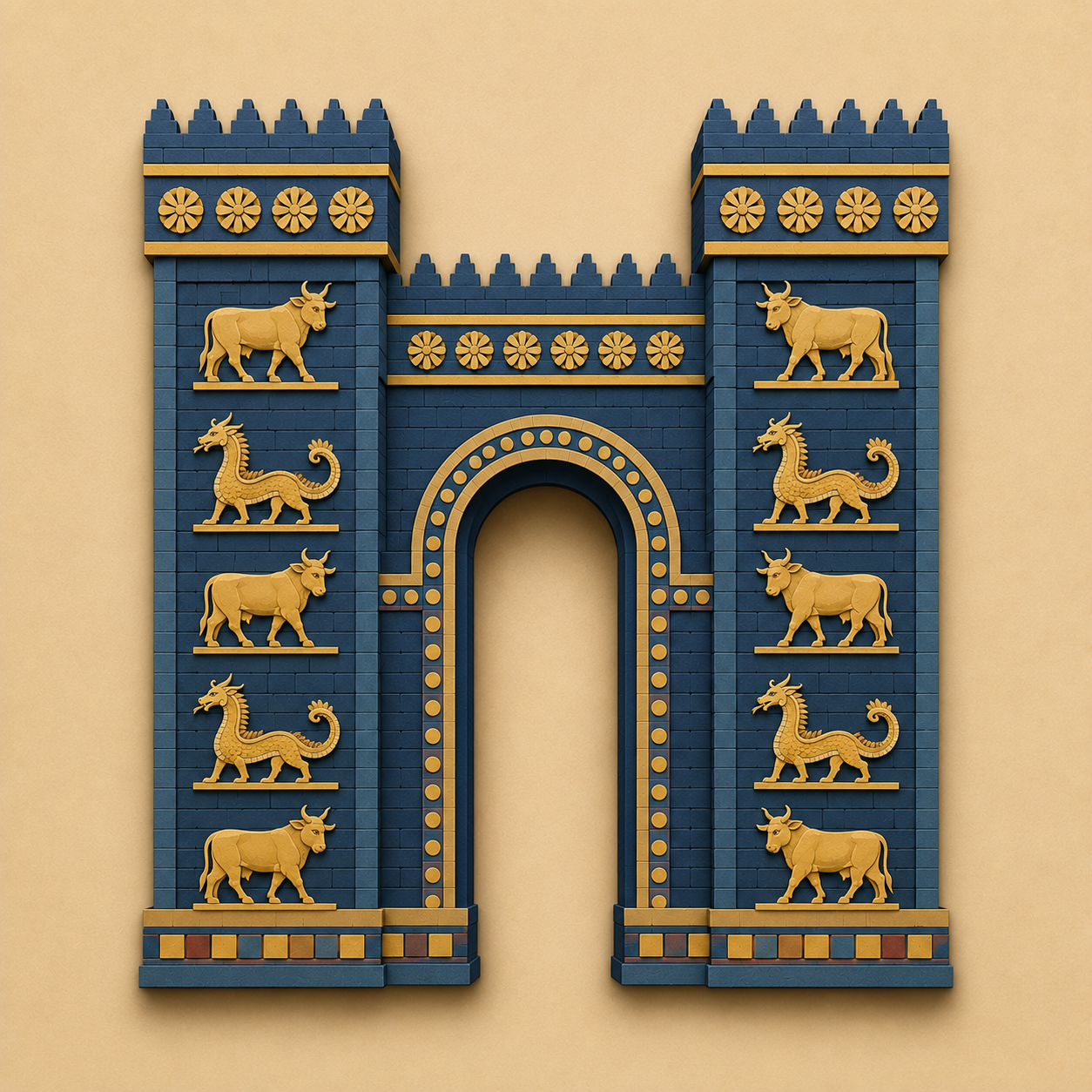
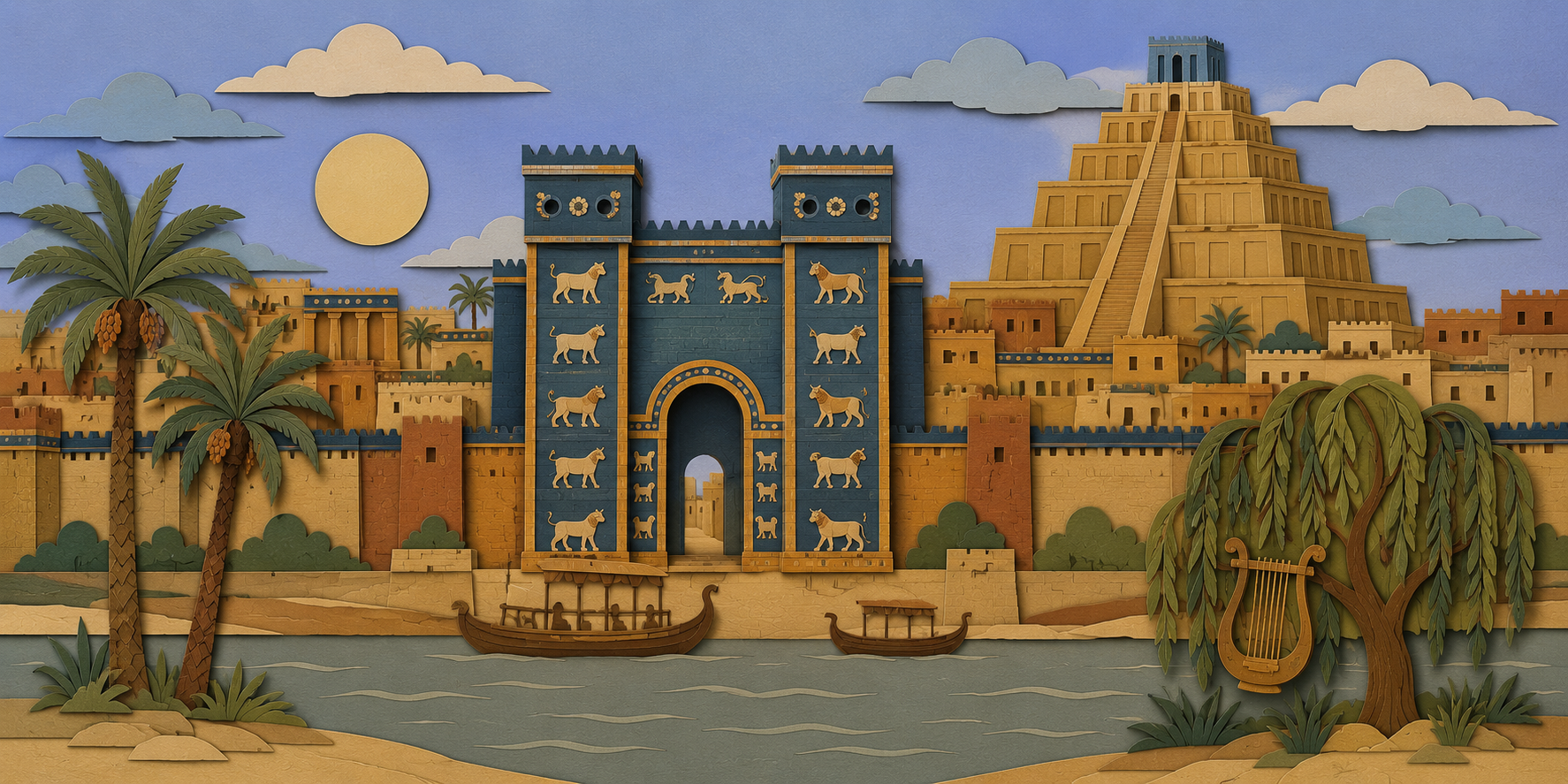
The largest city in the world: walls no army could storm, the lapis-blue Ishtar Gate, the ziggurat behind the Tower of Babel story, a bridge over the Euphrates, and the puzzle of the Hanging Gardens.
Mind & Spirit
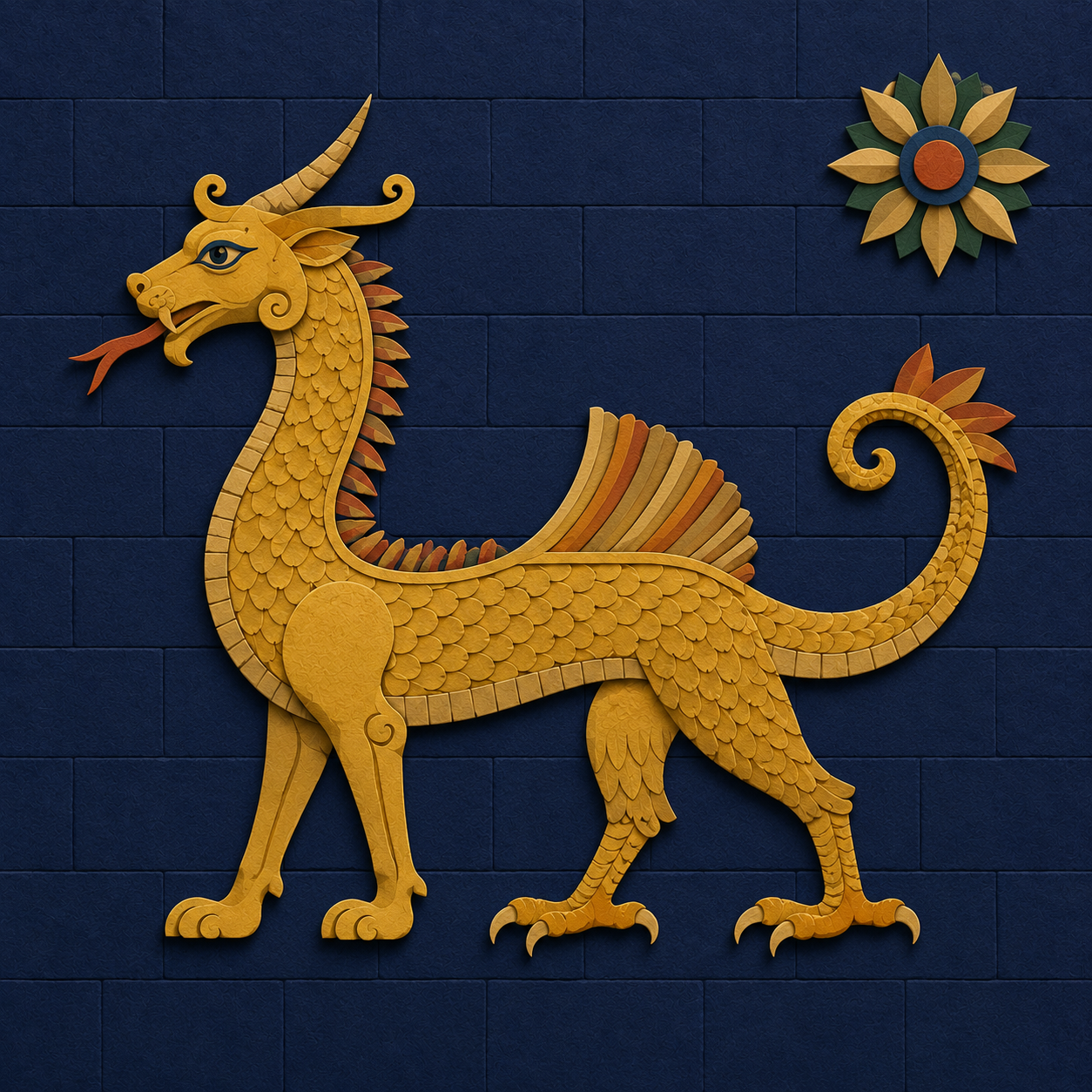
Marduk’s rise, the Enūma Eliš and Genesis, the flood before the flood story, gods who had to be fed and carried, and the New Year festival where even the emperor was slapped to his knees.
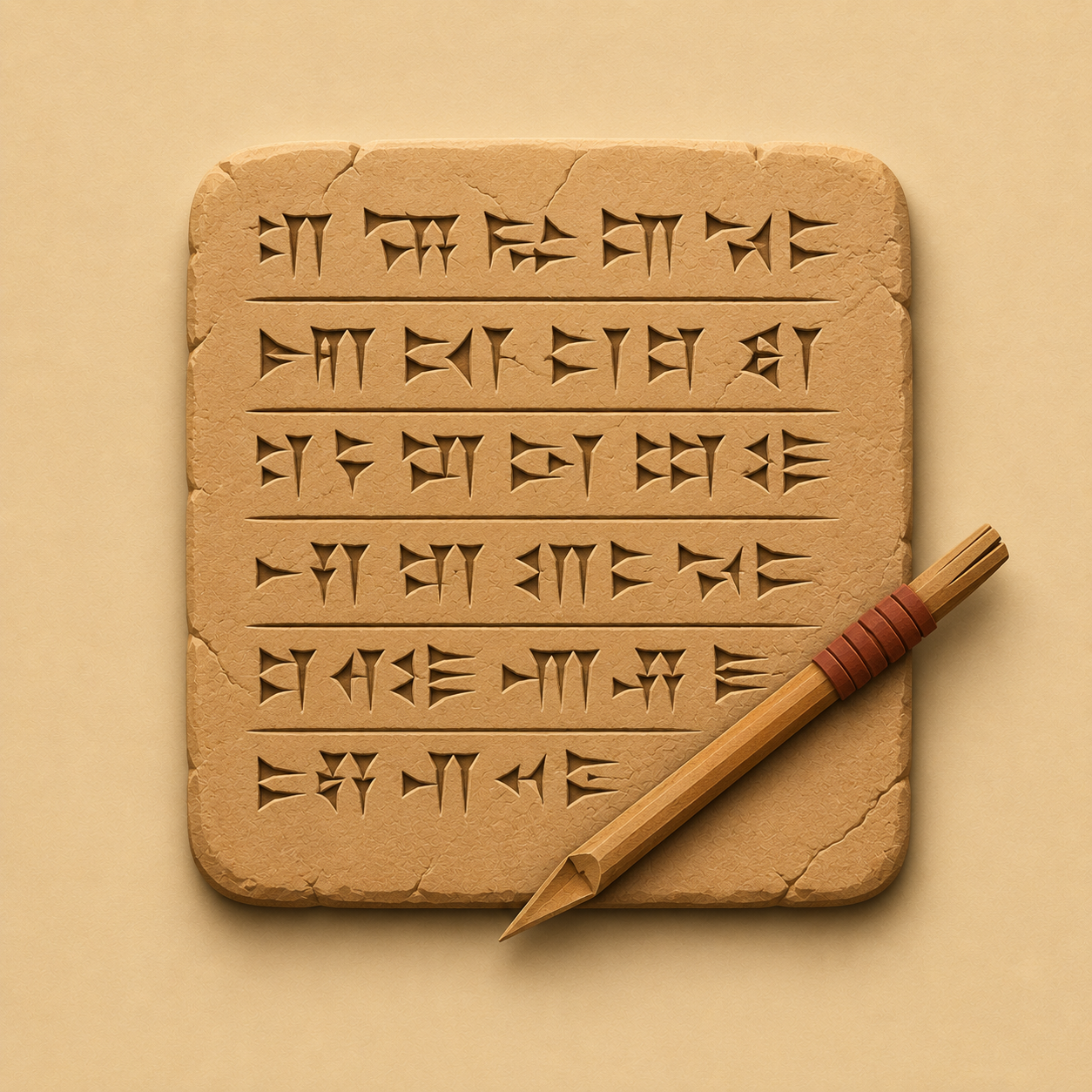
Cuneiform and the tablet-house, the world’s first libraries, base-60 mathematics, astronomers who could predict eclipses — the “learning and the tongue of the Chaldeans” that Daniel mastered without being mastered by it.
The Calendar & the Names of Time
How Babylon measured the heavens (the base-60 circle still riding in every clock and compass) and how the exiles carried its month-names home, Tammuz among them, in a calendar still far less god-haunted than our own week.
Babylon & Israel
What actually happened to Judah in Babylon: the deportations, “Judah-town” on the canals, Jehoiachin’s ration tablets, Jeremiah’s letter, and the quiet revolution of Sabbath, scripture, and assembly that saved a people.
The Babylonian Chronicle beside 2 Kings 24 (agreement to the year, and a day the Bible never gives), the Lachish letters, the official found on a tax receipt, and how one city became scripture’s name for the world, from Genesis 11 to Revelation 18.
Discoveries & Legacy
Babylon’s mounds from Koldewey to UNESCO, the sister cities of Ur, Uruk, and Nippur, and the shelf of great finds (the flood tablet, Hammurabi’s stele, the chronicles) with a museum-visit guide.
The Book of Mormon opens inside this story: Lehi’s Jerusalem in Zedekiah’s first year, Mulek’s escape from the fall, Daniel as the pattern for living in Babylon — and why modern revelation still says “go ye out from Babylon.”
Sources and Recommended Reading
Babylon & Mesopotamia:
- Paul-Alain Beaulieu, A History of Babylon, 2200 BC–AD 75 (Wiley-Blackwell, 2018) — The current standard scholarly history of Babylon.
- Marc Van De Mieroop, A History of the Ancient Near East, ca. 3000–323 BC (Wiley-Blackwell, 3rd ed. 2016) — The standard one-volume survey.
- Joan Oates, Babylon (Thames & Hudson, rev. ed. 1986) — Accessible illustrated overview.
- A. Leo Oppenheim, Ancient Mesopotamia: Portrait of a Dead Civilization (University of Chicago Press, rev. ed. 1977) — The classic interpretive portrait.
- D. J. Wiseman, Nebuchadrezzar and Babylon (Oxford University Press, 1985) — The standard study of the king Judah faced.
The Exile & the Bible:
- Rainer Albertz, Israel in Exile: The History and Literature of the Sixth Century B.C.E. (SBL, 2003) — The standard synthesis of the exile period.
- Oded Lipschits, The Fall and Rise of Jerusalem: Judah under Babylonian Rule (Eisenbrauns, 2005) — Judah’s final decades and their aftermath.
- Laurie E. Pearce & Cornelia Wunsch, Documents of Judean Exiles and West Semites in Babylonia (CDL Press, 2014) — The “Judah-town” tablets.
- John H. Walton, Ancient Near Eastern Thought and the Old Testament (Baker Academic, 2nd ed. 2018) — How to compare scripture and cuneiform responsibly.
Latter-day Saint Studies:
- John W. Welch, David Rolph Seely & Jo Ann H. Seely, eds., Glimpses of Lehi’s Jerusalem (FARMS/BYU, 2004) — Jerusalem c. 600 BC as the Book of Mormon’s opening setting.
- John L. Sorenson, “The Mulekites,” BYU Studies 30, no. 3 (1990) — The second escape from Babylon’s Jerusalem.
Online Resources:
- World History Encyclopedia — Babylon (CC BY-NC-SA 4.0)
- Livius.org — Babylon — including the Babylonian chronicles in translation.
- British Museum Collection Online — the chronicles, the flood tablet, and the Map of the World, photographed and searchable.