Assyria: The Rod of the North
A deep-dive cultural guide to Assyria — the militarized highland empire that erased the northern kingdom, scattered the ten tribes, invented mass deportation, and stood at Jerusalem's wall in 701 BC. Essential background for 2 Kings 15–19, Isaiah, Jonah, Nahum, and the confidence that Zion could never fall.
A Note on This Guide
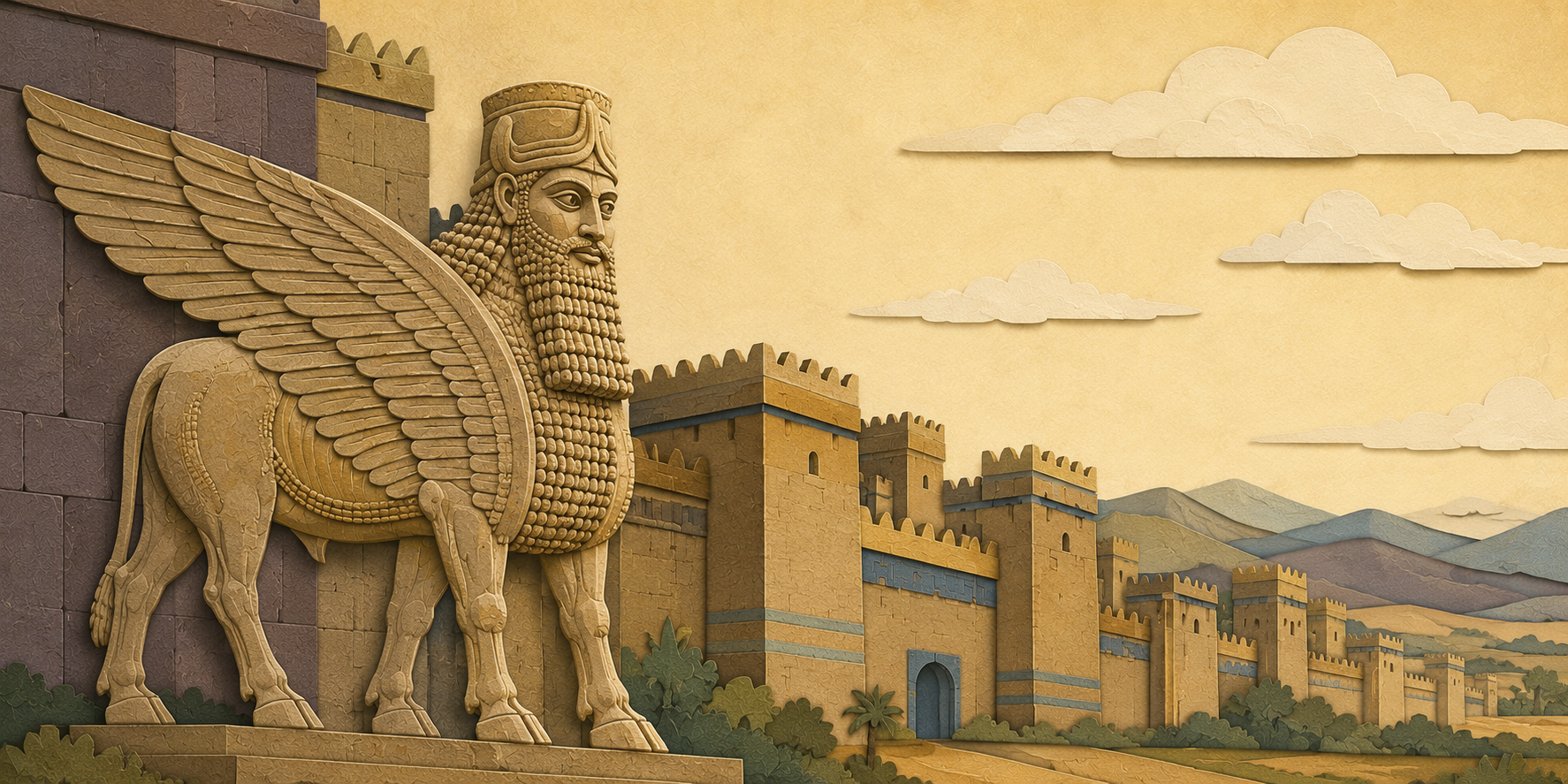
Assyria was the great power before Babylon, and for the prophets of Israel, no name carried more terror. For three centuries this empire on the upper Tigris dominated its world, and it perfected something new: conquest as a science, and deportation as a policy. It was Assyria that swallowed the northern kingdom of Israel, carried many of its people into exile, and repopulated Samaria with strangers. That was the beginning of the story of the tribes the world calls lost. And it was Assyria that stood at the wall of Jerusalem in 701 BC, only to break overnight in the greatest deliverance of Hezekiah’s reign.
Understanding Assyria unlocks much of the Old Testament: the second half of 2 Kings and the prophets Isaiah, Hosea, Amos, Micah, Jonah, and Nahum. It also explains a belief that outlived the empire. After the night the angel passed through the Assyrian camp, many in Judah concluded that God would never let Zion fall. A century later that belief had hardened into false security (“The temple of the LORD, The temple of the LORD,” Jeremiah 7:4), and Jeremiah preached against it. The Book of Mormon opens in the middle of that same argument, as Lehi warns that Jerusalem will be destroyed and the people mock him for it (1 Nephi 1).
We approach Assyria’s history, religion, and terrible machinery in two ways. First, with respect for the evidence: the palace reliefs that advertised its cruelty, the royal annals, and the excavated cities. Second, through the scriptures that named it “the rod of mine anger” (Isaiah 10:5), with an eye toward the God who used even an empire like this one, and then broke it, as his prophets said he would.
How This Guide Is Organized
This supplement is divided into eleven sections. The first two build the framework — the land and the long arc of its history — and everything else stands on them. Read in order, or jump to whatever pulls at you.
The Framework
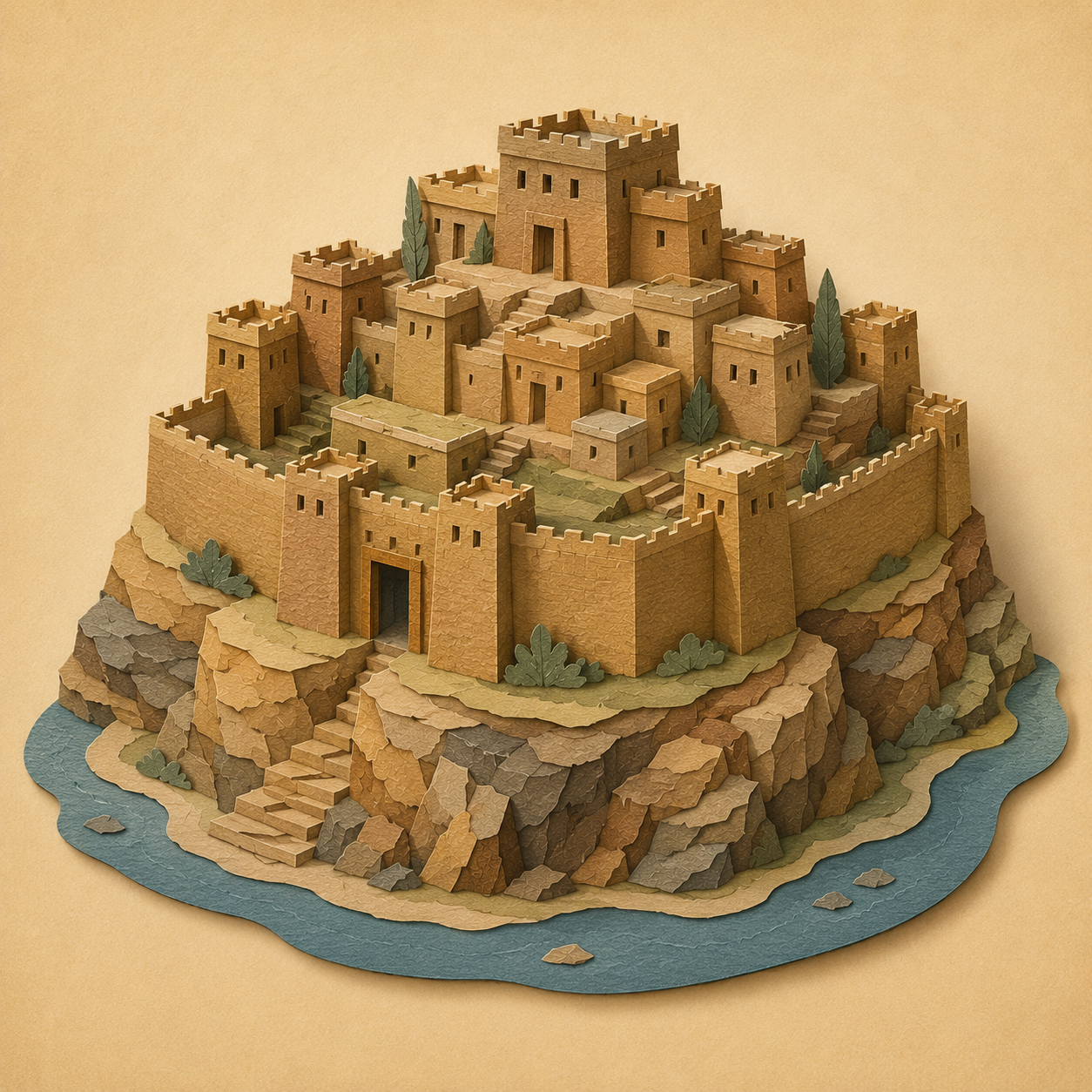
The rain-fed highland on the upper Tigris — Ashur, Nineveh, Kalhu, Arbela — an exposed frontier land that turned itself into a war machine to survive, and became the empire that always came “out of the north.”
From merchant colonies to the first world empire: the kings whose names fill the annals — Tiglath-Pileser, Shalmaneser, Sargon, Sennacherib, Ashurbanipal — several of whom appear, dated and named, in the Books of Kings.
The Empire
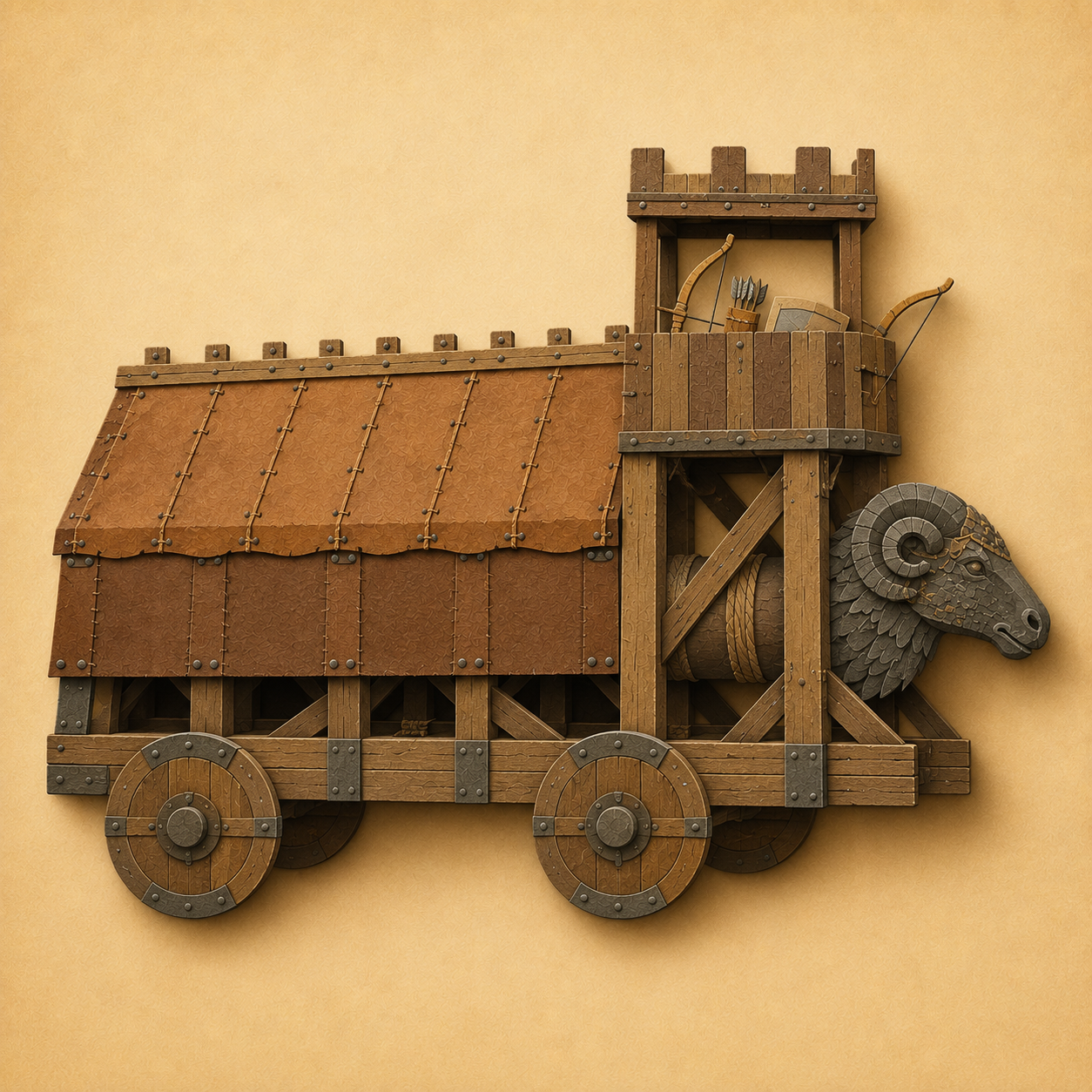
The iron army, the siege engineers, and terror as deliberate policy — advertised in the kings’ own inscriptions — and the invention that reshaped the ancient world: mass deportation, the machinery that produced the lost tribes.
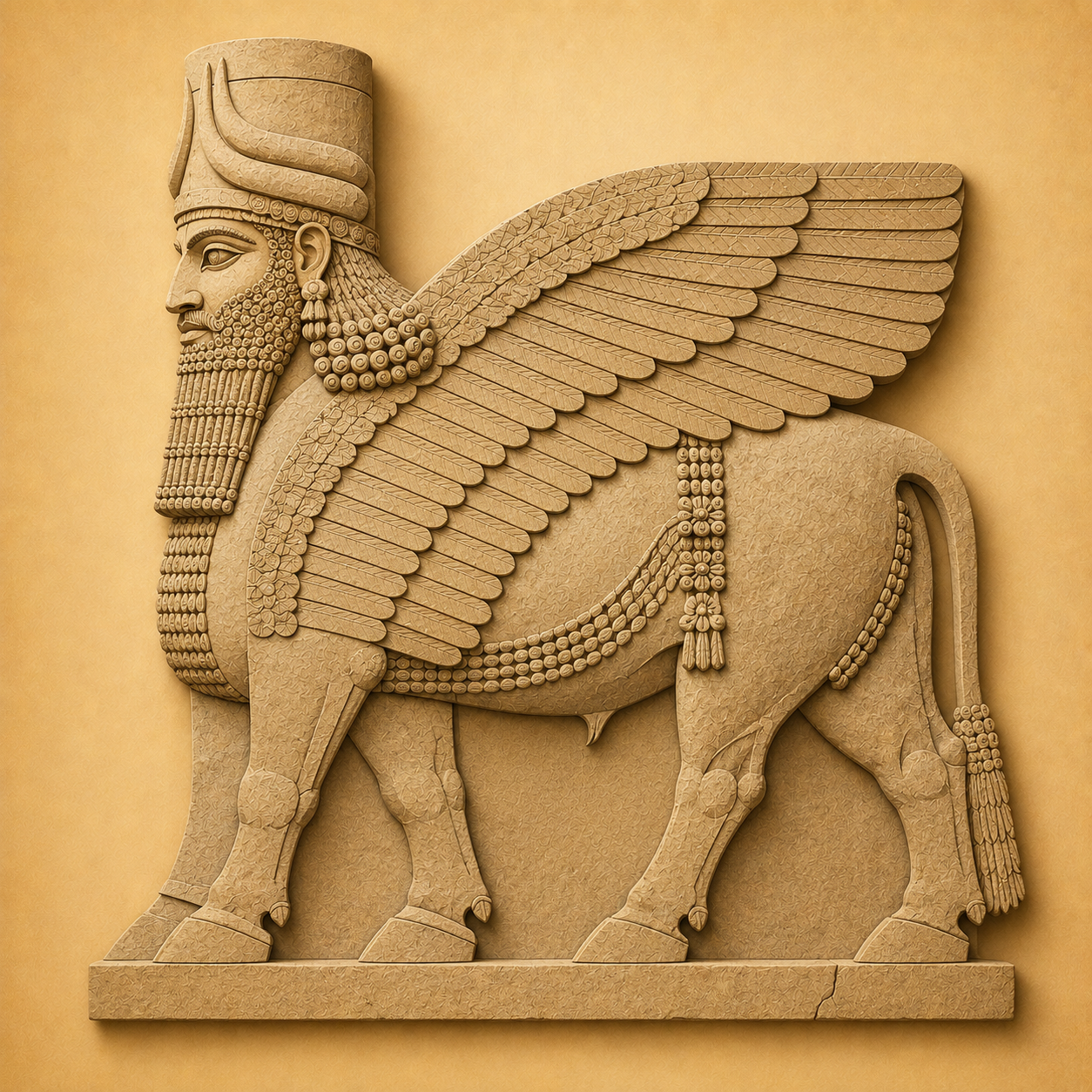
Ashur, Nimrud, Khorsabad, and Nineveh — the “palace without rival,” the winged bulls at the gates, the aqueduct at Jerwan, and the gardens some now argue were the real Hanging Gardens of legend.
Mind & Spirit
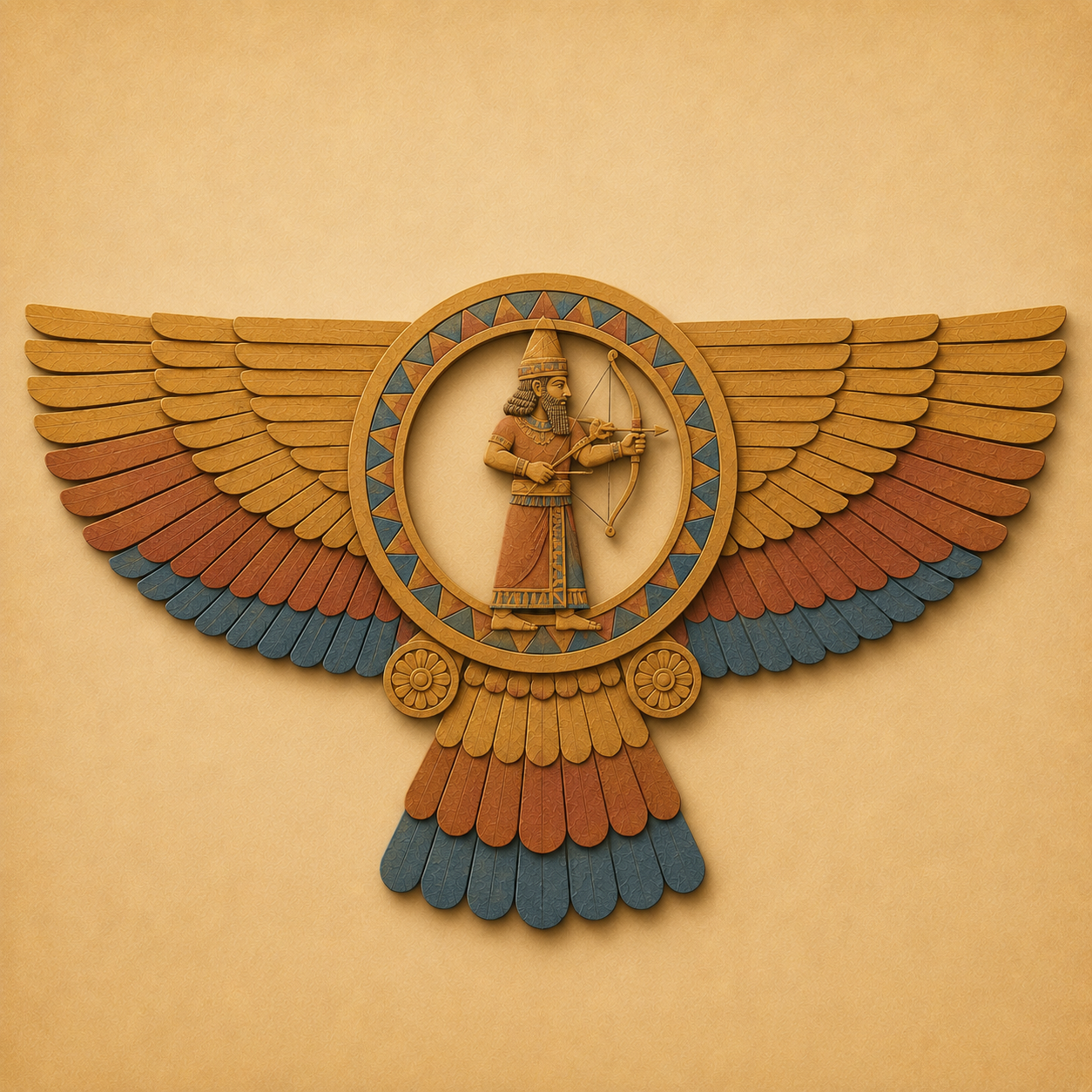
An empire whose national god was its own city, whose king was that god’s high priest, and whose wars were holy wars — the theology of divine mandate that the Rabshakeh threw in Hezekiah’s face beneath the wall.
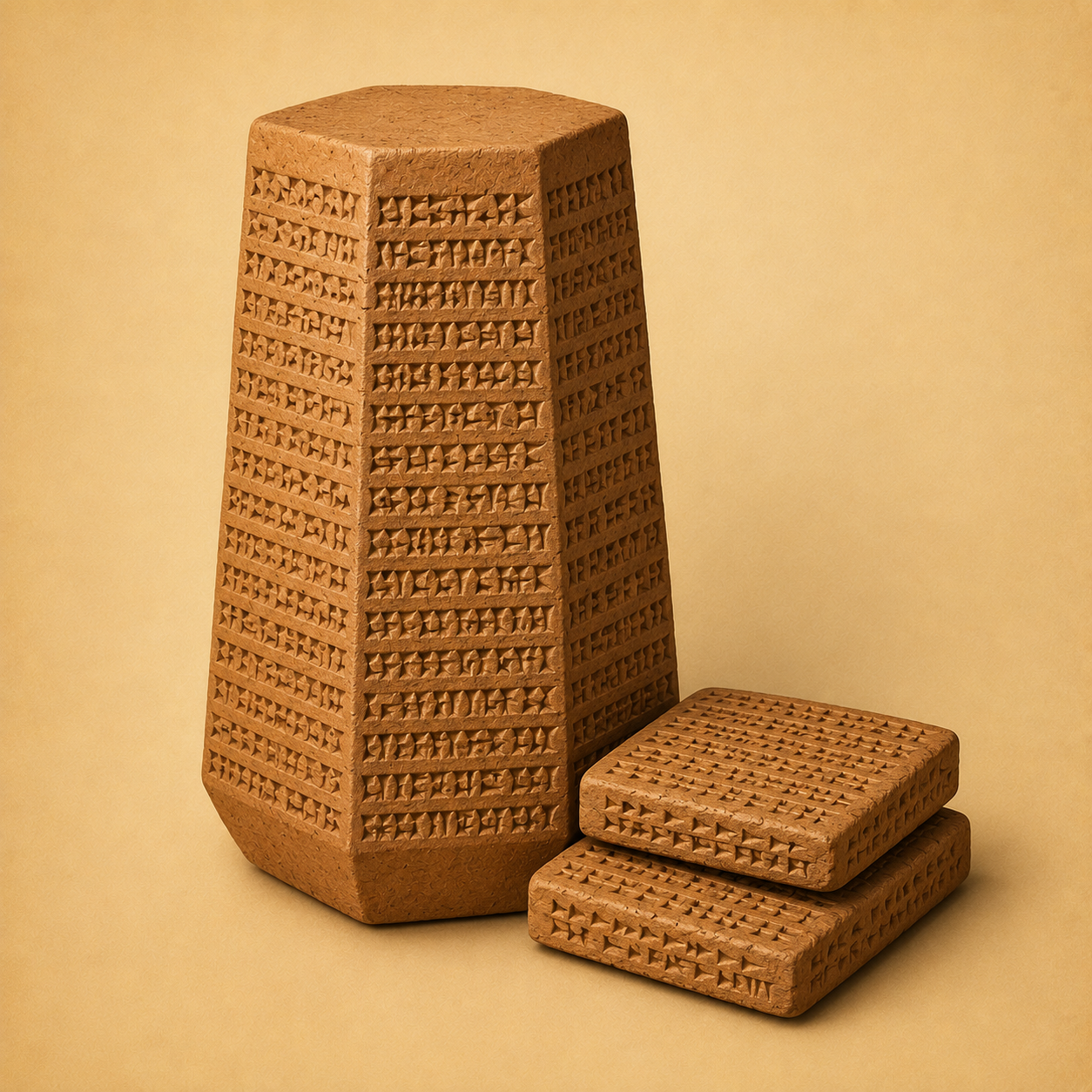
Ashurbanipal’s library at Nineveh — the first systematically gathered collection on earth — where a Victorian bank-note engraver read out a Babylonian flood story and stopped the British Museum in its tracks.
Assyria & Israel
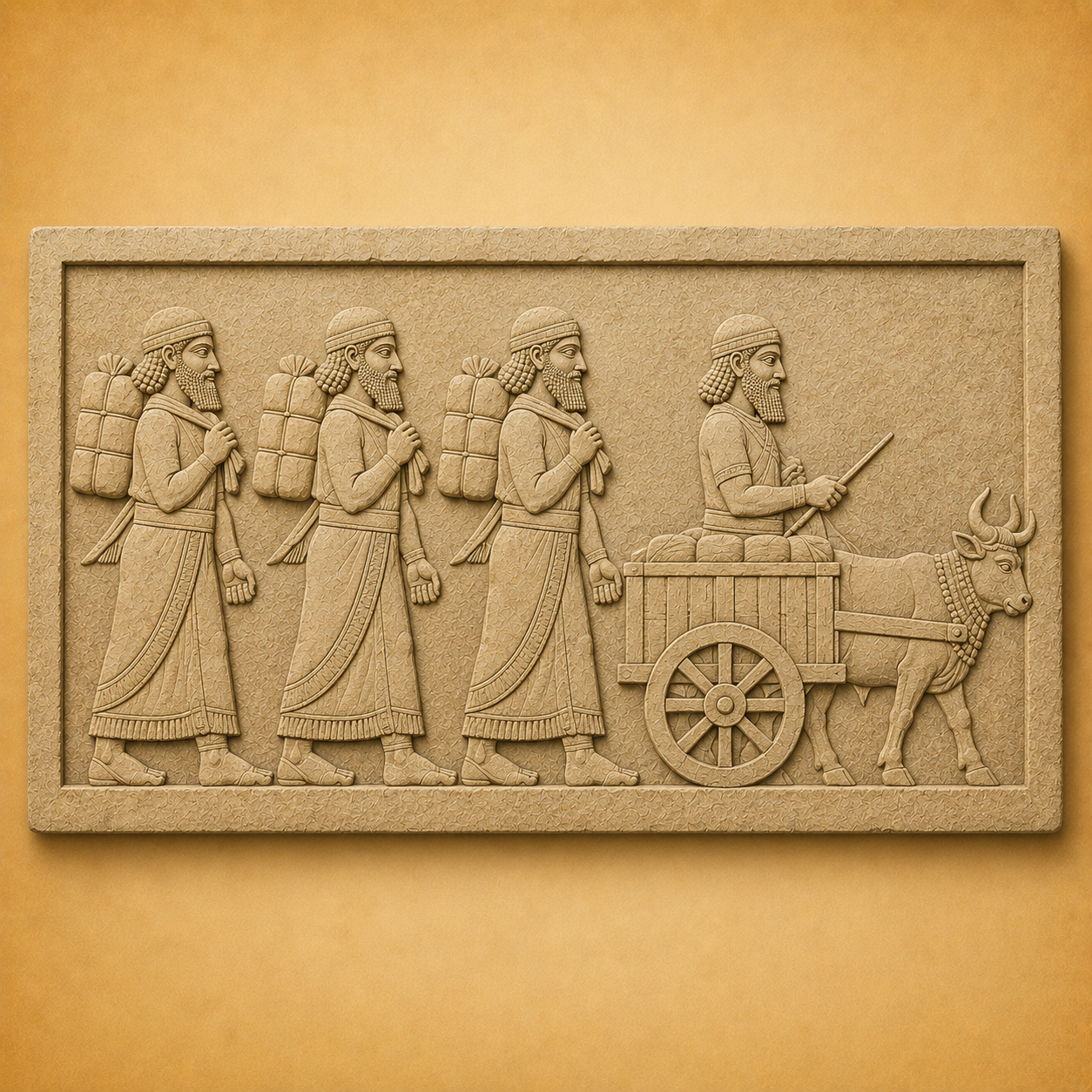
The Fall of the North & the Lost Tribes
722 BC: the end of the ten-tribe kingdom, the deportations in both directions, and the strangers resettled in Samaria — how an Assyrian policy created both the “lost tribes” and, centuries later, the Samaritans.
701 BC, told from both sides: Sennacherib’s own prism boasting of Hezekiah “shut up like a bird in a cage,” the Lachish reliefs, the Rabshakeh at the wall — and the night of deliverance that convinced Jerusalem it could never fall.

Jonah sent to the great city, Nahum singing over its fall, Isaiah’s “rod of mine anger,” Amos and Hosea and Micah — the empire that scripture wrestles with more than any before Babylon, and what its own records confirm.
Discoveries & Legacy
How Assyria came back to light: Botta and Layard on the mounds, the winged bulls hauled to Paris and London, the reliefs that put the Bible’s enemy on museum walls — with a guide to seeing them yourself.
The scattering of Israel and the ten tribes “led away out of the land”; the presumption that Zion could not fall, which Lehi confronted; and the latter-day promise that what Assyria scattered, the Lord will gather.
Sources and Recommended Reading
Assyria & the Ancient Near East:
- Eckart Frahm, Assyria: The Rise and Fall of the World's First Empire (Basic Books, 2023) — The current standard narrative history.
- Karen Radner, Ancient Assyria: A Very Short Introduction (Oxford University Press, 2015) — The best brief entry point.
- Marc Van De Mieroop, A History of the Ancient Near East, ca. 3000–323 BC (Wiley-Blackwell, 3rd ed. 2016) — The standard one-volume survey.
- Simo Parpola, ed., State Archives of Assyria (Helsinki) — The royal correspondence and archives in translation.
Assyria & Israel:
- K. Lawson Younger Jr., A Political History of the Arameans and his studies of the deportations — on the fall of Samaria and the fate of the exiles.
- Bustenay Oded, Mass Deportations and Deportees in the Neo-Assyrian Empire (Reichert, 1979) — The definitive study of the deportation system.
- Mordechai Cogan, Imperialism and Religion: Assyria, Judah and Israel (SBL, 1974) — Assyria's religious policy toward its vassals.
- William R. Gallagher, Sennacherib's Campaign to Judah (Brill, 1999) — The 701 BC crisis from every angle.
Latter-day Saint Studies:
- John W. Welch, David Rolph Seely & Jo Ann H. Seely, eds., Glimpses of Lehi's Jerusalem (FARMS/BYU, 2004) — The world Assyria helped shape, one century on.
Online Resources:
- World History Encyclopedia — Assyria (CC BY-NC-SA 4.0)
- Livius.org — Assyria — with royal inscriptions and chronicles in translation.
- Oracc / State Archives of Assyria Online — the royal correspondence, searchable.
- British Museum Collection Online — the Lachish reliefs, the Black Obelisk, and the library of Ashurbanipal.