| Church Manuals | |
| Come Follow Me Manual — Week 48 | View |
| Scripture Helps: Old Testament | View |
| OT Seminary Teacher Manual | View |
| OT Institute Manual (1Ki–Mal) | View |
| Pearl of Great Price Manual | View |
| Scripture Reference | |
| Bible Dictionary | View |
| Topical Guide | View |
| Guide to the Scriptures | View |
| Church Media & Library | |
| Gospel for Kids (YouTube) | View |
| Bible Videos: Life of Jesus Christ | View |
| Church Magazines | View |
| Gospel Library | View |

Week 48
Seek the Lord, and Ye Shall Live
Amos; Obadiah; Jonah
November 23–29, 2026
Weekly Resources: Week 48
Amos; Obadiah; Jonah — Overview
November 23–29, 2026
“Seek the Lord, and Ye Shall Live”
Official Church Resources
OFFICIAL CHURCH RESOURCES▶
CHURCH MEDIA FOR FAMILIES▶
▶ Video Commentary
VIDEO COMMENTARY (12 videos · 1 weekly video pending)
▼






Specialized Audiences
WOMEN’S PERSPECTIVES (1 video · 1 weekly video pending)
▶


FAMILY & CHILDREN’S RESOURCES (2 videos, 1 resource link · 3 weekly videos pending)
▶




Other Resources
- Messages of Christ — occasional Bible videos
- Women in the Scriptures — blog and articles
Reference & Study Materials
Scripture Central
Week 48 Study Hub
Interpreter
Week 48 Articles
Bible Project
This week’s book overviews


BIBLE PROJECT (3 book overviews · 2 selected themes · 12 more library videos)
▶
This week’s book overviews open from the Bible Project card above. Selected themes are highlighted below; the rest of the standing library remains available.
SELECTED FOR THIS WEEK — themes and word studies
BibleProject library — standing collection, not chosen for this week (12 videos)
 BibleProject — Covenants
Watch on BibleProject →
Optional thematic resource
 i
Temple
 i
Sacrifice & Atonement
 i
Holiness
 i
Image of God
 i
The Messiah
 i
Tree of Life
 i
YHWH / LORD
 i
Shalom / Peace
 i
Khesed / Loyal Love
 i
Nephesh / Soul
 i
Ruakh / Spirit
ACADEMIC & SCHOLARLY SITES▶
MAPS & BIBLICAL LOCATIONS▶
JEWISH & SCHOLARLY RESOURCES▶
First, a Word About Where We Are
▶︎
Last week, Hosea pleaded with the Northern Kingdom of Israel to come home to the Lord, the way a husband pleads with a wife who has left. This week we stay in the same kingdom, in the same years. Open Hosea 1:1 and Amos 1:1 side by side: both name Uzziah, king of Judah, and "Jeroboam the son of Joash king of Israel". Hosea and Amos were speaking to the same people at the same time.
What changes this week is the view. Hosea spoke to one nation that had wandered. This week's three short books look outward as well. Amos speaks to Israel at the height of its wealth and comfort, a few decades before Assyria conquered it. Obadiah, probably writing later, after Jerusalem itself had fallen, speaks to Edom, Israel's brother nation. And Jonah is sent to Nineveh, a great city of the empire Israel feared most.
The Overview walks through all fourteen chapters in order and introduces everyone in them. This page looks at what the three books say together, and what they might say to us.
Three Books, One Question: Who Deserves the Lord's Mercy?
▶︎
This is the thing most worth knowing before you start, because it ties the week together. Each book speaks to a different people, and each people thought it already knew the answer.
- Israel, the Lord's own people. They kept up their sacrifices and feasts while cheating the poor, and they were sure the Lord was on their side. They looked forward to "the day of the LORD," expecting Him to come and defend them. Amos told them that day would be "darkness, and not light" (Amos 5:18). Being the Lord's people did not excuse them. It made them more responsible: "You only have I known… therefore I will punish you" (Amos 3:2).
- Edom, Israel's brother nation. The Edomites were descended from Esau, Jacob's twin. When Jerusalem fell, they stood by and were glad. They thought their homes high in the mountains, "in the clefts of the rock" (Obadiah 1:3), kept them out of reach. Obadiah told them, "as thou hast done, it shall be done unto thee" (1:15).
- Nineveh, Israel's enemy. Nineveh was a great city of Assyria. Jonah was sure it deserved no mercy. When the Lord sent him to warn it, he sailed the other way. When he finally preached, the city repented and the Lord spared it, and Jonah "was very angry" (Jonah 4:1).
In each book, the Lord's answer is not what people expected. His own people were not safe just because they were His. Edom's mountains could not hide it. And the enemy city, when it repented, was forgiven.
The question is still a live one. It is worth asking whether there is anyone we have quietly decided the Lord should not forgive.
Waiting for the Holy Day to End
▶︎
Amos's hardest words were not for unbelievers. They were for people who never missed a feast.
Read Amos 8:5 slowly, because it is easy to miss what it shows. The merchants are keeping the holy days. They are not working on the new moon, and they are not selling on the Sabbath. But they are waiting it out: "When will the new moon be gone, that we may sell corn? and the sabbath, that we may set forth wheat, making the ephah small, and the shekel great". Their bodies were in the holy day. Their minds were already back at the scales, planning how to give the poor less grain for more silver.
Amos sees the same thing at the dinner table. The comfortable lie on ivory beds and drink "wine in bowls," and the charge against them comes at the very end of the sentence: "but they are not grieved for the affliction of Joseph" (Amos 6:6). They had not done anything dramatic. They simply did not feel the trouble of the people around them.
That is why the Lord's answer is not more worship but a different kind of life: "let judgment run down as waters, and righteousness as a mighty stream" (Amos 5:24). A stream does not stop at the end of the service. It runs all week, past the gate where the poor wait for justice and the market where the grain is weighed.
If you have ever sat through something sacred while your thoughts were already on what came next, Amos is not writing you off. He is inviting you to let what you worship reach the rest of your week.
The Questions This Week Raises — and Where Each One Is Answered
▶︎
| The question | Where it is taken up |
|---|---|
| Did the Lord really "repent"? | Word Studies, study 2: the Hebrew word, and how the Joseph Smith Translation reads it |
| Was it really a whale? | Word Studies, study 3, and Key Passages, passage 5: the Hebrew says "great fish" |
| Why does the Lord say He hates Israel's feasts? | Key Passages, passage 2: not worship itself, but worship that ignored the poor |
| Does Amos's famine of hearing the Lord's words concern ancient Israel or the Great Apostasy? | Key Passages, passage 3: the ancient warning and its later Latter-day Saint application |
| Why does James quote Amos differently in Acts 15? | Key Passages, passage 3: he quotes the Greek form of the verse |
| Who are the "saviours… on mount Zion"? | Key Passages, passage 4: latter-day prophets apply it to temple work for the dead |
| How many times did Jesus speak of the sign of Jonah? | Key Passages, passage 5: three passages, which the Bible Dictionary counts as two occasions |
| Who "cannot discern between their right hand and their left"? | Key Passages, passage 6: two Latter-day Saint readings, both given |
You are not expected to settle all of these. Some have clear answers; some the scriptures leave open.
"Ye Shall Live"
▶︎
This week's title is a promise from Amos: "Seek ye me, and ye shall live" (Amos 5:4). In these books, to live means more than to stay alive. It is the life that comes from turning to the Lord, and He offers it to more people than His own prophets expected.
Notice where the promise is spoken. Amos has just sung a funeral song over Israel: "The virgin of Israel is fallen; she shall no more rise" (5:2). And two verses later the Lord says, live. In that one chapter the word comes three times, and each time it follows the word seek: seek me, seek the LORD, seek good (5:4, 6, 14). Seek, and live. The Lord does not wait until the mourning is over to offer life. He offers it in the middle of the mourning.
In Jonah, life is the thing the prophet nearly loses and then is given back: "yet hast thou brought up my life from corruption, O LORD my God" (2:6). Corruption there means the pit of the grave he was sinking into, not moral corruption. Then, after Nineveh repents and is spared, the same prophet says twice, "it is better for me to die than to live" (4:3, 8). The Lord had given him life, and he could not bear to see the Lord give it to Nineveh too.
The Prophet Who Prayed and the Prophet Who Ran
▶︎
Amos and Jonah were both the Lord's prophets, but they felt very differently about the people they were sent to.
Amos's message to Israel was mostly warning. Even so, when the Lord showed him a vision of locusts destroying the land, Amos pleaded for the people: "O Lord GOD, forgive, I beseech thee: by whom shall Jacob arise? for he is small" (Amos 7:2). The Lord answered, "It shall not be" (7:3), and He answered the same way when Amos pleaded again after a vision of fire (7:5–6). Amos prayed for the very people who would soon reject him. Not long after, Israel's priest at Beth-el ordered him to go back to Judah (7:12).
Jonah's message to Nineveh was short, and it worked: the whole city repented. But Jonah was angry, and he told the Lord why he had run away in the first place: "I knew that thou art a gracious God, and merciful, slow to anger, and of great kindness" (Jonah 4:2). Jonah ran because he knew the Lord would forgive Nineveh, and he did not want Him to.
Jonah's feelings make more sense once you know what Assyria was. Its kings boasted on their own palace walls of how they punished the peoples who resisted them, and a few decades after Jonah the empire carried the Northern Kingdom of Israel away. CFM Corner's Assyria field guide describes the empire's methods in The War Machine, and its chapter Assyria & the Bible has a section on Jonah's mission.
Both men knew the Lord was merciful. The difference is that Amos wanted that mercy for others and Jonah did not. The Lord was patient with both: He answered Amos's prayers, and He kept teaching Jonah to the very end of the book. If you have ever found it easier to want mercy for yourself than for someone who hurt you, Jonah's story is written for exactly that moment, and the Lord does not give up on him.
A Brother's Day
▶︎
Obadiah's short book is about one day: the day Jerusalem fell. Obadiah says to Edom, "thou stoodest on the other side" (1:11), and Edom was glad. In four verses Obadiah uses the word day ten times (Obadiah 1:11–14) as he lists what Edom did that day. It stood by, it rejoiced, it carried off Jerusalem's goods, and it stood at the crossroads to catch the people of Judah who tried to escape.
What makes it bitter is the word Obadiah keeps returning to: "thy brother Jacob" (1:10), "the day of thy brother" (1:12). Jacob and Esau had quarrelled, but years later Esau ran to meet his brother and the two of them wept together (Genesis 33:4). Their descendants threw that peace away on the worst day a brother could have.
But the book does not end on that day. Its last verse looks forward to "saviours" on mount Zion (1:21). Latter-day prophets have taught that this describes temple work: going to the Lord's house to do for the dead what they cannot do for themselves (Key Passages, passage 4). Edom refused to help its brother on his worst day. The Lord invites His people to do the opposite, even for family they have never met.
"Should Not I Spare Nineveh?"
▶︎
The book of Jonah ends in an unusual way. It never tells us whether Jonah changed his mind. It ends with the Lord asking Jonah a question, "should not I spare Nineveh, that great city" (Jonah 4:11), and we never hear Jonah's answer. The question is left for the reader.
Read the whole verse to its last words. The Lord counts the people of the city, "more than sixscore thousand persons," and then adds, "and also much cattle". He has been keeping track of the animals too. Jonah had grieved over a single plant he had not even grown. The Lord's concern reaches every person in an enemy city and every animal in its fields.
Jewish congregations still read the book of Jonah aloud on the Day of Atonement, the day they ask the Lord to forgive them (Jewish Perspective, section 4). It is a fitting day to hear about a God who forgave Nineveh.
The Savior also pointed to Nineveh: "The men of Nineveh… repented at the preaching of Jonas; and, behold, a greater than Jonas is here" (Matthew 12:41). Jonah spent three days inside the fish. Jesus spent three days in the tomb and then rose again. Through His death and Resurrection, the mercy Jonah did not want to share is offered to everyone, including Jonah.
One Verse to Take With You
▶︎
Amos told Israel to stop relying on its famous holy places, Beth-el, Gilgal and Beer-sheba (Amos 5:5), and to seek the Lord Himself:
"Seek ye me, and ye shall live" — Amos 5:4
That promise still stands. And those who seek the Lord find that He was already looking for them: "For the Son of man is come to seek and to save that which was lost" (Luke 19:10).
This week's Study Guide begins with the Overview.
Week 48
Amos; Obadiah; Jonah — Overview
"Seek the Lord, and Ye Shall Live"
November 23–29, 2026
1. Week 48: Overview
A kingdom at the top of its game
Picture a nation having its best years in living memory. Its army has won back territory it had lost (2 Kings 14:25). Its wealthy families own a house for winter and another for summer, with furniture inlaid with ivory (Amos 3:15; 6:4). Its sanctuaries are busy, its feasts are well attended, and its people are sure the Lord is on their side.
That nation is the Northern Kingdom of Israel, in the eighth century before Christ, under a king named Jeroboam. This week's first prophet, Amos, was sent to tell it that the good times would not last, and to hold out one way through: "Seek the LORD, and ye shall live" (Amos 5:6). That promise is this week's title.
To follow Amos, it helps to know the cast. More than 150 years earlier, after Solomon died, the Israelites had split into two kingdoms:
- Israel, the Northern Kingdom, with its capital at Samaria. Its largest tribes descended from Joseph's sons, so the prophets sometimes call it Joseph or Ephraim. Its first king set up golden calves at the sanctuaries of Beth-el and Dan so his people would stop going south to Jerusalem to worship (1 Kings 12:28–29).
- Judah, the Southern Kingdom, with its capital at Jerusalem, also called Zion. The temple was there, and David's descendants were its kings.
To the east stood Assyria, the great empire of the day. Within a few decades of Amos's preaching, Assyria would conquer the Northern Kingdom and carry its people away; the note on the Church's Bible Map 9 dates it to 721 B.C. Amos's first listeners did not know that. We do, and it changes how his words read. CFM Corner's field guide Assyria: The Rod of the North introduces the empire, and its chapter The Fall of the North & the Lost Tribes tells how the conquest came, including what Amos had warned.
Three messages nobody wanted
This week brings three short books, and each carries a message its audience did not want to hear.
Amos was a herdsman from Judah sent north to prosperous Israel. His message was that their worship could not cover what they were doing to the poor, and that the Lord was asking for them, not for their pilgrimages: "Seek ye me, and ye shall live: But seek not Beth-el, nor enter into Gilgal, and pass not to Beer-sheba" (Amos 5:4–5). One verse later he repeats the promise that gives the week its title (5:6).
Obadiah wrote to Edom, a neighbouring nation descended from Esau, the twin brother of Jacob. Israel and Edom were brother nations. When a foreign army captured Jerusalem, Edom stood by, cheered, and joined in the looting. Obadiah's message was that the Lord had seen it.
Jonah was a prophet of Israel sent to Nineveh, a great city of Assyria, the very empire that would later destroy his nation. He did not want Nineveh to be given a chance to repent, so he boarded a ship going the other way.
Put the three side by side and a question runs through all of them: who does the Lord care about, and how far will His mercy go? Israel thought His favour was theirs by right. Edom thought it could hurt its brother and get away with it. Jonah thought Israel's enemies deserved no mercy at all. Each time, the Lord's answer is different from what they expected. The weekly Come, Follow Me lesson for November 23–29 puts the good news inside these hard books in one line: "that because of Jesus Christ, it's not too late to change."
What "seek the Lord" meant
When Amos told Israel to seek the Lord, he was not telling them to go to church more. They were already going. They brought "sacrifices every morning" (4:4), held their feasts, and sang their songs. Amos tells them what seeking would actually look like: "Seek good, and not evil, that ye may live… Hate the evil, and love the good, and establish judgment in the gate" (5:14–15). The city gate was where a town's elders sat to settle disputes, so it was the place a poor man went for justice. To seek the Lord was to turn to Him, and turning to Him meant treating His poor justly.
That is the promise inside this week's hard warnings. The door was still open. "Seek the LORD, and ye shall live" was spoken to a nation the prophet had just mourned as fallen (5:2), and the Lord meant it.
Four easy misreadings, named once
- "Minor prophets" means shorter books, not lesser ones. Last week's Overview explained the name. This week includes the shortest book in the Old Testament: Obadiah, at twenty-one verses.
- Amos does not despise worship. He despises worship that leaves the poor behind. The Bible Dictionary sums up his message: "the offering the Lord most cares for is a righteous life."
- Jonah is not mainly a story about a fish. The fish appears in three verses out of forty-eight (1:17; 2:1, 10). The book is about a God who cares for a city full of His people's enemies, and it ends with Him asking His own prophet a question.
- "The LORD repented" does not mean the Lord had done wrong. The King James wording appears in both Amos and Jonah, and the Joseph Smith Translation clarifies it. Word Studies gives the word one full explanation.
Three questions to carry into any chapter
- Where were people looking for the Lord, and where does He say He can be found?
- Whom does the Lord show mercy to in these chapters, and how do His messengers feel about it?
- What does "Seek the LORD, and ye shall live" invite me to seek this week?
All fourteen chapters are assigned this week. Scripture Helps divides Amos into three parts: judgments on the nations, including Judah and Israel (1–2); warnings and a plea to repent (3–6); and visions of judgment ending in a promise of restoration (7–9). Obadiah is a single chapter. Jonah is a story in four chapters.
14 rows — click to collapse
| Chapter | What happens | Assigned |
|---|---|---|
| Amos 1 | "For three transgressions… and for four": judgment on Israel's neighbors | Yes |
| Amos 2 | Then Judah, then Israel: "the poor for a pair of shoes" | Yes |
| Amos 3 | Why a prophet speaks: "he revealeth his secret unto his servants the prophets" | Yes |
| Amos 4 | Five times, "yet have ye not returned unto me" | Yes |
| Amos 5 | A funeral song, then the invitation: "Seek the LORD, and ye shall live" | Yes |
| Amos 6 | The comfortable who do not care: "Woe to them that are at ease in Zion" | Yes |
| Amos 7 | Locusts, fire and a plumbline; "I was no prophet" | Yes |
| Amos 8 | A basket of summer fruit; a famine of hearing the words of the Lord | Yes |
| Amos 9 | Nowhere to hide; the tabernacle of David raised up | Yes |
| Obadiah 1 | Edom's pride; the day of a brother's distress; "saviours… on mount Zion" | Yes |
| Jonah 1 | Jonah flees; a storm, the sailors and the lot | Yes |
| Jonah 2 | A prayer from the belly of the fish | Yes |
| Jonah 3 | Nineveh repents, and God spares the city | Yes |
| Jonah 4 | Jonah's anger, the gourd, and the Lord's question | Yes |
Amos and Jonah lived in the same generation. Amos dates his words to "the days of Jeroboam the son of Joash king of Israel" (Amos 1:1), and the book of Kings names Jonah as the prophet who had foretold that same king's victories (2 Kings 14:25). So one prophet announced the success, and the other came to warn the people enjoying it. Historical & Cultural Context, section 1, tells that story. Obadiah is harder to date; Scripture Helps places it probably after the Babylonians took Jerusalem in 586 BC.
Amos 1 — "For Three Transgressions, and for Four" — assigned
Amos begins by condemning Israel's neighbours, and his listeners would have agreed with every word. The book opens with the Lord's voice like a lion: "The LORD will roar from Zion, and utter his voice from Jerusalem" (1:2). Then Amos goes around the map. Damascus to the north-east, Gaza to the south-west, Tyre on the coast, Edom to the south-east, Ammon across the Jordan. (Tyre was the great Phoenician port; the Canaan field guide's chapter The Phoenicians describes it.) Each oracle opens the same way: "For three transgressions of Damascus, and for four, I will not turn away the punishment thereof" (1:3).
The numbers are not a count of sins. The Old Testament Student Manual explains the idiom: "The implication of the idiom is that three transgressions are too many, and you have even exceeded that," rather like our "a hundred and one times" (Old Testament Student Manual: 1 Kings–Malachi, 8-5). And look at what the crimes are. Almost all of them are cruelty to people who could not defend themselves: whole populations carried off and sold as slaves (1:6, 9), and war waged on the defenseless (1:13). Edom's crime is the one this week returns to in Obadiah: "he did pursue his brother with the sword, and did cast off all pity" (1:11).
Imagine hearing this in Samaria. Every nation named is an old enemy, and every verdict sounds deserved. Amos is drawing a circle around Israel, and Israel is standing in the middle of it.
Amos 2 — Then Judah, Then Israel — assigned
Then the circle closes, and Israel hears its own name in the same words. After Moab (2:1–3) comes Judah, judged not for cruelty but because "they have despised the law of the LORD" (2:4). A northern listener might still be nodding. Then: "For three transgressions of Israel, and for four… because they sold the righteous for silver, and the poor for a pair of shoes" (2:6). The likely picture is a poor man sold into slavery over a debt as small as the price of a pair of sandals.
Israel's list of charges is longer than anyone else's, and every item is about how the strong treated the weak. The poor are trampled (2:7). A poor man who borrowed money had to hand over his cloak as security, and the law said to give it back before nightfall because it was his only blanket (Exodus 22:26–27). In Israel those cloaks were being kept, and the lenders were lying on them beside the altars while they drank (Amos 2:8).
And Israel silenced the very people the Lord had sent to call them back: "ye gave the Nazarites wine to drink; and commanded the prophets, saying, Prophesy not" (2:12). A Nazarite, from the Hebrew nāzîr (נָזִיר), was a person who had made a vow of dedication to God. Scripture Helps notes that the word "means 'dedicated' or 'withheld'", and part of that vow was to drink no wine (Numbers 6:3). Israel talked them into breaking it.
Amos 3 — The Lion Has Roared — assigned
Being the Lord's people made Israel more responsible, not less. The chapter opens with a sentence that surprises most readers: "You only have I known of all the families of the earth: therefore I will punish you for all your iniquities" (3:2). Israel heard the first half of that sentence as a guarantee. Amos hears it as a reason they will be held to account.
Then Amos asks a string of questions a herdsman could answer. Does a lion roar in the forest when it has caught nothing? Does a bird fall into a trap where no trap was set (3:4–5)? Of course not. Each thing happens because something caused it. The questions build to his point: if a prophet is warning you, it is because the Lord has spoken. "Surely the Lord GOD will do nothing, but he revealeth his secret unto his servants the prophets" (3:7), and "the Lord GOD hath spoken, who can but prophesy?" (3:8). Amos is saying he did not choose this message. Key Passages, passage 1, reads these verses closely.
The chapter ends with a picture from a shepherd's life. When a lion has taken a sheep, the shepherd may save only "two legs, or a piece of an ear" (3:12), just enough to prove to the owner what happened. That, Amos warns, is about how much will be left of Samaria's comfortable life.
Amos 4 — "Yet Have Ye Not Returned" — assigned
The Lord had been trying to call Israel home for years, and they had not noticed. Amos begins with the wealthy women of Samaria. He calls them "kine of Bashan", cows from Bashan, the rich pastureland east of the Sea of Galilee. The Old Testament Student Manual explains that he "compared the women of Samaria with the cows (kine) which fed upon the rich pastures east of the Sea of Galilee" (8-11). They are women "which oppress the poor, which crush the needy, which say to their masters, Bring, and let us drink" (4:1).
Then he sounds like a priest calling people to worship, but he twists the words: "Come to Beth-el, and transgress" (4:4). He is not really inviting them. He is saying that their trips to the sanctuary were only adding to their sins.
The heart of the chapter is a refrain. The Lord lists the hard years Israel had already been through: hunger, drought, crops ruined by blight and locusts, disease, war, and towns destroyed like Sodom. After each one comes the same line: "yet have ye not returned unto me, saith the LORD" (4:6, 8, 9, 10, 11). Five times. Amos reads each of those troubles as the Lord trying to turn His people back toward Him, and each time they did not turn. The chapter ends on a summons that is a warning and an invitation at once: "prepare to meet thy God, O Israel" (4:12).
Try this: read Amos 4:6–11 and mark the refrain each time it comes. Then read the next verse. After five refusals, what is the Lord still asking for?
Amos 5 — "Seek the LORD, and Ye Shall Live" — assigned
Even after a funeral song, the door is still open. Chapter 5 begins as a lament, the kind of song sung at a burial, for a nation that is still alive: "The virgin of Israel is fallen; she shall no more rise" (5:2). And then, in the middle of that grief, the Lord speaks the invitation the whole week is named for. It comes three times: "Seek ye me, and ye shall live" (5:4); "Seek the LORD, and ye shall live" (5:6); "Seek good, and not evil, that ye may live" (5:14). The funeral song is not the last word. There is still time.
The chapter also explains why Israel's worship had become hollow. In the town gate, where a poor man went to have his case heard, the powerful "take a bribe, and they turn aside the poor in the gate from their right" (5:12). So the Lord asks them to "establish judgment in the gate" (5:15): to make the courts fair again, in the very place justice had been denied. In the King James Bible, judgment here means justice.
Some in Israel longed for "the day of the LORD," apparently expecting it to be the day He would defeat their enemies. Amos turns that hope upside down: "Woe unto you that desire the day of the LORD!… the day of the LORD is darkness, and not light" (5:18). It would be like a man who "did flee from a lion, and a bear met him" (5:19). People who were mistreating the poor had no reason to look forward to the Lord's coming.
Then the Lord says something startling about their worship: "I hate, I despise your feast days" (5:21). He does not hate worship. He hates worship that has become a cover for injustice. What He wants instead fits in one verse, and it is one of the best-known lines in the book: "let judgment run down as waters, and righteousness as a mighty stream" (5:24). Not a trickle at festival time, but a river that never stops running. Key Passages, passage 2, takes this chapter slowly, and Word Studies, study 1, looks at the word seek.
Amos 6 — At Ease in Zion — assigned
Comfort is not the sin. Not caring is. "Woe to them that are at ease in Zion, and trust in the mountain of Samaria" (6:1). Amos names both capitals in one breath, Jerusalem and Samaria, so neither kingdom can assume he means the other. Then he paints the comfortable at dinner: lying "upon beds of ivory," eating the best lamb and veal, drinking "wine in bowls" (6:4–6). Their real fault comes at the very end of the sentence: "but they are not grieved for the affliction of Joseph" (6:6). Joseph here means the Northern Kingdom itself. The nation was falling apart around them, and they did not feel it.
Nephi used the same words for the latter days: "wo be unto him that is at ease in Zion!" (2 Nephi 28:24).
Amos then asks a farmer's question to show how unnatural their injustice is: "Shall horses run upon the rock? will one plow there with oxen? for ye have turned judgment into gall" (6:12). Nobody runs horses on a cliff face or ploughs bare rock. It would be just as absurd to turn justice into poison, and that is what they had done.
Amos 7 — The Plumbline — assigned
A prophet who prays for the people he warns. Amos now describes visions. In the first, the Lord shows him locusts stripping the land; in the second, a fire. Both times Amos pleads for Israel: "O Lord GOD, forgive, I beseech thee: by whom shall Jacob arise? for he is small" (7:2). Both times the Lord holds the judgment back (7:3, 6). The man who brought such hard words to Israel was also on his knees for it.
The third vision is different. The Lord stands "upon a wall made by a plumbline, with a plumbline in his hand" (7:7). A plumbline is a cord with a weight on the end. A builder hangs it beside a wall to see whether the wall stands straight; the line shows at once a lean the eye would miss. The Lord sets that line beside His people, and this time Amos does not plead. The Lord says, "I will not again pass by them any more" (7:8): He will no longer overlook what the line shows. Teaching Applications, section 3, has a simple way to make one.
Then a story interrupts the visions. Amaziah, the priest of Beth-el, reports Amos to the king, then tells Amos to go back where he came from: "O thou seer, go, flee thee away into the land of Judah… But prophesy not again any more at Beth-el: for it is the king's chapel" (7:12–13). Amos answers that he never sought the job: "I was no prophet, neither was I a prophet's son; but I was an herdman, and a gatherer of sycomore fruit: And the LORD took me as I followed the flock, and the LORD said unto me, Go, prophesy unto my people Israel" (7:14–15). His answer rests on the Lord's call, not on any office or family he belonged to.
Amos 8 — A Famine of Hearing — assigned
The worst famine is the one where the Lord's word is gone. The fourth vision is a basket of "summer fruit," and the message that comes with it is "The end is come upon my people of Israel" (8:1–2). The Old Testament Student Manual explains the picture: summer fruit has to be eaten soon after it is picked, and Israel was ripe (8-16).
The chapter shows what had ripened. Merchants sat through the holy days impatient for them to end, so they could get back to cheating: "making the ephah small, and the shekel great, and falsifying the balances by deceit" (8:5). The ephah was the measure for grain, and the shekel was the weight for the silver paid for it. They shrank one and inflated the other: less grain for more money. The old charge from chapter 2 returns almost word for word: they "buy… the needy for a pair of shoes" (8:6).
Then comes a famine unlike the ones in chapter 4: "not a famine of bread, nor a thirst for water, but of hearing the words of the LORD" (8:11). People will "run to and fro to seek the word of the LORD, and shall not find it" (8:12). In chapter 5 the Lord said, Seek me, and live. Here people are seeking too late, and finding nothing. Latter-day Saints also read this prophecy as a description of the long centuries without prophets that ended with the Restoration through Joseph Smith. Key Passages, passage 3, follows both readings in order.
Amos 9 — The Tabernacle of David Raised — assigned
No one can hide from the Lord, and He will not let His people be lost. The last vision shows the Lord "standing upon the altar" (9:1), and it says there is nowhere to escape Him: "Though they dig into hell, thence shall mine hand take them; though they climb up to heaven, thence will I bring them down" (9:2). Not even the bottom of the sea is a hiding place (9:3). Remember that verse when you reach Jonah, who tries to get away from the Lord by going to sea.
Then the Lord asks a startling question: "Are ye not as children of the Ethiopians unto me, O children of Israel?" (9:7). Ethiopia was a far-off people with no covenant. The Lord adds that He led the Philistines and the Syrians to their lands, just as He led Israel out of Egypt. (The Canaan field guide's chapter The Philistines explains Caphtor, the homeland this verse gives the Philistines.) Being chosen did not make Israel the only people He cared about. Hold onto that thought too; it is close to the heart of Jonah.
And still the Lord promises that He "will not utterly destroy the house of Jacob" (9:8). He will shake Israel among the nations "like as corn is sifted in a sieve, yet shall not the least grain fall upon the earth" (9:9). That is not a promise that no one will suffer; the next verse still warns those who assume disaster can never reach them. It is a promise that the Lord will not lose His people in the scattering.
The book that began with a lion's roar ends with rebuilding: "In that day will I raise up the tabernacle of David that is fallen" (9:11). A tabernacle is a tent. David's royal house is pictured as a tent that has collapsed and will be pitched again. Look closely at 9:14: "they shall build the waste cities, and inhabit them; and they shall plant vineyards, and drink the wine thereof". Then turn back to 5:11: "ye have built houses of hewn stone, but ye shall not dwell in them; ye have planted pleasant vineyards, but ye shall not drink wine of them." The book's last promise undoes its curse, almost word for word.
Obadiah — The Day of Thy Brother — assigned
Obadiah's one chapter is about a brother who turned on his brother on the worst day of his life. To understand it you need the oldest family story in Israel. Jacob and Esau were twins. They quarrelled bitterly over a birthright and a blessing, and years later Esau ran to meet Jacob and the two of them wept (Genesis 27; 33:4). Jacob's descendants became Israel. Esau's became Edom ("Esau, who is Edom," Genesis 36:1). The brothers made peace. Their nations never did.
Edom lived in high, rocky country south of the Dead Sea, and believed no one could reach it there: "The pride of thine heart hath deceived thee, thou that dwellest in the clefts of the rock… that saith in his heart, Who shall bring me down to the ground?" (1:3). The Lord answers in words much like Amos's: "though thou set thy nest among the stars, thence will I bring thee down" (1:4; compare Amos 9:2).
Then Obadiah tells what Edom did. When foreign armies broke into Jerusalem, Edom watched from a distance, "thou stoodest on the other side," Obadiah says. Then it rejoiced, then it helped carry off the city's goods, and finally it stood at the crossroads to catch the people of Judah who were trying to escape (1:11–14). "For thy violence against thy brother Jacob shame shall cover thee" (1:10). The judgment fits the deed exactly: "as thou hast done, it shall be done unto thee" (1:15). Obadiah does not name the army, but most readers think it was Babylon's in 586 B.C. (Historical & Cultural Context, section 5); CFM Corner's field guide Babylon: The Empire and the Exile tells that empire's story.
The book does not end there. It closes with hope for the people Edom betrayed: "upon mount Zion shall be deliverance" (1:17), and "saviours shall come up on mount Zion… and the kingdom shall be the LORD's" (1:21). Latter-day prophets have read that verse as a description of temple work for the dead, and Key Passages, passage 4, explains how.
Jonah 1 — Down to Joppa — assigned
A prophet runs from the Lord, and the pagan sailors around him turn to the Lord first. Jonah was already a known prophet in Israel; he had foretold its victories (2 Kings 14:25). Then the Lord gave him a different kind of assignment: "Arise, go to Nineveh, that great city, and cry against it" (1:2).
Nineveh was a great city of the Assyrians, more than 500 miles from Jonah's home, and the Assyrians were Israel's most feared enemy; the Seminary manual says "The Assyrian kings and soldiers were famous for their brutality". Jonah got up, went down to the port of Joppa, and bought passage on a ship for Tarshish, which many scholars place in southern Spain, about as far the other way as a ship could take him (1:3). Twice in that one verse the book says he was going "from the presence of the LORD". He does not tell us why yet; he will in chapter 4.
The Lord sends a great storm. The sailors are terrified and pray, "every man unto his god," while Jonah sleeps below deck (1:5). It is the ship's captain, not the prophet, who says, "arise, call upon thy God" (1:6). The sailors cast lots, and the lot falls on Jonah. He tells them he worships "the LORD, the God of heaven, which hath made the sea and the dry land" (1:9), the very sea now raging against them, and he tells them to throw him overboard (1:12).
Look at how the sailors respond. They do not want to. They row hard for land, and when they cannot reach it they pray to Jonah's God: "lay not upon us innocent blood" (1:14). Only then do they do as he asks. The sea goes calm, and the sailors "feared the LORD exceedingly, and offered a sacrifice unto the LORD, and made vows" (1:16). The men who did not know the Lord treat Jonah's life with more care than Jonah has been treating the people of Nineveh. And then: "the LORD had prepared a great fish to swallow up Jonah" (1:17).
Jonah 2 — A Psalm from the Deep — assigned
At the bottom, Jonah remembers the Lord. From inside the fish, Jonah prays a prayer that sounds like the Psalms; Scripture Helps notes that it "is structured as a psalm of thanksgiving." He describes sinking, "the weeds were wrapped about my head" (2:5), and then the turn: "yet hast thou brought up my life from corruption, O LORD my God" (2:6). He sets himself against people who worship idols, "They that observe lying vanities forsake their own mercy" (2:8), and he ends with a promise and a confession of faith: "I will pay that that I have vowed. Salvation is of the LORD" (2:9).
Notice the irony. Jonah promises to offer sacrifice and keep his vows, but the pagan sailors in chapter 1 had already done both (1:16).
The Savior Himself pointed to this chapter: "as Jonas was three days and three nights in the whale's belly; so shall the Son of man be three days and three nights in the heart of the earth" (Matthew 12:40). Key Passages, passage 5, reads Jonah 1–2 with that sign in view.
Jonah 3 — The Second Time — assigned
The Lord gives Jonah a second chance, and then gives Nineveh one. "And the word of the LORD came unto Jonah the second time" (3:1). This time he goes. Nineveh is "an exceeding great city of three days' journey," and Jonah walks one day into it and cries his whole message: "Yet forty days, and Nineveh shall be overthrown" (3:3–4). In English that is eight words. As the book records it, he offers no invitation and says nothing about mercy.
What happens next is one of the most surprising responses to a prophet anywhere in the Old Testament: "the people of Nineveh believed God" (3:5). Everyone fasts and puts on sackcloth, the rough cloth worn in mourning, "from the greatest of them even to the least of them." The king leaves his throne and sits in ashes, and he orders everyone to "turn every one from his evil way, and from the violence that is in their hands" (3:6–8). And then: "God saw their works, that they turned from their evil way; and God repented of the evil, that he had said that he would do unto them; and he did it not" (3:10). The city Israel feared most was spared because it changed.
Jonah 4 — A Question Left Open — assigned
Jonah is angry because the Lord is merciful, and the Lord answers him with a question. "But it displeased Jonah exceedingly, and he was very angry" (4:1). Now, for the first time, Jonah explains why he ran: "I knew that thou art a gracious God, and merciful, slow to anger, and of great kindness, and repentest thee of the evil" (4:2). His complaint is not that the Lord might fail. It is that the Lord would forgive. Those are almost the same words Joel used in last week's reading (Joel 2:13); Key Passages, passage 6, sets the two side by side.
Jonah goes out east of the city and sits down to see what will happen. The Lord gives him a plant for shade, then a worm to kill it, then a scorching east wind, and Jonah, miserable, says again that he would rather die (4:5–8). Then the Lord speaks the last words of the book. Jonah had grieved over a plant he did nothing to grow. "And should not I spare Nineveh, that great city, wherein are more than sixscore thousand persons that cannot discern between their right hand and their left hand; and also much cattle?" (4:10–11).
The book never tells us what Jonah said. It leaves the question with the reader.
If you follow only one thread through Jonah, follow the word down. Read the first two chapters and mark it every time.
| Where | What happens |
|---|---|
| 1:3 | Jonah "went down to Joppa" |
| 1:3 | he "went down into" the ship |
| 1:5 | he "was gone down into the sides of the ship" and fell asleep |
| 2:6 | "I went down to the bottoms of the mountains" |
| 2:6 | "yet hast thou brought up my life from corruption" |
The Hebrew uses the same verb, yāraḏ (יָרַד), each of the four times Jonah goes down, and the English keeps it. Every step away from the Lord takes Jonah lower, until there is nowhere lower to go. Then, in the same verse, the direction changes, and it is the Lord who does the lifting.
| Part | Chapters | What it does | Connections in Restoration scripture |
|---|---|---|---|
| Judgment on the nations | Amos 1–2 | Israel's neighbors, then Judah, then Israel itself | Doctrine and Covenants 1:38: "whether by mine own voice or by the voice of my servants, it is the same" |
| Warnings and the call to seek | Amos 3–6 | prophets, trials that should have turned them, "seek the LORD" | Helaman 12:3: except the Lord chastens His people, "they will not remember him" |
| Visions, famine and restoration | Amos 7–9 | the plumbline, the famine of the word, David's tabernacle raised | Article of Faith 10: "We believe in the literal gathering of Israel" |
| Edom and mount Zion | Obadiah 1 | pride, a brother betrayed, deliverance | Doctrine and Covenants 128:15: "neither can we without our dead be made perfect" |
| Jonah's flight and Nineveh's turning | Jonah 1–4 | a prophet who runs, a city that repents, a God who spares | Mosiah 28:3: the sons of Mosiah "could not bear that any human soul should perish" |
Because these books are honest about religious people. Israel was not short of worship; it was short of justice, and its worship had become a way of not noticing. Edom was a brother who decided a brother's disaster was none of its business. Jonah was a prophet who knew exactly how merciful the Lord was and wished He were less so. Israel and Jonah were not strangers to God, and Edom was family. That is what makes them worth reading slowly.
Because the Lord does not give up on any of them. He pleads with Israel through a herdsman, mourns it with a funeral song, and still says, "Seek the LORD, and ye shall live". He promises that not "the least grain" will be lost in the sifting (Amos 9:9). He sends His runaway prophet "the second time" (Jonah 3:1), and He spares a city full of His people's enemies the moment it turns.
Because they point to Christ. The famine Amos foresaw, a hunger for the word of the Lord, is answered by the One who called Himself "the bread of life" (John 6:35). Jonah's three days in the deep became the sign the Savior gave of His own death and Resurrection, and the mercy Jonah did not want to share is the mercy the Savior offers to everyone.
And because of what you can do with it this week. Read Amos 5:4–15 and notice what seeking the Lord turns out to involve. Read Obadiah 1:10–15 and ask what Edom could have done instead. Then read the last two verses of Jonah and answer the Lord's question yourself. If there is anyone you have quietly decided is beyond the reach of His mercy, that is the question the book was written to ask.
| File | What you will find |
|---|---|
| Historical & Cultural Context | the prosperous kingdom of Jeroboam II, Beth-el and Samaria, herdsmen and sycomore figs, Edom and its rocks, Nineveh, Joppa and Tarshish, and where the places are on the map |
| Key Passages | six close readings: the Lord's secret and His prophets, "Seek the LORD, and ye shall live," the famine of the word, saviours on mount Zion, Jonah's flight and prayer, and the Lord's question |
| Word Studies | seek, repent, great, and judgment and righteousness, with a short note on return |
| Jewish Perspective | the commandments summed up in one verse of Amos, the fast of Nineveh, and why Jonah is read on the Day of Atonement |
| Teaching Applications | activities and ideas to adapt, from the plumbline to Jonah's four "prepared" things |
| Study Questions | twenty questions, from what the text says to what it asks of you |
Continue to Historical & Cultural Context.
2. Historical & Cultural Context
Amos and Jonah served under the same king, and his success is the background to both books. They never appear in the same story. Amos dates his book "in the days of Uzziah king of Judah, and in the days of Jeroboam the son of Joash king of Israel" (Amos 1:1). The book of Kings says of that same Jeroboam: "He restored the coast of Israel from the entering of Hamath unto the sea of the plain, according to the word of the LORD God of Israel, which he spake by the hand of his servant Jonah, the son of Amittai, the prophet" (2 Kings 14:25).
So Jonah foretold the victories that made the Northern Kingdom rich, and Amos came to warn the people who were enjoying that wealth. This Jeroboam is usually called Jeroboam II, to tell him from the first Jeroboam, who had founded the Northern Kingdom and its calf-shrines more than 150 years earlier (section 3 below). Under Jeroboam II, Israel won back territory and grew rich; Week 47's Historical & Cultural Context tells that story. The Bible Dictionary dates the two kings Amos names: Uzziah "died about 740 B.C." and Jeroboam II "died about 750 B.C." Within a generation of Amos's warnings, the Assyrians conquered the Northern Kingdom and "carried away the ten tribes captive in 721 B.C.," in the words of the note on the Church's Bible Map 9. The Assyria field guide's Timeline & the Rise of Empire sets these years in the empire's own history; it follows the date most historians use for the fall of Samaria, 722 B.C.
Amos adds one more clue to his date: his words came "two years before the earthquake" (Amos 1:1). It must have been a famous one, because a prophet writing much later still remembered it: "ye fled from before the earthquake in the days of Uzziah king of Judah" (Zechariah 14:5).
The dates that matter this week
| Approximate date | What happened | Why it helps with this week's reading |
|---|---|---|
| More than 150 years before Amos | The kingdom divides after Solomon. The first Jeroboam sets up golden calves at Beth-el and Dan (1 Kings 12:28–29). | Why Amos says "seek not Beth-el" (section 3). |
| Reign of Jeroboam II; the Bible Dictionary says he "died about 750 B.C." | Israel wins back territory, as Jonah had foretold (2 Kings 14:25). Amos preaches. | The wealth and confidence Amos confronts. |
| 721 B.C. (Bible Map 9) | Assyria takes Samaria and carries Israel away (2 Kings 17:5–6). | Amos's warnings come true within a generation. |
| 612 B.C. (Bible Map 9; the Bible Dictionary gives 606 B.C.) | Nineveh falls when Babylon conquers Assyria. | The city spared in Jonah's day is gone less than two centuries later (section 6). |
| 586 B.C., probably (Bible Dictionary; Scripture Helps) | Babylon captures Jerusalem, and Edom joins in. | The setting of Obadiah's "day of thy brother" (section 5). |
Try this: read 2 Kings 14:23–25 and then Amos 6:1–6. The first passage describes the kingdom's success; the second describes what that success had done to some of its people. What does each passage notice that the other leaves out?
Amos was not from the kingdom he was sent to. The Bible Dictionary calls him "a shepherd… and a native of Tekoa, 12 miles south of Jerusalem, but his ministry was among those of the northern kingdom of Israel." The Old Testament Student Manual describes Tekoa as "now a hilltop of ancient ruins about six miles south of Bethlehem, away from the normal trade routes," small but fortified by Solomon's son Rehoboam to defend Jerusalem (2 Chronicles 11:6).
When the priest of Beth-el told him to go home, Amos answered by describing his work before the Lord called him: "I was no prophet, neither was I a prophet's son; but I was an herdman, and a gatherer of sycomore fruit" (Amos 7:14). A plain man, then, but not a simple one. The same manual adds that "scholars agree that he was far from being an untutored rustic, even though he described himself as a simple herdsman." His book bears that out. It is full of the countryside: lions and snares, carts loaded with sheaves, locusts in the second crop, a basket of summer fruit, and a shepherd pulling "two legs, or a piece of an ear" from a lion's mouth (3:12).
Try this: skim Amos 3–7 and list every animal, tool or crop Amos mentions. What does his choice of pictures tell you about the man who said the Lord "took me as I followed the flock" (7:15)?
Beth-el was the most important sanctuary in the Northern Kingdom, and it had a troubled history. Its name means "House of God" (Bible Dictionary), the name Jacob gave the place where he saw the ladder to heaven (Genesis 28:19). Last week's Historical & Cultural Context (Week 47), section 2, follows what had become of it. When the kingdom divided, the first Jeroboam, not the king of Amos's day, set up a golden calf there so his people would not go to Jerusalem to worship: "he set the one in Beth-el, and the other put he in Dan" (1 Kings 12:29). The Old Testament Student Manual calls Beth-el "the official religious capital of the Northern Kingdom" (8-10), and its priest in Amos's day called it "the king's chapel" (Amos 7:13). The Divided Kingdom field guide's chapter The Sin of Jeroboam tells how Beth-el became the northern kingdom's royal sanctuary, with its golden calf.
Amos names two other sanctuaries beside it: "seek not Beth-el, nor enter into Gilgal, and pass not to Beer-sheba" (5:5). Each had an honored past. Gilgal was where Israel first camped after crossing the Jordan (Joshua 4:19). Beer-sheba, far to the south in Judah, was where Abraham dug a well and "Isaac saw the Lord," as the note on the Church's Map 10 puts it. These places had honored histories, but visiting them could not replace faithfulness to the Lord. Amos warns against relying on a sanctuary while continuing to do wrong.
Try this: read Amos 5:4–6 and notice the verbs. People could "enter," "pass," and travel; the Lord asks them to "seek" Him. What is the difference between going to a holy place and seeking the Lord there?
Much of what Amos condemns happened in ordinary places, and the law of Moses had already spoken to each of them.
The gate. A town's gate was where its elders sat to settle matters, as when Boaz gathered "ten men of the elders of the city" at the gate of Bethlehem (Ruth 4:1–2). Amos says the people "hate him that rebuketh in the gate" (5:10) and "turn aside the poor in the gate from their right" (5:12). So when the Lord asks them to "establish judgment in the gate" (5:15), He is asking for justice in the very place where it had been denied.
The pledge. A poor man who borrowed might hand over his cloak as security. The law was clear about it: "If thou at all take thy neighbour's raiment to pledge, thou shalt deliver it unto him by that the sun goeth down: For that is his covering only… wherein shall he sleep?" (Exodus 22:26–27). Amos sees those same garments being kept: "they lay themselves down upon clothes laid to pledge by every altar" (Amos 2:8). The poor man's blanket had become a worshipper's cushion.
The scales. Grain was sold by the ephah, a dry measure, and paid for in silver weighed out by the shekel; the Bible Dictionary entry "Weights and measures" notes, "Originally a shekel was a term for a certain weight". The law required "a perfect and just weight, a perfect and just measure" (Deuteronomy 25:15). The merchants in Amos wanted the holy days over so they could get back to "making the ephah small, and the shekel great, and falsifying the balances by deceit" (Amos 8:5): a smaller measure of grain for a heavier price.
None of this was new law. Amos was not inventing a social program. He was holding Israel to the covenant it already had.
Try this: read Exodus 22:26–27 and look at the last words of verse 27: "I will hear; for I am gracious." Whose side does the Lord say He is on when a poor man cries to Him?
Edom was Israel's brother nation, and for centuries the two were enemies. The Bible Dictionary gives the meaning of Edom as "Red", a name given to Esau (Genesis 25:30) and then to his descendants and their country. The Bible Dictionary places that country "south of the Dead Sea, having Moab on the north," in the mountains of Seir. Jacob and Esau were twins, so Israel and Edom were brother nations, and the law said so: "Thou shalt not abhor an Edomite; for he is thy brother" (Deuteronomy 23:7). The Bible Dictionary adds, "In spite of the kinship there seems to have been great mutual hatred". Edom had refused Israel passage on the way out of Egypt (Numbers 20:14–21), and the two nations fought often.
Obadiah's picture of Edom living "in the clefts of the rock" (Obadiah 1:3) fits the land. The Old Testament Student Manual describes the rock-cut city of Petra in Edom's territory, entered "only through a narrow gorge," and notes that "many of the ruins now visible at Petra date from a later period" (25-27). Even so, the setting shows why Edom felt safe.
When was Obadiah written? No one knows for certain. The Bible Dictionary gives two possibilities, after a capture of Jerusalem "possibly by the Philistines and Arabians during the reign of Jehoram, 848–844 B.C., or more probably by the Chaldeans, 586 B.C." Scripture Helps also leans to the Babylonian conquest of 586 BC, with the word "probably." Either way, Edom turned on its brother on the day Jerusalem was captured. For the Babylonian siege, the Babylon field guide's chapter Nebuchadnezzar & the Kings of Babylon tells how the city fell and the temple burned. Its chapter Caught Between Two Empires adds a bitter detail: only a few years earlier, Edom had sent messengers to Jerusalem along with Judah's other neighbours when King Zedekiah was planning his revolt against Babylon (Jeremiah 27:3).
Try this: read the stories of Jacob and Esau's quarrel and reconciliation (Genesis 27:41; 33:4), then read Obadiah 1:10–12. The brothers made peace. Why might the nations descended from them not have?
Jonah's story moves between an enemy capital, a port, and a far-off city at the edge of the known world.
Nineveh was the great city of the Assyrians. The Bible Dictionary places it "on the eastern bank of the Tigris" and notes that "under Sennacherib it again became the capital." Scripture Helps adds that it lay "more than 500 miles (800 kilometers) from Jonah's hometown of Gath-hepher." The Assyrians were the empire that would conquer the Northern Kingdom, and the Seminary manual describes them as "enemies of the Israelites," adding that "The Assyrian kings and soldiers were famous for their brutality". No wonder the mission was hard. But the reason Jonah himself gives for running is different: he knew the Lord was merciful and would forgive the city (Jonah 4:2).
How big was it? Jonah calls it "an exceeding great city of three days' journey" (Jonah 3:3), and the Lord counts "more than sixscore thousand persons" in it (4:11), that is, more than 120,000. The Old Testament Student Manual, citing Sidney B. Sperry, gives the city's circumference as "about sixty miles, or three days' journey" (9-10). That is one way of reading the "three days," not a measurement.
To see what Jonah was walking into, CFM Corner's Assyria field guide describes the city in The Great Cities and the empire's methods in The War Machine. Its chapter Assyria & the Bible has a section on Jonah.
Joppa was the port on Israel's coast. The note on the Church's Map 10 says simply, "Jonah sailed from here toward Tarshish to avoid his mission to Nineveh."
Tarshish is harder to place. The Bible Dictionary says "Probably Tartessus in Spain," and Scripture Helps says "The exact location of Tarshish is unknown, but many scholars identify it with Tartessus". If that identification is right, Jonah was heading toward the far western Mediterranean, away from Nineveh to the east. The story's point does not depend on settling the location: Jonah was fleeing the mission the Lord had given him.
Nineveh did not last. The Bible Dictionary says the city "fell at the downfall of the Assyrian empire, 606 B.C."; the note on the Church's Map 9 gives 612 B.C. for Assyria's conquest by Babylon. The city that repented in Jonah's day was gone less than two centuries later. The Babylon field guide's Timeline & Empires tells how the Babylonians and the Medes took Nineveh together.
Try this: open Map 9, "The World of the Old Testament", find Nineveh, and then look west across the Mediterranean toward Spain. Trace the two directions Jonah could have gone.
Two customs in Jonah need a word of explanation.
Casting lots. When the storm would not stop, the sailors "cast lots" to learn whose fault it was (Jonah 1:7). The Old Testament Student Manual explains: "In ancient times lots were cast when an impartial decision was desired. The character and shape of the objects used in biblical times are not known," and in Jonah's case, "the Lord seems to have guided the outcome" (9-5).
Sackcloth and ashes. Sackcloth was rough cloth worn in mourning, often with ashes on the head. Scripture shows it again and again as the clothing of grief and repentance: Jacob mourning Joseph "put sackcloth upon his loins" (Genesis 37:34); Mordecai "put on sackcloth with ashes" (Esther 4:1); and Daniel turned "to seek by prayer and supplications, with fasting, and sackcloth, and ashes" (Daniel 9:3). In Nineveh even the king "covered him with sackcloth, and sat in ashes" (Jonah 3:6), and he ordered it for the animals too (3:8).
The book emphasizes changed conduct, not sackcloth alone: "God saw their works, that they turned from their evil way" (3:10). Jewish Perspective shows how Jewish teachers have built on that very line.
Try this: read Jonah 3:5–10 and list the people's signs of mourning and the changes in conduct the king calls for. What does verse 10 say God saw?
The Church's Bible Maps show most of this week's places.
| Place | Where it appears | Map |
|---|---|---|
| Tekoa | Amos 1:1 | Map 10, "Canaan in Old Testament Times" |
| Beth-el, Samaria, Beer-sheba | Amos 5:5; 6:1 | Map 10 |
| Gilgal | Amos 5:5 | Map 1, "Physical Map of the Holy Land" |
| Damascus, Gaza, Tyre, Ammon, Moab, Edom | Amos 1–2 | Map 10 and Map 1 |
| Bashan ("kine of Bashan") and Mount Carmel | Amos 4:1; 1:2 | Map 10 |
| Caphtor (Crete) | Amos 9:7 | Map 9, "The World of the Old Testament" |
| Gath-hepher (Jonah's home) and Joppa | 2 Kings 14:25; Jonah 1:3 | Map 10 |
| Nineveh and Assyria | Jonah 1:2 | Map 5, "The Assyrian Empire" and Map 9 |
| Tarshish | Jonah 1:3 | Not on the Church's maps. The Bible Dictionary: "Probably Tartessus in Spain" |
- Scripture Helps: Old Testament, "Amos; Obadiah; Jonah"
- Bible Dictionary: "Amos", "Obadiah", "Jonah", "Edom", "Nineveh", "Tarshish", "Bethel"
- Old Testament Student Manual: 1 Kings–Malachi, chapters 8 (Amos), 9 (Jonah) and 25 (Obadiah)
- Old Testament Seminary Teacher Manual, lessons 150 (Amos), 151 (Obadiah) and 152 (Jonah)
- CFM Corner field guides: Assyria: The Rod of the North, Babylon: The Empire and the Exile, The Divided Kingdom and The Land of Canaan and Its Peoples
Continue to Key Passages.
3. Week 48: Key Passages
The Text
"Surely the Lord GOD will do nothing, but he revealeth his secret unto his servants the prophets. The lion hath roared, who will not fear? the Lord GOD hath spoken, who can but prophesy?" (Amos 3:7–8)
"I was no prophet, neither was I a prophet's son; but I was an herdman, and a gatherer of sycomore fruit: And the LORD took me as I followed the flock, and the LORD said unto me, Go, prophesy unto my people Israel." (Amos 7:14–15)
How the Passage Works
A prophet warns because the Lord has spoken, not because he chose to. That is Amos's answer to anyone who wondered why a herdsman from Judah should be listened to.
Amos builds up to 3:7 with a chain of questions anyone in his audience could answer (3:3–6). A lion does not roar over nothing. A bird is not caught where no snare was set. A trumpet in the city makes people afraid. The weekly Come, Follow Me lesson puts the logic simply: "when a lion roars, it must have captured prey; if a bird is caught in a trap, there must have been bait there. In verses 7–8, Amos applied this logic to prophets." If a prophet is warning you, something real is coming.
The word secret is worth a second look. The Hebrew word is sôḏ (סוֹד). Scripture Helps explains that "the Hebrew word for 'secret' in Amos 3:7 can also be rendered 'council,' 'counsel,' or 'plan,'" and that the Joseph Smith Translation "changes the word 'but' to 'until.'" That change is printed in footnote 7a of Amos 3:7 in the Church's edition of the Bible. Read that way, the verse is a promise about how the Lord works: He does not bring judgment until He has first told His servants and sent them to warn. Scripture Helps quotes the Prophet Joseph Smith: "Whenever God was about to bring a judgment upon the world or accomplish any great work, the first thing he did was to raise up a Prophet, and reveal unto him the secret, and send him to warn the people so that they may be left without excuse."
Then comes 3:8. The same lion from verse 4 roars again, and this time the hearer is the prophet. Amos is saying he did not choose to speak. He could no more stay quiet than a man could hear a lion and feel nothing.
Chapter 7 shows the opposition Amos faced. The priest Amaziah accuses him of conspiracy and orders him out of Beth-el. Amos answers by describing how the Lord "took" him from following the flock and sent him to Israel. His answer rests on the Lord's call, not on Amaziah's recognition of him.
Latter-day Saint Connections
- Elder Ulisses Soares, "Prophets Speak by the Power of the Holy Spirit" (April 2018), a thematic application. The manual quotes his phrase "having prophets is a sign of God's love"; the talk continues, "They make known the promises and the true nature of God and of Jesus Christ to Their people." The manual invites readers to finish the sentence, "I know God loves me, because He sends prophets who …"
- Elder Michael John U. Teh, "Follow the Prophet; He Knows the Way" (April 2026), a thematic application. Answering the idea that prophets are out of date, he said: "They actually see into the future as watchmen on a tower."
- The voice of the servants is the Lord's voice. "…whether by mine own voice or by the voice of my servants, it is the same" (Doctrine and Covenants 1:38).
Study Questions
- List the questions in Amos 3:3–6. What do they have in common, and how do they prepare for verse 7?
- The Joseph Smith Translation reads "until" in 3:7. What does that one word add to your understanding of why prophets warn?
- Amos describes his work as a herdsman and the Lord's call to prophesy (7:14–15). What does his account suggest about the source of his authority?
The Text
"For thus saith the LORD unto the house of Israel, Seek ye me, and ye shall live: But seek not Beth-el, nor enter into Gilgal, and pass not to Beer-sheba: for Gilgal shall surely go into captivity, and Beth-el shall come to nought. Seek the LORD, and ye shall live" (Amos 5:4–6)
"Seek good, and not evil, that ye may live: and so the LORD, the God of hosts, shall be with you, as ye have spoken. Hate the evil, and love the good, and establish judgment in the gate: it may be that the LORD God of hosts will be gracious unto the remnant of Joseph." (Amos 5:14–15)
"But let judgment run down as waters, and righteousness as a mighty stream." (Amos 5:24)
How the Passage Works
Israel was religious, busy and comfortable. This passage tells them what the Lord actually wanted from them.
Start one chapter earlier. In 4:6–11 the Lord lists hard things His people have already lived through: hunger, drought, blight, plague, war. Five of those verses (4:6, 8, 9, 10, 11) end with the same words: "yet have ye not returned unto me, saith the LORD." Read them aloud and the refrain becomes almost unbearable; it is the sound of a parent who has tried everything. The Come, Follow Me manual asks what the Lord had "hoped would happen after the Israelites experienced trials," and points to a Book of Mormon verse that says the same: "except the Lord doth chasten his people with many afflictions… they will not remember him" (Helaman 12:3). The manual also adds a careful word for readers: "While your trials may not have been sent by God, how have they given you opportunities to turn to Him?"
Then the invitation. After "prepare to meet thy God" (4:12) and a funeral song for the nation (5:1–2), one might expect the door to close. Instead the Lord opens it: "Seek ye me, and ye shall live". The Old Testament Student Manual draws the point plainly: "This message is the same for every generation and people," and "It was not too late for Israel to repent" (Kings–Malachi, 8-13).
Seek Him, not just the place. The people were not lazy about religion. They were traveling to Beth-el, Gilgal and Beer-sheba, the great sanctuaries of the day (Historical & Cultural Context, section 3). Amos warns that going to these sanctuaries cannot make an unjust life acceptable to God. Seeking the Lord must also shape how people live: 5:14–15 calls them to seek good, hate evil, and "establish judgment in the gate," the very place where the poor were being turned away (5:12). Worship and just treatment of others belong together.
Why the Lord hates their feasts. 5:21–23 is some of the strongest language in scripture: "I hate, I despise your feast days". It is not worship He rejects but worship used as a cover. The Bible Dictionary sums up Amos: "the sacrifices of animals lose their meaning if offered as substitutes for personal righteousness." What He wants instead is 5:24: justice not as a trickle but as a river that never dries up.
You may hear 5:24 quoted with "roll down" or "well up." The King James Version in our scriptures reads "run down as waters". Every version pictures the same thing: a stream that never stops running.
Latter-day Saint Connections
- A thematic link: "What seek ye?" Elder Jeffrey R. Holland, in a talk about Amos's famine (Passage 3, below), pointed to the Savior's question to the two men who first followed Him, "What seek ye?", and His invitation, "Come and see" (John 1:38–39). Seeking the Lord, in the New Testament, ends in finding Him.
- The same message to every generation (the Old Testament Student Manual's cross-reference, 8-13): "Inasmuch as ye shall keep my commandments ye shall prosper in the land" (2 Nephi 1:20).
Study Questions
- Read Amos 4:6–12 aloud. What does the repeated line tell you about what the Lord wanted from His people?
- In Amos 5:4–5, the Lord says "Seek ye me" and "seek not Beth-el". What is the difference between going to a sanctuary and seeking Him?
- The manual asks, "As you read Amos 5:4, 14–15, ponder how the Lord has been gracious to you. How has seeking Him brought you life?"
The Text
"Behold, the days come, saith the Lord GOD, that I will send a famine in the land, not a famine of bread, nor a thirst for water, but of hearing the words of the LORD: And they shall wander from sea to sea, and from the north even to the east, they shall run to and fro to seek the word of the LORD, and shall not find it." (Amos 8:11–12)
"In that day will I raise up the tabernacle of David that is fallen, and close up the breaches thereof; and I will raise up his ruins, and I will build it as in the days of old" (Amos 9:11)
How the Passage Works
A people who silence the prophets will one day go looking for the Lord's word and not find it. But Amos does not end there: he ends with the Lord rebuilding.
First, what it meant for Israel. In chapter 4 the Lord had sent real famines to turn His people back, and they did not return. Now He warns of a worse famine: the words they had refused would stop coming. People who told the prophets "Prophesy not" (2:12) would one day go looking for a prophet and find none. In chapter 5 the Lord said, Seek me, and live. Here people are seeking, too late, and coming up empty. (The Hebrew uses a different verb for seek in 8:12; Word Studies, study 1, explains.)
Then, more than once. The Old Testament Student Manual calls this "a clear case of prophetic dualism": one prophecy fulfilled at more than one time (8-17). After Malachi, Scripture Helps notes, "more than 400 years passed without divinely called prophets ministering in the land of Israel." And after the deaths of the Savior's Apostles, the famine came again: the Church "fell into apostasy and the people no longer received God's words through living prophets" until God "restored His gospel to the earth through the Prophet Joseph Smith." Elder Spencer W. Kimball, quoted in the Old Testament Student Manual (8-17), declared "that the spiritual famine is ended, the spiritual drought is spent… One needs not wander from sea to sea nor from the north to the east, seeking the true gospel as Amos predicted" (Conference Report, April 1964).
And the book does not end in famine. Its last verses promise that the Lord will raise up "the tabernacle of David that is fallen" (9:11): David's royal house, pictured as a collapsed tent that will be pitched again. They also undo the curse of chapter 5 almost word for word; the Overview's walkthrough of Amos 9 sets the two side by side. Just before this promise, the Lord reminds Israel that He cares for other nations too: "Are ye not as children of the Ethiopians unto me, O children of Israel?" (9:7). The Old Testament Student Manual explains that Israel "could not expect deliverance simply because they were the chosen people" (8-18).
How the early Church read Amos 9:11–12. At the council in Jerusalem, the early Church considered whether Gentile converts had to keep the law of Moses. James quoted the promise about David: "After this I will return, and will build again the tabernacle of David… That the residue of men might seek after the Lord, and all the Gentiles, upon whom my name is called" (Acts 15:16–17).
Why does it sound different in Amos? Our King James Old Testament reads, "That they may possess the remnant of Edom, and of all the heathen, which are called by my name" (Amos 9:12). James's wording follows the Greek Old Testament, the Septuagint, which Word Studies introduces. In our Amos, Israel possesses what is left of Edom; in the Greek, the rest of humankind does the seeking, and Acts adds "the Lord".
For readers interested in the Hebrew: Edom, ʾĔḏōm (אֱדֹם), resembles mankind, ʾāḏām (אָדָם). The verbs also differ: the Hebrew text has possess, from yāraš (יָרַשׁ), while the Greek has seek, corresponding to dāraš (דָּרַשׁ). No one can be certain how the two readings came to differ. What a reader can see is that they do.
For the council, the point was simple: James saw in Amos a promise that when the house of David was restored, Gentiles too would be called by the Lord's name.
Latter-day Saint Connections
- Elder Jeffrey R. Holland, "He Hath Filled the Hungry with Good Things" (October 1997), a direct treatment. He quoted Amos 8:11 and spoke to anyone "wandering 'from sea to sea,' running 'to and fro' as the prophet Amos said". Then he testified: "I declare that God has through His Only Begotten Son lifted the famine of which Amos spoke." He testified that Jesus Christ "is the Bread of Life," recalling the Savior's own words: "I am the living bread which came down from heaven" (John 6:51).
- The manual's pairing: "come unto the Holy One of Israel, and feast upon that which perisheth not" (2 Nephi 9:51).
- The gathering. "We believe in the literal gathering of Israel" (Article of Faith 10).
Study Questions
- The manual asks: "think about why famine is a good comparison for living without God's word." What does spiritual hunger feel like?
- Read 8:12 beside 5:4. What changed between the invitation to seek and the day when seeking found nothing?
- Compare Amos 9:11–12 with Acts 15:13–17. Why might James have chosen this prophecy to answer the question the council faced?
The Text
"The pride of thine heart hath deceived thee, thou that dwellest in the clefts of the rock, whose habitation is high; that saith in his heart, Who shall bring me down to the ground? Though thou exalt thyself as the eagle, and though thou set thy nest among the stars, thence will I bring thee down, saith the LORD." (Obadiah 1:3–4)
"For the day of the LORD is near upon all the heathen: as thou hast done, it shall be done unto thee: thy reward shall return upon thine own head." (Obadiah 1:15)
"And saviours shall come up on mount Zion to judge the mount of Esau; and the kingdom shall be the LORD's." (Obadiah 1:21)
How the Passage Works
Obadiah moves from a proud nation that turned on its brother to a promise of deliverance on mount Zion.
Pride that feels safe. Edom lived high in the rocky country south of the Dead Sea (Historical & Cultural Context, section 5). It believed no one could reach it. The Lord's answer uses Edom's own picture against it: even an eagle's nest "among the stars" (1:4) is within His reach. The Seminary manual draws the principle: "Yielding to pride can cause us to be deceived."
The day of a brother. Then Obadiah names what Edom did. When foreigners broke into Jerusalem, Edom stood "on the other side" (1:11), then watched, rejoiced, boasted, looted, and finally stood at the crossroads to cut off the people trying to escape (1:12–14). Count the word day in verses 11–14. It appears ten times, in the Hebrew and in the King James Version alike: "the day of thy brother… the day of their destruction… the day of distress… the day of their calamity". Obadiah will not let Edom forget which day it chose to gloat on.
And at the heart of it is a family word. "For thy violence against thy brother Jacob shame shall cover thee" (1:10). Amos had charged Edom with the same thing: "he did pursue his brother with the sword, and did cast off all pity" (Amos 1:11).
As thou hast done. 1:15 states the measure of judgment. The Seminary manual reads it as a principle for everyone: "the Lord will judge us according to the way we have judged and treated others."
Deliverance on mount Zion. The book does not end with Edom. It ends with the people Edom betrayed: "upon mount Zion shall be deliverance, and there shall be holiness" (1:17), and "saviours shall come up on mount Zion" (1:21). Scripture Helps explains that "in the Old Testament, the term 'Mount Zion' typically refers to Jerusalem, particularly the temple mount," and that "latter-day prophets have applied Obadiah's prophecy to the last days, when Israel will be gathered, Zion will be established, and temple work will bless God's children." The Bible Dictionary says the verse "refers to the doctrine of salvation for the dead."
The Prophet Joseph Smith asked and answered the question directly: "How are [the Saints] to become saviors on Mount Zion? By building their temples, erecting their baptismal fonts, and going forth and receiving all the ordinances, baptisms, confirmations, washings, anointings, ordinations and sealing powers upon their heads, in behalf of all their progenitors who are dead, and redeem them that they may come forth in the first resurrection and be exalted to thrones of glory with them" (quoted in Scripture Helps). Notice the spelling: the King James Version of 1:21 reads "saviours," while the prophets' talks spell it "saviors."
Latter-day Saint Connections
- President Gordon B. Hinckley, "Closing Remarks" (October 2004), a direct application that the manual cites for this verse. He invited the Saints: "I would hope that we might go to the house of the Lord a little more frequently." And he explained what Obadiah's words mean for us: "We literally become saviors on Mount Zion. What does this mean? Just as our Redeemer gave His life as a vicarious sacrifice for all men, and in so doing became our Savior, even so we, in a small measure, when we engage in proxy work in the temple, become as saviors to those on the other side who have no means of advancing unless something is done in their behalf by those on earth." He added that this work "will peel off the selfish shell in which most of us live."
- President Russell M. Nelson, "Hope of Israel" (worldwide youth devotional, June 3, 2018), a thematic application. He does not cite Obadiah, but he describes the gathering that Scripture Helps sees in Obadiah's promise. "That gathering is the most important thing taking place on earth today. Nothing else compares in magnitude, nothing else compares in importance, nothing else compares in majesty." He defined it for the youth: "the gathering of Israel ultimately means offering the gospel of Jesus Christ to God's children on both sides of the veil who have neither made crucial covenants with God nor received their essential ordinances."
- President Nelson returned to it in general conference again and again, also as thematic applications. Speaking to the women of the Church in "Sisters' Participation in the Gathering of Israel" (October 2018), he called it "the greatest challenge, the greatest cause, and the greatest work on earth today". In "Let God Prevail" (October 2020), he said "it is the most important work in the world!" He named both sides of it: "When we speak of gathering Israel on both sides of the veil, we are referring, of course, to missionary, temple, and family history work." And he made it something anyone can do: "Anytime we do anything that helps anyone—on either side of the veil—to make and keep their covenants with God, we are helping to gather Israel." In "Overcome the World and Find Rest" (October 2022), he said it once more: "As I have stated before, the gathering of Israel is the most important work taking place on earth today."
- Elder Russell M. Nelson of the Quorum of the Twelve, "The Gathering of Scattered Israel" (October 2006), a thematic application given years before he became President of the Church. He described the temple side of the gathering: "We gather pedigree charts, create family group sheets, and do temple work vicariously to gather individuals unto the Lord and into their families." That is the same work Joseph Smith named when he explained how the Saints become saviors on Mount Zion.
- President Dieter F. Uchtdorf, "Pride and the Priesthood" (October 2010), a thematic application to Edom's gloating, which the Seminary manual pairs with Obadiah. Describing pride that turns to envy, he said of the envious: "When those they envy stumble or suffer, they secretly cheer." And on the way out: "We don't discover humility by thinking less of ourselves; we discover humility by thinking less about ourselves."
- Why the dead matter to us: "For their salvation is necessary and essential to our salvation… neither can we without our dead be made perfect" (Doctrine and Covenants 128:15).
Study Questions
- Read Obadiah 1:11–14. Which of Edom's actions would have been hardest for Judah to forgive, and why?
- The Come, Follow Me manual asks: "How is doing that work similar—if only in a small way—to what the Savior did for us?"
- President Hinckley taught that temple service "will peel off the selfish shell in which most of us live." How is serving people who cannot do this work for themselves the opposite of what Edom did?
The Text
"But Jonah rose up to flee unto Tarshish from the presence of the LORD, and went down to Joppa" (Jonah 1:3)
"I cried by reason of mine affliction unto the LORD, and he heard me; out of the belly of hell cried I, and thou heardest my voice." (Jonah 2:2)
"They that observe lying vanities forsake their own mercy. But I will sacrifice unto thee with the voice of thanksgiving; I will pay that that I have vowed. Salvation is of the LORD." (Jonah 2:8–9)
How the Passage Works
Jonah runs from the Lord, and the Lord follows him all the way down.
Running from the presence. Twice in one verse, Jonah goes "from the presence of the LORD" (1:3). Scripture Helps says he "discovered the uselessness of trying to flee from Jehovah." He had told the sailors so himself: his God "hath made the sea and the dry land" (1:9). Amos had already said there is nowhere to hide, not even "in the bottom of the sea" (Amos 9:3). Jonah tries it anyway, and every step takes him further down, as the Overview's One Thread to Follow traces.
The pagans on deck. The surprise of chapter 1 is how well the sailors behave. They pray. Their captain wakes the sleeping prophet with "arise, call upon thy God" (1:6), an echo of the Lord's own "Arise, go… and cry" in 1:2. They try to save Jonah's life (1:13). And when the sea goes quiet they "offered a sacrifice unto the LORD, and made vows" (1:16). In Hebrew, the verbs for sacrificing and vowing in that verse, zāḇaḥ (זָבַח) and nāḏar (נָדַר), appear only once more in the book, when Jonah promises from inside the fish, "I will sacrifice unto thee… I will pay that that I have vowed" (2:9). The pagan sailors did what Jonah only promised, and they did it first.
A fish the Lord prepared. "Now the LORD had prepared a great fish" (1:17). It is the first of four things in Jonah that the Lord "prepared"; the other three are in chapter 4 (Passage 6, below). The Hebrew says great fish, dāḡ (דָּג) gāḏôl (גָּדוֹל), not "whale"; the same word great describes Nineveh (Word Studies). Where Matthew's King James Version has "whale's belly" (Matthew 12:40), the Greek word is kētos (κῆτος), a sea creature or huge fish, the same word the Greek Old Testament uses for Jonah's fish.
A psalm from the deep. Jonah 2 is a prayer of thanks, structured, Scripture Helps notes, "as a psalm of thanksgiving," and it describes his descent "into the sea as a symbolic descent into death." The turn comes in 2:6: "yet hast thou brought up my life from corruption". And 2:8 says that those who chase "lying vanities", the idols, "forsake their own mercy"; in the next verse Jonah sets his own vow against them. One way to read it is that Jonah recognizes he had been running from that same mercy. The word for mercy there is ḥeseḏ (חֶסֶד), the Lord's covenant love, which last week's Word Studies explains in full.
The sign of Jonah. When scribes and Pharisees demanded a sign, the Savior answered: "there shall no sign be given to it, but the sign of the prophet Jonas: For as Jonas was three days and three nights in the whale's belly; so shall the Son of man be three days and three nights in the heart of the earth" (Matthew 12:39–40). The Bible Dictionary notes that the Lord referred to Jonah "on two occasions when He was asked for a sign from heaven." The Gospels record it in three passages, Matthew 12, Matthew 16 and Luke 11; the Bible Dictionary counts them as two occasions, and Elder Holland, below, counts three. Jonah's three days in the deep became a foreshadowing, in the Bible Dictionary's words, of "Jesus' own death and resurrection."
Latter-day Saint Connections
- Elder Matthew S. Holland, "Forsake Not Your Own Mercy" (October 2025), a direct treatment that the manual recommends. He read Jonah's flight as a picture of our fallen condition: "Stumbling more than once in his duties, Jonah provides a vivid testimony that in mortality, 'all are fallen.'" He noted that "three times when Jesus is pressed for a miraculous sign of His divinity," the Savior pointed to Jonah, and that a flawed prophet's witness from the belly of the fish is for that reason "so poignant and inspiring." Then, building on 2:8, he pleaded: "forsake not your own mercy. You have immediate access to divine help and healing despite your human flaws. This awe-inspiring mercy comes in and through Jesus Christ."
- A cry from the depths, in the Book of Mormon. Alma, "encircled about by the everlasting chains of death," cried, "O Jesus, thou Son of God, have mercy on me" (Alma 36:18).
Study Questions
- Compare the Lord's words to Jonah in 1:2 with the captain's in 1:6. What might the book be suggesting by putting the Lord's call in a pagan's mouth?
- Read Jonah 2:8. What "lying vanities" can draw a person away from the mercy the Lord offers?
- Read Matthew 12:38–41. What does the sign of Jonah teach about the Savior?
The Text
"And God saw their works, that they turned from their evil way; and God repented of the evil, that he had said that he would do unto them; and he did it not." (Jonah 3:10)
"I knew that thou art a gracious God, and merciful, slow to anger, and of great kindness, and repentest thee of the evil." (Jonah 4:2)
"Thou hast had pity on the gourd, for the which thou hast not laboured, neither madest it grow; which came up in a night, and perished in a night: And should not I spare Nineveh, that great city, wherein are more than sixscore thousand persons that cannot discern between their right hand and their left hand; and also much cattle?" (Jonah 4:10–11)
How the Passage Works
The Lord spares an enemy city that changes its ways, and then asks His angry prophet to share His compassion.
A whole city turns. Jonah's message is eight words long in English: "Yet forty days, and Nineveh shall be overthrown" (3:4). The response is total, from "the greatest of them even to the least of them" (3:5), up to the king. The king's question echoes the sailors' prayer and the captain's hope: "Who can tell if God will turn and repent… that we perish not?" (3:9; compare 1:6, 14). And verse 10 says what God noticed: their works. Word Studies explains the phrase "God repented" and how the Joseph Smith Translation reads it.
Why Jonah ran. Jonah now connects his flight in chapter 1 with his knowledge of the Lord's mercy. He quotes back to God His own description of Himself, the same words Joel used last week: "he is gracious and merciful, slow to anger, and of great kindness" (Joel 2:13). Last week's Key Passages showed that these words go back to the Lord's own words to Moses on Sinai (Exodus 34:6). Joel said them as the reason to come home. Jonah says them as a complaint.
Three more things prepared. The Lord who "prepared a great fish" now prepares a gourd to shade Jonah, a worm to kill it, and "a vehement east wind" (4:6–8). Four times in the book the Lord prepares something, and every time it is for Jonah's sake. The Old Testament Student Manual observes that the Lord "taught Jonah in a way that he could understand that all things are in His hand—the gourd, the worm, even life itself" (9-13).
One verb, two translations. The Lord's last words turn on a single Hebrew verb. "Thou hast had pity on the gourd" (4:10); "should not I spare Nineveh" (4:11). In Hebrew, "pity" and "spare" are one verb, ḥûs (חוּס). The Lord takes the feeling Jonah had for a plant and asks him to see His own for a city.
Right hand and left. Who are the "sixscore thousand persons that cannot discern between their right hand and their left hand" (4:11)? Latter-day Saint sources read it two ways. The Bible Dictionary speaks of God "pitying the little children of Nineveh." The Old Testament Student Manual reads it as the whole city, "ignorant of the saving gospel principles" (9-13). Either way, the Lord counts them, and He counts the cattle too.
The question left open. The book ends there, on the Lord's question. Jonah never answers. The Bible Dictionary says the writer "is opposing a narrowmindedness that would confine the love of God to a single nation," and the last verse hands that question to the reader.
Latter-day Saint Connections
- President Dieter F. Uchtdorf, "The Merciful Obtain Mercy" (April 2012), a thematic application that the Seminary manual pairs with Jonah 4. "Because we all depend on the mercy of God, how can we deny to others any measure of the grace we so desperately desire for ourselves?" His two-word counsel in the same talk, about judging and holding grudges, was simply "Stop it!"
- The Savior on Nineveh. "The men of Nineveh shall rise in judgment with this generation, and shall condemn it: because they repented at the preaching of Jonas; and, behold, a greater than Jonas is here" (Matthew 12:41).
- The Come, Follow Me manual's contrast: the sons of Mosiah "could not bear that any human soul should perish" (Mosiah 28:3), and went to the Lamanites, hoping to "cure them of their hatred towards the Nephites" (Mosiah 28:2).
Study Questions
- The Come, Follow Me manual asks: "Why do you feel Jonah was 'displeased' and 'very angry' (Jonah 4:1) when the Lord extended mercy to the people of Nineveh?"
- Read Jonah 4:2 beside Joel 2:13. How can the same words be good news to one prophet and a complaint to another?
- The book ends with a question (4:11). How might you answer it?
Continue to Word Studies.
4. Week 48: Word Studies
Four words carry this week's chapters. Each study starts with the English text, then shows what the Hebrew adds, then looks at what two ancient translations did with the word. No Hebrew is needed to follow along.
As last week, two old translations appear in the tables. The Septuagint is the Greek translation of the Old Testament made by Jewish scholars before the time of Christ; it is the version the New Testament writers most often quote, and Swete is the scholar whose printed edition is quoted here. The Vulgate is the Latin translation associated with Jerome. One numbering note: the Greek and Latin, like the Hebrew, count the King James Jonah 1:17 as Jonah 2:1, so their Jonah 2 runs one verse ahead.
"Seek ye me, and ye shall live" (Amos 5:4)
The week's title word. dāraš (דָּרַשׁ) means to seek, to inquire of, to look for with care. It is the word a person used for going to God, or to a prophet, to ask for His word. In Amos it appears four times, all in one chapter: "Seek ye me" (5:4), "seek not Beth-el" (5:5), "Seek the LORD" (5:6), and "Seek good, and not evil" (5:14). The same verb tells the people where to look and where not to.
Two things the English hides. First, the King James text also reads "Seek him that maketh the seven stars and Orion" in 5:8, but there is no verb seek in the Hebrew of that verse, which begins simply "that maketh". The translators supplied the word to carry the sentence on from verse 6. Second, when Amos later says people will "run to and fro to seek the word of the LORD" (8:12), the Hebrew uses a different verb, bāqaš (בָּקַשׁ). The link between chapter 5 and chapter 8 is real in meaning, but it is the English, not the Hebrew, that uses one word for both.
What the translations did. Swete's Greek uses ekzēteō (ἐκζητέω, to seek out) in all four verses: Ekzētēsate me, kai zēsesthe, "Seek me, and ye shall live" (Swete, Amos 5). It is the same Greek verb in the promise James quoted at the council in Jerusalem, "That the residue of men might seek after the Lord" (Acts 15:17); Key Passages, Passage 3, explains why that verse reads differently from our Amos. The Vulgate uses quaero: quaerite me et vivetis, "seek me and you will live" (Vulgate, Amos 5).
A word Jewish readers built a way of study on. Later Jewish teachers named their searching of scripture after this verb. The word midrash, miḏrāš (מִדְרָשׁ), comes from dāraš and means study or exposition. It already appears in the Bible, where the King James Version translates it "story" (2 Chronicles 13:22). The same verb gives the D in PaRDeS, a Jewish framework for reading a passage at four depths. Peshat is the plain sense, Remez the hint, Derash the seeking that asks what a text teaches for life, and Sod the secret or mystery. That last word is one Amos used. It is sôḏ (סוֹד), the "secret" the Lord reveals "unto his servants the prophets" (Amos 3:7; see Key Passages, Passage 1). So this week holds two of the four PaRDeS words: the seeking and the secret. CFM Corner's PaRDeS article explains all four levels, with a worked example from Jacob's ladder. The name PaRDeS was formalized long after Amos, but the pattern may be much older. Nephi wrote, "my soul delighteth in plainness unto my people, that they may learn." He also said that the Jews understand the things of the prophets, and that no other people understand them as well, "save it be that they are taught after the manner of the things of the Jews" (2 Nephi 25:4–5). Our article “Seek Ye Earnestly the Best Gifts” shows how Nephi's writings move through these same levels. It is a pattern worth trying in your own study: read for the plain sense, watch for the hint, seek what the passage teaches you, and ask the Spirit for what lies deeper.
Try this: read Amos 5:4–15 and underline each seek. Then circle each live. What does the chapter say a person who seeks the Lord will do?
Cross-Language Connections
| Language | Term | Source |
|---|---|---|
| Hebrew | dāraš (דָּרַשׁ) — to seek, inquire of; 4 times in Amos, all in chapter 5. Not the verb of 5:8 (supplied) or 8:12 (bāqaš, בָּקַשׁ) | BLB H1875 · Amos 5:4–14 |
| Greek (LXX) | ekzēteō (ἐκζητέω) — to seek out; also in Acts 15:17 | Swete, Amos 5 · BLB G1567 |
| Latin (Vulgate) | quaero — to seek, look for, ask | Vulgate, Amos 5 · Logeion: quaero |
| English | seek | seek (1828) · Etymonline: seek |
"The LORD repented for this: It shall not be, saith the LORD." (Amos 7:3)
"God repented of the evil, that he had said that he would do unto them; and he did it not." (Jonah 3:10)
A word that troubles readers. Twice in Amos (7:3, 6) and three times in Jonah (3:9, 10; 4:2), the King James Version says that God repented. To a modern reader that sounds as if God had done wrong. The Hebrew word is nāḥam (נָחַם), and Scripture Helps explains that it "has a variety of meanings, including 'to regret,' 'to feel sorrow or sympathy,' 'to comfort,' or 'to relent or forebear.'" In these verses it means the Lord held back a judgment He had announced.
What the Joseph Smith Translation does. Scripture Helps notes that the Joseph Smith Translation of Amos 7 "revises these verses to clarify that the Lord did not repent; instead, He withheld judgment because 'Jacob shall repent.'" The Seminary manual points to the same kind of change in Jonah 3: the people "repent, and turn unto God," and God "turned away the evil." The repenting belongs to the people; the relenting is the Lord's response.
Why it matters. In both books the pattern is the same. Amos pleads and the judgment is held back. Nineveh turns and the city is spared. And Jonah, who knew this about the Lord all along, complains about it: "thou art a gracious God… and repentest thee of the evil" (4:2). The Old Testament Student Manual titles its section on Jonah 3:10 with the question many readers ask, "Does God Need to Repent?" (9-12), and answers with the same Joseph Smith Translation reading.
What the translations did. Swete's Greek uses metanoeō (μετανοέω) in Jonah, the word the New Testament uses for human repentance: kai metenoēsen ho theos, "and God repented" (Swete, Jonah 3). The Vulgate chose a different word. In Amos 7 it says misertus est Dominus, "the Lord had mercy" (Vulgate, Amos 7), and in Jonah 3, misertus est Deus, "God had mercy" (Vulgate, Jonah 3), and in Jonah 4:2 it calls God ignoscens, "forgiving" (Vulgate, Jonah 4).
Try this: read Amos 7:1–6, then Jonah 3:9–10. In each, who asks, and what happens next?
Cross-Language Connections
| Language | Term | Source |
|---|---|---|
| Hebrew | nāḥam (נָחַם) — to regret, be moved to pity, comfort, relent; Amos 7:3, 6; Jonah 3:9, 10; 4:2 | BLB H5162 · Scripture Helps |
| Greek (LXX) | metanoeō (μετανοέω) — to change one's mind, repent; Jonah 3:9, 10; 4:2 | Swete, Jonah 3 · BLB G3340 |
| Latin (Vulgate) | misereor — to have pity, show mercy; ignosco — to forgive | Vulgate, Amos 7 · Vulgate, Jonah 3 · Logeion: misereor |
| English | repent | repent (1828) · Etymonline: repent |
"Arise, go to Nineveh, that great city, and cry against it" (Jonah 1:2)
"Now the LORD had prepared a great fish to swallow up Jonah." (Jonah 1:17)
Everything in Jonah is big. gāḏôl (גָּדוֹל) means great, large. Counted in the Hebrew, it appears fourteen times in Jonah's forty-eight verses. A great city (1:2; 3:2, 3; 4:11). A great wind and a great tempest (1:4). A great fish (1:17). The fish and the city are described with the same word.
Where the English hides it. The King James translators did not always render it great. When the sailors were "exceedingly afraid" (1:10) and "feared the LORD exceedingly" (1:16), the Hebrew says they feared a great fear. When Jonah was "exceeding glad of the gourd" (4:6), he rejoiced a great joy. And when the city repented "from the greatest of them even to the least" (3:5), the word is there again. Most striking of all, when the Lord spared Nineveh, "it displeased Jonah exceedingly" (4:1): a great displeasure. Everything around Jonah is great, including his anger, and the story ends by asking whether his heart can be great enough to match the Lord's.
Fish, not whale. The Hebrew of 1:17 is dāḡ (דָּג) gāḏôl (גָּדוֹל), "a great fish." Most people picture a whale; Elder Matthew S. Holland even opened his 2025 conference talk with a joke about whether a whale could swallow a man. But the book of Jonah never says whale. Matthew's King James wording, "the whale's belly," renders a Greek word for any huge sea creature (Key Passages, Passage 5).
What the translations did. Swete's Greek uses megas (μέγας): tēn polin tēn megalēn, "the great city" (Swete, Jonah 1). The Vulgate uses two words. For the city in 1:2 and for the fish it uses grandis: civitatem grandem (Vulgate, Jonah 1) and piscem grandem (Vulgate, Jonah 2). For the city in 3:2–3 and 4:11 it uses magnus: civitatem magnam (Vulgate, Jonah 3).
Try this: read the four short chapters of Jonah in one sitting and mark every great, exceeding and exceedingly. What is great by the end?
Cross-Language Connections
| Language | Term | Source |
|---|---|---|
| Hebrew | gāḏôl (גָּדוֹל) — great, large; 14 times in Jonah, including the city and the fish | BLB H1419 · Jonah 1 |
| Greek (LXX) | megas (μέγας) — great; also the fish, kētei megalō | Swete, Jonah 1 · BLB G3173 |
| Latin (Vulgate) | grandis — large (the city at 1:2; the fish); magnus — great (the city at 3:2–3; 4:11) | Vulgate, Jonah 1 · Vulgate, Jonah 3 · Logeion: grandis |
| English | great | great (1828) · Etymonline: great |
"But let judgment run down as waters, and righteousness as a mighty stream." (Amos 5:24)
A pair that belongs together. mišpāṭ (מִשְׁפָּט), which the King James usually translates judgment, means justice: a fair decision, a case rightly settled, what is due to a person. ṣᵊḏāqâ (צְדָקָה) means righteousness: living in right relationship with God and neighbor. Amos sets them side by side three times (5:7, 24; 6:12), and uses mišpāṭ once more for justice in the city gate (5:15).
Turned to poison. Twice the pair appears in a picture of something sweet made bitter: "Ye who turn judgment to wormwood, and leave off righteousness in the earth" (5:7), and "ye have turned judgment into gall, and the fruit of righteousness into hemlock" (6:12). Between those two verses comes 5:24, where the Lord asks for the same pair to flow like water. The verb for turn in 5:7 and 6:12, hāp̄aḵ (הָפַךְ), is the one Amos uses for God's own power in 5:8: He "turneth the shadow of death into the morning". People turn justice into poison; the Lord turns darkness into morning.
What the translations did. Swete's Greek has krima (κρίμα) and dikaiosynē (δικαιοσύνη), and where the King James has justice run down, the Greek says it shall roll (kylisthēsetai) like water (Swete, Amos 5). The Vulgate has iudicium and iustitia: iudicium et iustitia quasi torrens fortis, "justice and righteousness like a mighty torrent" (Vulgate, Amos 5).
Try this: read Amos 5:7, 5:24 and 6:12 together. What happens to justice in each verse, and who is doing it?
Cross-Language Connections
| Language | Term | Source |
|---|---|---|
| Hebrew | mišpāṭ (מִשְׁפָּט) — justice, judgment; ṣᵊḏāqâ (צְדָקָה) — righteousness; together at Amos 5:7, 24; 6:12 | BLB H4941 · BLB H6666 |
| Greek (LXX) | krima (κρίμα) — judgment; dikaiosynē (δικαιοσύνη) — righteousness | Swete, Amos 5 · BLB G1343 |
| Latin (Vulgate) | iudicium — judgment, justice; iustitia — justice, righteousness | Vulgate, Amos 5 · Logeion: iustitia |
| English | judgment, justice, righteousness | justice (1828) · Etymonline: justice |
Last week's Word Studies explained šûḇ (שׁוּב), to turn back, to return, the key word of Hosea. Amos uses it in three places, and together they tell the story of his book. The Lord "will not turn away" the punishment of each nation (chapters 1–2). Israel would not turn back to Him: "yet have ye not returned unto me" (chapter 4). And at the end He turns His people back home: "I will bring again the captivity of my people of Israel" (9:14). In all three the Hebrew verb is šûḇ.
Four words, one invitation. The Lord asks His people to seek Him, and when they turn, He relents from what they deserved. He cares about a great city full of His people's enemies. And what He asks in return is justice and righteousness that keep flowing like a stream that never runs dry. Choose one of the four verses at the top of these studies and carry it through the week.
Continue to Jewish Perspective.
5. Week 48: Jewish Perspective
This section listens in on Jewish teachers reading this week's books. The passages come from two related collections. The Mishnah is an early written summary of Jewish law and practice, finished around AD 200. The Talmud is the much larger record of rabbinic discussion built around the Mishnah over the following centuries. Both are written as conversations about scripture: one teacher cites a verse, another answers, and the reader overhears.
These are interpretations, not scripture, and they are not the only way Jewish readers have understood Amos and Jonah. They come from a tradition that is not ours, and nothing here is offered as a practice to adopt. They are worth reading because they notice things in verses we know well.
How the citations work. The Talmud is divided into treatises called tractates, and its pages are numbered by leaf, with two sides, a and b; "Makkot 24a" means tractate Makkot, leaf 24, first side. The Mishnah is cited by tractate, chapter and paragraph; "Mishnah Taanit 2:1" means tractate Taanit, chapter 2, paragraph 1. Every citation below links to the passage on Sefaria.
English quotations are from the William Davidson Edition - English on Sefaria: "English from The William Davidson digital edition of the Koren Noé Talmud, with commentary by Rabbi Adin Even-Israel Steinsaltz." It is used under the CC BY-NC licence (Creative Commons Attribution-NonCommercial 4.0). The edition adds short explanations to the translation, and an ellipsis (…) marks where a quotation here is shortened.
Who and where. Near the end of tractate Makkot, the Talmud records a famous teaching of Rabbi Simlai. He speaks of the 613 mitzvot, the commandments of the law of Moses as the rabbis counted them, and traces how later prophets summed them up in fewer and fewer words: David in eleven principles, Isaiah in six, Micah in three, and Isaiah again in two.
The reading. Then comes Amos:
"Amos came and established the 613 mitzvot upon one, as it is stated: 'So says the Lord to the house of Israel: Seek Me and live' (Amos 5:4)."
So in this reading, the whole law comes down to the single sentence that gives this week its title.
The Talmud does not let it rest there. Another teacher, Rav Naḥman bar Yitzḥak, objects that Amos does not say how to seek the Lord: perhaps Amos means "Seek Me throughout the entire Torah," that is, by keeping all the commandments, not instead of them. So the Talmud offers a different single verse: "Rather, say: Habakkuk came and established the 613 mitzvot upon one, as it is stated: 'But the righteous person shall live by his faith' (Habakkuk 2:4)." Next week's reading includes Habakkuk.
Why it matters. The rabbis were asking a question any believer might ask: if everything God asks could be put in one sentence, what would it be? One answer was this week's title verse. The objection to it was fair, because "Seek Me" does not say how. The verse offered instead, "the righteous person shall live by his faith," keeps the same promise of life. Either way, these teachers saw the whole law as being about the life God offers.
LDS Connection
The Savior gave His own summary of the law when asked which commandment was greatest: "Thou shalt love the Lord thy God with all thy heart… This is the first and great commandment. And the second is like unto it, Thou shalt love thy neighbour as thyself. On these two commandments hang all the law and the prophets" (Matthew 22:37–40). Amos's chapter holds both halves: seek the Lord (5:4–6), and "establish judgment in the gate" for your neighbor (5:15). Key Passages, Passage 2, reads the chapter closely.
An invitation: if you were asked to sum up what the Lord asks of you in one sentence of scripture, which verse would you choose, and why?
Who and where. On the same page of Makkot, Rabbi Yosei bar Ḥanina says that Moses spoke four hard sayings over Israel, and that four later prophets softened them. One of those prophets is Amos.
The reading. Moses had promised that Israel would dwell in safety ("Israel then shall dwell in safety alone: the fountain of Jacob," Deuteronomy 33:28). The Talmud reads that promise as conditional: Israel would be safe only if it rose to the spiritual height of Jacob himself. That is why the rabbis counted it a hard saying. Then:
"Amos came and revoked it, as it is stated: 'Lord God, cease, I beseech You; how shall Jacob stand, as he is small' (Amos 7:5), and immediately afterward it states: 'The Lord regretted this; it too shall not be, says the Lord God' (Amos 7:6)."
Why it matters. The rabbis noticed what the King James text also shows: the prophet who brought the hardest warnings to Israel was the one who begged for Israel when judgment came. Amos's plea, "by whom shall Jacob arise? for he is small" (7:5), is an argument from weakness, not from merit. And the Lord answered it. Word Studies, study 2, explains what "The LORD repented" means.
LDS Connection
Prophets in the Book of Mormon prayed for their people in the same way. Enos, after receiving forgiveness, "began to feel a desire for the welfare of my brethren, the Nephites; wherefore, I did pour out my whole soul unto God for them" (Enos 1:9). And the Savior's own great prayer was for others: "I pray for them" (John 17:9).
An invitation: Amos prayed for the very people who rejected him. For whom might you pray this week who may not know you are praying for them?
Who and where. Tractate Taanit (the word means fasting) describes what Jewish communities did on public fast days. The Mishnah says that the synagogue's sacred ark was carried into the town square, ashes were placed on it and on the leaders' heads, and the eldest member of the community spoke words of rebuke.
The reading. And what did the elder say? He quoted Jonah:
"Our brothers, it is not stated with regard to the people of Nineveh: And God saw their sackcloth and their fasting. Rather, the verse says: 'And God saw their deeds, that they had turned from their evil way' (Jonah 3:10). And in the Prophets it says: 'And rend your hearts and not your garments, and return to the Lord your God' (Joel 2:13)."
The Davidson edition explains the point in one line: "This teaches that prayer and fasting are insufficient, as one must also repent and amend his ways in practice."
Why it matters. The elder stood in sackcloth and ashes himself, at a fast, and told the community that sackcloth and ashes were not what God was looking for. He used the people of Nineveh, Israel's old enemy, as the model of real repentance. And he set Jonah beside Joel, the same two books whose words about God's mercy match almost exactly (Key Passages, Passage 6).
LDS Connection
The Book of Mormon describes the change the elder was asking for: the people of King Benjamin felt "a mighty change in us, or in our hearts, that we have no more disposition to do evil, but to do good continually" (Mosiah 5:2). Outward signs of repentance have their place; the Lord looks for the turning they stand for.
An invitation: read Jonah 3:5–10 once more. If God "saw their works," what works would show a real turning in an ordinary week?
Who and where. Tractate Megillah lists the scripture readings for each holy day of the Jewish year. For Yom Kippur, the Day of Atonement described in Leviticus 16, it gives the readings for the morning and for the afternoon.
The reading.
"And they read as the haftara the book of Jonah, which mentions the repentance of the people of Nineveh."
A haftara is a reading from the Prophets that follows the reading from the Law of Moses. So on the holiest day of the Jewish year, a day of fasting and repentance, the whole book of Jonah is read aloud in the afternoon service, and that custom continues in synagogues today.
Why it matters. Of all the stories in scripture, the rabbis chose for the Day of Atonement the one in which a foreign city repents and a prophet of Israel struggles with God's mercy. The congregation hears the Lord's last question, "should not I spare Nineveh" (4:11), on the very day they are asking to be spared themselves.
LDS Connection
Elder Matthew S. Holland noted the same custom in a footnote to his October 2025 conference talk on Jonah, citing two Latter-day Saint commentaries, that the book is "read in synagogues on the holiest day of the year for the Jewish people—the Day of Atonement, or Yom Kippur—which also centers on repentance and forgiveness." The atonement that the ancient day pointed toward is fulfilled in Jesus Christ, "the Lamb of God, which taketh away the sin of the world" (John 1:29).
An invitation: read the book of Jonah through once this week, in one sitting, as it is read on that day. What do you notice about the Lord's mercy that you might miss reading one chapter at a time?
Jewish teachers heard in these books a call to life ("Seek Me and live"), a prophet who prayed for the people he warned, a city whose deeds mattered more than its sackcloth, and a story fit for the holiest day of the year. Each reading points, in its own way, to the same truth this week's title teaches: the Lord wants His children to turn to Him and live.
Continue to Teaching Applications.
6. Week 48: Teaching Applications
These ideas are starting points for your family or class, to adapt to the people you teach as you feel inspired. Each begins with scripture and offers something to explore together. The fuller explanations in Historical & Cultural Context, Key Passages and Word Studies provide background you might draw on. Section 8 notes where this week's hardest verses are.
November 29 is the fifth Sunday of the month, and the Come, Follow Me manual notes that "Primary teachers are encouraged to use learning activities in 'Appendix B: Preparing Children for a Lifetime on God's Covenant Path.'"
The Come, Follow Me manual suggests whispering a simple message to one child and having it passed along to the others, then asking how the messenger is like a prophet. Amos 3:7 could follow: "Surely the Lord GOD will do nothing, but he revealeth his secret unto his servants the prophets."
The manual also suggests memorizing the verse together: write it down, say it together, then cover or erase a few words at a time until it can be said from memory. It quotes Elder Richard G. Scott: "To memorize a scripture is to forge a new friendship." "Follow the Prophet" (Children's Songbook, 110–11) fits here, as does looking at a recent message from the President of the Church.
A possible question is: Why does Heavenly Father send prophets?
Four times in the book of Jonah, the Lord prepares something: a great fish (1:17), a gourd for shade (4:6), a worm (4:7), and an east wind (4:8). One approach is to draw or gather pictures of the four, retell the story using them, and talk about what the Lord was trying to help Jonah learn each time.
Old Testament Stories, "Jonah the Prophet", tells the whole story with pictures and a short video, under the heading "Learning to trust the Lord's mercy." The Games, Stories, and Activities page for this week lists a "Paper Whale Craft."
A possible question is: How did the Lord help Jonah obey, even when it was hard?
The Lord showed Amos a builder's plumbline (7:7–8). Scripture Helps explains: "A plumb line is a cord with a metal weight or stone tied to one end. This tool was used by builders to ensure that walls were exactly straight vertically."
A simple one can be made with a string and a small weight. Holding it against a door frame shows whether the frame is straight. Then a leaning stack of blocks or books can be set beside it; next to the plumbline, the lean is easy to see.
One question to consider is: What does the Lord use to show us how straight our lives are? Scripture Helps says the plumbline showed "how far the people had strayed from His commandments."
Amos 8:11–12 describes a famine "not… of bread, nor a thirst for water, but of hearing the words of the LORD". The manual asks readers to "think about why famine is a good comparison for living without God's word," and pairs the verses with John 6:26–35, 2 Nephi 9:50–51, 2 Nephi 32:3 and Enos 1:4–8.
One approach is to talk about what real hunger feels like, then read John 6:35: "I am the bread of life: he that cometh to me shall never hunger". The manual also connects Amos's famine with the Great Apostasy and suggests the video "The Great Apostasy."
Questions the manual offers: How do you know when you are spiritually hungry? How has the Restoration satisfied your spiritual hunger?
Obadiah 1:21 promises that "saviours shall come up on mount Zion". The manual teaches that "we become saviors on Mount Zion when we receive ordinances for the dead in the temple," citing President Gordon B. Hinckley. In that talk he invited the Saints to go to the temple "a little more frequently" and compared proxy work, "in a small measure," to the Savior's own vicarious sacrifice; Key Passages, Passage 4, gives his words in full.
One approach is to look at a family tree together and talk about an ancestor whose name is known, and what it could mean to serve someone we have never met. The manual suggests the hymn "Holy Temples on Mount Zion" (Hymns, no. 289).
The manual's questions: How is doing that work similar—if only in a small way—to what the Savior did for us? How has doing this work helped you feel closer to the Savior?
Amos 4:6–12 repeats one line five times: "yet have ye not returned unto me". The manual asks what the Lord had "hoped would happen after the Israelites experienced trials" and pairs the chapter with Helaman 12:3. It adds a careful note: "While your trials may not have been sent by God, how have they given you opportunities to turn to Him?"
A possible approach is to read 5:4–15 and 5:21–24 together, listing what the people were doing to seek the Lord and what the Lord says seeking Him actually involves. Historical & Cultural Context, section 4, shows how the gate, the pledge and the scales connect Amos's words to the law of Moses.
A possible question is: What is the difference between religious activity and seeking the Lord?
The manual notes that "Nineveh was an enemy of Israel known for its violence and cruelty. To Jonah, it seemed unrealistic that they were ready to repent." It suggests comparing Jonah's attitude (Jonah 1; 3–4) with the sons of Mosiah, who "could not bear that any human soul should perish" (Mosiah 28:1–5), and with Ammon among the Lamanites (Alma 17:23–25).
One approach is to read Jonah 4:1–11 together and stop at the Lord's last question. President Dieter F. Uchtdorf's words could open the discussion: "Because we all depend on the mercy of God, how can we deny to others any measure of the grace we so desperately desire for ourselves?"
The manual asks: What do you learn from Jonah 3 that inspires you to share the gospel even with people who may not seem ready to change?
Amos describes cruelty in war and the judgments that follow in plain terms (1:13; 4:2; 6:9–10; 7:17), and 2:7 names a sexual sin. Obadiah speaks of slaughter (1:9, 18). In Jonah, the prophet twice says he would rather die than live (4:3, 8). These passages may not be suitable for children. The promises that follow, such as Amos 9:13–15, Obadiah 1:17 and the Lord's patient question in Jonah 4:10–11, show where each book is going.
Jonah is forty-eight verses long, short enough to read in one sitting (Jewish Perspective, section 4, says why Jewish congregations do exactly that). Reading it straight through shows its shape: a prophet who goes down (Week Overview, "One Thread to Follow"), pagans who turn quickly, a city that is spared, and a question with no reply.
A closing question to write about: The sailors cry to the Lord (1:14), the people of Nineveh are told to "cry mightily unto God" (3:8), and Jonah prays twice (2:1; 4:2). What does each one ask for, and which prayer speaks to you most?
Continue to Study Questions.
7. Week 48: Study Questions
These twenty questions move from what the text says to what it might mean for you. You might choose a few that fit your study. Personal questions are invitations, not assumptions about anyone's faith, family or circumstances. Fuller explanations are in Key Passages, Word Studies and Historical & Cultural Context.
- In Amos 1–2, which nations does Amos speak against before he reaches Israel, and what is the first charge against Israel in 2:6?
- Read Amos 3:6–8. How does Amos connect the Lord's warning to His prophets with the message Amos must deliver?
- How many times does Amos 4:6–11 say "yet have ye not returned unto me", and what comes before each one?
- In Amos 7:10–15, what does Amaziah tell Amos to do, and how does Amos describe himself?
- What four things does the Lord prepare in Jonah (1:17; 4:6–8)?
- Amos tells the people to "seek not Beth-el" but to "Seek the LORD" (5:5–6). Why might the Lord set seeking Him against going to a famous sanctuary?
- Read Amos 5:11 and then 9:14. What has changed between the two verses, and what does the change say about the Lord?
- Count the word day in Obadiah 1:11–14. Why might Obadiah repeat it so often?
- Compare the sailors in Jonah 1:14–16 with Jonah in 2:9. Who sacrifices and vows first, and why might the book tell it in that order?
- In Jonah 4:2, Jonah finally explains why he ran. What did he know about the Lord, and why did it make him unwilling to go?
- Amos 5:14–15 ends with "it may be that the LORD God of hosts will be gracious". Where have you seen the Lord be gracious to someone who sought Him?
- Amos 5:15 asks the people to "establish judgment in the gate," where the poor had been turned away. What might seeking the Lord look like in the ordinary places of a person's week?
- Amos 8:11–12 describes a famine of hearing the words of the Lord. What helps a person stay spiritually fed?
- Obadiah condemns Edom for rejoicing "over the children of Judah in the day of their destruction" (1:12). What does this verse teach about how the Lord wants us to treat someone else's misfortune?
- Elder Matthew S. Holland pleaded, "forsake not your own mercy," building on Jonah 2:8. What does it mean to accept the mercy the Lord offers?
- Read Amos 9:11–12 with Acts 15:13–17. What does James's use of this prophecy suggest about who the Lord's promises are for?
- Read Obadiah 1:21 with Doctrine and Covenants 128:15. How does temple work for the dead let us share, in a small way, in what the Savior did?
- The Savior said that "a greater than Jonas is here" (Matthew 12:41). In what ways is the sign of Jonah a sign of Jesus Christ?
- Joel (2:13), Jonah (4:2) and the Psalms (103:8) all describe the Lord as merciful and slow to anger. What does it mean to you that scripture says this about Him again and again?
- The week's title is "Seek the LORD, and ye shall live" (Amos 5:6), and the book of Jonah ends with the Lord's question, "should not I spare Nineveh" (4:11). Looking back over the week, what have you learned about the life the Lord offers, and to whom He offers it?
Explore Our Hebrew Language Journey →
Lessons, interactive charts, and tools for learning biblical Hebrew
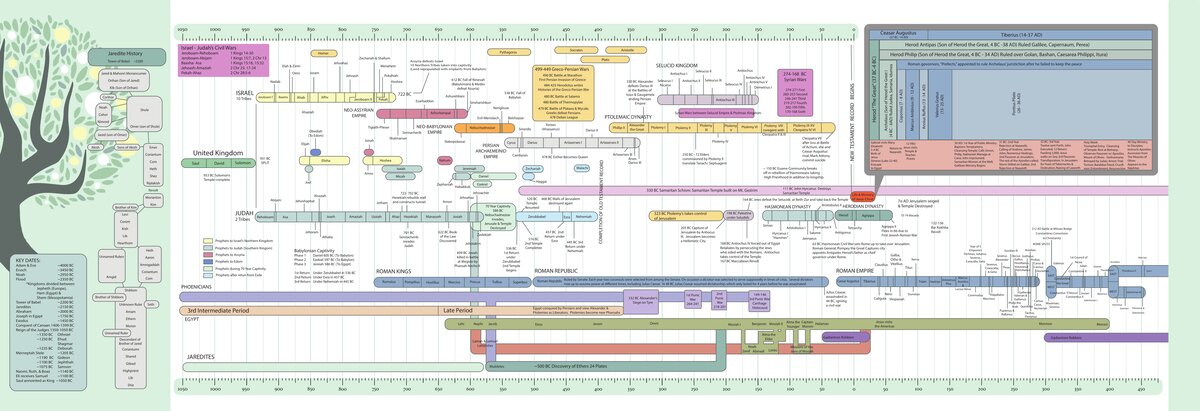
Tap to expand
Old Testament Timeline
From Creation through the Persian Period — tap the image to zoom, or download the full PDF.
Tap anywhere to close · Pinch to zoom