| Church Manuals | |
| Come Follow Me Manual — Week 47 | View |
| Scripture Helps: Old Testament | View |
| OT Seminary Teacher Manual | View |
| OT Institute Manual (1Ki–Mal) | View |
| Pearl of Great Price Manual | View |
| Scripture Reference | |
| Bible Dictionary | View |
| Topical Guide | View |
| Guide to the Scriptures | View |
| Church Media & Library | |
| Gospel for Kids (YouTube) | View |
| Bible Videos: Life of Jesus Christ | View |
| Church Magazines | View |
| Gospel Library | View |
Week 47
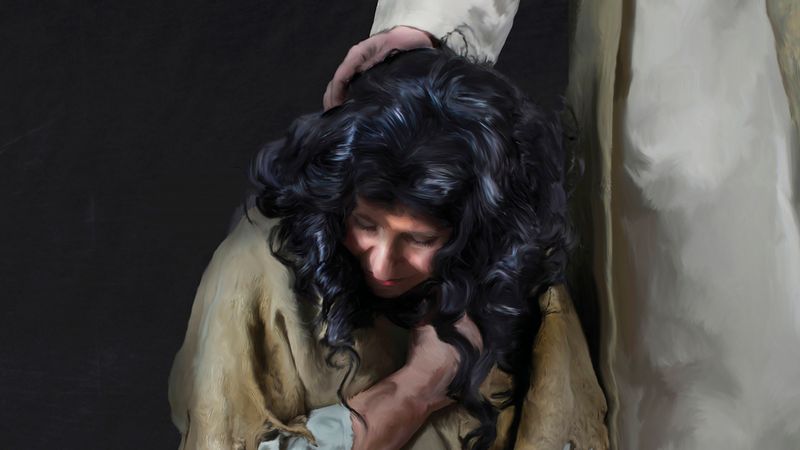
I Will Love Them Freely
Hosea 1–6; 10–14; Joel
November 16–22, 2026
Weekly Resources: Week 47
Hosea 1–6; 10–14; Joel — Overview
November 16–22, 2026
“I Will Love Them Freely”
Official Church Resources
OFFICIAL CHURCH RESOURCES▶
CHURCH MEDIA FOR FAMILIES▶
▶ Video Commentary
VIDEO COMMENTARY
▼





Specialized Audiences
WOMEN’S PERSPECTIVES
▶

FAMILY & CHILDREN’S RESOURCES
▶



Other Resources
- Messages of Christ — occasional Bible videos
- Women in the Scriptures — blog and articles
Reference & Study Materials
Scripture Central
Week 47 Study Hub
Interpreter
Week 47 Articles
Bible Project
This week’s book overviews
BIBLE PROJECT (2 book overviews · 3 selected themes · 11 more library videos)
▶
This week’s book overviews open from the Bible Project card above. Selected themes are highlighted below; the rest of the standing library remains available.
SELECTED FOR THIS WEEK — themes and word studies
 BibleProject — Covenants
Watch on BibleProject →
Hosea 2:19–20; 6:6 · Optional thematic resource


BibleProject library — standing collection, not chosen for this week (11 videos)
 i
Temple
 i
Sacrifice & Atonement
 i
Holiness
 i
Image of God
 i
The Messiah
 i
Tree of Life
 i
YHWH / LORD
 i
Shalom / Peace
 i
Khesed / Loyal Love
 i
Nephesh / Soul
 i
Ruakh / Spirit
ACADEMIC & SCHOLARLY SITES▶
MAPS & BIBLICAL LOCATIONS▶
JEWISH & SCHOLARLY RESOURCES▶
First, a Word About Where We Are
▶︎
Last week Daniel and his friends stayed true to the Lord in a foreign court, far from home. This week goes back in time and closer to home: to the Northern Kingdom of Israel, still living in its own land, still prosperous, and slowly forgetting the God who gave it everything. Within a generation it would be gone, carried away by Assyria (2 Kings 17:6).
Into that kingdom the Lord sent Hosea. Most of his book is warning, but underneath the warnings runs a love letter. The Bible Dictionary sums up the whole book in one line: "Hosea's fundamental idea is the love of God for His people."
The Overview walks every chapter of Hosea and Joel in order, so you can see the whole of both books.
The Son of Beeri and the Son of Pethuel
▶︎
Hosea. Almost everything we know about Hosea comes from his own book. Its first verse names his father, Beeri, and the kings in whose days he preached (Hosea 1:1); beyond that, we know only the wife and three children of chapters 1–3. His name means salvation. The Bible Dictionary calls him "the only prophet of the northern kingdom who has left written prophecies." He began preaching late in the reign of Jeroboam II, in the middle of the 700s BC, and he seems to have died before the kingdom's last, chaotic years. Isaiah, Amos and Micah preached in the same generation. So when Hosea speaks of Israel's unfaithfulness, he is not looking in from outside. He is speaking to his own people, in his own land, about a covenant he loved.
Joel. We know even less about Joel. His book gives only his father's name, Pethuel (Joel 1:1). He spoke to Judah, the southern kingdom, and his date is so uncertain that the Bible Dictionary allows anything from the 800s BC to after the return from Babylon. What is certain is the occasion: drought and locusts. Perhaps that suits him. Joel's book is not about Joel.
Why their books are in our Bible. Hosea and Joel open the last twelve books of the Old Testament, the "minor prophets," minor only in length. In Jewish tradition those twelve were copied together onto a single scroll and counted as one book, "the Twelve." The Talmud, the great collection of rabbinic teaching compiled after the time of Christ, gives a homely reason for keeping Hosea there: "Were it written separately, since it is small it would be lost" (Bava Batra 14b, William Davidson Edition on Sefaria, CC BY-NC). Small as they were, these books were treasured as the word of the Lord, and later scripture shows why. The Savior quoted Hosea in His own ministry (Matthew 9:13; 12:7; Luke 23:30). And Joel was the first scripture Peter quoted at Pentecost (Acts 2:16–21). Historical & Cultural Context, sections 1 and 5, gathers the details of each prophet's time.
"Thy Maker Is Thine Husband"
▶︎
This week the Lord speaks as a husband and Israel as His bride, sometimes tenderly and sometimes in pain. It helps to know before you start that Hosea did not invent this picture, and he was not the last to use it.
Why a marriage? A covenant is a promise that binds two parties to each other, and the closest covenant most people ever make is marriage. So the prophets reached for marriage to describe the covenant between the Lord and His people. The Old Testament Student Manual explains: "Because most people had personal knowledge of marriage, they understood the Lord better when the prophets used marriage terms to describe symbolically the covenants God made with them and they with Him." In that picture, "God is the husband and Israel, the covenant people, is the bride." The manual traces the marriage to the covenant with Abraham (Genesis 17), renewed at Sinai (Exodus 19:4–8).
The picture works both ways. Keeping the covenant is faithful love; turning to other gods is unfaithfulness. That is why Hosea's language can feel so strong. It is the language of a betrayed marriage, because that is how the Lord describes idolatry (Hosea 1:2).
The same picture across scripture. Once you know it, you will find it everywhere:
| Where | Who speaks | The words |
|---|---|---|
| Isaiah 54:5 | the Lord, through Isaiah | "For thy Maker is thine husband" |
| Isaiah 62:5 | Isaiah | "as the bridegroom rejoiceth over the bride, so shall thy God rejoice over thee" |
| Jeremiah 2:2 | the Lord, through Jeremiah | "I remember thee, the kindness of thy youth, the love of thine espousals" |
| Jeremiah 3:14 | the Lord, through Jeremiah | "Turn, O backsliding children, saith the LORD; for I am married unto you" |
| Ezekiel 16:8 | the Lord, through Ezekiel | "I sware unto thee, and entered into a covenant with thee… and thou becamest mine" |
| Matthew 9:15 | Jesus, speaking of Himself | "Can the children of the bridechamber mourn, as long as the bridegroom is with them?" |
| Matthew 25:1 | Jesus, in a parable | ten virgins "went forth to meet the bridegroom" |
| John 3:29 | John the Baptist, speaking of Jesus | "He that hath the bride is the bridegroom" |
| 2 Corinthians 11:2 | Paul | "I have espoused you to one husband, that I may present you as a chaste virgin to Christ" |
| Revelation 19:7 | a great multitude in John's vision | "the marriage of the Lamb is come, and his wife hath made herself ready" |
| Doctrine and Covenants 133:10 | the Lord, in modern revelation | "behold and lo, the Bridegroom cometh; go ye out to meet him" |
Who the Bridegroom is. The Old Testament speaks of the Lord as husband to a whole people. In the New Testament, Jesus calls Himself the bridegroom (Matthew 9:15), and modern revelation pictures His Second Coming as a wedding still ahead, asking His people to be "ready at the coming of the Bridegroom" (Doctrine and Covenants 33:17). So when Hosea's chapters turn hard, remember what kind of story you are reading. It is the story of a Husband who keeps His side of the covenant when His bride does not, and who goes looking for her. Key Passages, passage 1, reads Hosea's own marriage, and Word Studies, study 3, the word betroth.
The Love That Goes Looking
▶︎
The book's most important scene is small: the Lord sends Hosea after the wife who has left him, "Go yet, love a woman" (Hosea 3:1).
Notice the order. He does not wait for her to clean up her life and come knocking. He goes after her. That is how the Lord describes Himself all through the book: "I will allure her… and speak comfortably unto her" (Hosea 2:14). Key Passages, passage 1, reads the whole story.
If you have ever felt that you wandered too far to be wanted, Hosea begins with a God who comes looking.
The Questions This Week Raises — and Where Each One Is Answered
▶︎
| The question | Where it is taken up |
|---|---|
| Was Hosea really told to marry an unfaithful woman? | Key Passages, passage 1, and Jewish Perspective, section 1: readers differ, and the message is the covenant either way |
| Is Hosea's marriage a model for a hurting marriage? | Teaching Applications, section 6. It is not; it is a picture of the Lord's faithfulness |
| What does "mercy, and not sacrifice" mean, and why did Jesus quote it? | Key Passages, passage 2, and Word Studies, study 1 |
| When Matthew quotes "Out of Egypt have I called my son," who is the son, and whose words are they? | Key Passages, passage 3: the son is Jesus, returning from Egypt as a child. Matthew applies Hosea's words to Him in his own voice as narrator; they are not words the Savior spoke |
| What does "I will love them freely" really mean? | Word Studies, study 4, and Jewish Perspective, section 2 |
| Were Joel's locusts real? | Historical & Cultural Context, section 5: yes, and they became a picture of the day of the Lord |
| How is Joel's "pour out my spirit" being fulfilled? | Key Passages, passage 6 |
You are not expected to settle all of these. Some have clear answers; some are better held with reverence.
"Come, and Let Us Return"
▶︎
Halfway through the book the people say the right words: "Come, and let us return unto the LORD" (Hosea 6:1). But the Lord sighs. Their goodness was "as the early dew it goeth away" (6:4). They meant it at breakfast. By noon it was gone.
Most of us know that feeling. We resolve, and the resolve fades.
So the last chapter does something tender. It gives Israel the very words to say: "Take with you words, and turn to the LORD" (14:2). And then the Lord promises to be what Israel could not be: "I will be as the dew unto Israel" (14:5). The dew that kept evaporating from their goodness will now come from Him, every morning. The Jewish teachers noticed the same thing (Jewish Perspective, section 3).
So it is worth asking this week: where has my good resolve burned off by noon, and what would it mean to let the Lord be the dew?
"I Will Love Them Freely"
▶︎
The title of this week comes from the Lord's answer to that prayer: "I will love them freely" (Hosea 14:4).
The Hebrew word behind freely, nᵊḏāḇâ (נְדָבָה), is the word for a freewill offering (Word Studies, study 4). The Lord does not love His returning people because they have finally earned it, or as a payment owed. He loves them the way a worshipper brings a gift he did not have to bring: because He wants to.
That changes the way we come back. We do not have to arrive with a case to make. We bring words, a willing heart, and our need for healing. He brings the love.
What the Locust Ate
▶︎
Joel's people had watched four waves of locusts strip their fields, one after another, until nothing was left (Joel 1:4). Then the Lord made a promise that reaches further than crops: "I will restore to you the years that the locust hath eaten" (2:25).
Not the harvest. The years.
Joel spoke that promise to a whole people about real fields, and the verses around it describe the promise being kept: "the floors shall be full of wheat" (2:24), and "ye shall eat in plenty, and be satisfied" (2:26). Many readers have also found in it a hope for their own lost years. Joel does not say that every loss is undone in this life, or that what happened did not happen. What he shows is the kind of God who restores, and the way back he gives in one line: "rend your heart, and not your garments" (2:13).
Poured Out
▶︎
Joel's last great promise is the one Moroni repeated to the young Joseph Smith in 1823 (Joseph Smith—History 1:41): "I will pour out my spirit upon all flesh" (2:28).
Notice the word pour. Not a drip, not a trickle. And notice who receives it: sons and daughters, old and young, servants and handmaids. No one is left outside. The manual quotes Elder David A. Bednar's reminder that the Spirit is usually "still and small and incremental over time," so the outpouring may come quietly, in ordinary days. Key Passages, passage 6, reads the prophecy and its fulfillments.
One Verse to Take With You
▶︎
The book of Hosea opens with a broken marriage and ends with a promise:
"I will heal their backsliding, I will love them freely: for mine anger is turned away from him." — Hosea 14:4
Whatever you have turned to, and however long you have been gone, this is what the Lord says when you turn back. He heals. He loves. And He does it freely.
This week's Study Guide begins with the Overview.
Week 47
Hosea 1–6; 10–14; Joel — Overview
"I Will Love Them Freely"
November 16–22, 2026
1. Week 47: Overview
A man is sent to find his wife and bring her home.
She has left him for other lovers. And the Lord says to the prophet Hosea, "Go yet, love a woman beloved of her friend, yet an adulteress, according to the love of the LORD toward the children of Israel" (3:1). Hosea goes. He pays "fifteen pieces of silver, and for an homer of barley, and an half homer of barley" (3:2), and he brings her back.
That small, costly scene is the heart of this week. Hosea's marriage is a picture the Lord Himself chose for His covenant with Israel, a people who had promised to be His and then went after other gods. Scripture Helps puts it simply: "the Lord can be compared to a loving and faithful husband," one who "longs for and makes efforts to persuade His unfaithful bride to return to Him." The book ends with the promise this week takes its title from: "I will heal their backsliding, I will love them freely" (14:4).
The week also brings a second, shorter book. Joel speaks to a land stripped bare by locusts and drought, and his message is the same invitation in other words: "rend your heart, and not your garments, and turn unto the LORD your God" (2:13). Then he promises something Latter-day Saints have watched begin in their own day: "I will pour out my spirit upon all flesh" (2:28).
Three questions to carry into any chapter this week
- What has the Lord's people turned to instead of Him, and what does He say it cost them?
- Where does the Lord promise to heal, restore or bring someone home?
- What would it mean for me to "return unto the LORD" (14:1) this week, and what does He promise when I do?
Four easy misreadings, named once
- Hosea's marriage is not a model for a hurting marriage. It is a picture of the covenant between the Lord and His people. Scripture Helps notes that scholars have long debated whether the command was literal or symbolic, and that either way, its central message lies in what the marriage symbolizes. No one in an unfaithful or harmful marriage is being told to stay in it (Teaching Applications says more).
- "Minor prophets" means shorter books, not lesser ones. Scripture Helps: the name is used "not because their message is less important but because their books are shorter in length."
- "David their king" (3:5) is not King David come back. The Old Testament Student Manual calls it "one of the titles of the Messiah or Jesus Christ" (Kings–Malachi, 10-11).
- Joel's locusts were real before they were a symbol. The Bible Dictionary says the occasion of Joel's prophecy "was a severe visitation of drought and locusts." The plague becomes a picture of the day of the Lord, but it began as hunger in real fields.
Assigned chapters are in bold. This week walks through both books in full, in order, so the assigned chapters make sense where they sit. Hosea has two parts: Hosea's marriage and children (1–3), then his warnings and promises to Israel (4–14), as Scripture Helps divides it. Joel moves from a locust plague (1) to the day of the Lord and the Spirit poured out (2) to the judgment of the nations and a fountain from the Lord's house (3).
17 rows — click to collapse
| Chapter | What happens | Assigned |
|---|---|---|
| Hosea 1 | A wife and three children whose names are warnings | Yes |
| Hosea 2 | "I will allure her… I will betroth thee unto me for ever" | Yes |
| Hosea 3 | The wife bought back; "David their king" in the latter days | Yes |
| Hosea 4 | "No truth, nor mercy, nor knowledge of God in the land" | Yes |
| Hosea 5 | Ephraim runs to Assyria, which cannot heal it | Yes |
| Hosea 6 | "Come, and let us return"; "I desired mercy, and not sacrifice" | Yes |
| Hosea 7 | A cake not turned; a silly dove | — |
| Hosea 8 | "Sown the wind… reap the whirlwind" | — |
| Hosea 9 | Grapes in the wilderness; wanderers among the nations | — |
| Hosea 10 | An empty vine; "it is time to seek the LORD" | Yes |
| Hosea 11 | "When Israel was a child, then I loved him"; "How shall I give thee up?" | Yes |
| Hosea 12 | Jacob wept and prevailed; "turn thou to thy God" | Yes |
| Hosea 13 | "There is no saviour beside me"; "O death, I will be thy plagues" | Yes |
| Hosea 14 | "I will heal their backsliding, I will love them freely" | Yes |
| Joel 1 | The locusts; a solemn assembly | Yes |
| Joel 2 | The day of the Lord; "rend your heart"; the years restored; the Spirit poured out | Yes |
| Joel 3 | The valley of decision; a fountain from the house of the Lord | Yes |
Hosea preached in the Northern Kingdom of Israel in the middle of the 700s BC, while it was prosperous on the outside and falling apart on the inside. Within a generation the Assyrian empire would take its capital, Samaria, and carry its people away (2 Kings 17:5–6). The Assyria field guide tells that story in The Fall of the North & the Lost Tribes, with Hosea in the middle of it. Hosea speaks to that kingdom, often by the name of its leading tribe, Ephraim. Joel spoke to Judah, the southern kingdom, at a time no one can now fix with confidence. Historical & Cultural Context, sections 1 and 5, gathers what is known about each prophet's time.
Hosea 1 — A Wife and Three Names — assigned
The book begins with a command that has puzzled readers for centuries: "Go, take unto thee a wife of whoredoms and children of whoredoms: for the land hath committed great whoredom, departing from the LORD" (1:2). The reason comes in the same breath. Hosea's household is to be a living picture of Israel: the wife stands for a nation that has left its covenant with the Lord, and the children for the people born into that broken covenant. Hosea marries Gomer, and the Lord names each of their three children. Each name is a message, repeated every time the child was called.
Jezreel. The first son is named for the valley and city where, a few generations earlier, Jehu had seized Israel's throne. The Lord had sent him to end the house of Ahab and Jezebel (2 Kings 9:7), and he did it in blood: Jezebel thrown from a window at Jezreel, and the heads of Ahab's seventy sons laid in two heaps at the gate (2 Kings 9:30–33; 10:7–8). The Lord promised that Jehu's "children of the fourth generation shall sit on the throne of Israel," yet "Jehu took no heed to walk in the law of the LORD God of Israel with all his heart" and kept the golden calves (2 Kings 10:30–31). In Hosea's early years the king was Jeroboam II, Jehu's great-grandson, and this child's name announced the end: "I will avenge the blood of Jezreel upon the house of Jehu, and will cause to cease the kingdom of the house of Israel" (1:4).
It came true. Jeroboam's son Zachariah reigned six months and was murdered, and the record adds, "This was the word of the LORD which he spake unto Jehu… And so it came to pass" (2 Kings 15:8–12). The name itself means "God shall sow," and the Old Testament Student Manual explains why that is a warning: sowing was done by scattering seed by hand, so the name "undoubtedly alludes to the overthrow and scattering of Israel."
Lo-ruhamah. The second child is a daughter. Her name joins two Hebrew words: lōʾ (לֹא), "not," and a form of rāḥam (רָחַם), "to love deeply, to have compassion," meaning "she has been shown compassion." Together they say that no mercy has been shown: "for I will no more have mercy upon the house of Israel; but I will utterly take them away" (1:6). Jezreel's name judged the royal house; this one reaches the whole nation. Judah, the southern kingdom, is set apart for now: "But I will have mercy upon the house of Judah" (1:7).
Lo-ammi. The third, a son, is the hardest to hear. His name joins the same lōʾ (לֹא), "not," to ʿam (עַם), "people," with an ending that means "my": "not my people." "Call his name Lo-ammi: for ye are not my people, and I will not be your God" (1:9). Those words reverse the covenant's own promise. The Lord had told Israel at Sinai, "I will walk among you, and will be your God, and ye shall be my people" (Leviticus 26:12); this child's name says the same thing backwards. The Old Testament Student Manual calls it "like a lament," showing "that by their harlotry Israel could not be thought of as God's people."
Read in order, the names move inward: from the king's house, to mercy withdrawn from the nation, to the covenant bond itself. Scripture Helps says they "represent consequences that Israel would suffer because of their own unfaithfulness." The children had done nothing wrong. Their names describe what Israel's unfaithfulness had done to its relationship with God.
Then, before the chapter even ends, the Lord turns the last name inside out: "in the place where it was said unto them, Ye are not my people, there it shall be said unto them, Ye are the sons of the living God" (1:10). And He looks further still, to a day when the two divided kingdoms come back together: "Then shall the children of Judah and the children of Israel be gathered together, and appoint themselves one head" (1:11). The names are warnings, but they are not the last word.
Key Passages, passage 1, follows each name to the place in chapter 2 where the Lord answers it.
Hosea 2 — "I Will Allure Her" — assigned
The Lord speaks as a wronged husband, and Israel is the wife who has said, "I will go after my lovers, that give me my bread and my water" (2:5). Her "lovers" are the Baals, the Canaanite gods of rain and harvest that many Israelites had begun to worship (Historical & Cultural Context, section 3). She never understood who had really been feeding her: "For she did not know that I gave her corn, and wine, and oil, and multiplied her silver and gold, which they prepared for Baal" (2:8). Her ways will be hedged with thorns until she says, "I will go and return to my first husband; for then was it better with me than now" (2:7). Some lines in this chapter are hard to read. They speak of the covenant in the language of a broken marriage, and they are not a pattern for how anyone should treat a spouse.
And then the turn: "I will allure her… and speak comfortably unto her" (2:14). The valley of Achor, where Joshua once said to Achan, "Why hast thou troubled us?" (Joshua 7:24–26), becomes "a door of hope" (2:15). She will call Him "Ishi" (my husband) and not "Baali" (my master) (2:16), and the Lord promises a peace that reaches even the animals: "I will break the bow and the sword and the battle out of the earth, and will make them to lie down safely" (2:18). Three times He says "I will betroth thee unto me" (2:19–20), and the chapter ends by reversing the children's names: "I will say to them which were not my people, Thou art my people" (2:23).
That promise rests on two words that carry more than their English shows: lovingkindness, in Hebrew ḥeseḏ (חֶסֶד), the Lord's steady covenant love, and betroth, ʾāraś (אָרַשׂ), a promise as binding as marriage itself. Word Studies, studies 1 and 3, explain each one.
Hosea 3 — Bought Back — assigned
In five verses Hosea acts out the whole book. He is sent to love an unfaithful woman, whom most readers take to be his wife, Gomer; he buys her back; and he asks her to wait faithfully "many days" (3:3).
Then he says what the waiting means for the nation. Israel, too, "shall abide many days without a king, and without a prince, and without a sacrifice" (3:4): a long season with no throne of its own and none of its familiar worship, which is what exile in Assyria would bring. But exile is not the end. "Afterward shall the children of Israel return, and seek the LORD their God, and David their king; and shall fear the LORD and his goodness in the latter days" (3:5). Hosea lived more than two centuries after King David, so the David he expects is a king still to come. Ezekiel, two weeks ago, heard the same promise: "And David my servant shall be king over them" (Ezekiel 37:24).
Key Passages, passage 1, explains what the price Hosea paid may mean, and Historical & Cultural Context, section 4, what silver and barley were worth.
Hosea 4 — The Lord's Controversy — assigned
Hosea's warnings begin like a court case: "the LORD hath a controversy with the inhabitants of the land, because there is no truth, nor mercy, nor knowledge of God in the land" (4:1). In the King James Bible a controversy is a lawsuit: the Lord is bringing charges against His covenant people. The charge sheet that follows reads like the Ten Commandments broken one after another: "By swearing, and lying, and killing, and stealing, and committing adultery, they break out" (4:2; compare Exodus 20:13–16). Even the land suffers for it; Hosea pictures the fields, the birds and the fish failing together (4:3).
The heaviest charge falls on the leaders. "My people are destroyed for lack of knowledge" (4:6), because the priests who should have taught them had forgotten the law, and so it will be "like people, like priest" (4:9). Without that knowledge the people turn to anything that promises an answer: "My people ask counsel at their stocks, and their staff declareth unto them" (4:12), that is, they consult carved wood and divining sticks. Israel has become "as a backsliding heifer" (4:16), a young cow that plants its feet and will not be led. Those three missing things in 4:1 are the ones the rest of the book keeps returning to, and the betrothal of 2:19–20 is where the Lord promises to supply them (Word Studies, study 3).
Hosea 5 — No Healing in Assyria — assigned
Hosea now calls everyone responsible to account: "Hear ye this, O priests; and hearken, ye house of Israel; and give ye ear, O house of the king" (5:1). Judah, the southern kingdom, is warned alongside Ephraim, and the Lord describes what is coming in two startling pictures: first slow decay, "as a moth" and "as rottenness" (5:12), then a lion that tears (5:14).
When Ephraim saw its sickness, it went "to the Assyrian… yet could he not heal you, nor cure you of your wound" (5:13). That is the first time the word heal appears in the book, and it is a failure: the people look for healing in the wrong place. The chapter ends with the Lord withdrawing, not to abandon them but to wait for them: "I will go and return to my place, till they acknowledge their offence, and seek my face: in their affliction they will seek me early" (5:15).
Hosea 6 — "Come, and Let Us Return" — assigned
Chapter 6 opens with the people's reply, and it sounds like everything the Lord was waiting for: "Come, and let us return unto the LORD: for he hath torn, and he will heal us" (6:1). They are confident He will answer quickly: "he shall come unto us as the rain, as the latter and former rain unto the earth" (6:3).
But the Lord's reply is a lament, not applause: "O Ephraim, what shall I do unto thee?… for your goodness is as a morning cloud, and as the early dew it goeth away" (6:4). The words were right; the faithfulness behind them did not last. Israel was still bringing offerings, yet "they like men have transgressed the covenant" (6:7). So the Lord says what He wanted all along: "For I desired mercy, and not sacrifice; and the knowledge of God more than burnt offerings" (6:6). The Savior quoted that verse twice, in His own voice (Matthew 9:13; Matthew 12:7).
Key Passages, passage 2, shows how one Hebrew word, ḥeseḏ (חֶסֶד), ties the Lord's lament in 6:4 to His answer in 6:6, and when the Savior used the verse.
Hosea 7 — A Cake Not Turned — not assigned
"When I would have healed Israel, then the iniquity of Ephraim was discovered" (7:1). Discovered here means "laid bare": the Lord wanted to heal, and what came to light instead was the people's sin. Hosea reaches for kitchen pictures. The court is "hot as an oven" with plots, and "all their kings are fallen: there is none among them that calleth unto me" (7:7). That was literally true. In the years after Jeroboam II died, four of Israel's last six kings were murdered by the men who took their thrones (2 Kings 15:10, 14, 25, 30).
Ephraim is "a cake not turned" (7:8), burnt on one side and raw on the other. It is "like a silly dove without heart: they call to Egypt, they go to Assyria" (7:11), flying from one foreign power to another for protection. And it has aged without noticing: "gray hairs are here and there upon him, yet he knoweth not" (7:9). Even its prayers miss the mark: "they have not cried unto me with their heart, when they howled upon their beds" (7:14).
Hosea 8 — Sowing the Wind — not assigned
Israel has made kings "but not by me" (8:4) and has bowed to a golden calf in Samaria: "the workman made it; therefore it is not God" (8:6). The chapter's most famous line has become a proverb: "For they have sown the wind, and they shall reap the whirlwind" (8:7). It is a farmer's warning: what you plant comes back larger than you sowed it. Hosea finishes the picture, which the proverb usually leaves off: "it hath no stalk: the bud shall yield no meal: if so be it yield, the strangers shall swallow it up" (8:7). Even the little that grows will feed foreigners. The Lord had written "the great things of my law" for them, "but they were counted as a strange thing" (8:12).
Hosea 9 — Grapes in the Wilderness — not assigned
Harvest was Israel's season of joy, and Hosea warns that the joy will not last: "Rejoice not, O Israel, for joy, as other people" (9:1). Exile is coming. "Ephraim shall return to Egypt, and they shall eat unclean things in Assyria" (9:3): Egypt here stands for bondage again, and in a foreign land they will not be able to keep the law of clean food or bring offerings to the Lord's house. "What will ye do in the solemn day, and in the day of the feast of the LORD?" (9:5).
Then the Lord remembers how it began: "I found Israel like grapes in the wilderness; I saw your fathers as the firstripe in the fig tree at her first time" (9:10). Grapes in a desert are a delight no one expects. But the same verse recalls the first betrayal, on the edge of the promised land: "they went to Baal-peor" (see Numbers 25:3). The rest of the chapter is grief, and some of its lines about children are hard to read (9:11–16). It ends with a people who "shall be wanderers among the nations" (9:17).
Hosea 10 — An Empty Vine — assigned
"Israel is an empty vine, he bringeth forth fruit unto himself" (10:1). The more the land prospered, the more altars it built. The people have lost faith in their kings too: "We have no king, because we feared not the LORD; what then should a king do to us?" (10:3). The calf at Beth-aven will be carried to Assyria (10:5–6). Beth-aven, "house of iniquity," is Hosea's bitter name for Bethel, "house of God." The people will "say to the mountains, Cover us; and to the hills, Fall on us" (10:8), words the Savior spoke on His way to the cross (Luke 23:30).
The chapter closes with farm work. Ephraim has been like a heifer that "loveth to tread out the corn" (10:11), the easy job, where an animal walks over the grain and may eat as it works (compare Deuteronomy 25:4). Now the harder work of plowing is coming. Then the invitation: "Sow to yourselves in righteousness, reap in mercy; break up your fallow ground: for it is time to seek the LORD, till he come and rain righteousness upon you" (10:12). Fallow ground is a field left unplowed so long that it has hardened; Jeremiah would use the same words to Judah (Jeremiah 4:3). The next verse shows what they had planted instead: "Ye have plowed wickedness, ye have reaped iniquity" (10:13), the same law of sowing and reaping as the whirlwind of 8:7.
Hosea 11 — "When Israel Was a Child" — assigned
Here the Lord speaks as a parent instead of a husband. "When Israel was a child, then I loved him, and called my son out of Egypt" (11:1). He taught Ephraim to walk, "but they knew not that I healed them" (11:3), and He drew them "with cords of a man, with bands of love" (11:4). Yet the more He called, the further they went: "they sacrificed unto Baalim, and burned incense to graven images" (11:2). Because "they refused to return," Assyria would rule them (11:5).
Then comes one of the most tender cries in scripture: "How shall I give thee up, Ephraim?… mine heart is turned within me" (11:8). He will not destroy them, "for I am God, and not man" (11:9). The chapter ends with a homecoming. His scattered children will come back trembling, "as a bird out of Egypt, and as a dove out of the land of Assyria: and I will place them in their houses, saith the LORD" (11:11).
Centuries later, Matthew saw 11:1 fulfilled when the boy Jesus came back from Egypt (Matthew 2:15). Key Passages, passage 3, follows the parent's grief verse by verse and explains why those words in Matthew are Matthew's own, not the Savior's.
Hosea 12 — Jacob Wept — assigned
Hosea reaches back to the ancestor whose name the nation bears. Jacob "took his brother by the heel in the womb, and by his strength he had power with God" (12:3). Then Hosea adds something Genesis never says. The account of Jacob wrestling through the night in Genesis 32 mentions no tears; Jacob only refuses to let go, "except thou bless me" (Genesis 32:26). Hosea remembers the same night this way: "he wept, and made supplication unto him: he found him in Beth-el" (12:4). In Hosea's telling, the man who prevailed was the man who wept and pleaded. The lesson for his descendants follows: "Therefore turn thou to thy God: keep mercy and judgment, and wait on thy God continually" (12:6). The Lord has never stopped speaking: "I have also spoken by the prophets, and I have multiplied visions" (12:10), and "by a prophet the LORD brought Israel out of Egypt" (12:13).
Hosea 13 — No Saviour Beside Me — assigned
The chapter opens on idols. The people "have made them molten images of their silver," and they say of them, "Let the men that sacrifice kiss the calves" (13:2); kissing an idol was an act of worship (compare 1 Kings 19:18). Then Hosea turns an earlier image around. In 6:4 Israel's goodness vanished like dew; now the people themselves will vanish "as the morning cloud, and as the early dew that passeth away" (13:3).
The Lord explains how it happened, and the explanation is old: "they were filled, and their heart was exalted; therefore have they forgotten me" (13:6). Moses had warned of exactly this: "Lest when thou hast eaten and art full… Then thine heart be lifted up, and thou forget the LORD thy God" (Deuteronomy 8:12, 14). He reminds Israel who brought them out of Egypt: "thou shalt know no god but me: for there is no saviour beside me" (13:4), and "O Israel, thou hast destroyed thyself; but in me is thine help" (13:9).
And in the middle of the warnings stands a promise about death itself: "I will ransom them from the power of the grave; I will redeem them from death: O death, I will be thy plagues; O grave, I will be thy destruction" (13:14). Paul echoed it when he wrote of the Resurrection, "O death, where is thy sting? O grave, where is thy victory?" (1 Corinthians 15:55). His wording is closer to the Septuagint, the Greek translation of the Old Testament made by Jewish scholars before the time of Christ. It reads Hosea's line as two where? questions; the King James Hosea translates the Hebrew differently. The chapter's last verse describes the horror of Samaria's fall in a few lines, and may not be suitable for children.
Hosea 14 — "I Will Love Them Freely" — assigned
Chapter 13 closed with a warning of Samaria's fall. Hosea could have ended the book there, with judgment. Instead the last chapter is an invitation, and it gives Israel the very words to accept it. It moves in three steps.
Israel's prayer. The prophet calls, "O Israel, return unto the LORD thy God; for thou hast fallen by thine iniquity" (14:1), and then hands the people a prayer: "Take with you words, and turn to the LORD: say unto him, Take away all iniquity, and receive us graciously" (14:2). In it Israel gives up, one by one, the things this book has watched them lean on: "Asshur shall not save us; we will not ride upon horses: neither will we say any more to the work of our hands, Ye are our gods" (14:3). Ephraim had gone to the Assyrian for a healing that never came (5:13) and had melted its own silver into idols (13:2). Now it says what it might have said all along: "for in thee the fatherless findeth mercy."
The Lord's answer. He replies in the verse that gives this week its title: "I will heal their backsliding, I will love them freely: for mine anger is turned away from him" (14:4). He promises to be "as the dew unto Israel," and Israel will grow like a lily, put down roots like Lebanon, and spread its branches with the beauty of an olive tree (14:5–7). The nation Hosea had called "an empty vine" that "bringeth forth fruit unto himself" (10:1) now hears the Lord say, "From me is thy fruit found" (14:8).
A closing word to the reader. The last verse steps outside the story and reads like a closing proverb: "Who is wise, and he shall understand these things? prudent, and he shall know them? for the ways of the LORD are right, and the just shall walk in them: but the transgressors shall fall therein" (14:9). The same ways of the Lord lie in front of everyone; one person walks in them and another stumbles in them. Israel's story has been told, and the choice now belongs to whoever has read it.
Key Passages, passage 4, reads Israel's prayer and the Lord's answer verse by verse. Word Studies explains the Hebrew behind backsliding and return, both built on šûḇ (שׁוּב) (study 2), and freely, nᵊḏāḇâ (נְדָבָה) (study 4).
Joel 1 — The Locusts — assigned
Joel opens with a question for the oldest people in the land: "Hath this been in your days, or even in the days of your fathers?" (1:2). No one alive had seen anything like it. Wave after wave of insects had stripped the country: "That which the palmerworm hath left hath the locust eaten; and that which the locust hath left hath the cankerworm eaten; and that which the cankerworm hath left hath the caterpiller eaten" (1:4). Joel wants it remembered: "Tell ye your children of it" (1:3).
He describes the swarm the way you would describe an invasion: "a nation is come up upon my land, strong, and without number, whose teeth are the teeth of a lion" (1:6). Keep that picture in mind, because chapter 2 turns it into an army. Joel never names an enemy nation, and no one can date his book with confidence (Historical & Cultural Context, section 5). The Old Testament Student Manual notes that many scholars also read the four waves of 1:4 as a picture of the empires that later swept over the land, first Assyria and Babylon, then the Medes and Persians. The Assyria field guide's chapter The War Machine shows what an invasion by such an empire meant. The locusts strip the bark until the fig branches "are made white" (1:7), and Joel sums up the loss in one line: "joy is withered away from the sons of men" (1:12).
The worst loss is not in the fields. With no grain or wine left, the daily offerings at the temple have stopped: "the meat offering and the drink offering is withholden from the house of your God" (1:13). (In the King James Bible a meat offering is an offering of flour, not of meat; see Leviticus 2:1.) The famine had silenced Judah's worship. So Joel calls the whole people to the temple for a fast and a "solemn assembly," to "cry unto the LORD" (1:14), and for the first time he names what the disaster points to: "Alas for the day! for the day of the LORD is at hand" (1:15). The chapter ends with even the animals praying: "The beasts of the field cry also unto thee" (1:20).
Joel 2 — The Day of the Lord, and a Promise — assigned
The chapter opens with an alarm: "Blow ye the trumpet in Zion, and sound an alarm in my holy mountain… for the day of the LORD cometh" (2:1). The day of the LORD is Joel's phrase for the time when the Lord steps in to judge and to rescue (Historical & Cultural Context, section 7). The swarm of chapter 1 now becomes an army. Its warriors look like horses and run like soldiers; they climb the walls and never break ranks, and the earth shakes and the sun and moon go dark before them (2:4–10). Then comes the surprise: "the LORD shall utter his voice before his army" (2:11). The army is the Lord's own; later He calls the locusts "my great army which I sent among you" (2:25). The disaster is His warning, and Joel asks the question it raises: the day of the Lord is "great and very terrible; and who can abide it?" (2:11).
The answer comes at once: "turn ye even to me with all your heart" (2:12), and "rend your heart, and not your garments" (2:13). Joel calls everyone to a fast, from the elders to "those that suck the breasts" (2:16), and the priests are to weep "between the porch and the altar" and pray, "Spare thy people, O LORD" (2:17). Then comes the turning point of the book: "Then will the LORD be jealous for his land, and pity his people" (2:18). Everything before that verse is warning; everything after it is promise.
The former and the latter rain. Israel has no great river to water its fields, the way Egypt has the Nile, and nearly all its rain falls in the cooler half of the year, in two seasons farmers watched for. The former rain came in the autumn and softened ground baked hard by summer, so it could be plowed and sown; the latter rain came in the spring and filled out the grain before harvest (Historical & Cultural Context, section 6). Miss either one and there is no crop. That is the drought behind chapter 1, where "the corn is withered" and "the rivers of waters are dried up" (1:17, 20). So the promise answers the disaster directly: "he will cause to come down for you the rain, the former rain, and the latter rain" (2:23).
The rain was also a covenant sign. Moses had promised, "I will give you the rain of your land in his due season, the first rain and the latter rain, that thou mayest gather in thy corn, and thy wine, and thine oil" (Deuteronomy 11:14), and warned that if Israel turned to other gods, the Lord would "shut up the heaven, that there be no rain" (11:17). Joel names the same three crops. Corn, wine and oil fail in 1:10, and they come back in 2:24: "the floors shall be full of wheat, and the fats shall overflow with wine and oil" (fats are vats). When the rain returns, the covenant blessing returns with it. The Old Testament Student Manual calls the returning rains "a symbol of God's acceptance of His people, who had been chastened and redeemed."
The two rains and the Lord's plan. Scripture keeps coming back to these two rains, and it uses them for more than weather. Hosea had already said the Lord Himself "shall come unto us as the rain, as the latter and former rain" (Hosea 6:3). James tied the two rains to the Second Coming: "Be patient therefore, brethren, unto the coming of the Lord. Behold, the husbandman waiteth… until he receive the early and latter rain. Be ye also patient… for the coming of the Lord draweth nigh" (James 5:7–8). Read that way, the two rains trace the whole shape of the Lord's work with His people. The former rain falls at planting, and the Savior said, "He that soweth the good seed is the Son of man" (Matthew 13:37): a picture of His first coming, which the Old Testament looked toward and the New Testament records. The latter rain ripens the crop for harvest, and "the harvest is the end of the world" (Matthew 13:39): a picture of His Second Coming, which Joel pictures as a harvest in 3:13. Joel's next promise follows the same pattern, a Spirit poured out first at Pentecost and again in the latter days. This is a way of reading the picture rather than something Joel says outright, but it follows the way scripture itself uses it.
One phrase in 2:23 adds a teacher to the picture. The former rain moderately translates two Hebrew words that can also be read "the teacher for righteousness," because môreh (מוֹרֶה) means both "early rain" and "teacher." The Latin Vulgate, the Bible of the Western church for a thousand years, reads doctorem justitiæ, "a teacher of righteousness." The medieval Jewish commentator Rashi read it as "Your prophets who teach you to return to Me" (Judaica Press translation, on Sefaria).
And the Lord will give back what was lost: "I will restore to you the years that the locust hath eaten" (2:25). Then He promises more than crops: "I will pour out my spirit upon all flesh" (2:28). Joel says this will happen "afterward." When Peter quoted the promise at Pentecost, he said "in the last days" (Acts 2:17), and in 1823 the angel Moroni quoted it to Joseph Smith as a prophecy soon to be fulfilled (Joseph Smith—History 1:41).
Key Passages reads the chapter's two halves in turn: passage 5, the call to rend the heart and the promise of restored years; passage 6, the Spirit poured out and how that promise has been fulfilled.
Joel 3 — The Valley of Decision — assigned
Joel's last chapter widens the view from one land to the whole world. When the Lord brings His scattered people home (3:1), He will "gather all nations, and will bring them down into the valley of Jehoshaphat, and will plead with them there for my people and for my heritage Israel, whom they have scattered among the nations, and parted my land" (3:2). Plead is a courtroom word: the Lord brings the nations to trial for what they did to His people. The charges are specific. They divided up His land, carried His silver and gold into their own temples, and sold the people of Judah, even children, as slaves far from home (3:2–6). Tyre and Zidon were the great Phoenician trading cities on the coast north of Israel; the Canaan field guide's chapter The Phoenicians describes their trade, which, as this verse shows, included human beings.
Where the valley is, and what "decision" means. Jehoshaphat was a king of Judah, but the valley called by his name is mentioned only here. The Bible Dictionary places it "East of Jerusalem, between the city and the mount of Olives." Joel explains the name by what happens there: "for there will I sit to judge all the heathen round about" (3:12). Then he calls the same place by a second name: "Multitudes, multitudes in the valley of decision: for the day of the LORD is near in the valley of decision" (3:14). Read in its setting, the decision is the Lord's verdict. Joel has just pictured judgment as a harvest ripe for the sickle and a winepress full to overflowing (3:13), and the crowds in the valley are waiting to hear it. For many readers the phrase has also come to stand for the choice each person makes before the Lord, which is the choice Joel urged in 2:12.
Plowshares into swords. A plowshare is the metal blade at the front of a plow that cuts the furrow, and a pruninghook is the curved knife used to trim vines. Metal tools were precious in ancient Israel. In Saul's day the Israelites had no smith of their own and went down to the Philistines just "to sharpen every man his share" (1 Samuel 13:19–20). So Joel's call to the nations is a call to total war: "Proclaim ye this among the Gentiles; Prepare war, wake up the mighty men… Beat your plowshares into swords, and your pruninghooks into spears: let the weak say, I am strong" (3:9–10). Every farm tool is hammered into a weapon, and even the weak must pretend to be strong. It is a summons, almost a dare, to bring everything they have to the valley where the Lord will judge them (3:12).
The same words appear the other way round in Isaiah and Micah. Both describe the last days, when "the mountain of the LORD's house" is established and the nations come to learn His ways (Isaiah 2:2–3). Then "he shall judge among the nations… and they shall beat their swords into plowshares, and their spears into pruninghooks: nation shall not lift up sword against nation, neither shall they learn war any more" (Isaiah 2:4; Micah 4:3). Micah adds the farmer's picture of peace: "they shall sit every man under his vine and under his fig tree; and none shall make them afraid" (Micah 4:4). No one knows whether Joel wrote before or after them (Historical & Cultural Context, section 5), but read together the three passages show one scene from two sides. In Joel the nations arrive armed for judgment. In Isaiah and Micah, once the Lord has judged, they turn their weapons back into tools. The peace comes after the reckoning, and it is the Lord's judgment that brings it.
Then the noise gives way to promise. "The LORD also shall roar out of Zion, and utter his voice from Jerusalem… but the LORD will be the hope of his people" (3:16). The Old Testament Student Manual reads the chapter as a picture of "the great signs and judgments to take place in the latter days just before the return of the Lord," and modern revelation uses Joel's own words for that return: "he shall utter his voice out of Zion, and he shall speak from Jerusalem" (Doctrine and Covenants 133:21). The verse before it says He "shall stand upon the mount of Olivet" (133:20), the hill beside the valley. The book ends with water: "a fountain shall come forth of the house of the LORD" (3:18), and "the LORD dwelleth in Zion" (3:21). Two weeks ago, Ezekiel's vision showed a river flowing from the Lord's house (Ezekiel 47:1); Joel saw the same promise.
If you follow only one thread through Hosea, follow the word heal. In Hebrew it is a single word, rāp̄āʾ (רָפָא), and it appears exactly five times in the book.
| Where | What happens |
|---|---|
| 5:13 | Ephraim runs to Assyria for healing; "yet could he not heal you" |
| 6:1 | the people say, "he hath torn, and he will heal us" |
| 7:1 | "When I would have healed Israel", but they were not ready |
| 11:3 | He healed them as children, "but they knew not that I healed them" |
| 14:4 | the promise: "I will heal their backsliding, I will love them freely" |
Read in order, it is the story of the whole book. The people looked for healing everywhere except from the One who could give it, and He never stopped offering it.
| Part | Chapters | What it does | Connections in Restoration scripture |
|---|---|---|---|
| Hosea's family | Hosea 1–3 | a marriage, three names, a wife bought back | Doctrine and Covenants 58:42: sins "I, the Lord, remember them no more" |
| Warnings and promises | Hosea 4–13 | no knowledge of God; mercy, not sacrifice; a parent's love | Alma 34:15: mercy that "overpowereth justice" |
| The invitation home | Hosea 14 | return; healing; love given freely | Moroni 10:32: "Yea, come unto Christ" |
| Locusts and the day of the Lord | Joel 1–2 | loss, repentance, restoration, the Spirit poured out | Joseph Smith—History 1:41: Moroni quotes Joel 2:28–32 |
| The nations and Zion | Joel 3 | the valley of decision; the Lord dwells in Zion | Doctrine and Covenants 45:66: the New Jerusalem, "a land of peace" |
Hosea preached to people who had wandered so far that they no longer noticed how far they had gone. Joel preached to people who had lost their harvest, their offerings and their hope. Both prophets could have closed the door. Neither did.
The Lord in these books does not pretend betrayal is small, and He does not pretend that loss does not hurt. He goes after His bride, pays to bring her home, calls a people He had named "not my people" His own again, and promises to restore years that seemed eaten away for good. When a reader of any age wonders whether it is too late, Hosea's last chapter answers with the Lord's own words: "I will heal their backsliding, I will love them freely" (14:4).
| File | What you will find |
|---|---|
| Historical & Cultural Context | the Northern Kingdom and Assyria, Ephraim and Samaria, Baal and the "lovers", betrothal and the price, Joel's locusts, the day of the Lord, and where the places are on the map |
| Key Passages | six close readings: Hosea's marriage, the return of chapter 6, a parent's love in chapter 11, the healing of chapter 14, Joel's call to rend the heart, and the Spirit poured out |
| Word Studies | covenant love, return, betroth, freely |
| Jewish Perspective | how Jewish teachers read Hosea's marriage, repentance as a freewill gift, the rain and the dew, and the Presence that waits to return |
| Teaching Applications | seven activities, and notes on Hosea's hard chapters |
| Study Questions | twenty questions, from what the text says to what it asks of you |
2. Historical & Cultural Context
Hosea's book opens by naming the kings of his day, and one of them tells us a great deal: "in the days of Jeroboam the son of Joash, king of Israel" (1:1). Jeroboam II ruled the Northern Kingdom of Israel for forty-one years (2 Kings 14:23) and pushed its borders back out "from the entering of Hamath unto the sea of the plain" (2 Kings 14:25). It was a time of trade, building and full barns.
It did not last. Scripture Helps places Hosea's ministry "during the latter half of the eighth century BC," when "Israel was close to being conquered by the Assyrian empire." The Bible Dictionary says he "began to prophesy during the latter part of the reign of Jeroboam Ⅱ" and "probably died before the accession of Pekah, 736 B.C." Not long after Jeroboam's death the kingdom was paying tribute to Assyria (2 Kings 15:19), losing whole regions to it (2 Kings 15:29), and finally besieged. "In the ninth year of Hoshea the king of Assyria took Samaria, and carried Israel away into Assyria" (2 Kings 17:6). Those are the ten tribes Latter-day Saints speak of as scattered. To see how Assyria conquered whole nations and resettled them far from home, read The War Machine in the Assyria field guide.
In Hebrew, the last king of Israel, Hoshea (2 Kings 17:1), bore the same name as the prophet: Hôšēaʿ (הוֹשֵׁעַ). The prophet's name means "salvation" or "Jehovah saves" (Scripture Helps).
Try this: read 2 Kings 17:5–6, and then Hosea 14:1. Even with the end in sight, the Lord's word to Israel is still "return." Is there anything you have quietly decided it is too late to turn back from?
Hosea does not say "the Northern Kingdom." He uses its names.
- Ephraim was the leading tribe of the north, so Hosea uses it for the whole kingdom, as he uses Judah for the south (Old Testament Student Manual, 10-17).
- Samaria was its capital, where a golden calf stood: "Thy calf, O Samaria, hath cast thee off" (8:5).
- Bethel means house of God. It was where Jacob met the Lord (12:4), and it had become a center of calf worship. Hosea calls it Beth-aven (4:15; 10:5), which the Old Testament Student Manual glosses as house of iniquity (10-15).
- Gilgal, where Israel had first camped in the promised land, was now a place of idolatry: "All their wickedness is in Gilgal" (9:15).
The prophet is not being clever with place names for its own sake. Every name reminds the people what the place once meant and what they had turned it into.
Try this: think of a place that has been holy to you: a chapel, a temple, a quiet spot where you have prayed. Bethel did not stop being the house of God because anyone moved it, but because of what people did there. What keeps a holy place holy in your life?
The "lovers" of Hosea 2 are not mysterious. Israel lived among Canaanite farmers who worshipped Baal and other gods of rain and harvest, and many Israelites joined them. The Old Testament Student Manual describes the setting: "The rites by which the people supplicated the gods of fertility were lewd, licentious, and immoral." So when Israel says, "I will go after my lovers, that give me my bread and my water, my wool and my flax, mine oil and my drink" (2:5), she is crediting other gods with the harvest. The Lord answers, "she did not know that I gave her corn, and wine, and oil, and multiplied her silver and gold, which they prepared for Baal" (2:8).
That is why the marriage picture fits. Idolatry was not just a wrong belief; it was unfaithfulness to a covenant. Scripture Helps explains the promise of 2:16: "Baali" and "Ishi" both can mean "husband," but "Baali echoes the name of the false god Baal," so calling the Lord "Ishi" would show "a complete rejection of false gods and a strengthened relationship with Jehovah."
Try this: Israel's mistake was not only worshipping the wrong god. She gave the credit for her bread and oil to someone else, and the Lord says, "she did not know that I gave her corn" (2:8). The same thing can happen with a paycheck, a recovery from illness, a hard-earned skill, or the technology that feeds and protects us: it is easy to see the human hands that made it and miss the Hand behind them. Moses warned against saying, "My power and the might of mine hand hath gotten me this wealth," and answered, "it is he that giveth thee power to get wealth" (Deuteronomy 8:17–18). Hosea's closing prayer has Israel promise never again to say "to the work of our hands, Ye are our gods" (14:3). And in modern revelation the Lord says that against none "is his wrath kindled, save those who confess not his hand in all things" (Doctrine and Covenants 59:21). Which blessings in your own life do you tend to credit to yourself, or to human skill and invention? What would it look like to confess His hand in them?
When the Lord says "I will betroth thee unto me for ever" (2:19), the word carries weight, because an Israelite marriage happened in two stages, often months apart.
First, the betrothal. The families agreed, and the groom paid a bride price, the mōhar (מֹהַר). Jacob worked seven years for Rachel (Genesis 29:20); David "espoused" Michal for a price Saul had set (2 Samuel 3:14). From that day the couple was bound. Scripture Helps calls betrothal "a legally binding commitment," not a casual engagement (Word Studies, study 3), and the law of Moses treated it that way. A betrothed woman was already counted "his neighbour's wife" (Deuteronomy 22:24). And a man who was betrothed but not yet married was excused from going to war, so that he would not die before his wedding: "let him go and return unto his house, lest he die in the battle, and another man take her" (Deuteronomy 20:7).
The price. Hosea's own story has a price in it too. Hosea 3:2 gives the price Hosea paid: "fifteen pieces of silver, and for an homer of barley, and an half homer of barley." The Old Testament Student Manual quotes an older commentary (Keil and Delitzsch) that values an ephah of barley at about a shekel. An ephah is "the tenth part of an homer" (Ezekiel 45:11), so a homer and a half is fifteen ephahs, about fifteen shekels; with the fifteen pieces of silver, the whole price comes to about thirty shekels. That is the sum the law of Moses set for a slave (Exodus 21:32). This is a scholar's calculation, not a statement of the text, but it fits the scene: Hosea paid the price of someone in bondage to bring her home. The manual also draws a meaning from the price; Key Passages, passage 1, quotes it.
In between, the preparing. The betrothal was followed by a long wait, and both households spent it working. The Mishnah, the first written collection of Jewish law (compiled about AD 200), describes the custom in the centuries around the Savior's lifetime. Its tractate on marriage contracts, Ketubot, gives a betrothed young woman twelve months to prepare herself for the wedding, and gives the groom the same time to prepare himself (5:2). He had a household to make ready, because at the wedding she would leave her father's authority for his (4:5). And a wedding meant a feast. Laban "gathered together all the men of the place, and made a feast" for Jacob's wedding (Genesis 29:22); Samson's feast lasted "seven days" (Judges 14:10, 12); and at Cana the governor of the feast credited the good wine to the bridegroom (John 2:9–10). Food and wine for a week of guests, clothing, and a home for a new family could take months to gather.
Then, the wedding. When everything was ready, the groom came for his bride and brought her home, with a procession and the feast. She entered the ḥuppâ (חֻפָּה), the bridal chamber or canopy; a canopy of that name still stands over Jewish weddings today. Joel uses the word. When he calls even newlyweds to the fast, "let the bridegroom go forth of his chamber, and the bride out of her closet" (Joel 2:16), her closet is her ḥuppâ.
The New Testament opens in the middle of this custom. Mary "was espoused to Joseph, before they came together" (Matthew 1:18). Already Matthew calls Joseph "her husband," and ending the betrothal would have meant putting her away by divorce (1:19). Only later did Joseph take "unto him his wife" (1:24).
A betrothal now, a wedding to come. With that custom in mind, Hosea's "I will betroth thee" is the first half of a covenant, with the wedding still ahead. The New Testament keeps the same order. At His first coming the Savior called Himself the bridegroom (Matthew 9:15), and Paul told the Saints, "I have espoused you to one husband, that I may present you as a chaste virgin to Christ" (2 Corinthians 11:2): betrothed now, presented later. Many readers also hear the custom of the waiting groom in His promise, "I go to prepare a place for you. And if I go and prepare a place for you, I will come again, and receive you unto myself" (John 14:2–3). The wedding waits for His return: "Behold, the bridegroom cometh; go ye out to meet him" (Matthew 25:6), and "Blessed are they which are called unto the marriage supper of the Lamb" (Revelation 19:9). It is the same two-part pattern as the former and latter rain in Joel 2 (Week Overview, Joel 2): a first coming that begins the covenant, and a Second Coming that completes it. The Weekly Insights section "Thy Maker Is Thine Husband" gathers more of these passages.
Try this: read Hosea 3:1–3 slowly. Hosea paid to bring her home, and then promised, "so will I also be for thee." What has it cost the Savior to bring you home, and what has He promised to be for you?
Joel is harder to date than Hosea. The Bible Dictionary says his prophecy "may have been spoken as early as the reign of Joash, before 850 B.C., or even so late as after the Return." Scripture Helps calls the date "uncertain (probably somewhere between the ninth and fifth centuries BC)." What is clear is the occasion: "a severe visitation of drought and locusts" (Bible Dictionary).
A locust plague in an agricultural land meant hunger, debt and fear. Joel 1:4 names four kinds of devourer, one after another, until nothing is left. The Old Testament Student Manual, drawing on the commentator Adam Clarke, says the four names (palmerworm, locust, cankerworm and caterpiller) "refer to the stages of development in the life of a locust." Whether they are four kinds of locust or four stages of one, the picture is total loss: vines stripped, fig trees barked white (1:7), even the offerings at the house of the Lord cut off (1:9).
Try this: read Joel 1:4, and then 2:25, where the Lord names the same four devourers and promises, "I will restore to you the years." What lost years, or lost things, would you ask Him to restore? Where has He already begun?
Two customs help Joel and Hosea make sense.
Rending garments. The Come, Follow Me manual explains: "it might help to know that rending or tearing one's clothing was an outward sign of mourning or remorse." So when Joel says "rend your heart, and not your garments" (2:13), he is asking for the sorrow inside, not only the sign outside.
The two rains. In the land of Israel the rains came in two seasons. The Old Testament Student Manual: "The former (or first) rains softened the earth so that he could plow it and plant the seed; the latter (or second) rains gave the crop its growth." That is the picture behind Hosea 6:3, where the Lord comes "as the rain, as the latter and former rain unto the earth," and behind Joel's promise that "he will cause to come down for you the rain, the former rain, and the latter rain" (2:23).
Try this: we do not tear our clothes, but we have our own outward signs of devotion: a meeting attended, a calling filled, a prayer said at its usual time. Those are good things, and Joel does not ask anyone to give them up. Read Joel 2:12–13 and ask what is happening inside yours. What would it mean, this week, to rend your heart?
Joel uses this phrase five times (1:15; 2:1; 2:11; 2:31; 3:14). Scripture Helps explains it: "The phrase 'the day of the Lord' refers to a time when the Lord brings judgment to the wicked and deliverance to the righteous." In scripture a "day" can mean a whole season of events, not twenty-four hours.
An old hope turned around. Joel was not the only prophet to use the phrase. Amos, preaching to the Northern Kingdom in Hosea's time, warned people who were looking forward to it: "Woe unto you that desire the day of the LORD!… the day of the LORD is darkness, and not light" (Amos 5:18). They seem to have expected a day when the Lord would defeat Israel's enemies. The prophets answered that His judgment would begin with His own people. Joel does the same. The locusts were a day of the Lord for Judah itself (1:15); only in chapter 3 does the day fall on the nations (3:14). The dividing line is not between Israel and everyone else, but between those who turn to the Lord and those who do not.
Near and far. Joel's day comes more than once. There was the locust plague in his own time, and there is a final day, marked by signs in the heavens: "The sun shall be turned into darkness, and the moon into blood, before the great and the terrible day of the LORD come" (2:31). Peter quoted that verse at Pentecost (Acts 2:20), and modern revelation repeats the same signs before the Lord's return (Doctrine and Covenants 45:42). Malachi used the phrase too, in the promise that Elijah would come "before the coming of the great and dreadful day of the LORD" (Malachi 4:5). Moroni quoted that promise to Joseph Smith (Joseph Smith—History 1:38), and when Elijah came to the Kirtland Temple in 1836 he declared that "the great and dreadful day of the Lord is near, even at the doors" (Doctrine and Covenants 110:16). Latter-day Saints read much of Joel as speaking to the last days, in part because the angel Moroni also quoted Joel 2:28–32 to Joseph Smith (Joseph Smith—History 1:41). Key Passages, passage 6, follows how that prophecy has been fulfilled.
Who can abide it? Joel asks the question himself (2:11), and answers it in the very next verse with an invitation to turn to the Lord (2:12). The chapter ends with the same open door: "whosoever shall call on the name of the LORD shall be delivered" (2:32), a promise Paul applied to the Lord Jesus Christ (Romans 10:13). Modern revelation gives the same answer in other words, and it ties back to Joel's promise of the Spirit: those "that are wise and have received the truth, and have taken the Holy Spirit for their guide… shall abide the day" (Doctrine and Covenants 45:57).
Try this: when you think about the Second Coming, which do you hear first, the warning or the invitation? Joel puts them one verse apart (2:11–12).
The Church's Bible Maps show most of this week's places.
| Place | Where it appears | Where to find it |
|---|---|---|
| Samaria and Assyria (with its capital Nineveh) | 8:5; 5:13 | Map 5, "The Assyrian Empire", the clearest picture of where Israel was taken |
| The valley of Jezreel | 1:5 | Map 10, "Canaan in Old Testament Times" |
| Bethel (Beth-aven), Gilgal, Mount Tabor | 4:15; 5:1 | Map 10 (Bethel, Tabor) and Map 1, "Physical Map of the Holy Land" (Gilgal, Tabor) |
| Lebanon | 14:5–7 | Map 10, the Lebanon Mountains |
| Tyre, Zidon and "the coasts of Palestine" (Philistia) | 3:4 | Map 10 |
| The valley of Jehoshaphat | 3:2; 3:12 | Not in the Church's map index. The Old Testament Student Manual says it is "most likely" the Kidron, the valley beside Jerusalem (Map 12 shows the Kidron) |
Beth-aven, the valley of Achor and Mizpah are not marked in the Church's map index.
Try this: on Map 5, trace the road from Samaria to Nineveh, the road Israel walked into captivity. Then read the Lord's promise that they would come back "as a dove out of the land of Assyria" (Hosea 11:11). He marked out the road home before they ever left.
- Come, Follow Me—For Home and Church: Old Testament 2026, "November 16–22"
- Scripture Helps: Old Testament, "Hosea 1–6; 10–14; Joel"
- Bible Dictionary, "Hosea, or Hoshea" and "Joel"
- Old Testament Student Manual: Kings–Malachi, "The Ministry of Hosea" and "Joel: God Will Not Be Mocked"
- Bible Maps
- CFM Corner field guides: Assyria and The Phoenicians
3. Week 47: Key Passages
The Text
"And I will betroth thee unto me for ever; yea, I will betroth thee unto me in righteousness, and in judgment, and in lovingkindness, and in mercies. I will even betroth thee unto me in faithfulness: and thou shalt know the LORD." (Hosea 2:19–20)
"And I will sow her unto me in the earth; and I will have mercy upon her that had not obtained mercy; and I will say to them which were not my people, Thou art my people; and they shall say, Thou art my God." (Hosea 2:23)
How the Passage Works
Start with what the marriage is for. The Lord gives the reason in the same breath as the command: "for the land hath committed great whoredom, departing from the LORD" (1:2). Whatever happened in Hosea's own house, the book is about the Lord's house. Scripture Helps puts it plainly: "Israel's sins can be compared to the betrayal of a spouse, and the Lord can be compared to a loving and faithful husband." Readers have asked for centuries whether the marriage was literal or a figure, and Latter-day Saint scholars still differ; Kent P. Jackson, for example, doubted the literal reading and wrote that "the main issue in Hosea's prophecy is not his relationship with his wife but God's relationship with Israel." The lesson does not need to settle the history to receive the message.
Then notice the children. Their names are warnings: Jezreel, Lo-ruhamah ("not pitied" or "not having obtained mercy," Scripture Helps) and Lo-ammi ("not my people") (1:4–9). And then read 2:23 in the Text above. Every name is answered. Jezreel means "God sows," and now "I will sow her unto me." The daughter named "no mercy" receives mercy. The son named "not my people" hears "Thou art my people," and answers, "Thou art my God." The Lord did not change the children. He changed what their names would mean.
The middle of chapter 2 shows how. The Lord does not wait for Israel to come back on her own: "I will allure her, and bring her into the wilderness, and speak comfortably unto her" (2:14). He promises a betrothal that will last "for ever" and names what it rests on: righteousness, judgment, lovingkindness, mercies and faithfulness (2:19–20). Word Studies, studies 1 and 3, look at the Hebrew behind lovingkindness, ḥeseḏ (חֶסֶד), and betroth, ʾāraś (אָרַשׂ).
Last, the price. Hosea pays silver and barley to bring her home (3:2), and then asks her to wait faithfully, adding, "so will I also be for thee" (3:3). The Historical & Cultural Context, section 4, explains why one old commentary reckons the price at about what the law set for a slave. The Old Testament Student Manual draws the meaning: "Hosea desired to purchase his wife from slavery just as Heavenly Father seeks after His children to redeem them from Satan's power with the blood of His Son Jesus Christ."
Latter-day Saint Connections
- Elder Ronald E. Poelman, "God's Love for Us Transcends Our Transgressions" (April 1982), a direct retelling. He told the story of a man who forgave and brought home an unfaithful wife, then revealed that it was "the account, perhaps allegorical, of Hosea, prophet of the Old Testament, and his wife, Gomer." His lesson: "Though we disregard his counsel, break his commandments, and reject him, when we recognize our mistakes and desire to repent, he wants us to seek him out and he will accept us" (churchofjesuschrist.org).
- Elder Henry B. Eyring (an address to religious educators, 1995, quoted in Scripture Helps). He called the book of Hosea "a love story, … a story of a marriage covenant bound by love, by steadfast love."
- Isaiah's same picture (an echo in scripture). "For thy Maker is thine husband… and thy Redeemer the Holy One of Israel" (Isaiah 54:5).
- Sons and daughters of the living God (the promise of 1:10 in modern words). Scripture Helps quotes President Russell M. Nelson: "all who are willing to make covenants with God and keep them are His covenant people" (Teachings of Presidents of the Church: Russell M. Nelson, 2024, chapter 8).
Study Questions
- The Lord says, "I will allure her… and speak comfortably unto her" (2:14). Why might He begin with gentleness rather than with demands?
- Each child's name is reversed in 2:23. Is there a label you have carried that the Lord may be ready to rewrite?
- Hosea paid a price and then asked for faithfulness "so will I also be for thee" (3:3). What does a covenant ask of both sides?
The Text
"Come, and let us return unto the LORD: for he hath torn, and he will heal us; he hath smitten, and he will bind us up." (Hosea 6:1)
"O Ephraim, what shall I do unto thee? O Judah, what shall I do unto thee? for your goodness is as a morning cloud, and as the early dew it goeth away." (Hosea 6:4)
"For I desired mercy, and not sacrifice; and the knowledge of God more than burnt offerings." (Hosea 6:6)
How the Passage Works
The chapter opens with the right words. After 5:15, where the Lord withdraws "till they acknowledge their offence, and seek my face," the people say exactly what He hoped to hear (the Text above). They even trust that He will come "as the rain" (6:3).
Then the Lord's answer is not applause but grief, in 6:4. Their goodness is real, but it does not last; it burns off like morning mist. The Hebrew word behind goodness there is ḥeseḏ (חֶסֶד), the same word translated mercy two verses later (Word Studies, study 1). The Lord is saying: your loyalty to Me evaporates by noon.
That is why 6:6 matters so much. Israel was still offering sacrifices, but, Scripture Helps notes, "even though they had been consistent in performing sacrifices, they had 'transgressed the covenant' and 'dealt treacherously'" (6:7). What the Lord wants is the inward thing the offerings were meant to express: steady covenant love and a real knowledge of Him. The Come, Follow Me manual asks, "What do you think it means for righteousness to be like a cloud or like dew? … What should our righteousness be like?"
The Savior quoted this verse twice, in His own voice. When Pharisees objected to His eating with sinners, He said, "go ye and learn what that meaneth, I will have mercy, and not sacrifice: for I am not come to call the righteous, but sinners to repentance" (Matthew 9:13). When they accused His disciples on the Sabbath, He said, "if ye had known what this meaneth, I will have mercy, and not sacrifice, ye would not have condemned the guiltless" (Matthew 12:7).
Latter-day Saint Connections
- Elder Karl D. Hirst, "God's Favourite" (October 2024), a thematic application. He spoke of "the precious covenantal love hesed" and of the difference between being loved and feeling loved, and testified, "Divine love never runs dry, and we are each a cherished favourite" (churchofjesuschrist.org). Set beside 6:4, it names the contrast: our loyalty can vanish like dew; His does not.
- A broken heart, not only an offering (the same principle restored). "And ye shall offer for a sacrifice unto me a broken heart and a contrite spirit" (3 Nephi 9:20).
- The Savior's own call (Matthew 9:10–13): the manual invites readers to read it beside 6:6.
Study Questions
- Compare the people's words in 6:1–3 with the Lord's reply in 6:4. What was missing?
- What has helped your own good intentions last beyond the moment you first felt them?
- Read Matthew 9:10–13. Why do you think the Savior sent His critics back to Hosea?
The Text
"When Israel was a child, then I loved him, and called my son out of Egypt." (Hosea 11:1)
"I taught Ephraim also to go, taking them by their arms; but they knew not that I healed them. I drew them with cords of a man, with bands of love: and I was to them as they that take off the yoke on their jaws, and I laid meat unto them." (Hosea 11:3–4)
"How shall I give thee up, Ephraim? how shall I deliver thee, Israel? how shall I make thee as Admah? how shall I set thee as Zeboim? mine heart is turned within me, my repentings are kindled together. I will not execute the fierceness of mine anger, I will not return to destroy Ephraim: for I am God, and not man; the Holy One in the midst of thee: and I will not enter into the city." (Hosea 11:8–9)
How the Passage Works
In chapters 1–3 the Lord spoke as a husband. Here He speaks as a parent. He remembers Israel's childhood: calling him out of Egypt, teaching him to walk, holding him by the arms, healing him when he did not even know it (the Text above). "Cords of a man, with bands of love" are the gentle leads of someone guiding a child or a young animal, not chains. The Old Testament Student Manual quotes a commentary on ancient customs that explains "take off the yoke on their jaws" as a farmer's kindness: lifting the heavy yoke "so that they can more readily eat their food."
Then the parent faces the worst. Admah and Zeboim were cities destroyed with Sodom (Deuteronomy 29:23). Should Ephraim go the same way? And the Lord says, "mine heart is turned within me." The verb Hosea uses for turned, hāp̄aḵ (הָפַךְ), is the same one used when the Lord "overthrew those cities" of the plain (Genesis 19:25). Instead of overturning Ephraim, the Lord's own heart is overturned. "For I am God, and not man" (11:9): His mercy is not limited the way ours is.
Who speaks in the New Testament use. Matthew 2:15 cites 11:1 when the child Jesus returns from Egypt: "that it might be fulfilled which was spoken of the Lord by the prophet, saying, Out of Egypt have I called my son." That is Matthew's own comment as narrator, not words the Savior spoke. Matthew saw in Israel's story a pattern the Son of God would live out.
Latter-day Saint Connections
- Elder Russell M. Nelson, "The Gathering of Scattered Israel" (October 2006), a thematic application. Describing the scattering of the ten tribes, he spoke of "a loving but grieving Father" whose promise to gather Israel "will be fulfilled just as surely as were the prophecies of the scattering of Israel" (churchofjesuschrist.org). Hosea 11 shows that grief from the inside.
- An everlasting love that draws (the same picture in Week 44's reading). "Yea, I have loved thee with an everlasting love: therefore with lovingkindness have I drawn thee" (Jeremiah 31:3).
- A father who runs (the same heart in the Savior's parable). "But when he was yet a great way off, his father saw him, and had compassion, and ran, and fell on his neck, and kissed him" (Luke 15:20).
Study Questions
- List what the Lord did for Israel as a child (11:1–4). Which of these has He done for you without your noticing?
- "They knew not that I healed them" (11:3). When have you recognized His help only later?
- "For I am God, and not man" (11:9). How does that line change the way you think about His patience?
The Text
"O Israel, return unto the LORD thy God; for thou hast fallen by thine iniquity. Take with you words, and turn to the LORD: say unto him, Take away all iniquity, and receive us graciously: so will we render the calves of our lips." (Hosea 14:1–2)
"I will heal their backsliding, I will love them freely: for mine anger is turned away from him. I will be as the dew unto Israel: he shall grow as the lily, and cast forth his roots as Lebanon." (Hosea 14:4–5)
How the Passage Works
The last chapter gives Israel the very words to say. "Take with you words": a sincere confession and a request, "receive us graciously." "The calves of our lips" means offering the prayer itself as the sacrifice; the Old Testament Student Manual explains that sincere prayers were "as precious as the best offerings in the Mosaic law." Then Israel renounces the false securities it had trusted: Assyria, war horses, idols made by hand (14:3).
The Lord's reply is the title of this week. Backsliding (mᵊšûḇâ, מְשׁוּבָה) and turned in 14:4 come from the same Hebrew root as return (šûḇ, שׁוּב), the word that runs through the whole book (Word Studies, study 2). And freely is nᵊḏāḇâ (נְדָבָה), the ordinary Hebrew word for a freewill offering (Word Studies, study 4).
The dew in 14:5 answers the vanished goodness of 6:4 (Jewish Perspective, section 3, follows the contrast and how the rabbis read it), and Israel will grow like a lily, root like the cedars of Lebanon, and spread its branches with the beauty of an olive tree (14:5–7). The book ends by asking the reader to understand: "for the ways of the LORD are right, and the just shall walk in them" (14:9).
Latter-day Saint Connections
- Elder Patrick Kearon, "God's Intent Is to Bring You Home" (April 2024), a thematic application (Scripture Helps lists it under "God's love and mercy"). He taught that the Father's plan "is designed to bring you home, not to keep you out" and that "Everything about the Father's plan for His beloved children is designed to bring everyone home" (churchofjesuschrist.org).
- Elder Dieter F. Uchtdorf, "Point of Safe Return" (April 2007), a thematic application (the Seminary manual pairs it with Hosea). His message is that sin "is not a point of no return" (churchofjesuschrist.org).
- Sins remembered no more (the same healing in modern revelation). "Behold, he who has repented of his sins, the same is forgiven, and I, the Lord, remember them no more" (Doctrine and Covenants 58:42).
- The manual's hymn: "Come unto Jesus" (Hymns, no. 117).
Study Questions
- The Lord gives Israel the words to pray (14:2). What words would you take with you to Him this week?
- "I will love them freely" (14:4). What is the difference between love that is earned and love that is given freely?
- Compare 6:4 with 14:5. What does it mean that the Lord Himself will be the dew?
The Text
"Therefore also now, saith the LORD, turn ye even to me with all your heart, and with fasting, and with weeping, and with mourning: And rend your heart, and not your garments, and turn unto the LORD your God: for he is gracious and merciful, slow to anger, and of great kindness, and repenteth him of the evil." (Joel 2:12–13)
"And I will restore to you the years that the locust hath eaten, the cankerworm, and the caterpiller, and the palmerworm, my great army which I sent among you." (Joel 2:25)
How the Passage Works
Joel has just asked, of the coming day of the Lord, "who can abide it?" (2:11). The answer is the Text above, and it begins with "Therefore also now": even at this late hour. Tearing one's clothes was the usual outward sign of grief (Historical & Cultural Context, section 6). Joel asks for the tear to go deeper. Scripture Helps: "By urging the people to rend their hearts, Joel was inviting them to repent and come to the Lord with a broken heart and contrite spirit."
Notice the reason he gives: "for he is gracious and merciful, slow to anger, and of great kindness." Joel is quoting what the Lord said of Himself when He passed by Moses on Sinai (Exodus 34:6). Turn to Exodus and the King James wording looks different, "merciful and gracious, longsuffering, and abundant in goodness and truth," because the translators rendered the same Hebrew words differently in the two places. Exodus has raḥûm (רַחוּם) and ḥannûn (חַנּוּן), merciful and gracious; Joel uses the same two in the opposite order. Both then say ʾereḵ ʾappayim (אֶרֶךְ אַפַּיִם), longsuffering in Exodus and slow to anger in Joel, and both call Him great in ḥeseḏ (חֶסֶד), "abundant in goodness" in Exodus and "of great kindness" in Joel (Word Studies, study 1). Joel is reminding the people who God has always said He is. Next week Jonah will use the same words (Jonah 4:2).
Then the promise. In 2:25 the Lord names the same four destroyers as 1:4, one by one, and says He will give back the years they ate. Joel adds that "my people shall never be ashamed" twice (2:26–27).
Latter-day Saint Connections
- Elder Joseph Fielding Smith, in his book The Signs of the Times (quoted in the Old Testament Student Manual, 7-9): "So the Lord says, 'Rend your heart and not your garments.' Humble yourselves. Prepare yourselves, oh Israel, that you may receive My blessings…"
- A broken heart and a contrite spirit (the same offering, in the Book of Mormon). "Behold, he offereth himself a sacrifice for sin, to answer the ends of the law, unto all those who have a broken heart and a contrite spirit" (2 Nephi 2:7).
- The Seminary manual's principle: "As we turn to the Lord with all our hearts by sincerely repenting, He will show mercy and kindness to us."
Study Questions
- What does "Therefore also now" (2:12) suggest about whether it is ever too late? Why might the Lord say it that way?
- Joel asks for a torn heart rather than torn clothes. What do you think that difference looks like in an ordinary week?
- Read 1:4 and 2:25 side by side. What "years" might the Lord be able to restore to you or someone you love?
The Text
"And it shall come to pass afterward, that I will pour out my spirit upon all flesh; and your sons and your daughters shall prophesy, your old men shall dream dreams, your young men shall see visions: And also upon the servants and upon the handmaids in those days will I pour out my spirit." (Joel 2:28–29)
"And it shall come to pass, that whosoever shall call on the name of the LORD shall be delivered." (Joel 2:32)
How the Passage Works
After restoring what the locusts ate, the Lord promises something greater than harvests: His own Spirit, on "all flesh," with every age and station named in the verse (the Text above).
Everyone, including the overlooked. Read the list slowly. Sons and daughters, old men and young men, and then "the servants" and "the handmaids" (2:29): in Joel's world, the people with the least standing in any household. Generations earlier, Moses had wished for exactly this: "would God that all the LORD's people were prophets, and that the LORD would put his spirit upon them!" (Numbers 11:29). Joel says the wish will come true, and that no age, no sex and no station puts anyone beyond its reach.
This is the Lord's pattern, not an exception. Again and again He has called people who felt unequal to the call, or whom the world overlooked:
- Moses: "I am not eloquent… I am slow of speech, and of a slow tongue" (Exodus 4:10).
- Enoch, who said he was "but a lad, and all the people hate me; for I am slow of speech" (Moses 6:31).
- Jeremiah: "I cannot speak: for I am a child," and the Lord answered, "Say not, I am a child" (Jeremiah 1:6–7).
- Abish, a Lamanite servant woman in King Lamoni's household, had been converted for many years "on account of a remarkable vision of her father." When she saw the king's household fallen under the power of God, she ran "from house to house" to tell the people what had happened (Alma 19:16–17).
- Peter and John, the first to see Joel's promise fulfilled: the rulers "perceived that they were unlearned and ignorant men… and they took knowledge of them, that they had been with Jesus" (Acts 4:13).
- Joseph Smith, "an obscure boy… of no consequence in the world" (Joseph Smith—History 1:22).
The Lord states the pattern Himself in modern revelation: "I call upon the weak things of the world, those who are unlearned and despised, to thresh the nations by the power of my Spirit" (Doctrine and Covenants 35:13). The power is His Spirit, which is exactly what Joel promised to pour out.
This prophecy has more than one fulfillment, as Scripture Helps notes. Peter quoted it on the day of Pentecost, "But this is that which was spoken by the prophet Joel" (Acts 2:16), when the Spirit fell on the disciples. Centuries later, the angel Moroni quoted it to Joseph Smith: "He also quoted the second chapter of Joel, from the twenty-eighth verse to the last. He also said that this was not yet fulfilled, but was soon to be" (Joseph Smith—History 1:41). And Paul applied 2:32 to everyone who believes: "For whosoever shall call upon the name of the Lord shall be saved" (Romans 10:13).
Latter-day Saint Connections
- President Gordon B. Hinckley, "Living in the Fulness of Times" (October 2001), a direct treatment (Scripture Helps quotes it). "From the day that He and His Beloved Son manifested themselves to the boy Joseph, there has been a tremendous cascade of enlightenment poured out upon the world." And: "The vision of Joel has been fulfilled" (churchofjesuschrist.org).
- President Russell M. Nelson, "Revelation for the Church, Revelation for Our Lives" (April 2018), a thematic application (the manual quotes it). "In coming days, it will not be possible to survive spiritually without the guiding, directing, comforting, and constant influence of the Holy Ghost" (churchofjesuschrist.org).
- The Spirit of Christ given to all (why "all flesh" includes everyone). "For behold, the Spirit of Christ is given to every man, that he may know good from evil" (Moroni 7:16).
Study Questions
- List everyone named in 2:28–29. Who in your own family or ward might you not have expected the Lord to speak to?
- Moroni said the prophecy was "not yet fulfilled, but was soon to be" in 1823. Where have you seen it being fulfilled since?
- Elder David A. Bednar, quoted in the manual, said the Spirit is often "still and small and incremental over time." How might that change how you look for it this week?
4. Week 47: Word Studies
Four words carry this week's chapters, and each one does something the King James translation cannot fully show. No Hebrew is needed. Every study starts with the English text, then shows what the Hebrew adds, then looks at what two ancient translations did with the word.
Three names are worth knowing once. The Septuagint is the Greek translation of the Old Testament made by Jewish scholars before the time of Christ; it is the version the New Testament writers most often quote. Swete is the scholar whose printed edition of that Greek text is quoted here. The Vulgate is the Latin translation associated with Jerome, which Western Christians read for centuries.
One practical note: in Hosea 14 Swete follows the Hebrew verse numbers, which run one ahead of the King James. So the King James 14:1 is Swete's 14:2, and the title verse, the King James 14:4, is Swete's 14:5.
"And I will betroth thee unto me for ever; yea, I will betroth thee unto me in righteousness, and in judgment, and in lovingkindness, and in mercies." (Hosea 2:19)
One Hebrew word, three English words. In 2:19 the King James calls it lovingkindness. In 4:1 and 6:6 it is mercy: "there is no truth, nor mercy, nor knowledge of God in the land," and "I desired mercy, and not sacrifice." In 6:4 it is goodness. Each time the Hebrew is the same word, ḥeseḏ (חֶסֶד). It appears in six verses of Hosea (2:19; 4:1; 6:4; 6:6; 10:12; 12:6).
What the word means. Scripture Helps: ḥeseḏ "is used to describe the Lord's covenantal love, loyalty, and mercy." It is not a passing feeling. It is the steady love of someone bound to you by a covenant and glad to keep it. President Russell M. Nelson taught about this word at a general conference leadership meeting on March 31, 2022, in an address later published as "The Everlasting Covenant" (Liahona, October 2022). He said ḥeseḏ "has no adequate English equivalent." The King James translators "often chose 'lovingkindness,'" and other translations used "mercy" and "goodness." It describes a covenant in which "both parties are bound to be loyal and faithful to each other," and it reaches outward too: "The covenant path is a path of love—that incredible hesed, that compassionate caring for and reaching out to each other." Then the promise: "Because God has hesed for those who have covenanted with Him, He will love them. He will continue to work with them and offer them opportunities to change. He will forgive them when they repent. And should they stray, He will help them find their way back to Him."
Is ḥeseḏ charity? Not as a word, but very nearly as an idea. Charity never appears in the King James Old Testament. It is a New Testament word, and above all it is Paul's: "Though I speak with the tongues of men and of angels, and have not charity, I am become as sounding brass, or a tinkling cymbal" (1 Corinthians 13:1). "Charity suffereth long, and is kind… Beareth all things, believeth all things, hopeth all things, endureth all things" (13:4, 7). Of faith, hope and charity, "the greatest of these is charity" (13:13). His Greek word is agápē (ἀγάπη), love. He calls it "the bond of perfectness" (Colossians 3:14), and he writes that "love is the fulfilling of the law" (Romans 13:10). Mormon taught the same in almost the same words (Moroni 7:45) and added: "charity is the pure love of Christ, and it endureth forever" (7:47).
Mercy and righteousness, side by side. The Hebrew word Jews use today for charity is ṣᵊḏāqâ (צְדָקָה). In the Bible it means righteousness: doing what is right. Again and again the Old Testament sets it beside ḥeseḏ:
- "He loveth righteousness and judgment: the earth is full of the goodness of the LORD" (Psalm 33:5)
- "the mercy of the LORD is from everlasting to everlasting upon them that fear him, and his righteousness unto children's children" (Psalm 103:17)
- "I am the LORD which exercise lovingkindness, judgment, and righteousness, in the earth: for in these things I delight" (Jeremiah 9:24)
- "He that followeth after righteousness and mercy findeth life" (Proverbs 21:21)
- and this week, "Sow to yourselves in righteousness, reap in mercy" (Hosea 10:12)
In each verse, goodness, mercy or lovingkindness is ḥeseḏ, and righteousness is ṣᵊḏāqâ. The betrothal of Hosea 2:19 joins ḥeseḏ to ṣeḏeq (צֶדֶק), a sister word from the same root. Righteousness without mercy turns hard, and mercy without righteousness turns soft. The Lord holds the two together.
In Jewish tradition, ṣᵊḏāqâ came to mean giving to the poor: money, food and help for those in need. It is somewhat like our tithes and offerings, or the money and service we give to charities. The rabbis valued it highly. In the Talmud, the great collection of rabbinic teaching, Rabbi Elazar says that one who gives charity "is greater than one who sacrifices all types of offerings" (Sukkah 49b, William Davidson Edition on Sefaria, CC BY-NC, citing Proverbs 21:3). Yet they taught that ḥeseḏ reaches further still, and Rabbi Elazar finds the difference in this week's verse. In Hosea 10:12, charity is the sowing and ḥeseḏ is the harvest. He adds that the reward for charity "is paid from Heaven only in accordance with the kindness and generosity included therein." The gift is measured by the ḥeseḏ in it. The same page teaches that acts of ḥeseḏ reach beyond money. The rabbis call them gemilut ḥasadim (גְּמִילוּת חֲסָדִים), acts of lovingkindness. A person can give them "with his person" as well as with money, to "the rich" as well as the poor, and to "the dead" as well as the living.
What the Book of Mormon adds: the reason behind the deed. Mormon teaches that a gift or a prayer offered without "real intent… profiteth him nothing" (Moroni 7:6). A gift given grudgingly "is counted unto him the same as if he had retained the gift" (7:8). It is the right thing, done for the right reason. King Benjamin asks even the poor to say in their hearts, "I give not because I have not, but if I had I would give" (Mosiah 4:24). At the waters of Mormon, loyalty to God and care for one another become one covenant. Those "willing to bear one another's burdens… to mourn with those that mourn… and comfort those that stand in need of comfort" are baptized "as a witness before him that ye have entered into a covenant with him" (Mosiah 18:8–10). Alma puts all of it in a single verse to his son: "see that you are merciful unto your brethren; deal justly, judge righteously, and do good continually" (Alma 41:14). He also shows that God Himself holds justice and mercy together: "God himself atoneth for the sins of the world, to bring about the plan of mercy, to appease the demands of justice, that God might be a perfect, just God, and a merciful God also" (Alma 42:15).
What the Savior showed. In Jesus Christ, righteousness and ḥeseḏ meet. He rebuked those who tithed their garden herbs but "omitted the weightier matters of the law, judgment, mercy, and faith: these ought ye to have done, and not to leave the other undone" (Matthew 23:23). When He was asked for the great commandment, He gave two: love God with all your heart, soul and mind, and love your neighbor as yourself. "On these two commandments hang all the law and the prophets" (Matthew 22:37–40). That is ḥeseḏ as covenant loyalty: faithful to God, and therefore kind to everyone He loves.
Now read the book with it. In 4:1 the Lord's complaint is that Israel has no ḥeseḏ. In 6:4 what ḥeseḏ they have vanishes "as the early dew." In 6:6 it is what He wants more than sacrifice. And in 2:19 He promises to bring it Himself, as part of the betrothal. Scripture Helps notes the same connection: "The Hebrew word for 'mercy' in both Hosea 4:1 and 6:6 is hesed, serving as a reminder of the Lord's desire for covenant loyalty."
What the translations did. Swete's Greek uses eleos (ἔλεος, mercy) in 2:19, 4:1, 6:4, 6:6 and 12:6; it reads 10:12 differently (Swete, Hosea 6). Eleos is the word in the Savior's own quotation of 6:6 (Matthew 9:13). The Vulgate uses misericordia every time: misericordiam volui et non sacrificium, "I wanted mercy and not sacrifice" (6:6; Vulgate, Hosea 6).
Try this: read 4:1, 6:4, 6:6 and 2:19 in that order, saying covenant love each time you see mercy, goodness or lovingkindness. What changes from the first verse to the last?
Cross-Language Connections
| Language | Term | Source |
|---|---|---|
| Hebrew | ḥeseḏ (חֶסֶד) — covenant love, loyalty, mercy; six verses in Hosea: 2:19; 4:1; 6:4; 6:6; 10:12; 12:6 | BLB H2617 · Hosea 6:6 |
| Greek (LXX) | eleos (ἔλεος) — mercy; also in Matthew 9:13 | Swete, Hosea 6 · BLB G1656 |
| Latin (Vulgate) | misericordia — tenderheartedness, mercy | Vulgate, Hosea 6 · Logeion: misericordia |
| English | lovingkindness, mercy, goodness — three English words for one Hebrew word | mercy (1828) · Etymonline: mercy |
"O Israel, return unto the LORD thy God; for thou hast fallen by thine iniquity." (Hosea 14:1)
The word of the whole book. šûḇ (שׁוּב) means to turn back, to return. Counted in the Hebrew text, it appears 22 times in Hosea (three times in the sense of paying back, as in 4:9). Sometimes Israel returns the wrong way: "they shall return to Egypt" (8:13). Sometimes they refuse: "because they refused to return" (11:5). And sometimes they finally say it right: "Come, and let us return unto the LORD" (6:1). The last chapter uses it four times (14:1; 14:2; 14:4; 14:7).
Backsliding is the same root. The word the King James translates backsliding is mᵊšûḇâ (מְשׁוּבָה), built from šûḇ: a turning away. Hosea uses it twice: "my people are bent to backsliding from me" (11:7), and the promise, "I will heal their backsliding" (14:4). So in one verse, 14:4, the Lord heals Israel's turning away, and His own anger "is turned away" (šûḇ again). The people turned from Him; He turns His anger from them.
What the translations did. For Israel's return, Swete's Greek uses epistrephō (ἐπιστρέφω, to turn around), as in Epistraphēthi, Israēl, "Return, Israel" (Swete 14:2 = King James 14:1; Swete, Hosea 14). Joel uses the same Greek word for "turn ye even to me with all your heart" (2:12). The Vulgate uses converto: convertere, Israël, and for Joel, convertimini ad me (Vulgate, Hosea 14). The English word conversion grows from that Latin.
Try this: read Hosea 14 and mark every return, turn and backsliding. Who is turning in each verse, and toward what?
Cross-Language Connections
| Language | Term | Source |
|---|---|---|
| Hebrew | šûḇ (שׁוּב) — return, turn back; 22 times in Hosea. mᵊšûḇâ (מְשׁוּבָה) — backsliding, a turning away: 11:7; 14:4 | BLB H7725 · BLB H4878 · Hosea 14:1–4 |
| Greek (LXX) | epistrephō (ἐπιστρέφω) — to turn around, return; also Joel 2:12–13 | Swete, Hosea 14 · BLB G1994 |
| Latin (Vulgate) | converto — to turn round, turn back | Vulgate, Hosea 14 · Logeion: converto |
| English | return, turn, backsliding | return (1828) · Etymonline: convert |
"I will even betroth thee unto me in faithfulness: and thou shalt know the LORD." (Hosea 2:20)
Said three times. ʾāraś (אָרַשׂ) means to betroth, to engage to marry. In Hosea it appears three times, all in two verses: twice in 2:19 and once in 2:20. Nowhere else in the book.
Why that matters. Scripture Helps explains that "betrothal was a legally binding commitment—the final step before the full union of marriage." A husband who had been betrayed does not merely take his wife back. He starts the covenant again, from the beginning. The first time, He says how long: "for ever." The second time, He names four gifts He brings to it: righteousness, judgment, lovingkindness and mercies. The third time, He names faithfulness. The last line is the goal: "thou shalt know the LORD."
Kent P. Jackson noticed that the three things missing in 4:1 (truth, mercy and knowledge of God) are the very things given in this betrothal: faithfulness, lovingkindness and knowing the Lord. What the people lacked, the Bridegroom supplies.
What the translations did. Swete's Greek uses mnēsteuō (μνηστεύω) all three times, and Luke uses the same verb for Mary: "a virgin espoused to a man whose name was Joseph" (Luke 1:27). The Vulgate uses sponso three times: sponsabo te mihi in sempiternum, "I will betroth you to myself forever" (Vulgate, Hosea 2).
Try this: read 2:19–20 aloud and count betroth. Then list the five things the Lord betroths in. Which one do you most need from Him this week?
Cross-Language Connections
| Language | Term | Source |
|---|---|---|
| Hebrew | ʾāraś (אָרַשׂ) — to betroth; three times, all in 2:19–20 | BLB H781 · Hosea 2:19–20 |
| Greek (LXX) | mnēsteuō (μνηστεύω) — to betroth, espouse; also Luke 1:27 | Swete, Hosea 2 · BLB G3423 |
| Latin (Vulgate) | sponso — to betroth, espouse | Vulgate, Hosea 2 · Logeion: sponso |
| English | betroth — to promise in marriage | betroth (1828) · Etymonline: betroth |
"I will heal their backsliding, I will love them freely: for mine anger is turned away from him." (Hosea 14:4)
The title word is an offering word. The freely of this week's title is nᵊḏāḇâ (נְדָבָה). Elsewhere in the Old Testament the King James usually translates it as an offering: "freewill offerings" (Leviticus 22:18), "a tribute of a freewill offering of thine hand" (Deuteronomy 16:10), "a willing offering" (Exodus 35:29). A freewill offering was the gift no law required, given only because the giver wanted to give it.
So hear the promise again. "I will love them freely" says the Lord will love Israel the way a worshipper brings a freewill offering: not because He owes it, not as payment for their return, but because He chooses to. The Jewish teachers heard it the same way (Jewish Perspective, section 2).
What the translations did. The Vulgate keeps the sense: diligam eos spontanee, "I will love them of my own free will" (Vulgate, Hosea 14). Spontaneus is, in Lewis and Short's Latin dictionary, "of one's free will, voluntary," the root of the English spontaneous. Swete's Greek uses a different word here, homologōs (ὁμολόγως), which Liddell and Scott's Greek dictionary glosses "confessedly, openly," citing this very verse. The Greek reads the whole line differently; the Septuagint does not always follow the Hebrew word for word (Swete, Hosea 14, verse 5).
Try this: read Psalms 119:108, where the psalmist offers "the freewill offerings of my mouth," beside Israel's "calves of our lips" in 14:2. Then reread 14:4. Who is offering freely to whom?
Cross-Language Connections
| Language | Term | Source |
|---|---|---|
| Hebrew | nᵊḏāḇâ (נְדָבָה) — a freewill offering, willingness; "freely" in 14:4 | BLB H5071 · Hosea 14:4 |
| Greek (LXX) | homologōs (ὁμολόγως) in Swete; the Septuagint reads this line differently | Swete, Hosea 14 |
| Latin (Vulgate) | spontanee — of one's own free will | Vulgate, Hosea 14 · Logeion: spontaneus |
| English | freely — without cost, of one's own will | freely (1828) · Etymonline: free |
Read together, the four words tell one story. Israel lacked ḥeseḏ, the covenant love that stays, and the Lord promised to bring it Himself. Israel kept turning away, and šûḇ, the word for that turning, became the word for coming home, with the Lord turning His anger away at the same time. He began the covenant again with a betrothal "for ever," and He did it freely, because He chose to. As you read Hosea this week, listen for those four words. Together they are the shape of how He loves.
5. Week 47: Jewish Perspective
This section listens in on Jewish teachers reading Hosea. Every passage comes from the Talmud, the great collection of rabbinic discussion about scripture, law and life, compiled over several centuries after the time of Christ. The Talmud is written as a conversation: one rabbi asks about a verse, another answers, and often a teaching is given in the name of an earlier teacher.
These are interpretations, not scripture, and they are not the only way Jewish readers have understood Hosea. They come from a tradition that is not ours, and nothing here is offered as a practice to adopt. They are worth reading because they notice things in verses we know well, and because they often hear in Hosea the same mercy Latter-day Saints hear.
How the citations work. The Talmud is divided into treatises called tractates, each named for its main subject, and its pages are numbered by leaf, with two sides, a and b. So "Pesachim 87b" means tractate Pesachim, leaf 87, second side. Every citation below links to that page on Sefaria.
English quotations are from the William Davidson Edition - English of the Talmud on Sefaria: "English from The William Davidson digital edition of the Koren Noé Talmud, with commentary by Rabbi Adin Even-Israel Steinsaltz." It is used under the CC BY-NC licence (Creative Commons Attribution-NonCommercial 4.0). The edition adds short explanations to the translation, and an ellipsis (…) marks where a quotation here is shortened. The Talmud counts some of Hosea's verses the Hebrew way, so the King James verse is given after each quotation. Each attribution links to the passage so you can read it in context.
Who and where. The Talmud's tractate Pesachim, mostly about Passover, pauses to tell a story about how Hosea's prophecy began. It asks why the Lord would give a prophet such a strange command, and answers with a story about Hosea himself.
The story. The Lord tells Hosea that Israel has sinned. A prophet, the rabbis say, should have pleaded for them: "But they are Your sons; they are the sons of Your beloved ones, the sons of Abraham, Isaac, and Jacob. Extend Your mercy over them." Instead Hosea answers, "since Israel has sinned, exchange them for another nation" (Pesachim 87a). So the Lord teaches him through his own family. Years later, when Hosea, now the father of three, says he cannot bring himself to send his wife away, the Lord says:
"Just as you… are still attached to them and will not forsake them, so too, I am still attached to the Jewish people, who are My sons, the sons of My faithful who withstood ordeals, the sons of Abraham, Isaac, and Jacob."
Hosea understands, prays for Israel, and in the story the harsh names are reversed. The rabbis connect this to the promise "Ye are the sons of the living God" (1:10). In the same discussion Rabbi Elazar reads even the hardest of the names gently: "Even at the time of the anger of the Holy One, Blessed be He, He remembers the attribute of compassion" (Pesachim 87b).
Why it matters. The rabbis read the marriage not as a puzzle about Hosea's life but as a lesson for the prophet: you cannot ask God to give up the people you cannot give up yourself. The story is the rabbis' own, not Hosea's text, but it hears the book's heart exactly.
LDS Connection
The Book of Mormon gives the same answer in the Lord's own voice, through Nephi's reading of Isaiah: "Behold, I have graven thee upon the palms of my hands; thy walls are continually before me" (1 Nephi 21:16). A father who will not forsake his children is the picture of the Father who will not give up His covenant people. Key Passages, passage 1, reads Hosea's marriage.
An invitation: the rabbis wished Hosea had pleaded for his people instead of giving up on them. Scripture is full of people who did plead. Moses "besought the LORD his God" for Israel (Exodus 32:11), Enos wrote of the Nephites, "I did pour out my whole soul unto God for them" (Enos 1:9), and the Savior prayed for His disciples, "for they are thine" (John 17:9). Whom might you remember in your own prayers this week?
Who and where. The end of tractate Yoma, which discusses the Day of Atonement (Yom Kippur, the day described in Leviticus 16), gathers sayings that each begin "Great is repentance." Several of them come from Hosea 14.
The readings. Rabbi Ḥama bar Ḥanina: "Great is repentance, as it brings healing to the world, as it is stated: 'I will heal their backsliding, I will love them freely'" (14:4; Yoma 86a). Rabbi Levi: "Great is repentance, as it reaches the heavenly throne," from "Return, Israel, to the Lord your God" (14:1).
Then the Talmud notices the word freely. It explains that a person who returns from a sin done in private with sincere words, "Take with you words and return to God," is credited as though he had offered sacrifices, and more:
"Lest you say he is considered only like one who offers obligatory bulls, therefore the verse states: 'I will heal their backsliding, I will love them freely'… Repentance is considered as though it were the sacrifice of a free-will offering."
Finally Rabbi Meir notices a single word in the same verse: "for mine anger is turned away from him" (14:4). "It does not say: From them… but 'from him,' i.e., from that individual. Because he repented, everyone will be healed" (Yoma 86b).
Why it matters. The word freely in 14:4 is nᵊḏāḇâ (נְדָבָה), the Hebrew word for a freewill offering (Word Studies, study 4). The rabbis heard that, and read it as a statement about the returning sinner: his repentance is a gift God gladly receives, not a debt paid off.
LDS Connection
The Book of Mormon speaks of repentance with the same openness: "Yea, and as often as my people repent will I forgive them their trespasses against me" (Mosiah 26:30). And modern revelation gives the reason repentance can heal at all: "For behold, I, God, have suffered these things for all, that they might not suffer if they would repent" (Doctrine and Covenants 19:16). Key Passages, passage 4, reads Hosea 14.
An invitation: Rabbi Meir noticed that one person's repentance brought healing to others (14:4). Whose turning to the Lord has blessed your own life?
Who and where. Tractate Taanit is the part of the Talmud about fasting and praying for rain. In it Rabbi Berekhya sets two verses from Hosea side by side. The first is the people's hope that the Lord "shall come unto us as the rain" (6:3). The second is the Lord's own answer near the end of the book: "I will be as the dew unto Israel" (14:5).
The first exchange: rain or dew. Rabbi Berekhya says Israel "entreated God unreasonably, and yet the Holy One, Blessed be He, responded reasonably." The people meant well, but they chose the wrong picture. Rain is a blessing in its season and unwelcome out of it; the passage's own example is rain in summer. So God offers a better picture:
"My daughter, you request the manifestation of My Presence by comparing Me to a matter, rain, that is sometimes desired, but is sometimes undesired, e.g., during the summer. However, I will be to you like a matter that is always desired, dew… since dew appears in all seasons and is invariably a blessing."
The second exchange: a seal or the palms. Rabbi Berekhya then gives a second example that works the same way. This time Israel's words come from the Song of Solomon: "Set me as a seal upon thine heart, as a seal upon thine arm" (Song of Solomon 8:6). A seal worn over the heart or on the arm can be hidden under clothing. The Talmud calls it "a matter that is sometimes visible and sometimes not visible." So again God offers something better, in the words of Isaiah: "Behold, I have graven thee upon the palms of my hands" (Isaiah 49:16). A person's own palms are always in front of their eyes.
What the two answers share. Both times Israel asks to be loved in a way that comes and goes: rain in its season, a seal that can be covered. Both times God answers with something that never goes away: dew that falls in every season, and His people engraved where He always sees them.
Why it matters for Hosea. In Hosea 6:4 Israel's goodness is "as a morning cloud, and as the early dew it goeth away": here at dawn and gone by mid-morning. In 14:5 the Lord takes that same image, dew, and makes it a promise about Himself. Israel's love evaporates; His comes back every night, in every season. That is the book of Hosea in one picture: what fades in us does not fade in Him.
LDS Connection
The second answer, Isaiah's "palms of my hands", is one Nephi also read to his brethren (1 Nephi 21:16). For Latter-day Saints, hands on which the Lord's people are engraved point to the Savior's own hands, which still bear "the prints of the nails" (Doctrine and Covenants 6:37). Key Passages, passage 4, compares 6:4 and 14:5.
An invitation: dew is easy to miss. It forms quietly in the night, with no clouds and no storm, and it is usually seen only as wet grass in the morning. In the land of Israel, where almost no rain falls from late spring until autumn, the night dew is the only water many plants receive all summer. Tomorrow morning, look for it on the grass or a car window; if you live where there is none, picture it. Then read 14:5–7, where the Lord says what His dew will grow: a lily, roots "as Lebanon" (the great forested mountains to the north), an olive tree, grain (the King James "corn") and a vine. Ask what He may be growing in you this way, quietly and a little at a time. Where has His help already been reaching you, even on days you did not notice it come?
Who and where. In tractate Rosh Hashanah, named for the Jewish New Year, Rabbi Yoḥanan describes how the Divine Presence left the Temple in ten stages before its destruction, using verses from Ezekiel, Amos, Micah and others. The last stage comes from Hosea.
The reading. The Presence moves from the Ark to the threshold, to the courtyard, to the city, to the mountain east of Jerusalem (from Ezekiel 11:23), to the wilderness, and finally to heaven:
"And from the wilderness it ascended and rested in its place in Heaven, as it is written: 'I will go and return to My place until they acknowledge their guilt.'"
Then Rabbi Yoḥanan adds a detail that is easy to miss: "For six months the Divine Presence lingered in the wilderness, waiting for the Jewish people, hoping that perhaps they would repent and it would be able to return to its place" (Rosh Hashanah 31a). In his telling the people did not return then, and the Presence withdrew.
Why it matters. The rabbis read 5:15 as the Lord withdrawing reluctantly, still waiting. Hosea's next verse is the answer the Lord was waiting for: "Come, and let us return unto the LORD" (6:1).
LDS Connection
The Savior described this same waiting Himself. In Jerusalem, days before His death, He said: "how often would I have gathered thy children together, even as a hen gathereth her chickens under her wings, and ye would not!" (Matthew 23:37; Luke places the same lament earlier, in Luke 13:34). Then, much as the Presence does in Rabbi Yoḥanan's telling, He spoke of leaving until His people turned back: "Behold, your house is left unto you desolate… Ye shall not see me henceforth, till ye shall say, Blessed is he that cometh in the name of the Lord" (Matthew 23:38–39). The next verse says He "went out, and departed from the temple" (Matthew 24:1).
After His death, His voice came to the Nephites in the darkness with the same picture. He repeated the lament over those "that dwell at Jerusalem" (3 Nephi 10:5), and then added the way back, as Hosea 6:1 does: "how oft will I gather you as a hen gathereth her chickens under her wings, if ye will repent and return unto me with full purpose of heart" (3 Nephi 10:6). Key Passages, passage 2, reads 6:1–7.
An invitation: read 5:15 and 6:1 together, slowly. If the Lord is waiting for you in some part of your life, what would "Come, and let us return" look like there this week?
Each of these readings notices something different, and they keep arriving at the same place. The rabbis told Hosea's marriage as a story about a prophet who had to learn not to give up on his people. They heard freely in 14:4 as a freewill offering, so that a sinner's return becomes a gift God gladly receives. They saw the dew that faded in 6:4 become, in 14:5, a promise about God Himself. And they pictured the Divine Presence leaving slowly, still waiting for the people to come back. In every case they heard what Hosea's book keeps saying: the Lord does not let go easily.
6. Week 47: Teaching Applications
These ideas are starting points for your family or class, to adapt to the people you teach as you feel inspired. Each begins with scripture and offers something to explore together. The fuller explanations in Historical & Cultural Context, Key Passages and Word Studies provide background you might draw on. Hosea uses the picture of a broken marriage, and some of its lines are graphic; section 6 notes where those passages are.
The Come, Follow Me manual suggests looking at a picture of a bride and groom and talking about "how Heavenly Father wants a husband and wife to treat each other." Reading Hosea 2:19–20 together, children could look for the words that describe how the Lord feels about us: "for ever," "righteousness," "lovingkindness," "mercies," "faithfulness."
What promises has the Lord made to us? How can we show Him that we will keep ours? When we make covenants, like at baptism, the Lord promises to be faithful to us always.
Hosea 10:12 gives this activity its invitation: "Sow to yourselves in righteousness, reap in mercy… for it is time to seek the LORD." The manual suggests having children draw a clock and write ways they can seek the Lord at different times of the day, or act out the verse: pretend to plant seeds, pick vegetables, and stand in the rain. The manual also suggests singing "Anytime, Anywhere" (Hymns for Home and Church).
A possible question is: When you plant a seed, what do you get? What happens when we "plant" good choices? Sharing times the Lord has blessed your family as you have tried to seek Him could add a personal connection.
The manual suggests pouring a liquid and then contrasting it with a drip or a trickle. After reading Joel 2:28–29, one question to consider is: What could it mean for the Spirit to be "poured out" on us, instead of dripping? Family members might put each other's names in place of "your sons" and "your daughters."
The manual's other scriptures about how the Spirit helps us are John 14:16; Moroni 10:5; Doctrine and Covenants 42:17. Sharing a time you felt the Spirit guide you, even in a small way, could add your own witness.
The Old Testament Seminary manual pairs Hosea with Elder Dieter F. Uchtdorf's talk "Point of Safe Return" (April 2007). On long flights, he explained, there is a point past which a plane cannot turn back, and "Satan wants us to think that when we have sinned we have gone past a 'point of no return'—that it is too late to change our course."
Hosea 3:1–3 and 14:1–4 raise a question: What do these verses say to someone who thinks they have gone too far? Elder Uchtdorf gives an answer: "If we have taken a wrong course, the Atonement of Jesus Christ can give us the assurance that sin is not a point of no return" (churchofjesuschrist.org).
These questions, adapted from the Seminary manual, could also serve for quiet writing: When have I experienced the Lord's mercy and His love for me? How have I felt the Lord inviting me to return to Him?
Hosea 6:4–7 pairs with two passages the manual suggests, Matthew 9:10–13 and Matthew 12:1–8, where the Savior used 6:6 in His own ministry. The manual asks: "How do these passages help you understand Hosea's words?"
Questions to consider: What is the difference between keeping a commandment and loving the One who gave it? How can outward devotion and inward devotion grow together? Joel 2:12–13 and the custom behind it (Historical & Cultural Context, section 6) add one more: what would it mean to rend our hearts instead?
Both, not either. Hosea does not call anyone's worship worthless. The Lord asks for both the offering and the heart; Hosea shows what happens when only the first remains.
The marriage. Hosea's marriage is a picture of the covenant between the Lord and His people, not a pattern for anyone's own marriage. Scripture Helps notes that the central message "is not the marriage itself but what it symbolizes." Nothing in the book asks a betrayed spouse to stay in a harmful or unfaithful relationship; its message is the Lord's faithfulness.
The hard verses. Parts of chapter 2 describe the punishment of the unfaithful wife in harsh terms, and chapter 9 and 13:16 describe the horrors of war and siege. Joel 3:3 speaks of children sold. These passages may not be suitable for children. The promises that follow them, such as Hosea 2:14, 2:19–20 and 14:4, show where the book is going.
For those who have been betrayed. Hosea's story can touch anyone who has been betrayed by someone they loved. The Old Testament Student Manual has a short reflection on that pain and asks, "How can you still love someone who has betrayed you?"
Five verses, read in order, trace one word through the book: 5:13; 6:1; 7:1; 11:3; 14:4. They are the only five times the Hebrew word for heal, rāp̄āʾ (רָפָא), appears in Hosea (Week Overview, "One Thread to Follow"). Writing one sentence about each is one way in.
A closing question to write about: Israel looked to Assyria for healing (5:13). Where do people look for healing today, and what does 14:4 promise? The manual's hymn, "Come unto Jesus" (Hymns, no. 117), could close the study.
7. Week 47: Study Questions
These twenty questions move from what the text says to what it might mean for you. You might choose a few that fit your study. Personal questions are invitations, not assumptions about anyone's faith, family or circumstances. Fuller explanations are in Key Passages, Word Studies and Historical & Cultural Context.
- Read Hosea 1:4–9. What are the three children's names, and what does each one warn?
- In Hosea 2:5 and 2:8, who does Israel think gives her food and drink, and who actually gave them?
- Read Hosea 3:1–3. What does Hosea pay, and what does he ask of his wife afterward?
- In Hosea 4:1, what three things does the Lord say are missing in the land?
- Read Joel 1:4 and 2:25. What has been lost, and what does the Lord promise to restore?
- Compare the children's names in 1:6–9 with 2:1 and 2:23. How is each name answered?
- In 6:4 the people's goodness is "as the early dew." In 14:5 the Lord says, "I will be as the dew unto Israel." What changes between the two verses (Jewish Perspective, section 3)?
- With Word Studies, study 2, read Hosea 14 and mark every return, turn and backsliding. Who turns toward whom?
- Follow the word heal through 5:13, 6:1, 7:1, 11:3 and 14:4. What story do those five verses tell when read in order?
- Joel describes God as "gracious and merciful, slow to anger, and of great kindness" (2:13). Read Exodus 34:6, where the King James wording differs but the Hebrew words are the same (Key Passages, passage 5). Why might Joel use the words the Lord spoke of Himself at Sinai?
- The Lord says He will "allure her… and speak comfortably unto her" (2:14). What does this verse show about the way the Lord draws His people back, and where have you seen that gentleness?
- The Savior told His critics to "go ye and learn what that meaneth, I will have mercy, and not sacrifice" (Matthew 9:13). Who around you might the Lord be inviting you to treat with more mercy this week?
- Hosea 11:3–4 pictures the Lord teaching a child to walk and leading him "with bands of love." What does that picture suggest about the way He helps?
- Hosea 14:2 says, "Take with you words, and turn to the LORD," and then gives Israel the words. Why might it help to be given words when we want to come back to the Lord?
- Joel told the people to tell their children what had happened (1:3), and then promised to restore the years the locusts ate (2:25). What story of the Lord's restoring would you want to pass on to someone you love?
- Read Hosea 11:1 with Matthew 2:15. Matthew saw the boy Jesus coming out of Egypt in Hosea's words. What does it add to your reading of Hosea 11 that the Son of God lived Israel's story (Key Passages, passage 3)?
- Compare Hosea 11:8 with Luke 15:20. What do the Father in Hosea and the father in the parable have in common?
- Read Joel 2:28–32, Acts 2:16–21 and Joseph Smith—History 1:41. What does it mean that one prophecy could be fulfilled at Pentecost and again in the latter days?
- Read Hosea 13:14 beside 1 Corinthians 15:55. How does the Resurrection of Jesus Christ answer Hosea's promise to "redeem them from death"?
- The book of Hosea ends with "I will love them freely" (14:4) and a question: "Who is wise, and he shall understand these things?" (14:9). Looking back over the week, what have you come to understand about the way the Lord loves?
Assyria Field Guide
Explore the empire and historical setting of Hosea.
Hebrew Roots Article Series
Explore Hebrew roots, trees and the menorah.
Interactive Menorah Model
Explore recurring Hebrew verb patterns.
Explore Our Hebrew Language Journey →
Lessons, interactive charts, and tools for learning biblical Hebrew
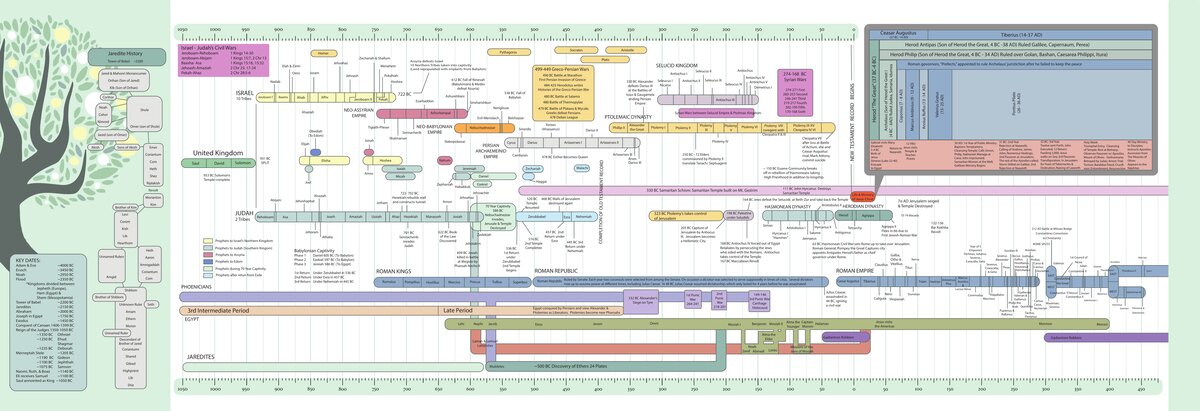
Tap to expand
Old Testament Timeline
From Creation through the Persian Period — tap the image to zoom, or download the full PDF.
Tap anywhere to close · Pinch to zoom