| Church Manuals | |
| Come Follow Me Manual — Week 46 | View |
| Scripture Helps: Old Testament | View |
| OT Seminary Teacher Manual | View |
| OT Institute Manual (1Ki–Mal) | View |
| Pearl of Great Price Manual | View |
| Scripture Reference | |
| Bible Dictionary | View |
| Topical Guide | View |
| Guide to the Scriptures | View |
| Church Media & Library | |
| Gospel for Kids (YouTube) | View |
| Bible Videos: Life of Jesus Christ | View |
| Church Magazines | View |
| Gospel Library | View |
Week 46
There Is No Other God That Can Deliver
Daniel 1–7
November 9–15, 2026
Weekly Resources: Week 46
Daniel 1–7 — Overview
November 9–15, 2026
“There Is No Other God That Can Deliver”
Official Church Resources
OFFICIAL CHURCH RESOURCES▶
CHURCH MEDIA FOR FAMILIES▶
▶ Video Commentary
VIDEO COMMENTARY (10 videos · 1 pending link)
▼





Specialized Audiences
WOMEN’S PERSPECTIVES (3 videos)
▶


FAMILY & CHILDREN’S RESOURCES (2 videos, 1 resource link · 2 pending links)
▶


Reference & Study Materials
BIBLE PROJECT (1 book overview · 2 selected themes · 12 more library videos)
▶
This week’s book overview opens from the Bible Project card above. Selected themes are highlighted below; the rest of the standing library remains available.
SELECTED FOR THIS WEEK — themes and word studies
BibleProject library — standing collection, not chosen for this week (12 videos)
 BibleProject — Covenants
Watch on BibleProject →
Optional thematic resource
 i
Temple
 i
Sacrifice & Atonement
 i
Holiness
 i
Image of God
 i
The Messiah
 i
Tree of Life
 i
YHWH / LORD
 i
Shalom / Peace
 i
Khesed / Loyal Love
 i
Nephesh / Soul
 i
Ruakh / Spirit
ACADEMIC & SCHOLARLY SITES▶
MAPS & BIBLICAL LOCATIONS▶
JEWISH & SCHOLARLY RESOURCES▶
First, a Word About Where We Are
▶︎
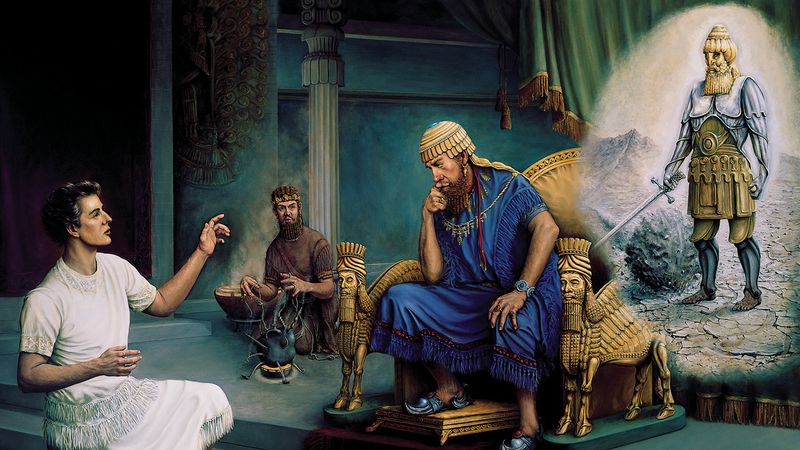
Last week Ezekiel was among the exiles in Babylon, by the river Chebar, seeing visions of God's glory far from the temple. This week we meet other exiles in the same empire, in the king's own palace. Daniel and his three friends were taken from Jerusalem as young men, given Babylonian names and a Babylonian education, and expected to become Babylonian. They never did.
The first six chapters are stories, each with a test. The seventh is a vision of beasts, thrones, and one like the Son of Man. The Overview walks every chapter, and Historical & Cultural Context explains the empire they lived in.
A New Field Guide: Persia
▶︎
Daniel lived long enough to see one empire give way to another. He came to Babylon as a young captive, served Nebuchadnezzar, and was still there on the night Belshazzar's kingdom ended (Daniel 5:30–31). Then he served the new rulers too. "So this Daniel prospered in the reign of Darius, and in the reign of Cyrus the Persian" (Daniel 6:28).
Our newest field guide, The Achaemenid Empire: Persia and the Return, tells the story of that second empire. It also explains a few details in Daniel 6 that are easy to read past. When Darius "set over the kingdom an hundred and twenty princes" (Daniel 6:1), Daniel is describing an arrangement much like the one the Persians used across their whole empire, with large provinces each governed by a royal official. And "the law of the Medes and Persians, which altereth not" (Daniel 6:8) is why a king who loved Daniel still could not save him from the lions. The book of Esther turns on the same unchangeable law. How the Empire Worked explains both. Timeline & Kings covers the fall of Babylon to Cyrus, and why the identity of "Darius the Median" (Daniel 5:31) is still uncertain.
The guide carries the story on to Cyrus, who let the exiles go home, and Daniel saw that day come: "Daniel continued even unto the first year of king Cyrus" (Daniel 1:21). If you are coming to the guides for the first time, Babylon: The Empire and the Exile fills in the first half of the week: Nebuchadnezzar and Belshazzar, and the learning of the Chaldeans that Daniel and his friends were trained in.
The Questions This Week Raises — and Where Each One Is Answered
▶︎
| The question | Where it is taken up |
|---|---|
| Why did Daniel refuse the king's food? | Key Passages, passage 1, and Word Studies, study 2 |
| What is the stone "cut out without hands"? | Key Passages, passage 3 |
| Who was the fourth man in the furnace? | Key Passages, passage 4, and Jewish Perspective, section 1 |
| Who was Belshazzar, and how did Babylon fall in one night? | Historical & Cultural Context, sections 4 and 5 |
| Why did Daniel pray toward Jerusalem? | Key Passages, passage 7 |
| What do the four beasts mean? | Key Passages, passage 8, and Teaching Applications, section 6 |
| Who are the Ancient of Days and the Son of Man? | Key Passages, passage 8 |
| Why does part of Daniel look different in the original? | Historical & Cultural Context, section 2: it is written in Aramaic |
"But If Not"
▶︎
There is a kind of faith that says, God will rescue me. It is real faith, and the three young men had it: "our God whom we serve is able to deliver us" (Daniel 3:17).
Then they said three more words that turned their faith into something even stronger: "But if not." Even if He does not, "we will not serve thy gods" (Daniel 3:18).
Most of us have prayed for something that did not come the way we asked: a healing, a reunion, a door that stayed shut. In those moments it is easy to wonder whether our faith was too small. Shadrach, Meshach and Abed-nego show another way to hold it. Their faithfulness was never a bargain with God. It was a decision about whom they belonged to. Sister Joy D. Jones put it in one sentence: "Keeping our covenants is always independent of our situation" (A Sin-Resistant Generation).
And notice what happened next. The Lord did not leave them alone in the furnace. The king looked in and saw four men walking in the fire, "and they have no hurt" (Daniel 3:25). Whatever your furnace is this week, you are not in it alone.
A Habit Already in Place
▶︎
When Daniel heard that praying to anyone but the king could cost him his life, he did not make a speech. He went home, knelt by his open windows toward Jerusalem, and "prayed, and gave thanks before his God, as he did aforetime" (Daniel 6:10).
As he did aforetime. Daniel's courage in the lions' den was not made that day. It was made over years of ordinary mornings, middays and evenings. When the test came, he did not have to decide what kind of man to be. He only had to keep being him.
And look at one word in that verse: thanks. On the day the decree was signed, Daniel still gave thanks.
Try this tomorrow. Pick a time for prayer and keep it all week, whatever the day brings, "morning, mid-day, and evening" (Alma 34:21) if you can. Begin each prayer with one thing you are thankful for, even on the hard days. That is how a habit is built before it is needed.
The Kingdom That Lasts
▶︎
This week is full of kings: Nebuchadnezzar, who built Babylon "by the might of my power" (Daniel 4:30); Belshazzar, who drank from the temple's vessels; Darius, who could not change his own law. And again and again, the kings end up saying the same thing about Daniel's God. Nebuchadnezzar: "his kingdom is an everlasting kingdom" (Daniel 4:3). Darius: "his kingdom that which shall not be destroyed" (Daniel 6:26). In the Aramaic, the words for kingdom and everlasting come together in seven verses of these chapters, spoken by Daniel, by two pagan kings, and by the vision itself (Overview, "Central Insight").
The world's kingdoms in Daniel are statues and beasts: impressive, frightening, and temporary. The kingdom that lasts is a stone cut out without hands, and in the end it is given to "one like the Son of man" (Daniel 7:13). Scripture Helps says it plainly: "The Son of Man refers to Jesus Christ." On the last day of His mortal life, He took Daniel's words to Himself before the council that condemned Him (Mark 14:62).
When the news is full of statues and beasts, Daniel 7 is a good chapter to read slowly. The beasts lose their dominion. His dominion "shall not pass away" (Daniel 7:14).
One Verse to Take With You
▶︎
"Therefore I make a decree… because there is no other God that can deliver after this sort." — Daniel 3:29
The man who built the idol said it, after he watched three faithful young men walk out of his fire. Deliver there is nᵊṣal (נְצַל), to rescue, to pull out of danger (Word Studies, study 1). When we read "deliver us from evil" in the Lord's Prayer (Matthew 6:13), we can recognize that same plea for rescue.
He is able to deliver. He will deliver, in His way and His time. And if not today, He is still the only One worth trusting.
This week's Study Guide begins with the Overview.
Week 46
Daniel 1–7 — Overview
"There Is No Other God That Can Deliver"
November 9–15, 2026
1. Week 46: Overview
A new name, a new language, and the king's own food
They were young, they were from Jerusalem's best families, and they had been taken from home. Nebuchadnezzar, king of Babylon, wanted the brightest of his captives trained to serve his court. He ordered that they be taught "the learning and the tongue of the Chaldeans", Babylon's ruling people (Daniel 1:4), fed every day from his own table, and given new names. Daniel became Belteshazzar. Hananiah, Mishael and Azariah became Shadrach, Meshach and Abed-nego (Daniel 1:7). Everything about the arrangement said the same thing: you belong to Babylon now.
Most of what they were given, they accepted. They learned the language. They answered to the new names. But at one point Daniel drew a line: he "purposed in his heart that he would not defile himself with the portion of the king's meat, nor with the wine which he drank" (Daniel 1:8). He did it respectfully, by asking. He offered a test: ten days of plain food and water, and then judge by the results (Daniel 1:12–13). At the end of the ten days the four young men looked healthier than everyone at the king's table, and "God gave them knowledge and skill in all learning and wisdom" (Daniel 1:15–17).
Most of us know what it is to live somewhere that is not quite home: a school, a workplace, a culture that keeps offering us its food and its names. The question Daniel faced is ours too: how much of yourself do you give away to fit in, and where do you draw the line? This week's reading follows four people who kept answering that question well, in smaller tests and in terrible ones. By the end of chapter 3, the very king who demanded their worship says of their God, "there is no other God that can deliver after this sort" (Daniel 3:29). That sentence is the title of this week.
Where to look for Christ this week
Three images carry this week to the Savior.
- The stone. King Nebuchadnezzar dreams of a stone "cut out without hands" that becomes a great mountain and fills the whole earth (Daniel 2:34–35). Daniel explains it as a kingdom "which shall never be destroyed" (Daniel 2:44). The Lord used the same picture for His restored Church: "as the stone which is cut out of the mountain without hands shall roll forth, until it has filled the whole earth" (Doctrine and Covenants 65:2).
- The deliverer. The Lord's servants are delivered from the fire and from the lions. Scripture Helps sets Daniel's night in the den beside the Savior's own experience: accusers who could find no fault in Him, a ruler who wanted to spare Him, a tomb sealed with a stone, and a morning when He came out alive (Scripture Helps: Old Testament, "Daniel 1–7").
- The Son of Man. In Daniel's own vision, "one like the Son of man" comes with the clouds of heaven and receives "an everlasting dominion" (Daniel 7:13–14). At His trial the Savior took that title, and those clouds, to Himself (Mark 14:62).
Key Passages, passages 3 and 8, read the stone and the Son of Man closely.
What to know before you start
Where you are. The book opens "in the third year of the reign of Jehoiakim king of Judah" (Daniel 1:1), when Babylon first came against Jerusalem. The Church's Institute manual dates that first captivity to "about 605 B.C." (Old Testament Student Manual: Kings–Malachi, chapter 28). That is several years before Jerusalem fell and the temple burned. Daniel lived through the whole Babylonian empire and "continued even unto the first year of king Cyrus" of Persia (Daniel 1:21). Historical & Cultural Context sets out the kings, the dates and the court.
Two languages. Partway through Daniel 2:4, the court astrologers speak to the king "in Syriack," which means Aramaic, the common language of the empire. The book itself switches languages at that word and stays in Aramaic until the end of chapter 7. Your English Bible does not show the change, but four of this week's five word studies are Aramaic words, not Hebrew ones. Historical & Cultural Context, section 2, explains it.
Stories, then a vision. Chapters 1–6 are stories from the royal court, each with a test, a choice and a deliverance. Chapter 7 is the first of Daniel's visions. Chapters 2 and 7 tell the same history twice, once as a statue and once as four beasts, and both end with God's kingdom.
Three questions to carry into every chapter
- What is this person being asked to give up, and what do they keep?
- Who in this chapter learns that God rules, and how do they learn it?
- Where is a line I need to draw, quietly and respectfully, this week?
All seven chapters are assigned. The walkthrough below covers each one in order.
The "Also known as" column gives the title a chapter carries in the Church's own Old Testament Stories, which the manual cites. A dash means no such title is given, not that none was looked for. The New Testament column says who is speaking, because a verse the Savior spoke and a verse someone else applied to Him are not the same thing. The Restoration column names the Book of Mormon and modern revelation where they connect. A dash there means none is listed here, not that none exists.
| Chapter | What happens | Also known as | Book of Mormon and modern revelation | New Testament, and whose voice |
|---|---|---|---|---|
| Daniel 1 | Four young captives in Babylon's court; the king's food refused; a ten-day test; "God gave them knowledge" | "Daniel and His Friends" (Old Testament Stories) | The Word of Wisdom's promise of "wisdom and great treasures of knowledge" (Doctrine and Covenants 89:19) is the manual's comparison for children: a parallel, not a claim that Daniel kept section 89 | — |
| Daniel 2 | The king's forgotten dream; the friends pray; the statue of four metals; the stone cut out without hands | "Daniel and the King's Dream" (Old Testament Stories, per Scripture Helps' image list) | The stone that fills the earth: Doctrine and Covenants 65:2 | — |
| Daniel 3 | The golden image on the plain of Dura; "But if not"; four men walking in the fire | "Shadrach, Meshach, and Abed-nego" (the Church's Old Testament Stories title, cited by the manual) | — | Hebrews 11:34: the writer to the Hebrews, by allusion: "Quenched the violence of fire" |
| Daniel 4 | Nebuchadnezzar's own letter: the great tree cut down, the king humbled, then his praise | — | — | — |
| Daniel 5 | Belshazzar's feast; the temple vessels; the writing on the wall | — | — | — |
| Daniel 6 | A law that could not be changed; Daniel prays "as he did aforetime"; the den of lions | "Daniel and the Lions' Den" (Old Testament Stories) | — | Hebrews 11:33: the writer to the Hebrews, by allusion: "stopped the mouths of lions" |
| Daniel 7 | Four beasts from the sea; the Ancient of days on His throne; one like the Son of man receives the kingdom | — | The Ancient of days is Adam: Doctrine and Covenants 27:11; 116 | Matthew 26:64 and Mark 14:62: the Savior, at His trial · Matthew 24:30: the Savior, on His coming · Revelation 1:13–14: John, describing his vision of the risen Lord in Daniel's words |
Daniel 1 — "Daniel purposed in his heart" — assigned
The chapter opens with a sentence that is easy to read past: "the Lord gave Jehoiakim king of Judah into his hand, with part of the vessels of the house of God" (Daniel 1:2). Babylon did not win by its own power. From the first verse, the book insists that the God of Israel is still the one deciding.
The king's plan for the young captives was generous on its surface: the best food, three years of education, and a career in the palace (Daniel 1:3–5). It was also a plan to make them Babylonian. That is why Daniel's request matters. The king's food may have been offered to Babylonian gods before it was served, and it may have broken the dietary laws in the law of Moses (Scripture Helps: Old Testament, "Daniel 1–7"). The word for defile is gāʾal (גָּאַל), to pollute or make unclean. Word Studies, study 2, follows it.
Notice how Daniel says no. He does not refuse the official who fed him, and he does not shame anyone. He asks. When the official fears for his own life, Daniel asks the steward below him for a ten-day trial, and he lets the results speak (Daniel 1:8–14). Faithfulness and courtesy arrive together. And the result goes beyond healthy faces: "God gave them knowledge and skill in all learning and wisdom: and Daniel had understanding in all visions and dreams" (Daniel 1:17). Three years later, the king found them "ten times better" than all his wise men (Daniel 1:20).
The last verse looks like a footnote and is not: "Daniel continued even unto the first year of king Cyrus" (Daniel 1:21). The young captive outlived the empire that captured him. Key Passages, passage 1, reads the chapter closely.
Daniel 2 — the dream, the prayer, and the stone — assigned
Nebuchadnezzar has a troubling dream and makes an impossible demand: his wise men must tell him what he dreamed, and then interpret it (Daniel 2:1–9). They protest that no one on earth could do it, "except the gods, whose dwelling is not with flesh" (Daniel 2:10–11). The furious king orders every wise man in Babylon killed, and Daniel and his friends are on the list (Daniel 2:12–13).
Watch what Daniel does first. He asks for time. Then he goes home and tells his three friends, "That they would desire mercies of the God of heaven concerning this secret" (Daniel 2:16–18). Four young men in a foreign city pray together, and "Then was the secret revealed unto Daniel in a night vision" (Daniel 2:19). Before he runs to the king, Daniel stops to praise: "Blessed be the name of God for ever and ever: for wisdom and might are his: And he changeth the times and the seasons: he removeth kings, and setteth up kings" (Daniel 2:20–21). It is the first of four songs of praise in these chapters, and it already names the theme of the whole book.
Standing before the king, Daniel refuses the credit: "there is a God in heaven that revealeth secrets" (Daniel 2:28), and the secret "is not revealed to me for any wisdom that I have more than any living" (Daniel 2:30).
Then he describes the dream. It was a great statue with a head of gold, chest and arms of silver, belly and thighs of brass, legs of iron, and feet of iron mixed with clay (Daniel 2:31–33). A stone "cut out without hands" struck the feet and broke the whole statue into dust that the wind blew away, "and the stone that smote the image became a great mountain, and filled the whole earth" (Daniel 2:34–35). Daniel interprets it: "Thou art this head of gold" (Daniel 2:38). The other metals are kingdoms that will follow. And "in the days of these kings shall the God of heaven set up a kingdom, which shall never be destroyed" (Daniel 2:44). The Church's Scripture Helps explains that a stone cut "without hands" means a kingdom "established by God, not by humans" (Scripture Helps). Key Passages, passage 3, follows the stone to the Restoration.
Daniel 3 — "But if not" — assigned
Nebuchadnezzar builds a golden image "threescore cubits" high and six wide (Daniel 3:1), roughly ninety feet by nine, according to the Seminary manual, and sets it up on the plain of Dura. Every official in the empire is summoned, and when the music sounds, everyone must bow (Daniel 3:2–7). Three men do not.
The king offers them one more chance, and then asks the question the whole chapter will answer: "who is that God that shall deliver you out of my hands?" (Daniel 3:15). Their reply is one of the bravest in scripture. Their God "is able to deliver us", they say, and "he will deliver us"; then come three more words, "But if not", and even then they will not bow (Daniel 3:17–18). Their faith did not depend on being rescued. Key Passages, passage 4, stays with those three words.
The furnace is heated seven times hotter. The soldiers who throw them in are killed by the heat (Daniel 3:19–23). Then the king leaps up: "Lo, I see four men loose, walking in the midst of the fire, and they have no hurt; and the form of the fourth is like the Son of God" (Daniel 3:25). Who was the fourth? Scripture Helps answers honestly: "It is unclear from the text whether this was Jehovah or an angel." Nebuchadnezzar himself says God "hath sent his angel" (Daniel 3:28). What the text makes certain is that the three were not alone in the fire.
Now listen to how the chapter ends. The king who asked "who is that God that shall deliver you out of my hands?" answers his own question: "there is no other God that can deliver after this sort" (Daniel 3:29). The man who built the idol speaks the title of this week.
Daniel 4 — a king learns who rules — assigned
This chapter is written in Nebuchadnezzar's own voice, as a letter "unto all people, nations, and languages" (Daniel 4:1). He begins with praise, "his kingdom is an everlasting kingdom" (Daniel 4:3), and then tells how he learned it.
He dreamed of a great tree that sheltered every creature, until a holy messenger from heaven ordered it cut down to a stump, banded with iron and brass, until "seven times" passed over it (Daniel 4:10–16). Daniel is so troubled by the meaning that he sits silent for a time, and the king has to reassure him (Daniel 4:19). Then he speaks plainly and kindly: "It is thou, O king" (Daniel 4:22). He also gives counsel: "break off thy sins by righteousness, and thine iniquities by shewing mercy to the poor" (Daniel 4:27).
A year later the king walks on his palace roof and boasts, "Is not this great Babylon, that I have built… by the might of my power" (Daniel 4:29–30). The judgment falls that hour.
Count one sentence as you read. The point of the judgment is said three times: "the most High ruleth in the kingdom of men" (Daniel 4:17, 25, 32). When the king's understanding returns, he finally says it himself: "I blessed the most High… whose dominion is an everlasting dominion" (Daniel 4:34), and "those that walk in pride he is able to abase" (Daniel 4:37). The Institute manual adds a careful note: his praise shows he understood what had happened to him, but it does not necessarily mean he gave up his other gods. The story still shows how far a proud man can come. Key Passages, passage 5, reads his praise.
Daniel 5 — weighed in the balances — assigned
Years later, King Belshazzar throws a feast for a thousand of his lords. Partway through the wine, he sends for the gold and silver vessels Nebuchadnezzar had taken from the temple in Jerusalem, and they drink from them while praising "the gods of gold, and of silver, of brass, of iron, of wood, and of stone" (Daniel 5:1–4). The holy things of the Lord's house become party cups.
"In the same hour came forth fingers of a man's hand, and wrote… upon the plaster of the wall" (Daniel 5:5). The king's knees knock together (Daniel 5:6). His wise men cannot read it. The queen remembers Daniel, who had served Nebuchadnezzar (Daniel 5:10–12). Daniel declines the king's rewards, "Let thy gifts be to thyself" (Daniel 5:17), and reminds Belshazzar of what Nebuchadnezzar learned: "thou his son, O Belshazzar, hast not humbled thine heart, though thou knewest all this" (Daniel 5:22).
Then he reads the words: "MENE, MENE, TEKEL, UPHARSIN". God has numbered your kingdom and finished it; "Thou art weighed in the balances, and art found wanting"; your kingdom is divided (Daniel 5:25–28). Scripture Helps explains that the words name weights of money and also sound like the Aramaic verbs for number, weigh and divide. Key Passages, passage 6, explains the wordplay. "In that night was Belshazzar the king of the Chaldeans slain. And Darius the Median took the kingdom" (Daniel 5:30–31). Historical & Cultural Context explains who Belshazzar was, and what the records say about that night.
Daniel 6 — "as he did aforetime" — assigned
Under the new king, Darius, Daniel is promoted again, and his rivals go looking for something to accuse him of. They find nothing: "they could find none occasion nor fault; forasmuch as he was faithful" (Daniel 6:4). So they set a trap around his worship. They persuade the king to sign a decree that for thirty days no one may pray to anyone but the king, under "the law of the Medes and Persians, which altereth not" (Daniel 6:7–8).
Daniel changes nothing. He goes home and, with his windows open toward Jerusalem, kneels three times a day to pray and give thanks, "as he did aforetime" (Daniel 6:10). The habit was already there when the test came.
The king, who loves Daniel, labors until sundown to save him and cannot (Daniel 6:14–15). Daniel is thrown to the lions; a stone is laid on the mouth of the den and sealed with the king's own signet (Daniel 6:16–17). The king fasts and cannot sleep. At dawn he runs to the den and calls out, "is thy God, whom thou servest continually, able to deliver thee from the lions?" (Daniel 6:20). It is the question Nebuchadnezzar asked in chapter 3, asked this time in hope. Daniel answers, "My God hath sent his angel, and hath shut the lions' mouths" (Daniel 6:22). The king then punished the accusers and their families by the same sentence they had arranged for Daniel (Daniel 6:24). The book reports it as part of what happened, without praising it.
Darius ends the chapter with his own decree of praise: "he is the living God, and steadfast for ever, and his kingdom that which shall not be destroyed" (Daniel 6:26). Key Passages, passage 7, reads the chapter closely, including the likeness Scripture Helps sees between Daniel's night in the den and the Savior's death and resurrection.
Daniel 7 — the beasts, the Ancient of days, and the Son of Man — assigned
This chapter steps back in time. It is dated to "the first year of Belshazzar" (Daniel 7:1), before the feast in chapter 5. Now Daniel is the dreamer.
Four great beasts rise from a stormy sea: a lion with eagle's wings, a bear, a four-headed leopard with wings, and a fourth beast "dreadful and terrible" with iron teeth and ten horns. Among the horns a little horn rises, "speaking great things" (Daniel 7:2–8). Then the scene changes: "I beheld till the thrones were cast down, and the Ancient of days did sit, whose garment was white as snow, and the hair of his head like the pure wool" (Daniel 7:9). The books are opened (Daniel 7:10). The beasts lose their power (Daniel 7:11–12). And "one like the Son of man came with the clouds of heaven, and came to the Ancient of days… And there was given him dominion, and glory, and a kingdom… his dominion is an everlasting dominion, which shall not pass away" (Daniel 7:13–14).
One who stood by explains part of it to Daniel: "These great beasts, which are four, are four kings, which shall arise out of the earth. But the saints of the most High shall take the kingdom" (Daniel 7:17–18). Scripture Helps gives the two common ways of matching the beasts to history. Then it gives the point that matters most: "Regardless of the specific meaning of the beasts, Daniel's vision makes it clear that earthly kingdoms are temporary and that God's kingdom will ultimately prevail and endure forever." The Prophet Joseph Smith taught that the Lord used beasts in visions for corrupt kingdoms of the world, but "never made use of the figure of a beast nor any of the brute kind to represent his kingdom" (quoted in Scripture Helps).
Who are the two figures at the center? Modern revelation identifies the Ancient of days as Adam (Doctrine and Covenants 27:11; 116), and the one like the Son of Man is Jesus Christ. And notice one more detail. When John saw the risen Savior, he described Him with Daniel's words for the Ancient of days: "His head and his hairs were white like wool, as white as snow" (Revelation 1:14). Key Passages, passage 8, reads the vision closely.
"And in the days of these kings shall the God of heaven set up a kingdom, which shall never be destroyed… and it shall stand for ever." (Daniel 2:44)
One sentence runs through the whole week. In the Aramaic chapters, the same pair of words, malkû (מַלְכוּ), kingdom, and ʿālam (עָלַם), forever, comes together in exactly seven verses. Count the voices that say it:
- Daniel, interpreting the dream (Daniel 2:44);
- Nebuchadnezzar, twice, the king who once demanded worship (Daniel 4:3, 34);
- Darius, the king who could not change his own law (Daniel 6:26);
- the vision itself, three times (Daniel 7:14, 18, 27).
A prophet, two pagan kings and heaven all say the same thing. Kings come and go; His kingdom does not.
That is why "But if not" is not despair. Shadrach, Meshach and Abed-nego could face the fire without knowing whether they would be rescued, because they already knew which kingdom would last.
- The line at the table (Daniel 1). Four captives keep their covenant in small things, and God gives them wisdom.
- The secret revealed (Daniel 2). Friends pray; a stone cut without hands becomes a mountain.
- The fire (Daniel 3). "But if not": four men walk in the furnace, and the king confesses there is no other God that can deliver.
- The proud king humbled (Daniel 4). Nebuchadnezzar learns that the most High rules.
- The proud king judged (Daniel 5). Belshazzar is weighed and found wanting.
- The habit of prayer (Daniel 6). Daniel prays as he always had, and the lions' mouths are shut.
- The everlasting kingdom (Daniel 7). The beasts fall, and the Son of Man receives the kingdom.
Because most of us will never face a furnace, but all of us face Babylon. The manual says it simply: "In a sense, we all live in Babylon" (Come, Follow Me, "Daniel 1–7"). The pressure rarely comes as a death threat. It comes as a portion of the king's food, a new name, an easier habit. Daniel's faithfulness was not made in the lions' den. It was made in years of small choices and daily prayers, so that when the test came he only had to keep doing what he always did.
Because God does not promise physical rescue from every trial. The three friends knew He was able to deliver them, and they decided in advance that their faithfulness did not depend on whether He did. That is not a smaller faith than the faith that is rescued. It is faith in Him rather than faith in an outcome, and they were not alone in the fire.
And because the kingdoms of the world are temporary. Babylon fell in a night. The statue became chaff. The beasts lost their dominion. What remains is the kingdom the God of heaven set up and the One who receives it, the Son of Man, Jesus Christ, whose "dominion is an everlasting dominion, which shall not pass away" (Daniel 7:14).
If you do one thing with this week: read Daniel 3:16–18 and write your own "but if not". Name something you are hoping the Lord will do. Then write one sentence about what you will keep doing whether or not He does it, as Daniel did aforetime.
| Section | What it helps explain |
|---|---|
| Historical & Cultural Context | Babylon's court and schools, the book's two languages, Belshazzar and the night Babylon fell, and what we do not know about "Darius the Median." |
| Key Passages | Eight close readings, with Latter-day Saint connections and the words of modern prophets. |
| Word Studies | Five words behind this week's promises, with Greek, Latin and English comparisons. |
| Jewish Perspective | How ancient Jewish teachers read the furnace and the thrones of Daniel 7. |
| Teaching Applications | Activities for families, classes and individual study. |
| Study Questions | Questions moving from the text to personal reflection. |
Continue to Historical & Cultural Context.
2. Week 46: Historical & Cultural Context
The book dates its first scene by the king of Judah's reign: "In the third year of the reign of Jehoiakim king of Judah came Nebuchadnezzar king of Babylon unto Jerusalem, and besieged it" (Daniel 1:1). The book of Kings remembers the same years from Jerusalem's side: "Nebuchadnezzar king of Babylon came up, and Jehoiakim became his servant three years" (2 Kings 24:1).
Turning a king's year into a year BC takes some care, and the Church's own sources give three dates for different reasons. It helps to see them side by side:
| date | what it counts | source |
|---|---|---|
| about 606 BC | the date the book of Daniel's own words point to, Jehoiakim's third year | Scripture Helps: Old Testament, "Daniel 1–7", note 1 |
| about 605 BC | the year Babylon defeated Egypt at Carchemish and first carried captives from Judah | Old Testament Student Manual: Kings–Malachi, chapter 28, 28-1 and 28-2 |
| 597 BC | the year most scholars give for Nebuchadnezzar's capture of Jerusalem | Scripture Helps, note 1 (citing The Jewish Study Bible) |
None of these contradicts the others. They measure different events, by different calendars, from one confusing decade. For this week, "about 605 BC" is the Institute manual's date for Daniel's captivity. That is early: Daniel was already in Babylon when many prophets, Lehi among them, began warning Jerusalem "in the commencement of the first year of the reign of Zedekiah" (1 Nephi 1:4), and many years before the temple burned.
The Institute manual explains the setting. Nebuchadnezzar, still a crown prince leading his father's army, had just defeated the Egyptians at Carchemish (Jeremiah 46:2). Syria and Judah fell under Babylon. Temple vessels were carried away as tribute, along with "selected members of Judah's upper class, which included Daniel." Daniel 1:2 says those vessels went "into the treasure house of his god." They come back into the story in chapter 5.
Most of the Old Testament was written in Hebrew. Daniel is one of the exceptions, and the change happens in the middle of a sentence. In Daniel 2:4 the king's wise men answer him "in Syriack." The Hebrew word there is ʾărāmîṯ (אֲרָמִית), "in Aramaic," and from that word on, the book itself is written in Aramaic. It stays in Aramaic through the end of chapter 7, then returns to Hebrew for chapters 8–12. This can be measured word by word in the Hebrew text: chapter 1 has no Aramaic words at all, and every chapter from 2:4 to 7:28 does.
Aramaic was the everyday language of the empire. It is a close cousin of Hebrew, much as Spanish is a cousin of Portuguese. Ezra has an Aramaic section too (Ezra 4:8–6:18), which includes the empire's official letters. Many Jews in later centuries spoke Aramaic, and the Gospels preserve a few of the Savior's own words in it, such as "Talitha cumi" (Mark 5:41).
Why this matters for your reading: four of this week's five word studies are Aramaic words, with their own dictionary entries. And it explains why the six court stories and the first vision belong together. Chapters 2 through 7 form one Aramaic block, telling the history of the kingdoms twice (in chapters 2 and 7) with four stories of faith between. The BibleProject's overview of Daniel notices this shape and calls the Aramaic section "symmetrical." The counts bear it out in part: nᵊṣal (נְצַל), the verb of this week's title, appears only in chapters 3 and 6, the two deliverance stories.
Nebuchadnezzar's order was specific. The young captives were to be "skilful in all wisdom, and cunning in knowledge, and understanding science," and they were to be taught "the learning and the tongue of the Chaldeans" for three years, at the king's table, before they could "stand before the king" (Daniel 1:4–5).
What did that education include? The Babylonian scholars' tradition was old by Daniel's day. It was written in cuneiform, the wedge-shaped script pressed into clay tablets. Its learned works included collections of omens and dream interpretations, mathematics and astronomy. Alongside it, more and more of daily life was written in Aramaic with ink. That is the world chapter 2's "magicians, and the astrologers, and the sorcerers, and the Chaldeans" came from (Daniel 2:2). It was a whole profession of reading signs, and in chapter 2 it fails, because the king asks it to read his mind.
Much later, the Jewish historian Josephus (writing about AD 94, over five centuries after Daniel) describes the king's chosen youths being "delivered… into the hands of tutors" to learn this wisdom (Antiquities of the Jews 10.10). Josephus is a later witness, not an eyewitness, but he shows how the story was remembered.
The new names were part of the training (Daniel 1:7). Daniel became Belteshazzar, a name Nebuchadnezzar later says was given "according to the name of my god" (Daniel 4:8). His friends received Babylonian names too. Daniel answered to his new name, and the book uses it. What he would not do was eat what would defile him. A name was something done to him; the food was something he would have to choose.
The "prince of the eunuchs" who ran the program (Daniel 1:3, 7) held a court title. The Institute manual quotes the commentator Adam Clarke: "This word eunuchs signifies officers about or in the palace, whether literally eunuchs or not" (28-4). The text gives no more detail, and neither does this guide.
For a long time, readers questioned the historical setting of Daniel 5. The ancient historians known before the cuneiform finds named Nabonidus as the last king of Babylon, and none of them mentioned a Belshazzar. Then cuneiform records were dug up and read. A clay cylinder of Nabonidus found at Ur names Belshazzar as his eldest son, and another document, as the Institute manual notes, "expressly states that Nabonidus entrusted the kingship to Belshazzar" (28-22).
Scripture Helps explains the arrangement: Belshazzar "was the son of Nabonidus, the final king of Babylon, and… he was co-regent to his father." Nabonidus spent years away from the capital, and his son ruled in Babylon in his place.
That background explains a small detail that otherwise makes no sense. Belshazzar promises that whoever reads the writing on the wall will be "the third ruler in the kingdom" (Daniel 5:7, 16, 29). Why third, not second? The Institute manual notes that the word means "one of three" (28-25). With Nabonidus first and Belshazzar second, the best the regent could offer was third place.
"In that night was Belshazzar the king of the Chaldeans slain" (Daniel 5:30). Babylon fell to Cyrus of Persia in 539 BC (Scripture Helps). How it fell is told two different ways in ancient sources, and both are worth knowing:
- The Babylonian records. The Babylonian Chronicle and Cyrus's own clay cylinder say that after Cyrus defeated the Babylonian army in the field, his forces entered the city without a battle. They were welcomed by many who had grown tired of Nabonidus. The Cyrus Cylinder was found in Babylon's foundations in 1879 and is in the British Museum.
- The Greek historian. Herodotus tells a different story, which the Institute manual quotes: Cyrus lowered the Euphrates by diverting it into a canal, so that "his soldiers were able to penetrate along its bed into the city" (28-29).
These accounts do not fit together neatly, and this guide does not choose between them. Both agree on what Daniel 5 says: the great city fell quickly, in one night, while its king feasted.
Daniel 5 ends with a new ruler: "Darius the Median took the kingdom, being about threescore and two years old" (Daniel 5:31). In chapter 6 he organizes the realm under "an hundred and twenty princes" and three presidents, with Daniel first (Daniel 6:1–2). The chapter closes by setting his reign beside another: "So this Daniel prospered in the reign of Darius, and in the reign of Cyrus the Persian" (Daniel 6:28).
Records outside the Bible do not settle who he was. He should not be confused with the later and better-known Darius I of Persia, who reigned after Cyrus and his son. This guide leaves Darius the Median where the text puts him: the ruler over Babylon who loved Daniel, could not undo his own decree, and ended by praising Daniel's God.
The trap in Daniel 6 depends on a rule the king's officials knew well: a decree signed "according to the law of the Medes and Persians, which altereth not" (Daniel 6:8) could not be cancelled, even by the king who signed it (Daniel 6:12, 15). The book of Esther describes the same rule at the Persian court: "the writing which is written in the king's name, and sealed with the king's ring, may no man reverse" (Esther 8:8).
That is what makes Darius's night so painful. He "was sore displeased with himself" and "laboured till the going down of the sun to deliver him" (Daniel 6:14), and he could not. A king with a hundred and twenty princes under him was trapped by his own signature. He could seal the den with his signet (Daniel 6:17), but he could not open it by his word. Only God could deliver Daniel, and the king knew it: "Thy God whom thou servest continually, he will deliver thee" (Daniel 6:16).
The Church's Bible Maps mark the main places named in this week's reading.
| Place | Where it appears | Where to find it |
|---|---|---|
| Jerusalem | Daniel 1:1, besieged by Nebuchadnezzar | Map 6, "The New Babylonian Empire and the Kingdom of Egypt", which covers 600–587 B.C. |
| Babylon | Daniel 1:1, and the king's court in chapters 1–5 | Map 6, and Map 7, "The Persian Empire", which covers 537–440 B.C. |
| Carchemish | Jeremiah 46:2, where Babylon defeated Egypt (section 1 above) | Map 6 |
| The plain of Dura | Daniel 3:1, where the golden image stood | Map 9, "The World of the Old Testament" |
| The Medes and the Persians | Daniel 5:28; 6:8 | Map 6 marks the Median Empire and Persia; Map 7 shows the Persian Empire |
| The Euphrates | The river in Herodotus's account of Babylon's fall (section 5 above) | Map 6 |
- Come, Follow Me for Home and Church: Old Testament 2026, "Daniel 1–7".
- Scripture Helps: Old Testament, "Daniel 1–7". The king's food, the stone, "but if not," the fourth man in the furnace, the writing on the wall, Daniel and the Savior, the beasts and the Ancient of Days.
- Old Testament Student Manual: Kings–Malachi, chapter 28, "Daniel: Prophet of God, Companion of Kings". The historical setting, Belshazzar, the fall of Babylon, and Daniel 7.
- Bible Dictionary, "Daniel", an overview of the book.
Continue to Key Passages.
3. Week 46: Key Passages
The Text
"But Daniel purposed in his heart that he would not defile himself with the portion of the king's meat, nor with the wine which he drank: therefore he requested of the prince of the eunuchs that he might not defile himself." (Daniel 1:8)
"As for these four children, God gave them knowledge and skill in all learning and wisdom: and Daniel had understanding in all visions and dreams." (Daniel 1:17)
How the Passage Works
The decision comes before the request. "Daniel purposed in his heart." The Hebrew is śûm (שׂוּם), to set or place, with lēḇ (לֵב), the heart. He set it on his heart. Before any official knew there was a problem, Daniel had already settled what he would do. That is the part of faithfulness no one sees, and the part that makes the rest possible.
Then notice how gently he carries it out. He "requested." The official is afraid: if the young men look thin, the king might take his head (Daniel 1:10). Daniel does not argue. He goes to the steward set over them and proposes a test, "Prove thy servants, I beseech thee, ten days" (Daniel 1:12), and lets the steward judge the outcome. He keeps his covenant without making anyone else pay for it.
Why the food mattered. Scripture Helps gives two likely reasons. The king's meat and wine "may have first been offered to Babylonian gods," so eating them would have looked like taking part in idol worship. And the food may have broken the dietary laws of Moses (Scripture Helps: Old Testament, "Daniel 1–7"). The word for defile, gāʾal (גָּאַל), means to pollute or make unclean. Word Studies, study 2, follows it.
The blessing is larger than the test. The test was about faces and health, and they passed it (Daniel 1:15). But the Lord's answer went further: "God gave them knowledge and skill in all learning and wisdom." The gift Daniel would need in chapter 2, "understanding in all visions and dreams," was given here, in the chapter about lunch.
Latter-day Saint Connections
- President Dieter F. Uchtdorf, "Be Not Afraid, Only Believe" (October 2015), a direct treatment. Speaking to young men of the Aaronic Priesthood, he built his talk around Daniel in Babylon and asked what giving in would have looked like: "How much easier would it have been for Daniel to simply go along with the ways of Babylon?" He would have avoided ridicule, been popular, and "He would have fit in", until the day the king needed a wisdom Babylon did not have. (churchofjesuschrist.org)
- The Word of Wisdom. The manual invites families to compare Daniel's blessings with the promises in Doctrine and Covenants 89: those who obey "shall find wisdom and great treasures of knowledge, even hidden treasures" (Doctrine and Covenants 89:19). This is a comparison, not a claim that Daniel kept section 89. It shows the same pattern: the Lord honors obedience in daily things with gifts of the mind and spirit.
Study Questions
- Daniel settled his decision before he spoke to anyone. What is one choice you could settle in your heart now, before the test comes?
- Daniel protected the official who was afraid for his life. How can you keep a standard without making others pay for it?
- The four young men were blessed with more than good health. When has obedience in small things brought you a gift you did not expect?
The Text
"Then Daniel went to his house, and made the thing known to Hananiah, Mishael, and Azariah, his companions: That they would desire mercies of the God of heaven concerning this secret; that Daniel and his fellows should not perish with the rest of the wise men of Babylon. Then was the secret revealed unto Daniel in a night vision. Then Daniel blessed the God of heaven." (Daniel 2:17–19)
"But there is a God in heaven that revealeth secrets, and maketh known to the king Nebuchadnezzar what shall be in the latter days." (Daniel 2:28)
How the Passage Works
First, time. When the captain of the guard arrives to kill the wise men, Daniel answers "with counsel and wisdom" and asks the king for time (Daniel 2:14–16). Panic would have been natural. He asked for room to seek the Lord.
Then, friends. Daniel does not pray alone. He goes home and asks his three companions to pray with him, to "desire mercies of the God of heaven." Four young men in danger of death join their faith, and the answer comes "in a night vision" (Daniel 2:19).
Then, thanks, before anything else. The king is still waiting, and Daniel's life is still in danger. Yet the next thing he does is praise: "Blessed be the name of God for ever and ever: for wisdom and might are his" (Daniel 2:20). His prayer of thanks names exactly what the Lord did: "thou… hast made known unto me now what we desired of thee: for thou hast now made known unto us the king's matter" (Daniel 2:23). He says us. The answer belonged to all four who had prayed.
Finally, no credit. Before the king, Daniel insists that neither he nor any wise man could have done this: "there is a God in heaven that revealeth secrets" (Daniel 2:28), and the secret came "not… for any wisdom that I have more than any living" (Daniel 2:30). The Institute manual observes that taking credit for what the Lord had done would have offended God (see Doctrine and Covenants 59:21). The pattern runs from time to friends, to revelation, to gratitude, to humility. It is a pattern for anyone facing a problem bigger than they are.
Latter-day Saint Connections
- Elder Neil L. Andersen, "A Witness of God" (October 2016), a direct treatment. He opens the body of his talk with this chapter: Daniel, condemned with the other wise men, prayed, and the secret was revealed. The talk's first sentence frames why it matters: "Much of the important work of God is unseen in the eyes of the world." (churchofjesuschrist.org)
- The Savior's promise about praying together: "where two or three are gathered together in my name, there am I in the midst of them" (Matthew 18:20). Daniel did not quote it, of course. It is a parallel, not a fulfilment. But it is the same Lord answering the same kind of shared prayer.
- The Restoration began the same way: a young man who lacked wisdom read "let him ask of God" (James 1:5) and asked.
Study Questions
- Daniel asked for time before he answered. When has slowing down to seek the Lord changed what you did?
- Daniel asked his friends to pray with him. Who could you invite to pray with you about something you are facing?
- Daniel thanked God before he was safe. What could you thank Him for today, before your answer has fully come?
The Text
"Thou sawest till that a stone was cut out without hands, which smote the image upon his feet that were of iron and clay, and brake them to pieces… and the stone that smote the image became a great mountain, and filled the whole earth." (Daniel 2:34–35)
"And in the days of these kings shall the God of heaven set up a kingdom, which shall never be destroyed: and the kingdom shall not be left to other people, but it shall break in pieces and consume all these kingdoms, and it shall stand for ever." (Daniel 2:44)
How the Passage Works
A statue that gets cheaper as it goes down. Gold, then silver, then brass, then iron, then iron mixed with clay (Daniel 2:32–33). Daniel interprets the head: "Thou art this head of gold" (Daniel 2:38). Each kingdom after Babylon is represented by a lesser metal, and the last is strong and brittle at once: "partly strong, and partly broken" (Daniel 2:42). Scripture Helps identifies the head as Nebuchadnezzar and Babylon, and the other parts as kingdoms that would rise after Babylon's fall. The Institute manual and the Seminary manual go further and name later empires. All three agree on the point: the statue is human power, in all its splendor and all its weakness.
A stone that nobody cut. "Without hands" is the key. Scripture Helps: the stone "being cut out of the mountain without hands symbolizes that the kingdom would be established by God, not by humans." The stone does not fight the statue on the statue's terms. It does not become a bigger statue. It strikes the feet, the whole thing collapses into chaff, and then the stone grows: it "became a great mountain, and filled the whole earth."
The Restoration reading is the Lord's own. In this dispensation the Lord revealed to Joseph Smith that "the keys of the kingdom of God are committed unto man on the earth, and from thence shall the gospel roll forth unto the ends of the earth, as the stone which is cut out of the mountain without hands shall roll forth, until it has filled the whole earth" (Doctrine and Covenants 65:2). The interpretation does not come from commentators; it comes from revelation.
Latter-day Saint Connections
- Elder D. Todd Christofferson (now President Christofferson), "Why the Church" (October 2015), a direct treatment. He quoted Daniel 2:44 and taught: "The Church is that prophesied latter-day kingdom, not created by man but set up by the God of heaven and rolling forth as a stone 'cut out of the mountain without hands' to fill the earth." The Come, Follow Me manual quotes the same words for this week. (churchofjesuschrist.org)
- A kingdom, not a statue. In the same talk he adds that before the Savior returns, "it will not be a kingdom in any political sense," quoting the Savior: "My kingdom is not of this world."
Study Questions
- The statue is impressive and brittle. What "statues" in our world look strong but stand on iron mixed with clay?
- The stone was "cut out without hands." Where have you seen the Lord's work grow in ways no person could have arranged?
- The manual asks: What is your role in helping this prophecy come to pass?
The Text
"If it be so, our God whom we serve is able to deliver us from the burning fiery furnace, and he will deliver us out of thine hand, O king. But if not, be it known unto thee, O king, that we will not serve thy gods, nor worship the golden image which thou hast set up." (Daniel 3:17–18)
"Lo, I see four men loose, walking in the midst of the fire, and they have no hurt; and the form of the fourth is like the Son of God." (Daniel 3:25)
How the Passage Works
The king's question. Nebuchadnezzar gives them a second chance and ends with a taunt: "who is that God that shall deliver you out of my hands?" (Daniel 3:15). It is not really a question. He believes no such god exists.
Their answer has three parts, and the third is the bravest. First: our God is able to deliver us. Second: he will deliver us. Third: "But if not", even if He does not, we will still not bow. The first part is a statement about God's power and the second about their hope. The third is about their loyalty, and it does not depend on the outcome. Scripture Helps notes that modern translations render "we are not careful to answer thee" (Daniel 3:16) as "We have no need to answer you in this matter." Their minds were already made up.
Who was the fourth? The king sees four men walking unbound in the fire, and "the form of the fourth is like the Son of God" (Daniel 3:25). Scripture Helps notes that some translations render the phrase "a divine being" or "son of the gods," and it is careful: "It is unclear from the text whether this was Jehovah or an angel," and the king himself says God "hath sent his angel" (Daniel 3:28). The certain truth is the one the three men discovered. They were not alone in the fire, and they came out without even "the smell of fire" on them (Daniel 3:27).
The king answers his own question. He began by asking what god could deliver them. He ends by blessing their God, who "delivered his servants that trusted in him, and have changed the king's word" (Daniel 3:28), and declaring "there is no other God that can deliver after this sort" (Daniel 3:29).
Latter-day Saint Connections
- Elder Dennis E. Simmons, "But If Not …" (April 2004), a direct treatment. His whole talk rests on these verses. Of the three young men he says: "They knew that they could trust God—even if things didn't turn out the way they hoped." (churchofjesuschrist.org)
- Sister Joy D. Jones, Primary General President, "A Sin-Resistant Generation" (April 2017), a direct use of this chapter in a talk about helping children keep promises. "These three young men were not basing their obedience upon being delivered. Even if they were not delivered, they would keep their promise to the Lord because they said they would." Scripture Helps quotes the same words. (churchofjesuschrist.org)
- When physical rescue does not come. The manual itself points to Alma 14, where Alma and Amulek watched faithful believers die. Alma's answer was not that their faith was weak: "the Lord receiveth them up unto himself, in glory" (Alma 14:11). "But if not" is never a judgment on those the Lord takes home.
Study Questions
- The three men said both "he will deliver us" and "but if not." How can both be true in the same prayer?
- Their decision did not depend on the outcome. What covenant would you keep even if the blessing you hope for does not come in this life?
- They came out of the fire without its smell. How can the Lord help you find healing when the effects of a trial are still with you?
The Text
"The king spake, and said, Is not this great Babylon, that I have built for the house of the kingdom by the might of my power, and for the honour of my majesty?" (Daniel 4:30)
"And at the end of the days I Nebuchadnezzar lifted up mine eyes unto heaven, and mine understanding returned unto me, and I blessed the most High, and I praised and honoured him that liveth for ever, whose dominion is an everlasting dominion, and his kingdom is from generation to generation." (Daniel 4:34)
How the Passage Works
Count the pronouns in verse 30. I have built, my power, my majesty. Nebuchadnezzar had been warned in a dream a year earlier, and Daniel had counseled him to "break off thy sins by righteousness, and thine iniquities by shewing mercy to the poor" (Daniel 4:27). Twelve months later, walking on his palace roof, he takes all the credit. "While the word was in the king's mouth", the voice from heaven falls (Daniel 4:31).
The lesson is stated three times so no one can miss it: "the most High ruleth in the kingdom of men, and giveth it to whomsoever he will" (Daniel 4:17, 25, 32). Babylon really was great. The question was who made it so.
And the turn comes through the eyes. "I Nebuchadnezzar lifted up mine eyes unto heaven, and mine understanding returned unto me" (Daniel 4:34). He looked up, and his mind came back. His praise ends with the sentence the whole chapter teaches: "those that walk in pride he is able to abase" (Daniel 4:37).
How far did he come? The Institute manual notes carefully that his praise shows he recognized his experience as a just punishment for his pride, but it "does not necessarily follow" that he gave up his other gods (Old Testament Student Manual, 28-21). Even so, a proud emperor sent a letter to the whole world confessing that the God of a captive people rules over kings. That is one of the most surprising chapters in the Old Testament.
Why were the roots left? Daniel explains the promise in Daniel 4:26. Word Studies, study 4, follows the Aramaic word for “leave” to the Savior’s cry from the cross and explores the imagery of trees, suffering, and renewed life.
Latter-day Saint Connections
- King Benjamin's call to humility describes the same turn from the other side: those who "have come to the knowledge of the glory of God" are to "remember, and always retain in remembrance, the greatness of God, and your own nothingness" (Mosiah 4:11). Nebuchadnezzar learned it the hard way.
- Daniel's own counsel in 4:27 pairs repentance with mercy to the poor. King Benjamin's sermon makes the same pairing a few verses later: "ye yourselves will succor those that stand in need of your succor" (Mosiah 4:16).
Study Questions
- Verse 30 is full of I and my. Where do you tend to take credit for what the Lord has given?
- Nebuchadnezzar's understanding returned when he "lifted up" his eyes. What helps you look up when you are proud or troubled?
- Daniel's counsel was "shewing mercy to the poor." Why might mercy to others be part of the cure for pride?
The Text
"Then Daniel answered and said before the king, Let thy gifts be to thyself, and give thy rewards to another; yet I will read the writing unto the king, and make known to him the interpretation." (Daniel 5:17)
"And thou his son, O Belshazzar, hast not humbled thine heart, though thou knewest all this." (Daniel 5:22)
"TEKEL; Thou art weighed in the balances, and art found wanting." (Daniel 5:27)
How the Passage Works
Daniel's first words decline the reward. The king has promised scarlet, a gold chain and a third of the kingdom (Daniel 5:16). Daniel says, "Let thy gifts be to thyself" (Daniel 5:17). He will tell the truth, and he will not be paid for it.
Then he tells Belshazzar the story Belshazzar already knew. Daniel retells chapter 4: the pride, the fall, the lesson that "the most high God ruled in the kingdom of men" (Daniel 5:18–21). Then he names the problem: "thou his son, O Belshazzar, hast not humbled thine heart, though thou knewest all this" (Daniel 5:22). Belshazzar's sin was not ignorance. He had the example in front of him and drank from the temple's vessels anyway, praising gods "which see not, nor hear, nor know" (Daniel 5:23).
The writing is a pun on weights. The wall reads "MENE, MENE, TEKEL, UPHARSIN" (Daniel 5:25). UPHARSIN means "and PARSIN," the plural of PERES, which is why Daniel reads the last word as PERES in verse 28. MENE, TEKEL and PERES are names of weights of money. Scripture Helps explains that each also sounds like an Aramaic verb. MENE sounds like mᵊnâ (מְנָה), to number: God has numbered your kingdom and finished it. TEKEL sounds like tᵊqal (תְּקַל), to weigh: you have been weighed and found too light. PERES sounds like pᵊras (פְּרַס), to divide: your kingdom will be divided and given to the Medes and Persians (Daniel 5:25–28). A king who mocked the Lord's sacred things was told his worth in the language of a market scale.
That night, it happened (Daniel 5:30). Historical & Cultural Context, section 5, describes the two ancient accounts of how Babylon fell.
Latter-day Saint Connections
- President Thomas S. Monson, "True to the Faith" (April 2006), a direct use of Daniel 5–6. In a talk on staying true under pressure, he describes how "by a wicked king, a servant of God was tested," and quotes Daniel's refusal: "Let thy gifts be to thyself, and give thy rewards to another." (churchofjesuschrist.org)
- Sacred things. Belshazzar's offense centered on vessels from the house of the Lord. The Restoration has its own sacred things: temple covenants, the sacrament, the priesthood. They are honored best not by fear but by remembering what they are for.
Study Questions
- Daniel refused the reward and told the truth anyway. When is it hardest for you to speak up without wanting anything in return?
- Belshazzar "knewest all this" and did not change. What lesson have you already learned that you need to live more fully?
- If your life this week were weighed in the Lord's balances, what would you want Him to find there?
The Text
"Now when Daniel knew that the writing was signed, he went into his house; and his windows being open in his chamber toward Jerusalem, he kneeled upon his knees three times a day, and prayed, and gave thanks before his God, as he did aforetime." (Daniel 6:10)
"My God hath sent his angel, and hath shut the lions' mouths, that they have not hurt me: forasmuch as before him innocency was found in me." (Daniel 6:22)
How the Passage Works
Read verse 10 slowly; every phrase is a choice. "When Daniel knew": he was not surprised. "He went into his house": he did not make a public protest. "His windows being open… toward Jerusalem": he did not hide either. "Three times a day": the schedule did not change. "And gave thanks": on the day the decree was signed, his prayer still included thanks. "As he did aforetime": everything he did that day, he had already been doing.
Why toward Jerusalem? The Institute manual points back to Solomon's temple prayer, which asked the Lord to hear His people when they prayed "toward the city which thou hast chosen, and toward the house that I have built for thy name" (1 Kings 8:44). The temple in Jerusalem lay in ruins, and Daniel still turned toward it. The manual adds that the direction has no mystical significance. It shows the heart turned toward the Lord and His covenants (Old Testament Student Manual, 28-32).
The king's question echoes chapter 3. At dawn Darius calls into the den: "is thy God, whom thou servest continually, able to deliver thee from the lions?" (Daniel 6:20). It is Nebuchadnezzar's question from the furnace, "who is that God that shall deliver you out of my hands?" (Daniel 3:15). Nebuchadnezzar asked it as a taunt; Darius asks it as a prayer. And Daniel answers from the den: "My God hath sent his angel, and hath shut the lions' mouths" (Daniel 6:22).
A pattern the Savior would fulfil. Scripture Helps sets Daniel's story beside the Savior's. Enemies looked for fault and found none (Daniel 6:4; Mark 14:55). A ruler wanted to release him and gave in to pressure (Daniel 6:14–16; Luke 23:13–24). A stone and a seal closed the place (Daniel 6:17; Matthew 27:59–66). And he came out alive in the morning (Daniel 6:19–22; 1 Corinthians 15:3–4). These are likenesses, not a prophecy Daniel spoke. But they show the shape of deliverance that the Lord would fulfil fully at the empty tomb.
Latter-day Saint Connections
- Elder Jack N. Gerard, of the Seventy, "Integrity: A Christlike Attribute" (April 2024), a direct use of this chapter. "The king came to know God through Daniel's integrity. Others see God through ours—words and deeds." (churchofjesuschrist.org)
- Sister Ann M. Dibb, "Arise and Shine Forth" (April 2012), a direct use of this chapter, speaking to youth. "When worldly challenges came to Daniel, he didn't look down at the world—he arose and looked to heaven." (churchofjesuschrist.org)
- The Book of Mormon names the same rhythm: "Cry unto him in your houses, yea, over all your household, both morning, mid-day, and evening" (Alma 34:21).
Study Questions
- Daniel's response to the decree was to keep doing what he had always done. What habit of yours would hold steady under pressure, and what habit would not?
- His prayer that day included thanks. What could you thank the Lord for even in a hard week?
- Darius came to know God through Daniel. Who might be learning about the Lord by watching you?
The Text
"I beheld till the thrones were cast down, and the Ancient of days did sit, whose garment was white as snow, and the hair of his head like the pure wool: his throne was like the fiery flame, and his wheels as burning fire." (Daniel 7:9)
"I saw in the night visions, and, behold, one like the Son of man came with the clouds of heaven, and came to the Ancient of days, and they brought him near before him. And there was given him dominion, and glory, and a kingdom, that all people, nations, and languages, should serve him: his dominion is an everlasting dominion, which shall not pass away, and his kingdom that which shall not be destroyed." (Daniel 7:13–14)
How the Passage Works
Beasts from the sea, then a Man from the clouds. The vision begins with four beasts rising out of a stormy sea, each one a kind of power (Daniel 7:2–8). An interpreter tells Daniel what they are: "four kings, which shall arise out of the earth" (Daniel 7:17). Scripture Helps gives two common readings of which empires they are: Babylon, Medo-Persia, Greece and Rome; or Babylon, Media, Persia and Greece. Then it states the point on which both readings agree: "earthly kingdoms are temporary and… God's kingdom will ultimately prevail and endure forever." The Prophet Joseph Smith taught that the Lord used beasts in visions for the corrupt kingdoms of the world, but "never made use of the figure of a beast nor any of the brute kind to represent his kingdom." The beasts rise from below. The kingdom that lasts comes from above, and it is given to "one like the Son of man." Even the shape of the vision teaches.
Who are the two figures? Scripture Helps: "The Son of Man refers to Jesus Christ, and modern revelation tells us that the Ancient of Days is Adam." The Lord Himself names Adam "the ancient of days" (Doctrine and Covenants 27:11). He also named a place in Missouri, Adam-ondi-Ahman, as "the place where Adam shall come to visit his people, or the Ancient of Days shall sit, as spoken of by Daniel the prophet" (Doctrine and Covenants 116:1). In the vision the Son of Man is brought before the Ancient of days and receives the kingdom. Scripture Helps explains it through the Prophet Joseph Smith's teaching: Adam will preside at a great council before the Second Coming, and there "Adam delivers up his stewardship to Christ."
The Savior claimed this title, in His own words. He called Himself the Son of Man throughout His ministry. On the last day of His mortal life, when the high priest demanded whether He was the Christ, He answered: "I am: and ye shall see the Son of man sitting on the right hand of power, and coming in the clouds of heaven" (Mark 14:62; see also Matthew 26:64). Those words join Daniel 7:13 with Psalm 110:1 ("Sit thou at my right hand"). The council called it blasphemy. The manual asks: "How does Daniel's prophecy about the Son of Man affect your feelings about what happened to Him in Mark 15?"
One more detail is worth noticing. When John saw the risen Lord, he described Him in Daniel's words for the Ancient of days: "His head and his hairs were white like wool, as white as snow" (Revelation 1:14). That is John's own description of his vision. In it, the glory Daniel saw on the throne belongs also to the Son.
Latter-day Saint Connections
- Elder LeGrand Richards, "The Scriptures Speak" (April 1980), a direct treatment. He told of a minister who said the Church could not be Daniel's kingdom, because "you don't have a king". His answer came from Daniel 7: "how can a kingdom be given to him when he comes in the clouds of heaven if a kingdom is not prepared for him?" (churchofjesuschrist.org)
- The title in the language of Adam. The Pearl of Great Price records that "in the language of Adam, Man of Holiness is his name, and the name of his Only Begotten is the Son of Man, even Jesus Christ" (Moses 6:57). The manual points readers to this verse.
- An everlasting dominion for the faithful. The manual pairs Daniel 7:14 with the Lord's promise in Liberty Jail: "thy dominion shall be an everlasting dominion" (Doctrine and Covenants 121:46).
Study Questions
- The beasts rise from the sea; the Son of Man comes with the clouds. What does that contrast teach about where lasting power comes from?
- The Savior quoted this vision at His trial, knowing what it would cost Him. How does that change the way you read Mark 14 and 15?
- Daniel's vision ends with the kingdom "given to the people of the saints of the most High" (Daniel 7:27). What does it mean for you to help prepare that kingdom?
Continue to Word Studies.
4. Week 46: Word Studies
Five words carry this week, from the king's table to the throne of heaven. Each study starts with the English of the King James Version, then shows what the original word adds. Several also look at what the ancient Greek and Latin translations did with it. No Hebrew or Aramaic is needed to follow along.
Most of this week's words are Aramaic, not Hebrew. From the middle of Daniel 2:4 to the end of chapter 7, the book is written in Aramaic, the everyday language of the Babylonian and Persian empires (Historical & Cultural Context, section 2). Aramaic and Hebrew are close cousins, and some words look almost the same in both. Their dictionary entries are kept separate, which is why the dictionary numbers (the H-numbers in the links below) are chosen carefully.
Three more names are worth knowing once.
- The Septuagint is the ancient Greek translation of the Old Testament, made by Jewish scholars before the time of Christ. For Daniel it has two Greek versions. The older one is usually called the Old Greek. A later one is credited to a translator named Theodotion. Swete is the scholar whose printed edition of both versions is quoted here.
- The Vulgate is the Latin translation associated with Jerome, read by Western Christians for centuries. The Latin quoted here is the Vulgate as printed at vulgate.org, which does not say which edition it follows; the Clementine edition differs from it in spelling and in some wording.
- One caution about verse numbers. The Greek and Latin Bibles include a long prayer and song inside Daniel 3 that the King James Version does not. So the KJV's Daniel 3:29 is 3:96 in Swete's Greek, and Latin editions number it differently. The references below say which numbering they use.
"Therefore I make a decree, That every people, nation, and language, which speak any thing amiss against the God of Shadrach, Meshach, and Abed-nego, shall be cut in pieces, and their houses shall be made a dunghill: because there is no other God that can deliver after this sort." (Daniel 3:29)
This week's title turns on one Aramaic word. When Nebuchadnezzar says there is no other God that can deliver like this, the verb is nᵊṣal (נְצַל): to rescue, to pull someone out of danger. In Daniel 1–7 it appears in exactly three verses, all in the two deliverance stories:
- the furnace, in the king's confession (Daniel 3:29);
- Darius laboring "till the going down of the sun to deliver him" (Daniel 6:14);
- Darius's closing praise, "He delivereth and rescueth" (Daniel 6:27). Here nᵊṣal is the second verb, rescueth.
Watch who says it. In chapter 3, the king who asked "who is that God that shall deliver you out of my hands?" (Daniel 3:15) ends by declaring that no other God can. In chapter 6, a king who could not deliver Daniel himself, though he tried all day, ends by praising the God who did. Both chapters end with a pagan king, who has just watched the rescue happen, praising God with this verb.
What the translations did. The Old Greek renders the title verse with exaireō (ἐξαιρέω), to take out, to rescue. Theodotion's version uses rhyomai (ῥύομαι), to rescue or draw to oneself: ouk estin theos heteros hostis dynēsetai rhysasthai houtōs, "there is no other god who will be able to deliver so" (verse 96 of chapter 3 in Swete's edition). That second verb is in the prayer the Savior taught. "Deliver us from evil" (Matthew 6:13) is rhysai, from the same verb. Reading those words in the Lord's Prayer, we can recognize a plea for the kind of deliverance Nebuchadnezzar saw.
The Latin says it with a word of its own: neque enim est Deus alius qui possit ita salvare, "for there is no other God who can save so" (Vulgate, Daniel 3, at the king's decree). Jerome heard the deliverance as salvation.
Cross-Language Connections
| Language | Term | Source |
|---|---|---|
| Aramaic | nᵊṣal (נְצַל) — to rescue, deliver; in Daniel 1–7 at Daniel 3:29; 6:14, 27 | BLB H5338 |
| Greek (LXX) | exaireō (ἐξαιρέω), Old Greek, Swete's verse 96 of chapter 3; rhyomai (ῥύομαι), Theodotion, the same verse, the verb of "deliver us from evil" (Matthew 6:13) | BLB G1807 · BLB G4506 |
| Latin (Vulgate) | salvare, to save, in the king's decree (KJV Daniel 3:29) | Vulgate, Daniel 3 · Logeion: salvo |
| English | deliver — to set free, to rescue | Merriam-Webster · deliver (1828) · Etymonline: deliver |
"But Daniel purposed in his heart that he would not defile himself with the portion of the king's meat, nor with the wine which he drank: therefore he requested of the prince of the eunuchs that he might not defile himself." (Daniel 1:8)
Chapter 1 is still in Hebrew. Defile, used twice in this verse, is gāʾal (גָּאַל): to pollute, to make unclean, to desecrate.
A word that looks like a different word. If you studied Week 42, you met another gāʾal, the verb for redeem, used of the kinsman who buys back family land and of the Lord as Israel's Redeemer. The two are spelled alike, but they are separate words with separate dictionary entries. One means to buy back and set free; this one means to pollute. Daniel's refusal is about the second.
And notice what comes before it. "Daniel purposed in his heart." The Hebrew is śûm (שׂוּם), to set or place, ʿal (upon) lēḇ (לֵב), heart. He set it upon his heart. The decision not to be polluted was placed in the heart first, and only then spoken.
What the translations did, and the surprise in it. Both Greek versions translate the first defile with a rare verb, alisgeō, to pollute. Theodotion uses it for the second as well; the Old Greek switches there to symmolynō, to defile along with. The noun formed from that verb, alisgēma (ἀλίσγημα), appears once in the New Testament. At the council in Jerusalem, James proposed that Gentile converts be asked "that they abstain from pollutions of idols" (Acts 15:20), and pollutions is alisgēmatōn. The early Church reached for the same family of words the Greek Bible had used for Daniel's refusal. Daniel's line at the table and the Church's counsel to new converts concern the same danger: being drawn, a little at a time, into the worship of other gods.
The Latin makes the heart explicit: proposuit autem Danihel in corde suo ne pollueretur, "Daniel set it before himself in his heart that he would not be polluted." For the second defile, at the end of the verse, Jerome chose another word, contaminaretur, from which English gets contaminate (Vulgate, Daniel 1).
Cross-Language Connections
| Language | Term | Source |
|---|---|---|
| Hebrew | gāʾal (גָּאַל) — to defile, pollute, desecrate, twice at Daniel 1:8. A separate word from gāʾal, "redeem"; śûm (שׂוּם) … lēḇ (לֵב), "set upon the heart" | BLB H1351 |
| Greek (LXX) | alisgeō, to pollute (both Greek versions at the first defile of Daniel 1:8); the noun alisgēma (ἀλίσγημα), "pollutions," at Acts 15:20 | BLB G234 |
| Latin (Vulgate) | pollueretur and contaminaretur at Daniel 1:8; proposuit… in corde, "purposed in his heart" | Vulgate, Daniel 1 · Logeion: polluo |
| English | defile — to make unclean, to pollute; purpose — to set as an aim, to resolve | Merriam-Webster · defile (1828) · Etymonline: defile |
"Forasmuch as thou sawest that the stone was cut out of the mountain without hands, and that it brake in pieces the iron, the brass, the clay, the silver, and the gold; the great God hath made known to the king what shall come to pass hereafter: and the dream is certain, and the interpretation thereof sure." (Daniel 2:45)
The stone of Nebuchadnezzar's dream is the Aramaic ʾeḇen (אֶבֶן). (Hebrew has its own entry for stone; this is the Aramaic one.) It was "cut out", gᵊzar (גְּזַר), to cut or quarry, and "without hands."
Follow the word through the week. In Daniel 1–7 the Aramaic stone appears in six verses, and it means very different things:
- In chapter 2 it is the stone cut by no hand, which becomes a mountain (Daniel 2:34, 35, 45).
- In chapter 5 it is one of the materials of Belshazzar's gods of "gold, and of silver, of brass, of iron, of wood, and of stone" (Daniel 5:4, 23). They are made with hands, and they "see not, nor hear, nor know".
- In chapter 6 it is the stone rolled over the mouth of the lions' den and sealed with the king's signet (Daniel 6:17).
Stone carved into idols, stone sealing in God's servant, and the stone God Himself cut, which no seal could hold and which fills the earth.
What the translations did. Both Greek versions use lithos (λίθος) and say the stone was cut aneu cheirōn, "without hands," using cheir (χείρ), hand. The New Testament has a single word for the same idea, acheiropoiētos (ἀχειροποίητος), "not made with hands." Paul uses it for the eternal "house not made with hands" that God prepares for the faithful (2 Corinthians 5:1). Paul is not quoting Daniel, so this is a shared idea, not a quotation. But the scriptures keep returning to the same contrast: what human hands make passes away; what God makes endures.
The Latin is plain and memorable: abscisus est lapis sine manibus, "a stone was cut out without hands" (Vulgate, Daniel 2, verse 34).
Key Passages, passage 3, follows the stone to the Restoration (Doctrine and Covenants 65:2).
Cross-Language Connections
| Language | Term | Source |
|---|---|---|
| Aramaic | ʾeḇen (אֶבֶן) — stone; in Daniel 1–7 at Daniel 2:34, 35, 45; 5:4, 23; 6:17. gᵊzar (גְּזַר), "cut out," at 2:34, 45 | BLB H69 · BLB H1505 |
| Greek (LXX) | lithos (λίθος) … aneu cheirōn, "without hands" (cheir, χείρ). Related NT word acheiropoiētos (ἀχειροποίητος), "not made with hands," 2 Corinthians 5:1 | BLB G3037 · BLB G886 |
| Latin (Vulgate) | lapis, stone; sine manibus, without hands, at Daniel 2:34 | Vulgate, Daniel 2 · Logeion: lapis |
| English | stone — a piece of rock | Merriam-Webster · stone (1828) · Etymonline: stone |
"Nevertheless leave the stump of his roots in the earth" (Daniel 4:15)
In Nebuchadnezzar’s dream, a great tree provides food and shelter for the creatures around it (Daniel 4:12). Daniel identifies the tree as Nebuchadnezzar himself (Daniel 4:22). The tree is cut down, but its roots remain. The Aramaic word translated “leave,” shĕvaq, shares its root with sabachthani in the Savior’s cry from the cross (Matthew 27:46).1 Daniel explains that the preserved roots point to the restoration of Nebuchadnezzar’s kingdom after he recognizes heaven’s rule (Daniel 4:15, 22–26).
This connection invites us to explore the imagery of trees, suffering, and renewed life across scripture. Nebuchadnezzar’s story concerns a proud king’s humbling and restoration; Christ willingly suffers to redeem others. Scripture calls the cross a “tree,” while Nephi’s vision connects the tree of life with God’s love and leads us to the Savior’s crucifixion. Together, these passages invite reflection on how Christ brings life through suffering and death (1 Peter 2:24; 1 Nephi 11:21–25, 33).
For further study. The Savior’s Sermon From the Cross, section 4, explores the trees of Eden and the cross as a devotional comparison. For the Savior’s own teaching about fruitful death and His mission, read John 12:24–27.
1 Translation note. George M. Lamsa’s translation of Matthew 27:46 reads “for this I was kept.” This is an alternative translation, rather than an established second meaning of sabachthani. Matthew 27:46 and Mark 15:34 translate the cry as forsakenness. Jesus’s words recall Psalm 22:1; the psalm moves from anguish toward answered prayer and praise (verses 24–31). The comparison preserves the reality of His suffering; see Elder Jeffrey R. Holland, “None Were with Him”. Return to the study ↩
"I saw in the night visions, and, behold, one like the Son of man came with the clouds of heaven, and came to the Ancient of days, and they brought him near before him." (Daniel 7:13)
Two ordinary words. bar (בַּר) is the Aramaic for "son." ʾĕnāš (אֱנָשׁ) means a human being, mankind. Together, bar ʾĕnāš can simply mean "a human being." In Daniel 7 the four kingdoms appear as beasts. Against them, the one who comes with the clouds is "like a son of man": he has a human face, and he comes from heaven, not from the sea. In Daniel 1–7, the singular phrase, "a son of man," appears in this one verse only. (The plural appears twice, as "children of men" in Daniel 2:38 and "sons of men" in Daniel 5:21.)
The figure he comes to is the "Ancient of days," ʿattîq (עַתִּיק), aged, ancient, a word found in these chapters only in Daniel 7 (verses 9, 13, 22). Modern revelation identifies the Ancient of Days as Adam (Doctrine and Covenants 27:11; 116:1), and the Son of Man as Jesus Christ (Key Passages, passage 8).
What makes this phrase precious is who used it. As the manual notes, the Savior often referred to Himself as the Son of man. The Pearl of Great Price shows it is older still: "in the language of Adam, Man of Holiness is his name, and the name of his Only Begotten is the Son of Man, even Jesus Christ" (Moses 6:57). In the Gospels, the Savior took the title from Daniel's vision and made it His own. At His trial He applied Daniel 7:13 to Himself (Mark 14:62).
What the translations did. Theodotion's Greek reads hōs huios anthrōpou, "as a son of man." It joins huios (υἱός), son, and anthrōpos (ἄνθρωπος), man, the same two words behind the Gospels' "the Son of man."
The Latin reads quasi filius hominis, "as it were a son of man." It calls the Ancient of days antiquum dierum, "the ancient of days" (Vulgate, Daniel 7, verse 13).
Cross-Language Connections
| Language | Term | Source |
|---|---|---|
| Aramaic | bar (בַּר), son, with ʾĕnāš (אֱנָשׁ), man, human being, together at Daniel 7:13; ʿattîq (עַתִּיק), "Ancient," at 7:9, 13, 22 | BLB H1247 · BLB H606 |
| Greek (LXX) | hōs huios anthrōpou: huios (υἱός) and anthrōpos (ἄνθρωπος), the words of the Gospels' "the Son of man" | BLB G5207 · BLB G444 |
| Latin (Vulgate) | quasi filius hominis; antiquum dierum, at Daniel 7:13 | Vulgate, Daniel 7 · Logeion: filius |
| English | son of man; ancient — very old, of long standing | Merriam-Webster · ancient (1828) · Etymonline: ancient |
- Daniel 3:29 and Matthew 6:13. The next time you read "deliver us from evil" in the Lord's Prayer, remember the furnace. What do you need Him to deliver you from this week?
- Daniel 1:8. Daniel set it upon his heart before he spoke. Name one thing you will decide in advance.
- Daniel 2:45 and 6:17. One stone was cut by God; another sealed a den. Which kind of strength are you building on?
- Daniel 7:13 and Mark 14:62. Read them together, and notice whose title the Savior claimed, and when.
Continue to Jewish Perspective.
5. Week 46: Jewish Perspective
This section listens in on ancient Jewish teachers as they read Daniel. All three teachings come from the Babylonian Talmud, the great collection of rabbinic discussion compiled in Babylonia, the same land where Daniel lived, many centuries after him. The Talmud records the teachers' debates over law and scripture, often with stories and arguments side by side.
How the citations work. A reference such as Sanhedrin 93a names a tractate (Sanhedrin, a section about courts and judgment) and then a page: folio 93, side a (the front). Side b is the back. Each link below goes to the full text on Sefaria, a free online library of Jewish sources, so you can read the passage in context.
These later rabbinic interpretations offer Jewish perspectives for comparison; they are not part of the Latter-day Saint scriptural canon, and they are not the only way Jewish readers have understood Daniel. They are worth reading because these teachers took every word of Daniel seriously, and they noticed things in the text that are easy to miss. The teachings below are summarized rather than quoted, and each names the teacher or tradition it is credited to.
One note on numbering. The Hebrew and Aramaic Bible numbers the first verses of Daniel 4 as the end of chapter 3. So what the King James Version calls Daniel 4:3, these teachers call 3:33. The references below give the KJV number.
In the furnace, the king sees "four men loose, walking in the midst of the fire… and the form of the fourth is like the Son of God" (Daniel 3:25). Who was the fourth? The Church's Scripture Helps notes that the text leaves it unclear: "whether this was Jehovah or an angel." Nebuchadnezzar himself says God "hath sent his angel" (Daniel 3:28).
The Talmud's teaching here is credited to Rabbi Yoḥanan. He takes the king at his word: the fourth figure was an angel. Then he notices something about the order of the king's description (Sanhedrin 93a). Nebuchadnezzar sees four figures and describes the three men first; only after them does he mention the heavenly one. From that small detail Rabbi Yoḥanan draws a large conclusion: people who are righteous stand higher than the angels who serve God. The king's own eyes put the faithful humans ahead of the angel who protected them.
Why this matters. Rabbi Yoḥanan was not lowering the angel. He was raising the three young men. In his reading, faithfulness that will walk into a fire for God is something heaven itself honors, and the angel came to serve it.
LDS Connection
The Restoration teaches that angels still minister to the faithful. Mormon taught that angels have not "ceased to minister unto the children of men," and that they show themselves "unto them of strong faith and a firm mind in every form of godliness" (Moroni 7:29–30). To missionaries sent out in His name, the Lord promised: "I will be on your right hand and on your left, and my Spirit shall be in your hearts, and mine angels round about you, to bear you up" (Doctrine and Covenants 84:88). The three young men lived the same kind of promise in the most literal way. The rabbis' point and the Restoration's agree on this much: when heaven sends help, it comes to serve people the Lord already loves.
The Talmud keeps a striking tradition about the furnace, which it introduces as a baraita, a teaching of the early sages handed down outside the Mishnah, the Talmud's core text (Sanhedrin 92b). At the very hour Nebuchadnezzar threw Hananiah, Mishael and Azariah into the fire, it says, the Holy One told Ezekiel to go and raise the dead in the valley of Dura. The scene is Ezekiel's vision of dry bones (Ezekiel 37), which readers met last week. The dead rose, the tradition goes, and the bones came and struck the king in the face. When Nebuchadnezzar asked what this was, his servants told him that a friend of those three men was bringing the dead to life. And the king began to praise: "How great are his signs! and how mighty are his wonders! his kingdom is an everlasting kingdom" (Daniel 4:3).
Two textual steps make this tradition possible.
- First, a shared word. The golden image stood "in the plain of Dura" (Daniel 3:1), and Ezekiel's vision takes place in "the valley" (Ezekiel 37:1). The KJV's plain and valley hide the link: Daniel's Aramaic biqʿāʾ (בִּקְעָא), a plain or broad valley, is the Aramaic form of the Hebrew biqʿâ that Ezekiel uses. Just before the tradition, Rabbi Yoḥanan teaches that the dead of Ezekiel's vision were the dead of the Dura Valley, and so the two scenes are set in the same place.
- Second, the king's words. Nebuchadnezzar's praise in Daniel 4:3 follows the furnace story in the Hebrew numbering (where it is 3:33). The teachers read his words as his response to everything that happened that day.
This is a legend, and it should be read as one. Scripture does not say the two events happened together. But it teaches something true about the two chapters. The furnace and the valley of bones say the same thing: God brings His people out of death. And the sentence the tradition puts in the king's mouth is the refrain that runs through this whole week, "his kingdom is an everlasting kingdom."
LDS Connection
Modern revelation names Ezekiel's vision as a witness of the resurrection. President Joseph F. Smith saw in the spirit world "Ezekiel, who was shown in vision the great valley of dry bones, which were to be clothed upon with flesh, to come forth again in the resurrection of the dead, living souls" (Doctrine and Covenants 138:43). The tradition joins the furnace to the valley of bones; Darius praised the God who "delivereth and rescueth" (Daniel 6:27). Latter-day Saints know that deliverance at its fullest in the risen Christ, who rescues not only from fire and lions but from the grave.
Daniel 7:9 begins with thrones. The King James Version reads "I beheld till the thrones were cast down." The Talmud's teachers read the verse as thrones being set in place for judgment (Sanhedrin 38b). And they noticed the plural. Why thrones, if God alone sits in judgment?
Three answers are recorded, and the debate itself is the teaching.
- Rabbi Akiva, one of the greatest of the early sages, answered: one throne is for God, and one is for David, meaning the Messiah, the promised son of David.
- Rabbi Yosei objected sharply. To seat anyone beside God, he said, treats the Divine Presence as ordinary. Both thrones are God's, one for judgment and one for righteousness.
- Rabbi Elazar ben Azariah offered a third reading: one is a throne and the other is a footstool.
And the Talmud does not stop there. It asks whether Akiva accepted Yosei's correction, and answers with another early teaching that gives Yosei's reading, judgment and righteousness, as Akiva's own. Rabbi Elazar ben Azariah's reply is addressed to that view: he tells Akiva to keep to the laws of ritual purity, where his learning had no equal, and to leave this kind of interpretation alone. So the Talmud itself records Akiva moving away from his first answer.
The passage belongs to a longer discussion of verses where scripture speaks of God in the plural. The teachers' concern throughout is to protect the truth that God is one. That is why Akiva's first answer drew such a strong reply.
Why this matters. Akiva's first answer pointed where the vision itself goes next. Daniel sees "one like the Son of man" brought before the Ancient of days and given "dominion, and glory, and a kingdom" (Daniel 7:13–14). The Talmud records that he did not hold to that answer once his colleagues pressed their concern for God's oneness. The debate shows how much weight these teachers could hang on a single plural, and how carefully they guarded what they believed about God.
LDS Connection
Latter-day Saints read the vision through the Savior's own words: at His trial He applied Daniel's words about the Son of Man, coming in the clouds of heaven, to Himself (Mark 14:62; see Key Passages, passage 8). In His words to John, the risen Lord made a promise that reaches beyond Akiva's question: "To him that overcometh will I grant to sit with me in my throne, even as I also overcame, and am set down with my Father in his throne" (Revelation 3:21). Akiva's first answer seated the Messiah beside God. The Savior goes further, and invites the faithful to sit with Him.
These teachers are not part of the Latter-day Saint canon, but they model three good habits:
- Notice the order of words. The king named the three men before the angel, and the teachers saw honor in it.
- Read scripture beside scripture. A shared word joined the furnace to Ezekiel's valley. Even when such a joining is legend, it can teach a true connection: God brings His people out of death.
- Ask hard questions of a single word. One plural, thrones, opened a debate about God, the Messiah and judgment that is still worth reading.
Sources
| Source | Citation | Sefaria link | Notes |
|---|---|---|---|
| Babylonian Talmud | Sanhedrin 93a, on Daniel 3:25 | Sanhedrin 93a | Rabbi Yoḥanan on the order of the four figures in the furnace |
| Babylonian Talmud | Sanhedrin 92b, on Daniel 3 and Ezekiel 37 | Sanhedrin 92b | The Sages' baraita: Ezekiel raises the dead in the valley of Dura; Rabbi Yoḥanan's identification of that valley; Nebuchadnezzar's praise (Daniel 4:3, Hebrew 3:33) |
| Babylonian Talmud | Sanhedrin 38b, on Daniel 7:9 | Sanhedrin 38b | Rabbi Akiva, Rabbi Yosei and Rabbi Elazar ben Azariah on the thrones, and the baraita giving Yosei's reading to Akiva |
Continue to Teaching Applications.
6. Week 46: Teaching Applications
These ideas are starting points for your family or class. You can adapt the questions, activities and depth to the people you teach. Each begins with scripture and offers something to explore together. The fuller explanations in Historical & Cultural Context, Key Passages and Word Studies provide background you might draw on.
The manual offers a teaching tip that fits this week especially well: try to involve everyone. One option is to offer each person a verse, a line from a talk or a verse of a hymn to ponder, with an opportunity to share if they wish. The manual puts it this way: "Don't pressure anyone to participate, but give them opportunities" (Come, Follow Me, "Daniel 1–7").
One principle runs under every activity this week: the Lord does not promise physical rescue from every trial, and "but if not" is never a judgment on anyone. Some in the room have prayed for deliverance that did not come. Daniel 3:17–18 honors faith that holds either way.
The manual suggests finding pictures of Daniel 1, 3 and 6 (this week's activity page or the Gospel Art Book), placing them face down, and inviting a child to turn one over and tell the story it shows. The Church's Old Testament Stories videos "Daniel and His Friends," "Shadrach, Meshach, and Abed-nego" and "Daniel and the Lions' Den" can help.
A possible question is: In each story, what was the hard choice, and what helped them make it? A family experience of choosing the right when it was hard, or singing "Choose the Right" (Hymns, no. 239), could add another connection.
A possible focus. Daniel's prayer and the Lord's protection in chapter 6 offer a starting point for a conversation about trust. In verse 24, Darius has the accusers and their families thrown into the den. This offers a contrast between an earthly ruler's use of power and the Lord's rescue of Daniel.
Children could read Daniel 2:31–35 and 44–45 together and draw the dream: the shining statue, and the small stone that becomes a mountain. The manual suggests helping them understand that the stone represents The Church of Jesus Christ of Latter-day Saints, the kingdom God set up in the latter days.
The stone started small. How did it grow? Pictures of events from the Restoration (Gospel Art Book, nos. 90–95) could help children explore what Heavenly Father did to set up His Church. Another question is what each child can do to help it fill the earth.
Another way to explore it. The drawings and Restoration pictures could become a shared display, showing how God establishes His kingdom and helps it grow.
One approach is to read Daniel 3:13–18 together and arrange the three men's answer in three parts on the board:
- God is able to deliver us.
- He will deliver us.
- But if not, we still will not bow.
Why might the third part be the bravest? Sister Joy D. Jones's line from Key Passages, passage 4, could open the discussion: "These three young men were not basing their obedience upon being delivered."
The manual also suggests Alma 14:8–13, where Alma and Amulek watched faithful believers die. Comparing the accounts could lead to this question: How would Shadrach, Meshach and Abed-nego have answered Alma's grief? Verse 11 offers a hopeful response: "the Lord receiveth them up unto himself, in glory."
Room for reflection. These passages may connect with painful losses in class members' lives. Time for private reflection or an invitation to share could offer different ways to engage with the promise of the Lord's care. Alma's words offer hope without making physical rescue a measure of someone's faith.
The contrast in Daniel 1:3–8 could be explored with two lists: what Daniel accepted (a new language, a new name, three years of training) and what he would not accept (the king's food and wine). A question to consider is: Why do you think he drew the line where he did?
Verses 11–17 offer another discovery: how he said no. He asked, proposed a test, and protected the official who was afraid. How can you keep your standards without making anyone else pay for them?
President Uchtdorf's question from Key Passages, passage 1, brings the choice closer: "How much easier would it have been for Daniel to simply go along with the ways of Babylon?" Youth might write privately one line they will "purpose in their heart" this week.
A side-by-side reading of Daniel 4:28–37 and 5:17–28 could become a two-column comparison of Nebuchadnezzar and Belshazzar:
- what the king boasted of or did;
- what warning he had received;
- how it ended.
Daniel's words to Belshazzar bring the contrast into focus: "thou his son… hast not humbled thine heart, though thou knewest all this" (Daniel 5:22). What is the difference between knowing a lesson and humbling your heart to it? Noticing how often chapter 4 says "the most High ruleth in the kingdom of men" (Daniel 4:17, 25, 32) may add to the discussion.
Closing question: What helps you lift up your eyes, as Nebuchadnezzar "lifted up" his (Daniel 4:34), before pride has to be broken?
The vision of the four beasts offers several starting points for discussion:
- The text's own explanation. "These great beasts, which are four, are four kings" (Daniel 7:17).
- Two historical readings. Scripture Helps describes two ways scholars match the beasts to history. Both agree that "earthly kingdoms are temporary and… God's kingdom will ultimately prevail".
- A question the sources leave open. The Institute manual says the little horn "cannot be positively identified with any specific individual or kingdom…"
- The Son of Man. Comparing verses 13–14 with the Savior's own use of them in Mark 14:61–64 could bring the discussion to Christ.
The phrases in Daniel 6:10 offer a way to explore Daniel's habit of prayer: went into his house, windows being open, three times a day, gave thanks, as he did aforetime.
One invitation for this week is to try a regular time for prayer and notice what it adds to your day. The Book of Mormon gives the same rhythm: "morning, mid-day, and evening" (Alma 34:21). Daniel's gratitude on the day the decree was signed could be a starting point for your own prayer of thanks. Elder Gerard's words in Key Passages, passage 7, offer a question to reflect on at the end of the week: who might be coming to know God through your integrity?
Continue to Study Questions.
7. Week 46: Study Questions
These twenty questions move from what the text says to what it might mean for you. Choose a few that fit your study. Personal questions are invitations, not assumptions about anyone's faith, family or circumstances. Fuller explanations are in Key Passages, Word Studies and Historical & Cultural Context.
- Read Daniel 1:3–8. What did Nebuchadnezzar provide for the young captives, and what did Daniel decide not to accept?
- In Daniel 2:16–19, what did Daniel do between hearing the king's decree and receiving the answer?
- Read Daniel 3:16–18. What three things did Shadrach, Meshach and Abed-nego say to the king?
- According to Daniel 4:17, 25 and 32, what lesson was Nebuchadnezzar's humbling meant to teach?
- Read Daniel 6:10. Name every detail of how Daniel prayed after the decree was signed.
- Compare the king's question in Daniel 3:15 with his decree in Daniel 3:29. How does the chapter answer its own question?
- In Daniel 2:28–30, why is Daniel so careful about who receives the credit?
- Daniel tells Belshazzar, "thou… hast not humbled thine heart, though thou knewest all this" (Daniel 5:22). Why does knowing make Belshazzar's pride worse?
- Darius asks, "is thy God… able to deliver thee from the lions?" (Daniel 6:20). How is his question like Nebuchadnezzar's in Daniel 3:15, and how is it different?
- In Daniel 7, the beasts come from the sea and the Son of Man comes with the clouds of heaven. What does that contrast teach (Daniel 7:3, 13)?
- Daniel "purposed in his heart" (Daniel 1:8) while he was still a young captive in training. Why might a decision made early be easier to keep than one made under pressure?
- Daniel and his friends prayed for "mercies of the God of heaven concerning this secret" (Daniel 2:17–18). What would you ask the Lord's mercy about this week?
- Shadrach, Meshach and Abed-nego gave their answer to the king together (Daniel 3:16–18). How do faithful friends help someone keep a "but if not" decision? (This is for your own reflection; you do not need to share it.)
- Nebuchadnezzar's understanding returned when he lifted his eyes to heaven, and his first words were praise (Daniel 4:34). Why do you think humility and praise arrive together in this chapter?
- Daniel prayed "as he did aforetime" (Daniel 6:10). What spiritual habit would you like to have already in place before your next test?
- Read Daniel 2:44–45 and Doctrine and Covenants 65:2. How does the Lord's revelation help you understand the stone cut out without hands?
- Read Daniel 7:13–14 and Mark 14:61–64. Why do you think the Savior used Daniel's words at His trial?
- Using Word Studies, study 1, compare Daniel 3:29 with Matthew 6:13. How does Daniel's story deepen your understanding of "deliver us from evil" in the Lord's Prayer?
- Scripture Helps sets Daniel 6 beside the Savior's death and resurrection. Which likeness means the most to you, and why?
- Kings in these chapters keep confessing that God's kingdom lasts: "his kingdom is an everlasting kingdom" (Daniel 4:3), "his kingdom that which shall not be destroyed" (Daniel 6:26). How have you seen the Lord's kingdom outlast the things the world thought would last?
Continue to this week's Weekly Insights page.
Achaemenid Field Guide
Explore Persia, the return from exile, and the world of Daniel.
Babylon Field Guide
Explore the empire, the exile, and the world of Daniel.
Assyria Field Guide
Understand the empire that shaped Israel and Judah before the Babylonian exile.
Hebrew Roots Article Series
Read Roots, Branches, and Light and explore the connections between Hebrew roots, trees, and the menorah.
Interactive Menorah Model
See how recurring Hebrew verb patterns change the meaning of a root.
Explore Our Hebrew Language Journey →
Lessons, interactive charts, and tools for learning biblical Hebrew
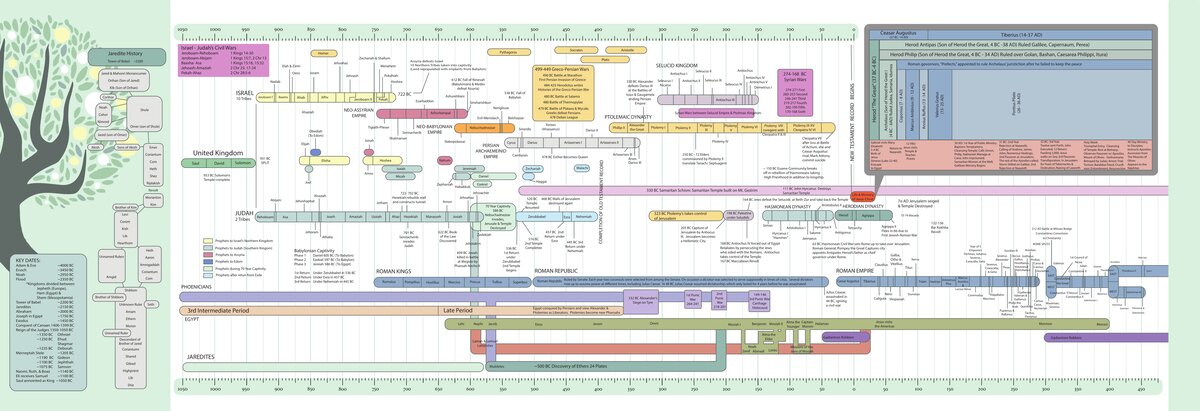
Tap to expand
Old Testament Timeline
From Creation through the Persian Period — tap the image to zoom, or download the full PDF.
Tap anywhere to close · Pinch to zoom