| Church Manuals | |
| Come Follow Me Manual — Week 44 | View |
| Primary Activity: Jeremiah and Baruch's Scroll | View |
| Week 44 Children's Teaching Ideas | View |
| Scripture Helps: Old Testament | View |
| OT Seminary Teacher Manual | View |
| OT Institute Manual (1Ki–Mal) | View |
| Pearl of Great Price Manual | View |
| Scripture Reference | |
| Bible Dictionary | View |
| Topical Guide | View |
| Guide to the Scriptures | View |
| Church Media & Library | |
| Gospel for Kids (YouTube) | View |
| Bible Videos: Life of Jesus Christ | View |
| Church Magazines | View |
| Gospel Library | View |
Week 44
I Will Turn Their Mourning into Joy
Jeremiah 31-33; 36-39; Lamentations 1; 3
October 26-November 1, 2026
Weekly Resources: Week 44
Jeremiah 31–33; 36–39; Lamentations 1; 3 — Overview
October 26–November 1, 2026
“I Will Turn Their Mourning into Joy”
Official Church Resources
OFFICIAL CHURCH RESOURCES▶
CHURCH MEDIA FOR FAMILIES▶
▶ Video Commentary
VIDEO COMMENTARY (11 videos)
▼
 i
Finding Christ (John Hilton III)
 i
followHIM Full Episode
 i
followHIM Favorites
 i
Scripture Gems
 i
Scripture Insights
 i
Talking Scripture
 i
Teaching With Power
 i
Unshaken
 i
Unshaken
 i
Don't Miss This

Specialized Audiences
WOMEN’S PERSPECTIVES (3 videos)
▶
 i
Grounded
 i
Our Mothers Knew It
 i
Lynne Hilton Wilson (Handmaidens, Harems and Heroines)
FAMILY & CHILDREN’S RESOURCES (4 videos, 2 resource links)
▶


Reference & Study Materials
Scripture Central
Week 44 Study Hub
Interpreter
Week 44 Articles
Bible Project
This week’s book overviews

BIBLE PROJECT (2 book overviews · 3 selected themes · 11 more library videos)
▶
This week’s book overviews open from the Bible Project card above. Selected themes are highlighted below; the rest of the standing library remains available.
SELECTED FOR THIS WEEK — themes and word studies
 BibleProject — Covenants
Watch on BibleProject →
Jeremiah 31:31–34 · Optional thematic resource


BibleProject library — standing collection, not chosen for this week (11 videos)
 i
Temple
 i
Sacrifice & Atonement
 i
Holiness
 i
Image of God
 i
The Messiah
 i
Tree of Life
 i
YHWH / LORD
 i
Shalom / Peace
 i
Khesed / Loyal Love
 i
Nephesh / Soul
 i
Ruakh / Spirit
ACADEMIC & SCHOLARLY SITES▶
MAPS & BIBLICAL LOCATIONS▶
JEWISH & SCHOLARLY RESOURCES▶
First, a Word About Where We Are
▶︎
Last week we met Jeremiah as a young man who said, "I cannot speak: for I am a child" (Jeremiah 1:6), and we watched him warn a city that would not listen. This week the warnings come true. Babylon's army surrounds Jerusalem, the prophet is thrown into prison and then into a pit, and the city falls. Lehi's family had left about a decade before.
And yet the week opens with some of the most hopeful chapters in the Old Testament. Before the story reaches the ruin, the Lord speaks of homecoming, a new covenant, and a Branch from David's line. After the ruin comes Lamentations, five poems of grief, with one of scripture's best-loved lines of hope set in the middle of them.
The reading skips around (Jeremiah 31–33, then 36–39, then two chapters of Lamentations), and Jeremiah's own chapters are not in time order. The Overview walks every chapter in between, and Historical & Cultural Context, section 1, lays the events out in the order they happened.
Companions for This Week's Reading
▶︎
A new field guide: Babylon. Alongside this lesson comes a new field guide, Babylon: The Empire and the Exile. Babylon stands behind every chapter this week: the army around Jerusalem's walls, the king to whom Zedekiah had sworn loyalty, and the land where the exiles wept. The guide walks through the land between the rivers, Nebuchadnezzar and the kings of Babylon, the great city itself, its gods and its learning, the calendar the exiles carried home, and what exile was like for the people who lived it. Its last sections take up Babylon's place in the Bible and in the opening chapters of the Book of Mormon.
A companion from last week: Assyria. If you read Assyria: The Rod of the North last week, the two guides belong together. Assyria scattered the northern kingdom and stood at Jerusalem's wall in Hezekiah's day, and the city was spared. A little more than a century later Babylon came, and this time it fell. Read side by side, they help explain why Jeremiah's warnings were so hard for Judah to believe.
In case you missed it: Roots, Branches, and Light. Last week the Study Library added a new series, Tree & Menorah. It begins with Roots, Branches, and Light, which follows the image of the tree from the branches of the tabernacle lampstand to Isaiah's promise that "a Branch shall grow out of his roots" (Isaiah 11:1). Two more parts follow: how Hebrew builds meaning from its roots, and how the lampstand became a figure for the word. It makes a good companion to this week's "Branch of righteousness" (Jeremiah 33:15; Word Studies, study 4).
Optional viewing: Jeremiah (1998). If you would like to see the story told on screen, the 1998 film Jeremiah, starring Patrick Dempsey, is free to watch on Vision Video's YouTube channel. It is a dramatization, not scripture, and it adds people and scenes the Bible does not contain. The film's own description has Jeremiah leaving "the woman he loves," while scripture tells us only that the Lord commanded him not to marry (Jeremiah 16:2). Enjoy it as one imagining of the prophet's life, and let the text be the guide. Parents may want to preview it first.
The Questions This Week Raises — and Where Each One Is Answered
▶︎
| The question | Where it is taken up |
|---|---|
| Why are the chapters out of order? | Historical & Cultural Context, section 1 |
| Why did Jeremiah buy a field in a city about to fall? | Key Passages, passage 3, and Historical & Cultural Context, section 3, on the "right of redemption" |
| What is the "new covenant," and how is it connected to the sacrament? | Key Passages, passage 2, including its notes on how Hebrews and the Last Supper use it |
| Is the Branch of David Jesus Christ? | Key Passages, passage 4, and Word Studies, study 4 |
| Did all of Zedekiah's sons die? | Historical & Cultural Context, section 6, on Mulek |
| Who wrote Lamentations, and why does it follow the alphabet? | Historical & Cultural Context, section 7 |
| Is suffering a sign that God is punishing me? | Key Passages, passages 7 and 8, and Teaching Applications, section 6. Lamentations 3:33 answers plainly: He "doth not afflict willingly." |
| Why does the Lord almost never speak in Lamentations? | Historical & Cultural Context, section 7, and Key Passages, passage 8 |
| Which famous lines are missing from the ancient Greek translation of the Bible? | Word Studies, studies 2 and 4 |
Some of these have clear answers. Others, like the order of Jeremiah's chapters, the guide answers as far as the text allows and then says so.
Comfort That Has a Name
▶︎
The first poem of Lamentations pictures Jerusalem as a widow weeping alone, and it keeps coming back to one line: there is no one to comfort her. If you have ever sat with a grief that no one else seemed to see, you know that line from the inside.
Here is what makes it more than sad. The Hebrew word for comfort in that refrain, nāḥam (נָחַם), is the word Ephraim uses for repented in Jeremiah 31:19, "after that I was turned, I repented." (Ephraim, the leading tribe of the old northern kingdom, stands there for all the northern tribes Assyria had carried away, pictured as the Lord's son.) One word holds both: to be comforted, and to repent. And when the ancient Greek translation of the Old Testament rendered Lamentations, it used a word from the same family as Comforter in John's Gospel, where the Savior promises the Holy Ghost: "I will pray the Father, and he shall give you another Comforter" (John 14:16). Word Studies, study 1, shows the evidence.
For Latter-day Saints, the comfort Lamentations could not find has a name. The Comforter does not wait for us to stop grieving before He comes, and He does not ask us to pretend we are not hurting. But comfort and turning are close neighbors. Sometimes the comfort begins in the moment we say to the Lord what Ephraim said: "turn thou me, and I shall be turned."
Mercies You Can Count
▶︎
The poet of Lamentations 3 could not see the restoration Jeremiah had promised. The temple was gone, the city was empty, and he describes himself as walled in, his prayers shut out. What he could see was smaller: "It is of the LORD's mercies that we are not consumed" (Lamentations 3:22). He was still alive. His people were still there. And he decided that counted.
The word he uses is plural, mercies; Word Studies, study 2, shows what that plural adds. And they are "new every morning" (Lamentations 3:23). An ancient Jewish teacher, Rabbi Alexandri, read that line as a small daily promise of the resurrection: each morning we wake, and each waking tells us God can be trusted to raise us at the last (Jewish Perspective, section 4). Latter-day Saints know where that promise was kept: at a tomb, "very early in the morning… at the rising of the sun" (Mark 16:2).
Try this tomorrow. Before you reach for your phone, name three mercies from the last day. Small ones count. The poet started with we are not consumed.
The Servant Who Trusted
▶︎
Two men faced the same crisis in Jerusalem's last days: the king, and a servant in his house. The king was Zedekiah, who believed the prophet enough to ask for his counsel and was too afraid to take it. The servant was Ebed-melech, an Ethiopian in the palace, whose name means "servant of the king."
Ebed-melech had no power to save the city. What he could do was walk to the city gate, say out loud that what had been done to Jeremiah was wrong, and then, before he pulled the prophet out of the mud, go find some soft old rags so the ropes would not cut. Key Passages, passage 6, tells the story in full.
The promise the Lord sent him is worth reading slowly: "thy life shall be for a prey unto thee: because thou hast put thy trust in me" (Jeremiah 39:18). His life would be spared, carried out of the fallen city like a soldier's plunder. The Lord had offered the king life as well, in different words (Jeremiah 38:17), and he had refused it.
Most of us will never be kings. We are servants in someone else's house, with no power over how the big story ends. Ebed-melech is evidence that this does not matter to the Lord. Courage in one hard conversation, kindness in one small detail, and trust in Him: that was enough for a promise with his name on it.
One Verse to Take With You
▶︎
Before the siege and the pit, before the fire and the ruins, the Lord said this to His people:
"Yea, I have loved thee with an everlasting love: therefore with lovingkindness have I drawn thee." — Jeremiah 31:3
Lovingkindness there is ḥeseḏ (חֶסֶד), the same Hebrew word that becomes "mercies" in Lamentations 3:22, after the fall (Word Studies, study 2). What He promised before the worst happened, His people found still true on the other side of it.
Whatever this week holds for you, that is the order of things: the love comes first, and it is still there in the morning.
This week's Study Guide begins with the Overview.
Week 44
Jeremiah 31–33; 36–39; Lamentations 1; 3 — Overview
"I Will Turn Their Mourning into Joy"
October 26–November 1, 2026
1. Week 44: Overview
A purchase that made no sense
The army of Babylon has surrounded Jerusalem, and Jeremiah is a prisoner inside the king's own palace grounds, "shut up in the court of the prison" (Jeremiah 32:2), for saying the city would fall. Then his cousin Hanameel comes to him with a request: buy the family field in Anathoth, "for the right of redemption is thine to buy it" (Jeremiah 32:7). As his nearest relative, Jeremiah had the right to buy the land and keep it in the family. Anathoth is Jeremiah's hometown. It is the place where men once plotted to kill him (Jeremiah 11:21), and its fields are about to be in enemy hands.
Jeremiah buys it. He weighs out "seventeen shekels of silver," signs the deed in front of witnesses, and has both copies put "in an earthen vessel, that they may continue many days" (Jeremiah 32:9–14). Then he gives the reason, in the Lord's words: "Houses and fields and vineyards shall be possessed again in this land" (Jeremiah 32:15).
Most of us have been asked to do something like it: to keep acting on a promise when everything we can see says it will not come true. This week's reading is about that kind of faith. Its title is the Lord's promise to a people who would lose nearly everything first: "I will turn their mourning into joy, and will comfort them, and make them rejoice from their sorrow" (Jeremiah 31:13).
Where to look for Christ this week
The heart of the promise is a new covenant. "I will put my law in their inward parts, and write it in their hearts; and will be their God, and they shall be my people" (Jeremiah 31:31–33). On the night before He died, the Savior took the cup and called it "the new testament in my blood" (Luke 22:20). Later the writer to the Hebrews quoted Jeremiah's whole promise and applied it to the better covenant Christ mediates (Hebrews 8:6–12). Chapter 33 adds "the Branch of righteousness" that will "grow up unto David" (Jeremiah 33:15), and Latter-day Saint teaching recognizes in that Branch Jesus Christ, David's descendant. Key Passages, passage 2, reads the new covenant closely.
What to know before you start
Where you are. Zedekiah is the last king of Judah, the small kingdom whose capital is Jerusalem, and Babylon, the empire to the east ruled by King Nebuchadnezzar, is at the gates. The Book of Mormon begins in this same city: Lehi's family was living in Jerusalem "in the commencement of the first year of the reign of Zedekiah" (1 Nephi 1:4). This week you watch what happened, about a decade later, to the city they left. Historical & Cultural Context sets out the kings, the siege and the dates.
The chapters are not in time order. Chapter 32 takes place near the end of the siege, while chapters 35 and 36 step back to the reign of an earlier king, Jehoiakim (Jeremiah 35:1; 36:1). The walkthrough follows the order of the book and tells you when it moves in time.
Lamentations is a different kind of book. It is five poems of grief written after Jerusalem fell. The book names no author, but it is traditionally attributed to Jeremiah, and four of its five poems are built on the Hebrew alphabet. One thing to notice before you read it: unlike the prophets, Lamentations contains no speeches from the Lord answering His people. It gives us only their side of the conversation, which makes the moment near the end of chapter 3, when the speaker remembers the Lord saying "Fear not," stand out all the more.
Three questions to carry into any chapter this week
- What does the Lord promise here, and what will the people hearing it lose before it comes true?
- Who receives the word of the Lord in this chapter, and who tries to get rid of it?
- What would acting on this promise look like for me this week?
Assigned chapters are in bold. The walkthrough below covers every chapter from Jeremiah 31 to 39 and Lamentations 1 to 3, including the three that are not assigned. For the shape of the whole book of Jeremiah, all fifty-two chapters, see Week 43's map.
The New Testament column says who is speaking, because a verse the Savior spoke and a verse a later writer applied to Him are not the same thing. The Restoration column names the Book of Mormon and modern revelation where they connect; a dash means none is listed here, not that none exists.
12 rows — click to collapse
| Chapter | What happens | Assigned | Book of Mormon and modern revelation | New Testament — and whose voice |
|---|---|---|---|---|
| Jeremiah 31 | "I have loved thee with an everlasting love"; the scattered come home weeping; Rachel weeps for her children; mourning turned to joy; the new covenant written in the heart | Yes | The new and everlasting covenant restored: D&C 22:1; 66:2 | Matthew 2:17–18 — Matthew's narration, applying 31:15 to Herod's slaughter at Bethlehem · Hebrews 8:8–12 — the writer to the Hebrews, quoting 31:31–34 in full; 10:16–17, quoting 31:33–34 in part · Luke 22:20 — the Savior at the Last Supper, "the new testament in my blood": an echo of the promise, not a quotation · 2 Corinthians 3:3, 6 — Paul, by allusion: "fleshy tables of the heart" |
| Jeremiah 32 | A prisoner buys a field in a falling land; "Is there any thing too hard for me?"; an everlasting covenant | Yes | — | — |
| Jeremiah 33 | "Call unto me, and I will answer thee"; healing and pardon; the voices of joy return; the Branch of righteousness | Yes | — | — |
| Jeremiah 34 | Liberty proclaimed to Hebrew servants, then taken back | — | — | — |
| Jeremiah 35 | The Rechabites keep their father's word | — | — | — |
| Jeremiah 36 | Baruch writes the scroll; the king burns it; it is written again | Yes | The brass plates carried "many prophecies which have been spoken by the mouth of Jeremiah" (1 Nephi 5:13) | — |
| Jeremiah 37 | "Is there any word from the LORD?" Jeremiah arrested, beaten, imprisoned | Yes | Lehi's family at Jerusalem in Zedekiah's first year (1 Nephi 1:4) | — |
| Jeremiah 38 | Lowered into a muddy cistern; drawn out by Ebed-melech; a frightened king's last chance | Yes | — | — |
| Jeremiah 39 | Jerusalem falls; Zedekiah captured; Jeremiah freed; a promise to Ebed-melech | Yes | "The sons of Zedekiah were not slain, all except it were Mulek" (Helaman 8:21); "Jerusalem was destroyed according to the words of Jeremiah" (Helaman 8:20) | — |
| Lamentations 1 | The city as a widow, with "none to comfort her" | Yes | Compare Mormon's lament over his people (Mormon 6:16–22) | — |
| Lamentations 2 | The ruin traced to the Lord's own hand; "pour out thine heart like water" | — | — | — |
| Lamentations 3 | "I am the man that hath seen affliction"; then, "his compassions fail not. They are new every morning" | Yes | — | Matthew 5:39 — the Savior, on turning the other cheek: a shared image with 3:30, an echo only, not a quotation |
Jeremiah 31 — mourning turned to joy, and a covenant written in the heart — assigned
Chapters 30 and 31 are sometimes called the "book of consolation," because they stand out from the warnings around them as almost pure promise. Chapter 31 begins with the reason underneath every other promise: "Yea, I have loved thee with an everlasting love: therefore with lovingkindness have I drawn thee" (Jeremiah 31:3). Word Studies follows the word behind "lovingkindness," which reappears in some surprising places this week.
Then the Lord describes the homecoming of a scattered people, and it is not a parade of the strong. He gathers "the blind and the lame, the woman with child and her that travaileth with child together", and He says of them, "They shall come with weeping, and with supplications will I lead them… for I am a father to Israel" (Jeremiah 31:8–9). The returning people are still crying when they arrive. The joy of verse 13 is not the absence of tears on the road; it is what the Lord does with them at the end of it.
Listen for three voices in the middle of the chapter. First, Rachel, the mother of Joseph and grandmother of Ephraim, is heard weeping in Ramah for children who are gone (31:15). Ramah is the place where Jerusalem's captives would later be held in chains (Jeremiah 40:1; see Jewish Perspective, section 5). Matthew would later apply these words to the mothers of Bethlehem after Herod's slaughter (Matthew 2:17–18). The Lord answers her: "Refrain thy voice from weeping… there is hope in thine end… thy children shall come again to their own border" (31:16–17). Then Ephraim speaks: the northern tribes, called by the name of their leading tribe and pictured as a son, ashamed and asking for help: "turn thou me, and I shall be turned" (31:18). Then the Father answers, in some of the tenderest words in the prophets: "Is Ephraim my dear son? is he a pleasant child? for since I spake against him, I do earnestly remember him still… I will surely have mercy upon him" (Jeremiah 31:20). Key Passages, passage 1, walks through this conversation.
Readers who studied Week 43 will hear Jeremiah's first chapter coming back. When he was called, the Lord promised "to root out, and to pull down… to build, and to plant" (1:10). He also showed him an almond branch as a sign that He would watch over His word (1:11–12). The King James Version reads "hasten" in verse 12, but the verb is šāqaḏ (שָׁקַד), "to watch." Now He says, "like as I have watched over them, to pluck up, and to break down… so will I watch over them, to build, and to plant" (Jeremiah 31:28). It is the same verb: the watching has not stopped, but its purpose has turned to building.
Then comes the promise this whole week leans on. In Week 43 you read of Judah's sin "graven upon the table of their heart" (Jeremiah 17:1). Here the Lord promises to write something else on that same tablet: "I will put my law in their inward parts, and write it in their hearts; and will be their God, and they shall be my people" (Jeremiah 31:31–33). Every one of them will know Him, "from the least of them unto the greatest of them," and He "will remember their sin no more" (Jeremiah 31:34). The covenant the Lord made with Israel at Mount Sinai in Moses' day had been carved on tablets of stone (Exodus 34:1) and broken by the people (Jeremiah 31:32); this one will be carried inside. Latter-day Saints recognize it as the covenant the Lord restored in this dispensation and calls "a new and an everlasting covenant" (Doctrine and Covenants 22:1). Key Passages, passage 2, reads it with the Savior's words at the Last Supper and with Hebrews.
The chapter closes by tying the promise to the sky. As long as the sun shines by day and the moon and stars by night, Israel will not cease to be the Lord's people (Jeremiah 31:35–37). Next time you see the morning sun, you are looking at the Lord's own measure of how certain His covenant is.
Jeremiah 32 — a field bought in a falling land — assigned
The date at the top of the chapter tells you how desperate things are: "the tenth year of Zedekiah," with Babylon's army besieging the city and Jeremiah locked up for saying it would fall (Jeremiah 32:1–5). This is the scene from the opening of this page: the cousin, the field in Anathoth, the silver weighed, the deeds stored in an earthen jar (Jeremiah 32:6–15). Key Passages, passage 3, reads it verse by verse, and Historical & Cultural Context explains the family "right of redemption" behind Hanameel's request.
What happens next is worth slowing down for, because Jeremiah does not pretend he understands. He prays, and he begins with faith: "Ah Lord GOD! behold, thou hast made the heaven and the earth by thy great power and stretched out arm, and there is nothing too hard for thee" (32:17). He recounts the Exodus and the gift of the land. Then he admits his confusion: the siege mounds, the ramps of earth the attackers build up against the walls, are already there, "and thou hast said unto me, O Lord GOD, Buy thee the field for money" (Jeremiah 32:24–25).
The Lord answers with a question: "Behold, I am the LORD, the God of all flesh: is there any thing too hard for me?" (Jeremiah 32:27). He does not deny that the city will fall; He says plainly that it will (32:28–35). But He looks past it to an "everlasting covenant": "I will not turn away from them, to do them good" (32:40). Then He adds something remarkable: "I will rejoice over them to do them good, and I will plant them in this land assuredly with my whole heart and with my whole soul" (Jeremiah 32:41). Then He echoes the purchase itself: "fields shall be bought in this land" (32:43). One man's field became the Lord's sign for a whole people.
Jeremiah 33 — healing for the city, and the Branch of David — assigned
Jeremiah is still a prisoner when the next word comes (Jeremiah 33:1). It begins with an invitation that needs no context: "Call unto me, and I will answer thee, and shew thee great and mighty things, which thou knowest not" (Jeremiah 33:3). The Lord promises to "bring it health and cure," to "cleanse them from all their iniquity," and to pardon (33:6–8).
Here is a detail that rewards a reader who has been paying attention. Three times earlier in Jeremiah, the Lord warned that He would silence "the voice of mirth, and the voice of gladness, the voice of the bridegroom, and the voice of the bride" (Jeremiah 7:34; 16:9; 25:10). A city without weddings is a city without a future. Now, in the same streets everyone calls desolate, He promises that those same four voices will be heard again (Jeremiah 33:10–11). The word for that first voice is the same in all four passages, śāśôn (שָׂשׂוֹן); the King James translators rendered it "mirth" in the warnings and "joy" in the promise. Alongside the wedding sounds come worshippers singing, "for the LORD is good; for his mercy endureth for ever."
The chapter then names the One through whom it will happen: "will I cause the Branch of righteousness to grow up unto David; and he shall execute judgment and righteousness in the land" (Jeremiah 33:15). And once more the Lord points to the sky: if anyone could break His "covenant of the day, and… covenant of the night," then His covenant with David could be broken too (Jeremiah 33:20–21). Key Passages, passage 4, follows the Branch to Jesus Christ.
Jeremiah 34 — liberty proclaimed, then taken back — not assigned
This chapter shows what the city was like from the inside during the siege, when Lachish and Azekah were the last of Judah's fortified towns still standing (34:7). King Zedekiah made a covenant with the people of Jerusalem "to proclaim liberty": every Hebrew servant would go free, as the law of Moses required (Jeremiah 34:8–9, 13–14). They did it. Then, apparently when the Babylonian army withdrew for a time (Jeremiah 34:21–22; compare 37:5), "afterward they turned, and caused the servants… whom they had let go free, to return" to bondage (34:11). They had made the covenant in the temple in a very old way, cutting a calf in two and passing between the halves (Jeremiah 34:15, 18; compare Genesis 15:10, 17). The Lord's judgment names that act: those who walked between the halves and then broke their word would be given into their enemies' hands (34:18–20).
The Lord's response uses their own word against them: "Ye have not hearkened unto me, in proclaiming liberty… behold, I proclaim a liberty for you… to the sword, to the pestilence, and to the famine" (Jeremiah 34:17). Readers of Week 42 have met this word for "liberty" before: dᵊrôr (דְּרוֹר), the word of the jubilee, the fiftieth year, when liberty was proclaimed throughout the land (Leviticus 25:10), and of the passage in Isaiah that the Savior read at Nazareth. A people who could not keep liberty for their own servants were about to lose their own.
Jeremiah 35 — the family that kept its word — not assigned
This chapter steps back in time to the reign of Jehoiakim (35:1). The Lord sends Jeremiah to the Rechabites, a family who by their ancestor's command drank no wine, built no houses and lived in tents (35:6–7), but who had moved inside Jerusalem's walls to escape the invading armies (35:11), and tells him to set wine before them in a room of the temple. They refuse: "We will drink no wine: for Jonadab the son of Rechab our father commanded us" (Jeremiah 35:5–6). Their ancestor's instruction still held "unto this day" (35:14).
The Lord turns their faithfulness into a gentle, piercing contrast: a family keeps the word of a human father, "notwithstanding I have spoken unto you, rising early and speaking; but ye hearkened not unto me" (Jeremiah 35:14). The chapter ends with a promise to the Rechabites: "Jonadab the son of Rechab shall not want a man to stand before me for ever" (35:19). It is a quiet preview of the next chapter's question: what do people do when the word comes?
Jeremiah 36 — the scroll in the fire — assigned
Still in Jehoiakim's day, the Lord tells Jeremiah to write down everything He has said. He gives His reason: "It may be that the house of Judah will hear… that they may return every man from his evil way; that I may forgive their iniquity and their sin" (Jeremiah 36:2–3). Jeremiah dictates, Baruch writes, and because Jeremiah is barred from the temple, Baruch reads the scroll aloud there on a fast day (36:4–10). The message reaches the king's officials, who are frightened. They send Baruch and Jeremiah into hiding and tell the king, who sends for the scroll (36:11–21).
What happens next is one of the most vivid scenes in the Old Testament. It is winter, and the king sits by a fire while Jehudi, a court official, reads the scroll aloud to him (36:21). As each few columns are read, the king cuts them off and burns them. "When Jehudi had read three or four leaves, he cut it with the penknife, and cast it into the fire that was on the hearth, until all the roll was consumed" (Jeremiah 36:22–23). Three officials begged him not to (36:25). Everyone else watched, and the text records it in a sentence worth reading twice: "Yet they were not afraid, nor rent their garments" (36:24). This king was "the son of Josiah", Judah's great reforming king (36:1). Years earlier, when Josiah heard the book of the law read aloud, he "rent his clothes" (2 Kings 22:11). The verb is the same in both accounts, qāraʿ (קָרַע): the father tore his clothes at the word; the son and his court would not.
The king ordered the arrest of Baruch and Jeremiah, "but the LORD hid them" (36:26). Then the Lord told Jeremiah to write it all again, and "there were added besides unto them many like words" (Jeremiah 36:32). Burning the scroll did not burn the word. Some of Jeremiah's prophecies were even carried across the ocean on the brass plates (1 Nephi 5:13). Key Passages, passage 5, follows how each person in the chapter responded to the scroll, as the Come, Follow Me manual invites.
Jeremiah 37 — "Is there any word from the LORD?" — assigned
Now the book jumps forward to Zedekiah, Jehoiakim's brother, whom Babylon had put on the throne, and the chapter opens with a summary of his whole reign: "neither he, nor his servants, nor the people of the land, did hearken unto the words of the LORD" (Jeremiah 37:1–2). Yet in the next verse he sends messengers to ask Jeremiah, "Pray now unto the LORD our God for us" (37:3). That tension runs through the next three chapters: a king who wants the prophet's prayers but not his counsel.
An Egyptian army marches north, and the Babylonians lift the siege to meet it (37:5). Jerusalem breathes again, but Jeremiah warns that the Babylonians will come back (37:7–10). When he tries to leave the city for the land of Benjamin, his home territory, a guard at the Benjamin gate arrests him. The charge is deserting to the Babylonians, whom the text calls the Chaldeans: "Thou fallest away to the Chaldeans." "It is false," he answers, but he is beaten and thrown into a dungeon in a scribe's house (37:11–16).
Then the king sends for him in secret and asks the question of the whole week: "Is there any word from the LORD? And Jeremiah said, There is: for, said he, thou shalt be delivered into the hand of the king of Babylon" (Jeremiah 37:17). Jeremiah gives the unwelcome answer to the man who can kill him, and then asks a question of his own: "Where are now your prophets which prophesied unto you, saying, The king of Babylon shall not come against you?" (37:19). The king moves him to the court of the prison and orders him a daily piece of bread "until all the bread in the city were spent" (37:21).
Jeremiah 38 — down into the mire, and up by an Ethiopian's hands — assigned
Four officials hear Jeremiah telling the people that surrender is the only way to live, and they demand his death: "this man seeketh not the welfare of this people, but the hurt" (Jeremiah 38:1–4). (The Pashur named here, son of Malchiah, is a different man from the Pashur who put Jeremiah in the stocks in Week 43.) Zedekiah's answer is one of the saddest sentences a king ever spoke: "Behold, he is in your hand: for the king is not he that can do any thing against you" (38:5).
They lower Jeremiah by ropes into a cistern in the prison court. "And in the dungeon there was no water, but mire: so Jeremiah sunk in the mire" (Jeremiah 38:6).
Then one man acts. Ebed-melech, an Ethiopian who served in the king's house, goes to the king at the city gate and says plainly what everyone else has avoided saying: "these men have done evil in all that they have done to Jeremiah… he is like to die for hunger" (38:8–9). Given thirty men, he goes first to a storeroom for old rags and worn-out clothes, and lets them down on ropes: "Put now these old cast clouts and rotten rags under thine armholes under the cords" (Jeremiah 38:10–13). Key Passages, passage 6, stays with him.
Zedekiah sends for Jeremiah once more and says, "hide nothing from me." Jeremiah sets out the choice: surrender, and "thy soul shall live, and this city shall not be burned"; refuse, and it will burn (38:14–18). The king's reply is honest: "I am afraid" (38:19). Jeremiah pleads, "Obey, I beseech thee, the voice of the LORD" (38:20). Then he describes what the Lord has shown him: the women of the palace mocking the king, "thy feet are sunk in the mire, and they are turned away back" (38:22). The king who left his prophet sinking would find himself stuck the same way; the verb for sinking is the same in both verses, ṭāḇaʿ (טָבַע). Zedekiah asks only that the conversation be kept secret (38:24–26).
Jeremiah 39 — the city falls, and two lives are spared — assigned
The end comes in a few verses. The siege began in Zedekiah's ninth year, and the wall was breached in his eleventh, about a year and a half later (Jeremiah 39:1–2). Zedekiah fled by night and was caught on the plains near Jericho. In front of him his sons were killed, and then his eyes were put out (39:4–7). Jeremiah had warned that Zedekiah's "eyes shall behold his eyes", the eyes of the king of Babylon (32:4). He did see that king, and then he saw nothing more. The city was burned and its walls broken down (39:8).
The Book of Mormon adds a detail the Bible does not record: one son of Zedekiah, Mulek, survived. "The sons of Zedekiah were not slain, all except it were Mulek" (Helaman 8:21), and the Lord led his people to the promised land, where Lehi's descendants later found them (Omni 1:15–16). Historical & Cultural Context tells how the two families of Jerusalem met again.
The chapter ends with two rescues. Nebuchadnezzar orders that Jeremiah be treated well, "Take him, and look well to him, and do him no harm" (39:11–12), and Jeremiah is freed to live among his people (39:14). And a word comes for Ebed-melech: "I will surely deliver thee… thy life shall be for a prey unto thee: because thou hast put thy trust in me" (Jeremiah 39:15–18). His life itself would be his plunder: when everything else was lost, Ebed-melech would come away alive. Jeremiah had once offered that same promise to everyone in the city who would surrender (38:2); Key Passages, passage 6, follows where it went.
Lamentations 1 — "none to comfort her" — assigned
Lamentations opens where Jeremiah 39 ends, with the city in ruins, and it speaks in the voice of grief: "How doth the city sit solitary, that was full of people! how is she become as a widow!" (Lamentations 1:1). Jerusalem is pictured as a woman weeping alone at night (1:2).
Count one phrase as you read. "She hath none to comfort her" (Lamentations 1:2). "She had no comforter" (Lamentations 1:9). "The comforter that should relieve my soul is far from me" (Lamentations 1:16). "There is none to comfort her" (Lamentations 1:17). "There is none to comfort me" (1:21). Five times in one poem we hear that there is no one to comfort her. Now remember what the Lord promised in Jeremiah 31:13, "I will turn their mourning into joy, and will comfort them." The comfort Lamentations cannot find is the comfort the Lord had already promised to give. Word Studies traces that word.
Partway through, the city speaks for herself, and she asks a question anyone who has grieved will recognize: "Is it nothing to you, all ye that pass by? behold, and see if there be any sorrow like unto my sorrow" (Lamentations 1:12). She also confesses, honestly and without excuse: "The LORD is righteous; for I have rebelled against his commandment" (1:18). Key Passages, passage 7, reads the chapter closely.
Lamentations 2 — the ruin traced to the Lord's own hand — not assigned
The second poem is the hardest in the book to read. It insists that the destruction was not an accident of politics: "The Lord was as an enemy: he hath swallowed up Israel" (Lamentations 2:5). The temple, the feasts and the Sabbaths are gone (2:6–7). The prophets the city had listened to "have seen vain and foolish things" and "have not discovered thine iniquity" (2:14), and now "her prophets also find no vision from the LORD" (2:9). The poem does not look away from the suffering of children in the famine (2:11–12).
The poet tries to console the city and cannot find words: "what shall I equal to thee, that I may comfort thee, O virgin daughter of Zion? for thy breach is great like the sea: who can heal thee?" (the daughter of Zion is Jerusalem, pictured as a young woman; Lamentations 2:13). And yet the chapter ends not in silence but in prayer. The poet urges the city to "pour out thine heart like water before the face of the Lord: lift up thy hands toward him" (Lamentations 2:18–19). Even when you cannot find comfort, you can still bring the whole of your grief to Him.
Lamentations 3 — "This I recall to my mind, therefore have I hope" — assigned
The third poem is the longest and the most personal. It is built with three verses for each letter of the Hebrew alphabet, and it begins with one man's account of darkness: "I am the man that hath seen affliction by the rod of his wrath" (Lamentations 3:1). For twenty verses the darkness deepens. He feels walled in. "Also when I cry and shout, he shutteth out my prayer" (3:8). And finally, "My strength and my hope is perished from the LORD" (3:18).
Then, in the middle of the poem, he turns. He remembers something else: "This I recall to my mind, therefore have I hope. It is of the LORD's mercies that we are not consumed, because his compassions fail not. They are new every morning: great is thy faithfulness. The LORD is my portion, saith my soul; therefore will I hope in him" (Lamentations 3:21–24). The word behind "mercies" is ḥeseḏ (חֶסֶד), the same word Jeremiah 31:3 translates "lovingkindness"; Word Studies follows it. He goes on: "For the Lord will not cast off for ever… For he doth not afflict willingly nor grieve the children of men" (Lamentations 3:31–33). Those lines are a refuge for anyone tempted to read their own sorrow as proof that God has stopped caring.
The poem does not stay on that height. It calls the people to "search and try our ways, and turn again to the LORD" (Lamentations 3:40), then admits that pardon has not yet come and that a cloud seems to stand between prayer and heaven (Lamentations 3:42–44). But near the end, the speaker remembers being cast into a dungeon: "I called upon thy name, O LORD, out of the low dungeon. Thou hast heard my voice… Thou drewest near in the day that I called upon thee: thou saidst, Fear not… thou hast redeemed my life" (Lamentations 3:55–58). The word for that "dungeon" is bôr (בּוֹר), the same word used for the muddy cistern in Jeremiah 38. Lamentations never says who its speaker is, so this is an echo to notice rather than a claim about who wrote it. Historical & Cultural Context, section 7, explains why those two words, "Fear not," stand out. Key Passages, passage 8, reads the poem's turn and its ending closely.
"It is of the LORD's mercies that we are not consumed, because his compassions fail not. They are new every morning: great is thy faithfulness." (Lamentations 3:22–23)
These words were not written in a peaceful season. They come from the ruins of the very land whose future Jeremiah bought with seventeen shekels of silver. The field purchase and the morning mercies are the same faith from two sides. One acts on the Lord's promise before the disaster; the other holds on to His character after it.
One more connection, from just outside this week's reading. The last poem of Lamentations says, "our dance is turned into mourning" (Lamentations 5:15). Set it beside the week's title: "Then shall the virgin rejoice in the dance… for I will turn their mourning into joy" (Jeremiah 31:13). The same three words appear in both: māḥôl (מָחוֹל), dance; hāp̄aḵ (הָפַךְ), turn; and ʾēḇel (אֵבֶל), mourning. The grief of Lamentations is the title's promise running backward, and the promise is the Lord's answer to that grief, given before the grief ever came.
- The promise (Jeremiah 31–33). In the darkest years, the Lord speaks of homecoming, a new covenant written in the heart, healing for the city and a Branch from David's line.
- The word refused (34–36). Liberty is proclaimed and taken back; a family keeps its father's word while a nation does not; a king burns the scroll.
- The prophet in the pit (37–38). Jeremiah is arrested, imprisoned and sunk in the mire. An Ethiopian servant pulls him out. A frightened king asks for the word and will not obey it.
- The fall (39). Jerusalem burns. Zedekiah loses his sons and his sight. Jeremiah and Ebed-melech are spared.
- The grief (Lamentations 1–2). The city weeps with none to comfort her, and the poet urges her to pour out her heart to the Lord.
- Hope at the bottom (Lamentations 3). In the ruins, one man remembers the Lord's mercies, new every morning, and hears, "Fear not."
Because most of us will, at some point, be asked to buy a field in a falling land. We are asked to keep a covenant, keep a marriage, keep praying, or keep serving when the evidence around us says it will not matter. Jeremiah did not understand how the promise could come true, and he said so to the Lord. He bought the field anyway, sealed the deed, and set it aside "that they may continue many days." The Lord did not scold his confusion. He answered it: "is there any thing too hard for me?"
Because the new covenant is about the heart. The Lord did not promise ancient Israel a better rulebook; He promised to write His law inside them, so that knowing Him would no longer depend on someone else telling them. Jesus Christ made that covenant with His own blood, and He offers it to us in the ordinances we receive and the covenants we keep.
And because Lamentations is in the Bible. The Lord did not leave out the poems of His people's worst days or tidy them into a happy ending. He kept their tears, their confession and their unanswered questions, and in the middle of them He kept the line that has carried believers through grief ever since: "his compassions fail not. They are new every morning." That does not promise that sorrow will lift by the next sunrise. It promises that His mercy will meet you there.
If you do one thing with this week: read Lamentations 3:19–26 on a morning when you feel worn down. Notice the exact verse where the speaker chooses what to remember. Then write down one promise the Lord has made you that you are still waiting on, and one small thing you can do this week that shows you believe it: your own field in Anathoth.
| Section | What it helps explain |
|---|---|
| Historical & Cultural Context | The last kings of Judah, the siege of Jerusalem, Lehi and Mulek, and what kind of book Lamentations is. |
| Key Passages | Eight close readings, with Latter-day Saint connections and the words of modern prophets. |
| Word Studies | Hebrew words that carry this week's promises, with Greek, Latin and English comparisons. |
| Jewish Perspective | How ancient Jewish interpreters read these chapters, with their sources and limits. |
| Teaching Applications | Activities for families, classes and individual study. |
| Study Questions | Questions moving from the text to personal reflection. |
Continue to Historical & Cultural Context.
2. Week 44: Historical & Cultural Context
If this week's reading ever feels like it is jumping around, it is. The Church's Scripture Helps says it plainly: "The chapters in Jeremiah are not always in chronological order." Chapter 32 is "one of the final events before the Babylonian destruction of Jerusalem," yet it sits in the middle of the book, while chapters 35 and 36 step back nearly twenty years to an earlier king (Scripture Helps: Old Testament, "Jeremiah 31–33; 36–38; Lamentations 1; 3").
Who is who, before the dates. Three powers shape every chapter. Judah is the small southern kingdom of the Israelites, with Jerusalem as its capital. Babylon is the rising empire to the east, led by King Nebuchadnezzar (spelled Nebuchadrezzar in parts of Jeremiah); its soldiers are often called the Chaldeans, after the people who ruled it. Egypt, to the south-west, is the older power Judah kept hoping would rescue it.
How Judah's last kings came to the throne. The story begins with King Josiah, Judah's great reforming king, who reigned until 609 B.C. (Old Testament Student Manual: Kings–Malachi, Enrichment G). In his last year, Pharaoh Necho of Egypt marched north toward the Euphrates. Josiah went out against him and was fatally wounded at Megiddo (2 Kings 23:29; 2 Chronicles 35:20–24). Scripture does not say why he fought; Necho even sent word, "I come not against thee this day" (2 Chronicles 35:21). Babylon's own records fill in the picture. One of the Babylonian Chronicles, known as the Fall of Nineveh Chronicle, describes "the army of Egypt that had come to help" the last king of Assyria against Babylon, and in 609 B.C. that king crossed the Euphrates "with a large army from Egypt" (in a translation adapted from A. K. Grayson, Assyrian and Babylonian Chronicles, 1975). The King James wording, that Necho went "against the king of Assyria," reads as though he went to fight Assyria; Babylon's records show the reverse. So whatever Josiah's own reason, by blocking Necho he stood in the way of Assyria's ally, and in effect on Babylon's side.
After Josiah's death, twice a foreign king chose Judah's next king himself, wanting a ruler he could count on, and renamed him to show whose he was:
- Egypt's choice. Necho removed Josiah's son Jehoahaz after three months and made another son, Eliakim, king, "and turned his name to Jehoiakim" (2 Kings 23:31, 33–34). The Institute manual says Jehoiakim "ruled as an Egyptian vassal" (Enrichment G), that is, as a king who reigned under Egypt's authority.
- Babylon takes over. In 605 B.C. Babylon's army, led by Nebuchadnezzar, then still a prince commanding his father's troops, defeated Egypt at Carchemish (Jeremiah 46:2; Old Testament Student Manual: Kings–Malachi, chapter 28). Jehoiakim became Babylon's servant for three years, "then he turned and rebelled" (2 Kings 24:1).
- Three months, then surrender. His son Jehoiachin, also called Coniah, reigned only three months before surrendering to Babylon (2 Kings 24:8, 12).
- Babylon's choice. Nebuchadnezzar then chose another son of Josiah and bound him by an oath (Jeremiah 37:1; compare Ezekiel 17:13). The Institute manual says he "pledged loyalty as a vassal king" (Enrichment G). Section 2 tells how he was renamed Zedekiah, and how he broke that oath.
The chapters themselves carry the dates, counted by the years of each king's reign: "the fourth year of Jehoiakim" means the fourth year he was king. Laid end to end, they look like this:
17 rows — click to collapse
| When | What happens | Where to read it |
|---|---|---|
| 640–609 BC | Josiah reigns, Judah's last great reforming king | 2 Kings 22:1; Enrichment G |
| 609 BC | Josiah is fatally wounded at Megiddo when he goes out against Pharaoh Necho. His son Jehoahaz reigns three months; Necho removes him and makes Jehoiakim king as Egypt's vassal | 2 Kings 23:29–34 |
| 605 BC, the fourth year of Jehoiakim | Babylon defeats Egypt's army at Carchemish on the Euphrates, and the same year the Lord tells Jeremiah to write his words in a scroll | Jeremiah 46:2; 36:1–4 |
| About 605 BC | Babylon's first siege: Nebuchadnezzar comes against Jerusalem and carries off young men of the royal family and the nobility, Daniel among them (Daniel dates it to Jehoiakim's third year) | Daniel 1:1–6; Institute manual, chapter 28 |
| The fifth year of Jehoiakim, the ninth month | A fast day; Baruch reads the scroll; the king burns it beside his winter fire | Jeremiah 36:9, 22–23 |
| In the days of Jehoiakim | The Rechabites, a family whose forefather had commanded them never to drink wine or live in houses, take refuge inside Jerusalem from the invading armies | Jeremiah 35:1, 6–7, 11 |
| After three years as Babylon's servant | Jehoiakim rebels | 2 Kings 24:1 |
| 597 BC | Babylon's second siege: Jehoiakim's son Jehoiachin reigns three months and surrenders. The king, the princes, the soldiers and the craftsmen are carried to Babylon, the priest Ezekiel among them | 2 Kings 24:8–15; Ezekiel 1:1–2; Bible Dictionary, "Ezekiel" |
| 597 BC, the first year of Zedekiah | Nebuchadnezzar makes Zedekiah king and binds him by oath. That same year Lehi prays for his people and is called as a prophet | 2 Kings 24:17; 2 Chronicles 36:13; 1 Nephi 1:4–18 |
| Afterward | The Lord commands Lehi to take his family and leave Jerusalem | 1 Nephi 2:2–4 |
| During Zedekiah's reign | Zedekiah breaks his oath, rebels against Babylon and sends to Egypt for help | 2 Kings 24:20; Ezekiel 17:15 |
| The ninth year of Zedekiah, the tenth month | Babylon's final siege of Jerusalem begins | Jeremiah 39:1 |
| During the siege | Zedekiah and the people make a covenant to free their Hebrew servants, then take them back; an Egyptian army marches to help, and the Babylonians withdraw for fear of it, then return; Jeremiah is arrested | Jeremiah 34:8–22; 37:5–16 |
| The tenth year of Zedekiah | Jeremiah, held in the court of the prison, buys a field at Anathoth, his home town (Jeremiah 1:1); the promises of chapter 33 follow | Jeremiah 32:1–2; 33:1 |
| The eleventh year of Zedekiah, the fourth month | Famine; the wall is broken through; Zedekiah flees and is captured | Jeremiah 39:2–7; 52:6–7 |
| The fifth month, about 586 BC | Nebuzar-adan, captain of Babylon's guard, burns the temple, the palace and the houses of Jerusalem | Jeremiah 52:12–13 |
| After the fall | The poems of Lamentations | Lamentations 1:1 |
The dates in years BC come from Church sources: Josiah's reign, 609 BC and 605 BC from the Institute manual, and 597 BC and 586 BC from Scripture Helps (the Institute manual gives about 587 BC for the fall). The rest are the scriptures' own dates, counted by the years of each king's reign. Chapters 30 and 31 carry no date of their own.
If you would like to read the week in time order, try chapter 36 first, then 35 (its year is not given), then 34, 37, 32 and 33, 38 and 39, and then Lamentations. One honest limit: chapters 32, 33 and 38 all take place while Jeremiah is held in the court of the prison, and the text does not say exactly how they fit together. Whatever the reason for the book's order, its effect is worth noticing: the promises of chapters 30–33 come first, so the reader meets the hope before the ruin.
Zedekiah did not inherit his throne in the usual way. His nephew, the young King Jehoiachin, had surrendered and been taken to Babylon, and "the king of Babylon made Mattaniah his father's brother king in his stead, and changed his name to Zedekiah" (2 Kings 24:17). He was twenty-one years old and reigned eleven years (2 Kings 24:18). Scripture Helps explains what the renaming meant: "Nebuchadnezzar's appointing of a new king and renaming him demonstrated that the kingdom was under Babylonian control" (Scripture Helps: Old Testament, "2 Kings 16–25").
The pressure came from both directions. The Church's Institute manual describes Judah in these years as "caught in the power struggle between Egypt and Babylonia." It says Zedekiah eventually sought "the support of Egypt in rebellion against the power of the north" (Old Testament Student Manual: Kings–Malachi, Enrichment G). The "north" is Babylon. It lay to the east, but its armies came down on Judah from the north, and in Jeremiah the Lord brings "all the families of the north… and Nebuchadrezzar the king of Babylon" against the land (Jeremiah 25:9). Turning to Egypt also broke a promise: Nebuchadnezzar "had made him swear by God," and Zedekiah "rebelled" (2 Chronicles 36:13).
The Lord's counsel through Jeremiah ran the other way. As Scripture Helps puts it in its chapter on this week's reading, "the word of the Lord to Jeremiah was that Judah should surrender and submit to Babylon. This message put Jeremiah in direct conflict with Zedekiah and other political leaders and the false prophets who supported them." The counsel came with a promise. "Bring your necks under the yoke of the king of Babylon, and serve him and his people, and live," Jeremiah told the king (Jeremiah 27:12). Even near the end, if Zedekiah surrendered, "this city shall not be burned with fire" (Jeremiah 38:17). To submit was to live; to resist was to lose the city.
That background explains the most hopeful moment in chapter 37. When Egypt's army marched north, the Babylonians lifted the siege to meet it (37:5). To the people inside the walls it must have looked like rescue. Jeremiah's message did not change: "Behold, Pharaoh's army, which is come forth to help you, shall return to Egypt into their own land" (Jeremiah 37:7). That message made him a suspect. When he set out for the land of Benjamin, his home district, a guard at the city gate seized him with the charge "Thou fallest away to the Chaldeans": you are deserting to the Babylonians (37:12–14). He was arrested as a traitor in the very days the city thought it had been spared.
One detail about the king's name is worth carrying into chapter 33. Scripture Helps, in its chapter on 2 Kings 16–25, gives the meaning of Zedekiah as "Yahweh is my justice/righteousness." (Yahweh is the personal name of God that the King James Version prints as "the LORD.") In chapter 33 the Lord promises that restored Jerusalem will be called "The LORD our righteousness" (Jeremiah 33:16). Both names are built on the same Hebrew word for righteousness, ṣeḏeq (צֶדֶק). The last king of Judah carried the name; the promise of chapter 33 does not depend on him. Key Passages, passage 4, follows that promise to the Branch of David.
When Hanameel, the son of Jeremiah's uncle Shallum, asked him to buy the family field at Anathoth, he gave a legal reason: "for the right of redemption is thine to buy it" (Jeremiah 32:7). The law of Moses kept land within a family. If a man grew poor and had to sell, a near relative could step in: "if any of his kin come to redeem it, then shall he redeem that which his brother sold" (Leviticus 25:25). The book of Ruth shows the same custom at work, when Boaz redeems the land of Elimelech's family (Ruth 4:1–10). The Institute manual draws the line directly: Jeremiah "purchased his cousin's estate because he had the right as next of kin (see Leviticus 25:25; Ruth 4)" (Old Testament Student Manual: Kings–Malachi, chapter 24).
The word for that right is gᵊʾullâ (גְּאֻלָּה), "redemption," from the verb gāʾal (גָּאַל), to redeem. It is the family of words Week 42 followed through Isaiah, where the Lord calls Himself Israel's Redeemer; see Week 42's Word Studies, study 2. So the purchase in chapter 32 is more than a property transaction. A relative is doing what a redeemer does: keeping a family's inheritance from being lost.
The text also shows how carefully the sale was done, and every detail is something you can see in the verses:
- Jeremiah "weighed him the money, even seventeen shekels of silver" (32:9). The silver was weighed out on scales.
- He signed the deed, sealed it and called witnesses (32:10).
- There were two copies, one sealed shut and one left open to read: "sealed according to the law and custom, and that which was open" (32:11).
- He handed them to Baruch "in the presence of the witnesses… before all the Jews that sat in the court of the prison" (32:12).
- Both went into "an earthen vessel, that they may continue many days" (32:14).
The chapter does not explain why there were two copies. What it does make plain is that this was done by the book, in public, and stored to last. A man who expected the land to be lost forever would not have bothered. The Lord's own word about the deeds explains why they were kept: houses, fields and vineyards would be possessed again in this land (32:15). Key Passages, passage 3, reads the purchase as an act of faith.
The chapters move Jeremiah between several places of confinement, and keeping them straight makes the story much easier to follow. Scripture Helps summarizes it: "Jeremiah was initially imprisoned in a dungeon under harsh conditions. However, Zedekiah secretly consulted with him and ordered that Jeremiah be moved to the court of the guard, where he received better treatment." The court of the guard is the place the King James Version calls "the court of the prison."
| Place | Verses | What the text tells us |
|---|---|---|
| Free in the city | Jeremiah 37:4 | At first "they had not put him into prison." |
| A scribe's house turned into a prison | Jeremiah 37:15–16 | Beaten and held "in the house of Jonathan the scribe: for they had made that the prison," in a dungeon "many days." |
| The court of the prison | Jeremiah 37:21; 32:2 | Inside the palace grounds, with a daily piece of bread from the bakers' street. Visitors could come: Hanameel found him here, and witnesses gathered for the sale (32:8, 12). |
| A cistern in that court | Jeremiah 38:6 | The princes, angry that he urged surrender (38:2–4), had him lowered "with cords" into a pit with "no water, but mire" (38:6). |
| Back in the court of the prison | Jeremiah 38:13, 28 | Drawn out by Ebed-melech, an Ethiopian official of the king's household (38:7), he stayed there "until the day that Jerusalem was taken." |
| Released | Jeremiah 39:14 | Handed to Gedaliah son of Ahikam, whom the king of Babylon made governor over the cities of Judah (40:5), "so he dwelt among the people." |
The word for that cistern is bôr (בּוֹר), a pit, used both for a cistern (an underground tank dug to store rainwater) and for a prison. Here it was both. Week 43's Historical & Cultural Context, section 4, describes how these cisterns were dug and plastered, and what it meant when one failed. In a city under siege, this one had nothing left in it but mud.
Baruch, the son of Neriah (36:4), appears at two of this week's turning points, and he is easy to overlook. Scripture Helps calls him "the faithful scribe and close companion of Jeremiah," and notes that "he occasionally read Jeremiah's messages to the public when the prophet was unable to deliver them himself."
In chapter 32 he receives the deeds to the field in front of the witnesses (32:12). In chapter 36 he writes the scroll "from the mouth of Jeremiah" (36:4), reads it aloud in the temple, hides with Jeremiah when the king orders their arrest (36:19, 26), and then writes the whole scroll again (36:32). After the fall, he went to Egypt with Jeremiah when the survivors took the prophet there against his will (Jeremiah 43:6).
Just outside this week's reading is a short chapter written to him alone. Jeremiah 45 is dated to "the fourth year of Jehoiakim," the year of the first scroll (45:1). The Institute manual, quoting the commentator J. A. Thompson, calls it "a kind of appendix that belongs with ch. 36," and notes that Baruch "too could be beset by despair as was Jeremiah" (chapter 24, section 24-24). His own words are there: "Woe is me now! for the LORD hath added grief to my sorrow" (Jeremiah 45:3). The Lord's answer to the tired scribe was a promise: "thy life will I give unto thee for a prey in all places whither thou goest" (45:5). The King James word prey means plunder, what an army takes home after a war (Numbers 31:11–12). In the same breath the Lord tells Baruch not to seek "great things" for himself, because the whole land is about to be broken down (45:4–5). So the promise means: when everything else is lost, you will come away with your life as your prize. It is the same promise later given to Ebed-melech; Key Passages, passage 6, follows it.
Baruch was not the only keeper of records in Jerusalem's last years. When Nephi went back into the city for the brass plates, he met "the servant of Laban who had the keys of the treasury" (1 Nephi 4:20) and ordered him, in Laban's voice, to come with him into the treasury. That servant was Zoram. Some Latter-day Saint writers think he was more than a household slave, and the word servant leaves room for that. The King James Bible uses servant most often for ʿeḇeḏ (עֶבֶד), a word broad enough to cover a slave or a king's highest officer. But it also uses servant for a form of šāraṯ (שָׁרַת), "to minister." That is the word for Joshua as Moses' "servant" (Exodus 33:11), and the word for the Levites, whom the Lord set apart "to stand before the LORD to minister unto him" (Deuteronomy 10:8). Which word lay behind Nephi's servant we cannot know. Collin Russell suggests Zoram may have been the scribe who kept the plates current, and Kelly Schaeffer-Bullock thinks he may have been a high-ranking officer in Laban's service. A writer at the Mormon Yeshiva blog proposes that he was a Levite, since Levites kept the treasuries of the house of God (1 Chronicles 26:20).
Whatever his tribe, Zoram was bound to Laban in some way: Nephi had to promise that he "should be a free man like unto us" (1 Nephi 4:33). If he was a Levite, other details fall into place. Levites owned no land of their own (Deuteronomy 14:29) and could serve in a wealthier man's household, as one did in Micah's (Judges 17:8–13). Yet Zoram was no ordinary servant. On the way out of the city he "spake unto me many times concerning the elders of the Jews" (1 Nephi 4:27), knowing that Laban "had been out by night among them" (4:22). That familiarity would fit a Levite too: the law sent hard cases to "the priests the Levites" (Deuteronomy 17:9), and King Jehoshaphat seated Levites beside "the chief of the fathers of Israel" to judge in Jerusalem (2 Chronicles 19:8).
And Levites were the keepers of the law itself. Moses "wrote this law, and delivered it unto the priests the sons of Levi, which bare the ark of the covenant of the LORD, and unto all the elders of Israel" (Deuteronomy 31:9), and told the Levites to "put it in the side of the ark" (31:25–26), which was in the charge of the Levite clan of Kohath (Numbers 3:31). A king was to make his own copy of the law "out of that which is before the priests the Levites" (Deuteronomy 17:18). Every seventh year the law was read aloud to all Israel at the Feast of Tabernacles (31:10–11), and after the exile it was Levites who "read in the book in the law of God distinctly, and gave the sense, and caused them to understand the reading" (Nehemiah 8:7–8). That was a skill in itself. In Nephi's day, Hebrew was written with consonants only. Vowel signs came centuries after Christ, and the system printed in Hebrew Bibles today is the work of Jewish scribes called the Masoretes, who worked between the sixth and tenth centuries. Until then the vowels, the chant, and the divisions between verses were all carried by tradition, passed from teacher to student by voice. A public reader supplied them from what he had been taught. Centuries after Nehemiah, the Talmud (the great collection of rabbinic teaching compiled after the time of Christ) read his verse in just this way. "Distinctly" meant the Aramaic translation given alongside the reading. "Gave the sense" meant the division into verses. And "caused them to understand the reading" meant the cantillation, the traditional chant (Nedarim 37b; Megillah 3a; each reference names the tractate, then the page and its side, a or b). One opinion recorded in Nedarim takes that last phrase instead as the tradition of how the words are voiced. Some Levites served as scribes as well: "of the Levites there were scribes" (2 Chronicles 34:13). If Zoram was a Levite holding the keys to a treasury where the brass plates were kept, he was doing what his tribe had been charged with since Moses: guarding the record.
The question touches the priesthood too, and here Latter-day Saints have read the evidence differently. The Mormon Yeshiva writer argues that a Levite line among Nephi's people would have let them keep the law of Moses' rules for priests at the temple Nephi built (2 Nephi 5:16). If Zoram was a Levite, that line did not end with him. Zoram "and his family" went with Nephi when the brothers separated (2 Nephi 5:6), Lehi promised that Zoram's seed would be "blessed with his seed" (2 Nephi 1:31), and Zoramites were still counted among the Nephites a generation later (Jacob 1:13) and centuries after that (4 Nephi 1:37). In Israel a Levite's standing passed from father to son, "after the house of their fathers" (Numbers 3:15), so it would have run through Zoram's sons. Joseph Fielding Smith, then President of the Quorum of the Twelve, reasoned the other way. Because Lehi was of Manasseh and Ishmael of Ephraim, he wrote, "there were no Levites who accompanied Lehi to the Western Hemisphere," and the Nephites "officiated by virtue of the Melchizedek Priesthood" (Answers to Gospel Questions, 1:124). Scripture Central takes the same view (KnoWhy #101). His argument rests on the families of Lehi and Ishmael and does not take up Zoram, whose tribe the Book of Mormon never names. Reading the English record, President Smith may not have seen in Zoram's title, servant, the possibility that it stood for a Levite's ministry, and so may not have weighed it. The Book of Mormon itself says only that Nephi consecrated his brothers Jacob and Joseph "that they should be priests and teachers over the land of my people" (2 Nephi 5:26).
Scripture does not settle who Zoram was. But if the plates were in his keeping, his choice makes sense. In a city Babylon had already besieged twice, going with Lehi's family may have been the surest way to keep them safe. Nephi tells us only that Zoram "made an oath unto us that he would tarry with us from that time forth" (1 Nephi 4:35), and Lehi later told him, "I know that thou art a true friend unto my son, Nephi, forever" (2 Nephi 1:30).
Not everyone remembered it that way. More than five centuries later, Ammoron, king of the Lamanites, wrote to Captain Moroni that he was "a descendant of Zoram, whom your fathers pressed and brought out of Jerusalem" (Alma 54:23). In the same letter he repeats the old Lamanite charge that Nephi's people had robbed their brethren "of their right to the government" (Alma 54:17; compare Mosiah 10:15–16). Lehi called Zoram a true friend; his descendant called him a captive.
Jeremiah 39 records the worst moment of Zedekiah's life: "the king of Babylon slew the sons of Zedekiah in Riblah before his eyes" (Jeremiah 39:6). Riblah, "in the land of Hamath" in Syria, was where Nebuchadnezzar sat in judgment on the captured king (39:5). The Book of Mormon adds what the Bible does not. Scripture Helps answers the question directly: "We learn from the Book of Mormon that one of Zedekiah's sons, Mulek, survived and escaped the destruction of Jerusalem. The Lord directed Mulek and others to the promised land in the Western Hemisphere sometime after Lehi and his family left Jerusalem" (Scripture Helps: Old Testament, "2 Kings 16–25").
The Book of Mormon mentions Mulek's people in several places:
- Their origin. "The people of Zarahemla came out from Jerusalem at the time that Zedekiah, king of Judah, was carried away captive into Babylon" (Omni 1:15).
- Their leader's ancestry. Zarahemla "was a descendant of Mulek" (Mosiah 25:2).
- A name on the land. "The land north was called Mulek, which was after the son of Zedekiah" (Helaman 6:10).
- A prophet's witness. Centuries later, Nephi the son of Helaman asked his hearers, "Will ye say that the sons of Zedekiah were not slain, all except it were Mulek?" (Helaman 8:21).
There is a quiet connection here to the burned scroll. When Lehi's descendants found the people of Zarahemla, those people "had brought no records with them" (Omni 1:17). Mosiah was a Nephite leader whom the Lord had led out of the land of Nephi (Omni 1:12–13), and the plates of brass were the record Lehi's family had carried from Jerusalem (1 Nephi 5:10–13). The people of Zarahemla rejoiced "because the Lord had sent the people of Mosiah with the plates of brass which contained the record of the Jews" (Omni 1:14). Those plates carried "many prophecies which have been spoken by the mouth of Jeremiah" (1 Nephi 5:13). Zedekiah had not heeded Jeremiah's words. Centuries later, carried across an ocean by Lehi's family, those words reached the people who had come with his son, and they rejoiced to receive them.
How Jeremiah and Lehi relate to each other is covered in Week 43's Historical & Cultural Context, section 9, and is not repeated here.
Who wrote it. The book itself names no author. Church sources attribute it to Jeremiah. The Bible Dictionary says "Written by Jeremiah," and adds that the writer "was an eyewitness" of the city's fall (Bible Dictionary, "Lamentations, book of"). Scripture Helps puts it with care: "Although no author is mentioned by name, this book is traditionally attributed to the prophet Jeremiah, who witnessed the events being described."
Its name. The Hebrew title is the book's first word, ʾêḵâ (אֵיכָה), "How." The Institute manual renders it "alas! how …" (chapter 24, section 24-26). The King James Version keeps the word at the head of three of the five poems: "How doth the city sit solitary" (Lamentations 1:1), "How hath the Lord covered the daughter of Zion with a cloud" (Lamentations 2:1), "How is the gold become dim!" (Lamentations 4:1). (The daughter of Zion is a poetic name for Jerusalem and its people.) It is the word of someone looking at a ruin and unable to take it in.
What kind of writing it is. Scripture Helps explains that lamentation "refers to words that express deep sorrow or mourning," and that laments "were a common ancient Near Eastern literary genre." The Institute manual adds that "it was customary in ancient Judah to compose and sing lamentations about departed friends or relatives." Lamentations mourns a city the way a family would mourn a person. The Book of Mormon has a lament of its own: Mormon's cry over his fallen people (Mormon 6:16–22).
How it is built. Four of the five poems follow the Hebrew alphabet. In the Bible Dictionary's words, "Lam. 1–2; 4 having each 22 verses beginning with the successive letters of the alphabet; Lam. 3 has 66 verses, every three beginning each with one letter; Lam. 5 is not alphabetical." An English reader cannot see the pattern, but it is there in every verse of this week's two chapters, 1 and 3. A form like that takes discipline. Whatever the poet felt was set down in order, one letter at a time.
What it leaves out. Scripture Helps makes an observation that shapes how the book should be read: "unlike many books in the Old Testament, Lamentations does not contain any responses from the Lord. It captures only the suffering and longing that the people felt before the Lord later showed mercy to them." There are no prophecies spoken in the Lord's name here, no "thus saith the LORD." That makes Lamentations 3:57 all the more striking: the speaker remembers that the Lord drew near and said "Fear not." It is the poet's memory of the Lord's words, not a new message from Him, and it is the only such moment in the book. Key Passages, passage 8, reads it closely.
- Scripture Helps: Old Testament, "Jeremiah 31–33; 36–38; Lamentations 1; 3". Rachel, the new covenant, the field, Baruch, the order of the chapters, and Lamentations.
- Scripture Helps: Old Testament, "2 Kings 16–25". Zedekiah's appointment and name, and Mulek.
- Old Testament Student Manual: Kings–Malachi, chapter 24, "The Babylonian Captivity" and Enrichment G, "Babylonia and the Conquest of Judah". The political history of the last kings of Judah.
- On Zoram: Collin Charles Russell, "Meeting Zoram", Interpreter 24 (2017); and Kelly N. Schaeffer-Bullock, "Rediscovering Zoram: The Chief Naʿar of the Commander of the Fortress", BYU Studies 63, no. 1 (2024).
- Bible Dictionary, "Lamentations, book of", and Guide to the Scriptures, "Lamentations, Book of".
Continue to Key Passages.
3. Week 44: Key Passages
The Text
"Thus saith the LORD; A voice was heard in Ramah, lamentation, and bitter weeping; Rahel weeping for her children refused to be comforted for her children, because they were not. Thus saith the LORD; Refrain thy voice from weeping, and thine eyes from tears: for thy work shall be rewarded, saith the LORD; and they shall come again from the land of the enemy. And there is hope in thine end, saith the LORD, that thy children shall come again to their own border." (Jeremiah 31:15–17)
"Is Ephraim my dear son? is he a pleasant child? for since I spake against him, I do earnestly remember him still: therefore my bowels are troubled for him; I will surely have mercy upon him, saith the LORD." (Jeremiah 31:20)
How the Passage Works
These six verses are a conversation, and it helps to hear who is speaking. First comes a mother. Rachel, the beloved wife of Jacob, was the mother of Joseph and the grandmother of Ephraim and Manasseh. Scripture Helps explains why she is the one weeping: the Lord "referred to the northern tribes of Israel as the children of Rachel," and those tribes had been carried away by Assyria. Centuries earlier the Israelites had split into two kingdoms, Israel in the north and Judah, with Jerusalem, in the south (1 Kings 12:19–20). Assyria, the great empire before Babylon, conquered the northern kingdom and carried its people away (2 Kings 17:6). Her voice comes from Ramah, "the possible location of her tomb" (Scripture Helps: Old Testament, "Jeremiah 31–33; 36–38; Lamentations 1; 3"). She "refused to be comforted," and the Lord does not scold her for it. He answers her grief with a promise about the future: "thy work shall be rewarded… thy children shall come again to their own border."
Then a son speaks. Ephraim, the leading tribe of the northern kingdom, stands here for all the scattered northern tribes. He is heard "bemoaning himself," and his words are a prayer anyone who has tried and failed to change can pray: "turn thou me, and I shall be turned; for thou art the LORD my God" (Jeremiah 31:18). He does not promise to turn himself. He asks to be turned.
The Father's answer does not wait for Ephraim to finish improving. "Is Ephraim my dear son?… I do earnestly remember him still." The words "my bowels are troubled for him" are the ancient way of saying, "my heart goes out to him." The chapter that is so often read for its new covenant (Passage 2) first shows the kind of Father who makes it.
Notice the verb that runs through the conversation. Ephraim's "turn thou me, and I shall be turned" uses the Hebrew šûḇ (שׁוּב), to turn or return, twice. It comes again in his confession, "after that I was turned" (31:19), and again in the Lord's invitation a verse later: "turn again, O virgin of Israel, turn again to these thy cities" (31:21). It is the word for coming home; Week 43's Word Studies, study 3, follows it through Jeremiah's earlier chapters. Watch for it in Lamentations 3, where it marks the turning point of the whole poem (Passage 8).
Centuries later Matthew heard Rachel's voice again in Bethlehem, in the grief of mothers whose young children Herod's soldiers had killed (Matthew 2:17–18). That is Matthew's own reading, introduced with his words "Then was fulfilled"; Jeremiah's verse was first about the scattered tribes. The ancient Aramaic paraphrase read it yet another way: the voice is heard on high, and it is Jerusalem weeping for her exiled children. Jewish Perspective explains how.
Latter-day Saint Connections
- Sister Amy A. Wright, "Abide the Day in Christ" (October 2023), a direct application. Speaking of helping those we love find their way to the Savior, she quotes 31:16–17 and then says: "Jesus Christ is the 'hope in thine end.' Nothing we have or have not done is beyond the reach of His infinite and eternal sacrifice. He is the reason why it is never the end of our story." (churchofjesuschrist.org)
- Elder James E. Faust, "Spiritual Healing" (April 1992), a direct use of this chapter. His talk is about the healing the Savior offers through the Comforter, and it closes with Jeremiah 31. In his words: "healing takes place, just as the Lord promised through the prophet Jeremiah when he said, 'I will turn their mourning into joy, and will comfort them, and make them rejoice from their sorrow. … I have satiated the weary soul, and I have replenished every sorrowful soul.'" (churchofjesuschrist.org)
- The prodigal son comes home with a speech prepared, and his father runs to him before he can finish it (Luke 15:18–22). The Savior does not quote Jeremiah there, so read it as a parallel, not a quotation. But it is the same Father.
Study Questions
- The Lord answers Rachel's weeping with a promise, not a rebuke. What does that suggest about how He regards grief?
- Ephraim prays, "turn thou me, and I shall be turned." What is the difference between asking God to change you and promising to change yourself?
- Who in your life might need to hear the Father's words in 31:20, and how could you help them hear it?
The Text
"Behold, the days come, saith the LORD, that I will make a new covenant with the house of Israel, and with the house of Judah: Not according to the covenant that I made with their fathers in the day that I took them by the hand to bring them out of the land of Egypt; which my covenant they brake, although I was an husband unto them, saith the LORD: But this shall be the covenant that I will make with the house of Israel; After those days, saith the LORD, I will put my law in their inward parts, and write it in their hearts; and will be their God, and they shall be my people. And they shall teach no more every man his neighbour, and every man his brother, saying, Know the LORD: for they shall all know me, from the least of them unto the greatest of them, saith the LORD: for I will forgive their iniquity, and I will remember their sin no more." (Jeremiah 31:31–34)
How the Passage Works
Start with what is old. The Lord names the covenant He made with Israel at Mount Sinai, when He gave them His law through Moses, made "in the day that I took them by the hand," like a parent leading a child out of Egypt. Then He names its failure plainly: "which my covenant they brake, although I was an husband unto them." The problem was never the Lord's faithfulness. It was a people who had His law on stone and not inside them.
Then listen to what changes. The law does not change; its location does. "I will put my law in their inward parts, and write it in their hearts." Scripture Helps reads this as "symbolizing their true conversion." A commandment written on a tablet tells you what to do. A commandment written on the heart is something you want to do.
Then notice the order of the last verse. Everyone will know the Lord, "from the least of them unto the greatest of them," and the reason follows: "for I will forgive their iniquity, and I will remember their sin no more." Forgiveness is not a footnote to the new covenant. It is the ground it stands on. People come to know God by being forgiven by Him.
What does new mean here? The Church's Scripture Helps explains that it means God's covenant "would be revealed anew in the last days," and that the Lord sometimes calls it "the new and everlasting covenant." In the Restoration, that covenant was revealed again through the Prophet Joseph Smith. Word Studies follows the Hebrew word for new from this verse into Lamentations 3.
Two notes on precision, because the New Testament uses this passage in two different ways.
- The writer to the Hebrews quotes it in full (Hebrews 8:8–12), and again in part (10:16–17), and applies it to the covenant Christ mediates. One line reads differently: where Jeremiah has "although I was an husband unto them," Hebrews has "and I regarded them not" (Hebrews 8:9). The writer was quoting the ancient Greek translation of Jeremiah, which reads the line that way.
- The Savior, at the Last Supper, did not quote Jeremiah. He took the cup and said, "This cup is the new testament in my blood, which is shed for you" (Luke 22:20). "Testament" and "covenant" both translate one Greek word, diathēkē (διαθήκη); the word for new is kainē (καινή). Hebrews 8:8 calls Jeremiah's promise a "new covenant" using those same two words. So the Savior's words at the table are an echo of this promise, in His own voice, on the night He made it possible.
Latter-day Saint Connections
- Sister Linda K. Burton, "Is Faith in the Atonement of Jesus Christ Written in Our Hearts?" (October 2012), a direct treatment. She opens with 31:33–34 and asks: "We are the people Jeremiah saw. Have we invited the Lord to write the law, or doctrine, in our hearts? Do we believe that the forgiveness available through the Atonement that Jeremiah refers to applies to us personally?" (churchofjesuschrist.org)
- Elder Russell M. Nelson, "Covenants" (October 2011), citing Jeremiah 31:33. Speaking of what covenant children come to know about themselves, he says: "His law is written in our hearts. He is our God and we are His people. Committed children of the covenant remain steadfast, even in the midst of adversity." His footnotes send the reader to Jeremiah 31:33 and Hebrews. (churchofjesuschrist.org)
- The sacrament. Each week the bread and water are taken "in remembrance" of the Savior's body and blood, and the prayers ask that we "always remember him" (Doctrine and Covenants 20:77, 79). The Lord promised to remember sin no more; we promise to remember Him always.
Study Questions
- What is the difference between a law kept on stone and a law written in the heart? Where do you see that difference in your own obedience?
- In 31:34, knowing the Lord comes because He forgives. How has being forgiven helped you know Him?
- The Savior called the cup "the new testament in my blood." How might remembering Jeremiah 31 change the way you take the sacrament this week?
The Text
"Take these evidences, this evidence of the purchase, both which is sealed, and this evidence which is open; and put them in an earthen vessel, that they may continue many days. For thus saith the LORD of hosts, the God of Israel; Houses and fields and vineyards shall be possessed again in this land." (Jeremiah 32:14–15)
"Ah Lord GOD! behold, thou hast made the heaven and the earth by thy great power and stretched out arm, and there is nothing too hard for thee." (Jeremiah 32:17)
"Behold, I am the LORD, the God of all flesh: is there any thing too hard for me?" (Jeremiah 32:27)
How the Passage Works
The Lord told Jeremiah the request was coming before it came (32:6–7). So when Hanameel arrived, Jeremiah could say, "Then I knew that this was the word of the LORD" (32:8). He did not buy the field on a hunch. He bought it because the Lord had prepared him to recognize what was being asked. Anathoth was his home town, "in the land of Benjamin" (Jeremiah 1:1). Historical & Cultural Context, section 3, explains the family "right of redemption" that made the request a lawful one, and how carefully the sale was done.
Then comes the most honest prayer in the chapter. As soon as the deed is handed over, Jeremiah prays (32:16). He begins with the strongest thing he knows: "there is nothing too hard for thee." He reviews what the Lord has done, from the Exodus to the gift of the land. Then he names what he can see: "Behold the mounts, they are come unto the city to take it" (32:24). Siege ramps are at the walls. "And thou hast said unto me, O Lord GOD, Buy thee the field for money" (32:25). He has obeyed. He has also admitted he does not understand. Both are in the same prayer, and the Lord accepts both.
The Lord's answer turns Jeremiah's own words into a question. "Is there any thing too hard for me?" (32:27). The verb is the same one Jeremiah used ten verses earlier, pālāʾ (פָּלָא), to be too wonderful or too difficult. It is also the verb in the question the Lord asked Abraham, when Sarah laughed at the promise of a son in her old age: "Is any thing too hard for the LORD?" (Genesis 18:14). The same question is asked of an old couple without a child and a prophet without a future, and in both cases the answer is a promise that looks impossible.
And the promise was kept. The Lord ends the chapter with the very words of the purchase: "Men shall buy fields for money, and subscribe evidences, and seal them, and take witnesses in the land of Benjamin" (Jeremiah 32:44). When the exiles came home from Babylon decades later, the list of returning families includes "the men of Anathoth, an hundred twenty and eight" (Ezra 2:23). The scripture does not say any of them held Jeremiah's deed. But people from his town came back to that land, just as he had paid silver to say they would.
Latter-day Saint Connections
- Moroni describes faith in nearly the terms of Jeremiah's purchase: "faith is things which are hoped for and not seen; wherefore, dispute not because ye see not, for ye receive no witness until after the trial of your faith" (Ether 12:6). Jeremiah bought the field during the trial. He did not live to see the witness.
- Hebrews 11 describes believers who "died in faith, not having received the promises, but having seen them afar off" (Hebrews 11:13). Jeremiah belongs on that list.
Study Questions
- Jeremiah obeyed and admitted his confusion in the same prayer. Why might the Lord welcome both?
- The Lord's question in 32:27 is the same one He asked Abraham and Sarah. What promise in your life feels "too hard"?
- What would it look like to "seal the deed" on a promise you are still waiting for?
The Text
"Call unto me, and I will answer thee, and shew thee great and mighty things, which thou knowest not." (Jeremiah 33:3)
"In those days, and at that time, will I cause the Branch of righteousness to grow up unto David; and he shall execute judgment and righteousness in the land." (Jeremiah 33:15)
"Thus saith the LORD; If ye can break my covenant of the day, and my covenant of the night, and that there should not be day and night in their season; Then may also my covenant be broken with David my servant, that he should not have a son to reign upon his throne." (Jeremiah 33:20–21)
How the Passage Works
This chapter was spoken to a prisoner. It came "the second time, while he was yet shut up in the court of the prison" (33:1). And it opens with an invitation, not a command: "Call unto me, and I will answer thee." The "great and mighty things" He promises to show are not about Jeremiah's release. They are about what the Lord will do with a ruined city and a broken royal line. The Week Overview traces the return of the wedding voices to Jerusalem's streets (33:10–11); this passage follows the promise to its center.
The center is a person. A king of David's line was on the throne, and within a year or so his sons would be dead and his eyes put out (Jeremiah 39:6–7). Into that collapse the Lord speaks of "the Branch of righteousness." The word is ṣemaḥ (צֶמַח), a sprout or shoot: new growth from a stump that looks dead. Jeremiah had used it once before, in nearly the same words: "I will raise unto David a righteous Branch, and a King shall reign and prosper" (Jeremiah 23:5). Scripture Helps identifies the Branch plainly: "This is a reference to Jesus Christ, a descendant of David." The name given to the restored city in the next verse, "The LORD our righteousness" (33:16), echoes the name of King Zedekiah, which means that the LORD is his righteousness. Historical & Cultural Context, section 2, explains it.
Then the Lord offers the sky as evidence. Twice He makes the same kind of argument (33:20–21, 25–26). Can anyone stop the sun from rising or the night from falling in its season? Then no one can break His covenant with David. Day and night are not offered as a poetic image. They are offered as evidence: the most dependable thing a person can see, every day of their life, is the Lord's own measure of His faithfulness. Lamentations 3 will reach for the same measure, "new every morning" (Passage 8).
Latter-day Saint Connections
- The angel Gabriel announced the fulfilment to Mary: "the Lord God shall give unto him the throne of his father David" (Luke 1:32). Gabriel does not quote Jeremiah, but he names the promise Jeremiah carried: a son of David on David's throne, who would reign forever.
- The promise to David itself is in 2 Samuel 7:12–16: "thy throne shall be established for ever." Scripture Helps points out that while the line of kings ended when Jerusalem fell, the promise of a kingdom established forever was fulfilled in Jesus Christ.
Study Questions
- The Lord's invitation in 33:3 came to a man in prison. What "great and mighty things" might He show you if you called on Him from where you are now?
- A ṣemaḥ is new growth from what looks dead. Where have you seen the Savior bring life out of something you thought was finished?
- The Lord measures His faithfulness by the sunrise. What dependable thing in your own life could remind you of His covenant?
The Text
"It may be that the house of Judah will hear all the evil which I purpose to do unto them; that they may return every man from his evil way; that I may forgive their iniquity and their sin." (Jeremiah 36:3)
"And it came to pass, that when Jehudi had read three or four leaves, he cut it with the penknife, and cast it into the fire that was on the hearth, until all the roll was consumed in the fire that was on the hearth." (Jeremiah 36:23)
"Then took Jeremiah another roll, and gave it to Baruch the scribe, the son of Neriah; who wrote therein from the mouth of Jeremiah all the words of the book which Jehoiakim king of Judah had burned in the fire: and there were added besides unto them many like words." (Jeremiah 36:32)
How the Passage Works
Begin with why the scroll was written. It is easy to remember chapter 36 as a story about judgment. But the Lord's stated reason is mercy: "that they may return every man from his evil way; that I may forgive their iniquity and their sin" (36:3). The warnings were written down so that people could turn back. The word return there is the same šûḇ (שׁוּב) that runs through Passage 1.
Then watch how each person responds to the same words. The Come, Follow Me manual invites readers to notice how the people in this chapter felt about the word of the Lord. Read the chapter with that question in mind:
| Who | What they did with the word | Verses |
|---|---|---|
| The Lord | Gave it so that the people might return and be forgiven | 36:2–3 |
| Jeremiah | Dictated it, though he was barred from the temple | 36:4–5 |
| Baruch | Wrote it, read it aloud in public, then wrote it all again | 36:4, 8–10, 32 |
| The king's officials | Were afraid when they heard it, protected Baruch and Jeremiah, and took the matter to the king | 36:16, 19–20 |
| Jehudi and King Jehoiakim | Jehudi read it aloud; the king cut it up and burned it, a few columns at a time | 36:21–23 |
| Elnathan, Delaiah and Gemariah | Begged the king not to burn it | 36:25 |
The king did not burn the scroll in one angry moment. He listened to "three or four leaves", a few columns of the scroll, at a time and burned each part after hearing it, until the whole roll was gone. Every column was a fresh chance to stop, and he took none of them. The Week Overview notes the sentence that follows, "Yet they were not afraid, nor rent their garments" (36:24), and how differently this king's father, Josiah, had received the word.
The ending is the point. Jehoiakim sent men to seize the scribe and the prophet, "but the LORD hid them" (36:26). The Lord then had every word written again (36:28), and the new scroll held more than the first: "there were added besides unto them many like words" (36:32). The fire could not undo the word. Ancient Jewish teachers read those added words as the book of Lamentations itself; Jewish Perspective tells how.
Latter-day Saint Connections
- The lost manuscript of 1828. When 116 pages of the Book of Mormon translation were lost, the Lord told Joseph Smith, "The works, and the designs, and the purposes of God cannot be frustrated, neither can they come to naught" (Doctrine and Covenants 3:1). He promised, "I will not suffer that they shall destroy my work; yea, I will show unto them that my wisdom is greater than the cunning of the devil" (Doctrine and Covenants 10:43). Like Jeremiah's second scroll, what replaced the lost pages was not a lesser record. The revelations do not mention Jeremiah, so this is a parallel, not a fulfilment.
Study Questions
- The Lord's purpose for the scroll was forgiveness (36:3). How does that change the way you read the warnings in scripture?
- Jehoiakim heard the word a few columns at a time and burned each one. What are the small ways a person can keep hearing the word and still cut it away?
- Baruch wrote the whole scroll twice. What would it take to start a good work over after it had been destroyed?
The Text
"My lord the king, these men have done evil in all that they have done to Jeremiah the prophet, whom they have cast into the dungeon; and he is like to die for hunger in the place where he is: for there is no more bread in the city." (Jeremiah 38:9)
"And Ebed-melech the Ethiopian said unto Jeremiah, Put now these old cast clouts and rotten rags under thine armholes under the cords. And Jeremiah did so." (Jeremiah 38:12)
"For I will surely deliver thee, and thou shalt not fall by the sword, but thy life shall be for a prey unto thee: because thou hast put thy trust in me, saith the LORD." (Jeremiah 39:18)
How the Passage Works
Two men face the same crisis: the king, and a servant in his house. They are a study in contrast.
The first is the king, Zedekiah. He believes Jeremiah enough to send for him in secret, more than once (Jeremiah 37:17; 38:14). He even asks, "hide nothing from me." Jeremiah tells him the truth: surrender, "and thou shalt live, and thine house" (38:17). And the king answers with an honest fear: "I am afraid of the Jews that are fallen to the Chaldeans, lest they deliver me into their hand, and they mock me" (38:19). The Chaldeans are the Babylonians: he feared the Jews who had already gone over to them, and their mockery. Jeremiah pleads with him, "Obey, I beseech thee, the voice of the LORD" (38:20). The Come, Follow Me manual asks readers to look for evidence that Zedekiah believed Jeremiah was the Lord's true prophet, and evidence that he did not. Both are here: he wanted the prophet's word, but not enough to act on it.
The second is Ebed-melech, "the Ethiopian," a servant in the king's own house (38:7). His name means "servant of the king" (BLB H5663). Scripture Helps calls him "an Ethiopian servant who courageously appealed to King Zedekiah for permission to save the prophet." Look at what that courage involved. He went out to the king at a public gate (38:7–8) and said aloud that powerful men had "done evil" (38:9), knowing those men had the king's ear. Then he showed a second kind of goodness. Before lowering the ropes, he went to a storeroom for "old cast clouts and rotten rags" so they would not cut into a starving man's arms (38:11–12). Courage got him to the king. Kindness thought about the ropes.
Then the Lord sends a message to the servant. While the city was still standing, Jeremiah, still a prisoner, was told to give Ebed-melech a promise: "thy life shall be for a prey unto thee: because thou hast put thy trust in me" (39:18). "A prey" is the spoil a soldier carries away from a battle. To have your life "for a prey" means you come out of the disaster with your life as your only plunder, and that is enough. The verb for trust is bāṭaḥ (בָּטַח), to trust or to feel secure.
That promise had been offered before. The phrase "his life… for a prey" appears in only four verses in Jeremiah. Twice it was the Lord's offer to anyone in Jerusalem who would surrender (Jeremiah 21:9; 38:2). The Lord offered Zedekiah life too, in different words (38:17), and he was too afraid to take it. The promise itself was also given by name to two people who trusted the Lord: Ebed-melech here, and Jeremiah's scribe Baruch (Jeremiah 45:5; see Historical & Cultural Context, section 5). The king refused the offer of life. The servant received the promise.
Latter-day Saint Connections
- Elder M. Russell Ballard, "His Word Ye Shall Receive" (April 2001), a thematic parallel. His talk is about heeding living prophets, and it does not discuss Jeremiah. But its central line describes exactly what Zedekiah missed: "there is safety, peace, prosperity, and happiness in responding to prophetic counsel." (churchofjesuschrist.org)
- The Come, Follow Me manual suggests comparing Zedekiah's story with Lehi's family in 1 Nephi 1–2. Lehi heard the same kind of warning in the same city during the same reign, and acted on it.
Study Questions
- Zedekiah was afraid of being mocked. What fears make it hard to act on counsel you believe is true?
- Ebed-melech spoke up and thought about the rags. Which of those two kinds of goodness comes more easily to you, and how could you grow in the other?
- The king refused the offer of life; the servant received the promise. What promise is the Lord offering you that you have not yet taken?
The Text
"How doth the city sit solitary, that was full of people! how is she become as a widow! she that was great among the nations, and princess among the provinces, how is she become tributary! She weepeth sore in the night, and her tears are on her cheeks: among all her lovers she hath none to comfort her." (Lamentations 1:1–2)
"Is it nothing to you, all ye that pass by? behold, and see if there be any sorrow like unto my sorrow, which is done unto me, wherewith the LORD hath afflicted me in the day of his fierce anger." (Lamentations 1:12)
"The LORD is righteous; for I have rebelled against his commandment: hear, I pray you, all people, and behold my sorrow." (Lamentations 1:18)
How the Passage Works
The poem begins by looking at the city from outside. Jerusalem is pictured as a widow sitting alone, weeping at night, with no one to comfort her. Once "princess among the provinces," she has become "tributary": a subject city, forced to pay tribute to its conqueror. Her "lovers" and "friends" are the allies she had trusted, who "have dealt treacherously with her" (1:2). The Week Overview counts how often that phrase about comfort returns. What matters here is what the refrain does to a reader. By the fifth time you hear it, you begin to feel the loneliness rather than simply note it.
Then, partway through, the city speaks for herself. Her first long speech is a question put to strangers on the road: "Is it nothing to you, all ye that pass by?" (Lamentations 1:12). Grief is lonely partly because the rest of the world keeps walking. She asks the passers-by to stop and look.
Christians have long heard the Savior's voice in that verse. Handel's Messiah sets it among the movements devoted to His suffering. The poem itself is about a city. But it is not hard to understand why believers heard in it the One who would one day weep over Jerusalem and then suffer for it.
Then comes something harder to hear, and the poem says it plainly. "The LORD is righteous; for I have rebelled against his commandment" (Lamentations 1:18). Lamentations does not pretend the fall came from nowhere. It holds grief and honesty together without letting either cancel the other. That is worth noticing, because it is so hard to do. A reader should be careful here, though. The city's confession is the city's own, about its own choices. It does not teach that every sorrow is a punishment, and Lamentations 3 will say so directly: "he doth not afflict willingly nor grieve the children of men" (Lamentations 3:33).
Latter-day Saint Connections
- Joseph Smith in Liberty Jail prayed a lament of his own: "O God, where art thou? And where is the pavilion that covereth thy hiding place?" (Doctrine and Covenants 121:1). Lamentations records no answer from the Lord. The Prophet received one: "My son, peace be unto thy soul; thine adversity and thine afflictions shall be but a small moment" (121:7).
- Elder Neil L. Andersen, "The Triumph of Hope" (October 2024), a thematic parallel. He tells of his nephew Ben, whose son Trey died after complications during heart-transplant surgery. Ben said: "The passing of Trey is so very painful, and I miss him so much. But the Lord does not leave us comfortless." Elder Andersen then promised: "the peace you seek may not come as quickly as you desire, but I promise you that as you trust in the Lord, His peace will come." The talk does not discuss Lamentations, but it answers the poem's own complaint, "none to comfort." (churchofjesuschrist.org)
- Mormon's lament over his fallen people, "O ye fair ones, how could ye have departed from the ways of the Lord!" (Mormon 6:17), is the Book of Mormon's own Lamentations, written by an eyewitness who loved the people he mourned.
Study Questions
- "Is it nothing to you, all ye that pass by?" Who around you might be asking that question without saying it aloud?
- Lamentations 1 holds grief and confession together. Why can it be hard to admit our part in a hard situation while we are still hurting?
- Joseph Smith received an answer in Liberty Jail; the poet of Lamentations 1 did not. How do you keep praying when the answer has not come yet?
The Text
"Remembering mine affliction and my misery, the wormwood and the gall. My soul hath them still in remembrance, and is humbled in me. This I recall to my mind, therefore have I hope. It is of the LORD's mercies that we are not consumed, because his compassions fail not. They are new every morning: great is thy faithfulness. The LORD is my portion, saith my soul; therefore will I hope in him." (Lamentations 3:19–24)
"I called upon thy name, O LORD, out of the low dungeon. Thou hast heard my voice: hide not thine ear at my breathing, at my cry. Thou drewest near in the day that I called upon thee: thou saidst, Fear not. O Lord, thou hast pleaded the causes of my soul; thou hast redeemed my life." (Lamentations 3:55–58)
How the Passage Works
The turn happens inside a memory. Verses 19 and 20 say the speaker cannot stop remembering his misery, "the wormwood and the gall," bitter plants that stand for bitter suffering. Then verse 21 says, "This I recall to my mind, therefore have I hope." Nothing outside him has changed. What changes is what he chooses to bring back to mind.
The Hebrew is even more vivid. "I recall to my mind" is literally "I bring back to my heart," using the verb šûḇ (שׁוּב), to return, with lēḇ (לֵב), heart. It is the same verb as Ephraim's prayer in Passage 1, "turn thou me, and I shall be turned." The poem uses it again a few verses later: "Let us search and try our ways, and turn again to the LORD" (Lamentations 3:40). Coming home to the Lord begins by turning one thought around.
Notice which word for hope the poet uses. "Therefore have I hope" (Lamentations 3:21) and "therefore will I hope in him" (3:24) both use yāḥal (יָחַל), a word that also means to wait. The hope of Lamentations 3 is not certainty that things will improve tomorrow. It is the decision to keep waiting on the Lord: "It is good that a man should both hope and quietly wait for the salvation of the LORD" (Lamentations 3:26).
What he remembers is the Lord's character. "His compassions fail not. They are new every morning." Word Studies follows the two Hebrew words behind "mercies" and "new." Then come the lines that have carried believers through grief ever since: "For the Lord will not cast off for ever: But though he cause grief, yet will he have compassion according to the multitude of his mercies. For he doth not afflict willingly nor grieve the children of men" (Lamentations 3:31–33). The Lord takes no pleasure in anyone's suffering.
Near its end, the poem goes down into a pit, where Jeremiah's own story nearly ended. The speaker remembers calling to the Lord "out of the low dungeon," using the same word as the cistern Jeremiah was lowered into (see Historical & Cultural Context, section 4). And the Lord came: "Thou drewest near… thou saidst, Fear not." The last line says, "thou hast redeemed my life" (Lamentations 3:58). The verb is gāʾal (גָּאַל), the kinsman's word, from the same root as the "right of redemption" that sent Jeremiah to buy the field (Jeremiah 32:7; see Historical & Cultural Context, section 3). Jeremiah had used the same verb in his promise to scattered Israel: the Lord "ransomed him from the hand of him that was stronger than he" (Jeremiah 31:11). At the bottom of the pit, the poet finds it true for himself.
Latter-day Saint Connections
- Alma the Younger describes the same kind of turn. In torment, "harrowed up by the memory of my many sins," he says, "I remembered also to have heard my father prophesy… concerning the coming of one Jesus Christ" (Alma 36:17). He cried out from "the gall of bitterness" (Alma 36:18), and the joy that followed was "as exceeding as was my pain" (Alma 36:20). Like the poet of Lamentations 3, he was turned by what he remembered. The Come, Follow Me manual pairs these chapters with Alma 36.
- Elder M. Russell Ballard, "The Joy of Hope Fulfilled" (October 1992), a thematic parallel. The Come, Follow Me manual quotes this talk for Lamentations. It does not discuss the book, but its plea is the poem's own: "Regardless of how desperate things may seem or how desperate they may yet become, please believe me, you can always have hope. Always." (churchofjesuschrist.org)
Study Questions
- The speaker's turn comes from what he chooses to remember (Lamentations 3:21). What do you recall to your mind when you need hope?
- The hope of Lamentations 3 is also a word for waiting. How is waiting on the Lord different from simply waiting?
- The poet's hope rests on the Lord's character, not on his circumstances. What do you know about the Lord that you could hold on to in a hard week?
Continue to Word Studies.
4. Week 44: Word Studies
Four Hebrew words carry this week from promise to ruin and back again. Each study starts with the English of the King James Version, then shows what the Hebrew adds, then looks at what two ancient translations did with the word. No Hebrew is needed to follow along.
Three names are worth knowing once. The Septuagint is the Greek translation of the Old Testament made by Jewish scholars before the time of Christ; it is the version the New Testament writers most often quote. Swete and Rahlfs are the scholars whose printed editions of that Greek text are checked here. The Vulgate is the Latin translation associated with Jerome, which Western Christians read for centuries.
Two things about the Greek of these books will surprise you. First, the Greek Jeremiah arranges its chapters differently: what English Bibles call Jeremiah 31 is chapter 38 in the Septuagint, Jeremiah 32 is 39, and Jeremiah 33 is 40. Second, the Greek text is shorter in places. Some verses this week, including two of the most famous, are simply not in it. Where that happens, the studies below say so.
The Week Overview counts the refrain of Lamentations 1, five times over: the city has "none to comfort her." And it sets beside that refrain the Lord's promise in Jeremiah:
"I will turn their mourning into joy, and will comfort them, and make them rejoice from their sorrow." (Jeremiah 31:13)
Both use one Hebrew verb, nāḥam (נָחַם), to comfort. It appears in all five lines of the Lamentations refrain (Lamentations 1:2, 9, 16, 17, 21). In this part of Jeremiah 31 it is twice rendered comfort: in the promise of 31:13 and in Rachel, who "refused to be comforted" (31:15).
Now look one verse past Rachel. When Ephraim speaks, he says, "Surely after that I was turned, I repented" (Jeremiah 31:19). Repented is the same verb. Nāḥam can mean to be comforted, to be sorry, or to change one's mind: a deep inward shift, whether toward relief or toward regret. So in the space of five verses, the King James translates one Hebrew word comforted for a grieving mother and repented for a returning son. The mother cannot yet be comforted; the son turns and is sorry; and the Father answers both.
What the translations did. The Greek translators usually rendered this verb with parakaleō (παρακαλέω), to comfort, to call to one's side. Lamentations 1 uses it throughout: the city has ouch hyparchei ho parakalōn autēn, "there is no one comforting her" (Swete, Lamentations 1:2). That is the verb family of the word John's Gospel uses when the Savior promises the Holy Ghost: "I will pray the Father, and he shall give you another Comforter" (John 14:16). Comforter there is paraklētos (παράκλητος), a noun formed from that same verb. The word the Greek Lamentations uses for the comforter who never came belongs to the same family as the word for the Comforter the Savior promised to send.
One more detail is worth knowing. At Jeremiah 31:15 the Septuagint does not say Rachel refused to be comforted; it says she "would not cease" (ouk ēthelen pausasthai, in chapter 38, verse 15, of the Greek Jeremiah). When Matthew quotes the verse, his Greek reads ouk ēthelen paraklēthēnai, "would not be comforted" (Matthew 2:18). Here Matthew agrees with the Hebrew rather than with the usual Greek translation.
The Latin keeps the thread almost everywhere, with consolor, to console: non est qui consoletur eam, "there is no one to console her" (Lamentations 1:2), and consolabor eos, "I will console them" (Jeremiah 31:13). At 31:19, where the Hebrew has repented, Jerome wrote egi paenitentiam, "I did penance," so the Latin, like the English, hides the link (Vulgate, Jeremiah 31; Lamentations 1).
Key Passages, passage 7, reads Lamentations 1 closely.
Cross-Language Connections
| Language | Term | Source |
|---|---|---|
| Hebrew | nāḥam (נָחַם) — to comfort, be comforted; to be sorry, repent; at Lamentations 1:2, 9, 16, 17, 21; Jeremiah 31:13, 15, 19 | BLB H5162 · Lamentations 1:2; Jeremiah 31:19 |
| Greek (LXX) | parakaleō (παρακαλέω) — to comfort, call alongside; ho parakalōn, "the one comforting," throughout Lamentations 1. Related noun paraklētos (παράκλητος), "Comforter," John 14:16, 26 | Swete, Lamentations 1 · BLB G3870 · BLB G3875 |
| Latin (Vulgate) | consolor — to console, at Lamentations 1 and Jeremiah 31:13, 15; paenitentiam egi — "I did penance," at 31:19 | Vulgate, Lamentations 1 · Jeremiah 31 · Logeion: consolor |
| English | comfort, repent | comfort (1828) · Etymonline: comfort, repent (1828) · Etymonline: repent |
Earlier weeks have already met this word. Week 34 (Word Study 9) introduced it as covenant love, and Week 36 (Word Study 2) heard it twenty-six times in Psalm 136, "for his mercy endureth for ever." This week asks a different question: what happens to that word when the city it was promised to lies in ruins?
Follow it through the week. The book of Jeremiah uses ḥeseḏ (חֶסֶד) in only six verses, and three of them are in this week's chapters. All three are promises made before the fall:
- "Yea, I have loved thee with an everlasting love: therefore with lovingkindness have I drawn thee" (Jeremiah 31:3).
- "Thou shewest lovingkindness unto thousands" (Jeremiah 32:18), in Jeremiah's prayer after buying the field.
- "Praise the LORD of hosts: for the LORD is good; for his mercy endureth for ever" (Jeremiah 33:11), the song the Lord promises will be sung again in Jerusalem's streets.
Then the city falls. And in Lamentations the word appears twice, both times in chapter 3, after the ruin:
- "It is of the LORD's mercies that we are not consumed" (Lamentations 3:22).
- "Yet will he have compassion according to the multitude of his mercies" (Lamentations 3:32).
Notice the plural. In Jeremiah the word is singular, His lovingkindness. In Lamentations 3:22 it is plural, ḥasdê, "mercies": not one quality but many acts, the kind you can count. In the ruins, that is what the poet counts: "It is of the LORD's mercies that we are not consumed." The promise made before the fall had not been withdrawn. It had become something to notice one morning at a time.
President Russell M. Nelson has written that this is the special love available to those who make covenants with God, and that it is hard to translate: "Hesed has no adequate English equivalent." And of what it means for us: "Because of our covenant with God, He will never tire in His efforts to help us, and we will never exhaust His merciful patience with us" ("The Everlasting Covenant," Liahona, October 2022).
What the translations did. The Latin is steady. It uses misericordia, mercy, at 32:18, 33:11 and both verses of Lamentations 3, and at 31:3 it renders the word with miserans, "having mercy" (Vulgate, Lamentations 3). The Greek uses eleos (ἔλεος), mercy, at 32:18, 33:11 and Lamentations 3:32.
But the Greek has a gap, and you can see it for yourself. Lamentations 3:22–24, "It is of the LORD's mercies… They are new every morning… The LORD is my portion," are not in the Septuagint. Both Swete's and Rahlfs's editions go straight from verse 21 to verse 25. Open Swete, Lamentations 3 and the verse numbers 22, 23 and 24 stand empty. The lines that have comforted more readers than almost any others in the book come to us through the Hebrew text, which the King James translators followed.
Cross-Language Connections
| Language | Term | Source |
|---|---|---|
| Hebrew | ḥeseḏ (חֶסֶד) — covenant love, loyal kindness; singular at Jeremiah 31:3; 32:18; 33:11; plural ḥasdê, "mercies," at Lamentations 3:22; the word appears again at 3:32 | BLB H2617 · Lamentations 3:22 |
| Greek (LXX) | eleos (ἔλεος) — mercy, at 32:18; 33:11; Lamentations 3:32. Lamentations 3:22–24 are absent from the Septuagint | Swete, Lamentations 3 · BLB G1656 |
| Latin (Vulgate) | misericordia — mercy, at 32:18; 33:11; Lamentations 3:22, 32; miserans at 31:3 | Vulgate, Lamentations 3 · Jeremiah 31 · Logeion: misericordia |
| English | lovingkindness, mercy — the King James uses both for the one Hebrew word | mercy (1828) · Etymonline: mercy |
Two of this week's best-loved lines turn on the same small word:
"Behold, the days come, saith the LORD, that I will make a new covenant with the house of Israel, and with the house of Judah." (Jeremiah 31:31)
"They are new every morning: great is thy faithfulness." (Lamentations 3:23)
Both are ḥāḏāš (חָדָשׁ), new, fresh. Jeremiah uses it one more time in chapter 31, just before the covenant promise: "the LORD hath created a new thing in the earth" (Jeremiah 31:22).
Put the two main verses side by side and they answer each other. Jeremiah's new looks forward to a covenant the Lord will make someday. Lamentations' new is about this morning. The new covenant is the large promise; the mercies that are new each day are how a person lives inside it while waiting.
President Nelson explains what new means when the Lord speaks of His covenant: "It is 'new' whenever the Lord renews or restores it, and it is 'everlasting' because it does not change" ("The Everlasting Covenant," note 2). That fits both verses. The covenant is not new because God has changed His mind. It is new because He keeps renewing it.
What the translations did. The Greek of Jeremiah 31:31 (Septuagint 38:31) has diathēkēn kainēn, "a new covenant," using kainos (καινός). Those are the words the writer to the Hebrews quotes (Hebrews 8:8), and the same pair the Savior used at the Last Supper, which the King James renders "the new testament in my blood" (Luke 22:20). Key Passages, passage 2, explains the difference between quoting and echoing. Lamentations 3:23 has no Greek at all, because it is one of the missing verses described in Word Study 2.
The Latin keeps both, with something lovely added. Jeremiah 31:31 is foedus novum, a new covenant. Lamentations 3:23 is novae diluculo: new at daybreak, the first grey light of morning (Vulgate, Lamentations 3).
Cross-Language Connections
| Language | Term | Source |
|---|---|---|
| Hebrew | ḥāḏāš (חָדָשׁ) — new, fresh; at Jeremiah 31:22, 31; Lamentations 3:23 (plural, ḥădāšîm) | BLB H2319 · Jeremiah 31:31 |
| Greek (LXX) | kainos (καινός) — new; diathēkēn kainēn at Jeremiah 31:31 (chapter 38, verse 31, in the Greek), quoted in Hebrews 8:8. Lamentations 3:23 is absent from the Septuagint | BLB G2537 · Swete, Lamentations 3 |
| Latin (Vulgate) | novus — foedus novum at Jeremiah 31:31; novum super terram at 31:22; novae diluculo, "new at daybreak," at Lamentations 3:23 | Vulgate, Jeremiah 31 · Lamentations 3 · Logeion: novus |
| English | new | new (1828) · Etymonline: new |
"In those days, and at that time, will I cause the Branch of righteousness to grow up unto David; and he shall execute judgment and righteousness in the land." (Jeremiah 33:15)
The Branch is ṣemaḥ (צֶמַח): a sprout, new growth, the shoot that comes up where you thought nothing would. Jeremiah uses it only twice, here and in an earlier promise in nearly the same words: "I will raise unto David a righteous Branch" (Jeremiah 23:5). The prophet Zechariah later uses it as a name: "my servant the BRANCH" (Zechariah 3:8) and "the man whose name is The BRANCH" (Zechariah 6:12). Key Passages, passage 4, explains why Latter-day Saints, with the Church's Scripture Helps, recognize the Branch as Jesus Christ.
What the translations did, and the surprise in it. The Greek translators of Jeremiah 23:5 did not choose a word for a plant. They chose anatolē (ἀνατολή), a rising, the word for the sunrise and the east: anastēsō tō Dauid anatolēn dikaian, "I will raise up for David a righteous Rising" (Swete, Jeremiah 23). The Greek of Zechariah does the same in both verses: Anatolē is the Branch's name. (The Greek has no equivalent of 33:15 itself; Jeremiah 33:14–26 is one of the passages missing from the Septuagint.)
That word appears in the New Testament. When Zacharias, the father of John the Baptist, praised God at his son's birth, he spoke of "the tender mercy of our God; whereby the dayspring from on high hath visited us" (Luke 1:78). Dayspring is anatolē. Zacharias does not quote Jeremiah, so this is a shared word, not a quotation. But a reader who knew the Greek Bible would hear in it the old name for the promised Son of David: the Rising.
The Latin is divided in an interesting way. In Jeremiah, Jerome kept the plant: germen iustum, "a righteous sprout" (23:5), and germen iustitiae, "a sprout of righteousness" (33:15). In Zechariah his Latin matches the Greek instead: servum meum orientem, "my servant the Rising" (Zechariah 3:8), and vir Oriens nomen eius, "a man whose name is the Rising" (Zechariah 6:12) (Vulgate, Jeremiah 33; Zechariah 6). One Hebrew word gives us two pictures of the Savior: a shoot from a stump that looked dead, and light rising after a long night.
Cross-Language Connections
| Language | Term | Source |
|---|---|---|
| Hebrew | ṣemaḥ (צֶמַח) — sprout, growth, branch; at Jeremiah 23:5; 33:15; Zechariah 3:8; 6:12 | BLB H6780 · Jeremiah 33:15 |
| Greek (LXX) | anatolē (ἀνατολή) — a rising, sunrise, east; at Jeremiah 23:5; Zechariah 3:8; 6:12. Jeremiah 33:14–26 is absent from the Septuagint. The same word is "dayspring" in Luke 1:78 | Swete, Jeremiah 23 · BLB G395 |
| Latin (Vulgate) | germen — sprout, at Jeremiah 23:5; 33:15; oriens — rising, at Zechariah 3:8; 6:12 | Vulgate, Jeremiah 23 · 33 · Zechariah 6 · Logeion: germen · Logeion: oriens |
| English | branch, dayspring | branch (1828) · Etymonline: branch, dayspring (1828) |
- Lamentations 1:2 and Jeremiah 31:19. Mark comfort in the first and repented in the second. One Hebrew word. When has turning toward the Lord been the beginning of your comfort?
- Jeremiah 31:3, then Lamentations 3:22. The singular lovingkindness becomes the plural mercies. Count three of His mercies before the end of the day.
- Jeremiah 31:31 and Lamentations 3:23. Both say new. What would it mean to receive the covenant as new this week?
- Jeremiah 33:15 and Luke 1:78. A Branch and a Dayspring. Which picture of the Savior speaks to you right now?
Continue to Jewish Perspective.
5. Week 44: Jewish Perspective
This section listens in on Jewish readers of this week's chapters. Most of what follows comes from Lamentations Rabbah, a midrash: a collection of rabbinic teachings that move through a book of scripture verse by verse, asking questions of it and answering with stories, parables and other verses. The teachers it quotes lived in the centuries after the time of Christ. One section comes from a Targum, an ancient translation of scripture into Aramaic, the everyday language many Jews spoke in the Savior's day. A targum often explains as it translates, so it shows how a verse was understood as well as what it said.
These are interpretations, not scripture, and they are not the only way Jewish readers have understood these books. They are not offered as practices for Latter-day Saints to adopt. They are worth reading because they ask good questions of verses we love, and because the people who wrote them were mourning the same ruined city.
The teachings below are summarized rather than quoted, and each one names the teacher it is credited to. The links go to the full texts on Sefaria, a free online library of Jewish sources, so you can read them in context.
Lamentations begins with a single cry: "How doth the city sit solitary" (Lamentations 1:1). In Hebrew that first word is ʾêḵâ (אֵיכָה), and it became the book's Hebrew name. (The Historical & Cultural Context, section 7, explains how the title works.)
The opening of Lamentations Rabbah notices that this word, usually spelled eikha, had been spoken by prophets before. Three prophets, it says, prophesied using it (Lamentations Rabbah 1):
- Moses, when the people had grown too many for him to carry: "How can I myself alone bear your cumbrance, and your burden, and your strife?" (Deuteronomy 1:12)
- Isaiah, when the city had turned to wickedness: "How is the faithful city become an harlot!" (Isaiah 1:21)
- Jeremiah, when the city lay empty: "How doth the city sit solitary."
Then Rabbi Levi offers a parable. A noblewoman had three friends. One saw her when life was peaceful and prosperous, one saw her when she had gone astray, and one saw her in her disgrace. So it was with Israel, he says. Moses saw the people in their glory, Isaiah in their unfaithfulness, and Jeremiah in their ruin. Each one, looking at the same beloved people, said How?
Why this matters. The parable turns a single word into a history. The same people are seen by three prophets across many centuries, and the cry changes meaning each time: the weight of a people's success, the shock of their betrayal, and the grief of their loss. In every case the prophet speaking is someone who loves them.
LDS Connection
The Savior Himself lamented over His people with the same kind of question. Over Jerusalem He cried, "how often would I have gathered thy children together, even as a hen gathereth her chickens under her wings, and ye would not!" (Matthew 23:37). After the destruction in the Americas, His voice spoke the same lament to "ye that dwell at Jerusalem" and to the Nephites. Then the lament became a promise: "how oft will I gather you as a hen gathereth her chickens under her wings, if ye will repent and return unto me with full purpose of heart" (3 Nephi 10:5–6). The Savior's word is not the Hebrew eikha, so this is a parallel, not a translation. But it is the same love speaking: a cry of how that ends with an invitation to come home.
When King Jehoiakim burned Jeremiah's scroll, the Lord had it written again, and "there were added besides unto them many like words" (Jeremiah 36:32). Key Passages, passage 5, reads that chapter. The rabbis asked a natural question of its last line: which words were added?
Lamentations Rabbah opens its comments on Lamentations 3 with that verse. A teacher named Rabbi Ḥama bar Ḥanina begins there, and Rav Kahana explains it. He notices that the verse need not have said like; it could simply have said that many words were added. So he reads each part of the phrase as pointing to part of Lamentations (Lamentations Rabbah 3):
- "Words" points to the three poems that begin with eikha, "How": Lamentations 1, 2 and 4.
- "Many" points to the fifth poem, Lamentations 5.
- "Like" points to Lamentations 3, where the verses begin with the letters of the Hebrew alphabet in order, three verses for each letter, so each verse is "like" the verses beside it.
In other words, this midrash suggests that the words added to Jeremiah's second scroll were the book of Lamentations itself.
How to hold this. The midrash is a reading, not a record of how Lamentations was written, and it should be read that way. Scripture does not say what the added words were. But the reading teaches something true about the two chapters. The king who burned the scroll tried to silence the warnings; in this telling, the rewritten scroll grew to include the grief that would follow when the warnings came true. The word could not be burned away, and it came back larger.
LDS Connection
The Restoration knows this pattern well. The Lord told Moses that in a later day people would "esteem my words as naught and take many of them from the book which thou shalt write." Then He promised, "I will raise up another like unto thee; and they shall be had again among the children of men" (Moses 1:41). Latter-day Saints understand the Prophet Joseph Smith's work of restoring lost scripture as part of that promise. Moses 1 says nothing about Jeremiah's scroll, and the comparison is thematic. But both teach that the Lord's word, when it is taken away, has a way of coming back.
Lamentations 3:21 is the turning point of the whole book: "This I recall to my mind, therefore have I hope" (Lamentations 3:21). Key Passages, passage 8, explains its Hebrew. Lamentations Rabbah asks what, exactly, the poet brought back to mind, and answers with one of its most tender parables. It is credited to Rabbi Abba bar Kahana, speaking in the name of Rabbi Yoḥanan (Lamentations Rabbah 3).
A king married a noblewoman and wrote her a generous marriage contract, promising her wedding canopies and gowns of fine purple wool. Then he left for a distant country, and he stayed away a long time. Her neighbors teased her: the king has gone, they said, and he is never coming back. She wept. But whenever she went into her house, she took out her marriage contract and read the promises he had written, and she was comforted. At last the king returned and asked her, amazed, how she had been able to wait for him all those years. She answered that if it had not been for the contract he had written her, her neighbors' taunts would have destroyed her.
The midrash then explains the parable. Israel in exile is taunted that God has hidden His face and will never come back. The people weep. But when they go into their synagogues and read the Torah, the five books of Moses, they find the Lord's promises written there, among them "I will set my tabernacle among you… And I will walk among you, and will be your God, and ye shall be my people" (Leviticus 26:11–12). And they are comforted.
Why this matters. The parable answers the question the verse raises. What does a person remember in order to hope? Not a feeling, but a promise, written down and kept where it can be read again. The bride's hope did not depend on how things looked. It depended on what the king had written.
LDS Connection
Jeremiah's own week has a written promise kept for the long wait: the deed to the field, sealed and placed "in an earthen vessel, that they may continue many days" (Jeremiah 32:14). The midrash does not mention it; the resonance is ours to notice. Many Latter-day Saints know the bride's experience from rereading their own written promises: the covenants recorded in scripture, and for many, a patriarchal blessing kept in a drawer and read again when the waiting is long. Scripture itself uses the marriage picture for the Lord's covenant. Through Hosea He said, "I will betroth thee unto me for ever" (Hosea 2:19), and in Jeremiah He called Himself "an husband" to His people (Jeremiah 31:32).
The next verses say the Lord's compassions "are new every morning: great is thy faithfulness" (Lamentations 3:23). Lamentations Rabbah gathers several readings of that line (Lamentations Rabbah 3). Two of them are especially worth knowing.
Rabbi Alexandri reads the verse as a lesson about resurrection. Every morning, he says, God renews us: we lie down and wake up again. Because He does that each day, we can trust that He will be faithful in the greater renewal too, when He raises the dead. Each morning is a small promise of the last morning.
Rabbi Shimon bar Abba reads the "mornings" as the dawns of history. Empires rise and fall, each new kingdom like a new morning, and yet God's people are still there. That, he says, is how we know His faithfulness to redeem them.
Why this matters. Neither teacher reads "new every morning" as a pleasant saying about fresh starts. Both read it as evidence. Something you can observe, waking up, or the survival of a people, becomes a reason to trust a promise you cannot yet see.
LDS Connection
For Latter-day Saints, Rabbi Alexandri's reading points straight to the empty tomb. The women came to the sepulchre "very early in the morning the first day of the week… at the rising of the sun" (Mark 16:2), and the Lord was risen. Because Jesus Christ rose, the promise Rabbi Alexandri saw in every morning is sure: "The soul shall be restored to the body, and the body to the soul… all things shall be restored to their proper and perfect frame" (Alma 40:23). The rabbi and the Restoration share the hope of resurrection; Latter-day Saints know it through the risen Christ, who is the first to fulfil it.
Jeremiah 31:15 hears "a voice… in Ramah," where Rachel weeps for her children. Key Passages, passage 1, reads the verse as Jeremiah's, about the scattered northern tribes, and notes that Matthew later applied it to the mothers of Bethlehem. The ancient Aramaic translation of the prophets, the Targum attributed to Jonathan, gives it a third reading (Targum Jonathan on Jeremiah 31:15).
Two textual steps make the Targum's reading possible. First, Ramah is a place name, but the word itself means height (BLB H7414). So the Targum translates the place name as a word: the voice is heard on high, over all the world. Second, Ramah appears again later in Jeremiah: it is where Babylon's commander released Jeremiah after the fall, when he had been "bound in chains among all that were carried away captive of Jerusalem and Judah" (Jeremiah 40:1). The Targum connects the two. In its version, the people of Israel weep as Jeremiah is sent from Ramah, and it is Jerusalem, not Rachel, who weeps for her children, refusing to be comforted because they have gone into exile.
Three readings, and none cancels the others. Jeremiah heard Rachel mourning the lost northern tribes. The Targum heard Jerusalem mourning the captives of 586 BC, gathered at the very place the verse names. Matthew heard the mothers of Bethlehem. A verse about a mother's grief kept finding new mothers to speak for.
LDS Connection
Nephi describes this way of reading in his own words: "I did liken all scriptures unto us, that it might be for our profit and learning" (1 Nephi 19:23). The Targum's translators and Matthew each likened Jeremiah 31:15 to the grief of their own day. Latter-day Saints do the same whenever a verse written for another time speaks to our own losses. And the promise that follows in Jeremiah's verse reaches all of them: "there is hope in thine end… thy children shall come again to their own border" (Jeremiah 31:17).
These teachers are not part of the Latter-day Saint canon, but they model three good habits:
- Ask what a small word is doing. Why is it like words in Jeremiah 36:32? Why does the Hebrew title of Lamentations sound like Moses and Isaiah? Small words open large readings.
- Hope rests on what is written. The bride in the parable did not hope because things looked better. She hoped because she reread the promise.
- Let a verse speak again. Jeremiah, the Targum and Matthew each heard Rachel's weeping in a new grief. So can you.
Sources
| Source | Citation | Sefaria Link | Notes |
|---|---|---|---|
| Lamentations Rabbah | 1, on Lamentations 1:1 | Lamentations Rabbah 1 | Three prophets who said eikha; Rabbi Levi's parable of the three friends |
| Lamentations Rabbah | 3, on Lamentations 3:1 | Lamentations Rabbah 3 | Rabbi Ḥama bar Ḥanina and Rav Kahana on Jeremiah 36:32 |
| Lamentations Rabbah | 3, on Lamentations 3:21 | Lamentations Rabbah 3 | Rabbi Abba bar Kahana in the name of Rabbi Yoḥanan: the marriage contract |
| Lamentations Rabbah | 3, on Lamentations 3:23 | Lamentations Rabbah 3 | Rabbi Alexandri; Rabbi Shimon bar Abba |
| Targum Jonathan | Jeremiah 31:15 | Targum Jonathan on Jeremiah 31:15 | Ramah read as a height; Jerusalem weeping for her exiles |
Continue to Teaching Applications.
6. Week 44: Teaching Applications
Choose the setting you are teaching in. Each activity starts with scripture and gives learners something to do or notice. The fuller explanations live in Historical & Cultural Context, Key Passages and Word Studies; there is no need to repeat them all in class.
This week's chapters include a city under siege, a prophet in a pit, and poems of grief. People in any room may be grieving, waiting on a promise, or carrying a loss that feels like a ruin of their own. Each activity says plainly how to keep it safe. One principle runs under all of them: Lamentations 3:33 teaches that the Lord "doth not afflict willingly nor grieve the children of men." Never present someone's suffering as proof that they deserved it.
The Come, Follow Me manual suggests this for Jeremiah 31:3, "I have loved thee with an everlasting love." Gather a few objects that last a long time, such as a metal coin or a stone, and a few that do not, such as a piece of fruit or a flower. Sort them together. Then talk about what everlasting means.
Ask: What does it mean that Heavenly Father's love for you is on the "lasts forever" side? Let each person share a time they felt His love. Young children could hold the coin while they share.
Keep it gentle. The point is that His love does not wear out. It is not a lesson about which family members are "lasting" or "spoiling."
The manual suggests that children draw a large heart on a piece of paper. Read Jeremiah 31:33 together: "I will put my law in their inward parts, and write it in their hearts." Inside the heart, children can write or draw things they learn about making promises with Heavenly Father.
Then read the promises of baptism in Mosiah 18:10, 13. Ask: What is the difference between a rule you keep because someone is watching and a promise you keep because you love Him?
Remember who is in the room. Some children are not yet baptized, and some families are not members. Frame the covenant as an invitation and a hope, not a test of who is already "in."
Read the Lord's reason for the scroll in Jeremiah 36:2–3: "that they may return every man from his evil way; that I may forgive their iniquity and their sin." Then, building on the manual's list, give small groups one person or group from the chapter each: Jeremiah, Baruch, the king's officials, Jehudi and King Jehoiakim, and Elnathan, Delaiah and Gemariah. Ask each group: How did this person respond to the word of the Lord, and how do you know? Key Passages, passage 5, has a table to check answers against.
Then put the most striking detail on the board. The king burned the scroll "three or four leaves" at a time, after hearing each part (36:23). Ask: What are the quiet, piece-by-piece ways a person can hear the word and still set it aside?
Close with the manual's question: "How have [the scriptures] helped you turn away from evil?" Let answers be voluntary.
The manual's heading for this story is "I can be bold in standing up for what is right." Read Jeremiah 38:7–13. Princes had left Jeremiah in a muddy cistern to die (38:6, 9); Ebed-melech, an Ethiopian servant in the king's house, went to the king and pulled Jeremiah out. If you can, bring a length of rope and a soft old cloth.
Ask two questions, one about each half of the story:
- Courage: Ebed-melech spoke up in public about men more powerful than he was (38:8–9). What made that hard? What made it right?
- Kindness: Before the rescue, he went to find rags so the ropes would not hurt (38:11–12). Why do you think he thought of that?
Then read the Lord's promise to him in 39:18: "because thou hast put thy trust in me." Ask the manual's question: "How could you follow Ebed-melech's example?"
Honor him as the text does. Scripture calls him "Ebed-melech the Ethiopian" and praises what he did. Keep the focus on his courage and kindness, and do not turn him into a contrast with anyone's background. And do not ask youth to name people who have mistreated them.
The manual invites a careful exercise. Assign Jeremiah 37:1–3, 15–21 and 38:1–6, 14–28. Make two columns: evidence that Zedekiah believed Jeremiah was the Lord's prophet, and evidence that he did not. Fill both from the text.
Then ask what kept the first column from turning into action. Zedekiah names it himself: "I am afraid" (38:19). Read the manual's comparison, Lehi's family in 1 Nephi 1–2, who obeyed when the Lord told them to leave. Elder M. Russell Ballard's line, quoted in Key Passages, passage 6, makes a good closing thought: there is safety and peace in responding to prophetic counsel.
Closing question: What helps you move from believing counsel to acting on it?
Lamentations is a book of grief, and some people in any class will be grieving. A few guidelines:
- Let the grief be real. Do not hurry to the happy part. The Lord kept these poems in scripture, tears and unanswered questions included (Week Overview, "Why This Week Matters").
- Keep confession and suffering distinct. The city confesses its own rebellion (Lamentations 1:18), but that confession is the city's own; it is not a rule that every sorrow is deserved. Read Lamentations 3:31–33 aloud whenever the question comes up.
- Do not use Lamentations 2 as an activity. Its descriptions of children in the famine (2:11–12) are true to history and painful to read. If you teach the chapter, summarize it with compassion and move to its call to prayer (2:19).
- Sing or read a hymn of comfort. The manual suggests "Come, Ye Disconsolate" (Hymns, no. 115).
If someone in the room is in the kind of darkness these poems describe, the most faithful response is to listen, stay close, and help them find support.
Lamentations 3:21 says, "This I recall to my mind, therefore have I hope." The Jewish Perspective, section 3, tells an ancient parable about a bride who reread her marriage contract while she waited for the king to come home.
This week, choose one written promise the Lord has made to you: a verse of scripture, the words of a covenant you have made, or, if you have one, your patriarchal blessing. Read it on three different mornings. Each time, write one sentence about what it says the Lord will do. At the end of the week, read Lamentations 3:21–23 again and notice how the poet's hope came from what he chose to remember.
Continue to Study Questions.
7. Week 44: Study Questions
These twenty questions move from what the text says to what it might mean for you. Choose a few that fit your study. Personal questions are invitations, not assumptions about anyone's faith, family or circumstances. Fuller explanations are in Key Passages, Word Studies and Historical & Cultural Context.
- Read Jeremiah 31:8–9. Who is included among the people the Lord gathers home, and how are they feeling when they arrive?
- In Jeremiah 31:31–34, what is different about the new covenant, and what reason does verse 34 give for why everyone will know the Lord?
- Read Jeremiah 32:6–15. Where is Jeremiah when he buys the field, what does he do with the deeds, and what reason does the Lord give?
- According to Jeremiah 36:2–3, why did the Lord want His words written down? What happened to the first scroll, and to the second (36:32)?
- Read Lamentations 3:19–24. What does the speaker remember first, and what does he choose to remember next?
- Read Jeremiah 31:18–20. Ephraim asks to be turned, and the Father answers. What does the order of their words teach about how repentance and mercy meet?
- Jeremiah prays "there is nothing too hard for thee" (32:17), and the Lord answers "is there any thing too hard for me?" (32:27). Why might the Lord return Jeremiah's own words to him as a question?
- In Jeremiah 33:20–21, what does the Lord compare His covenant with? Why is that comparison so reassuring?
- Compare Zedekiah (Jeremiah 38:14–20) with Ebed-melech (38:7–13; 39:15–18): a king and a servant in his house, facing the same crisis. What made the difference?
- With Word Studies, study 1, read Lamentations 1:2 and Jeremiah 31:13. How does knowing they share one Hebrew word for comfort change the way you read both?
- Jeremiah bought a field in a city about to fall. What promise of the Lord are you still waiting to see, and what would it look like to act on it now?
- What is one thing you know about the Lord because you have kept a covenant with Him? How might that be part of His law being "written in [your] heart"?
- "Call unto me, and I will answer thee" (Jeremiah 33:3) came to a man in prison. Where in your life would you most like to call on Him from?
- Ebed-melech thought to bring rags for the ropes. Who around you might need not only help, but help given gently?
- Lamentations 3:31–33 says the Lord "doth not afflict willingly." How might that change the way you think about something hard you are carrying? (This is an invitation to reflect, not a request to share anything private.)
- Read Jeremiah 31:31–34, then Luke 22:19–20. How might remembering Jeremiah's promise change the way you take the sacrament?
- Read Jeremiah 33:15 and Luke 1:32, 78. Using Word Studies, study 4, explain how the Branch and the Dayspring both describe Jesus Christ.
- Compare the burned and rewritten scroll in Jeremiah 36:27–32 with the Lord's words to Joseph Smith in Doctrine and Covenants 3:1. What do they teach together about the Lord's word?
- Read Helaman 8:21 and Omni 1:14–17. What does the story of Mulek's people add to Jeremiah 39?
- Lamentations 1 cries that there is "none to comfort her"; the Savior promised "another Comforter" (John 14:16). How has the Lord comforted you when it seemed no one else could? What promise is He offering you this week?
Continue to this week's Weekly Insights page.
Explore Our Hebrew Language Journey →
Lessons, interactive charts, and tools for learning biblical Hebrew
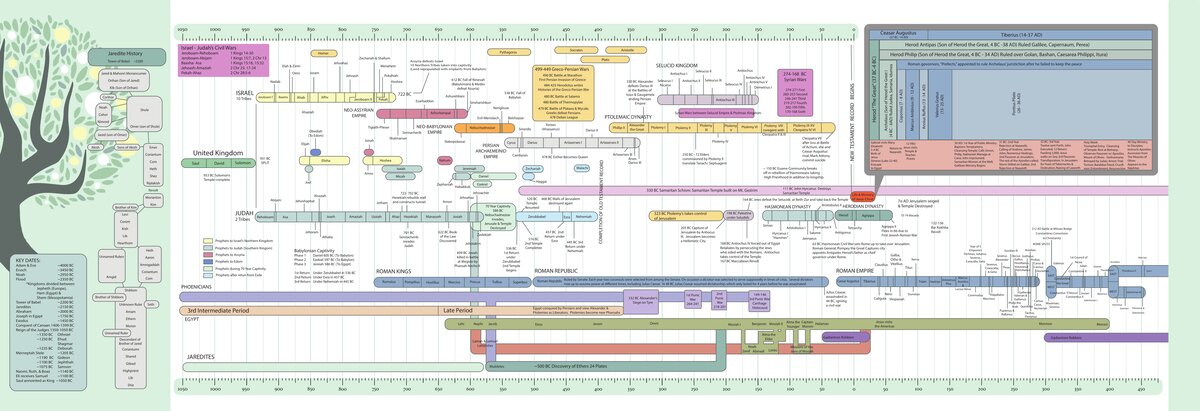
Tap to expand
Old Testament Timeline
From Creation through the Persian Period — tap the image to zoom, or download the full PDF.
Tap anywhere to close · Pinch to zoom