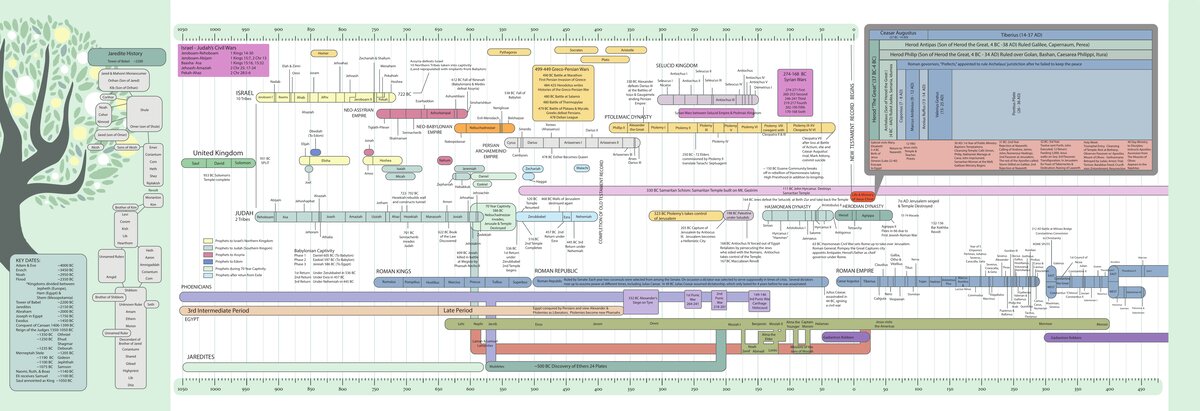
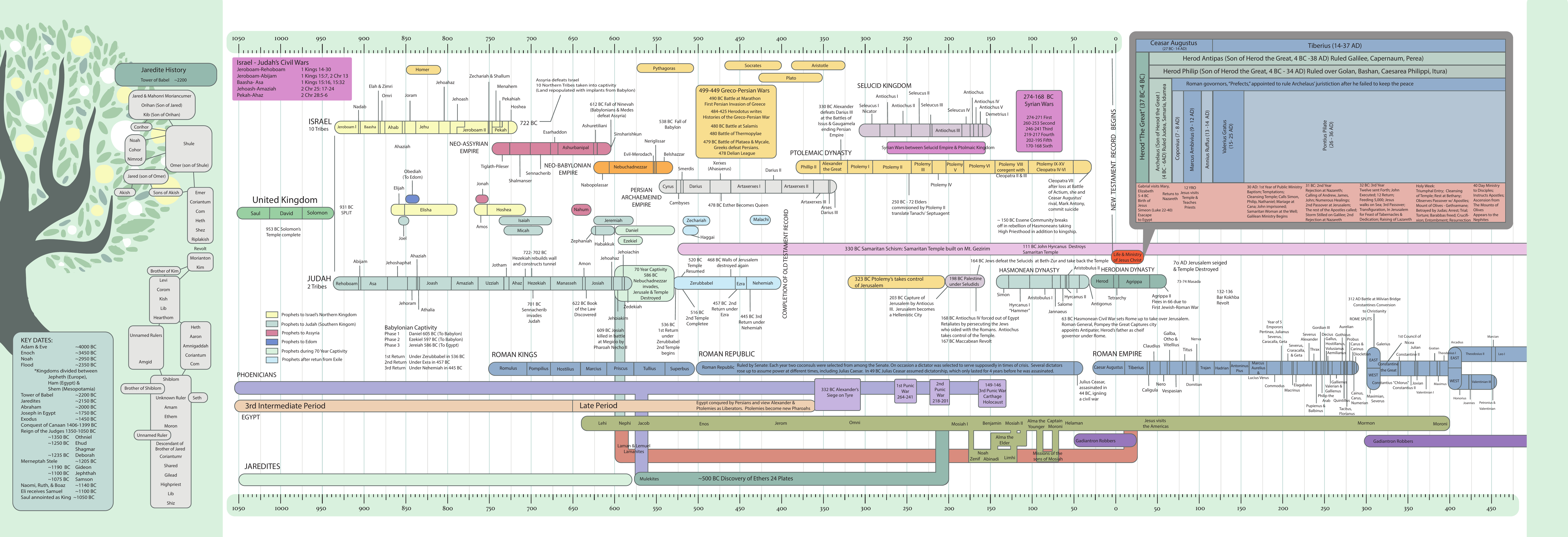
Most of these chapters come from the reign of King Jehoiakim; chapters 1–6 come from King Josiah's. The Historical & Cultural Context, section 2, sets out the five kings and why that matters, and section 9 shows how Lehi, preaching in the same city in the same years, carried the same message.
Jeremiah 1 — The Call — assigned
Everything in the book begins here: a call that existed before Jeremiah did, and a young man who does not think he can carry it. The Lord answers him with a promise of His presence (1:8) and with His own words in Jeremiah's mouth (1:9), and gives him a commission that is mostly tearing down, with building and planting at the end (1:10). Key Passages, passage 1, reads the call closely, with what Latter-day Saints call foreordination.
Then two quick visions. The first is an almond branch, and it hides a pun the King James cannot show: the Hebrew word for almond sounds like the word for watching, so the Lord is saying I am watching over my word (Word Studies, study 1). The second is "a seething pot; and the face thereof is toward the north" (1:13): trouble is about to boil over from the north. The chapter ends with a promise that becomes the backbone of the whole book: "they shall fight against thee; but they shall not prevail against thee; for I am with thee" (1:19).
Jeremiah 2 — The Fountain and the Cisterns — assigned
The Lord begins His case against Judah with a memory, and it is a tender one: "I remember thee, the kindness of thy youth, the love of thine espousals, when thou wentest after me in the wilderness" (2:2). Before any accusation comes the honeymoon. Israel was once "holiness unto the LORD" (2:3). That is what makes the rest of the chapter hurt.
What went wrong is the week's most famous image: "they have forsaken me the fountain of living waters, and hewed them out cisterns, broken cisterns, that can hold no water" (2:13). The verse counts two wrongs. The first is leaving the Lord. He says "forsaken me," so the fountain is not a feeling or an idea; it is God Himself. The second is trusting replacements that cannot hold what the people need. No other nation, the Lord says, has ever traded its gods, "which are yet no gods" (2:11), but Israel traded the real one. The Historical & Cultural Context, section 4, explains why springs, wells and cisterns mattered so much in daily life; Key Passages, passage 2, follows the fountain through the book and into later scripture; Word Studies, study 2, explains what made the water living; and Jewish Perspective, section 1, gives the rabbis' answer to why there were only two evils.
Jeremiah 3 — "Yet Return Again to Me" — assigned
Chapter 3 opens with a question from the law of Moses. If a divorced woman marries another man, may her first husband take her back? The law said he "may not take her again to be his wife" (Deuteronomy 24:4). Jeremiah raises exactly that case, "shall he return unto her again?", and then the Lord says what no wronged husband in that law could say: "thou hast played the harlot with many lovers; yet return again to me" (3:1). The Lord's mercy goes further than the rule.
The rest of the chapter keeps calling: "Turn, O backsliding children… for I am married unto you: and I will take you one of a city, and two of a family, and I will bring you to Zion" (3:14). Key Passages, passage 4, reads that gathering. The chapter even looks ahead to a day when people "shall say no more, The ark of the covenant of the LORD" (3:16), a hint of the new covenant that Week 44 reads in chapter 31. And it ends on "Return, ye backsliding children, and I will heal your backslidings" (3:22), a sentence whose Hebrew turns on one root three times (Word Studies, study 3).
Jeremiah 4 — Creation Undone — not assigned
The call to return continues, "Break up your fallow ground, and sow not among thorns" (4:3), "take away the foreskins of your heart" (4:4), and then turns abruptly into an air-raid siren: blow the trumpet, run for the fortified cities, "evil from the north" (4:6). In the middle of the alarm Jeremiah himself cries out, "My bowels, my bowels! I am pained at my very heart" (4:19). The prophet is not a calm announcer of doom; he feels it in his body.
Then comes one of the most startling visions in the prophets: "I beheld the earth, and, lo, it was without form, and void; and the heavens, and they had no light" (4:23). Those are the words of Genesis 1:2, and the Hebrew uses the same two words that describe the world before creation. Judah's sin is pictured as creation running backward. Yet even here: "yet will I not make a full end" (4:27).
Jeremiah 5 — Looking for One Just Person — not assigned
The Lord sends Jeremiah through Jerusalem on a search: "if ye can find a man, if there be any that executeth judgment, that seeketh the truth; and I will pardon it" (5:1). One person would be enough. The search fails among the poor and then among the great. A promise from the call grows sharper here: "I will make my words in thy mouth fire, and this people wood" (5:14). That is the next step in a thread that runs from 1:9 to 20:9 (see "One Thread to Follow" below).
The chapter's details are vivid. The sea is held back by a line of sand (5:22). The rich "judge not the cause, the cause of the fatherless" (5:28). And the most chilling line is about the audience, not the leaders: "The prophets prophesy falsely, and the priests bear rule by their means; and my people love to have it so" (5:31).
Jeremiah 6 — "Peace, Peace" and the Old Paths — not assigned
The enemy from the north draws up its siege. Inside the city, religious leaders treat a deep wound with a bandage: "They have healed also the hurt of the daughter of my people slightly, saying, Peace, peace; when there is no peace" (6:14). It is the slogan of comfortable religion, and Jeremiah will hear it again and again: nearly word for word in 8:11, and from the prophets of 14:13 who promise "assured peace in this place."
Against that, the Lord offers an invitation: "Stand ye in the ways, and see, and ask for the old paths, where is the good way, and walk therein, and ye shall find rest for your souls" (6:16). Centuries later the Savior made almost the same promise, "ye shall find rest unto your souls" (Matthew 11:29). He does not say He is quoting Jeremiah, but no other Old Testament verse has those words. The chapter's answer is heartbreaking: "But they said, We will not walk therein." It closes with an image from metalworking: the bellows blow and the lead is consumed, but the dross will not come out, so "Reprobate silver shall men call them" (6:29–30).
Jeremiah 7 — The Temple Sermon — assigned
Jeremiah is sent to stand at the temple gate and tell the worshippers walking in: "Trust ye not in lying words, saying, The temple of the LORD, The temple of the LORD, The temple of the LORD, are these" (7:4). (Week 39 met this verse as a warning against trusting a past rescue; here it gets its full reading.) The temple was real, and so was the Lord's presence there. The lie was that a building could protect people who refused to change how they treated the stranger, the fatherless and the widow (7:6). The Lord even calls His own house "a den of robbers" (7:11). Key Passages, passage 3, reads the sermon closely, and it is the Savior Himself who later quotes 7:11 when He clears the temple courts.
The rest of the chapter widens the picture. Whole families bake "cakes to the queen of heaven" (7:18; see Historical & Cultural Context, section 6). The Lord sets obedience above sacrifice: "Obey my voice, and I will be your God, and ye shall be my people" (7:23). And in the valley of Hinnom children are burned at Tophet, "which I commanded them not, neither came it into my heart" (7:31; Historical & Cultural Context, section 5). And He points them to the old sanctuary He had once let fall: "go ye now unto my place which was in Shiloh… and see what I did to it" (7:12; Historical & Cultural Context, section 3). That warning would come true for Jerusalem itself; Week 44 reads chapter 39, where the walls are broken down.
Jeremiah 8 — The Stork Knows Her Season — not assigned
"Yea, the stork in the heaven knoweth her appointed times; and the turtle and the crane and the swallow observe the time of their coming; but my people know not the judgment of the LORD" (8:7). Birds read the seasons; Judah cannot read its own moment. The "peace, peace" verses of chapter 6 come back almost unchanged (8:10–12).
Then the chapter turns into one of the saddest laments in scripture: "The harvest is past, the summer is ended, and we are not saved" (8:20). And then the question: "Is there no balm in Gilead; is there no physician there? why then is not the health of the daughter of my people recovered?" (8:22). The question is asked in grief, not doubt. The healing was there. It was not being received.
Jeremiah 9 — A Fountain of Tears — not assigned
"Oh that my head were waters, and mine eyes a fountain of tears, that I might weep day and night for the slain of the daughter of my people!" (9:1). Verses like this are why Jeremiah is often called the weeping prophet. The word for fountain is the same one the Lord used of Himself in 2:13 (Word Studies, study 2).
The Lord even tells the people to send for the "cunning" (skilled) mourning women and to teach their daughters to wail (9:17–20). Then, in the middle of the grief, comes one of the great invitations of the Old Testament: "Let not the wise man glory in his wisdom, neither let the mighty man glory in his might… But let him that glorieth glory in this, that he understandeth and knoweth me" (9:23–24). Paul drew on that verse twice, "He that glorieth, let him glory in the Lord" (1 Corinthians 1:31; 2 Corinthians 10:17), the first time with "as it is written."
Jeremiah 10 — Idols That Must Be Carried — not assigned
This chapter mocks idols with a craftsman's eye: a tree cut down, decked with silver and gold, nailed in place "that it move not" (10:4). "They must needs be borne, because they cannot go" (10:5): you have to carry your god. "But the LORD is the true God, he is the living God, and an everlasting king" (10:10).
One verse here, 10:11, is written not in Hebrew but in Aramaic, the only verse in Jeremiah that is. It begins "Thus shall ye say unto them," a message for the nations rather than for Judah. The text does not say why this one verse is in Aramaic, but the change of language is plain on the page. The chapter ends on a humble prayer: "O LORD, I know that the way of man is not in himself… O LORD, correct me, but with judgment" (10:23–24).
Jeremiah 11 — A Plot at Home — not assigned
The Lord reminds Judah of "the words of this covenant" (11:2), given when He brought their fathers out of Egypt, "the iron furnace" (11:4). Jeremiah answers, "So be it, O LORD" (11:5). But the covenant has been broken: "the house of Israel and the house of Judah have broken my covenant which I made with their fathers" (11:10).
Then the danger becomes personal. The men of Jeremiah's own hometown, Anathoth, plot to kill him: "Prophesy not in the name of the LORD, that thou die not by our hand" (11:21). He says he had been "like a lamb or an ox that is brought to the slaughter" (11:19). Readers who met Isaiah's "as a lamb to the slaughter" in Isaiah 53:7 in Week 41 will hear a resonance: the innocent sufferer led away. Jeremiah is describing his own danger, not prophesying, but the echo is worth noticing. These verses begin the first of Jeremiah's personal laments, which Key Passages, passage 7, lists. (In Week 44, Jeremiah will buy a field in the same Anathoth, as a sign of hope.)
Jeremiah 12 — Why Do the Wicked Prosper? — not assigned
Jeremiah asks the question every believer eventually asks: "Wherefore doth the way of the wicked prosper?" (12:1). God's answer is not an explanation. It is a harder road: "If thou hast run with the footmen, and they have wearied thee, then how canst thou contend with horses?" (12:5). Even his family has betrayed him (12:6).
Then, surprisingly, God laments too: "I have forsaken mine house, I have left mine heritage; I have given the dearly beloved of my soul into the hand of her enemies" (12:7). The chapter ends with an offer even to Judah's hostile neighbours: if they "diligently learn the ways of my people," "then shall they be built in the midst of my people" (12:16). The building language of 1:10 is back.
Jeremiah 13 — The Ruined Linen Girdle — not assigned
The Lord tells Jeremiah to "get thee a linen girdle" (a waist sash), wear it, then hide it in a hole in the rock by the Euphrates. Many days later he digs it up: "the girdle was marred, it was profitable for nothing" (13:7). The meaning is tender before it is severe: "as the girdle cleaveth to the loins of a man, so have I caused to cleave unto me the whole house of Israel… that they might be unto me for a people, and for a name, and for a praise, and for a glory: but they would not hear" (13:11). Israel was meant to be worn close. The chapter's grief is the prophet's too: "my soul shall weep in secret places for your pride" (13:17).
Jeremiah 14 — Drought, Empty Pits, False Prophets — not assigned
A drought grips the land, and the little ones sent for water "came to the pits, and found no water" (14:3), the broken cisterns of chapter 2 made literal. The people pray beautifully, "O the hope of Israel, the saviour thereof in time of trouble, why shouldest thou be as a stranger in the land" (14:8), but the Lord sees that the prayer is not matched by return. Meanwhile prophets promise "assured peace in this place" (14:13), and the Lord answers, "I sent them not" (14:14). Jeremiah weeps "night and day" (14:17).
Jeremiah 15 — The Prophet at His Lowest — not assigned
"Though Moses and Samuel stood before me, yet my mind could not be toward this people" (15:1): even the greatest intercessors could not turn this judgment. Then Jeremiah's most personal chapter so far: "Woe is me, my mother, that thou hast borne me a man of strife" (15:10). Yet in the middle comes one of the loveliest verses he ever wrote: "Thy words were found, and I did eat them; and thy word was unto me the joy and rejoicing of mine heart" (15:16).
At his lowest he asks if God will be "as waters that fail" (15:18), and God answers with a call to return and a renewal of the first promise: "If thou return… thou shalt be as my mouth" (15:19), and "they shall fight against thee, but they shall not prevail against thee: for I am with thee" (15:20), almost word for word from 1:19.
Jeremiah 16 — A Life That Became the Message — assigned
The Lord asks Jeremiah not to marry, not to enter a house of mourning and not to join a feast (16:2, 5, 8), because Jerusalem was about to lose all three. His own life became a sign. The Historical & Cultural Context, section 7, explains the customs. It is a hard chapter, and it deserves to be read gently; Teaching Applications, section 6, suggests how.
Then the chapter turns to hope, and the hope is enormous. A day will come when people stop swearing by the God who "brought up the children of Israel out of the land of Egypt" and swear instead by the God who brought them "from the land of the north, and from all the lands whither he had driven them" (16:14–15). A second exodus will eclipse the first. Then: "Behold, I will send for many fishers… and after will I send for many hunters" (16:16). Key Passages, passage 4, reads that gathering and how Latter-day Saints have heard it. (The same promise appears again, nearly word for word, in 23:7–8.)
Jeremiah 17 — Two Trees and the Searched Heart — assigned
The chapter opens with Judah's sin "written with a pen of iron, and with the point of a diamond… graven upon the table of their heart" (17:1). Hold that image for Week 44, when the Lord promises to "write it in their hearts" in a new way.
Then come two portraits: the person who "maketh flesh his arm," like a shrub in salt ground, and the one "that trusteth in the LORD," like "a tree planted by the waters" that keeps bearing fruit "in the year of drought" (17:5–8). Week 34's Psalm 1 has the same tree. A few verses later the fountain of chapter 2 is named again (17:13; Key Passages, passage 2, follows it). And at the heart of the chapter: "The heart is deceitful above all things… I the LORD search the heart" (17:9–10). Key Passages, passage 5, reads both, with the risen Lord's own use of 17:10. The chapter ends at the city gates, where Jeremiah calls the people to "hallow ye the sabbath day" (17:22).
Jeremiah 18 — The Potter's House — assigned
"Arise, and go down to the potter's house" (18:2). Jeremiah watches a vessel go wrong "in the hand of the potter," and the potter simply makes it again (18:4). The Lord applies the picture to nations (18:7–10), in the same Hebrew verbs He used at Jeremiah's call: a nation that turns from its evil can still be spared, and He pleads with Judah to do exactly that (18:11). The people refuse: "There is no hope: but we will walk after our own devices" (18:12). They then plot against Jeremiah (18:18), and he prays one of his angriest prayers, asking God to punish them (18:21–23). Scripture records that honestly. Key Passages, passage 6, reads the potter's house.
Jeremiah 19 — The Bottle That Could Not Be Mended — not assigned
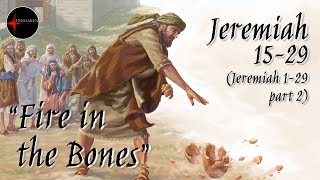
This chapter is the other half of chapter 18. This time the pottery is already fired. Jeremiah takes "a potter's earthen bottle" out to the valley of Hinnom and breaks it in front of the city's elders: "Even so will I break this people and this city, as one breaketh a potter's vessel, that cannot be made whole again" (19:11). Then he walks into the temple court and says it again (19:14–15). That is the sermon that lands him in the stocks.
Jeremiah 20 — Fire Shut Up in My Bones — assigned
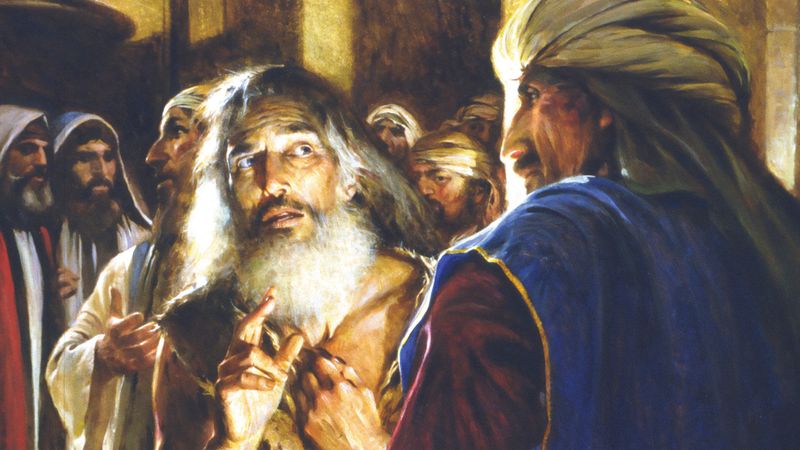
Pashur the son of Immer, a priest and the temple's "chief governor," strikes Jeremiah and puts him in the stocks overnight (20:1–2). Released the next morning, Jeremiah renames him Magor-missabib, fear on every side (20:3). Then comes the most honest prayer in the book: "O LORD, thou hast deceived me, and I was deceived" (20:7). He decides to quit, and cannot: "his word was in mine heart as a burning fire shut up in my bones… and I could not stay" (20:9). He holds on to the promise of his call, "they shall not prevail" (20:11), and bursts into praise (20:13).
And then, one verse later: "Cursed be the day wherein I was born" (20:14). The chapter ends there, and the book does not resolve that cry for him. Key Passages, passage 7, reads this prayer closely, with Elder Holland's account of it as "the turning point of Jeremiah's life."