Isaiah 58 — remembering what the fast is for — assigned
Isaiah speaks within Israel's covenant life, where Sabbaths, feasts, and fasts set apart time to remember God, receive His instruction, and renew devotion to Him. The language of humbling oneself recalls the Day of Atonement, when Israel sought cleansing and reconciliation with the Lord. These observances gave physical expression to a relationship meant to reach the heart. Leviticus 23:27–32.
But the people ask why God has not noticed their fasting while they continue exploiting workers, quarreling, and harming others. They have gone without food without allowing that sacrifice to change how they live. Isaiah 58:3–4.
The Lord calls them back to the purpose of their worship. The fast He chooses includes freeing the oppressed, lifting burdens, feeding the hungry, sheltering the poor, and clothing those in need. Humbling themselves before God should open their hearts and hands toward His children. Then come the promises of light, healing, guidance, and His answering presence. The chapter closes with the same invitation expressed through Sabbath observance: make room for God and find delight in Him. Isaiah 58:6–14.
The Book of Mormon makes the connection to Christ explicit. Abinadi explains that the law's ordinances preserved remembrance of God and pointed toward redemption; Jacob describes keeping the law with the intent of "pointing our souls to him." Read in that light, fasting prepares us not merely to endure hunger, but to turn toward the Redeemer and participate in His work of mercy. Mosiah 13:28–32, Jacob 4:5.
What follows is one of the richest strings of promises in the book: light breaking "forth as the morning", healing, the glory of the LORD as a rear guard, "thy rearward" (58:8), a guide in dry places, "a watered garden" (58:11). And the complaint of verse 3 is answered directly: "Then shalt thou call, and the LORD shall answer; thou shalt cry, and he shall say, Here I am" (58:9). Key Passages, the passage on 58:3–12, traces those promises and why "Here I am" is such a striking answer. Historical & Cultural Context shows what a fast looked like then, and how the chapter's words echo the Day of Atonement.
Watch the light. Verse 10 promises, "then shall thy light rise in obscurity, and thy darkness be as the noonday." Remember that promise; the next two chapters come back to it.
The chapter ends on the Sabbath: "call the sabbath a delight, the holy of the LORD, honourable", and the promise, "Then shalt thou delight thyself in the LORD" (58:13–14). The Sabbath's "delight" is ʿōneḡ (עֹנֶג), while the people's own "pleasure" in verses 3 and 13 is a different word, ḥēp̄eṣ (חֵפֶץ); Word Studies separates them. The first chapter of this week's reading ends on the Sabbath, and as you will see, the last returns to it in its closing verses.
Isaiah 59 — the separation, the confession, and the arm that saves — assigned
Chapter 59 answers the question behind chapter 58 in plain words. The problem is not God's strength or His hearing: "Behold, the LORD's hand is not shortened, that it cannot save; neither his ear heavy, that it cannot hear: But your iniquities have separated between you and your God" (59:1–2). The distance is real, and it is on the people's side.
The next verses describe a society coming apart: hands defiled with blood, lips speaking lies, plans hatched like "cockatrice' eggs", webs that "shall not become garments" (59:3–6). Paul later gathered verses 7–8 into his list of scriptures showing that all have sinned (Romans 3:15–17).
Then the voice changes from "they" to "we". The people begin to speak for themselves, and what they describe is the light of 58:10 run backward: "we wait for light, but behold obscurity; for brightness, but we walk in darkness… we stumble at noonday as in the night" (59:9–10). Chapter 58 promised darkness turned to noonday. Here they stumble at noonday as if it were night. And then, the honest part: "our sins testify against us… as for our iniquities, we know them" (59:12).
The answer to that confession is God's own action. He looks and finds no one able to step in for the people: "he saw that there was no man, and wondered that there was no intercessor: therefore his arm brought salvation unto him" (Isaiah 59:16). Where justice has failed, the Lord steps forward Himself. He puts on righteousness as a breastplate, salvation as a helmet, "the garments of vengeance," and zeal as a cloak. These garments describe His purpose: He comes to rescue and to confront the wrongdoing that has made rescue necessary. Isaiah 59:15–18.
The Redeemer is also the defender who sets things right. Isaiah calls Him gōʾēl (גֹּאֵל), a word rooted in a relative's responsibility to reclaim what a family member had lost. That responsibility also included the gōʾēl ha-dām, the "avenger of blood," who acted against a murderer. Israel's law distinguished murder from unintentional killing through judgment and provision for refuge. This wider family responsibility helps us understand Isaiah's portrait: the Lord does not merely recover His people; He also answers the violence and injustice threatening them. Numbers 35:12, 19, 24–25; Joshua 20:3. Word Studies follows the Redeemer's name.
The armor imagery continues beyond this chapter. Isaiah elsewhere describes righteousness and faithfulness as the Lord's girdles and celebrates the feet of those who proclaim peace. Paul gathers these images into his teaching about the whole armor of God: truth around the loins, the breastplate of righteousness, feet prepared with the gospel of peace, the shield of faith, the helmet of salvation, and the sword of the Spirit, which is the word of God. In Isaiah, the Lord clothes Himself to confront injustice and bring salvation; in Ephesians, His people are invited to put on His armor and stand faithfully against evil. Isaiah 11:5, Isaiah 52:7, Ephesians 6:14–17. The invitation also appears in Doctrine and Covenants 27:15–18.
Malachi carries the coming-and-judgment theme forward. In Latter-day Saint understanding, his description of the Lord's coming includes Christ's Second Coming: the Redeemer comes to purify, judge oppression, and establish righteousness. This gives Isaiah's Redeemer-avenger imagery a further horizon—the Lord who rescues His people will also set things right. Malachi 3:1–5, Church study commentary on Malachi.
Then comes the promise: "And the Redeemer shall come to Zion, and unto them that turn from transgression in Jacob" (Isaiah 59:20). The One clothed for justice is the One who comes to redeem. Hold on to verse 16; chapter 63 uses the same words again. Key Passages, the passage on 59:9–21, reads this confession and answer closely.
The chapter that opened with separation ends with a covenant that God's words "shall not depart out of thy mouth, nor out of the mouth of thy seed… from henceforth and for ever" (Isaiah 59:21).
Isaiah 60 — Zion rises from darkness — assigned
The darkness described in chapter 59 gives way to an invitation: "Arise, shine." Zion—the city of Jerusalem pictured as a woman—is called to rise because the Lord's glory shines upon her. Her light comes from His presence. Isaiah 60:1–3.
For people facing exile and the devastation of Jerusalem, these promises addressed real losses. Children would return from distant lands; foreigners would help rebuild; the sanctuary would receive honor again. These images offered hope for a restored home, community, and life of worship. Isaiah 60:4–13.
We can see an initial historical expression of that hope in the return from Babylon: Cyrus permitted the rebuilding of the temple and returned its vessels, while others supplied resources. That return helps us understand the promise's practical meaning, without exhausting its fulfillment. Ezra 1:1–11.
The vision reaches beyond rebuilding a city. Violence ends, mourning ceases, and the Lord becomes Zion's everlasting light. For Latter-day Saint readers, it points toward the gathering of Israel, the Messiah's return, and Zion's ultimate glory. Isaiah 60:18–22.
John draws on this imagery when describing the New Jerusalem: God and the Lamb illuminate the city, its gates remain open, and the nations bring their glory into it. The promise grows from restoration after devastation into a vision of life in God's presence. Revelation 21:23–26.
For its ancient hearers, the message offered a future after loss. For us, it also points toward the complete restoration Christ will bring.
Isaiah 61 — good news for a wounded people — assigned
Chapter 60 describes Zion rising from darkness. Chapter 61 explains what that restoration means for her people. A speaker announces that the Lord has anointed him—commissioned him for a sacred purpose—to bring good news, bind up broken hearts, and proclaim freedom. These promises address people living with grief, captivity, and the destruction of their community. Isaiah 61:1–4.
The language of freedom recalls Israel's Jubilee. In Leviticus, the Jubilee proclaimed liberty, returning Israelites to their families and ancestral holdings. Isaiah draws on that familiar language to announce the Lord's favor: an opportunity for restoration rather than permanent dispossession. Leviticus 25:10. Word Studies explores this connection through the Hebrew word for liberty, dᵊrôr (דְּרוֹר).
Jesus identifies Himself with this mission at Nazareth. After reading Isaiah's opening promise, He declares that it is being fulfilled in their hearing. His proclamation connects the promised deliverance directly to His own ministry. Luke 4:16–21. Key Passages examines His reading more closely. The encounter will be explored further in Historical & Cultural Context, including the political setting, expectations surrounding the Messiah, and why His words provoked such a strong response.
Latter-day Saints also read this chapter in anticipation of Christ's Second Coming. His ministry at Nazareth announces the work of deliverance; Isaiah's wider vision includes enduring restoration, covenant renewal, and righteousness flourishing before the nations. The chapter speaks both to people longing to rebuild their community and to the ultimate fulfillment of the Messiah's mission. Isaiah 61:4–11.
The chapter then pictures mourning giving way to celebration: "beauty for ashes," joy, and praise. Those who mourn become firmly planted trees, and ruined communities are rebuilt. Restoration includes renewed dignity, belonging, and a future. Isaiah 61:3–4.
The closing image is someone rejoicing in the "garments of salvation," dressed for celebration like a bride or bridegroom. The chapter moves from wounded hearts to restored community—and finally to joy in what God has provided. Keep this clothing imagery in mind when you reach chapter 64. Isaiah 61:10–11.
Isaiah 62 — Zion welcomed home as a bride — assigned
Chapter 61 promises restoration to a wounded people. Chapter 62 portrays that restoration as a renewed covenant relationship. Jehovah is the bridegroom, and Zion—representing His covenant people—is the bride. Isaiah has already identified the Lord as Israel's husband and Redeemer, promising to gather her with enduring mercy. The marriage imagery expresses belonging, commitment, and His joy in their reunion. Isaiah 54:5–10.
The new names describe that restored relationship. "Forsaken" and "Desolate" express the experience of abandonment and a devastated homeland. Hephzi-bah, "My delight is in her," and Beulah, "Married," announce a different future: Zion is cherished, and her land is inhabited again. God rejoices over His people as a bridegroom rejoices over his bride. Isaiah 62:2–5. Word Studies and Historical & Cultural Context explore how names communicate identity and covenant belonging.
For those returning from Babylonian exile, restoration involved gathering families, rebuilding homes, and renewing worship. Ezra describes the people assembling in Jerusalem, restoring the altar, and laying the temple's foundation. Their celebration mingled with tears from those who remembered the former temple. They were rebuilding a sacred community while still carrying the memory of what had been lost. Ezra 3:1–13.
The watchmen are people entrusted with keeping watch over Jerusalem. Ancient lookouts guarded a city by noticing danger and reporting what approached. Isaiah draws on that familiar responsibility, but gives these watchmen another task: they continually call upon the Lord for Jerusalem's restoration. Their watchfulness becomes prayer. "Give him no rest" expresses their persistence—not that God has forgotten His people. In a chapter about a city once called "Forsaken," the image is reassuring: Jerusalem has not been abandoned. Her restoration remains the object of faithful attention and hope. Isaiah 62:6–7. Historical & Cultural Context explores the watchmen's responsibilities and the Hebrew term.
Then the chapter moves from prayer to preparation: build the highway, remove the stones, and raise a standard—a visible signal around which people can gather. The imagery makes homecoming tangible: prepare the way for the returning people. The chapter closes by naming them holy, redeemed, and sought out. Isaiah 62:10–12.
For Latter-day Saints, these ancient events also reveal a pattern that reaches toward the last days. Doctrine and Covenants 133 again calls people to gather, leave Babylon, and prepare for the Bridegroom's coming. The correspondence is more than a resemblance between two building projects: both involve gathering a covenant people and preparing them to receive the Lord. Doctrine and Covenants 133:4–10.
This helps us recognize a recurring scriptural pattern: scattering and gathering, loss and renewal, estrangement and reconciliation. History does not repeat in every detail, but God's earlier deliverances help His people understand and trust His future promises. Nephi's practice of likening Isaiah to his own people invites us to recognize those connections in our lives as well. 1 Nephi 19:23–24.
The gathering is ultimately about relationship: a people welcomed home and prepared to meet the Lord who delights in them.
Isaiah 63 — Christ’s redeeming power, in sacrifice and in glory — assigned
The Book of Mormon teaches us to recognize Christ in the sacred patterns of Israel’s worship. Jacob explains that keeping the law of Moses pointed their souls to Him; King Benjamin describes its types and shadows as teaching His people about His coming. This gives Latter-day Saints a framework for reading Isaiah’s images of sacrifice, deliverance, and redemption. Jacob 4:4–5, Mosiah 3:15.
Isaiah 63 opens with a powerful Redeemer approaching in stained garments. He identifies Himself as “mighty to save.” His clothing resembles that of someone who has trodden grapes in a winepress, and He declares that He has accomplished His work alone. The scene joins judgment against evil with the deliverance of His redeemed people. Isaiah 63:1–6.
For Latter-day Saints, this portrait brings Christ’s redeeming mission into view: the saving work only He could accomplish, the suffering that draws our thoughts to Gethsemane, and the judgment and deliverance associated with His return.
The name Gethsemane means “oil press”—a place where olives were crushed to release their oil. In his address “The Atonement,” President Russell M. Nelson affirms the connection between that setting and the Savior bearing the overwhelming weight of humanity’s sins. His insights help us contemplate the cost of our redemption. In the garden, Jesus submitted to the Father’s will and endured the agony He later described as causing Him to bleed from every pore. Doctrine and Covenants 19:16–19.
The One who suffered for us is the One who will return in glory. Doctrine and Covenants 133 explicitly places Isaiah’s red garments and winepress imagery within Christ’s coming. It then recalls His loving-kindness and compassion toward those He has redeemed. His atoning sacrifice, continuing care, and final victory belong to one redeeming mission. Doctrine and Covenants 133:46–53.
Isaiah’s chapter likewise turns from judgment to remembered mercy. The people recall how the Lord loved, redeemed, and carried them through their afflictions. They remember His guidance through the sea under Moses, while also acknowledging their rebellion. Their hope rests in the character of the God who has already delivered them. Isaiah 63:7–14.
For a community whose sanctuary had been trampled, those memories give shape to prayer. They appeal to the Lord as their Father and Redeemer. Abraham and Jacob belong to their distant past, but their relationship with God remains living and personal. Even when they feel forgotten or unrecognized, they can turn to Him as His children, trusting in His willingness to receive them. Remembering His earlier deliverance gives them courage to seek His help again. That prayer continues into chapter 64. Isaiah 63:15–19.
That hope of reconciliation also helps us contemplate the Savior’s return to Jerusalem. Doctrine and Covenants 45 describes Him standing upon the Mount of Olives, where the Jewish people come to recognize Him and ask about the wounds in His hands and feet. He answers that these were received “in the house of my friends.” The encounter includes grief and recognition, but we should not overlook His choice of words: He still calls them His friends. Read through the lens of reconciliation, those words remind us that the wounds have not erased His love or His desire for a restored relationship with His people. Doctrine and Covenants 45:48–53.
For Latter-day Saints, this should deepen our kinship with the Jewish community, not distance us from it. Through our understanding of the house of Israel and the Abrahamic covenant, we recognize a family connection—we are covenant cousins, tied to one another by a sacred heritage. Differences in belief do not diminish that relationship or anyone’s worth before God. This passage must never become ammunition for collective blame against Jewish people, ancient or modern. Antisemitism is never appropriate. The Savior’s words invite us toward humility, love, and reconciliation.
Jewish and Christian traditions understand these passages in different ways, and the comparative sections provide room to explore those readings respectfully. Our Latter-day Saint reading remains centered on Jesus Christ: the Redeemer who suffers for His people, carries them in compassion, and returns to fulfill His promises.
Isaiah 64 — Come down, and renew Your people — assigned
Isaiah 64 continues the prayer begun in chapter 63. The people remember God’s deliverance of their ancestors, but now Jerusalem lies devastated and their temple has burned. They plead for Him to tear open the heavens and come down—to make His presence known again. Isaiah 64:1–3, 10–11.
The mountain imagery brings together memories of Sinai, covenant, and temple worship. At Sinai, the Lord descended in fire and the mountain trembled as Israel gathered to meet Him. Elsewhere, Isaiah calls the temple the mountain of the Lord’s house, where people receive His instruction. These associations enrich the prayer: the people seek more than rebuilt walls. They long for renewed communion with the God who made them His people. Exodus 19:16–20, Isaiah 2:2–3.
For Latter-day Saints, that longing also looks toward the gathering of Israel and the Savior’s Second Coming. Doctrine and Covenants 133 repeats Isaiah’s appeal as the prayer of those awaiting the Lord’s return. Ancient Israel’s plea becomes one we can share: Come, Lord, and fulfill Your promises. Doctrine and Covenants 133:40–45.
The Hebrew of verse 4 adds an important perspective. Where the English speaks of what God has “prepared,” the Hebrew verb can express His acting on behalf of those who wait for Him. Their hope rests not only in future blessings, but in the character of a God who intervenes for His people. Waiting means continuing to look toward Him, even before His answer becomes visible. Isaiah 64:4, Hebrew interlinear.
Paul draws upon this passage when describing blessings beyond human understanding, then explains that God reveals them through His Spirit. We do not have to understand everything before we can receive guidance from Him. 1 Corinthians 2:9–12.
The prayer also acknowledges the people’s wrongdoing. Its stained garments belong to Israel’s familiar language of purity and preparation to approach God. Read alongside the washed garments at Sinai and Isaiah’s earlier garments of salvation, the image invites us to consider our need for cleansing and reconciliation. Their confession expresses a need for God’s help—not a declaration that they have no worth. Isaiah 64:6, Exodus 19:10–11, Isaiah 61:10.
Then the prayer turns to a deeply hopeful image: God is their Father, and they are clay in His hands. The Hebrew word translated “our potter” means the One who forms them. It recalls God forming humanity from the earth and shaping Israel into a covenant people. They appeal to the One who gave them life to renew them. Isaiah 64:8, Hebrew interlinear, Genesis 2:7.
Notice how often the prayer includes everyone: all of us need cleansing; all of us are the work of His hand; all of us are His people. This is a community seeking restoration together. For us, the potter’s image invites both personal repentance and a larger question: what kind of families, congregations, and communities are we allowing God to shape? Isaiah 64:6–9.
The chapter ends by asking whether the Lord will remain silent amid their suffering. The question is unresolved, but they are still addressing Him, still seeking Him, and still claiming their relationship with Him. Their prayer holds confession and belonging together: You formed us. We are Your people. Please come and renew us. Isaiah 64:12.
Isaiah 65 — God answers, and promises a renewed world — assigned
Chapter 64 ends by asking whether God will remain silent. Chapter 65 answers with a picture of Him reaching out: "Behold me, behold me"—hinnēnî (הִנֵּנִי), "Here I am," repeated twice. He describes His hands extended throughout the day toward people who have resisted Him. Before the chapter describes a renewed world, it shows the Lord seeking a renewed relationship. Paul later quotes these opening verses in his discussion of Gentiles and Israel; the invitation reaches beyond those who were already seeking God. Isaiah 65:1–2, Romans 10:20–21.
That invitation belongs to a thread running through Isaiah. In his temple vision, Isaiah answered the Lord, "Here am I; send me." In chapter 58, the Lord promised to answer His people's cry with "Here I am." Now, in chapter 65, He repeats those words as He reaches toward them. The same expression moves between God and His people: an answer that offers presence and willingness to respond. Isaiah 6:8, Isaiah 58:9. Key Passages, Passage 1, follows this thread more closely.
But being addressed by God is not the same as listening to Him. Earlier, Isaiah described people who could see and hear without understanding what they received. Jesus explicitly quoted that passage when explaining His parables: the issue was whether His teaching reached the heart and led to turning and healing. Isaiah 65 develops this related concern through a broken conversation: God calls, but the people do not answer; He speaks, but they do not listen. Isaiah 6:9–10, Matthew 13:13–16, Isaiah 65:12.
The problem is not that the people have stopped being religious. They are sacrificing, burning incense, and preparing offerings—but directing their worship away from the Lord. Verse 11 names gaḏ (גַּד), Fortune, and mᵊnî (מְנִי), Fate or Destiny. These rival deities are difficult to recognise in the King James wording, "that troop" and "that number." The passage challenges misplaced trust: looking elsewhere for security while forgetting the God of the covenant and His holy mountain. Isaiah 65:3–11.
Yet judgment does not erase the promise. Isaiah pictures a cluster of grapes containing a blessing worth preserving. The Lord will not destroy everyone; He will preserve His servants and bring descendants of Jacob and Judah into their inheritance. He recognises faithfulness within a troubled community rather than treating everyone as indistinguishable. Isaiah 65:8–10.
The poetry then places contrasting futures beside one another. "My servants" repeats four times in verses 13–14: they will eat, drink, rejoice, and sing, while those rejecting the Lord experience hunger, thirst, shame, and grief. These paired lines make the consequences of covenant loyalty vivid. They are not permission to assume that someone suffering today must have been unfaithful. The passage describes God's judgment and promised restoration, not a simple test for judging another person's life. Isaiah 65:13–16.
The promised restoration reaches into ordinary life. People build houses and actually live in them; they plant vineyards and enjoy their harvests; their children are not born only to face calamity. An Israelite audience familiar with Deuteronomy could hear the reversal: earlier covenant warnings described homes occupied by others, lost harvests, and children taken captive. Here those losses give way to belonging, fruitful work, and family security. For displaced people, these are deeply tangible promises—not merely picturesque details. Isaiah 65:21–23, Deuteronomy 28:30–41.
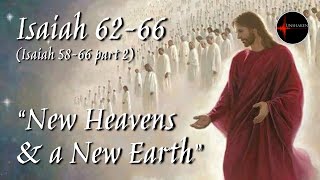
The renewal is also described in the language of creation: new heavens, a new earth, and Jerusalem becoming a place of joy. Latter-day Saints recognise in these promises the peace of the Millennium following the Savior's return. Doctrine and Covenants 101 likewise describes renewed creation, the end of hostility, and lives no longer cut short in infancy. Key Passages, Passage 8 on Isaiah 65:17–25, explores these connections more closely. Isaiah 65:17–23, Doctrine and Covenants 101:25–31.
Near the chapter's close, the broken conversation becomes restored communion. The same verbs return with the relationship transformed:
"Before they call, I will answer; and while they are yet speaking, I will hear." Isaiah 65:24.
The chapter begins with God offering His presence—"Here I am"—and near its close promises His attention—"I will hear." As you read, notice who is calling and who is answering: the promised restoration embraces both the world people inhabit and their relationship with the Lord.
The closing picture recalls Isaiah 11: wolf and lamb together, the lion feeding without violence, and nothing harming or destroying on the Lord's holy mountain. The serpent's dust recalls Genesis, suggesting that the power associated with humanity's earliest troubles has been brought low. The chapter moves from a community divided in its worship toward creation at peace in God's presence. For ancient people rebuilding their lives—and for readers awaiting the Savior's return—the promise is larger than recovery alone: God can renew both His people and the world they inhabit. Isaiah 65:25, Isaiah 11:6–9, Genesis 3:14–15.
Isaiah 66 — God sees His people and gathers them home — assigned
The chapter opens with heaven as God’s throne and earth as His footstool. The temple is sacred, but its Creator cannot be contained within it. Solomon acknowledged this when dedicating the first temple: even heaven could not contain God, much less the house he had built. Isaiah’s question belongs within that same tradition—not a rejection of temples, but a reminder of whom temple worship is meant to bring us near. Isaiah 66:1–2, 1 Kings 8:27–30.
God then directs His attention toward the poor and contrite. The Hebrew expression nĕkēh-rûaḥ pictures someone stricken in spirit—not someone without worth. These opening contrasts invite us to consider the heart we bring into worship, rather than treating religious observance as a substitute for listening to God. Isaiah 66:2–4, Hebrew and English.
Zion then appears as a mother bringing forth her children. This develops the earlier promise to the woman who feared she would remain childless: her family would grow beyond what she could imagine. For a scattered people, that image offers hope that displacement need not be their final condition. The restored community can become a place of belonging again. Isaiah 54:1–3, Isaiah 66:7–11.
The poetry moves from birth to nourishment, carrying, and comfort. Peace flows like a river; children are held close. Then God Himself takes up the maternal comparison. His restoration includes tenderness toward people who have mourned. Read alongside Zion’s expanding household in chapter 54, these images help us picture restoration as renewed relationships, not merely rebuilt walls. Isaiah 66:12–14, Hebrew and English, Isaiah 54:4–10.
That gathering reaches beyond Israel. Messengers travel among the nations, and scattered brethren return to Jerusalem, God’s holy mountain. Their homecoming is compared to an offering brought reverently into His house. Temple, people, and gathering belong together in this picture. Isaiah 66:18–20.
The chapter’s horizon is also the Savior’s return: judgment confronts evil, while God promises an enduring future for His people. The new heavens and earth accompany a promise that their descendants and name will remain. Worship follows the familiar rhythms of new moons and Sabbaths, but now the invitation embraces all peoples. Isaiah 66:15–23.
The final verse does not soften the consequences of rebellion. Jesus draws upon its severe imagery when warning against sin. His warning asks for serious repentance—not contempt toward others. Isaiah 66:24, Mark 9:43–48.