| Church Manuals | |
| Come Follow Me Manual — Week 39 | View |
| Scripture Helps: Old Testament | View |
| OT Seminary Teacher Manual | View |
| OT Institute Manual (1Ki–Mal) | View |
| Pearl of Great Price Manual | View |
| Scripture Reference | |
| Bible Dictionary | View |
| Topical Guide | View |
| Guide to the Scriptures | View |
| Church Media & Library | |
| Gospel for Kids (YouTube) | View |
| Bible Videos: Life of Jesus Christ | View |
| Church Magazines | View |
| Gospel Library | View |

Week 39
A Marvellous Work and a Wonder
Isaiah 13-14; 22; 24-30; 35
September 21-27, 2026
Official Church Resources
OFFICIAL CHURCH RESOURCES▶
CHURCH MEDIA FOR FAMILIES▶
▶ Video Commentary
VIDEO COMMENTARY (11 videos)
▼
 i
iFinding Christ (John Hilton III)
 i
iLynne Hilton Wilson
 i
iFollow Him - Full Episode
 i
iScripture Gems
 i
iScripture Insights
 i
iTalking Scripture
 i
iTeaching With Power
 i
iUnshaken — part 1 (chs. 13–24)
 i
iUnshaken — part 2 (chs. 25–35)
 i
iDon't Miss This
 i
iThe Scriptures Are Real
Specialized Audiences
WOMEN’S PERSPECTIVES (2 videos)
▶
 i
iGrounded
 i
iOur Mothers Knew It
FAMILY & CHILDREN’S RESOURCES (4 videos, 1 resource link)
▶


Reference & Study Materials
Scripture Central
Week 39 Study Hub
Interpreter
Week 39 Articles
Bible Project
14 Book Overviews & Library Videos
BIBLE PROJECT (2 book overviews · 12 library videos)
▶
The book overviews follow this week’s reading. The themes and word studies are the standing library, not a weekly selection.
THIS WEEK’S BOOKS
 i
iBook of Isaiah Summary: Part 1
 i
iBook of Isaiah Summary: Part 2
ALWAYS AVAILABLE — themes and word studies
 i
iTemple
 i
iSacrifice & Atonement
 i
iHoliness
 i
iImage of God
 i
iThe Messiah
 i
iTree of Life
 i
iYHWH / LORD
 i
iShalom / Peace
 i
iKhesed / Loyal Love
 i
iNephesh / Soul
 i
iRuakh / Spirit
ACADEMIC & SCHOLARLY SITES▶
MAPS & BIBLICAL LOCATIONS▶
JEWISH & SCHOLARLY RESOURCES▶
First, a Word About Where We Are
▶︎
Last week was Isaiah 1–12, and it ended in a song: "Behold, God is my salvation; I will trust, and not be afraid." It began in a courtroom and closed with a man singing.
This week the camera pulls back. The reading opens on the fall of an empire and widens until it is describing the whole earth emptied — and then, on the far side of that, a mountain with a table on it and every nation invited.
There is one more difference worth naming before you start. Last week's chapters ran straight through, one to twelve. This week the reading skips: thirteen and fourteen, then twenty-two, then twenty-four to thirty, then thirty-five. The Overview maps all sixty-six chapters of Isaiah, so you can see exactly where this week's eleven sit and what is around them.
Why These Chapters Exist
▶︎
This is the thing most worth knowing before you open the first page, and it makes the whole week readable.
Isaiah preached while his world was under threat. Assyria deported the northern kingdom during his ministry, and those exiles are not recorded as returning as a people; Judah, next door, had every reason to read that as a warning about itself. Not every chapter here can be tied to a particular crisis with confidence — which is a relief rather than a gap. You do not have to place a chapter on a timeline before it can speak to you; the fear these chapters answer is the same fear whichever decade it was first spoken into. (The sequence is in Historical & Cultural Context, section 1.)
So when these chapters promise that God will gather His people, that is not a pleasant abstraction. It is the specific answer to the specific thing those people were afraid of. And the promise is unexpectedly personal:
"ye shall be gathered one by one, O ye children of Israel" — Isaiah 27:12
Not a crowd. One at a time.
It is also why Nephi read Isaiah aloud to discouraged brothers, telling "a branch who have been broken off" to liken the words to themselves "that ye may have hope" (1 Nephi 19:24). He says plainly what he found there: "he verily saw my Redeemer, even as I have seen him" (2 Nephi 11:2). (The Overview opening sets out the history, and Context, section 6, the records.)
Isaiah is the prophet who told scattered people that scattering is survivable. If you have ever felt outside the thing you belong to, these are chapters worth reading slowly — they were spoken to people in exactly that position, and the gathering they promise counts individuals. (For the empires, the exile and the records, see Historical & Cultural Context.)
When a Mercy Becomes an Assumption
▶︎
Scripture names this danger directly, so we need not guess at it. Jeremiah stood in the temple gate in Lehi's own generation and told the crowd what not to lean on: "Trust ye not in lying words, saying, The temple of the LORD, The temple of the LORD, The temple of the LORD, are these" (Jeremiah 7:4). They were not wrong about the temple. They were wrong about what having it guaranteed.
That is what gratitude can do when it is left alone too long: it hardens into expectation, and the expectation attaches itself to the wrong object — a place, a position, a record of past help.
The question Isaiah keeps putting is not whether God has been good to you. It is whether you are still looking at Him, or at the evidence. Chapter 22 finds a city admiring its own walls and water — it had repaired them well, and it "looked not unto the maker thereof" (22:11). Chapter 30 finds a nation counting on Egypt's chariots instead of asking at the Lord's mouth (30:1–2). Both had reasons. Neither looked up.
So it is worth asking, before the reading starts: what has God actually done for me — and have I quietly turned any of it into something I now assume?
The Questions This Week Raises — and Where Each One Is Answered
▶︎
Isaiah is genuinely hard in places, and some of it stays hard. That is all right, as long as you know what you are looking at and where to go. Here are the honest questions this week raises:
| The question | Where it is taken up |
|---|---|
| Why is there so much judgment before any comfort? | Overview — the Isaiah 24–27 walkthrough, which reads as one movement |
| Isaiah 14 sounds like it is about Lucifer. Is it about a Babylonian king or the adversary? | Jewish Perspective, section 5 — where the traditions genuinely differ |
| Who is the "sure foundation" of Isaiah 28:16? | Key Passages, passage 5, and Jewish Perspective, section 2 |
| What does "line upon line" actually mean in Isaiah 28? | Word Studies, study 3 — the setting changes how it reads |
| Is the "marvellous work" good news or bad? | Key Passages, passage 6 — and older Jewish and Greek readings heard it differently: Jewish Perspective, section 1, and Word Studies, study 4 |
| When exactly did the events behind Isaiah 22 happen? | Historical & Cultural Context, section 3 — the chapter itself gives no date |
| How do Isaiah's promises relate to Nephi and to us? | Historical & Cultural Context, section 6 |
You are not expected to resolve all of these. Some stay open because the evidence itself is open. Knowing which questions have settled answers and which do not is part of reading a prophet well.
The Problem and the Remedy Are in the Same Sentence
▶︎
Isaiah 29:13 describes people who are keeping the practice — drawing near, honouring God with their lips — while something fails to travel the distance: "have removed their heart far from me." Notice what the verse does and does not say: it contrasts what the mouth does with where the heart is, and leaves the inward question where only God can answer it.
Then the very next verse, without a pause: "Therefore, behold, I will proceed to do a marvellous work among this people, even a marvellous work and a wonder."
It is worth being exact about how hard that first half is, because softening it would cost us the second half. When the Savior quoted verse 13 (Matthew 15:7–9) He introduced it with "Ye hypocrites"; when the Lord quoted it to Joseph Smith in the grove in 1820 (Joseph Smith—History 1:19) it came inside a hard answer. Both times it was a rebuke, and both times it was His. This is not a verse about being a bit distracted — and that is precisely why the marvellous work that follows it is worth having. A remedy is only as good as the trouble it is answering.
And yet the sentence does not stop at the rebuke. God says therefore and announces a marvellous work — and the same sentence says what that work costs: "the wisdom of their wise men shall perish, and the understanding of their prudent men shall be hid." So the remedy arrives carrying a judgment — and it is worth being precise about what is judged. The verse says the wisdom of their wise men: wisdom held as a possession, sufficient in itself, with no further need of God. It is not a verdict on learning. The same chapter ends by handing learning back: "they that murmured shall learn doctrine" (29:24), and understanding, hearing and sight all return in verses 18–24. What changes is not how much a person knows but whether they are still listening.
That is why the chapter's word for who receives the joy is meek rather than unlearned: "the meek also shall increase their joy in the LORD" (29:19). Meekness is a posture, and a scholar can hold it as readily as anyone.
That order is the point. The diagnosis is not the end of the paragraph. Whatever distance you have noticed in yourself, the pattern this chapter sets is to let it be named and then look at what God does next.
The Four Most Encouraging Minutes in the Week
▶︎
Read Isaiah 5 and Isaiah 27:2–6 back to back. That is the whole assignment, and it takes about four minutes.
The Overview walks what changed between them. What is worth sitting with here is the posture in 27:3 — "I will water it every moment… I will keep it night and day." Every moment. Night and day. That is not the language of a God who has written anyone off, and it is said about the same vineyard He had once walked away from.
If you have ever assumed God had finished with some part of your life, this is the chapter that argues with you.
What Happens After You Say No
▶︎
Isaiah 30 records a refusal — "and ye would not" (30:15) — and the chapter does not soften who was refusing. (The Overview and Key Passages, passage 7, set out what was offered and what turning back would have cost.)
The part worth carrying into your own week is what comes after the no.
The chapter could have ended at verse 15. Instead it keeps going, and lands on something quieter than a second chance: "thine ears shall hear a word behind thee, saying, This is the way, walk ye in it" (30:21).
A voice behind you, correcting course as you go. Not a voice that stopped speaking when you did not listen the first time.
If you have ever declined something you knew was right and assumed the offer expired, this chapter is evidence to the contrary.
One Clause to Take With You
▶︎
The reading ends on a road, and the Overview follows where it goes. Take one clause from it into the week:
"…and sorrow and sighing shall flee away." — Isaiah 35:10
Not endured. Not carried. Gone the other way.
Read the grammar of it. Sorrow and sighing are the subject of the sentence, and the verb belongs to them: they are the ones who flee. The verse asks nothing of the griever at all — it describes sorrow leaving, while the people it had been following walk on, named ransomed and redeemed.
That is hope held out for what is coming. It is not an instruction to pretend you are not sad now. Isaiah 35 is honest about the desert it is describing; it simply does not believe the desert gets the last word.
A family once carried these chapters across an ocean so their children would still have them. This is the sort of sentence that was worth the trouble.
This week's Study Guide begins with the Overview.
Week 39
Isaiah 13–14; 22; 24–30; 35 — Overview
"A Marvellous Work and a Wonder"
1. Week 39: Overview
The night Jerusalem was not destroyed
Judah had been paying Assyria to be left alone. Then King Hezekiah stopped — "he rebelled against the king of Assyria, and served him not" (2 Kings 18:7) — and the empire came to collect. By 701 BC Sennacherib had taken "all the fenced cities of Judah" (2 Kings 18:13), Hezekiah had tried to buy him off with the temple's silver and gold (2 Kings 18:14), and it had not worked. The army was camped outside Jerusalem, the capital and the prize. Then it ended, and not by negotiation:
"He shall not come into this city, nor shoot an arrow there… And it came to pass that night, that the angel of the LORD went out, and smote in the camp of the Assyrians… So Sennacherib king of Assyria departed, and went and returned, and dwelt at Nineveh." (2 Kings 19:32–36)
That deliverance is the event standing behind much of this week's reading. Isaiah lived through it, and several of these chapters were spoken into the years around it.
A hundred years later, the same city — and a very different danger
Here is the distinction that makes the rest of this week make sense, and it is easy to get wrong. Lehi's family left Jerusalem roughly a century after Sennacherib, and the empire threatening them was Babylon, not Assyria. They are not in Isaiah's siege. That earlier city was spared; theirs was not going to be.
And that difference is exactly what Nephi's brothers would not accept. Nephi says of Laman and Lemuel:
"Neither did they believe that Jerusalem, that great city, could be destroyed according to the words of the prophets." (1 Nephi 2:13)
Later they put it as a positive claim: "the people who were in the land of Jerusalem were a righteous people… wherefore, we know that they are a righteous people; and our father hath judged them" (1 Nephi 17:22).
Where did such a confidence come from? Jerusalem had survived Sennacherib a century earlier, and that memory is one proposed explanation — section 2 of the Historical and Cultural Context sets it out with its sources. Nephi himself gives no cause for his brothers' unbelief, so it stays a reading of the history rather than his own account of it.
What is certain is that the danger of that confidence was a prophetic theme. Jeremiah, in Lehi's own generation, stood in the temple gate and named it: "Trust ye not in lying words, saying, The temple of the LORD, The temple of the LORD, The temple of the LORD, are these" (Jeremiah 7:3–15). A past rescue is not a permanent guarantee.
And that is the trouble this week is named for. "A marvellous work and a wonder" is Isaiah 29:14 — said of a people still drawing near with their mouths while their hearts had moved somewhere else. The title is the answer half of the week's hardest verse, and the walkthrough below reaches it.
Why Nephi loved this prophet
Nephi says plainly why he copied so much Isaiah, and it is not that Isaiah is a puzzle to be solved:
"my soul delighteth in his words… for he verily saw my Redeemer, even as I have seen him." (2 Nephi 11:2)
He adds that his delight is in "proving unto my people the truth of the coming of Christ" (2 Nephi 11:4). Isaiah mattered to him as a fellow witness of the Redeemer, and after that for covenants and deliverance.
He also read Isaiah aloud to his discouraged brothers, telling "a branch who have been broken off" to liken the words to themselves "that ye may have hope" (1 Nephi 19:24) — the chapters he read them on that occasion were Isaiah 48–49, in 1 Nephi 20–21. The reason he valued Isaiah is the reason these chapters are here too.
Why scattering and gathering mattered to a family leaving home
For a family sailing away from a city about to be destroyed, the question was whether the covenant went with them. These chapters answer it.
"ye shall be gathered one by one, O ye children of Israel" — Isaiah 27:12
Gathered one by one — the chapter counts them individually, and then names the countries they are counted out of. Losing your place did not cancel the promises.
That is also why the records mattered enough to go back for. Scripture carried out of Jerusalem preserved the language, the prophecies and the faith for children who would never see the place their parents left. (The fuller account is in Historical & Cultural Context, sections 1 and 6.)
What Nephi says it takes to read Isaiah
He does not pretend it is easy, and he does not reduce it to scholarship either. In 2 Nephi 25:1–8 he names three things together: the Jewish manner of prophesying, knowing something of Jerusalem and its surroundings, and the spirit of prophecy.
Nephi does not stop to define that first phrase, so here is one useful way to take it, drawn from how these prophets actually write: they say things twice in different words, they use a picture instead of a statement, and they expect you to remember an image from earlier in the book. None of that is decoration; it is how the meaning is carried. The next section shows all three at work in this week's chapters.
Notice that Nephi puts cultural learning and revelation side by side, and offers neither as a substitute for the other.
You already have the tools
The Psalms and wisdom books trained exactly the habits Isaiah asks for, and you can see all three in this week's chapters:
- Paired lines. "Strengthen ye the weak hands, and confirm the feeble knees" (Isaiah 35:3). The second half restates the first in different words — so read the pair together and ask what the repetition is insisting on, rather than treating it as two instructions.
- Things that cannot act, acting. "the desert shall rejoice, and blossom as the rose" (Isaiah 35:1–2). A desert cannot be glad. The picture is doing what a plain statement could not — it makes the reversal feel as impossible as it is.
- An image carried across a book. The failed vineyard of Isaiah 5 returns in 27:2–6, now watered "every moment." Isaiah expects you to remember.
(Short demonstrations are in Context, section 5; the full Isaiah 5 → 27 comparison is in the walkthrough below.)
Three questions for any chapter this week
Who is being spoken to · what is being promised or warned · what it asks of the person reading it now.
| Item | This week |
|---|---|
| Week | 39 |
| Dates | September 21–27, 2026 |
| Reading | Isaiah 13–14; 22; 24–30; 35 |
| Scope | Eleven assigned chapters |
| Theme | A Marvellous Work and a Wonder |
| Official lesson | Come, Follow Me: Week 39 |
All 66 chapters are represented below. Assigned marks this week's eleven chapters; Context means orientation, not extra required reading. The map follows the book's arrangement, not a claim that every event or prophecy occurred in that order.
The Book of Mormon column. Nephi, Jacob, Abinadi and the Savior all quote Isaiah, and the column names where each chapter is found when it is quoted. Twenty-one of the sixty-six are: Isaiah 2–14 stand as 2 Nephi 12–24, Isaiah 48–49 as 1 Nephi 20–21, Isaiah 50–51 as 2 Nephi 7–8 — which runs two verses past its chapter, carrying Isaiah 52:1–2 as well, Isaiah 53 as Mosiah 14, and Isaiah 54 as 3 Nephi 22 — the Savior Himself reading it to the Nephites. A dash means the chapter is not quoted there.
Three of this week's own chapters are among that twenty-one: Isaiah 13 is 2 Nephi 23, Isaiah 14 is 2 Nephi 24 — both already inside the run from 2 Nephi 12–24 named above — and Isaiah 29 is taken up and expanded in 2 Nephi 27 — not a quotation so much as Nephi working the chapter out at length.
And it is worth knowing what the quoting is not. The Book of Mormon does not simply copy the King James text — many of these verses differ from it, sometimes in ways that change the sense. Those differences are the subject of Word Studies and Key Passages; the column here only tells you where to look.
Names and New Testament connections are selective — a dash means none is given here, not that none exists, and entries marked Descriptive are a plain summary of the chapter rather than a name tradition carries. Where a chapter is taken up in the New Testament, the note says who is speaking, because a verse the Savior quoted and a verse a later writer applied to Him are not the same thing.
Isaiah 1-12: Judah's Need, Isaiah's Call, and Promised Hope
12 rows — click to collapse
| Chapter | Week 39 | In the Book of Mormon | Orientation and Primary Verses | Retained Names / NT Notes |
|---|---|---|---|---|
| Isaiah 1 | Context | — | Judah and Jerusalem are called to repentance, justice and cleansing; Zion can be restored (1:1, 16-18, 26-27). | - |
| Isaiah 2 | Context | 2 Nephi 12 | Nations come to the Lord's house for teaching and peace; human pride is humbled (2:2-4, 11, 17). | - |
| Isaiah 3 | Context | 2 Nephi 13 | Judah loses support and leadership; the Lord judges leaders who oppress the poor (3:1, 4, 13-15). | - |
| Isaiah 4 | Context | 2 Nephi 14 | A cleansed remnant in Zion receives the Lord's shelter and glory (4:2-6). | - |
| Isaiah 5 | Context | 2 Nephi 15 | The vineyard song names Israel and Judah: God sought justice but found oppression (5:1-7). | - |
| Isaiah 6 | Context | 2 Nephi 16 | Isaiah sees the Lord, acknowledges unclean lips and accepts a difficult prophetic commission (6:1, 5, 8, 11-13). | - |
| Isaiah 7 | Context | 2 Nephi 17 | Ahaz fears Syria and Israel; Isaiah calls for trust and gives the Immanuel sign (7:1-4, 14). | - |
| Isaiah 8 | Context | 2 Nephi 18 | Assyria is pictured as an overflowing river; the people are directed to God and His testimony (8:6-8, 13-14, 19-20). | - |
| Isaiah 9 | Context | 2 Nephi 19 | Light and a promised Child's righteous reign stand beside warnings to a people who will not turn (9:2, 6-7, 13). | - |
| Isaiah 10 | Context | 2 Nephi 20 | Assyria is used in judgment but pursues destruction; a remnant will return and rely on the Lord (10:5-7, 20-22). | - |
| Isaiah 11 | Context | 2 Nephi 21 | Jesse's Branch judges righteously; the Lord gathers dispersed Israel and Judah (11:1-4, 10-12). | - |
| Isaiah 12 | Context | 2 Nephi 22 | A song of trust and salvation praises the Holy One of Israel in Zion's midst (12:2-6). | - |
Isaiah 13-23: Nations, Oppression, and Jerusalem's Accountability
| Chapter | Week 39 | In the Book of Mormon | Orientation and Primary Verses | Retained Names / NT Notes |
|---|---|---|---|---|
| Isaiah 13 | Assigned | 2 Nephi 23 | Babylon faces judgment, described with darkened heavens; the Medes are named (13:1, 10, 17, 19). | The Burden of Babylon (13:1). Matthew 24:29: the Savior draws on 13:10's imagery, not an identical quotation. |
| Isaiah 14 | Assigned | 2 Nephi 24 | Israel's promised rest frames the taunt of Babylon's king; separate oracles concern Assyria and Philistia (14:1-4, 24-32). | Descriptive: the taunt over the king of Babylon — from the "proverb" of 14:4, not a traditional title. Philistia's oracle is dated to Ahaz's death (14:28). |
| Isaiah 15 | Context | — | Moab's devastation and fleeing people are met with grief (15:1, 5). | The Burden of Moab (with chapter 16). |
| Isaiah 16 | Context | — | Moab's lament continues, alongside refuge for outcasts and a throne established in mercy (16:4-5, 9). | The Burden of Moab (continued). |
| Isaiah 17 | Context | — | Damascus faces ruin; a harvest remnant remains and people look to their Maker (17:1, 6-7). | The Burden of Damascus. |
| Isaiah 18 | Context | — | A message concerns a people beyond Ethiopia's rivers and a gift brought to Mount Zion (18:1-2, 7). | - |
| Isaiah 19 | Context | — | Egypt faces judgment, yet Egypt, Assyria and Israel are promised blessing together (19:1, 23-25). | The Burden of Egypt. |
| Isaiah 20 | Context | — | Isaiah's three-year naked-and-barefoot sign warns against relying on Egypt and Ethiopia (20:1-6). | Egypt sequence continued; the bodily sign is in this chapter, not 19. |
| Isaiah 21 | Context | — | A watchman announces Babylon's fall; further messages address Dumah and Arabia (21:1, 6, 9, 11, 13, 16). | The Burden of the Desert of the Sea names the opening oracle. |
| Isaiah 22 | Assigned | — | Jerusalem prepares defenses but neglects its Maker; Eliakim receives the steward's office and David's key (22:9-11, 20-22). | The Valley of Vision (22:1). Revelation 3:7: the risen Christ applies 22:22 to Himself. 1 Corinthians 15:32: Paul quotes 22:13. |
| Isaiah 23 | Context | — | Tyre's commerce is brought low; its eventual earnings are dedicated to the Lord (23:1, 17-18). | The Burden of Tyre. |
Isaiah 24-27: Judgment, Resurrection Hope, and Gathering
The name Isaiah Apocalypse is commonly applied to chapters 24-27 together. It is a scholarly label for the group, not the title of chapter 24 alone or a ruling about when it was composed.
| Chapter | Week 39 | In the Book of Mormon | Orientation and Primary Verses | Retained Names / NT Notes |
|---|---|---|---|---|
| Isaiah 24 | Assigned | — | The earth faces judgment for broken covenant; amid upheaval, the Lord reigns in Zion (24:1, 5, 14-16, 23). | Part of the Isaiah Apocalypse (24-27). |
| Isaiah 25 | Assigned | — | God shelters the needy, prepares a feast for all peoples, and swallows death in victory (25:4, 6-9). | 1 Corinthians 15:54: Paul quotes 25:8 in his resurrection argument. |
| Isaiah 26 | Assigned | — | Judah's song joins trust and peace with distress, prayer and the promise that the dead will rise (26:1, 3-4, 16, 19-20). | Descriptive: the song of the strong city, from 26:1 — not a traditional title. |
| Isaiah 27 | Assigned | — | Leviathan is judged; God tends His vineyard and gathers Israel from Assyria and Egypt (27:1-3, 6, 12-13). | Descriptive: a second vineyard song, from 27:2–6 — not a traditional title; read beside chapter 5. |
Isaiah 28-35: False Refuges, Repentance, and the Road Home
| Chapter | Week 39 | In the Book of Mormon | Orientation and Primary Verses | Retained Names / NT Notes |
|---|---|---|---|---|
| Isaiah 28 | Assigned | — | Warning moves from Ephraim to Jerusalem; false refuge is contrasted with God's sure foundation (28:1, 10-16). | Romans 9:33: Paul combines 28:16 with 8:14. 1 Peter 2:6: Peter quotes 28:16. |
| Isaiah 29 | Assigned | 2 Nephi 27 (expanded) | Jerusalem faces siege and spiritual blindness; the sealed book, marvellous work and renewed understanding follow (29:1-4, 10-14, 18-24). | Ariel (29:1). Matthew 15:8-9 / Mark 7:6-7: the Savior quotes 29:13. 1 Corinthians 1:19 / Romans 11:8: Paul uses 29:14 / 29:10 respectively. |
| Isaiah 30 | Assigned | — | Judah seeks Egypt instead of God's counsel; repentance, guidance and healing are offered amid judgment (30:1-2, 8-15, 18-26). | - |
| Isaiah 31 | Context | — | Reliance on Egypt's horses is rebuked; the Lord calls Israel to return and promises to defend Jerusalem (31:1, 3, 5-6). | - |
| Isaiah 32 | Context | — | A righteous king and the outpoured Spirit bring justice, fruitfulness and peace (32:1, 15-17). | - |
| Isaiah 33 | Context | — | A prayer for deliverance accompanies judgment on the destroyer and hope in the Lord as King (33:1-2, 15, 17, 20, 22). | - |
| Isaiah 34 | Context | — | Nations are summoned to judgment, with Edom's devastation set against Zion's cause (34:1-2, 5, 8). | - |
| Isaiah 35 | Assigned | — | The desert blooms, God saves and heals, and the redeemed return to Zion on a holy road (35:1-10). | Hebrews 12:12: the writer to the Hebrews uses 35:3 to encourage weary believers. |
Isaiah 36-39: Hezekiah, Assyria, and a Warning About Babylon
| Chapter | Week 39 | In the Book of Mormon | Orientation and Primary Verses | Retained Names / NT Notes |
|---|---|---|---|---|
| Isaiah 36 | Context | — | Assyria threatens Jerusalem and challenges Hezekiah's trust in the Lord (36:1-5, 18, 21). | - |
| Isaiah 37 | Context | — | Hezekiah brings the threat before God; the Lord promises and brings Jerusalem's deliverance (37:14-20, 33-36). | - |
| Isaiah 38 | Context | — | Hezekiah's illness, answered prayer and recovery lead to thanksgiving (38:1, 5, 8, 17-20). | - |
| Isaiah 39 | Context | — | Hezekiah shows Babylon's envoys his treasures; Isaiah warns of future Babylonian captivity (39:1-7). | - |
Isaiah 40-48: Comfort, the Lord's Power, and Deliverance From Babylon
| Chapter | Week 39 | In the Book of Mormon | Orientation and Primary Verses | Retained Names / NT Notes |
|---|---|---|---|---|
| Isaiah 40 | Context | — | Jerusalem receives comfort; the Creator shepherds His people and strengthens the weary (40:1-3, 8, 11, 28-31). | - |
| Isaiah 41 | Context | — | The Lord assures chosen Israel of His presence, help and provision (41:8-10, 17-18). | - |
| Isaiah 42 | Context | — | God's servant brings justice and light; the chapter also confronts a servant's blindness (42:1-7, 18-19). | - |
| Isaiah 43 | Context | — | Israel's Redeemer promises His presence, gathers His children and makes a way through the wilderness (43:1-6, 19, 25). | - |
| Isaiah 44 | Context | — | The Lord promises His Spirit, exposes idols and names Cyrus in Jerusalem's rebuilding (44:3, 6, 9, 22, 28). | - |
| Isaiah 45 | Context | — | Cyrus is commissioned; the Lord calls the ends of the earth to look to Him for salvation (45:1, 5-6, 22-23). | - |
| Isaiah 46 | Context | — | Idols must be carried, but the Lord carries His people and fulfills His purpose (46:1, 3-4, 9-10). | - |
| Isaiah 47 | Context | — | Proud Babylon is brought low; cruelty and confidence in its own wisdom cannot save it (47:1, 6, 10-14). | - |
| Isaiah 48 | Context | 1 Nephi 20 | Israel is called to heed its Redeemer, leave Babylon and receive the peace obedience brings (48:10, 17-22). | - |
Isaiah 49-55: The Servant, Redemption, and Covenant Renewal
| Chapter | Week 39 | In the Book of Mormon | Orientation and Primary Verses | Retained Names / NT Notes |
|---|---|---|---|---|
| Isaiah 49 | Context | 1 Nephi 21 | The servant's work reaches Israel and the nations; Zion is not forgotten and her children are gathered (49:5-6, 14-16, 22-23). | - |
| Isaiah 50 | Context | 2 Nephi 7 | An obedient speaker endures humiliation, helps the weary and trusts the Lord (50:4-7, 10). | - |
| Isaiah 51 | Context | 2 Nephi 8 | Abraham, Sarah and the Exodus recall God's faithfulness; the redeemed are promised return to Zion (51:1-3, 9-11, 22). | - |
| Isaiah 52 | Context | 3 Nephi 20 (vv. 2-3, 7, 9, 11-13, 15); 52:1-2 also in 2 Nephi 8 | Captive Zion is called to rise; good news of redemption leads into the servant's humiliation and exaltation (52:1-2, 7-10, 13-15). | - |
| Isaiah 53 | Context | Mosiah 14 | The rejected servant bears griefs and sins, suffers death and intercedes for transgressors (53:3-6, 10-12). | - |
| Isaiah 54 | Context | 3 Nephi 22 | Zion's tent expands; the Redeemer promises gathering, enduring mercy and covenant peace (54:2-3, 7-10, 13). | - |
| Isaiah 55 | Context | — | The thirsty are invited to receive freely, return to the Lord and trust His effective word (55:1-3, 6-7, 10-11). | - |
Isaiah 56-66: Covenant Life, Justice, and Zion's Future
| Chapter | Week 39 | In the Book of Mormon | Orientation and Primary Verses | Retained Names / NT Notes |
|---|---|---|---|---|
| Isaiah 56 | Context | — | Covenant blessings include foreigners and eunuchs; the Lord also rebukes negligent leaders (56:1-8, 10-11). | - |
| Isaiah 57 | Context | — | The Lord revives the humble and promises healing and peace, while distinguishing persistent wickedness (57:15, 18-21). | - |
| Isaiah 58 | Context | — | True fasting relieves oppression and hunger; Sabbath worship is joined to delight in the Lord (58:3, 6-8, 13-14). | - |
| Isaiah 59 | Context | — | Sin and injustice separate the people from God; the Redeemer comes to Zion with a covenant (59:1-2, 14-16, 20-21). | - |
| Isaiah 60 | Context | — | Nations and scattered children come to Zion's light; the Lord becomes her everlasting light (60:1-4, 18-20). | - |
| Isaiah 61 | Context | — | An anointed messenger announces liberty, healing and comfort; ruined places are rebuilt (61:1-4, 10-11). | - |
| Isaiah 62 | Context | — | Zion is no longer forsaken; watchmen persist and a way is prepared for the redeemed (62:1-7, 10-12). | - |
| Isaiah 63 | Context | — | The winepress image portrays judgment; a communal prayer recalls the Lord's saving mercy (63:1-3, 7, 9, 16). | - |
| Isaiah 64 | Context | — | A people amid ruined holy places plead for God to come, forgive and shape them as a potter (64:1, 4, 8-11). | - |
| Isaiah 65 | Context | — | God's appeal meets rebellion, yet He promises new heavens and earth, joy and secure life (65:1-2, 17-19, 21, 25). | - |
| Isaiah 66 | Context | — | The Lord regards the contrite, comforts Jerusalem and gathers nations; worship and judgment close the book (66:1-2, 10-13, 18-24). | - |
Isaiah 13: A Powerful Kingdom Is Accountable
The week opens on the largest thing anyone could name, and then says something larger than a city needs: the sun goes dark and the stars withhold their light (13:1, 9–11, 17–19).
Empires fall without the sun noticing. That is the first place this week where the language outgrows the event — and the Savior later used the same picture when He described the end of the world (Matthew 24:29), drawing on Isaiah's imagery rather than quoting the verse. Watch for that move all week: a real king, a real city, and something larger standing behind it. (Who this oracle was originally about is genuinely debated — Context, section 2.)
Isaiah 14: Rest for Israel, Downfall for Oppressors
Start at verse 1, not verse 12. Many readers open this chapter at "How art thou fallen from heaven" and miss what the chapter says first: the Lord will have mercy on Jacob, and set them in their own land (14:1–3). The taunt over a tyrant is framed by a promise of homecoming — which is the whole week in miniature.
Then the poem itself, and it is savage: the fallen king arrives among the dead, and the kings of the nations are raised from their thrones to meet him — "Art thou also become weak as we?" (Isaiah 14:9–10).
Three separate oracles sit in this chapter, and readers often run them together: Babylon's ruler (4–23), Assyria (24–27), and Philistia (28–32), the last dated to the year King Ahaz died. Word Studies, study 1, takes the word Isaiah uses for the poem's genre — it is broader than proverb suggests.
Isaiah 22: Jerusalem Must Hear the Warning Too
Every oracle so far has pointed outward. Now Isaiah turns the same form on his own city.
Jerusalem has done everything competently — repaired the walls, counted the houses, secured the water (22:9–13). The charge is not that any of it was wrong. It is one clause: "but ye have not looked unto the maker thereof." A city can engineer its own survival brilliantly and never once look up.
Then the chapter narrows to two named officials, Shebna and Eliakim, and hands over a key. Centuries later the risen Christ says that key is His (Revelation 3:7) — His own words, about Himself. Key Passages, passage 2, follows it. The chapter gives no date for its opening scene, and the usual reconstruction of it is the commentators' work rather than the text's — so read it for what it plainly shows rather than for when it happened. A city celebrating on its rooftops while the prophet weeps is legible without a year attached to it.
Isaiah 24: Why the Earth Is in Distress
The scale changes completely here. Not Babylon, not Moab — "the LORD maketh the earth empty… and turneth it upside down." Chapters 24 through 27 leave individual nations behind for the whole world, and they are going somewhere; read them as one movement.
The reason given is not military but covenantal: "they have transgressed the laws, changed the ordinance, broken the everlasting covenant" (24:4–6). And read through to verse 23, where the Lord reigns in Zion — the chapter does not end in the dark.
One caution, because this chapter gets misused. It is describing a world under judgment. It is not licence to read a particular person's hardship as a verdict on them.
Isaiah 25: A Feast and Victory over Death
Out of that emptied earth comes a mountain, and on the mountain a table — "a feast of fat things", spread for all people (25:4–9). Then the covering over the nations is pulled away, and the promise the whole movement has been walking toward: "He will swallow up death in victory; and the Lord GOD will wipe away tears from off all faces."
Paul made that the last word of his argument for the resurrection (1 Corinthians 15:54).
And verse 4 is where a reader lives in the meantime — God as "a refuge from the storm." Not the storm's absence. A place to stand while it blows. Key Passages, passage 3, and Word Studies, study 2, which finds one Hebrew verb the King James translates two different ways in consecutive verses.
Isaiah 26: Trust amid Trouble
"Thou wilt keep him in perfect peace, whose mind is stayed on thee" (26:3–4) is one of the best-known promises in Isaiah — and it is worth knowing what surrounds it.
The same chapter is not calm. A few verses on it says "in trouble have they visited thee" (Isaiah 26:16), and further down it promises that "thy dead men shall live" (Isaiah 26:19) — one of the clearest resurrection statements in the Old Testament.
So the peace offered here is not the absence of trouble. It is offered inside it. Key Passages, passage 4, takes the word stayed — it is a word for leaning your weight on something, which is available to a person having a bad week.
Isaiah 27: The Vineyard and the Scattered People
If you read Isaiah 5 this year, this chapter is the payoff — and the two repay being set side by side.
Chapter 5 was a vineyard that failed and was abandoned — the owner took down the hedge and walked away. It is the saddest song in the book. Here the song begins again, and this time: "I the LORD do keep it; I will water it every moment: lest any hurt it, I will keep it night and day" (Isaiah 27:3).
Same vineyard. Different ending.
Then the chapter makes the gathering concrete — the ones "ready to perish in the land of Assyria" and the "outcasts in the land of Egypt" are counted and brought home (27:12–13).
Isaiah 28: Where Can a People Find Security?
Note who is addressed first. Verse 1 opens on "the drunkards of Ephraim" — the northern kingdom — and only at verse 14 does the warning reach "this people which is in Jerusalem." It travels south.
Jerusalem's rulers are described as having made a bargain with death itself (Isaiah 28:14–15). Set that beside what God lays instead: "a tried stone, a precious corner stone, a sure foundation: he that believeth shall not make haste" (28:16–18).
Not shall not fail. Not shall not fear. Shall not hurry — someone standing on something solid does not have to scramble. Word Studies, study 3, takes the strange sound of line upon line, which is not what most readers assume.
Isaiah 29: The Book, the Heart and Renewed Understanding
The chapter opens on "Ariel" — a name for Jerusalem found almost nowhere else, and one whose sense is disputed: it can be read as lion of God or as altar hearth, the place where the fire burns. Isaiah uses it and then describes the city besieged — and moves to a sealed book that neither the learned nor the unlearned can read.
Then verse 13, and it is the verse the week turns on: "this people draw near me with their mouth… but have removed their heart far from me." The Savior quoted it (Matthew 15:8), and the Lord quoted it again to Joseph Smith in the grove in 1820 (Joseph Smith—History 1:19). Both times it came from the same mouth, and neither time was gentle.
And then, in the very next sentence, "a marvellous work and a wonder" — the diagnosis and the remedy in one breath. The sentence does not stop there, either — it goes on to say the wisdom of the wise shall perish, and that half carries as much weight as the first.
The chapter does not end on the rebuke. It ends with the deaf hearing, the blind seeing, and "the meek also shall increase their joy in the LORD" (29:18–24). Key Passages, passage 6, and Nephi's expansion of this chapter in 2 Nephi 27.
Isaiah 30: Repentance, Guidance and Healing
Judah's court is arguing for an alliance with Egypt — chariots, horses, a great power to balance the great power at the door. Isaiah will not have it, and the chapter is blunt about the people refusing: "rebellious children" (Isaiah 30:1), "children that will not hear the law of the LORD" (Isaiah 30:9).
What God offers instead asks for no campaign at all: "In returning and rest shall ye be saved; in quietness and in confidence shall be your strength." Then four words — "and ye would not" (30:15).
Returning is not doing less. It is turning around — repentance, and trust moved off Egypt and onto God.
And the chapter does not end on the refusal. Further down comes mercy, healing, and a voice at your shoulder: "thine ears shall hear a word behind thee, saying, This is the way, walk ye in it" (Isaiah 30:21). The offer stayed open. Key Passages, passage 7.
Isaiah 35: The Redeemed Return
After falling empires, a sealed book and a refused offer, the reading ends in a garden — a desert in flower, a road called "The way of holiness," and people walking home on it (35:4–10).
The last verse is not about the landscape at all: "the ransomed of the LORD shall return, and come to Zion with songs and everlasting joy upon their heads: they shall obtain joy and gladness, and sorrow and sighing shall flee away."
Read that last clause slowly. The travellers are called ransomed and redeemed — the chapter has already said "your God will come… and save you" (Isaiah 35:4) — and this is what that salvation looks like arriving: sorrow and sighing are the ones who leave.
That is where eleven chapters of judgment have been going the whole time — and it is the promise a broken-off branch of Israel most needed to hear. It is hope held out beyond present grief — not a reason to pretend the grief away.
- Accountability: power and outward religious practice do not place a person or nation beyond the Lord's correction.
- Jesus Christ: the key, sure foundation and victory over death help readers recognize the Savior's mission.
- Restoration and gathering: the Lord remembers covenant people even when they are scattered.
- Repentance and hope: returning to the Lord involves responding to His guidance and trusting His power to heal.
| Person or people | Place in the reading |
|---|---|
| Isaiah | Prophet addressing Judah, Jerusalem and surrounding powers; his book also looks toward future redemption. |
| Ephraim and Judah | The northern and southern kingdoms; Isaiah 28 moves from the northern warning to Jerusalem's rulers. |
| Babylon's king | The immediate target of the taunt in Isaiah 14:4–23. |
| Shebna and Eliakim | Officials whose transfer of stewardship is described in Isaiah 22:15–25. |
| Scattered Israel | People whom the Lord promises to gather and restore to worship in Isaiah 27:12–13. |
Nephi includes Isaiah 13–14 in 2 Nephi 23–24. He also develops Isaiah 29's book imagery in 2 Nephi 27. These are direct textual bridges, not only similar themes.
For the reason he preserved Isaiah, read 1 Nephi 19:23–24 alongside Context, section 6. For the latter-day gathering, compare Doctrine and Covenants 45:71 with Isaiah 35:10. Key Passages provides the fuller comparisons.
- The Lord fulfills His purposes: Isaiah 14:24–27.
- Jesus Christ is the secure foundation and the source of resurrection hope: Isaiah 28:16; 25:8; 1 Peter 2:6; 1 Corinthians 15:54.
- The Lord calls His people to repent and promises to gather and restore them: Isaiah 30:15–22; 27:12–13.
In Isaiah 27:13, gathering leads to worship at the holy mount in Jerusalem. The destination is a renewed relationship with the Lord, not only a place to live — which is why the week ends with a road and a song rather than a border. The Targum's reading of the key in Isaiah 22:22 as opening the sanctuary is in Jewish Perspective, section 3.
The official lesson focuses on pride and worldliness, the promised Messiah, the danger of turning from the Lord, and His power to restore what is lost or broken. Those themes keep the literary and historical details in service of learning about Him.
Essential reading: follow the eleven assigned chapters, using the map when a name or change of subject is unfamiliar. Identify the people addressed, the warning or promise, and the response it invites.
For deeper study: choose one passage, then use its Key Passages discussion and one related Word Study or Jewish Perspective comparison. These are supports, not an obligation to read every explanation in one sitting.
The Interpreter Foundation study aid is discussed in Key Passages, passage 1; its older lesson numbering differs from this curriculum. The official lesson's scripture comparisons remain the starting point.
Because it answers the question it raises. Eleven chapters open with an empire falling and close with people walking home singing. In between, God empties the earth and then sets a table on a mountain and invites everyone to it. If you have ever wondered whether the judgment in the prophets is the last word, this week is the most sustained answer in Isaiah: it is not, and it never was. The feast was always what the emptying was for.
Because it was written for people who had lost their place. The northern tribes were gone in Isaiah's own lifetime. Nephi's family left before Jerusalem fell. Neither group was going home the way they left. And what they were given was not an explanation — it was a promise with a shape: the scattering is real, God knows precisely where everyone is, and He counts them home individually. That is why a family carried the writings of Isaiah across an ocean, and why Nephi turned to them when his brothers were discouraged — the chapters he read aloud on that occasion were Isaiah 48 and 49, quoted as 1 Nephi 20–21, but the promise he was reaching for is the one these eleven chapters spend themselves making.
Because the promises are addressed to individuals, not just to nations. One by one. Isaiah's oracles name empires, but the gathering is counted person by person, the refuge in 25:4 is for the poor and the needy, and the joy at the end of chapter 29 goes to the meek. Whatever else this week is about, it is not about people who have it together.
And because of what you can do with it this week. Read Isaiah 5 and Isaiah 27 back to back and watch the abandoned vineyard become the one God waters every moment. Read 29:13 and 29:14 as the single sentence they are. Then read 35:10 slowly, to the end — sorrow and sighing shall flee away — and notice which direction they are travelling.
| Section | What it helps explain |
|---|---|
| Historical & Cultural Context | The kingdoms, exile, and why Nephi preserved Isaiah. |
| Key Passages | Eight close readings with scripture and Latter-day Saint connections. |
| Word Studies | Four Hebrew studies with Greek, Latin and English comparisons. |
| Jewish Perspective | Particular Targum readings, with exact sources and interpretive limits. |
| Teaching Applications | Activities for families, classes and individual study. |
| Study Questions | Questions moving from the text to personal reflection. |
Continue to Historical & Cultural Context.
2. Historical & Cultural Context
Isaiah's first hearers were not studying a distant empire. They were living beside one. Assyria conquered cities, demanded tribute, and deported people from their homes. For a family in Judah, the question was immediate: could their own home, temple, and community survive?
These names will help keep the setting clear. Israel, often called Ephraim in these chapters, was the northern kingdom, with its capital at Samaria. Judah was the southern kingdom, with its capital at Jerusalem. Assyria was the empire threatening both. Babylon was a different city and kingdom; its later conquest of Jerusalem must not be confused with Assyria's earlier campaigns.
| Approximate date | Setting | What happened | Why it helps with this week's reading |
|---|---|---|---|
| c. 722 BC | Isaiah's lifetime: the northern kingdom falls | Assyria conquered Samaria and deported Israelites. 2 Kings 17:5–6 records the siege and removal. | The warning to Ephraim in Isaiah 28:1–4 concerns a real people facing conquest, not an abstract example of pride. |
| 701 BC | Assyria threatens Judah | Sennacherib attacked Judah's fortified cities and demanded Jerusalem's submission. 2 Kings 18:13–17 gives the setting. | Fortifications, water supplies and proposed Egyptian help explain the urgency behind Isaiah 22 and 30. |
| c. 600 BC | A later generation: Lehi's family leaves Jerusalem | Nephi says the family left because Jerusalem faced destruction and its people had rejected prophetic warnings. 1 Nephi 3:17–20. | Their departure belongs to the later Babylonian crisis, not to Isaiah's Assyrian siege. A promise that the Lord remembers scattered Israel was deeply relevant to their future. |
| 586 BC | Jerusalem falls to Babylon | The temple and city were burned and people carried into exile. 2 Kings 25:8–12. | The promises of return, restoration and renewed worship answer losses that were historical as well as spiritual. |
The order matters: Jerusalem's deliverance in 701 BC came about a century before Lehi's departure and Babylon's destruction. An earlier deliverance was real, but it did not cancel later prophetic warnings.
Why might someone believe Jerusalem could never fall? During Sennacherib's invasion in 701 BC, Jerusalem survived. 2 Kings 19:32–36 attributes its deliverance to the Lord, not to the city's strength. More than a century later, Laman and Lemuel refused to believe that Jerusalem could be destroyed (1 Nephi 2:13). They also defended its inhabitants as righteous because they observed the law (1 Nephi 17:22).
Historians David Rolph Seely and Fred E. Woods identify the memory of the 701 BC deliverance as one of several reasons later inhabitants could regard Jerusalem as invulnerable. That is a historical explanation, not a reason Nephi explicitly attributes to his brothers. See "How Could Jerusalem, 'That Great City,' Be Destroyed?", a chapter in Glimpses of Lehi's Jerusalem (2004), pages 595–610, especially 601–602. Jeremiah confronts the related assumption that possessing the temple guarantees safety: he calls for justice and changed conduct, not confidence in a sacred building alone (Jeremiah 7:3–15). Earlier deliverance was not permission to disregard later prophetic warnings.
Scattering means more than moving on a map. Conquest could separate people from their land, worship, relatives and inherited way of life. Isaiah's promise of gathering answers that loss: the Lord brings His people back and renews their relationship with Him. In Isaiah 27:12–13, people dispersed in Assyria and Egypt are gathered to worship at Jerusalem.
The warnings must also be read carefully. Isaiah names covenant-breaking and injustice; that does not give a modern reader grounds to assume that every refugee, bereaved person or suffering family has caused their own hardship. The preceding study of Job remains an important safeguard against that mistake.
The Babylonian destruction of Jerusalem's temple and the exile of Judah belong to 586 BC, more than a century after Isaiah's preaching during the Assyrian crisis.
In Isaiah's lifetime, Assyria was the dominant military threat to Judah. Babylon had its own rulers, revolts and ambitions, but it was not yet the later empire that destroyed Jerusalem.
Assyria was the empire pressing on everyone, and Babylon was an ancient, prestigious city that Assyria kept conquering and Chaldean rulers — the tribal dynasties of southern Babylonia — kept seizing back. Assyrian kings sometimes took Babylon's throne themselves and ruled there under a Babylonian name. Tiglath-pileser III is one: the Babylonian King List records him as Pulu, and 2 Kings 15:19 calls him "Pul." Two names, one man — worth knowing, because a single king can appear in the records under more than one.
Then in 689 BC, Sennacherib destroyed Babylon. He burned it, tore it down, and turned canal water over the ruins, and his own inscription says why: so that "in days to come the site of that city, and (its) temples and gods, might not be remembered." He finished the boast by saying he had made it "like a meadow."
That destruction is documented. Whether it is the fall Isaiah 13–14 has in view is genuinely contested — scholars have placed the oracle anywhere from Isaiah's own lifetime to long after it, partly because "king of Babylon" was a title Assyrian rulers also claimed, and partly because Isaiah 13:17 names the Medes as the power that brings Babylon down — and although the Medes were already known in Isaiah's day (2 Kings 17:6 places Israelite deportees in "the cities of the Medes"), their rise to that role came much later.
Here is what that uncertainty does and does not cost you. It leaves open which fallen empire Isaiah first had in mind. It leaves entirely intact what the chapters say and do: a tyrant who had made the earth tremble is brought down to the grave, and the kings of the nations are raised from their thrones to meet him (Isaiah 14:9). You can read the taunt for its force without settling its century, and the later scriptural applications are their own question, taken up below.
The safe reading practice is to distinguish the chapter's named setting from later scriptural applications. Isaiah 14:4 names the king of Babylon; Doctrine and Covenants 76:25–27 uses the fallen morning-star language of Satan. Those connections can be studied together without treating every symbol as a code for one modern event. The Overview identifies each chapter's subject; Key Passages shows where later scripture makes a connection.
Chapter 22 is "the burden of the valley of vision," and the valley of vision is Jerusalem. Isaiah takes the form he had been aiming at empires and points it at his own city — and he does it while the city is celebrating.
A common historical reading connects the chapter with Sennacherib's campaign of 701 BC, when Assyria devastated Judah but Jerusalem survived. On that reading, Isaiah confronts the survivors' celebration. The chapter itself gives no year. What it gives is a scene — a city on its rooftops while the prophet weeps — and that is legible without one.
They repaired the walls. They counted the houses and pulled some of them down for stone. They dug a reservoir. Isaiah's complaint is not that they did any of it:
"Ye have numbered the houses of Jerusalem, and the houses have ye broken down to fortify the wall… but ye have not looked unto the maker thereof, neither had respect unto him that fashioned it long ago." (22:10–11)
Archaeology offers a striking comparison with the demolished houses in the verse.
A defensive wall seven metres thick runs under the Jewish Quarter of Jerusalem, built straight over the foundations of demolished houses whose remains are still visible beneath its outer edge. Nahman Avigad excavated it in 1970, read it against Isaiah 22:10, and gave it the name it still carries — the Broad Wall.
That identification is an interpretation, not a signature. No inscription on the wall names Hezekiah or Isaiah. Most excavators associate it with Hezekiah's preparations; the Israel Exploration Society's own account is more cautious, linking it to 2 Chronicles 32:5 and noting that only some scholars connect it with the broad wall of Nehemiah's day. The stones are certain. The date and the king are argued about.
Hezekiah's tunnel is usually brought into this chapter too — a rock-cut channel 533 metres long, still carrying water from the spring outside the walls to a pool inside them, cut by two teams working toward each other from opposite ends, and 2 Kings 20:20 does credit Hezekiah with bringing water into the city.
But read what Isaiah 22:11 actually describes: "a ditch between the two walls for the water of the old pool" — a reservoir, not a tunnel. The tunnel may well belong to these same preparations; the verse is simply pointing at a different piece of work.
The tunnel itself is traditionally attributed to Hezekiah, on the strength of 2 Kings 20:20 and 2 Chronicles 32:30, and radiometric dating published in Nature in 2003 placed its cutting at about 700 BC — his reign.
Two other datings have been argued in print — one putting the tunnel about a century earlier than Hezekiah, one putting it a generation later under his son Manasseh. The question is genuinely open, and section 8 sets out all three positions with their published sources for anyone who wants them.
None of it changes the verse in front of us, which is describing the reservoir either way.
Isaiah acknowledges the preparations, but also records a call to repentance that the people answered with feasting (Isaiah 22:11–13). The lesson is not that planning is wrong. It is that technical preparation cannot take the place of hearing and responding to the Lord.
Chapters 28 through 30 have a political situation behind them, and it is simpler than it looks.
Judah's leaders sought Egyptian protection against Assyria. Isaiah 30:1–7 describes envoys and gifts sent south, but warns that Egypt's help will prove useless. The alliance offered a political answer to a military danger; Isaiah's question is whether Judah would hear the Lord before choosing it.
Isaiah spent a great deal of breath against it:
"Woe to the rebellious children, saith the LORD, that take counsel, but not of me… that walk to go down into Egypt, and have not asked at my mouth; to strengthen themselves in the strength of Pharaoh." (30:1–2)
The rebuke lands on Judah's decision to seek security without consulting the Lord. It is both a concrete political warning and a question of covenant loyalty. Isaiah describes people who do not want to hear what is right and ask for reassuring messages instead (Isaiah 30:9–11).
Returning to the Lord would therefore require a changed course, not merely a quieter schedule. Verse 22 describes rejecting idols. Key Passages, passage 7, reads the invitation to return within that setting. A modern comparison can concern where people seek guidance under pressure; it should not turn a particular present-day country into Isaiah's Egypt.
The paired lines and meaningful images studied in Psalms and the wisdom books are useful preparation for Isaiah. Prophecy here does more than announce future events: it confronts present injustice, calls people back to the Lord and promises His deliverance. Poetic form helps carry those messages.
First, much of this week is poetry. Hebrew poetry often pairs lines: a second line may repeat, sharpen or contrast with the first. Listen for those relationships rather than expecting an English rhyme scheme. Repetition can develop an idea rather than merely say it again.
Second, chapter 14 announces its genre in verse 4: a poem directed against the king of Babylon. The imagined voices of dead kings expose how powerless the former oppressor has become. Word Studies, study 1, explains why the KJV calls this a "proverb." Identifying a poem's speaker and audience is often more helpful than immediately guessing what every image represents.
Try recognizing the pattern before interpreting the image:
- Parallelism: Isaiah 35:3 pairs weak hands with feeble knees. The second phrase reinforces the first: both call for strengthening people who are struggling. Read the two clauses together rather than seeking an unrelated prediction in each body part.
- Personification: In Isaiah 35:1–2, the desert rejoices and sings. Giving the landscape a human response makes the promise of renewal vivid. Naming the poetic device does not decide every question about the prophecy's fulfillment.
- A returning image: Isaiah 27:2–6 describes the Lord tending a vineyard and Israel taking root and bearing fruit. Compare the vineyard in Isaiah 5: what has changed? The Overview's Isaiah 27 walkthrough develops that comparison.
These are ways to follow the text, not a codebook in which every tree or city must always mean the same thing. Start with the passage's speaker, audience and historical setting, then examine the connections that scripture itself makes.
Nephi gives a direct reason for delighting in Isaiah: Isaiah had seen the Redeemer, as Nephi had. He also delights in the Lord's covenants and in the ways His dealings point to Christ (2 Nephi 11:2–5). His love of Isaiah is therefore more than admiration for an ancient writer. Isaiah's witness helps him teach his people about the Savior and the promises that still belong to them.
Nephi explains why records mattered to a family leaving home. They obtained the brass plates to preserve language and the words of the prophets for their children (1 Nephi 3:19–20). Lehi searched those records and found history, prophecy and their own genealogy; the family carried them into the wilderness so the Lord's commandments would not be lost to the next generation (1 Nephi 5:10–22).
Later, Nephi says why he read Isaiah to his brothers: to strengthen their belief in the Redeemer. He describes them as a branch broken off from Israel and invites them to find hope in the prophet's words (1 Nephi 19:23–24). Leaving Jerusalem had not placed them beyond the Lord's promises.
That explains the relationship between preserving records and gathering Israel. Nephi's discussion in 1 Nephi 22:3–12 joins scattering, the marvelous work, Abraham's covenant and coming to know the Savior. That discussion follows his quotation of Isaiah 48–49, not this week's assigned chapters, but it shows why he valued Isaiah more broadly. In this week's reading, Isaiah 14:1–3, 27:12–13 and 35:8–10 likewise join the Lord's mercy with the return of His people.
Nephi also understood the difficulty of reading a prophet from another culture. In 2 Nephi 25:1–8, he names the "manner of prophesying among the Jews," familiarity with Jerusalem and the spirit of prophecy as helps. Cultural understanding and spiritual guidance belong together; neither makes the other unnecessary. The paired lines, speakers and images illustrated in section 5 put that cultural preparation into practice, building on the earlier Psalms and wisdom-literature studies.
For a family today, the connection is practical: preserved scripture gives later generations access to the Lord's words even when their circumstances have changed. Reading, explaining and recording those promises can help children understand both their inherited faith and the Savior to whom it points.
The biblical accounts linked above provide the narrative setting. Inscriptions and archaeology offer additional evidence, with the limitations noted in each discussion.
- The Sennacherib quotations above — "like a meadow" and the lines around it — are from the Bavian (Khinis) rock inscription, quoted in D. D. Luckenbill, Ancient Records of Assyria and Babylonia II, §§339–341. Fuller and more recent editions of the Assyrian royal inscriptions are published openly by Oracc's RINAP project, which is where to go for the corpus; the specific wording quoted here is Luckenbill's.
- The Broad Wall and the Siloam tunnel rest on published excavation reports. The physical remains are not in dispute; the identifications are, as stated in section 3. The tunnel's date is a live scholarly question, and the three published positions are set out in the next section for anyone who wants them.
- The wider water system at Siloam is older than any of those proposals, and is a separate question from who cut this tunnel. The Siloam Dam is radiocarbon-dated to around 800 BC, and Isaiah 7:3 and 8:6 already know a channel at Siloam.
- Babylonian dates and events follow the Babylonian Chronicle.
The dates assigned to an oracle, an excavated structure and the event it may describe are different questions. A proposed connection should not be mistaken for an inscription that names it.
Section 3 calls the tunnel Hezekiah's, which is the traditional attribution and the one most readers will have met. Two alternatives have been argued in print, and the question is genuinely open. None of this changes how Isaiah 22:11 reads; it is here for readers who like to know where a familiar name came from.
- Hezekiah, about 700 BC — the traditional attribution. A. Frumkin, A. Shimron and J. Rosenbaum, "Radiometric dating of the Siloam Tunnel, Jerusalem," Nature 425 (2003), 169–171, dating plaster by radiocarbon and stalactites by uranium-thorium.
- The early eighth century BC, roughly a century earlier. R. Reich and E. Shukron, "The Date of the Siloam Tunnel Reconsidered," Tel Aviv 38.2 (2011), 147–157, arguing from their excavations at the Gihon spring. The pottery their case rests on is dated by different authors in a companion article: A. De Groot and F. Fadida, "The Pottery Assemblage from the Rock-Cut Pool near the Gihon Spring," Tel Aviv 38.2 (2011), 158–166.
- The seventh century, under Hezekiah's son Manasseh. A. Sneh, R. Weinberger and E. Shalev proposed that the tunnel follows natural karstic cavities and would have needed about four years to cut — longer, they judged, than Hezekiah's preparations allowed. A. Shimron and A. Frumkin rejected that proposal in print, in BASOR 364 (2011), 53–60.
No one position has carried the field, and this guide does not pick a winner. The links above go to the published papers for anyone who wants to read the arguments first-hand.
Neither the tunnel's traditional name nor its engineering proves it is the reservoir of Isaiah 22:11, and that stays true whichever king cut it.
Continue to Key Passages.
3. Week 39: Key Passages
The Text
"The LORD of hosts hath sworn, saying, Surely as I have thought, so shall it come to pass; and as I have purposed, so shall it stand: That I will break the Assyrian in my land, and upon my mountains tread him under foot… This is the purpose that is purposed upon the whole earth: and this is the hand that is stretched out upon all the nations." (Isaiah 14:24–26)
How the Passage Works
Chapters 13 and 14 have been describing the fall of Babylon. Then at verse 24 a new and much shorter oracle begins, and it changes target: the empire God swears to break here is Assyria, named in verse 25 — the power that was actually at Judah's door in Isaiah's lifetime.
That switch raises a fair question: if Assyria was the real threat, why spend two chapters on Babylon? Two things are worth knowing. First, Babylon is not a guess — the text names it four times, twice as a heading: "the burden of Babylon" (Isaiah 13:1), "Babylon, the glory of kingdoms" (13:19), "this proverb against the king of Babylon" (14:4), and "cut off from Babylon the name" (14:22). Isaiah 13:17 even names who will do it — "I will stir up the Medes against them" — and it was the Medes, with Persia, who took Babylon generations later.
Second, Babylon was already on Isaiah's horizon. It was Assyria's most rebellious subject city in his lifetime, and later in this same book Babylonian envoys arrive at Hezekiah's court and Isaiah tells him that everything in his house "shall be carried to Babylon" (Isaiah 39:6). Isaiah's own narrative watches Babylon rise from subject city to the power that will finally take Judah.
Read that way, the placement is the argument rather than a puzzle. A promise about Assyria was something Judah would live to see kept; a promise about Babylon was not. Putting the near one immediately after the far one offers the reader a test case: the God who breaks the empire at your door can be trusted about the empire that is not there yet. (Some scholars date chapters 13–14 later for this very reason, and the question is genuinely open; the guide notes it rather than settling it.)
Verse 24 can sound like a general statement about providence when read alone. Verse 25 names its immediate subject: Assyria. The chapter places this short oracle after the poem against Babylon's king; it does not say that both speeches were delivered on the same occasion.
Then verse 26 widens again — "the purpose that is purposed upon the whole earth." Babylon, Assyria, all the nations: the same hand, the same purpose.
Notice the two verbs in verse 24. Thought and purposed are ordinary words for planning, the sort of thing anyone does. What is not ordinary is the guarantee attached. A person's plans and their outcomes are two different things; Isaiah's claim is that with God they are one thing — and that this is why a prophecy about any empire, near or far, can be trusted at all.
Read verse 27 as the conclusion to the oath. Its question challenges the apparent invincibility of earthly power. The passage is not a promise that every personal plan will succeed.
Latter-day Saint Connections
- Doctrine and Covenants 1:37–38 likewise emphasizes the reliability of the Lord's words: "whether by mine own voice or by the voice of my servants, it is the same." The settings differ, but both passages invite trust in what He has declared.
- Jonn Claybaugh's Interpreter Foundation study aid pairs these passages while considering Isaiah's promises in a latter-day setting. The aid uses the 2022 lesson numbering and includes some chapters outside this week's assigned reading.
Study Questions
- What does the Lord specifically promise about Assyria? Why distinguish that promise from a guarantee about every personal plan?
- How might judgment against an oppressor bring hope to the people suffering under its power?
The Text
"And the key of the house of David will I lay upon his shoulder; so he shall open, and none shall shut; and he shall shut, and none shall open."
How the Passage Works
Chapter 22 is addressed to Jerusalem — "the burden of the valley of vision" — and near its end it narrows from a whole city to a single official. Shebna, the palace steward, is removed. Eliakim is given his place, and with it a key.
Read verses 20–22 together. Clothing, authority and the key express the responsibility entrusted to Eliakim. Opening and shutting communicate authority over access to the royal household.
Latter-day Saint Connections
The risen Christ takes this verse and applies it to Himself:
"These things saith he that is holy, he that is true, he that hath the key of David, he that openeth, and no man shutteth; and shutteth, and no man openeth." — Revelation 3:7
These are the Lord's own words, spoken to the church at Philadelphia — not a New Testament writer noticing a parallel, and not a narrator's fulfilment formula. He takes a line first said of a palace steward in Jerusalem and claims it.
In Isaiah the key is given to a man; in Revelation the Lord holds it Himself. The steward's authority was real and delegated. The Lord's is His own.
The Savior also speaks of entrusted authority through keys in Matthew 16:19. These passages provide related images of authority; Eliakim's office should not be treated as an exact description of later priesthood organization.
Study Questions
- Eliakim's authority was real and given to him. What does it change to know the Lord later claims that same key as His own?
- Who has held a key on your behalf — opened something you could not open?
The Text
"For thou hast been a strength to the poor, a strength to the needy in his distress, a refuge from the storm, a shadow from the heat, when the blast of the terrible ones is as a storm against the wall." (Isaiah 25:4)
"He will swallow up death in victory; and the Lord GOD will wipe away tears from off all faces." (Isaiah 25:8)
How the Passage Works
Chapters 24 through 27 move in one direction, and knowing that makes verse 8 land properly.
Chapter 24 opens with the earth emptied and turned upside down. Chapter 25 arrives at a mountain, and on it a feast — "a feast of fat things, a feast of wines on the lees" (Isaiah 25:6). Then the covering is pulled off: "he will destroy in this mountain the face of the covering cast over all people, and the vail that is spread over all nations" (Isaiah 25:7). And then death is swallowed.
Read in that order it is not a sudden promise. It is the destination the whole section has been walking toward.
Verses 7 and 8 also share a Hebrew verb that the KJV translates differently. Word Studies, study 2, shows the comparison.
Verse 4 identifies the people receiving protection: the poor and needy in distress. A refuge provides shelter from a storm; the image does not require the surrounding danger to have ended.
Latter-day Saint Connections
- Paul quotes verse 8 near the climax of his resurrection argument: "then shall be brought to pass the saying that is written, Death is swallowed up in victory" (1 Corinthians 15:54–57). He explicitly gives thanks for victory through Jesus Christ.
- Earlier Paul uses "Let us eat and drink; for to morrow we die" (1 Corinthians 15:32). Isaiah 22:13 reads "for to morrow we shall die" and describes feasting in response to a call to repentance. Paul asks what follows if the dead do not rise. Neither comparison requires assigning Isaiah's feast to a precise moment in the Assyrian campaign.
The contrast is worth noticing: Isaiah 22 describes people feasting while refusing repentance; Isaiah 25 describes a feast prepared by the Lord and victory over death. Paul draws on both chapters in explaining why resurrection changes how people live.
Study Questions
- Who receives shelter in verse 4? How does that description help explain what the Lord offers?
- Read 1 Corinthians 15:32 and 1 Corinthians 15:54 together, then read Isaiah 22:13 and Isaiah 25:8. What is Paul doing with this week's reading?
The Text
"Thou wilt keep him in perfect peace, whose mind is stayed on thee: because he trusteth in thee."
How the Passage Works
The promise has a condition, and the condition is a posture rather than an achievement. The King James word is stayed, and the Hebrew verb behind it is sāmaḵ (סָמַךְ) — to lean, to rest one's weight on, to be supported by. It is the ordinary word for putting your hand on something and letting it hold you.
So the verse does not say whose mind never wanders, and it does not say who has no trouble. It says whose mind leans.
Which is available to a person having a bad week. That is worth saying, because this verse is often quoted as though it described a serenity most readers cannot recognise in themselves.
And the chapter around it is not a calm one. Verse 1 sets the song "in that day" — it is sung looking forward, not from a settled present — and a few verses on the same chapter is saying "LORD, in trouble have they visited thee, they poured out a prayer when thy chastening was upon them" (Isaiah 26:16). The peace being promised is not the absence of trouble; it is offered in the middle of it.
Latter-day Saint Connections
- The Lord makes the same offer in nearly the same shape in Doctrine and Covenants 19:23: "Learn of me, and listen to my words; walk in the meekness of my Spirit, and you shall have peace in me." Both verses attach peace to a direction of attention rather than to a change in circumstances — and in both, the peace is located in a person, not in conditions.
- Read together, they invite trust, learning and faithful action even during distress. Neither passage makes the presence of anxiety or grief a measure of someone's faith.
Study Questions
- The image of being supported helps explain stayed. What might relying on the Lord look like in a difficulty you face?
- The verse sits in a chapter full of distress and set "in that day." Does that make the promise smaller, or larger?
The Text
"Therefore thus saith the Lord GOD, Behold, I lay in Zion for a foundation a stone, a tried stone, a precious corner stone, a sure foundation: he that believeth shall not make haste."
How the Passage Works
The building language emphasizes reliability: a tried stone, a precious corner stone and a sure foundation. The image contrasts what the Lord establishes with the insecure protection the rulers have chosen.
The contrast begins before the stone appears. Verses 14–15 address rulers who think they have secured themselves against disaster; verse 17 says their refuge of lies will be swept away. Against that false security, verse 16 offers a foundation laid by the Lord. "Shall not make haste" belongs to that scene of danger and threatened escape, not to a rule that faithful people must never act quickly.
Latter-day Saint Connections
Two apostles take up this stone, and both apply it to Jesus Christ.
- Peter quotes it most fully, at 1 Peter 2:6: "Behold, I lay in Sion a chief corner stone, elect, precious: and he that believeth on him shall not be confounded."
- Paul, at Romans 9:33, does something more interesting — he braids this verse together with Isaiah 8:14, so that the same stone is both foundation and obstacle: "Behold, I lay in Sion a stumblingstone and rock of offence: and whosoever believeth on him shall not be ashamed."
The wording differs. The KJV's Isaiah ends "shall not make haste"; Peter and Paul use "shall not be confounded" and "shall not be ashamed." Their wording follows the Greek Old Testament rather than the Hebrew. If you set the three verses side by side, expect that difference rather than smoothing it — it is the ordinary result of quoting from a different translation, and it is visible in your own Bible. In context, the contrast concerns trustworthy refuge when danger comes, not ordinary speed or a promise that believers will never experience embarrassment.
Both apostles apply Isaiah to Christ. The name Jesus does not occur in Isaiah 28:16; its explicit identification in these passages belongs to the Christian witnesses.
- Helaman 5:12 is the Book of Mormon's version of the same image, and many Latter-day Saints know it by heart: "it is upon the rock of our Redeemer, who is Christ, the Son of God, that ye must build your foundation."
Study Questions
- How does the false refuge in verses 14–15 clarify the promise attached to the foundation in verse 16?
- Paul and Peter both read the stone as Christ, and Paul adds that the same stone makes people stumble. How can one foundation be both?
The Text
"And the vision of all is become unto you as the words of a book that is sealed, which men deliver to one that is learned, saying, Read this, I pray thee: and he saith, I cannot; for it is sealed: And the book is delivered to him that is not learned, saying, Read this, I pray thee: and he saith, I am not learned." (Isaiah 29:11–12)
"Therefore, behold, I will proceed to do a marvellous work among this people, even a marvellous work and a wonder: for the wisdom of their wise men shall perish, and the understanding of their prudent men shall be hid." (Isaiah 29:14)
How the Passage Works
The sealed book follows the spiritual blindness of verses 9–10. In verses 11–12, neither education nor lack of education enables a reader to receive the inaccessible vision. This is an image of revelation not being understood, not a declaration that learning is worthless.
Verse 13 then names the separation between outward worship and the heart. Verse 14 announces the Lord's extraordinary work and the failure of human wisdom. Read through verses 18–24: hearing, sight, joy, reverence and learning return. Verse 24 explicitly promises understanding and doctrine. The chapter confronts resistance to God; it does not set meekness against education.
Word Studies, study 4, explains the repeated Hebrew root behind the title. The main question here is how the book imagery connects to restored understanding.
Latter-day Saint Connections
The Book of Mormon supplies a direct bridge. 2 Nephi 27 develops Isaiah 29's book imagery, describing words that come forth through the Lord's power. The official lesson invites these comparisons:
| Account | What to compare |
|---|---|
| Isaiah 29:11–12 | A vision compared to a sealed book; the learned and unlearned cannot read it. |
| 2 Nephi 27:6–26 | Nephi's expanded prophecy describes a book, witnesses, words delivered to a learned man, and the Lord's marvelous work. |
| Joseph Smith—History 1:63–65 | Joseph's history records Martin Harris's account of taking copied characters to learned men. Distinguish Harris's reported encounter from Isaiah's earlier image. |
Latter-day Saints read the coming forth of the Book of Mormon as that marvellous work, and the reason is not a resemblance we supplied: 2 Nephi 27 is Nephi taking Isaiah 29 up himself and applying it to a book yet to come. What it restores is knowledge of Christ and of covenants a scattered people had lost. 1 Nephi 19:23–24 explains why Nephi himself preserved Isaiah: faith in the Redeemer and hope for a scattered branch of Israel. The book is not only a miraculous object; its words teach people whom to trust.
- Elder Ulisses Soares, "The Coming Forth of the Book of Mormon" (April 2020) — a direct treatment. He connects several parts of the chapter, rather than quoting the famous clause alone: "Isaiah spoke of a sealed book… This circumstance would provide the context wherein God could perform His 'marvellous work and a wonder,' causing 'the wisdom of their wise men [to] perish'… while the meek would 'increase their joy in the Lord…'" (churchofjesuschrist.org)
- Elder Neal A. Maxwell, "My Servant Joseph" (April 1992) — a direct treatment, with a rendering worth remembering: the translation was "'a marvellous work and a wonder,' or, as rendered in Hebrew, 'a miraculous miracle.'" "A miraculous miracle" is Elder Maxwell's own rendering, not a translation anyone had published; President Nelson has since used that same phrase of the Book of Mormon (quoted by Elder Gerrit W. Gong, October 2020). (churchofjesuschrist.org)
- Elder LeGrand Richards, "Prophecy" (April 1974) — a direct treatment. He quotes the marvellous work, and then keeps going: "Then he added that it would cause that 'the wisdom of their wise men shall perish, and the understanding of their prudent men shall be hid.'" (churchofjesuschrist.org)
- Elder Russell M. Nelson, "Catch the Wave" (April 2013) — a thematic parallel: the marvellous work "is now being fulfilled by the sacred work of our growing army of missionaries." (churchofjesuschrist.org)
Paul also cites Isaiah 29:14 in 1 Corinthians 1:19–25, in an argument centered on Christ crucified and God's wisdom. Jewish Perspective, section 1, compares the Targum's emphasis on judgment. These are different uses of the passage; their shared wording does not make their historical settings or conclusions identical.
Study Questions
- In verses 11–12 the book cannot be read by the learned man or the unlearned one. What is the passage saying about who gets to understand?
- The marvellous work causes "the wisdom of their wise men" to perish. Is that a threat, a promise, or both — and to whom?
- How do verses 18–24 explain the hoped-for outcome? What does 2 Nephi 27 add to the book imagery?
The Text
"For thus saith the Lord GOD, the Holy One of Israel; In returning and rest shall ye be saved; in quietness and in confidence shall be your strength: and ye would not."
How the Passage Works
The Lord offers salvation and strength, but the verse ends with refusal: "and ye would not." The surrounding chapter explains what was being refused. Judah sought Egyptian protection without consulting the Lord (Isaiah 30:1–2), and the people would not hear His law (Isaiah 30:9).
Returning means a change of course. Verse 22 describes casting away idols. Rest and confidence therefore belong with repentance and trust, not with doing nothing. The alliance setting is explained in Historical & Cultural Context, section 4.
The invitation continues after the refusal. Verse 18 describes the Lord waiting to be gracious, and verse 21 offers guidance: "This is the way, walk ye in it." Reading both warning and invitation keeps the passage from becoming either an accusation without hope or reassurance without response.
Latter-day Saint Connections
- Isaiah's four closing words come back in the Savior's own voice — though by a different road. In Jerusalem He said: "how often would I have gathered thy children together, even as a hen gathereth her chickens under her wings, and ye would not" (Matthew 23:37). In the darkness after the crucifixion He said it again to the survivors in the land Lehi's family had reached: "how oft would I have gathered you as a hen gathereth her chickens, and ye would not" (3 Nephi 10:5). The hen and her chickens are His own image, recorded by Matthew — it is not Isaiah's, and the Book of Mormon account is not quoting Matthew. It is the same Lord saying the same thing to a second people. What Isaiah 30:15 shares with both is the ending, and it is the whole grief of the week in four words: the help was held out, and ye would not.
- And the same offer sounds again in the Savior's own invitation: "Come unto me, all ye that labour and are heavy laden, and I will give you rest… and ye shall find rest unto your souls" (Matthew 11:28–29). That is a thematic echo, not a quotation of Isaiah — He is not citing 30:15. And notice what His rest costs: it comes with "Take my yoke upon you, and learn of me." Rest offered by God has never meant doing nothing.
Study Questions
- The offer is returning, rest, quietness, confidence. Which of those is hardest for you, and why?
- When making an important plan, how could you make room for guidance that changes your preferred course?
- Read Isaiah 30:15, then Matthew 23:37, then 3 Nephi 10:5 — Isaiah long before, and then the Savior twice within a single generation, on two continents. All three end the same way. What is it that keeps being offered, and what keeps being declined?
The Text
"The wilderness and the solitary place shall be glad for them; and the desert shall rejoice, and blossom as the rose." (Isaiah 35:1)
"And the ransomed of the LORD shall return, and come to Zion with songs and everlasting joy upon their heads: they shall obtain joy and gladness, and sorrow and sighing shall flee away." (Isaiah 35:10)
How the Passage Works
Across this week's eleven assigned chapters, warnings alternate with promises of restoration. The final chapter pictures renewed land and the redeemed returning to Zion.
Read the images together: water refreshes dry land, bodies are healed, and a holy road becomes passable for the redeemed. Verse 4 states the promise plainly: God will come and save. The people returning in verse 10 are therefore the people He has delivered.
Sorrow and sighing fleeing away is poetry expressing the completeness of the promised joy. It does not deny the struggle people endure before that fulfillment, or set the image against Christ's victory over death.
Latter-day Saint Connections
- The writer to the Hebrews applies 35:3 to a congregation losing heart: "lift up the hands which hang down, and the feeble knees" (Hebrews 12:12). Isaiah's line was addressed to people facing a journey home; Hebrews gives it to people facing a hard middle.
- Doctrine and Covenants 45:71 echoes Isaiah's gathering and songs of joy in a latter-day setting. Read the connection as a promise about the Lord and His people, not as permission to identify every detail of Isaiah's landscape with a modern place. Jewish Perspective, section 6 compares another interpretation of the return and its accompanying joy.
Study Questions
- How do the saving in verse 4 and the return in verses 9–10 belong together?
- Sorrow and sighing shall flee away. Read that slowly. What would it change to expect it?
Continue to Word Studies.
4. Week 39: Word Studies
Four word studies offer a way to notice Isaiah's poetry more closely: identify the kind of poem, listen for repeated words, and read a familiar phrase in its setting. No knowledge of Hebrew is required. Each study begins with the English passage and explains what the comparison adds.
Two names appear below and are worth knowing once. The Septuagint is the Greek translation of the Old Testament made by Jewish scholars a couple of centuries before Christ — it is the version most often quoted in the New Testament, and where it differs from the Hebrew it shows how these verses were being understood back then. Swete is simply the scholar whose printed edition of that Greek text is being quoted here.
Isaiah 14:4 tells the reader what follows:
"That thou shalt take up this proverb against the king of Babylon."
The poem imagines dead kings greeting the fallen ruler: "Art thou also become weak as we?" (14:9–10). His former power cannot protect him from their question.
Here proverb introduces an extended taunt, not a short maxim. The Hebrew term māšāl (מָשָׁל) can refer to a proverb, parable, byword or poem. Comparison belongs to its range, but that does not mean every use has the same form or works only through likeness. The surrounding verses tell us what kind of saying this one is.
Verse 4 names the target and introduces speech against him. Reading the voices aloud can help distinguish the speakers.
The ancient versions offer different labels. Greek Isaiah 14:4, in Swete's Septuagint, uses a form of thrēnos (θρῆνος), a lament. The Latin Vulgate, Isaiah 14:4, has parabolam, a form meaning parable or comparison. Both translators heard something the English label loses — one heard a funeral song, the other a pointed comparison, and the poem is doing both at once.
Try this: read verses 9–11 and 16–17. Who is speaking, and what has changed for the ruler? Naming the voices makes the warning about pride easier to follow.
Cross-Language Connections
| Language | Term | Source |
|---|---|---|
| Hebrew | māšāl (מָשָׁל) — proverb, parable, byword or poem; here an extended taunt against Babylon's king | BLB H4912 · Isaiah 14:4 |
| Greek (LXX) | thrēnos (θρῆνος) — lament; the Greek labels this poem with a form of that word | Swete, Isaiah 14:4 · BLB G2355 |
| Latin (Vulgate) | parabolam — parable or comparison; the form used in this verse | Vulgate, Isaiah 14:4 · Logeion: parabola |
| English | proverb — from Latin proverbium, a common saying; its use here needs the poem's context | Merriam-Webster · Etymonline |
Read Isaiah 25:7–8 in the King James Version and notice two English verbs:
"And he will destroy in this mountain the face of the covering cast over all people…" (Isaiah 25:7)
"He will swallow up death in victory…" (Isaiah 25:8)
Both translate the same Hebrew verb, bālaʿ (בָּלַע), meaning to swallow or engulf. Both occurrences are in the same intensive form of the verb, so the repetition is exact rather than approximate. The King James uses two different English words — swallow up and destroy — so the repetition disappears in translation. In Hebrew it is one verb, twice.
The repeated verb connects the covering over the peoples with death itself. Both are removed by God. Read the verses together with the feast in verse 6 and the tears wiped away in verse 8: the promise concerns people freed from what has overshadowed their lives.
Swallowing is the image of death's defeat here, not an alternative to victory. The same verb, bālaʿ (בָּלַע), describes the earth engulfing people in Numbers 16:32 and Exodus 15:12. In Isaiah 25, the object swallowed is death.
Paul quotes the promise in 1 Corinthians 15:54–57 and gives thanks for victory through Jesus Christ. His passive form of katapinō (καταπίνω), to swallow up, makes death what is swallowed. The image serves his teaching about resurrection.
A version difference matters: Swete's Greek Isaiah 25:8 begins with death as the subject doing the swallowing. Paul's wording therefore differs from that Greek Isaiah sentence and agrees with the Hebrew passage's direction of victory over death.
Key Passages, passage 3, places the promise beside the Lord's shelter for the poor. The word study makes the poetic connection visible; the chapter explains whom that hope is for.
Cross-Language Connections
| Language | Term | Source |
|---|---|---|
| Hebrew | bālaʿ (בָּלַע) — swallow, engulf; both Isaiah occurrences use the Piel stem | BLB H1104 · Isaiah 25:7–8 |
| Greek (LXX/NT) | katapinō (καταπίνω) — swallow up; distinguish death swallowing in Greek Isaiah from death being swallowed in Paul | Swete, Isaiah 25:8 · 1 Corinthians 15:54 · BLB G2666 |
| Latin (Vulgate) | praecipitabit — will cast down headlong; the same Latin form appears in both verses | Vulgate, Isaiah 25:7–8 · Logeion: praecipito |
| English | swallow — from Old English swelgan, to swallow or absorb; its figurative uses include engulfing and consuming | Merriam-Webster · Etymonline |
A familiar phrase can become clearer when we read what surrounds it. Isaiah 28:10 reads:
"For precept must be upon precept, precept upon precept; line upon line, line upon line; here a little, and there a little."
The short Hebrew terms ṣav (צַו), command or precept, and qāv (קָו), line, each occur four times in verse 10 alone, with zᵊʿêr (זְעֵיר), a little, twice. Verse 13 then says the whole thing over again, so across the two verses each term lands eight times. The repetition is audible even without understanding the language.
The Builder's Line — where this chapter is actually going
The word for line here is not a general term. qāv (קָו) is a measuring line, a builder's cord — and it comes back seven verses later, in the same chapter, doing exactly that work:
"Behold, I lay in Zion for a foundation a stone, a tried stone, a precious corner stone, a sure foundation… Judgment also will I lay to the line, and righteousness to the plummet."
That is a building site. A foundation is laid, a cornerstone is set, and then two different instruments are named — and they do different jobs.
- The line is qāv — a cord stretched out to mark a straight edge and measure extent. It answers how far, and along what line.
- The plummet is mišqeleṯ (מִשְׁקֶלֶת) — a weight hung from a cord, which answers a different question entirely: is this upright? A builder cannot tell by eye whether a wall leans; the hanging weight tells him, and it does not argue.
The line is the word the chapter has already said eight times. qāv in verse 10 and qāv in verse 17 are not two similar words — they are the identical noun. Whatever is happening in verse 10, the chapter picks that word back up and puts it in the Lord's hand as a builder's tool. Judgment laid to the line, righteousness to the plummet: one measures the work, the other tests whether it stands true, and neither is adjusted to fit what was built.
A second reading of verses 9–10, offered as one interpretation and not settled here. The short repeated sounds may be mockery — Isaiah's teaching mimicked back at him as baby talk. Verses 7–8 describe priests and prophets stumbling with drink, and verse 9 asks whom he thinks he is teaching, children just weaned? The lexicons discuss this possibility and the details support it. But the passage never marks a change of speaker, so mockery remains a reading rather than a certainty. And the building frame does not depend on settling it. Verse 17 puts the line and the plummet in the Lord's hand whether verse 10 was Isaiah teaching, his hearers jeering, or both — so a reader who finds the mockery reading persuasive and a reader who does not arrive at the same place seven verses later.
The next verses give a firmer point of reference. Verse 11 speaks of another tongue; verse 12 says the people would not hear the offered rest. Verse 13 repeats the phrases in a sentence ending in falling, breaking and capture (Isaiah 28:11–13).
On the mockery reading, the repetition returns as judgment against people who dismissed the message. Even without settling the speaker question, verse 13 is not an isolated promise of easy progress. Its warning belongs to this setting.
So what about the way we use it?
2 Nephi 28:30 explicitly promises further knowledge to those who receive:
"For behold, thus saith the Lord God: I will give unto the children of men line upon line, precept upon precept, here a little and there a little; and blessed are those who hearken unto my precepts… for unto him that receiveth I will give more."
The shared language helps us compare the passages, but their immediate purposes differ. Isaiah 28:12–13 warns about refusing to hear; 2 Nephi 28:30 blesses receiving and hearkening while also warning against rejecting further revelation. The later passage provides a clear scriptural basis for the positive teaching about gradual learning.
A useful personal question: what helps you remain willing to learn something more?
What Each Version Did With the Word
This table is not a list of four words meaning "line." It shows what each translation did with the Hebrew — and the interesting question is whether the version kept the link between verse 10 and verse 17, where the same word returns as a builder's tool. Two did. One did not.
| Version | Verses 10 and 13 | Verse 17 — the measuring line | Is the link kept? |
|---|---|---|---|
| Hebrew | qāv (קָו), line, measuring-line, four times, beside ṣav (צַו), command or precept | the same noun qāv, with mišqeleṯ (מִשְׁקֶלֶת), the plummet | Yes — it is one word |
| Greek (LXX) | thlipsis (θλῖψις), affliction, and elpis (ἐλπίς), hope | judgment for elpis — the same word again | Yes, but re-read as hope, not line |
| Latin (Vulgate) | manda and expecta — command again, expect again | different vocabulary entirely, in weight and in measure | No — the link is broken |
| English (KJV) | "line upon line" | "lay to the line" | Yes — English keeps it |
What the Greek did, in plain terms. Where the Hebrew repeats qāv, the Septuagint repeats elpis — "hope" — so verse 10 reads affliction upon affliction, hope upon hope, and verse 17 reads I will set judgment for hope. The repetition survives and the picture changes: the Hebrew word is a cord you stretch out, and the Greek word is something you wait for. The tie between the two verses is preserved either way, which is the point of the column — a Greek reader can still see that verse 17 picks up verse 10, even though what they see there is waiting rather than measuring.
Jerome's Latin repeated expecta — expect, expect again — in verse 10, then reached for weights and measures in verse 17, so a reader in Latin cannot see that the two verses share a word at all. The King James translators kept line in both places, which is why an English reader can still follow the thread.
Neither the Greek nor the Latin is offered here as a better or worse rendering. What the table shows is which readers can see the link and which cannot.
Sources. Hebrew: BLB H6957 · H6673 · H4949. Greek: BLB G2347 · G1680. Latin: Logeion: mando · Logeion: exspecto. English: Etymonline: precept.
The week takes its title from Isaiah 29:14. One root appears three times in the phrase: twice as the verb pālāʾ (פָּלָא), to do wondrously, and once as the noun peleʾ (פֶּלֶא), a wonder.
Hear what that does. Hebrew has a way of leaning on a verb by saying it twice — the same root, once to carry the sentence and once simply to press it — and it is how the language shouts. So God is not announcing a work that happens to be remarkable. He is saying He will wonder a wonder, and then calling the result a wonder. Three times in one breath, from one root.
The King James carries the weight as well as English can: "a marvellous work… even a marvellous work and a wonder." Elder Neal A. Maxwell caught it in two words — "a miraculous miracle" (“My Servant Joseph,” April 1992); President Nelson has since used the same phrase of the Book of Mormon. It is a rendering someone reached for, not a translation — which is exactly why it is worth remembering.
(For the grammatically curious: the two verb forms are Hiphil infinitives, construct then absolute. The names matter far less than what the doubling does.)
The same word names the Child
In Isaiah 9:6, the promised Child's name begins:
"His name shall be called Wonderful, Counsellor, The mighty God, The everlasting Father, The Prince of Peace."
That is the same noun. The wonder God promises to do in chapter 29 is the word that had already been given to the Child as a name in chapter 9. Isaiah does not explain the overlap, and the two chapters are doing different jobs — but a reader who notices it has found something worth sitting with: the marvellous work and the One it points to are called by the same word.
(Two small notes for anyone looking it up. The Hebrew here reads as a construct — which is why many translations print "Wonderful Counsellor" as one title where the King James separates them; and the verse is numbered 9:5 in Hebrew Bibles, 9:6 in the King James.)
The Greek of Isaiah 29:14 reads differently
The ancient Greek translators heard this verse differently, and it is worth knowing why. Where the Hebrew says God will do wondrously, Swete's Septuagint uses forms of metatithēmi (μετατίθημι) — to remove, to transfer. The wonder becomes a removal. The rest of the sentence keeps the warning: the wisdom of the wise perishes, and understanding is hidden.
That is the half Paul quotes. At 1 Corinthians 1:19 he takes up the warning about wisdom, not the wonder before it — and he does it in a chapter about Christ crucified being foolishness to the wise. His wording is close to the Greek Isaiah without matching it exactly.
So the same verse reached two audiences carrying different weight, and neither reading is a mistake. Whichever you are holding, read on to Isaiah 29:18–24, where the hearing, the joy and the understanding come back. (The chapter's Book of Mormon connection is in Key Passages, passage 6.)
Cross-Language Connections
| Language | Term | Source |
|---|---|---|
| Hebrew | pālāʾ (פָּלָא) — do wondrously; two Hiphil infinitives, construct then absolute, in this expression | BLB H6381 · Isaiah 29:14 |
| Hebrew | peleʾ (פֶּלֶא) — wonder or marvel; the noun also stands behind “Wonderful” in Isaiah 9:6 | BLB H6382 · Isaiah 29:14; 9:6, numbered 9:5 in Hebrew Bibles |
| Greek (LXX) | metatithēmi (μετατίθημι) — remove or transfer, at 29:14. At the Child's naming, the Greek has “messenger of great counsel,” a literal English rendering of its phrase | Swete, Isaiah 29:14 · Swete, Isaiah 9:6, English numbering · BLB G3346 |
| Latin (Vulgate) | miraculo grandi et stupendo — with a great and astonishing miracle (literal gloss), at 29:14; Admirabilis, wonderful, at 9:6 | Vulgate, Isaiah 29:14 · Vulgate, Isaiah 9:6 · Logeion: miraculum · Logeion: admirabilis |
| English | marvel, miracle and admire are historically related words associated with wonder; that English connection is distinct from the shared Hebrew root | Merriam-Webster · Etymonline |
- Isaiah 25:7–8. Read both verses aloud, using swallow in both places as a word-study exercise, not a replacement quotation. How does the repetition connect the images? Then read Paul's thanks in 1 Corinthians 15:57.
- Isaiah 28:10–13, then 2 Nephi 28:30. Name the warning in the first passage and the invitation in the second. Choose one way to make room for further learning.
- Isaiah 9:6 and 29:14. Notice Wonderful and wonder. Read the surrounding promises and warnings, then consider what they teach about the Lord's work.
Continue to Jewish Perspective.
5. Week 39: Jewish Perspective
This section compares Isaiah with Targum Jonathan, an Aramaic translation of the Prophets that often explains a passage while translating it. A targum is a translation; Aramaic is a language related to Hebrew. These examples show one Jewish interpretive tradition, not everything Jewish readers have said about Isaiah.
Aramaic translations helped readers and hearers understand Hebrew scripture. The surviving written Targum includes interpretive expansions. It should not be treated as a transcript of what a particular ancient synagogue said, or as proof that every community understood a verse the same way.
The differences can be illuminating. Where Isaiah presents a stone, for example, this Targum names a king. Comparing them lets a reader see an interpretation taking shape. It is important to distinguish the Hebrew text, the Targum's Aramaic interpretation, and the later English translation quoted here.
These comparisons do not replace scripture or settle Latter-day Saint doctrine. They help readers recognize both shared questions and genuine differences between traditions.
English excerpts use Sefaria's edition titled London "Chaldee Paraphrase," 1871. Each attribution links to the particular passage so it can be read in context. English capitalization belongs to that translation; it does not establish an identification with Jesus Christ.
Our week is named from Isaiah 29:14 — "I will proceed to do a marvellous work among this people, even a marvellous work and a wonder." For Latter-day Saints that sentence is nearly a definition of the Restoration.
Compare the English rendering of Targum Jonathan:
"Therefore, behold, I shall again strike this people with wonderful strokes; the wisdom of their wise men shall perish, and the understanding of their prudent men shall be hidden."
The Targum presents the extraordinary work as blows of judgment. That emphasis fits the warning in the rest of the verse: human wisdom will fail. The Hebrew wording and its possible force are examined in Word Studies, study 4. This comparison shows how an interpretive translation can make an emphasis explicit without simply repeating the Hebrew image.
LDS Connection
Latter-day Saints read the chapter through 2 Nephi 27, which connects the book imagery with the Lord's marvelous work. That reading includes both the gift of revelation and the limits of human wisdom. It need not turn every warning into reassurance.
Key Passages, passage 6 brings together Nephi's account, Paul's use of the verse and the Conference addresses. Here the distinction is narrow and worth keeping: the Targum hears judgment in the verse, and Latter-day Saints hear a work of revelation. Both are reading the same sentence, and the sentence contains both — God says He will do the wonder and that the wisdom of the wise will perish. What the Restoration adds is the answer to the question the judgment leaves open: after the wise have failed, who teaches? Isaiah's own chapter says it — "they that murmured shall learn doctrine" (Isaiah 29:24).
Isaiah 28:16 promises a stone: "Behold, I lay in Zion for a foundation a stone, a tried stone, a precious corner stone, a sure foundation."
The Aramaic does something unexpected with it:
"Behold, I appoint a king in Zion; a king mighty, powerful, and terrible: I will make him powerful, and I will strengthen Him… But the righteous, who believe these things shall not be moved, when distress shall come."
The stone has become a king. Where the Hebrew gives an image, the Targum names what it took the image to mean — and what it took it to mean was a person, appointed, strengthened, and worth trusting when trouble comes.
LDS Connection
Two Apostles also read the stone as a person — and they went further, and named Him.
- Peter quotes it at 1 Peter 2:6 and applies the corner stone to Jesus Christ.
- Paul does the same at Romans 9:33, braiding it with Isaiah 8:14.
- Helaman 5:12 offers a related image: "it is upon the rock of our Redeemer, who is Christ, the Son of God, that ye must build your foundation." The shared foundation image is a thematic connection, not an explicit quotation of Isaiah.
This Targum identifies a royal figure, but does not name Jesus Christ. The Christian witnesses do. Both interpretations relate the stone to a person; their differing identifications must remain visible.
And the Targum adds something our verse leaves implicit — the righteous, who believe these things, shall not be moved, when distress shall come. The King James says "he that believeth shall not make haste." The Aramaic says when the trouble arrives, they will still be standing. Read them together and you have both halves of what trusting a foundation actually looks like.
Isaiah 22:22 hands a key to Eliakim the steward: "the key of the house of David will I lay upon his shoulder."
The Targum specifies the house:
"And I will place the key of the house of the sanctuary, and the government of the house of David, in his hand; and he shall open, and none shall shut; and he shall shut, and none shall open."
The Targum explicitly includes the sanctuary as well as the government of David's house. That is an expansion of Isaiah's wording, not a detail that should silently be inserted into the Hebrew verse.
LDS Connection
The risen Christ takes this verse and applies it to Himself — "he that hath the key of David, he that openeth, and no man shutteth" (Revelation 3:7). Those are the Lord's own words, not a later writer's comparison.
For a Latter-day Saint reader, the imagery can invite reflection on authority and access to the Lord. The Targum is explaining an office in Isaiah's Jerusalem; it does not establish later priesthood organization or temple practices. Key Passages, passage 2 follows the key from Eliakim's office to Christ's words in Revelation while keeping those settings distinct.
Isaiah 25:8 is one of the great promises in scripture: "He will swallow up death in victory; and the Lord GOD will wipe away tears from off all faces."
The Aramaic turns the image:
"Death shall be forgotten for ever; and the Lord God shall wipe away tears from off all the faces… because it hath been decreed thus by the WORD of the Lord."
Two things happened there. The swallowing has become forgetting — death not merely defeated but gone out of memory, which is its own kind of comfort. And the promise is attributed to the Word of the Lord.
The English edition capitalizes WORD. That typography does not by itself identify the speaker with the Word in John's Gospel. Here the relevant point is that the Targum presents the promise as the Lord's decree.
And a chapter later the Targum is even more explicit than the Hebrew:
"Thou art he who dost quicken the dead, the bones of their dead bodies thou dost raise up. They shall live, and offer praise before thee, all that were cast into the dust…"
— Targum Jonathan on Isaiah 26:19, excerpt
The remainder distinguishes those who keep God's law from the wicked. The excerpt illustrates bodily resurrection; it should not be used to imply that the full passage says nothing about judgment.
LDS Connection
Paul reaches for Isaiah 25:8 when his argument about resurrection arrives at its victory: "Death is swallowed up in victory" (1 Corinthians 15:54–57). His quotation retains the swallowing image and leads to thanks for victory through Jesus Christ. This does not show that Paul was choosing between the Hebrew and this Targum.
Alma likewise describes bodily restoration: "every limb and joint shall be restored to its body; yea, even a hair of the head shall not be lost; but all things shall be restored to their proper and perfect frame" (Alma 40:23). The Targum's raised bones and Alma's restored body are looking at the same hope from two traditions, and neither is speaking vaguely — both expect a body back. That is what Isaiah 25:8 promises when it says death is swallowed up, and it is why the verse is not a comfort about memory or influence surviving. It is a promise about people.
Isaiah 14:12 is one of the best-known verses in the week: "How art thou fallen from heaven, O Lucifer, son of the morning!"
The Targum reads it of a man:
"How art thou cast down from on high, who wast shining among the sons of men as the star Venus among the stars: thou art dashed down to the earth, who wast a slaughterer among the nations."
This rendering describes the fallen figure as a ruler who slaughtered nations. It does not identify him as Satan. Isaiah 14:4 supplies the immediate target, the king of Babylon, and the poem describes his downfall and disgrace.
LDS Connection
Our scripture reads the same verse further, and says so openly. Nephi copied the chapter whole, keeping "O Lucifer, son of the morning" (2 Nephi 24:12). And modern revelation uses that exact title of the adversary: "he was Lucifer, a son of the morning" (D&C 76:26).
The distinction is useful: Isaiah's immediate poem exposes a human oppressor, while Doctrine and Covenants 76 uses the fallen morning-star language of Satan. A Latter-day Saint reading can consider both without claiming that this Targum makes the later identification. Historical & Cultural Context, section 2 explains the historical setting and keeps that distinction in view.
The week ends in chapter 35, with the ransomed returning to Zion. The Targum adds one detail the Hebrew does not have:
"And the redeemed of the Lord shall return, because they shall be gathered from the midst of their captivity; and they shall come to Zion with a song… and a cloud of glory shall overshadow their heads: joy and gladness shall be found, and sorrow and sighing shall cease from them, namely, from the house of Israel."
Alongside the song and joy, this Targum adds a cloud of glory. The cloud is an interpretive addition, not a word translated directly from the Hebrew verse.
The image recalls the cloud that accompanied Israel in the exodus (Exodus 13:21–22). It also resembles the cloud over Zion in Isaiah 4:5. Reading those passages together suggests a renewed exodus, with the Lord accompanying His people. That is a comparison of the texts, not a claim to know the translator's exact reasoning.
LDS Connection
Doctrine and Covenants 45:71 echoes the gathering and joy: "…the righteous shall be gathered out from among all nations, and shall come to Zion, singing with songs of everlasting joy." Doctrine and Covenants 66:11 also uses the phrase "with songs of everlasting joy upon their heads."
Neither passage needs the Targum to supply its meaning. What the comparison brings into view is the shared hope: the Lord gathers His people, and the journey home is not a grim one — there is a road, and there is singing on it. The cloud the Targum adds is the presence that went with Israel through the wilderness, and it is the same promise this week ends on: they do not walk back alone.
This interpretive translation is not part of the Latter-day Saint canon. Read alongside scripture, it offers three useful habits of study:
- Read the whole passage, including the warning that follows Isaiah 29:14's familiar opening.
- Notice what a translation adds or interprets: a king in the foundation image, a sanctuary alongside David's house, a cloud over the returning people.
- Differences need not be erased. The fallen ruler in Isaiah 14, for example, can be compared with later revelation while keeping each text's actual wording in view.
Continue to Teaching Applications.
6. Week 39: Teaching Applications
Choose the setting you are teaching in. Each activity begins with scripture, supplies the needed context, and gives learners something to explore. The fuller explanations belong in Historical & Cultural Context, Key Passages and Jewish Perspective; they need not all be repeated during a class.
Ask family members to imagine moving far from home. What would help them remember their family, language and faith?
Read 1 Nephi 3:19–20, then 1 Nephi 19:23–24. Nephi gives reasons for obtaining records and for reading Isaiah to his family. Let someone name those reasons in ordinary language.
Then read Isaiah 27:12–13. Explain that Assyria and Egypt were places where Israelites had been dispersed. The Lord's promise concerns people returning to worship Him.
Activity: choose one promise about the Savior to place in a family journal or send to a relative. Add a sentence explaining why it matters. This makes the connection between preserving words and sharing hope concrete without requiring anyone to disclose a painful family experience.
Begin with the setting: Isaiah 29 addresses Jerusalem and its refusal to hear the Lord. Read Isaiah 29:10–14, then verses 18–24. Make two columns: the difficulty described and the change promised.
Ask the class to fill them from the text. Keep the whole of verse 14, including the failure of human wisdom, but also let verses 18 and 24 speak about hearing and learning. Outward worship is not proof that the heart is faithful; education is not the opposite of meekness.
Next compare 2 Nephi 27:6–26 and Joseph Smith—History 1:63–65. Small groups can identify what each account adds to the book imagery. Key Passages, passage 6, supplies the Conference connections.
Closing question: how can the Book of Mormon help people come to know the Savior?
Read Isaiah 35:3–6. Explain unfamiliar words simply: feeble means weak, and save means rescue. Ask children to identify what the Lord promises to do.
Two more words to explain before the activity: Zion is the place where God's people gather to be with Him — think of it as home rather than a city on a map. Redeemed means bought back, the way someone might pay to bring a lost thing home; here it is the Lord who pays, and the people are the ones brought back.
Activity: draw a road to Zion and place acts of kindness along it: helping, listening, including someone, praying together. Make the order clear as you go — the people are already on the road because the Lord redeemed them, and the kind things they do are how they walk it, not the ticket that got them on it. Read verses 8–10 and explain that the people on the road have been redeemed by the Lord.
If discussing Isaiah 25:8, teach resurrection and comfort plainly. Do not promise an immediate cure or ask children to describe a death in their family. Give them room to ask questions without pressure.
Explain Judah's situation briefly: Assyria threatened the kingdom, and its leaders looked to Egypt for protection without asking the Lord. Read Isaiah 30:1–2, 9–15, 21–22.
Ask what the people were refusing to hear and what returning would require. Verse 22's rejection of idols prevents the invitation to rest from sounding like a request to do nothing.
Private reflection: think of a decision for which you need guidance. What sources of help are available, and how could you make room for a correction you did not expect? Planning and seeking qualified help are not wrong; the issue is refusing the Lord's counsel. No one needs to share a private decision.
Finish with verse 21's promise of guidance. Ask what responding to guidance might look like in an ordinary next step.
Read Isaiah 28:14–18. Identify the rulers' false refuge before discussing the sure foundation.
Then compare 1 Peter 2:6, Romans 9:33, and Targum Jonathan on Isaiah 28:16. Explain that the Targum is an Aramaic translation with interpretive expansions, here read in a later English translation.
Activity: record the image, the person identified, and the promise in each passage. Paul combines Isaiah 28:16 with Isaiah 8:14. The Targum names a king but does not identify him as Jesus; Peter and Paul identify the stone with Christ. Jewish Perspective, section 2, keeps those boundaries clear.
Ask permission to compare a passage rather than treating the conversation as a test.
Isaiah 25:4, 8 offers shelter to the needy and victory over death. Ask what the images communicate to your conversation partner. Listen before explaining the Latter-day Saint connection to 1 Corinthians 15:54–57.
A useful question is: what does this passage allow a person to hope for? Differences in belief can be named respectfully. Do not assume that an ancient Jewish interpretation represents the other person's beliefs.
Choose a passage appropriate to the person's situation:
- For uncertainty: Isaiah 26:3–4 and 16. Read trust together with the chapter's honest prayer in distress.
- For grief: Isaiah 25:8, 26:19 and 35:10. Let the promise of resurrection and ultimate joy stand without demanding that grief end today.
- For a decision: Isaiah 30:15 and 21–22. Identify both the offered guidance and the response it asks for.
- For a sense of disconnection: 1 Nephi 19:23–24 and Isaiah 27:12–13. Consider what belonging to the Lord's covenant people means beyond geography.
One small practice: write a verse, a question it raises, and one action it invites. Revisit the note later. The purpose is to grow in understanding and trust, not to produce a particular emotional response.
Continue to Study Questions.
7. Week 39: Study Questions
These twenty questions move from understanding the passage to considering a response. Choose a few that fit your study. Personal questions are invitations, not assumptions about anyone's guilt or circumstances. Historical and literary explanations are in Key Passages and Historical & Cultural Context.
- Read Isaiah 14:1–4. What does the Lord promise Israel before the poem against Babylon's king begins?
- In Isaiah 22:9–13, what preparations do the people make, and what response does Isaiah say is missing?
- Read Isaiah 27:6, 12–13. Who is gathered, from where, and for what purpose?
- In Isaiah 29:10–14, 18–24, what contrasts appear between the people's present difficulty and the promised future?
- Read Isaiah 30:1–2, 9–15, 21–22. What would returning to the Lord change in their decisions and worship?
- Compare Isaiah 13:10 with Matthew 24:29. Which images recur, and which words differ? Why distinguish an echo of imagery from an exact quotation?
- Compare Isaiah 22:22 with Revelation 3:7. Who holds the key in each passage? What does the key communicate about authority?
- Read Isaiah 25:7–8 with Word Studies, study 2. What repetition is less visible in the English? How does the comparison help you follow the poem?
- In Isaiah 28:14–18, what false protection is contrasted with the sure foundation? How does that setting clarify the phrase “shall not make haste”?
- Compare Isaiah 5:1–7 with Isaiah 27:2–6. What identifies the vineyard, and what changes in the second song?
- Isaiah 30 describes people who wanted reassuring messages rather than the Lord's correction. What helps you recognize and receive guidance that challenges a preferred plan?
- Read Isaiah 26:3–4, 16. How might trust and prayer coexist with genuine distress? Avoid treating anxiety or grief as proof of failed faith.
- What could you do this week to strengthen someone whose hands or knees feel weak, as in Isaiah 35:3–4? A practical act of care may be more helpful than an explanation.
- Nephi wanted children to retain the prophets' words (1 Nephi 3:19–20). What scripture, explanation or family record could you make more accessible to the next generation?
- Isaiah 29 contrasts outward words with a distant heart. What might make one familiar act of worship more attentive? This is a personal application, not a claim that ordinary distraction equals the chapter's rebellion.
- Read 1 Nephi 19:23–24 beside Isaiah 14:1–3 and 27:12–13. Why might Isaiah's promises matter to a family separated from Jerusalem?
- Compare Isaiah 29:11–12, 2 Nephi 27:6–26, and Joseph Smith—History 1:63–65. What does each account add? Keep their settings distinct.
- Compare Isaiah 25:8 and 1 Corinthians 15:54–57. How does Paul connect the promise to Jesus Christ's victory?
- Read Isaiah 35:4, 8–10. How do saving, healing and returning belong together? What does a promise of ultimate joy offer someone still grieving?
- Choose one comparison from Jewish Perspective. What does the Targum add to the Hebrew image, and where does the Latter-day Saint application go further? Explain the connection without making the two traditions identical.
Continue to Weekly Insights.
Explore Our Hebrew Language Journey →
Lessons, interactive charts, and tools for learning biblical Hebrew
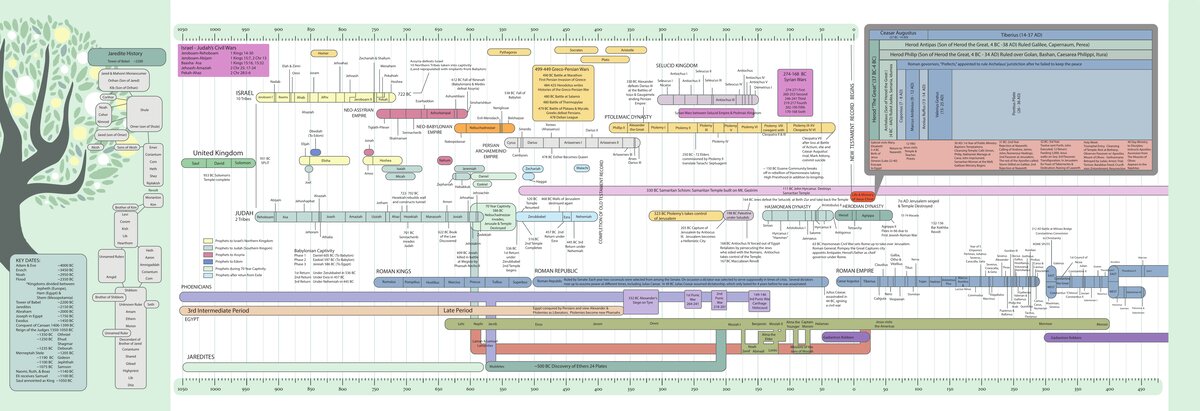
Tap to expand
Old Testament Timeline
From Creation through the Persian Period — tap the image to zoom, or download the full PDF.
Tap anywhere to close · Pinch to zoom