| Church Manuals | |
| Come Follow Me Manual — Week 31 | View |
| Scripture Helps: Old Testament | View |
| OT Seminary Teacher Manual | View |
| OT Institute Manual (Gen–2Sam) | View |
| Pearl of Great Price Manual | View |
| Scripture Reference | |
| Bible Dictionary | View |
| Topical Guide | View |
| Guide to the Scriptures | View |
| Church Media & Library | |
| Gospel for Kids (YouTube) | View |
| Bible Videos | View |
| Church Magazines | View |
| Gospel Library | View |
Week 31
I Am Doing a Great Work
Ezra 1; 3–7; Nehemiah 2; 4–6; 8
July 27–August 2, 2026
5-Minute Overview
Week 31 is a lesson about doing the Lord's work amid mockery, threat, and weariness — with prayer in one hand and a trowel (or a sword) in the other. Nehemiah's rallying cry gives the week its theme: 'Let us rise up and build,' and to those who try to lure him off the wall, 'I am doing a great work, so that I cannot come down.' The study guide traces the Hebrew of the rebuilding — banah (to build), qum (to rise up), torah (the law), yad (the hand of the Lord), and sofer (Ezra the scribe) — and ends where the restoration lands: an open book and a people who understand it, for 'the joy of the Lord is your strength.'
Official Church Resources
OFFICIAL CHURCH RESOURCES▶
CHURCH MEDIA FOR FAMILIES▶
▶ Video Commentary
VIDEO COMMENTARY (9 videos)
▼





Specialized Audiences
WOMEN’S PERSPECTIVES (2 videos)
▶
FAMILY & CHILDREN’S RESOURCES (3 videos)
▶

Reference & Study Materials
BIBLE PROJECT VIDEOS THIS WEEK (13 videos)
▶
Book overview + theme & word study videos relevant to this week’s reading.







ACADEMIC & SCHOLARLY SITES▶
MAPS & BIBLICAL LOCATIONS▶
First, a Word About Where We Are
▶︎
For once, there is no jump. This week begins mid-sentence.
Last week, 2 Chronicles ended on a cliffhanger. A Persian king named Cyrus gives an order — God "hath charged me to build him an house in Jerusalem… let him go up" (2 Chronicles 36:23) — and the book simply stops there, on the word up. (Chronicles is the last book of the Hebrew Bible, so that unfinished invitation is quite literally where the Hebrew scriptures end.) This week's reading opens by finishing that very sentence: "let him go up to Jerusalem… and build the house of the Lord" (Ezra 1:3). The seam is deliberate. Everything we have read for months has been waiting for that phrase. Now it comes — the exile ends, right on the schedule Jeremiah had promised (Jeremiah 29:10).
Two things will make the week easier to follow.
First, Ezra and Nehemiah are really one book — a single story of the return home — and our lesson lands on its high points rather than reading straight through. So the reading can feel like it skips around; it does, and it is helpful to recognize that.
Second, the story stretches across about a hundred years and three separate homecomings. First a wave of exiles rebuilds the altar and, eventually, the temple. Then — after a long gap of nearly sixty years — Ezra the scribe arrives to teach the law. A little later, Nehemiah arrives to rebuild the city wall. (Next week's book, Esther, actually takes place inside that long gap — the story of the Jews who stayed behind in Persia.) Keep those three arrivals in mind — temple, teacher, wall — and the week holds together.
A Letter to Fellow Students
▶︎
If you want a single thread to hold onto this week, here it is: rise up, and build. The whole story is people being stirred to their feet and put to work — with God's hand steadying the work the entire way.
It begins with the unlikeliest missionary in scripture: a Persian emperor. "The Lord stirred up the spirit of Cyrus," the text says (Ezra 1:1) — a king who did not worship Israel's God, moved by that God to send the exiles home. And the same stirring reaches the ordinary people, those "whose spirit God had raised" to go up (Ezra 1:5). The return begins, from the throne room down, as God waking people up.
Back in the land, the first thing they rebuild is not a wall or even the temple — it is an altar, so that worship can resume before the walls are even safe (Ezra 3:2–3). When the temple's foundation is finally laid, the sound that goes up is unforgettable: the young shout for joy while the old men who remembered the first temple weep aloud, until "the people could not discern the noise of the shout of joy from the noise of the weeping" (Ezra 3:12–13). If you have ever rebuilt anything after a loss, you know that sound — grief and gladness in the same breath.
Then opposition arrives, and it does not leave. Neighbors who are refused a share in the work set out to discourage and delay it, and the building stops for years (Ezra 4:4–5, 24). What finally restarts it is not a better permit but prophets — Haggai and Zechariah — stirring the people back to their feet (Ezra 5:1–2). The temple is finished at last (Ezra 6:15), protected, of all things, by a Persian king's archives.
Two generations later comes Ezra, "a ready scribe in the law of Moses" (Ezra 7:6) — the first great leader of God's people who is neither king nor warrior but a man whose power is simply that he knows the book. The verse that defines him could define the week: he "prepared his heart to seek the law of the Lord, and to do it, and to teach in Israel" (Ezra 7:10) — seek, do, teach, in that order.
Then Nehemiah, the king's cupbearer, who hears that Jerusalem still lies in ruins and rises to rebuild its wall. He gives us the week's motto — "Let us rise up and build" (Nehemiah 2:18) — and, under mockery and threats, the line the lesson is named for: "I am doing a great work, so that I cannot come down" (Nehemiah 6:3). The wall goes up in just fifty-two days (Nehemiah 6:15).
And the week ends not with stone but with an open book. The people gather at the Water Gate, Ezra reads the law aloud, and the Levites "gave the sense, and caused them to understand the reading" (Nehemiah 8:8). The people weep as they finally grasp it — and their leaders gently redirect the tears: "the joy of the Lord is your strength" (Nehemiah 8:10).
Rise, build, and let God steady your hands. That is the shape of the week — and the study guide slows down on each turn of it.
What's in This Week's Materials
▶︎
In the Study Guide
▶︎
The Study Guide walks the whole arc the reading compresses — the decree and return (Ezra 1), the altar and the foundation (Ezra 3), the long opposition and delay (Ezra 4), the temple finished under Haggai and Zechariah (Ezra 5–6), Ezra and the law (Ezra 7), Nehemiah and the wall (Nehemiah 2; 4–6), and the reading at the Water Gate (Nehemiah 8). If the lesson's jumps left you disoriented, this is where the connective story gets filled back in.
A few parts are worth singling out:
- The historical context sets the reading inside the Persian Empire — the empire that reversed the old policy of exile — and traces the roots of the Samaritan schism that this week's central insight is built on. It is the background that makes the focused section below land.
- The word studies trace the week's five Hebrew words — banah ("to build"), qum ("to rise up"), torah ("law" — better rendered instruction), yad ("hand," as in "the good hand of God upon me"), and sofer ("scribe," kin to sefer, "book") — each with its Greek, Latin, and English cousins.
- The Jewish Perspective brings the rabbis into the room, and this week they have a great deal to say about Ezra: a tradition that the Torah could have been given through him had Moses not come first, the public Torah reading he is credited with founding, and a pointed answer to why the book is not named for Nehemiah (all sourced in that file).
In the Resources Tab
▶︎
The Resources tab gathers this week's video commentaries alongside the official Church study helps, maps, and the Jewish and scholarly sources behind the study guide. Browse it to pick the commentary that fits your study.
The Wall That Was Built, and the Wall Christ Broke
▶︎
There is a quiet thread running under this week's reading that most of us pass right over — and it turns out to be one of the deep roots of the entire New Testament. To see it, you have to slow down at a verse that looks like bookkeeping.
Start with who these people were. The community that came home from Babylon was small, and it was a community of survivors. Their grandparents had watched Jerusalem burn. Their nation had been swallowed whole by an empire, and everything that had made them a people — land, temple, throne — had been taken away. Only one thing had survived the exile intact: their identity as Israel, carried in memory, in law, and in family lines. So when they returned, they rebuilt more than a temple and a wall. They rebuilt a boundary. A people once dissolved was determined never to dissolve again — and it drew its lines by blood.
You can watch the line being drawn in the register of the returnees. Certain priests "sought their register among those that were reckoned by genealogy, but they were not found: therefore were they, as polluted, put from the priesthood" (Ezra 2:62). Read that slowly. These men may well have been true sons of Aaron; they simply could not prove it on paper. And in the new community, the paper was the point. They were barred from the holy things until a day when "there stood up a priest with Urim and with Thummim" (Ezra 2:63) — that is, until a priest could inquire of God directly and settle what no genealogy could. It was an honest deferral: we cannot decide this; someone greater will have to. But no one in that generation could fill the office. So the question was left open — a door left ajar in the very first chapter of the return.
And the boundary did not stop at the priesthood. Ezra pressed the same rule of descent onto marriage itself: the "holy seed" must not "mingle… with the people of those lands" (Ezra 9:2). Nehemiah shut the congregation to the Ammonite and Moabite "for ever" (Nehemiah 13:1). The line of blood had become the line of belonging.
Before we judge them, be fair to them. Every survival instinct they had said hold the line. In their prophets' telling, it was precisely mingling — foreign wives, foreign gods, borrowed worship — that had cost them the first temple. A tiny remnant, surrounded by larger peoples, with no army and no king, had exactly one wall left that Babylon could not breach: the wall of who counts as us. The boundary was built to save a people. And in a real sense, it did.
But watch where it goes.
The first crack ran through Israel's own family. In Ezra 4, the neighboring peoples come with what sounds like an olive branch: "we seek your God, as ye do; and we do sacrifice unto him since the days of Esar-haddon king of Assur, which brought us up hither" (Ezra 4:2). These were the peoples Assyria had resettled in the north generations earlier — the mixed-worship community we met two weeks ago. And the answer they receive is the boundary, spoken aloud: "Ye have nothing to do with us to build an house unto our God" (Ezra 4:3). The historian Josephus knew these people well — "called in the Hebrew tongue Cutheans, but in the Greek tongue Samaritans" (Antiquities 9.14.3) — and he traces the breach to its bitter end: when a brother of the high priest married the daughter of Sanballat the Samaritan governor, Jerusalem's elders forced him to choose — "divorce his wife, or not to approach the altar" — and Sanballat answered by building a rival temple on Mount Gerizim (Antiquities 11.7–8). The refusal never healed. By the time a tired traveler sat down at a Samaritan well five centuries later, the breach was simply a fact of life, so ordinary that a Gospel writer states it as common knowledge: "the Jews have no dealings with the Samaritans" (John 4:9).
And the principle became a wall of stone. By Jesus' day, the boundary Ezra had drawn in a register was built into Herod's temple as an actual, physical barrier — a low stone partition called the soreg, ringing the inner courts, posted with signs "in Greek, and some in Roman letters, that no foreigner should go within that sanctuary" (Josephus, Wars of the Jews 5.5.2), the prohibition backed "under pain of death." This is not a legend or an exaggeration. One of those very signs was dug out of the ground in 1871, and you can still read it: "No stranger is to enter within the balustrade round the temple and enclosure. Whoever is caught will be himself responsible for his ensuing death." Stand in front of that sentence for a moment. A rule that began as a grieving community's attempt to stay alive had become a wall a man could die for crossing.
Meanwhile, the office stayed empty. Remember the door left ajar in Ezra 2 — the priest "with Urim and with Thummim" who would one day stand up and resolve what the registers could not? He never came. Through the whole life of the Second Temple, that office went unfilled. The rabbis themselves said so: the Talmud counts the Urim and Thummim among the very things the returned temple lacked — along with the Ark, the heavenly fire, and the Divine Presence (Babylonian Talmud, Yoma 21b). Let that sink in: by the rabbis' own accounting, the Second Temple outwardly stood but inwardly waited. The wall grew higher and higher around a house still waiting for someone.
Then One walked in and opened the gate. In a Nazareth synagogue, Jesus stood up to read Isaiah's promise — "the acceptable year of the Lord," "deliverance to the captives" — and sat down and said, "This day is this scripture fulfilled in your ears" (Luke 4:18–21). So far, so good; the hometown crowd is pleased. Then he keeps talking. He reminds them that in the days of Elijah and Elisha, when Israel was full of widows and lepers, God sent his prophets to exactly two people — a Phoenician widow of Sidon, and Naaman the Syrian (Luke 4:25–27). Two foreigners. Two people from the wrong side of the wall. And the congregation that had just admired him "were filled with wrath," rose up, and moved to throw him off a cliff (Luke 4:28–29). It was the first sermon of his ministry, and it nearly got him killed — for suggesting that God's grace had never respected the boundary.
And it was the pattern of his whole ministry, start to finish: Gentile wise men at his cradle (Matthew 2), a Samaritan woman at a well (John 4), a Samaritan leper singled out for thanks (Luke 17:16), a Canaanite mother praised for "great faith" (Matthew 15:28), a Samaritan cast as the hero of his best-known parable (Luke 10:33). Over and over, the people the wall shut out are the ones he seeks out.
And it is worth pausing here, with real tenderness, over who those outsiders were — because the wall did not only shut out strangers. It shut out family. It was not only priests who came home unable to prove their line; ordinary Israelite households returned so long-scattered that they could not show "whether they were of Israel" (Ezra 2:59–62). The northern people we so quickly file as "the adversaries" first came asking to help — "we seek your God, as ye do" (Ezra 4:2) — a mixed people, part Israelite by blood, remnants of the northern tribes Assyria had scattered, wanting back in. And the scattering had reached further still. Two generations in Babylon and Persia had made God-fearers and friends among the nations — and remember that Daniel himself had been set "chief of the governors over all the wise men of Babylon" (Daniel 2:48), the very kind of court sage the New Testament will later call the Magi. It is at least possible — and let us hold this as a thought, not a claim of the text — that when "wise men from the east" came seeking "the King of the Jews," having read his coming in a star (Matthew 2:1–2), they came as heirs of a witness a faithful exile had planted among them generations before. If so, they too were people the wall would have kept outside. These were not villains. They were the fallout of catastrophe — the scattered, trying to find their way home.
And gathering them was the whole point of what Christ came to do. He called himself the shepherd who leaves the ninety-nine to go after the one that is lost. "Other sheep I have," he said, "which are not of this fold: them also I must bring" (John 10:16). He would die, John tells us, "not for that nation only, but that also he should gather together in one the children of God that were scattered abroad" (John 11:52) — the very promise God had made through Ezekiel to a people in exile: "so will I seek out my sheep, and will deliver them out of all places where they have been scattered" (Ezekiel 34:12). The wall was built by a scattered people desperate to survive. The gathering was God's answer to the scattering itself.
Now for the bookend that ties the whole arc together. When a mob finally seized Paul in that temple, the charge was that he had brought "Greeks also into the temple" and so had "polluted this holy place" (Acts 21:28). Polluted — the very word the King James translators had used at Ezra 2:62 for the priests struck from the rolls. The story that opened with men called polluted for lacking a genealogy closes with a mob screaming polluted at the gentiles' apostle. Five centuries, one word. And by the time that mob formed, the gospel's answer was already written: Christ "hath broken down the middle wall of partition," so that the outsider is "no more" a stranger and foreigner but a "fellowcitizen" (Ephesians 2:14, 19). Paul, who nearly died at the soreg, is the one who tells us it has already fallen.
Here is a reflection worth holding gently — and let us be exact about what it is: a devotional reading, not doctrine, and not scholarship. Ezra's awaited "priest with Urim and Thummim" is never named — not by the text, not by the rabbis, not by any authority this guide can cite. But it is hard, having walked this arc, not to see Him. The true High Priest who inquires of God directly. The one who reopens what bloodline had closed. The one who stands up in a synagogue and reads the acceptable year to the very people the wall shut out — and is eventually killed for it. The office Ezra left open, a Galilean carpenter walked in and filled. Hold that thought the way the returned exiles held the question itself: reverently, and without forcing it. But hold it.
The boundary was built to save a people. It ended by shutting out the world. And then Someone tore it down — and it cost Him everything.
Sources behind this section: Josephus, Wars 5.5.2 and Antiquities 9.14.3; 11.7–8 (the soreg and the Samaritan schism); the recovered Temple Warning Inscription; Babylonian Talmud, Yoma 21b. All scripture is KJV. The Ezra 2:63 → Christ identification is a devotional reading, not a claim of the text or of any cited authority.
The Weapon Was Money
▶︎
There is one more thread in this week's story, and it hides in the driest verses of all — the ones about taxes. But follow the money, and you find the machinery underneath the whole fight.
Start with a fact that is easy to miss: the returning exiles could not have rebuilt anything without the Persian treasury. When the work first stalls and then restarts, what protects and pays for it is a royal decree — Darius orders the temple funded "of the king's goods" (Ezra 6:8). And when Ezra comes up, he carries a remarkable privilege: the king declares that "it shall not be lawful to impose toll, tribute, or custom" on the priests, Levites, and temple servants (Ezra 7:24). The people who served the house of God were, by imperial law, exempt from taxes.
This was not special favoritism for the Jews. It was simply how Persia ran an empire — kings routinely shielded temples and their sacred staff from taxes and forced labor. (We even have a surviving royal letter, preserved in a later copy, in which a Persian king rebukes one of his own officials for daring to tax a temple's sacred workers.) To Persia, funding a religion was cheaper than fighting one.
Now watch that same machinery become a weapon. When the neighboring peoples want the rebuilding stopped, they do not make a religious argument — they make a financial one. They warn the king that a rebuilt Jerusalem "will not pay toll, tribute, and custom, and so thou shalt endamage the revenue of the kings" (Ezra 4:13). Threaten an empire's income and it listens: the king orders the work halted (Ezra 4:21). The single most effective attack on the temple in this whole book is not an army. It is an argument about lost tax revenue.
It is tempting — standing back — to see how tightly money and the bloodline-boundary might have been wound together. That tax-free status belonged to a class you had to prove you were part of; loosen the proof, and in theory anyone could claim a seat at the exempt table. Whether the community ever actually reasoned that way, no source we can find says outright — so hold this one as a thought, not a fact. But the shape of that world is unmistakable: holiness and revenue were filed in the same drawer.
Which is why a scene five centuries later should sound familiar. When Jesus' opponents set the trap designed to destroy him, they reach for exactly this weapon. Pharisees and pro-Roman Herodians — natural enemies, briefly allied — send men to ask, sweetly, "Is it lawful to give tribute unto Caesar, or not?" (Matthew 22:17). It is a perfect snare: answer no, and Rome hears treason; answer yes, and the crowd hears betrayal. The Gospel says plainly what they were doing — they came to "entangle him in his talk" (Matthew 22:15). The same lever that once halted the temple — a tax question, sprung as a legal trap — is now aimed at the temple's true builder. And he slips it without denying either claim: "Render therefore unto Caesar the things which are Caesar's; and unto God the things that are God's" (Matthew 22:21).
The wall in this week's story was defended with money as much as with stone. And the One who came to take it down was met with the very same weapon — and would not be entangled.
Sources behind this section: Ezra 6:8; 7:24 (Persian funding and the priestly tax exemption); Ezra 4:13, 21 (the adversaries' revenue argument that halted the work); Matthew 22:15–21 (the tribute trap). The Persian practice of tax-exempting temple personnel is documented policy — the royal letter referred to is the Achaemenid "Letter to Gadatas," preserved in a later Greek inscription. The suggestion that the genealogical boundary was maintained to protect that tax exemption is an interpretive reflection, not a claim of the text or of any cited source: the scriptures give purity, not revenue, as the reason for the boundary. All scripture is KJV.
"I Am Doing a Great Work": The Art of Not Coming Down
▶︎
Nehemiah's enemies tried three tactics, and it is worth telling them apart, because you will meet all three.
First came ridicule — "will they fortify themselves?" — which the builders answered by building. Then came threats of attack, which they answered with prayer and a watch. But the third tactic was the subtlest, because it did not look like opposition at all. It looked like an invitation: "come, let us meet together" (Nehemiah 6:2). Four times they sent it, and Nehemiah's reply is one sentence long: "I am doing a great work, so that I cannot come down: why should the work cease, whilst I leave it, and come down to you?" (Nehemiah 6:3).
Notice what he does not say. He does not say the meeting is evil. He says the work is great — and that leaving it has a cost. Some things that pull us off the wall are enemies; most are merely meetings. The discipline of the week is learning to tell opposition you must endure from distraction you must simply decline. Nehemiah had decided in advance what his great work was, which is why he could answer in one sentence.
And then the rabbis add a footnote that keeps the whole thing honest. The Talmud asks why the book of this heroic builder was not, in their tradition, named for him — and answers that Nehemiah "took credit for himself and boasted about his good deeds," citing his refrain, "Remember me, God, for good" (Nehemiah 13:31; Babylonian Talmud, Sanhedrin 93b). Whether or not one accepts the verdict, the caution lands: even a man who prays and builds and reforms can blur his witness by keeping one eye on his own credit. Do the great work. Refuse to come down. And leave the remembering to God.
Prayer in One Hand, a Trowel in the Other
▶︎
If you want the week's theology of work in a single verse, it is this one: "Nevertheless we made our prayer unto our God, and set a watch against them day and night" (Nehemiah 4:9).
Prayer and a watch. Not prayer instead of a watch, as though trusting God excused the labor; not a watch instead of prayer, as though the labor could carry itself. The builders on the wall are the picture of it — each with a tool in one of his hands while the other "held a weapon" (Nehemiah 4:17). Nehemiah prays before he speaks to the king (Nehemiah 2:4) and rides out at night to survey the ruins. The pattern never breaks.
The week's word study on yad, "hand," shows why. The phrase "the good hand of my God upon me" (Nehemiah 2:8) is Nehemiah's explanation for everything — the king's favor, the timber, the timing. And yet the theme verse ends with a different set of hands: "So they strengthened their hands for this good work" (Nehemiah 2:18). God's hand makes the work possible; the workers' hands take it up. Two hands, one work. "Remember that it is upon the rock of our Redeemer… that ye must build your foundation" (Helaman 5:12) — but even on that rock, somebody has to lay stone.
The Joy of the Lord Is Your Strength
▶︎
The climax of this week is a congregation in tears — and two leaders telling them to stop crying.
At the Water Gate, the people hear the law read and explained — the Levites "gave the sense, and caused them to understand the reading" (Nehemiah 8:8) — and understanding breaks them. They weep, presumably because they finally see the distance between the law and their lives. (The craft behind "gave the sense" is richer than it looks: the rabbis read the phrase as the whole layered art of public reading — Scripture, its Aramaic Targum for a people who had largely lost Hebrew in exile, and the chant that makes meaning land. The study guide's Jewish Perspective traces it, and even carries the thread forward to Jesus reading in the Nazareth synagogue. But the heart of it is plain: the word was made understandable.) And Nehemiah and Ezra, remarkably, refuse the tears: "mourn not, nor weep… for the joy of the Lord is your strength" (Nehemiah 8:9–10). Guilt, it turns out, is not the goal of scripture. Understanding is — and understanding, rightly finished, lands in joy. The word torah itself says so: from a root meaning to point or direct, it is not a code to condemn but an instruction to aim a life. An arrow is not aimed in order to shame it.
The rabbis remembered this assembly as a beginning, not a one-time event: tradition credits Ezra with instituting the regular public reading of the Torah — on Shabbat afternoon, and every Monday and Thursday (Babylonian Talmud, Bava Kamma 82a) — a rhythm of returning to the word that has shaped Jewish life for two and a half millennia. What Nehemiah 8 narrates once, Ezra made a habit. That is the same instinct behind a curriculum like the one that brought you here: a covenant people stays covenant by returning to the word on a fixed and frequent rhythm — and by pressing past reading to the sense.
And the chapter ends where the week began, with joy displacing grief. In Ezra 3, joy and weeping were indistinguishable in one roar. In Nehemiah 8, the people keep the Feast of Tabernacles with a gladness unmatched "since the days of Jeshua the son of Nun" (Nehemiah 8:17). The arc of restoration runs from tears you cannot tell from shouting — to joy that has become strength.
The Invitation
▶︎
Week 31 asks a builder's questions — and they are wonderfully practical.
What is the great work God has put in front of you right now? Name it, specifically. Then notice the "come, let us meet together" invitations that most reliably pull you away from it — the ones that are not evil, just not it. Nehemiah could answer in a single sentence because he had already decided what his great work was.
Notice the order of your building, too. The exiles raised the altar before the walls — worship before defenses. Is yours in that order? And when the work stalls, as it did for years between Ezra 4 and Ezra 5, do you wait for easier conditions, or for a prophetic word to stir you back to your feet? Is your prayer paired with a watch, your faith with a trowel? And when you finally understand the word deeply enough to weep over it — will you let the weeping finish as joy?
One last question, from the heart of the week. Every community that survives a catastrophe builds boundaries, and some of them are holy and right. But the arc from Ezra's register, to the cliff at Nazareth, to the broken middle wall asks each of us to inspect our own masonry: which of the walls in your life guard something sacred — and which have quietly become a soreg, keeping out the very people the Lord of the house is trying to bring in?
"Arise and shine forth, that thy light may be a standard for the nations" (D&C 115:5). The rubble does not get the last word. The last word is an open book, a people who understand it, and the joy of the Lord — which is, and always was, their strength.
Let us rise up and build.
Weekly Insights — Week 31 | CFM Corner | OT 2026
Ezra 1; 3–7; Nehemiah 2; 4–6; 8
Sources: Week 31 Study Guide (overview, historical/cultural context — including §4 on the Samaritan schism — key passages, word studies — banah, qum, torah, yad, sofer — and Jewish Perspective). All scripture quoted from the KJV as verified in the study-guide files. Rabbinic citations verified against the Sacred Texts vault (Sanhedrin 21b–22a, Bava Kamma 82a, Bava Batra 15a, Sanhedrin 93b, Yoma 21b). Historical sources for the two focused sections: Josephus, Wars 5.5.2 and Antiquities 9.14.3; 11.7–8; the 1871 Temple Warning Inscription; and, for the tax section, Ezra 4:13, 21; 6:8; 7:24 and Matthew 22:15–21, with the Achaemenid "Letter to Gadatas" as the documented parallel for Persian temple tax exemptions. Two readings are flagged in-text as devotional/interpretive rather than sourced history: the Ezra 2:63 → Christ identification, and the suggestion that the genealogical boundary was maintained to protect the tax exemption.
Week 31
Ezra 1; 3–7; Nehemiah 2; 4–6; 8 — Overview
"Let Us Rise Up and Build"
1. Week 31: Overview
This week the exile ends. The story that closed in ruins at the end of 2 Kings — a burned temple, a scattered people, a broken wall — reopens with a decree: "The Lord God of heaven… hath charged me to build him an house at Jerusalem" (Ezra 1:2). The words are spoken by Cyrus, a Persian king who did not worship Israel's God, and the narrator tells us why he spoke them: "the Lord stirred up the spirit of Cyrus" (1:1), "that the word of the Lord by the mouth of Jeremiah might be fulfilled." God keeps a seventy-year promise (Jeremiah 29:10) by moving the heart of an empire.
What follows is the work of rebuilding — and the reading makes clear that restoration comes in layers. First the altar and the foundation of the temple (Ezra 3). Then, after years of opposition, the temple itself, finished when the prophets Haggai and Zechariah stir the people back to the work (Ezra 5–6). Then Ezra arrives with the law, "prepared his heart to seek the law of the Lord, and to do it, and to teach" (7:10). Then Nehemiah rebuilds the city wall in fifty-two days against relentless opposition (Nehemiah 2; 4–6). And finally, at the Water Gate, the whole community is re-formed around the word as Ezra reads the law aloud and the Levites "gave the sense, and caused them to understand" (Nehemiah 8:8).
The theme verse is Nehemiah's rallying cry to a discouraged people surveying the rubble: "Let us rise up and build. So they strengthened their hands for this good work" (2:18). It is a week about doing the Lord's work amid mockery, threat, and weariness — with prayer in one hand and a trowel (or a sword) in the other — and about a God who turns kings' hearts, answers builders' prayers, and meets a returning people in the joy of His word: "the joy of the Lord is your strength" (8:10).
Ezra and Nehemiah tell one continuous story of the return. The assigned blocks (✓) are the spine; the chapters between them fill in the community the week keeps pointing to. Each assigned block is discussed in the walkthrough below.
| Chapters | Content | This week? | Why skipped / what's notable |
|---|---|---|---|
| Ezra 1 | Cyrus's decree; the return authorized; the temple vessels restored | ✓ Yes | This week. |
| Ezra 2 | The register of the returnees — some 42,360 who came home; the priests who could not prove their genealogy "put from the priesthood" (2:62) | — | Not assigned, but significant: the genealogical boundary that reshapes the whole community begins here — see the Samaritan schism in Historical & Cultural Context. |
| Ezra 3 | The altar rebuilt; sacrifices resumed; the temple foundation laid — joy and weeping | ✓ Yes | This week. |
| Ezra 4 | Opposition; the adversaries frustrate the work; building halted | ✓ Yes | This week. |
| Ezra 5–6 | Haggai and Zechariah stir the work; Darius confirms Cyrus's decree; the temple finished and dedicated | ✓ Yes | This week. |
| Ezra 7 | Ezra the scribe comes with the law; "prepared his heart to seek… do… teach" (7:10) | ✓ Yes | This week. |
| Ezra 8 | Those who returned with Ezra; the fast at the river of Ahava for safe passage; the temple treasure delivered | — | Ezra's own journey up to Jerusalem — the bridge between his commission (ch. 7) and his reforms (chs. 9–10). |
| Ezra 9–10 | The intermarriage crisis; Ezra's prayer of confession; the covenant to "put away" foreign wives (10:3) | — | Not assigned, but significant: the "holy seed" separation (9:2) is the sharp edge of the week's boundary theme. |
| Nehemiah 1 | Nehemiah hears the wall lies in ruins; he weeps, fasts, and prays (1:4) | — | The opening of Nehemiah's story — the prayer that sets up the assigned chapter 2. |
| Nehemiah 2 | Nehemiah sent to rebuild the wall; the night inspection; "let us rise up and build" | ✓ Yes | This week. |
| Nehemiah 3 | The builders of the wall, gate by gate — from the high priest down to goldsmiths and merchants | — | A register of who built which section; the whole city shares the labor. |
| Nehemiah 4 | Sanballat and Tobiah oppose; building with sword and trowel | ✓ Yes | This week. |
| Nehemiah 5 | The usury crisis; Nehemiah's reform and example | ✓ Yes | This week. |
| Nehemiah 6 | Plots against Nehemiah fail; the wall finished in fifty-two days | ✓ Yes | This week. |
| Nehemiah 7 | The genealogical register found and repeated (paralleling Ezra 2) | — | Not assigned, but ties to the week's boundary theme — descent again defines who belongs. |
| Nehemiah 8 | Ezra reads the law at the Water Gate; "the joy of the Lord is your strength"; Tabernacles kept | ✓ Yes | This week. |
| Nehemiah 9–10 | The great day of confession (9:1–2); the recital of God's dealings; the community seals a written covenant | — | The covenant-renewal climax — the people bind themselves to the law, the Sabbath, and temple support. |
| Nehemiah 11–12 | Lots cast to repopulate Jerusalem, "one of ten" (11:1); the wall dedicated with two great thanksgiving choirs | — | The city refilled and the wall joyfully dedicated. |
| Nehemiah 13 | Nehemiah's later reforms — the Ammonite and Moabite barred (13:1–3), the Sabbath enforced, foreign marriages confronted again (13:23) | — | Not assigned, but significant: the boundary of Ezra 9–10 hardens here into standing policy. |
Note: Portions of Ezra (4:8–6:18; 7:12–26) are written in Aramaic rather than Hebrew, the administrative language of the Persian court — see Word Studies.
We begin exactly where last week ended. Last week, 2 Chronicles closed on Cyrus's decree — "let him go up… and build the house of the Lord" (2 Chronicles 36:22–23) — the final words of the Hebrew Bible, breaking off mid-invitation on the word up. This week, Ezra 1 opens with that same sentence and finishes it (Ezra 1:1–3). The seam is deliberate: the whole long story of the kings, the exile, and the prophets has been waiting for that "go up." Now it comes.
One book, one century — read in order. In the Hebrew Bible, Ezra and Nehemiah are a single book, and its story runs in a clear forward line, even though a long quiet gap sits in the middle. Laid out in order, the century unfolds like this:
- 586 BC — Exile. Jerusalem burns; Judah is carried to Babylon for the "seventy years" Jeremiah foretold (Jeremiah 29:10). The prophets of these years — Daniel in the court, Ezekiel among the captives — come later in our reading year.
- 538 BC — The first return. Cyrus's decree frees the exiles. Zerubbabel leads the first group home; they rebuild the altar and lay the temple's foundation (Ezra 1; 3).
- ~520–515 BC — The temple. After years of opposition stall the work, the prophets Haggai and Zechariah stir it back to life, and the temple is finished under Darius (Ezra 4–6).
- 515–458 BC — The silent gap (Esther). Nearly sixty years pass with little recorded. It is into this gap that next week's book, Esther, falls — set under Ahasuerus (Xerxes I, r. 486–465 BC) — the story of the Jews who stayed in Persia rather than going up.
- 458 BC — Ezra. Two generations after the temple stands, Ezra the scribe comes up under Artaxerxes I with the law, to rebuild the people around the word (Ezra 7).
- 445 BC — Nehemiah. A little later, Nehemiah arrives (also under Artaxerxes), rebuilds the city wall in fifty-two days, and the community gathers at the Water Gate to hear the law read and explained (Nehemiah 2; 4–6; 8).
That single line — exile → return → temple → (Esther) → Ezra → Nehemiah — is the spine this week follows, and the walkthrough below moves along it in order. (The Scripture Range table above marks exactly which chapters the lesson reads and which it passes over, so the skipped material is accounted for there.)
The Decree and the Return (Ezra 1) — assigned
The book opens by tying the moment to prophecy: "in the first year of Cyrus king of Persia, that the word of the Lord by the mouth of Jeremiah might be fulfilled, the Lord stirred up the spirit of Cyrus" (1:1). Cyrus issues a written proclamation releasing the exiles to go up to Jerusalem and rebuild the house of the Lord, and he restores the very temple vessels Nebuchadnezzar had carried off (1:7–11). The God who had used Babylon to scatter now uses Persia to gather. The exiles who respond are those "whose spirit God had raised" (1:5) — the return is God stirring kings and commoners alike.
The Altar and the Foundation (Ezra 3) — assigned
Back in the land, the people's first act is worship: Jeshua the priest and Zerubbabel the governor rebuild the altar and resume the daily sacrifices "as it is written" (3:2–4), even "for fear was upon them because of the people of those countries." Then the foundation of the temple is laid, and the priests and Levites sing the ancient refrain — "because he is good, for his mercy endureth for ever toward Israel" (3:11), the same song sung at Solomon's temple and Jehoshaphat's deliverance. But the joy is mixed: the old men "that had seen the first house" weep aloud even as others shout for joy, "so that the people could not discern the noise of the shout of joy from the noise of the weeping" (3:12–13). Restoration and loss sound together.
Opposition and Delay (Ezra 4) — assigned
The "adversaries of Judah and Benjamin" offer to help build; when they are refused, they "weakened the hands of the people of Judah, and troubled them in building," hiring counsellors "to frustrate their purpose" (4:1–5). Through official correspondence (the section where the text shifts into Aramaic), the work is stopped "unto the second year of the reign of Darius" (4:24). The first great lesson of the rebuilding is that opposition is not a sign the work is wrong — it is a fixture of the work.
The Temple Finished (Ezra 5–6) — assigned
The work resumes when God sends prophets: "Then the prophets, Haggai the prophet, and Zechariah… prophesied unto the Jews" (5:1), and Zerubbabel and Jeshua "rose up and began to build." When the Persian authorities question the project, Darius orders a search of the royal archives, finds the original decree of Cyrus, and not only confirms it but funds it (6:1–12). The temple is finished "in the sixth year of the reign of Darius the king" (6:15), and the people keep the dedication "with joy" and then the Passover (6:16–22). The house is rebuilt because God moved a pagan king's records to defend it.
Ezra Brings the Law (Ezra 7) — assigned
A generation later, Ezra, "a ready scribe in the law of Moses" (7:6), comes up from Babylon under Artaxerxes — "according to the good hand of his God upon him." The chapter's keynote defines the man and the week: "Ezra had prepared his heart to seek the law of the Lord, and to do it, and to teach in Israel statutes and judgments" (7:10). Seek, do, teach — in that order. The temple has been rebuilt; now the people must be rebuilt around the word.
Nehemiah and the Wall (Nehemiah 2; 4–6) — assigned
Nehemiah, cupbearer to Artaxerxes, hears that Jerusalem's wall is broken down and its gates burned. Before he answers the king's question, "so I prayed to the God of heaven" (2:4), and he is sent to rebuild. After a secret night inspection of the ruins (2:12–16), he turns to the discouraged people: "Let us rise up and build. So they strengthened their hands for this good work" (2:18). The opposition is immediate and escalating — Sanballat and Tobiah move from mockery ("will they fortify themselves?") to threats of attack. Nehemiah's answer is prayer and vigilance: "we made our prayer unto our God, and set a watch" (4:9); the builders work with a tool in one hand and "held a weapon" in the other (4:17). Chapter 5 exposes an internal threat — nobles charging usury against their own struggling brethren — and Nehemiah confronts it and models generosity himself. When enemies try to lure him into a "meeting" to stop the work, he sends the line that captures the whole week: "I am doing a great work, so that I cannot come down" (6:3). The wall is finished "in fifty and two days" (6:15), and even the enemies perceive "that this work was wrought of our God" (6:16).
The Reading of the Law (Nehemiah 8) — assigned
With the city secure, the community gathers "as one man" at the Water Gate, and Ezra reads the law aloud "from the morning until midday" (8:1–3). The Levites move through the crowd and "gave the sense, and caused them to understand the reading" (8:8) — the word is not only read but explained. The people weep as they hear how far they had fallen, but Nehemiah and Ezra redirect them: "mourn not, nor weep… for the joy of the Lord is your strength" (8:9–10). They keep the Feast of Tabernacles with a gladness not seen "since the days of Jeshua the son of Nun" — that is, Joshua (8:17). The restoration that began with an altar ends with an open book — a people re-formed around the word of God.
"Let us rise up and build. So they strengthened their hands for this good work."
"For this day is holy unto our Lord… for the joy of the Lord is your strength."
The week traces restoration as a work done in layers — altar, foundation, temple, wall, and finally the covenant community gathered around the law — and every layer is built the same way: God stirs the work (a king's heart, a prophet's voice, a people's resolve), opposition rises, and the builders answer with prayer and labor rather than one without the other. Ezra "prepared his heart to seek… do… teach"; Nehemiah "prayed… and set a watch"; and both refuse to "come down" from the work. The rubble does not get the last word. The last word is an open book and a people who understand it — and rejoice.
1. THE DECREE (Ezra 1)
   "The Lord stirred up the spirit of Cyrus" — the exile ends by prophecy fulfilled
        ↓
2. ALTAR & FOUNDATION (Ezra 3)
   Worship first; the foundation laid; joy and weeping sound together
        ↓
3. OPPOSITION & DELAY (Ezra 4)
   Adversaries frustrate the work; building halts until Darius
        ↓
4. THE TEMPLE FINISHED (Ezra 5–6)
   Haggai and Zechariah stir the work; Darius confirms Cyrus; the house is dedicated
        ↓
5. EZRA AND THE LAW (Ezra 7)
   "Ezra prepared his heart to seek… do… teach" — the people to be rebuilt around the word
        ↓
6. THE WALL (Nehemiah 2; 4–6)
   "Let us rise up and build"; sword and trowel; "I am doing a great work"; finished in 52 days
        ↓
7. THE READING OF THE LAW (Nehemiah 8)
   The Water Gate assembly; the word explained; "the joy of the Lord is your strength"
- It shows God working through unlikely instruments. A Persian emperor issues the decree; a later king funds the temple from his own treasury; a cupbearer rebuilds a wall. As the reading insists from its opening verse, God moves history — including its pagan kings — to keep His promises to His people.
- It normalizes opposition to good work. Every stage of the rebuilding draws resistance — refusal, ridicule, political maneuvering, threats, even internal injustice. The builders never treat opposition as evidence they are wrong; they meet it with prayer, watchfulness, and steady work. "I am doing a great work, so that I cannot come down" (Nehemiah 6:3).
- It pairs prayer with action. Nehemiah prays and sets a watch (4:9); the people build and stand guard (4:17). The reading refuses the false choice between trusting God and doing the work — faith here looks like a trowel in one hand and a prayer on the lips.
- It puts the word of God at the center of a restored people. The temple is rebuilt in Ezra; the people are rebuilt in Nehemiah 8, when the law is read and explained until they understand. Ezra's pattern — seek, do, teach (7:10) — and the Water Gate assembly model a community re-formed around scripture rightly understood.
- It is a type of gathering and restoration. The return from Babylon, the rebuilding of the house of the Lord, and the reconstitution of the covenant people around the word prefigure the latter-day gathering of Israel and the Restoration of the gospel. To read Ezra and Nehemiah is to watch, in miniature, a scattered people brought home to build.
2. Week 31: Historical & Cultural Context
For two centuries the great powers of the Near East had ruled by deportation — Assyria and Babylon uprooted conquered peoples and scattered them (see Week 29). The empire that ends the exile reverses that policy. Cyrus the Great founded the Achaemenid Persian Empire (c. 550–330 BC), and after his conquest of Babylon he allowed deported peoples to go home and rebuild their sanctuaries. As World History Encyclopedia summarizes, "After Cyrus' conquest of Babylonia in 539 BCE, these Judean exiles were allowed to return home" (Cyrus the Great's Conquests). The God who had used Babylon to scatter now uses Persia to gather — exactly as Ezra 1:1 claims.
(Note on dating: reputable sources date the fall of Babylon to 539 BC; the traditional date of Cyrus's decree and the first return is 538 BC, the year after. Both are standard and not in conflict.)
The most famous artifact of this policy is the Cyrus Cylinder, a barrel-shaped clay cylinder inscribed in Akkadian cuneiform, discovered in the ruins of Babylon in 1879 and now in the British Museum. In it Cyrus proclaims a policy of restoration: "the gods who dwelt there I returned to their home."
It is tempting to read the Cylinder as the very decree of Ezra 1 — but honesty requires a limit. The Cylinder does not name the Jews, Judah, or Jerusalem. It records Cyrus's general practice of returning captive peoples and their gods to their cities, and scholars connect that policy to the biblical decree; but as Livius.org notes, "it was once believed that it confirmed what the Bible says… [that] Cyrus the Great had allowed the Jews to return" — a return that is not actually stated in the Cylinder's own text (Livius: Cyrus Cylinder). So the Cylinder is powerful background for Ezra 1 — evidence that the policy the Bible describes was real and characteristic of Cyrus — but it is not the decree itself.
The reading covers roughly a century, in stages (the italicized rows are chronological signposts — books read in other weeks — placed here to show where they fall, not part of this week's reading):
| Stage | Approx. date | Event |
|---|---|---|
| Daniel (read later this year) | c. 605–536 BC | The exile prophet, carried to Babylon c. 605 BC and serving "unto the first year of king Cyrus" (Daniel 1:1, 21). At Babylon's fall (c. 539 BC) he serves under "Darius the Mede" (Daniel 5:31; 6:1–3; 9:1) — a different king from the temple's Darius; see the note below |
| First return | c. 538 BC | Zerubbabel (governor) and Jeshua (high priest) lead exiles home (Ezra 1–2) |
| Altar & foundation | c. 536 BC | Worship resumes; temple foundation laid (Ezra 3) |
| Work halted | — | Opposition stops the building "unto the second year of the reign of Darius" (Ezra 4:24) |
| Temple completed | c. 515/516 BC | Finished in the sixth year of Darius; dedicated (Ezra 6:15) |
| Esther (next week) | c. 483–473 BC | Not part of this week's reading — shown to mark where next week's book falls: the Jews who stayed in Persia, under Ahasuerus (Xerxes I, r. 486–465 BC), in the long gap between the temple and Ezra (Esther 1:3; 2:16; 3:7) |
| Ezra's mission | c. 458 BC | Ezra brings the law under Artaxerxes (Ezra 7) |
| Nehemiah's wall | c. 445 BC | The wall rebuilt in fifty-two days (Nehemiah 2; 4–6) |
(The temple's completion "in the sixth year of Darius" [Ezra 6:15] is traditionally 516 BC; World History Encyclopedia rounds the Second Temple's completion to "approximately 515 BCE" — a one-year difference, not a real dispute.)
(Two different kings named Darius appear in this table. Darius the Mede (Daniel 5:31; 6) reigns at Babylon's fall, c. 539 BC, and his historical identity is debated — scholars have variously linked him to Cyrus himself or to a subordinate governor. Darius I of Persia (r. 522–486 BC), in the "Work halted" and "Temple completed" rows, is the later king who confirms Cyrus's decree and completes the temple. They are not the same man.)
The rebuilding draws immediate resistance. In Ezra 4 the "adversaries of Judah and Benjamin" offer to help build, claiming, "we seek your God, as ye do; and we do sacrifice unto him since the days of Esar-haddon king of Assur, which brought us up hither" (4:2). These were the peoples Assyria had resettled in the north after 722/721 BC — the community whose mixed worship Week 29 traced (2 Kings 17:24–41). The historian Josephus calls them the Cutheans, "called in the Hebrew tongue Cutheans, but in the Greek tongue Samaritans" (Antiquities 9.14.3). When Zerubbabel refuses their help — "Ye have nothing to do with us to build an house unto our God" (Ezra 4:3) — the breach opens that would harden into the Samaritan schism. Josephus traces its climax to a marriage a century later: when Manasseh, brother of the high priest, wed the daughter of Sanballat the Samaritan governor, Jerusalem's elders forced the choice — "divorce his wife, or not to approach the altar" — and Sanballat answered by building a rival temple on Mount Gerizim (Antiquities 11.7–8). By Jesus' day the division was proverbial: "the Jews have no dealings with the Samaritans" (John 4:9). (Two honest notes: Ezra 4:2 names the resettling king "Esar-haddon," while Josephus, retelling the episode, names Shalmaneser; and historians debate his dating of this Sanballat. The shape of the story — a rebuffed people and a rival sanctuary — is the record's own.)
One note worth holding with compassion: the boundary did not only fall on outsiders — it cut inward, too. In the same register of returnees, ordinary Israelite families (not only priests) "could not shew their father's house, and their seed, whether they were of Israel" (Ezra 2:59–62); the exile had scattered some so thoroughly that they could no longer prove their own descent. And the northern people refused here had first come offering to help, professing the same God (Ezra 4:2) — a mixed but partly Israelite remnant, the human aftermath of the Assyrian catastrophe that shattered the ten tribes. From the returning community's side the refusal was a matter of survival and purity; but many whom it wounded were the scattered of Israel themselves. (The Weekly Insights, "The Wall That Was Built, and the Wall Christ Broke," follows this forward to Christ's gathering of the scattered and the shut-out.)
That opposition is why a large portion of Ezra — 4:8 through 6:18, and again 7:12–26 — is written not in Hebrew but in Aramaic, the administrative and diplomatic language of the Persian Empire. The letters to and from the Persian court are preserved in the imperial language in which they would actually have been written. (This matters for Word Studies: for terms drawn from those chapters, the "original language" is Aramaic, not Hebrew.)
The work resumes when the prophets Haggai and Zechariah stir the people (Ezra 5:1), and it is secured by an unlikely ally: the Persian king Darius I (r. 522–486 BC). When local officials challenge the project, Darius orders a search of the royal archives, the original scroll of Cyrus's decree is found at Ecbatana, and Darius not only upholds it but commands that the work be funded from the royal revenue (Ezra 6:1–12). The temple is finished "in the sixth year of the reign of Darius" (6:15). (World History Encyclopedia confirms Darius's reign dates, consistent with the temple's completion; the detail of his confirming Cyrus's decree comes from the biblical text itself.)
Two generations after the first return, both Ezra and Nehemiah are sent by the same king, Artaxerxes I (r. 465–424 BC) — the reference point that anchors the second half of the reading. World History Encyclopedia notes that Artaxerxes I "is the central character of the biblical Book of Ezra and also appears in the Book of Nehemiah": Ezra "was sent by Artaxerxes I… to Jerusalem in order to standardize the Law of Moses" (Ezra 7, c. 458 BC), and Nehemiah, "his cupbearer," was later appointed "Governor of Judea" (Nehemiah 2, c. 445 BC). A cupbearer was no mere servant — he tasted the king's wine against poison and enjoyed the king's ear, a position of trust that explains how a Jewish exile could gain a royal commission to rebuild a city wall.
The return ran on Persian money, and the reading is unusually frank about it. Darius had already ordered the temple funded "of the king's goods, even of the tribute beyond the river" (Ezra 6:8; see §5). Artaxerxes went a step further: in the same letter that sent Ezra up, he exempted the temple's staff from imperial taxation — "it shall not be lawful to impose toll, tribute, or custom" upon "the priests and Levites, singers, porters, Nethinims, or ministers of this house of God" (Ezra 7:24). The people who served the house of God were, by royal decree, tax-free.
This was not a unique favor to the Jews but standard Achaemenid policy: Persian kings routinely shielded temples and their sacred personnel from taxes and forced labor. The clearest documented parallel is the Letter to Gadatas, in which Darius I rebukes a provincial official for taxing the sacred gardeners of Apollo and forcing them onto profane ground, confirming their freedom from tribute and labor. (Honest caution: the Gadatas inscription survives only as a later Greek copy of a claimed Achaemenid original, and a minority of scholars question its authenticity; it is best cited as a Persian-period parallel, not a contemporary document.)
Because the empire ran on revenue, money was also a weapon. When the northern peoples wanted the rebuilding stopped, they argued not theology but the treasury, warning the king that a rebuilt Jerusalem "will not pay toll, tribute, and custom, and so thou shalt endamage the revenue of the kings" (Ezra 4:13). The argument worked: the king ordered the work halted (Ezra 4:21). The single most effective attack on the temple in the whole book is a claim about lost tax revenue — the fiscal weapon of the opposition met in §4.
A New Testament echo. The same kind of weapon — a tax question sprung as a legal trap — reappears against Jesus. Pharisees and pro-Roman Herodians (natural opponents, briefly allied) come "that they might entangle him in his talk," asking, "Is it lawful to give tribute unto Caesar, or not?" (Matthew 22:15–17). His answer slips the snare without denying either claim: "Render therefore unto Caesar the things which are Caesar's; and unto God the things that are God's" (Matthew 22:21).
(An interpretive reflection, flagged as such: because the tax-exempt status of Ezra 7:24 belonged to a class one had to prove membership in by genealogy, it is tempting to read the strict bloodline-boundary as partly a guard on that fiscal privilege — anyone who could claim Israelite descent could, in theory, claim the exemption. No source states this causal link, and the scriptures give purity, not revenue, as the reason for the boundary; treat it as a thought, not established history. The Weekly Insights develops this money-and-boundary thread devotionally in "The Weapon Was Money.")
Nehemiah's wall is a military and civic project as much as a spiritual one. A walled city was a defensible, self-governing city; an unwalled Jerusalem was exposed and "a reproach" (Nehemiah 2:17). The opposition of Sanballat (a regional governor) and Tobiah escalates from ridicule to threats of armed attack, forcing the builders to work with a tool in one hand and a weapon in the other (4:17). The wall's completion "in fifty and two days" (6:15) — remarkably fast for such a project — is read by friend and foe alike as evidence "that this work was wrought of our God" (6:16).
The reading's climax (Nehemiah 8) is not architectural but scriptural: the assembled people hear the law read and explained "distinctly… and gave the sense, and caused them to understand" (8:8). The rabbis heard in that word "distinctly" the practice of Targum — turning the Hebrew into the Aramaic the returned community now spoke, since two generations in Babylon had worn away fluent Hebrew (the very reason stretches of this book are themselves written in Aramaic; see Jewish Perspective §4). This public reading and interpretation of the law marks a turning point — the restored community organizes itself not around a king (there is none) but around the word of God taught and understood. It is the seed of the synagogue and of the ongoing tradition of public Torah reading. For the rabbinic memory of Ezra as the one who fixed public Torah reading, restored the script, and stood at the head of the age of the scribes, see Jewish Perspective.
For readers who want to go deeper on the empire, the rulers, and the people behind this week's reading, these external reference articles open a window onto the Persian world in which the exile ended and the temple and city were rebuilt.
The rulers and the empire
- Cyrus the Great — the king who issued the decree of return (World History Encyclopedia)
- Darius I — who confirmed and funded the temple (World History Encyclopedia)
- Artaxerxes I — who sent both Ezra and Nehemiah (World History Encyclopedia)
- The Achaemenid (Persian) Empire — the empire that reversed the policy of deportation (World History Encyclopedia)
- Susa (Shushan) — the Persian capital where Nehemiah served as cupbearer (World History Encyclopedia)
The exile, the decree, and the temple
- The Babylonian Captivity — the exile that this week's return brings to an end (World History Encyclopedia)
- The Cyrus Cylinder — Cyrus's own record of restoring captive peoples (World History Encyclopedia) · Livius: analysis and cautions
- The Cyrus Declaration — a Jewish encyclopedia's treatment of the decree (Jewish Virtual Library)
- The Second Temple — the house rebuilt in Ezra 3–6 (World History Encyclopedia)
The people of the return
- Ezra — the scribe who brought the law (World History Encyclopedia)
- Nehemiah — the cupbearer who rebuilt the wall (Jewish Virtual Library)
- Zerubbabel — the governor of the first return (Jewish Virtual Library)
Primary source behind Section 4 (the Samaritan schism)
- Josephus, Antiquities 11 — the Samaritan schism (Sanballat, the marriage of Manasseh, the rival temple on Mount Gerizim) and the genealogy of the returning priests (Josephus, 1st c. AD; via Sefaria)
About these sources. These are respected general and Jewish reference works — the World History Encyclopedia, the Jewish Virtual Library, and Livius.org — and not Latter-day Saint publications. They are valuable for history, geography, archaeology, and the Persian-period record, but they do not share this guide's covenant framing or its doctrinal conclusions. Read them for background, and weigh their interpretation against the scriptures and the words of latter-day prophets.
Next file: 03_Key_Passages_Study.md
3. Week 31: Key Passages Study
The Text
"Now in the first year of Cyrus king of Persia, that the word of the Lord by the mouth of Jeremiah might be fulfilled, the Lord stirred up the spirit of Cyrus king of Persia, that he made a proclamation throughout all his kingdom." (1:1)
"Thus saith Cyrus king of Persia, The Lord God of heaven hath given me all the kingdoms of the earth; and he hath charged me to build him an house at Jerusalem, which is in Judah." (1:2)
The Insight
The book of Ezra opens by naming the real actor behind the decree — not Cyrus but the Lord, who "stirred up the spirit" of a Persian emperor to fulfill a promise made through Jeremiah decades earlier (Jeremiah 29:10, the seventy years). The exile had felt like the end of the covenant; here God shows that even Babylon and Persia are instruments in His hand. The most powerful king on earth issues a decree he credits to "the Lord God of heaven," and the restoration begins — on God's timetable, "that the word of the Lord… might be fulfilled."
Latter-day Saint Connections
- Proverbs 21:1 — "The king's heart is in the hand of the Lord, as the rivers of water: he turneth it whithersoever he will." Ezra 1:1 is this proverb enacted on the largest possible stage.
- D&C 58:22 — "Wherefore, be subject to the powers that be, until he reigns whose right it is to reign, and subdues all enemies under his feet." God works through, and ultimately over, earthly powers.
General Conference — Elder Ezra Taft Benson, "Civic Standards for the Faithful Saints" (April 1972): "The Bible states how 'the Lord stirred up the spirit of Cyrus, King of Persia.' … Cyrus … gave them permission to return to Jerusalem, and directed that Jehovah's temple should be rebuilt." Benson takes up this very passage and draws the principle behind it: "God, the Father of us all, uses the men of the earth, especially good men, to accomplish his purposes."
Study Questions
- The narrator credits the decree to God, not Cyrus. Where have you seen God work through people and events that seemed entirely "secular"?
- God kept a seventy-year promise exactly. How does His faithfulness over long spans of time change the way you wait on Him?
The Text
"And they sang together by course in praising and giving thanks unto the Lord; because he is good, for his mercy endureth for ever toward Israel. And all the people shouted with a great shout, when they praised the Lord, because the foundation of the house of the Lord was laid." (3:11)
"But many of the priests and Levites and chief of the fathers, who were ancient men, that had seen the first house, when the foundation of this house was laid before their eyes, wept with a loud voice; and many shouted aloud for joy: So that the people could not discern the noise of the shout of joy from the noise of the weeping." (3:12–13)
The Insight
When the temple foundation is laid, the people sing the oldest refrain in Israel's worship — "he is good, for his mercy endureth for ever" (compare 2 Chronicles 5:13; 20:21; Psalm 136). But the sound of the moment is mixed: the young shout for joy at what is beginning, while the old men who remembered Solomon's glorious temple weep at how much smaller this one is. Joy and grief become indistinguishable. Restoration rarely arrives as simple triumph; it often means rejoicing in a new beginning while grieving what was lost — and God receives both the shout and the tears as worship.
Latter-day Saint Connections
- Haggai 2:3, 9 — To this same generation, Haggai acknowledges the second temple seemed "as nothing" by comparison, yet promises, "The glory of this latter house shall be greater than of the former." God is not finished when the beginning looks small.
- D&C 128:24 — the Lord's people offering "an offering in righteousness" in His house connects temple building across dispensations.
General Conference — Elder David E. Sorensen, "Small Temples—Large Blessings" (October 1998): "Watching these new temples being built, I believe that we too will have occasion to praise the Lord and weep for joy." Sorensen draws directly on Ezra 3 — the mingling of praise and tears at the laying of a foundation — and applies it to the building of temples in our own day.
Study Questions
- The old men wept while the young rejoiced. When has a good new beginning also carried real loss for you? Can both be worship?
- Haggai told this generation the "latter house" would be greater. Where are you tempted to despise a small beginning?
The Text
"For Ezra had prepared his heart to seek the law of the Lord, and to do it, and to teach in Israel statutes and judgments." (7:10)
"This Ezra went up from Babylon; and he was a ready scribe in the law of Moses… and the king granted him all his request, according to the hand of the Lord his God upon him." (7:6)
The Insight
This single verse defines Ezra and names a pattern for every disciple. He "prepared his heart" — the seeking was deliberate, not accidental — and the sequence matters: seek, then do, then teach. He studied the law, he lived it, and only then did he teach it. Ezra does not teach what he has not first obeyed; he does not obey what he has not first sought. The restoration of the people (as opposed to the building) begins with one man ordering his own heart around the word of God.
Latter-day Saint Connections
- D&C 11:21 — "Seek not to declare my word, but first seek to obtain my word, and then shall your tongue be loosed." This is Ezra 7:10 as a commandment: obtain the word before declaring it.
- John 7:17 — "If any man will do his will, he shall know of the doctrine." Doing precedes fully knowing — Ezra's middle step.
General Conference — Elder Spencer J. Condie, "Some Scriptural Lessons on Leadership" (April 1990): "One of the great teachers and prophet-leaders in Israel was Ezra, who 'had prepared his heart to seek the law of the Lord, and to do it, and to teach in Israel statutes and judgments' (Ezra 7:10)." Condie holds Ezra up as the pattern of the leader who first seeks and lives the word before teaching it.
Study Questions
- Ezra's order was seek → do → teach. Which of the three do you tend to skip? What happens when the order is reversed?
- What does it mean to prepare your heart to seek — as a deliberate act rather than a mood?
The Text
"Then said I unto them, Ye see the distress that we are in, how Jerusalem lieth waste, and the gates thereof are burned with fire: come, and let us build up the wall of Jerusalem, that we be no more a reproach." (2:17)
"Then I told them of the hand of my God which was good upon me… And they said, Let us rise up and build. So they strengthened their hands for this good work." (2:18)
The Insight
Nehemiah does not motivate the people with a program; he first shows them the ruin honestly ("ye see the distress that we are in") and then testifies of "the hand of my God which was good upon me." Vision plus testimony produces resolve: "Let us rise up and build. So they strengthened their hands for this good work." The verb is corporate — us, they — the work of restoration is shared. And note what precedes the call: in the same chapter, when the king asks what he wants, Nehemiah first prays ("so I prayed to the God of heaven," 2:4) and only then answers. Prayer, honest assessment, testimony, and then collective work.
Latter-day Saint Connections
- Moses 1:39 / D&C 4:2 — the "good work" of God is the salvation of souls; disciples are called to serve "with all your heart, might, mind and strength."
- 1 Nephi 17:50 — Nephi's confidence to build: "If God had commanded me to do all things I could do them." The same rise-up-and-build faith.
General Conference — President Boyd K. Packer, "The Circle of Sisters" (October 1980): "Then came Nehemiah the prophet, known now as 'the wall builder.' He rallied the Israelites to their own defense." Packer recalls Nehemiah rallying a discouraged people to rise up together and rebuild — the collective, consecrated response to a good work.
Study Questions
- Nehemiah showed the ruin and testified of God's hand before calling for work. Why are both needed to move people from discouragement to action?
- "They strengthened their hands." What does it look like to strengthen your hands for a good work you've been avoiding?
The Text
"That Sanballat and Geshem sent unto me, saying, Come, let us meet together… But they thought to do me mischief." (6:2)
"And I sent messengers unto them, saying, I am doing a great work, so that I cannot come down: why should the work cease, whilst I leave it, and come down to you?" (6:3)
The Insight
With the wall nearly finished, Nehemiah's enemies change tactics — no longer threats of force but an invitation to "meet," a distraction dressed as diplomacy. Four times they send; four times he answers the same way (6:4): "I am doing a great work, so that I cannot come down." He recognizes that some invitations are traps not because they are evil on their face but because they would pull him down from the essential work to the peripheral. Discernment here is not about telling good from evil but about telling the great work from the lesser thing that would interrupt it.
Latter-day Saint Connections
- Luke 9:62 — "No man, having put his hand to the plough, and looking back, is fit for the kingdom of God." The refusal to come down.
- D&C 64:33 — "be not weary in well-doing… out of small things proceedeth that which is great." The wall rose stone by stone amid constant pressure to stop.
General Conference — President Dieter F. Uchtdorf, "We Are Doing a Great Work and Cannot Come Down" (April 2009): "In response to every temptation to lose focus or lower our standards—the standards of God, we responded, 'I am doing a great work and cannot come down.'" Uchtdorf's entire message is built on Nehemiah 6:3 as the answer to every distraction that would pull us from the work that matters most. (See also Elder Russell M. Nelson, "Teach Us Tolerance and Love," April 1994, who cites the same verse.)
Study Questions
- Nehemiah's temptation was not obvious evil — it was a distraction from the great work. What "come down and meet" invitations pull you off your most important work?
- How do you tell the difference between a distraction to refuse and a legitimate need to answer?
The Text
"So they read in the book in the law of God distinctly, and gave the sense, and caused them to understand the reading." (8:8)
"For all the people wept, when they heard the words of the law… Then he said unto them, Go your way, eat the fat, and drink the sweet… for this day is holy unto our Lord: neither be ye sorry; for the joy of the Lord is your strength." (8:9–10)
The Insight
The climax of the whole week is not the finished temple or the finished wall but an open book. The people gather "as one man," Ezra reads the law aloud, and the Levites move through the crowd to give "the sense" — the word is not merely read but explained until understood (8:8). Understanding pierces them, and they weep at how far they had fallen. But Ezra and Nehemiah redirect the grief: "the joy of the Lord is your strength" (8:10). Conviction is not the destination; joy is. The restored community is finally re-formed not around a wall but around the word of God rightly understood — and the proper response to understanding it is not despair but joy.
A Deeper Layer — the Rabbis on "the Sense"
The rabbis read Nehemiah 8:8 as a compact description of the whole art of public Torah reading, parsing its phrases into the Scripture text, the Aramaic Targum ("distinctly"), the division into verses ("gave the sense"), and the cantillation that makes the meaning land ("caused them to understand") — Babylonian Talmud, Megillah 3a and Nedarim 37b. That the reading needed a Targum at all is a quiet marker of the exile's cost: many who came home now spoke Aramaic, not Hebrew, and could not follow the Hebrew text without it. See Jewish Perspective §4 for the full treatment — including the line the tradition draws from Ezra's chanted reading to the synagogue reading of Jesus' own day.
Latter-day Saint Connections
- 2 Nephi 4:15–16 — "my soul delighteth in the scriptures, and my heart pondereth them." The delight Nehemiah 8 commands.
- D&C 19:23 — "Learn of me, and listen to my words… and you shall have peace in me." Understanding the word yields joy and strength, not only duty.
General Conference — Sister Cheryl C. Lant, "My Soul Delighteth in the Scriptures" (October 2005): "Joy fills my heart as I receive encouragement, direction, comfort, strength, and answers to my needs." Lant ties the understanding of scripture directly to joy and strength — the very pairing of Nehemiah 8:10.
Study Questions
- The Levites "gave the sense, and caused them to understand." What's the difference between hearing scripture read and actually understanding it? Who has "given you the sense"?
- The people were told their grief should turn to joy. When has understanding a hard truth from scripture led you not to despair but to strength?
Next file: 04_Word_Studies.md
4. Week 31: Word Studies
The vocabulary of this week is the vocabulary of restoration, and five words carry it. Two of them are bolted together in the theme verse — qum, "to rise up," and banah, "to build" (Nehemiah 2:18) — the call from rubble to work. A third names what makes the building possible: yad, the "hand" of God that is "good upon" His servant. A fourth names what the rebuilt people finally gather around: torah, the "law" read and understood at the Water Gate. And a fifth names the man who brings it: sofer, the "scribe," Ezra. Rise, build, by God's hand, around the law, through the scribe — trace these five words and you have traced the whole arc of the return.
Those five trace the week's arc. Three more open up its climax — the single verse where the law is at last read and understood at the Water Gate (Nehemiah 8:8). The rabbis heard in that one verse a description of the whole craft of public reading, and three of its words carry the layered meaning: meforash, "distinctly" — the Targum, or translation; sekhel, "the sense" — the division into verses; and bin, "understand" — the cantillation that makes meaning land (see Jewish Perspective §4). Studied together, they show how a people who had largely lost their Hebrew were brought to understand the word again.
Note on language: Ezra 4:8–6:18 and 7:12–26 are written in Biblical Aramaic, not Hebrew. The words below are all studied from their Hebrew occurrences (Nehemiah and the Hebrew portions of Ezra); where a related Aramaic form appears in the Aramaic chapters, it is noted as a cognate, not treated as Hebrew.
Root and Form
The root is b-n-h (בנה): to build, rebuild, establish. It is the signature verb of the week, spanning the whole reading — the altar and temple in Ezra, the wall in Nehemiah. Related nouns include ben (son) and bayit (house); to build is to make a house, a family, a future.
Appears
Nehemiah 2:18 — "Let us rise up and build (banah)." Nehemiah 4:6 — "So built we the wall." The temple-building of Ezra 3–6 uses the same idea (the Aramaic chapters render it with the cognate benā, בְּנָא, of the temple's construction, e.g. Ezra 5:2). From altar to wall, the reading is one long act of building.
Meaning
Banah in these chapters is never merely construction; it is covenant reconstruction. What is built — an altar, a temple, a wall, a people around the law — is the visible form of a restored relationship with God. And it is built against resistance: every occurrence sits inside a story of opposition. To build, here, is to do the slow, contested, God-commanded work of putting back together what sin and exile tore down.
Latter-day Saint Connection
"Remember that it is upon the rock of our Redeemer… that ye must build your foundation" (Helaman 5:12) — the same verb of construction turned to the building of a life. The Restoration is itself a building project: "establish a house, even a house of prayer, a house of… glory… a house of God" (D&C 88:119). Nehemiah's "let us rise up and build" is the disciple's charge in every dispensation.
Cross-Language Connections
| Language | Term | Source |
|---|---|---|
| Hebrew | banah (בָּנָה) — to build, rebuild, establish; root b-n-h (בנה) | BLB H1129 |
| Greek (LXX) | oikodomeō (οἰκοδομέω) — to build, build up (LXX Neh 2:18, oikodomēsōmen, "let us build") | BLB G3618 |
| Latin (Vulgate) | aedificare — to build, construct (Vulgate Neh [2 Esdras] 2:18, aedificemus, "let us build") | Logeion: aedifico |
| English | build — to construct by putting parts together; to establish, develop | Merriam-Webster · Webster's 1828 · Etymonline |
Root and Form
The root is q-w-m (קום): to arise, stand up, get up, take a stand. It is the verb of getting to one's feet — physically, and then figuratively, of rising to act. In Nehemiah 2:18 it is the word that turns discouragement into motion.
Appears
Nehemiah 2:18 — "And they said, Let us rise up (qum) and build." The two verbs come together: you cannot build lying down; the work begins with rising. The same root underlies the standing-up-to-act that runs through Nehemiah's leadership (e.g. 2:12, Nehemiah arose in the night to survey the ruins).
Meaning
Qum is the hinge between seeing a problem and doing something about it. The people have seen the ruin (2:17); qum is their decision to stop surveying and start working — "let us rise up and build." Restoration always requires this moment: the shift from lament to labor. It is not enough to grieve the rubble; someone has to rise.
Latter-day Saint Connection
"Arise and shine forth, that thy light may be a standard for the nations" (D&C 115:5) — the same call to rise and be about the work. The gospel repeatedly summons disciples to their feet: to rise from sin, from discouragement, from passivity, and build. Nehemiah's people model the answer — they heard the call, and "they strengthened their hands for this good work" (2:18).
Cross-Language Connections
| Language | Term | Source |
|---|---|---|
| Hebrew | qum (קוּם) — to arise, stand up, take a stand; root q-w-m (קום) | BLB H6965 |
| Greek (LXX) | anistēmi (ἀνίστημι) — to rise up, stand up, raise (LXX Neh 2:18, anastōmen, "let us rise up") | BLB G450 |
| Latin (Vulgate) | surgere — to rise, get up, stand up (Vulgate Neh [2 Esdras] 2:18, surgamus, "let us rise up") | Logeion: surgo |
| English | rise / arise — to get up; to move upward; to take action; to come into being | Merriam-Webster · Webster's 1828 · Etymonline |
Root and Form
Torah comes from the root y-r-h (ירה), "to throw, shoot, point, direct" — and so "to instruct." At its root, torah is not a cold legal code but direction: the pointing of an arrow, the teaching that aims a life. It is the word for the law read aloud at the Water Gate.
Appears
Nehemiah 8:8 — "So they read in the book in the law (torah) of God distinctly." Ezra 7:10 — Ezra prepared his heart "to seek the law (torah) of the Lord." The word frames the climax of the week: the restored community is re-formed around the torah read, explained, and understood.
Meaning
Because torah means "instruction," Nehemiah 8 is not merely a public recitation of rules but a teaching — which is why the Levites "gave the sense, and caused them to understand" (8:8). The law aims a people the way an arrow is aimed; but an arrow must be understood to fly true. The joy of that chapter ("the joy of the Lord is your strength," 8:10) comes not from hearing the torah but from understanding it — from being rightly directed.
Latter-day Saint Connection
"The law of the Lord is perfect, converting the soul" (Psalm 19:7). Torah-as-instruction matches the Restoration's emphasis on the word not as burden but as guidance: "man doth not live by bread only, but by every word that proceedeth out of the mouth of the Lord" (Deuteronomy 8:3; cf. D&C 84:44). The word aims the disciple; understanding it is what turns duty into joy.
Cross-Language Connections
| Language | Term | Source |
|---|---|---|
| Hebrew | torah (תּוֹרָה) — instruction, direction, law; from yarah (יָרָה), to point/teach | BLB H8451 |
| Greek (LXX) | nomos (νόμος) — law, that which is assigned, custom (LXX Neh 8:8, nomou, "the law of God") | BLB G3551 |
| Latin (Vulgate) | lex (legis) — law, statute, principle (Vulgate Neh [2 Esdras] 8:8, libro legis Dei, "the book of the law of God") | Logeion: lex |
| English | law — a rule of conduct; a body of instruction or principle; direction | Merriam-Webster · Webster's 1828 · Etymonline |
Root and Form
Yad (יָד) is the ordinary word for "hand," but in Ezra–Nehemiah it becomes a theological refrain: "the hand of the Lord… upon" a person, meaning His favor, power, and protective providence made effective in that person's life.
Appears
The motif runs through the whole reading: Ezra 7:6 — "according to the hand of the Lord his God upon him"; 7:9 — "the good hand of his God upon him"; Nehemiah 2:8 — "according to the good hand of my God upon me"; Nehemiah 2:18 — "I told them of the hand of my God which was good upon me." At the theme verse the word appears twice: the hand of God upon Nehemiah, and then the people's own hands strengthened for the work.
Meaning
Yad ties the two halves of the week together — divine action and human action. It is "the hand of my God which was good upon me" that authorizes and empowers the work; and it is the people's hands that then do it: "they strengthened their hands for this good work" (2:18). Providence and effort are not rivals in this reading; they are two hands. God's hand makes the work possible, and the worker's hands take it up.
Latter-day Saint Connection
"I will go before your face. I will be on your right hand and on your left, and my Spirit shall be in your hearts, and mine angels round about you" (D&C 84:88) — the "good hand of God" made a covenant promise. Nehemiah's testimony ("the hand of my God which was good upon me") is the confidence every disciple is offered: that the work God assigns, God's own hand attends. Our part is to strengthen our hands for it.
Cross-Language Connections
| Language | Term | Source |
|---|---|---|
| Hebrew | yad (יָד) — hand; (figuratively) power, agency, favor | BLB H3027 |
| Greek (LXX) | cheir (χείρ) — hand; power, agency (LXX Neh 2:8, 2:18, cheir/cheira tou theou, "the hand of God") | BLB G5495 |
| Latin (Vulgate) | manus — hand; power, means (Vulgate Neh [2 Esdras] 2:8, manum Dei mei bonam, "the good hand of my God") | Logeion: manus |
| English | hand — the grasping organ; (figuratively) agency, control, help | Merriam-Webster · Webster's 1828 · Etymonline |
Root and Form
Sofer (סֹפֵר) is the active participle of safar (סָפַר), "to count, recount, number, tell" — and it is kin to sefer (סֵפֶר), a "scroll" or "book." A sofer is therefore not merely a copyist but a master of the record — one who knows, counts, and can recount the sacred text. It is Ezra's title.
Appears
Ezra 7:6 — "This Ezra… was a ready scribe (sofer) in the law of Moses." The Hebrew phrase is sofer mahir — a skilled, ready scribe. The word marks Ezra's authority: not a king, not a prophet in the old mold, but a scribe — the new kind of leader for the age after prophecy, whose power is his mastery of the word.
Meaning
Sofer names a turning point in the history of God's people. With Ezra, leadership passes to the one who knows the book — who can read it, explain it, and teach it (Nehemiah 8:8). The scribe embodies the whole week's movement from temple to text: the restored community will be held together not by a throne but by the faithful keeping and teaching of the written word. Ezra is the first great sofer, and Nehemiah 8 is his hour.
Latter-day Saint Connection
The honor Ezra earns as a ready scribe dignifies the whole work of keeping and teaching sacred records — the labor the Restoration prizes in its scriptures, its record-keeping, and its teachers (cf. D&C 21:1; 128:24, the "book containing the records of our dead"). Ezra's greatness is that he "prepared his heart to seek the law… and to teach" (7:10): the scribe is the disciple who has so mastered the word that he can hand it, whole, to others.
Cross-Language Connections
| Language | Term | Source |
|---|---|---|
| Hebrew | sofer (סֹפֵר) — scribe, secretary; one who counts/records; from safar (סָפַר), to count/recount; kin to sefer (book) | BLB H5608 |
| Greek (LXX) | grammateus (γραμματεύς) — scribe, secretary, expert in the law (LXX Ezra 7:6, grammateus) | BLB G1122 |
| Latin (Vulgate) | scriba — scribe, clerk, secretary (Vulgate Ezra [1 Esdras] 7:6, scriba velox, "a ready scribe") | Logeion: scriba |
| English | scribe — a copier or keeper of records; an expert teacher of the law | Merriam-Webster · Webster's 1828 · Etymonline |
Root and Form
Meforash (מְפֹרָשׁ) is a passive participle of the root parash (פָּרַשׁ), "to separate, make distinct, make plain." It describes a text not merely read aloud but distinguished — set apart and rendered clear to the hearer. It is the first of three words the rabbis heard in Nehemiah 8:8 as describing how the law was read at the Water Gate.
Appears
Nehemiah 8:8 — "So they read in the book in the law of God distinctly (meforash)." The Babylonian Talmud (Megillah 3a; Nedarim 37b) read meforash as pointing to the Targum — the Aramaic translation of the Hebrew text (see Jewish Perspective §4).
Meaning
To read "distinctly" was to make the word understood — and for a community two generations removed from fluent Hebrew, a people who now spoke Aramaic, making it plain meant translating it. That is why the tradition tied meforash to the Targum. The Septuagint catches the same idea, turning the Hebrew participle into a verb — diestellen, "he distinguished, set it forth distinctly" — and the Vulgate renders it distincte, "distinctly, clearly." The word is about closing the gap between a text and a hearer: not just sound, but sense.
Latter-day Saint Connection
The impulse behind meforash — that scripture must be made plain, in the hearer's own tongue — runs straight through the Restoration. Nephi read Isaiah to his people and testifies, "I did liken all scriptures unto us, that it might be for our profit and learning" (1 Nephi 19:23). The Book of Mormon is itself scripture rendered "distinctly" — the word carried across a language barrier "by the gift and power of God" so a people could understand.
Cross-Language Connections
| Language | Term | Source |
|---|---|---|
| Hebrew | meforash (מְפֹרָשׁ) — made distinct, made plain; passive participle of parash (פָּרַשׁ), to separate/declare | BLB H6567 |
| Greek (LXX) | diastellō (διαστέλλω) — to set apart, distinguish, set forth distinctly (LXX Neh 8:8 [2 Esdras 18:8], diestellen, "he distinguished") | BLB G1291 |
| Latin (Vulgate) | distincte — distinctly, clearly (adverb of distinctus, from distinguere); Vulgate Neh 8:8, distincte | Logeion: distinguo |
| English | distinct / explain — set clearly apart; to make plain | Merriam-Webster · Webster's 1828 · Etymonline |
Root and Form
Sekhel (שֶׂכֶל) is a noun meaning "insight, prudence, good sense, understanding," from the root sakal (שָׂכַל), "to be prudent, to have insight." In Nehemiah 8:8 it stands in the phrase ve-som sekhel — "and setting insight." (The "giving" is a separate verb, sum, "to set, put"; sekhel is the insight that is set before the hearer.)
Appears
Nehemiah 8:8 — "and gave the sense (sekhel)." The Levites did not only read the words; they set insight before the people. The Talmud (Megillah 3a; Nedarim 37b) heard in "gave the sense" the division of the text into verses — the phrasing that groups words into units of meaning (see Jewish Perspective §4).
Meaning
Sekhel is understanding of the practical, sense-making kind — the insight that lets a hearer grasp what a text actually means. To "give the sense" is to hand over not just the sounds but the shape of the meaning: where one thought ends and the next begins. The Talmud's link to verse-division fits the word exactly — a run of unbroken words is hard to follow; break it into its sense-units, and insight can land. Tellingly, both ancient translations declined to render sekhel as a tidy noun: the Septuagint folds the phrase into "explained with knowledge" (epistēmē), and the Vulgate turns it into "aptly, for understanding" (adposite ad intellegendum). The idea resists a single word because it names an event — meaning made graspable.
Latter-day Saint Connection
"The glory of God is intelligence" (D&C 93:36), and the Lord's way of teaching is to give sekhel — insight — not merely information: "I will tell you in your mind and in your heart, by the Holy Ghost" (D&C 8:2). To "study it out in your mind" (D&C 9:8) is to seek the sense, not just the sounds. The Levites' work at the Water Gate is the ancient model of teaching that aims past hearing at insight.
Cross-Language Connections
| Language | Term | Source |
|---|---|---|
| Hebrew | sekhel (שֶׂכֶל) — insight, prudence, good sense; noun from root sakal (שָׂכַל), to be prudent/have insight | BLB H7922 · root H7919 |
| Greek (LXX) | epistēmē (ἐπιστήμη) — knowledge, understanding, skill (LXX Neh 8:8 [2 Esdras 18:8], epistēmē, "with knowledge" — the phrase is paraphrased; see note) | Logeion: ἐπιστήμη (LSJ) |
| Latin (Vulgate) | apposite (adposite) — aptly, suitably (adverb, from apponere); Vulgate Neh 8:8, adposite ad intellegendum, "aptly for understanding" | Logeion: appono |
| English | sense / insight — the faculty of grasping meaning; understanding | Merriam-Webster · Webster's 1828 · Etymonline |
Note: the Hebrew phrase "gave the sense" (ve-som sekhel) is paraphrased, not rendered word-for-word, in both ancient versions — the Septuagint as "explained with knowledge [of the Lord]," the Vulgate as "aptly, for understanding." Greek epistēmē carries no Strong's number, as it does not occur in the New Testament; it is cited here from the standard lexicon.
Root and Form
Bin (בִּין) is the verb "to discern, understand, perceive" — to grasp a thing clearly, to tell one thing from another. In Nehemiah 8:8 it appears as vayavinu (וַיָּבִינוּ), a causative (Hiphil) form: the Levites "caused them to understand." Understanding here is not left to chance; it is produced in the hearer.
Appears
Nehemiah 8:8 — "and caused them to understand (vayavinu) the reading." The Talmud (Megillah 3a; Nedarim 37b) tied this last clause — "understand the reading" — to the cantillation (te'amim), the traditional chant-marks that carry the melody of public reading and punctuate the sentence so its meaning lands (see Jewish Perspective §4). The "reading" itself is mikra (מִקְרָא), from qara, "to call, to read aloud" — the very word that became the Jewish name for Scripture.
Meaning
Bin is the goal the whole verse drives toward: not merely that the law was read, or translated, or phrased — but that the people understood. And the Hebrew is causative: someone labored to make that understanding happen. The tradition's link to cantillation fits, because the chant is not decoration — the te'amim group and divide the words so the ear hears where the sense turns. Both the Septuagint (synēken, "understood") and the Vulgate (intellexerunt, "they understood") soften the Hebrew's causative into a simple "the people understood," but the Hebrew keeps the Levites in the frame: understanding was given. Scripture read but not understood is not yet finished; bin is where the reading arrives.
Latter-day Saint Connection
Understanding, in the Restoration, is a gift God causes: the risen Christ "opened… their understanding, that they might understand the scriptures" (Luke 24:45) — the same causative gift the Levites gave at the Water Gate. When we lack it, we are told to ask: "If any of you lack wisdom, let him ask of God" (James 1:5) — the verse that sent a boy into a grove. And its fruit is the quiet certainty of revelation: "Did I not speak peace to your mind concerning the matter? What greater witness can you have than from God?" (D&C 6:22–23).
Cross-Language Connections
| Language | Term | Source |
|---|---|---|
| Hebrew | bin (בִּין) — to discern, understand, perceive; Neh 8:8 Hiphil vayavinu, "caused to understand"; root b-y-n | BLB H995 |
| Greek (LXX) | syniēmi (συνίημι) — to comprehend, understand (LXX Neh 8:8 [2 Esdras 18:8], synēken, "understood") | BLB G4920 |
| Latin (Vulgate) | intellegere — to understand, perceive (Vulgate Neh 8:8, ad intellegendum / intellexerunt, "they understood") | Logeion: intellego |
| English | understand / discern — to grasp the meaning of; to perceive, distinguish | Merriam-Webster · Webster's 1828 · Etymonline |
Note: the "reading" of this clause is mikra (מִקְרָא, BLB H4744), rendered anagnōsis (ἀνάγνωσις) in the Septuagint and by the verb legere ("when it was read") in the Vulgate. The Hebrew vayavinu is causative ("caused them to understand"), but both ancient versions render it intransitively — "the people understood."
Next file: 05_Jewish_Perspective.md
5. Week 31: Jewish Perspective
If the reading's Christian and Latter-day Saint emphasis falls on rebuilding — temple, wall, community — the rabbinic tradition fastens on the man who rebuilt the people around the book. In the rabbis' telling, Ezra is not merely a scribe who returned with a scroll; he is the hinge between the age of prophecy and the age of the sages, the one through whom the Torah was, in a sense, given a second time.
The Talmud pays Ezra the highest compliment it can pay any mortal — it compares him to Moses:
"Rabbi Yosei says: Ezra was suitable, given his greatness, for the Torah to be given by him to the Jewish people, had Moses not come first and received the Torah already."
— Babylonian Talmud, Sanhedrin 21b
The same passage adds that although the Torah was not given through Ezra, "the script of the Torah was changed by him" (see §2). The rabbis are reaching for a way to say that Ezra's restoration of the law was a founding act on the order of Sinai — that when the exiles came home spiritually adrift, Ezra re-gave them their Torah. The biblical portrait supports the instinct: "Ezra had prepared his heart to seek the law of the Lord, and to do it, and to teach in Israel" (Ezra 7:10).
LDS Connection
The reverence Judaism holds for Ezra as a restorer of the law rhymes with the Latter-day Saint conviction that God raises up prepared individuals to bring His word to a people who have lost it. Ezra's seek–do–teach pattern (7:10) is the discipleship every teacher of the word is called to — "seek not to declare my word, but first seek to obtain my word" (D&C 11:21). What Moses received and Ezra restored, the Restoration receives again: a covenant people re-formed around scripture.
The rabbis preserve a striking tradition that Ezra changed the very letters in which the Torah was written:
"Initially, the Torah was given to the Jewish people in Ivrit script… It was given to them again in the days of Ezra in Ashurit script and the Aramaic tongue."
— Babylonian Talmud, Sanhedrin 21b
"Ivrit" here means the old paleo-Hebrew script; "Ashurit" (Assyrian) is the square script in which Hebrew is still written today. The tradition is not unanimous — on the next folio, Sanhedrin 22a records Rabbi Yehuda HaNasi's dissent that the Torah was originally given in Ashurit, changed after Israel sinned, and restored by Ezra. Either way, the rabbis remember Ezra as the guardian of the text's very form — the one who re-established how the sacred words themselves would be preserved.
LDS Connection
That a covenant people could lose or alter the outward form of their own scripture, and need it restored, is a familiar theme: the Book of Mormon describes how "plain and precious things" were "taken away" from the record over time (1 Nephi 13:24–29), and the eighth Article of Faith affirms the Bible "as far as it is translated correctly." The rabbinic memory of Ezra safeguarding the text is a Jewish witness to the same concern — that scripture's transmission must be guarded, and sometimes restored.
Nehemiah 8 shows Ezra reading the law aloud to the assembled people. The rabbis credit him with making that a permanent institution. A baraita lists ten ordinances (takkanot) enacted by Ezra:
"The Sages taught that Ezra the Scribe instituted ten ordinances: He instituted that communities read the Torah on Shabbat in the afternoon; and they also read the Torah on every Monday and Thursday; and the courts convene and judge every Monday and Thursday…"
— Babylonian Talmud, Bava Kamma 82a
The rhythm of Jewish life for the next two and a half millennia — Torah read publicly on Mondays, Thursdays, and Shabbat — is traced by the tradition back to Ezra. What Nehemiah 8 narrates as a single great assembly at the Water Gate, the rabbis remember as the birth of a permanent practice: the word of God regularly read, and explained, before the whole community.
LDS Connection
Ezra's instinct — that a covenant people stays covenant by returning again and again to the word, on a fixed and frequent rhythm — is the same instinct behind daily and weekly scripture study, family study, and a curriculum like Come, Follow Me. "Search the scriptures… they are they which testify of me" (John 5:39); "feast upon the words of Christ" (2 Nephi 32:3). The Water Gate assembly is the ancient charter of a people organized around the regular hearing of the word.
The rabbis lingered over a single verse of that assembly — "So they read in the book in the law of God distinctly, and gave the sense, and caused them to understand the reading" (Nehemiah 8:8) — and heard in it a description of how Torah is read in public. Each phrase, they taught, names a distinct layer of the reading:
"'And they read in the book, the Torah of God' — this is the scriptural text; 'distinctly' — this is the translation [Targum]… 'and they gave the sense' — these are the divisions of the text into separate verses; 'and they caused them to understand the reading' — these are the cantillation notes; and some say — these are the Masoretic traditions."
— Babylonian Talmud, Megillah 3a; parallel at Nedarim 37b
Two of those layers open a window onto the returned community — and, centuries later, onto a synagogue in Nazareth.
"Distinctly" — the Targum. The word rendered "distinctly" (Hebrew meforash) the rabbis identified with the Targum, the Aramaic rendering of the Hebrew text. There is a plain historical reason the tradition reaches for translation right here. Two generations in Babylon had made Aramaic, not Hebrew, the everyday language of many who came home — the very reason long stretches of the book of Ezra are themselves preserved in Aramaic (see Historical & Cultural Context). A congregation that could no longer follow fluent Hebrew needed the reading turned into the tongue they actually spoke. To read "distinctly," on this reading, was to make the word understood — precisely what the verse says the reading achieved: it "caused them to understand."
"Caused them to understand" — the chant. The final phrase the rabbis tied to the cantillation (te'amim) — the traditional chant-marks that carry the melody of public reading and, just as importantly, punctuate the sentence, grouping and dividing the words so the sense lands. Jewish musical scholarship has long read Nehemiah 8:8 as an early witness to this: Joshua Jacobson notes that the Talmud, commenting on this very passage, presents Ezra as reading the text with the te'amim — the cantillation — and points to both Megillah 3a and Nedarim 37b (Chanting the Hebrew Bible, 2nd ed., 2019, p. 445). (An honest caution Jacobson himself raises: reading the fully developed chant back into Ezra's own day may be retrojection — a later, developed practice projected onto an earlier era. The tradition ties the chant to Ezra; the careful historian holds the date loosely.)
The chant still sounding in Jesus' day. A.Z. Idelsohn argues that the ancient manner of reading Scripture aloud in public was cantillation — chanted rather than merely spoken — a practice he traces at least to the first century (Jewish Music in Its Historical Development, 1967, p. 35). As evidence of how old the public reading of the Prophets is, he points to the Gospel account of Jesus being invited to read from the Prophets in the synagogue, citing Luke 4:17 (p. 38). Put those two observations together and a quiet bridge appears to this week's central insight: the scene in which Jesus stands in the Nazareth synagogue and reads Isaiah's "acceptable year of the Lord" (Luke 4:16–21) would, by the custom Idelsohn describes, have been chanted aloud — in the same te'amim the tradition traces back to Ezra's Water Gate. (That final step — that Jesus specifically chanted the Isaiah scroll — is a reasonable inference from Idelsohn's two claims, not a sentence he writes. Hold it as an illuminating connection, not a documented fact.)
LDS Connection
The layered reading of Nehemiah 8:8 is, at heart, a theology of understanding: the word is not merely pronounced but translated, divided, and chanted so that hearers grasp its sense. That is the same instinct behind "the sense" the Levites gave (8:8) and behind modern scripture teaching that presses past reading to comprehension — "study it out in your mind" (D&C 9:8); the word carried "unto the understanding" (2 Nephi 31:3). The oldest tradition and the newest curriculum agree: a reading that is not understood is not yet finished.
The rabbis place Ezra at the dawn of the age of the sages — the era of the Men of the Great Assembly (Anshei Knesset HaGedolah), to whom tradition credits the shaping of the canon and liturgy. The Talmud names their editorial work and Ezra's own authorship together:
"The members of the Great Assembly wrote [several books]… Ezra wrote his own book and the genealogy of the book of Chronicles until his period."
— Babylonian Talmud, Bava Batra 15a
The Great Assembly stands in the chain of transmission (mesorah) that Pirkei Avot traces from Sinai: the prophets handed the tradition "to the Men of the Great Assembly," who "said three things: Be patient in [the administration of] justice, raise many disciples and make a fence round the Torah" (Pirkei Avot 1:1–2). (A note for accuracy: the vault sources credit Ezra with authorship and place the Great Assembly in the chain of transmission, but they do not state that Ezra personally founded or led it; this guide claims only what the sources say.)
LDS Connection
"Raise many disciples, and make a fence round the Torah" is a philosophy of preservation through teaching — guard the word by handing it, carefully, to the next generation. Latter-day Saints recognize the pattern in the unbroken concern to teach and transmit the gospel: "teach one another the doctrine of the kingdom" (D&C 88:77). Restoration is not only receiving the word but building the structures that keep it taught.
One of the most sobering rabbinic readings of the week concerns not Ezra but Nehemiah — and it is a lesson in humility drawn from an otherwise heroic figure. The rabbis ask why Nehemiah's memoir was subsumed under the name of Ezra:
"Rabbi Yirmeya bar Abba says: The book was not named for Nehemiah because he took credit for himself and boasted about his good deeds, as it is stated: 'Remember me, God, for good' (Nehemiah 13:31)."
— Babylonian Talmud, Sanhedrin 93b
The same passage adds a second reason (Rav Yosef): that Nehemiah "spoke in denigration of his predecessors," pointing to his remark that "the former governors… placed burdens upon the people." Whether or not one accepts the rabbis' verdict, the reading is a striking act of moral attention: even a man who prayed and built and reformed can, in the rabbis' eyes, blur his witness by keeping one eye on his own credit.
LDS Connection
The caution lands close to the Sermon on the Mount: "Take heed that ye do not your alms before men, to be seen of them" (Matthew 6:1; cf. 3 Nephi 13:1). It echoes the warning that when we "aspire to the honors of men" or seek "to gratify our pride," heaven's confirmation withdraws (D&C 121:34–37). Nehemiah's "let us rise up and build" is exactly right; the rabbinic footnote simply reminds the builder to leave the remembering to God — "the joy of the Lord," not the credit of men, "is your strength" (Nehemiah 8:10).
| Source | Citation | Link |
|---|---|---|
| Babylonian Talmud, Sanhedrin 21b | Ezra worthy that the Torah could have been given through him | Sefaria |
| Babylonian Talmud, Sanhedrin 21b–22a | The Torah's script re-given/restored in Ezra's day (Ashurit); Rebbi's dissent | Sefaria |
| Babylonian Talmud, Bava Kamma 82a | Ezra's ten ordinances; public Torah reading (Mon/Thu/Shabbat) | Sefaria |
| Babylonian Talmud, Bava Batra 15a | The Great Assembly's writing; Ezra wrote his own book + Chronicles genealogy | Sefaria |
| Mishnah, Pirkei Avot 1:1–2 | The Men of the Great Assembly in the chain of transmission; their three maxims | Sefaria |
| Babylonian Talmud, Sanhedrin 93b | Why the book is not named for Nehemiah (self-credit; disparaging predecessors) | Sefaria |
| Babylonian Talmud, Megillah 3a | Nehemiah 8:8 parsed as Scripture / Targum / verse-division / cantillation (te'amim) | Sefaria |
| Babylonian Talmud, Nedarim 37b | Parallel parsing of Nehemiah 8:8 (Targum; verse-division; te'amim / masoret) | Sefaria |
| Joshua R. Jacobson, Chanting the Hebrew Bible (2nd ed., 2019), p. 445 | The Talmud's parse tied to Ezra's chanting; cites Megillah 3a & Nedarim 37b (with a retrojection caveat) | NAS library (EPUB) |
| A.Z. Idelsohn, Jewish Music in Its Historical Development (1967), pp. 35, 38 | First-century public reading as cantillation; Jesus invited to read the Prophets (cites Luke 4:17) | NAS library (EPUB) |
All six sections are verified against Sacred Texts vault sources; §4 additionally draws on two NAS-library works (Jacobson, Idelsohn), cited with page numbers. Next file: 06_Teaching_Applications.md
6. Week 31: Teaching Applications
- Build it in layers. Restoration came in stages — altar, foundation, temple, wall, and finally the word (Ezra 3; 6; Nehemiah 6; 8). Build something together stone by stone (blocks, cans, even a snack tower), naming one thing your family is "building" with each layer (faith, kindness, a habit). Connect to "Let us rise up and build… So they strengthened their hands for this good work" (Nehemiah 2:18).
- "Prayer and a watch." Nehemiah "made our prayer unto our God, and set a watch" (4:9) — he prayed and acted. Pick one family challenge and decide together on both a prayer and a practical step. Talk about why we need both.
- Younger children: act out the wall-builders who worked "with one of his hands… and with the other hand held a weapon" (4:17). Let them build with one hand while "guarding" — then talk about how we keep doing good even when it's hard.
- Why does restoration come in stages? Chart the layers — altar → foundation → temple → wall → the word read and understood (Nehemiah 8). Ask: why might God rebuild a people gradually rather than all at once? What "stage" is the class in?
- Seek, do, teach. Put Ezra 7:10 on the board and trace its order (see Key Passages). Discuss what happens when we reverse it — teaching what we haven't lived, or trying to obey what we haven't sought.
- Distraction vs. opposition. Nehemiah faced ridicule, threats, and a "come, let us meet together" distraction (6:2–3). Discuss the difference between opposition to endure, a need to answer, and a distraction to refuse — and how "I am doing a great work" helps us tell them apart.
- "Let us rise up and build!" Build a wall of blocks together, each child adding a block for a good thing they can help build (a happy home, a friendship, faith). Sing a song "as the builders."
- **Nehemiah prayed and worked.** Teach simply: Nehemiah prayed to Heavenly Father (2:4) and did his part (2:18). We can do both — pray, then help.
- The happiest reading day. Tell the story of the people gathered to hear the scriptures at the Water Gate (Nehemiah 8), and that they were told, "the joy of the Lord is your strength" (8:10). The scriptures can make us happy and strong.
- "I am doing a great work… I cannot come down" (Nehemiah 6:3). Name the "great work" of these years (building testimony, preparing, real friendships) and the "come down and meet" invitations that pull teens off it (endless scrolling, drama, lowering a standard "just this once"). Pair with President Uchtdorf's talk (see Key Passages). What is one thing you will refuse to "come down" for this week?
- Seek → do → teach. Ezra "prepared his heart to seek… to do… and to teach" (7:10). Which step do you skip? Challenge each youth to move one notch — from consuming the word, to living it, to sharing it.
- Building while mocked. Sanballat and Tobiah ridiculed the builders (Nehemiah 4). How do you keep doing something good when people online or in person make fun of it?
- Providence and the "secular" record. Cyrus's decree, the Cyrus Cylinder, and the Persian policy of return (see Historical Cultural Context) let a class discuss how Latter-day Saints see God's hand in history — and how to do so honestly, without over-reading an artifact (the Cylinder does not name the Jews). "The Lord stirred up the spirit of Cyrus" (Ezra 1:1) — how do we discern providence responsibly?
- Ezra, the second Moses. The rabbinic reverence for Ezra as restorer of the law and founder of public Torah reading (see Jewish Perspective) opens a discussion of the word at the center of a restored covenant people — and the parallels to the Restoration.
- The Nehemiah caution. The rabbis ask why the book is not named for Nehemiah and answer: he kept one eye on his own credit (Sanhedrin 93b; see Jewish Perspective). Discuss doing genuinely great work while leaving the remembering to God.
- **Prayer and action.** Before Nehemiah answered the king he "prayed to the God of heaven" (2:4); as he built he "made our prayer… and set a watch" (4:9). Practice pairing real prayer with real effort — the posture of effective missionary work.
- Staying on the wall. "I am doing a great work, so that I cannot come down" (6:3). Missionaries face constant invitations to lose focus. Discuss how to stay on the essential work amid distraction, discouragement, and mockery.
- Teach what you have lived. Ezra's seek→do→teach (7:10): you teach the gospel most powerfully after you have sought and lived it. Practice bearing testimony of something you have actually done, not only believe.
- The layers of your own rebuilding (Ezra 3–6; Nehemiah 6; 8). Ask where you are in the stages: is your "altar" (daily worship) rebuilt? Your "wall" (the boundaries that protect you)? Your "word" (understanding, not just reading)? Name the next layer to build.
- A "great work" audit (Nehemiah 6:3). Write down the great work God has given you right now, and the specific "come down and meet" invitations that most often pull you off it. Decide your answer in advance.
- From reading to understanding to joy (Nehemiah 8:8–10). Take one passage this week and don't just read it — give "the sense" to yourself (look up a word, cross-reference, restate it plainly). Notice whether understanding turns duty into "the joy of the Lord."
7. Week 31: Study Questions
- The narrator says "the Lord stirred up the spirit of Cyrus" (1:1) — crediting God, not the king, for the decree. Where in your own life have you later recognized God's hand in events that felt entirely ordinary or "secular" at the time?
- God kept a seventy-year promise (Jeremiah 29:10) precisely, "that the word of the Lord… might be fulfilled" (1:1). How does watching God keep a long promise change the way you wait on promises that haven't been fulfilled yet?
- When the foundation was laid, the young shouted for joy while the old men wept, "so that the people could not discern the noise of the shout of joy from the noise of the weeping" (3:12–13). When has a good new beginning also carried real grief for you? Can both be offered to God as worship?
- To this same generation, Haggai promised the "latter house" would be greater though it looked smaller (Haggai 2:3, 9). Where are you tempted to despise a small beginning — in the Church, in a relationship, in yourself?
- Ezra "prepared his heart to seek the law of the Lord, and to do it, and to teach" (7:10). Which of the three — seek, do, teach — do you most often skip? What breaks down when the order is reversed?
- Ezra prepared his heart to seek, as a deliberate act. What does preparing your heart to seek look like, practically, before you open the scriptures?
- Nehemiah showed the people the ruins honestly and testified of "the hand of my God" before calling them to build (2:17–18). Why are both the honest assessment and the testimony needed to move people from discouragement to action?
- Before Nehemiah answered the king, "so I prayed to the God of heaven" (2:4) — a prayer that fit between a question and its answer. What would it change to weave short, silent prayers into your ordinary conversations and decisions?
- The builders worked with a tool in one hand and a weapon in the other, and "made our prayer unto our God, and set a watch" (4:9, 17). Where in your life are you tempted to choose either prayer or practical effort, when God asks for both?
- Nehemiah's hardest temptation was not a threat but a distraction — "come, let us meet together" (6:2). His answer: "I am doing a great work, so that I cannot come down" (6:3). What are the "come down and meet" invitations that most pull you off your most important work?
- How do you tell the difference between a distraction to refuse and a legitimate need you should answer? What helps you know which is which in the moment?
- The Levites "gave the sense, and caused them to understand the reading" (8:8). What is the difference between hearing scripture read and actually understanding it? Who has "given you the sense" of the scriptures?
- The people wept when they understood how far they had fallen, but were told, "the joy of the Lord is your strength… neither be ye sorry" (8:9–10). When has understanding a hard truth in scripture led you not to despair but to strength?
- The restoration came in layers — altar, foundation, temple, wall, and finally the word read and understood. Trace the "layers" of your own spiritual rebuilding: which is solid, and which still needs building?
- Every stage of the work drew opposition — refusal, ridicule, threats, even internal injustice (Ezra 4; Nehemiah 4–6) — yet none of it stopped the builders. What does this week teach you about how to read opposition to a good work, rather than treating it as a sign you should quit?
The Achaemenid Empire: Persia and the Return Coming Soon
A deep-dive cultural guide to the Persian (Achaemenid) Empire — Cyrus and the decree of return, the rebuilding of the temple and Jerusalem, the world of Esther, and the faith of the Persian kings. Essential background for Ezra, Nehemiah, Esther, Haggai, Zechariah, and Daniel.
Understanding Your Old Testament: How Four Traditions Organize the Same Scriptures
The Jewish Tanakh, the Protestant Old Testament, the Catholic Bible, and the Latter-day Saint canon — same ancient texts, different arrangements, different stories. A guide to what you're holding when you open the scriptures.
The Thirteen Rules — How Ancient Rabbis Read Scripture (and Why It Matters for Latter-day Saints)
Rabbi Ishmael's thirteen hermeneutical principles — the rules Jesus used, Paul built his theology with, and Book of Mormon prophets employed without naming them.
Explore Our Hebrew Language Journey →
Lessons, interactive charts, and tools for learning biblical Hebrew
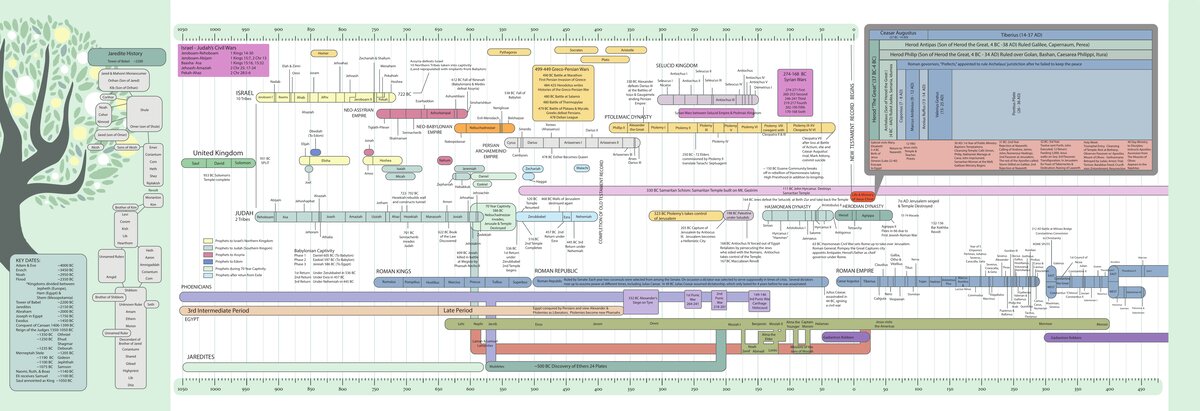
Tap to expand
Old Testament Timeline
From Creation through the Persian Period — tap the image to zoom, or download the full PDF.
Tap anywhere to close · Pinch to zoom