| Church Manuals | |
| Come Follow Me Manual — Week 30 | View |
| Scripture Helps: Old Testament | View |
| OT Seminary Teacher Manual | View |
| OT Institute Manual (Gen–2Sam) | View |
| Pearl of Great Price Manual | View |
| Scripture Reference | |
| Bible Dictionary | View |
| Topical Guide | View |
| Guide to the Scriptures | View |
| Church Media & Library | |
| Gospel for Kids (YouTube) | View |
| Bible Videos | View |
| Church Magazines | View |
| Gospel Library | View |
Week 30
Our Eyes Are upon Thee
2 Chronicles 14–20; 26; 30
July 20–26, 2026
5-Minute Overview
Week 30 asks where your weight actually rests when the multitude appears on the horizon. Jehoshaphat's deliverance defines the theme — 'the battle is not yours, but God's… stand ye still, and see the salvation of the Lord' — while Asa's drift from trust and Uzziah's God-given strength curdling into pride mark the warnings. The study guide traces six Hebrew words that carry the week: darash (to seek) and sha'an (to lean), chazaq (to be strong) and gavah (to be lifted up), and the pair that names the rescue and its reward, yeshuah (salvation) and simchah (joy).
Official Church Resources
OFFICIAL CHURCH RESOURCES▶
CHURCH MEDIA FOR FAMILIES▶
▶ Video Commentary
VIDEO COMMENTARY (8 videos)
▼
 i
iFinding Christ (John Hilton III)
 i
iLynne Hilton Wilson
 i
iFollow Him - Part 1
 i
iFollow Him - Part 2
 i
iScripture Insights
 i
iTalking Scripture
 i
iTeaching With Power
 i
iDon't Miss This
Specialized Audiences
WOMEN’S PERSPECTIVES (2 videos)
▶
 i
iGrounded
 i
iOur Mothers Knew It
FAMILY & CHILDREN’S RESOURCES (2 videos)
▶
 i
iScripture Explorers
Reference & Study Materials

BIBLE PROJECT VIDEOS THIS WEEK (13 videos)
▶
Book overview + theme & word study videos relevant to this week’s reading.







ACADEMIC & SCHOLARLY SITES▶
MAPS & BIBLICAL LOCATIONS▶
JEWISH & SCHOLARLY RESOURCES▶
First, a Word About Where We Are
▶︎
If this week feels like a jump, it is — and it helps to name it before we start.
Last week we read 2 Kings 16–25 and watched everything end: Jerusalem burned, the temple leveled, Judah marched to Babylon. This week does not pick up after that. It doubles back and retells much of the same monarchy — but from an entirely different vantage point. This week's lesson is framed around 1–2 Chronicles as a whole, a book written later, for the community that came back from that exile and rebuilt. Same kings, different question. Kings asks why did we lose the temple? Chronicles asks what still holds, now that we have it again?
That is why Asa and Jehoshaphat, whom Kings passes over quickly, get whole chapters here — and why Uzziah's leprosy finally gets a reason attached to it.
In the lesson material we never even open First Chronicles, and we read only a handful of chapters from Second Chronicles. Much of what we do read retraces ground we already covered in Kings, now filled in with the Chronicler's own added detail. Before our stretch of Second Chronicles, the book opens with nine chapters of genealogy beginning with one word, "Adam" (1 Chronicles 1:1); then David — not the David of Bathsheba, but the David who brings the ark to Jerusalem and spends his last years preparing a temple he will never build; then Solomon building it; then the kingdom splitting. Our reading skips 2 Chronicles 21–25, where the line of David nearly ends (that saga is reassembled in The Hidden King), and 27–29 — including the chapter that makes our last one possible: Hezekiah "opened the doors of the house of the LORD, and repaired them" (29:3). The Passover of chapter 30 happens because the temple in chapter 29 was reopened.
And after us, Chronicles ends where Kings could not — not in ashes, but with Cyrus telling the exiles to go home and rebuild (36:22–23). Keep that ending in view; it is the whole reason this book sounds the way it does.
A Letter to Fellow Students
▶︎
This week gives you four kings and one question: when the crisis comes, on whom will you lean?
It opens with Asa, and Asa opens well. An army under Zerah comes at Judah in numbers the text renders as "a thousand thousand" — a figure meant to feel hopeless rather than counted — and Asa prays one of the great prayers of the Old Testament: "Lord, it is nothing with thee to help, whether with many, or with them that have no power: help us, O Lord our God; for we rest on thee" (14:11). We rest on thee. The Hebrew is sha'an (שָׁעַן) — not a feeling, but a load-bearing act, the way you lean your weight against a wall you trust to hold. The invaders are routed. Coming home, Asa meets the prophet Azariah, who states the principle the whole week will be measured by: "The Lord is with you, while ye be with him; and if ye seek him, he will be found of you; but if ye forsake him, he will forsake you" (15:2).
And then Asa's arc bends, and it is the most instructive bend in the reading. When Baasha blockades Ramah, Asa does not pray. He empties the temple treasury and hires Syria to break the siege (16:2–3). It works — militarily, it works. And it is still counted a failure, because the seer Hanani names what actually happened: "Because thou hast relied on the king of Syria, and not relied on the Lord thy God" (16:7). The same verb. Sha'an again. Asa never stopped believing in God; he shifted his weight. That is what the word exposes — you can tell what a person truly relies on by what they reach for when the wall goes up. The final note is almost unbearable in its symmetry: diseased in his feet, "yet in his disease he sought not to the Lord, but to the physicians" (16:12). The verb of his greatness — seek — is precisely what he stops doing.
Then chapter 20, and the reason this week has its name. A coalition of Moab, Ammon, and Mount Seir marches on Judah, and Jehoshaphat does not muster first — he seeks first. He proclaims a fast, gathers the nation, and prays himself right down to the bottom of his own resources: "we have no might against this great company that cometh against us; neither know we what to do: but our eyes are upon thee" (20:12). That is the most honest sentence a person can pray. The answer comes through a Levite singer and it redraws the entire map of the conflict: "the battle is not yours, but God's" (20:15). "Ye shall not need to fight in this battle: set yourselves, stand ye still, and see the salvation of the Lord with you" (20:17). The word for salvation is yeshuah (יְשׁוּעָה) — the noun behind the name Yeshua — and it lands at the exact moment Judah is told not to fight. Salvation, here, is defined as something Judah watches God do.
But do not mistake "stand ye still" for doing nothing. Judah still marched out the next morning. Jehoshaphat still sent the choir ahead of the army, singing "for his mercy endureth for ever" — and it was as they began to sing that the ambushments were set and the enemy destroyed itself (20:21–24). Active stillness: doing exactly what God asks, and refusing to seize what only He can accomplish.
Then Uzziah, who is the week's most sobering figure precisely because he began by seeking God. "He sought God in the days of Zechariah… and as long as he sought the Lord, God made him to prosper" (26:5). The prosperity is spectacular — towers, cisterns, armies, engines of war — and the Chronicler's summary is surgical about both its source and its danger: "he was marvellously helped, till he was strong" (26:15). And then the hinge, in the very next verse: "But when he was strong, his heart was lifted up to his destruction" (26:16). Chazaq (חָזַק), to be strong — and gavah (גָּבַהּ), to be lifted up. Strength first, pride second, transgression third. He walks into the sanctuary to burn incense that was never his to burn, and eighty priests tell a king the truest thing anyone says to him all week: "It appertaineth not unto thee" (26:18). Pride, in the Chronicler's telling, is a refusal to stay where God placed you. It is the exact opposite of stand ye still.
And then the week ends in mercy, which is where Chronicles' hope always lives. Hezekiah reopens the temple and keeps a Passover, and a crowd arrives ritually unqualified and eats it "otherwise than it was written." He does not turn them away and he does not delay the feast. He prays: "The good Lord pardon every one that prepareth his heart to seek God… though he be not cleansed according to the purification of the sanctuary" (30:18–19). "And the Lord hearkened to Hezekiah, and healed the people" (30:20). The chapter that began in ruin ends in the greatest joy Jerusalem had known since Solomon (30:26) — simchah (שִׂמְחָה), the gladness of a people restored to right worship.
Four kings, one question. Seek the Lord, and stand still.
What's in This Week's Materials
▶︎
In the Study Guide
▶︎
The Study Guide reads all four reigns through the Chronicler's lens — a Second-Temple, worship-centered history written for a community rebuilding after exile:
- Asa's trust and Asa's drift (2 Chronicles 14–16) — "we rest on thee," the Zerah deliverance, Azariah's principle, then the Syrian alliance, the imprisoned prophet, and the physicians.
- Jehoshaphat's teaching program (2 Chronicles 17) — Levites sent through Judah carrying "the book of the law," a kingdom strengthened by a people taught.
- The Ahab alliance and Micaiah (2 Chronicles 18) — the entanglement that nearly kills him, and the prophet who would not say what the king wanted.
- Jehu's rebuke and judicial reform (2 Chronicles 19) — where Jehoshaphat responds not with Asa's rage but with reform.
- The battle that is God's (2 Chronicles 20) — the fast, the prayer, "our eyes are upon thee," the choir sent out ahead of the army, and the valley of Berachah.
- Uzziah's rise and fall (2 Chronicles 26) — "marvellously helped, till he was strong," and the leprosy that followed the censer.
- Hezekiah's Passover (2 Chronicles 30) — the second-month timing, the invitation to the northern remnant, and mercy for the prepared heart.
The word studies name the week in six Hebrew terms: darash (דָּרַשׁ, "to seek") and sha'an (שָׁעַן, "to lean, to rest one's weight on"); chazaq (חָזַק, "to be strong") and gavah (גָּבַהּ, "to be lifted up"); and the pair that names the rescue and its reward — yeshuah (יְשׁוּעָה, "salvation") and simchah (שִׂמְחָה, "joy").
The Jewish Perspective section brings the rabbis into the room: the Talmud's debate over whether Hezekiah was even allowed to bend the calendar (Pesachim 56a), Uzziah's leprosy read as a punishment measured to arrogance (Arakhin 16a), Asa's gout (Sotah 10a), and a remarkable observation about Jehoshaphat's victory song — that it drops the words "for He is good," because heaven does not celebrate the destruction of the wicked (Sanhedrin 39b).
In the Resources Tab
▶︎
The Resources tab gathers this week's thirteen video commentaries — from Finding Christ (John Hilton III), Lynne Hilton Wilson, followHIM, Scripture Insights, Talking Scripture, Teaching With Power, and Don't Miss This, to the women's perspectives of Grounded and Our Mothers Knew It, the children's Scripture Explorers and Line Upon Line, and the Bible Project's 1–2 Chronicles overview — alongside the official Church study helps, maps, and Jewish/scholarly sources. Tap the ⓘ on any video thumbnail for a short description of what that commentary covers before you decide to watch.
The Companion Article
▶︎
The reading skips 2 Chronicles 21–25, and one of scripture's most cinematic stories is hiding in that gap. The Hidden King: Jehu, Athaliah, and the Rescue of David's Line reassembles it in order from pieces scattered across two books — Athaliah's murderous grab for the throne of David, and the infant Joash hidden six years inside the temple. It is the Davidic line surviving by a thread, which is exactly the thread Chronicles cares most about.
Two Kings, One Verb: What Sha'an Exposes
▶︎
Put Asa at chapter 14 beside Asa at chapter 16 and the week interprets itself — because the text uses the same word for both.
At Zerah's invasion, Asa "rests on" God: sha'an. At Ramah, he "relies on" the king of Syria: sha'an again. The verb never changes. The object does. And that is the whole point — leaning is not optional. Everyone leans. You are always resting your weight on something; the only question is what.
What makes Asa's second choice so recognizable is that it was reasonable. Syria was a real army. The treasury was a real asset. The blockade was a real threat, and the alliance really did lift it. Nothing about it looks like apostasy from the outside. Hanani's rebuke assumes something harder than that: to lean on Syria is to stop leaning on God. The two are not additive. And the tragedy Hanani names is not that the plan failed but that it succeeded and cost Judah a greater victory God had prepared.
Then verse 9 turns the whole week around, because it reverses the direction of seeking: "For the eyes of the Lord run to and fro throughout the whole earth, to shew himself strong in the behalf of them whose heart is perfect toward him" (16:9). We are not the only ones searching. God is scanning the earth for someone to be strong for. Asa's failure is that when that searching eye passed over Judah, it found a divided heart leaning on Damascus.
One commentator this week put the question in a form worth keeping: a "trust matrix" — not are you devout, but in which specific areas of your life have you quietly shifted your weight onto something you can manage? Asa was devout to the end. He simply stopped leaning.
"Stand Ye Still" Is Not "Do Nothing"
▶︎
The most misread phrase of the week is its title.
"Stand ye still, and see the salvation of the Lord" (20:17) is a deliberate echo of Moses at the Red Sea: "stand still, and see the salvation of the Lord" (Exodus 14:13). Jehoshaphat is being told to stand exactly where Israel stood at the sea. And the temptation is to hear it as passivity — as though faith meant waiting for God while doing nothing.
But look at what Judah actually did. They fasted. They gathered. They prayed. They listened to a prophet. They rose early and marched out into the wilderness of Tekoa. They organized a choir and sent it in front of the army. That is an enormous amount of doing. What they did not do was fight — because the fighting was the one part that was not theirs.
That is the distinction the week is built on. Standing still means doing precisely what God commands while refusing to seize what only He can accomplish. It is not the absence of action; it is the absence of grasping. Which is exactly why Uzziah is the anti-Jehoshaphat: his sin is not that he did too little but that he reached for something that "appertaineth not unto thee" (26:18). Jehoshaphat's army held its sword while God fought. Uzziah's hand took a censer that was never his. One king stood still. The other would not stay in his place.
And notice when the deliverance came: "when they began to sing and to praise, the Lord set ambushments" (20:22). Not after the victory — before a single blow was struck. The praise came first, while the outcome was still unknown. That is the hardest kind of worship there is, and it is the kind this chapter rewards.
The Danger of Being Helped
▶︎
Uzziah's epitaph is seven words long: "he was marvellously helped, till he was strong" (26:15).
Read it slowly, because the sentence contains its own warning. Every bit of that strength was given. He was helped — marvellously, the text says, meaning the help was obvious, the kind you could not mistake for your own competence. And then: "when he was strong, his heart was lifted up to his destruction" (26:16).
The Chronicler is not against strength. Asa is strengthened; Jehoshaphat is strengthened; being made strong is a gift that fuels reform and courage. What Chronicles warns is that strength is spiritually dangerous precisely because it feels like our own. Nobody is tempted to take credit for a rescue. Everybody is tempted to take credit for a résumé. Adversity drives us to our knees; success tempts us to our feet — and then into rooms we were never given the keys to.
This is why the week's word for pride is a word about height. Gavah means to be high, lofty, raised up. Applied to a tower it is neutral. Applied to a heart it is the Bible's central image for pride — a self elevated above its proper station. And Uzziah's sin is literally that: he ascends into a place he does not belong. The inward elevation produces the outward trespass. The heart went up before the man did.
Mormon watched the same thing happen to a whole civilization: in prosperity people grow proud, "being lifted up in their hearts, because of their exceedingly great riches" (Alma 45:24). Ammon arrives at the same conviction independently — a shared idea, not a borrowed one, since Chronicles was written back in the old world after Lehi had already left Jerusalem: "I do not boast in my own strength, nor in my own wisdom… but I will boast of my God, for in his strength I can do all things" (Alma 26:11–12). Strength is safe only when it is boasted of as God's. The safest strong person in these chapters is the one who still remembers he "was marvellously helped."
"Nevertheless, There Are Good Things Found in Thee"
▶︎
There is a line in this week that deserves more attention than it usually gets, and one of this week's commentators built her whole episode around it.
Jehoshaphat comes home from nearly dying in Ahab's war, and the prophet Jehu meets him with a hard word: "Shouldest thou help the ungodly, and love them that hate the Lord? therefore is wrath upon thee from before the Lord" (19:2). That is a real rebuke, and it is deserved. But the oracle does not stop there. The very next verse says: "Nevertheless there are good things found in thee, in that thou hast taken away the groves out of the land, and hast prepared thine heart to seek God" (19:3).
God names the failure and names the good, in the same breath, to the same man. He does not pretend the alliance was fine. He also does not let the alliance be the last word about who Jehoshaphat is. And what He credits him with is the very thing this week measures everyone by: thou hast prepared thine heart to seek God — darash, again.
Set that next to Asa, and you see two responses to the same kind of rebuke. Asa is confronted and is enraged, and jails the prophet (16:10). Jehoshaphat is confronted and reforms — he goes out among the people and appoints judges with a charge that grounds all justice in God (19:5–7). The rebuke was similar. The response made the difference. That is worth sitting with: the week suggests your reaction to correction may matter more than the misstep that earned it.
Mercy at the Altar: The Prepared Heart
▶︎
Hezekiah's Passover is where the whole week comes to rest, and it is the Chronicler's theology in one scene.
The situation is a mess. The priests have not sanctified themselves; the people have not gathered; the feast cannot be kept at the appointed time. So Hezekiah moves it to the second month — an accommodation the Law itself allowed for individuals who were unclean or far away (Numbers 9:10–11), applied here to an entire nation. The rabbis noticed and argued about it: a baraita in Pesachim 56a lists the intercalation among the acts of Hezekiah that the Sages of his generation did not concede to him. The calendar, some held, is not a king's to bend, even for a good cause.
Then it gets messier. A crowd — especially from the shattered north — arrives and eats the Passover "otherwise than it was written" (30:18). And here Hezekiah does the thing that makes this chapter unforgettable. He does not turn them away, and he does not stop the feast. He prays that God will honor the prepared heart over the perfect procedure: "The good Lord pardon every one that prepareth his heart to seek God… though he be not cleansed according to the purification of the sanctuary" (30:18–19).
And God ratifies it: "the Lord hearkened to Hezekiah, and healed the people" (30:20).
This is not a lowering of holiness. It is a right ordering of it. The sanctuary's purpose was always to bring hearts to God; God will not let the technicality defeat the intent when the heart is genuinely turned. The rabbis may have hesitated over the mechanism; the Chronicler insists heaven came down on the side of the prepared heart. It is the same principle Jesus names — "The sabbath was made for man, and not man for the sabbath" (Mark 2:27) — and the same one the Restoration states plainly: the Lord "will judge all men according to their works, according to the desire of their hearts" (D&C 137:9).
Notice, too, who was invited. The letters went to Ephraim and Manasseh — the remnant of a kingdom that had collapsed, people with every reason to believe they were disqualified. Some laughed the messengers to scorn. But others "humbled themselves, and came to Jerusalem" (30:11). And the joy that followed was the greatest since Solomon (30:26). Simchah is not private happiness in Chronicles; it is the corporate gladness of a people restored to right worship. Joy is what darash produces once God has answered.
The Invitation
▶︎
Week 30 asks the oldest question in the plainest possible form: when the multitude appears on the horizon, where does your weight go?
Not in the abstract — in the specific. Whether you pray first or muster first. Whether, like Asa, you have a solution so reasonable that you never notice you stopped leaning. Whether you can hear a rebuke and reform like Jehoshaphat instead of jailing the prophet. Whether the strength God gave you has quietly become strength you take credit for — and whether you are still willing to stay in the place He assigned rather than reach for the censer. And whether, when someone arrives at your gate unqualified and unprepared, you would pray Hezekiah's prayer over them or send them home.
The Chronicler's verdict on four reigns is one measuring line: seeking God brings strength and rest; leaning on anything else — foreign armies, personal power, ritual technicality, or your own lifted-up heart — brings collapse. Jehoshaphat won by standing still and singing. Asa lost by hiring Syria. Uzziah fell the moment his God-given strength became self-exaltation. Hezekiah's mercy healed a people who prepared their hearts to seek Him.
The battles in these chapters were never really about numbers. And the promise attached to the week's central verb has not expired: "if ye seek him, he will be found of you" (15:2).
Set yourselves. Stand ye still. And see the salvation of the Lord.
Weekly Insights — Week 30 | CFM Corner | OT 2026
Sources: Week 30 Study Guide (overview, historical/cultural context, key passages, word studies — darash, sha'an, yeshuah, chazaq, gavah, simchah — and Jewish Perspective) and the Week 30 video distillations (Finding Christ/John Hilton III, Lynne Hilton Wilson, followHIM Pt. 1–2 with Heather Farrell, Scripture Insights, Talking Scripture Ep 381, Teaching With Power, Don't Miss This, Grounded, Our Mothers Knew It, Scripture Explorers, BibleProject). All scripture quoted from the KJV and verified against the scripture database; rabbinic citations verified against the Sacred Texts vault (Pesachim 56a, Arakhin 16a, Sotah 10a, Sanhedrin 39b). Video commentary described only from processed transcript distillations in Video_Resources/Distilled/; auto-generated cross-references in those distillations that did not hold up against the text were excluded (see VIDEO_COMMENTARY_SUMMARY_Week30.md, "Distillation caveats").
Week 30
2 Chronicles 14–20; 26; 30 — Overview
"Stand Ye Still"
1. Week 30: Overview
This week's reading gathers four kings of Judah — Asa, Jehoshaphat, Uzziah, and Hezekiah — and reads their reigns through the distinctive lens of the Chronicler. Second Chronicles is not simply a retelling of Kings; it is a Second-Temple, worship-centered history written to a community rebuilding after exile, and it presses one question relentlessly: when the crisis comes, on whom will you lean? The word that runs like a thread through these chapters is darash — "to seek." Kings who seek the Lord are strengthened and given rest; kings who lean on their own strength, on foreign alliances, or on their own pride are broken. The pattern is stated outright by the prophet Azariah: "The Lord is with you, while ye be with him; and if ye seek him, he will be found of you; but if ye forsake him, he will forsake you" (2 Chronicles 15:2).
The theme verse comes from the reading's dramatic center. When a vast coalition of Moab, Ammon, and their allies marches on Judah, King Jehoshaphat does not muster first — he seeks first. He proclaims a fast, gathers the nation, and prays a prayer that ends in disarming honesty: "we have no might against this great company that cometh against us; neither know we what to do: but our eyes are upon thee" (2 Chronicles 20:12). The answer comes through a Levite singer: "Be not afraid nor dismayed by reason of this great multitude; for the battle is not yours, but God's" (20:15). "Ye shall not need to fight in this battle: set yourselves, stand ye still, and see the salvation of the Lord" (20:17). Judah wins the battle by sending its choir out ahead of its army, singing "for his mercy endureth for ever" — and the enemy destroys itself (20:21–24). It is the purest picture in scripture of what it means to stand still and let God fight.
But the reading is honest about how fragile trust can be. Asa begins by casting himself entirely on God against a million-man army — "help us, O Lord our God; for we rest on thee" (14:11) — and ends his reign leaning on the king of Syria instead of God, imprisoning the prophet who rebukes him, and, when disease strikes his feet, seeking "not to the Lord, but to the physicians" (16:12). Uzziah is "marvellously helped, till he was strong" — and then "when he was strong, his heart was lifted up to his destruction," and the king who prospered by seeking God is struck with leprosy for seizing the priests' incense (26:15–16). The same soul can start out trusting God and end up trusting itself; strength given by God can curdle into pride against God.
The reading closes on a gentler note. Hezekiah reopens the temple and keeps a great Passover, inviting even the scattered remnant of the northern kingdom to "turn again unto the Lord" (30:6). When many arrive ritually unprepared and eat the Passover "otherwise than it was written," Hezekiah prays not for judgment but for mercy: "The good Lord pardon every one that prepareth his heart to seek God... though he be not cleansed according to the purification of the sanctuary" (30:18–19). "And the Lord hearkened to Hezekiah, and healed the people" (30:20). The chapter that began in ruin ends in the greatest joy Jerusalem had known since Solomon (30:26) — because God honors the prepared heart over the perfect procedure.
For Latter-day Saint readers, these chapters are a sustained meditation on the counsel to trust in the Lord rather than "the arm of flesh" (2 Nephi 4:34; cf. Jeremiah 17:5), on the pride cycle that runs through the Book of Mormon, and on a God who "looketh on the heart" (1 Samuel 16:7) and judges "according to the desire of their hearts" (D&C 137:9). Four kings, one question: seek the Lord, and stand still.
The lesson is framed around 1–2 Chronicles as a whole, but assigns only nine of its sixty-five chapters. This table maps the entire book so the jumps make sense: a ✓ marks what this week reads, and every skipped block notes why it was passed over — most of it was already read in the Samuel–Kings account — and any significant material worth knowing. The assigned blocks (the four kings) are walked through in detail below.
| Chapters | Content | This week? | Why skipped / what's notable |
|---|---|---|---|
| 1 Chronicles 1–9 | Genealogies from Adam down to the post-exilic community | — | Unique to Chronicles — no Kings parallel. For a people rebuilding after exile, the genealogy is the argument: they are still the covenant nation, traced back to "Adam" (1:1). |
| 1 Chronicles 10 | The death of Saul | — | Parallels 1 Samuel 31; a one-chapter preface to David. |
| 1 Chronicles 11–29 | David: the ark brought to Jerusalem, the Davidic covenant, and preparations for the temple | — | The David story was read in the Samuel–Kings account (Weeks 25–26). Chronicles omits his sins (Bathsheba, Absalom) and foregrounds the David who organized worship. |
| 2 Chronicles 1–9 | Solomon: wisdom, the temple built and dedicated, the queen of Sheba | — | Solomon's reign was Week 26 (1 Kings 3; 6–9; 11). |
| 2 Chronicles 10–12 | Rehoboam; the kingdom divides; Shishak of Egypt invades | — | The division of the kingdom was Week 27 (1 Kings 12–13). |
| 2 Chronicles 13 | Abijah's reign and war with Jeroboam | — | Brief; brings the narrative to Asa's door. |
| 2 Chronicles 14–16 | Asa — reforms and the victory over Zerah; Azariah's prophecy and covenant renewal; then the Syrian alliance, Hanani's rebuke, and Asa's fatal turn to physicians | ✓ Yes | This week. |
| 2 Chronicles 17–20 | Jehoshaphat — the Levites sent to teach the law; the Ahab alliance and Jehu's rebuke; judicial reform; the Moab–Ammon crisis and "the battle is not yours, but God's" | ✓ Yes | This week. |
| 2 Chronicles 21–25 | Jehoram, Ahaziah, Athaliah, Joash, Amaziah | — | Parallels 2 Kings 8–14 — a stretch CFM 2026 does not assign. Significant: Athaliah's slaughter of the royal seed and the infant Joash hidden six years in the temple — David's line survives by a thread. Reassembled in the Week 28 supplement The Hidden King. |
| 2 Chronicles 26 | Uzziah — strong "as long as he sought the Lord," then pride, the unlawful incense, and leprosy | ✓ Yes | This week. |
| 2 Chronicles 27–28 | Jotham; Ahaz's idolatry | — | Ahaz was Week 29 (2 Kings 16). |
| 2 Chronicles 29 | Hezekiah cleanses and reopens the temple | — | Not directly assigned, but the hinge for this week: Hezekiah "opened the doors of the house of the LORD" (29:3) — and that reopening is what makes the assigned Passover of chapter 30 possible. Our text picks up the moment the temple is back in order. |
| 2 Chronicles 30 | Hezekiah's Passover — the invitation to the northern remnant; mercy for the unprepared heart | ✓ Yes | This week. |
| 2 Chronicles 31–32 | Hezekiah's further reforms; Sennacherib's invasion; Hezekiah's illness | — | Parallels 2 Kings 18–20 — Week 29 (last week). |
| 2 Chronicles 33 | Manasseh and Amon | — | Parallels 2 Kings 21. Significant: Chronicles alone records Manasseh's captivity, humbling, and repentance (33:12–13) — the account in Kings has none of it. |
| 2 Chronicles 34–35 | Josiah's reforms, the found book of the law, and his death at Megiddo | — | Parallels 2 Kings 22–23 — Week 29. |
| 2 Chronicles 36 | The last kings; Jerusalem falls; the temple burned; Cyrus's decree to rebuild | — | Parallels 2 Kings 24–25 — Week 29. Significant: Chronicles ends not in exile but with Cyrus freeing the captives to go home and rebuild the temple (36:22–23) — a door left open. |
Last week (2 Kings 16–25) carried the story all the way to its end: Jerusalem burned, the temple leveled, Judah in Babylon. This week does not move forward. It doubles back and retells much of that same monarchy from a completely different vantage — a Second-Temple community that has returned from exile and rebuilt, asking what in their history still holds. **Kings asks why did we lose the temple? Chronicles asks *what still stands, now that we have it back?*** That is why Asa and Jehoshaphat, whom Kings treats briefly, are given whole chapters here, and why Uzziah's leprosy finally gets a reason attached to it.
The outline above shows the whole book so nothing arrives from nowhere. Two threads especially are worth carrying into the reading. First, the chapter just before our last one — Hezekiah's reopening of the temple (29:3) — is precisely what makes the Passover of chapter 30 possible; our text begins the moment the sanctuary is back in order. And second, the book's ending: where Kings closes in ashes, Chronicles closes with Cyrus's decree freeing the exiles to rebuild (36:22–23). A door left open — which is the whole reason this book sounds the way it does.
Asa: From "We Rest on Thee" to "He Sought Not to the Lord" (2 Chronicles 14–16) — assigned
Asa's reign is the reading's clearest arc from trust to self-reliance. He begins well: he "did that which was good and right in the eyes of the Lord" (14:2), tears out the foreign altars, high places, images, and groves, and commands Judah "to seek the Lord God of their fathers, and to do the law" (14:4). Because the land has rest, he builds and fortifies — a Chronicler's signature: seeking God produces rest ("the Lord had given him rest," 14:6; "the Lord gave them rest round about," 15:15; cf. 20:30).
The test arrives in the form of Zerah the Ethiopian and an army of overwhelming size (14:9). Asa's response is a model prayer of dependence: "Lord, it is nothing with thee to help, whether with many, or with them that have no power: help us, O Lord our God; for we rest on thee, and in thy name we go against this multitude" (14:11). The Lord routs the invaders. Coming home, Asa is met by the prophet Azariah, whose words become the reading's governing principle: "The Lord is with you, while ye be with him; and if ye seek him, he will be found of you; but if ye forsake him, he will forsake you" (15:2). Asa "took courage," renews the altar and the covenant, gathers even defectors from the north who see "that the Lord his God was with him" (15:9), and the people "sware unto the Lord with a loud voice" (15:14). He even removes his own grandmother from her position as queen mother for making an idol (15:16). For a generation, there is peace.
Then the arc bends. When Baasha of Israel fortifies Ramah to blockade Judah, Asa does not pray — he empties the temple and palace treasuries to hire Ben-hadad of Syria to break the siege (16:2–3). It works, militarily. But the seer Hanani delivers the verdict that reframes the whole story: "Because thou hast relied on the king of Syria, and not relied on the Lord thy God, therefore is the host of the king of Syria escaped out of thine hand" (16:7). Then the line that names the week's theme in the negative: "For the eyes of the Lord run to and fro throughout the whole earth, to shew himself strong in the behalf of them whose heart is perfect toward him. Herein thou hast done foolishly" (16:9). The same king who once cast himself entirely on God now leans on a pagan army — and when Hanani says so, Asa is enraged and imprisons him (16:10). The final note is tragic in its symmetry: diseased in his feet, "yet in his disease he sought not to the Lord, but to the physicians" (16:12). The verb of his greatness — seek — is exactly what he stops doing.
Jehoshaphat: Teaching, Alliance, and the Battle That Is God's (2 Chronicles 17–20) — assigned
Jehoshaphat is the reading's most developed portrait, and the Chronicler frames him as a king who institutionalizes the seeking of God. He "sought to the Lord God of his father" (17:4), and the Lord "stablished the kingdom in his hand" (17:5). His most distinctive act is educational: in the third year of his reign he sends princes, Levites, and priests throughout the cities of Judah, and "they taught in Judah, and had the book of the law of the Lord with them" (17:9). A kingdom is strengthened not only by walls but by a people taught the word.
Jehoshaphat's great flaw is entanglement. He "joined affinity with Ahab" (18:1) and nearly dies fighting Ahab's war at Ramoth-gilead, saved only when "Jehoshaphat cried out, and the Lord helped him" (18:31). Returning home, he is met by another prophet, Jehu son of Hanani, with a rebuke that echoes his father's alliance sin: "Shouldest thou help the ungodly, and love them that hate the Lord? therefore is wrath upon thee from before the Lord" (19:2). Yet Jehoshaphat responds not with Asa's rage but with reform. He appoints judges across the land with a charge that grounds all justice in God: "Take heed what ye do: for ye judge not for man, but for the Lord... let the fear of the Lord be upon you" (19:6–7).
Then comes chapter 20, the theological heart of the week. A vast coalition of Moab, Ammon, and Mount Seir advances on Judah. Jehoshaphat "feared, and set himself to seek the Lord, and proclaimed a fast throughout all Judah" (20:3). His public prayer models covenant dependence — recalling God's promises, laying the crisis before Him, and ending in the honest admission that becomes the posture of faith: "we have no might against this great company that cometh against us; neither know we what to do: but our eyes are upon thee" (20:12). The Spirit falls on Jahaziel, a Levite of the sons of Asaph, who delivers the oracle that names the week: "Be not afraid nor dismayed by reason of this great multitude; for the battle is not yours, but God's" (20:15); "Ye shall not need to fight in this battle: set yourselves, stand ye still, and see the salvation of the Lord with you" (20:17). Judah worships. And then, in one of scripture's most striking military scenes, Jehoshaphat sends the temple singers out ahead of the soldiers, praising "the Lord... for his mercy endureth for ever" — and "when they began to sing and to praise, the Lord set ambushments" against the enemy, who annihilate one another (20:21–23). Judah gathers spoil for three days and assembles in a valley they name Berachah, "blessing," to bless the Lord (20:26). The realm is quiet, "for his God gave him rest round about" (20:30). The battle was won by worship, not weapons.
Uzziah: "Marvellously Helped, Till He Was Strong" (2 Chronicles 26) — assigned
Uzziah's reign compresses the pride cycle into a single life. He begins at sixteen and reigns fifty-two years, and "he sought God in the days of Zechariah... and as long as he sought the Lord, God made him to prosper" (26:5). The prosperity is spectacular: victories over the Philistines and Arabians, fortified towers, cisterns, a great army, and even engineers who devise "engines... to shoot arrows and great stones" from the towers (26:15). The Chronicler's summary is precise about the source and the danger: "his name spread far abroad; for he was marvellously helped, till he was strong."
Then the hinge: "But when he was strong, his heart was lifted up to his destruction: for he transgressed against the Lord his God, and went into the temple of the Lord to burn incense upon the altar of incense" (26:16). Eighty priests confront him — "It appertaineth not unto thee, Uzziah, to burn incense unto the Lord, but to the priests... go out of the sanctuary; for thou hast trespassed" (26:18). Uzziah rages, censer in hand — and leprosy rises in his forehead. He is thrust out, "a leper unto the day of his death, and dwelt in a several house" (26:21), cut off from the very temple he had presumed to enter. The help that made him strong was God's; the strength he claimed as his own destroyed him. It is the exact inversion of "stand ye still": a king who would not stay in his place.
Hezekiah's Passover: Mercy for the Prepared Heart (2 Chronicles 30) — assigned
The reading ends where Chronicles' hope lives — in the restored worship of the temple. Hezekiah reopens and cleanses the house of God and summons all Israel to keep the Passover. Because the priests are not yet sanctified and the people not yet gathered in the first month, he keeps it in the second — an accommodation for the sake of the whole (30:2–3). His invitation reaches into the shattered northern kingdom: couriers carry letters to Ephraim and Manasseh urging, "turn again unto the Lord God of Abraham, Isaac, and Israel, and he will return to the remnant of you" (30:6). Some laugh the messengers to scorn; but others "humbled themselves, and came to Jerusalem" (30:11), and in Judah "the hand of God was to give them one heart" (30:12).
The Passover reveals the Chronicler's — and Hezekiah's — theology of mercy. A great many worshippers, especially from the north, "had not cleansed themselves, yet did they eat the passover otherwise than it was written" (30:18). Rather than turn them away, Hezekiah prays: "The good Lord pardon every one that prepareth his heart to seek God, the Lord God of his fathers, though he be not cleansed according to the purification of the sanctuary" (30:18–19). The response is one of the tenderest lines in Chronicles: "And the Lord hearkened to Hezekiah, and healed the people" (30:20). The joy is so great that the assembly keeps another seven days, and "there was great joy in Jerusalem: for since the time of Solomon... there was not the like" (30:26). The book of Kings measures Hezekiah by his trust under siege; the Chronicler measures him by his mercy at the altar — and by a God who honors the prepared heart above the perfect procedure.
"Be not afraid nor dismayed by reason of this great multitude; for the battle is not yours, but God's... Ye shall not need to fight in this battle: set yourselves, stand ye still, and see the salvation of the Lord with you."
"For the eyes of the Lord run to and fro throughout the whole earth, to shew himself strong in the behalf of them whose heart is perfect toward him."
The Chronicler tells four reigns with one measuring line: seeking God brings strength and rest; leaning on anything else — foreign armies, personal power, ritual technicality, or one's own pride — brings collapse. Jehoshaphat wins by standing still and singing; Asa loses by hiring Syria; Uzziah falls the moment his God-given strength becomes self-exaltation; Hezekiah's mercy heals a people who prepared their hearts to seek God. The battles of these chapters are never really about numbers. They are about where the heart leans when the multitude appears on the horizon.
1. ASA'S TRUST (14–15)
   "We rest on thee" — a million-man army routed; Azariah's principle: seek and He is found
        ↓
2. ASA'S SELF-RELIANCE (16)
   Hires Syria instead of praying; jails the prophet; seeks physicians, not God
        ↓
3. JEHOSHAPHAT TEACHES AND STUMBLES (17–19)
   Levites carry the law through Judah; the Ahab alliance nearly kills him; judicial reform follows
        ↓
4. THE BATTLE THAT IS GOD'S (20)
   Fast, prayer, "our eyes are upon thee"; the choir marches first; the enemy destroys itself
        ↓
5. UZZIAH'S RISE AND PRIDE (26)
   "Marvellously helped, till he was strong"; seizes the incense; struck with leprosy
        ↓
6. HEZEKIAH'S PASSOVER (30)
The remnant invited; mercy for the unprepared heart; the greatest joy since Solomon- It defines the difference between seeking God and using God. Asa "rests on" God against Zerah, then treats the temple treasury as a war chest to buy Syria. The same resources, the same king — but the heart has shifted from dependence to management. The reading asks where our own trust actually rests when a real threat appears.
- It shows that the battle belongs to God — and what our part is. "Stand ye still" is not passivity; Judah still marched out, still assembled, still sang. But they went in worship, not in fear, and left the outcome to God. Faith is active stillness: doing what God asks and refusing to seize what only He can give.
- It warns that God-given strength can become pride. Uzziah is the reading's most sober figure precisely because he began by seeking God. Prosperity is dangerous in a way adversity is not: adversity drives us to our knees; success tempts us to our feet, into places that "appertain not" to us. Strength is safest when it stays in its place.
- It reveals a God who honors the prepared heart over the perfect procedure. Hezekiah's Passover is "otherwise than it was written," and God heals the people anyway, because they prepared their hearts to seek God. This is the Chronicler's mercy, and it anticipates the gospel principle that the Lord judges "according to the desire of their hearts" (D&C 137:9).
- It is the Book of Mormon's spiritual grammar in miniature. The cycle these kings enact — humility and seeking bring prosperity; prosperity breeds pride; pride brings downfall; downfall drives the remnant back to seek again — is the pride cycle that structures the Book of Mormon. To read Asa and Uzziah is to read Helaman and 3 Nephi in advance.
2. Week 30: Historical & Cultural Context
The most important context for this week is not a place but a perspective. First and Second Chronicles retell much of the same history as Samuel–Kings, but with a different purpose. The Old Testament Seminary Teacher Manual observes that the books were "compiled sometime after 537 B.C." — that is, for the community that had returned from Babylon — and that their writers "dwell with most satisfaction upon the ecclesiastical and religious aspects of the history, and the progress of temple worship in Jerusalem." That emphasis is unmistakable in the text itself: Chronicles foregrounds the temple, the Levites, the priesthood, music, and covenant worship, and reads the monarchy as a long lesson in one question — did this king seek the Lord, or not? Fittingly, the book closes with Cyrus's decree that the exiles return and rebuild the temple (2 Chronicles 36:22–23) — the very hope its temple-centered retelling serves. (The same manual notes we "do not know exactly who wrote or compiled" Chronicles; the traditional attribution to Ezra is just that — traditional.)
This is why the same kings look different here than in Kings. Chronicles reads history through a single principle — one the prophets state within the reading itself: "The Lord is with you, while ye be with him; and if ye seek him, he will be found of you; but if ye forsake him, he will forsake you" (15:2; cf. 16:9). Seeking God brings help, strength, and rest; forsaking Him brings defeat and disease, often swiftly and visibly. Biblical scholars call this the Chronicler's theology of "immediate retribution" (the term is Raymond B. Dillard's) — reward and punishment that "follow immediately on the heels of the precipitating events." It is the lens behind the Chronicler's editorial choices — and it has its limits, to be read alongside Job and the New Testament, where the righteous also suffer.
The Chronicler names his own sources. Unlike a modern narrator, he repeatedly cites written records: "the book of Jehu the son of Hanani" (20:34), and — strikingly — "the rest of the acts of Uzziah... did Isaiah the prophet, the son of Amoz, write" (26:22). Chronicles presents itself as a documented history drawn from prophetic records, not free composition.
Reading these chapters alongside Kings shows what the Chronicler chose to include that Kings omits — and the additions are the heart of the week:
- Asa's later failure and disease (16) — Kings praises Asa broadly; Chronicles adds Hanani's rebuke, the imprisonment of the prophet, and Asa's fatal turn to physicians.
- Jehoshaphat's teaching program and the Moab–Ammon deliverance (17; 20) — the Levites carrying the law through Judah, and the great "the battle is not yours, but God's" victory, are largely unique to Chronicles.
- Uzziah's pride and leprosy (26) — Kings notes only that Uzziah (Azariah) was a leper; Chronicles supplies the reason: his unlawful incense-offering.
- The mechanics of Hezekiah's Passover (30) — the second-month timing, the invitation to the north, and the prayer for the unclean are Chronicles' own.
For a teaching setting, the payoff is clear: the Chronicler is not repeating Kings but interpreting it — showing the inner spiritual logic (seek/forsake, humble/proud) beneath the political events.
These reigns unfold across the ninth and eighth centuries BC — with Asa's reign beginning in the late tenth century and Hezekiah's extending into the early seventh (by the standard Albright and Thiele chronologies) — in the southern kingdom of Judah, after the division of Solomon's kingdom and alongside the northern kingdom of Israel (whose Baal-tainted dynasty of Ahab appears in chapter 18). The geopolitical pressures visible in the reading are the ones that defined the period:
- Egypt/Cush to the south (Zerah's invasion, 14).
- Aram/Syria to the north (Asa's alliance with Ben-hadad, 16).
- The northern kingdom of Israel, whose alliance with Judah under Ahab nearly kills Jehoshaphat (18), and whose collapse to Assyria (the fall of Samaria, 722/721 BC) is the backdrop to Hezekiah's invitation to "the remnant" (30).
- Trans-Jordan neighbors — Moab, Ammon, and the peoples of Mount Seir/Edom — whose coalition attacks Jehoshaphat (20).
The Chronicler assumes the reader knows this larger political map; his interest is in how each king responded spiritually to the pressures it created.
Asa faces "Zerah the Ethiopian" (Hebrew Kushi, a Cushite) with an enormous force (14:9). The text does not identify Zerah further, and its round number ("a thousand thousand," a million) functions in the Hebrew idiom to convey an overwhelming, humanly hopeless multitude rather than a census figure. What the text does insist on is theological: the size of the army is exactly the point of Asa's prayer — "it is nothing with thee to help, whether with many, or with them that have no power" (14:11).
A striking feature of this week is how densely the prophetic voice is woven through it. Chronicles presents a steady stream of messengers sent to correct kings at their turning points:
- Azariah son of Oded meets Asa after victory with the covenant principle (15:1–7).
- Hanani the seer rebukes Asa for the Syrian alliance — and is imprisoned for it (16:7–10).
- Jehu son of Hanani rebukes Jehoshaphat for the Ahab alliance (19:2–3).
- Jahaziel, a Levite of the sons of Asaph, delivers the battle oracle (20:14–17).
- Eighty priests led by Azariah confront Uzziah in the sanctuary (26:17–18).
The pattern is a teaching point in itself: God consistently sends correction at the moment of a king's success or danger, and the king's response to the prophet — Asa's rage versus Jehoshaphat's reform — often matters more than the original misstep.
Uzziah's affliction (26:19–21) left a long shadow in Israel's memory. Scripture itself links his reign to a famous earthquake: Amos dates his prophecy "two years before the earthquake" in Uzziah's era (Amos 1:1), and Zechariah, centuries later, still measures terror against it — "ye shall flee, like as ye fled from before the earthquake in the days of Uzziah king of Judah" (Zechariah 14:5). These are scripture-internal anchors for how significant Uzziah's reign felt to later Israel.
Because he died a leper, Uzziah was buried apart from the other kings, "in the field of the burial which belonged to the kings; for they said, He is a leper" (26:23).
Two details of Hezekiah's Passover reward context. First, the second-month timing: Hezekiah keeps the feast in the second month because the priests were not yet sanctified and the people not yet gathered (30:2–3). This is not an arbitrary improvisation — the Law itself provided for a delayed, second-month Passover for those unable to keep it at the appointed time (Numbers 9:10–11). Hezekiah applies a provision meant for individuals to the whole nation, an act of pastoral flexibility grounded in the Torah, not against it.
Second, the invitation to the north: Hezekiah proclaims the feast "throughout all Israel, from Beer-sheba even to Dan" (30:5), and his couriers carry the letters into the territory of Ephraim and Manasseh (30:1, 10). This is poignant in its timing — the northern kingdom had fallen (or was falling) to Assyria, and Hezekiah reaches out to its scattered "remnant" (30:6) to gather them back to the temple. The Passover becomes an act of reunification, an attempt to reconstitute a covenant people around Jerusalem's altar after the north's collapse — which is exactly the kind of gathering-of-the-remnant the Chronicler's own post-exilic audience longed for.
For readers who want more historical background, these external resources open a window onto the world behind this week's reading — the kings of Judah, the neighboring peoples who pressed on their borders, and the empire whose shadow reaches the final chapter.
About these sources. These are respected general and interfaith reference works — the Jewish Virtual Library, the International Standard Bible Encyclopedia (ISBE), Livius, and the World History Encyclopedia — and not Latter-day Saint publications. They are valuable for history, geography, archaeology, and language, but they do not share this guide's covenant framing or its doctrinal conclusions. Read them for background, and weigh their interpretation against the scriptures and the words of latter-day prophets.
The kings of Judah
- Asa, Jehoshaphat, Uzziah, and Hezekiah — biographical entries for the four kings whose reigns this week traces (Jewish Virtual Library; International Standard Bible Encyclopedia).
Peoples and powers around Judah
- Nubia / Kush — the African kingdom behind "Zerah the Ethiopian," the Cushite whose overwhelming army Asa faced (2 Chronicles 14).
- Aramaeans and Damascus — the Syrian world of Ben-hadad, whom Asa hired to break Baasha's siege (2 Chronicles 16).
- Moab, Ammon, and the Edomites — the trans-Jordan coalition from Mount Seir that marched on Jehoshaphat (2 Chronicles 20).
- Assyria and the Kingdom of Israel — the northern kingdom and the empire that destroyed it (the fall of Samaria, 722/721 BC), the backdrop to Hezekiah's invitation to "the remnant" (2 Chronicles 30).
- Jerusalem — the temple city at the heart of every reign in the reading.
Go deeper on CFM Corner
- The Divided Kingdom — "The Deuteronomists' Lens" — our Field Guide on how the book of Kings was shaped, and why Chronicles retells these same reigns so differently.
Next file: 03_Key_Passages_Study.md
3. Week 30: Key Passages Study
The Text
"And Asa cried unto the Lord his God, and said, Lord, it is nothing with thee to help, whether with many, or with them that have no power: help us, O Lord our God; for we rest on thee, and in thy name we go against this multitude. O Lord, thou art our God; let not man prevail against thee." (14:11)
The Insight
Faced with Zerah's overwhelming army, Asa's prayer is a theology of dependence in three moves: God's power is indifferent to numbers ("whether with many, or with them that have no power"); the plea is bare need ("help us"); and the weight is placed entirely on God ("we rest on thee" — the verb sha'an, to lean; see Word Studies). The final line reframes the whole battle: it is not Judah versus Zerah but "man" versus God — "let not man prevail against thee." Asa is not asking God to join his fight; he is joining God's.
Latter-day Saint Connections
- 1 Nephi 4:1 — "he is mightier than all the earth, then why not mightier than Laban and his fifty?" Nephi reasons exactly as Asa prays: God's power does not scale to the size of the obstacle.
- D&C 3:1 — "The works, and the designs, and the purposes of God cannot be frustrated, neither can they come to naught." Asa's "let not man prevail against thee" is this doctrine in prayer form.
General Conference — Sheri L. Dew, "We Are Women of God" (October 1999): "A call to rely on the arm of the Lord rather than the arm of flesh." Dew names precisely the choice Asa made at the head of an outnumbered army — to lean on God's power, not human strength.
Study Questions
- Asa says God's help does not depend on numbers. Where are you counting numbers (resources, odds, support) instead of resting on God?
- What is the difference between asking God to bless your plan and joining His?
The Text
"And the Spirit of God came upon Azariah the son of Oded: and he went out to meet Asa, and said unto him... The Lord is with you, while ye be with him; and if ye seek him, he will be found of you; but if ye forsake him, he will forsake you." (15:1–2)
"Be ye strong therefore, and let not your hands be weak: for your work shall be rewarded." (15:7)
The Insight
This is the governing principle of the entire week — the standard by which the Chronicler measures every king. Note its symmetry: presence answers presence ("with you, while ye be with him"), and seeking is met with finding, but forsaking is met with forsaking. God's nearness is not arbitrary; it is covenantal and responsive. Verse 7's charge — "let not your hands be weak" — shows that seeking God is strengthening, not passive: Asa "took courage" from this word and launched a reformation (15:8; the verb chazaq, see Word Studies).
Latter-day Saint Connections
- D&C 88:63 — "Draw near unto me and I will draw near unto you; seek me diligently and ye shall find me." Azariah's promise, almost word for word.
- Moroni 10:4–5 — the pattern of seeking and finding by the power of the Holy Ghost.
General Conference — Elder J. Thomas Fyans, "Draw Near unto Me" (October 1985): "He then gives explicit directions on how we can find him: 'Seek me diligently and ye shall find me; ask, and ye shall receive; knock, and it shall be opened unto you.'" Azariah's promise to Asa — seek and be found — is the same standing invitation Fyans traces through Restoration scripture.
Study Questions
- Azariah frames God's presence as conditional on ours. How does that reframe seasons when God feels distant?
- Seeking God gave Asa courage to act. When has drawing near to God strengthened your hands for a hard task?
The Text
"Because thou hast relied on the king of Syria, and not relied on the Lord thy God, therefore is the host of the king of Syria escaped out of thine hand." (16:7)
"For the eyes of the Lord run to and fro throughout the whole earth, to shew himself strong in the behalf of them whose heart is perfect toward him. Herein thou hast done foolishly: therefore from henceforth thou shalt have wars." (16:9)
The Insight
Hanani's rebuke is the negative image of Passage 1. The same king who once "rested on" God now "relied on" (sha'an) Syria — and the tragedy is that the alliance worked militarily, yet still counts as failure, because it forfeited a greater victory God had prepared. Verse 9 reverses the usual direction of seeking: it is not only that we seek God, but that God's eyes "run to and fro throughout the whole earth" seeking hearts that are "perfect" (shalem, whole, wholly His) toward Him. God is actively looking for someone to "shew himself strong" for. Asa's failure is that, when God's eye passed over Judah, He found a divided heart leaning on Damascus.
Latter-day Saint Connections
- 2 Nephi 4:34 — "I will not put my trust in the arm of flesh." Asa is the case study in what happens when a covenant heart shifts its weight to the arm of flesh.
- D&C 64:22, 34 — "the Lord requireth the heart and a willing mind." A "perfect heart toward him" is exactly what God's searching eyes look for.
General Conference — President Dallin H. Oaks, "Trust in the Lord" (October 2019): "'O Lord, I have trusted in thee, and I will trust in thee forever. I will not put my trust in the arm of flesh' (2 Nephi 4:34)." Oaks sets Nephi's resolve against the very failure Hanani rebukes in Asa — a covenant heart that shifted its weight from God to Damascus.
Study Questions
- Asa's alliance succeeded on paper but failed before God. Can a solution be effective and still be a spiritual failure? How do you tell?
- Verse 9 says God is searching for hearts wholly His. Would His searching eye find your heart undivided — or leaning somewhere?
The Text
"O our God, wilt thou not judge them? for we have no might against this great company that cometh against us; neither know we what to do: but our eyes are upon thee." (20:12)
"Be not afraid nor dismayed by reason of this great multitude; for the battle is not yours, but God's." (20:15)
"Ye shall not need to fight in this battle: set yourselves, stand ye still, and see the salvation of the Lord with you, O Judah and Jerusalem: fear not, nor be dismayed; to morrow go out against them: for the Lord will be with you." (20:17)
The Insight
This is the theological heart of the week. Jehoshaphat's prayer ends where faith always must — in honest helplessness that keeps its eyes fixed: "we have no might... neither know we what to do: but our eyes are upon thee." The answer redraws the lines of the conflict: "the battle is not yours, but God's." And "stand ye still" (the same phrase as Moses at the Red Sea, Exodus 14:13) defines Judah's part — not to win the fight but to witness the salvation (yeshuah; see Word Studies). Yet "stand ye still" is not inaction: Judah still marched out the next day, and sent the choir ahead of the army praising "his mercy endureth for ever" (20:21). Standing still means doing exactly what God commands while refusing to seize what only He can accomplish. (For the singers-as-army and the Berachah scene, see Overview.)
Latter-day Saint Connections
- D&C 105:14 — "I do not require at their hands to fight the battles of Zion... I will fight your battles." God claiming the battle is a Restoration promise, not only an ancient one.
- Exodus 14:13–14 — "stand still, and see the salvation of the Lord... the Lord shall fight for you, and ye shall hold your peace." Jehoshaphat consciously stands where Israel stood at the sea.
- D&C 6:34 — "fear not, little flock... let earth and hell combine against you... they cannot prevail." The oracle's "fear not, nor be dismayed" is the recurring voice of God to the outnumbered.
General Conference — President Spencer W. Kimball, "The Davids and the Goliaths" (October 1974): "'the battle is the Lord's, and he will give you into our hands' (1 Sam. 17:45–47)." David's cry is the twin of Jahaziel's oracle — "the battle is not yours, but God's."
General Conference — President Thomas S. Monson, "Peace, Be Still" (October 2002): "His words in holy writ are sufficient: 'Be still, and know that I am God.'" Monson lands on the exact posture Judah was commanded to take — to "stand ye still" and watch the Lord work.
Study Questions
- Jehoshaphat admits, "neither know we what to do: but our eyes are upon thee." Is that a prayer of weakness or of strength? When have you prayed it?
- "Stand ye still" required Judah to still march out and sing. What does active stillness look like in a trial you're facing — doing your part while leaving the outcome to God?
- Why do you think the deliverance came while they were praising, before a single blow was struck?
The Text
"But when he was strong, his heart was lifted up to his destruction: for he transgressed against the Lord his God, and went into the temple of the Lord to burn incense upon the altar of incense." (26:16)
"It appertaineth not unto thee, Uzziah, to burn incense unto the Lord, but to the priests the sons of Aaron... go out of the sanctuary; for thou hast trespassed." (26:18)
The Insight
Uzziah's fall is diagnosed in a single clause: "when he was strong" (chazaq), "his heart was lifted up" (gavah; see Word Studies). The sequence matters — strength first, pride second, transgression third. The strength itself was a gift ("he was marvellously helped, till he was strong," 26:15); the sin was claiming it as his own and using it to reach where he did not belong. His literal act — ascending into the sanctuary to do a priest's work — is the outward form of the inward "lifting up." The priests' rebuke names the antidote to pride: staying in one's place, honoring the boundaries God set. Pride is a refusal to "stand still."
Latter-day Saint Connections
- Alma 26:11–12 — "I do not boast in my own strength... but I will boast of my God, for in his strength I can do all things." The exact correction Uzziah needed: strength boasted of as God's, not one's own.
- Helaman 12:5–6 — Mormon's lament that people are "quick to be lifted up in pride" in prosperity — the pride cycle Uzziah enacts in one reign.
- D&C 121:37 — authority claimed in pride ("gratify our pride") withdraws the Spirit — Uzziah reaching for priestly office he was not given.
General Conference — President Ezra Taft Benson, "Beware of Pride" (April 1989): "The central feature of pride is enmity—enmity toward God and enmity toward our fellowmen." And: "The proud stand more in fear of men's judgment than of God's judgment." Benson's landmark sermon anatomizes the very sin that undid Uzziah the moment he grew strong.
Study Questions
- Uzziah's strength came from God and still destroyed him. Why is success more spiritually dangerous than adversity?
- The priests told a king to "stay in your place." Where might God be asking you to honor a boundary rather than reach past it?
The Text
"For a multitude of the people... had not cleansed themselves, yet did they eat the passover otherwise than it was written. But Hezekiah prayed for them, saying, The good Lord pardon every one that prepareth his heart to seek God, the Lord God of his fathers, though he be not cleansed according to the purification of the sanctuary." (30:18–19)
"And the Lord hearkened to Hezekiah, and healed the people." (30:20)
The Insight
Hezekiah's Passover reveals the mercy at the center of the Chronicler's theology. A crowd — especially from the broken northern kingdom — arrives ritually unqualified, yet Hezekiah does not turn them away or delay the feast. He prays that God will honor the prepared heart over the perfect procedure: pardon "every one that prepareth his heart to seek (darash) God... though he be not cleansed." And God does — He "healed the people." This is not a lowering of holiness; it is a right ordering of it. The sanctuary's purpose was always to bring hearts to God, and God will not let the technicality defeat the intent when the heart is genuinely turned. Mercy meets the seeker where he is.
Latter-day Saint Connections
- D&C 137:9 — "I, the Lord, will judge all men according to their works, according to the desire of their hearts." Hezekiah's prayer is this doctrine anticipated: God judges the prepared heart.
- 1 Samuel 16:7 — "the Lord looketh on the heart." The whole logic of Hezekiah's intercession.
- Moroni 7:6–8 — a gift given grudgingly "profiteth him nothing"; conversely, real intent counts before God — the prepared heart is what He weighs.
General Conference — Elder Marvin J. Ashton, "The Measure of Our Hearts" (October 1988): "'For I, the Lord, will judge all men according to their works, according to the desire of their hearts' (D&C 137:7, 9)"; "the Lord seeth not as man seeth; for man looketh on the outward appearance, but the Lord looketh on the heart." Ashton frames exactly what Hezekiah prayed for — that God would weigh the prepared heart, not the imperfect procedure.
Study Questions
- Hezekiah chose to keep the feast with unprepared worshippers rather than turn them away. When should mercy bend a rule — and when shouldn't it?
- God "healed the people" who prepared their hearts to seek Him. Is your worship built more on getting the procedure right or on preparing your heart?
- The invitation went to the remnant who had every reason to feel disqualified. Who in your life needs to hear that a prepared heart is enough to come?
Next file: 04_Word_Studies.md
4. Week 30: Word Studies
The vocabulary of these chapters is the Chronicler's theology in miniature. Two verbs govern the reading — darash, "to seek," and sha'an, "to lean/rely." A third pair frames its warning — chazaq, "to be strong," and gavah, "to be lifted up." A fourth names its rescue and its reward — yeshuah, "salvation," and simchah, "joy." Trace these six words and you have traced the spiritual logic of Asa, Jehoshaphat, Uzziah, and Hezekiah: seek the Lord and lean on Him; be made strong without being lifted up; and see His salvation turn into joy.
Root and Form
The root is d-r-sh (דרש): to resort to, seek with care, consult, inquire of. It is the Chronicler's signature verb — his single most characteristic measure of a king. To darash the Lord is not a passing wish but a deliberate turning of the whole self toward God to consult His will and do it.
Appears
2 Chronicles 14:4 — Asa "commanded Judah to seek (darash) the Lord God of their fathers." 15:2 — "if ye seek (darash) him, he will be found of you." 15:12 — the covenant "to seek the Lord God of their fathers with all their heart." 20:3 — Jehoshaphat "set himself to seek (darash) the Lord." 26:5 — Uzziah "sought (darash) God in the days of Zechariah... and as long as he sought the Lord, God made him to prosper." The verb marks every high point of the reading — and its absence marks every fall.
Meaning
Darash is covenant seeking: consulting God through His word and prophets, and aligning one's life with the answer. The Chronicler treats it as the hinge of national destiny. Azariah states the principle as a two-edged promise: "The Lord is with you, while ye be with him; and if ye seek him, he will be found of you; but if ye forsake him, he will forsake you" (15:2). Uzziah's tragedy is defined by it — he prospered "as long as he sought," and fell when he stopped.
Latter-day Saint Connection
The promise attached to darash runs straight through Restoration scripture: "Seek, and ye shall find" (Matthew 7:7); "Seek me diligently and ye shall find me" (D&C 88:63); "he that diligently seeketh shall find" (1 Nephi 10:19, the pattern of revelation). Moroni's promise (Moroni 10:4–5) is darash made personal — to ask, seek, and receive an answer through the Spirit. Chronicles insists that seeking is not a one-time event but a sustained posture: "as long as he sought the Lord."
Cross-Language Connections
| Language | Term | Source |
|---|---|---|
| Hebrew | darash (דָּרַשׁ) — to seek, resort to, inquire of, seek with care; root d-r-sh (דרש) | BLB H1875 |
| Greek (LXX) | ekzēteō (ἐκζητέω) — to seek out, search out diligently | BLB G1567 |
| Latin (Vulgate) | quaerere — to seek, look for, inquire after (Vulgate 2 Chronicles 14:4, quaereret Dominum) | Logeion: quaero |
| English | seek — to go in search of; to try to find or obtain; to resort to | Merriam-Webster · Webster's 1828 · Etymonline |
Root and Form
The root is sh-'-n (שען): to lean on, rest upon, support oneself against. It pictures a person putting real weight on a support — the same gesture whether the support is a staff, a wall, or God. The word is the exact hinge of Asa's reign, used first of God and then of Syria.
Appears
2 Chronicles 14:11 — Asa's prayer against Zerah: "help us, O Lord our God; for we rest (sha'an) on thee." 16:7 — Hanani's rebuke: "Because thou hast relied (sha'an) on the king of Syria, and not relied (sha'an) on the Lord thy God." 16:8 — "yet, because thou didst rely (sha'an) on the Lord, he delivered them into thine hand." The very verb that named Asa's faith names his failure — the object of his leaning has changed.
Meaning
Sha'an exposes what trust actually is: not a feeling but a load-bearing act. You lean on what will hold your weight. Asa's tragedy is not that he stopped believing in God but that, under pressure, he shifted his weight onto a pagan army. Hanani's rebuke assumes that the two objects of trust are mutually exclusive: to lean on Syria is to stop leaning on God. The word makes trust concrete and measurable — you can tell what someone truly relies on by what they reach for when the wall goes up.
Latter-day Saint Connection
Nephi's psalm names the danger precisely: "O Lord, I have trusted in thee, and I will trust in thee forever. I will not put my trust in the arm of flesh" (2 Nephi 4:34; cf. Jeremiah 17:5, "Cursed be the man that trusteth in man, and maketh flesh his arm"). Proverbs 3:5 uses a parallel image: "Trust in the Lord with all thine heart; and lean not unto thine own understanding" — where "lean" is the same load-bearing metaphor as sha'an. Asa's story is the case study: leaning is inevitable; the only question is on whom.
Cross-Language Connections
| Language | Term | Source |
|---|---|---|
| Hebrew | sha'an (שָׁעַן) — to lean on, rest upon, rely, support oneself; root sh-'-n (שען) | BLB H8172 |
| Greek (LXX) | peithō (πείθω) — to persuade; in the perfect, to trust, rely on, be confident (LXX 2 Chronicles 16:7–8, pepoithenai) | BLB G3982 |
| Latin (Vulgate) | fiducia — trust, confidence, reliance; the Vulgate renders "leaning" as habuisti fiduciam, "you had trust" (2 Chronicles 16:7) | Logeion: fiducia |
| English | rely — to depend on with full trust; lean — to rest one's weight upon | Merriam-Webster · Webster's 1828 · Etymonline |
Root and Form
The noun yeshuah comes from the verb yasha (יָשַׁע), "to save, deliver, give victory." It denotes rescue that a person cannot accomplish for themselves — deliverance that comes from outside. The proper name Yeshua (Jesus) is built on this root: "he shall save his people" (Matthew 1:21).
Appears
2 Chronicles 20:17 — the theme of the week: "set yourselves, stand ye still, and see the salvation (yeshuah) of the Lord with you." The word arrives at the exact moment Judah is told not to fight — salvation is defined here as something Judah watches God do, not something Judah achieves.
Meaning
Yeshuah is deliverance received, not earned. At the Red Sea Moses used the same language: "stand still, and see the salvation of the Lord" (Exodus 14:13) — and Jehoshaphat's oracle deliberately echoes it. The word reframes the battle: Judah's role is to stand and see; God's role is to save. This is the theological center of the week — that the deepest deliverances are ones we cannot manufacture, only witness and receive.
Latter-day Saint Connection
Abinadi ties yeshuah to its ultimate fulfillment: "were it not for the redemption which he hath made for his people... all mankind must have perished" (Mosiah 15:19); salvation "cometh by the Lord" alone. The Book of Mormon's testimony that "there is no other name given whereby salvation cometh" (Mosiah 5:8) is yeshuah fulfilled in Yeshua. Jehoshaphat's battlefield is a type: we stand still and see a salvation we could never win, wrought by the Savior whose very name means "the Lord saves."
Cross-Language Connections
| Language | Term | Source |
|---|---|---|
| Hebrew | yeshuah (יְשׁוּעָה) — salvation, deliverance, victory; from yasha (יָשַׁע, H3467), to save | BLB H3444 · BLB H3467 |
| Greek (LXX) | sōtēria (σωτηρία) — deliverance, preservation, salvation | BLB G4991 |
| Latin (Vulgate) | auxilium — aid, help, deliverance (Vulgate 2 Chronicles 20:17, videbitis auxilium Domini, "ye shall see the help of the Lord") | Logeion: auxilium |
| English | salvation — deliverance from danger or destruction; preservation | Merriam-Webster · Webster's 1828 · Etymonline |
Root and Form
The root is ch-z-q (חזק): to be strong, to strengthen, to seize, to harden. It is morally neutral — strength can be received from God or seized for oneself, and Chronicles uses the same word for both. Whether chazaq builds a life or destroys it depends on where the strength is aimed.
Appears
2 Chronicles 15:8 — Asa "took courage" (hitchazaq, strengthened himself) to reform. 17:1 — Jehoshaphat "strengthened himself against Israel." 26:8 — Uzziah's name spread "for he strengthened himself exceedingly." 26:15 — "he was marvellously helped, till he was strong (chazaq)." 26:16 — "But when he was strong (chazaq), his heart was lifted up to his destruction." The same word marks Uzziah's rise and, in the very next clause, his fall.
Meaning
Chazaq poses the reading's sharpest question: what happens to strength once you have it? For Asa and Jehoshaphat, being strengthened is a gift that fuels reform and courage. For Uzziah, strength becomes the occasion of pride — the moment "he was strong" is the moment his heart is "lifted up." Chronicles does not condemn strength; it warns that strength is spiritually dangerous precisely because it feels like our own. The safest strong person is the one who remembers he "was marvellously helped."
Latter-day Saint Connection
Ammon arrives at the same principle independently — a shared conviction, not a borrowed one, since Chronicles was composed after Lehi left Jerusalem: "I do not boast in my own strength, nor in my own wisdom... but I will boast of my God, for in his strength I can do all things" (Alma 26:11–12). The danger Uzziah embodies is the one Mormon warns of — that in prosperity people grow proud, "being lifted up in their hearts, because of their exceedingly great riches" (Alma 45:24; the Nephite pride cycle). Strength is safe only when boasted of as God's.
Cross-Language Connections
| Language | Term | Source |
|---|---|---|
| Hebrew | chazaq (חָזַק) — to be strong, strengthen, seize, harden; root ch-z-q (חזק) | BLB H2388 |
| Greek (LXX) | katischyō (κατισχύω) — to be strong, prevail, grow strong (LXX 2 Chronicles 26:16, katischysen) | BLB G2729 |
| Latin (Vulgate) | roborare — to make strong, strengthen, reinforce (Vulgate 2 Chronicles 26:16, cum roboratus esset, "when he was strengthened") | Logeion: roboro |
| English | strength / strengthen — the quality of being strong; to make or grow strong | Merriam-Webster · Webster's 1828 · Etymonline |
Root and Form
The root is g-b-h (גבה): to be high, tall, exalted, lofty. Applied to terrain or towers it is neutral (height); applied to the heart it becomes the Bible's central image for pride — a heart "lifted up" above its proper place.
Appears
2 Chronicles 26:16 — "But when he was strong, his heart was lifted up (gavah libbo) to his destruction." The idiom "the heart is high/lifted up" is the diagnosis of Uzziah's fall: not an external sin first, but an internal elevation that then drives him to seize the priests' incense. (The same idiom names Hezekiah's later lapse in 32:25, "his heart was lifted up.")
Meaning
Gavah locates pride precisely: it is a matter of height, of a self raised above its station. Uzziah's sin is literally a refusal to stay in his place — he ascends into the sanctuary where he does not belong. The physical act (entering the temple to burn incense) is the outward form of the inward gavah. Pride, in the Chronicler's telling, is not merely thinking too highly of oneself; it is acting on that height, reaching for what "appertaineth not unto thee" (26:18). It is the exact opposite of "stand ye still" — a heart that will not stay where God placed it.
Latter-day Saint Connection
Scripture's remedy for a "lifted up" heart is the reverse motion: "he that humbleth himself shall be exalted" (Luke 14:11); "blessed are they who humble themselves without being compelled to be humble" (Alma 32:16). Uzziah shows the truth of Proverbs 16:18 — "Pride goeth before destruction, and an haughty spirit before a fall" — a "high" heart preceding a literal fall from the temple.
Cross-Language Connections
| Language | Term | Source |
|---|---|---|
| Hebrew | gavah (גָּבַהּ) — to be high, exalted, lofty; of the heart, to be lifted up (proud); root g-b-h (גבה) | BLB H1361 |
| Greek (LXX) | hypsoō (ὑψόω) — to lift up, raise high, exalt (LXX 2 Chronicles 26:16, hypsōthē hē kardia, "the heart was lifted up") | BLB G5312 |
| Latin (Vulgate) | elevare — to lift up, raise (Vulgate 2 Chronicles 26:16, elevatum est cor eius, "his heart was lifted up") | Logeion: elevo |
| English | pride — an inordinately high opinion of oneself; a heart "lifted up" | Merriam-Webster · Webster's 1828 · Etymonline |
Root and Form
The root is s-m-ch (שמח): to rejoice, be glad. Simchah is the noun — joy, mirth, gladness — and in Chronicles it is overwhelmingly the joy of worship: the gladness of a people gathered rightly before God. It is the reward at the end of seeking.
Appears
2 Chronicles 20:27 — after the deliverance, Judah returns to Jerusalem "with joy (simchah); for the Lord had made them to rejoice." 30:21 — Hezekiah's Passover is kept "with great gladness (simchah)." 30:23,25 — the assembly keeps another seven days "with gladness," and "all the congregation... rejoiced." 30:26 — "there was great joy in Jerusalem: for since the time of Solomon... there was not the like." Joy is where both the battle narrative and the Passover narrative come to rest.
Meaning
Simchah in Chronicles is not private happiness but corporate, covenantal gladness — the natural overflow of a people restored to right worship. It is telling that the two peaks of the week's joy follow the two acts of seeking: Jehoshaphat's simchah follows a battle won by trust, and Hezekiah's simchah follows a Passover made possible by mercy. Joy is the fruit of darash; it is what seeking produces once God has answered.
Latter-day Saint Connection
"Men are, that they might have joy" (2 Nephi 2:25) frames simchah as the very purpose of existence. Hezekiah's Passover joy — a whole people gladdened by restored worship — anticipates the joy of gathering promised in the last days: "the ransomed of the Lord shall return, and come to Zion with songs and everlasting joy" (Isaiah 35:10). And the joy that follows Jehoshaphat's deliverance matches Alma's: "this is my glory, that perhaps I may be an instrument in the hands of God to bring some soul to repentance; and this is my joy" (Alma 29:9). The Chronicler's simchah is the taste of Zion.
Cross-Language Connections
| Language | Term | Source |
|---|---|---|
| Hebrew | simchah (שִׂמְחָה) — joy, gladness, mirth (esp. of worship); root s-m-ch (שמח) | BLB H8057 |
| Greek (LXX) | euphrosynē (εὐφροσύνη) — gladness, joy, good cheer (LXX 2 Chronicles 30:21–26, of Hezekiah's Passover) | BLB G2167 |
| Latin (Vulgate) | laetitia — joy, gladness, delight, rejoicing (Vulgate 2 Chronicles 30:21, laetitia magna, "great gladness") | Logeion: laetitia |
| English | joy — a feeling of great gladness or delight | Merriam-Webster · Webster's 1828 · Etymonline |
5. Week 30: Jewish Perspective
The rabbis read the kings of Judah closely, and four of this week's figures — Hezekiah, Uzziah, Asa, and Jehoshaphat — each drew rabbinic reflection. The richest tradition concerns the very thing that makes Hezekiah's Passover unusual: his manipulation of the calendar so that a scattered, unprepared nation could keep the feast at all.
The Chronicler notes almost in passing that Hezekiah kept the Passover in the second month rather than the first, "for they could not keep it at that time, because the priests had not sanctified themselves sufficiently, neither had the people gathered themselves together to Jerusalem" (2 Chronicles 30:2–3). The rabbis noticed — and debated whether he was right to do it.
The Talmud preserves a baraita listing six actions of Hezekiah, three of which "the Sages of his generation conceded to him" and three of which "the Sages did not concede":
"The Sages taught: King Hezekiah performed six actions. With regard to three of them, the Sages of his generation conceded to him; and with regard to three of them, the Sages did not concede to him... [Among the three they did not concede:] He intercalated the year, delaying the advent of the month of Nisan during Nisan... He declared the first of Nisan to be the thirtieth of Adar and only then intercalated the year (see II Chronicles 30:2)."
— Babylonian Talmud, Pesachim 56a
The issue is technical but profound. Hezekiah adjusted the calendar — retroactively declaring the new month — so that the Passover could be pushed into the "second month," giving the priests time to sanctify themselves and the people time to gather. The Torah did provide a second-month Passover (Numbers 9:10–11), but for individuals who were unclean or far away, not as a national reset declared by the king. Some Sages held that Hezekiah overstepped; the calendar is not a king's to bend, even for a good cause.
And yet the biblical text renders its own verdict: when a multitude ate the Passover ritually unprepared, "Hezekiah prayed for them... The good Lord pardon every one that prepareth his heart to seek God... And the Lord hearkened to Hezekiah, and healed the people" (30:18–20). The rabbis may have hesitated over the mechanism; the Chronicler insists that heaven ratified the mercy. It is a classic case of the tension between the exact letter of the law and the pastoral need to bring a whole people to worship — and here God comes down on the side of the prepared heart.
LDS Connection
The principle Hezekiah embodies — that sacred requirements exist for the people's coming to God, not as ends that can shut them out — is the same one Jesus names: "The sabbath was made for man, and not man for the sabbath" (Mark 2:27). The Restoration applies it constantly (accommodations for the sick, the distant, and the new in keeping ordinances and gathering). Hezekiah's willingness to adjust the timing so no one who prepared his heart would be excluded, and God's healing response, anticipates a gospel in which "the Lord looketh on the heart" (1 Samuel 16:7) and judges "according to the desire of their hearts" (D&C 137:9). (Note: also striking — the same baraita records that the Sages approved Hezekiah's grinding of the copper serpent, Nechushtan; see Week 29 for that thread.)
The rabbis read Uzziah's leprosy not as random misfortune but as a punishment measured to his sin. A baraita in Arakhin 16a, cataloging the offenses for which tzara'at (leprosy) comes, names arrogance and points straight at Uzziah:
"And for arrogance, as it is written with regard to King Uzziah: 'But when he was strong his heart became arrogant so that he did corruptly, and he trespassed against the Lord his God; for he went into the temple of the Lord to burn incense upon the altar of incense'... And it states: 'Then Uzziah was angry; and he had a censer in his hand to burn incense; and while he was angry with the priests, the leprosy broke forth in his forehead.'"
— Babylonian Talmud, Arakhin 16a
A second strand of tradition reaches the same leprosy by a different route: Sanhedrin 48b reads Uzziah's leprosy as a fulfillment of the curse David pronounced on the house of Joab — "let there not fail from the house of Joab... a leper" (2 Samuel 3:29) — worked out among Solomon's royal descendants. And Leviticus Rabbah 17:3, as a general principle, has leprosy fall on "one who steals what is not his" — with Uzziah as the man who "sought to usurp the high priesthood." For the rabbis, the disease is the visible form of an invisible trespass: he reached for an office that was not his, and the reaching surfaced on his forehead.
Scripture itself remembers a great earthquake in Uzziah's reign — Amos dates his prophecy "two years before the earthquake" (Amos 1:1), and Zechariah still measures terror against it generations later (Zechariah 14:5). The Aramaic Targum Jonathan preserves that same dating on both verses ("the earthquake that was in the days of Uzziah"). The later tradition that the quake struck at the very moment of his trespass is an external development and is not found in the classical rabbinic sources of this vault — so this guide notes only what those sources actually say: the earthquake belonged to his reign.
LDS Connection
Uzziah is a case study in D&C 121:37 — authority or office grasped "to gratify our pride" forfeits the very thing it reaches for: "Amen to the priesthood or the authority of that man." The correction the priests give Uzziah, to stay in the place God assigned and honor the boundary of the office, is the same principle by which priesthood is held "only... by persuasion, by long-suffering, by gentleness and meekness" — never by self-promotion (D&C 121:41).
Chronicles closes Asa's reign on a somber medical note: "Asa in the thirty and ninth year of his reign was diseased in his feet, until his disease was exceeding great: yet in his disease he sought not to the Lord, but to the physicians" (2 Chronicles 16:12). The rabbis identified the ailment and, characteristically, read a moral cause into it. Sotah 10a names both:
"Asa was stricken in his feet... this indicates that gout [padagra] grabbed hold of him."
"Rava taught: For what reason was Asa punished in his feet? Because he made Torah scholars perform forced labor [angarya], as it is stated: 'Then King Asa made a proclamation unto all Judah; none was exempted.'"
— Babylonian Talmud, Sotah 10a
Two distinct critiques of Asa sit side by side, and it is worth keeping them separate. The Chronicler's own critique is that Asa "sought not to the Lord, but to the physicians" (16:12) — a failure of reliance, the exact negative image of the "we rest on thee" that had won his earlier battle (14:11). The rabbinic critique is narrower and specific: Rava faults him for conscripting Torah scholars into his royal building corvée, and reads the gout as a measure-for-measure answer. Together they frame a king who began by leaning wholly on God and ended leaning on everything but Him.
LDS Connection
Asa's decline warns that early faith does not immunize a person against late self-reliance. "Trust in the Lord with all thine heart; and lean not unto thine own understanding" (Proverbs 3:5) is precisely the posture the older Asa abandoned. The Restoration renews the charge to seek God first and in all things — "Counsel with the Lord in all thy doings, and he will direct thee for good" (Alma 37:37) — a habit Asa kept in war but lost on his sickbed.
Jehoshaphat's deliverance turns on worship: he sends singers ahead of the army, and "when they began to sing and to praise, the Lord set ambushments" against the enemy (2 Chronicles 20:21–22). The rabbis noticed something precise about the singers' refrain. In Sanhedrin 39b, Rabbi Yonatan asks why this victory-song is shortened (the parallel discussion in Megillah 10b preserves the same teaching in the name of Rabbi Yoḥanan):
"'He appointed them that should sing unto the Lord, and praise in the beauty of holiness, as they went out before the army, and say: Give thanks to the Lord, for His mercy endures forever' (II Chronicles 20:21). And Rabbi Yonatan says: For what reason is it not stated in this praise: 'Give thanks to the Lord for He is good, for His mercy endures forever'... This is because the Holy One, Blessed be He, is not gladdened by the downfall of the wicked."
— Babylonian Talmud, Sanhedrin 39b
The observation is striking: at the very moment of a God-given victory, the liturgy deliberately drops the words "for He is good," because even a righteous triumph involves the death of human beings God would rather have seen repent. Judah may rejoice in deliverance; heaven does not celebrate the destruction of the enemy.
LDS Connection
This is the God of Ezekiel 33:11 — "As I live, saith the Lord God, I have no pleasure in the death of the wicked; but that the wicked turn from his way and live." It is the God who, in Enoch's vision, weeps over His own creations facing judgment (Moses 7:28–37), and who reminds the Restoration that "the worth of souls is great in the sight of God" (D&C 18:10) — even the souls on the losing side of Jehoshaphat's battle. Praise for deliverance and grief over the lost are not contradictions in the divine heart.
| Source | Citation | Link |
|---|---|---|
| Babylonian Talmud, Pesachim 56a | Hezekiah's six actions; intercalating Nisan (2 Chronicles 30:2) | Sefaria |
| Babylonian Talmud, Arakhin 16a | Leprosy for arrogance; Uzziah's incense usurpation (2 Chronicles 26:16–19) | Sefaria |
| Babylonian Talmud, Sanhedrin 48b | Uzziah's leprosy as fulfillment of David's curse on the house of Joab (2 Samuel 3:29) | Sefaria |
| Leviticus Rabbah 17:3 | Leprosy for "stealing what is not his"; Uzziah usurping the priesthood | Sefaria |
| Targum Jonathan (Amos 1:1; Zech 14:5) | Dates the great earthquake to Uzziah's reign (no causal link to his sin) | Sefaria |
| Babylonian Talmud, Sotah 10a | Asa's gout; faulted for conscripting Torah scholars (2 Chronicles 16:12) | Sefaria |
| Babylonian Talmud, Sanhedrin 39b; Megillah 10b | Jehoshaphat's singers; refrain omits "for He is good" (2 Chronicles 20:21) | Sefaria |
Next file: 06_Teaching_Applications.md
6. Week 30: Teaching Applications
- "On whom are we leaning?" object lesson. Have a family member lean their full weight against a wall, then against a chair with a broken leg. Connect to sha'an ("rely") — Asa leaned on God (14:11) and later on Syria (16:7). Ask each person to name one thing they lean on when they're afraid. Where is that leaning wise, and where does it need to shift to God?
- Family "Berachah" moment. Jehoshaphat's people gathered in the Valley of Blessing to thank God after the deliverance (20:26). At dinner, go around and name a recent "battle" God fought for your family. Name a real valley of blessing in your week.
- Younger children: act out Jehoshaphat's army — the singers march in front (20:21). Let the kids be the choir. Talk about how Judah won by trusting and praising, not by fighting.
- Compare Kings and Chronicles. Show how 2 Chronicles adds what Kings leaves out — Asa's later failure and disease, Jehoshaphat's prayer and deliverance, Uzziah's leprosy-by-pride, Hezekiah's Passover mercy. Ask: why might a post-exilic community rebuilding the temple emphasize these details? (The Chronicler's message: seek God and be restored.)
- Trace one word through the class. Put darash ("seek") on the board and have the class find it at every high point (14:4; 15:2; 20:3; 26:5) — and its absence at every fall (16:12). Let the pattern make the point.
- "Stand ye still" discussion. 2 Chronicles 20:17 echoes Exodus 14:13 (the Red Sea). What did "standing still" require Judah to actually do? Where do disciples today confuse faith with passivity — or confuse action with faithlessness?
- "God's eyes are looking for me." Teach 2 Chronicles 16:9 simply: God is looking all over the world for people whose hearts are all His. Have children make paper "eyes" and talk about what it means to have a whole heart for Heavenly Father.
- The singing army. Tell the story of Jehoshaphat's choir marching first (20:21). Sing a Primary song "as the army" and talk about how singing can help us feel brave when we're scared.
- Coloring/telling: Asa's prayer — "help us, O Lord" (14:11). A little army trusting a big God.
- Pride in strength — the Uzziah trap. Uzziah was great at everything (26:6–15) until his success made him proud (26:16). Discuss where teens face this: talent, popularity, achievement, a callout online. Pair with Alma 26:11–12 ("I will boast of my God"). How do you succeed and stay humble?
- "What do you lean on?" Have youth privately list what they reach for first under stress (friends' approval, phone, control, God). No sharing required — just an honest audit against sha'an. What would it look like to shift the top of the list?
- Active stillness challenge. Identify one situation this week where they can do their part and then genuinely leave the outcome to God ("stand ye still") instead of over-controlling it.
- The Chronicler's retribution theology — and its limits. Chronicles tightens the link between faithfulness and blessing (seek → prosper; forsake → fall). Discuss its strengths and where it must be held alongside Job and the New Testament (the righteous who suffer). How do we teach cause-and-consequence without prosperity-gospel distortion?
- Prophetic confrontation of kings. Azariah (15), Hanani (16), Jehu son of Hanani (19), Jahaziel (20), the priests (26). Chart how each king responds to the prophetic word (Asa jails Hanani; Jehoshaphat reforms). What determines whether correction produces repentance or rage?
- Mercy vs. ritual boundary. Uzziah is barred from the sanctuary for crossing a boundary (26); the unclean at Hezekiah's Passover are welcomed across one (30). Discuss when holiness guards a boundary and when mercy opens it — and how to know the difference.
- Teaching from weakness. Jehoshaphat's power was in admitting "neither know we what to do: but our eyes are upon thee" (20:12). Missionaries often feel inadequate; this is the posture that invites God's help, not a disqualification. Practice praying/teaching from dependence rather than performance.
- The invitation to the remnant. Hezekiah's couriers went to the least likely — the scattered, the mocking, the disqualified (30:6–11); some laughed, "nevertheless divers... humbled themselves, and came" (30:11). Model inviting everyone, expecting rejection from some and humility from others, and honoring the prepared heart over the perfect background.
- Companionship discipleship parallels Jehoshaphat sending teachers two-and-more together with "the book of the law... with them" (17:9): the word carried into the field is what strengthens a people.
- Heart audit (16:9). Sit with the image of God's eyes "running to and fro" seeking a heart "perfect [whole] toward him." Name honestly where your heart is currently divided, and one concrete step toward making it whole.
- Your Red Sea (20:12–17). Identify a "great company" you have no might against. Write Jehoshaphat's prayer in your own words, ending with "my eyes are upon thee." Then define what your "stand ye still" is — your part vs. God's part.
- The prepared-heart standard (30:18–20). Where do you disqualify yourself from worship or from returning because you're "not cleansed" enough? Let Hezekiah's prayer reframe it: God honors the prepared heart. Prepare yours, and come.
7. Week 30: Study Questions
- Asa uses the same verb — sha'an, "to lean" — first of God ("we rest on thee," 14:11) and later of Syria ("thou hast relied on the king of Syria," 16:7). What does it reveal that a person can shift the object of their trust without ever announcing they've stopped trusting God?
- Hanani tells Asa his winning alliance was actually a loss (16:7–9). Have you ever "solved" a problem in a way that worked but cost you a greater blessing God had prepared? How would you recognize that in the moment rather than in hindsight?
- Asa's decline shows up in three escalating steps: hiring Syria, jailing the prophet who rebuked him, and seeking "not to the Lord, but to the physicians" (16:12). What do these three have in common, and which of them is easiest to slip into unnoticed?
- Jehoshaphat's prayer ends, "neither know we what to do: but our eyes are upon thee" (20:12). Why might admitting you don't know what to do be a stronger act of faith than having a plan?
- "Stand ye still" (20:17) did not mean Judah did nothing — they still marched out and sang. Where in your life is God asking for active stillness: doing exactly what He's asked while refusing to seize an outcome only He can give?
- The victory came while the choir was praising, before any fighting (20:21–22). What would change in how you face a trial if you began with worship instead of ending with it?
- Jehoshaphat institutionalized seeking God — sending Levites to teach the law throughout Judah (17:9). How does regularly teaching and being taught God's word change a community's default response to crisis?
- Uzziah was "marvellously helped, till he was strong" — and "when he was strong, his heart was lifted up" (26:15–16). Why is prosperity more spiritually dangerous than adversity? Which one are you in right now, and what does that danger look like for you?
- Uzziah's sin was reaching for something that "appertaineth not unto thee" (26:18) — a role that wasn't his. Where might humility look like staying in your place rather than reaching for more?
- Both Asa and Uzziah began by genuinely seeking God and still fell. What does that say about the need to keep seeking "as long as" we live (26:5), rather than treating faithfulness as a finished achievement?
- Hezekiah prayed that God would pardon those who "prepareth his heart to seek God... though he be not cleansed" (30:18–19) — and God "healed the people." When should mercy bend a rule, and when shouldn't it? How do you tell the difference?
- The invitation to the Passover went to the northern remnant — people with every reason to feel disqualified (30:6–11). Who in your life assumes they're too far gone to come back? What would Hezekiah's letter say to them?
- God honored the prepared heart over the perfect procedure. Is your worship built more on getting things exactly right, or on preparing your heart? What would shift if you trusted that a prepared heart is enough to begin?
- Four kings, one measuring line: seeking God brings strength and rest; leaning on anything else brings collapse. Trace the pattern in your own life over the past year — where were you seeking, and where were you leaning elsewhere?
- "The eyes of the Lord run to and fro throughout the whole earth, to shew himself strong in the behalf of them whose heart is perfect toward him" (16:9). If God is actively searching for undivided hearts to strengthen, what in your heart is currently divided — and what would it take to make it whole?
Explore Our Hebrew Language Journey →
Lessons, interactive charts, and tools for learning biblical Hebrew
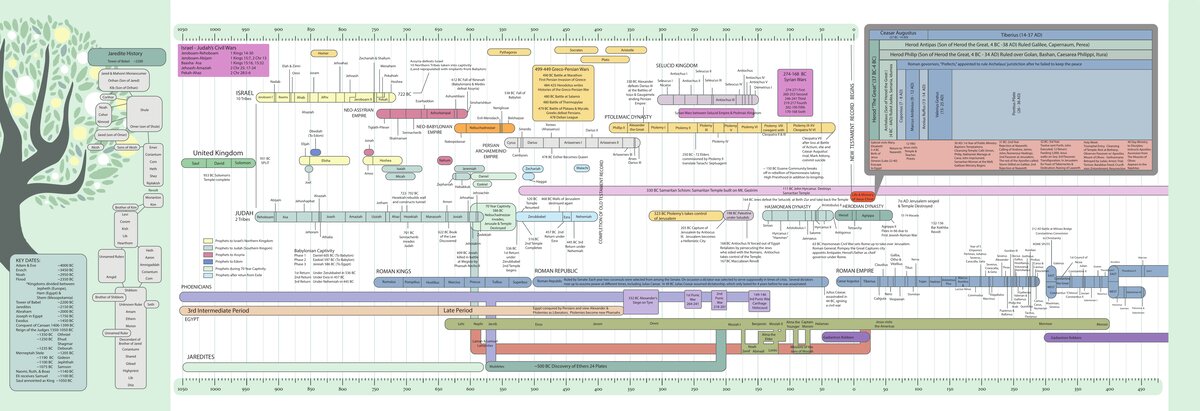
Tap to expand
Old Testament Timeline
From Creation through the Persian Period — tap the image to zoom, or download the full PDF.
Tap anywhere to close · Pinch to zoom