| Church Manuals | |
| Come Follow Me Manual — Week 29 | View |
| Scripture Helps: Old Testament | View |
| OT Seminary Teacher Manual | View |
| OT Institute Manual (Gen–2Sam) | View |
| Pearl of Great Price Manual | View |
| Scripture Reference | |
| Bible Dictionary | View |
| Topical Guide | View |
| Guide to the Scriptures | View |
| Church Media & Library | |
| Gospel for Kids (YouTube) | View |
| Bible Videos | View |
| Church Magazines | View |
| Gospel Library | View |
Week 29
He Trusted in the Lord God of Israel
2 Kings 16–25
July 13–19, 2026
5-Minute Overview
Week 29 contrasts kings who trusted the Lord with those who trusted armies and alliances. Hezekiah's faith brings Jerusalem's deliverance from Assyria; Josiah's reforms follow the rediscovery of the law; yet Judah's long drift ends in exile. The study guide foregrounds trust, covenant renewal, and the prophets' warnings amid the fall of two kingdoms.
Official Church Resources
OFFICIAL CHURCH RESOURCES▶
CHURCH MEDIA FOR FAMILIES▶
▶ Video Commentary
VIDEO COMMENTARY (7 videos)
▼

Specialized Audiences
WOMEN’S PERSPECTIVES (2 videos)
▶


FAMILY & CHILDREN’S RESOURCES (3 videos)
▶


Reference & Study Materials
BIBLE PROJECT VIDEOS THIS WEEK (13 videos)
▶
Book overview + theme & word study videos relevant to this week’s reading.




ACADEMIC & SCHOLARLY SITES▶
MAPS & BIBLICAL LOCATIONS▶
A Letter to Fellow Students
▶︎
This week the two kingdoms fall — and the whole question is what did they trust.
It opens with Ahaz, a king of Judah who is afraid. Syria and Israel are pressing on his borders, and instead of turning to the Lord, he strips the silver and gold out of the temple and mails it to Assyria as a bribe: "I am thy servant and thy son," he writes to Tiglath-Pileser (2 Kings 16:7). He buys a protector, and then, admiring the empire that saved him, he installs a copy of a Damascus altar in the house of God. He does not stop worshiping. He blends. And the blending is the beginning of the end.
Then the northern kingdom is simply gone. In one sober chapter, 2 Kings 17, Samaria falls to Assyria (c. 722 BC, completed under Sargon II), the ten tribes are marched away and scattered among the nations, and the narrator stops the story to explain why: "they rejected his statutes, and his covenant… and they followed vanity, and became vain" (2 Kings 17:15). It is the saddest sentence in the book. You become what you chase. Chase emptiness, and you are hollowed out by it.
Against that dark backdrop stands the one king the writer cannot praise highly enough: "Hezekiah… trusted in the LORD God of Israel; so that after him was none like him among all the kings of Judah" (2 Kings 18:5). The Hebrew is batach (בָּטַח) — not a feeling, but a leaning of the whole weight of your life onto something. When Sennacherib's army surrounds Jerusalem and his field commander mocks that trust to the people on the wall, Hezekiah does not answer the taunt. He takes the threatening letter into the temple, spreads it open before the Lord, and prays. The deliverance that follows becomes the memory that shapes a nation for a century.
The last act is a long, tender heartbreak. Hezekiah's own son Manasseh undoes everything — he raises the high places again, fills the Lord's temple itself with pagan altars and an image of Asherah, and burns his own children in the fire to foreign gods — outright child sacrifice, the shedding of innocent blood by the covenant king in the covenant city (2 Kings 21:4–6, 16). That is the final straw that seals Judah's fate: the innocent blood he shed is the one thing the text says the Lord "would not pardon" (2 Kings 24:4), and the damage is now past reversing (2 Kings 23:26). Yet even then God has a plan. He raises up Josiah — crowned at eight years old — who cleanses and repairs the temple, and in the rubble a lost scroll of the law is found. A young king weeps over words his fathers had forgotten, a prophetess confirms them, and for one bright generation Judah turns back. But the turning cannot outrun the consequences already set in motion. Josiah dies at Megiddo, and within a generation Jerusalem burns, the temple is leveled, and Judah is carried to Babylon.
This is the world Lehi is about to leave. The book of 2 Kings ends where the Book of Mormon begins — "in the first year of the reign of Zedekiah" (1 Nephi 1:4) — and it hands us the week's one enduring question. When the empires are at the gate and the easy alliances beckon, in whom do we actually batach? Every earthly king in these chapters fails. The book keeps clearing the stage for the only King who never will.
What's in This Week's Materials
▶︎
In the Study Guide
▶︎
The Study Guide walks the whole descent from Ahaz to exile, chapter by chapter:
- Ahaz and the Assyrian alliance (2 Kings 16) — the king who bought safety and imported a foreign altar into the temple.
- The fall of the northern kingdom (2 Kings 17) — Samaria's end and the narrator's covenant "autopsy" of why it happened.
- **Hezekiah's reforms and *Nechushtan*** (2 Kings 18) — the good king who even broke Moses' bronze serpent when it became an idol.
- The letter spread before the Lord (2 Kings 19) — Sennacherib's siege, Hezekiah's prayer, and the angel of the Lord.
- The shadow that went backward (2 Kings 20) — Hezekiah's illness, his added years, and the Babylonian envoys who foreshadow the exile.
- Manasseh, the point of no return (2 Kings 21) — the reign that fixes Judah's fate.
- Josiah and the found scroll (2 Kings 22) — repair, discovery, and the prophetess Huldah.
- Josiah's reformation and death at Megiddo (2 Kings 23) — the last great turning, and its limits.
- The Babylonian deportations and the fall of Jerusalem (2 Kings 24–25) — the temple burned, the city emptied, and a final, quiet ray of hope.
The word studies name the whole week in four Hebrew terms: galah (גָּלָה, "to exile" — and, remarkably, "to reveal"), batach (בָּטַח, "to trust, to lean one's weight"), sefer (סֵפֶר, "book/scroll"), and neviah (נְבִיאָה, "prophetess"), the office Huldah fills.
In the Resources Tab
▶︎
This week's video commentaries converge on trust, scripture, and the long shadow of these chapters over the Book of Mormon:
- Follow Him (Dr. Mike Day) — reads the whole corpus as trauma-shaped history and calls the exile "a fortunate scattering… without it, we don't have the Book of Mormon"; sets up 1 Nephi 1 as a point-by-point answer to the era's assumptions about an unseeable, distant God.
- John Hilton III / Finding Christ — grounds the week in the archaeology (Hezekiah's seal, the Lachish reliefs, a besieged-Jerusalem house with its famine layer) and asks who our own "Tiglath-Pilesers" are — the external props we lean on instead of the Lord.
- Talking Scripture — frames Judah as "a fly that stood up to the elephant of Assyria," and presses the thesis that if Christ is not your king, you end "lost, captive, and scattered."
- Unshaken (Jared Halverson) — a verse-by-verse "play-by-play of apostasy" in chapters 16–17 mirrored against Hezekiah's play-by-play of restoration; on the bronze serpent: "don't bow down before the arrow — just follow its direction."
- Don't Miss This / Our Mothers Knew It — trace the heart of the reformer kings and the Hebrew shuv ("to turn/return") as repentance, with family object lessons that make the abstractions teachable.
- Grounded (Barbara Morgan Gardner & Camille Fronk Olsen) — on scripture and the women who guard it, pairing Huldah with Lucy Mack Smith and John 5:39 ("they… testify of me").
- Lynne Hilton Wilson — the women at the end of Judah: the powerful queen-mothers, the true prophetesses of Israel, and Huldah's authorization of the found scroll as sacred.
The Companion Field Guide
▶︎
A multi-page companion Field Guide, The Divided Kingdom, goes deeper on the world behind these chapters. Several pages bear directly on this week: The Deuteronomists' Lens, How 1 Kings Was Written, Did They Have the Book of Kings?, and Reading Faithfully — tracing how these books came together and what that means for a faithful reader. The section below is a short preview of that thread.
"He Trusted in the Lord": Two Kings, Two Kinds of Confidence
▶︎
Put Ahaz and Hezekiah side by side and the week interprets itself.
Ahaz is not irreligious. He is resourceful. Threatened, he finds a solution: pay the superpower, copy its altar, hedge the bet. It even works, in the short term. Assyria comes; the threat lifts. But the price is the slow surrender of the temple's treasure and the temple's exclusivity, one reasonable compromise at a time. His trust is horizontal — in armies, in gold, in the arrangement he can control.
Hezekiah, cornered far worse, does the opposite. The word the narrator reaches for is batach (בָּטַח), a verb of leaning your full weight onto something that will hold. Hezekiah leans on the Lord and on nothing else — "none like him," the writer says (2 Kings 18:5) — and it is not naïveté. He has fortified the city and dug his tunnel; he has done everything a king can do. Then he does the one thing Ahaz never learned to do: he stops, and trusts.
The contrast is not ancient history. Every generation has "our Tiglath-Pilesers," as one commentator put it this week — the secondary sources, the safer authorities, the arrangements we can manage — that we reach for first because they feel more controllable than faith. The question these two kings put to us is not whether we are devout. Ahaz was devout. The question is where we finally place the weight.
The Fall of the North: "They Followed Vanity, and Became Vain"
▶︎
The most important verses this week may be the ones with no drama in them at all.
When Samaria falls, the narrator pauses the whole national story to hold a covenant inquest (2 Kings 17:7–23). Israel did not collapse because Assyria was strong; it collapsed because it had, over generations, "rejected his statutes, and his covenant… and they followed vanity, and became vain" (17:15). That last line is a spiritual law more than a headline. The Hebrew moves from chasing empty things to becoming empty — you are shaped by what you pursue.
Here the word study galah (גָּלָה) opens a strange comfort. The same root that means "to be carried into exile" also means "to be uncovered, to be revealed." Exile is God's people stripped bare — and in that stripping, the truth about their hearts, and about His faithfulness, is finally uncovered. The scattering was judgment. It was also, in the long providence the New Testament and the Book of Mormon both trace, the mechanism by which covenant Israel was seeded among all the nations it would one day be gathered from. Judgment and mercy were never as far apart as they looked from Samaria's walls.
Nehushtan: When the Symbol Becomes the Idol
▶︎
One line about Hezekiah's reforms should stop us: he "brake in pieces the brasen serpent that Moses had made" (2 Kings 18:4).
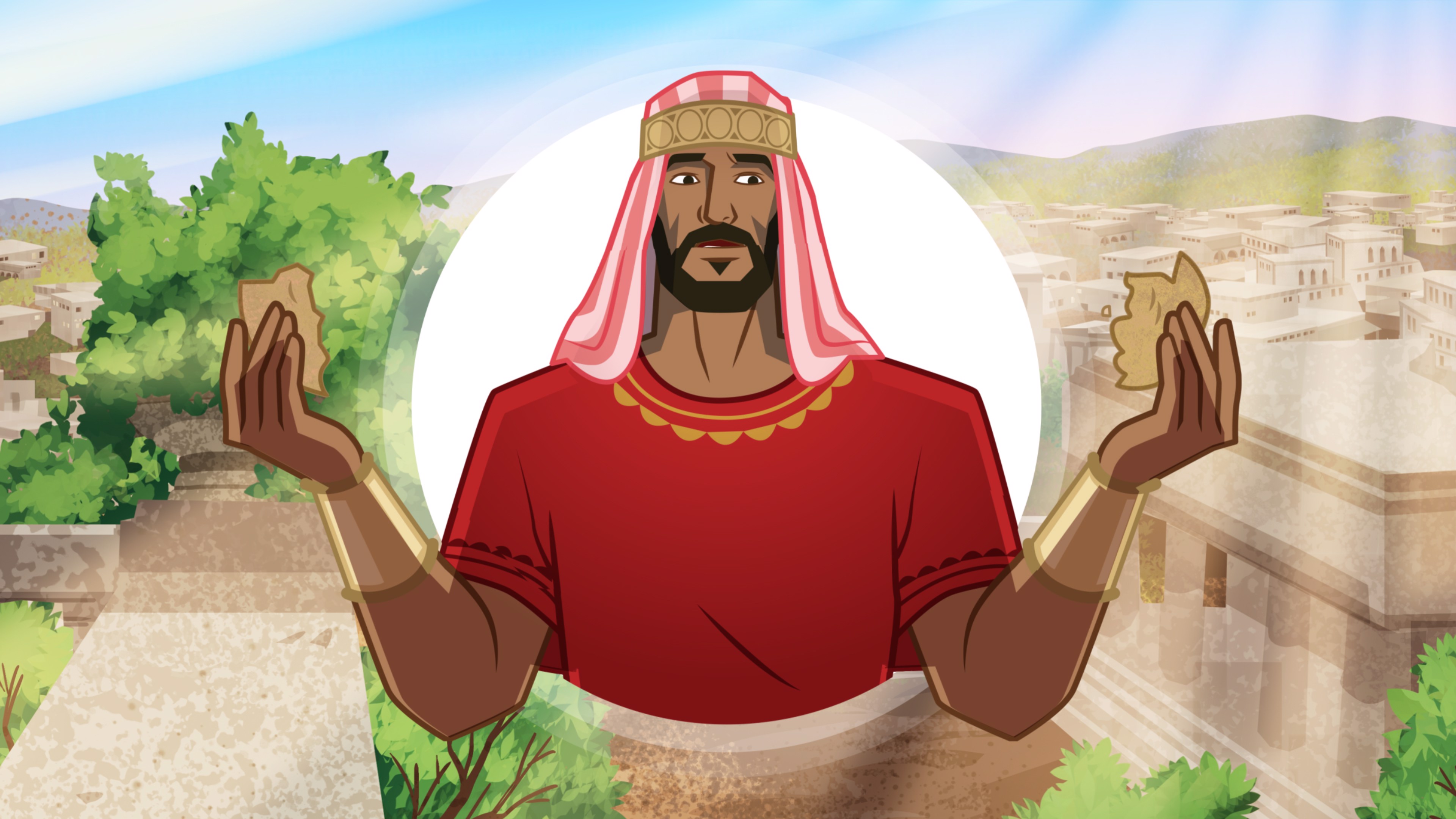
That serpent was not an idol. God Himself had commanded Moses to make it; looking to it in faith had healed Israel in the wilderness (Numbers 21). It was a genuine, God-given type of Christ (John 3:14). And Hezekiah destroyed it — because by his day the people were burning incense to it. The sign had swallowed the thing it signified. He renamed it, dismissively, Nehushtan (נְחֻשְׁתָּן) — "a thing of bronze." Just metal.
This is one of scripture's most searching warnings, precisely because it targets good things. It is easy to renounce an obvious idol. It is much harder to notice when a true and sacred symbol — a temple, a scripture, a leader, a spiritual experience we treasure — has quietly become the object of our devotion rather than the arrow pointing past itself. "Don't bow down before the arrow," as one teacher put it this week; "just follow its direction." Everything holy in our lives testifies of Christ (John 5:39) — it points beyond itself to Him. That Hezekiah would take a hammer to a relic Moses himself had made — breaking in pieces something genuinely sacred once it had become an idol — is the reminder to follow that testimony all the way home to Christ, and never to stop and worship the sign that was only ever meant to point us to Him. The brazen serpent had done its work the moment Israel looked through it to God; the sin was staying to burn incense at it.
The Letter Spread Before the Lord
▶︎
When Sennacherib's army encircles Jerusalem, the Assyrian field commander gives a masterclass in how to break faith. He preaches — in Hebrew, so everyone on the wall understands — that trusting the Lord is exactly what will get them killed, and that no god of any nation has ever stopped Assyria (2 Kings 18:28–35). It is theological warfare, and it is meant to make Hezekiah's batach look foolish.
Hezekiah's response is one of the quietest, most instructive acts in the Old Testament. He receives the threatening letter, goes up to the temple, and "spread it before the LORD" (2 Kings 19:14). He does not answer the propaganda on its own terms. He lays the whole terrifying thing open in the presence of God and prays. And the answer comes — but notice how: it comes through Isaiah the prophet (19:20). The temple and the prophet together. Then, in a single verse, the siege is over: the angel of the Lord passes through the Assyrian camp (2 Kings 19:35).
There is a pattern here worth keeping. Do everything you can — build the wall, dig the tunnel — and then take what you cannot fix and spread it open before the Lord, and listen for the answer through the channels He has appointed. Judah, "a fly that stood up to the elephant of Assyria," survived because its king knew the difference between the work that was his and the deliverance that was God's.
The Found Book and the Prophetess
▶︎
The turning point of Josiah's reign is an accident of maintenance. During temple repairs, the high priest finds a sefer (סֵפֶר) — a scroll of the law, long lost in the very house of God (2 Kings 22:8). When it is read aloud, the young king tears his clothes. He grieves not because the words are new, but because they are old and had been forgotten.
What happens next is remarkable. The king and the high priest do not simply act on the scroll; they seek confirmation — and they seek it from Huldah, a neviah (נְבִיאָה), a prophetess living in Jerusalem (2 Kings 22:14). She speaks in the name of the Lord, authenticates the book, and sets Judah's last reformation in motion. As this week's commentaries note, a woman stands at the hinge of the canon: her prophetic word helped confirm a scroll that would remain sacred scripture for millennia. The office was real, and the Lord placed it exactly where it was needed.
The sefer itself preaches. A scroll can sit unread in the temple for a generation and change nothing; the same scroll, opened and believed, can turn a whole kingdom. Scripture is not powerful because it is owned — it is powerful when it is opened, read, rightly understood, and obeyed. President Kimball drew that lesson straight from this very chapter, urging that "we must all of us return to the scriptures just as King Josiah did and let them work mightily within us, impelling us to an unwavering determination to serve the Lord."
And there may be more at stake in this recovered scroll than one kingdom's revival. Josiah's reform belongs to the very era when Israel's scriptures were being gathered, corrected, and set in order — the world behind the record Lehi's family would soon carry out of Jerusalem. When Nephi obtains the plates of brass, they already contain "the five books of Moses" and a record of the prophets down to "the reign of Zedekiah" (1 Nephi 5:11–13). It is not hard to imagine that a reform like this one — a lost scroll rediscovered, scattered scriptures collected — is part of what prompted such a record to be compiled in the first place. If so, the plates of brass preserve a pre-exilic form of the scriptures: an early version of what would only much later be finalized as the Old Testament we now hold. It is a striking thought — that in this one respect the Book of Mormon's source predates the compilation of the Bible by centuries, carrying us a step nearer the original than the text that reached us by way of Babylon and beyond.
The Slow-Motion Fall — and a Door Left Open
▶︎
Josiah is the best king since David, and it is not enough.
That is the hardest lesson of the week, and the book is honest about it. Between Hezekiah and Josiah comes Manasseh, and the text does not soften why his reign becomes the point of no return. He rebuilt the high places his father had torn down, planted altars to foreign gods inside the Lord's own house, and gave his own children to the fire (2 Kings 21:4–6; cf. Ezekiel 23:38–39). "Moreover Manasseh shed innocent blood very much, till he had filled Jerusalem from one end to another" (2 Kings 21:16). When the decree finally falls, the narrator names the reason without euphemism: it came upon Judah "for the sins of Manasseh… and also for the innocent blood that he shed… which the LORD would not pardon" (2 Kings 24:3–4).
That deserves a moment, because it names what finally moved a patient God to judgment. It was not ritual failure or political weakness — it was murdered children: a king slaughtering his own innocent sons and daughters on foreign altars, and a nation that let him. The Lord who calls Himself the defender of the fatherless cannot go on shielding the people doing the killing without abandoning the very innocents He is sworn to protect. A line is reached that covenant love itself will not cross. To keep guarding Judah as it was would be to keep the altars burning; so, to protect His covenant family — the vulnerable and the generations still unborn most of all — He at last lets justice run its course. The same holiness that had spared Judah again and again is the holiness that, in the end, will not call innocent blood a small thing. Josiah's reformation is sincere and sweeping, and it delays the reckoning without erasing it. He dies at Megiddo; his sons undo his work; Nebuchadnezzar comes; and in 2 Kings 25 the temple is burned and Judah is carried to Babylon. Reformation, however heartfelt, cannot always reverse consequences already set. Sin has a wake, and sometimes the most faithful generation still sails through the storm the previous ones raised.
And yet the book will not end in the dark. Its final scene is almost a whisper: Jehoiachin, the exiled king of Judah, is lifted out of a Babylonian prison, given a seat at the king's table, and clothed anew (2 Kings 25:27–30). It is a small thing. It is also everything — the Davidic line, kept alive in captivity, carried forward toward a genealogy that ends in Matthew 1 with Christ.
This is the world Lehi steps out of, "in the reign of Zedekiah" (1 Nephi 1:4). It explains why his own sons could not believe Jerusalem would fall (1 Nephi 2:13): the memory of Hezekiah's deliverance had curdled into a superstition that the city was untouchable. And it reframes the exile itself. What looked like the end of the covenant was, in a longer providence, "a fortunate scattering" — the seeding of Israel among the nations, and the very reason a family carrying a scroll of their own would sail to a promised land. The kings could not save Judah. The scattering they caused became part of how the true King would gather it.
The Deuteronomists' Lens: Reading Kings the Way It Was Written
▶︎
Read a few chapters of Kings and you begin to feel a rhythm. King after king is introduced, dated, and then graded by one recurring sentence — he "did right in the eyes of the LORD" (2 Kings 18:3), or he "did evil in the sight of the LORD" (2 Kings 21:2). The grade is never about competence or prosperity; a strong, successful king can be failed and a weak one passed. It measures one thing: covenant loyalty — worship gathered to the Lord's one sanctuary, and faithfulness to Him alone. That repeating yardstick is the fingerprint not of a single author but of a school of scribes that scholars call the Deuteronomists — the community that copied, preserved, and shaped these books over generations, judging the whole story by the standard of the book of Deuteronomy. Seeing their viewpoint does not undo the history; it tells you what the history is arguing for.
This is an active conversation in the academic world, and it is worth understanding rather than fearing. Martin Noth (1943) proposed that Deuteronomy through 2 Kings is not a loose anthology but a single, purposeful Deuteronomistic History, given its shape in the Babylonian exile to answer an agonized question — why did this happen to us? Its answer is the theme of our whole week: the catastrophe was covenant justice, long foretold, not divine failure. Frank Moore Cross (1973) refined the picture into two editions — a hopeful one written during Josiah's reforms and a darker one added after Jerusalem fell — and more recent work, such as William Schniedewind's Who Really Wrote the Bible? (2024), asks who actually held the pen, finding not lone geniuses but tight-knit scribal guilds, some of whose families' names survive pressed into clay seals. (These are scholarly reconstructions — models under discussion, not the text's plain claim and not Church doctrine.)
Why does this matter, especially for Latter-day Saints? Because the compilation of Kings sits directly on the Book of Mormon's timeline. This record was given its final form in the generation of the exile — Lehi's own generation. Kings closes in the world of Zedekiah's Jerusalem; 1 Nephi opens there, "in the commencement of the first year of the reign of Zedekiah, king of Judah" (1 Nephi 1:4). The scribes finishing this history and the prophet Lehi walking out of that same city were contemporaries. To read Kings with the Deuteronomists' lens is to stand in Lehi's world and hear the very debates — about covenant, temple, and true worship — that filled the streets he preached in.
And this week's chapters are precisely the circumstances of Lehi's family's departure. The slow covenant drift these editors trace, the scattering of the north by Assyria, the reforms of Hezekiah and Josiah, and the Babylonian shadow that finally falls — this is the setting of 1 Nephi 1. It explains why Lehi's own sons could not believe Jerusalem would fall (1 Nephi 2:13): they had inherited the memory of Hezekiah's deliverance without the covenant reckoning that came after. And it frames the quiet irony that as one group of scribes was finishing a scroll to explain why the city was lost, another family — led by revelation — was being led out of it with a scroll of their own, toward a promised land.
The lens deepens rather than debunks. Knowing the standpoint from which Kings is written lets us hear what it is for — the covenant, the one sanctuary, the Davidic and messianic hope, the call to wholehearted loyalty — and it lets us read even the doomed Northern Kingdom with sympathy rather than contempt. Our companion multi-page Field Guide, The Divided Kingdom, walks all of this in depth — The Deuteronomists' Lens, How 1 Kings Was Written, and Did They Have the Book of Kings? among them. For this week, it is enough to notice that the book grading every king by his covenant faithfulness was compiled by people who had just watched the covenant curses come due — and that one of their contemporaries, led by the Lord, was already carrying the promise forward into a new world.
The Invitation
▶︎
Week 29 asks the oldest question in a new and pressing form: in whom do you batach?
Not in the abstract, but in the specific choices that reveal where your weight actually rests — whether you buy safety with the temple's gold like Ahaz or spread the letter before the Lord like Hezekiah; whether you let good and sacred things point you to Christ or quietly become your Nehushtan; whether you leave the scroll shut in the temple or open it, weep over it, and turn; and whether, when consequences you did not choose come like an Assyrian army over the hill, you still believe the God of Israel can deliver — or, deliverance withheld, that He can redeem even the scattering.
Every king in these chapters is gone. One thing survives Babylon: a promise about David's throne, and a light kept burning toward the King who wore, in one commentator's lovely phrase, "a crown of thorns so that we could wear a crown of eternal life."
He trusted in the Lord God of Israel. Trust Him.
Weekly Insights — Week 29 | CFM Corner | OT 2026
Sources: Week 29 Study Guide (overview + word studies: galah, batach, sefer, neviah) and the Week 29 video distillations (Finding Christ, Lynne Hilton Wilson, Follow Him Pt. 1–2, Talking Scripture, Unshaken, Don't Miss This, Grounded, Our Mothers Knew It). Historical/date conventions (fall of Samaria c. 722 BC; Jerusalem 586 BC) standardized across sources; extra-biblical traditions (e.g., the martyrdom of Isaiah) not used as scripture. Historical attestations link to World History Encyclopedia, Livius, the Jewish Virtual Library, and the British Museum.
Week 29
2 Kings 16–25 — Overview
"He Trusted in the Lord God of Israel"
1. Week 29: Overview
This week's reading covers the final act of both Israelite kingdoms — a sweeping narrative of destruction, reformation, and destruction again that stretches across nearly two centuries of history. The northern kingdom of Israel, fractured since the days of Rehoboam and Jeroboam, reaches its inevitable end in 722/721 BC when the Assyrian Empire conquers Samaria and deports its population (chapter 17). The ten northern tribes vanish from the biblical stage, scattered among the nations in fulfillment of covenant warnings that had echoed since Deuteronomy. In their place, Assyria resettles foreign populations who intermarry with the remaining Israelites and create a syncretic worship that will define the Samaritans for centuries to come.
Yet Judah survives — and not merely by political luck. The southern kingdom endures another 135 years, propped up by two of the greatest reformer-kings in Israelite history: Hezekiah and Josiah. Hezekiah (chapters 18–20) receives the highest praise of any king: "He trusted in the Lord God of Israel; so that after him was none like him among all the kings of Judah, nor any that were before him" (18:5). He destroys the high places, shatters the brass serpent that Moses had made (now called Nechushtan — "just a copper thing"), survives the terrifying siege of Sennacherib's Assyrian army through prayer and prophetic intervention, and receives a miraculous extension of life. A generation later, Josiah (chapters 22–23) discovers the lost Torah scroll in the Temple, consults the prophetess Huldah, and launches the most sweeping religious reformation in Judah's history — tearing down every altar, high place, and idolatrous shrine in the land, and reinstituting the Passover on a scale unseen since the days of the judges.
Between these two reformers, however, lies the catastrophic reign of Manasseh (chapter 21), who undoes everything his father Hezekiah built. Manasseh reigns for fifty-five years — the longest reign of any Judean king — and fills Jerusalem with innocent blood, child sacrifice, sorcery, and every form of idolatry. The text is unsparing: "Manasseh seduced them to do more evil than did the nations whom the Lord destroyed before the children of Israel" (21:9). Even Josiah's brilliant reformation cannot undo the damage. The final chapters (24–25) narrate the Babylonian conquest in three devastating stages: a first deportation in 605 BC, a second in 597 BC (when King Jehoiachin and the Temple treasures are taken), and the final destruction of Jerusalem and Solomon's Temple in 586 BC under Nebuchadnezzar. The Davidic dynasty, the Temple, the city, the land — everything is lost. Yet the reading ends with a strange note of hope: the exiled king Jehoiachin is released from prison in Babylon and given a seat at the king's table (25:27-30). The line of David, battered and humiliated, is not extinguished.
For Latter-day Saint readers, these chapters are the immediate backdrop to the Book of Mormon. Lehi begins his prophetic ministry "in the commencement of the first year of the reign of Zedekiah, king of Judah" (1 Nephi 1:4) — the very king whose rebellion against Babylon triggers the final destruction. Mulek, son of Zedekiah, survives the slaughter of the royal family (Helaman 6:10; 8:21) and is led by the Lord to the Americas. The world Nephi describes — prophets warning of destruction, a corrupt king, a doomed city — is the world of 2 Kings 24–25. To read these chapters is to stand in Lehi's Jerusalem.
All chapters in 2 Kings 16–25 are assigned this week. Use this table as a map — each chapter is discussed in the walkthrough below.
| Chapter | Content | Assigned |
|---|---|---|
| 2 Kings 16 | Ahaz's reign: Assyrian alliance, altar modifications, idolatry | Yes |
| 2 Kings 17 | Fall of Samaria; Assyrian deportation; theological explanation; Samaritan origins | Yes |
| 2 Kings 18 | **Hezekiah's reforms; Nechushtan destroyed; Sennacherib's invasion; Rabshakeh's speech** | Yes |
| 2 Kings 19 | Hezekiah's prayer; Isaiah's prophecy; angel destroys 185,000; Sennacherib's death | Yes |
| 2 Kings 20 | Hezekiah's illness; sundial miracle; Babylonian envoys | Yes |
| 2 Kings 21 | Manasseh's abominations; Amon's brief reign | Yes |
| 2 Kings 22 | Josiah's Temple renovation; Torah scroll discovered; Huldah's prophecy | Yes |
| 2 Kings 23 | Josiah's reformation; Passover reinstituted; Josiah's death at Megiddo | Yes |
| 2 Kings 24 | Jehoiakim, Jehoiachin; first and second Babylonian deportations | Yes |
| 2 Kings 25 | Fall of Jerusalem; Temple destroyed; Gedaliah murdered; Jehoiachin released | Yes |
For background context, note that 2 Kings 8–15 (covered in the Week 28 overview's aftermath section) narrates the declining years of both kingdoms leading up to this week's reading. Key events from that background include the ministries of Elijah and Elisha, Jehu's bloody purge of Ahab's dynasty, the reign of Joash and his Temple renovation (which foreshadows Josiah's), the false golden age of Jeroboam II in the north, and the northern kingdom's collapse into anarchy under the growing dominance of Assyria under Tiglath-Pileser III. These chapters explain why Israel and Judah arrive at the crisis point where this week's reading begins.
Ahaz and the Assyrian Alliance (2 Kings 16) — assigned
The reading opens with the reign of Ahaz, king of Judah — a king who sets the stage for everything that follows by choosing political survival over covenant faithfulness. Facing a joint invasion from Syria and the northern kingdom of Israel (the Syro-Ephraimite War), Ahaz strips gold and silver from the Temple and sends it to Tiglath-Pileser III of Assyria as tribute, with the message: "I am thy servant and thy son: come up, and save me" (16:7). The words are devastating — Ahaz addresses the Assyrian emperor in the language of covenant sonship that properly belongs to God alone.
Assyria responds, conquering Damascus — but the cost to Judah is total spiritual capitulation. When Ahaz visits Damascus to pay homage to his Assyrian overlord, he sees a pagan altar and sends its design back to Jerusalem with instructions for the priest Urijah to build a copy (16:10-11). The new altar replaces the Solomonic bronze altar for daily sacrifices (16:14-15). Ahaz does not merely tolerate foreign worship — he redesigns the Temple liturgy to match it. He dismantles the bronze Sea, removes the lavers from their stands, and modifies the royal entryway "for the king of Assyria" (16:18). Every change is a concession: political dependency becomes liturgical imitation. Ahaz is the anti-Hezekiah, and his reign provides the dark backdrop against which his son's reforms will shine.
The Fall of the Northern Kingdom (2 Kings 17) — assigned
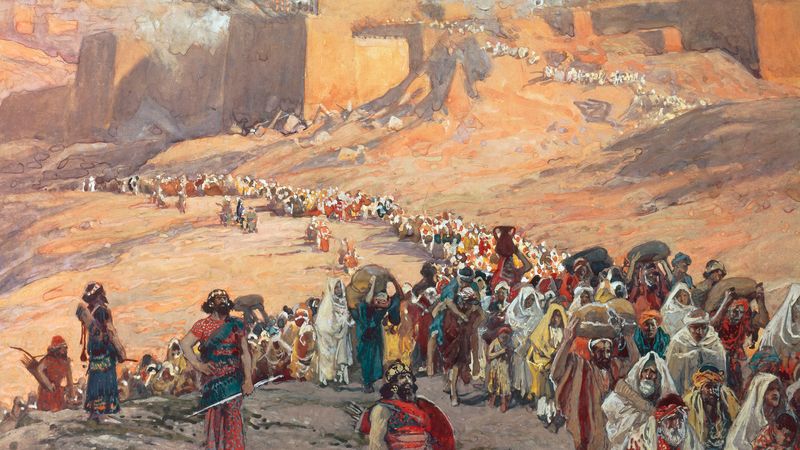
The ten tribes of Israel are conquered and deported by Assyria in 722/721 BC. Hoshea, the last king of the north, attempts to play Egypt against Assyria, and Shalmaneser V (followed by Sargon II) besieges Samaria for three years before the city falls.
Chapter 17 provides the most comprehensive theological explanation for national destruction found anywhere in the Hebrew Bible — a catalog of sins stretching back to the Exodus. The fall is not random political misfortune but covenant consequence. Verses 7-23 form a sustained indictment: Israel "feared other gods" (17:7), "walked in the statutes of the heathen" (17:8), built high places in every city (17:9), set up pillars and Asherah poles on every hill (17:10), burned incense at the high places (17:11), served idols (17:12), rejected God's commandments and covenant (17:15), made molten images and worshipped the host of heaven (17:16), passed their children through fire, practiced divination and enchantments (17:17). The list is relentless — not a single failure but a comprehensive apostasy built up over generations. "They rejected all the commandments of the Lord their God" (17:16). The theological conclusion is explicit: "Therefore the Lord was very angry with Israel, and removed them out of his sight" (17:18). Only the tribe of Judah remained.
The second half of the chapter (17:24-41) narrates the origins of the Samaritans. Assyria resettles foreign populations from Babylon, Cuthah, Ava, Hamath, and Sepharvaim into the depopulated northern territory. When lions attack the settlers, the Assyrian king sends back an Israelite priest to teach them "the manner of the God of the land" (17:27). The result is religious syncretism: "They feared the Lord, and served their own gods" (17:33). This mixed worship will define the Samaritan community for centuries and explains the hostility between Jews and Samaritans that pervades the New Testament — hostility that Jesus deliberately dismantles in John 4 (the woman at the well) and Luke 10 (the Good Samaritan parable). The roots of that hostility begin here, in the ruins of the northern kingdom.
**Hezekiah's Reforms and Nechushtan (2 Kings 18)** — assigned
Hezekiah receives the highest praise of any king in what scholars call the Deuteronomistic History: "He trusted in the Lord God of Israel; so that after him was none like him among all the kings of Judah, nor any that were before him" (18:5). He is the mirror image of his father Ahaz — where Ahaz imported foreign worship, Hezekiah systematically dismantles it.
Hezekiah destroys the high places, smashes the pillars, and cuts down the Asherah poles — and then does something that no king before him had dared: he shatters the brass serpent that Moses had made in the wilderness (Numbers 21:9). The serpent that God had commanded Moses to fashion, the instrument through which Israelites bitten by fiery serpents had looked and lived, had become an object of worship. Israel was burning incense to it. Hezekiah renames it Nechushtan (נְחֻשְׁתָּן) — a dismissive pun combining nachash (נָחָשׁ, serpent) and nechoshet (נְחֹשֶׁת, copper/bronze), essentially calling it "just a copper thing" (18:4). The wordplay strips the object of its accumulated mystique. For the Hebrew wordplay and its theological significance, see Historical Cultural Context and Key Passages.
The destruction of Nechushtan is one of the most striking acts in all of scripture — a warning that even a divinely instituted symbol can decay into an idol (a principle taken up under Why This Week Matters, below).
The second half of chapter 18 shifts from reform to crisis. Sennacherib of Assyria invades Judah in 701 BC, conquering forty-six fortified cities (confirmed by Sennacherib's own inscriptions, now in the British Museum). Hezekiah initially pays massive tribute — three hundred talents of silver and thirty talents of gold, stripping the Temple and palace (18:14-16). But Sennacherib demands total surrender.
The Assyrian siege of Jerusalem is one of the most dramatic episodes in the Hebrew Bible. The Rabshakeh (the Assyrian chief cupbearer/diplomat) delivers psychological warfare in Hebrew (Yehudit, יְהוּדִית, 18:26) within earshot of the defenders on the city walls. Hezekiah's officials beg the Rabshakeh to speak in Aramaic instead — "Speak, I pray thee, to thy servants in the Syrian language" (18:26) — precisely because the common people on the walls can understand Hebrew. The Rabshakeh refuses and raises his voice, attacking every pillar of Judean hope: Egypt will fail you (18:21), your own God sent me (18:25), no god of any nation has stopped Assyria (18:33-35). The speech is a masterpiece of propaganda — and the text preserves it in full because it sets up the drama of Hezekiah's response.
Hezekiah's Prayer and the Angel of the Lord (2 Kings 19) — assigned
Hezekiah's response to the Rabshakeh's speech defines what trust in God looks like under extreme pressure. He tears his garments, puts on sackcloth, enters the Temple, and sends to the prophet Isaiah (19:1-2). Isaiah's first response is reassurance: "Be not afraid... I will send a blast upon him, and he shall hear a rumour, and shall return to his own land" (19:6-7).
When a second threatening letter arrives from Sennacherib, Hezekiah does something extraordinary: he takes the physical letter and "spread it before the Lord" in the Temple (19:14). The image is unforgettable — a king holding the threats of the world's most powerful empire before God as a man might hold an open book before a teacher, saying in effect: "Read this. You see what they are saying about You." Hezekiah's prayer (19:15-19) does not negotiate from fear, does not capitulate to psychological warfare, and does not rely on military alliances. He appeals to God's identity: "Thou art the God, even thou alone, of all the kingdoms of the earth" (19:15). The prayer is not for Judah's survival alone but "that all the kingdoms of the earth may know that thou art the Lord God, even thou only" (19:19).
Isaiah delivers God's response in an oracle of devastating poetry. God addresses Sennacherib directly: "The virgin the daughter of Zion hath despised thee, and laughed thee to scorn" (19:21). The image reverses the power dynamic entirely — the world-conquering emperor is mocked by a young woman. God's judgment: "I will put my hook in thy nose, and my bridle in thy lips, and I will turn thee back by the way by which thou camest" (19:28).
That night, "the angel of the Lord went out, and smote in the camp of the Assyrians an hundred fourscore and five thousand" (19:35). One hundred and eighty-five thousand soldiers, destroyed in a single night. Sennacherib withdraws to Nineveh, where he is eventually murdered by his own sons while worshipping in the temple of his god Nisroch (19:37). The irony is complete: the man whose emissary taunted "Where are the gods of these nations?" dies in his own god's temple, struck down by his own children. The deliverance validates a theology of radical dependence on God — and it became a defining memory for Judah, referenced repeatedly by Isaiah, Micah, and later prophets.
Hezekiah's Illness and the Shadow's Reversal (2 Kings 20) — assigned
Hezekiah falls deathly ill. Isaiah delivers a blunt prognosis: "Set thine house in order; for thou shalt die, and not live" (20:1). Hezekiah turns his face to the wall and weeps — not in despair but in prayer, reminding God of his faithfulness: "I beseech thee, O Lord, remember now how I have walked before thee in truth and with a perfect heart" (20:3).
God grants him fifteen additional years and confirms the promise with a miraculous sign: the shadow on the sundial of Ahaz moves backward ten degrees (20:11). The reversal of the shadow on Ahaz's sundial is symbolically pointed — the instrument bears the name of the king who brought Assyrian worship into Jerusalem. Even the miracle's setting reminds the reader how far Judah has come under Hezekiah.
Yet those added years bring consequences that will echo for over a century. When Merodach-baladan of Babylon sends envoys (ostensibly to congratulate Hezekiah on his recovery), Hezekiah shows them everything: "the silver, and the gold, and the spices, and the precious ointment, and all the house of his armour, and all that was found in his treasures: there was nothing in his house, nor in all his dominion, that Hezekiah shewed them not" (20:13). The display is either naïve or vain — and Isaiah's response is prophetically devastating: "Behold, the days come, that all that is in thine house, and that which thy fathers have laid up in store unto this day, shall be carried into Babylon" (20:17).
Hezekiah's response is troubling: "Good is the word of the Lord which thou hast spoken... Is it not good, if peace and truth be in my days?" (20:19). He accepts the prophecy because it will not fall on him — it will fall on his descendants. The greatest king of Judah, the man who trusted God against Sennacherib, ends his story with a moment of moral blindness. The seeds of the Babylonian exile are sown by the very king who saved Judah from Assyria.
Manasseh's Abominations — The Point of No Return (2 Kings 21) — assigned
The fifty-five-year reign of Manasseh represents the nadir of Judean history — and it is all the more devastating because it follows directly on the heels of Hezekiah's righteousness. Manasseh reverses every reform his father instituted. He rebuilds the high places Hezekiah tore down, erects altars to Baal, makes an Asherah pole, worships the host of heaven, and builds altars to pagan gods in the Temple itself — the very courts where Hezekiah spread Sennacherib's letter before the Lord (21:4-5).
The catalog of abominations escalates: child sacrifice in the Valley of Ben-Hinnom (Gei Ben-Hinnom, which becomes Gehenna — the name Jesus will use for hell), sorcery (nachash, נַחַשׁ), divination (onen, עוֹנֵן), necromancy (ov, אוֹב, and yid'oni, יִדְּעוֹנִי) (21:6). He places an image of Asherah in the Temple itself (21:7). The text delivers its verdict in a single devastating comparison: "Manasseh seduced them to do more evil than did the nations whom the Lord destroyed before the children of Israel" (21:9). The covenant people have become worse than the Canaanites they replaced.
God's response seals Judah's fate: "I will wipe Jerusalem as a man wipeth a dish, wiping it, and turning it upside down" (21:13). The domestic image is jarring — God describes the destruction of His holy city in the language of kitchen cleanup. The metaphor communicates both thoroughness and casual finality. From this point forward, no amount of reformation can reverse the sentence. The exile is now inevitable; only the timing remains uncertain.
Manasseh's son Amon continues his father's idolatry but reigns only two years before his own servants assassinate him (21:23). The people of the land execute the conspirators and place Amon's eight-year-old son Josiah on the throne (21:24).
Josiah's Discovery of the Torah Scroll (2 Kings 22) — assigned
Josiah begins to reign at age eight, and in his eighteenth year he commissions repairs to the Temple — an echo of King Joash's Temple renovation centuries earlier (2 Kings 12). During the construction, the high priest Hilkiah makes a discovery that will change the course of Judean history: "I have found the sefer ha-Torah (סֵפֶר הַתּוֹרָה) in the house of the Lord" (22:8) — the book of the law.
The identity of the scroll — whether Deuteronomy alone or the entire Torah — remains debated among scholars, but its impact is unquestioned. The fact that the Torah could be lost inside the Temple tells the full story of Manasseh's reign. During fifty-five years of deliberate apostasy, the foundational document of Israelite covenant identity had been buried, hidden, or forgotten. When Shaphan the scribe reads the scroll aloud to Josiah, the king tears his garments in grief (22:11). His response is immediate and visceral: "Great is the wrath of the Lord that is kindled against us, because our fathers have not hearkened unto the words of this book" (22:13).
Josiah sends his officials to consult a prophet — and not to Jeremiah, who is active in Jerusalem at this very time, but to Huldah (חֻלְדָּה) the prophetess (22:14). That the king bypasses Jeremiah to consult a woman is itself theologically significant: prophetic authority in Israel was never restricted by gender. Huldah's response is unflinching: she authenticates the Torah scroll and prophesies both Judah's destruction (22:16-17) and mercy for Josiah personally — "because thine heart was tender, and thou hast humbled thyself before the Lord... thou shalt be gathered into thy grave in peace" (22:19-20).
For the full rabbinic background on Huldah's prophetic authority, see Jewish Perspective; for the Hebrew root neviah (נְבִיאָה), see Word Studies.
Josiah's Reformation and Death at Megiddo (2 Kings 23) — assigned
Armed with the rediscovered Torah scroll, Josiah launches the most sweeping religious reformation in Judah's history. Chapter 23 reads like a demolition manifest: he removes the vessels made for Baal, Asherah, and the host of heaven from the Temple (23:4), deposes the idolatrous priests (23:5), burns the Asherah pole from the Temple in the Kidron Valley (23:6), breaks down the houses of the male cult prostitutes (23:7), defiles the high places from Geba to Beersheba (23:8), destroys the Topheth in the Valley of Ben-Hinnom where children were burned (23:10), removes the horses dedicated to the sun at the Temple entrance (23:11), smashes the altars Manasseh had built in the Temple courts (23:12), defiles the high places Solomon had built for foreign gods (23:13), and even reaches into the former territory of the northern kingdom to destroy Jeroboam's altar at Bethel — fulfilling a prophecy given by name three hundred years earlier (23:15-16; cf. 1 Kings 13:2).
The reformation culminates in a national Passover: "Surely there was not holden such a passover from the days of the judges that judged Israel, nor in all the days of the kings of Israel, nor of the kings of Judah" (23:22). The Passover had not been properly observed on this scale in centuries. Josiah reinstitutes it as a national act of covenant renewal.
The text delivers its verdict with a praise that mirrors and exceeds Hezekiah's: "And like unto him was there no king before him, that turned to the Lord with all his heart, and with all his soul, and with all his might, according to all the law of Moses; neither after him arose there any like him" (23:25). The language deliberately echoes the Shema (Deuteronomy 6:5) — Josiah loved God with the completeness that the Torah itself demands.
And yet — the next verse delivers the crushing blow: "Notwithstanding the Lord turned not from the fierceness of his great wrath, wherewith his anger was kindled against Judah, because of all the provocations that Manasseh had provoked him withal" (23:26). The greatest reformation in Judean history was not enough. Manasseh's fifty-five years of deliberate corruption had crossed a threshold that even Josiah's total obedience could not reverse (a theme Why This Week Matters takes up below).
Josiah dies at Megiddo in 609 BC, killed in battle against Pharaoh Necho of Egypt (23:29). He is only thirty-nine. The man who received the promise "thou shalt be gathered into thy grave in peace" (22:20) dies on a battlefield — a paradox the text itself does not resolve, though the rabbis offer an answer (see Study Questions). With Josiah's death, the last restraining force against Judah's collapse is removed. The final four kings — Jehoahaz, Jehoiakim, Jehoiachin, and Zedekiah — will preside over the kingdom's destruction.
The Babylonian Deportations Begin (2 Kings 24) — assigned
The end comes in stages, not all at once. Jehoahaz reigns only three months before Pharaoh Necho deposes him and installs his brother Jehoiakim as a puppet king (23:34). Jehoiakim reigns eleven years, first as an Egyptian vassal and then switching allegiance to Nebuchadnezzar of Babylon — and then rebelling (24:1). The text attributes the Babylonian invasions directly to divine judgment: "Surely at the commandment of the Lord came this upon Judah, to remove them out of his sight, for the sins of Manasseh" (24:3).
Jehoiakim dies, and his eighteen-year-old son Jehoiachin reigns only three months before Nebuchadnezzar besieges Jerusalem in 597 BC. Jehoiachin surrenders, and the second deportation strips Jerusalem of its leadership: "he carried away all Jerusalem, and all the princes, and all the mighty men of valour, even ten thousand captives, and all the craftsmen and smiths: none remained, save the poorest sort of the people of the land" (24:14). The Temple is looted — "he carried out thence all the treasures of the house of the Lord" (24:13) — including the gold vessels Solomon had made. The treasures that Hezekiah had shown to Babylon's envoys a century earlier (20:13) are now carried to Babylon exactly as Isaiah prophesied (20:17).
Nebuchadnezzar installs Zedekiah, Jehoiachin's uncle, as the final king of Judah (24:17) — in whose first year Lehi begins his prophetic ministry in Jerusalem (1 Nephi 1:4). This is the world of 1 Nephi 1 (see Historical Cultural Context for Lehi's Jerusalem and the survival of Mulek).
The Fall of Jerusalem and the Babylonian Exile (2 Kings 25) — assigned
Zedekiah rebels against Babylon (24:20), and Nebuchadnezzar besieges Jerusalem for the final time. The siege lasts nearly two years, from the ninth year of Zedekiah's reign to the eleventh (25:1-2). Famine consumes the city — "there was no bread for the people of the land" (25:3). When the walls are breached, Zedekiah flees by night but is captured near Jericho. Nebuchadnezzar's judgment is brutal: "they slew the sons of Zedekiah before his eyes, and put out the eyes of Zedekiah, and bound him with fetters of brass, and carried him to Babylon" (25:7). The last thing Zedekiah sees is the death of his sons. Latter-day Saint readers know that at least one son survived: Mulek, son of Zedekiah, was led by the Lord to the Americas (Helaman 6:10; 8:21), founding the people who would later merge with the Nephites at Zarahemla.
The destruction is total. Nebuzaradan, captain of the Babylonian guard, burns the Temple, the king's house, and every great house in Jerusalem (25:9). He breaks down the city walls (25:10). The bronze pillars Jachin and Boaz, the bronze Sea, the bronze stands — all the metalwork Solomon had commissioned for the Temple — are broken to pieces and carried to Babylon (25:13-17). The sacred vessels are divided between gold, silver, and bronze and taken as spoil (25:15). Everything the text has been building toward since 1 Kings 6 — the Temple that took seven years to build, that Solomon dedicated with fire from heaven, that housed the Ark of the Covenant and the presence of God — is reduced to ash.
Only the dallat ha-aretz (דַּלַּת הָאָרֶץ) — the poorest of the land — are left behind to tend the vineyards and fields (25:12). The term is significant: dallat comes from dal (דַּל), meaning thin, weak, impoverished. The once-great kingdom of Judah is reduced to its most vulnerable remnant.
Gedaliah is appointed governor over this remnant, but he is assassinated by Ishmael, a member of the royal family (25:25). The remaining population, terrified of Babylonian reprisal, flees to Egypt (25:26) — completing the irony: the people whose story began with an exodus from Egypt now flee back to Egypt. The covenant arc has come full circle in the worst possible way.
Yet the book does not end there. The final four verses (25:27-30) flash forward to the thirty-seventh year of Jehoiachin's captivity. Evil-merodach, the new king of Babylon, releases Jehoiachin from prison, speaks kindly to him, gives him a seat above the other captive kings, and provides him with a regular allowance for the rest of his life. The detail is specific and strange: "he did eat bread continually before him all the days of his life" (25:30). The Davidic line — the dynasty God promised would endure forever (2 Samuel 7:16) — is not extinguished. It is imprisoned, humiliated, dependent on a foreign king's generosity — but it is alive. Babylonian ration tablets discovered by archaeologists confirm that "Yaukin, king of Judah" (Jehoiachin) received food allotments from the Babylonian court, corroborating this final biblical detail with remarkable precision.
The message is unmistakable: even in exile, even after the Temple burns and the walls fall and the land is emptied, God's covenant endures. The line of David sits at a foreign king's table, waiting.
"He trusted in the Lord God of Israel; so that after him was none like him among all the kings of Judah, nor any that were before him."
"And Hilkiah the high priest said unto Shaphan the scribe, I have found the book of the law in the house of the Lord."
"And like unto him was there no king before him, that turned to the Lord with all his heart, and with all his soul, and with all his might, according to all the law of Moses; neither after him arose there any like him."
Two kings receive superlative praise — Hezekiah for his trust, Josiah for his total devotion. Between them, Manasseh fills Jerusalem with blood. After them, Babylon fills Jerusalem with fire. The central tension of these chapters is that individual righteousness — even the most complete and sincere — cannot always reverse the consequences of collective sin. Hezekiah trusted God and was delivered from Assyria; Josiah obeyed God with all his heart, soul, and might — and Judah still fell to Babylon. This is not a counsel of despair. The exile comes, but so does the promise of return. The Davidic line survives, battered but unbroken. And the Torah scroll, lost and found again in Josiah's day, will become the foundation on which exilic Judaism rebuilds itself — proving that the word of God outlasts the Temple that housed it.
```
- AHAZ'S CAPITULATION (ch 16)
Judah's king sells the Temple to buy Assyria's protection; the altar is redesigned
↓
- FALL OF ISRAEL (ch 17)
The northern kingdom collapses under Assyria; the ten tribes are scattered
↓
- HEZEKIAH'S FAITH (chs 18–19)
A righteous king trusts God, survives the Rabshakeh's propaganda and Sennacherib's siege through prayer and prophetic intervention
↓
- HEZEKIAH'S ILLNESS AND MISTAKE (ch 20)
Life extended, but the display to Babylon's envoys sows the seeds of future disaster
↓
- MANASSEH'S CORRUPTION (ch 21)
Fifty-five years of abomination undo every reform; Judah's fate is sealed
↓
- JOSIAH'S DISCOVERY AND REFORMATION (chs 22–23)
The Torah is rediscovered; the greatest reform in Judean history — but too late
↓
- BABYLONIAN DESTRUCTION (chs 24–25)
Jerusalem falls in stages, the Temple burns, the exile begins — and the Book of Mormon opens
↓
- A SEAT AT THE TABLE (25:27-30)
Jehoiachin is released from prison; the line of David survives
```
1. It Shows What Covenant Unfaithfulness Produces
Chapter 17 is the Bible's most systematic explanation of why a covenant people can lose everything. The catalog of sins — idolatry, child sacrifice, sorcery, rejecting prophets — reads like a diagnostic checklist. For any community of faith, this chapter asks: which of these patterns are present among us?
2. It Defines What Trust in God Looks Like Under Extreme Pressure
Hezekiah's response to Sennacherib's siege is a masterclass in faith under fire. He does not negotiate from fear, does not capitulate to psychological warfare, and does not rely on military alliances. He spreads the threatening letter before the Lord and prays. The deliverance that follows validates a theology of radical dependence on God.
3. It Demonstrates That Even Good Symbols Can Become Idols
The destruction of Nechushtan — Moses' own brass serpent, commanded by God, used to heal Israel in the wilderness — is one of the most striking acts in scripture. If a divinely instituted symbol can become an idol, then anything can. This principle applies to every sacred practice, tradition, and institution in every age.
4. It Is the Direct Background to the Book of Mormon
Lehi prophesies in Zedekiah's Jerusalem. The corruption of the priests, the rejection of prophetic warnings, the political desperation of allying with Egypt against Babylon — this is the world of 1 Nephi 1. Without 2 Kings 24–25, the urgency of Lehi's departure and the destruction he prophesies remain abstract. These chapters make them concrete.
5. It Teaches That Reformation, However Sincere, Cannot Always Reverse Consequences
Josiah is praised more highly than any other king (23:25). His reformation is genuine, sweeping, and thorough. Yet it does not save Judah. The damage of Manasseh's fifty-five years is too deep. This is not a counsel of despair but a sober truth: repentance is always possible, but not all consequences are reversible. The exile still comes. The promise of return, however, comes with it.
Next file: 02_Historical_Cultural_Context.md
2. Week 29: Historical & Cultural Context
The Assyrian Empire, centered in the northern Tigris region (modern Iraq), was the dominant military power in the ancient Near East from roughly 900 to 612 BC. By the time of 2 Kings 16–17, Assyria had perfected a system of imperial control that was without precedent in its scope and brutality.
Military Organization. Assyria fielded the first professional standing army in the ancient world. Unlike the citizen militias of Israel and Judah, Assyrian forces included specialized units: heavy infantry, cavalry, chariot corps, siege engineers, and sappers. Their siege technology — battering rams, mobile towers, ramps, and tunneling — was centuries ahead of anything their opponents could match. The Lachish reliefs (now in the British Museum), carved for Sennacherib's palace at Nineveh, depict the siege of the Judean city of Lachish in graphic detail: impaled prisoners, flayed captives, families marching into exile.
Deportation Policy. Assyria's signature strategy was mass deportation. Conquered populations were uprooted from their homeland and resettled in distant provinces of the empire, while foreign populations were moved into the vacated territory. This accomplished multiple goals simultaneously: it broke the ethnic and cultural cohesion that fueled rebellion, it populated underdeveloped regions of the empire, and it created mixed populations with no shared identity to unite against Assyrian rule. When 2 Kings 17 describes the deportation of Israel, it is describing this system in action.
Forced Resettlement. The counterpart to deportation was resettlement. The peoples brought into the former territory of Israel (17:24) — from Babylon, Cuthah, Ava, Hamath, and Sepharvaim — were themselves deportees from other conquered regions. They brought their own gods (17:29-31), creating the religious syncretism that would define Samaria for centuries. The text notes with precision that these settlers "feared the Lord, and served their own gods" (17:33) — a theological impossibility from the perspective of the Deuteronomic author.
Psychological Warfare. The Rabshakeh's speech at the walls of Jerusalem (18:19-35) is a textbook example of Assyrian psychological operations — delivered in Hebrew (Yehudit) rather than diplomatic Aramaic precisely to demoralize the soldiers on the wall and pressure their king. The empire relied on terror as much as on military force. (The speech and its enumerated arguments are treated below, under The Assyrian Siege of Jerusalem.)
The fall of the northern kingdom of Israel is narrated in 2 Kings 17:1-6 with devastating brevity. The event itself occupies six verses; the theological explanation occupies the rest of the chapter.
The Political Background. King Hoshea of Israel (732–722 BC) was Assyria's vassal — installed by Tiglath-Pileser III after the previous king, Pekah, was assassinated. Hoshea paid tribute faithfully until he detected what he thought was an opportunity: he made a secret alliance with "So, king of Egypt" (17:4), likely Osorkon IV of the Egyptian Delta, and stopped paying tribute. This was a catastrophic miscalculation. Egypt was divided, weak, and unable to project power into the Levant. Assyria was not.
The Siege of Samaria. Shalmaneser V of Assyria invaded Israel in 724 BC and besieged Samaria, the fortified capital. The siege lasted three years — a testament to Samaria's formidable hilltop defenses, originally built by Omri and fortified by Ahab. The city fell in 722/721 BC. Whether Shalmaneser V or his successor Sargon II administered the final conquest is debated; Sargon II claims credit in his own annals, but 2 Kings attributes the siege to Shalmaneser. The discrepancy likely reflects a transition of power during the siege itself.
The Deportation. According to both biblical and Assyrian records, the population of the northern kingdom was deported to "Halah and Habor by the river of Gozan, and in the cities of the Medes" (17:6). Sargon's annals claim 27,290 deportees. The actual number was likely higher, but Assyrian records counted only heads of household or fighting-age males. The deportees were settled in the upper Euphrates and in Media (western Iran). They did not return. In later Jewish tradition, they became the "ten lost tribes" — a concept that resonates deeply in Latter-day Saint theology (see 3 Nephi 17:4; D&C 110:11).
The Theological Explanation (17:7-23). The Deuteronomic historian pauses the narrative to deliver a comprehensive indictment. The sins cataloged include: walking in the customs of the nations God drove out, building high places, erecting pillars and asherim (אֲשֵׁרִים), worshipping the host of heaven, child sacrifice, divination, sorcery — and above all, rejecting every prophet God sent. The conclusion: "Therefore the Lord was very angry with Israel, and removed them out of his sight: there was none left but the tribe of Judah only" (17:18). This passage functions as a theological autopsy.
A note on method. When these study materials speak of "the Deuteronomic historian/author" or "Deuteronomistic" framing, they mean a scholarly model: the theory that a school of scribes shaped Joshua–Kings by the standards of Deuteronomy and gave the book its final form during the Babylonian exile. It is a widely held reconstruction still under discussion among scholars — not the text's own plain claim, and not a matter of Church doctrine. The Field Guide develops it, with its Latter-day Saint layer, in The Deuteronomists' Lens.
The origins of the Samaritan people and their religion are described in 2 Kings 17:24-41, one of the most consequential passages in the Bible for understanding later Jewish-Samaritan relations.
Resettlement. After deporting the Israelites, Assyria resettled the territory with populations from five regions: Babylon, Cuthah, Ava, Hamath, and Sepharvaim (17:24). Each group brought its own gods. The text names specific deities: Sukkot-Benot (associated with Babylon), Nergal (Cuthah's god of the underworld), Ashima (from Hamath), Nibhaz and Tartak (from Ava), and Adrammelech and Anammelech (Sepharvaim's gods, worshipped through child sacrifice) (17:30-31).
The Lions and the Priest. When lions began killing the new settlers (17:25-26), the king of Assyria interpreted this as a sign that the local deity was offended. He sent back one of the deported Israelite priests to teach the settlers "the manner of the God of the land" (17:27). This priest settled in Bethel — the very site of Jeroboam's golden calf — and taught the settlers to worship the Lord. The result was religious syncretism on a scale unique in biblical history: "They feared the Lord, and served their own gods, after the manner of the nations whom they carried away from thence" (17:33).
The Lasting Legacy. This passage became the foundation for Jewish hostility toward Samaritans in later centuries. By the time of the Second Temple period, Jews regarded Samaritans as illegitimate — neither fully Israelite nor fully pagan. The Samaritans, for their part, preserved the Torah (the Samaritan Pentateuch), built their own temple on Mount Gerizim, and considered themselves the true heirs of Israelite religion. This hostility is the backdrop to Jesus' radical engagement with Samaritans in the New Testament (John 4; Luke 10:25-37) and the early church's mission to Samaria (Acts 8).
Latter-day Saint Relevance. The Samaritan situation illustrates how partial truth mixed with error creates something more resistant to correction than pure ignorance. The Samaritans had the Torah and worshipped the Lord — but they also maintained other gods. This pattern appears in the Book of Mormon's description of the great and abominable church, which possesses many truths but has removed "plain and precious things" (1 Nephi 13:26-29).
Hezekiah (r. 715–686 BC) receives the most extraordinary praise of any Judean king: "He trusted in the Lord God of Israel; so that after him was none like him among all the kings of Judah, nor any that were before him" (18:5). His reforms were both religious and practical.
Destruction of the High Places. Hezekiah was the first Judean king to actually destroy the high places (bamot, בָּמוֹת) — the local worship sites scattered across the countryside. Previous "good" kings like Asa and Jehoshaphat had failed to remove them. The high places were not necessarily sites of pagan worship; many were used to worship the Lord. But the Deuteronomic principle of centralized worship demanded that sacrifice occur only at the Jerusalem Temple. Hezekiah enforced this.
Nechushtan (נְחֻשְׁתָּן). The most dramatic act of Hezekiah's reformation was the destruction of the brass serpent Moses had made in the wilderness (Numbers 21:8-9). By Hezekiah's day — some 600 years later — the Israelites were burning incense to it as an object of worship. Hezekiah "brake it in pieces, and called it Nechushtan" (18:4). The name is a pun: nachash (נָחָשׁ) means "serpent," and nechoshet (נְחֹשֶׁת) means "copper" or "bronze." By calling it Nechushtan, Hezekiah was essentially saying: "It's just a piece of copper." He stripped the object of its sacred aura and reduced it to its material components. (On the brass serpent as a type of Christ — Alma 33:19-20 — see Key Passages, Passage 2.)
The Siloam Tunnel. Anticipating the Assyrian siege, Hezekiah ordered the construction of a 533-meter tunnel through solid limestone to bring water from the Gihon Spring (outside the city walls) to the Pool of Siloam (inside the walls). The tunnel was cut by two teams working from opposite ends, meeting in the middle — an engineering feat commemorated by the Siloam Inscription, discovered in 1880 and now in the Istanbul Archaeological Museum. The inscription describes the moment the two teams heard each other's picks through the rock. This tunnel is referenced in 2 Kings 20:20 and 2 Chronicles 32:30.
The Assyrian siege of Jerusalem in 701 BC is one of the best-documented events in the ancient Near East, attested in the Bible (2 Kings 18–19; Isaiah 36–37; 2 Chronicles 32), in Assyrian royal annals, and in archaeological evidence.
Sennacherib's Campaign. In 701 BC, the Assyrian king Sennacherib launched a massive campaign against the rebellious states of the Levant, including Judah. He conquered forty-six fortified Judean cities (according to his own annals) and besieged Lachish, Judah's second-largest city. The Lachish reliefs, carved in Sennacherib's palace at Nineveh, depict the siege in horrifying detail. Sennacherib boasted of shutting Hezekiah up in Jerusalem "like a caged bird."
The Rabshakeh's Speech (18:19-35). The Rav-Shakeh (רַב שָׁקֵה) — literally "chief cupbearer," but functionally a senior military commander — delivered a propaganda speech at the walls of Jerusalem. His arguments were devastatingly logical: (1) Egypt is a "bruised reed" that will pierce anyone who leans on it (18:21); (2) Hezekiah has destroyed the very high places and altars where the Lord was worshipped — so why would the Lord help him? (18:22); (3) Assyria's own god sent them against Judah (18:25); (4) no god of any conquered nation has saved its people from Assyria (18:33-35). When Hezekiah's officials beg him to speak in Aramaic rather than Hebrew, the Rabshakeh refuses — he wants the soldiers on the wall to hear, to despair, to pressure their king into surrender (18:26-27).
Isaiah's Prophecy. Hezekiah tears his clothes, puts on sackcloth, and sends to the prophet Isaiah (19:1-4). Isaiah's response is direct: "Be not afraid... I will send a blast upon him, and he shall hear a rumour, and shall return to his own land" (19:6-7). When Sennacherib sends a second threatening letter, Hezekiah spreads it before the Lord in the Temple and prays one of the most profound prayers in scripture (19:14-19).
The Angel's Destruction (19:35). "And it came to pass that night, that the angel of the Lord went out, and smote in the camp of the Assyrians an hundred fourscore and five thousand: and when they arose early in the morning, behold, they were all dead corpses." The mechanism of the destruction — plague, divine intervention, or both — is not specified. The Greek historian Herodotus preserves a parallel account (Histories 2.141) in which field mice gnaw through the Assyrians' bowstrings and quiver straps overnight, which may preserve a memory of plague carried by rodents. Sennacherib's own annals conspicuously never claim to have conquered Jerusalem — a striking silence from a king who boasted about every other victory.
When King Josiah tears his garments upon hearing the words of the discovered Torah scroll, he orders his officials: "Go ye, enquire of the Lord for me" (22:13). They go not to Jeremiah, who is active in Jerusalem at this very time, nor to Zephaniah, another contemporary prophet — but to the prophetess Huldah.
**Who Was Huldah (חֻלְדָּה)?** She was the wife of Shallum, keeper of the royal wardrobe (22:14), and lived in the mishneh (מִשְׁנֶה), the Second Quarter of Jerusalem — a newer residential area west of the Temple Mount. Her name means "weasel" or "mole" — an inauspicious name that belies her prophetic stature. The text presents her authority as entirely unquestioned: the king's highest officials come to her, and no one in the narrative raises an objection to consulting a woman. Her prophecy (22:15-20) authenticates the Torah scroll, confirms that God's judgment on Judah is irrevocable, and promises Josiah that he will be "gathered unto thy grave in peace" (22:20) — meaning he will die before the destruction comes.
**The Gate of Huldah.** The two southern gates of the Temple Mount were known as the "Gates of Huldah" (sha'arei Chuldah, שַׁעֲרֵי חֻלְדָּה) — no other prophet has a Temple gate named for them. Archaeological remains of these gates are still visible in the southern wall of the Temple Mount in Jerusalem today.
For the rabbinic treatment — why Josiah consulted Huldah rather than Jeremiah (Megillah 14b), the tradition of the seven prophetesses of Israel (Megillah 14a), and the Latter-day Saint connection to women's prophetic gifts (Joel 2:28-29; the Relief Society) — see Jewish Perspective.
The discovery of the sefer ha-Torah (סֵפֶר הַתּוֹרָה) during Josiah's Temple renovation (22:8) is one of the pivotal moments in biblical history.
The Context. Josiah, who became king at age eight (22:1), ordered renovations of the Temple in the eighteenth year of his reign (c. 622 BC). During the work, the high priest Hilkiah announced: "I have found the book of the law in the house of the Lord" (22:8). The scroll was read to the king, who tore his garments in grief — the words it contained made clear how far Judah had strayed from the covenant. (Remarkably, the two families at the center of this scene — Hilkiah's and Shaphan's — turn up on excavated Jerusalem seal-impressions naming "Azariah son of Hilkiah" and "Gemariah son of Shaphan"; see the Field Guide, The Deuteronomists' Lens, "Who Held the Pen?".)
What Was the Scroll? Scholars have long debated the identity of the scroll. The majority view since the 19th century is that it was some form of Deuteronomy — specifically the blessings and curses of Deuteronomy 28-30, which correspond to Josiah's grief and subsequent reformation. Others argue it was the entire Torah (the Five Books of Moses). (For the rabbinic tradition that this was Moses' own scroll, hidden away during Ahaz's apostasy and lost for decades until Josiah's renovation, see Jewish Perspective.)
The Pattern: Scripture Lost and Found. The discovery of the Torah scroll establishes a pattern that reverberates through religious history: (1) A period of apostasy results in the loss, suppression, or corruption of scripture. (2) A reformer arises who seeks God. (3) The scripture is rediscovered or restored. (4) The rediscovery triggers reformation. This pattern appears in: Josiah's discovery (2 Kings 22), Ezra's public reading (Nehemiah 8), the Dead Sea Scrolls (c. 1947), and — most significantly for Latter-day Saints — the coming forth of the Book of Mormon through Joseph Smith.
The Reformation It Triggered. Upon hearing the scroll, Josiah launched the most sweeping religious reformation in Judean history (chapter 23). He destroyed every high place, altar, and idol in Judah and the former territory of Israel. He defiled the Topheth in the Valley of Ben-Hinnom (where children had been sacrificed). He removed the horses dedicated to the sun from the Temple entrance. He reinstituted the Passover on a scale not seen "from the days of the judges" (23:22). And he executed the idolatrous priests of the high places.
Latter-day Saint Parallel. The loss of the Torah scroll during Ahaz's persecution and its rediscovery under Josiah parallels the Latter-day Saint understanding of the apostasy and restoration. Just as the covenant people could lose access to their own scripture, the "plain and precious things" of the gospel were removed from the Bible over centuries (1 Nephi 13:24-29). Joseph Smith's First Vision (Joseph Smith—History 1:11-12) and the translation of the Book of Mormon represent the same pattern: sacred knowledge hidden during apostasy, restored when a seeker inquires of God.
The Neo-Babylonian Empire (626–539 BC) rose from the ashes of Assyria and became the instrument of Judah's final destruction.
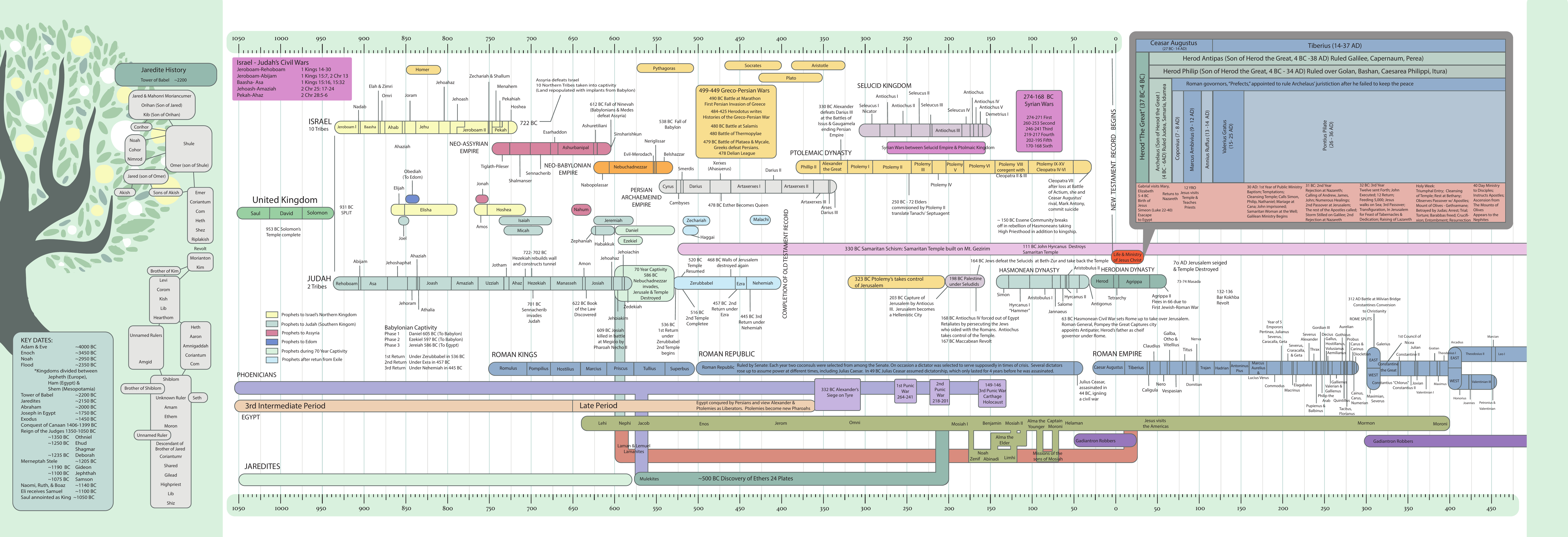
The Rise of Babylon. In 626 BC, Nabopolassar, a Chaldean general, seized control of Babylon and declared independence from Assyria. Allied with the Medes, he destroyed the Assyrian capital of Nineveh in 612 BC — an event celebrated by the prophet Nahum. The fall of Nineveh sent shockwaves through the ancient world: the empire that had terrorized nations for three centuries was gone in a single campaign.
Nebuchadnezzar II. Nabopolassar's son, Nebuchadnezzar II (r. 605–562 BC), became the most powerful ruler in the ancient Near East. He defeated Egypt at the Battle of Carchemish in 605 BC, establishing Babylonian control over the entire Levant. He built the Ishtar Gate, the Hanging Gardens (if they existed), and expanded Babylon into one of the largest cities in the world.
The Three Deportations. Judah's destruction came in three stages:
| Deportation | Date | King | Details |
|---|---|---|---|
| First | 605 BC | Jehoiakim | Nebuchadnezzar takes hostages, including Daniel (Daniel 1:1-6) |
| Second | 597 BC | Jehoiachin | King deported; Temple treasures looted; 10,000 exiles including Ezekiel (24:14-16) |
| Third | 586 BC | Zedekiah | Jerusalem destroyed; Temple burned; Zedekiah blinded; mass deportation (25:1-21) |
The Destruction of Solomon's Temple. On the seventh (or tenth) day of the fifth month (Av), 586 BC (some chronologies 587 BC), Nebuzaradan, captain of Nebuchadnezzar's guard, burned "the house of the Lord, and the king's house, and all the houses of Jerusalem, and every great man's house" (25:9). The Temple that Solomon had built — the dwelling place of God's name, the center of Israelite worship for over 400 years — ceased to exist. The bronze pillars (Jachin and Boaz), the bronze sea, and the bronze stands were broken up and carried to Babylon (25:13-17). The ark of the covenant is never mentioned in the account of the destruction. Its fate remains one of the great mysteries of biblical history.
The Book of Mormon opens with a precise historical marker: "in the commencement of the first year of the reign of Zedekiah, king of Judah" (1 Nephi 1:4). This places Lehi's ministry squarely in the world of 2 Kings 24–25.
Zedekiah's Jerusalem. Zedekiah (r. 597–586 BC) was installed as a puppet king by Nebuchadnezzar after the second deportation. His given name was Mattaniah; Nebuchadnezzar changed it to Zedekiah (24:17). He was the uncle of the deported King Jehoiachin and the last king of the Davidic line to sit on the throne in Jerusalem. His court was divided between pro-Babylonian and pro-Egyptian factions. Jeremiah urged submission to Babylon as God's will; the nationalist prophets urged rebellion. Into this volatile environment, Lehi received his prophetic call. (The Book of Mormon dates Lehi's call to about 600 BC by its own approximate reckoning; historians place Zedekiah's accession in 597 BC — the two are close. On why Kings, finished in exile, ends precisely at Zedekiah's accession rather than fighting the Book of Mormon's timeline, see the Field Guide, Did They Have the Book of Kings?.)
The "Many Prophets" of 1 Nephi 1:4. Nephi records that "there came many prophets, prophesying unto the people that they must repent, or the great city Jerusalem must be destroyed" (1 Nephi 1:4). These include Jeremiah, Zephaniah, Habakkuk, and Urijah (Jeremiah 26:20-23) — and now Lehi himself. The response to these prophets was anger and persecution (1 Nephi 1:20; cf. Jeremiah 38:4-6, where Jeremiah is thrown into a cistern).
Lehi's Departure. Lehi and his family depart Jerusalem at some point during Zedekiah's reign, before the final siege of 588-586 BC. The timing is significant: they leave while there is still time to escape, but after it has become clear that destruction is inevitable. The brass plates they obtain from Laban (1 Nephi 4) preserve the scriptural heritage that will otherwise be lost to the exiles — a parallel to the Torah scroll's near-loss under Ahaz.
Mulek. Helaman 6:10 and 8:21 record that "Mulek" (from malki, "my king"), a son of Zedekiah, survived the slaughter of Zedekiah's sons described in 2 Kings 25:7. Led by the Lord to the Americas, Mulek and his people settled in the land of Zarahemla. The survival of a Davidic prince outside the land of Israel is a Latter-day Saint addition to the biblical narrative — a remnant of the royal line preserved through divine intervention.
The exile is not simply a political catastrophe; it is a theological crisis of the highest order. How can the God who promised David an eternal throne (2 Samuel 7:16) allow the throne to be destroyed? How can the God who chose Jerusalem allow the Temple to be burned? The answer developed by the biblical writers — and expanded by later prophets — is one of the most important theological frameworks in all of scripture. (For a faithful approach to the exile's hardest questions — covenant justice, "deepens not debunks," and how sincere reform still did not avert the fall — see the Field Guide, Reading Faithfully.)
Exile as Covenant Consequence. The Deuteronomic historian presents the exile as the inevitable result of covenant violation. Deuteronomy 28:63-64 had warned: "The Lord shall scatter thee among all people, from the one end of the earth even unto the other." The exile is not divine caprice or divine weakness; it is divine faithfulness to the covenant's own terms. God does exactly what He said He would do.
The Promise of Return. But Deuteronomy does not end with curses. Deuteronomy 30:1-5 promises that after exile, "if thou shalt return unto the Lord thy God, and shalt obey his voice... the Lord thy God will turn thy captivity, and have compassion upon thee, and will return and gather thee from all the nations, whither the Lord thy God hath scattered thee." The exile contains within itself the promise of return. This is not a reversal of the judgment but its completion: the purpose of exile is to create the conditions for teshuvah (תְּשׁוּבָה, return/repentance; for the full word study, see Word Studies).
The Scattering and Gathering as Grand Narrative. In Latter-day Saint theology, the scattering and gathering of Israel is not a single historical event but the grand narrative of the covenant people across all of history. The fall of the northern kingdom (722/721 BC), the Babylonian exile (586 BC), the Roman destruction of the Second Temple (70 AD), and the worldwide Jewish diaspora are all stages of the scattering. The gathering — prophesied by Isaiah, Jeremiah, Ezekiel, and Nephi — is underway in the last days through the restored gospel (see 1 Nephi 22:3-12; 3 Nephi 16:4-5; 10th Article of Faith).
Jehoiachin's Release — The Last Verse (25:27-30). The book of 2 Kings ends with a remarkable postscript: Jehoiachin, the exiled king, is released from prison in Babylon by Evil-merodach (Nebuchadnezzar's successor), given a seat at the royal table, and provided a daily allowance for the rest of his life. This is not restoration — he remains in Babylon, his kingdom gone. But it is survival. The Davidic line endures. The promise is not extinguished. For the original readers of 2 Kings, writing in exile, this ending was a candle in the darkness: God has not forgotten His covenant with David. (Why the book ends exactly here — the clue Jehoiachin's release gives to who finished Kings, and when — is traced in the Field Guide, How 1 Kings Was Written.)
Next file: 03_Key_Passages_Study.md
3. Week 29: Key Passages Study
The Text
"For so it was, that the children of Israel had sinned against the Lord their God, which had brought them up out of the land of Egypt, from under the hand of Pharaoh king of Egypt, and had feared other gods, and walked in the statutes of the heathen, whom the Lord cast out from before the children of Israel, and of the kings of Israel, which they had made." (17:7-8)
"And they rejected his statutes, and his covenant that he made with their fathers, and his testimonies which he testified against them; and they followed vanity, and became vain, and went after the heathen that were round about them, concerning whom the Lord had charged them, that they should not do like them." (17:15)
"Therefore the Lord was very angry with Israel, and removed them out of his sight: there was none left but the tribe of Judah only." (17:18)
Key Hebrew Terms
- chata (חָטָא) — "to sin, to miss the mark." The root appears in verse 7: the children of Israel had sinned. The word carries the connotation of missing a target — not merely moral failure but directional failure. They aimed at something other than God and missed everything.
- avdu (עָבְדוּ) — "they served" (from avad, עָבַד). Verse 12: "they served idols" (va-ya'avdu gillulim). The same verb used for serving God (la'avod et Hashem) is now directed at false gods. Service is not optional for human beings — the only question is whom you will serve.
- lo sham'u (לֹא שָׁמְעוּ) — "they did not listen/obey." Verse 14: despite every prophet, every sign, every warning — they did not listen. The Hebrew shama (שָׁמַע) means both "to hear" and "to obey." In Hebrew thought, hearing without obeying is not really hearing at all.
- hevel (הֶבֶל) — "vanity, vapor, breath." Verse 15: "they followed vanity (hevel) and became vain (va-yehbalu)." The same word used in Ecclesiastes ("vanity of vanities"). By pursuing what is empty, they became empty.
The Catalog of Sins (17:7-17)
This passage functions as a theological autopsy — a systematic diagnosis of why Israel died as a nation. The sins cataloged include:
- Fearing other gods (v. 7) — the fundamental betrayal
- Walking in the statutes of the nations (v. 8) — cultural assimilation
- Building high places in every city (v. 9) — decentralized, unsupervised worship
- **Setting up pillars and *asherim*** (v. 10) — Canaanite fertility religion
- Burning incense at high places (v. 11) — worship misdirected
- Serving idols (v. 12) — despite explicit divine prohibition
- Rejecting prophetic warnings (v. 13-14) — hardening the neck
- Rejecting God's covenant and statutes (v. 15) — active repudiation
- Following vanity and becoming vain (v. 15) — spiritual emptying
- Worshipping the host of heaven (v. 16) — astral religion
- Serving Baal (v. 16) — storm-god worship
- Child sacrifice (v. 17) — passing sons and daughters through fire
- Divination and sorcery (v. 17) — attempting to manipulate the divine
The catalog is not random. It moves from the general (fearing other gods) to the specific and horrifying (child sacrifice), building a case that is overwhelming in its cumulative weight.
Rabbinic Commentary
Rashi on 17:9 — "And the children of Israel did secretly things that were not right": Rashi notes that the phrase "secretly" (va-yechappu) suggests they knew their actions were wrong. They did not worship idols in ignorance but in defiance — covering their actions precisely because they understood the covenant they were violating.
Radak on 17:13 — "I testified against them by every prophet": Radak observes that God's patience is demonstrated by the sheer number of prophets sent. Each prophet was a fresh opportunity to repent. The destruction came not after one warning but after generations of warnings.
Latter-day Saint Connections
D&C 1:11-16 provides a strikingly parallel catalog: the people have "strayed from mine ordinances, and have broken mine everlasting covenant; they seek not the Lord to establish his righteousness, but every man walketh in his own way, and after the image of his own god." The pattern is identical: covenant possession, covenant violation, prophetic warning, rejection of warning, consequence.
Alma 46:8 — "Thus we see how quick the children of men do forget the Lord their God, yea, how quick to do iniquity, and to be led away by the evil one." Mormon's editorial commentary echoes the Deuteronomic historian's — both are trying to help future readers learn from past failure.
General Conference — Elder David A. Bednar, "In the Space of Not Many Years" (October 2024): "How could a once-righteous people become hardened and wicked in such a short period of time? How could people so quickly forget the God who had blessed them so abundantly?" Bednar poses the exact question 2 Kings 17 answers — how a covenant people forgot the God who had brought them "up out of the land of Egypt."
Study Questions
- Which of the thirteen sins in the catalog do you think came first historically? Which enabled the others?
- Verse 15 says they "followed vanity and became vain" — you become what you worship. How does this principle operate in modern life?
- The text says God sent prophets repeatedly (v. 13). What does God's persistence tell you about His character? What does Israel's refusal tell you about human nature?
- How does the fall of Israel in 722/721 BC foreshadow the fall of Judah 135 years later? Does Judah learn from Israel's example?
The Text
"And he did that which was right in the sight of the Lord, according to all that David his father did. He removed the high places, and brake the images, and cut down the groves, and brake in pieces the brasen serpent that Moses had made: for unto those days the children of Israel did burn incense to it: and he called it Nechushtan." (18:3-4)
"He trusted in the Lord God of Israel; so that after him was none like him among all the kings of Judah, nor any that were before him. For he clave to the Lord, and departed not from following him, but kept his commandments, which the Lord commanded Moses." (18:5-6)
Key Hebrew Terms
- batach (בָּטַח) — "to trust, to lean on, to place full weight upon." This is Hezekiah's defining word, appearing in verse 5 and repeated throughout the Sennacherib narrative (18:19, 20, 21, 22, 24, 30; 19:10). The Rabshakeh's entire strategy is to undermine Hezekiah's bitachon (בִּטָּחוֹן, trust/confidence). For the full seven-verse analysis, the "chair" illustration, and Greek/Latin equivalents, see Word Studies.
- davaq (דָּבַק) — "to cling, to cleave, to adhere." Verse 6: "he clave to the Lord." The same verb used in Genesis 2:24 for a man cleaving to his wife. The relationship between Hezekiah and God is described in the language of marriage — intimate, committed, inseparable.
- Nechushtan (נְחֻשְׁתָּן) — The name Hezekiah gave to Moses' brass serpent before destroying it — a wordplay combining nachash (נָחָשׁ, serpent) and nechoshet (נְחֹשֶׁת, copper/bronze), performing an act of linguistic desacralization. For the full etymology and Siloam Tunnel context, see Historical Cultural Context.
Rabbinic Commentary
Rashi on 18:4 — Rashi asks: Why didn't Asa or Jehoshaphat, who were righteous kings, destroy the serpent? Answer: because those kings left room for their successors to earn merit. Hezekiah's predecessors left the serpent intact so that Hezekiah could distinguish himself by destroying it. This teaching (from Chullin 6b-7a) reflects a broader rabbinic principle: God arranges history so that each generation has its own work to do.
Rashi on 18:5 — "After him was none like him": Rashi reconciles this with the identical claim about Josiah (23:25) by distinguishing the two: Hezekiah excelled in bitachon (trust), while Josiah excelled in teshuvah (repentance/return). Each was unparalleled in his particular virtue.
Latter-day Saint Connections
D&C 121:45 — "Let thy bowels also be full of charity towards all men, and to the household of faith, and let virtue garnish thy thoughts unceasingly; then shall thy confidence wax strong in the presence of God." The Hebrew bitachon and the English "confidence" share the same core meaning: a settled assurance that God is reliable. Hezekiah's confidence was not self-confidence but God-confidence.
Alma 33:19-22 — Alma explicitly identifies the brass serpent as a type of Christ: "a type was raised up in the wilderness, that whosoever would look upon it might live. And many did look and live." Hezekiah's destruction of the physical serpent does not destroy the typology — it purifies it. The symbol must die so that the reality it pointed to can be seen clearly.
General Conference — President Dallin H. Oaks, "Trust in the Lord" (October 2019): "There is so much we do not know that our only sure reliance is to trust in the Lord and His love for His children." This is batach in a sentence — the settled, full-weight reliance that made Hezekiah "none like him among all the kings of Judah."
Study Questions
- What is the difference between trusting God intellectually and trusting God the way batach implies — placing your full weight on Him?
- Hezekiah destroyed a 600-year-old object that Moses himself had made at God's command. What modern sacred traditions, practices, or objects might need to be re-evaluated for the same reason?
- The Rabshakeh attacks Hezekiah's trust seven times (18:19-30). What are the most common arguments used today to undermine faith?
- How do you "cling" (davaq) to God in practical daily terms?
The Text
"And Hezekiah received the letter of the hand of the messengers, and read it: and Hezekiah went up into the house of the Lord, and spread it before the Lord." (19:14)
"And Hezekiah prayed before the Lord, and said, O Lord God of Israel, which dwellest between the cherubims, thou art the God, even thou alone, of all the kingdoms of the earth; thou hast made heaven and earth. Lord, bow down thine ear, and hear: open, Lord, thine eyes, and see: and hear the words of Sennacherib, which hath sent him to reproach the living God." (19:15-16)
"Now therefore, O Lord our God, I beseech thee, save thou us out of his hand, that all the kingdoms of the earth may know that thou art the Lord God, even thou only." (19:19)
"And it came to pass that night, that the angel of the Lord went out, and smote in the camp of the Assyrians an hundred fourscore and five thousand: and when they arose early in the morning, behold, they were all dead corpses." (19:35)
Key Hebrew Terms
- paras (פָּרַשׂ) — "to spread out, to stretch out." Verse 14: Hezekiah spread the letter before the Lord. The physical act is extraordinary: he takes a piece of diplomatic correspondence — a threatening letter from the most powerful empire on earth — and lays it out in the Temple before God, as if saying: "Read this. This is what we're facing. This is Your problem now." The spreading is an act of both humility and audacity.
- hitpallel (הִתְפַּלֵּל) — "to pray" (reflexive of palal, to judge/intercede). Verse 15: Hezekiah prayed. The reflexive form suggests self-examination within prayer — not merely making requests but placing oneself under God's judgment. Hebrew prayer is not monologue toward heaven; it is standing before the divine court.
- mal'akh Hashem (מַלְאַךְ ה׳) — "the angel of the Lord." Verse 35. The word mal'akh (מַלְאָךְ) means "messenger" — one sent with a mission. Whether this was a supernatural being, a plague, or a military catastrophe is not specified. The text is interested in the theological point: God acted, and 185,000 died.
Rabbinic Commentary
Rashi on 19:35 — "That night": Rashi identifies this as the night of Passover, connecting the destruction of the Assyrians to the destruction of the Egyptian firstborn. The angel who struck Egypt struck again. God's saving acts occur at the same liturgical moments, creating a pattern: Passover is the night of deliverance.
Sanhedrin 95a — a rabbinic reading holds that the 185,000 were commanders (each leading thousands), so that striking the leadership shattered the whole army. (For the fuller rabbinic treatment of the deliverance — the Passover-night connection and the "breath of the angel" tradition — see Jewish Perspective.)
Rashi on 19:15 — "Which dwellest between the cherubims": Hezekiah's prayer begins by locating God — not in the sky, not in abstraction, but between the cherubim on the ark of the covenant, in the Holy of Holies. His prayer is rooted in physical sacred space, in the specific God who chose to dwell in this specific Temple.
Latter-day Saint Connections
Alma 14:26-28 — Alma and Amulek in prison: "And Alma cried, saying: How long shall we suffer these great afflictions, O Lord? O Lord, give us strength according to our faith." Like Hezekiah, they cry to God in a moment of siege — surrounded by enemies, facing death. And like Hezekiah, they receive miraculous deliverance: the prison walls fall, and the persecutors are destroyed.
D&C 98:1-3 — "Fear not, let your hearts be comforted; yea, rejoice evermore, and in everything give thanks; waiting patiently on the Lord, for your prayers have entered into the ears of the Lord of Sabaoth." The phrase "Lord of Sabaoth" (Hashem Tzevaot, the Lord of Hosts) connects directly to Hezekiah's prayer: the God of armies fights for those who trust Him.
General Conference — Elder J. Devn Cornish, "The Privilege of Prayer" (October 2011): "Because He answers me, including sometimes in predictive and miraculous ways, I know He lives." Hezekiah spread the letter before the Lord and was answered that very night; Cornish testifies that laying a real need before God still brings a real answer.
Study Questions
- Hezekiah spread the letter before the Lord. What would it look like to "spread your problems before the Lord" in your own prayer life?
- Hezekiah's prayer (19:15-19) has a specific structure: worship, acknowledgment, presentation of the problem, request, purpose ("that all kingdoms may know"). How does this structure compare to the way you pray?
- The deliverance came "that night" (19:35) — after the prayer. How do you handle the gap between praying and seeing an answer?
- If Rashi is right that the angel struck on Passover night, what does it mean that God's deliverance recurs at the same moments in the calendar?
The Text
"And Hilkiah the high priest said unto Shaphan the scribe, I have found the book of the law in the house of the Lord. And Hilkiah gave the book to Shaphan, and he read it." (22:8)
"And Shaphan the scribe came to the king, and brought the king word again, and said, Thy servants have gathered the money that was found in the house, and have delivered it into the hand of them that do the work, that have the oversight of the house of the Lord. And Shaphan the scribe shewed the king, saying, Hilkiah the priest hath delivered me a book. And Shaphan read it before the king." (22:9-10)
"And it came to pass, when the king had heard the words of the book of the law, that he rent his clothes." (22:11)
Key Hebrew Terms
- sefer ha-Torah (סֵפֶר הַתּוֹרָה) — "the book of the Law/Teaching." The word sefer (סֵפֶר) comes from the root s-f-r, which means "to count, to recount, to tell." A sefer is not just a physical scroll but a record of speech — divine speech committed to writing. The definite article (ha-Torah) suggests this was not a Torah but the Torah — a specific, known document that had been lost.
- qara (קָרַע) — "to tear, to rend." Verse 11: "he rent (qara) his clothes." The tearing of garments is the outward sign of inner grief in Israelite culture. Josiah's reaction tells us everything: he recognized the words as authoritative, he understood how far Judah had strayed, and he was devastated. This is not a king discovering an interesting old document — this is a man hearing God's voice for the first time and realizing the depth of the betrayal.
- matzati (מָצָאתִי) — "I have found." Hilkiah's announcement uses the verb matza (מָצָא), the same verb used when Rachel "found" mandrakes (Genesis 30:14), when Joseph's cup was "found" in Benjamin's sack (Genesis 44:12), and when Solomon says "who can find a virtuous woman?" (Proverbs 31:10). Finding the Torah is presented as discovery — something lost that was always there, waiting to be uncovered.
Rabbinic Commentary
Rashi on 22:8 — Rashi explains that this was Moses' own Torah scroll, hidden by the Levites during Ahaz's reign of apostasy. For the full backstory — Ahaz burning scrolls, the fifty-seven years of concealment, and the apostasy-restoration pattern — see Historical Cultural Context.
Radak on 22:8 — Radak notes that the scroll was found open to Deuteronomy 28:36: "The Lord shall bring thee, and thy king which thou shalt set over thee, unto a nation which neither thou nor thy fathers have known." The first words Josiah heard were a direct prophecy of the exile — spoken to a king who was doing everything he could to prevent it.
Megillah 14b — The Talmud records that Josiah's response to the scroll was immediate and total. He did not convene a committee or wait for scholarly analysis. He tore his garments, sent to inquire of a prophet (Huldah), and began reforming the nation. The scroll's authority was self-evident to a heart prepared to hear it.
Latter-day Saint Connections
D&C 6:7 — "Seek not for riches but for wisdom, and behold, the mysteries of God shall be unfolded unto you." The Torah scroll was found during a Temple renovation — Josiah was seeking to restore God's house, and in the process, God's word was restored to him. Seeking the right thing leads to finding what you didn't even know was missing. For the broader apostasy-restoration pattern and its parallels to 1 Nephi 13:24-29 and Joseph Smith-History 1:11-12, see Historical Cultural Context.
General Conference — President Ezra Taft Benson, "The Book of Mormon—Keystone of Our Religion" (October 1986): "There is a power in the book which will begin to flow into your lives the moment you begin a serious study of the book." What Josiah discovered — that the recovered word of God pierces and transforms the moment it is truly heard — Benson promises to every serious reader of scripture.
Study Questions
- The Torah was hidden in the Temple for nearly sixty years. How can scripture be "lost" even when it is physically present? Are there scriptures you own but have effectively lost?
- Josiah tore his garments immediately upon hearing the words. When was the last time scripture moved you to that level of grief or conviction?
- Hilkiah said "I have found" — but who really found whom? Did Hilkiah find the Torah, or did the Torah find its moment?
- What does it mean that the scroll was found during renovation — during the act of rebuilding? What must be rebuilt in your spiritual life before lost truths can surface?
The Text
"So Hilkiah the priest, and Ahikam, and Achbor, and Shaphan, and Asahiah, went unto Huldah the prophetess, the wife of Shallum the son of Tikvah, the son of Harhas, keeper of the wardrobe; (now she dwelt in Jerusalem in the college;) and they communed with her." (22:14)
"And she said unto them, Thus saith the Lord God of Israel, Tell the man that sent you to me, Thus saith the Lord, Behold, I will bring evil upon this place, and upon the inhabitants thereof, even all the words of the book which the king of Judah hath read: because they have forsaken me, and have burned incense unto other gods." (22:15-17)
"But to the king of Judah which sent you to enquire of the Lord, thus shall ye say to him, Thus saith the Lord God of Israel, As touching the words which thou hast heard; because thine heart was tender, and thou hast humbled thyself before the Lord... thou shalt be gathered into thy grave in peace." (22:18-20)
Key Hebrew Terms
- neviah (נְבִיאָה) — "prophetess." The feminine form of navi (נָבִיא, prophet). The word carries identical prophetic authority — there is no diminished or qualified form. Huldah is not called "a woman who prophesies" or "a female seer." She is neviah — prophetess — the same title given to Miriam (Exodus 15:20) and Deborah (Judges 4:4).
- rakh levavekha (רַךְ לְבָבְךָ) — "your heart was tender." Verse 19. The word rakh (רַךְ) means soft, tender, young. God's reason for mercy toward Josiah is the tenderness — the softness — of his heart. This is the opposite of the "hardened heart" (lev kasheh, לֵב קָשֶׁה) that characterized Pharaoh. Josiah's heart was penetrable by God's word; the Torah scroll pierced it.
- nikna'ta (נִכְנַעְתָּ) — "you humbled yourself." From kana (כָּנַע), to submit, to humble, to be brought low. Josiah's humility is the precondition for receiving mercy. He did not argue with the Torah, did not explain it away, did not relativize its demands. He submitted.
Rabbinic Commentary
Huldah's role was unique among Israel's prophets: she authenticated scripture. Her declaration that the Torah scroll was genuine determined the entire course of Josiah's reformation. Without Huldah's validation, the scroll might have been dismissed as a forgery or set aside for further study. She spoke, and the nation moved. For the full rabbinic treatment — including the Megillah 14b reasons for consulting Huldah over Jeremiah, the seven prophetesses tradition, and the Gates of Huldah (Middot 1:3) — see Jewish Perspective.
Latter-day Saint Connections
D&C 25:3, 7 — To Emma Smith: "Thou art an elect lady, whom I have called... and thou shalt be ordained under his hand to expound scriptures, and to exhort the church." The pattern of women exercising spiritual authority, teaching, and expounding scripture is established not in the Restoration but in the Old Testament — and Huldah is its clearest example. For Joel 2:28-29 and the broader prophetic tradition of women in Israel, see Jewish Perspective.
General Conference — Elder Neal A. Maxwell, "Willing to Submit" (April 1985): "we need to break free of our old selves—the provincial, constraining, and complaining selves—and become susceptible to the shaping of the Lord." Josiah's tender heart (rakh) is exactly this susceptibility — a heart soft enough to be reshaped by the word it heard.
Study Questions
- Josiah's court had access to Jeremiah and Zephaniah. Why do you think they chose Huldah? What might this tell us about how God distributes prophetic gifts?
- Huldah's prophecy was not comforting — she confirmed that destruction was coming. She offered Josiah personal mercy but not national deliverance. How do you receive a word from God that is truthful but not what you hoped to hear?
- The "Gates of Huldah" are the only Temple gates named for a prophet. What does this architectural memorial tell you about how ancient Israel valued her ministry?
- Huldah's heart was tender (rakh). What practices keep your heart soft enough to be pierced by scripture?
The Text
"And in the fifth month, on the seventh day of the month, which is the nineteenth year of king Nebuchadnezzar king of Babylon, came Nebuzaradan, captain of the guard, a servant of the king of Babylon, unto Jerusalem: and he burnt the house of the Lord, and the king's house, and all the houses of Jerusalem, and every great man's house burnt he with fire." (25:8-9)
"And the pillars of brass that were in the house of the Lord, and the bases, and the brasen sea that was in the house of the Lord, did the Chaldees break in pieces, and carried the brass of them to Babylon." (25:13)
"But the captain of the guard left of the poor of the land to be vinedressers and husbandmen." (25:12)
Key Hebrew Terms
- saraf (שָׂרַף) — "to burn." Verse 9: "he burned (va-yisrof) the house of the Lord." The same verb used for the burning of offerings on the altar. The Temple itself is now consumed by fire — not the fire of sacrifice but the fire of destruction. The holy space where fire ascended to God is itself made into a burnt offering.
- beit Hashem (בֵּית ה׳) — "the house of the Lord." The Temple is named first in the list of destroyed buildings (v. 9). Its destruction is the theological center of the catastrophe. The Temple was not merely a building but the place where God's shem (name) dwelt (1 Kings 8:29). When the Temple burns, the visible sign of God's presence in Israel is extinguished.
- dallat ha-aretz (דַּלַּת הָאָרֶץ) — "the poor of the land." Verse 12. The word dal (דַּל) means poor, weak, thin, lowly. After deporting the king, the nobility, the craftsmen, the military, the priests — Nebuchadnezzar left only the poorest. Judah's population was stripped of its leadership, its educated class, its artisans, its wealth. What remained was a skeleton population with no capacity for rebellion — or for cultural preservation.
- kol beit gadol (כָּל בֵּית גָּדוֹל) — "every great house." Verse 9. The phrase is ambiguous: does it mean large buildings, or houses of important people? The ambiguity may be deliberate. Everything great — architecturally and socially — was destroyed.
Rabbinic Commentary
Rashi on 25:9 — "Every great man's house": Rashi interprets "great houses" as synagogues and houses of Torah study (batei midrashot). The destruction was not merely political but intellectual and spiritual. The places where Torah was taught, where prayer was offered, where the tradition was transmitted — these were burned.
Rashi on 24:14 — "Craftsmen and gatekeepers" (charash u-masger): Rashi reads charash not as "craftsman" but as "one before whom all fall silent" (macharishim) — i.e., a Torah scholar so brilliant that when he speaks, everyone listens in silence. And masger: "one who opens and no one can shut" — a scholar who resolves disputed questions definitively. Nebuchadnezzar's strategic genius was to deport the teachers first. A people without teachers cannot sustain their identity.
Sanhedrin 38a — The deportation of scholars before the final destruction explains why the exile was so spiritually devastating. The remaining population, without guidance, could not maintain Torah observance. The lesson: the first target in any spiritual destruction is education.
Latter-day Saint Connections
1 Nephi 1:4, 13 — Lehi prophesied in this very moment: "in the commencement of the first year of the reign of Zedekiah" he saw in vision "the destruction of Jerusalem" (1 Nephi 1:13). Lehi was a witness to the world described in 2 Kings 24-25. His departure from Jerusalem was an escape from the very catastrophe narrated here.
1 Nephi 2:13 — Laman and Lemuel "did murmur... because they knew not the dealings of that God who had created them." They could not accept that Jerusalem would fall. The text of 2 Kings 25 is the vindication of Lehi's prophecy and the refutation of Laman and Lemuel's disbelief.
3 Nephi 8-10 — The destruction of Nephite cities at Christ's death echoes the destruction of Jerusalem: fire, darkness, the collapse of buildings, the death of the wicked. Both destructions serve as covenant judgment and as the prelude to a new dispensation.
General Conference — President Marion G. Romney, "The Tragic Cycle" (October 1977): "Jerusalem was destroyed and its inhabitants were scattered throughout the earth because of their rejection of God's laws of righteous living." Romney names the catastrophe of 2 Kings 25 for what the Deuteronomic historian says it is — covenant judgment — while holding open the hope that the cycle can be broken by return.
Study Questions
- The Temple is burned, the pillars are broken, the bronze sea is shattered. What does it feel like to lose the physical center of your worship? How would you respond if your most sacred space were destroyed?
- Rashi says "great houses" means synagogues and schools. What institutions of learning and worship would be equivalent in our day?
- Only the poorest of the land were left behind (25:12). What does this tell you about who Babylon considered valuable? What does God consider valuable?
- The book ends with Jehoiachin released from prison (25:27-30). Why does the Deuteronomic historian end with this small act of mercy? What hope does it preserve?
- Lehi departed from this world. What did he carry with him (the brass plates, his family, his testimony) that the exiles in Babylon did not have?
Next file: 04_Word_Studies.md
4. Week 29: Word Studies
The Hebrew vocabulary of 2 Kings 16–25 carries the weight of national catastrophe. These are the words that describe how two kingdoms — Israel and Judah — moved from covenant to exile, from Temple to ruin. But embedded in the same language are the seeds of return. The root that means "exile" also means "reveal." The word for "repentance" literally means "return." Even in the vocabulary of destruction, Hebrew encodes the possibility of restoration.
Each word study below traces the Hebrew root through its appearances in this week's reading, its broader biblical usage, its Greek and Latin equivalents, and its relevance to Latter-day Saint scripture and theology.
Root and Form
The root is g-l-h (גלה), a three-letter root that produces two seemingly contradictory meanings:
- To exile, deport, remove — 2 Kings 17:6: "the king of Assyria... carried Israel away (va-yegel) into Assyria"; 25:21: "So Judah was carried away (va-yigel) out of their land."
- To reveal, uncover, disclose — Isaiah 53:1: "to whom is the arm of the Lord revealed (nigleta)?" Amos 3:7: "He revealeth (yigleh) his secret unto his servants the prophets."
The Double Meaning
That the same root carries both meanings is not an accident of language but a theological insight embedded in the word itself. Exile is revelation. When Israel is stripped of its land, Temple, king, and national identity, what is revealed is the nation's true spiritual condition — the idolatry, the unfaithfulness, the rejection of prophets that had been hidden under the surface of religious practice. The coverings are removed (galah), and the truth is exposed.
Conversely, revelation can feel like exile. When God reveals truth, it often displaces us from comfortable assumptions, familiar territories, and settled identities. Abraham was exiled from Ur into revelation. Moses was exiled from Egypt into revelation. Lehi was exiled from Jerusalem into revelation.
Related Forms
- galut (גָּלוּת) — exile, diaspora. The noun form that names Israel's condition from 586 BC onward.
- golah (גּוֹלָה) — the exiled community, the deportees. Used in Ezra and Nehemiah for the returning exiles.
- gilui (גִּלּוּי) — revelation, uncovering. Used in later Hebrew for divine disclosure.
Greek and Latin
- Greek: aichmalōsia (αἰχμαλωσία) — captivity, from aichmē (spear point) + halōsis (capture). The Greek emphasizes the military dimension: exile is being captured at spear-point. The Hebrew emphasizes the spiritual dimension: exile is being uncovered.
- Latin: captivitas — captivity. Same military emphasis as the Greek.
Cross-Language Connections
| Language | Term | Source |
|---|---|---|
| Hebrew | galah (גָּלָה) — to uncover, remove; go into exile; root g-l-h (גלה) | BLB H1540 |
| Greek (LXX) | aichmalōsia (αἰχμαλωσία) — captivity, being led away captive | BLB G161 |
| Latin (Vulgate) | captivitas — captivity | Logeion: captivitas |
| English | exile — enforced removal from one's homeland (the same root also means to reveal) | Merriam-Webster · Webster's 1828 · Etymonline |
Latter-day Saint Connection
The doctrine of the gathering of Israel (10th Article of Faith; 3 Nephi 16:4-5) presupposes the scattering described by galah. The Book of Mormon's own existence — sacred scripture hidden (galah as "uncover") and then revealed (galah as "reveal") — embodies the double meaning of this root. The gold plates were both exiled (buried, hidden, removed from circulation) and revealed (uncovered by Joseph Smith). Exile and revelation are the same motion viewed from different angles.
Root and Form
The root is b-t-ch (בטח). It appears more frequently in 2 Kings 18–19 than in almost any other biblical narrative. Hezekiah's defining quality — and the Rabshakeh's primary target — is bitachon (בִּטָּחוֹן), trust/confidence.
Key appearances:
- 18:5: "He trusted (batach) in the Lord God of Israel."
- 18:19: "What confidence (bitachon) is this wherein thou trustest (batachta)?"
- 18:20: "On whom dost thou trust (batachta)?"
- 18:21: "Thou trustest (batachta) upon the staff of this bruised reed."
- 18:22: "If ye say unto me, We trust (batachnu) in the Lord our God..."
- 18:24: "And put thy trust (va-tivtach) on Egypt for chariots."
- 18:30: "Neither let Hezekiah make you trust (yavtiach) in the Lord."
The Meaning of Trust
Batach does not mean intellectual agreement that God exists. It means to lean your full weight on something — to place yourself in a position where, if the thing you trust fails, you fall. It is the difference between believing a chair can hold you and actually sitting in it. Hezekiah's trust was existential: he staked his city, his kingdom, and his life on God's faithfulness, refusing to surrender to Assyria or ally with Egypt.
The Rabshakeh understood this perfectly. His entire psychological campaign was designed to break Hezekiah's bitachon — to make the people ask: "Can we really afford to trust God when 185,000 Assyrian soldiers are camped outside our walls?" The answer, delivered by the angel in 19:35, was yes.
Related Forms
- betach (בֶּטַח) — security, safety. "Israel then shall dwell in safety (betach) alone" (Deuteronomy 33:28).
- mivtach (מִבְטָח) — object of trust, confidence. "The Lord shall be thy confidence (mivtach)" (Proverbs 3:26).
Greek and Latin
- Greek: peithō (πείθω) — to persuade, and in the passive/perfect, to trust, to be confident. The perfect tense pepoitha (I have been persuaded, therefore I trust) captures the Hebrew sense: trust is the settled state that follows being persuaded of God's reliability.
- Latin: confidere — to trust fully, from con- (with/fully) + fidere (to trust). English "confidence" preserves this root.
Cross-Language Connections
| Language | Term | Source |
|---|---|---|
| Hebrew | batach (בָּטַח) — to trust, lean one's full weight on; root b-t-ch (בטח) | BLB H982 |
| Greek (LXX) | peithō (πείθω) — to persuade; in the perfect (pepoitha) to be confident, to trust | BLB G3982 |
| Latin (Vulgate) | confidere — to trust fully (con- + fidere) | Logeion: confido |
| English | trust — to rely on with one's full weight; cf. confidence (< confidere) | Merriam-Webster · Webster's 1828 · Etymonline |
Latter-day Saint Connection
D&C 121:45: "Let virtue garnish thy thoughts unceasingly; then shall thy confidence wax strong in the presence of God." The word "confidence" here maps directly onto bitachon. Hezekiah's virtue — his destruction of idols, his faithfulness to the covenant — was the precondition for his confidence. He could trust God because he had been faithful to God. The Rabshakeh tried to argue that Hezekiah's destruction of the high places had offended God (18:22), but the opposite was true: Hezekiah's obedience was the very ground of his trust.
Proverbs 3:5-6, one of the most quoted passages in Latter-day Saint devotion, uses the same root: "Trust (betach) in the Lord with all thine heart."
Root and Form
The root is s-f-r (ספר), which produces a family of words all related to the act of recording, recounting, and communicating:
- sefer (סֵפֶר) — book, scroll, written document
- safar (סָפַר) — to count, to recount, to tell a story
- sofer (סוֹפֵר) — scribe, one who writes and counts
- sippur (סִפּוּר) — story, narrative
- mispar (מִסְפָּר) — number
Appearance in 2 Kings 22
The critical appearance is 22:8: "I have found the sefer ha-Torah (סֵפֶר הַתּוֹרָה) in the house of the Lord." The sefer here is not merely a physical object — a scroll of parchment or papyrus — but a record of divine speech. The Torah is God's words committed to material form. When Hilkiah says "I have found the sefer," he is announcing the recovery of God's voice, which had been silenced (or at least muffled) during decades of apostasy.
The Sefer as Living Object
In Hebrew thought, a sefer is not passive. It acts. When the sefer ha-Torah is read to Josiah (22:10), it produces an immediate physical response: the king tears his garments. The scroll does not sit on a shelf waiting to be interpreted — it confronts, convicts, and transforms. This is why the Torah is read aloud in synagogue, not silently: scripture is speech, and speech requires a listener.
Greek and Latin
- Greek: biblos (βίβλος) — book, scroll. From the Phoenician city of Byblos, a center of papyrus trade. The word "Bible" derives from the plural ta biblia — "the books."
- Latin: liber — book. Also means "free" — preserving an ancient association between writing, knowledge, and liberation.
Cross-Language Connections
| Language | Term | Source |
|---|---|---|
| Hebrew | sefer (סֵפֶר) — book, scroll, written document; root s-f-r (ספר), to count/recount | BLB H5612 |
| Greek (LXX) | biblos (βίβλος) — a written book, a roll, a scroll | BLB G976 |
| Latin (Vulgate) | liber — book (the same word also means "free") | Logeion: liber |
| English | book — a written volume or record; cf. Bible (< Greek ta biblia, "the books") | Merriam-Webster · Webster's 1828 · Etymonline |
Latter-day Saint Connection
The Book of Mormon is, in its very title, a sefer — a book, a record, a scroll. Its narrative of being hidden in the earth during apostasy and then brought forth by a young man seeking God mirrors the discovery of the Torah scroll in the Temple during Josiah's renovation. In both cases, the sefer was always there — buried, hidden, waiting — and its recovery catalyzed reformation. The Doctrine and Covenants similarly emerged as a sefer: divine speech committed to writing, producing transformation in those who hear it.
2 Nephi 29:3 — "A Bible! A Bible! We have got a Bible, and there cannot be any more Bible." Nephi's prophecy warns against those who treat the sefer as closed — who believe that God's speech ended with a particular scroll. The discovery in 2 Kings 22 proves the opposite: scripture can be lost and found, and God's word is never finished.
Root and Form
The root is n-b-a (נבא), from which come:
- navi (נָבִיא) — prophet (masculine)
- neviah (נְבִיאָה) — prophetess (feminine)
- nevuah (נְבוּאָה) — prophecy
- hitnabe (הִתְנַבֵּא) — to prophesy (reflexive)
The word navi likely derives from the Akkadian nabu — "to call, to proclaim." A navi is not primarily a predictor of the future but a spokesperson for God — one who is called by God and calls out God's message.
Huldah (חֻלְדָּה) — Neviah in Action
Huldah is introduced in 22:14 as Huldah ha-neviah (חֻלְדָּה הַנְּבִיאָה) — "Huldah the prophetess." The feminine form carries identical authority to the masculine. There is no subordinate title, no qualification, no diminished role. She receives the delegation from the king, delivers an oracle in the standard prophetic formula ("Thus saith the Lord"), and her words determine national policy. The Torah scroll's authenticity was confirmed not by the high priest, not by a male prophet, but by a neviah.
The Seven Prophetesses
The Talmud (Megillah 14a) identifies seven prophetesses in Israel — Sarah, Miriam, Deborah, Hannah, Abigail, Huldah, and Esther — each exercising prophetic authority in a distinct mode. For the full list with scripture references and a detailed table, see Jewish Perspective.
Greek and Latin
- Greek: prophētis (προφῆτις) — prophetess. The feminine of prophētēs. Anna in Luke 2:36 is called prophētis, connecting the New Testament directly to the tradition of female prophetic authority established by figures like Huldah.
- Latin: prophetissa — prophetess. Used in the Vulgate for both Huldah and Anna.
Cross-Language Connections
| Language | Term | Source |
|---|---|---|
| Hebrew | neviah (נְבִיאָה) — prophetess (feminine of navi, נָבִיא); root n-b-a (נבא), to call/proclaim | BLB H5031 |
| Greek (LXX) | prophētis (προφῆτις) — prophetess (feminine of prophētēs); used of Anna, Luke 2:36 | BLB G4398 |
| Latin (Vulgate) | prophetissa — prophetess (used for both Huldah and Anna) | Logeion: prophetissa |
| English | prophetess — a woman called to speak for God | Merriam-Webster · Webster's 1828 · Etymonline |
Latter-day Saint Connection
Huldah's ministry establishes the Old Testament precedent for the principle that prophetic gifts are not gender-restricted — a truth Joel 2:28-29 prophesies and Peter confirms at Pentecost (Acts 2:17-18; see Jewish Perspective for the full treatment). In the Latter-day Saint tradition, women exercise spiritual gifts including revelation, discernment, healing, and teaching. The Relief Society, organized under prophetic direction, serves as a vehicle for female spiritual leadership.
Eliza R. Snow, second Relief Society General President, was called "Zion's poetess" — and her hymns function prophetically, teaching doctrine and bearing witness. The tradition of the neviah did not end with Huldah.
Root and Form
The root is ch-r-m (חרם). The word cherem describes something or someone devoted to God through total destruction — set apart by being annihilated, removed from human use entirely.
Usage and Context
While cherem does not appear directly in 2 Kings 16–25, its theological shadow lies over the entire narrative. The Canaanite nations were placed under cherem (Deuteronomy 7:2; Joshua 6:17) — they were to be utterly destroyed. Israel's failure to carry out the cherem is part of the sin catalog in 2 Kings 17: they adopted the customs of the very nations they were supposed to have eliminated. Now Israel itself faces a kind of cherem — not annihilation, but exile. The distinction matters enormously.
Cherem vs. Galut: Destruction vs. Exile
The ten tribes of Israel were exiled (galah), not placed under cherem. Judah was exiled, not annihilated. This is the crucial theological distinction in 2 Kings: God punishes through displacement, not through total destruction. The covenant is broken, but the covenant people are not obliterated. Exile preserves the possibility of return. Cherem does not.
This distinction explains why the exiles survive in Babylon. They are punished but not destroyed. They lose their land, their Temple, their king — but not their identity. Daniel, Ezekiel, Esther, Nehemiah, and Ezra all emerge from exile. The exile is severe but survivable precisely because it is galut and not cherem.
Related Forms
- charamim (חֲרָמִים) — devoted things, things under the ban
- macharim (מַחֲרִים) — those who devote to destruction
Greek and Latin
- Greek: anathema (ἀνάθεμα) — a thing devoted, accursed. Paul uses this in Galatians 1:8-9 ("if any man preach any other gospel... let him be accursed") and Romans 9:3 ("I could wish that myself were accursed from Christ for my brethren").
- Latin: anathema — directly borrowed from the Greek. Used in ecclesiastical law for excommunication.
Cross-Language Connections
| Language | Term | Source |
|---|---|---|
| Hebrew | cherem (חֵרֶם) — a thing devoted to God by destruction, the ban; root ch-r-m (חרם) | BLB H2764 |
| Greek (LXX) | anathema (ἀνάθεμα) — a thing devoted (to destruction), accursed | BLB G331 |
| Latin (Vulgate) | anathema — accursed thing (borrowed directly from the Greek) | Logeion: anathema |
| English | anathema — something or someone formally cursed or utterly detested | Merriam-Webster · Webster's 1828 · Etymonline |
Latter-day Saint Connection
The concept of cherem illuminates the Latter-day Saint understanding of covenant consequences. D&C 84:24 describes the Israelites in the wilderness: "They hardened their hearts and could not endure his presence; therefore, the Lord in his wrath... swore that they should not enter into his rest." But even this severe consequence was not cherem — the next generation entered the land. God's judgments are calibrated: severe enough to produce repentance, not so severe as to eliminate the possibility of return. The exile of 2 Kings 24–25 follows this pattern precisely.
Root and Form
The root is sh-u-v (שׁוּב), one of the most important roots in the Hebrew Bible. It appears over 1,050 times in various forms:
- shuv (שׁוּב) — to return, to turn back, to repent
- teshuvah (תְּשׁוּבָה) — return, repentance, answer
- shav (שָׁב) — one who returns
Appearances in 2 Kings 16–25
The word teshuvah itself does not appear as a noun in these chapters, but the concept saturates the narrative:
- Hezekiah turns to the wall (20:2): "Then he turned (va-yasev) his face to the wall, and prayed." The physical act of turning embodies teshuvah — Hezekiah turns away from the world and toward God. Even facing death, his instinct is to turn (shuv) toward the divine.
- Josiah's reformation (chapters 22–23): Josiah's entire program is an act of national teshuvah. He turns the nation back to the Torah. He "turned (va-yashav) to the Lord with all his heart, and with all his soul, and with all his might" (23:25) — language drawn directly from the Shema (Deuteronomy 6:5).
- The failure to return (17:13): God sent prophets saying "Turn ye (shuvu) from your evil ways" — but they did not turn. The tragedy of the northern kingdom is summarized in one word: they refused to shuv.
Teshuvah as Physical Act
Hebrew repentance is not primarily emotional. It is not guilt, remorse, or regret (though these may accompany it). It is directional. You were walking away from God; now you turn around and walk toward God. Teshuvah is about your feet, not your feelings. Josiah did not merely feel bad about Judah's idolatry — he tore down the altars, burned the Asherah poles, defiled the high places, and reinstituted the Passover. His teshuvah was enacted in physical space.
The Paradox: Exile Creates the Conditions for Teshuvah
The deepest insight of teshuvah in the context of 2 Kings is this: you cannot return until you have departed. The exile, which seems like the ultimate failure, is actually the precondition for the ultimate teshuvah. As long as Israel remained in the land, worshipping at the Temple (however corruptly), the illusion of faithfulness could be maintained. Exile strips away every prop, every comfortable assumption, every institutional support — and leaves the individual standing naked before God. From that place — and only from that place — genuine teshuvah becomes possible.
Deuteronomy 30:1-3 envisions exactly this: "When all these things are come upon thee, the blessing and the curse... and thou shalt return (ve-shavta) unto the Lord thy God... then the Lord thy God will turn (ve-shav) thy captivity." God's teshuvah — His turning back to Israel — responds to Israel's teshuvah. The turning is mutual.
Greek and Latin
- Greek: metanoia (μετάνοια) — change of mind, from meta- (after/change) + nous (mind). The Greek emphasizes the cognitive dimension: repentance is a change of thinking. The Hebrew emphasizes the directional dimension: repentance is a change of walking. Both are needed.
- Latin: paenitentia — repentance, from paenitet (it causes regret). The Latin emphasizes the emotional dimension. English "penitence" and "penance" derive from this root.
Cross-Language Connections
| Language | Term | Source |
|---|---|---|
| Hebrew | teshuvah (תְּשׁוּבָה) — return, repentance, answer; from shuv (שׁוּב), to turn back | BLB H8666 · BLB H7725 |
| Greek (LXX/NT) | metanoia (μετάνοια) — a change of mind, repentance (meta- + nous) | BLB G3341 |
| Latin (Vulgate) | paenitentia — repentance, penitence (paenitet, "it causes regret") | Logeion: paenitentia |
| English | repentance — a turning away from sin toward God; cf. penitence (< paenitentia) | Merriam-Webster · Webster's 1828 · Etymonline |
Latter-day Saint Connection
Alma 34:15-16: "And thus he shall bring salvation to all those who shall believe on his name; this being the intent of this last sacrifice, to bring about the bowels of mercy... which bringeth about means unto men that they may have faith unto repentance." The Atonement of Christ is what makes teshuvah possible. Without it, the turning is futile — there is nowhere to turn to. With it, every exile can become a return.
Helaman 13:11: "But if ye will repent and return unto the Lord your God I will turn away mine anger." Samuel the Lamanite uses the same paired language as Deuteronomy 30: human teshuvah triggers divine teshuvah. The turning is always mutual.
The entire plan of salvation — premortal existence, mortal separation from God, repentance, return to God's presence — is the structure of teshuvah on a cosmic scale. We are all, in a sense, in exile. The gospel is the map home.
Next file: 05_Jewish_Perspective.md
5. Week 29: Jewish Perspective
The final chapters of 2 Kings are among the most theologically charged in the entire Hebrew Bible. They narrate the end of both Israelite kingdoms and the beginning of the exile — events that reshaped Judaism forever. Rabbinic literature returns to these chapters again and again, mining them for lessons about faithfulness, the dangers of idolatry, the role of prophets, and the nature of divine judgment. The six sections below draw on Talmudic, midrashic, and medieval rabbinic commentary to illuminate the text from within the Jewish tradition.
Rashi on 18:4
Rashi (Rabbi Shlomo Yitzchaki, 1040–1105), the most widely studied medieval commentator on the Bible and Talmud, addresses the timing question here. When Hezekiah destroyed Moses' brass serpent — a divinely commanded object with a 600-year pedigree — he performed one of the most radical acts of iconoclasm in biblical history. For the nachash/nechoshet wordplay and the act of linguistic desacralization, see Historical Cultural Context; for the batach/davaq word studies that frame Hezekiah's character, see Key Passages.
The rabbinic contribution here centers on a question of timing. The Talmud — the vast compilation of rabbinic law, debate, and storytelling completed c. 500 CE — in Chullin 6b (Tractate Chullin, which covers dietary law and ritual slaughter) asks why previous righteous kings — Asa, Jehoshaphat — did not destroy the serpent. The answer: "They left room for Hezekiah to gain merit." God orchestrated history so that the most difficult act of iconoclasm would fall to the king most capable of performing it. This teaches that each generation has its own spiritual work to do — and that the hardest tasks are reserved for the strongest hearts.
The deeper principle is this: any sacred object, practice, or institution can become an idol if people worship it instead of what it points to. The transition from symbol to idol is gradual, invisible, and nearly universal. Every religious tradition faces this danger — including ours.
LDS Connection
Alma 33:19-20 identifies the brass serpent explicitly as a type of Christ. Hezekiah's destruction of the serpent is the Old Testament equivalent of stripping away everything that stands between the believer and the Savior. When the symbol obscures the reality, the symbol must go — even if Moses himself made it.
The Story
The Talmud (Berakhot 10a) — Tractate Berakhot, which addresses prayer and blessings — records an astonishing backstory to Hezekiah's illness in 2 Kings 20. The reason God struck Hezekiah with a life-threatening illness, the rabbis say, was not punishment for a specific sin but because Hezekiah had refused to marry and have children. Why? Because Hezekiah had looked into the future (through the Holy Spirit, or through prophetic insight) and had seen that his son would be Manasseh — the most wicked king in Judah's history, the king who would fill Jerusalem with innocent blood, who would place an idol in the Temple, who would sacrifice children in the Valley of Ben-Hinnom.
Knowing this, Hezekiah made a rational calculation: if I don't marry, Manasseh will never be born, and the nation will be spared fifty-five years of abomination. It was, from a purely logical standpoint, a reasonable decision.
Isaiah's Rebuke
The prophet Isaiah came to Hezekiah and delivered a sharp rebuke: "The secrets of the Merciful One are not your business" (bistrei Rachmana mah lakh). You are commanded to marry and have children. What God does with those children is God's concern, not yours. You do not have the right to disobey a commandment — even to prevent a foreseeable evil.
Hezekiah accepted the rebuke, married (Isaiah offered him his own daughter, according to the tradition), and fathered Manasseh. And Manasseh became exactly what Hezekiah had foreseen: the worst king Judah ever had.
The Teaching
The lesson is profound and uncomfortable. Foresight of evil does not justify disobeying divine commandments. God's plan operates across a longer timeline than any individual can see. Manasseh's wickedness was real — but Manasseh's grandson was Josiah, the greatest reformer in Judean history. If Hezekiah had succeeded in preventing Manasseh's birth, there would have been no Josiah, no discovery of the Torah scroll, no national teshuvah. The thread of history would have been severed. By obeying the commandment despite his foresight, Hezekiah preserved the possibility of future redemption that he could not have imagined.
LDS Connection
2 Nephi 2:11: "For it must needs be, that there is an opposition in all things." Lehi's great teaching on the necessity of opposition applies directly to the Hezekiah-Manasseh-Josiah sequence. Without Manasseh's wickedness, Josiah's righteousness would have had no contrast, no urgency, no prophetic force. Without exile, there is no return. Without apostasy, there is no restoration. God's plan requires both poles — and no individual has the right to eliminate one pole through disobedience to divine commandments. We obey and trust God with the consequences, even when we can foresee disaster.
The Backstory
How does a Torah scroll get lost in the Temple? Rashi provides the answer, drawing on 2 Chronicles 34:14 and Talmudic tradition: King Ahaz, Hezekiah's father, attempted to destroy the Torah itself. During his sixteen-year reign of apostasy (2 Kings 16), Ahaz sealed up the Temple, introduced Assyrian altars, and — according to rabbinic tradition — burned Torah scrolls. The Levites, knowing what was coming, hid Moses' own Torah scroll within the Temple structure to preserve it from destruction.
For the next fifty-seven years — through Ahaz's remaining years and the entire fifty-five-year reign of Manasseh — the scroll lay hidden. A full generation grew up without public Torah reading, without knowledge of the covenant's specific demands, without access to the foundational text of their religion. When Hilkiah found the scroll during Josiah's renovation, he was recovering something that had been absent from Judean life for over half a century.
What the Scroll Contained
Rashi and other commentators offer various opinions on the identity of the scroll. Rashi says it was the Torah scroll Moses wrote and placed beside the ark of the covenant (Deuteronomy 31:26). Some say it was open to Deuteronomy 28:36 — the curse of exile — when Hilkiah found it, which explains why its first reading produced such immediate grief in Josiah. Radak (Rabbi David Kimchi, 1160–1235), a Provençal grammarian and biblical commentator known for his clear, philological approach, suggests it was the entire Torah, while modern critical scholars typically identify it as Deuteronomy (or a portion of Deuteronomy), based on the close correspondence between Josiah's reforms and Deuteronomic law.
The Rabbinic Significance
The rabbis emphasize that the scroll's authority was self-authenticating. Josiah did not need scholarly committees to verify it — his heart recognized God's voice. This teaching (Megillah 14b) — from Tractate Megillah, which discusses the reading of Esther and prophetic authority — underscores that a heart prepared by faithfulness can receive scripture instantly. The scroll had been hidden for decades, but when it reached ears ready to hear, it produced immediate teshuvah.
LDS Connection
The broader apostasy-restoration pattern — scripture hidden during apostasy, found during reformation, and its parallels to 1 Nephi 13:24-29 and Joseph Smith-History 1:11-12 — is treated in full in Historical Cultural Context. The rabbinic emphasis on the heart's readiness to receive scripture resonates with Moroni 10:4: the promise is conditioned not on intellectual analysis but on sincerity of heart.
Megillah 14b
The Talmud (Megillah 14b) gives sustained attention to the question of why Josiah's court consulted Huldah rather than Jeremiah. Several answers are offered:
- "Because women are more compassionate" (rachamaniyot). Josiah hoped for mercy. He sent to a prophetess because he believed a woman's prophetic voice might temper divine judgment with compassion. (Note: this does not imply that male prophets lack mercy, but that Josiah was strategically seeking the gentlest possible oracle.)
- Jeremiah was absent. Some traditions say Jeremiah had traveled north to bring back descendants of the exiled ten tribes and was not available in Jerusalem at the time.
- Huldah was the most qualified. Some later commentators suggest that Huldah's expertise in Torah authentication — her ability to confirm whether the scroll was genuine — exceeded that of other available prophets. She was the right expert for this specific question.
Whatever the reason, the text records no hesitation, no debate, no apology for consulting a woman. The delegation of five officials — including the high priest himself — goes to Huldah's home in the Second Quarter of Jerusalem, presents the case, and receives her oracle. Her authority is absolute. She speaks in the full prophetic formula: "Thus saith the Lord God of Israel" (22:15).
The Gate of Huldah (חֻלְדָּה) — Mishnah Middot 1:3
Mishnah Middot, the tractate describing the Temple's physical dimensions and layout (part of the Mishnah, the earliest major written collection of Jewish oral law, c. 200 CE), preserves architectural details of the Second Temple and records that the two southern gates of the Temple Mount were called the "Gates of Huldah" (sha'arei Chuldah, שַׁעֲרֵי חֻלְדָּה). These gates — through which pilgrims entered the Temple Mount for festivals — bore the name of a prophetess, not a king, not a priest, not a male prophet. No other prophet in Israel — not Isaiah, not Jeremiah, not Elijah — has a Temple gate named after them.
The Gates of Huldah are archaeologically attested: the remains of the Double Gate and Triple Gate in the southern wall of the Temple Mount correspond to the Mishnah's description. Every pilgrim who entered the Temple for Passover, Shavuot, or Sukkot walked through Huldah's gates. Her name was spoken, her memory invoked, her authority acknowledged — in perpetuity.
The Seven Prophetesses — Megillah 14a
The Talmud identifies seven prophetesses in Israel:
| Prophetess | Period | Mode of Prophecy |
|---|---|---|
| Sarah | Patriarchal | Maternal direction ("whatever Sarah tells you, listen to her voice" — Genesis 21:12) |
| Miriam | Exodus | Worship leadership (Exodus 15:20) |
| Deborah | Judges | Judicial and military authority (Judges 4:4) |
| Hannah | Early monarchy | Prophetic prayer (1 Samuel 2:1-10) |
| Abigail | David's rise | Diplomatic intervention (1 Samuel 25:29-31) |
| Huldah (חֻלְדָּה) | Late monarchy | Scriptural authentication (2 Kings 22:14-20) |
| Esther | Persian exile | Courageous action (Esther 5:1) |
Each prophetess exercised her gifts in a distinct way, demonstrating that prophecy is not a single mode of expression but a diverse range of divine communication.
LDS Connection
Joel 2:28-29 prophesies: "Your sons and your daughters shall prophesy, your old men shall dream dreams, your young men shall see visions: and also upon the servants and upon the handmaids in those days will I pour out my spirit." Peter quotes this passage on the day of Pentecost (Acts 2:17-18) as evidence that the last days have begun. Huldah's ministry is the Old Testament proof that this prophecy is not merely aspirational but historical — women did prophesy, with full authority, and the nation listened.
In the Latter-day Saint tradition, the Relief Society was organized on March 17, 1842, with the explicit purpose of empowering women's spiritual leadership. Joseph Smith told the Relief Society that the Church was "not fully organized" until women were organized within it. Women in the Church serve as temple ordinance workers, missionaries, teachers, leaders, and counselors — exercising spiritual gifts including revelation, discernment, and inspired teaching. The pattern of the neviah — a woman whose prophetic authority is recognized by kings, priests, and prophets alike — is not an anomaly in Israel's history. It is the standard.
The Timing
The Talmud (Sanhedrin 95a-95b) — Tractate Sanhedrin, which addresses courts, governance, and capital cases — and Rashi identify the night on which the angel destroyed the Assyrian army as the night of Passover. This identification is not stated explicitly in the text of 2 Kings 19:35, but it is derived from a close reading of the narrative timeline and from the interpretive principle that God's great acts of deliverance recur at the same liturgical moments.
The connection is powerful: on the night of the first Passover, the destroying angel (mashchit, מַשְׁחִית) passed through Egypt and struck the firstborn. On this night of Passover, the angel of the Lord (mal'akh Hashem, מַלְאַךְ ה׳) passed through the Assyrian camp and struck 185,000.
The 185,000
The Talmud asks: who were the 185,000? Were they common soldiers?
Sanhedrin 95b — They were not ordinary troops. They were all commanders, each leading forces of 2,000 men. The total Assyrian force was therefore far larger — but by striking the leadership, the angel created immediate, irrecoverable chaos. An army without officers is a mob. The strategic brilliance of the divine action is emphasized: God did not need to kill every soldier. He killed every leader.
Other traditions say the angel did not use a weapon. He merely breathed, and his breath was sufficient to kill. Some say the angel exposed their souls to heavenly fire: the bodies were found intact, but the life had been burned out of them.
The Haggadah Connection
The Passover Haggadah — the liturgical text read at the Seder table — references God's saving acts across history, not only the Exodus. The deliverance from Sennacherib is woven into the broader narrative of divine faithfulness: the God who saved Israel from Pharaoh is the same God who saved Judah from Sennacherib. Passover is not merely a memorial of a single past event but a celebration of God's recurring pattern of deliverance.
This principle — that God acts at the same moments in the calendar — produces a theology of sacred time. History is not random. The liturgical calendar is not merely commemorative but prophetic: the festivals mark the moments when God is most likely to act. Passover is the night of deliverance, whether the enemy is Egypt or Assyria.
LDS Connection
The Latter-day Saint understanding of Passover as a type of the Atonement deepens this connection. Christ was crucified at Passover — the Lamb of God slain at the moment when the paschal lamb was slain. If the angel struck Sennacherib's army on Passover night, then three great acts of deliverance share a single liturgical moment: the Exodus, the rescue of Jerusalem from Assyria, and the Atonement of Christ. The sacrament — the Latter-day Saint weekly ordinance — functions as a personal Passover: a regular return to the moment of deliverance, a weekly reminder that the God who saved Israel saves us. "When I see the blood, I will pass over you" (Exodus 12:13) — and the blood that ultimately saves is Christ's.
The Text
2 Kings 24:14 describes the second deportation (597 BC): "And he carried away all Jerusalem, and all the princes, and all the mighty men of valour, even ten thousand captives, and all the craftsmen and smiths (charash u-masger, חָרָשׁ וּמַסְגֵּר): none remained, save the poorest sort of the people of the land."
The Rabbinic Reading
The Talmud (Sanhedrin 38a and elsewhere) and Rashi refuse to read charash u-masger as "craftsmen and smiths" in the ordinary sense. Instead:
- charash (חָרָשׁ) — from the root meaning "to be silent." The charash is "one before whom all fall silent" (she-kol she-shom'in divrei Torah mipi'hu macharishim) — a Torah scholar so brilliant that when he speaks, everyone stops talking and listens.
- masger (מַסְגֵּר) — from the root meaning "to close, to lock." The masger is "one who opens a question in Torah and no one can close it" — or alternatively, "one who closes a debate and no one can reopen it." A scholar whose authority is definitive.
The reading transforms the verse: Nebuchadnezzar did not merely deport craftsmen. He deported the intellectual and spiritual leadership of the nation. The scholars, the teachers, the rabbis-before-there-were-rabbis — these were taken first. What was left behind was a population stripped of its ability to teach, interpret, and transmit the Torah.
The Strategic Logic
The rabbinic interpretation reveals Nebuchadnezzar as not merely a brute conqueror but a strategic genius. He understood that a nation's true strength lies not in its military or its economy but in its intellectual and spiritual leadership. By removing the scholars, he ensured that the remaining population could not organize resistance, sustain cultural identity, or transmit knowledge to the next generation. The first casualty of conquest is education.
Rashi on 25:9
Rashi extends this interpretation to the destruction itself. When 25:9 says that Nebuzaradan burned "every great man's house" (kol beit gadol), Rashi reads "great houses" as synagogues and batei midrash (houses of Torah study). The physical destruction targeted the institutions of learning. Buildings can be rebuilt; but if the teachers are gone, the students are gone, and the institutions are ashes, what remains?
LDS Connection
2 Nephi 28:29-30: "Wo be unto him that shall say: We have received the word of God, and we need no more of the word of God, for we have enough!" Nephi's warning against intellectual and spiritual complacency connects directly to the rabbinic teaching about the deportation of scholars. When a people lose their teachers — or when they reject further learning — they are as vulnerable as the Judeans after the deportation. The Church's emphasis on religious education (seminary, institute, BYU, gospel study in the home) reflects the same principle the rabbis saw in 2 Kings 24:14: the first thing to protect, the last thing to surrender, is the teaching of the word of God.
D&C 88:118: "Seek ye out of the best books words of wisdom; seek learning, even by study and also by faith." This injunction is the antithesis of the deportation of scholars. Where Nebuchadnezzar removed the teachers, the Lord commands His people to seek them out. Where Babylon emptied the schools, the restored gospel fills them.
Next file: 06_Teaching_Applications.md
6. Week 29: Teaching Applications
King Josiah Finds the Scriptures!
Story. Tell this story in your own words, using simple language:
A long, long time ago, there was a young king named Josiah. He was only eight years old when he became king! Josiah loved God. When he grew up, he noticed that God's beautiful Temple — His special house — was falling apart. So Josiah said, "Let's fix God's house!"
While the workers were fixing the Temple, a priest named Hilkiah found something amazing hidden in the walls. It was a scroll — a very, very old book of God's words! No one had read it for a very long time. The people had forgotten what God wanted them to do.
When Josiah heard the words on the scroll, he was so sad. He realized that the people had been making wrong choices for a long time. But now they had God's words back! Josiah gathered all the people together and read the scroll out loud. Then he said, "Let's follow God's words again!" And they did.
Discussion Questions.
- How old was Josiah when he became king? (Eight!) Would you like to be king when you're eight?
- What did the priest find in the Temple? (A scroll — a book of God's words!)
- Why was the scroll lost? (People had stopped reading it and forgot about it.)
- What do we have that is like Josiah's scroll? (The scriptures! The Book of Mormon! The Bible!)
Activity: "Find the Scriptures!"
Before FHE, hide a set of scriptures (or a Book of Mormon) somewhere in the house — under a couch cushion, behind a pillow, in a kitchen drawer. Tell the children: "Just like the scroll was hidden in the Temple, our scriptures are hidden somewhere in our house. Let's go find them!"
After they find the scriptures, sit together and read one short verse aloud. For very young children, try 2 Kings 22:8 (simplified): "I have found the book of the law in the house of the Lord!" Let them hold the scriptures and talk about how important it is to read God's words every day.
Song. "Search, Ponder, and Pray" (Children's Songbook 109).
Treat. Scroll-shaped cookies or rolled-up fruit leather "scrolls."
Hezekiah Spread the Letter Before the Lord
Story. When King Hezekiah was ruling Judah, a huge army from Assyria surrounded Jerusalem. The Assyrian commander sent a letter to Hezekiah that said, basically: "Give up. No god has ever saved any nation from us. Your God can't save you either."
Hezekiah was afraid. But instead of panicking, he did something remarkable. He took the threatening letter, went into the Temple, unrolled it on the floor in front of God, and prayed: "Lord, look at this. Read this. These people are saying terrible things about You. Please save us — not for our sake, but so that everyone will know that You are the real God."
That night, an angel went through the Assyrian camp, and 185,000 soldiers died. The rest of the army went home. Jerusalem was saved.
Discussion Questions.
- What did Hezekiah do with the scary letter? (He spread it out before the Lord in the Temple.)
- Why didn't he just try to fight the Assyrians with his own army? (He knew he couldn't win on his own — he needed God's help.)
- What do you do when something scares you or worries you? Do you keep it inside, or do you share it with someone?
- Hezekiah "spread" his problem before God — he literally laid it out. How can we do the same thing in our prayers?
Activity: "Spread It Before the Lord."
Give each family member a piece of paper. Ask everyone to write down (or draw, for younger participants) one thing that is worrying them right now — a test, a friendship problem, a fear, a challenge. (Reassure them that no one has to share what they wrote.)
Then, like Hezekiah, place the papers on the table or the floor — spread them out. Kneel together as a family and pray specifically about the worries on those papers. You don't have to name them; God knows. After the prayer, talk about how it felt to "spread" your worries before the Lord.
Scripture. Read 2 Kings 19:14-19 together.
Song. "A Child's Prayer" (Children's Songbook 12).
Nechushtan — When Good Things Become Idols
Opening Question. If you could own any object from the Bible, what would you choose? (Let everyone answer.)
Story. In the wilderness, God told Moses to make a brass serpent and put it on a pole. Anyone bitten by a poisonous snake could look at the serpent and be healed (Numbers 21:8-9). It was a miracle. It was commanded by God. It worked.
Fast-forward 600 years. The brass serpent is still around — and people are burning incense to it. They're worshipping it. A divinely commanded, miracle-producing sacred object has become an idol.
King Hezekiah did something that took extraordinary courage: he smashed it. He broke Moses' brass serpent into pieces. And he gave it a new name: Nechushtan — which basically means "copper thing." He looked at a 600-year-old sacred artifact and said: "This isn't holy anymore. It's just metal. You've been worshipping a piece of copper."
Discussion Questions.
- The brass serpent was originally a pointer — it pointed people to God's healing power. But over time, people started worshipping the pointer instead of what it pointed to. What originally-good things might become "idols" in our lives? (Discuss: phones, social media, grades, sports, appearance, even church traditions if they become ends in themselves.)
- How do you tell the difference between a helpful tool and an unhealthy attachment? What are the warning signs that something has shifted from serving you to controlling you?
- Hezekiah destroyed a 600-year-old religious artifact that Moses himself had made at God's command. What does that kind of courage look like? What would people have said about him? ("He destroyed a relic! Moses made that!")
- Alma 33:19-20 says the brass serpent was a type of Christ. What does it mean that the type had to be destroyed so that the reality could be seen more clearly?
Challenge for the Week. Identify one thing in your life that may have shifted from tool to idol — something that started as helpful but now has too much control over your time, attention, or emotional well-being. Take one concrete step back from it this week. (Not necessarily eliminate it — just loosen its grip.)
Scripture. Read 2 Kings 18:4 and Alma 33:19-22.
Song. "Be Thou Humble" (Hymns 130).
Theme
What happens to a people without scripture? What happens when scripture is rediscovered?
Lesson Flow
Opening (5 min). Ask the class: "Imagine you woke up tomorrow and every copy of the scriptures — print, digital, everything — was gone. No Bible, no Book of Mormon, no Doctrine and Covenants. How long could you sustain your faith based on what you remember?"
Read Together (5 min). Read 2 Kings 22:8-13 aloud. Ask:
- How did the Torah scroll get lost? (Hidden during Ahaz's persecution; forgotten during Manasseh's 55-year reign.)
- How long had it been missing? (Approximately 57 years.)
- What was Josiah's reaction? (He tore his garments — the sign of deepest grief.)
Discussion (15 min).
- The Torah was physically present in the Temple the entire time. It was not destroyed — it was hidden. How can scripture be "lost" even when it exists? (Application: owning scriptures but never reading them; having the truth but never applying it.)
- Josiah was already reforming before the scroll was found. He was already seeking God. What does this tell you about the relationship between seeking and finding? (Application: when you seek God, He reveals what you need.)
- Connect to 1 Nephi 13:24-29: Nephi saw that "plain and precious things" would be removed from scripture. Connect to Joseph Smith—History 1:11-12: Joseph found a verse in James that changed everything. The pattern: apostasy hides truth, seeking reveals it.
- What scriptures have you "rediscovered" recently — passages you've read before but that suddenly came alive?
Closing (5 min). Challenge class members to find one "lost" scripture this week — a passage they haven't read in a long time — and let it speak to them with fresh power.
Theme
"He trusted in the Lord" (18:5). What does radical trust look like when the Assyrian army surrounds your city?
Lesson Flow
Opening (5 min). Write on the board: "On whom do you trust?" (18:19 — the Rabshakeh's question to Hezekiah). Ask: "If someone asked you that question right now, what would your honest answer be?"
Context (5 min). Briefly describe the situation: 185,000 Assyrian soldiers surround Jerusalem. The Rabshakeh has delivered a devastating propaganda speech. Every nation that has resisted Assyria has been destroyed. Egypt cannot help. The situation is militarily hopeless.
Read Together (5 min). Read 2 Kings 19:14-19, 35.
Discussion (15 min).
- Hezekiah spread the letter before the Lord (19:14). He didn't pretend the problem didn't exist. He didn't minimize it. He laid it out in full and said, "This is what we're facing." How is honest prayer different from anxious prayer?
- Hezekiah's prayer has a structure: worship (v. 15), acknowledgment of the problem (v. 16), presentation of evidence (vv. 17-18), request (v. 19), and purpose — "that all the kingdoms of the earth may know that thou art the Lord God" (v. 19). He didn't pray for his own comfort but for God's glory. How does this reshape the way you pray?
- The Rabshakeh's arguments were logical: no god has saved any nation from Assyria (18:33-35). Hezekiah's trust was not logical — it was covenantal. What is the difference between faith based on evidence and faith based on covenant?
- The deliverance came "that night" (19:35). Sometimes God acts immediately. Sometimes He doesn't. How do you maintain trust in the gap between prayer and answer?
Closing (5 min). Read D&C 121:7-8: "My son, peace be unto thy soul; thine adversity and thine afflictions shall be but a small moment." Even in prison, even surrounded — trust.
Theme
The catalog of sins in 17:7-17. How do nations, communities, and families lose their spiritual foundations?
Lesson Flow
Opening (5 min). Ask: "In your observation, do people usually lose their faith in one dramatic moment, or gradually, almost without noticing?"
Read Together (5 min). Read 2 Kings 17:7-15 (select verses; the catalog is long). List the sins on the board as you read:
- Feared other gods
- Walked in the customs of the nations
- Built high places everywhere
- Set up pillars and Asherah poles
- Burned incense at high places
- Served idols
- Rejected prophets
- Rejected God's covenant
- Followed vanity and became vain
- Worshipped the host of heaven
- Served Baal
- Child sacrifice
- Divination and sorcery
Discussion (15 min).
- Look at the list. Does the order suggest a progression? Did Israel start with child sacrifice, or did they arrive there gradually? What does the progression tell you about how spiritual decline works?
- Verse 15: "They followed vanity (hevel) and became vain (va-yehbalu)." You become what you worship. If this is true, what are the implications of what modern culture worships? What are the implications of what you personally give your attention to?
- Verse 13: "The Lord testified against Israel... by all the prophets." God did not destroy Israel without warning. He sent prophet after prophet. What does persistent prophetic warning tell you about God's character? What does persistent rejection tell you about human nature?
- Judah watched Israel fall — and then did the same things (17:19). Why don't people learn from others' mistakes? How can we break this pattern?
- D&C 1:14-16: "And the arm of the Lord shall be revealed; and the day cometh that they who will not hear the voice of the Lord... shall be cut off from among the people." Does this passage parallel 2 Kings 17? How?
Closing (5 min). The fall did not come suddenly. It came through decades of small compromises. Ask: "What is one small compromise you can reverse this week?"
Monday: 2 Kings 16–17 — Ahaz and the Fall of Israel
Read. 2 Kings 16–17 (focus on 16:10-18 and 17:1-23).
Study Focus. Ahaz introduces an Assyrian altar into the Temple (16:10-16) — the beginning of the end for Judah's worship. Chapter 17 narrates the fall of the northern kingdom and provides the theological explanation (17:7-23). Pay attention to the catalog of sins. Mark each one.
Ponder. The northern kingdom had been warned by prophet after prophet for 200 years. Why did they not listen? What warnings might I be ignoring?
Journal Prompt. Write down three warnings from modern prophets that parallel the prophetic warnings to Israel.
Tuesday: 2 Kings 18 — Hezekiah, Nechushtan, and the Rabshakeh
Read. 2 Kings 18.
Study Focus. Hezekiah's character description (18:3-6) — especially the destruction of Nechushtan. Then the Rabshakeh's speech (18:19-35). Read it slowly; feel the psychological pressure. Note the seven times "trust" (batach) appears.
Ponder. Is there a Nechushtan in my life — something originally good that has become an unhealthy focus? What would it take to break it?
Journal Prompt. The Rabshakeh asked, "On whom do you trust?" (18:19). Write your honest answer.
Wednesday: 2 Kings 19 — Hezekiah's Prayer and the Angel
Read. 2 Kings 19.
Study Focus. Hezekiah's two responses: first, sending to Isaiah (19:1-7); second, spreading the letter and praying himself (19:14-19). Then the miraculous deliverance (19:35). Compare with Isaiah 37 (parallel account).
Ponder. Hezekiah both sought prophetic counsel AND prayed directly. Both were necessary. How do I balance relying on prophetic guidance and seeking personal revelation?
Journal Prompt. Write a prayer modeled on Hezekiah's — worship, acknowledgment, presentation of the problem, request, purpose.
Thursday: 2 Kings 20–21 — Illness, Envoys, and Manasseh
Read. 2 Kings 20–21.
Study Focus. Hezekiah's illness (20:1-11) — the sundial miracle and the added fifteen years. The Babylonian envoys (20:12-19) — Hezekiah shows them everything, and Isaiah prophesies that everything shown will be taken to Babylon. Then Manasseh's catastrophic reign (ch 21).
Ponder. Hezekiah's added years produced both good and bad consequences. How do you deal with the mixed outcomes of answered prayers?
Journal Prompt. Berakhot 10a says Hezekiah tried to avoid having children because he foresaw Manasseh's wickedness. Isaiah rebuked him: "The secrets of the Merciful One are not your business." When have you tried to control outcomes that belong to God?
Friday: 2 Kings 22 — Josiah, the Torah Scroll, and Huldah (חֻלְדָּה)
Read. 2 Kings 22.
Study Focus. The discovery of the Torah scroll (22:8-10). Josiah's grief (22:11-13). The consultation with Huldah (22:14-20). Pay attention to Huldah's dual prophecy: judgment on Judah (22:16-17) and mercy for Josiah (22:18-20).
Ponder. The Torah was hidden in the Temple for 57 years. What truths have been "hidden" in scriptures I own but haven't read carefully?
Journal Prompt. Huldah was chosen over Jeremiah. What does this tell you about how God distributes spiritual authority?
Saturday: 2 Kings 23 — Josiah's Reformation and the Passover
Read. 2 Kings 23.
Study Focus. Josiah's sweeping reformation: tearing down high places, destroying the Asherah, defiling the Topheth, executing idolatrous priests, reinstituting the Passover (23:21-23). The ultimate praise: "like unto him was there no king before him" (23:25). Then his death at Megiddo (23:29-30).
Ponder. Josiah received the highest praise of any king — yet his reformation did not prevent the exile. What does this teach about the limits of human effort versus the scope of divine judgment?
Journal Prompt. If you could launch a "reformation" in one area of your life — tearing down what doesn't belong and restoring what does — what would it be?
Sunday: 2 Kings 24–25 — The Fall of Jerusalem and Lehi's World
Read. 2 Kings 24–25 and 1 Nephi 1:1-20.
Study Focus. The three Babylonian deportations (24:1-2; 24:10-16; 25:1-21). The destruction of the Temple (25:8-17). Gedaliah's assassination (25:22-26). Jehoiachin's release (25:27-30). Then read 1 Nephi 1 as the other side of the same story — Lehi prophesying in the very Jerusalem that 2 Kings 25 describes.
Ponder. Lehi departed from this world — the world of 2 Kings 24-25. What did he carry with him that the exiles in Babylon did not have? (The brass plates, his family, a divine commission, a new promised land.)
Journal Prompt. The book of 2 Kings ends with Jehoiachin eating at the king's table in Babylon (25:29). A tiny act of mercy in a vast catastrophe. Where have you seen small mercies in difficult times?
Next file: 07_Study_Questions.md
7. Week 29: Study Questions
These questions are designed for personal study, family discussion, and class instruction. They move from textual observation (what the text says) through interpretation (what the text means) to application (what the text asks of us). Three key verses are marked for memorization at the end.
1. The Altar of Ahaz
Ahaz saw a pagan altar in Damascus and ordered an exact copy built in the Jerusalem Temple (16:10-16). He moved the original bronze altar aside. What does this tell you about how foreign influence enters sacred spaces? Does it happen all at once or gradually?
2. The Catalog of Sins (17:7-17)
The Deuteronomic historian provides thirteen specific reasons for Israel's fall. Read through the list carefully. Which sin do you think came first historically? Which ones enabled the others? Is there a logical progression from "fearing other gods" (v. 7) to "child sacrifice" (v. 17)?
3. "They Did Not Listen" (17:14)
God sent "all his servants the prophets" (17:13) to warn Israel. The response: "They would not hear, but hardened their necks" (17:14). Why do people consistently reject prophetic warnings, even when the consequences are visible? What makes listening so difficult?
4. Samaritan Syncretism (17:33)
The new inhabitants of Samaria "feared the Lord, and served their own gods" (17:33). What does religious syncretism look like in modern life? Can a person genuinely worship God while maintaining loyalties to competing value systems?
5. The Lost Tribes
The ten northern tribes were deported and never returned (17:6, 23). In Latter-day Saint theology, the gathering of these tribes is a central theme (D&C 110:11; 3 Nephi 17:4). What does the permanence of the northern exile suggest about the scope of the latter-day gathering?
6. A Covenant Autopsy
D&C 1:11-16 catalogs the sins of the last days in language strikingly similar to 2 Kings 17. Compare the two passages side by side. What patterns recur? What does this tell you about the constancy of human nature — and the constancy of God's warnings?
7. Nechushtan (נְחֻשְׁתָּן) — "Just a Copper Thing"
Hezekiah destroyed the brass serpent that Moses made (18:4). This was a 600-year-old divinely commanded object. What gave Hezekiah the courage to destroy it? What does it take to recognize when a sacred symbol has become an idol?
8. Trust as a Defining Quality
Hezekiah is defined by one word: batach (בָּטַח) — he trusted (18:5). The text says no king before or after him matched his trust. What is the difference between believing in God and trusting God the way batach implies — placing your full weight on Him?
9. The Rabshakeh's Psychological Warfare
The Rabshakeh delivers a masterful propaganda speech (18:19-35). Identify his arguments. Which ones are the most persuasive? How would you respond to each? Note that he speaks in Hebrew, not Aramaic (18:26-28) — why is the language choice itself an act of warfare?
10. "Speak to Us in Aramaic" (18:26)
Hezekiah's officials beg the Rabshakeh to speak in Aramaic (the diplomatic language) rather than Hebrew (the people's language). The Rabshakeh refuses. When enemies attack your faith, do they use the "diplomatic" language of polite disagreement or the "vernacular" of direct assault? Which is more dangerous?
11. The Bruised Reed of Egypt (18:21)
The Rabshakeh mocks the idea of trusting Egypt: "Thou trustest upon the staff of this bruised reed" (18:21). Egypt was weak and unreliable. What are the modern equivalents of trusting in a "bruised reed" — sources of security that look strong but will break under pressure?
12. Did Hezekiah Offend God? (18:22)
The Rabshakeh argues that by destroying the high places, Hezekiah offended God (18:22). This is a clever inversion: presenting obedience as offense. How do critics of faith today use similar inversions — presenting faithfulness as narrow-mindedness, obedience as oppression?
13. Spreading the Letter (19:14)
Hezekiah took Sennacherib's threatening letter and "spread it before the Lord" in the Temple. The physical act — unrolling a scroll on the floor before God — is both vulnerable and bold. What would it look like to "spread" your biggest problem before the Lord? Have you ever done something similar?
14. The Structure of Hezekiah's Prayer (19:15-19)
Hezekiah's prayer follows a pattern: worship (v. 15), acknowledgment of the threat (v. 16), concession of the enemy's real power (vv. 17-18), specific request (v. 19), and cosmic purpose ("that all the kingdoms of the earth may know," v. 19). How does this structure compare to your own prayers? What would change if you adopted this pattern?
15. 185,000 in One Night (19:35)
"When they arose early in the morning, behold, they were all dead corpses." The deliverance was total, sudden, and supernatural. The rabbis say it occurred on Passover night (Sanhedrin 95a), connecting it to the Exodus. What does it mean that God's deliverances recur at the same calendar moments? Does sacred time shape sacred action?
16. Hezekiah's Illness and the Wall (20:1-3)
When told he will die, Hezekiah "turned his face to the wall, and prayed" (20:2). Why the wall? What does turning away from everyone — turning physically inward — accomplish in prayer? How is this different from the public prayer of 19:14-19?
17. The Refusal to Marry (Berakhot 10a)
Rabbinic tradition says Hezekiah refused to marry because he foresaw Manasseh's wickedness. Isaiah rebuked him: "The secrets of the Merciful One are not your business." When have you tried to avoid a commandment because you could foresee a negative outcome? Is it ever right to disobey a divine command to prevent a foreseeable evil?
18. The Sundial Reversal (20:8-11)
God moved the sundial's shadow backward ten degrees as a sign to Hezekiah. This is "a miracle within a miracle" — God alters the natural order as confirmation. What role do signs play in faith? Can you believe without signs? Should you expect them?
19. "I Have Found the Book of the Law" (22:8)
Hilkiah announces the discovery with the verb matzati (מָצָאתִי, "I have found"). But did Hilkiah find the Torah, or did the Torah find its moment? The scroll was always there, hidden in the Temple. What truths are hidden in scriptures you already possess, waiting for you to be ready to find them?
20. Scripture Can Be Lost (22:8-10)
The Torah was missing from Judah for approximately 57 years — through Ahaz's persecution and Manasseh's entire reign. A full generation grew up without scripture. What happens to a community that loses access to its foundational texts? How does this parallel the Latter-day Saint understanding of the apostasy?
21. Josiah's Grief (22:11)
When Josiah heard the scroll's words, "he rent his clothes." The tearing of garments is the outward sign of inward devastation. When was the last time a scripture reading moved you deeply enough to produce a physical response — tears, silence, an impulse to change?
22. Why Huldah (חֻלְדָּה) and Not Jeremiah? (22:14)
Josiah's officials consulted the prophetess Huldah rather than Jeremiah or Zephaniah, both of whom were active at the time. The Talmud says: "Because women are more compassionate" (Megillah 14b). What does this choice tell you about how ancient Israel understood prophetic authority? Is there a modern parallel?
23. "Gathered in Peace" (22:20)
Huldah prophesies that Josiah will die before the destruction comes: "thou shalt be gathered into thy grave in peace." Yet Josiah dies violently in battle at Megiddo (23:29). How do you reconcile this? (Rashi: "in peace" means he did not live to see Jerusalem's destruction — the peace is spiritual, not physical.) What does this interpretation teach about what "peace" means in scripture?
24. "No King Like Josiah" (23:25)
"Like unto him was there no king before him, that turned to the Lord with all his heart, and with all his soul, and with all his might." This echoes the Shema (Deuteronomy 6:5). Yet Josiah's reformation did not save Judah (23:26-27). What does it mean that even the most sincere, total repentance cannot always reverse accumulated consequences?
25. Why Did Reform Fail?
Josiah's reformation was sweeping, thorough, and genuine. Yet the very next verse says: "Notwithstanding the Lord turned not from the fierceness of his great wrath" (23:26). Manasseh's sins were too deep. What does this teach about the relationship between individual repentance and corporate consequence? Can one person's righteousness save a community?
26. The Fall of Jerusalem (25:8-12)
The Temple is burned. The pillars are broken. The bronze sea is shattered. Only the poorest are left. Imagine yourself as a resident of Jerusalem on that day. What would be lost — not just physically, but spiritually and culturally?
27. "Great Houses" = Synagogues? (Rashi on 25:9)
Rashi reads "every great man's house" (25:9) as synagogues and batei midrash (houses of Torah study). If this is correct, Nebuchadnezzar targeted not just political structures but educational ones. What are the institutions of learning in your community that, if destroyed, would leave people spiritually leaderless?
28. "Craftsmen" = Scholars (Rashi on 24:14)
Rashi interprets "craftsmen and gatekeepers" as Torah scholars — the teachers Nebuchadnezzar deported first. Why would a conqueror target teachers before soldiers? What does this tell you about the real power of education?
29. The Poor of the Land (25:12)
Nebuchadnezzar left the dallat ha-aretz (דַּלַּת הָאָרֶץ, "the poor of the land") to tend the vineyards. The powerful were exiled; the powerless were left. Does God see value differently than empires? How does this connect to the Beatitudes (Matthew 5:3)?
30. Two Reformers Compared
Compare Hezekiah and Josiah as reformers. Both are praised in superlative terms (18:5 and 23:25 — but Rashi says Hezekiah excelled in trust and Josiah in repentance). What is the difference between a reformer driven by trust and one driven by repentance? Which is more needed in your life right now?
31. 135 Years
Both kingdoms fell for the same sins (17:19 explicitly says Judah followed Israel's example). But Judah survived 135 years longer. Why? What gave Judah its extra time? Was it the Temple? The Davidic covenant? The reformer-kings? Luck?
32. Reading 1 Nephi 1 Through 2 Kings 24-25
Lehi prophesied in Zedekiah's Jerusalem — the world described in 2 Kings 24-25. Read 1 Nephi 1:4-20 immediately after reading 2 Kings 24-25. How does the historical context change your understanding of Lehi's urgency? Of the people's anger toward him? Of his departure?
33. The Davidic Covenant Under Maximum Strain
God promised David an eternal throne (2 Samuel 7:16). In 2 Kings 25, the last Davidic king is blinded, his sons are killed, and he is led in chains to Babylon. Yet Jehoiachin is released from prison (25:27-30), and Matthew 1 traces Jesus' genealogy through this very line. How does the Davidic covenant survive what appears to be its total destruction?
34. The End and the Beginning
2 Kings ends with exile. 1 Nephi begins with departure. Both involve leaving Jerusalem — one by force, one by command. How are exile and prophetic departure different? How are they similar? What determines whether displacement becomes destruction or becomes a new beginning?
Verse 1: 2 Kings 18:5
"He trusted in the Lord God of Israel; so that after him was none like him among all the kings of Judah, nor any that were before him."
Why memorize this: This is the highest praise given to any king of Judah. One word defines Hezekiah: trust (batach). When everything else is stripped away — military power, political alliances, national prestige — the only thing that remains is trust in God.
Verse 2: 2 Kings 22:8
"And Hilkiah the high priest said unto Shaphan the scribe, I have found the book of the law in the house of the Lord."
Why memorize this: This verse captures the pivotal moment when lost scripture is recovered. The Torah — hidden for decades during apostasy — is found by a priest during Temple renovation. The pattern (apostasy, seeking, discovery, reformation) recurs in every dispensation, including the Restoration.
Verse 3: 2 Kings 23:25
"And like unto him was there no king before him, that turned to the Lord with all his heart, and with all his soul, and with all his might, according to all the law of Moses; neither after him arose there any like him."
Why memorize this: Josiah turned to the Lord with the exact formula of the Shema (Deuteronomy 6:5) — "all his heart, all his soul, all his might." He is the embodiment of total devotion. Yet even this did not prevent the exile. The verse is both the highest praise and the deepest tragedy: the best a human can do is not always enough to undo what the worst have done. Grace is needed.
End of Week 29 Study Guide
Explore Our Hebrew Language Journey →
Lessons, interactive charts, and tools for learning biblical Hebrew
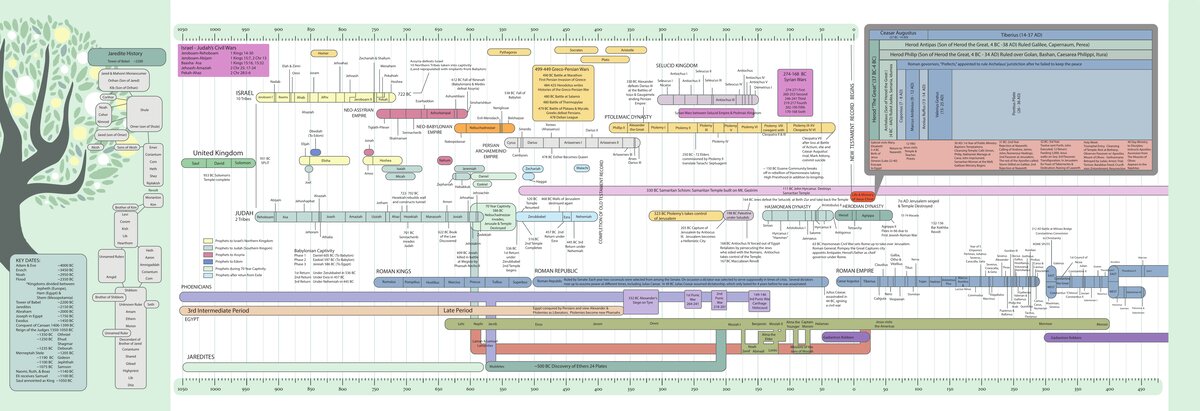
Tap to expand
Old Testament Timeline
From Creation through the Persian Period — tap the image to zoom, or download the full PDF.
Tap anywhere to close · Pinch to zoom