| Church Manuals | |
| Come Follow Me Manual — Week 26 | View |
| Scripture Helps: Old Testament | View |
| OT Seminary Teacher Manual | View |
| OT Institute Manual (Gen–2Sam) | View |
| Pearl of Great Price Manual | View |
| Scripture Reference | |
| Bible Dictionary | View |
| Topical Guide | View |
| Guide to the Scriptures | View |
| Church Media & Library | |
| Gospel for Kids (YouTube) | View |
| Bible Videos | View |
| Church Magazines | View |
| Gospel Library | View |
Week 26
The Lord Hath Put Away Thy Sin
2 Samuel 11–12; 1 Kings 3; 6–9; 11
June 22–28, 2026
5-Minute Overview
Week 26 follows David's catastrophic fall with Bathsheba and Uriah, Nathan's parable, and the repentance of Psalm 51, then Solomon's rise — the listening heart, the Temple built as Eden restored — and his slow decline into idolatry that fractures the kingdom. Six word studies (laqach, chet, chokmah, bayit, Shekhinah, natah) trace the language that measured a king, alongside Bathsheba's arc from victim to gevirah. Four companion articles carry forward from last week.
Weekly Resources: Week 26
2 Samuel 11--12; 1 Kings 3; 6--9; 11 — Overview
“The Lord Hath Put Away Thy Sin”
Official Church Resources
OFFICIAL CHURCH RESOURCES▶
CHURCH MEDIA FOR FAMILIES▶
▶ Video Commentary
VIDEO COMMENTARY (11 videos)
▼



Specialized Audiences
WOMEN’S PERSPECTIVES (2 videos)
▶

FAMILY & CHILDREN’S RESOURCES (2 videos)
▶

Reference & Study Materials
BIBLE PROJECT VIDEOS THIS WEEK (14 videos)
▶
Book overview + theme & word study videos relevant to this week’s reading.







ACADEMIC & SCHOLARLY SITES▶
MAPS & BIBLICAL LOCATIONS▶
A Letter to Fellow Students
▶︎
David's fall begins with a verb of sight. "It came to pass… that David saw a woman" — vayar (וַיַּרְא), the same verb that opens humanity's first fall, when Eve "saw that the tree was good" (Genesis 3:6). What the man after God's own heart does next, the narrator tells in a chain of cold verbs: he saw, he sent, he took — laqach (לָקַח) — he covered, he killed. That verb of taking is the very word Samuel used to warn Israel what a king would do: he will take your sons, your daughters, your fields (1 Samuel 8). Israel asked for a king who takes; in 2 Samuel 11, the beloved king takes the one thing that was never his.
And then a prophet tells a story about a poor man's one little ewe lamb and a rich man who took it — and David, not recognizing his own reflection, condemns himself: "the man that hath done this thing shall surely die." Nathan answers with four syllables that fall like a verdict: attah ha-ish (אַתָּה הָאִישׁ), "thou art the man" (2 Samuel 12:7). It is one of the most devastating sentences in scripture — and one of the most merciful, because the prophet sent to expose the sin is the same prophet sent to carry the king's repentance back to God. Out of that ruin comes Psalm 51: "Create in me a clean heart, O God."
Out of that ruin also comes a son, named twice: Solomon (Shlomo, from shalom) and, through Nathan, Yedidyah (יְדִידְיָהּ), "beloved of Yah" (2 Samuel 12:25). The child born from David's worst chapter becomes the king who builds God a house. Solomon asks not for riches but for a lev shome'a (לֵב שֹׁמֵעַ), "a listening heart" (1 Kings 3:9), and for a moment Israel reaches its golden hour — the Temple rising on Moriah, its walls carved with palms, open flowers, and cherubim: Eden rebuilt in cedar and gold.
But the same week that shows the house at its height shows how it falls. Solomon, who built the house of God, could not keep his own heart; his foreign wives "turned away his heart" (1 Kings 11:3), and the kingdom David's repentance preserved, Solomon's compromise tore in two. Two kings, one bloodline, the whole arc of the human heart: the man who fell and returned, and the man who rose and wandered. Between them stands the question this week presses on each of us — not whether we will sin, but what we will do when the prophet's finger turns and points at us.
Sunday School Presentation Video
▶︎
The following video is from a Powerpoint presentation that I gave this week for our Sunday School Class. I thought I would share it here as well since it goes through the birds eye view of some of the challenging things we cover in the materials for this week. It is far from perfect, but the message is very insightful, teaching us how all of these challenging stories point to Christ. I hope you enjoy.
What's in This Week's Materials
▶︎
In the Study Guide
▶︎
The Overview walks the week's two great movements in order — David's fall and restoration (2 Samuel 11–12), then Solomon's rise, Temple, and decline (1 Kings 3; 6–9; 11) — filling the unassigned chapters so the narrative holds. Key highlights:
- The anatomy of a fall — David's sin read not as a single lapse but as a cascade of switch points: staying home when kings go to war, lingering on the roof, sending to ask, sending to take, summoning Uriah, sealing the letter — each a place he could have stopped.
- The Genesis 3 echo — the saw → desired → took sequence deliberately mirroring Eden, and the dehumanization of Bathsheba, reduced from a named woman with a father and a husband to "the woman."
- Bathsheba's arc — from the object of David's taking to the gevirah (queen mother) who secures Solomon's throne in 1 Kings 1, her name restored to the covenant line in Matthew 1:6.
- Nathan's parable — the mirror that lets David sentence himself before he realizes he is the defendant; the contrast with Saul's layered excuses.
- Solomon's listening heart — lev shome'a (1 Kings 3:9) and the wisdom that judges between the two mothers.
- The Temple as Eden restored — cedar carved with garden imagery, the cherubim, the molten sea on twelve oxen, and Solomon's own confession that "the heaven of heavens cannot contain thee" (1 Kings 8:27).
- The fracture — the mas (forced-labor levy), the foreign wives, and the kingdom torn along the seam of a divided heart.
Six word studies trace the language that measured a king: laqach (לָקַח, "to take" — the verb that links David's seizure of Bathsheba to Solomon's foreign marriages two generations later), chet (חֵטְא, sin as "missing the mark" — the root beneath David's two-word confession, chatati la-Hashem), chokmah (חָכְמָה, wisdom — and Solomon's request for a lev shome'a, a listening heart), bayit (בַּיִת, "house" — the Temple finally built, continued from Week 25), Shekhinah (שְׁכִינָה, the divine dwelling presence that filled it), and natah (נָטָה, "to turn aside" — the verb that narrates Solomon's slow apostasy).
Articles
▶︎
This week carries forward the companion articles introduced last week — they were written for exactly this stretch of David and Solomon's story and apply directly to Week 26's chapters:
- Wrestling with David — The honest reckoning these chapters demand. It traces the women in David's story — Michal, Abigail, Bathsheba — names the power dynamic of 2 Samuel 11 directly, remembers Uriah by name, and surfaces the mercy hidden in D&C 132:39: God "gave them unto another," freeing these women and restoring in eternity the agency David denied them in life. (Content note: discusses sexual violence and abuse of power.) (Weeks 25–26)
- The King We Asked For — How Israel moved from Moses' theocracy to David's throne, and why the Book of Mormon runs the same history in reverse. Its three-kings / three-temptations framework lands squarely on this week: David's appetite (2 Samuel 11) and Solomon's worldly power (1 Kings 11) are two of the three falls — and Christ overcame all three in the wilderness. (Weeks 23–26)
- David's Choir — How a shepherd organized the music of heaven: the Temple choir the house Solomon built was made to hold, and the Psalms born of this story — including Psalm 51, David's own prayer of repentance. (Weeks 24–26)
- The Thirteen Rules — Rabbi Ishmael's thirteen hermeneutical principles, the interpretive method standing behind this week's Jewish-source readings of Nathan's parable and the Temple. (Weeks 25–26)
In the Resources Tab
▶︎
Highlights from the videos distilled this week:
- Grounded — David's fall framed as a sequence of "switch points," each an off-ramp he declined — turning the story from a single scandal into a map of how compromise compounds.
- Lynne Hilton Wilson (Scripture Central) — Bathsheba's fuller arc, recovering her agency and her later place in the royal house rather than leaving her a footnote to David's sin.
- John Hilton III (Finding Christ) — the Christ-centered answer to David's emptiness: sin promises fullness and leaves a void only Christ can fill.
- Messages of Christ (Solomon's Temple Explained) — the Temple as a journey back toward Eden and the presence of God, its architecture a theology rendered in stone.
"Thou Art the Man": The Mercy of Being Found Out
▶︎
The hinge of this week is a single sentence a prophet speaks to a king who has spent a year hiding. David had covered everything — the pregnancy, the recalled soldier, the murder dressed as a casualty of war. The cover held. And then Nathan tells a story, David's own sense of justice rises against the rich man, and the trap springs shut: thou art the man.
What makes the moment merciful is what David does with it. Saul, confronted in his disobedience, had reached for excuses — the people made me, the animals were for sacrifice. David reaches for none. "I have sinned against the LORD" — chatati la-Shem — and the floodgate of Psalm 51 opens behind it. The Hebrew word for the road back is teshuvah: not merely sorrow but return, a turning around and coming home. David's greatness was never that he didn't fall. It was that when the finger pointed, he stopped lying.
And then, as if to keep us honest, the week sets Solomon beside him. Here is the wiser man — the listening heart, the Temple, the glory — and he falls in the opposite direction: not in a single catastrophic night but by slow accommodation, a heart turned degree by degree until it faced another god. David fell hard and returned. Solomon rose high and drifted. Together they refuse us every easy moral: wisdom is no guarantee, and a single great sin is not the end of a covenant life — but an unguarded heart, left to wander, will lose what no enemy could take.
The invitation of the week is not to admire David's height or fear Solomon's fall. It is to let the parable find us before we have to be told — to recognize the small early switch points while turning back is still cheap, and to know that the same God who sent Nathan to expose the sin sent him to carry the repentance home.
Weekly Insights — Week 26 | CFM Corner | OT 2026
2 Samuel 11–12; 1 Kings 3; 6–9; 11
Sources: Study Guide (six word studies, chronological walkthrough), video distillations (18 videos), companion articles (Wrestling with David, The King We Asked For, David's Choir, The Thirteen Rules)
Week 26
2 Samuel 11--12; 1 Kings 3; 6--9; 11 — Overview
"The Lord Hath Put Away Thy Sin"
1. Week 26: Overview
Last week's reading ended at the summit of David's life: the Davidic Covenant in 2 Samuel 7, where God promised an eternal dynasty to the man after His own heart. This week opens in the wreckage. The king who would not stretch forth his hand against the Lord's anointed now stretches forth his hand to take another man's wife, and then conspires to kill the husband. The fall of David in 2 Samuel 11--12 is the most devastating moral collapse in the Old Testament precisely because David was the highest example of covenant fidelity. The greater the height, the more catastrophic the descent -- and the narrative makes no effort to cushion the impact. The Hebrew text is sparse, almost clinical, as if the narrator cannot bear to linger on the details.
Yet the story does not end in the wreckage. Nathan's parable of the poor man's lamb (2 Samuel 12:1--7) is one of the most brilliant prophetic interventions in scripture -- a mirror held up so perfectly that David condemns himself before he realizes the reflection is his own. The words attah ha-ish (אַתָּה הָאִישׁ, "thou art the man") land like a verdict from heaven. David's confession -- chatati la-Hashem (חָטָאתִי לַה׳, "I have sinned against the Lord," 12:13) -- is remarkable for its directness: no qualification, no deflection. Where Saul wrapped every admission in excuse (1 Samuel 13:11--12; 15:20--21), David offered only raw ownership. Nathan's reply is equally terse: "The Lord also hath put away thy sin; thou shalt not die" (12:13). Forgiveness comes, but consequences remain -- the child will die, and the sword will never depart from David's house.
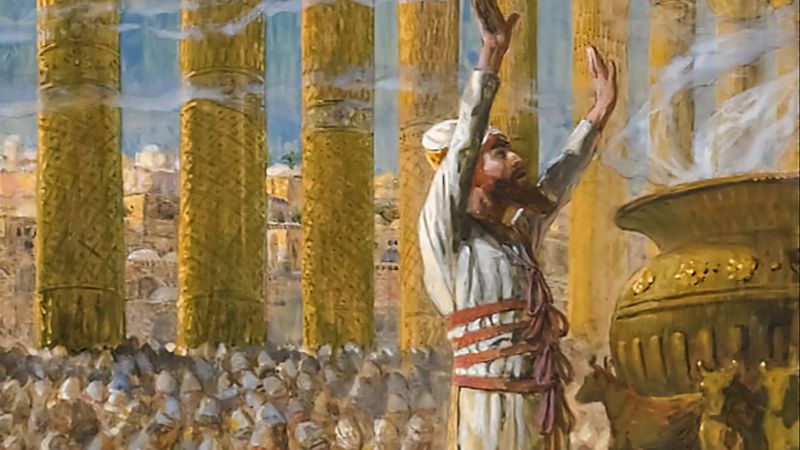
The reading then leaps forward one generation to Solomon, the son born from the very union that began in sin. Solomon's prayer for a lev shome'a (לֵב שֹׁמֵעַ, "hearing heart," 1 Kings 3:9) is the most famous petition for wisdom in all of literature. The judgment between the two mothers (3:16--28) proves the gift was genuine. Then comes the Temple -- the bayit (בַּיִת) that David desired to build but was forbidden to construct because his hands had shed blood (1 Chronicles 22:8). Solomon builds it in seven years, doubles the dimensions of the Tabernacle, fills it with gold and cedar and olive wood, and at the dedication, the kavod (כָּבוֹד, glory) of the Lord descends as a cloud so thick that the priests cannot stand to minister (1 Kings 8:10--11). Solomon's dedicatory prayer in chapter 8 is the longest prayer in the Old Testament and the theological high point of the Deuteronomistic History.
But the arc bends downward again. 1 Kings 11 records Solomon's apostasy: seven hundred wives and three hundred concubines, many of them from nations the Torah explicitly prohibited (Deuteronomy 7:1--4). His heart is "turned after other gods" (11:4), and he builds high places for Chemosh, Milcom, and Ashtoreth on the Mount of Olives -- within sight of the Temple he built for the Lord. The man who prayed for wisdom now embodies the folly Samuel warned against when Israel first demanded a king (1 Samuel 8:11--18). The kingdom will be torn in two, but one tribe will remain "for David my servant's sake, and for Jerusalem's sake which I have chosen" (11:13). The Davidic Covenant holds, but barely, and only because God's faithfulness exceeds human failure.
Assigned chapters are in bold. Use this table as a map -- each chapter is discussed in the walkthrough below.
| Chapter | Content | Assigned |
|---|---|---|
| 2 Samuel 11 | David and Bathsheba; murder of Uriah | Yes |
| 2 Samuel 12 | Nathan's parable; David's repentance; death of the child; Solomon born | Yes |
| 2 Samuel 13 | Amnon rapes Tamar; Absalom kills Amnon | -- |
| 2 Samuel 14 | Joab's wise woman of Tekoa; Absalom returns to Jerusalem | -- |
| 2 Samuel 15 | Absalom's conspiracy; David flees Jerusalem | -- |
| 2 Samuel 16 | Ziba's slander; Shimei curses David; Absalom enters Jerusalem | -- |
| 2 Samuel 17 | Hushai defeats Ahithophel's counsel; Ahithophel hangs himself | -- |
| 2 Samuel 18 | Battle of the forest of Ephraim; Absalom's death; David's lament | -- |
| 2 Samuel 19 | David restored as king; crossing the Jordan | -- |
| 2 Samuel 20 | Sheba's rebellion; Joab kills Amasa | -- |
| 2 Samuel 21 | Famine and the Gibeonites; David's mighty men | -- |
| 2 Samuel 22 | David's psalm of deliverance (parallel to Psalm 18) | -- |
| 2 Samuel 23 | David's last words; the thirty mighty men | -- |
| 2 Samuel 24 | Census and plague; David buys the threshing floor of Araunah | -- |
| 1 Kings 1 | Adonijah's attempt to seize the throne; Solomon anointed king | -- |
| 1 Kings 2 | David's final charge; Solomon consolidates power | -- |
| 1 Kings 3 | Solomon's prayer for wisdom at Gibeon; the two mothers | Yes |
| 1 Kings 4 | Solomon's officials and provisions; his surpassing wisdom | -- |
| 1 Kings 5 | Alliance with Hiram of Tyre; preparations for the Temple | -- |
| 1 Kings 6 | Construction of the Temple | Yes |
| 1 Kings 7 | Solomon's palace; Huram's bronze work; the pillars, the sea, the furnishings | Yes |
| 1 Kings 8 | Dedication of the Temple; the cloud; Solomon's prayer | Yes |
| 1 Kings 9 | God's second appearance to Solomon; warning and covenant renewal | Yes |
| 1 Kings 10 | Queen of Sheba; Solomon's wealth at its peak | -- |
| 1 Kings 11 | Solomon's foreign wives; idolatry; judgment; Jeroboam; Solomon's death | Yes |
David and Bathsheba -- The Fall That Echoes Genesis 3 (2 Samuel 11) -- assigned
David remains in Jerusalem while his army besieges Rabbah. From his rooftop he sees Bathsheba bathing, sends for her, and lies with her. When she conceives, David recalls Uriah from the front and tries to make him go home to his wife -- but Uriah, in an act of devastating integrity, refuses to enjoy domestic comfort while the Ark and the army are in the field (11:11). David then sends Uriah back with a sealed letter to Joab: "Set ye Uriah in the forefront of the hottest battle, and retire ye from him, that he may be smitten, and die" (11:15). The murder-by-letter is among the coldest acts in scripture.
The structure of David's sin deliberately echoes the pattern of the Fall in Genesis 3. Carl Trueman and other scholars have noted the verbal parallels: David "saw" (vayar, וַיַּרְא) that the woman was beautiful (11:2), just as Eve "saw" (vatere, וַתֵּרֶא) that the tree was good (Genesis 3:6). He "desired" and then "took" (vayiqqach, וַיִּקַּח) her (11:4), just as Eve "took" (vattiqqach, וַתִּקַּח) the fruit (Genesis 3:6). The sequence -- seeing, desiring, taking -- is the anatomy of sin itself, and its recurrence across scripture is not coincidental but structural. The verb laqach (לָקַח, "to take") is particularly devastating in this context because it echoes Samuel's warning about what a king would do: "He will take (yiqqach) your daughters... he will take your fields... he will take the tenth of your seed" (1 Samuel 8:13--15). David has become precisely the kind of king Samuel warned Israel against. The man who refused to "take" the throne by violence now "takes" a woman by royal prerogative, and the verb convicts him.
The Talmud in Shabbat 56a preserves a remarkable tradition: every soldier in David's army wrote a conditional bill of divorce (get, גֵּט) for his wife before going to battle, so that if he died, she would retroactively be a divorcee rather than a widow -- freeing her from the complications of yibbum (levirate marriage). The implication is stunning: technically, Bathsheba was not a married woman when David took her, because Uriah was at war and the conditional get was in effect. The rabbis who advance this argument are not naive -- they know the moral reality is catastrophic regardless of the legal technicality. What they are doing is wrestling with the impossible tension between David's status as the chosen king and the undeniable horror of his actions. The tradition reveals a community that refuses to abandon David entirely but also refuses to excuse him. Legal innocence does not equal moral innocence. The conditional get may clear one technical charge, but it cannot erase the fact that David saw, desired, took, and murdered. The distinction between what is technically permissible and what is morally right remains one of the sharpest edges in religious ethics.
For the full passage study of the verb sequence and its Genesis parallels, see Key Passages (2 Samuel 11:2-4). For the honor-shame cultural framework surrounding the Bathsheba narrative, see Historical Cultural Context, Section 2.
Nathan's Rebuke, David's Repentance, and Solomon's Birth (2 Samuel 12) -- assigned
Nathan's parable of the poor man's lamb (12:1--7) is the defining example of prophetic confrontation in the Hebrew Bible. The prophet does not open with "Thus saith the Lord, thou hast sinned." Instead, he tells a story -- a rich man with vast flocks steals the single ewe lamb of a poor man who "nourished it, and it grew up together with him, and with his children; it did eat of his own meat, and drank of his own cup, and lay in his bosom, and was unto him as a daughter" (12:3). The detail is exquisite and deliberate: the lamb is not livestock but family. David's fury is immediate and self-condemning: "the man that hath done this thing shall surely die" (12:5). Only then does Nathan unveil the mirror: attah ha-ish (אַתָּה הָאִישׁ, "thou art the man"). The brilliance of the method is that David has already rendered judgment on himself before he knows the case is his own. His conscience has spoken freely because his defenses were not engaged. This is why prophetic narrative is more powerful than prophetic lecture -- story bypasses the ego and speaks directly to the moral sense. Every prophet who confronts power must learn Nathan's method: enter through the door of empathy, and let the truth do its own work.
Rashi on 12:5 explains that stealing from the poor is tantamount to murder because the poor man's single possession is his life. David's own verdict -- fourfold restoration -- becomes prophetic: four of his sons will die (the unnamed infant, Amnon, Absalom, and Adonijah).
Nathan's declaration "The Lord also hath put away thy sin; thou shalt not die" (12:13) is followed immediately by devastating consequences: "The sword shall never depart from thine house" (12:10); the child conceived in adultery will die (12:14); "I will raise up evil against thee out of thine own house" (12:11). The pattern is critical for understanding how repentance functions in the covenant: forgiveness removes the ultimate penalty (death under the law) but does not erase the natural consequences of sin. David is forgiven -- his relationship with God is not severed -- but he is not restored to his former status. The remaining chapters of 2 Samuel will document the unfolding of this sentence: Amnon rapes Tamar, Absalom murders Amnon, Absalom rebels against David, and the kingdom descends into civil war. President James E. Faust taught that David "was forgiven for his terrible sins in the sense that he would not be a son of perdition," but that according to revelation, David "has fallen from his exaltation" (Doctrine and Covenants 132:39) ("The Forces That Will Save Us," Ensign, January 2007). The distinction between forgiveness and exaltation is one of the most sobering doctrines in the Restoration.
David's confession -- chatati la-Hashem (חָטָאתִי לַה׳, "I have sinned against the Lord") -- stands in permanent contrast to Saul's excuse-laden responses (1 Samuel 13:11--12; 15:20--21). Three Hebrew words. No qualification. No deflection. The child dies, and David rises from the ground, washes, changes his clothes, worships, and eats (12:20). His servants are confused -- he mourned while the child lived but not after the child died. David's response is a statement of pure faith: "I shall go to him, but he shall not return to me" (12:23). The chapter closes with the birth of Solomon (Shlomo, שְׁלֹמֹה, from shalom, שָׁלוֹם, peace) and his alternate name Yedidyah (יְדִידְיָהּ, "beloved of the Lord," 12:25) -- a name given through Nathan, signaling that God's relationship with David's house continues even in the aftermath of sin.
For the full treatment of Nathan's parable and David's confession, see Key Passages (2 Samuel 12:1-7, 12:13). For rabbinic perspectives on David's repentance and Psalm 51's connection to this chapter, see Jewish Perspective, Section 1.
The Sword in David's House (2 Samuel 13--18) -- not assigned
Chapter 13 (not assigned) -- The sword that Nathan prophesied arrives immediately. Amnon, David's firstborn son, becomes obsessed with his half-sister Tamar. Feigning illness, he lures her to his chamber and rapes her (vaye'anneha, וַיְעַנֶּהָ, "he afflicted/violated her," 13:14). The Hebrew root a-n-h (ענה) is the same root used for Israel's affliction in Egypt -- the violation is not merely personal but carries covenantal overtones of oppression. After the assault, Amnon's "love" turns to hatred "greater than the love wherewith he had loved her" (13:15), exposing his desire as possession rather than devotion. David is "very wroth" (13:21) but does nothing -- a passivity that mirrors his failure in chapter 11 and that his children will interpret as tacit permission. Tamar tears her royal robe (ketonet passim, כְּתֹנֶת פַּסִּים -- the same distinctive garment worn by Joseph in Genesis 37:3) and puts ashes on her head, living as a "desolate woman" (shomemah, שֹׁמֵמָה) in Absalom's house. Absalom waits two full years, then murders Amnon at a sheep-shearing feast (13:28--29). The first of David's sons dies by the sword.
Chapter 14 (not assigned) -- Joab engineers Absalom's return from exile through the wise woman of Tekoa, who tells David a parable about a widow with two sons -- one killed the other, and now the clan demands the surviving son's life (14:5--7). The parable deliberately echoes Nathan's method: approach the king through story, let his empathy override his judgment. David allows Absalom to return to Jerusalem but refuses to see him face to face for two years (14:28). When they finally meet, David kisses Absalom (14:33), but the reconciliation is superficial. The root of alienation remains.
Chapter 15 (not assigned) -- Absalom spends four years systematically undermining David's authority. He stations himself at the city gate, intercepts litigants, and whispers, "There is no man deputed of the king to hear thee... Oh that I were made judge in the land!" (15:3--4). The irony is excruciating: Solomon will later receive the gift of judicial wisdom that Absalom merely pretends to possess. When Absalom declares himself king at Hebron -- the very city where David was first anointed -- David flees Jerusalem barefoot, weeping, with his head covered (15:30). The king who conquered Jerusalem now abandons it. He crosses the Kidron Valley (nachal Qidron, נַחַל קִדְרוֹן, 15:23), the same valley Jesus will cross on the night of His arrest (John 18:1). David leaves the Ark behind: "If I shall find favour in the eyes of the Lord, he will bring me again" (15:25). Even in exile, David's theology of divine sovereignty holds.
Chapter 16 (not assigned) -- Ziba, servant of Mephibosheth, meets David with provisions and slanders his master, claiming Mephibosheth has sided with Absalom (16:3). Shimei, a man of Saul's clan, hurls stones and curses at David: "Come out, thou bloody man, and thou man of Belial!" (16:7). David refuses to silence Shimei: "Let him curse, because the Lord hath said unto him, Curse David" (16:11). The king who once refused to harm the Lord's anointed now accepts abuse as divine discipline. Meanwhile, Absalom enters Jerusalem and takes David's concubines publicly on the rooftop (16:22) -- fulfilling Nathan's prophecy that what David did in secret would be done to him openly (12:11--12).
Chapter 17 (not assigned) -- The war of counselors. Ahithophel, formerly David's most trusted advisor, counsels Absalom to pursue David immediately before he can regroup (17:1--3). The counsel is militarily sound and would have ended the rebellion in David's death. But Hushai, David's secret loyalist planted in Absalom's court, offers an alternative plan -- delay, gather a massive army, let Absalom himself lead. Absalom chooses Hushai's counsel because "the Lord had appointed to defeat the good counsel of Ahithophel" (17:14). When Ahithophel sees his advice rejected, he goes home, "put his household in order, and hanged himself" (17:23). Rashi notes that Ahithophel understood the implications: Hushai's delay would give David time to recover, the rebellion would fail, and Ahithophel would be executed as a traitor. His suicide is strategic, not despairing -- he arranges his estate before he dies.
Chapter 18 (not assigned) -- The battle of the forest of Ephraim. David commands his generals to "deal gently for my sake with the young man, even with Absalom" (18:5). Absalom's long hair catches in the branches of an oak tree (elah, אֵלָה), leaving him suspended between heaven and earth (18:9). Joab, ignoring David's order, thrusts three darts (shevatim, שְׁבָטִים) into Absalom's heart (18:14). When David hears the news, his lament is among the most wrenching in all of scripture: beni Avshalom, beni beni Avshalom, mi yitten muti ani tachtekha, Avshalom beni beni (בְּנִי אַבְשָׁלוֹם בְּנִי בְנִי אַבְשָׁלוֹם מִי יִתֵּן מוּתִי אֲנִי תַחְתֶּיךָ אַבְשָׁלוֹם בְּנִי בְנִי, "O my son Absalom, my son, my son Absalom! would God I had died for thee, O Absalom, my son, my son!" 18:33). The father who failed to discipline his sons now grieves the one he lost to that failure.
David Restored and Tested (2 Samuel 19--20) -- not assigned
Chapter 19 (not assigned) -- Joab rebukes David for mourning Absalom at the expense of the soldiers who saved his throne: "Thou hast shamed this day the faces of all thy servants, which this day have saved thy life" (19:5). David crosses back over the Jordan. Shimei, who had cursed David during his flight, now begs for mercy; David spares him (19:23) but will later instruct Solomon to deal with him (1 Kings 2:8--9). Mephibosheth meets David and insists that Ziba slandered him -- his unkempt appearance during David's absence supports his claim of loyalty (19:24--30). David divides the estate between them, a judgment that reveals either Solomonic compromise or Davidic exhaustion.
Chapter 20 (not assigned) -- Sheba son of Bichri, a Benjaminite, sounds a trumpet and declares, "We have no part in David, neither have we inheritance in the son of Jesse: every man to his tents, O Israel!" (20:1). The cry anticipates the formal division of the kingdom under Rehoboam. Joab pursues Sheba to the city of Abel Beth-maacah, where a "wise woman" (ishah chakhama, אִשָּׁה חֲכָמָה) negotiates the city's survival by having Sheba beheaded and his head thrown over the wall (20:22). The episode reveals how fragile David's restored kingdom remains -- the rebellion's echoes continue even after Absalom's death.
David's Final Years and Legacy (2 Samuel 21--24) -- not assigned
Chapter 21 (not assigned) -- A three-year famine reveals that Saul had broken Joshua's ancient covenant with the Gibeonites (Joshua 9:15). David asks the Gibeonites what will make atonement; they demand seven of Saul's descendants, who are hanged "before the Lord" (21:9). Rizpah, Saul's concubine and mother of two of the victims, keeps vigil over the bodies from the beginning of barley harvest until the autumn rains, protecting them from birds and beasts (21:10). Her fierce maternal loyalty moves David to recover the bones of Saul and Jonathan from Jabesh-gilead and give them proper burial (21:12--14). The chapter closes with accounts of David's warriors battling Philistine giants -- four descendants of the raphah (רָפָה, giant), including one with six fingers on each hand and six toes on each foot (21:20).
Chapter 22 (not assigned) -- David's great psalm of deliverance, nearly identical to Psalm 18. It begins with cosmic theophany -- "the earth shook and trembled; the foundations of heaven moved" (22:8) -- and moves through David's rescue from Saul, his enemies, and death itself. The psalm is placed here, near the end of David's life, as a retrospective summary of God's faithfulness across the entire arc of David's experience. The God who delivered the shepherd boy from the lion and the bear also delivered the king from Saul, Absalom, and his own sin.
Chapter 23 (not assigned) -- David's "last words" (divrei David ha-acharonim, דִּבְרֵי דָוִד הָאַחֲרֹנִים, 23:1) -- a poetic oracle identifying himself as "the sweet psalmist of Israel" (ne'im zemirot Yisrael, נְעִים זְמִרוֹת יִשְׂרָאֵל). The chapter then catalogs the thirty mighty men (giborim, גִּבּוֹרִים), including the famous episode of the three warriors who broke through the Philistine garrison to bring David water from the well of Bethlehem (23:15--17). David refused to drink it: "Is not this the blood of the men that went in jeopardy of their lives?" He poured it out as a libation to the Lord. The act transforms a military exploit into a sacrifice, and David transforms water into something too sacred for a king to consume.
Chapter 24 (not assigned) -- David orders a census of Israel, an act the text attributes to divine anger (24:1; cf. 1 Chronicles 21:1, which attributes it to Satan). Joab protests, but David insists. When the plague strikes, the angel of the Lord stands at the threshing floor of Araunah (Aravnah, אֲרַוְנָה) the Jebusite (24:16). David purchases the floor, builds an altar, and offers sacrifices that stay the plague. His declaration -- "Neither will I offer burnt offerings unto the Lord my God of that which doth cost me nothing" (24:24) -- establishes the principle that true sacrifice must cost the giver. The threshing floor of Araunah is the site where Solomon will build the Temple (2 Chronicles 3:1), and Jewish tradition identifies it with Mount Moriah, where Abraham bound Isaac (Genesis 22:2). David's final act in 2 Samuel is to purchase the ground where heaven and earth will meet -- the site he will never build on, but which his son will crown with the House of the Lord.
The Succession Crisis (1 Kings 1--2) -- not assigned
Chapter 1 (not assigned) -- David is old and failing. Adonijah, his eldest surviving son, declares himself king, gathering Joab and Abiathar the priest as supporters (1:7). But Nathan the prophet and Bathsheba intervene, reminding David of his oath that Solomon would succeed him (1:13, 17). David orders Solomon anointed at the Gihon spring (Gichon, גִּיחוֹן, 1:33), and the people shout with such force that "the earth rent with the sound of them" (1:40). Adonijah's feast collapses as his guests scatter. The succession is decided not by military power but by prophetic authority and royal oath -- Nathan, the same prophet who confronted David over Bathsheba, now ensures that Bathsheba's son receives the throne.
Bathsheba's own arc deserves notice here. The woman introduced as the object of David's laqach -- seen, sent for, taken, and widowed -- is not left there. She mourns Uriah (11:26), survives the death of her first child, and a generation later acts decisively: Nathan comes to her, and it is Bathsheba who enters the king's chamber and presses David's oath that Solomon would reign (1 Kings 1:15--21). She moves from victim to gevirah (גְּבִירָה, queen mother), later seated at her son's right hand (2:19). And Matthew's genealogy will refuse to erase her, remembering Solomon as the son of "her that had been the wife of Urias" (Matthew 1:6) -- her name folded back into the covenant line that runs to Christ.
Chapter 2 (not assigned) -- David's deathbed charge to Solomon is a mixture of the spiritual and the political. He begins with covenant theology: "Keep the charge of the Lord thy God, to walk in his ways, to keep his statutes... that thou mayest prosper in all that thou doest" (2:3). Then he turns pragmatic: deal with Joab, who murdered Abner and Amasa; deal with Shimei, who cursed David during Absalom's rebellion; reward Barzillai, who fed David in exile (2:5--7). Solomon systematically consolidates power -- Adonijah is executed after requesting Abishag (a veiled claim to the throne), Abiathar is banished, Joab is killed at the altar, and Shimei is placed under house arrest and later executed for violating its terms. The transition is brutal but effective. The chapter concludes: "And the kingdom was established in the hand of Solomon" (2:46).
Solomon's Wisdom and the Gift at Gibeon (1 Kings 3) -- assigned
When God appears to Solomon at Gibeon and says "Ask what I shall give thee" (3:5), Solomon does not ask for long life, riches, or victory over enemies. He asks for lev shome'a (לֵב שֹׁמֵעַ, a "hearing heart") to judge God's people (3:9). The KJV renders it "understanding heart," but the Hebrew is far more specific: the root sh-m-a (שׁמע) is the same root that opens the Shema (Deuteronomy 6:4), Israel's foundational declaration of covenant. A "hearing heart" is a heart attuned to God's frequency, a heart that listens before it decides. The request pleased God precisely because it was selfless -- Solomon asked for the capacity to serve, not the power to dominate.
Rashi on 3:9 explains that Solomon's anxiety was specifically judicial: to misjudge covenant Israel carried the weight of capital liability. If a judge errs and condemns the innocent, the blood is on his hands. Solomon understood that the gift of ruling God's people was not a privilege but a terrifying responsibility. His prayer at Gibeon, offered at the great high place before the Temple existed, reveals a young king who grasps what his father learned the hard way: human wisdom alone is catastrophically insufficient.
The gift is immediately tested in the case of the two mothers (3:16--28), where Solomon's famous judgment -- "Divide the living child in two" (3:25) -- is not cruelty but diagnostic genius. The real mother reveals herself by preferring to lose her child rather than see it killed; the false mother reveals herself by preferring a dead baby split evenly. Solomon's wisdom is not abstract philosophy but applied discernment -- the ability to read the human heart under pressure. The lev shome'a is therefore not merely intellectual capacity but spiritual sensitivity -- the ability to hear what God hears when He looks at His children.
For the full passage study on lev shome'a and the gifts of the Spirit, see Key Passages (1 Kings 3:9). For the Talmudic tradition on Solomon's judicial wisdom, see Jewish Perspective, Section 4.
Solomon's Administration and Alliance with Hiram (1 Kings 4--5) -- not assigned
Chapter 4 (not assigned) -- The scope of Solomon's kingdom and wisdom. He appoints twelve officers over Israel, each responsible for one month's provisions (4:7). The daily requirement -- thirty measures of fine flour, sixty measures of meal, ten fat oxen, twenty pasture-fed oxen, a hundred sheep, plus deer, gazelles, roebucks, and fatted fowl (4:22--23) -- gives a sense of the court's enormous scale. Solomon's wisdom surpasses "all the children of the east country, and all the wisdom of Egypt" (4:30). He composes three thousand proverbs and a thousand and five songs (4:32), and his botanical and zoological knowledge spans "from the cedar tree that is in Lebanon even unto the hyssop that springeth out of the wall" (4:33). This is the golden age -- the brief window when Israel's king embodies the ideal of wisdom, prosperity, and peace.
Chapter 5 (not assigned) -- Solomon's alliance with Hiram (Chiram, חִירָם) king of Tyre (5:1--12). Hiram supplies cedar and cypress timber from Lebanon in exchange for wheat and olive oil. Solomon raises a labor force (mas, מַס, corvee) of thirty thousand men from all Israel, working in shifts of ten thousand per month (5:13--14). The term mas is significant -- it is the same word used for Israel's forced labor in Egypt (Exodus 1:11). Solomon's conscript labor, though organized and rotational, carries the irony that Israel's greatest king subjects his own people to the same kind of labor that Pharaoh imposed on their ancestors. Eighty thousand quarried stone in the mountains (5:15). The material preparations for the Temple consume years and vast resources, underscoring that building the house of God is not a spontaneous act but a deliberate, costly, communal undertaking.
The Temple: Construction, Furnishing, and Dedication (1 Kings 6--9) -- assigned
Chapter 6 (assigned) -- The Temple that Solomon builds is the physical fulfillment of the Davidic Covenant's bayit reversal: David wanted to build God a house, but God would build David a dynasty -- and then David's son would build the house. The construction takes seven years (6:38) and follows exacting divine specifications. The dimensions double those of the Tabernacle: the Holy Place is 40 cubits long (twice the Tabernacle's 20), and the Holy of Holies is a perfect cube of 20 cubits (6:20). No iron tool was heard in the house during construction (6:7) -- the Mishnah (Avot 5:6) records the tradition of the shamir (שָׁמִיר), a miraculous worm or substance created at twilight on the sixth day of creation, capable of cutting stone without metal. Iron was the metal of war; the Temple was a place of peace, and the two must not contaminate each other. The text notes that the Temple was begun "in the four hundred and eightieth year after the children of Israel were come out of the land of Egypt" (6:1), anchoring the building in the Exodus narrative and marking the Temple as the culmination of the wilderness journey that began at Sinai.
Chapter 7 (assigned) -- Solomon's palace complex takes thirteen years to build (7:1) -- nearly double the seven years for the Temple. The text makes no explicit comment on this disparity, but the juxtaposition speaks for itself. The chapter's primary focus is the bronze work of Huram (Churam, חוּרָם) of Tyre: the two pillars Yakhin (יָכִין, "He will establish") and Boaz (בֹּעַז, "in Him is strength," 7:21) flanked the doorway as theological declarations rather than structural supports. The molten sea (yam mutzaq, יָם מוּצָק) supported by twelve oxen facing the four cardinal directions (7:25) held approximately two thousand baths of water and served priestly purification. Ten bronze stands with elaborate wheeled bases (7:27--37), ten lavers for washing sacrificial animals -- every detail is described with the precision of sacred architecture. These are not decorations but theological statements cast in metal. The Talmud (Yoma 52b) preserves the tradition that beneath the Temple, Solomon constructed a hidden chamber for the Ark, anticipating the day when the Temple might be destroyed -- a chamber that some traditions associate with the space where Josiah later hid the Ark before the Babylonian conquest.
Chapter 8 (assigned) -- When the Ark was placed in the Holy of Holies and the priests withdrew, "the cloud filled the house of the Lord, so that the priests could not stand to minister because of the cloud: for the glory (kavod, כָּבוֹד) of the Lord had filled the house of the Lord" (8:10--11). The Shekhinah (שְׁכִינָה, divine presence) that had dwelt in the Tabernacle now took up residence in stone and cedar, confirming that God had accepted Solomon's offering.
Solomon's dedicatory prayer is the longest prayer in the Old Testament and one of the most theologically sophisticated. Its opening theological statement (8:27) -- "Will God indeed dwell on the earth? Behold, the heaven and heaven of heavens cannot contain thee; how much less this house that I have builded?" -- holds together two truths that most theological systems try to separate: absolute divine transcendence and radical divine immanence. Solomon does not resolve the paradox; he inhabits it. The God who is beyond all spatial limitation has freely chosen to bind Himself to a place, a people, and a name. The prayer then unfolds seven petitions (8:31--53), each beginning "when" or "if" -- covering oath-taking, military defeat, drought, famine, plague, the prayer of foreigners, and the prayer of soldiers at war. Every petition assumes that the Temple is not a container for God but a relay station -- prayers directed toward this house ascend to "thy dwelling place" in heaven (8:30, 34, 36, 39, 43, 45, 49). Rashi on 8:27 explains that ha-umnam (הַאֻמְנָם, "will it indeed...?") conveys genuine astonishment -- Solomon cannot quite believe what is happening even as he prays for it.
President Dallin H. Oaks connected this principle to Latter-day Saint temple theology: the Lord's "name" placed upon a temple is His authority, delegated through ordinances, not a claim that God physically resides in the building. Solomon understood what every temple-goer must understand: the building is finite, the God is infinite, and the covenant that connects them is the miracle. Solomon blesses the assembly and declares, "There hath not failed one word of all his good promise, which he promised by the hand of Moses his servant" (8:56). The Temple is proof that God keeps His word -- from the promise at Sinai to the dedication on Moriah, the covenant arc is complete.
Chapter 9 (assigned) -- God appears to Solomon a second time (9:2), as He had at Gibeon, but the tone is now conditional rather than promissory. "If thou wilt walk before me, as David thy father walked... I will establish the throne of thy kingdom upon Israel for ever" (9:4--5). But "if ye shall at all turn from following me... then will I cut off Israel out of the land which I have given them; and this house, which I have hallowed for my name, will I cast out of my sight" (9:6--7). The shift from the unconditional Davidic Covenant of 2 Samuel 7 to the conditional warning of 1 Kings 9 is deliberate. The dynasty will endure (God promised David that), but the Temple and the land are conditional upon obedience. Solomon's apostasy in chapter 11 makes this warning prophetic. The chapter also records Solomon's administrative arrangements, his twenty cities given to Hiram, his building projects at Hazor, Megiddo, and Gezer, and his fleet at Ezion-geber on the Red Sea (9:26). These details reveal the scope of Solomon's ambition -- and the scale of what will be lost.
For the full passage study of Solomon's prayer and the seven petitions, see Key Passages (1 Kings 8:27-30). For the Temple's architectural theology and the shamir tradition, see Word Studies (Word Study 3). For the Latter-day Saint temple parallel, see Teaching Applications, Section 4.
The Queen of Sheba and Solomon's Zenith (1 Kings 10) -- not assigned
Chapter 10 (not assigned) -- The Queen of Sheba (malkat Sheva, מַלְכַּת שְׁבָא) arrives to test Solomon's wisdom with "hard questions" (chidot, חִידוֹת, riddles, 10:1). She is overwhelmed: "The half was not told me: thy wisdom and prosperity exceedeth the fame which I heard" (10:7). Solomon's wealth reaches its zenith: "King Solomon exceeded all the kings of the earth for riches and for wisdom" (10:23). His throne of ivory overlaid with gold, his golden drinking vessels ("none were of silver: it was nothing accounted of in the days of Solomon," 10:21), his annual income of 666 talents of gold (10:14) -- the details accumulate into a portrait of near-mythic prosperity. But the chapter sits between the conditional warning of chapter 9 and the apostasy of chapter 11, making the wealth function as prelude to the fall. The queen's assessment -- "Happy are thy men, happy are these thy servants, which stand continually before thee, and that hear thy wisdom" (10:8) -- uses the same root sh-m-a (שׁמע) that defined Solomon's prayer for a hearing heart. The gift is still operative, but the heart that received it is about to turn.
Solomon's Apostasy and the Divided Kingdom (1 Kings 11) -- assigned
"King Solomon loved many strange women, together with the daughter of Pharaoh, women of the Moabites, Ammonites, Edomites, Zidonians, and Hittites; of the nations concerning which the Lord said unto the children of Israel, Ye shall not go in to them, neither shall they come in unto you: for surely they will turn away your heart after their gods" (11:1--2). The warning was explicit; Solomon ignored it.
The Talmud (Sanhedrin 21b) records that Solomon reasoned: "The Torah says 'lest they turn away your heart' -- but my heart will not be turned; I can manage the risk." This is the classic posture of the person who believes himself exempt from the laws that govern everyone else. Rashi on 11:1 singles out Pharaoh's daughter as the most prominent of the foreign wives, noting that she is listed first because her marriage was the precedent that opened the door for all the others. Solomon built high places for Chemosh (the god of Moab) and for Milcom (the god of Ammon) on the mountain east of Jerusalem -- the Mount of Olives, within direct sightline of the Temple (11:7). The grotesque proximity is the point: idolatry is not a distant journey but a short walk from the house of God.
God's judgment is severe but measured: the kingdom will be torn in two, but not in Solomon's lifetime ("for David thy father's sake," 11:12), and one tribe will remain with the Davidic line "for Jerusalem's sake which I have chosen" (11:13). The covenant holds -- not because Solomon deserves it, but because God's promise to David transcends the failures of David's descendants. God raises adversaries -- Hadad the Edomite (11:14--22), Rezon of Damascus (11:23--25), and Jeroboam son of Nebat (11:26--40). The prophet Ahijah tears his garment into twelve pieces and gives ten to Jeroboam (11:30--31), a symbolic act that mirrors the tearing of the kingdom itself. Solomon dies and Rehoboam succeeds him (11:43), inheriting a kingdom already fractured by his father's failures and burdened by the labor conscriptions that will trigger the northern tribes' revolt (1 Kings 12). The man who began with a prayer for wisdom ends as a cautionary tale about the insufficiency of wisdom without obedience.
For the full treatment of Solomon's apostasy and Deuteronomy 17's warning to kings, see Key Passages (1 Kings 11:1-4). For the rabbinic debate over Solomon's culpability, see Jewish Perspective, Section 5.
"And Nathan said to David, Thou art the man." (2 Samuel 12:7)
The Hebrew attah ha-ish (אַתָּה הָאִישׁ) is three words that shatter a kingdom. Nathan does not begin with accusation -- he begins with a parable so perfectly calibrated that David condemns himself before he realizes the reflection is his own. David's own verdict -- fourfold restoration -- becomes prophetic: four of his sons will die. The prophet's method is not a hammer but a mirror. Nathan does not confront David with a list of sins; he invites David into a story, lets David's own moral instinct deliver the judgment, and then reveals that the defendant is the judge. This is the prophetic method at its most devastating and most merciful -- devastating because David cannot retreat from his own verdict, merciful because the parable reaches David's conscience through a door his defenses cannot guard.
"Give therefore thy servant an understanding heart to judge thy people, that I may discern between good and bad: for who is able to judge this thy so great a people?" (1 Kings 3:9)
Solomon does not ask for intelligence or knowledge -- he asks for the capacity to hear, to receive, to attend. A "hearing heart" is a heart attuned to God's frequency, a heart that listens before it decides. His prayer at Gibeon reveals a young king who grasps what his father learned the hard way: human wisdom alone is catastrophically insufficient.
"But will God indeed dwell on the earth? behold, the heaven and heaven of heavens cannot contain thee; how much less this house that I have builded?" (1 Kings 8:27)
Solomon's astonishment at his own Temple dedication frames the paradox that pervades all sacred architecture: the Infinite condescends to inhabit the finite, not because He needs a house but because His people need a place to direct their prayers. The building is finite, the God is infinite, and the covenant that connects them is the miracle.
- The Fall (2 Samuel 11) -- David, at the height of his power, commits adultery with Bathsheba and engineers Uriah's death. The man after God's own heart becomes the king Samuel warned against: seeing, desiring, taking. The sin is not a single lapse but a cascading sequence of choices, each worse than the last -- from lingering on the rooftop to sending messengers, from deception to murder.
- The Rebuke and Repentance (2 Samuel 12) -- Nathan's parable forces David to condemn himself. The three-word verdict -- attah ha-ish -- is the fulcrum of the narrative. David's immediate, unqualified confession (chatati la-Hashem) stands in permanent contrast to Saul's excuse-laden responses (1 Samuel 13:11--12; 15:20--21). Forgiveness comes, but the sword enters the house and will not leave.
- The Gift of Wisdom (1 Kings 3) -- A generation later, Solomon asks not for wealth or victory but for a lev shome'a, a heart that can hear God and discern justice. The request itself is proof of wisdom -- only the wise know that they need wisdom. The judgment of the two mothers demonstrates that the gift is real, practical, and immediately operative.
- The Temple (1 Kings 6--9) -- The bayit that David desired and God redirected now rises on Moriah. Seven years of construction, no iron tools, doubled Tabernacle dimensions, and at the dedication, the kavod cloud so thick the priests cannot stand. Solomon's prayer holds together transcendence and immanence, the Infinite and the finite, the God who cannot be contained and the house He chooses to inhabit. Then God's second appearance: the unconditional dynasty endures, but the Temple and land are conditional.
- The Apostasy (1 Kings 11) -- The man who built the Temple now builds high places for foreign gods within sight of it. Seven hundred wives, three hundred concubines, and a heart turned from the God who appeared to him twice. The kingdom tears. But Judah remains -- one tribe, one lamplight, "for David my servant's sake." The covenant survives the covenant-breaker, and the Davidic line continues toward the Messiah who will do what David and Solomon could not.
- The anatomy of the fall reveals universal vulnerability. David's sin follows a pattern -- idleness, sight, desire, action, cover-up, murder -- that is not unique to kings. The sequence is recognizable in every moral collapse, and the narrative's refusal to excuse David is itself a gift to every reader who has ever believed that spiritual maturity confers immunity to temptation. If the man after God's own heart can fall, no one is safe without vigilance.
- Nathan's method redefines accountability. The most effective rebuke in scripture comes not as a lecture but as a story. Nathan teaches every parent, leader, and friend that confrontation through empathy -- entering through the door of shared moral instinct rather than breaking down the door of defensiveness -- reaches the conscience where direct accusation cannot. The prophet's task is to hold up a mirror, not to wield a hammer.
- The distinction between forgiveness and restoration challenges cheap grace. David is forgiven -- Nathan says so explicitly -- but he is not restored to his former status. The sword enters his house and stays. Modern readers who want forgiveness to erase all consequences find this uncomfortable, but the narrative insists: God's mercy is real, and so are the natural outcomes of our choices. Repentance opens the door to God's presence, not to a world where the sin never happened.
- Solomon's Temple is the prototype of all sacred space. Every Latter-day Saint temple -- from Kirtland to the most recent announcement -- stands in the theological lineage of Solomon's house on Moriah. The dedication prayer (1 Kings 8), with its vision of a place where prayers ascend and heaven answers, is the template for every temple dedicatory prayer in the Restoration. Solomon's paradox -- "the heaven of heavens cannot contain thee; how much less this house" -- is the paradox every temple-goer inhabits: the building is finite, the God is infinite, and the ordinance bridges the gap.
- Solomon's apostasy warns against the presumption of exemption. The man who prayed for wisdom and received it beyond measure still fell. The Talmud's diagnosis -- Solomon thought "it won't happen to me" -- is the most dangerous sentence in the spiritual life. No amount of past faithfulness, no depth of previous revelation, no height of spiritual experience guarantees future obedience. The covenant must be kept daily, not remembered annually. Solomon's fall does not disprove the gift of wisdom; it proves that wisdom received is not the same as wisdom lived.
2. Week 26: Historical & Cultural Context
This week's reading spans two generations and two catastrophic falls — David's adultery and murder in 2 Samuel 11–12, and Solomon's idolatrous apostasy in 1 Kings 11 — with the magnificent construction of the Temple between them. The cultural and material contexts of ancient Near Eastern warfare, Phoenician architecture, temple construction, and political marriage illuminate a narrative that moves from the heights of sacred dedication to the fracture of the united monarchy. Understanding the physical Temple, the political realities that surrounded it, and the theological categories that shaped its meaning will transform these chapters from chronicle into covenant theology.
Spring Campaigns in the Ancient Near East
The opening phrase of 2 Samuel 11:1 — "at the time when kings go forth" (le-et tzet ha-melakhim, לְעֵת צֵאת הַמְּלָכִים) — anchors the narrative in the well-documented ANE pattern of spring campaigning. Winter rains turned the roads of Syria-Palestine into impassable mud, halted supply chains, and confined armies to garrisons. When the rains ceased in late March or April, the ground firmed, the wadis subsided, and the grain fields ripened — providing both forage for horses and provisions for troops. Thutmose III launched his Megiddo campaign in April; Sennacherib's Judean invasion of 701 BCE began after the spring harvest.
Rashi on 2 Samuel 11:1 preserves this logic: "when the fields are in full growth and the horses find forage." The Targum Jonathan translates melakhim not as "kings" but as mashriyan ("armies"), reflecting the tradition that this was the season when entire military establishments mobilized. David's decision to remain in Jerusalem while Joab led the campaign against Rabbah of Ammon was not merely a personal choice — it was a dereliction of the king's primary duty. Throughout the ANE, the king was expected to lead his armies personally. Assyrian annals invariably begin each year's record with the king's campaign; a year without a royal campaign was a year of weakness. The Amarna Letters from vassal kings to Pharaoh repeatedly beg for royal military intervention, on the assumption that the king's physical presence on the battlefield was both expected and necessary.
The text's juxtaposition is devastating: "David sent Joab... but David tarried still at Jerusalem" (11:1). The verb yashav (יָשַׁב, "tarried/sat") connotes inactivity and settledness — the opposite of the energy required of a warrior-king. The idle king on the rooftop, seeing what he should not have seen, becomes a case study in the danger of unfilled time and unexercised duty. Rashi's tradition that David had completed his wars and rested prematurely (Sanhedrin 107a) adds a layer: even legitimate rest, when it comes before God's appointed time, can become the occasion for catastrophic failure.
Solomon's 700 Wives and 300 Concubines
The numbers in 1 Kings 11:3 — seven hundred wives of royal birth and three hundred concubines — are staggering even by ANE standards, though the institution they represent was universal. Throughout the ancient Near East, royal marriage was the primary instrument of diplomacy. Every marriage sealed a treaty, opened a trade route, or neutralized a potential enemy. Egyptian pharaohs married Hittite, Mitanni, and Babylonian princesses; the Amarna Letters document the elaborate negotiations surrounding these unions, including dowry inventories, escort arrangements, and reciprocal gift exchanges.
Solomon's marriages followed this logic precisely. The text identifies his wives as Moabite, Ammonite, Edomite, Sidonian, and Hittite (11:1) — representing every significant neighboring power. His marriage to Pharaoh's daughter (1 Kings 3:1) was the diplomatic crown jewel: Egypt rarely gave its princesses to foreign kings, and the marriage signaled Solomon's status as a major regional power. Pharaoh even conquered Gezer and gave it as a dowry (9:16) — an extraordinary concession indicating the political weight Egypt attached to the alliance.
The tension with Deuteronomy 17:17 is explicit. The Torah's instruction for future kings — "neither shall he multiply wives to himself, that his heart turn not away" — directly anticipates Solomon's trajectory. The Talmud (Sanhedrin 21b) records that Solomon believed he was the exception: "I will multiply wives and my heart will not turn aside." This is the classic logic of the wise person who thinks wisdom immunizes against the very danger it identifies. The phrase nashim nokhriyot (נָשִׁים נָכְרִיּוֹת, "foreign women," 11:1) does not mean ethnically foreign but covenantally foreign — women who worship other gods and who bring those worship practices into the royal household. The political marriages that secured Israel's borders simultaneously eroded Israel's theological foundations.
The ANE Prophetic Tradition of the Mashal
Nathan's confrontation of David in 2 Samuel 12:1–7 follows the well-attested ANE form of the mashal (מָשָׁל) — a term that encompasses parable, riddle, proverb, and allegorical narrative. The genius of Nathan's approach lies in its juridical structure: he presents what appears to be a legal case (mishpat, מִשְׁפָּט) requiring the king's judicial verdict. A rich man with abundant flocks takes the single lamb of a poor man to feed a guest. The scenario is designed to activate David's sense of justice while bypassing his defenses.
The form has precise parallels in Israelite prophetic literature. Isaiah's Song of the Vineyard (Isaiah 5:1–7) uses the same technique: the audience is led to render judgment on the vineyard's worthlessness before discovering that the vineyard is Israel. Jesus employs the identical strategy in the Parable of the Wicked Tenants (Matthew 21:33–45), where the chief priests pronounce their own condemnation before recognizing themselves in the story. The underlying principle is that human beings judge more clearly when their own interests are not at stake — and the prophet exploits this clarity to shatter the self-deception.
Rashi on 2 Samuel 12:1 notes that the parable was not Nathan's invention but God's commission: "The Holy One, blessed be He, said to Nathan: Go and reprove him." The prophetic mashal is thus not a rhetorical trick but a divinely authorized instrument. The parable's details are carefully calibrated. The poor man's lamb "ate of his morsel, drank of his cup, and lay in his bosom" (12:3) — language of intimate companionship that points to marriage rather than property. David's fury — "the man that has done this is a son of death" (ben mavet, בֶּן מָוֶת, 12:5) — is a royal judicial decree. He has sentenced himself. Nathan's three-word response — attah ha-ish (אַתָּה הָאִישׁ, "thou art the man," 12:7) — is the most devastating prophetic utterance in the Hebrew Bible, precisely because David himself has already pronounced the verdict.
Protecting Women During Wartime
The Talmudic tradition preserved in Shabbat 56a records that soldiers in David's army wrote a conditional get (גֵּט, bill of divorce) before departing for battle. The document stipulated that if the soldier died in combat, the divorce would be retroactive to the date of writing. This legal mechanism was not designed to dissolve marriages but to prevent the creation of agunot (עֲגוּנוֹת, singular agunah, עֲגוּנָה) — "chained women" who were legally still married to husbands whose death could not be confirmed. Without witnesses to the husband's death, a woman could neither remarry nor inherit, leaving her in permanent legal and social limbo.
The conditional get was a merciful innovation within halakhah (הֲלָכָה, Jewish law). By establishing a retroactive divorce, it ensured that the widow was technically a divorcee rather than a wife of uncertain status, freeing her to remarry. The tradition applies this mechanism to David's situation with Bathsheba: if Uriah had written a conditional get (as all soldiers in David's army allegedly did), then Bathsheba was technically divorced at the time of David's encounter with her, and the adultery charge would be mitigated.
The Talmud's application of this tradition to the David-Bathsheba narrative is both legally ingenious and ethically contested. The text itself presents no such mitigation — David "took" Bathsheba (2 Samuel 11:4), and Nathan's parable treats the act as theft. The Gemara (Shabbat 56a) famously declares: "Anyone who says David sinned is mistaken" — but then spends considerable effort explaining why the act was still profoundly wrong, even if technically not adultery in the narrowest legal sense. The distinction matters because it illuminates the rabbinic insistence that sin operates on multiple levels: an act can be technically permissible yet morally catastrophic, legally defensible yet covenantally devastating. The conditional get protected women; it does not protect David.
Solomon's Alliance with Hiram of Tyre
Solomon's Temple was not built in cultural isolation. The alliance with Hiram (Chiram, חִירָם) of Tyre (1 Kings 5:1–12) brought Phoenician architectural expertise, raw materials, and skilled labor into the heart of Israelite worship. The Phoenicians were the master builders of the eastern Mediterranean — their cedar forests in the Lebanon range provided the premium construction timber for the entire ancient Near East, and their craftsmen were renowned for metalwork, stone-cutting, and decorative carving.
The Temple follows what archaeologists call the long-room temple plan, a three-room axial design attested throughout the Levant from the Late Bronze Age onward. The Hebrew terms map directly onto this plan: ulam (אוּלָם, porch/vestibule), heikhal (הֵיכָל, main hall/holy place), and devir (דְּבִיר, inner sanctum/Holy of Holies). The progression from public to sacred to most sacred mirrors the cosmic geography — from the profane world through graduated holiness to the dwelling place of God. The Ain Dara temple in northern Syria (discovered in 1980, dating to the Iron Age) provides the closest archaeological parallel: it shares the tripartite plan, the flanking rooms, the elaborate decoration, and even the colossal footprints carved into the threshold — as if the deity were entering the building.
The cedar of Lebanon (erez ha-levanon, אֶרֶז הַלְּבָנוֹן) was not merely a building material but a theological symbol. In Mesopotamian literature, the cedar forest was the domain of the gods; Gilgamesh journeys to the Cedar Mountain to cut timber and encounters the divine guardian Humbaba. Solomon's use of cedar — overlaying the interior walls so that "there was no stone seen" (1 Kings 6:18) — transformed the Temple's interior into a symbolic forest, evoking the garden of Eden where God walked with humanity. The cherubim, palm trees, and open flowers carved into the cedar panels (6:29) reinforced the Edenic imagery: the Temple was a microcosm of paradise, a place where heaven and earth overlapped.
No Iron Tool in the House of God
The prohibition in 1 Kings 6:7 is remarkable: "And the house, when it was in building, was built of stone made ready before it was brought thither: so that there was neither hammer nor axe nor any tool of iron heard in the house, while it was in building." Every stone was cut, shaped, and fitted at the quarry; the Temple site itself was a zone of silence and sanctity. The practical logistics of this achievement — transporting pre-cut stones of enormous size over considerable distances and assembling them without on-site adjustment — testify to extraordinary engineering precision.
Rashi, drawing on Sotah 48b, preserves the tradition of the shamir (שָׁמִיר) — a miraculous worm or creature that could cut through the hardest stone without metal tools. The shamir is listed among the ten things created at twilight on the sixth day of creation (Pirkei Avot 5:6), along with the mouth of the earth that swallowed Korah, the mouth of the well that followed Israel in the wilderness, and the rainbow. These items exist at the boundary between nature and miracle — created within the natural order but reserved for supernatural purposes. Solomon obtained the shamir through a complex chain involving the demon Ashmedai (Gittin 68a–b), who revealed its location as being in the care of the hoopoe bird (tarnegol bara, literally "wild rooster").
The theological rationale underlying the prohibition is explicit in Deuteronomy 27:5 and Joshua 8:31: iron was the metal of warfare, and the altar (and by extension the Temple) must not be touched by the instruments of death. The Mishnah (Middot 3:4) explains: "Iron was created to shorten the life of man, and the altar was created to lengthen the life of man. It is not fitting that that which shortens should be lifted against that which lengthens." The Temple is a house of peace — shalom (שָׁלוֹם) — and Solomon's very name (Shelomoh, שְׁלֹמֹה) derives from the same root. The man of peace builds with the tools of peace. David, the man of war whose hands had shed blood (1 Chronicles 22:8), was disqualified from building precisely because his biography contradicted the Temple's theology.
Free-Standing Theological Declarations
The two bronze pillars erected at the entrance of the Temple (1 Kings 7:15–22) are among the most discussed elements of Solomon's construction. Each pillar stood eighteen cubits tall (approximately twenty-seven feet) with a five-cubit capital, making the total height roughly thirty-five feet. They were hollow, cast in bronze approximately four fingers thick (Jeremiah 52:21), and crowned with elaborate capitals decorated with pomegranates, lily-work, and chain-like lattice patterns.
The names are theologically loaded. The right pillar was called Yakhin (יָכִין, "He will establish"), and the left was called Bo'az (בֹּעַז, "by His strength" or "in Him is strength"). Read together, they form a theological sentence: "He will establish by His strength" — a declaration that every worshiper entering the Temple would pass between. Rashi on 1 Kings 7:21 notes that Yakhin recalls God's promise to establish David's throne (2 Samuel 7:12–13), while Bo'az ("in him is strength") declares the source of that establishment. The worshiper who passes between the pillars is thus walking into a covenant promise.
The pillars were not structural — they bore no weight of the building. This is significant. ANE parallels include the twin pylons at Egyptian temple entrances, which represented the horizon mountains between which the sun god rose. Mesopotamian temples featured guardian figures at their gates. But the Israelite pillars are unique in that they carry no divine image and support no lintel — they are pure symbols, theological statements rendered in bronze. The pillars also evoke the pillar of cloud and the pillar of fire that guided Israel through the wilderness (Exodus 13:21–22), suggesting that the Temple entrance recreated the experience of approaching God's presence through the visible signs of His guidance. The worshiper enters the Temple as Israel entered the promised land — between pillars of divine faithfulness and divine power.
Bronze Basin on Twelve Oxen
The yam mutzaq (יָם מוּצָק, "cast sea" or "molten sea") described in 1 Kings 7:23–26 was a massive bronze basin positioned in the Temple courtyard. Its dimensions were monumental: ten cubits (approximately fifteen feet) from brim to brim, five cubits (seven and a half feet) in height, and thirty cubits (forty-five feet) in circumference. It held two thousand batim (בַּתִּים, baths) — approximately 11,600 gallons of water. The basin rested on twelve bronze oxen arranged in four groups of three, each group facing one of the cardinal directions: north, south, east, and west.
Rashi on 1 Kings 7:23, following 2 Chronicles 4:6, identifies the Sea's purpose as priestly immersion: "the priests immersed in it." This distinguishes it from the ten smaller lavers (mekhonot, מְכוֹנוֹת, 7:27–39), which were used for washing the offerings. The Talmud (Eruvin 14a) derives a mathematical observation from the Sea's measurements: if the diameter is ten cubits and the circumference is thirty cubits, the implied ratio is 3:1 — an approximation of pi. The rabbis were aware that this was an approximation; the discussion in Eruvin 14a accounts for the thickness of the rim (one handbreadth) to bring the ratio closer to the actual value of pi.
The twelve oxen carry rich symbolism. Oxen (bakar, בָּקָר) represent agricultural prosperity and sacrificial offering — the bull was the most valuable sacrificial animal. Twelve corresponds to the tribes of Israel, and their orientation toward the four cardinal directions suggests that the Temple's sanctity radiates outward to the entire nation and the entire world. The Latter-day Saint connection is explicit and deliberate: baptismal fonts in LDS temples rest on twelve oxen, a direct architectural quotation of Solomon's molten sea. The design declares that the ordinance of baptism connects the modern covenant to the ancient temple, and that the twelve tribes of Israel — gathered through the missionary work symbolized by the oxen facing outward — are the foundation upon which the work of salvation rests.
Divine Presence Fills the Temple
The climactic moment of the Temple dedication occurs in 1 Kings 8:10–12: "And it came to pass, when the priests were come out of the holy place, that the cloud filled the house of the Lord, so that the priests could not stand to minister because of the cloud: for the glory of the Lord had filled the house of the Lord." The anan (עָנָן, cloud) and the kevod Hashem (כְּבוֹד ה׳, glory of the Lord) are the same phenomena that appeared at Sinai (Exodus 24:16), filled the Tabernacle at its completion (Exodus 40:34–35), and guided Israel through the wilderness. The Temple dedication is thus presented as the culmination of the entire Exodus narrative: God's presence, which had been mobile and provisional, now takes up permanent residence in a fixed location.
Rashi on 1 Kings 8:12 connects Solomon's recognition — "The Lord said that He would dwell in the thick darkness" — to Leviticus 16:2, where God tells Moses: "I will appear in the cloud upon the mercy seat." Solomon recognized the cloud not as a strange phenomenon but as the fulfillment of a specific Torah promise. The araphel (עֲרָפֶל, thick darkness/dark cloud) is not the absence of God but the excess of God — a presence so overwhelming that human perception registers it as darkness. This paradox — the most intense light appears as darkness to finite eyes — runs through the entire biblical tradition and finds expression in Psalm 97:2: "Clouds and darkness are round about him; righteousness and judgment are the habitation of his throne."
The contrast with Mesopotamian temple dedication rituals is instructive. In Babylon, the mis pi ("mouth-washing") and pit pi ("mouth-opening") rituals brought a divine statue to life so that the god could inhabit the temple. In Israel, there is no statue — the cloud is the presence. God's arrival is not mediated through a humanly crafted image but through a phenomenon that no human hand can produce or control. Solomon's prayer in 8:27–30 makes the paradox explicit: "But will God indeed dwell on the earth? Behold, the heaven and heaven of heavens cannot contain thee; how much less this house that I have builded?" The Temple does not contain God; rather, God condescends to make His shem (שֵׁם, name) dwell there — His authority, His accessibility, His covenant availability — while remaining transcendent beyond all containment. The Kirtland Temple dedication (D&C 109) echoes Solomon's prayer almost phrase for phrase, establishing a direct line of continuity between Israel's Temple theology and the Restoration.
Ahijah's Torn Garment and the Fracture of Israel
The prophet Ahijah's encounter with Jeroboam on the road outside Jerusalem (1 Kings 11:29–32) is one of the great dramatic prophetic-sign acts in the Hebrew Bible. Ahijah takes his new garment (salmah chadashah, שַׂלְמָה חֲדָשָׁה) and tears it into twelve pieces, giving ten to Jeroboam and retaining two — one for Judah and one for Benjamin, "that David my servant may have a light always before me in Jerusalem" (11:36). The act of tearing a garment (qeri'ah, קְרִיעָה) was a recognized sign of mourning and covenant severance in the ANE; Samuel's torn robe (1 Samuel 15:27–28) had already been interpreted as the tearing of the kingdom from Saul.
The political causes of the division are well documented. Solomon's massive building projects — the Temple (seven years), the royal palace (thirteen years), the cities of Hazor, Megiddo, and Gezer, the fleet at Ezion-geber — required enormous forced labor (mas, מַס). The mas levy fell disproportionately on the northern tribes, who had never been as fully integrated into the Davidic monarchy as Judah. Tribal memory was long: the northern tribes had joined David's kingdom voluntarily (2 Samuel 5:1–3), and the terms of that union did not include indefinite corvee labor for southern building projects. Rehoboam's disastrous refusal to lighten the burden (1 Kings 12:14) was the proximate cause, but the structural resentment had been building throughout Solomon's reign.
The theological cause, however, is primary in the narrator's assessment. Solomon's apostasy — building high places for Chemosh of Moab and Molech of Ammon on the Mount of Olives (1 Kings 11:7), directly across the valley from the Temple — was the covenantal violation that triggered divine judgment. The text frames the division as testing two different covenant structures. The Davidic covenant is unconditional: Judah survives "for David's sake" (11:13), and one tribe is preserved so that David's lamp is not extinguished. Jeroboam's covenant is conditional: "If thou wilt... walk in my ways... as David my servant did... I will build thee a sure house" (11:38). The conditional covenant requires ongoing obedience; the unconditional covenant guarantees a remnant regardless of individual failure. Both covenants are real, but they produce radically different outcomes — Judah endures until Babylon and is restored; the northern kingdom falls to Assyria in 722 BCE and never returns as a political entity. The bayit ne'eman (בַּיִת נֶאֱמָן, "sure house") promised to Jeroboam uses the same language as the Davidic covenant (2 Samuel 7:16) — the opportunity was identical, but faithfulness was not.
3. Week 26: Key Passages Study
Scripture Text
"And it came to pass, after the year was expired, at the time when kings go forth to battle, that David sent Joab, and his servants with him, and all Israel; and they destroyed the children of Ammon, and besieged Rabbah. But David tarried still at Jerusalem. And it came to pass in an eveningtide, that David arose from off his bed, and walked upon the roof of the king's house: and from the roof he saw a woman washing herself; and the woman was very beautiful to look upon. And David sent and enquired after the woman. And one said, Is not this Bath-sheba, the daughter of Eliam, the wife of Uriah the Hittite? And David sent messengers, and took her; and she came in unto him, and he lay with her; for she was purified from her uncleanness: and she returned unto her house."
Hebrew Key Terms
- laqach (לָקַח) — to take, seize; the same verb used in 1 Samuel 8:11–17, where Samuel warns that a king will "take" (yiqqach) sons, daughters, fields, and servants — royal power wielded as extraction
- ra'ah (רָאָה) — to see; David "saw" a woman — echoing Genesis 3:6, where Eve "saw that the tree was good" — the gaze that initiates transgression
- yashav (יָשַׁב) — to sit, tarry, dwell; David "tarried" (yashav) in Jerusalem while his army fought — inactivity as moral vulnerability
- eshet (אֵשֶׁת) — wife of; the servant's answer identifies Bathsheba by her marriage — "the wife of Uriah the Hittite" — a warning David ignores
Commentary
The narrative structure of 2 Samuel 11:1–4 compresses catastrophe into four devastating verses. Verse 1 establishes dereliction: it is the season when kings go forth to war, but David stays home. Verse 2 introduces the fatal gaze: David sees from the rooftop — literally looking down, a spatial metaphor for the abuse of power. Verse 3 provides the warning: the woman is identified as eshet Uriyah (אֵשֶׁת אוּרִיָּה), the wife of Uriah — a married woman whose husband is fighting David's war. Verse 4 records the act: "David sent messengers, and took her." The verb laqach (take) is the vocabulary of royal seizure, the very abuse Samuel prophesied in 1 Samuel 8:11–17 when Israel demanded a king.
Rashi on 2 Samuel 11:1 identifies the season: the time when fields are in full growth and roads are passable for armies. The king's duty was to lead; David's absence is presented without commentary — the text lets the reader feel the wrongness. Rashi on 11:4 explains the parenthetical "for she was purified from her uncleanness" (mitqaddeshet mitumatah, מִתְקַדֶּשֶׁת מִטֻּמְאָתָהּ): Bathsheba had just completed her niddah (menstrual) purification and immersed in the mikveh. This detail is not incidental — it establishes that the child she conceives is unquestionably David's, since she had not been with Uriah. The narrator uses the purity law to eliminate any ambiguity about paternity and thereby to intensify David's guilt.
The parallel with Genesis 3:6 is profound and deliberate. Eve "saw that the tree was good" (vatere ha-ishah ki tov ha-etz); David "saw a woman" (vayar ishah). Both acts begin with the gaze, move through desire, and culminate in taking. The theological pattern — seeing, coveting, taking — is the anatomy of sin across the entire biblical narrative. The dehumanization is also visible: David's servant identifies her with three relational markers — her name (Bathsheba), her father (Eliam), her husband (Uriah). David ignores all three and reduces her to "the woman" (ha-ishah) whom he "took." The text condemns not merely the act but the erasure of personhood that made the act possible. The names themselves sharpen the irony. Uriah (אוּרִיָּה) means "Yah is my light" — even "flame of Yah" — so that a Hittite soldier's very name confesses the God of Israel while Israel's anointed king schemes in the dark. And Bathsheba (בַּת־שֶׁבַע) means "daughter of an oath" — a name bound to sworn fidelity at the precise moment David is breaking faith on every side.
LDS Application
President James E. Faust's October 2000 General Conference address, "The Enemy Within," warned: "One who rationalizes that he or she has a weakness or can handle temptation, or that yielding is not all that serious, is already on the road to destruction." David's trajectory — idleness, the wandering gaze, the inquiry, the taking — follows a predictable pattern that modern prophets have identified repeatedly. The Doctrine and Covenants declares that David "hath fallen from his exaltation" (132:39) — one of the most severe judgments in scripture. Jacob 2:23–28 condemns David and Solomon's unauthorized marriages as "abominable before me, saith the Lord." The lesson is not that sin is unforgivable — Nathan declares God's forgiveness in 12:13 — but that consequences, once set in motion, cannot be recalled.
Cross-References
- Genesis 3:6 — "And when the woman saw that the tree was good... she took of the fruit"
- 1 Samuel 8:11–17 — Samuel's warning: the king will "take" (laqach)
- D&C 132:39 — "David hath fallen from his exaltation"
- Jacob 2:23–28 — "For they seek to excuse themselves... because of the things which were written concerning David, and Solomon"
- Psalm 51:1–4 — David's penitential psalm: "Against thee, thee only, have I sinned"
Scripture Text
"And the Lord sent Nathan unto David. And he came unto him, and said unto him, There were two men in one city; the one rich, and the other poor. The rich man had exceeding many flocks and herds: But the poor man had nothing, save one little ewe lamb, which he had bought and nourished up: and it grew up together with him, and with his children; it did eat of his own meat, and drank of his own cup, and lay in his bosom, and was unto him as a daughter. And there came a traveller unto the rich man, and he spared to take of his own flock and of his own herd, to dress for the wayfaring man that was come unto him; but took the poor man's lamb, and dressed it for the man that was come to him. And David's anger was greatly kindled against the man; and he said to Nathan, As the Lord liveth, the man that hath done this thing shall surely die: And he shall restore the lamb fourfold, because he did this thing, and because he had no pity. And Nathan said to David, Thou art the man."
Hebrew Key Terms
- attah ha-ish (אַתָּה הָאִישׁ) — "thou art the man"; three words that shatter David's self-deception
- mashal (מָשָׁל) — parable, riddle, proverbial narrative; the prophetic genre Nathan employs
- kivsat ha-rash (כִּבְשַׂת הָרָשׁ) — "the poor man's lamb"; Bathsheba represented as a single precious possession
- ben mavet (בֶּן מָוֶת) — "a son of death" / "shall surely die"; David's own judicial decree, pronounced on himself
Commentary
Nathan's parable is a masterpiece of prophetic rhetoric that operates by misdirection. David, as king, regularly functioned as Israel's supreme judicial authority — cases too difficult for local judges came to the throne for adjudication. Nathan presents what appears to be a straightforward property crime: a wealthy man with abundant flocks steals a poor man's single lamb to feed a guest. The details are carefully chosen to maximize emotional engagement. The lamb "ate of his morsel, drank of his cup, lay in his bosom, and was unto him as a daughter" (12:3) — language of intimate companionship that evokes marriage, not livestock. The listener is meant to feel outrage, and David does.
David's response is doubly ironic. First, his oath — "As the Lord liveth, the man that has done this is a ben mavet" (12:5) — is a capital sentence. David pronounces the death penalty on himself. Second, his demand for fourfold restitution (12:6) echoes Exodus 22:1, the Torah's penalty for stealing and slaughtering a sheep. The number four becomes prophetic: David will lose four sons — the infant child of Bathsheba (2 Samuel 12:18), Amnon (13:28–29), Absalom (18:14–15), and Adonijah (1 Kings 2:25). The restitution he demanded will be extracted from his own house.
Rashi on 2 Samuel 12:5 connects the judgment to a broader legal principle from Bava Kama 119a: stealing from a poor man is tantamount to stealing his life, because the poor man's single possession constitutes his entire livelihood. The rich man's crime was not merely theft but a species of murder — he destroyed a life by destroying all that sustained it. Nathan's attah ha-ish (12:7) is devastating precisely because David has already constructed the legal and moral framework for his own condemnation. He cannot retreat from his own verdict without repudiating his own sense of justice.
LDS Application
The principle that we often judge most clearly when we do not recognize ourselves in the narrative is foundational to prophetic teaching. Alma 42:1 explores the tension between justice and mercy that David's decree embodies: "Now, my son, I perceive there is somewhat more which doth worry your mind, which ye cannot understand — which is concerning the justice of God." David's instantaneous recognition of injustice in the parable, combined with his blindness to the same injustice in his own life, demonstrates what President Dieter F. Uchtdorf called "the beam and the mote" — our capacity to see clearly the sins of others while remaining blind to our own (see Matthew 7:3–5). Nathan's parable is the Old Testament prototype for every prophetic teaching that invites the listener to render judgment before discovering that the judgment applies to themselves.
Cross-References
- Isaiah 5:1–7 — The Song of the Vineyard: Israel judges the vineyard before recognizing it is themselves
- Matthew 21:33–45 — The Parable of the Wicked Tenants: the chief priests pronounce their own condemnation
- Alma 42:1 — "Concerning the justice of God in the punishment of the sinner"
- Exodus 22:1 — Fourfold restitution for stealing and slaughtering a sheep
- Bava Kama 119a — Stealing from the poor is like stealing their life
Scripture Text
"And David said unto Nathan, I have sinned against the Lord. And Nathan said unto David, The Lord also hath put away thy sin; thou shalt not die. Howbeit, because by this deed thou hast given great occasion to the enemies of the Lord to blaspheme, the child also that is born unto thee shall surely die."
Hebrew Key Terms
- chatati la-Hashem (חָטָאתִי לַה׳) — "I have sinned against the Lord"; David's confession — direct, unqualified, without excuse
- he'evir (הֶעֱבִיר) — "put away," literally "caused to pass over/transferred"; God actively removes the sin
- ben mavet (בֶּן מָוֶת) — "shall surely die" (lit. "a son of death"); the same phrase David used in 12:5, now applied not to David himself but to his child
- chillul Hashem (חִלּוּל הַשֵּׁם) — desecration of God's name; the damage done to God's reputation among the nations
Commentary
David's confession — chatati la-Hashem (חָטָאתִי לַה׳, "I have sinned against the Lord") — is the shortest and most complete confession in the Hebrew Bible. It contains no qualification, no excuse, no mitigation. Compare Saul's confession in 1 Samuel 15:24–25: "I have sinned... because I feared the people" — Saul confesses but immediately deflects blame. David simply acknowledges the reality. Rashi does not comment on these words, and the silence is telling: the plain meaning requires no elaboration. The confession is a model of what the rabbis later called teshuvah (תְּשׁוּבָה, repentance) — the turning of the whole self toward God without reservation.
Nathan's response contains both extraordinary mercy and unflinching consequence. The mercy: "The Lord has also he'evir (transferred/put away) your sin — you will not die" (12:13). The verb he'evir (from the root avar, עבר, to cross over) suggests that the sin has been actively removed, carried away from David — anticipating the Yom Kippur scapegoat that "bears away" (nasa, נָשָׂא) the sins of Israel (Leviticus 16:22). David deserved death under his own judicial decree (ben mavet, 12:5), but God commutes the sentence.
Rashi on 12:14 addresses the phrase "you have given great occasion to the enemies of the Lord to blaspheme" (ni'atzta et oyvei Hashem, נִאַצְתָּ אֶת אֹיְבֵי ה׳). Rashi explains that the text is a tikkun soferim (scribal euphemism): the original meaning is "you have blasphemed the Lord" (ni'atzta et Hashem), but the scribes softened it to "the enemies of the Lord" out of reverence. The concept is chillul Hashem (חִלּוּל הַשֵּׁם) — the desecration of God's name through the public sin of God's chosen king. When a person in a position of sacred trust sins publicly, the damage extends beyond the individual to God's reputation. The child's death is not punishment transferred to an innocent but the inevitable consequence of a sin that has torn the fabric of the covenant community.
LDS Application
The tension between forgiveness and consequence is one of the most important theological realities in Latter-day Saint doctrine. Doctrine and Covenants 132:39 affirms: "David's wives and concubines were given unto him of me... and in nothing did he sin save in the case of Uriah the Hittite." The sin is real, the forgiveness is real, and the consequences are real — all simultaneously. Mosiah 4:10 teaches: "If you believe all these things see that ye do them" — repentance is not merely an emotional response but a reorientation of life. David's repentance was genuine (Psalm 51 is its literary expression), but the sword never departed from his house (2 Samuel 12:10). Modern prophets have consistently taught that while the Atonement covers all sin for the truly repentant, it does not necessarily remove all temporal consequences. President Spencer W. Kimball's The Miracle of Forgiveness (Salt Lake City: Bookcraft, 1969) makes this distinction central: "The transgressor who has been excommunicated and then rebaptized can be forgiven, but may still carry scars."
Cross-References
- Psalm 51:1–4 — "Have mercy upon me, O God... Against thee, thee only, have I sinned"
- Mosiah 4:10 — "Believe in God... repent of your sins and forsake them"
- D&C 132:39 — David's sin in the case of Uriah
- Leviticus 16:21–22 — The scapegoat carries away (nasa) the sins of Israel
- 2 Samuel 12:10 — "The sword shall never depart from thine house"
Scripture Text
"In Gibeon the Lord appeared to Solomon in a dream by night: and God said, Ask what I shall give thee. And Solomon said, Thou hast shewed unto thy servant David my father great mercy, according as he walked before thee in truth, and in righteousness, and in uprightness of heart with thee; and thou hast kept for him this great kindness, that thou hast given him a son to sit on his throne, as it is this day. And now, O Lord my God, thou hast made thy servant king instead of David my father: and I am but a little child: I know not how to go out or come in. And thy servant is in the midst of thy people which thou hast chosen, a great people, that cannot be numbered nor counted for multitude. Give therefore thy servant an understanding (hearing) heart to judge thy people, that I may discern between good and bad: for who is able to judge this thy so great a people?"
Hebrew Key Terms
- lev shome'a (לֵב שֹׁמֵעַ) — "a hearing heart" / "an understanding heart"; not intellectual brilliance but spiritual receptivity — the capacity to listen and truly hear before judging
- shafat (שָׁפַט) — to judge, to govern, to render justice; the king's primary judicial responsibility
- havin (הָבִין) — to discern, understand; from bin (בִּין), to perceive distinctions — especially "between good and bad" (bein tov le-ra, בֵּין טוֹב לְרָע)
- na'ar qaton (נַעַר קָטֹן) — "a little child"; Solomon's self-description emphasizing inexperience and dependence
Commentary
Solomon's prayer is remarkable for what he does not ask. God's offer — "ask what I shall give thee" (3:5) — is unlimited, a blank check from the Creator of the universe. Solomon does not request wealth, long life, military victory, or the death of his enemies. He asks for lev shome'a (לֵב שֹׁמֵעַ) — a "hearing heart." The word shome'a is a participle of shama (שָׁמַע, to hear/listen/obey), the root of the Shema ("Hear, O Israel," Deuteronomy 6:4). Solomon asks not for the ability to think more clearly but for the ability to hear more deeply — to receive wisdom rather than generate it. The request is fundamentally about receptivity rather than capacity.
Rashi on 1 Kings 3:9 explains Solomon's fear: "For who is able to judge this thy so great a people?" — Solomon understood that a single misjudgment of God's covenant people could carry the death penalty for the judge. The weight of judicial responsibility over a holy nation terrified him, and that terror itself was a mark of fitness for the role. Rashi on 3:1 adds historical context: Solomon married Pharaoh's daughter on the same night that the Temple altar's foundations were dedicated — a juxtaposition that troubled the rabbis. The Talmud (Berakhot 8a) suggests that the marriage took place only after Solomon's teacher Shimei ben Gera died, leaving Solomon without the restraining influence of a mentor. The loss of the teacher preceded the compromise with Egypt — a pattern that recurs throughout biblical and modern history.
God's response to Solomon's prayer (3:10–14) is doubly generous: "Because you asked for this thing, and did not ask for long life, or riches, or the lives of your enemies... I have given you a wise and understanding heart (lev chakham ve-navon, לֵב חָכָם וְנָבוֹן)... and I have also given you what you did not ask for — both riches and honor." The principle is theological: the person who seeks wisdom first receives everything else as a byproduct. The condition follows immediately (3:14): "And if thou wilt walk in my ways... then I will lengthen thy days." Wisdom is given unconditionally; long life is conditional on obedience. Solomon received the wisdom but ultimately failed the condition.
LDS Application
Solomon's prayer is the Old Testament precedent for the promise in James 1:5 — "If any of you lack wisdom, let him ask of God, that giveth to all men liberally, and upbraideth not" — the verse that launched the Restoration when Joseph Smith read it in 1820. The concept of lev shome'a connects directly to D&C 9:8–9, where Oliver Cowdery is taught to "study it out in your mind" and then ask God for spiritual confirmation. Wisdom in the biblical sense is not raw intelligence but the capacity to discern between good and evil — precisely the gift described in Moroni 7:15–18, where Mormon teaches that "every thing which inviteth to do good, and to persuade to believe in Christ, is sent forth by the power and gift of Christ." The hearing heart is the heart attuned to the Spirit's promptings. Solomon's tragedy is that he received the gift and then, over time, allowed his heart to be turned away (1 Kings 11:4) — a warning that spiritual gifts require ongoing faithfulness to maintain.
Cross-References
- James 1:5 — "If any of you lack wisdom, let him ask of God"
- D&C 9:8–9 — "Study it out in your mind; then... ask me if it be right"
- Moroni 7:15–18 — Discerning good from evil by the Spirit of Christ
- Deuteronomy 6:4 — The Shema: "Hear, O Israel"
- Proverbs 9:10 — "The fear of the Lord is the beginning of wisdom"
- Joseph Smith—History 1:11–12 — James 1:5 and the First Vision
Scripture Text
"But will God indeed dwell on the earth? behold, the heaven and heaven of heavens cannot contain thee; how much less this house that I have builded? Yet have thou respect unto the prayer of thy servant, and to his supplication, O Lord my God, to hearken unto the cry and to the prayer, which thy servant prayeth before thee to day: That thine eyes may be open toward this house night and day, even toward the place of which thou hast said, My name shall be there: that thou mayest hearken unto the prayer which thy servant shall make toward this place. And hearken thou to the supplication of thy servant, and of thy people Israel, when they shall pray toward this place: and hear thou in heaven thy dwelling place: and when thou hearest, forgive."
Hebrew Key Terms
- shamayim u-shemei ha-shamayim (שָׁמַיִם וּשְׁמֵי הַשָּׁמַיִם) — "heaven and the heaven of heavens"; a superlative construction expressing infinite expansiveness
- lo yekhalkhelukha (לֹא יְכַלְכְּלוּךָ) — "cannot contain You"; from kul (כּוּל), to contain/sustain — God overflows all containers
- shemi (שְׁמִי) — "My name"; God's shem (name) represents His authority, covenant presence, and accessibility — not His totality
- Shekhinah (שְׁכִינָה) — the divine dwelling presence; from shakhan (שָׁכַן), to dwell — the rabbinic term for God's immanent, localized presence
- ve-shalachta (וְסָלַחְתָּ) — "and forgive"; the prayer's ultimate purpose — the Temple exists so that God may hear and forgive
Commentary
Solomon's dedication prayer in 1 Kings 8:27–30 articulates the central paradox of biblical theology: divine transcendence and divine immanence. The rhetorical question — ha-umnam yeshev Elohim al ha-aretz? (הַאֻמְנָם יֵשֵׁב אֱלֹהִים עַל הָאָרֶץ, "But will God indeed dwell on the earth?") — expresses genuine astonishment. Rashi glosses ha-umnam as an expression of wonder: "Is it possible? Can it be true?" Solomon has just built the most magnificent religious structure in Israelite history, and his first theological response is to question whether the entire enterprise makes sense. The heaven and the heaven of heavens cannot contain God — lo yekhalkhelukha — so how can a building of stone and cedar?
The resolution lies in the concept of the shem (שֵׁם, name). God does not promise that His essence will be confined to the Temple; He promises that His name — His authority, His covenant accessibility, His willingness to be approached — will dwell there. The distinction between God's essence (which is everywhere and nowhere simultaneously) and God's name (which can be localized for covenantal purposes) is the theological foundation of all temple worship. The rabbis formalized this with the concept of Shekhinah (שְׁכִינָה), from shakhan (שָׁכַן, to dwell): the aspect of God that condescends to inhabit particular spaces, particular objects, particular communities. The Shekhinah does not diminish God's transcendence; it expresses His grace — the willingness of the infinite to make Himself accessible to the finite.
The prayer that follows (8:31–53) envisions seven specific scenarios in which Israelites will pray "toward this place" — disputes between neighbors, military defeat, drought, famine, plague, the prayer of a foreigner, and war. In every case, the refrain is identical: "hear thou in heaven thy dwelling place: and when thou hearest, forgive" (ve-shalachta, וְסָלַחְתָּ). The Temple's ultimate purpose is not sacrifice but forgiveness — it is the place where the broken covenant is restored, where the estranged people return, where God's mercy meets human repentance. The cloud that filled the Temple (8:10–12) was the visible sign that God had accepted this arrangement: the transcendent One had condescended to dwell among His people.
LDS Application
The Kirtland Temple dedication prayer (D&C 109) echoes Solomon's prayer with remarkable precision. Joseph Smith petitioned: "And now, Holy Father, we ask thee to assist us, thy people,... that thy glory may rest down upon thy people, and upon this thy house" (109:12). The same paradox — "the heaven and heaven of heavens cannot contain thee" / "we ask thy glory to rest upon this house" — is present in both prayers. President Dallin H. Oaks taught that when temples bear the inscription "Holiness to the Lord — The House of the Lord," the phrase "the name of the Lord" signifies His authority and His covenant commitment, not His physical containment ("Taking upon Us the Name of Jesus Christ," April 1985 General Conference). Every Latter-day Saint temple is a fulfillment of Solomon's theology: a place where the infinite God makes Himself accessible to finite worshipers, where His name — His authority and covenant — dwells. Acts 7:48–49, where Stephen quotes Isaiah 66:1 ("the most High dwelleth not in temples made with hands"), affirms the paradox rather than denying it: God is not confined to any temple, but He chooses to make His presence available there.
Cross-References
- D&C 109:1–12 — Kirtland Temple dedication prayer echoing Solomon's language
- Isaiah 66:1 — "The heaven is my throne, and the earth is my footstool: where is the house that ye build unto me?"
- Acts 7:48–49 — Stephen: "the most High dwelleth not in temples made with hands"
- Exodus 40:34–35 — The cloud fills the Tabernacle at its completion
- D&C 110:1–4 — The Lord appears in the Kirtland Temple: "I have accepted this house"
- Psalm 11:4 — "The Lord is in his holy temple, the Lord's throne is in heaven"
Scripture Text
"But king Solomon loved many strange women, together with the daughter of Pharaoh, women of the Moabites, Ammonites, Edomites, Zidonians, and Hittites; Of the nations concerning which the Lord said unto the children of Israel, Ye shall not go in to them, neither shall they come in unto you: for surely they will turn away your heart after their gods: Solomon clave unto these in love. And he had seven hundred wives, princesses, and three hundred concubines: and his wives turned away his heart. For it came to pass, when Solomon was old, that his wives turned away his heart after other gods: and his heart was not perfect with the Lord his God, as was the heart of David his father."
"And the Lord was angry with Solomon, because his heart was turned from the Lord God of Israel, which had appeared unto him twice, And had commanded him concerning this thing, that he should not go after other gods: but he kept not that which the Lord commanded. Wherefore the Lord said unto Solomon, Forasmuch as this is done of thee, and thou hast not kept my covenant and my statutes, which I have commanded thee, I will surely rend the kingdom from thee, and will give it to thy servant."
Hebrew Key Terms
- nashim nokhriyot (נָשִׁים נָכְרִיּוֹת) — "strange/foreign women"; not ethnically foreign but covenantally foreign — women who worship other gods
- natah (נָטָה) — to incline, turn aside, stretch; Solomon's heart was "turned away" (hitu, הִטּוּ) — a gradual bending, not a sudden break
- levavo shalem (לְבָבוֹ שָׁלֵם) — "a whole/perfect heart"; what Solomon now lacked — from the same root as his own name (Shelomoh, שְׁלֹמֹה), shalom (שָׁלוֹם, peace/wholeness)
- nir'ah elav pa'amayim (נִרְאָה אֵלָיו פַּעֲמָיִם) — "had appeared to him twice"; God personally appeared to Solomon twice (at Gibeon, 3:5, and after the Temple dedication, 9:2) — the apostasy was not from ignorance but from direct personal knowledge
Commentary
The tragedy of 1 Kings 11 is intensified by every preceding chapter. This is not the fall of an ordinary king but of the man who built the Temple, who received wisdom directly from God, who composed three thousand proverbs and a thousand and five songs (4:32), who was visited by the Queen of Sheba, who spoke with God face to face — twice. The text emphasizes the verb natah (נָטָה, to incline/turn aside): Solomon's apostasy was not a dramatic rebellion but a slow inclination, a gradual bending of the heart. The same verb describes a stream diverted from its course — the water does not reverse direction; it simply, imperceptibly, drifts.
Rashi on 1 Kings 11:1 notes that Pharaoh's daughter is listed separately from the other foreign wives because she was the beginning of the downfall — the first diplomatic marriage that established the pattern. Rashi on 11:11 delivers the devastating verdict: "You knew" — Solomon's sin was willful, not ignorant. God had appeared to him pa'amayim (פַּעֲמָיִם, twice) — at Gibeon and after the Temple dedication — and had explicitly commanded him not to go after other gods (9:6–9). The Talmud (Sanhedrin 21b) records Solomon's fatal reasoning: the Torah says "he shall not multiply wives, lest his heart turn away" (Deuteronomy 17:17), and Solomon said, "I will multiply and my heart will not turn." He believed he was the exception to the rule — the wisest man alive, exempt from the dangers that applied to lesser mortals. The irony is that his very wisdom became the instrument of his self-deception.
The phrase levavo shalem (לְבָבוֹ שָׁלֵם, "a whole/perfect heart") is the text's devastating diagnosis. Solomon's heart was no longer shalem — whole, complete, undivided. The root sh-l-m (שׁ-ל-מ) is the root of Solomon's own name, of shalom (peace), and of the word shalem (perfect/whole). The man whose name means "peace" and "wholeness" has become fragmented, divided between the God of Israel and the gods of his wives. His heart, which once heard God's voice and asked for wisdom, is now split among Ashtoreth of Sidon, Milcom of Ammon, and Chemosh of Moab (11:5, 7). The Temple he built on one mountain now faces the high places he built on the mountain opposite — the Mount of Olives becomes a visual counter-testimony to Mount Moriah.
LDS Application
Jacob 2:24 delivers the Book of Mormon's direct verdict: "Behold, David and Solomon truly had many wives and concubines, which thing was abominable before me, saith the Lord." Doctrine and Covenants 132:38–39 provides the nuanced framework: David and Solomon's wives were given by God up to a point, but they "sinned in those things which they received not of me." The distinction between authorized and unauthorized practice — between covenant and deviation — is the theological spine of the entire passage. Solomon's error was not marriage per se but the multiplication of marriages that led to the multiplication of gods. Elder Neal A. Maxwell taught that "the submission of one's will is really the only uniquely personal thing we have to place on God's altar" ("Swallowed Up in the Will of the Father," October 1995 General Conference). Solomon placed his wisdom, his wealth, his architectural genius, and his political alliances on God's altar — but withheld the one thing God required: an undivided heart. Nephi's declaration — "I will go and do the things which the Lord hath commanded" (1 Nephi 3:7) — stands as the opposite of Solomon's rationalization: obedience without exception, not wisdom that exempts itself from obedience.
Cross-References
- Deuteronomy 17:17 — "Neither shall he multiply wives to himself, that his heart turn not away"
- Jacob 2:24 — "David and Solomon truly had many wives and concubines, which thing was abominable"
- D&C 132:38–39 — Context for authorized vs. unauthorized plural marriage
- Nehemiah 13:26 — "Did not Solomon king of Israel sin by these things?... even him did outlandish women cause to sin"
- Sanhedrin 21b — Solomon's reasoning: "I will multiply and my heart will not turn"
- 1 Nephi 3:7 — "I will go and do the things which the Lord hath commanded"
4. Week 26: Word Studies
Root: l-q-ch (ל-ק-ח) — to take, seize, receive
Appears: 2 Samuel 11:4; 12:9–10; 1 Kings 11:3
Meaning
The verb laqach (לָקַח) is among the most common in Hebrew — appearing over 960 times in the Old Testament — yet in this week's reading it carries a weight far beyond its ordinariness. In 2 Samuel 11:4, David "sent messengers, and took her" (vayiqqach otah). In Nathan's rebuke, the verb recurs with devastating specificity: "You have taken (laqachta) the wife of Uriah" (12:9) and "you have taken (laqachta) his wife" (12:10). By 1 Kings 11:3, the verb has transferred to David's son: Solomon "took" (vayiqqach) foreign wives. Laqach is THE verb of this week's reading — the thread that connects David's sin to Solomon's downfall across two generations.
Deeper Context
The language of "taking" is not incidental. It echoes Samuel's warning in 1 Samuel 8:10–18 — the king who "takes." The prophet described a future monarch who would take sons, take daughters, take fields, take vineyards, take a tenth of flocks. David becomes the very king Samuel warned against. The same verb describes Eve "taking" the fruit in Genesis 3:6 (vattiqqach) — the act that disrupted Eden. In both cases, the problem is not laqach itself but the object and the context.
This is the moral complexity of the word: laqach can be positive (receiving a gift, Genesis 2:15, God "took" Adam and placed him in the garden) or predatory (seizing by force). Context determines the moral valence. When God "takes," it is provision. When kings take what is not offered, it is tyranny. The verb is neutral; the hand that reaches determines whether the act is grace or theft.
Rashi on 2 Samuel 12:9 connects David's "taking" to the imagery of the sword: "You struck Uriah with the sword of the Ammonites and his wife you took (laqachta) for yourself as a wife." The verb laqach is placed in parallel with the verb of killing — taking a life and taking a wife are grammatically equivalent acts in Nathan's indictment.
Theological Significance
- Laqach exposes the corruption of royal power — the king who was meant to shepherd Israel instead seizes what belongs to others, fulfilling Samuel's warning about the nature of monarchy.
- The verb connects generations — David "took" Bathsheba; Solomon "took" foreign wives. The pattern of illegitimate taking becomes hereditary, a cautionary tale about how private sin creates public precedent.
- The moral neutrality of laqach teaches that the same human capacity — reaching, grasping, receiving — can serve either holiness or destruction. The hand that takes communion and the hand that takes another's property perform the same motion with opposite moral weight.
LDS Application
The principle of consecration in Latter-day Saint theology inverts the logic of laqach. Rather than taking for oneself, the covenant of consecration involves giving all to God (D&C 42:30–36). The temple endowment frames all earthly possessions as stewardships to be returned, not possessions to be seized. David's sin was not merely adultery — it was the fundamental reversal of the consecration principle: using power to take rather than to give. Every time a Latter-day Saint renews baptismal covenants through the sacrament, they recommit to the opposite of David's laqach: "willing to bear one another's burdens" (Mosiah 18:8), not impose them.
Cross-Language Connections
| Language | Term | Source |
|---|---|---|
| Hebrew | laqach (לָקַח) — "to take, seize, receive," from l-q-ch (ל-ק-ח) | BLB H3947 |
| Greek (LXX) | λαμβάνω (lambanō) — to take, receive, grasp; gives English "syllable" (through syllabē, a taking together) | BLB G2983 |
| Latin (Vulgate) | sumere / capere — to take up / to seize; capere gives English "capture," "captive," "capable" | Logeion: capere |
| English | take — from Old Norse taka, to touch, seize; replaced Old English niman | Merriam-Webster · Etymonline |
Root: ch-t-' (ח-ט-א) — to miss, go wrong, sin
Appears: 2 Samuel 12:13; 1 Kings 8:33–36, 46
Meaning
The word chet (חֵטְא) is the primary Hebrew noun for sin, and its verbal form chata (חָטָא) is the standard verb for sinning in the Old Testament. In 2 Samuel 12:13, David delivers the shortest and most direct confession in all of scripture: chatati la-Hashem (חָטָאתִי לַה׳) — "I have sinned against the Lord." Two words in Hebrew. No qualification, no excuse, no deflection. Nathan's response is equally terse: "The Lord has also put away your sin (chattatekha); you shall not die" (12:13).
Deeper Context
The root ch-t-' literally means "to miss the mark." This is not metaphor — the word is used in a concrete, physical sense in Judges 20:16, where seven hundred left-handed Benjamite slingers could each "sling stones at a hair's breadth and not miss" (lo yachati). Sin, in Hebrew, is deviation from the target God set. The mark is not arbitrary — it is the standard of God's character and command. To chata is to veer from that standard, whether by a hair's breadth or by a mile.
David's confession is remarkable for what it does not include. He does not say "I have sinned against Bathsheba" or "I have sinned against Uriah" — he says "against the Lord." This is not because the human victims are irrelevant but because all sin is ultimately a violation of the divine standard. Psalm 51:4 (traditionally attributed to David after this episode) makes the logic explicit: "Against thee, thee only, have I sinned." The confession acknowledges that even interpersonal crimes are, at their deepest level, offenses against the Creator who established the moral order.
In Solomon's Temple dedication prayer (1 Kings 8:33–36, 46), chet appears repeatedly in the context of national sin and repentance. Solomon's prayer assumes the inevitability of sin: "there is no man that sinneth not (lo yecheta)" (8:46). The Temple is built, in part, as a place where the gap between the mark and the miss can be bridged through prayer, sacrifice, and divine mercy.
Theological Significance
- Sin as missing the mark — chet frames transgression not as the violation of an arbitrary rule but as the failure to reach a target. This preserves human dignity: the sinner is not irredeemably evil but has missed what they were aimed at. The target remains.
- The brevity of David's confession — chatati la-Hashem demonstrates that repentance does not require eloquence. Sincerity, not verbosity, is the currency of repentance. Two words, honestly spoken, accomplished what no elaborate prayer could.
- Solomon's assumption of universal sin — "there is no man that sinneth not" (8:46) is not cynicism but realism. The Temple exists because the gap between the mark and the miss is permanent this side of eternity.
LDS Application
The LDS sacrament prayer asks God to forgive "those who truly repent" (Moroni 4:3). David's two-word confession models true repentance at its most elemental: honest acknowledgment without deflection. The Book of Mormon echoes the chet-as-missing concept in Alma 41:3–4, where restoration theology frames sin and righteousness as directional choices — the soul moves toward or away from the divine standard. Elder Dale G. Renlund has taught: "Repentance is not a backup plan. It is the plan" ("Repentance: A Joyful Choice," April 2016 General Conference). Solomon's Temple prayer and the modern temple both exist because chet is the human condition, and God has provided the means to close the distance.
Cross-Language Connections
| Language | Term | Source |
|---|---|---|
| Hebrew | chet (חֵטְא) — "sin, missing the mark," from ch-t-' (ח-ט-א), to miss, go wrong | BLB H2399 |
| Greek (LXX) | ἁμαρτία (hamartia) — sin, failure, missing the mark; also an archery term for missing the target | BLB G266 |
| Latin (Vulgate) | peccatum — sin, fault; from peccare, to stumble, do wrong | Logeion: peccatum |
| English | sin — from Old English synn, moral wrongdoing; possibly related to Latin sons (guilty) | Merriam-Webster · Etymonline |
Root: ch-k-m (ח-כ-מ) — to be wise, to have skill
Appears: 1 Kings 3:12, 28; 4:29–34; 5:12; 10:4, 6–8, 23–24; 11:41
Meaning
The noun chokmah (חָכְמָה) is the Hebrew Bible's central term for wisdom. When Solomon stood at Gibeon and God offered him anything he desired, Solomon asked for lev shome'a (לֵב שֹׁמֵעַ) — literally "a hearing heart" (1 Kings 3:9). God's response exceeded the request: He gave Solomon chokmah — the capacity for discernment, judgment, and understanding that would surpass all the sages of the East and all the wisdom of Egypt (4:30). By the end of this week's reading, Solomon's chokmah has become both his greatest legacy and the instrument of his greatest irony.
Deeper Context
In Hebrew, wisdom is not abstract philosophy but practical skill. The same word chokmah describes the craftsmanship of Bezalel, the artisan who built the Tabernacle (Exodus 31:3) — his ability to work gold, silver, and bronze was chokmah. A skilled sailor has chokmah (Psalm 107:27). A skilled mourner has chokmah (Jeremiah 9:17). Wisdom is knowing how to do the right thing at the right time in the right way. It is embodied competence, not theoretical knowledge.
Solomon's chokmah manifested in his famous judgment between the two mothers (1 Kings 3:16–28). The test was not forensic — there was no DNA evidence, no witnesses. Solomon's wisdom lay in understanding human nature: the true mother would rather lose the child to another woman than see it killed. The people recognized this as chokhmat Elohim — "the wisdom of God was in him to do judgment" (3:28). Wisdom serves justice.
Yet Solomon's story reveals the most terrifying truth about wisdom: it does not prevent moral failure. Solomon, the wisest man who ever lived, "loved many foreign women" (11:1) and "his wives turned away his heart after other gods" (11:4). His chokmah surpassed "all the wisdom of Egypt" — yet it did not prevent his fall. Wisdom without obedience is the most dangerous combination in the biblical vocabulary: it provides the capacity to rationalize every deviation.
Theological Significance
- Chokmah is practical, not abstract — it is the skill of living rightly, manifested in judgment, craftsmanship, and relationships.
- Solomon's request for a "hearing heart" shows that true wisdom begins with receptivity — the willingness to listen before acting, to absorb before deciding.
- Wisdom divorced from obedience becomes self-defeating — Solomon's story warns that intellectual gifts without moral discipline produce the most sophisticated forms of apostasy.
LDS Application
The LDS scripture most closely aligned with Solomon's request is Doctrine and Covenants 46:7: "Seek ye earnestly the best gifts." Solomon sought wisdom rather than wealth or long life, and this choice itself demonstrated wisdom. President Dallin H. Oaks taught that "the desire to be led by the Spirit is one of the strongest desires a righteous person can have" ("Desire," April 2011 General Conference) — a modern echo of Solomon's lev shome'a. The Book of Mormon adds a crucial qualifier that Solomon's life illustrates: "to be learned is good if they hearken unto the counsels of God" (2 Nephi 9:29). The conditional if is the hinge on which Solomon's entire story turns.
Cross-Language Connections
| Language | Term | Source |
|---|---|---|
| Hebrew | chokmah (חָכְמָה) — "wisdom, skill," from ch-k-m (ח-כ-מ), to be wise | BLB H2451 |
| Greek (LXX) | σοφία (sophia) — wisdom; gives the name Sophia and "philosophy" (love of wisdom) | BLB G4678 |
| Latin (Vulgate) | sapientia — wisdom; from sapere, to taste, discern; gives English "sapient," "savant" | Logeion: sapientia |
| English | wisdom — from Old English wīsdōm, from wīs (wise) + dōm (judgment, condition) | Merriam-Webster · Etymonline |
Root: b-y-t (ב-י-ת) — to lodge, spend the night
Appears: 1 Kings 6:1–38; 7:1–12; 8:10–13, 27–30; 9:1–3
Meaning
Week 25 explored the bayit wordplay in 2 Samuel 7 — David wanted to build God a house (Temple), and God responded by building David a house (dynasty). This week, the architectural bayit is actually constructed. Solomon's Temple — the bayit Hashem (בֵּית ה׳, "House of the Lord") — dominates 1 Kings 6–9, and with it comes a new set of tensions that the word bayit both embodies and exposes.
Deeper Context
The Temple took seven years to build (6:38). Solomon's own palace took thirteen (7:1). The juxtaposition is deliberate and devastating: the narrator records both timelines without comment, letting the arithmetic speak for itself. God's bayit received seven years of devotion; Solomon's bayit received nearly double. The text does not editorialize — it does not need to. The numbers carry the indictment.
Yet the Temple construction account also contains extraordinary theological depth. No iron tool was heard in the Temple during its construction (6:7) — the stones were shaped at the quarry and assembled in silence. Iron was the material of weapons, and the house of shalom could not be built with instruments of war. The Mishnah (Middot 3:4) explains the prohibition -- iron, the metal of warfare, cannot touch the altar that extends life (see Historical Cultural Context, Section 6 and Jewish Perspective, Section 4 for the full shamir tradition and Avot 5:6 framework).
The dedication scene in 1 Kings 8 introduces the deepest theological problem the bayit poses. Solomon, standing before the assembled nation, asks the question that the entire building project has been deferring: "But will God indeed dwell on the earth? Behold, the heaven and heaven of heavens cannot contain thee; how much less this house (bayit) that I have built?" (8:27). The builder of the Temple acknowledges that the Temple cannot contain its intended Occupant. The bayit is simultaneously God's dwelling and an admission that God cannot be housed.
The Talmud (Yoma 52b) adds a stunning tradition: Solomon, knowing the Temple would eventually be destroyed, prepared a hidden chamber (matmon) beneath the Holy of Holies, accessible through deep, winding tunnels, large enough to accommodate the Ark. He built the most magnificent structure in the ancient world while simultaneously preparing for its destruction.
Theological Significance
- The Temple-palace timeline — seven years for God's house, thirteen for Solomon's — introduces the subtle corruption that will culminate in 1 Kings 11. The priorities are shifting, even in the golden age.
- The silence of construction (no iron tools) reveals that sacred spaces require sacred methods — the process of building matters as much as the product.
- Solomon's prayer in 8:27 establishes the paradox at the heart of all sacred architecture: the infinite God chooses to dwell in finite space, not because He must but because we need a place to find Him.
LDS Application
Every Latter-day Saint temple embodies the bayit paradox Solomon articulated. God is omnipresent, yet He designates specific houses as His own. The dedicatory prayers of modern temples echo 1 Kings 8 in structure and theology. President Gordon B. Hinckley, who dedicated more temples than any other Church president, frequently quoted D&C 88:119: "Organize yourselves; prepare every needful thing; and establish a house, even a house of prayer, a house of fasting, a house of faith, a house of learning, a house of glory, a house of order, a house of God." The sevenfold description mirrors the sevenfold bayit of Solomon — a house defined not by its architecture but by its purposes.
Cross-Language Connections
| Language | Term | Source |
|---|---|---|
| Hebrew | bayit (בַּיִת) — "house," from b-y-t (ב-י-ת), to lodge, dwell | BLB H1004 |
| Greek (LXX) | οἶκος (oikos) — house, household, dynasty; gives English "economy" (household management) | BLB G3624 |
| Latin (Vulgate) | domus — house, household, family; gives English "domestic," "domicile" | Logeion: domus |
| English | house — from Old English hūs; dual sense (building + dynasty, as in "House of Windsor") retained from Hebrew/Latin | Merriam-Webster · Etymonline |
Root: sh-k-n (שׁ-כ-ן) — to dwell, settle, inhabit
Appears: The concept pervades 1 Kings 8, though the word Shekhinah itself is rabbinic, not biblical. The related verb shakan (שָׁכַן) appears in Exodus 25:8 and throughout the Tabernacle narratives.
Meaning
The noun Shekhinah (שְׁכִינָה) does not appear in the Hebrew Bible. It is a rabbinic term derived from the biblical verb shakan (שָׁכַן), "to dwell, to settle, to inhabit." When the cloud filled Solomon's Temple so that "the priests could not stand to minister because of the cloud" (1 Kings 8:10–11), the rabbis identified this as the Shekhinah descending — the same divine presence that filled the Tabernacle at its completion (Exodus 40:34–35). The Shekhinah is not God's essence but His chosen, localized, manifest presence — the way the infinite makes itself accessible to the finite.
Deeper Context
The root sh-k-n carries the sense of settling down, making a home — the way a bird settles into its nest or a nomad pitches camp. The Tabernacle itself is called the mishkan (מִשְׁכָּן) — the "dwelling place" — from the same root. The cognate relationship between mishkan and Shekhinah is the theological key: the physical structure (mishkan) exists to house the divine presence (Shekhinah). Without the presence, the structure is mere architecture.
Rashi on 1 Kings 8:10 identifies the cloud as the Shekhinah and notes the parallel with the Tabernacle dedication: "Just as the glory of the Lord filled the Tabernacle, so here the glory of the Lord filled the House of the Lord." The continuity is deliberate — God's presence moves from tent to Temple, from portable shrine to permanent sanctuary, but the presence itself is unchanged. The container changes; the content does not.
Solomon's prayer immediately introduces the necessary paradox: "But will God indeed dwell (yeshev) on the earth? Behold, the heaven and heaven of heavens cannot contain thee; how much less this house that I have built?" (8:27). The word Solomon uses here is yeshev (from yashav, to sit, dwell), not shakan — a subtle distinction. God shakan (dwells) in the Temple by choice; He does not yashav (sit/settle) there as a permanent resident constrained by space. The Shekhinah is presence-by-invitation, not presence-by-limitation.
Theological Significance
- The Shekhinah is God's immanent presence — not His essence (which transcends all space) but His chosen dwelling among humanity. It bridges the gap between divine transcendence and human need for tangible encounter.
- The continuity from Tabernacle to Temple reveals that God's presence is not tied to any particular structure but to His covenant relationship with His people. The building serves the presence, not the reverse.
- The Shekhinah can depart — Ezekiel 10–11 describes the glory leaving the Temple in stages before the Babylonian destruction. Presence is a gift, not an entitlement. It can be driven away by the sins of those who host it.
LDS Application
The concept of the Shekhinah maps directly onto the Latter-day Saint understanding of temple dedication. When a temple is dedicated, Latter-day Saints believe God accepts the building as His house — the modern equivalent of the cloud filling Solomon's Temple. Doctrine and Covenants 109:12 (the Kirtland Temple dedicatory prayer) asks "that thy glory may rest down upon thy people" — language that parallels the Shekhinah imagery precisely. The Greek cognate σκηνόω (skēnoō, "to tent, to tabernacle") appears in John 1:14 — "the Word was made flesh, and dwelt (eskēnōsen) among us" — using the tabernacle verb to describe the Incarnation. Jesus is, in Latter-day Saint theology, the ultimate Shekhinah: God's presence made flesh, dwelling among His people in the most literal sense possible.
Cross-Language Connections
| Language | Term | Source |
|---|---|---|
| Hebrew | Shekhinah (שְׁכִינָה) — "divine presence," from shakan (שָׁכַן), to dwell, settle | BLB H7931 |
| Greek (LXX) | σκηνόω (skēnoō) — to pitch a tent, tabernacle, dwell; the concept maps to God's glory (δόξα, doxa) filling the Temple | BLB G4637 |
| Latin (Vulgate) | inhabitare — to dwell in, inhabit; from in- + habitare, to have, hold, dwell | Logeion: inhabitare |
| English | dwell — from Old English dwellan, to mislead, delay, linger; shifted to mean "reside" by Middle English | Merriam-Webster · Etymonline |
Root: n-t-h (נ-ט-ה) — to stretch out, turn aside, incline, bend
Appears: 1 Kings 11:2, 3, 4, 9
Meaning
The verb natah (נָטָה) is the word that narrates Solomon's apostasy. In four devastating verses, it maps the trajectory of a heart bending away from God: "They will turn away (yattu) your heart after their gods" (11:2, the warning); "his wives turned away (hittu) his heart" (11:3, the fulfillment); "his heart was not perfect (shalem) with the Lord" (11:4, the diagnosis); and "his heart was turned (natah) from the Lord" (11:9, the verdict). The repetition is relentless — four occurrences of natah or its consequence in eight verses.
Deeper Context
Natah is fundamentally a directional word. Its primary meaning is "to stretch out" — to extend the hand, to pitch a tent, to spread a curtain. From this concrete image comes the metaphorical sense: to bend, lean, veer, incline. A road that natah curves away from its original direction. A scale that natah tips to one side. A heart that natah leans toward what it should resist.
Solomon's heart did not break — it bent. The gradual nature is the key insight. The verb natah describes motion that starts small and ends far from the origin. A tent peg pulled slightly from the ground will eventually let the whole structure collapse. A river that turns a few degrees at its source arrives at an entirely different ocean. Apostasy, in the Hebrew Bible's vocabulary, is rarely a sudden decision — it is a slow turning, a gentle bending, an imperceptible inclination that compounds over time until the distance from the origin becomes irreversible.
The text is precise about the mechanism: "When Solomon was old, his wives turned away his heart" (11:4). Not when he was young and passionate. Not when he first married foreign women. When he was old — after decades of gradual bending, the cumulative effect became visible. The verb natah describes not a single act but a lifetime trajectory.
The bitter irony is that natah also appears in positive contexts: "Incline (hatteh) your heart unto the Lord" (Joshua 24:23). The same capacity that allows the heart to lean toward God allows it to lean away. The heart is not fixed — it is always inclining in one direction or another. The question is never whether the heart will natah but toward what.
Theological Significance
- Natah reveals apostasy as process, not event — Solomon's fall was not a single catastrophic decision but the accumulation of small inclinations over decades. The most dangerous spiritual movements are the ones too gradual to notice.
- The same verb serves both loyalty and betrayal — a heart can natah toward God or away from Him. Spiritual neutrality is not an option; the heart is always leaning.
- Solomon's chokmah did not prevent his natah — wisdom and obedience are separate capacities. The wisest man who ever lived proved that intelligence alone cannot keep the heart aligned with God.
LDS Application
President Henry B. Eyring has warned repeatedly about the danger of spiritual drift — the almost imperceptible process by which active Church members gradually disengage. "The mists of darkness can come so gradually that we barely notice them" (To Draw Closer to God, Salt Lake City: Deseret Book, 1997). The Hebrew natah gives this principle its oldest vocabulary. The LDS practice of daily scripture study, weekly sacrament worship, and regular temple attendance is designed to counteract the natah — to create constant course corrections that prevent the small inclinations from becoming permanent deviations. Alma's question "If ye have experienced a change of heart... can ye feel so now?" (Alma 5:26) is, in Hebrew terms, a natah check: has your heart inclined away from where it once was?
Cross-Language Connections
| Language | Term | Source |
|---|---|---|
| Hebrew | natah (נָטָה) — "to turn aside, incline, stretch out," from n-t-h (נ-ט-ה) | BLB H5186 |
| Greek (LXX) | ἐκκλίνω (ekklinō) — to deviate, turn away; from ek- (out) + klinō (to lean); gives English "recline," "decline" | BLB G1578 |
| Latin (Vulgate) | declinare — to turn aside, bend away; from de- (away) + clinare (to lean); gives English "decline," "inclination" | Logeion: declinare |
| English | incline — from Latin inclinare, to lean toward; the heart that inclines (natah) and the physical slope share the same metaphor | Merriam-Webster · Etymonline |
5. Week 26: Jewish Perspective
David's adultery and Solomon's glory occupy the center of Israel's royal narrative — and the center of rabbinic debate. The rabbis confronted these texts with unflinching honesty and extraordinary subtlety: How do you preserve the dignity of the messianic lineage when the lineage's founder committed adultery and murder? How do you celebrate the Temple's builder when he ended his life worshipping foreign gods? The six teachings below trace the rabbinic struggle with these questions — a struggle that produces not tidy answers but deep, enduring wisdom about repentance, accountability, sacred space, and the nature of spiritual decline. Each section concludes with a connection to Latter-day Saint theology and practice.
The Teaching
The Talmud — the vast compilation of rabbinic law, debate, and storytelling completed c. 500 CE — (Shabbat 56a, Tractate Shabbat, which addresses Sabbath law) presents one of its most controversial defenses of a biblical figure: "Whoever says David sinned is merely mistaken" (kol ha-omer David chata eino ela to'eh). The basis for this astonishing claim is a legal technicality rooted in military custom. Every soldier going to war in David's army wrote a conditional get (גֵּט, bill of divorce) for his wife before departing. The document stipulated that if the soldier died in battle, the divorce was retroactive to the date of writing — freeing the wife from the legal entanglement of agunah status (a woman unable to remarry because her husband's death cannot be confirmed). Therefore, the Talmud argues, Bathsheba was technically unmarried when David took her. Uriah's conditional get had already severed the marriage.
The rabbis knew this was a legal technicality, not a moral exoneration. The passage itself continues with a vigorous counter-argument: the plain text of 2 Samuel 12 clearly indicts David — Nathan's parable, David's confession, the death of the child. The Talmudic defense functions not as a whitewash but as a protective mechanism: it preserves David's status as the ancestor of the Messiah and the ideal king while acknowledging the catastrophe. The tension between peshat (פְּשָׁט, the plain text, which clearly condemns David) and derash (דְּרַשׁ, the homiletical reading, which struggles to preserve his legacy) is itself the teaching. Legal innocence does not equal moral innocence. The conditional get may have resolved a technical question, but it could not undo the death of Uriah or the exploitation of Bathsheba.
Rashi (Rabbi Shlomo Yitzchaki, 1040–1105), the most widely studied medieval commentator on the Bible and Talmud, adds that David's sin was not in the act alone but in the abuse of royal power: "He could have judged Uriah in a Sanhedrin court for disobeying a royal command" (Uriah refused to go home, 2 Samuel 11:9–11). Instead, David sent him to die on the battlefield — using military orders as a murder weapon. The legal option existed; David chose the covert one.
LDS Connection
Doctrine and Covenants 132:39 offers a remarkable parallel to the Talmudic approach: "David's wives and concubines were given unto him of me, by the hand of Nathan, my servant... and in nothing did he sin save in the case of Uriah and his wife." Modern revelation confirms the rabbinic nuance: David's other marriages were authorized; the Bathsheba episode was the singular exception. The JST of 1 Kings 3:14 sharpens the judgment further: "thou shalt not walk in unrighteousness, as did thy father David." Latter-day Saint theology, like the Talmud, holds two truths simultaneously: David was chosen by God and David fell catastrophically. The teaching is not that David was innocent but that his covenant identity survived even his worst act — while the consequences remained devastating and permanent.
The Teaching
Nathan does not accuse David directly. He tells a mashal (מָשָׁל, parable) — a legal case about a rich man who took a poor man's only lamb. The lamb "ate of his morsel and drank of his cup and lay in his bosom and was unto him as a daughter" (12:3). The detail is exquisite and deliberate — Nathan invests the lamb with the intimacy of a family member to ensure David's emotional engagement. David, sitting as judge, renders the verdict with royal fury: "The man who has done this is a son of death" (ben mavet, 12:5). He imposes a fourfold restitution (12:6).
Then Nathan delivers the two words that changed David's life: attah ha-ish (אַתָּה הָאִישׁ) — "Thou art the man" (12:7).
The rabbinic tradition regards Nathan's method as the model for all righteous rebuke. The Rambam (Rabbi Moses ben Maimon, 1138–1204), known in the West as Maimonides — the foremost medieval Jewish legal authority and philosopher — codifies the principle in Hilkhot De'ot 6:7: one must rebuke gently, privately, and in a manner designed to lead the sinner to self-recognition rather than shame. Nathan activated David's own sense of justice — his moral instincts were intact even though his behavior had betrayed them. The genius of the mashal is that it separates the sinner from his sin long enough for him to judge the sin objectively. Only after the verdict is rendered does the mirror turn.
Rashi on 12:5 notes that David's phrase "son of death" (ben mavet) is a capital sentence — David condemned himself to death before he knew he was the defendant. The fourfold restitution David imposed was, according to the midrash, fulfilled in the deaths of four of his sons: the child of Bathsheba, Amnon, Absalom, and Adonijah. The judge's sentence became the defendant's punishment.
The Talmud (Bava Kama 119a — Tractate Bava Kama, which covers damages and torts) adds a legal dimension to Rashi's reading: "One who steals the smallest possession from a poor man, it is as though he has taken his life." The lamb was not merely property — it was the poor man's companion, sustenance, and comfort. Uriah's wife was not merely a woman taken in adultery — she was Uriah's entire household reduced to one relationship.
LDS Connection
This method of prophetic rebuke appears throughout LDS scripture. Alma uses a similar approach with Corianton (Alma 39–42) — leading his son through theological reasoning about justice, mercy, and restoration until Corianton sees his own sin within the framework of eternal law. Jesus' parables follow Nathan's pattern with precision: the wicked husbandmen (Matthew 21:33–45) trap their audience into rendering judgment, then reveal that the audience is the judged. The modern practice of inspired bishops counseling members in private interviews echoes Nathan's model — the goal is not public shame but private self-recognition. As Elder Jeffrey R. Holland taught: "True friends tell you things that are uncomfortable, not just things that are easy" ("The Cost — and Blessings — of Discipleship," April 2014 General Conference).
The Teaching
Rashi on 1 Kings 3:1 makes a connection that the biblical text itself does not make explicit. Solomon married Pharaoh's daughter — his first recorded foreign marriage and the beginning of the trajectory that would end in apostasy. Rashi links the timing to the death of Shimei ben Gera, whom the rabbinic tradition identifies as Solomon's teacher. "As long as Shimei, his teacher, was alive, he did not enter into marriage with Pharaoh's daughter." The restraining influence of a moral authority kept Solomon on the path; when that authority was removed, the first deviation followed almost immediately.
The Talmud (Berakhot 8a — Tractate Berakhot, which addresses prayer and blessings) derives a broader principle from this observation: "A person should always live in the vicinity of his teacher" (le'olam yadur adam be-makom rabbo). Proximity to moral authority provides accountability. The teacher need not be perfect — Shimei himself had cursed David and was under a suspended death sentence (1 Kings 2:36–46). But his presence — the fact that someone was watching, someone who knew the Torah, someone whose judgment Solomon respected — created a restraining field. When the teacher died, Solomon had to become his own teacher, and self-regulation proved to be the hardest discipline of all.
Midrash Tanchuma, a collection of rabbinic homilies on the Torah (c. 5th–9th century), elaborates: Solomon's decline did not begin with seven hundred wives. It began with one marriage to one foreign princess, immediately after losing the one person whose moral presence had held him in check. The trajectory from 3:1 to 11:4 is not a sudden plunge but a gradual slope — and the slope began at the precise moment the restraining presence was removed.
LDS Connection
The Latter-day Saint emphasis on mentoring, ministering, and staying connected to priesthood leaders echoes the Talmudic principle with remarkable precision. The temple recommend interview, regular meetings with bishops and stake presidents, the home ministering program — all are structural expressions of "living near one's teacher." President Henry B. Eyring has taught: "The safeguard against spiritual decline is spiritual companionship" ("The Holy Ghost as Your Companion," October 2015 General Conference) — the same insight Berakhot 8a articulates. The LDS concept of a "ward family" is, in rabbinic terms, a community organized to ensure that no one loses proximity to moral accountability. When members withdraw from community — stop attending meetings, decline ministering visits, avoid interviews — they replicate the conditions of Solomon's first step away from faithfulness. The teacher does not guarantee obedience, but the teacher's absence guarantees opportunity for the yetzer ha-ra (evil inclination) to operate unobserved.
The Teaching
The shamir (שָׁמִיר) was one of the ten miraculous things created at twilight on the sixth day of creation (Pirkei Avot 5:6 — Pirkei Avot (Ethics of the Fathers), a Mishnaic collection of ethical teachings), at the boundary between the natural and the supernatural. The rabbis describe it variously as a worm or insect of extraordinary power — able to cut through the hardest stone without any metal tool. Its purpose: the construction of Solomon's Temple.
The biblical text states that no iron tool was used in the Temple's construction: "And the house, when it was in building, was built of stone made ready before it was brought thither: so that there was neither hammer nor axe nor any tool of iron heard in the house while it was in building" (1 Kings 6:7). The stones were shaped at the quarry and assembled in silence. But the rabbinic question goes deeper: how were they shaped without iron tools? The answer is the shamir.
The Talmud (Sotah 48b — Tractate Sotah, which addresses faithfulness but ranges widely into biblical narrative) records how Solomon obtained the shamir — through a chain of negotiations involving Ashmedai, the king of demons. The story is elaborate and often humorous, but the underlying principle is serious. Iron was the material of swords, spears, and instruments of death. The house of peace (shalom, the root of Solomon's own name Shelomo) could not be built with weapons of war. Rashi on 6:7 notes: "They did not chisel the stones with any metal tools." The Mishnah (Middot 3:4 — Mishnah Middot, the tractate describing the Temple's physical dimensions and layout) extends the principle to the altar: "Iron shortens the life of man; the altar lengthens it. It is not fitting that what shortens should be raised against what lengthens."
The shamir disappeared after the Temple's destruction (Sotah 48b), which means the Temple could not be rebuilt by the same miraculous means. Each era requires its own divine provision. The miracle is not permanent; the principle is.
LDS Connection
The principle that sacred spaces require sacred methods resonates deeply with Latter-day Saint temple construction. Every detail — from the cornerstone ceremony to the materials used to the clothing worn during ordinances — is consecrated to sacred purpose. Elder David A. Bednar has taught: "The temple is not simply a building; it is a house of learning, a house of faith, a house of God" ("Let This House Be Built unto My Name," April 2020 General Conference). The shamir principle extends beyond construction methods to all sacred work: the how matters as much as the what. Latter-day Saint worship insists on specific forms for ordinances — baptism by immersion, not sprinkling; confirmation by the laying on of hands, not by proxy gesture. These are not arbitrary requirements but expressions of the same conviction that drove Solomon's ironless Temple: sacred outcomes require sacred processes. The instrument shapes the result.
The Teaching
The Talmud (Yoma 52b — Tractate Yoma, which centers on the Yom Kippur service) preserves a tradition of breathtaking foresight. Solomon, knowing through prophecy that the Temple would eventually be destroyed, prepared a hidden chamber (matmon, מַטְמוֹן) beneath the Holy of Holies. The chamber was accessible through deep, winding tunnels and was large enough to accommodate the Ark of the Covenant. The passage relates that King Josiah, foreseeing the Babylonian threat, ordered the Ark placed in this chamber — fulfilling the purpose Solomon had designed centuries earlier (cf. 2 Chronicles 35:3, where Josiah tells the Levites: "Put the holy ark in the house which Solomon the son of David king of Israel did build").
The Talmud debates what happened next: was the Ark taken to Babylon during Nebuchadnezzar's conquest, or does it remain hidden beneath the Temple Mount to this day? Rabbi Eliezer holds that the Ark was exiled to Babylon. Rabbi Yehudah holds that it was hidden in its place — in Solomon's chamber — where it remains, waiting. The debate is unresolved in the Talmud, which means both possibilities are held open. The Ark is either lost to history or hidden in plain sight beneath the most contested ground on earth.
The theological significance transcends the archaeological question. Solomon built the most magnificent structure in the ancient world while simultaneously preparing for its destruction. This is not pessimism — it is the most profound expression of faith combined with realism. Solomon trusted God's purposes while accepting the fragility of human institutions. He knew that the bayit would fall, so he built within it a chamber that would endure beyond the fall. The visible Temple was for the present; the hidden chamber was for the future. Solomon built for both.
LDS Connection
The Latter-day Saint practice of recording and preserving sacred ordinances mirrors Solomon's principle with remarkable structural parallel. The Granite Mountain Records Vault, carved into solid rock in Little Cottonwood Canyon, Utah, stores genealogical records in a massive underground facility designed to withstand virtually any catastrophe. It is a modern counterpart to Solomon's hidden chamber — a preparation for worst-case scenarios undertaken not from fear but from faith. The vault exists because the Church believes that the records it protects are more valuable than the buildings that house them. Solomon understood the same hierarchy: the Ark mattered more than the Temple. The covenant mattered more than the container. President Russell M. Nelson has taught: "The temple is the Lord's university" ("Prepare for the Blessings of the Temple," Ensign, October 2010) — but the degrees it confers (the ordinances and covenants) must be preserved even if the university itself is destroyed. Solomon built his chamber; the Church built its vault. Both acts express the same theology: prepare for the worst while working in faith for the best.
The Teaching
Deuteronomy 17:17 established a clear prohibition for Israel's kings: "Neither shall he multiply wives to himself, that his heart turn not away" (ve-lo yarbeh lo nashim ve-lo yasur levavo). The command includes its own rationale — the danger is that many wives will divert the king's loyalty from God. The Talmud (Sanhedrin 21b — Tractate Sanhedrin, which addresses courts, governance, and capital cases) records Solomon's reasoning in the face of this prohibition, and it is devastating in its sophistication.
Solomon read the verse and discerned its ta'am — its reason, its logic. The prohibition's purpose is "that his heart turn not away." Solomon then applied the reasoning to himself: "I will multiply wives, and my heart will not turn away." He used the Torah's own stated purpose to exempt himself from the Torah's own command. If the prohibition exists to prevent a specific outcome, and I can guarantee that outcome will not occur in my case, then the prohibition does not apply to me.
The text responds immediately: "And it was, when Solomon was old, his wives turned away his heart after other gods" (1 Kings 11:4). The very thing Solomon said could not happen happened. The wisest man who ever lived used his wisdom to construct a logical exemption from the divine command — and the exemption destroyed him.
The Talmud draws the moral with surgical precision: "It would have been better for Solomon to have been a street sweeper than to have the verse written about him: 'He did evil in the sight of the Lord.'" Sanhedrin 21b concludes that the Torah deliberately includes the rationale for this particular command as a test — to see whether the reader will use the reason to deepen obedience or to circumvent it. Solomon chose the latter.
Rabbi Yitzchak adds a further dimension: "Why were the reasons for Torah commandments not revealed? Because in two verses where reasons were revealed, the greatest man in the world stumbled." The two verses are Deuteronomy 17:16 (do not multiply horses, lest he return the people to Egypt) and 17:17 (do not multiply wives). Solomon violated both — acquiring horses from Egypt (1 Kings 10:28–29) and multiplying wives — precisely because the stated reasons allowed him to construct exceptions.
LDS Connection
President James E. Faust's October 2000 General Conference address "The Enemy Within" warned specifically against the reasoning that "it can't happen to me." Though Faust's primary application was to David's fall, the principle applies with equal force to Solomon. The Latter-day Saint understanding of moral danger centers on the insight that the moment you believe you are immune to temptation is the moment you are most vulnerable. Paul's warning — "Wherefore let him that thinketh he standeth take heed lest he fall" (1 Corinthians 10:12) — is the New Testament version of Sanhedrin 21b. The LDS practice of covenant renewal through the weekly sacrament is designed to prevent the Solomonic exemption: no matter how long you have been faithful, no matter how much wisdom you have accumulated, you return every week to the table and acknowledge that you still need grace. The sacrament is a structural refusal to say "it won't happen to me." Elder Neal A. Maxwell captured the principle: "The natural man is an enemy to God — not just now and then, but always, until he yields to the enticings of the Holy Spirit" (cf. Mosiah 3:19). Solomon yielded to wisdom. He did not yield to the Spirit. And wisdom without submission to the divine command proved to be the most dangerous gift of all.
6. Week 26: Teaching Applications
For Young Children (Ages 3-7)
Focus: Solomon asked God for wisdom -- and God loves when we ask for help.
Story: After King David grew old, his son Solomon became the new king. Solomon was young, and being king was a very big job! One night, God came to Solomon in a dream and said, "Ask me for anything you want." Solomon could have asked for toys, or gold, or to be the strongest person in the world. But Solomon said, "I'm like a little child. I don't know how to lead all these people. Please give me a wise heart so I can know right from wrong." God was so happy! He said, "Because you asked for wisdom instead of selfish things, I will give you the wisest heart of anyone who has ever lived -- and I'll give you the riches and honor too!" God loves it when we ask Him for help to be kind, good, and wise.
Activity: Make a "Wisdom Crown." Cut a crown shape out of paper. On each point of the crown, help your child draw or write one way they can be wise this week: sharing, being kind, telling the truth, helping a friend, praying. Let them decorate and wear the crown, and remind them that asking God for help is the wisest choice of all.
Song: "I Pray in Faith" (CS 14) or "I Am a Child of God" (CS 2)
For Older Children (Ages 8-11)
Focus: Forgiveness is real, but consequences still happen.
Read: 2 Samuel 12:1-14 (Nathan's parable and David's response)
Discussion:
- King David did something very wrong -- he took something that didn't belong to him and hurt people to cover it up. The prophet Nathan told David a story about a rich man who stole a poor man's only little lamb. David was furious at the rich man! Then Nathan said, "Thou art the man." David realized the story was about him.
- David said, "I have sinned against the Lord." He was truly sorry, and God forgave him. But even though God forgave David, hard things still happened -- people in his family were hurt, and his baby son died. Forgiveness didn't erase the consequences.
- Think about this: if you break your neighbor's window and say sorry, and they forgive you -- is the window still broken? What do you still need to do?
Activity: Get a piece of paper and crumple it into a tight ball. Now smooth it out as flat as you can. The paper is "forgiven" -- it's flat again -- but can you see the wrinkles? Those are consequences. Talk about why it matters to make good choices in the first place, even though God will always forgive us when we repent.
For Youth/Teens
Focus: "It can't happen to me" -- Solomon's exceptionalism and the danger of thinking you're immune.
Read: 1 Kings 11:1-6; Deuteronomy 17:16-17
Discussion:
- Solomon was the wisest man who ever lived. God spoke to him twice in dreams. He built the Temple. If anyone should have been safe from spiritual failure, it was Solomon. And yet: "When Solomon was old, his wives turned away his heart after other gods" (11:4). How does this happen to someone who knows better?
- The Talmud (Sanhedrin 21b) records Solomon's reasoning: the Torah says "don't multiply wives, lest they turn your heart." Solomon said, "I will multiply wives, and my heart will not turn." He thought the commandment's reason didn't apply to him -- he was too wise, too strong, too spiritual. Where do you see this kind of thinking in yourself? "I can handle it." "That rule is for weaker people." "I'm not the kind of person who falls."
- Rashi on 1 Kings 3:1 notes that Solomon married Pharaoh's daughter only after his teacher Shimei died -- the one person who held him accountable. When the guardrail was gone, the drift began. Who is your "Shimei"? Who holds you accountable?
- Solomon thought the rule didn't apply to him; his father David thought he could safely linger where he didn't belong. From his rooftop "in an eveningtide" (2 Samuel 11:2), David never planned to fall -- he simply didn't leave when he should have. Some temptations are settled long before the moment of choice: the safest battles are the ones you decide in advance never to enter. What is one situation you can step away from entirely -- a place, a screen, a scroll, a chat -- so that you never have to win it by willpower in the heat of the moment?
Challenge: Identify one person in your life -- a parent, a friend, a leader -- who tells you the truth even when it's uncomfortable. That's your Shimei. Reach out to them this week. Tell them you value their honesty. Ask them to keep you accountable on one specific thing. Write their name and the commitment somewhere you'll see it daily.
Lesson Approach 1: Nathan's Method -- Confronting Sin with Story, Not Accusation
Read: 2 Samuel 12:1-14
Key Point: Nathan did not walk into the throne room and say, "You committed adultery and murder." He told a story. A rich man with countless flocks steals the only lamb of a poor man -- a lamb that "lay in his bosom, and was unto him as a daughter" (12:3). David, the former shepherd, erupted with righteous fury. And only then: attah ha-ish (אַתָּה הָאִישׁ) -- "Thou art the man" (12:7). Nathan's method bypassed David's defenses by engaging his empathy before his guilt.
Discussion:
- Why is story more effective than accusation? When someone accuses us directly, we defend. When we enter a story, we judge honestly -- because we don't yet know we're the villain. How does this inform the way we approach hard conversations with family members, ward members, or even ourselves?
- David's response stripped away every defense. He offered no context, no mitigation -- just chatati la-Hashem (חָטָאתִי לַיהוָה, "I have sinned against the Lord," 12:13). Compare that to Saul's layered excuses in 1 Samuel 15:20--21. When was the last time your repentance was that clean -- just ownership, no qualifications?
- Nathan's approach mirrors the Savior's use of parables. Think of the parable of the Good Samaritan (Luke 10:30-37) -- a lawyer asked, "Who is my neighbor?" and Jesus answered with a story that made the lawyer convict himself. How can we use this method in our homes and classrooms -- helping people see themselves honestly without attacking them?
Lesson Approach 2: Solomon's Temple -- "Will God Indeed Dwell on the Earth?"
Read: 1 Kings 8:22-30
Key Point: Solomon built the most magnificent structure in the ancient world -- seven years of construction, cedar from Lebanon, gold overlaying the inner sanctuary, cherubim fifteen feet tall. And then, at the dedicatory prayer, Solomon asked the one question that made the whole project paradoxical: "But will God indeed dwell on the earth? Behold, the heaven and heaven of heavens cannot contain thee; how much less this house that I have builded?" (8:27). The builder of God's house confessed that God cannot be housed. And the house he built was shaped like a homecoming: its inner walls were carved with palm trees, open flowers, and cherubim (6:29) -- the imagery of the garden of Eden. To walk inward through the Temple -- past the guarding cherubim, through cleansing and sacrifice, toward the light of God's presence in the Holy of Holies -- was to walk the exile of Genesis 3 in reverse. The expulsion that drove humanity out "from the garden" past cherubim with a flaming sword (Genesis 3:24) is, in the Temple, retraced step by step in the opposite direction: the sacred space is Eden re-entered, a staged pathway back into the presence we lost.
Discussion:
- Solomon's paradox is the paradox of every temple, every chapel, every sacred space. If God is infinite, why does He choose to inhabit finite structures? What does it mean that God condescends -- literally, comes down -- to meet us in specific places? How does this change the way you think about your local temple?
- No iron tools were used in Temple construction: "There was neither hammer nor axe nor any tool of iron heard in the house, while it was in building" (6:7). The Mishnah (Middot 3:4) explains the prohibition -- iron, the metal of warfare, cannot touch the altar that extends life (see Historical Cultural Context, Section 6 and Jewish Perspective, Section 4 for the full tradition). How does this principle -- that instruments of destruction have no place in sacred space -- apply beyond architecture?
- Elder David A. Bednar taught that the temple is not just a building where we perform ordinances -- it is a place where we receive power, revelation, and covenant identity ("Honorably Hold a Name and Standing," April 2009 General Conference). Solomon's Temple housed the Ark of the Covenant, the tablets of the law, and the mercy seat where God met Israel. What does your temple attendance house -- what do you bring in, and what do you carry out?
Lesson Approach 3: Wisdom vs. Obedience -- What Does God Want Most?
Read: 1 Kings 3:9-12; 11:4-6; 2 Samuel 12:13
Key Point: Solomon had wisdom but lacked obedience. David had a heart after God's own heart but lacked discipline. Solomon could discern truth from falsehood for others but couldn't govern his own appetites. David fell catastrophically but repented immediately. The contrast forces a question: what does God want most -- a brilliant mind or a broken heart?
Discussion:
- Solomon asked for a lev shome'a (לֵב שֹׁמֵעַ) -- literally a "hearing heart" (see Word Studies, Word Study 3 for the full Hebrew analysis). He asked not for brilliance but for receptivity -- the capacity to listen before deciding. How is listening different from understanding? What does it mean to have a heart that hears?
- David's great sin is adultery and murder. Solomon's great sin is idolatry -- building high places for Chemosh and Molech on the very hills around Jerusalem (11:7). Which sin is "worse"? David's was a passionate failure; Solomon's was a slow, deliberate accommodation. Which pattern is more dangerous for your spiritual life -- the sudden fall or the gradual drift?
- Psalm 51, David's psalm of repentance, declares: "The sacrifices of God are a broken spirit: a broken and a contrite heart, O God, thou wilt not despise" (51:17). Solomon never speaks a word of repentance in the biblical text. His wisdom was legendary, but his heart was divided. What does this suggest about the relationship between knowledge and humility? Can you be too smart for repentance?
Christ-Centered Close: Both falls share a hidden logic -- the belief that something forbidden will finally satisfy. David reached for Bathsheba; Solomon reached for a thousand marriages and a courtyard of foreign gods; both ended emptier than they began. So the teaching cannot stop at avoid sin -- it must reach recognize what sin counterfeits. Every forbidden desire is a real hunger aimed at the wrong object, a thirst that only the "living water" can satisfy (John 4:13-14). Jeremiah named the exchange exactly: God's people "have forsaken me the fountain of living waters, and hewed them out cisterns, broken cisterns, that can hold no water" (Jeremiah 2:13). The most important turn a teacher can make this week is from the anatomy of David's emptiness toward the One who fills the heart that sin leaves hollow. We do not merely resist the rooftop; we bring the hunger underneath it to Christ.
Lesson Approach 4: Building Things vs. Building People -- Solomon and Unrighteous Dominion
Read: 1 Kings 5:13-14; 9:15; 12:4; D&C 121:34-46
Key Point: Solomon built the most magnificent structures of the ancient world -- the Temple, the palace, the fortress cities of Hazor, Megiddo, and Gezer -- but he built them on the backs of his own people. The text records a forced-labor levy (mas, מַס) of thirty thousand men (5:13) -- the same word used for Israel's bondage in Egypt (Exodus 1:11). By the end, the northern tribes were so worn by his "heavy yoke" (12:4) that one harsh word from Rehoboam tore the kingdom in two (1 Kings 12:16). Solomon proved that a leader can raise impressive things while quietly breaking the people who raise them.
Discussion:
- D&C 121 draws the line Solomon crossed: no power "can or ought to be maintained" except "by persuasion, by long-suffering, by gentleness and meekness, and by love unfeigned" (121:41) -- never by "compulsion" or "unrighteous dominion" (121:37, 39). Where did Solomon's leadership shift from persuading his people to compelling them? What did that shift finally cost him and his son?
- "As soon as they get a little authority, as they suppose, they will immediately begin to exercise unrighteous dominion" (121:39). Solomon had wisdom, wealth, and two personal appearances from God -- and still drifted into this pattern. What does that tell us about how easily even gifted, faithful leaders begin using people instead of serving them?
- Consider the stewardships you hold -- as a parent, employer, leader, or friend. Is there anywhere you are building something impressive at the expense of the people in your care? What would it look like to build the people first, even if the project grows more slowly?
| Day | Reading | Focus Question |
|---|---|---|
| Monday | 2 Samuel 11 | David was "at the time when kings go forth to battle," but he stayed home (11:1). What happens when you're not where you're supposed to be? Where has absence from your post made you vulnerable? David's fall wasn't a single decision -- it was a chain of switch points where he could still have turned back: staying home, lingering on the roof, sending to ask, sending to take, summoning Uriah, sealing the letter. Each one was a place he could have stopped. Where are your own switch points -- the small, early moments where one different choice keeps a chain from ever forming? |
| Tuesday | 2 Samuel 12 | Nathan said, "Thou art the man" (12:7). When has someone -- a leader, a friend, a scripture, the Spirit -- held up a mirror and shown you something you didn't want to see? How did you respond? |
| Wednesday | 1 Kings 3 | Solomon asked for a hearing heart, not wealth or power (3:9). If God said to you tonight, "Ask what I shall give thee," what would you ask for? Is it the same thing you would have asked for five years ago? |
| Thursday | 1 Kings 6-7 | The Temple took seven years; Solomon's palace took thirteen (6:38-7:1). Look at where you spend your time and resources. What do the numbers reveal about your actual priorities versus your stated ones? |
| Friday | 1 Kings 8 | "Will God indeed dwell on the earth?" (8:27). God chose to inhabit Solomon's Temple despite being infinite. Where has God chosen to inhabit your life -- your imperfect home, your struggling ward, your flawed heart? |
| Saturday | 1 Kings 9; 11 | God warned Solomon twice (9:6-9; 11:9-11). When has God given you a warning -- and what happened when you heeded it or ignored it? |
| Sunday | Psalm 51; Psalm 32 | David's psalm of repentance: "Create in me a clean heart, O God" (51:10). Read this slowly, as a personal prayer. Then read Psalm 32:3-5 as its companion -- the relief that comes after confession, when David stops hiding ("When I kept silence, my bones waxed old") and finally acknowledges his sin. Which verse, in either psalm, speaks most directly to where you are right now? |
7. Week 26: Study Questions
- "And it came to pass, after the year was expired, at the time when kings go forth to battle... David tarried still at Jerusalem" (11:1). The verb yashav (יָשַׁב) -- "sat, remained" -- is deliberately passive. What does David's absence from the battlefield signal about his spiritual state? When has staying in your comfort zone made you vulnerable?
- The sequence of 11:2-4 echoes Genesis 3:6 -- David saw, desired, and took. The verb laqach (לָקַח) -- "he took" -- is the same word Samuel used in his warning about kingship: "He will take your daughters... take your fields... take your servants" (1 Samuel 8:11-17). How has David become the very king Samuel warned Israel about? What does this tell us about the corrupting arc of unchecked power?
- David sends Uriah home to "wash thy feet" (11:8) -- a euphemism for intimacy with Bathsheba, designed to cover the pregnancy. Uriah refuses: "The ark, and Israel, and Judah, abide in tents; and my lord Joab, and the servants of my lord, are encamped in the open fields; shall I then go into mine house?" (11:11). A Hittite soldier demonstrates more covenant loyalty than the king of Israel. What does Uriah's integrity reveal about David's failure?
- The Talmud (Shabbat 56a) argues that every soldier in David's army gave his wife a conditional get (divorce document) before departing for war -- meaning Bathsheba was technically unmarried. Does this legal technicality change the moral calculus? What is the difference between legal innocence and moral innocence?
- Rashi on 11:4 notes that Bathsheba "had just purified herself from her uncleanness" (niddah). The text includes this detail to eliminate any ambiguity about paternity -- and to show that Bathsheba was observing the purity laws even as David was violating every covenant in sight. What does this textual detail tell us about where the moral responsibility lies?
- David's letter to Joab -- "Set ye Uriah in the forefront of the hottest battle, and retire ye from him, that he may be smitten, and die" (11:15) -- was carried by Uriah himself. David made the victim the courier of his own death warrant. Where in scripture -- or in life -- have you seen the powerful use the innocent as instruments of their own destruction?
- Nathan approaches the king not with accusation but with a parable: a rich man with vast flocks steals the only lamb of a poor man -- a lamb that "lay in his bosom, and was unto him as a daughter" (12:3). Why is story more effective than direct confrontation? When has a parable, a metaphor, or someone else's experience shown you your own behavior more clearly than a rebuke ever could?
- David sentences the rich man: "The man that hath done this thing shall surely die" (12:5). He pronounces his own verdict before he knows he's the defendant. Rashi comments that stealing from the poor is tantamount to murder -- and David, who stole a poor man's wife and murdered her husband, has unknowingly condemned himself by his own standard. When have you judged someone else's behavior and then realized you were guilty of the same thing?
- Attah ha-ish (אַתָּה הָאִישׁ) -- "Thou art the man" (12:7). Three words in Hebrew. No argument, no evidence file, no trial -- just a mirror. When has someone held up a mirror that showed you your own behavior? How did you respond -- with David's immediate chatati ("I have sinned") or with deflection?
- "The Lord also hath put away thy sin; thou shalt not die" (12:13). Yet the child dies. The sword never departs from David's house. Amnon, Absalom, Adonijah -- all die violently. What is the relationship between forgiveness and consequences? If God forgives, why do the consequences persist? Is this justice, mercy, or both?
- Rashi on 12:14 explains that David gave "great occasion to the enemies of the Lord to blaspheme" -- the concept of chillul Hashem (חִלּוּל הַשֵּׁם), desecration of God's name. David's private sin became a public scandal because of who he was. How does a leader's sin damage not just themselves but the community's faith? What responsibility comes with visibility?
- After the child's death, David "arose from the earth, and washed, and anointed himself, and changed his apparel, and came into the house of the Lord, and worshipped" (12:20). His servants were astonished -- he fasted while the child lived but stopped grieving when the child died. David said, "Can I bring him back again? I shall go to him, but he shall not return to me" (12:23). What does David's response reveal about his theology of death? How does this verse speak to anyone who has lost a child?
- Solomon asks for lev shome'a (לֵב שֹׁמֵעַ) -- a "hearing heart" (3:9; see Word Studies, Word Study 3 for the full Hebrew analysis and Shema connection). He asked not for intelligence but for the capacity to listen -- to God, to people, to justice. What is the difference between a wise mind and a hearing heart? Which do you need more right now?
- God responds: "Because thou hast asked this thing, and hast not asked for thyself long life; neither hast asked riches for thyself... I have given thee a wise and an understanding heart" (3:11-12). God rewards the quality of the request, not just the content. What does this teach about how we pray? When has God given you more than you asked for because you asked for the right thing?
- Rashi on 3:1 observes that Solomon married Pharaoh's daughter on the same night the Temple's foundation was laid -- and the Talmud (Shabbat 56b) adds that he did so only after his teacher Shimei ben Gera died. The loss of accountability preceded the first compromise. Who is your "Shimei" -- the person whose presence keeps you honest? What happens when that guardrail is removed?
- The two mothers (3:16-28): Solomon's solution -- "Divide the living child in two" (3:25) -- was not a judgment but a test. The real mother surrendered her claim to save the child; the false mother accepted the division. Why does Solomon's method work? What does it reveal about the nature of true parenthood -- and true love -- that it would rather lose than destroy?
- Rashi on 3:9 comments that misjudging covenant Israel carries capital-level seriousness (chiyyuv mitah). Solomon's request for discernment was not ambition but terror -- he understood the weight of leading God's people. How does this change the way you view callings in the Church? What does it mean to lead with the awareness that mistakes have eternal consequences?
- "And the house, when it was in building, was built of stone made ready before it was brought thither: so that there was neither hammer nor axe nor any tool of iron heard in the house, while it was in building" (6:7). The Mishnah (Middot 3:4) explains the prohibition -- iron, the metal of warfare, cannot touch the altar that extends life (see Historical Cultural Context, Section 6 and Jewish Perspective, Section 4). Why does the Temple demand silence from instruments of war? What does this principle teach about how sacred space should be constructed -- physically and spiritually?
- Solomon's Temple took seven years to build (6:38). His own palace took thirteen (7:1). The text places these numbers side by side without comment -- but the juxtaposition is devastating. What do these numbers reveal about Solomon's priorities? Where in your own life does the gap between your sacred investments and your secular ones tell a story you'd rather not read?
- "But will God indeed dwell on the earth? Behold, the heaven and heaven of heavens cannot contain thee; how much less this house that I have builded?" (8:27). Solomon articulates the central paradox of sacred architecture: the Infinite cannot be contained, yet chooses to inhabit finite space. How do you hold together God's transcendence (He is beyond all creation) and His immanence (He chooses to dwell among us)? What does it mean that God wants to be housed in your temple -- and in your heart?
- The Talmud (Yoma 52b) records that Solomon built a hidden subterranean chamber beneath the Temple specifically so the Ark could be concealed before the destruction he foresaw. What does it mean to build something beautiful, costly, and sacred while knowing it will eventually be destroyed? How does this apply to mortal relationships, mortal bodies, mortal lives?
- President Dallin H. Oaks taught that "the name of the Lord" placed on a temple signifies His authority in the ordinances performed there -- not simply a label on the building ("Taking upon Us the Name of Jesus Christ," April 1985 General Conference). Solomon prayed that God's name would dwell in the Temple (8:29). How does this change the way you think about what happens in your local temple? What does it mean to enter a building where God's name -- His authority, His covenant identity -- resides?
- God's response to the dedication includes both promise and warning: "If thou wilt walk before me, as David thy father walked... I will establish the throne of thy kingdom" (9:4-5). But: "If ye shall at all turn from following me... then will I cut off Israel out of the land" (9:6-7). The conditional covenant sits inside the unconditional Davidic promise. How do you reconcile a God who makes unconditional promises with a God who imposes real consequences for disobedience?
- "But king Solomon loved many strange women... of the nations concerning which the Lord said unto the children of Israel, Ye shall not go in to them... for surely they will turn away your heart after their gods: Solomon clave unto these in love" (11:1-2). The word davaq (דָּבַק) -- "clave" -- is the same word used in Genesis 2:24 for a man cleaving to his wife. Solomon's deepest attachment went to the wrong object. What are you clinging to that is slowly turning your heart?
- "His wives turned away his heart" (11:4). Solomon had seven hundred wives and three hundred concubines. The turning didn't happen on wife number seven hundred -- it began much earlier. At what point does accommodation become apostasy? How do you recognize the drift before it becomes a destination?
- The Talmud (Sanhedrin 21b) records Solomon's reasoning: the Torah says "do not multiply wives lest they turn your heart." Solomon said, "I will multiply wives, and my heart will not turn." He believed the commandment's purpose didn't apply to him because he was wiser than the prohibition's target audience. Where do you see this reasoning -- "I can handle it," "that rule is for weaker people," "I'm the exception" -- in yourself? In the culture around you?
- Rashi on 11:11 records God's message to Solomon: yada'ta -- "You knew." Solomon's sin was not ignorance but defiance. He had received direct revelation twice (3:5; 9:2). He built the Temple. He wrote Proverbs. How is willful disobedience -- knowing and choosing otherwise -- different from sins of ignorance? Which is harder to repent of, and why?
- Solomon built a high place for Chemosh "in the hill that is before Jerusalem" (11:7) -- directly across from the Temple Mount. The worshiper standing at the Temple could see the shrine to Molech. What does it mean to construct idolatry in the line of sight of the sacred? Where do we place our compromises so close to our commitments that they contaminate the view?
- One tribe is preserved for Judah "for David my servant's sake, and for Jerusalem's sake which I have chosen" (11:13). The covenant with David protects the kingdom even after Solomon's apostasy. What does it mean that the faithfulness of a previous generation can shield the next generation -- even an unfaithful one? How does this apply to your own family's spiritual legacy?
- Compare David's sin (2 Samuel 11) with Solomon's sin (1 Kings 11). David's was sudden, passionate, and specific -- adultery and murder. Solomon's was gradual, deliberate, and systemic -- building entire shrines to foreign gods over decades. Which is "worse"? Which has greater consequences for the nation? Which pattern is more dangerous in your own spiritual life -- the catastrophic fall or the slow drift?
- David repents immediately: chatati la-Hashem (חָטָאתִי לַיהוָה) -- "I have sinned against the Lord" (12:13). Two words. Solomon never speaks a single word of repentance anywhere in the biblical text. The wisest man who ever lived apparently never said "I was wrong." What does this tell us about the relationship between intelligence and humility? Between knowledge and teshuvah (תְּשׁוּבָה) -- return?
- The bayit (בַּיִת) -- "house" -- from Week 25 (2 Samuel 7) promised David an eternal dynasty. This week we see that house built in stone (the Temple, 1 Kings 6) and nearly destroyed in one generation (the kingdom divided, 1 Kings 11). How does the covenant survive the failure of the covenant-keeper? What does this tell us about where the power of a covenant resides -- in the human party or in God?
- Both David and Solomon fell after achieving their greatest success. David's sin follows the conquest of Jerusalem and the establishment of the kingdom. Solomon's apostasy follows the completion of the Temple. What does this pattern teach about spiritual vulnerability at the moment of triumph? How do you guard against the danger of arrival?
- David's psalm of repentance (Psalm 51) declares: "The sacrifices of God are a broken spirit: a broken and a contrite heart, O God, thou wilt not despise" (51:17). Solomon built the most elaborate sacrificial system in Israelite history -- but the text never records a broken heart. Which does God want more: the perfect system or the imperfect person who falls on their face before Him?
2 Samuel 12:7 -- "And Nathan said to David, Thou art the man. Thus saith the Lord God of Israel, I anointed thee king over Israel, and I delivered thee out of the hand of Saul."
1 Kings 3:9 -- "Give therefore thy servant an understanding heart to judge thy people, that I may discern between good and bad: for who is able to judge this thy so great a people?"
1 Kings 8:27 -- "But will God indeed dwell on the earth? behold, the heaven and heaven of heavens cannot contain thee; how much less this house that I have builded?"
Wrestling with David
An honest reckoning with the king — the power dynamic of 2 Samuel 11, the women in his story, Uriah remembered by name, and the mercy hidden in D&C 132:39.
The King We Asked For
Saul to pride, David to appetite, Solomon to worldly power — the three falls of Israel's kings, and how Christ overcame all three in the wilderness.
David's Choir
How a shepherd organized the music of heaven — the Temple choir the house Solomon built was made to hold, and the Psalms born of this story.
The Thirteen Rules
Rabbi Ishmael's hermeneutical principles — the interpretive method behind this week's Jewish-source readings of Nathan's parable and the Temple.
Explore Our Hebrew Language Journey →
Lessons, interactive charts, and tools for learning biblical Hebrew
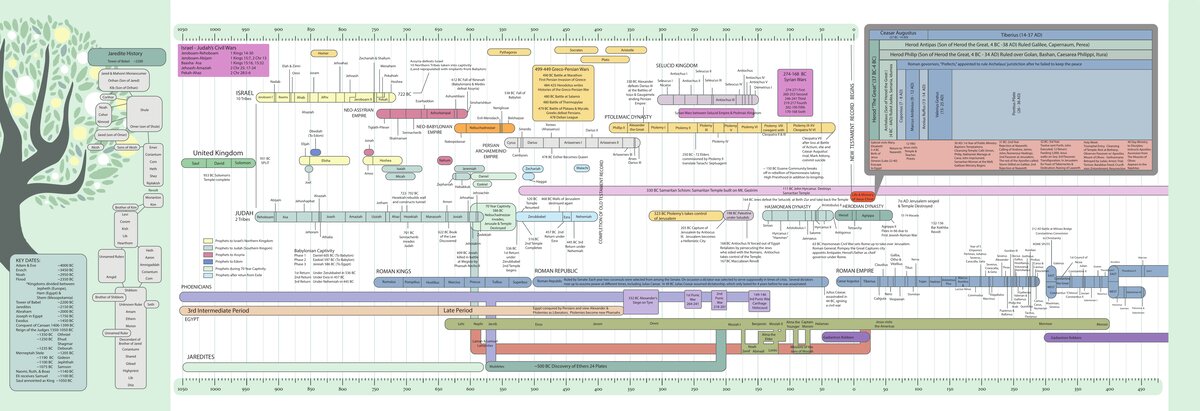
Tap to expand
Old Testament Timeline
From Creation through the Persian Period — tap the image to zoom, or download the full PDF.
Tap anywhere to close · Pinch to zoom