| Church Manuals | |
| Come Follow Me Manual — Week 24 | View |
| Scripture Helps: Old Testament | View |
| OT Seminary Teacher Manual | View |
| OT Institute Manual (Gen–2Sam) | View |
| Pearl of Great Price Manual | View |
| Scripture Reference | |
| Bible Dictionary | View |
| Topical Guide | View |
| Guide to the Scriptures | View |
| Church Media & Library | |
| Gospel for Kids (YouTube) | View |
| Bible Videos | View |
| Church Magazines | View |
| Gospel Library | View |
← The Lord Hath Not Left Thee without a Near Kinsman
All Weeks
Thy Throne Shall Be Established Forever →
Week 24
To Obey Is Better Than Sacrifice
1 Samuel 8–10; 13; 15–18
June 8–14, 2026
5-Minute Overview
Week 24 traces the birth of Israel's monarchy through the twin stories of Saul's rise and fall and David's emergence. The study guide explores the Philistines as Aegean Sea Peoples with Mycenaean warrior culture, Goliath's challenge as formal representative combat paralleling Homer's Iliad, the cherem institution and the Agag-to-Haman chain connecting 1 Samuel 15 to the book of Esther, Rashi's reading of 16:7 (even the prophet cannot truly see), the mashach word study tracing the horn symbol from Minoan Crete to Mesopotamian divine crowns, and David's wild-branch ancestry through Ruth the Moabite (Jacob 5).
Official Church Resources
OFFICIAL CHURCH RESOURCES▶
CHURCH MEDIA FOR FAMILIES▶
▶ Video Commentary
VIDEO COMMENTARY (6 videos + channel links)
▼


Specialized Audiences
Reference & Study Materials

BIBLE PROJECT VIDEOS THIS WEEK (12 videos)
▶
Book overview + theme & word study videos relevant to this week’s reading.






ACADEMIC & SCHOLARLY SITES▶
MAPS & BIBLICAL LOCATIONS▶
A Letter to Fellow Students
▶︎
This week Israel crosses a threshold it cannot uncross. They demand a king — and God gives them one.
The request was not inherently sinful. Deuteronomy 17 anticipates monarchy. But Rashi on 1 Samuel 8:6 identifies the problem with surgical precision: the sin was in the words "like all the nations" (ke-khol ha-goyim, כְּכָל הַגּוֹיִם). Israel wanted what everyone else had — not a king under covenant, but a king who would make them look normal. God's response reveals the depth of the wound: "They have not rejected thee, but they have rejected me, that I should not reign over them" (8:7).
What follows is one of the most tragic arcs in all of Scripture. Saul begins with every advantage — handsome, humble, Spirit-empowered, hiding among the baggage when chosen. And he loses it all, not through spectacular villainy but through the quiet erosion of incomplete obedience. Alongside that tragedy, a shepherd boy emerges from a Bethlehem pasture to face a professional Aegean warrior in a military institution Israel had no equivalent for — and defeats him with a name: "I come to thee in the name of the Lord of hosts" (17:45).
The distance between Saul and David is the distance between performing religion and actually obeying the voice behind it. Samuel's question to Saul is the question this week puts to each of us: "Hath the Lord as great delight in burnt offerings and sacrifices, as in obeying the voice of the Lord?"
A note from CFM Corner: I'm taking some time away over the next few weeks. During that time, the weekly video resources won't be updated with new episode links, but the study guides are posted in advance and general resource links remain available. Thank you for your patience — and for studying with me.
What's in This Week's Materials
▶︎
The Reading: 1 Samuel 8–10; 13; 15–18
▶︎
Eleven chapters spanning the birth of the monarchy through David's emergence. If you read nothing else, read these three passages:
- 1 Samuel 8:5–18 — Israel demands a king; Samuel delivers the mishpat ha-melekh, the "manner of the king" — conscription, seizure, taxation, enslavement. The people hear every word and say: "Nay; but we will have a king."
- 1 Samuel 15:22–23 — The theological center of the week. Obedience outranks sacrifice. Rebellion equals witchcraft. Stubbornness equals idolatry. Nine hundred years of prophetic theology distilled into two verses.
- 1 Samuel 16:7; 17:45 — The twin declarations that define David: God sees the heart, not the surface. David fights in God's name, not with human weapons.
In the Study Guide
▶︎
Six word studies trace the key Hebrew vocabulary: melekh (king — and the radical constraints Deuteronomy 17 places on Israelite monarchy), mashach (to anoint — with the horn's cross-cultural significance from Minoan Crete to Mesopotamian divine crowns), shama (to hear/obey — the Hebrew that refuses to separate the two), lev (heart — the only criterion that matters), ruach (spirit — the conditional gift that departed from Saul), and qashar (to bind/knit — the covenant vocabulary of Jonathan and David's friendship).
The Historical Cultural Context is especially deep this week — extensive treatments of the Philistines as Aegean Sea Peoples, the Mycenaean warrior culture behind Goliath's champion-combat challenge, the Phoenician-Philistine rivalry that made Israel and Tyre allies, the cherem institution, and David's lyre as a prophetic instrument. This is some of the most significant historical background information in the entire study guide series.
The Jewish Perspective explores why Saul's dynasty failed (Yoma 22b — "Because there was no flaw in his genealogy"), the rabbis' poignant defense of Saul's disobedient reasoning about the Amalekite livestock, and the Sotah 42b reading of Goliath's forty-day challenge as a counter-Sinai liturgy.
In Charts and Articles
▶︎
The Canaan Cultural Field Guide is essential for this week's Philistine material:
- Section 05: The Phoenicians — the trade rivalry with the Philistines that drove the Israel-Tyre alliance
- Section 06: The Philistines — Sea Peoples, the Pentapolis, iron technology, Aegean origins
- Section 07: Israel Among the Nations — how Israel navigated between surrounding powers
The Purim: Hidden Providence article connects directly to this week: Saul's partial obedience with Amalek sets in motion the chain that produces Haman the Agagite — and the entire book of Esther.
The Philistines — Aegean Warriors on Canaan's Coast
▶︎
Understanding the Philistines transforms the David and Goliath story from a children's lesson into a geopolitical confrontation between civilizations. The Philistines were not Canaanites. They were Sea Peoples — Aegean migrants who arrived on Canaan's southern coast during the Bronze Age Collapse (c. 1200–1175 BC), the catastrophic wave of destruction that leveled the Hittite Empire, destroyed the port city of Ugarit, and fragmented Mycenaean Greece. Ramesses III's mortuary temple at Medinet Habu records his battles against the "Peleset," and Mycenaean-style pottery appears at Ashkelon, Ekron, and Gath only after 1200 BC.
The Bible preserves their origin: they came from Caphtor (כַּפְתּוֹר) — linguistically related to Egyptian Keftiu, originally referring to the Minoans of Crete. But around 1450 BC, Mycenaean Greeks conquered Crete, transforming the island from a commercial hub into part of their military sphere. The Philistines who arrived in Canaan were products of this Mycenaean warrior culture — aggressive, colonizing, militarily organized. Their heavy bronze armor, champion-combat traditions, and territorial ambitions all reflect Mycenaean, not Minoan, heritage. When Caphtor appears in the Hebrew Bible, it points to the same Aegean world that produced the Trojan War traditions and Homer.
They settled five city-states — the Pentapolis: Gaza, Ashkelon, Ashdod, Gath, and Ekron — and possessed iron-smelting technology that gave them decisive military advantage. 1 Samuel 13:19-22 notes that "there was no smith found throughout all the land of Israel." Israelites had to go to the Philistines even to sharpen their farm tools. Israel's transition to monarchy was driven in large part by the need to match this kind of military organization — a people whose warrior culture descended from the same Aegean world that produced the heroes of the Iliad.
The Phoenician connection matters more than it might seem. The Phoenicians — Tyre, Sidon, Byblos — had been trading partners with the Minoans for centuries. When the Mycenaean-descended Philistines settled aggressively along Canaan's southern coast, they disrupted and threatened those trade networks. Both were coastal powers competing for Mediterranean trade routes and ports. The shared enmity made Israel and Phoenicia natural allies: the enemy of my enemy. When David pushed the Philistines back, King Hiram of Tyre became an enthusiastic partner — sending cedar and craftsmen for David's palace. The alliance deepened under Solomon, when Hiram supplied timber, gold, and skilled labor for the Temple itself. The Temple in Jerusalem was built, in significant part, by Phoenician hands — and the political foundation for that partnership was forged in the shared struggle against the Philistines during exactly this period.
Goliath's Challenge — An Aegean Military Institution
▶︎
Goliath's challenge — "Choose you a man for you, and let him come down to me" (17:8) — was not random taunting. It was representative combat: a formal institution of ancient warfare where two armies agree to let the outcome rest on a fight between individual champions. The winner's army takes all. The practice was deeply embedded in Aegean military culture — the world the Philistines came from.
Homer's Iliad, composed in roughly the same era, records the identical protocol. Paris challenges the Greeks to single combat to settle the war over Helen: "Let him that is the better man take the woman and all the possessions." The terms are identical to Goliath's. Hector fights Ajax. Achilles fights Hector. Every duel follows the same formal structure: challenge, acceptance, combat witnessed by both armies.
Goliath's armor as described in 1 Samuel 17:5-7 — bronze helmet, scaled body armor, bronze greaves, a javelin slung between his shoulders — matches Mycenaean heavy infantry equipment more closely than any Canaanite or Israelite gear. He was operating within a recognized military institution that Israel had no equivalent for.
This is what makes David extraordinary. Israel had no champion class. Saul, the tallest man in the nation, should have been the obvious candidate — but he was "dismayed, and greatly afraid" (17:11). David stepped into a role that didn't exist in Israelite culture and defeated a professional champion using a shepherd's weapon the institution would have considered beneath contempt. The sling was not a champion's arms.
The Talmud (Sotah 42b) adds a layer: Goliath's forty-day challenge paralleled Moses' forty days on Sinai. Each morning and evening blasphemy was a desecration of the hours when Israel offered daily sacrifice. It was a counter-liturgy — an anti-Sinai — and David's response was a declaration of covenant faith that answered it: "I come to thee in the name of the Lord of hosts, the God of the armies of Israel, whom thou hast defied" (17:45).
God's point was not that David was braver than Saul. It was that He is not bound by anyone's system: "The Lord saveth not with sword and spear: for the battle is the Lord's" (17:47).
Saul's Tragedy — Incomplete Obedience and Centuries of Consequence
▶︎
Saul's story is one of the saddest in Scripture. He begins with every quality that should produce a great king: tall, handsome, from the humblest tribe, hiding among the baggage when chosen by lot. God gives him "another heart" and the Spirit comes upon him. And then, piece by piece, he loses it all.
At Gilgal, facing the Philistine army with his troops melting away, he could not wait for Samuel and offered the burnt offering himself — a priestly function he had no authority to perform. Rashi notes the conditional tragedy: "Had you not done this, God would have established your kingdom forever." Saul was one act of patience away from an eternal dynasty.
Then comes Amalek. The study guide addresses this passage directly and honestly — the cherem command is one of the hardest passages in the Old Testament, and it should trouble us. Any reading that treats it casually has not taken it seriously. But the consequences of Saul's partial obedience unfold across centuries in ways he could not have imagined.
Saul spares King Agag and the best livestock, presenting his disobedience as devotion — claiming he intended them for sacrifice. Samuel's response (15:22-23) establishes a permanent hierarchy: obedience outranks ritual. The rabbis (Yoma 22b) add a poignant detail: Saul reasoned compassionately, asking why innocent animals should die for their masters' sins. His mercy may have had genuine tones, it may have been a justification to veil his own greed — but in any case, it was misplaced. Because Saul disobediently spared Agag even briefly, Agag fathered a child before Samuel executed him. That lineage survived — and centuries later produced Haman the Agagite (Esther 3:1), who plotted the genocide of every Jew in the Persian Empire.
The entire book of Esther — Purim, Mordecai's courage, Queen Esther's intervention, the gallows meant for the righteous turned against the wicked — exists because of this single act of partial obedience. And the irony compounds: Mordecai, who saved the Jews from Haman, was also a Benjamite — a descendant of Saul's own tribe had to repair what Saul's failure unleashed. The sin and its remedy both came from Benjamin. For the full Esther connection, see the Purim: Hidden Providence article.
The margin between full obedience and almost-obedience is the margin between Purim as a celebration and Purim as a funeral.
David — Heart over Appearance, the Wild Branch Grafted In
▶︎
When God sends Samuel to Jesse's house, Jesse parades seven sons before the prophet — and God rejects every one. David, the youngest, is out with the sheep. No one thought to call him. When he arrives, God says: "Arise, anoint him: for this is he" (16:12). The principle declared in 16:7 — "Man looketh on the outward appearance, but the Lord looketh on the heart" — redefines what it means to be chosen.
David's ancestry matters. His great-grandmother was Ruth the Moabite — a foreign convert from a despised nation. The Talmud (Yoma 22b) uses this "flaw" to explain why David's dynasty endured while Saul's did not: "Why did Saul's kingdom not endure? Because there was no flaw in his genealogy." The leader untested by adversity and stigma lacks the humility that sustains power.
The Book of Mormon illuminates this pattern directly. In Jacob 5, the Lord of the vineyard grafts wild olive branches into the tame olive tree — and it is the wild branches that save it. "The wild branches have taken hold of the moisture of the root thereof, that the root thereof hath brought forth much strength" (Jacob 5:18). The tame tree alone was failing; it needed the vitality of what came from outside. Ruth is the wild branch grafted into Jesse's root. She brought hesed, courage, and covenant commitment that the "tame" lineage of Elimelech's family had lost — Elimelech himself fled Bethlehem rather than sustaining his people. The Moabite outsider preserved what the Israelite insider abandoned. And from that grafted branch came David, and from David came Christ — the fruit the Lord of the vineyard was working to produce all along.
The Question This Week Asks
▶︎
Saul had every advantage and lost the kingdom. David had no advantage except a heart that trusted God — and it was enough. The distance between them is not talent, not appearance, not lineage, not opportunity. It is obedience.
Samuel's oracle strips away every hiding place: "To obey is better than sacrifice, and to hearken than the fat of rams." No amount of religious performance compensates for ignoring the voice of God. Saul's rebellion was cloaked in the language of piety — he claimed to have saved the animals for sacrifice. The most dangerous disobedience always looks devout.
The question is not whether we will serve God with impressive offerings. The question is whether we will do the specific thing He asked — even when it is harder, less dramatic, and less flattering than the alternative we've chosen for ourselves.
Weekly Insights — Week 24 | CFM Corner | OT 2026
Sources: Study Guide, Canaan Cultural Field Guide, Jewish Perspective, Video Summaries
Week 24
1 Samuel 8–10; 13; 15–18 — Overview
"To Obey Is Better Than Sacrifice"
1. Week 24: Overview
The transition from judges to kings is one of the most consequential pivots in all of scripture. In this week's reading, Israel crosses a threshold it cannot uncross — from a covenant people led by prophets and Spirit-empowered deliverers to a nation with a standing monarchy, a palace, and all the machinery of centralized power. The story is not simple. God permits what He does not prefer. Samuel grieves what God allows. And Saul — handsome, humble, and head-and-shoulders above the crowd — becomes one of scripture's most tragic figures: a man who had everything and lost it all because he could not bring himself to obey.
At the center of this week stands one of the Old Testament's most penetrating declarations: "To obey is better than sacrifice, and to hearken than the fat of rams" (1 Samuel 15:22). This principle — that God values the obedient heart above the most costly ritual — becomes a defining standard for all prophetic theology that follows. Hosea, Micah, Isaiah, and Jesus Himself will echo Samuel's words. But the principle is not abstract. It is delivered as a verdict over a man who thought he could substitute religious performance for actual compliance with God's word.
The week ends with a dramatic reversal: the Spirit departs from Saul and comes upon David, the shepherd boy whom no one thought to invite to the anointing. God's declaration in 1 Samuel 16:7 — "Man looketh on the outward appearance, but the Lord looketh on the heart" — redefines what it means to be chosen. And then David steps onto the battlefield against Goliath, armed with nothing but a sling and a name: "I come to thee in the name of the Lord of hosts" (17:45). The youngest son of Jesse becomes the most important king in Israel's history — not because of what he looked like, but because of what he believed.
"Behold, to obey is better than sacrifice, and to hearken than the fat of rams. For rebellion is as the sin of witchcraft, and stubbornness is as iniquity and idolatry." (1 Samuel 15:22–23)
Samuel's oracle to Saul is not a blanket rejection of sacrifice — it is a hierarchy of values. The costliest burnt offering means nothing if the one offering it has ignored the voice of God. Rashi explains: shema (obeying) outranks zebach (sacrifice), and hakshiv (attending to God's voice) outranks even chelev eilim (the choicest fat of rams). The principle is absolute: no amount of religious activity compensates for disobedience.
"The Lord seeth not as man seeth; for man looketh on the outward appearance, but the Lord looketh on the heart." (1 Samuel 16:7)
Rashi's comment on this verse is startling. God says to Samuel: "You called yourself a ro'eh (seer) — but here I am informing you that you do not truly see." Even the greatest prophet in Israel is limited to surfaces. Only God penetrates to the lev (לֵב) — the heart, the seat of character, will, and intention.
"Then said David to the Philistine, Thou comest to me with a sword, and with a spear, and with a shield: but I come to thee in the name of the Lord of hosts, the God of the armies of Israel, whom thou hast defied." (1 Samuel 17:45)
David's confrontation with Goliath was a declaration of covenant faith. Every soldier in Israel's camp calculated odds based on what they could see — and the math terrified them. David calculated differently: the name of the Lord of Hosts outweighed any weapon, and that settled the matter before a single stone was slung.
1. Melekh Theology — The Demand for a King
Israel's request for a king (1 Samuel 8:5) was not inherently sinful — Deuteronomy 17:14–15 anticipates monarchy. But Rashi on 8:6 identifies the problem: the motive was wrong. "Give us a king to judge us like all the nations" (כְּכָל הַגּוֹיִם). They wanted to be like everyone else, not to fulfill God's design for righteous governance. God's response reveals His grief: "They have not rejected thee, but they have rejected me, that I should not reign over them" (8:7).
2. Samuel's Warning — Mishpat Ha-Melekh
Samuel's anti-monarchy speech (8:11–18) is not a prophecy — it is a legal brief. He describes mishpat ha-melekh (מִשְׁפַּט הַמֶּלֶךְ, "the manner of the king"): conscription of sons and daughters, seizure of fields and vineyards, taxation of flocks, and ultimate enslavement. "And ye shall cry out in that day because of your king which ye shall have chosen you; and the Lord will not hear you in that day" (8:18). The people heard every word — and said, "Nay; but we will have a king over us" (8:19).
3. Saul's Humble Beginning
Saul's introduction is deliberately endearing. He is tall, handsome, from the smallest tribe (Benjamin) and the least family of that tribe (9:21). He is looking for lost donkeys when God finds him. He hides among the baggage when he is chosen by lot (10:22). His name sha'ul (שָׁאוּל) means "the one asked for" — an ironic wordplay on Israel's asking. He begins with every quality that should make a great king, except the one that matters most: unwavering obedience.
4. The Spirit and Prophecy
When Samuel anoints Saul, "God gave him another heart" and "the Spirit of God came upon him, and he prophesied among the prophets" (10:9–10). This is Israel's first experience of a king who is also Spirit-empowered — a blend of political office and charismatic gift. The question "Is Saul also among the prophets?" (10:11) becomes proverbial. But the blend is unstable. When Saul disobeys, the Spirit departs (16:14), proving that political office without spiritual fidelity is an empty throne.
5. Saul's Unlawful Sacrifice at Gilgal (Chapter 13)
Facing the Philistine army with his troops melting away, Saul could not wait for Samuel. He offered the burnt offering himself — a priestly function he had no authority to perform. Samuel's rebuke is devastating: "Thou hast done foolishly... thy kingdom shall not continue" (13:13–14). Rashi notes the conditional tragedy: "Had you not done this, God would have established your kingdom forever." Saul was one act of patience away from an eternal dynasty.
6. "To Obey Is Better Than Sacrifice" — And the Consequences That Rippled for Centuries (Chapter 15)
Saul received a cherem (חֵרֶם) command — complete destruction of the Amalekites. Before we examine what Saul did with that command, we need to sit with how difficult it is.
A Necessary Pause: The Hardest Passage in This Week's Reading
The command to destroy an entire people — men, women, children, livestock — is one of the most troubling passages in the Old Testament. It should trouble us. Any reading that treats it casually has not taken it seriously. Throughout history, passages like this have been misused to justify religious violence, ethnic cleansing, and extremism — and that misuse is itself a grievous sin. We must be honest: this command, read in isolation, does not sound like the God who later says "love your enemies" (Matthew 5:44) and "blessed are the peacemakers" (Matthew 5:9).
Several things help us hold this passage without either dismissing it or weaponizing it:
This is not how God typically acts. The overwhelming pattern of God's dealings with the nations — including hostile nations — is patience, warning, long-suffering, and repeated invitations to repent. He sent prophets to Nineveh (Jonah). He spared Rahab from Jericho. He welcomed Ruth the Moabite into the Messianic line. He told Abraham He would spare Sodom for ten righteous people. The cherem against Amalek is an exception to the pattern, not the pattern itself — and the reason given is specific: Amalek systematically targeted the weakest and most vulnerable among Israel during the wilderness wandering, "the feeble behind thee, when thou wast faint and weary; and he feared not God" (Deuteronomy 25:18). The judgment is framed as a response to predatory cruelty against the defenseless, not as ethnic hatred.
God sees what we cannot. The Agag-to-Haman chain — which we discuss below — reveals that God was looking centuries ahead. Saul could not see that sparing one king would eventually produce a man who would plot the genocide of every Jew in the Persian Empire. We, standing at our point in the timeline, cannot see what God sees from His. This does not make the command emotionally easy, but it suggests that the calculus operating behind it was larger than any human participant could have known. Nephi faced a similar anguish when commanded to slay Laban (1 Nephi 4:10-13) — he "shrunk and would that I might not slay him," and the Lord's reasoning was the same: "It is better that one man should perish than that a nation should dwindle and perish in unbelief." The cost was terrible. The alternative was worse. And only God could see both outcomes.
The trajectory of scripture moves toward mercy. The Old Testament records a covenant people learning, over centuries, to understand God's character more fully. The law of Moses itself was "a schoolmaster to bring us unto Christ" (Galatians 3:24). Christ's teaching — love your enemies, do good to those who hate you, forgive seventy times seven — is not a contradiction of the Old Testament but its fulfillment. The God of 1 Samuel 15 is the same God who wept over Jerusalem and died for His enemies. We are meant to hold both realities, not choose between them.
This passage must never be used to justify human violence in God's name. The cherem was a specific divine command for a specific situation, delivered through a specific prophet, in a specific dispensation. It is not a template. It is not transferable. No human being has the authority to invoke cherem against another people. Anyone who reads 1 Samuel 15 as permission for violence has fundamentally misunderstood it — and the entire arc of scripture stands against them.
With that context, here is what happened: Saul spared King Agag and the best livestock, claiming he intended them for sacrifice. Samuel's response (15:22–23) establishes a permanent hierarchy: obedience outranks ritual. Rashi adds that stubbornness (haftsar, הַפְצַר) is equated with idolatry (teraphim) because self-will is itself a form of false worship — worship of one's own judgment over God's explicit command.
But the consequences of Saul's disobedience reach far beyond his own lifetime. The Midrash traces a devastating chain: because Saul spared Agag even briefly, Agag fathered a child before Samuel executed him (1 Samuel 15:33). That lineage survived — and centuries later produced Haman the Agagite (Esther 3:1), who plotted the genocide of every Jew in the Persian Empire. The entire book of Esther — Purim, Mordecai, Queen Esther's courage, the gallows meant for the righteous turned against the wicked — exists because of Saul's single act of rebellious mercy in 1 Samuel 15. One king's disobedience nearly annihilated the very people he was anointed to protect.
The irony compounds: Saul was from the tribe of Benjamin. Mordecai, who saved the Jews from Haman, was also a Benjamite (Esther 2:5) — "Mordecai, the son of Jair, the son of Shimei, the son of Kish, a Benjamite." The Talmud (Megillah 13a) reads this as deliberate: a descendant of Saul's tribe had to repair what Saul's failure unleashed. The sin and its remedy both came from Benjamin. This is not coincidence in the biblical narrative — it is covenantal consequence working across centuries.
For Latter-day Saints, the principle is sobering: partial obedience is not obedience. Saul destroyed most of the Amalekites — he did almost everything God asked. But "almost" preserved the lineage that nearly destroyed Israel. The margin between full obedience and almost-obedience is the margin between Purim as a celebration and Purim as a funeral. See Jewish Perspective, Section 3 for the full rabbinic treatment, and the Purim: Hidden Providence article for the Esther narrative's deeper theology.
7. David Anointed — Heart over Appearance (Chapter 16)
Jesse parades seven sons before Samuel, and God rejects every one. David, the youngest, is out tending sheep — no one thought to call him. When he arrives, God says: "Arise, anoint him: for this is he" (16:12). Rashi reveals why Eliab was rejected despite his impressive stature (see Word Studies, Lev). The lev (heart) is the only criterion that matters. When Samuel anoints David, "the Spirit of the Lord came upon David from that day forward" (16:13) — Rashi calls it ruach gevurah, a spirit of strength.
8. David and Goliath — Faith Against the Visible (Chapter 17)
Goliath's forty-day challenge (17:16) was a direct assault on Israel's covenant identity — the Talmud (Sotah 42b) notes it paralleled Moses' forty days on Sinai, making it a counter-liturgy against Torah. David answered blasphemy with a confession of faith: "I come to thee in the name of the Lord of hosts" (17:45). The victory belongs to God, and the youngest son with a sling proves it. See Key Passages Study (1 Samuel 17:45–47) for full treatment.
| Chapter | Content | Assigned |
|---|---|---|
| 1 Samuel 8 | Israel demands a king; Samuel's warning | Yes |
| 1 Samuel 9 | Saul meets Samuel; divine revelation | Yes |
| 1 Samuel 10 | Saul anointed; Spirit comes upon him; chosen at Mizpeh | Yes |
| 1 Samuel 11 | Saul defeats the Ammonites | — |
| 1 Samuel 12 | Samuel's farewell address | — |
| 1 Samuel 13 | Saul's unlawful sacrifice; kingdom rejected | Yes |
| 1 Samuel 14 | Jonathan's raid on the Philistines | — |
| 1 Samuel 15 | War against Amalek; Saul's disobedience; Agag slain | Yes |
| 1 Samuel 16 | David anointed; David plays the lyre for Saul | Yes |
| 1 Samuel 17 | David and Goliath | Yes |
| 1 Samuel 18 | Jonathan and David's covenant; Saul's jealousy; David marries Michal | Yes |
- The Demand (ch. 8) — Israel rejects theocratic governance and demands a king "like all the nations," grieving both Samuel and God.
- The Anointing of Saul (chs. 9–10) — God providentially brings Saul to Samuel, anoints him, gives him "another heart," and the Spirit comes upon him. Everything is set for success.
- The Failures (chs. 13, 15) — Saul's impatience at Gilgal (unauthorized sacrifice) and disobedience with Amalek (sparing Agag and the best animals) reveal a pattern: he trusts his own judgment over God's explicit command.
- The Transfer (ch. 16) — The Spirit departs from Saul and comes upon David. God selects by the heart, not by stature. David enters Saul's court as a musician and armor-bearer.
- The Proof (chs. 17–18) — David defeats Goliath by faith, not by armor. Jonathan's soul is "knit" to David's. Saul's jealousy begins the long descent that will consume the rest of 1 Samuel.
- The obedience-over-sacrifice principle (15:22) is one of the Old Testament's most quoted verses in the New Testament and modern revelation. It defines the relationship between ritual and righteousness.
- The heart-over-appearance principle (16:7) challenges every culture's tendency to judge by externals — wealth, beauty, credentials, charisma.
- Saul's tragedy is a warning about partial obedience. He didn't refuse to obey — he modified the command. He kept the best animals "for sacrifice." Saul's rebellion was cloaked in the language of piety — he claimed to have saved the animals for sacrifice.
- David's faith against Goliath is not a children's story — it is a theological statement about where power actually resides.
- The David-Jonathan covenant (ch. 18) introduces one of scripture's most profound friendships, built on mutual loyalty and shared faith.
- The transition from judges to kings raises permanent questions about political power, divine sovereignty, and institutional authority that remain relevant in every era.
- The Spirit's departure from Saul (16:14) is one of scripture's most sobering moments — proof that divine calling requires ongoing faithfulness to be sustained.
When God tells Samuel, "Man looketh on the outward appearance, but the Lord looketh on the heart" — what does your heart look like to the One who sees it? Are there places where you, like Saul, have substituted the appearance of obedience for the substance of it?
The CFM reading assignment covers 1 Samuel 8–10, 13, and 15–18, skipping chapters 1–7 (covered in Week 23), 11–12, and 14. This section ensures that the gaps are not blank — every chapter receives enough description that the reader understands what they are not reading and why it matters.
Assigned chapters are marked in bold. Assigned chapters receive a brief orientation entry — where they sit in the arc, key verse, and a pointer to where full treatment lives. Non-assigned chapters receive substantive prose.
The Birth and Call of Samuel (Chapters 1–7) — covered in Week 23
Chapters 1–7 belong to last week's lesson. Hannah's barrenness and prayer, Samuel's birth and dedication to the tabernacle at Shiloh, the corruption of Eli's sons Hophni and Phinehas, the capture of the Ark by the Philistines, and its devastating sojourn through Ashdod and Ekron — all of this precedes this week's reading. Samuel emerges as the last judge and first kingmaker, a man who heard God's voice as a child (3:10) and never stopped listening. The Ark's return and the victory at Ebenezer (7:12) provide the backdrop for chapter 8: Israel is safe, Samuel is aging, and the question of succession becomes urgent.
Israel Demands a King (Chapter 8) — assigned
The fulcrum of the entire narrative. Samuel's sons are corrupt (8:3), the elders demand a king "like all the nations" (8:5), and God instructs Samuel to comply while warning them of the cost. See Key Themes §1–2 and Key Passages Study (1 Samuel 8:5–7) for full treatment.
Saul Meets Samuel (Chapter 9) — assigned
A masterpiece of narrative irony. Saul, searching for his father's lost donkeys, finds a kingdom instead. The private meal and rooftop conversation between Samuel and Saul (9:25) — a moment of intimacy before the public spectacle — reveals that God's selection of Saul was providential, not accidental. See Key Passages Study (1 Samuel 9:15–17) for Rashi's insight on ya'atzor (restraint as the function of kingship).
Saul Anointed and Chosen (Chapter 10) — assigned
After Samuel anoints Saul privately, he gives him three signs to confirm the calling. Each is specific, each is fulfilled exactly, and each escalates in spiritual intensity:
- At Rachel's tomb (10:2) — two men tell Saul the donkeys are found and his father now worries about him. The personal crisis that launched the journey is resolved; Saul is freed to focus on the larger commission.
- At the oak of Tabor (10:3-4) — three men going to worship at Bethel share their offerings with Saul. He is being drawn into the orbit of worship, receiving provision from those already walking the covenant path.
- At Gibeah — the company of prophets (10:5-6) — this is the climactic sign, and it deserves careful attention. Samuel tells Saul he will meet "a company of prophets coming down from the high place with a nevel (נֵבֶל, lyre/harp), and a tof (תֹּף, hand drum), and a chalil (חָלִיל, flute), and a kinnor (כִּנּוֹר, lyre): and they shall prophesy" (10:5). These prophets are not simply worshippers who happen to carry instruments. They are musicians whose instruments are the vehicle of prophetic experience. The music opens the channel; the Spirit flows through it.
Samuel instructs Saul: "The Spirit of the LORD will come upon thee, and thou shalt prophesy with them, and shalt be turned into another man" (10:6). And it happens — "God gave him another heart" (10:9), and when Saul meets the prophets, he prophesies among them. The transformation is so visible that onlookers who knew him are astonished: "Is Saul also among the prophets?" (10:11) — a saying that became proverbial in Israel.
The music-prophecy connection here is not incidental. It is the same pattern established at the Red Sea, where Miriam led prophetic worship with timbrel and dance (Exodus 15:20-21), and that will continue through Elisha, who called for a musician before prophesying: "When the minstrel played, the hand of the LORD came upon him" (2 Kings 3:15). The Levitical musicians in the Temple were appointed specifically to "prophesy with harps, with psalteries, and with cymbals" (1 Chronicles 25:1). Music in ancient Israel was not entertainment — it was prophetic infrastructure. The instruments carried the Spirit the way the ark carried the presence. (See the Music and the Spirit of Prophecy article for the full scriptural chain, and The Voice at the Mountain for the shofar tradition.)
What makes this moment so poignant is what comes later. Saul was genuinely transformed — "turned into another man." He prophesied. He received the Spirit. He had every spiritual gift necessary to succeed. And he squandered all of it. The company of prophets at Gibeah is the high-water mark of Saul's spiritual life — the moment when music, the Spirit, and the calling all converged — and everything afterward measures the distance of his fall from that peak.
At Mizpeh, the lot falls on Saul — but he is hiding among the baggage (10:22). The man who prophesied with the prophets now hides from his own anointing. See Word Studies (mashach, ruach) and Jewish Perspective for full treatment.
Saul's First Victory — The Ammonite War (Chapter 11) — not assigned
Chapter 11 is Saul's finest hour, and its omission from the reading assignment is unfortunate. Nahash the Ammonite besieges Jabesh-Gilead and offers a cruel peace: he will gouge out the right eye of every man in the city. The messengers reach Saul as he is coming from the field behind his oxen. "And the Spirit of God came upon Saul when he heard those tidings, and his anger was kindled greatly" (11:6). Saul performs a dramatic covenantal act — he takes a yoke of oxen, cuts them in pieces, and sends the pieces throughout Israel with the threat: "Whosoever cometh not forth after Saul and after Samuel, so shall it be done unto his oxen" (11:7). This act of karat brit (cutting covenant) is identical in form to the covenant ceremony in Genesis 15 and parallels Captain Moroni's Title of Liberty (Alma 46:12–22). Three hundred thirty thousand men rally. The Ammonites are destroyed. And in a moment of extraordinary magnanimity, Saul refuses to execute those who had doubted his kingship: "There shall not a man be put to death this day: for today the Lord hath wrought salvation in Israel" (11:13). This is the Saul who could have been — generous, Spirit-empowered, and obedient.
Samuel's Farewell Address (Chapter 12) — not assigned
Samuel formally transfers political authority to the new monarchy while retaining his prophetic role. His speech is a covenant-lawsuit (rib) in the prophetic tradition: he calls heaven and earth as witnesses, reviews God's saving acts from the Exodus to the present, and warns Israel that king and people alike remain under divine judgment. "If ye will fear the Lord, and serve him, and obey his voice, and not rebel against the commandment of the Lord, then shall both ye and also the king that reigneth over you continue following the Lord your God" (12:14). The key word is "both" — the king is not above the covenant. Samuel then calls thunder and rain during wheat harvest as a sign of God's displeasure, terrifying the people into acknowledging their sin. Yet Samuel's closing promise is tender: "For the Lord will not forsake his people for his great name's sake: because it hath pleased the Lord to make you his people" (12:22). Even in rebuke, the covenant holds.
Saul's Unlawful Sacrifice (Chapter 13) — assigned
The Philistine crisis. Saul's troops are melting away, Samuel is late, and Saul forces himself to offer the burnt offering. See Key Themes §5 and Key Passages Study (1 Samuel 13:8–14) for full treatment, including Rashi on the "missing word" in 13:8 and the conditional tragedy of 13:13.
Jonathan's Raid (Chapter 14) — not assigned
Chapter 14 is one of the most electrifying military narratives in the Old Testament. Jonathan and his armor-bearer secretly climb a cliff garrison of the Philistines with nothing but faith: "It may be that the Lord will work for us: for there is no restraint to the Lord to save by many or by few" (14:6). The phrase echoes David's later faith against Goliath. They kill twenty men in the initial assault, God sends an earthquake, and the Philistine camp panics. Saul's army rallies. But Saul's rash oath nearly destroys the victory — he pronounces a curse on anyone who eats before evening, and Jonathan unknowingly violates it by tasting wild honey. When the lot reveals Jonathan, Saul is prepared to execute his own son, but the people intervene: "Shall Jonathan die, who hath wrought this great salvation in Israel? God forbid" (14:45). The chapter reveals Saul's pattern: impulsive religious gestures that create more problems than they solve. Jonathan, by contrast, trusts God and acts in faith — a preview of the David-Jonathan friendship that will define chapters 18–20.
The Amalek War and Saul's Final Rejection (Chapter 15) — assigned
Samuel delivers God's command: utterly destroy the Amalekites — men, women, children, livestock, everything. This is cherem (חֵרֶם), destruction, the same command given at Jericho. The reason is stated in the Torah: Amalek attacked Israel's weakest — the stragglers, the faint, the exhausted — during the wilderness journey, "and he feared not God" (Deuteronomy 25:18). The command is not arbitrary cruelty; it is covenantal judgment against a people defined by predatory cruelty toward the vulnerable.
Saul attacks and wins — but spares King Agag and the best of the livestock. When Samuel arrives, Saul greets him with "I have performed the commandment of the LORD" (15:13). Samuel's answer is devastating: "What meaneth then this bleating of the sheep in mine ears?" (15:14). Saul blames the people. Samuel responds with one of the most quoted verses in the Old Testament: "Behold, to obey is better than sacrifice, and to hearken than the fat of rams. For rebellion is as the sin of witchcraft, and stubbornness is as iniquity and idolatry" (15:22-23).
Saul's response reveals his deepest failure. He does not repent — he asks Samuel to "honour me now, I pray thee, before the elders of my people" (15:30). His concern is not reconciliation with God but reputation before men. Samuel turns to leave, and Saul grabs his robe so desperately that it tears. Samuel reads the tear as prophecy: "The LORD hath rent the kingdom of Israel from thee this day, and hath given it to a neighbour of thine, that is better than thou" (15:28).
Samuel then executes Agag himself — "And Samuel hewed Agag in pieces before the LORD in Gilgal" (15:33). The prophet does what the king would not. And the final verse is among the saddest in Scripture: "Samuel came no more to see Saul until the day of his death: nevertheless Samuel mourned for Saul" (15:35). The prophet grieves the king he anointed. For the long-term consequences of Saul's failure — the Agag-to-Haman chain that nearly destroyed the Jewish people — see Key Themes §6. For the full rabbinic treatment, see Jewish Perspective, Section 3. For the passage study, see Key Passages (1 Samuel 15:22-23).
David Anointed (Chapter 16) — assigned
The Spirit departs from Saul and comes upon David. See Key Themes §7, Key Passages Study (1 Samuel 16:7), and Word Studies (lev, mashach) for full treatment.
David and Goliath (Chapter 17) — assigned
Goliath's challenge, David's faith, and the victory that changes everything. See Key Themes §8 and Key Passages Study (1 Samuel 17:45–47) for full treatment.
David and Jonathan; Saul's Jealousy (Chapter 18) — assigned
Three relationships define this chapter. First, Jonathan: "The soul of Jonathan was knit with the soul of David, and Jonathan loved him as his own soul" (18:1). The Hebrew niqsherah (נִקְשְׁרָה, was bound/knit) describes a permanent, covenantal attachment — Jonathan gives David his robe, armor, sword, bow, and belt (18:4), symbolically transferring his claim to the throne. Second, Saul: the women's song — "Saul hath slain his thousands, and David his ten thousands" (18:7) — triggers a jealousy that will consume the rest of 1 Samuel. "And Saul eyed David from that day and forward" (18:9). Third, Michal: Saul offers his daughter as a trap, demanding a bride-price of one hundred Philistine foreskins, hoping David will be killed. David delivers two hundred. See Word Studies (qashar) and Teaching Applications for full treatment.
2. Week 24: Historical and Cultural Context
The transition from judges to kings did not happen overnight, and it did not happen in a vacuum. Israel at the end of the eleventh century BCE was a loose confederation of tribes — no standing army, no centralized taxation, no permanent capital. The Philistines had iron technology and a professional military; Israel had seasonal militias summoned by charismatic leaders who arose, delivered, and died, leaving no institutional structure behind. When Samuel grew old and his sons took bribes (1 Samuel 8:3), the elders' demand for a king was not merely a theological crisis — it was a practical one. The question was not whether Israel needed stronger governance, but whether a human king would replace God as the people's true sovereign.
Israel was the last major people in the ancient Near East to adopt monarchy. Egypt had Pharaoh, Mesopotamia had kings from the third millennium BCE, and every Canaanite city-state had its melekh (מֶלֶךְ). Israel's delay was not political backwardness — it was theological conviction. The Song of the Sea declared, "The Lord shall reign forever and ever" (Exodus 15:18). God was Israel's king. The book of Judges ends with the editorial verdict: "In those days there was no king in Israel: every man did what was right in his own eyes" (Judges 21:25). The Deuteronomistic historian reads this as a problem requiring a solution — but the solution must not replace divine sovereignty with human ambition.
The Torah itself anticipates monarchy. Deuteronomy 17:14–20 permits Israel to set a king over themselves, but the law imposes severe restrictions. The king must not acquire many horses (symbols of military alliance with Egypt), must not accumulate wealth, must not multiply wives, and must write a personal copy of the Torah and read it daily. The purpose: "that his heart be not lifted up above his brethren" (17:20). In the ancient Near East, kings were gods or gods' regents. In Israel, the king was a fellow Israelite under the same covenant as everyone else. Saul's tragedy is that he violated precisely the spirit of this law — elevating his judgment above God's command.
Israel's pre-monarchic leaders held dual authority: the shofet (שׁוֹפֵט, judge) provided military deliverance and legal arbitration, while the navi (נָבִיא, prophet) communicated God's word. Samuel uniquely held both offices. He judged Israel (7:15–17), offered sacrifice (7:9), and received divine revelation (3:21). When the elders demanded a king, they were fragmenting Samuel's unified authority into separate political and religious offices. The king would command the army; the prophet would declare God's will. This structural separation would generate conflict for centuries — Saul vs. Samuel, David vs. Nathan, Ahab vs. Elijah — because the king had power but the prophet had authority.
The act of meshichah (מְשִׁיחָה, anointing) with oil was a widespread investiture ritual. In Egypt, vassal kings were anointed by Pharaoh as a sign of appointment and allegiance. In Canaan, anointing marked priests and kings as set apart for divine service. The anointed one — mashiach (מָשִׁיחַ) — was literally "the oiled one," consecrated by the substance poured over his head. Both Saul and David were anointed by Samuel, the prophet acting as God's agent. The theological weight is enormous: the anointed one is God's chosen, and to "lift up one's hand against the Lord's anointed" (1 Samuel 24:10) is to challenge God's own appointment. This concept will eventually generate the title Messiah (Greek: Christos) — the ultimate Anointed One.
Saul's origin from Benjamin is laden with significance. Benjamin was Jacob's youngest son, the only one born in the land of Canaan, and his mother Rachel died in childbirth. The tribe was nearly annihilated in the civil war of Judges 19–21 — reduced to six hundred men — and survived only through an emergency provision of wives from Jabesh-Gilead and Shiloh. For the first king to come from this smallest, most traumatized tribe was a deliberate divine choice: God selects from weakness, not strength. Saul himself says, "Am not I a Benjamite, of the smallest of the tribes of Israel? and my family the least of all the families of the tribe of Benjamin?" (9:21). The pattern — God choosing the least — will repeat immediately when David, the youngest son of Jesse, replaces Saul.
The Philistines were not Canaanites. They were Sea Peoples — Aegean migrants who settled on Canaan's southern coast as part of the massive Bronze Age Collapse (c. 1200-1175 BC) that destroyed the Hittite Empire, leveled Ugarit, and fragmented Mycenaean Greece (see the Canaan Cultural Field Guide: Section 06: The Philistines for the full background). The main settlement wave is well established archaeologically — Ramesses III's mortuary temple at Medinet Habu (c. 1178 BC) records his battles against the "Peleset" (the Philistines), and locally produced Mycenaean IIIC pottery (the signature marker of Aegean residential communities) appears at Ashkelon, Ekron, and Gath only after 1200 BC (Assaf Yasur-Landau, The Philistines and Aegean Migration at the End of the Late Bronze Age, Cambridge University Press, 2010).
However, the region was not unknown to Aegean peoples before the collapse. Mycenaean trade pottery appears at coastal Canaanite sites from the 14th century BC onward — imported goods showing commercial contact, though not residential settlement. This is significant for the Exodus narrative: when Exodus 13:17 says God did not lead Israel "through the way of the land of the Philistines, although that was near; for God said, Lest peradventure the people repent (turn back) when they see war," the text is using a geographical name the later readers would recognize for the southern coastal route. The actual military threat on that road — the Way of Horus — was Egyptian, not Philistine: a chain of fortified garrisons stretching from the Nile Delta to Gaza, recently confirmed by the excavation of a fortress dating to Thutmose I. Whether the Exodus occurred around 1446 BC (early dating) or 1270 BC (late dating), the coastal road was heavily garrisoned Egyptian territory. God steered Israel away from the strongest military infrastructure in the ancient world.
The Bible itself preserves the Philistines' Aegean origin: they came from Caphtor (כַּפְתּוֹר) — linguistically related to the Egyptian Keftiu (Amos 9:7; Jeremiah 47:4). The distinction matters: Keftiu in Egyptian records originally referred to the Minoans, the sophisticated merchant civilization centered on Crete — traders and artisans, not warriors. But around 1450 BC, Mycenaean Greeks conquered Crete, displacing and absorbing residual Minoan culture, transforming the island from a commercial hub into part of the Mycenaean military sphere. After that takeover, Keftiu/Caphtor referred to Mycenaean-controlled Crete, not the earlier Minoan civilization. The Philistines who arrived in Canaan after 1200 BC were products of this Mycenaean warrior culture — aggressive, colonizing, militarily organized — not the peaceful Minoan merchants who preceded them. Their heavy bronze armor, champion-combat traditions, and territorial ambitions all reflect Mycenaean, not Minoan, heritage. When Caphtor appears in the Hebrew Bible, it points to the Mycenaean Aegean world — the same culture that produced the Trojan War traditions and Homer.
They settled in five city-states — the Pentapolis: Gaza, Ashkelon, Ashdod, Gath, and Ekron — and possessed iron-smelting technology that gave them decisive military advantage. 1 Samuel 13:19-22 notes that "there was no smith found throughout all the land of Israel," forcing Israelites to go to the Philistines even to sharpen agricultural tools. Their pottery, architecture, and dietary practices (pig consumption, attested archaeologically) distinguished them sharply from their Semitic neighbors. Israel's transition to monarchy was driven in large part by the need to match Philistine military organization — a people whose warrior culture descended from the same Aegean world that produced the heroes of the Iliad.
The Phoenician-Philistine history matters here more than it might seem. The Phoenicians — the merchant maritime civilization based in Tyre, Sidon, and Byblos along the northern coast — had been long-time trading partners with the Minoans, sharing a commercial network across the eastern Mediterranean. When the Mycenaeans conquered Crete and displaced Minoan culture, and when the Mycenaean-descended Philistines later settled aggressively along Canaan's southern coast, they disrupted and threatened the Canaanite (Phoenician) trade networks that had existed for centuries. The relationship turned hostile. Both were coastal powers competing for control of Mediterranean trade routes, ports, and commercial territory. The Philistines' aggressive territorial expansion directly threatened Phoenician safety and trade interests. This shared enmity made Israel and Phoenicia natural allies: the principle that "the enemy of my enemy is my friend" shaped one of the most consequential alliances in the Old Testament. When David consolidated power and pushed the Philistines back, the Phoenicians under King Hiram of Tyre became enthusiastic partners. Hiram sent cedar, craftsmen, and materials for David's palace (2 Samuel 5:11), and the alliance deepened under Solomon, when Hiram supplied the timber, gold, and skilled labor for the Temple itself (1 Kings 5:1-12; 2 Chronicles 2:3-16). The Temple in Jerusalem was built, in significant part, by Phoenician hands — and the political foundation for that partnership was forged in the shared struggle against the Philistines during exactly this period of 1 Samuel. See Section 05: The Phoenicians for the full treatment of the Phoenician commercial empire, trade rivalries, and the Hiram-Solomon alliance. For the broader context of how Israel navigated between these surrounding powers, see Section 07: Israel Among the Nations.
Single Combat — The Warrior Champion Tradition
Goliath's challenge — "Choose you a man for you, and let him come down to me. If he be able to fight with me, and to kill me, then shall we be your servants: but if I prevail against him, and kill him, then shall ye be our servants" (17:8-9) — was not random taunting. It was a formal institution of ancient warfare known as single combat or representative combat: two armies agree to let the outcome of the entire battle rest on a fight between individual champions. The winner's army takes all; the loser's army submits. The practice spared both sides the massive casualties of full engagement — but it also concentrated the entire war into one terrifying encounter.
This tradition was deeply embedded in Aegean and eastern Mediterranean military culture — the world the Philistines came from. The Sea Peoples, including the Philistines, originated from the Aegean region and brought their warfare customs with them when they settled in Canaan around 1175 BC. The most famous literary record of representative combat comes from Homer's Iliad, composed in roughly the same era as the events of 1 Samuel. Paris challenges the Greeks to single combat to settle the war over Helen (Iliad 3.67-75): "Let him that is the better man take the woman and all the possessions." Menelaus accepts. The terms are identical to Goliath's: one champion per side, the outcome binding on both armies. The Iliad also records Hector's single combat with Ajax (Book 7) and the climactic duel between Hector and Achilles (Book 22) — each following the same formal structure of challenge, acceptance, and combat witnessed by both armies.
The parallel is not coincidental. The Philistines and the Mycenaean Greeks shared cultural roots in the late Bronze Age Aegean world. Goliath's armor as described in 1 Samuel 17:5-7 — bronze helmet, scaled body armor (shiryon, שִׁרְיוֹן), bronze greaves, a javelin slung between his shoulders — matches Mycenaean heavy infantry equipment more closely than any Canaanite or Israelite gear. His challenge follows Aegean protocols: formal speech, stated terms, the expectation that a champion of equivalent status will respond. Goliath was not simply a large man shouting insults. He was operating within a recognized military institution — one that Israel had no equivalent for.
This is what makes David's response so extraordinary. Israel had no champion class. They had no tradition of representative combat. Saul, the tallest man in Israel (9:2), should have been the obvious candidate — but he was "dismayed, and greatly afraid" (17:11). David, who had no military standing at all, stepped into a role that didn't exist in Israelite culture and defeated a professional champion using a weapon the champion tradition would have considered beneath contempt. The sling was a shepherd's tool and a skirmisher's weapon, not a champion's arms. David broke every rule of the institution — and that was precisely God's point. "The LORD saveth not with sword and spear: for the battle is the LORD's" (17:47). The Philistine system assumed that the strongest warrior determined the outcome. God demonstrated that He is not bound by anyone's system.
Two locations anchor the narrative. Gilgal (גִּלְגָּל), near the Jordan River, was where Israel first camped after crossing into the Promised Land (Joshua 4:19–20) and where circumcision was renewed. It became a place of both coronation and judgment — Saul was confirmed as king there (11:15), and there his kingdom was rejected (13:8–14; 15:12–33). The name means "rolling" — God "rolled away the reproach of Egypt" (Joshua 5:9). Mizpeh (מִצְפָּה, "watchtower") was a traditional assembly point where Samuel summoned all Israel for the lot-casting that selected Saul (10:17). Both sites carried deep covenantal memory: to stand at Gilgal or Mizpeh was to stand in the presence of Israel's founding acts. Saul's failure at Gilgal was therefore doubly significant — he defiled a site consecrated by covenant.
God's command to utterly destroy Amalek (1 Samuel 15:3) reaches back to Exodus 17, where Amalek attacked Israel's weakest members during the wilderness journey. Deuteronomy 25:17–19 commands Israel to "blot out the remembrance of Amalek from under heaven." The Hebrew term cherem (חֵרֶם, devoted destruction) indicates that the Amalekite livestock and spoils belonged to God — they were sacred property, not war plunder. Saul's decision to spare King Agag and the best animals was therefore not merely disobedient but sacrilegious: he took what belonged to God. The rabbis (Yoma 22b) add a poignant detail — Saul reasoned compassionately, asking why the innocent animals should die for their masters' sins. But the compassion was misplaced: mercy toward the unrepentant is cruelty toward their future victims. Jewish tradition traces Haman the Agagite (Esther 3:1) — the man who plotted to destroy all Jews — to the Amalekite king Saul failed to execute.
David's hometown of Beit Lechem (בֵּית לֶחֶם, "House of Bread") was a small village in the Judean hill country, already significant as Rachel's burial site and the setting for the book of Ruth. Jesse (Hebrew Yishai, יִשַׁי) was David's father, a grandson of Ruth and Boaz. The genealogy matters: David's great-grandmother was a Moabite convert. The Talmud (Yoma 22b) uses this "flaw" to explain why David's dynasty endured while Saul's did not: "Why did Saul's kingdom not endure? Because there was no flaw in his genealogy." A leader untested by adversity and stigma lacks the humility that sustains power. David's mixed lineage — Judahite and Moabite, royal and foreign — made him precisely the kind of person through whom God could work.
The Book of Mormon illuminates this pattern directly. In Jacob 5, the Lord of the vineyard grafts wild olive branches into the tame olive tree — and it is the wild branches that save it. "The wild branches have taken hold of the moisture of the root thereof, that the root thereof hath brought forth much strength" (Jacob 5:18). The tame tree alone was failing; it needed the vitality of what came from outside. Ruth is the wild branch grafted into Jesse's root. She brought hesed, courage, and covenant commitment that the "tame" lineage of Elimelech's family had lost — Elimelech himself fled Bethlehem rather than sustaining his people (see Week 23, Historical Cultural Context, Section 3). The Moabite outsider preserved what the Israelite insider abandoned. And from that grafted branch came David, and from David came Christ — the fruit the Lord of the vineyard was working to produce all along. God does not graft in the wild branch despite its foreignness. He grafts it in because of what it brings that the tame tree lacks.
When the Spirit departed from Saul and "an evil spirit from the Lord troubled him" (16:14), his servants recommended music as therapy. David was brought to court as a menagen (מְנַגֵּן, musician/player). The instrument was the kinnor (כִּנּוֹר, lyre) — a small stringed instrument with 5–10 strings, played with a plectrum. In the ancient Near East, the lyre was not merely entertainment but a vehicle of divine communication. Music accompanied prophecy: when the company of prophets descended from the high place, they came "with a psaltery, and a tabret, and a pipe, and a harp" (10:5). Scholar John Curtis Franklin argues that "David is not merely a king who happens to play the kinnor. He is king in large part because he plays it, incomparably well." The lyre served as what Franklin calls "the second witness in a revelatory duet" — music opening a channel for the Spirit. David's effectiveness in soothing Saul was not musical technique but divine presence: "the Lord was with him" (16:18).
- Israel's demand for a king was driven by both the failure of Samuel's sons and the military threat of the Philistines — a political crisis with theological dimensions.
- Deuteronomy 17 permits monarchy but constrains it radically — the king is under covenant, not above it.
- Samuel held both the judge's authority and the prophet's office; the monarchy split these roles, creating structural tension.
- Anointing (meshichah) consecrated both Saul and David as God's chosen, establishing the concept that will become "Messiah."
- Benjamin's trauma and smallness made Saul's selection a divine pattern of choosing the least — repeated immediately with David.
- The Philistines' iron monopoly created the military pressure behind the monarchy; David defeated their champion without their technology.
- Gilgal and Mizpeh were sacred covenant sites — Saul's disobedience there was doubly significant.
- The Amalek command was cherem — sacred destruction; Saul's mercy was misplaced and sacrilegious.
- David's Bethlehem origin and Moabite ancestry gave him the "flaw" that Saul's perfect lineage lacked.
- David's lyre was not entertainment but a prophetic instrument — music as a vehicle for the Spirit.
Previous File: 01_Week_Overview.md
3. Week 24: Key Passages Study
The Text
"And said unto him, Behold, thou art old, and thy sons walk not in thy ways: now make us a king to judge us like all the nations. But the thing displeased Samuel, when they said, Give us a king to judge us. And Samuel prayed unto the Lord. And the Lord said unto Samuel, Hearken unto the voice of the people in all that they say unto thee: for they have not rejected thee, but they have rejected me, that I should not reign over them."
Key Hebrew
- melekh (מֶלֶךְ) — "king" — from the root m-l-kh, meaning to rule, to reign. In the ancient Near East, the melekh was both political sovereign and religious figurehead. Israel's demand was for an institution that in every other culture displaced divine sovereignty.
- ke-khol ha-goyim (כְּכָל הַגּוֹיִם) — "like all the nations" — the phrase that transforms a permissible request into a sinful one. The Torah allows a king (Deuteronomy 17:14); it does not allow Israel to become indistinguishable from the nations.
- me'asu (מָאֲסוּ) — "they have rejected" — the same root used for God's later rejection of Saul (15:23, 26). Israel rejects God as king; God will reject Saul as king. The verb creates an exact moral symmetry.
What It Meant in Context
The elders' complaint had a legitimate basis: Samuel's sons Joel and Abijah "turned aside after lucre, and took bribes, and perverted judgment" (8:3). The people had every reason to want better governance. But Rashi on 8:6 identifies the deeper problem: the sin was not in requesting a king but in the words "like all the nations." Deuteronomy 17 envisions a king who reads Torah daily, who does not exalt himself above his brethren, who is constrained by covenant. The nations' kings were absolute. Israel wanted the nations' model, not God's.
God's response to Samuel is remarkable for its tenderness and its theological weight. "They have not rejected thee, but they have rejected me." God absorbs Samuel's personal hurt into a larger truth: what is happening is not about Samuel's ego but about Israel's relationship with its true King. And then God says something that sounds like capitulation but is actually sovereignty: "Hearken unto the voice of the people." The Lord granted Israel's request even though it reflected a failure of faith. He grants the request while warning of its cost. This is the pattern of a God who respects human agency even when it grieves Him — the same God who will permit Saul's anointing, David's kingship, and eventually the Cross.
Christ-Centered Reading
God's willingness to grant Israel a king despite knowing the pain it will cause mirrors the broader pattern of divine condescension. The Lord accommodates human weakness while working within it to accomplish His purposes. Israel wanted a human king; God eventually provided the King of Kings — one who would fulfill every requirement of Deuteronomy 17, who would not multiply horses or wives, who would carry the Torah in His heart because He was the living Torah.
Application
Where in your life have you asked God for something "like all the nations" — something permissible in itself but sought for the wrong reasons? God may grant the request while allowing you to experience its consequences.
The Text
"Then Samuel took a vial of oil, and poured it upon his head, and kissed him, and said, Is it not because the Lord hath anointed thee to be captain over his inheritance?" (10:1)
"And the Spirit of the Lord will come upon thee, and thou shalt prophesy with them, and shalt be turned into another man. And let it be, when these signs are come unto thee, that thou do as occasion serve thee; for God is with thee." (10:6–7)
Key Hebrew
- mashach (מָשַׁח) — "to anoint" — the verb from which mashiach (Messiah) derives. The anointing oil was a physical sign of divine selection and consecration. Samuel's act placed Saul in a sacred category: the Lord's anointed.
- ve-nehpakhta le-ish acher (וְנֶהְפַּכְתָּ לְאִישׁ אַחֵר) — "and you shall be turned into another man" — not merely improved but transformed. The verb haphakh means to overturn, reverse, transform completely. God did not polish Saul; He remade him.
- ruach Hashem (רוּחַ ה׳) — "Spirit of the Lord" — the same spirit that empowered the judges (Judges 3:10; 6:34; 11:29; 14:6). The Spirit is the active presence of God enabling what human capacity cannot accomplish.
What It Meant in Context
The anointing was private — Samuel and Saul alone, with oil and a kiss. The public confirmation would come later at Mizpeh. But in this intimate moment, Samuel declares the theological truth: it is not Samuel who has chosen Saul but "the Lord" who has "anointed thee." The kiss is an act of homage — the prophet bowing to God's choice even though it grieves him personally.
The three confirmatory signs that follow (10:2–6) — Rachel's tomb, the oak of Tabor, and the company of prophets — each carry covenantal weight. The final sign is the most dramatic: Saul will prophesy among the prophets. "God gave him another heart" (10:9). The transformation is real. Saul is genuinely changed by the Spirit. This makes his later failure all the more devastating: he did not lack spiritual experience. He had been "turned into another man." He chose to turn back.
Christ-Centered Reading
The anointing of Saul foreshadows the anointing of Jesus at His baptism, when the Spirit descended "like a dove" and the Father declared, "This is my beloved Son" (Matthew 3:16–17). Both anointings mark the beginning of a public mission. But where Saul's anointing led to disobedience and rejection, Jesus' anointing led to perfect obedience and eternal kingship.
Application
Have you ever experienced a spiritual transformation — a moment when God gave you "another heart" — only to find yourself drifting back toward old patterns? Saul's story warns that spiritual experience alone does not guarantee faithfulness. The transformation must be sustained by daily obedience.
The Text
"And he tarried seven days, according to the set time that Samuel had appointed: but Samuel came not to Gilgal; and the people were scattered from him. And Saul said, Bring hither a burnt offering to me, and peace offerings. And he offered the burnt offering. And it came to pass, that as soon as he had made an end of offering the burnt offering, behold, Samuel came." (13:8–10)
"And Samuel said to Saul, Thou hast done foolishly: thou hast not kept the commandment of the Lord thy God, which he commanded thee: for now would the Lord have established thy kingdom upon Israel for ever. But now thy kingdom shall not continue." (13:13–14)
Key Hebrew
- va-yyochel (וַיּוֹחֶל) — "and he waited" — Rashi identifies this as a mikra chaser (a text with a missing word), noting the verse's grammatical incompleteness. The text itself mirrors Saul's incomplete waiting — he waited, but not quite long enough.
- niskalta (נִסְכַּלְתָּ) — "thou hast done foolishly" — from the root s-kh-l, meaning to be foolish or act senselessly. This is not a minor error; it is a catastrophic misjudgment.
- ish ki-levavo (אִישׁ כִּלְבָבוֹ) — "a man after his own heart" — the first hint of David, unnamed but present in the judgment. God will seek someone whose lev (heart) aligns with His own.
What It Meant in Context
The situation was desperate. The Philistines had mustered "thirty thousand chariots, and six thousand horsemen, and people as the sand which is on the sea shore in multitude" (13:5). Saul's men were hiding in caves, thickets, rocks, and pits (13:6). Others were crossing the Jordan to flee. Samuel had said "wait seven days" — and Saul waited. But on the seventh day, with his army dissolving, he could wait no longer.
Rashi on 13:13 reveals the magnitude of the loss: "Had you not done this, God would have established your kingdom forever." The Hebrew ad olam (עַד עוֹלָם, forever) carries the weight of the Davidic covenant that would later be given to David's house. Saul was one act of patience away from what David received. The Talmud (Megillah 13b) teaches that "when a high position is assigned to a person, it is assigned to him and to his descendants." Saul's impatience cost not only his reign but his dynasty.
The irony is painful: Saul offered a sacrifice to secure God's favor, but the act of offering it was the very thing that cost him God's favor.
Christ-Centered Reading
Saul's unauthorized sacrifice inverts the pattern of Christ, who submitted to the Father's timing in all things: "My hour is not yet come" (John 2:4). Jesus waited — through the wilderness temptation, through Gethsemane, through the Cross — never seizing authority prematurely, never substituting His will for the Father's.
Application
When have you "forced the offering" — taken action that looked religious but was actually driven by anxiety? Saul's failure was not irreligion but impatience dressed in religious clothing. The hardest obedience is often simply waiting.
The Text
"And Samuel said, Hath the Lord as great delight in burnt offerings and sacrifices, as in obeying the voice of the Lord? Behold, to obey is better than sacrifice, and to hearken than the fat of rams. For rebellion is as the sin of witchcraft, and stubbornness is as iniquity and idolatry. Because thou hast rejected the word of the Lord, he hath also rejected thee from being king."
Key Hebrew
- shemo'a (שְׁמֹעַ) — "to obey/hear" — from the root shama (שָׁמַע), the foundational verb of Israelite faith. The Shema (Deuteronomy 6:4) commands Israel to hear; obedience and hearing are the same word. To truly hear God is to obey Him.
- qesem (קֶסֶם) — "divination/witchcraft" — prohibited in Deuteronomy 18:10. Samuel equates rebellion with sorcery because both attempt to manipulate outcomes outside God's authorized channels.
- teraphim (תְּרָפִים) — "household idols" — Rashi explains that stubbornness is equated with idolatry because self-will is itself a form of false worship. The one who insists on his own judgment over God's command has made his own opinion into an idol.
- ma'as (מָאַס) — "to reject" — used symmetrically: "thou hast rejected (ma'asta) the word of the Lord... he hath also rejected (ma'asekha) thee." The verb creates perfect justice: reject God's word, and God rejects your kingship.
What It Meant in Context
Saul had been commanded to perform cherem on the Amalekites — total destruction. He spared Agag and the best livestock, claiming he intended them for sacrifice (15:15, 21). His excuse was religious: "The people took of the spoil... to sacrifice unto the Lord thy God in Gilgal." Samuel's response is one of the most quoted verses in prophetic literature.
Rashi's analysis is precise: shema (obeying) is paired with zebach (sacrifice), and hakshiv (hearkening) is paired with chelev eilim (the fat of rams). The parallelism establishes a hierarchy: hearing God's voice outranks even the most costly offering. The principle does not abolish sacrifice — it subordinates it. Ritual without obedience is empty; obedience without ritual is still pleasing to God.
Rashi adds that the word haftsar (הַפְצַר, stubbornness/persistence) carries the sense of speaking many persuasive words to justify oneself. Saul's sin was compounded by his attempt to rationalize it. He did not simply disobey — he argued that his disobedience was actually a superior form of worship.
Christ-Centered Reading
Jesus quotes this prophetic tradition directly: "I will have mercy, and not sacrifice" (Matthew 9:13; 12:7, citing Hosea 6:6). The principle that Samuel declares over Saul becomes a cornerstone of Christ's ministry: the Pharisees offered meticulous sacrifice while neglecting "the weightier matters of the law, judgment, mercy, and faith" (Matthew 23:23). The pattern is identical — religious performance substituted for actual obedience.
Application
Saul's disobedience didn't look like rebellion — it looked like a worship service. Where in your life might you be offering God elaborate religious activity while quietly modifying His actual instructions?
The Text
"But the Lord said unto Samuel, Look not on his countenance, or on the height of his stature; because I have refused him: for the Lord seeth not as man seeth; for man looketh on the outward appearance, but the Lord looketh on the heart."
Key Hebrew
- lev (לֵב) — "heart" — in Hebrew thought, the heart is not primarily the seat of emotion but of will, intention, and character. God looks at the lev — the decision-making center, the place where loyalty and disloyalty are determined.
- mar'eh (מַרְאֶה) — "appearance/sight" — from the root ra'ah (to see). The wordplay is deliberate: man sees (yir'eh) the appearance (mar'eh), but God sees (yir'eh) the heart (levav). The same verb, different objects.
- ro'eh (רֹאֶה) — "seer" — Samuel's own title (1 Samuel 9:9). The word comes from the same root ra'ah (רָאָה, to see) as mar'eh above — and critically, the same root that gives us yir'eh (יִרְאֶה), as in YHWH Yir'eh (יְהוָה יִרְאֶה) — "the LORD will see/provide" (Genesis 22:14, the naming of Mount Moriah after the binding of Isaac). The entire theology of divine sight runs on this single root: God sees (yir'eh) what humans cannot, God provides (yir'eh) what humans need, and the seer (ro'eh) is the one called to see as God sees. Rashi makes the devastating connection: "You called yourself a ro'eh, but here I am informing you that you do not truly see." Even Israel's greatest prophet — the man whose title means "the one who sees" — looked at Eliab and saw a king. God looked at Eliab and saw a temper. The seer could not see. Only YHWH Yir'eh truly sees.
What It Meant in Context
Samuel has come to Jesse's house to anoint David, but he doesn't yet know which son. When Eliab, the eldest and most physically impressive, walks in, Samuel thinks: "Surely the Lord's anointed is before him" (16:6). God immediately corrects him. Rashi reveals that Eliab was rejected not for any physical deficiency but for being ka'asan — quick-tempered — citing 1 Samuel 17:28, where Eliab later rages at David.
The verse establishes a permanent principle: God's criteria for selection have nothing to do with human metrics of worthiness. Height, appearance, birth order, eloquence, military bearing — none of these matter. The lev is the only criterion. Seven sons pass before Samuel, and all are rejected. David, the youngest, is not even present — he is out tending sheep, so insignificant that Jesse did not think to summon him.
Christ-Centered Reading
The principle of 16:7 finds its ultimate expression in Christ's mortal ministry. The Messiah came not as a warrior-king but as a carpenter's son from Nazareth — "he hath no form nor comeliness; and when we shall see him, there is no beauty that we should desire him" (Isaiah 53:2). God's ultimate Anointed One was selected by the same criterion that chose David: the heart, not the appearance.
Application
God looked at Eliab and saw a temper. He looked at David — a shepherd boy so overlooked his own father didn't call him — and saw a king. God does not only see the heart as it is. He sees it as it could be. He called Gideon "mighty man of valor" while Gideon was hiding in a winepress. He called Abraham "father of many nations" before Abraham had a single child. He saw David's heart — flawed, passionate, prone to terrible mistakes — and chose him anyway, because He saw what that heart could become under covenant.
The question is not "what would God find if He examined your heart?" as though it were an audit. The question is: how would He speak to you about what He found? God does not speak to His children the way we often speak to ourselves. He identifies what needs refining — honestly, directly — but He does it with the voice that called a hiding farmer "mighty" and a forgotten shepherd boy "king." He sees the weakness and the potential, and He knows how to speak in a way that motivates rather than crushes, that gets our attention without destroying our confidence.
David was not chosen because his heart was perfect. It wasn't — his story will prove that painfully. He was chosen because his heart was oriented toward God, and God could work with that. How do you talk to yourself about your own heart? Would the Lord use those same words? If not — if your inner voice is harsher than the God who looked past seven impressive sons to find a shepherd — then perhaps the first thing God sees when He looks at your heart is that you need to hear His voice instead of your own.
The Text
"Then said David to the Philistine, Thou comest to me with a sword, and with a spear, and with a shield: but I come to thee in the name of the Lord of hosts, the God of the armies of Israel, whom thou hast defied. This day will the Lord deliver thee into mine hand; and I will smite thee, and take thine head from thee; and I will give the carcases of the host of the Philistines this day unto the fowls of the air, and to the wild beasts of the earth; that all the earth may know that there is a God in Israel. And all this assembly shall know that the Lord saveth not with sword and spear: for the battle is the Lord's, and he will give you into our hands."
Key Hebrew
- Hashem Tzeva'ot (ה׳ צְבָאוֹת) — "the Lord of Hosts" — one of God's most militant titles. Tzeva'ot refers to armies — heavenly and earthly. David invokes the Commander of invisible armies against the visible champion of the Philistines.
- cherev (חֶרֶב), chanit (חֲנִית), kidon (כִּידוֹן) — "sword," "spear," "javelin/shield" — David names Goliath's weapons one by one, then contrasts them with a single phrase: be-shem Hashem Tzeva'ot ("in the name of the Lord of Hosts"). Three weapons vs. one Name. The Name wins.
- ki la-Hashem ha-milchamah (כִּי לַה׳ הַמִּלְחָמָה) — "for the battle is the Lord's" — David's theological thesis statement. The battle does not belong to David — it belongs to God. David is an instrument, not the agent.
What It Meant in Context
Goliath's challenge was not random taunting — it was a formal institution of ancient warfare. Representative single combat, where one champion fights on behalf of an entire army, was standard practice in the Aegean and eastern Mediterranean world the Philistines came from. Homer's Iliad records the same protocol: Paris challenges the Greeks to single combat to settle the Trojan War (Iliad 3.67-75); Hector duels Ajax and later Achilles under identical terms. Goliath's armor, his formal speech, and his demand that Israel "choose you a man" all follow Mycenaean warrior-champion conventions. Israel had no equivalent tradition — which is why the entire army stood paralyzed. For the full military background on the Philistine champion tradition and its Aegean roots, see Historical Cultural Context, Section 6.
Goliath had challenged Israel for forty days (17:16). The Talmud (Sotah 42b) notes that this forty-day period parallels Moses' forty days on Sinai — Goliath's daily defiance was a counter-liturgy, an anti-Sinai, a deliberate blasphemy against the God who gave Torah. Every day Israel failed to respond, the blasphemy deepened.
David's response is not military but confessional. He does not describe his battle plan — he proclaims his God. The speech is structured as a prophetic oracle: "This day will the Lord deliver thee... that all the earth may know that there is a God in Israel." This is missionary language, not military language. David fights so that the nations will know Israel's God.
Rashi on 17:49 adds a characteristically midrashic detail: Goliath should have fallen backward (struck on the forehead), but God arranged for him to fall forward so David would not have to walk the extra distance to cut off his head. Providence extends to the physics of the fall.
Christ-Centered Reading
David's victory over Goliath is one of the most potent messianic types in the Old Testament. The shepherd boy who defeats the giant champion on behalf of the trembling people prefigures Christ, the Good Shepherd, who defeats death on behalf of all humanity. David came "in the name of the Lord"; Jesus came "in my Father's name" (John 5:43). David's weapons were absurdly inadequate by human standards; Christ conquered through the cross — the ultimate absurdity by the world's measure, and the ultimate power by God's.
Application
What are the "Goliaths" in your life — the problems so large that everyone around you has concluded they cannot be defeated? David's secret was not courage in the abstract but confidence in a specific God. "The battle is the Lord's" is not a cliche — it is a theological conviction that redefines what is possible.
Previous File: 02_Historical_Cultural_Context.md
4. Week 24: Word Studies
Root: m-l-kh (מ-ל-כ) — to reign, to rule, to be king
Appears: 1 Samuel 8:5, 6, 7, 9, 10, 11, 18, 19, 20, 22; 10:19, 24; 12:12; 15:1, 11, 17, 23, 26, 35; 16:1
Meaning
The word melekh (מֶלֶךְ) is the standard Hebrew term for king, one of the most common nouns in the Old Testament with over 2,500 occurrences. In the ancient Near East, the melekh was the supreme political authority — lawgiver, judge, military commander, and often the chief mediator between the divine and human realms. The request for a melekh in 1 Samuel 8 marks the most significant political transformation in Israel's history.
Deeper Context
The root m-l-kh carries the sense of deliberation and counsel — a king is one who "takes counsel" and governs with intention. In Canaanite religion, Molech (the same root) was a deity to whom children were sacrificed, representing the darkest perversion of kingship: a ruler who devours rather than protects. Israel's monotheistic theology insisted that the true melekh was God Himself — "The Lord shall reign forever and ever" (Exodus 15:18). Human kingship in Israel was always derivative: the melekh ruled as God's vassal, under covenant, reading Torah daily (Deuteronomy 17:18–20).
Rashi on 1 Samuel 9:17 defines the king's essential function through the root atzar (to restrain): the king restrains the people from scattering in war and from doing evil in peace. This definition is remarkable — kingship is not about glory or power but about restraint, holding the community together when centrifugal forces would tear it apart.
Theological Significance
- God is the ultimate Melekh — Israel's demand for a human king was, at its deepest level, a rejection of divine kingship (8:7).
- The conditional monarchy — Israel could have a king, but only one constrained by Torah and covenant, not one "like all the nations."
- The Messianic trajectory — the word melekh applied to David's lineage eventually generates the expectation of an ultimate King, the Melekh ha-Mashiach (King Messiah).
LDS Application
The Book of Mormon addresses the monarchy question directly. Mosiah 29 records King Mosiah's decision to abolish kingship in favor of a system of judges, citing the danger of wicked kings: "If it were possible that you could have just men to be your kings... then it would be expedient that ye should always have kings to rule over you" (Mosiah 29:13). The principle aligns precisely with 1 Samuel 8: the institution is not inherently evil, but the risks of concentrated human power are enormous.
Cross-Language Connections
| Language | Term | Source |
|---|---|---|
| Hebrew | melekh (מֶלֶךְ) — "king," from m-l-kh (מ-ל-כ), to reign, take counsel | BLB H4428 |
| Greek (LXX) | βασιλεύς (basileus) — king, sovereign; related to βασιλεία (basileia), kingdom | BLB G935 |
| Latin (Vulgate) | rex — king; from regere, to rule, direct | Logeion: rex |
| English | king — from Old English cyning, from Proto-Germanic kuningaz, "son of the people/kin" | Merriam-Webster · Etymonline |
Root: m-sh-ch (מ-שׁ-ח) — to smear, to anoint with oil
Appears: 1 Samuel 9:16; 10:1; 15:1, 17; 16:3, 12, 13
Meaning
The verb mashach (מָשַׁח) means to smear or rub with oil, and in its sacred usage, to consecrate a person or object for divine service. The noun form mashiach (מָשִׁיחַ) — "anointed one" — gives us the English word "Messiah" (through Greek Christos). In this week's reading, both Saul and David are anointed by Samuel, making them each a mashiach of God.
Deeper Context
Anointing oil in Israel was a specific compound: olive oil mixed with myrrh, cinnamon, calamus, and cassia (Exodus 30:23–25). It was restricted to sacred use — applying it to a common person was forbidden (Exodus 30:32–33). The act was irreversible in its theological implications: once anointed, the person was permanently marked as God's chosen. This is why David later refused to "lift up his hand against the Lord's anointed" (1 Samuel 24:10) even when Saul was trying to kill him — the anointing created an inviolable status.
Samuel anointed Saul privately (10:1) with a "vial" (pakh, a small flask), but David was anointed publicly before his brothers with a "horn" (qeren, 16:13) — a larger, more permanent vessel. The Talmud sees significance in the difference: Saul's small vial signaled a temporary kingdom; David's horn signaled a dynasty.
The Horn Across the Ancient World
The choice of a qeren (קֶרֶן, horn) as the vessel for anointing oil is not unique to Israel — it connects to a remarkably consistent pattern across the ancient Near East and Mediterranean. Horns carried sacred authority wherever they appeared:
Israel's altar horns. Both the altar of burnt offering (Exodus 27:2) and the altar of incense (Exodus 30:2) had horns projecting from their four corners — not decorative but functionally sacred. Sacrificial blood was applied directly to the horns during sin offerings (Leviticus 4:7, 18, 25, 30), making them the specific point where atonement was enacted. Grasping the horns constituted a formal plea for sanctuary (1 Kings 1:50-51) — the fugitive placed himself within the altar's sacred zone, under God's direct jurisdiction. Four-cornered horned altars have been excavated at Megiddo, Beersheba, and Arad, confirming the biblical descriptions.
Minoan horns of consecration. The Minoans placed stone and clay "horns of consecration" — stylized paired bull horns — atop altars, shrines, palace rooftops, and above doorways at Knossos and across Crete. Sir Arthur Evans, who first excavated Knossos, described them as "a conventionalised article of ritual furniture derived from the actual horns of the sacrificial oxen." Nanno Marinatos (Minoan Religion, 1993) argues the U-shape also served as a solar framing device, bracketing the rising sun at the horizon. These horns marked the boundary between sacred and profane space — a function strikingly parallel to Israel's altar horns. Marina Milićević-Bradač has traced possible diffusion pathways between Minoan, Cypriot, and Levantine horn-iconography ("The Transfer of Symbols and Meanings: The Case of the 'Horns of Consecration'," Documenta Praehistorica 32, 2005, 187-196), and Louise Hitchcock (University of Melbourne) has examined Levantine horned altars specifically through an Aegean lens ("Levantine Horned Altars: An Aegean Perspective on the Transformation of Socio-Religious Reproduction," in Imagining Biblical Worlds: Studies in Spatial, Social and Historical Constructs in Honor of James W. Flanagan, 2002), suggesting that Israel's altar horns and the Minoan horns of consecration may share a common Aegean-Levantine conceptual ancestor.
Egyptian horns. Hathor, one of Egypt's most important deities, was depicted with cow horns cradling the solar disk — the divine power physically held and channeled through the horn-form. The atef crown worn by Osiris and later by pharaohs combined the white crown with ram horns and a solar disk, linking royal authority to the divine creative force of Amun. The horn-as-authority symbol permeated Egyptian coronation iconography.
Mesopotamian horned crowns. In Sumerian and Akkadian art, the horned cap (aga) was the definitive visual marker of divinity. Deities wore stacked tiers of ox-horn pairs — up to seven — and the number of tiers directly indicated divine rank. A figure in Mesopotamian art without horns was, by definition, mortal. The god Anu could be represented by a horned crown alone, with no figure beneath it. Horns did not merely symbolize power; they constituted divine identity.
Why horns? The convergence across cultures points to interlocking realities: horns are the animal's primary weapon and dominance display; a hollowed horn is one of the oldest containers known — practical before it is symbolic; horns project upward, visually evoking power reaching toward the divine sphere. And critically for the mashach word study: the horn is both the symbol of authority and the vessel that contains and pours out the sacred oil. When Samuel poured oil from a qeren onto David's head, the vessel itself was already a statement: divine strength, contained in a horn, poured out onto God's chosen. The related Hebrew root qaran (to radiate, to shine) is the same word used for Moses' face after Sinai (Exodus 34:29-35) — authority visibly emanating from God's presence. Horn, anointing, and radiance share the same linguistic root.
Theological Significance
- The mashiach is God's appointed — touching the anointed one is touching God's representative.
- The anointing transfers spiritual authority — "the Spirit of the Lord came upon David from that day forward" (16:13).
- The concept evolves from political office to eschatological hope — the ultimate Mashiach will combine king, priest, and prophet.
The Horn That Sounds, the Horn That Shines — Shofar, Sun, and Messiah
The horn does not only pour and project. It sounds. The shofar (שׁוֹפָר) — the ram's horn trumpet — connects the anointing horn to the entire prophetic and eschatological tradition. At Sinai, the shofar announced God's presence so powerfully that the people trembled (Exodus 19:16, 19). At coronations, the shofar proclaimed the king (1 Kings 1:34, 39). Sigmund Mowinckel (The Psalms in Israel's Worship, 1962) argued that Psalms 47, 93, and 95-99 were cultic hymns for an annual enthronement festival of YHWH, with the shofar as the central acoustic marker of God ascending to His throne. The horn that poured oil on the king's head and the horn that announced his reign were the same instrument performing the same theology: declaring that God's chosen one has arrived.
The chain runs forward to the end of all things. Isaiah 27:13 prophesies a "great shofar" that will signal the final ingathering — "those lost in Assyria and those outcasts in Egypt shall come and worship the LORD in the holy mount at Jerusalem." Paul's "trumpet of God" in 1 Thessalonians 4:16 deliberately echoes both Sinai and Isaiah, framing Christ's return as a new theophany. The seven trumpets of Revelation 8-11 mirror the Jericho sequence: seven priests, seven circuits, walls fall — here, seven angels, seven blasts, the cosmos reorganized. The shofar announced God at Sinai, proclaimed kings in Israel, gathered the people at festivals, and have been prophesied to signal the final coming of the Messiah. The horn-sound that began at the mountain announces the second coming and resurrection.
And here is where the threads converge into something remarkable. The Hebrew qeren means horn. The related verb qaran means to radiate, to emit rays of light — the same word describing Moses' luminous face after Sinai (Exodus 34:29-35). The Septuagint translated qaran as "glorified" (dedoxastai); Jerome's Latin Vulgate translated it as "horned" (cornuta) — giving us Michelangelo's famous horned Moses. Both translations are philologically defensible because qeren/qaran encodes both meanings simultaneously: the horn projects power, and light radiates power. They are the same metaphor seen from different perspectives.
Now consider: across the ancient world, horns were used to frame the sun. Minoan horns of consecration bracket the sunrise at the horizon (Göran Henriksson and Peter Blomberg, "Minoan 'Horns of Consecration' Revisited: A Symbol of Sun Worship," Mediterranean Archaeology and Archaeometry 11:1, 2011). Hathor's cow horns cradle the Egyptian sun disk. The akhet hieroglyph — the sun rising between two mountains — is visually identical to horns framing a solar sphere. And in Hebrew, the Messiah is prophesied as the "Sun of Righteousness" who "shall arise with healing in his wings [kanaf]" (Malachi 4:2) — the same kanaf that covered Ruth on the threshing floor, the same wings of the cherubim over the mercy seat, now radiating from the rising mashiach like light from a horn.
The convergence is too dense to be merely coincidental: the horn pours the anointing oil, sounds the proclamation, projects from the altar where blood atones, radiates light from the prophet's face, frames the sun across cultures, and announces the coming King. Every function points to the same figure. Hugh Nibley (Temple and Cosmos, Deseret Book, 1992) argued that temple ritual, anointing, and solar-royal symbolism appearing across disconnected ancient cultures represent residue of an original Adamic knowledge — fragments of a primordial gospel carried by scattered peoples who remembered pieces of what Adam knew whole. Mircea Eliade (Images and Symbols, 1952) reached a similar conclusion from a secular framework: archaic humans across cultures produce structurally identical sacred symbols because they are responding to the same ontological encounter with the divine.
Whether understood through Nibley's Adamic lens or Eliade's phenomenological one, the pattern suggests that the horn — in all its forms — is not merely a convenient ancient symbol. It is a witness. Every culture that placed horns on its altars, framed its sun between them, poured sacred oil from them, and blew them to announce kings was testifying, knowingly or not, of the One who would come anointed, radiant, proclaimed, and risen — the Mashiach, the Christos, the Son of Righteousness with healing in His kanaf.
LDS Application
Latter-day Saints recognize Jesus Christ as the Anointed One — the fulfillment of every anointing in the Old Testament. The LDS temple endowment includes an anointing ordinance that connects modern Saints to this ancient pattern of consecration. As Elder Bruce R. McConkie taught, every legitimate anointing in Israel pointed forward to the one final Anointing: Christ's appointment as King of Kings and Lord of Lords (The Promised Messiah: The First Coming of Christ [Salt Lake City: Deseret Book, 1978], chapters 2–3).
Cross-Language Connections
| Language | Term | Source |
|---|---|---|
| Hebrew | mashach (מָשַׁח) — "to anoint," gives mashiach (מָשִׁיחַ), anointed one | BLB H4886 |
| Greek (LXX) | χρίω (chriō) — to anoint; gives Χριστός (Christos), the Anointed One | BLB G5548 |
| Latin (Vulgate) | ungere — to anoint; gives unctio, anointing | Logeion: ungere |
| English | anoint — from Old French enoint, past participle of enoindre, from Latin inungere | Merriam-Webster · Etymonline |
Root: sh-m-' (שׁ-מ-ע) — to hear, to listen, to obey
Appears: 1 Samuel 8:7, 9, 22; 12:14, 15; 13:14; 15:1, 14, 19, 20, 22, 24; 16:2; 17:11, 31
Meaning
The verb shama (שָׁמַע) is the single most important verb in Israelite theology. It opens the Shema — "Hear, O Israel: the Lord our God, the Lord is one" (Deuteronomy 6:4). In Hebrew, hearing and obeying are the same word: to truly hear God is to act on what He says. There is no Hebrew concept of "hearing without obeying" — that would be a contradiction in terms.
Deeper Context
In 1 Samuel 15:22, Samuel uses shemo'a (the infinitive of shama) in contrast with zebach (sacrifice): "Behold, to obey (shemo'a) is better than sacrifice." Rashi pairs this with hakshiv (to attend, to hearken) and notes that both hearing-verbs outrank the most costly ritual offerings. The word shama thus becomes the pivot point of the entire narrative: Saul's failure is fundamentally a failure to hear — to listen and act.
The same root appears in Samuel's own name: Shemu'el (שְׁמוּאֵל), traditionally understood as "heard of God" or "his name is El." Samuel, the man whose name means "God hears," delivers the judgment that obedience-as-hearing is God's supreme requirement. His name embodies his message.
Theological Significance
- Hearing is covenantal — the Shema calls Israel to hear, and hearing obligates response.
- The hierarchy: shama > zebach — obedience outranks ritual.
- The inverse: failure to hear is not neutral but is classified as rebellion (meri), equivalent to sorcery and idolatry (15:23).
LDS Application
The Doctrine and Covenants echoes this principle repeatedly: "What I the Lord have spoken, I have spoken, and I excuse not myself; and though the heavens and the earth pass away, my word shall not pass away, but shall all be fulfilled, whether by mine own voice or by the voice of my servants, it is the same" (D&C 1:38). The LDS understanding of obedience aligns precisely with the Hebrew shama: hearing the Lord's voice — whether through scripture, prophets, or the Spirit — requires action.
Cross-Language Connections
| Language | Term | Source |
|---|---|---|
| Hebrew | shama (שָׁמַע) — "to hear, to obey," root of Shema and Shemu'el | BLB H8085 |
| Greek (LXX) | ἀκούω (akouō) — to hear, to understand; gives "acoustic" | BLB G191 |
| Latin (Vulgate) | oboedire — to obey; literally "to listen toward" (ob + audire) | Logeion: oboedire |
| English | obey — from Old French obeir, from Latin oboedire, "to listen to" | Merriam-Webster · Etymonline |
Root: l-b-b (ל-ב-ב) — heart, inner person, mind, will
Appears: 1 Samuel 9:20; 10:9, 26; 12:20, 24; 13:14; 16:7; 17:32
Meaning
The Hebrew lev (לֵב) or levav (לֵבָב) refers not to the physical organ or to emotion alone but to the entire inner person: the mind, will, intention, character, and decision-making center. When God says He "looketh on the heart" (16:7), He is examining the totality of a person's inner life — what they value, what they choose, who they truly are beneath the surface.
Deeper Context
In 1 Samuel 10:9, "God gave [Saul] another heart" (lev acher) — the transformation was real and profound. But a heart can be given and then hardened. By chapter 16, the heart that matters is David's: "a man after his own heart" (13:14). The Hebrew phrase ish ki-levavo (אִישׁ כִּלְבָבוֹ) means literally "a man according to His heart" — God seeks someone whose heart aligns with His own.
Rashi's three-part comment on 16:7 reveals the depth of the concept:
- Eliab was rejected for being ka'asan (quick-tempered) — a lev problem, not a physical one
- Samuel was rebuked for judging by mar'eh (appearance) — even prophets default to surfaces
- God alone sees the lev — the ultimate hidden reality
Theological Significance
- The lev is the primary object of God's attention — He evaluates people by their hearts, not their externals.
- Hearts can be transformed (10:9) and hearts can fail (16:14) — the lev is dynamic, not fixed.
- The "man after God's own heart" becomes the standard for all future kings and ultimately for the Messiah.
LDS Application
Doctrine and Covenants 6:16: "Therefore, I will unfold unto them this great mystery; for, behold, I will gather them as a hen gathereth her chickens under her wings, if they will not harden their hearts." The Book of Mormon similarly emphasizes the lev: "The Lord God looketh upon the heart" (cf. Alma 18:32). The LDS concept of "a broken heart and a contrite spirit" (3 Nephi 9:20) aligns with the Hebrew understanding that God's primary requirement is not outward performance but inward surrender.
Cross-Language Connections
| Language | Term | Source |
|---|---|---|
| Hebrew | lev (לֵב) / levav (לֵבָב) — "heart, mind, will, inner person" | BLB H3820 |
| Greek (LXX) | καρδία (kardia) — heart, inner self, seat of thought and will | BLB G2588 |
| Latin (Vulgate) | cor — heart; gives "cordial," "courage," "record" | Logeion: cor |
| English | heart — from Old English heorte, Proto-Germanic hertô; cognate with Latin cor | Merriam-Webster · Etymonline |
Root: r-w-ch (ר-ו-ח) — wind, breath, spirit
Appears: 1 Samuel 10:6, 10; 11:6; 16:13, 14, 15, 16, 23; 18:10; 19:9
Meaning
The word ruach (רוּחַ) is one of Hebrew's most theologically loaded terms. It means simultaneously wind, breath, and spirit — the invisible, dynamic force that animates life and conveys divine power. In this week's reading, the ruach is the critical variable: its presence makes kings; its departure unmakes them.
Deeper Context
The narrative tracks the ruach with surgical precision:
- 10:6, 10: "The Spirit of the Lord (ruach Hashem) came upon Saul, and he prophesied" — the Spirit transforms Saul into "another man"
- 11:6: "The Spirit of God (ruach Elohim) came upon Saul" — empowering him for the Ammonite war
- 16:13: "The Spirit of the Lord came upon David from that day forward" — Rashi calls it ruach gevurah, a spirit of strength (the Targum says ruach nevuah, a spirit of prophecy)
- 16:14: "The Spirit of the Lord departed from Saul, and an evil spirit from the Lord troubled him" — the most devastating verse in Saul's story
The transfer is simultaneous: David receives the Spirit in 16:13; Saul loses it in 16:14. There is no gap, no overlap. The ruach leaves one vessel and enters another, demonstrating that divine empowerment is not a permanent possession but a conditional gift.
Theological Significance
- The ruach is the source of all legitimate authority — without it, Saul is merely a tall man on a throne.
- The ruach can be given, sustained, and withdrawn — it responds to obedience and disobedience.
- The transfer of ruach from Saul to David is the true coronation — the public ceremony is secondary.
LDS Application
The LDS understanding of the Holy Ghost as a constant companion (D&C 121:46) aligns with the Hebrew pattern. The Spirit can be "grieved" (Ephesians 4:30) or withdrawn through disobedience. Moroni's promise — "by the power of the Holy Ghost ye may know the truth of all things" (Moroni 10:5) — echoes the principle that the ruach is the essential gift, without which all other gifts are empty.
Cross-Language Connections
| Language | Term | Source |
|---|---|---|
| Hebrew | ruach (רוּחַ) — "spirit, wind, breath," the animating divine force | BLB H7307 |
| Greek (LXX) | πνεῦμα (pneuma) — spirit, breath, wind; gives "pneumatic," "pneumonia" | BLB G4151 |
| Latin (Vulgate) | spiritus — breath, spirit; from spirare, to breathe | Logeion: spiritus |
| English | spirit — from Latin spiritus; also ghost from Old English gast, breath/spirit | Merriam-Webster · Etymonline |
Root: q-sh-r (ק-שׁ-ר) — to bind, tie, knit, conspire
Appears: 1 Samuel 18:1
Meaning
The verb qashar (קָשַׁר) means to bind, tie, or knit together. In 1 Samuel 18:1, "the soul of Jonathan was knit (niqsherah, נִקְשְׁרָה) with the soul of David." The passive niphal form indicates something that happened to Jonathan — he did not choose to bind himself to David; his soul was bound by a force beyond his own will. The same root in other contexts means "to conspire" (2 Kings 15:10), giving the word a double edge: qashar is a bond so strong it can look dangerous to outsiders.
Deeper Context
Jonathan's binding to David was expressed in concrete, covenantal acts: "Jonathan stripped himself of the robe that was upon him, and gave it to David, and his garments, even to his sword, and to his bow, and to his girdle" (18:4). The items are not random gifts — they are the regalia of the crown prince. Jonathan was symbolically transferring his claim to the throne. The robe represented royal identity; the sword, military authority; the bow, personal prowess; the girdle, the belt of office. Jonathan, the rightful heir, voluntarily divested himself for the man God had chosen.
The qashar bond between David and Jonathan became a brit (covenant): "Jonathan and David made a covenant, because he loved him as his own soul" (18:3). This is not merely friendship — it is a binding, irreversible commitment witnessed by God.
Theological Significance
- The qashar between David and Jonathan is one of scripture's most powerful models of selfless loyalty.
- Jonathan's willingness to yield his inheritance to God's chosen demonstrates the ultimate submission of personal ambition to divine will.
- The bond survived Saul's jealousy, multiple assassination attempts, and the political reality that Jonathan's friendship endangered his own life.
LDS Application
The concept of souls being "knit together" appears in Mosiah 18:21: "He commanded them... that their hearts [should be] knit together in unity and in love one towards another." The Nephite baptismal covenant echoes Jonathan's choice: to "bear one another's burdens" and "mourn with those that mourn" (Mosiah 18:8–9). Temple sealings create a qashar bond — an eternal knitting of souls — that reflects the same covenantal pattern.
Cross-Language Connections
| Language | Term | Source |
|---|---|---|
| Hebrew | qashar (קָשַׁר) — "to bind, tie, knit"; niqsherah (נִקְשְׁרָה), "was knit/bound" | BLB H7194 |
| Greek (LXX) | συνδέω (syndeō) — to bind together; related to σύνδεσμος (syndesmos), bond/ligament | BLB G4887 |
| Latin (Vulgate) | conglutinare — to glue together, cement; from cum + gluten | Logeion: conglutinare |
| English | knit — from Old English cnyttan, to tie in a knot; related to knot | Merriam-Webster · Etymonline |
Previous File: 03_Key_Passages_Study.md
5. Week 24: Jewish Perspective
The birth of Israel's monarchy is one of the most debated subjects in Jewish tradition. Was kingship a divine gift or a divine concession? Was Saul a victim of circumstance or a man undone by his own choices? Was David's anointing a reward for merit or a mystery of divine election? The rabbis found all of these readings in the text, because the text itself refuses to simplify. What follows are six teachings from the rabbinic tradition that illuminate the tensions, tragedies, and theological depths of this week's reading — each with a bridge to Latter-day Saint faith and practice.
The Teaching
Rashi's (Rabbi Shlomo Yitzchaki, 1040–1105, the most widely studied medieval commentator on the Bible and Talmud) comment on 1 Samuel 8:6 is deceptively simple: "The matter was wrong — because they said, 'to judge us like all the nations'" (לְשָׁפְטֵנוּ כְּכָל הַגּוֹיִם). The emphasis falls on the final phrase. The Torah permits monarchy (Deuteronomy 17:14–15), so the request itself was not sinful. What was sinful was the motive: Israel wanted a king ke-khol ha-goyim — like all the nations.
The Talmud — the monumental compilation of rabbinic law, debate, and storytelling, completed c. 500 CE — records a debate in Sanhedrin 20b (Tractate Sanhedrin addresses courts, governance, and capital cases). Rabbi Nehorai holds that the passage in Deuteronomy 17 is spoken "only in anticipation of their future murmurings" — God foresaw that Israel would one day demand a king for the wrong reasons and preemptively legislated constraints. Rabbi Yehudah, however, argues that appointing a king is a positive commandment. The tension is never fully resolved. The rabbis understood that the institution of monarchy was neither purely good nor purely evil — it was a morally complex structure whose value depended entirely on the character of the person who occupied it.
God's response to Samuel in 8:7 — "They have not rejected thee, but they have rejected me" — is read by the Midrash as one of the most painful statements in scripture. Israel was not merely choosing a political structure; they were choosing to be governed by a visible human rather than by the invisible God. The Midrash (Shemuel Rabbah 8:7 — a midrashic collection of commentary on the books of Samuel; no standard online edition is currently available) compares it to a bride who, at the wedding canopy, turns away from her husband and looks at another man.
LDS Connection
The Book of Mormon engages this exact question. In Mosiah 29, King Mosiah abolishes the monarchy, arguing that the risks of wicked kings outweigh the benefits of good ones: "Because all men are not just it is not expedient that ye should have a king" (Mosiah 29:16). Yet the earlier Nephite history includes righteous kings — Benjamin, Mosiah — who ruled with prophetic authority. The LDS tradition, like the rabbinic tradition, recognizes that institutions are morally neutral; what matters is the lev (heart) of the person who leads.
The Teaching
The Talmud (Yoma 22b) (Tractate Yoma centers on the Yom Kippur service but ranges into broader questions of leadership and divine selection) asks a startling question: "Why did the kingdom of Saul not endure? Because there was no flaw (dofi) in his genealogy." Rabbi Yochanan explains that greatness is only entrusted to those who have "a box of reptiles hanging behind them" — some embarrassment or stigma in their background that keeps them humble.
Saul came from a spotless Benjamite lineage. He had no scandal, no foreign ancestry, no questionable ancestors. David, by contrast, descended from Ruth the Moabitess and from the union of Judah and Tamar — both of which rabbinic literature recognizes as controversial. The Talmud's logic is counterintuitive: the very perfection of Saul's pedigree made him vulnerable to pride, while the "flaws" in David's lineage kept him grounded.
The teaching does not excuse David's later sins — it explains why his dynasty survived them. A leader who has been humbled by his own story can repent. A leader who has never been humbled cannot recognize when he has fallen.
LDS Connection
This teaching resonates deeply with the LDS understanding of weakness as a divine instrument: "I give unto men weakness that they may be humble... for if they humble themselves before me, and have faith in me, then will I make weak things become strong unto them" (Ether 12:27). The principle is the same: God does not choose the flawless. He chooses those whose flaws have taught them to rely on Him. Joseph Smith — with his family's poverty, his limited education, and his own acknowledged imperfections — fits the pattern precisely.
The Teaching
The Talmud (Yoma 22b) provides a remarkable expansion of 1 Samuel 15. Before executing the cherem against Amalek, Saul reasoned with himself: "If for the sake of one soul the Torah said to perform the ceremony of the eglah arufah [the heifer whose neck is broken when a single murder is unsolved — Deuteronomy 21:1–9], how much more so for all these souls?" In other words, Saul applied a kal va-chomer (a fortiori) argument: if one innocent death requires atonement, surely the mass destruction of the Amalekites — including women, children, and animals — deserves compassion.
A heavenly voice responded: "Do not be overly righteous" (al tehi tzaddik harbeh) — quoting Ecclesiastes 7:16. Saul's compassion, however noble in principle, was applied in the wrong direction. The command to destroy Amalek was given precisely because Amalek's cruelty was irredeemable — they attacked Israel's weakest members during the wilderness journey (Deuteronomy 25:18). Mercy toward the perpetrator is cruelty toward the victim.
The Midrash traces the consequences: because Saul spared Agag, Agag fathered a child before Samuel executed him. That child's descendants included Haman the Agagite (Esther 3:1), who plotted the genocide of all Jews in the Persian Empire. Saul's single act of unauthorized mercy nearly led to the annihilation of his entire people.
LDS Connection
This teaching raises hard questions that Latter-day Saints also grapple with: When does mercy become enabling? When does compassion for the guilty become injustice toward the innocent? The Book of Mormon addresses this through Alma's judgment of Nehor (Alma 1:13–15): despite Nehor's pleas for mercy, Alma executes the law because "if priestcraft were enforced among this people it would prove their entire destruction." The principle is not that mercy is wrong — it is that mercy must be exercised within the boundaries God has established, not according to our own improvised judgment.
The Teaching
Rashi on 1 Samuel 16:7 — his third comment on the verse — is one of the most profound observations in all of his Torah commentary. When God says, "For it is not as man perceives it," Rashi connects this to Samuel's self-identification in 9:19: "I am the ro'eh (seer)." God is now telling Samuel: "You called yourself a seer — but here I am informing you that you do not truly see."
The rebuke is staggering in its implications. Samuel was the greatest prophet Israel had known since Moses. He heard God's voice from childhood. He anointed kings. He judged Israel for decades. And God tells him: your vision fails where Mine does not. You looked at Eliab's height and bearing and thought, "Surely this is the one." But Eliab was rejected for a hidden character flaw invisible to the eye but fully visible to God (see Word Studies, Lev, for Rashi's specific diagnosis).
Midrash Tanchuma (a collection of rabbinic homilies on the Torah, c. 5th–9th century) adds that when Jesse presented his sons, Samuel mistook each one in turn: "This one surely is the anointed!" — and each time, God said: "No. I do not see as you see." Seven times the prophet was wrong. Only when the youngest, most overlooked son arrived from the field did God confirm: "This is he."
LDS Connection
The principle that "even prophets see imperfectly" is not a challenge to prophetic authority — it is its proper framing. Latter-day Saint theology affirms that prophets are mortal men who "speak as they are moved upon by the Holy Ghost" (D&C 68:3) while acknowledging that they are "subject to passions, and all the infirmities of flesh and blood" (Joseph Fielding Smith). The key insight from Rashi is not that Samuel was untrustworthy but that every human being — even the greatest seer — needs God's corrective vision to truly perceive what matters.
The Teaching
When Samuel anoints David, "the Spirit of the Lord came upon David from that day forward" (16:13). Rashi identifies this Spirit as ruach gevurah — "a spirit of strength" or "a spirit of might." The Targum Jonathan (the ancient Aramaic translation-paraphrase of the Prophets, c. 1st–2nd century CE) offers an alternative reading: ruach nevuah — "a spirit of prophecy."
The two readings are not contradictory — they are complementary. David received both military might and prophetic insight simultaneously. This dual endowment made David unique among Israel's kings. Saul had received the Spirit earlier (10:6, 10), but his Spirit empowered prophecy only — and it departed when he disobeyed (16:14). David's Spirit was permanent ("from that day forward") because David's heart remained aligned with God's will, even through terrible sins and painful repentance.
The Midrash (Shemuel Rabbah 19:1; no standard online edition available) notes the contrast: "From the time that David was anointed, the Spirit rested upon him and departed from Saul." The transfer was immediate and total. The Zohar (the foundational work of Jewish mysticism, compiled in 13th-century Spain) adds that the Spirit recognized David because his soul had been prepared for it — "the soul of David was carved from the Throne of Glory."
LDS Connection
The simultaneous gift of strength and prophecy echoes the LDS understanding of priesthood power: "The rights of the priesthood are inseparably connected with the powers of heaven" (D&C 121:36). The Spirit cannot be retained through disobedience. Saul lost the Spirit not because God was capricious but because Saul's disobedience severed the connection. David retained it because his heart — even when he sinned grievously — returned to God in broken repentance (Psalm 51). The LDS doctrine of the "constant companionship of the Holy Ghost" (D&C 121:46) as dependent on personal righteousness perfectly mirrors the Rashi-Targum reading.
The Teaching
The Talmud (Sotah 42b) (Tractate Sotah addresses faithfulness but ranges widely into biblical narrative) draws a remarkable parallel between Goliath's forty-day challenge (1 Samuel 17:16) and Moses' forty days on Mount Sinai. The giant's daily defiance of Israel was not merely a military taunt — it was a liturgical assault, a counter-Sinai. Just as Moses spent forty days receiving the Torah that bound Israel to God, Goliath spent forty days attempting to sever that bond through fear and blasphemy.
The parallel extends further. At Sinai, Israel received the covenant through the voice of God; in the Valley of Elah, Goliath's voice thundered daily, demanding that Israel acknowledge a different power. The Talmud implies that Israel's failure to respond for forty days was itself a form of idolatry — the worship of fear.
David's response — "I come to thee in the name of the Lord of Hosts" (17:45) — was therefore a declaration of covenant faith, not a battle cry. He was restoring the Sinai covenant in real time, reaffirming that Israel's God was more powerful than any giant, any army, any visible threat. The sling and stone were incidental; the Name was everything.
Rabbi Hanina bar Papa adds (Sotah 42b) that Goliath's name (golyat, from the root galah, to uncover/expose) suggests he "stood and exposed himself before God" — his very name marked him as one who stood shamelessly in defiance of the divine.
LDS Connection
The image of Goliath as a counter-Sinai — a voice of fear opposing the voice of God — resonates with the Latter-day Saint experience of opposition in all things (2 Nephi 2:11). Every covenant is challenged. Every Sinai has its Goliath. David's example teaches that the response to opposition is not better weapons but deeper faith. "The battle is the Lord's" (17:47) is the Israelite version of "If God be for us, who can be against us?" (Romans 8:31) — a principle that sustains Saints in every dispensation.
- The sin of Israel's demand was not wanting a king but wanting to be "like all the nations" — the motive, not the institution, was the problem.
- Saul's flawless genealogy, paradoxically, was his vulnerability — leaders without "flaws" lack the humility that sustains power.
- Saul's misplaced mercy toward Amalek had devastating long-term consequences — compassion must be exercised within God's boundaries.
- Even Samuel, the greatest seer, could not truly see the heart — only God's vision penetrates beneath the surface.
- David received both strength and prophecy at his anointing — a dual endowment sustained by the alignment of his heart with God's will.
- Goliath's forty-day challenge was a counter-Sinai — David answered Goliath's blasphemy with a declaration of covenant faith, restoring what forty days of silence had eroded.
Previous File: 04_Word_Studies.md
6. Week 24: Teaching Applications
For Young Children (Ages 3–7)
Focus: God sees our hearts, not just what we look like.
Story: When God told Samuel to find a new king, Samuel went to Jesse's house. Jesse had lots of sons — big, strong, tall sons. Samuel thought the biggest one must be the new king! But God said no. He said, "I don't look at how tall someone is. I look at their heart." The new king was David, the youngest brother, who was out taking care of the sheep. David loved God, and that was what mattered most.
Activity: Make a simple paper heart. On one side, draw what people see on the outside (clothes, face, hair). On the other side, write or draw things that show a good heart (kindness, sharing, praying, helping). Talk about which side God cares about most.
Song: "I Am a Child of God" (Hymns 301 / CS 2)
For Older Children (Ages 8–11)
Focus: Obedience means following God's instructions exactly, not adding our own changes.
Read: 1 Samuel 15:22 — "To obey is better than sacrifice."
Discussion:
- Saul was told to destroy everything, but he kept the best animals and said they were for a sacrifice to God. Why wasn't that good enough?
- Have you ever changed a parent's instructions because you thought your way was better? What happened?
- Why is it sometimes harder to follow instructions exactly than to do something big and impressive on your own?
Activity: Play "Exact Instructions" — one person gives specific directions to make a simple snack (peanut butter sandwich, trail mix). The other person must follow the instructions exactly as given. Discuss how changing even small details changes the outcome.
For Youth/Teens
Focus: David trusted God when everyone else was afraid. What does that look like today?
Read: 1 Samuel 17:45–47 — David's speech to Goliath.
Discussion:
- Every soldier in Israel's army saw the same giant David saw. Why did David respond differently?
- David didn't wear Saul's armor — it didn't fit. What "armor" does the world offer that doesn't fit your faith?
- David said, "The battle is the Lord's." What battles in your life right now feel too big to win alone?
Challenge: Identify one "Goliath" in your life this week — a fear, a habit, a situation that feels overwhelming. Write it down. Then write David's declaration underneath: "I come to thee in the name of the Lord of hosts." Pray about it every day this week and record what changes.
Lesson Approach 1: The Danger of Partial Obedience
Read: 1 Samuel 15:13–23
Key Point: Saul's disobedience was dressed in religious language. He kept the best animals "to sacrifice unto the Lord." Saul presented his disobedience as devotion — and that is precisely what made it so insidious.
Discussion:
- Saul didn't refuse to obey — he modified the command. Where do we see this pattern in our own lives?
- Samuel says rebellion is "as the sin of witchcraft." Why is disobedience compared to sorcery rather than to a lesser offense?
- In what ways do we sometimes substitute religious activity (callings, service projects, temple attendance) for the specific thing God is actually asking of us?
Lesson Approach 2: Heart vs. Appearance — God's Selection Criteria
Read: 1 Samuel 16:1–13
Key Point: God rejected seven of Jesse's sons — including the tallest, the strongest, the most experienced — and chose the youngest shepherd. The lev (heart) is God's only criterion.
Discussion:
- Rashi identifies a specific character flaw behind Eliab's rejection (see Word Studies, Lev). What does this tell us about what God values in a leader?
- God tells Samuel, "You called yourself a seer, but you do not truly see." How does this change our understanding of prophetic calling?
- In our wards and stakes, do we tend to select leaders based on "Eliab" qualities (visible competence, polished appearance) or "David" qualities (heart, character, quiet faithfulness)?
Lesson Approach 3: The Spirit's Departure — A Warning for All
Read: 1 Samuel 16:13–14
Key Point: The Spirit came upon David and departed from Saul simultaneously. Saul's loss of the Spirit demonstrates that ordination alone does not sustain divine power.
Discussion:
- Saul had been given "another heart" (10:9) and had prophesied among the prophets. What changed between chapters 10 and 16?
- D&C 121:36–37 teaches that priesthood authority is lost when a person "undertakes to cover his sins, or to gratify his pride." How does this parallel Saul's story?
- If the Spirit can depart even from an anointed king, what practices keep us in a position to retain the Spirit's companionship?
| Day | Reading | Journal Prompt |
|---|---|---|
| Monday | 1 Samuel 8:1–22 | "What 'kings' have I demanded in my life — things I wanted because everyone else had them, not because God directed me to seek them?" |
| Tuesday | 1 Samuel 9:1–10:16 | "When has God turned a mundane errand (lost donkeys) into a life-changing encounter? Am I paying attention to ordinary moments?" |
| Wednesday | 1 Samuel 10:17–27; 13:1–14 | "Where have I 'forced the offering' — taken action out of anxiety instead of waiting for God's timing?" |
| Thursday | 1 Samuel 15:1–35 | "Is there any area of my life where I'm offering God religious activity instead of the specific obedience He's asked for?" |
| Friday | 1 Samuel 16:1–23 | "If God looked at my heart today — not my church activity, not my reputation, just my heart — what would He see?" |
| Saturday | 1 Samuel 17:1–54 | "What is my Goliath? What name am I invoking against it — my own strength, or the Lord of Hosts?" |
| Sunday | 1 Samuel 18:1–30 | "Whose soul is 'knit' with mine? How am I investing in covenantal friendships?" |
- God honored Israel's agency even when their choice fell short of His ideal — the request for a king was granted, but the consequences were real.
- Partial obedience is still disobedience — Saul's sacrifice looked religious but violated God's explicit command.
- "To obey is better than sacrifice" establishes a permanent hierarchy: hearing God's voice outranks every ritual offering.
- God's selection criteria have nothing to do with height, appearance, or pedigree — the heart is the only measure.
- The Spirit is conditional — it can be given, sustained, and withdrawn based on the alignment of our will with God's.
- Faith defeats fear — David stood on the certainty of God's name, not on his own strength, and that confidence decided the battle before the stone left the sling.
- Covenantal friendship — Jonathan's soul "knit" to David's — is one of God's most powerful gifts, built on loyalty and sacrifice.
Previous File: 05_Jewish_Perspective.md
7. Week 24: Study Questions
- The elders ask for a king "like all the nations" (8:5). The Torah permits kingship (Deuteronomy 17:14–15), so what made this request sinful? What is the difference between wanting something God permits and wanting it for the wrong reasons?
- God tells Samuel, "They have not rejected thee, but they have rejected me" (8:7). How does God's willingness to grant a request He disapproves of shape your understanding of agency and divine sovereignty?
- Samuel's warning about the "manner of the king" (8:11–18) describes conscription, taxation, and servitude. Israel hears every word and responds: "Nay; but we will have a king" (8:19). Why do people choose known costs over uncertain freedom?
- Saul is searching for lost donkeys when God finds him (9:3–4). What does this tell us about how God's plans intersect with our ordinary activities?
- When chosen by lot at Mizpeh, Saul hides among the baggage (10:22). Is this humility, reluctance, or fear? What distinguishes genuine humility from mere avoidance of responsibility?
- "God gave him another heart" (10:9). If Saul received a genuine spiritual transformation, what happened between chapter 10 and chapter 13 that caused his downfall?
- Saul waited seven days as Samuel instructed, then offered the sacrifice himself when Samuel had not yet arrived (13:8–9). Was Saul wrong to act in a crisis, or wrong to assume prophetic authority?
- Rashi notes that the verse "he waited" (13:8) is mikra chaser — a text with a missing word. What does this literary observation suggest about the nature of Saul's waiting?
- Samuel says: "Now would the Lord have established thy kingdom upon Israel for ever. But now thy kingdom shall not continue" (13:13–14). What is the relationship between patience and destiny in this passage?
- Samuel immediately describes God seeking "a man after his own heart" (13:14). What does the phrase ish ki-levavo tell us about God's criteria for leadership?
- God commands total destruction of the Amalekites (15:3). The Talmud (Yoma 22b) says Saul reasoned compassionately, asking why innocent animals should die. Why was his reasoning rejected?
- When Samuel arrives, Saul says: "I have performed the commandment of the Lord" (15:13). Samuel hears bleating sheep. How does self-deception work in Saul's case, and where do you see it in your own?
- Saul claims the people took the best animals "to sacrifice unto the Lord" (15:21). Why is disobedience dressed in religious language more dangerous than outright rebellion?
- "To obey is better than sacrifice" (15:22). What specific areas of your life involve offering God religious activity instead of the obedience He has specifically asked for?
- Samuel equates rebellion with witchcraft and stubbornness with idolatry (15:23). Rashi says haftsar (stubbornness) means "speaking many persuasive words to justify oneself." Where does self-justification shade into idolatry?
- After his rejection, Saul begs Samuel: "Honour me now, I pray thee, before the elders of my people" (15:30). What does this request reveal about Saul's priorities?
- God tells Samuel, "Man looketh on the outward appearance, but the Lord looketh on the heart" (16:7). Rashi says even Samuel — "the seer" — could not truly see. What does this reveal about the limits of human perception?
- Eliab, Jesse's eldest, was rejected — Rashi says — for being quick-tempered. If anger can disqualify a candidate for kingship, what does this say about character traits God considers disqualifying?
- Jesse did not think to summon David from the sheep. What does this tell us about how families and communities can overlook God's choices?
- "The Spirit of the Lord came upon David from that day forward" (16:13). In the very next verse, "the Spirit of the Lord departed from Saul." What is the significance of the simultaneous transfer?
- David enters Saul's court as a musician (16:14–23). How does the fact that music could drive away Saul's "evil spirit" inform your understanding of music's spiritual role?
- Goliath challenged Israel for forty days (17:16). The Talmud parallels this with Moses' forty days on Sinai. How does this parallel deepen your reading of the Goliath narrative?
- David says: "The Lord that delivered me out of the paw of the lion, and out of the paw of the bear, he will deliver me out of the hand of this Philistine" (17:37). How did David's private experiences with God prepare him for his public test?
- David refused Saul's armor (17:38–39). What does this tell us about the danger of borrowing someone else's approach to a challenge God has given specifically to us?
- David's declaration to Goliath (17:45–47) is theological, not tactical. He names Goliath's weapons, then invokes "the name of the Lord of Hosts." Why is naming the opposition important before invoking God?
- "The battle is the Lord's" (17:47). When have you experienced this truth — that a victory in your life belonged to God rather than to your own effort?
- "The soul of Jonathan was knit with the soul of David" (18:1). Jonathan gives David his royal robe, sword, and bow (18:4). What does this voluntary surrender of inheritance reveal about Jonathan's character?
- Compare Saul's early humility (hiding among the baggage, 10:22) with his later disobedience (chapters 13, 15). How does a humble person become a disobedient one? What went wrong?
- Both Saul and David were anointed by Samuel. Both received the Spirit. What distinguishes the one whose anointing "took" permanently from the one whose did not?
- Trace the theme of "hearing" (shama) through this week's readings. God tells Samuel to "hearken unto the voice of the people" (8:7); Samuel tells Saul "to obey is better than sacrifice" (15:22). Who in this narrative truly hears, and who fails to listen?
- If God examined your heart the way He examined Eliab's — not your callings, not your church attendance, just the condition of your inner life — what would He find?
- Where have you been "forcing the offering" — acting out of anxiety when God has asked you to wait?
- Who is a "Jonathan" in your life — someone whose loyalty has sustained you, or someone to whom you have given loyal, selfless support? How might you strengthen that covenantal friendship this week?
Primary Level:
"Man looketh on the outward appearance, but the Lord looketh on the heart." (1 Samuel 16:7)
Youth Level:
"To obey is better than sacrifice, and to hearken than the fat of rams." (1 Samuel 15:22)
Adult Level:
"Thou comest to me with a sword, and with a spear, and with a shield: but I come to thee in the name of the Lord of hosts, the God of the armies of Israel, whom thou hast defied." (1 Samuel 17:45)
33 questions — 6 on the demand for a king (chs. 8–10), 4 on Saul's unlawful sacrifice (ch. 13), 6 on Amalek and rejection (ch. 15), 5 on David's anointing (ch. 16), 6 on Goliath and Jonathan (chs. 17–18), 3 cross-cutting, 3 personal reflection — plus 3 memorization options.
Previous File: 06_Teaching_Applications.md
The Land of Canaan and Its Peoples
A deep-dive cultural guide to the peoples, geography, religion, and archaeology of Canaan — essential background for understanding Israel's story from Joshua through Judges and beyond.
Purim: Hidden Providence, Unlikely Deliverance
The story behind the story of Esther — how Saul's partial obedience with Amalek set in motion the chain that produced Haman the Agagite, and how God's hidden hand reversed the plot.
Understanding Your Old Testament
How four traditions organize the same scriptures — the Jewish Tanakh, the Protestant Old Testament, the Catholic Bible, and the Latter-day Saint canon. Charts, timelines, and why it matters.
Music and the Spirit of Prophecy
When Miriam took up her timbrel after crossing the Red Sea, she wasn't simply leading a celebration — she was acting in her role as a prophetess. David's lyre continues this tradition.
Explore Our Hebrew Language Journey →
Lessons, interactive charts, and tools for learning biblical Hebrew
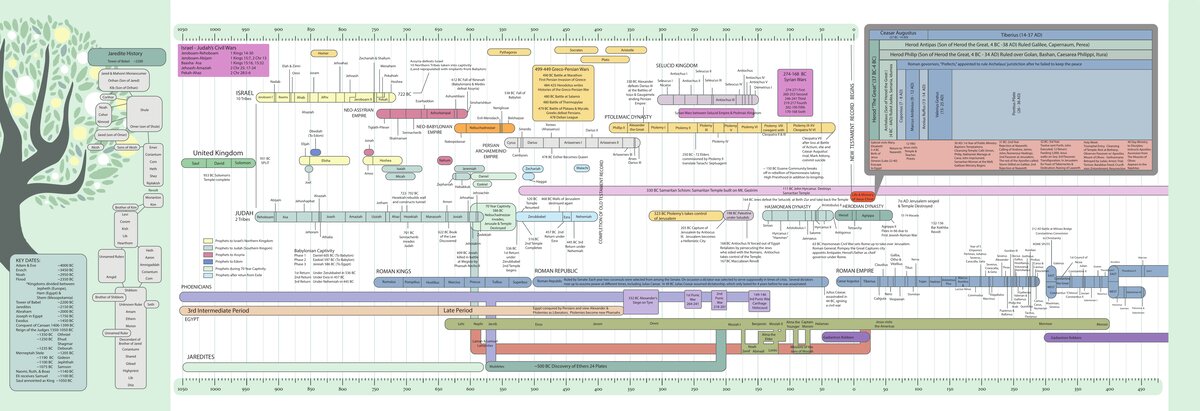
Tap to expand
Old Testament Timeline
From Creation through the Persian Period — tap the image to zoom, or download the full PDF.
Tap anywhere to close · Pinch to zoom