| Church Manuals | |
| Come Follow Me Manual — Week 20 | View |
| Scripture Helps: Old Testament | View |
| OT Seminary Teacher Manual | View |
| OT Institute Manual (Gen–2Sam) | View |
| Pearl of Great Price Manual | View |
| Scripture Reference | |
| Bible Dictionary | View |
| Topical Guide | View |
| Guide to the Scriptures | View |
| Church Media & Library | |
| Gospel for Kids (YouTube) | View |
| Bible Videos | View |
| Church Magazines | View |
| Gospel Library | View |
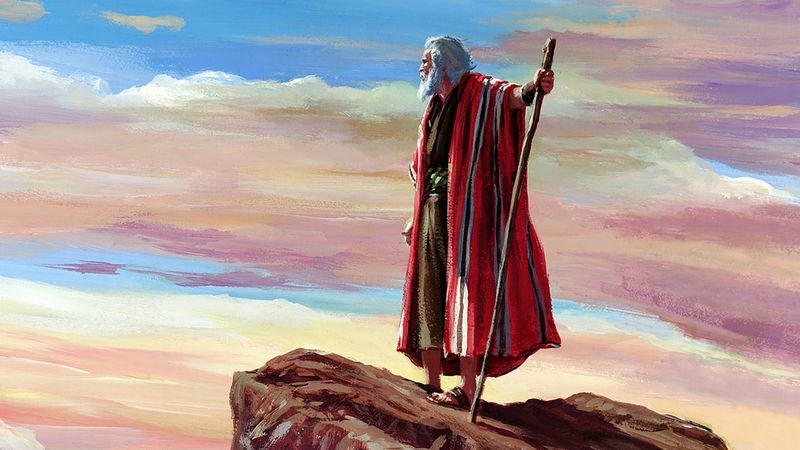
Week 20
Beware Lest Thou Forget the Lord
Deuteronomy 6–8; 15; 18; 29–30; 34
May 11–17, 2026
5-Minute Overview
Week 20 covers Moses' farewell address in Deuteronomy — the Shema ('Hear, O Israel'), the prosperity trap, sabbatical economics, the prophet like Moses, the covenant renewal at Moab, and Moses' departure from Mount Nebo. The study guide explores Deuteronomy as an ancient treaty document, Hebrew word studies on shema, echad, segullah, navi, and bachar, Jewish perspectives from Rashi and the Talmud, and the Deuteronomic covenant pattern that governs the entire Book of Mormon.
Weekly Resources: Week 20
Deuteronomy 6–8; 15; 18; 29–30; 34 — Overview
“Beware Lest Thou Forget the Lord”
Official Church Resources
OFFICIAL CHURCH RESOURCES▶
CHURCH MEDIA FOR FAMILIES (2 related videos + collections)▶
No Deuteronomy-specific OT Stories or Come Learn With Me video is available for this week. The following related videos cover Moses’ covenant themes.
▶ Video Commentary
VIDEO COMMENTARY (10 videos)
▼



Specialized Audiences
WOMEN’S PERSPECTIVES (2 videos)
▶

FAMILY & CHILDREN’S RESOURCES (2 videos)
▶
Reference & Study Materials

BIBLE PROJECT VIDEOS THIS WEEK (3 videos)
▶
Deuteronomy overview + word study and theme videos directly relevant to this week’s reading.

ACADEMIC & SCHOLARLY SITES▶
MAPS & BIBLICAL LOCATIONS▶
A Letter to Fellow Students
▶︎
There is a word that gets quietly erased when we read Deuteronomy as an ancient religious text rather than a living document. The word is know.
Not "I warn you." Not "I fear." Not "I hope." God says to Moses in Deuteronomy 31:21: "I know their imagination which they go about, even now, before I have brought them into the land which I sware."
I know. Present tense. Certain. Before Israel has crossed the Jordan river or worshipped at a single foreign altar.
What do you do when you love someone and you already know what they are going to do?
That question is the hidden key to Deuteronomy — but it has two parts, and we only hear the first one. Yes, God knew they would fail. He also knew they would return. He knew the failure would teach them something they could not learn any other way. He knew that at the last day, their collected stumbles and recoveries and hard-won returns would add up to something that could not have been achieved without the wilderness — any of the wildernesses.
The point of the experiment was never just to prove the hypothesis. It was to produce the people the hypothesis was about.
This book is not simply a collection of farewell sermons. It is a covenant document, carefully structured, that contains within it a prediction — not a guess, not a warning, but a pre-registered hypothesis — about human nature, about Israel's future, and about what God will do when that future arrives. And embedded inside Deuteronomy 32, Moses writes down the measurement instrument He is going to use to prove it.
What God does in Deuteronomy 31–32 is the oldest example we have of what we now call the scientific method. And when you see it, you cannot unsee it.
What's in This Week's Materials
▶︎
The Reading: Deuteronomy 6–8; 15; 18; 29–30; 34
▶︎
The Hebrew title for this book is Devarim (דְּבָרִים) — "Words." It opens with the phrase Eleh ha-devarim (אֵלֶּה הַדְּבָרִים): "These are the words which Moses spoke to all Israel... in the wilderness" (ba-midbar, בַּמִּדְבָּר). Last week's book was named for the place — Bemidbar, in the wilderness. This week's book is named for what came out of it. Devarim is the words the wilderness produced. Moses could not have spoken these words without forty years of wandering, failure, manna, and mercy behind him. You cannot have the words without the wilderness that forged them.
This week opens at the threshold of the Promised Land and closes at Moses' departure. In between, Moses delivers his final address — a covenant renewal that covers the whole arc of what it means to be God's people.
Chapters 6–8: Total Devotion and the Prosperity Trap. The reading we are covering this week opens with the Shema — "Hear, O Israel: The LORD our God is one LORD" (Deut 6:4) — Israel's central covenant declaration, recited twice daily by devout Jews to this day. Moses then turns to the inverse problem: what happens not when life is hard, but when it is easy. "Beware that thou forget not the LORD thy God" (8:11). Abundance is the real test. Chapter 8:3 gives us the verse Jesus later quoted in the wilderness: "Man doth not live by bread alone, but by every word that proceedeth out of the mouth of the LORD." In these chapters Moses outlines the nature of what we, in the Church, commonly identify as the "Pride Cycle."
The Shema — hear what it meant to Israel and what it means now
Chapter 15: The Year of Release. This cycle is evident in the patterns we have learned in the Torah, in the architecture and vestments of the Tabernacle, in organization of the camp, in the observance of the feast days, and in Chapter 15 these patterns are being reinforced in the observance of the shemittah (שְׁמִטָּה) — the seventh-year release. Every seven years, debts were cancelled. Slaves were freed. The economic structure of the covenant community resets, designed to prevent permanent poverty and to re-enact the memory of Egypt — because God freed you, you free others. Moses warns specifically about "the evil eye" — the lender who sees the seventh year coming and quietly withdraws generosity to protect his own investment. The antidote is simple: "thou shalt open thine hand wide unto him" (15:11).
Chapter 18: The Prophet Like Moses. One of the most significant messianic prophecies in the Old Testament: "The LORD thy God will raise up unto thee a Prophet from the midst of thee, of thy brethren, like unto me; unto him ye shall hearken" (18:15). Peter, Stephen, Jesus Himself, and the Book of Mormon each identify this as pointing to Christ — and to the continuing pattern of prophetic succession.
Chapters 29–30: The Covenant Renewed — and the Choice. Moses sets before Israel the full covenant terms: obey and receive blessing; break the covenant and be scattered; return to God and be gathered and restored. And then the distillation: "I have set before you life and death, blessing and cursing: therefore choose life" (30:19). He invokes heaven and earth as witnesses. This is not a suggestion.
Chapter 34: Moses' Departure. The greatest prophet in Israel's history climbs Nebo, sees the Promised Land he cannot enter, and is taken — al pi YHWH (עַל פִּי יְהוָה), "by the mouth of the LORD" — which Rashi reads as "by the Divine kiss." God drew Moses' soul out with a kiss, claiming no one knows where his grave is.
Latter-day Saint theology goes further: Moses was not buried in an unknown location — he was translated, taken from mortality without experiencing death. The evidence is threaded across scripture. Moses appeared physically on the Mount of Transfiguration alongside Elijah (Matt 17:3). Since the resurrection had not yet occurred, a physical appearance required a physical body — meaning Moses had not died. Jude records that Michael the archangel contended with the devil over "the body of Moses" (Jude 1:9), a dispute that only makes sense if that body had been preserved. And in 1836, Moses appeared in the Kirtland Temple and "committed... the keys of the gathering of Israel" to Joseph Smith and Oliver Cowdery (D&C 110:11). A dead prophet cannot restore keys. Moses had ongoing work to do — and translation preserved him to do it.
The two readings complement each other. Rashi describes the quality of Moses' departure — tender, intimate, by the breath of God's own mouth. The Latter-day Saint understanding describes where that departure led: not to a grave, but to a continuing ministry across dispensations. He is remembered not for conquest but for the title the text gives him in his final verse: eved YHWH (עֶבֶד יְהוָה) — servant of the LORD. His highest honor. And the service was not finished.
In the Study Guide
▶︎
The study guide covers this week's material in depth. The Historical Cultural Context section places Deuteronomy inside the Hittite suzerain-vassal treaty form that scholars recognized in the 20th century — meaning the ancient Near East would have read Deuteronomy's structure immediately as a political covenant document, with God as the great king and Israel as the vassal people. The Key Passages section walks through all six assigned texts with Hebrew word studies, context, and Christ-centered readings. Word Studies explores six terms including shema (hearing that produces action), echad (the oneness that is also an eschatological promise), and the phrase al pi YHWH (by the mouth/kiss of the LORD). The Jewish Perspective section includes Rashi's reading of the Shema as both present confession and future hope, the full legal mechanism of the prozbul (Hillel's legal instrument for preserving Torah's spirit while adjusting to economic reality), and a rich treatment of Moses' death alongside the rabbinic tradition of the six righteous ones who died al pi YHWH — by the Divine kiss.
In Charts & Tools: Camp of Israel & Standards
▶︎
Deuteronomy 33 contains Moses' final blessings on each of the twelve tribes — his last prophetic act before ascending Nebo. These blessings are not generic benedictions. Each one reveals something specific about the tribe's calling, its future, and its place in God's plan. To understand them fully, you need the backstory: who was this patriarch? What did Jacob say about him on his deathbed? What did the tribe become? And what is its role in the Gathering of Israel?
The Camp of Israel & Standards interactive guide in the Charts & Tools tab provides exactly that. Click any tribal banner on the camp map to open a detailed description panel with collapsible sections covering:
- The Brother — the patriarch's personal story, the Hebrew meaning of his name, and the circumstances of his birth
- Jacob's Blessing and Moses' Blessing — presented side by side so you can see how Moses reframed, redeemed, or expanded what Jacob pronounced. For some tribes (Reuben, Simeon, Levi), Jacob's words were curses, not blessings — and what Moses did with them is one of the most powerful threads in Deuteronomy 33
- Key Figures — the major biblical personalities from each tribe: Samson (Dan), Gideon (Manasseh), Paul (Benjamin), Elijah (Gad), Hiram the temple craftsman (Naphtali), and more
- The Tribe — census numbers, camp position, banner traditions from Bamidbar Rabbah, and the tribe's historical role through the biblical period
- Gathering of Israel — what this tribe's story means for the latter-day gathering, and why it still matters for covenant life today
Highlights include: the Levites' expanded roles from Tabernacle transport to music, teaching, gatekeeping, and signal communication across the battlefield; Reuben's story reframed with hope — the firstborn who lost everything but was never cast out; Ephraim's birthright mission and the melo hagoyim ("fullness of the nations") prophecy that drives the Gathering; the separation of birthright (Joseph) and sceptre (Judah) and its implications for the two-Messiah tradition; and Simeon's tribe — absorbed, silenced, seemingly erased, yet still named in Revelation 7 because God keeps His list.
When Moses blessed the twelve tribes in Deuteronomy 33, he was not just bidding farewell. He was assigning missions that would unfold across three thousand years — and are still unfolding now.
This Week Closes the Torah
▶︎
When Moses is taken from Nebo and the final verse of Deuteronomy is written, something powerful is finished that will not only complete the Israelites wandering in the wilderness, but it will change the course of history forever. The Torah (תּוֹרָה) — the five books of Moses — is complete.
The word Torah is usually translated "law," but that translation is too narrow and slightly wrong in tone. Torah comes from yarah (יָרָה), which means to teach, to point the way, to instruct — the way a parent teaches a child or an archer draws a bow toward a target. Torah is instruction. It is not primarily a legal code; it is a teaching document, a parent's comprehensive instruction to a people God is trying to form. And with the closing of Deuteronomy, that instruction is complete.
The Hebrew Bible is organized in three sections: Torah (תּוֹרָה) — the five books of Moses; Nevi'im (נְבִיאִים) — the Prophets; and Ketuvim (כְּתוּבִים) — the Writings. Together they form the TaNaK (תַּנַּ"ךְ) — what Christians call the Old Testament. That structure is not arbitrary. The Torah is the root. The Prophets and Writings are responses to it — commentary, application, crisis, and hope, all in conversation with what Moses wrote. Every prophet who stands up and says "return to the LORD" is citing Deuteronomy. Every psalm that meditates on God's law is meditating on Torah. Every wisdom saying in Proverbs is Torah ethics applied to daily life.
When we close Deuteronomy this week, we are not finishing a portion of the Old Testament. We are graduating from the foundation course. Everything from next week forward — Joshua, Judges, the kings, the exile, Isaiah, Jeremiah, the Psalms, the wisdom literature, and even the Book of Mormon — assumes you know the Torah. Without it, the Prophets are fragments. With it, they are a continuous conversation with Moses.
The patterns we have learned are not going away. They are going to repeat, and recur, and deepen, for the rest of the year. The architecture of the Tabernacle — outer court, holy place, most holy place, the veil, the ark — is the architecture of the Temple, and of the modern Latter-day Saint temple. The feast days (moedim, מוֹעֲדִים) — Passover, Shavuot, Sukkot, Yom Kippur — encode the plan of salvation in the agricultural calendar, and the New Testament will be incomprehensible without them. The organization of the twelve tribes around the Tabernacle — four directions, three tribes each, Levi at the center — reappears in the twelve apostles, in the quorum structure of the restored priesthood, in the tribal imagery of Revelation 7. The conditional covenant — obey and prosper, break and be scattered, return and be gathered — is the interpretive framework for everything that happens to Israel for the next thousand years, and the explicit governing theology of the Book of Mormon.
These are not coincidences. They are design.
And the Torah's reach extends beyond the Israelite nations. Judaism reads the entire Torah aloud each year — completing Deuteronomy in the autumn festival of Simchat Torah (שִׂמְחַת תּוֹרָה, Rejoicing of the Torah) and immediately, without pause, beginning Genesis again. The instruction never ends. Christianity could not exist without it — Jesus quotes Deuteronomy alone three times in the wilderness temptation, and the New Testament authors assume Torah literacy on nearly every page. Islam honors Moses (Musa) as the most-mentioned prophet in the Quran, and the Torah (Tawrat) as divine revelation. The Restoration identifies itself as a restoration of the covenant patterns of ancient Israel — the Melchizedek Priesthood, the gathering of scattered Israel, the twelve apostles, the temple, the conditional covenant — all rooted in what Moses taught on the plains of Moab.
Judaism, Christianity, Islam, and the restored gospel are not four separate trees. They are four branches from the same root. And the root is Torah.
This week we say farewell to Moses. Next week, Joshua leads Israel across the Jordan. But everything Joshua does — and everything every prophet, king, apostle, and saint does after him — will be measured against what Moses established here. The instruction continues. The patterns endure. The covenant holds.
The Oldest Pre-Registered Experiment
▶︎
Here is what God does at the end of Deuteronomy, in sequence.
First, He makes an observation — not a general one but a specific diagnosis of human nature. He has watched the Exodus generation. He has watched the Israelites through Sinai and at Kadesh-Barnea and at Baal-Peor. He has watched them in Egypt and Canaan before that. He knows the pattern. He names it in Deuteronomy 31:16: Israel "will rise up, and go a whoring after the gods of the strangers of the land."
Second, He states a hypothesis — in the present tense, with certainty, before the test begins: "I know their imagination which they go about, even now, before I have brought them into the land which I sware" (31:21). The Hebrew word translated "imagination" is yetser (יֵצֶר) — the inclination, the inner pull. God is not describing external pressure. He is diagnosing what is already forming in their hearts.
Third, He designs the experiment — and He makes the conditions transparent. The conditional covenant is the experimental structure: obey the terms of the covenant and receive blessing; break the covenant and receive cursing; return to God and be restored. The conditions are publicly declared. Israel agrees to them. Heaven and earth are invoked as legal witnesses (30:19). This is not a hidden test. Every party knows the terms.
Fourth — and this is the extraordinary moment — He creates a measurement instrument before the experiment runs. God tells Moses in Deuteronomy 31:19: "Now therefore write ye this song for you, and teach it the children of Israel: put it in their mouths, that this song may be a witness for me against the children of Israel."
Write the song. Teach it. Put it in their mouths. And here is why: "it shall come to pass, when many evils and troubles are befallen them, that this song shall testify against them as my witness; for it shall not be forgotten out of the mouths of their seed" (31:21).
In modern science, this is called pre-registration: you publish your hypothesis and your methods before you run the experiment, so no one can accuse you of adjusting the prediction after seeing the results. God did exactly this. The Song of Moses was written before the Israelites even set foot into the Promised Land. It cannot be accused of being composed in hindsight. The measurement instrument existed before the data.
Fifth, He embeds the instrument in the subjects. "Put it in their mouths." The song is not filed in an archive. It is taught to the children. It lives in the collective memory. The data collection mechanism is built into the very community being studied — which means it cannot be lost, discarded, or suppressed without destroying something the people themselves have carried in their hearts for generations.
Sixth, He specifies the verification point: the last day, when "many evils and troubles are befallen them." The experiment has a scheduled conclusion, and the song will still be there to testify.
What the Song Says
▶︎
Deuteronomy 32 is the instrument itself, and it is structured exactly as evidence should be.
Verses 4–14 document God's faithfulness. He found Israel in "a desert land... he led him about, he instructed him, he kept him as the apple of his eye" (32:10). This is the plaintiff's record of performance — what the great king did for the vassal before any breach occurred. It is specific and provable.
Verses 15–18 document the breach. "But Jeshurun waxed fat, and kicked... then he forsook God which made him, and lightly esteemed the Rock of his salvation" (32:15). The prosperity trap Moses warned about in chapters 6–8 arrives exactly as predicted. Abundance produced amnesia. The fat animal kicked its shepherd.
Verses 19–35 record the consequences — the cursings of the covenant, activated by breach.
Verses 36–43 move to vindication and restoration. God will "repent himself for his servants" when He sees they have no strength left (32:36). The return and gathering promised in Deuteronomy 30 is built into the song's conclusion.
This is not poetry that happened to fit later events. This is a structured legal document — a shirah (שִׁירָה), a song, yes, but functioning as a court brief, written before the trial, preserved in the mouths of the very people who would one day stand before it. The Hebrew word for "witness," ed (עֵד), appears twice in close succession in Deuteronomy 31:19 and 21. This song is testimony prepared in advance.
The Data Set
▶︎
The experiment ran. The data came in.
The book of Judges is the first collection period: "the children of Israel did evil in the sight of the LORD, and served Baalim" — cycle after cycle, the covenant broken, the cursings activated, Israel crying out, God delivering, and the cycle beginning again. The Deuteronomistic History (Joshua through 2 Kings) reads as a running commentary on the hypothesis. See Deuteronomy 31:16–21. Observe results. Results confirmed.
The exile to Babylon is the results section. The northern kingdom vanished into Assyria in 722 BCE. The southern kingdom fell to Babylon in 586 BCE. The temple burned. The people were scattered. Everything Moses named in Deuteronomy 28 — the cursings for covenant breach — happened, in order, as documented.
But God designed the experiment to include a second data set, and many more after that.
The Book of Mormon is an independent replication. A man named Lehi, leaving Jerusalem just before the Babylonian destruction, took his family into a new wilderness and sailed to a new promised land. Before they arrived, he taught his children Moses' hypothesis applied to their specific situation. Nephi records his father's words: "inasmuch as ye shall keep my commandments ye shall prosper in the land; but inasmuch as ye will not keep my commandments ye shall be cut off from my presence" (2 Ne 1:20).
Lehi was not inventing a principle. He was citing Moses. And the experiment ran again, for a thousand years, on a different continent. Helaman, watching his own generation in the middle of the data collection, wrote what may be the most honest mid-experiment observation note in all of scripture:
"And thus we can behold how false, and also the unsteadiness of the hearts of the children of men; yea, we can see that the Lord in his great infinite goodness doth bless and prosper those who put their trust in him. Yea, and we may see at the very time when he doth prosper his people... yea, then is the time that they do harden their hearts, and do forget the Lord their God" (Hel 12:1–2).
He is not guessing. He is reading the instrument. He has the covenant pattern in his bones, and he is watching it confirm itself in real time.
Both experiments reached the same conclusion. The hypothesis was correct.
What God Knew and Still Did Anyway
▶︎
Here is the theological nerve underneath all of this, and it is worth sitting with carefully.
God did not design an experiment because He was uncertain about the results. He knew. He said so. And yet He still offered the covenant. He still said "choose life." He still wrote the blessings before the curses. He still sent Moses to declare: "it is not in heaven... neither is it beyond the sea... but the word is very nigh unto thee, in thy mouth, and in thy heart, that thou mayest do it" (30:11–14).
An omniscient God who already knows what you will choose does not make His covenant offer hollow. The mystery at the center of Deuteronomy — and of the entire plan of salvation — is that foreknowledge does not nullify agency. God knows what you will do and still gives you the genuine choice to do otherwise. Both things are true simultaneously, and Deuteronomy does not try to resolve the tension. It holds it.
The Song of Moses is not cold laboratory documentation. Read chapter 32 again, slowly. "Give ear, O ye heavens, and I will speak; and hear, O earth, the words of my mouth" (32:1). This is not a scientist reading results into a recorder. This is a Father calling heaven and earth to witness what He is about to say about people He loves. "As an eagle stirreth up her nest, fluttereth over her young, spreadeth abroad her wings, taketh them, beareth them on her wings: So the LORD alone did lead him" (32:11–12). That is tenderness in the voice of someone who already knows how the story ends.
But here is what we miss when we stop at "God knew they would fail": the experiment was never designed only to document failure. It was designed to produce something. Deuteronomy 8:2 tells us exactly what the wilderness was for: "the LORD thy God led thee these forty years in the wilderness, to humble thee, and to prove thee, to know what was in thine heart" (8:2). The wilderness was curriculum. The hunger was instruction. The manna was not just provision — it was a daily lesson in dependence that no lecture could have taught. You cannot learn that you need God by being told you need God. You have to hunger for it.
The same logic runs through every turn of the cycle. When a generation falls and is scattered, and then cries out and is gathered — the people who return are not the same people who fell. They know something now. They know the emptiness of the foreign gods from the inside. They know what God's presence feels like by having experienced its absence. They know the cost of covenant by having broken it and lived through the consequences. God knew they would fail. He also knew what the failure would teach them, and He designed the instrument to carry that knowledge forward to every generation that came after.
Moses says it immediately after describing forty years of wilderness hardship: "That he might make thee know" (8:3). The purpose of the suffering was knowledge — not punishment, not proof of inadequacy, but the deep lived knowledge that only comes from walking through the thing, failing in the thing, being sustained through the thing, and emerging changed.
This is why the return clause is not an afterthought. Deuteronomy 30:1-3 says it plainly: "when all these things are come upon thee... and thou shalt return unto the LORD thy God... then the LORD thy God will turn thy captivity." The gathering was predetermined. God's hypothesis was never simply "Israel will fail." The full hypothesis is: Israel will fail, and return, and in the returning they will know things about mercy, patience, and covenant that no amount of uninterrupted prosperity could have taught them. The experiment was always going to produce that.
The song ends with vindication, not condemnation: "Rejoice, O ye nations, with his people: for he will be merciful unto his land, and to his people" (32:43). God built the measurement instrument not to prove His own competence but to ensure that at the last day, when every result is in, there would be no confusion about the terms — and no doubt about what the whole journey was for. The covenant was fair. The choice was real. The failures were real. And so was every return.
And the song is still being sung.
The Last Day: When the Experiment Concludes
▶︎
John the Revelator saw a vision of the end — the sea of glass, the redeemed who had overcome, standing before God. And they sang:
"Great and marvellous are thy works, Lord God Almighty; just and true are thy ways, thou King of saints... for thy judgments are made manifest." (Rev 15:3–4)
John calls it "the song of Moses the servant of God, and pairs it with the song of the Lamb."
The song is still in their mouths. They are still singing it. The experiment is complete. The witness has been called. And the conclusion is not a cold scientific verdict — it is worship. "Just and true are thy ways." The redeemed, having lived through the entire data set, having watched every prediction prove out, having seen the full arc from the wilderness of Sinai to the sea of glass — they sing that God was right. That the covenant was fair. That the choice was real. That the blessings were genuinely available. That the cursings were just. That the return and gathering were always waiting for those who turned back.
Moses finished his song and spoke his last recorded words to Israel: "Set your hearts unto all the words which I testify among you this day... For it is not a vain thing for you; because it is your life" (32:46–47).
Then he climbed Nebo. He saw the land. He was taken by a kiss.
The experiment he helped to teach — the covenant, the song, the conditional promise that would echo through every prophet and every dispensation and every promised land — continued without him. It continues now. The song is still in the mouths of those who were taught it. The data is still being collected.
Paul wrote that he would "sing with the spirit, and... sing with the understanding also" (1 Cor 14:15). The Song of Moses was meant to be sung that way — not recited as ancient liturgy, but understood, internalized, carried in the mouth and the heart as a living witness. And Alma, centuries after Moses and continents away, asked the question that cuts straight to it: "And now behold, I say unto you, my brethren, if ye have experienced a change of heart, and if ye have felt to sing the song of redeeming love, I would ask, can ye feel so now?" (Alma 5:26).
The song of redeeming love is what the Song of Moses always pointed toward — the testimony that God is merciful, that the return is real, that the gathering was and is waiting. The redeemed in Revelation 15 are still singing it because they finally understand it fully. They have lived the data. They know what the wilderness was for.
And God still knows. And the choice is still yours. And the word is still very near — in your mouth, and in your heart.
Can ye feel to sing it now?
Moses' Final Blessings and the Twelve Tribes
▶︎
Deuteronomy 33 contains Moses' final blessings on the twelve tribes of Israel — his last prophetic act before ascending Nebo. Where Jacob's deathbed pronouncements in Genesis 49 included curses and laments alongside blessings, Moses' words are entirely forward-looking: every tribe receives a word of hope, commission, or promise. For Levi, the curse of scattering becomes a commission to teach. For Reuben, the verdict of "unstable as water" is met with a prophet's prayer: "Let Reuben live, and not die." For Joseph's sons — Ephraim and Manasseh — the horns of the wild ox will "push the people together to the ends of the earth."
To explore each tribe's full story — from birth and naming, through Jacob's blessing and Moses' blessing, to their historical role and place in the Gathering of Israel — visit the Camp of Israel & Standards interactive guide in the Charts & Tools tab. Each tribe has collapsible sections covering:
- The patriarch's personal story and the meaning of his Hebrew name
- Jacob's blessing (Genesis 49) and Moses' blessing (Deuteronomy 33) side by side
- Key figures from the tribe's history (Samson, Gideon, Paul, Elijah, and more)
- The tribe's role in the Gathering of Israel and its relevance today
- Jewish traditions about the tribal banners, stones, and symbols
This week's reading gives us Moses' final words to the tribes he served for forty years. The Camp of Israel guide gives us the rest of the story — where those tribes went, what they became, and why they still matter.
This Week's Invitation
▶︎
As you read Deuteronomy 6–8; 15; 18; 29–30; 34 this week, let these passages press you:
Measure your amnesia. Deuteronomy 8:17 names the specific lie prosperity produces: "My power and the might of mine hand hath gotten me this wealth." This week, audit your sense of self-sufficiency. What have you achieved that you are quietly taking personal credit for? The hypothesis says prosperity produces forgetting. Awareness is the antidote.
Hear the Shema — both meanings. The Hebrew shema (שְׁמַע) is not passive. Hearing that leaves your life unchanged is not hearing at all. What is God saying to you this week that requires action, not acknowledgment?
Name the thing you are deferring. Moses invoked heaven and earth as witnesses and said "choose life" — not "consider life" or "eventually choose life." What choice are you deferring? What covenant commitment exists in your head but not yet in your life? The word is not in heaven. It is in your mouth.
Ask what the song has to say. The Song of Moses was designed as a witness. At the last day it will testify about the terms, the choice, and the result. If your life so far were submitted as data — where are you in the cycle? In the blessing section or the cursing section? In the forgetting or the returning?
Receive the kiss. Moses was translated at al pi YHWH — by the mouth of the LORD. That is how God chose to honor the servant who spent forty years in the wilderness for a people who complained about everything. Faithful service without reaching the goal is not failure. It is the very shape of the covenant life.
The experiment is ongoing. The song is in your mouth. The choice is before you.
Week 20 Study Guide | CFM Corner | OT 2026
File Status: Complete
Created: May 8, 2026
Week 20
Deuteronomy 6–8; 15; 18; 29–30; 34 — Overview
"Beware Lest Thou Forget the Lord"
1. Week 20: Overview
Moses is about to be taken from the Israelites. He knows it. And so he preaches the most important sermon of his life — a farewell address to the generation that will enter the land he will never reach. Deuteronomy ("second law") is Moses repeating, reframing, and deepening the covenant for a new audience: the children of those who failed in the wilderness. He opens with the Shema — "Hear, O Israel: the LORD our God, the LORD is one" — the confession that becomes the heartbeat of Jewish faith for three thousand years. He warns against the prosperity trap (aka the pride cycle): "when thou hast eaten and art full... beware lest thou forget the LORD." He commands economic justice through the Year of Release. He prophesies a future prophet "like unto me" — Christ. He sets life and death before them and pleads: "Choose life." Then he climbs Nebo, sees the promised land from a distance, and departs — not dying, in Latter-day Saint understanding, but translated, taken by God "with a kiss."
But the deepest thing Deuteronomy does is establish the conditional covenant structure — the oath and covenant terms — that governs all of Israel's subsequent history and becomes the governing theology of the Book of Mormon: keep the commandments and prosper in the land; break them and be driven out, the Spirit withdrawn; return to God and be gathered and restored. Lehi taught it to his family as they sailed to their own promised land. Nephi, Mosiah, Helaman, and Moroni applied it as the explanatory framework for everything that happened to their civilization. They were not inventing a principle. They were citing Moses.
"I have set before you life and death, blessing and cursing: therefore choose life, that both thou and thy seed may live." (Deuteronomy 30:19)
The entire book of Deuteronomy narrows to this single invitation. After forty years of miracles and failures, plagues and provisions, Moses doesn't leave Israel with a complex theology. He leaves them with a choice. Life or death. Blessing or cursing. God or not-God. The simplicity is the power — and the difficulty. Choosing life isn't a one-time decision; it's a daily orientation.
1. Shema — Hear and Obey
"Hear, O Israel" (Deut 6:4) isn't merely an invitation to listen — the Hebrew shema implies hearing that produces response. Israel is called to love God with all heart, soul, and might — and to teach these words to their children, bind them on their bodies, and write them on their doorposts (6:5-9). Faith is embodied, physical, woven into daily life.
2. The Prosperity Trap
"When thou hast eaten and art full, and hast built goodly houses... then thine heart be lifted up, and thou forget the LORD thy God" (8:12-14). Moses knew that scarcity produces dependence on God, but abundance produces amnesia. The greatest spiritual danger isn't suffering — it's success.
3. Economic Justice — Year of Release
Every seven years: debts cancelled, slaves freed, generosity commanded (15:1-18). The sabbatical economy embedded mercy into Israel's financial system. Poverty wasn't just a social problem — it was a holiness problem.
4. The Prophet Like Moses
"The LORD thy God will raise up unto thee a Prophet from the midst of thee, of thy brethren, like unto me" (18:15). Jesus self-identified as this prophet. Rashi reads it as ongoing prophetic succession — "from prophet to prophet throughout all ages" — a reading that supports both the original and Latter-day Saint understanding.
5. Choose Life
"I have set before you life and death... therefore choose life" (30:19). Moses sets the terms with devastating clarity. The choice isn't between obvious good and obvious evil — it's between covenant faithfulness and the slow drift of forgetfulness.
6. Moses' Farewell — Death by Divine Kiss
Moses climbs Nebo, sees the land, and dies "by the mouth of the LORD" (34:5). Rashi: "by the Divine kiss" — death as tenderness, not punishment. LDS understanding: Moses was translated, not dead — he later appeared at the Transfiguration and in the Kirtland Temple.
7. The Oath and Covenant — Conditional Promises and the Book of Mormon Pattern
This may be Deuteronomy's most far-reaching legacy: the conditional covenant structure that governs everything that follows — in the biblical canon, in the Deuteronomistic History, and with unmistakable directness in the Book of Mormon.
The structure appears first in embryo as early as Deuteronomy 7–8, stated with increasing clarity through chapters 11, 26, and 28, and reaches its fullest articulation in chapters 28–30:
Obey the covenant terms → blessings, prosper in the land, God's presence remains
Break the covenant → cursings, ultimately driven from the land, Spirit of the Lord withdrawn
Return to God → restoration, gathering, the circumcised heart
This is not a single verse. It is the governing architecture of Deuteronomy. Chapter 11:26–28 introduces it plainly: "Behold, I set before you this day a blessing and a curse; a blessing, if ye obey the commandments of the LORD your God... and a curse, if ye will not obey." Chapter 28 devotes 68 verses to spelling out both sides in exhaustive detail. Chapter 30 adds the third element — the promise of restoration after exile — which closes the cycle: "if thou turn to the LORD thy God with all thine heart, and with all thy soul... that then the LORD thy God will turn thy captivity, and have compassion upon thee, and will return and gather thee from all the nations" (30:2–3).
The Song of Moses (chapter 32) does something remarkable: it prophesies that Israel will break the covenant, will be driven out, will suffer the cursings — and it commands Moses to teach the song to the people before any of it happens, "that this song may be a witness for me against the children of Israel" (31:19). The conditional covenant is already anticipating its own violation.
The Book of Mormon's Direct Inheritance
Lehi knew these chapters. When he taught his family the governing principle of their new promised land, he drew on Deuteronomy almost verbatim:
"Inasmuch as ye shall keep my commandments ye shall prosper in the land; but inasmuch as ye will not keep my commandments ye shall be cut off from my presence." (2 Nephi 1:20)
This is the Deuteronomic formula applied to a new promised land. Every Book of Mormon prophet who invokes the prosperity principle is citing Moses:
- Nephi — "inasmuch as ye shall keep my commandments, ye shall prosper in the land" (1 Ne 2:20)
- Lehi — two full chapters (2 Ne 1–2) unpacking the Deuteronomic covenant terms for the Americas
- Mosiah — "if ye would keep his commandments ye should prosper in the land; and he never doth vary from that which he hath said" (Mosiah 2:22)
- Helaman — "yea, and we may see at the very time when he doth prosper his people... then is the time that they do harden their hearts, and do forget the LORD their God" (Hel 12:2–3) — this is Deuteronomy 8 in direct paraphrase
- Moroni / Ether — "if they will but serve the God of the land, who is Jesus Christ... they shall be free from bondage; and from captivity" (Ether 2:12)
The Book of Mormon's cyclical rise-and-fall narrative is not a theological innovation. It is a deliberate application of the covenant structure Moses laid down in Deuteronomy. Mormon and Moroni narrate the collapse of Nephite civilization in precisely the terms Moses warned against — prosperity, forgetting, pride, withdrawal of the Spirit, expulsion from the land.
D&C 84 — The Pattern Formalized
The Oath and Covenant of the Priesthood (D&C 84:33–48) uses the same conditional architecture. The covenant has conditions: magnify your calling, receive the priesthood, live by every word from God's mouth (84:44 — quoting Deut 8:3 directly). The promises are specific. The consequence of treating it lightly is explicitly named: "the whole church under condemnation" (84:55). The structure Moses introduced in Deuteronomy is the pattern Restoration-era revelation builds on.
Understanding Deuteronomy is understanding why the Book of Mormon works the way it does — and why "when we keep the commandments we are blessed, when we don't we suffer consequences" is not a simplification but a covenant principle Moses stated first.
| Chapter | Content | Assigned |
|---|---|---|
| Deuteronomy 1–4 | Moses' first discourse: historical review from Sinai to Moab | — |
| Deuteronomy 5 | Ten Commandments restated for the new generation | — |
| Deuteronomy 6 | The Shema; love God with all heart; tefillin and mezuzah | Yes |
| Deuteronomy 7 | Israel as segullah; instructions regarding the Canaanite nations | — |
| Deuteronomy 8 | Wilderness memory; manna; the prosperity warning | Yes |
| Deuteronomy 9–11 | Israel's failures rehearsed; tablets rewritten; love and obey | — |
| Deuteronomy 12–14 | Centralized worship; dietary laws; tithes | — |
| Deuteronomy 15 | Year of Release; debts cancelled; slaves freed | Yes |
| Deuteronomy 16 | Festival calendar: Passover, Shavuot, Sukkot | — |
| Deuteronomy 17 | Laws on kings, priests, and judges | — |
| Deuteronomy 18 | Forbidden practices; the prophet like Moses | Yes |
| Deuteronomy 19 | Cities of refuge; boundary stones; witness laws | — |
| Deuteronomy 20–21 | Laws of warfare; family law; unsolved murder | — |
| Deuteronomy 22–25 | Social law; marriage; workers; firstfruits; Amalek | — |
| Deuteronomy 26 | Firstfruits declaration; covenant conclusion | — |
| Deuteronomy 27–28 | Shechem ceremony; blessings and curses | — |
| Deuteronomy 29–30 | Covenant renewal; circumcised heart; choose life | Yes |
| Deuteronomy 31 | Moses' charge to Joshua; Torah deposited in the Ark | — |
| Deuteronomy 32 | The Song of Moses | — |
| Deuteronomy 33 | Moses' blessing of the twelve tribes | — |
| Deuteronomy 34 | Moses views the land from Nebo; death/translation; Joshua succeeds | Yes |
The assigned reading draws seven chapters from across Deuteronomy's 34. The walkthrough below covers every chapter — assigned and non-assigned — so the book reads as a continuous whole. Assigned chapters receive a brief orientation showing where they sit within the larger arc; the deeper treatment for those chapters is in Key Passages, Word Studies, and Jewish Perspective. Non-assigned chapters receive enough detail that the gaps are not blank.
Assigned chapters are marked in bold. Brief orientation entries for assigned chapters point to where full treatment lives.
Moses' First Discourse: The Historical Foundation (Deuteronomy 1–4) — not assigned
The book opens forty years after Sinai, on the plains of Moab, in the eleventh month of the fortieth year. Moses preaches his first long sermon: a retrospective that covers everything from Sinai to the present moment.
Chapter 1 opens with the appointment of tribal leaders to share the burden of judging Israel — Moses could not do it alone. Then Moses retells the spy episode: the twelve scouts, the ten faithless, the sentence of forty years, the abortive attempt to enter Canaan after the decree and the defeat that followed. He names what went wrong: "ye did not believe the LORD your God" (1:32). The entire generation will die before the crossing, except Caleb — and Moses himself, though for a different failure.
Chapter 2 traces the route from Kadesh through Edom, Moab, and Ammon — nations Israel was forbidden to attack, because God had already given them their inheritance. The text pauses to note that the land now occupied by Moab was once inhabited by the Emim (Emim, אֵמִים), "a people great, and many, and tall, as the Anakim" — the same fearsome race the spies reported in Canaan. They were gone by Moses' time. God had already cleared the way for others. The lesson Israel needed: the "undefeatable" populations eventually fall. The chapter ends with Israel's first military victory: Sihon king of Heshbon, whose territory becomes Israel's.
Chapter 3 records the defeat of Og king of Bashan — "the last of the remnant of giants" (Rephaim, רְפָאִים), whose iron bed was nine cubits long. With Sihon and Og defeated, Reuben, Gad, and half-Manasseh settle the Transjordan. Moses then describes his own plea to cross the Jordan — "let me go over, and see the good land" — and God's refusal: "Speak no more unto me of this matter" (3:26). Moses accepted the decree. His role was to prepare the people, not lead them in. He may have climbed a high peak to see what he could not enter.
Chapter 4 is Moses' most urgent theological appeal. He commands Israel not to add to or take away from God's commandments (4:2 — the same principle that closes the book of Revelation). He warns against every form of idolatry: sun, moon, stars, images — all belong to the nations; YHWH is Israel's inheritance. Then Moses names the most extraordinary theological reality of the ancient world: "Did ever people hear the voice of God speaking out of the midst of the fire, as thou hast heard, and live?" (4:33). No nation had this. No people had heard God from the fire and survived. Israel's covenant uniqueness is not superiority — it is undeserved intimacy.
The chapter closes with Moses establishing three cities of refuge on the east side of the Jordan (4:41–43) — anticipating the legal system being set up for entry — and transitioning to his second, longer discourse.
The Ten Commandments Restated (Deuteronomy 5) — not assigned
Chapter 5 is Moses' restatement of the Decalogue — the Ten Commandments — for the new generation. The text is almost identical to Exodus 20 with one significant change: the reason for the Sabbath. In Exodus 20:11, the Sabbath is grounded in creation — "for in six days the LORD made heaven and earth." In Deuteronomy 5:15, it is grounded in the Exodus — "thou shalt remember that thou wast a servant in the land of Egypt, and that the LORD thy God brought thee out." Same commandment, different memory. Deuteronomy is the Exodus-shaped interpretation of Sinai.
Moses also describes what happened at Sinai from the people's perspective: they heard God's voice from the fire and begged Moses to mediate — "Go thou near, and hear all that the LORD our God shall say: and speak thou unto us all that the LORD our God shall speak unto thee; and we will hear it, and do it" (5:27). God heard this and was pleased. Moses as mediator was not his own idea; it was the people's request and God's accommodation. The pattern of prophetic mediation begins here.
The Shema and the Greatest Commandment (Deuteronomy 6) — assigned
Chapter 6 is the covenant loyalty oath at the center of Deuteronomy. It opens with the Shema — Shema Yisrael Adonai Eloheinu Adonai Echad (שְׁמַע יִשְׂרָאֵל יְהוָה אֱלֹהֵינוּ יְהוָה אֶחָד) — "Hear, O Israel: the LORD our God, the LORD is one." Then immediately: love God with all your heart, soul, and might (6:5). Moses commands Israel to make that love physically present: bound on hands and foreheads (tefillin), inscribed on doorframes (mezuzah), taught to children morning and evening. When Jesus was asked which commandment was greatest, He quoted this chapter without hesitation (Matt 22:37). For full treatment, see Key Passages and Word Studies (shema, echad).
Israel as God's Treasure (Deuteronomy 7) — not assigned
Chapter 7 addresses Israel's relationship to the nations of Canaan they are about to inherit. The command to destroy the altars, sacred pillars (matzevot, מַצֵּבוֹת), and Asherah poles of Canaan is not ethnic hatred — it is theological surgery: removing the religious infrastructure that would otherwise draw Israel away from covenant faithfulness. Moses is blunt: "they will turn away thy son from following me" (7:4). The danger is spiritual, not racial.
But the chapter also contains one of Deuteronomy's most tender passages. Moses asks why God chose Israel — and gives an answer designed to produce humility, not pride: "The LORD did not set his love upon you, nor choose you, because ye were more in number than any people; for ye were the fewest of all people: but because the LORD loved you, and because he would keep the oath which he had sware unto your fathers" (7:7–8). Election is not merit. It is love — unilateral, prior, covenantal. Israel is segullah (סְגֻלָּה) — treasured personal possession — not because of who they are, but because of who God is and who He promised to Abraham.
The Wilderness Memory and the Prosperity Warning (Deuteronomy 8) — assigned
Chapter 8 is Moses' most counterintuitive warning: prosperity is more spiritually dangerous than scarcity. He describes in loving detail the abundance Israel is about to inherit — cities they didn't build, houses full of goods they didn't stock, vineyards they didn't plant (6:10–11) — and then says: beware. "When thou hast eaten and art full... beware lest thou forget the LORD thy God" (8:12–14). The wilderness was a classroom: forty years of daily manna taught dependence on God. The land will teach the opposite unless Israel actively chooses to remember. The verse Jesus quoted when Satan tempted Him in the wilderness comes from here: "Man doth not live by bread alone, but by every word that proceedeth out of the mouth of the LORD" (8:3). For full treatment, see Key Passages, Historical Cultural Context, and Teaching Applications.
Not Because of Your Righteousness (Deuteronomy 9–11) — not assigned
Chapter 9 is Moses' preemptive correction of the theology that success produces: "Speak not thou in thine heart, after that the LORD thy God hath cast them out from before thee, saying, For my righteousness the LORD hath brought me in to possess this land" (9:4). The land is not a reward. The Canaanites are losing it for their wickedness, not because of Israel's righteousness. Moses then rehearses Israel's own failures — the golden calf at length, the rebellion at Taberah and Massah and Kibroth-hattaavah — to ensure they arrive in the land without any illusions about their moral standing.
Chapter 10 recounts the remaking of the stone tablets and the ark to hold them (Israel's second chance), and then expands into one of Deuteronomy's great theological summaries: "What doth the LORD thy God require of thee, but to fear the LORD thy God, to walk in all his ways, and to love him, and to serve the LORD thy God with all thy heart and with all thy soul?" (10:12). Fear, walk, love, serve — the four verbs of covenant faithfulness. The chapter closes with the stunning claim that God "doth execute the judgment of the fatherless and widow, and loveth the stranger, giving him food and raiment. Love ye therefore the stranger: for ye were strangers in the land of Egypt" (10:18–19). Compassion for the outsider is grounded in Israel's own outsider history.
Chapter 11 sets the land-choice in terms of rain: Canaan is not Egypt, watered by the Nile's flood. It depends on seasonal rain — yoreh (יוֹרֶה, early rain) and malkosh (מַלְקוֹשׁ, latter rain) — which God controls. Covenant fidelity and national rainfall are directly linked (11:13–17). The paragraph appears in the second section of the Shema recitation (v'haya im shamoa, Deut 11:13–21). Moses closes with the command to inscribe the law on stones at Ebal and Gerizim upon entry — the ceremony Joshua will perform in Joshua 8.
Centralized Worship, Tithes, and Dietary Law (Deuteronomy 12–14) — not assigned
Chapter 12 is the theological center of Deuteronomy's law code: all sacrificial worship must occur at "the place which the LORD your God shall choose" — the one designated sanctuary, as opposed to the local high places that had proliferated throughout Canaan. This is the principle that will drive Josiah's reform centuries later and that explains why "the place the LORD shall choose" appears dozens of times in Deuteronomy. The decentralized worship of the Canaanite bamot (בָּמוֹת, high places) is explicitly prohibited.
Chapter 13 gives the test for false prophecy: if a prophet or dreamer produces a sign and uses it to lead Israel toward other gods, even if the sign comes true, the prophet is a false prophet. The sign itself doesn't validate the message — the message must be tested against covenant faithfulness. This is a sophisticated epistemology of revelation: miracles alone don't authenticate messengers.
Chapter 14 begins with the prohibition against mourning practices that cut or shave the body — Israel is God's holy people (am kadosh, עַם קָדוֹשׁ), and should not mutilate themselves as the nations do in grief. Then come the dietary laws: land animals must chew the cud and have split hooves; fish must have fins and scales; most birds of prey are forbidden. The list largely mirrors Leviticus 11 with some differences, reflecting the Deuteronomic tendency to restate and adapt earlier legislation for the new context. The chapter closes with the second-tithe law: each year, a tithe of grain, wine, and oil was to be brought to the central sanctuary and eaten there in God's presence — a covenant meal that kept Israel connected to the sanctuary.
The Year of Release — Sabbatical Economics (Deuteronomy 15) — assigned
Chapter 15 legislates the shemittah (שְׁמִטָּה) — every seventh year, all debts among Israelites are cancelled and Hebrew slaves are freed and sent home with generous provisions. The motivation is not economic policy but theological memory: "thou shalt remember that thou wast a bondman in the land of Egypt, and the LORD thy God redeemed thee: therefore I command thee this thing to day" (15:15). Because God freed you, you free others. Moses explicitly anticipates and forbids the cynical response — withholding loans as the seventh year approaches — calling it an "evil eye" (15:9). This chapter is unique in the ancient Near East: debt relief tied not to a king's discretion but to a covenant calendar grounded in the Exodus. For full treatment, see Historical Cultural Context (Babylonian andurārum comparison) and Teaching Applications.
Festival Calendar (Deuteronomy 16) — not assigned
Chapter 16 is Deuteronomy's festival calendar — the three annual pilgrimage festivals (shalosh regalim, שָׁלוֹשׁ רְגָלִים) when all Israel was to appear before God at the central sanctuary:
- Passover and Unleavened Bread (Pesach, פֶּסַח / Matzot, מַצּוֹת): Seven days beginning at the full moon of Nisan. The Passover sacrifice must be offered at the central sanctuary, not at home as in Egypt. Unleavened bread eaten for seven days. "Thou shalt remember the day when thou camest forth out of Egypt all the days of thy life" (16:3). Memory is the liturgy.
- Feast of Weeks (Shavuot, שָׁבוּעוֹת / Pentecost): Fifty days after the barley harvest begins — the wheat firstfruits. Celebrated with freewill offerings and a covenant meal that explicitly includes "the stranger, and the fatherless, and the widow" (16:11). Later Jewish tradition identified Shavuot with the giving of Torah at Sinai.
- Feast of Tabernacles (Sukkot, סֻכּוֹת): Seven days at the fall harvest, dwelling in temporary booths in memory of the wilderness. "And thou shalt rejoice in thy feast, thou, and thy son, and thy daughter, and thy manservant, and thy maidservant, and the Levite, the stranger, and the fatherless, and the widow" (16:14). Rejoicing as covenant ethics — who sits at your table defines the quality of your worship.
Chapter 16 closes with a command for just judges: "That which is altogether just shalt thou follow" (16:20) — justice is not a political value but a covenant one.
On Kings and Judges (Deuteronomy 17) — not assigned
Chapter 17 provides two landmark legal texts. The first (17:8–13) establishes a supreme court at the central sanctuary — the high priest and the judge who stands there — whose verdict is final. To disregard their ruling is a capital offense, "that all the people may hear, and fear, and do no more presumptuously" (17:13). The center holds.
The second (17:14–20) is the law of the king — one of the most remarkable passages in Torah. Moses anticipates Israel asking for a king "like all the nations" and accepts it with conditions. The king must be chosen by God, must be Israelite, and must NOT: multiply horses (which meant buying military horses from Egypt, creating dependence on Egyptian power), multiply wives (which would turn his heart — exactly what happened to Solomon, 1 Kings 11:3), or multiply silver and gold. He must write his own copy of the Torah by hand and read it "all the days of his life" so "that his heart be not lifted up above his brethren" (17:20). The law of the king is a law against the corruption of power. Every king of Israel and Judah is evaluated against this standard in the subsequent historical books.
The Prophet Like Moses (Deuteronomy 18) — assigned
Chapter 18 opens with a catalogue of the divination practices Israel must not adopt from Canaan — omens, witchcraft, sorcery, consulting the dead. God's alternative is not absence of communication but a better one: "The LORD thy God will raise up unto thee a Prophet from the midst of thee, of thy brethren, like unto me; unto him ye shall hearken" (18:15). No need for pagan intermediaries — God will provide His own. Peter (Acts 3:22), Stephen (Acts 7:37), and Jesus Himself (3 Nephi 20:23) all identify this prophecy as fulfilled in Christ. Rashi reads it as an ongoing institution — God raising prophets "from prophet to prophet throughout all ages" — a reading that supports both the Messianic and Latter-day Saint interpretations. The chapter closes with the test for false prophecy: if the word does not come to pass, God did not send it (18:22). For full treatment, see Key Passages and Jewish Perspective.
Cities of Refuge and War Law (Deuteronomy 19–20) — not assigned
Chapter 19 establishes three cities of refuge on the west side of the Jordan (in addition to the three Moses already designated in chapter 4) — sanctuaries where someone who killed accidentally could flee from a blood-avenger and receive a fair trial. The cities are accessible — the roads are kept clear — and the principle is articulated with the precision of a legal treatise: "Lest innocent blood be shed in thy land... and so blood be upon thee" (19:10). The law of witnesses follows: no one shall be condemned on the testimony of one witness alone. And it closes with the lex talionis — "life for life, eye for eye, tooth for tooth" — understood in rabbinic tradition not as literal mutilation but as proportional compensation.
Chapter 20 is Israel's rules of engagement. Before any battle, a priest addresses the troops: "Hear, O Israel, ye approach this day unto battle against your enemies: let not your hearts faint, fear not, and do not tremble... for the LORD your God is he that goeth with you, to fight for you against your enemies, to save you" (20:3–4). Then officers dismiss categories of soldiers who should go home: the man who has built a new house and not dedicated it; the man who has planted a vineyard and not harvested it; the man who has betrothed a wife and not married her; the man who is fearful and fainthearted — "lest his brethren's heart faint as well as his heart" (20:8). Deuteronomy's armies are composed of men whose lives are whole and whose courage is real.
Social Law: Marriage, Workers, and Neighbors (Deuteronomy 21–25) — not assigned
These chapters form one of the most socially comprehensive bodies of law in the ancient world. Highlights:
21:1–9 — The ritual for an unsolved murder: the elders of the nearest city wash their hands over a slaughtered heifer in a valley stream and declare "our hands have not shed this blood, neither have our eyes seen it" (21:7). Community moral responsibility for violence: guilt does not dissolve simply because the perpetrator is unknown.
21:10–14 — A captured foreign woman taken as wife has rights: a month of mourning, proper marriage rites. If her husband later rejects her, "thou shalt let her go whither she will" — she is not sold as a slave. Protection of the most vulnerable.
22:1–4 — If you find your neighbor's ox or sheep straying, you must return it; if you don't know whose it is, you must care for it until the owner comes. The obligation of neighborly restoration.
22:8 — "When thou buildest a new house, thou shalt make a battlement for thy roof, that thou bring not blood upon thine house, if any man fall from thence." Safety regulations as legal obligation — negligence toward your neighbor's safety constitutes guilt.
23:19–20 — Prohibition against charging interest to a fellow Israelite (neshech, נֶשֶׁךְ, literally "bite"). Interest may be charged to foreigners but not to covenant members — economic community protects the poor from debt traps.
24:14–15 — "Thou shalt not oppress a hired servant that is poor and needy... At his day thou shalt give him his hire, neither shall the sun go down upon it; for he is poor, and setteth his heart upon it: lest he cry against thee unto the LORD, and it be sin unto thee." Wage theft is a covenant violation that rises directly to God.
24:19–21 — The gleaning law: "When thou cuttest down thine harvest in thy field, and hast forgot a sheaf in the field, thou shalt not go again to fetch it: it shall be for the stranger, for the fatherless, and for the widow." Three categories of people — the stranger, the orphan, the widow — protected by systematic agricultural provision. Ruth's story (Ruth 2) takes place entirely within this legal framework.
25:4 — "Thou shalt not muzzle the ox when he treadeth out the corn." Paul quotes this in 1 Corinthians 9:9 as the principle that workers deserve their wages — the verse extends far beyond agricultural practice.
25:17–19 — The command to remember and blot out Amalek — who attacked Israel's weakest members from behind as they left Egypt (Exod 17:8–16). "Thou shalt not forget" closes the command.
The Covenant Conclusion (Deuteronomy 26) — not assigned
Chapter 26 brings Moses' second discourse to a close with two liturgical acts that bookend the covenant law code.
The firstfruits declaration (26:1–11) is one of the oldest liturgical texts in the Bible. The worshiper brings the first produce of the harvest to the priest, and recites a brief historical creed: "A wandering Aramean was my father... the Egyptians afflicted us... we cried unto the LORD... and the LORD brought us forth with a mighty hand..." (26:5–8). The offering is rooted in story: you give the first of the harvest because God gave you the story that produced it. This creed has been used by Jewish families at the Passover Seder in expanded form for centuries.
The tithing confession (26:12–15) follows at the third-year tithe: a declaration that the tithe has been set apart, shared with the Levite, the stranger, the orphan, and the widow, and that no prohibited use has been made of it. It closes with a petition — "look down from thy holy habitation, from heaven, and bless thy people Israel" — the people's request flowing out of their act of covenant faithfulness.
Then Moses makes it explicit: "Thou hast avouched the LORD this day to be thy God... And the LORD hath avouched thee this day to be his peculiar people" (26:17–18). Both parties have declared. The covenant is mutual.
The Shechem Ceremony and the Great Curses (Deuteronomy 27–28) — not assigned
Chapter 27 prescribes a ceremony to be performed immediately upon crossing the Jordan: large stones are to be plastered and inscribed with the law, set up on Mount Ebal. An altar of uncut stone is built and a peace offering eaten there. Then the twelve tribes divide — six on Mount Gerizim to pronounce blessings, six on Mount Ebal to pronounce curses — with the Levites calling out the covenant terms and the people answering "Amen" to each. Joshua 8:30–35 records the fulfillment. The ceremony is the first act of life in the land — before any city is taken, before any plot is cultivated, the covenant is publicly renewed on Canaanite soil.
Chapter 28 is the most extensive passage of blessings and curses in the entire Torah — 14 verses of blessing, followed by 54 verses of increasingly terrifying curses. The blessings are beautiful: "blessed shalt thou be in the city, and blessed shalt thou be in the field... blessed shall be thy basket and thy store" (28:3–5). The curses match every blessing with a reversal and then escalate into descriptions of siege, starvation, exile, and humiliation so detailed and specific that many scholars have noted the passage reads like a historical account of the Babylonian destruction (586 BCE). Whether written prophetically in advance or shaped by the events, the curses function as theodicy: nothing that happened to Israel happened without warning. The covenant made the consequences legible.
The chapter closes with Moses' devastating summary: "And the LORD shall scatter thee among all people, from the one end of the earth even unto the other... And among these nations shalt thou find no ease, neither shall the sole of thy foot have rest" (28:64–65). This is the covenant's worst-case scenario — exile and statelessness — the consequence of sustained, deliberate unfaithfulness.
This is the source text for the Book of Mormon's governing principle. When Lehi tells his family that they will prosper in the land if they keep the commandments and be cut off if they don't (2 Ne 1:20), he is teaching Deuteronomy 27–28 applied to a new promised land. When Helaman observes that the very moment God prospers a people is the moment they are most likely to harden their hearts and forget Him (Hel 12:2–3), he is paraphrasing the logic of chapters 8 and 28 simultaneously. The Book of Mormon's cyclical narrative — obedience, prosperity, pride, apostasy, cursings, humiliation, repentance, restoration — is the Deuteronomic covenant playing out across a thousand years of history. See Key Theme 7 above for the full treatment.
Covenant Renewal and Choose Life (Deuteronomy 29–30) — assigned
Chapter 29 opens Moses' third and final discourse. He gathers all Israel — elders, officers, wives, children, the stranger dwelling among them — for a formal covenant renewal, the last before he dies. After rehearsing forty years of miracles, Moses says something striking: "yet the LORD hath not given you a heart to perceive, and eyes to see, and ears to hear, unto this day" (29:4). They witnessed everything. They did not yet fully understand it. Understanding what God has done may come long after the experience itself.
Chapter 30 follows with promise and invitation. God will one day circumcise the heart (mul levavcha, מוּל לְבָבְךָ) — removing the obstruction that prevents complete love of God (30:6). Then Moses insists the commandment is not impossibly distant: "it is not in heaven... neither is it beyond the sea... but the word is very nigh unto thee, in thy mouth, and in thy heart, that thou mayest do it" (30:11–14). Paul quotes this passage in Romans 10 as a description of Christ's nearness. The chapter closes with what may be the simplest and most urgent invitation in all of scripture: "I have set before you life and death, blessing and cursing: therefore choose life, that both thou and thy seed may live" (30:19) — with heaven and earth called as legal witnesses. For full treatment, see Key Passages, Word Studies (bachar), and Jewish Perspective.
Moses' Charge to Joshua and the Torah Deposit (Deuteronomy 31) — not assigned
Chapter 31 is the transition chapter. Moses is 120 years old — "I can no more go out and come in" (31:2). He publicly charges Joshua before all Israel: "Be strong and of a good courage: fear not, nor be afraid of them: for the LORD thy God, he it is that doth go with thee; he will not fail thee, nor forsake thee" (31:6). He writes the Torah and gives it to the priests who carry the Ark, commanding them to read it aloud to all Israel — men, women, children, and the stranger — every seven years at Sukkot. The Torah is not the property of the learned; it belongs to the assembled people.
God then tells Moses and Joshua to stand at the Tabernacle door, commissions Joshua directly — "I will be with thee" (31:23) — and warns Moses that Israel will "forsake me, and break my covenant" after he is gone. For this reason, God commands Moses to write the Song of Moses (chapter 32) as a witness — a song that can be remembered even when the law is forgotten.
The Song of Moses (Deuteronomy 32) — not assigned
Chapter 32 is the Shirat Ha'azinu (שִׁירַת הַאֲזִינוּ, "Song, Give Ear") — Moses' poetic testament to all Israel. It is one of the most significant poems in the Hebrew Bible: a compressed narrative of Israel's entire covenantal history — past, present, and prophesied future — in 43 verses.
The song calls heaven and earth as witnesses (32:1), then moves through: God's faithfulness as a rock (tzur, צוּר, 32:4), Israel's corruption despite that faithfulness ("they have corrupted themselves, they are not his children, that is their blot," 32:5), the wilderness provision ("he found him in a desert land, and in the waste howling wilderness," 32:10), the prosperity trap — Israel grew fat and kicked (32:15), the idolatry that followed, God's judgment, Israel's eventual restoration, and God's vindication: "I kill, and I make alive; I wound, and I heal: neither is there any that can deliver out of my hand" (32:39).
Remarkably, the Book of Revelation quotes the Song of Moses at a pivotal moment: "And they sing the song of Moses the servant of God, and the song of the Lamb" (Rev 15:3). The redeemed in heaven sing what Moses taught Israel in Moab. The song prepared for apostasy and exile becomes the song of final redemption.
Moses delivers the song publicly and commands: "Set your hearts unto all the words which I testify among you this day... for it is not a vain thing for you; because it is your life" (32:46–47). His last gift of words.
Moses' Blessing of the Twelve Tribes (Deuteronomy 33) — not assigned
Chapter 33 is Moses' final act as prophet — a blessing of each tribe, modeled on Jacob's blessing of his sons in Genesis 49. Moses opens by describing the theophany at Sinai: God came "from Sinai... from Seir... from Paran," with ten thousands of holy ones, the law in his right hand (33:2). The covenant blessing flows from the covenant encounter.
The tribal blessings vary enormously in length and content:
- Reuben: survival, but diminished ("let not his men be few")
- Judah: restored to his people, triumphant against enemies
- Levi: the priestly tribe — "Let thy Thummim and thy Urim be with thy holy one... They shall teach Jacob thy judgments, and Israel thy law" (33:8, 10). Levi receives no land because YHWH is their inheritance
- Benjamin: beloved, dwelling in safety, "the LORD shall cover him all the day long" (33:12)
- Joseph/Ephraim and Manasseh: the longest blessing — Joseph is "prince among his brethren," his land blessed with all the bounty of heaven and earth
- Zebulun and Issachar: commerce and wealth by the sea
- Gad: lion strength, "he chose the first part for himself" — the Transjordan territory
- Dan: a young lion leaping from Bashan
- Naphtali: satisfied with favor, full of the LORD's blessing, possessing the south and the lake (the Sea of Galilee)
- Asher: most blessed of sons, his oil-dipped foot, iron and bronze strength
Moses closes with a doxology that competes with the Psalms for grandeur: "There is none like unto the God of Jeshurun, who rideth upon the heaven in thy help, and in his excellency on the sky... Happy art thou, O Israel: who is like unto thee, O people saved by the LORD, the shield of thy help, and who is the sword of thy excellency!" (33:26, 29). His last spoken words are praise.
Moses Ascends Nebo — Death, Translation, and Succession (Deuteronomy 34) — assigned
Chapter 34 is the last chapter of the Torah. Moses climbs Mount Nebo. The LORD shows him the entire land — from Dan in the north to the Negev in the south, from the Jordan plain to the Mediterranean coast — and says: "I have caused thee to see it with thine eyes, but thou shalt not go over thither" (34:4). Moses then dies al pi YHWH — "by the mouth of the LORD" — which Rashi reads as "the Divine kiss," God drawing out Moses' soul with tenderness rather than the ordinary violence of death. His grave is unknown to this day (34:6).
Joshua succeeds immediately, "full of the spirit of wisdom; for Moses had laid his hands upon him" (34:9) — no interregnum, no succession crisis, a peacefully transferred authority. The Torah closes with the greatest accolade in all of scripture, and it is not about miracles or legislation: "there arose not a prophet since in Israel like unto Moses, whom the LORD knew face to face" (34:10). The legacy of Moses is intimacy. In Latter-day Saint understanding, Moses did not die here — he was translated and later appeared bodily at the Transfiguration (Matt 17:3) and in the Kirtland Temple (D&C 110:11). For full treatment, see Key Passages, Word Studies (al pi YHWH), and Jewish Perspective (the Divine kiss; Moses among the six who died by divine kiss).
- Exodus: Deliverance from Egypt — freedom FROM
- Sinai: Covenant given — identity established
- Golden Calf → Tabernacle: Failure, mercy, God moves in
- Numbers: Testing in the wilderness — faith vs. fear
- Deuteronomy (This Week): Moses' farewell — "Remember everything. Choose life. I won't be with you, but God will."
Moses is the great bridge. He led them out but can't lead them in. The book is his last gift: not a new law but the old covenant re-spoken with forty years of hard-won wisdom.
- The Shema still matters: Jesus called it the greatest commandment. Jews still recite it twice daily. "Hear, O Israel" is not ancient — it's urgent.
- Prosperity is more dangerous than poverty: Moses warned against forgetting God when life gets comfortable. We need this warning.
- Economic justice is holiness: The Year of Release shows that how you handle money is a spiritual discipline, not just a financial one.
- Christ is the prophet like Moses: The prophecy bridges Testaments — Moses pointed to Christ; Christ pointed back to Moses.
- "Choose life" is the simplest and hardest command: Not a complex theology but a daily orientation toward God.
- Moses' death is beautiful: Whether translated or taken "by the Divine kiss," Moses' departure is tender, not tragic.
Moses warned that the greatest danger isn't suffering but success — "when thou hast eaten and art full... beware lest thou forget." Where in your life has comfort quietly displaced dependence on God? And what would it mean to "choose life" today — not as a dramatic gesture but as a daily decision?
Revised: May 6, 2026
2. Week 20: Historical and Cultural Context
Israel stands on the plains of Moab, east of the Jordan River. Forty years have passed since the Exodus. The generation that refused to enter Canaan — that wept over the spies' report, built a golden calf, and murmured their way through the wilderness — is dead. A new generation has inherited the covenant promise, but not yet the land.
Moses is 120 years old. He will not cross the Jordan. What he has left to give is words — and the entire book of Deuteronomy is those words: three long sermons delivered in the final weeks of his life, reviewing everything God did, restating the covenant law, and laying before Israel the starkest choice imaginable. Live or die. Remember or forget. Choose.
The Weekly Overview article walks through the major episodes in depth. This file focuses on what the text doesn't say outright: the historical world behind Deuteronomy — what kind of document it is, how it was rediscovered centuries later, what Israel's economic legislation looked like against the ancient Near Eastern backdrop, and what was distinctive about the transfer of leadership from Moses to Joshua.
The assigned reading draws from seven chapters spread across Deuteronomy's structure. The table below maps the entire book so nothing is lost. Bold rows are assigned this week; regular rows fill in the gaps.
| Chapters | Content | Key Theme |
|---|---|---|
| 1–3 | Moses' historical review: from Sinai to Moab | What God did — the foundation of what He asks |
| 4 | Warning against idolatry; God is fire | The character of the covenant God |
| 5 | The Ten Commandments restated | Covenant foundation for the new generation |
| 6:1–25 | The Shema; love God with all your heart; teach your children | The central confession of Israel's faith |
| 7 | Commands regarding the nations of Canaan | Separation and covenant purity |
| 8:1–20 | Wilderness memory; manna; "lest thou forget the LORD" | The prosperity trap — abundance as the real test |
| 9–10 | Israel's rebellions rehearsed; tablets rewritten | Not because of your righteousness — grace, not merit |
| 11 | Blessings of obedience; the choice before Israel | Shechem ceremony foreshadowed |
| 12–14 | Centralized worship; dietary laws; tithes | "The place the LORD shall choose" — centralization theology |
| 15:1–18 | Year of Release — debts cancelled, slaves freed, generosity commanded | Economic justice as theological act |
| 16 | Festival calendar: Passover, Shavuot, Sukkot | Sacred time anchors covenant identity |
| 17 | Kings, priests, judges — governing covenant community | No king above Torah |
| 18:9–22 | Abominations; the prophet like Moses | Prophetic succession as ongoing covenant institution |
| 19–26 | Cities of refuge; war law; family law; firstfruits; tithing confession | Covenant society in practice |
| 27–28 | Blessings and curses; Shechem ceremony | The consequences of covenant fidelity and breach |
| 29–30 | Covenant renewal; "choose life"; circumcised heart | The final appeal — everything reduced to one choice |
| 31 | Moses' charge to Joshua; Torah deposited in the Ark | Transition of leadership |
| 32 | The Song of Moses | A prophetic witness against Israel's future apostasy |
| 33 | Moses' blessing of the twelve tribes | The last patriarchal blessing |
| 34 | Moses ascends Nebo; God shows him the land; Moses dies | The Divine kiss — death as homecoming |
For full commentary on the assigned passages, see the Weekly Overview and Key Passages files.
A Discovery That Changed Everything
In 1954, Old Testament scholar George Mendenhall published a paper that quietly transformed how scholars read Deuteronomy. Comparing the book's structure to Hittite suzerain-vassal treaties recovered from ancient Anatolia (modern Turkey), he identified a striking correspondence: Deuteronomy follows, almost precisely, the standard six-part form used by Hittite great kings when establishing covenant relationships with their subject peoples.
This was not coincidence. The Hittite treaty form was the established legal-political document of the Late Bronze Age (c. 1400–1200 BCE) — exactly the period Deuteronomy describes. Moses was not inventing a new literary form. He was using the form the ancient world already recognized for binding covenant relationships and filling it with a radically different content.
The Six-Part Hittite Treaty Form
| Treaty Element | Hittite Function | Deuteronomy Parallel |
|---|---|---|
| Preamble | Identifies the great king by name and title | Deut 1:1–5 ("These are the words which Moses spake…") |
| Historical prologue | Recounts what the great king has already done for the vassal — the basis of loyalty | Deut 1:6–4:49 (everything God did from Sinai to Moab) |
| Stipulations | What the vassal must do — general and specific commands | Deut 5–26 (the law code) |
| Document deposit and public reading | Treaty stored in a sacred place and read publicly at set intervals | Deut 31:9–13, 24–26 (Torah in the Ark; read every seven years at Sukkot) |
| List of witnesses | Gods and natural elements called to witness the treaty | Deut 30:19 ("I call heaven and earth to record this day against you") |
| Blessings and curses | Consequences for loyalty or breach | Deut 27–28 (the most detailed blessing/curse section in the entire OT) |
What This Means
The treaty form tells us something important: God is presenting Himself as the Great King, and Israel is the vassal people. But the Hittite treaty form inverts everything we might expect.
In a human suzerain-vassal treaty, the great king's power is the foundation — you obey because you fear him and because he defeated you. The Hittite king's historical prologue typically lists military victories and conquests.
God's historical prologue describes what He did for Israel — not victories over them but redemption of them. "The LORD thy God, which brought thee out of the land of Egypt, from the house of bondage" (Deut 7:8). The basis of the covenant is not Israel's defeat but Israel's rescue. The great king loved the slave nation and freed it. The stipulations that follow are the response of a freed people to a liberating king — not submission to a conqueror, but gratitude to a redeemer.
Kenneth Kitchen's extensive comparative analysis (On the Reliability of the Old Testament, 2003) showed that this specific treaty form — with all six elements in this specific order — was standard in the 14th–13th centuries BCE but fell out of use by the first millennium BCE. This is exactly when the events of the Exodus and wilderness period are dated. The structure is period-appropriate evidence for the text's antiquity.
The Shema itself (Deut 6:4) functions as the loyalty oath at the center of this treaty: "Hear, O Israel: the LORD our God, the LORD is one." Not a philosophical proposition about monotheism — a covenant pledge: this king, no other.
The Hebrew word translated "one" is echad (אֶחָד), and its meaning is more precise than the English suggests. Echad denotes unity — a oneness that can include plurality joined together in purpose. Genesis 2:24 uses the same word: "and they shall be one (echad) flesh" — two people becoming one in covenant. Ezekiel 37:17 uses it for two sticks joined into one, representing the reunification of Ephraim and Judah. Echad is always oneness achieved through union, not the absolute numerical singularity of a solitary thing.
Had Moses wanted to express strict ontological singularity — God as a lone, indivisible being with no associated persons — he could have used yachid (יָחִיד), which means "only one, solitary, unique." The Shema does not use yachid. Medieval philosopher Maimonides did deploy yachid in his Thirteen Principles to assert that kind of absolute aloneness — but he was making an argument the Shema itself does not make. The Shema says echad: unified, undivided in allegiance, singular in sovereignty.
This distinction matters significantly for Latter-day Saint readers. The Trinitarian tradition, which developed centuries after Moses, reads the Shema through a specific philosophical lens: one God, one substance, three persons — monotheism in the strict ontological sense. Latter-day Saint theology understands the Godhead as three distinct, glorified beings — the Father, the Son, and the Holy Ghost — perfectly unified in will, purpose, testimony, and covenant (D&C 130:22). That unity is echad: not a metaphysical merger, but a perfect oneness of purpose and love. Jesus' great intercessory prayer captures it precisely: "that they all may be one; as thou, Father, art in me, and I in thee, that they also may be one in us" (John 17:21) — the same oneness the Father and Son share is the oneness Christ prays His disciples will achieve. That is covenant unity, not ontological identity.
Read in its treaty context, the Shema is not claiming any particular theory of divine substance. It is declaring exclusive covenant allegiance: the God who rescued you from Egypt is the only sovereign you owe. No Baal, no Asherah, no household idol, no foreign king holds your covenant loyalty. The oneness of God in the Shema is relational and covenantal — He alone is your Lord — and that claim is entirely consistent with, and arguably better expressed by, the Latter-day Saint understanding of a unified Godhead than by later Trinitarian formulations.
622 BCE: A Book Is Found
In the eighteenth year of King Josiah's reign, workers repairing Solomon's Temple in Jerusalem made a discovery. Hilkiah the high priest found "the book of the law" — sefer ha-Torah — among the debris. We don't know where it had been, how it had been lost, or how long it had sat there. We know only what happened when it was read.
Josiah's secretary Shaphan brought the scroll to the king and read it aloud. Josiah "rent his clothes" — the ancient gesture of crisis and mourning. Then he wept (2 Kings 22:11, 19). Something in that text confronted him with how far Israel had strayed from everything God required.
"The wrath of the LORD," Josiah declared, "is great against us, because our fathers have not hearkened unto the words of this book, to do according unto all that which is written" (2 Kings 22:13).
What followed was the most sweeping religious reform in Judah's history.
What Josiah Did (2 Kings 23)
- Destroyed the bamot (high places) throughout Judah, where unauthorized worship had flourished for generations
- Demolished altars to Baal and Asherah throughout Jerusalem, including in the Temple courts
- Desecrated Topheth in the Valley of Ben-Hinnom, where children had been sacrificed to Molech
- Tore down the horses and chariots dedicated to the sun at the Temple entrance
- Destroyed the altar at Bethel — the original northern kingdom rival sanctuary, built by Jeroboam
- Centralized all worship in Jerusalem, at the one Temple
- Reinstated Passover: "Surely there was not holden such a passover from the days of the judges that judged Israel, nor in all the days of the kings of Israel, nor of the kings of Judah" (2 Kings 23:22)
The common thread in all of this is a specific Deuteronomic principle: "the place the LORD your God shall choose" (Deut 12:5) — worship must be centralized at the one site God designates. Josiah's reform is recognizably Deuteronomic in its structure.
The Scholarly Debate
Most biblical scholars since Wilhelm de Wette (1805) have identified "the book of the law" found in Josiah's time as some form of Deuteronomy — or at least its core section. This forms the basis of the documentary hypothesis theory that Deuteronomy (the "D source") was composed or compiled in the 7th century BCE.
Conservative scholars (including Kitchen and others) argue that the Hittite treaty parallels and the text's own internal claims point to Mosaic origin, with the temple discovery being a genuine rediscovery of an authentic ancient document — perhaps lost during the long apostasy under Manasseh (2 Kings 21). The discovery, on this reading, was not composition but retrieval.
What both perspectives agree on is this: whether Deuteronomy was written by Moses in the 13th century or compiled in the 7th, its discovery under Josiah changed the course of Israelite history. The book shaped — or reshaped — the entire subsequent period. The Deuteronomistic History (Joshua through 2 Kings) evaluates every king by one standard: did he follow Deuteronomy's requirements? Did he tear down the high places? Did he centralize worship? Josiah is the only king rated as fully faithful to "the law of Moses" (2 Kings 23:25).
For study guide purposes, what matters most is this: Deuteronomy wasn't just words spoken on the plains of Moab. It was rediscovered in a generation of crisis, read aloud to a king who wept and repented, and became the catalyst for the most thorough religious renewal in Judah's history. Moses' farewell sermon was still doing its work seven centuries later.
Israel Was Not Alone
Deuteronomy 15's Year of Release (shemittah, שְׁמִטָּה) sounds radical to modern ears: every seven years, cancel all debts, free all debt-slaves, give generously to the poor. But debt relief was not uniquely Israelite. The ancient Near East had its own mechanisms for managing economic inequality — and comparing them to the biblical shemittah reveals what was actually distinctive about Moses' law.
Babylonian Debt Relief: Andurārum and Mīšarum
The andurārum (also spelled anduraru) was a royal decree of debt release issued by Mesopotamian kings. Archaeological evidence for it spans from the early second millennium BCE (Old Babylonian period) through the Neo-Babylonian era. The decree would cancel debts, free debt-slaves, and return alienated property.
The most famous form was the mīšarum (מישרום) — a "justice decree" or "equity act" issued by a new king at the beginning of his reign, or at other moments of royal initiative. Hammurabi (r. c. 1792–1750 BCE) issued mīšarum decrees. So did Samsuiluna, his successor. The Sumerian equivalent was the amargi — "return to the mother" — possibly the earliest recorded concept of freedom, inscribed on clay tablets from Lagash around 2300 BCE.
| Feature | Babylonian Andurārum/Mīšarum | Deuteronomy's Shemittah |
|---|---|---|
| Trigger | Royal decree (at accession or royal discretion) | Fixed calendar — every seventh year, no exceptions |
| Who initiates | The king | God (through Torah) — no king required |
| Who benefits | Those in the king's political interest | All Israelite debtors and slaves equally |
| Scope | Variable — dependent on royal will | Universal within Israel — all debts, all creditors |
| Theological grounding | Royal favor, political stability | "Thou wast a bondman in Egypt, and the LORD thy God redeemed thee" (15:15) |
| Frequency | Irregular, unpredictable | Regular, predictable, built into the covenant calendar |
What Made Shemittah Different
Three features distinguish Deuteronomy's shemittah from anything in the ancient Near East:
It was cyclical, not royal. The Babylonian andurārum happened when a king decided to issue one — which meant it could be suspended indefinitely, manipulated politically, or used as a tool of royal patronage. Shemittah happened every seven years whether a king existed or not, whether the economy was thriving or struggling. It was built into the structure of time itself.
It was grounded in memory, not power. "Thou shalt remember that thou wast a bondman in Egypt, and the LORD thy God redeemed thee" (15:15). The motivation for releasing slaves was not the king's generosity or political advantage — it was Israel's own experience of slavery and redemption. Economic compassion was an act of covenantal memory. You freed others because God had freed you.
It came with a command against stinginess. Moses anticipates the obvious objection: won't lenders stop lending as the seventh year approaches? "Beware that there be not a thought in thy wicked heart, saying, The seventh year, the year of release, is at hand; and thine eye be evil against thy poor brother" (15:9). The command explicitly prohibits the cynical lending practices that would otherwise emerge — withholding loans precisely because release is imminent.
The Talmud later records that Hillel the Elder, in the first century BCE, observed that wealthy lenders were in fact withholding loans from the poor as the shemittah year approached. His solution was the prozbul — a legal mechanism that transferred debt to the court, technically removing it from the private shemittah obligation. Some saw this as a legal workaround; Hillel framed it as protecting the poor by ensuring they could still get loans.
The Shemittah in the Teaching of Jesus
The shemittah framework lies directly beneath one of the most familiar exchanges in the Gospels. Peter approaches Jesus and asks: "Lord, how oft shall my brother sin against me, and I forgive him? till seven times?" (Matt 18:21). Peter is not pulling that number arbitrarily. He is proposing one complete shemittah cycle — seven years, one full round of debt release — as the outer limit of his forgiveness obligation. In his cultural frame, this was already generous.
Jesus answers: "I say not unto thee, Until seven times: but, Until seventy times seven" (18:22).
Seventy times seven is 490 — exactly ten complete Jubilee cycles. The yovel (יוֹבֵל) came every fifty years (after seven shemittah cycles plus one). Jesus is not merely extending the sabbatical calendar. He is multiplying it past the point of calculation entirely: take your periodic debt-release framework and stack ten Jubilees deep until the number ceases to function as a number and becomes a posture — forgiveness without limit, release without schedule.
The response also directly inverts a well-known passage from Genesis. Lamech boasts: "If Cain shall be avenged sevenfold, truly Lamech seventy and sevenfold" (Gen 4:24). Where Lamech escalated vengeance beyond all measure, Jesus escalates forgiveness beyond all measure. The same mathematical structure, the opposite spirit.
There is also a connection to Daniel's prophecy of "seventy weeks" (shavuim shivim, שָׁבֻעִים שִׁבְעִים) — 70 × 7 = 490 years of sabbatical reckoning marking the messianic era (Dan 9:24). Jesus may be consciously invoking that timeline: the era the seventy sabbatical weeks were pointing toward has arrived, and its defining characteristic is unlimited release.
Jesus then seals the teaching with the Parable of the Unforgiving Servant (Matt 18:23–35) — a parable constructed entirely in shemittah vocabulary. A king "forgave him the debt" (aphēken autō to opheilēma) — the same debt-cancellation language the LXX uses for covenant release. The servant who receives that forgiveness then refuses to release a fellow servant's smaller debt. The king reinstates the original obligation. The lesson is precisely Deuteronomy 15:15 applied to human relationships: you were released; you release others. The servant who cannot pass the release along has failed not just ethically but covenantally — he has received the shemittah and refused to enact it.
The Lord's Prayer reflects the same framework. Matthew 6:12 — "forgive us our debts (opheilēmata), as we forgive our debtors (opheiletais)" — uses financial debt language, not merely the language of sin. Luke 11:4 softens the vocabulary to "sins," but Matthew preserves the shemittah register deliberately. The prayer is asking God to apply the Year of Release to our standing before Him, and committing in the same breath to apply it to one another.
The shemittah that Moses wrote into the structure of Israel's economy in Deuteronomy 15 did not end when the Jubilee calendar ceased to be observed. Jesus took the principle — periodic, unconditional, theologically grounded release — and made it the permanent posture of covenant life.
The World Has Changed
In Week 19's Historical Cultural Context, we traced the Bronze Age Collapse — the catastrophic failure, between approximately 1250 and 1150 BCE, of every major civilization in the eastern Mediterranean. The Hittite Empire was destroyed. The Mycenaean palace system collapsed. Egypt retreated. Ugarit was abandoned. Hazor burned.
Now, in Deuteronomy, Israel stands at the edge of the land those empires once fought over. The "giants" the spies feared in Numbers 13 are mostly gone — or reduced. Deuteronomy 2–3 records that Moses and Israel had already defeated Sihon king of the Amorites and Og king of Bashan — the last of the Rephaim, kings whose beds were nine cubits long. The fearsome military powers of the region are weakened or vanished.
Israel is not facing what the first generation faced. They are about to enter a power vacuum.
The Real Enemy in Deuteronomy
This is the key insight Moses drives home in Deuteronomy 6–8: the danger is no longer armies and giants. It is prosperity.
"When the LORD thy God shall have brought thee into the land... great and goodly cities, which thou didst not build, and houses full of all good things... wells digged, which thou diggedst not, vineyards and olive trees, which thou plantedst not — when thou shalt have eaten and be full; then beware lest thou forget the LORD, which brought thee forth out of the land of Egypt" (Deut 6:10–12).
And again, more explicitly, in Deuteronomy 8:11–14:
"Beware that thou forget not the LORD thy God... lest when thou hast eaten and art full, and hast built goodly houses, and dwelt therein; and when thy herds and thy flocks multiply, and thy silver and thy gold is multiplied, and all that thou hast is multiplied; then thine heart be lifted up, and thou forget the LORD thy God."
The pattern Moses is anticipating is well-documented in ancient Near Eastern history: every civilization that inherited a vacuum — that moved into lands it did not build, ate from harvests it did not plant — faced the same spiritual corruption. Success produced amnesia. Comfort produced complacency. The gods who had delivered victory were gradually displaced by gods of fertility, prosperity, and pleasure — the Baals and Ashtaroth who promised abundance without covenant.
Israel had watched this happen to Egypt. They were about to inherit Canaan's farms, cities, and vineyards. Moses' warning was not religious sentiment. It was historical realism dressed in prophetic urgency.
The Bronze Age Collapse created the opportunity. Deuteronomy is the preparation for the test that opportunity would bring.
Succession in the Ancient Near East
The death of a founding king or god-king was one of the most dangerous moments in any ancient Near Eastern civilization. The succession crisis was real, common, and often catastrophic. Egyptian pharaohs died and their heirs fought bloody civil wars. Hittite kings were assassinated by brothers. Mesopotamian dynasties collapsed between reigns. The transfer of power from one leader to the next was rarely orderly and never taken for granted.
Egypt's New Kingdom period — the era most relevant to the Exodus narrative — saw the problem acutely. When Tutankhamun died without an heir (c. 1323 BCE), the general Horemheb seized the throne after a period of instability involving military commanders. Ramesses I, the founder of the 19th Dynasty, was himself a military officer who seized power in the vacuum. These were the kinds of succession crises Israel had watched from within Egypt.
The Hittite Empire's final collapse was partly a succession problem. Internal civil war between rival claimants weakened the empire even before the Sea Peoples arrived. The last Hittite king, Suppiluliuma II, was trying to hold together a disintegrating empire against both external threats and internal rivals.
Moses to Joshua — The Contrast
Against this backdrop, the transfer of leadership from Moses to Joshua is remarkable for what it is NOT.
- No civil war
- No rival claimants
- No military coup
- No period of interregnum
- No political maneuvering
Instead: Moses, before the entire congregation and Eleazar the priest, lays both hands on Joshua's head and commissions him publicly (Num 27:18–23; reprised in Deut 31:7–8, 23). The Talmud (Sanhedrin 13b) identifies this as the founding act of semikah — ordination by laying on of hands — that would define the transmission of rabbinic authority for centuries.
Joshua is described as "full of the spirit of wisdom; for Moses had laid his hands upon him" (Deut 34:9). The transition is presented not as a political succession but as a spiritual transfer: authority from God, mediated through Moses, passed to Joshua through physical contact before witnesses.
Numbers 27:20 specifies that Moses was to "put some of thine honor" (mei-hod'kha, מֵהוֹדְךָ — a portion, not all) upon Joshua. The Talmud (Bava Batra 75a) captures this with memorable precision: "The face of Moses was like the face of the sun; the face of Joshua was like the face of the moon." Not a lesser calling — a derived light. Real authority, genuine commissioning, but drawn from and pointing toward the greater source.
The departure of Moses itself was distinctive. In Deuteronomy 34, Moses climbs Mount Nebo, the LORD shows him the entire promised land — from Dan to the Negev — and then Moses is taken, as the Hebrew says, al pi YHWH: "by the mouth of the LORD." Rashi's reading: "by the Divine kiss." God draws Moses' soul out with tenderness, not violence. No body is ever found. "No man knoweth of his sepulchre unto this day" (34:6).
The JST renders verse 34:6: "the Lord took him unto his Fathers." Alma 45:19 adds: "The Lord took Moses unto himself." This is the LDS teaching that Moses was translated — not subject to ordinary death — so that he could appear bodily on the Mount of Transfiguration to confer priesthood keys on Peter, James, and John (Matt 17:1–3), and again in the Kirtland Temple (D&C 110:11).
In the ancient Near East, dying leaders sometimes became gods or legendary spirits. Moses becomes something more specific: a witness. His mission does not end at Nebo — it continues, embodied, in every appearance of his translated form when the dispensation of his keys requires it.
- Deuteronomy is a covenant treaty — it follows the Hittite suzerain-vassal form precisely, identifying God as the Great King whose historical acts are the basis of Israel's loyalty, not Israel's military defeat
- The treaty form places the Shema as a loyalty oath — "the LORD our God, the LORD is one" is covenant pledge, not merely philosophical assertion
- The Josiah reform shows Deuteronomy's living power — "the book of the law" discovered in 622 BCE was still capable of moving a king to tears and reshaping a nation seven centuries after Moses
- Shemittah was radical not because debt relief was new, but because it was covenantal — cyclical, universal, grounded in memory rather than royal discretion, and commanded against the cynicism that would undermine it
- The Bronze Age Collapse eliminated Israel's military enemies and created a prosperity test — Deuteronomy is Moses' preparation for an abundance that would prove more spiritually dangerous than any army
- Moses' succession was peacefully, publicly, divinely ordered — a model the ancient Near East had no parallel for, and the pattern that established rabbinic ordination and Christian and Latter-day Saint laying on of hands
- Moses did not die as others die — translated, his mission continued; his final appearance at Nebo was not a termination but a transition
- George E. Mendenhall, "Covenant Forms in Israelite Tradition," Biblical Archaeologist 17 (1954): 50–76
- Kenneth A. Kitchen, On the Reliability of the Old Testament (Eerdmans, 2003), ch. 6 ("The Laws and Covenants of the Ancient Orient")
- World History Encyclopedia: Hittites, Torah
- Marten Stol, On Trees, Mountains, and Millstones in the Ancient Near East (Leiden, 1979); J.J. Finkelstein, "Ammiṣaduqa's Edict and the Babylonian 'Law Codes,'" Journal of Cuneiform Studies 15 (1961)
- 2 Kings 22–23 (Josiah reform primary source)
- Talmud: Sanhedrin 13b (semikah chain), Bava Batra 75a (Moses as sun, Joshua as moon)
Revised: May 6, 2026
3. Week 20: Key Passages Study
The Text
"Hear, O Israel: The LORD our God is one LORD: And thou shalt love the LORD thy God with all thine heart, and with all thy soul, and with all thy might."
Key Hebrew
- shema (שְׁמַע) — "Hear" — not passive listening but hearing that produces action/obedience
- echad (אֶחָד) — "One" — unity, uniqueness, singularity
- levavkha (לְבָבְךָ) — "Your heart" — uses the double-bet form (לבב rather than לב), which the Talmud interprets as "with both your inclinations" — good AND evil, all of you
What It Meant in Context
The Shema is Israel's central confession — not a theological proof of monotheism but a covenantal declaration of exclusive loyalty. "The LORD is one" means: no other gods for you, no divided allegiance, no hedging.
Rashi adds an eschatological layer: echad is also a promise — God "will at some future time be the One LORD" acknowledged by all nations. The Shema is both present commitment and future hope.
Christ-Centered Reading
Jesus called this the "first and great commandment" (Matt 22:37-38), placing it above all other obligations. The Shema isn't one command among many — it's the foundation on which every other command rests.
Application
Is your devotion to God exclusive and total? "All thine heart, all thy soul, all thy might" — the Hebrew leaves no margin for reservation. What part of your heart are you withholding?
Cross-Language Connections
| Language | Term | Source |
|---|---|---|
| Hebrew | shema (שְׁמַע) — "hear, obey," from sh-m-a (ש-מ-ע); hearing that produces action, not passive reception | BLB H8085 |
| Greek (LXX) | ἄκουε (akoue, G191) — "hear!" imperative; the hearing-obedience fusion carries into NT: "He who has ears to hear, let him hear" | BLB G191 |
| Latin (Vulgate) | audi — "hear!" imperative of audire; root of "audio," "auditory," "audience" — English retains the passive reception that Hebrew resists | Logeion: audio |
| English | hear — from OE hieran; the obedience sense survives in "hearken" (OE heorcnian, to give heed to); "obey" itself from Latin ob-audire, to hear toward | Merriam-Webster · Etymonline |
The Text
"And thou shalt remember all the way which the LORD thy God led thee these forty years in the wilderness, to humble thee, and to prove thee... And he humbled thee, and suffered thee to hunger, and fed thee with manna... that he might make thee know that man doth not live by bread alone, but by every word that proceedeth out of the mouth of the LORD doth man live."
Key Hebrew
- lechem (לֶחֶם) — "bread" — the staple, the basic necessity, the thing you think you need most
- motza fi YHWH (מוֹצָא פִי יְהוָה) — "that which comes from the mouth of the LORD" — God's word as the true sustenance
What It Meant in Context
Manna was theological pedagogy. God let Israel hunger first, THEN fed them — to teach that physical provision is secondary to divine word. The wilderness wasn't punishment; it was curriculum. Forty years of daily manna drilled one lesson: your real sustenance isn't what you eat but what God speaks.
Christ-Centered Reading
Jesus quoted this verse verbatim when Satan tempted Him to turn stones to bread (Matt 4:4). In the wilderness, hungry after forty days, Jesus chose God's word over physical relief — modeling what Israel was supposed to learn but largely didn't.
Application
What "bread" are you chasing that has displaced God's word as your primary sustenance? Career, comfort, security, approval — all lechem. None of it sustains without motza fi YHWH.
Cross-Language Connections
| Language | Term | Source |
|---|---|---|
| Hebrew | lechem (לֶחֶם) — "bread, food"; from lacham (לָחַם), to fight/battle; possibly "that which is fought over" — survival itself | BLB H3899 |
| Greek (LXX) | ἄρτος (artos, G740) — "bread, loaf"; used in "our daily bread" (Matt 6:11) and the Last Supper; the bread of life discourse (John 6) draws directly on this Deuteronomy passage | BLB G740 |
| Latin (Vulgate) | panis — "bread"; from PIE pa- (to feed); root of "pantry"; "companion" derives from com+panis — one who shares bread; to feed someone is to befriend them | Logeion: panis |
| English | bread — from OE brēad, fragment or morsel; "companion" (Latin com+panis) preserves the sharing-of-bread meaning; Jesus calls Himself the "bread of life" — artos, not lechem, but the same theological claim | Merriam-Webster · Etymonline |
The Text
"If there be among you a poor man of one of thy brethren... thou shalt not harden thine heart, nor shut thine hand from thy poor brother: But thou shalt open thine hand wide unto him, and shalt surely lend him sufficient for his need... For the poor shall never cease out of the land: therefore I command thee, saying, Thou shalt open thine hand wide."
Key Hebrew
- lo te'ametz et levavkha (לֹא תְאַמֵּץ אֶת לְבָבְךָ) — "do not harden your heart"
- patoach tiftach (פָּתֹחַ תִּפְתַּח) — "you shall surely open" — emphatic doubling
- dei machsoro (דֵּי מַחְסֹרוֹ) — "sufficient for his need" — not your surplus but his need determines the giving
What It Meant in Context
The Year of Release cancelled debts every seven years. Moses anticipates the natural reaction: if debts will be cancelled, why lend? His answer: don't calculate — open your hand. The measure isn't your convenience but "sufficient for his need." Generosity is commanded, not suggested.
Christ-Centered Reading
Christ opens His hand to us without calculating return. The Year of Release foreshadows the ultimate jubilee — release from the debt of sin, freedom from spiritual bondage.
Application
"Sufficient for HIS need" — not what's comfortable for you to give, but what the situation requires. Where are you giving from surplus instead of meeting actual need?
Cross-Language Connections
| Language | Term | Source |
|---|---|---|
| Hebrew | machsor (מַחְסֹר) — "need, lack, deficiency"; from chaser (חָסֵר), to be lacking; dei machsoro = "sufficient for his deficiency" — the recipient's need, not the giver's surplus, determines the gift | BLB H4270 |
| Greek (LXX) | ὑστέρημα (hysterema, G5303) — "lack, want, that which is missing"; Paul uses the same term: "I have learned to be content in all circumstances" (Phil 4:11); the church called to supply one another's hysterema | BLB G5303 |
| Latin (Vulgate) | indigentia — "want, need, poverty"; from indigere, to be in need; indi- (within) + egere (to lack); root of "indigent" — one who lacks from within | Logeion: indigentia |
| English | need — from OE nēad/nīed, compulsion, necessity; sufficient from Latin sufficere, to make up to, to be enough; the phrase "sufficient for his need" sets an objective standard that cannot be scaled back by the giver | Merriam-Webster · Etymonline |
The Text
"The LORD thy God will raise up unto thee a Prophet from the midst of thee, of thy brethren, like unto me; unto him ye shall hearken."
Key Hebrew
- navi (נָבִיא) — "prophet" — one who speaks for God
- miqirbekha me'achekha (מִקִּרְבְּךָ מֵאַחֶיךָ) — "from your midst, from your brethren" — internal to Israel, not foreign
What It Meant in Context
Rashi reads this as ongoing prophetic succession: "from prophet to prophet throughout all ages." Each generation would receive God's spokesperson. The prophecy established an institution, not just predicted an individual.
Christ-Centered Reading
Peter (Acts 3:22) and Stephen (Acts 7:37) both identify Jesus as the prophet like Moses. Jesus Himself: "Behold, I am he of whom Moses spake" (3 Nephi 20:23). The parallel is rich: both delivered God's people from bondage, both mediated a covenant, both were rejected by those they served, both spoke with God face to face.
Application
Rashi's "from prophet to prophet" supports the Latter-day Saint understanding of ongoing prophetic calling. The question isn't whether God still raises up prophets — it's whether we hearken.
Cross-Language Connections
| Language | Term | Source |
|---|---|---|
| Hebrew | navi (נָבִיא) — "prophet, spokesman"; possibly from naba (נָבַע), to bubble up/pour forth — one through whom God's word wells up and overflows | BLB H5030 |
| Greek (LXX) | προφήτης (prophetes, G4396) — "one who speaks forth"; pro- (forth) + phemi (speak); not primarily prediction but proclamation — a prophet declares as much as he foretells | BLB G4396 |
| Latin (Vulgate) | propheta — direct borrowing from Greek; the native Latin vates (seer, inspired poet) was used for pagan prophets; the church retained propheta for biblical usage to mark the distinction | Logeion: propheta |
| English | prophet — from OF prophete, Latin propheta, Greek prophetes; popular usage reduced it to "predictor," but the Hebrew and Greek originals focus on authorized speech, not forecasting | Merriam-Webster · Etymonline |
The Text
"I call heaven and earth to record this day against you, that I have set before you life and death, blessing and cursing: therefore choose life, that both thou and thy seed may live."
Key Hebrew
- bacharta ba-chayyim (בָּחַרְתָּ בַּחַיִּים) — "choose life" — imperative, volitional, immediate
- ha-chayyim ve-ha-mavet (הַחַיִּים וְהַמָּוֶת) — "the life and the death" — definite articles: THE life, THE death — these are not abstractions but concrete realities
What It Meant in Context
Moses makes heaven and earth his witnesses — the most permanent things he can name. The covenant choice is cosmic in scope. "Life" = covenant faithfulness, clinging to God (30:20). "Death" = turning to other gods, breaking covenant. There is no neutral position.
This verse is the culmination of the conditional covenant structure established throughout Deuteronomy: obey and receive blessing, break covenant and receive cursing, return and be restored (Deut 30:1-10). Heaven and earth are invoked as witnesses to the same covenant terms that Lehi, Nephi, and Helaman would later apply to their own promised land.
Christ-Centered Reading
"I am the way, the truth, and the life" (John 14:6). Choosing life IS choosing Christ. The two paths aren't parallel options — one leads to God, the other leads away from Him.
Application
"Choose life" sounds simple. It's the hardest daily decision there is. Every moment offers the choice: toward God or away. Today — not someday — choose.
Cross-Language Connections
| Language | Term | Source |
|---|---|---|
| Hebrew | chayyim (חַיִּים) — "life"; always plural in Hebrew — chayyim (lives), suggesting fullness and abundance; from chayah (חָיָה), to live; the plural form implies life in its complete, overflowing sense | BLB H2416 |
| Greek (LXX) | ζωή (zoe, G2222) — "life, divine life"; distinct from βίος (bios, biological life); John uses zoe exclusively for the life Christ offers: "I came that they may have zoe, and have it abundantly" (John 10:10) | BLB G2222 |
| Latin (Vulgate) | vita — "life"; from PIE gwei- (to live); root of "vital," "vivid," "vitamin," "vivify"; the same root gives vivo, to live, and vivos (the quick, the living) | Logeion: vita |
| English | life — from OE lif; "quick" (OE cwic, alive) survived in KJV as "the quick and the dead"; the plural lives gestures toward chayyim's fullness; "choose life" in English feels simple — the Hebrew imperative carries existential weight | Merriam-Webster · Etymonline |
The Text
"So Moses the servant of the LORD died there in the land of Moab, according to the word of the LORD. And he buried him in a valley in the land of Moab... but no man knoweth of his sepulchre unto this day."
Key Hebrew
- al pi YHWH (עַל פִּי יְהוָה) — "according to the word / by the mouth of the LORD" — Rashi: "by the Divine kiss"
- eved YHWH (עֶבֶד יְהוָה) — "servant of the LORD" — Moses' final title, his highest honor
What It Meant in Context
Rashi raises the authorship problem: "Is it possible that Moses died, and then wrote 'And Moses died there'?" Two solutions: Joshua wrote these verses, OR (Rabbi Meir) God dictated and Moses wrote in tears. Either way, the scene is extraordinary — the greatest prophet in Israel's history departs without a known grave, remembered not for conquest but for service.
Christ-Centered Reading
Moses was "the servant of the LORD"; Christ is "the Son." Both mediated covenants, both interceded for sinners, both were rejected. But Moses served the house; Christ built it (Heb 3:5-6). Moses saw the promised land from a distance; Christ enters and opens it for all.
Application
Moses died without reaching his goal — but his life wasn't a failure. Faithfulness isn't measured by whether you arrive but by whether you serve. What promised land might you be working toward that you'll never personally enter? And is that okay?
Cross-Language Connections
| Language | Term | Source |
|---|---|---|
| Hebrew | eved (עֶבֶד) — "servant, slave"; from avad (עָבַד), to work, serve, worship; the same root gives avodah (עֲבוֹדָה), service/worship — in Hebrew, to serve God and to worship God are the same word | BLB H5650 |
| Greek (LXX) | θεράπων (therapon, G2324) — "servant, attendant, minister"; this is the specific word used in Heb 3:5 for Moses — distinct from δοῦλος (doulos, bondservant), the word used for Christ's self-emptying in Phil 2:7 | BLB G2324 |
| Latin (Vulgate) | servus — "slave, servant"; from servire, to serve; root of "service," "serf," "deserve"; servus Dei (servant of God) becomes a title of honor — Gregory the Great signed himself servus servorum Dei, servant of the servants of God | Logeion: servus |
| English | servant — from OF sergant, Latin servientem; "minister" (from minus, lesser) carries the same sense — one who is smaller than the one they serve; Moses' title eved YHWH is not his limitation but his glory | Merriam-Webster · Etymonline |
Revised: May 6, 2026
4. Week 20: Word Studies
Root: shama' (שׁמע) — to hear, listen, obey
Appears: Deuteronomy 6:4; and hundreds of times throughout the OT
Meaning
Shema means far more than auditory perception. In Hebrew, hearing and obeying are inseparable. To "hear" God is to respond — shema implies hearing that produces action. When Moses says "Hear, O Israel," he's not asking them to listen passively. He's commanding a response.
Theological Significance
- Hearing = obeying: The Hebrew doesn't have a separate word for "obey" in many contexts — shema covers both
- The Shema as confession: Not a creed recited intellectually but a covenant commitment spoken with the whole self
- Twice daily: Jewish practice recites the Shema morning and evening — the first and last words of the conscious day belong to God
LDS Application
"He that hath ears to hear, let him hear" (Matt 11:15). Temple worship involves covenanting to "hearken" — the same shema principle. Hearing without responding is not hearing at all.
Cross-Language Connections
| Language | Term | Source |
|---|---|---|
| Hebrew | shema (שְׁמַע) — "hear, listen, obey"; imperative of shama' (שׁמע), the most common word for hearing/obeying in the OT | BLB H8085 |
| Greek (LXX) | ἄκουε (akoue) — "hear!"; imperative of ἀκούω (akouō); related ἀκοή (akoē, hearing, report) — used in Romans 10:17: "faith cometh by hearing (akoē)" | BLB G191 |
| Latin (Vulgate) | audi — "hear!"; imperative of audio (to hear, listen to); root of English "audio," "auditory," "audience"; from PIE \h₂ewis-* (to perceive) | Logeion: audio |
| English | hear — Old English hēran/hīeran; from Proto-Germanic \hauzijanan; cognate with German hören*; distinct from "listen" (which implies effort) — to "hear" in biblical idiom always implies response | Etymonline: hear |
Root: achad (אחד) — one, unity, singular
Appears: Deuteronomy 6:4; Genesis 2:24; Zechariah 14:9
Meaning
Echad means "one" — but it's a rich, layered "one." It can mean numerical singularity OR composite unity. In Genesis 2:24, man and woman become "one (echad) flesh" — two persons, one union. The Shema's echad declares God's unity without necessarily defining its nature.
Deeper Context
Rashi interprets echad eschatologically: God "will at some future time be the One LORD" — acknowledged universally. The Shema is both present confession ("our God") and future hope ("the LORD is one" for all).
Theological Significance
- Unity, not just singularity: Echad allows for unity-in-plurality — relevant to LDS Godhead theology
- Exclusive allegiance: "One LORD" means no competitors, no supplements, no backups
- Future fulfillment: The day when all nations acknowledge YHWH — Zechariah 14:9
LDS Application
The Godhead is "one" in purpose, will, and character (John 17:21–22) — echad as composite unity rather than numerical identity. This Hebrew nuance supports the Latter-day Saint understanding of three distinct beings united as one God.
Cross-Language Connections
| Language | Term | Source |
|---|---|---|
| Hebrew | echad (אֶחָד) — "one"; can denote numerical singularity or composite unity (Gen 2:24: "one flesh"); the word chosen to define God's nature in the Shema | BLB H259 |
| Greek (LXX) | εἷς (heis, masc.) — "one"; used in the LXX Shema and in Gal 3:20 ("God is one"); related εἷς… εἷς (heis… heis) = "one… another" — the Greek does not carry the same composite-unity nuance as Hebrew echad | BLB G1520 |
| Latin (Vulgate) | unus — "one"; from PIE \oino- (one, unique); root of English "unique," "unit," "unity," "union"; the Vulgate Shema reads Dominus Deus noster Dominus unus est* | Logeion: unus |
| English | one — Old English ān (pronounced "ahn"); from Proto-Germanic \ainaz; from PIE \oino-; cognate with Latin unus and German ein; in the 15th century, West Midlands dialects developed a "w" glide, shifting pronunciation to "wun" — the spelling never followed, so today we write "one" but say "wun"; "once" shows the same hidden w | Etymonline: one |
Root: Uncertain; possibly related to Akkadian sikiltum (property set aside)
Appears: Deuteronomy 7:6; 14:2; 26:18; Exodus 19:5; Psalm 135:4
Meaning
Segullah is translated "peculiar people" in the KJV, which sounds odd in modern English. The Hebrew means "valued property," "personal treasure," "special possession" — the king's private treasure as opposed to the general treasury. Israel is God's personal collection, not just one nation among many.
Theological Significance
- Not merit-based: "Not because ye were more in number" (7:7) — Israel is segullah by covenant, not quality
- Responsibility, not superiority: Being treasured means being held to higher standards
- President Nelson: "Making a covenant with God changes our relationship with Him forever. It blesses us with an extra measure of love and mercy." — "The Everlasting Covenant", Liahona, October 2022
LDS Application
Covenant members are segullah — treasured, held close, held accountable. The identity is relational (chosen BY God) not inherent (better THAN others). To be "chosen," is one who intentionally chooses God and chooses to keep His law including making and keeping sacred covenants.
Cross-Language Connections
| Language | Term | Source |
|---|---|---|
| Hebrew | segullah (סְגֻלָּה) — "treasured possession, special property"; likely cognate with Akkadian sikiltum (acquired property, personal goods set aside); refers to a king's private treasury, distinct from the public treasury | BLB H5459 |
| Greek (LXX) | περιούσιος (periousios) — "surpassing, choice, special"; from peri (around, beyond) + ousia (being, substance, property); used in the LXX of Exod 19:5 and in Titus 2:14 ("a peculiar people" = laon periousion) | BLB G4041 |
| Latin (Vulgate) | peculiaris — "one's own, belonging to oneself"; from pecū (cattle, livestock — ancient form of property/wealth); the root of English "peculiar," which in 16th-century English meant "particular, special" before acquiring its modern "strange" meaning | Logeion: peculiaris |
| English | peculiar — from Latin peculiaris; in KJV usage (1611), meant "belonging to oneself, special"; the shift to "strange" is post-KJV; understanding the original meaning restores the passage: Israel is not "strange people" but "God's own special people" | Etymonline: peculiar · Merriam-Webster |
Root: Debated; possibly from nava' (נבא, to announce, proclaim) or passive form "one who is called"
Appears: Deuteronomy 18:15, 18; 34:10; and throughout the OT
Meaning
Navi is the standard Hebrew word for prophet. The etymology is debated — it may mean "one who announces" (active: the prophet speaks forth) or "one who is called" (passive: God calls the prophet). Both dimensions are true: the prophet is called BY God and speaks FOR God.
Deeper Context
Rashi on Deuteronomy 18:15: God will raise prophets "from prophet to prophet throughout all ages" — navi is not a one-time role but an ongoing institution. Deuteronomy 34:10 limits the comparison: "there arose not a prophet since in Israel like unto Moses" — Moses was navi par excellence, but the prophetic calling continues.
Theological Significance
- Called and calling: The navi is both recipient of God's word and deliverer of it
- "Like unto Moses": The ultimate navi resembles Moses — mediator, lawgiver, intercessor
- Ongoing succession: Rashi's reading supports continuous prophetic ministry
LDS Application
The Restoration claims exactly what Rashi describes — prophetic succession "from prophet to prophet throughout all ages." The navi principle didn't end with the Old Testament; it was always meant to continue.
Cross-Language Connections
| Language | Term | Source |
|---|---|---|
| Hebrew | navi (נָבִיא) — "prophet"; possibly from nava' (to announce, proclaim) or a passive form meaning "one called"; the navi speaks for God (neum YHWH, "thus saith the LORD") rather than predicting the future as a primary function | BLB H5030 |
| Greek (LXX) | προφήτης (prophētēs) — "prophet"; from pro (before/forth) + phēmi (to speak); originally "one who speaks publicly for a god"; used in Acts 3:22 (Peter citing Deut 18:15 of Jesus); also prophēteuō (to prophesy) | BLB G4396 |
| Latin (Vulgate) | propheta — borrowed directly from Greek prophētēs; used without modification; "one who speaks for God" — the Latin adds no new etymology but shows the word entered Western Christianity intact from the Greek | Logeion: propheta |
| English | prophet — from Old French prophète, from Latin propheta, from Greek prophētēs; the English word entered through the Latin Bible; the Greek pro- was understood as "before" (in time) by later interpreters, producing the popular but secondary meaning of "foreteller" | Etymonline: prophet · Merriam-Webster |
Root: bachar (בחר) — to choose, select, prefer
Appears: Deuteronomy 30:19; 7:6–7; and frequently throughout Deuteronomy
Meaning
Bachar means to choose deliberately, with discernment. It implies examination of options and active selection — not passive drift. In 30:19, it appears as an imperative: bacharta (בָּחַרְתָּ) — "you SHALL choose." The command assumes agency: you CAN choose, therefore you MUST.
Deeper Context
Deuteronomy uses bachar in two directions: God chose (bachar) Israel (7:6), and Israel must choose (bachar) life (30:19). Election is reciprocal — God chooses us AND we choose God. Neither act alone is sufficient.
Theological Significance
- Agency is foundational: The command to choose assumes the capacity to choose — free will is presupposed
- Reciprocal election — calling AND election: God's bachar (Deut 7:6) is the calling; Israel's bachar (Deut 30:19) is the response that makes the election sure. The same verb in both directions is not coincidental — it is the structure of the covenant itself. Neither act alone completes the relationship.
- No neutral ground: "I have set before you life and death" — the choice must be made; refusing to choose is itself a choice
LDS Application
2 Nephi 2:27: "They are free to choose liberty and eternal life... or to choose captivity and death." Lehi's teaching directly echoes Moses' — the framework of moral agency is identical.
Latter-day Saint theology draws a specific distinction between calling and election that the two-directional use of bachar in Deuteronomy maps onto precisely. The calling is God's initiative — His bachar of Israel (Deut 7:6). It is grace: unearned, unmerited, prior to anything Israel does. "The LORD did not set his love upon you, nor choose you, because ye were more in number than any people; for ye were the fewest of all people: But because the LORD loved you" (7:7–8). God chooses first.
The election is confirmed through the human response — Israel's own bachar of life and covenant faithfulness (Deut 30:19–20). Peter frames this as the goal of the covenant life: "give diligence to make your calling and election sure" (2 Pet 1:10). The calling is already given; the election is made sure through faithful, wholehearted covenant response. D&C 121:34–36 clarifies why many who are called are not ultimately chosen: "their hearts are set so much upon the things of this world... that they do not learn this one lesson — that the rights of the priesthood are inseparably connected with the powers of heaven."
This is exactly what Moses is describing across Deuteronomy. God's bachar of Israel (the calling) is the foundation — the covenant is real, the relationship is established, the identity as segullah is given. But Moses spends all of chapters 6–30 pleading with Israel to make their own bachar — to choose life, to love God with all their heart, to not forget Him in prosperity. The calling without the election produces the apostasy cycles. The election without the calling — human choosing without divine invitation — has nowhere to go. Both bachar acts together constitute the completed covenant relationship.
Cross-Language Connections
| Language | Term | Source |
|---|---|---|
| Hebrew | bachar (בָּחַר) — "to choose, select, prefer"; implies deliberate examination before choosing; God bachar Israel (Deut 7:6); Israel must bachar life (30:19) — the same verb in both directions signals reciprocal covenant | BLB H977 |
| Greek (LXX) | ἐκλέγομαι (eklegomai) — "to choose, pick out, select"; from ek (out) + legō (to gather, speak); root of "elect," "election"; the LXX Deut 30:19 uses ἐκλέξασθαι (to choose); related ἐκλεκτός (eklektos, "chosen, elect") | BLB G1586 |
| Latin (Vulgate) | eligere — "to choose, select"; from ex- (out) + legere (to gather, read, choose); root of English "elect," "elite," "eligible," "elegant" (originally "one who knows how to choose well") | Logeion: eligo |
| English | choose — Old English cēosan; from Proto-Germanic \kausijaną; cognate with Latin gustare (to taste, judge) via PIE \ǵews- (to taste, choose); the ancient sense of taste-testing before choosing makes choosing an act of discernment, not accident | Etymonline: choose · Merriam-Webster |
Components: al (עַל, upon/by) + peh (פֶּה, mouth) + YHWH (יְהוָה, the LORD)
Appears: Deuteronomy 34:5
Meaning
The phrase literally means "upon the mouth of the LORD" — describing how Moses was taken from mortality. The standard translation reads: "according to the word/command of the LORD." But Rashi reads it literally: "by the Divine kiss." God drew Moses out with a kiss — departure as the most intimate tenderness, God's own mouth the instrument of transition.
Theological Significance
- Departure as encounter, not extinction: Rashi explains that Moses' passing was a final face-to-face meeting with God — intimacy, not termination
- Tenderness, not punishment: Despite being barred from the promised land, Moses' departure is described as divine closeness
- Rabbi Meir's addition: Moses wrote this passage "in tears" — the tears themselves are an act of faithful obedience
LDS Application
Deuteronomy 34:5 says Moses "died" (va-yamat), and the traditional Jewish reading — including Rashi's Divine kiss — understands this as a merciful death. However, Latter-day Saint theology holds that Moses was translated, not subject to ordinary death. The JST renders 34:6 as "the Lord took him unto his Fathers," and Alma 45:19 states that "the Lord took Moses unto himself." This translation preserved Moses bodily so he could appear on the Mount of Transfiguration (Matt 17:3), contend as a physical being (Jude 1:9), and restore the keys of the gathering of Israel in the Kirtland Temple (D&C 110:11).
Al pi YHWH — "by the mouth/command of the LORD" — is fully consistent with either reading. Whether understood as a merciful death by divine kiss or as a translation directed entirely by God's word, the phrase declares the same essential truth: Moses' departure from mortality was not natural, not accidental, and not unpleasant. It was God's own act, God's own initiative, God's own design. The servant did not slip away — he was taken. Rashi's Divine kiss tradition captures the quality of that moment. The LDS translation doctrine clarifies its purpose: the mission continued.
Cross-Language Connections
| Language | Term | Source |
|---|---|---|
| Hebrew | peh (פֶּה) — "mouth"; in al pi YHWH, the phrase means "by/according to the mouth of the LORD"; Rashi reads literally — neshikah, a Divine kiss, as if God placed His mouth to Moses' and drew out his soul; peh is also used for the letter name pe/peh (פ) | BLB H6310 |
| Greek (LXX) | διὰ ῥήματος κυρίου (dia rhēmatos kyriou) — "by the word/utterance of the Lord"; rhēma (specific utterance, spoken thing) is distinct from logos (word as concept); the LXX reads the phrase as divine command rather than literal kiss | BLB G4487 |
| Latin (Vulgate) | iuxta sermonem Domini — "according to the speech/word of the Lord"; sermo (discourse, conversation, speech) from serere (to join, connect); same sense as LXX — translates as divine command, not physical act | Logeion: sermo |
| English | mouth — Old English mūþ; from Proto-Germanic \munþaz; related to mutter* (to speak low); the English "by the mouth of the LORD" preserves the Hebrew idiom; translators who render it "according to the word of the LORD" lose the physical intimacy Rashi restores | Etymonline: mouth · Merriam-Webster |
Revised: May 6, 2026
5. Week 20: Jewish Perspective
Deuteronomy is Moses' farewell — and Judaism has treated it as such for millennia. The Shema (6:4) became the most recited sentence in Jewish liturgy. The command to choose life (30:19) became a defining ethical principle. And Moses' mysterious death — or departure — generated some of the most moving commentary in rabbinic literature. These chapters sit at the intersection of law, liturgy, and love: Moses' final gift to a people he served, interceded for, and ultimately could not accompany into the promised land.
The Teaching
The Shema (שְׁמַע יִשְׂרָאֵל / Shema Yisrael) is recited twice daily — morning and evening — as Judaism's central confession of faith. It is the first prayer a Jewish child learns and traditionally the last words a Jew speaks before death. The Talmud (Berakhot 61b) records that Rabbi Akiva, being tortured to death by the Romans, recited the Shema as his flesh was torn with iron combs. When his students asked how he could do this, he replied: "All my life I was troubled by the verse 'with all thy soul' — even if He takes your soul. I said, 'When will I have the opportunity to fulfill this?' Now that the opportunity has come, shall I not fulfill it?" He died with the word echad ("one") on his lips.
Rashi on Echad
Rashi interprets echad not merely as present reality but as future promise: God "will at some future time be the One (sole) LORD" when all nations acknowledge Him. He cites Zechariah 14:9 and Zephaniah 3:9. The Shema is simultaneously confession ("our God now") and eschatological hope ("one God for all, someday").
Mezuzah and Tefillin
The commands to "write them upon the posts of thy house" (6:9) and "bind them as a sign upon thine hand" (6:8) generated two of Judaism's most visible practices:
- Mezuzah: Parchment scroll in a case on doorframes — every entry and exit passes the covenant reminder
- Tefillin: Leather boxes containing Shema passages, bound on arm and forehead during weekday morning prayers
Both practices embody a core principle: faith must be physical, visible, woven into the architecture of daily life. The Shema isn't just believed — it's worn, touched, spoken, and posted.
LDS Resonance
The temple garment serves a similar function to tefillin and mezuzah — a physical covenant reminder worn on the body throughout daily life. Both traditions insist that faith isn't merely interior; it takes form in what you wear and what you mark your home with.
The Teaching
Deuteronomy 30:19 — bacharta ba-chayyim (בָּחַרְתָּ בַּחַיִּים / "choose life") — became a foundational principle in Jewish ethics. The Talmud derives from it the principle of pikuach nefesh: the preservation of life overrides virtually every other commandment. If a life is at stake, you may violate Sabbath, eat forbidden food, break nearly any law — because God said "choose life."
This isn't merely theoretical. Jewish law (halakha) applies it practically: a doctor must treat patients on the Sabbath, a person may eat non-kosher food to survive, and self-preservation is not selfishness but obedience to the command "choose life."
LDS Resonance
The principle that the preservation of life overrides ritual law echoes Jesus' teaching that "the sabbath was made for man, and not man for the sabbath" (Mark 2:27). Latter-day Saint missionary counsel to prioritize safety, and the humanitarian principles behind the Church's welfare system, reflect the same logic: life first, regulation second.
The Teaching
Rashi on Deuteronomy 18:15 does not identify a single future messianic prophet. Instead: "One who is as I am, from your midst, of your brethren, will he raise up unto thee in my stead, and so likewise from prophet to prophet throughout all ages."
This is remarkable. Rashi reads the verse as institutional, not individual — God promises not one replacement for Moses but a chain of prophets extending through all generations. Each generation receives its navi (prophet), raised from within the community.
The Christian/Jewish Divergence
Christianity (including LDS tradition) identifies Jesus as THE prophet like Moses — the ultimate fulfillment. Judaism reads it as an ongoing pattern. Both readings have textual support. The LDS position uniquely holds both: Christ is the ultimate fulfillment AND the prophetic pattern continues "throughout all ages."
LDS Resonance
Rashi's reading is, in effect, a Jewish articulation of the Latter-day Saint principle of continuous revelation through living prophets. The claim that God raises up prophets "from prophet to prophet throughout all ages" IS the Restoration's claim.
The Teaching
The shemittah (שְׁמִטָּה / release) year, every seven years, required debt cancellation and slave liberation. Rabbinic tradition connected this to the weekly Sabbath principle: as the seventh day is rest for the body, the seventh year is rest for the economy.
Rashi on 15:7 — A Hierarchy of Giving
Rashi's commentary on Deuteronomy 15:7 ("thou shalt not harden thine heart, nor shut thine hand from thy poor brother") establishes a precise hierarchy of charitable obligation drawn from the Sifrei Devarim:
- "If there be among you a needy man" — the most destitute takes precedence over the merely poor
- "One of thy brethren" — Rashi distinguishes three categories: a full sibling (same father and mother) takes first precedence; a paternal half-sibling (ach me-av, אָח מֵאָב — same father, different mother) takes second precedence; a maternal half-sibling (ach me-em, אָח מֵאֵם — same mother, different father) ranks lower. In Jewish law, kinship flows patrilineally, so the shared father is the stronger bond
- "Within any of thy gates" — the poor of your own city take precedence over the poor of another city
- "Thou shalt not make thy heart obstinate" — this warns two different failure modes: those who hesitate over whether to give at all, and those who extend a hand but then withdraw it
- "From thy needy brother" — Rashi warns that refusing to help will ultimately result in becoming needy yourself
The principle is: charity flows outward in concentric rings. Obligation is not blind or universal — it is structured by relationship and proximity. But it is not optional. The command against hardening the heart is equally a command against rationalizing inaction.
Hillel and the Prozbul
The Talmud (Gittin 36a) records that Hillel created the prozbul (פְּרוֹזְבּוּל) — a legal mechanism to preserve lending as the shemittah year approached — because people had stopped extending loans to the poor, exactly as Moses had warned (Deut 15:9). The prozbul transferred debts to the rabbinic court before the seventh year; since shemittah cancelled only private debts, not court-held debts, the instrument remained valid through the release year.
The mechanism worked like this: a creditor would formally declare before a rabbinic court, "I transfer to you, the judges of [city], all debts owed to me, so that I may collect them whenever I wish." The court held the debt; the shemittah could not cancel it; after the seventh year, the creditor could collect through the court.
Hillel's critics saw it as a legal workaround — a way to preserve lending by technically circumventing the spirit of the law. Hillel's defenders argued he was protecting the poor: without the prozbul, wealthy lenders had stopped lending entirely, and poor people had no access to credit at all. The Torah ideal of generosity had paradoxically produced a credit freeze that harmed the very people it intended to help.
The debate is never fully resolved. The prozbul stands as a case study in the tension every law-based society faces: when the letter of an ideal law produces worse outcomes than its modification, who has authority to modify it, and how much? Hillel answered: the rabbis, through legal reasoning, with the welfare of the poor as the governing criterion.
LDS Resonance
The law of consecration (D&C 42:30–36) and the united order are Restoration-era attempts at the same ideal: economic structures that embed generosity into community life. Like the shemittah, they require faith that God will provide when you release what you're holding. The prozbul debate echoes every attempt to balance idealistic commandments against practical human limitations — a tension Latter-day Saints navigate in living both the full law of consecration in principle and its modified form in tithing and fast offerings in practice.
The Teaching
Rashi on Deuteronomy 34:5 interprets "by the mouth of the LORD" (עַל פִּי יְהוָה / al pi YHWH) as "by the Divine kiss" — God drew Moses' soul from his body with a kiss. This is one of the most tender images in all of rabbinic literature.
The Six Who Died by the Divine Kiss
The Talmud (Bava Batra 17a) lists six people who died al pi YHWH — "by the mouth/kiss of the LORD" — whose deaths were so completely in God's care that the angel of death had no power over them: Abraham, Isaac, Jacob, Moses, Aaron, and Miriam. For these righteous ones, death was not extraction but embrace — God Himself received their souls directly.
The list is remarkable. Moses, Aaron, and Miriam all die in the wilderness narrative (Numbers 20 for Aaron and Miriam; Deuteronomy 34 for Moses). The three founding siblings of the Exodus — the ones who between them accomplished the liberation of Israel — all receive the same gentle departure. None of them entered the promised land. All three died by the Divine kiss.
Abraham, Isaac, and Jacob complete the list — the three patriarchs to whom the covenant was sworn. Deuteronomy begins with God reminding Israel of "the oath which I sware unto Abraham, to Isaac, and to Jacob" (Deut 1:8). The book ends with Moses joining those patriarchs in the company of those whose deaths God personally attended.
The Talmud explains what distinguished these six: the serpent (nachash) — understood here as the primordial corrupter — had no dominion over them. They died without the defilement that ordinary death brings. The angel of death, who typically takes a soul through force, was bypassed entirely. Their deaths were clean, gentle, divine — a final act of intimacy rather than the ordinary violence of mortality.
The implication is striking: the manner of death reflects the quality of a life. These were people who had lived so entirely in covenant relationship with God that their departure reflected that relationship. The kiss is not a reward added at the end — it is the logical conclusion of a life spent in divine fellowship.
Rabbi Meir on the Final Verses
Rabbi Meir preserved Moses' authorship of his own death account by teaching that God dictated the words and Moses wrote them "in tears" (Talmud, Bava Batra 15a). The image is devastating: the greatest prophet recording his own departure with wet eyes, obeying to the last letter.
The Unknown Grave
"No man knoweth of his sepulchre unto this day" (34:6). Jewish tradition offers several explanations: God buried Moses to prevent his grave from becoming a site of idolatrous veneration; the hidden grave symbolizes that Moses belongs to God alone, not to any nation or faction; the mystery preserves Moses' humility even in death.
LDS Resonance
Latter-day Saint understanding resolves the mystery differently: Moses didn't die at all — he was translated. The JST changes "died" to "the Lord took him unto his Fathers." Alma 45:19 confirms: "the Lord took Moses unto himself." The "unknown grave" exists because there was no grave. Moses departed Nebo not downward into earth but upward into God's presence — and appeared bodily at the Transfiguration and the Kirtland Temple to confer priesthood keys.
The Teaching
"And there arose not a prophet since in Israel like unto Moses, whom the LORD knew face to face" (34:10). The Talmud and Maimonides both place Moses at the summit of prophetic experience. Maimonides (Mishneh Torah, Yesodei ha-Torah 7:6) lists the distinctions: other prophets received visions in dreams; Moses received revelation while fully conscious. Other prophets were filled with dread; Moses spoke with God "as a man speaks with his friend." Other prophets received revelation intermittently; Moses could seek it at will.
The phrase "knew face to face" (יָדַע פָּנִים אֶל פָּנִים / yada panim el panim) uses yada — the deepest Hebrew word for knowing, implying intimate, experiential knowledge, not mere acquaintance. Moses' prophetic distinction wasn't power — it was intimacy.
LDS Resonance
Joseph Smith's theophany in the Sacred Grove and ongoing face-to-face revelations parallel Moses' experience. D&C 107:19 teaches that the purpose of the Melchizedek Priesthood is "to have the privilege of receiving the mysteries of the kingdom of heaven, to have the heavens opened unto them... and to enjoy the communion and presence of God." The Moses model is the template.
- The Shema is life and death — Rabbi Akiva died with echad on his lips; the prayer demands everything, including the soul itself
- Echad is eschatological — God IS one; one day all will know it
- "Choose life" generates practical law — Pikuach nefesh (preserving life) overrides nearly everything
- Prophetic succession is ongoing — Rashi: "from prophet to prophet throughout all ages"
- Sabbatical economics require faith — The shemittah ideal met human calculation in Hillel's prozbul
- Moses died by the Divine kiss — Tenderness, not punishment; six righteous ones experienced death as embrace
- "None like Moses" — Not power but intimacy; face-to-face knowing that set the standard for all prophets after
6. Week 20: Teaching Applications
For Young Children (Ages 3–7)
Focus: God wants us to remember Him
Story: "Moses was very old. He loved the people of Israel SO much. Before he said goodbye, he told them the most important thing: 'Love God with ALL your heart.' He told them to put God's words on their doors and on their hands so they would never, ever forget."
Object Lesson: Write "God loves me" on a sticky note. Put it on the doorframe of the child's room (like a mezuzah). "Every time you walk through this door, remember!"
Song: "I Am a Child of God" (Hymns 301)
For Older Children (Ages 8–11)
Focus: Choose life
Read: Deuteronomy 30:19 — "I have set before you life and death... therefore choose life."
Discussion:
- Moses said there are two paths: life and death, blessing and cursing. What choices do you face every day?
- "Choosing life" means choosing God's way. What does that look like at school? With friends? Online?
Activity: Draw two paths — one labeled "life/blessing" and one "death/cursing." Along each path, write the kinds of choices that take you in that direction.
For Youth/Teens
Focus: The prosperity trap
Read: Deuteronomy 8:11–18
Discussion:
- Moses warned that when life gets comfortable, you forget God. Have you seen this in your own life?
- "My power and the might of mine hand hath gotten me this wealth" (8:17). When have you taken credit for something God provided?
- What spiritual disciplines keep you grateful when things are going well?
Challenge: This week, start each day by naming three things God has provided. Practice gratitude before comfort produces amnesia.
These are four independent lesson approaches — choose one for a 50-minute class, or combine elements as time allows. Each includes facilitation notes to help discussion move past surface responses.
Lesson Approach 1: The Shema — Total Devotion
Time: 45–50 minutes
Central question: What does "all thine heart, all thy soul, all thy might" actually demand of me?
Opening hook (5 min): Ask the class without warning: "Can anyone recite the Shema?" Let whoever knows try. Then read it together from Deuteronomy 6:4–5. Tell them: this sentence is recited by devout Jews twice every day — morning and evening, the first and last words of the conscious day. Rabbi Akiva, tortured to death by the Romans in the 2nd century, drew out the word echad ("one") with his final breath. When his students asked how he could do this, he said: "All my life I was troubled by the verse 'with all thy soul — even if He takes your soul.' Now I have the opportunity. Shall I not fulfill it?"
Read together: Deuteronomy 6:4–9
Discussion questions:
- "All thine heart, all thy soul, and all thy might." Moses is not describing a feeling. He is describing a total claim. What are the things in your life that compete with that claim — not evil things, but good things that take pieces of devotion that belong to God?
- Facilitation note: If responses stay vague ("work," "hobbies"), follow up: "Can you be more specific? What did you think of before God this morning?" Let silence work.
- Moses commanded Israel to make God's word physically present: on doorframes, on hands, on foreheads. Why does God care about physical expressions of faith? Why isn't interior belief enough?
- Facilitation note: Draw the parallel to Latter-day Saint practices — the sacrament as physical act, garments as physical reminder, the temple itself. Ask: "What physical practices do you have that make God's covenant present in your day?"
- When Jesus was asked "which is the great commandment," He went straight to the Shema (Matt 22:37). That means the entire Law hangs on this. If you reorganized your daily life so that "love God with all of you" was the first decision you made each morning — what would actually change?
- Facilitation note: This is the vulnerable question. Give it space. If the class goes quiet, share your own honest answer first.
Closing (3 min): Moses commanded Israel to write God's word on their doorposts. Invite class members to identify one physical practice they will establish this week that makes their covenant with God visible — not just believed, but present.
Lesson Approach 2: Beware Prosperity
Time: 45–50 minutes
Central question: What threatens my relationship with God when things are going well?
Opening hook (5 min): Read Deuteronomy 6:10–12 slowly: "great and goodly cities which thou didst not build... houses full of good things, which thou filledst not... wells digged which thou diggedst not... vineyards and olive trees which thou plantedst not — when thou shalt have eaten and be full; then beware lest thou forget the LORD." Ask: "Moses is describing receiving an inheritance — unearned abundance. How does getting something you didn't work for affect your relationship with the giver?"
Read together: Deuteronomy 8:2–5, 11–18
Key framing (2 min): Moses' warning is not that wealth is evil. It's that wealth produces amnesia. The wilderness taught dependence — every morning, manna appeared or you went hungry; every day, God's provision was undeniable. Abundance teaches the opposite lesson: that you can provide for yourself.
Discussion questions:
- Verse 3: "He humbled thee, and suffered thee to hunger, and fed thee with manna... that he might make thee know that man doth not live by bread alone, but by every word that proceedeth out of the mouth of the LORD." The wilderness was a classroom. What was God teaching by making provision daily and perishable — not storable, not earnable? What was the lesson He didn't want Israel to forget when they reached the land?
- Facilitation note: If needed, follow up: "What does it feel like to need something daily and have it provided? How is that different from how we experience God's provision now?"
- Verse 17: "My power and the might of mine hand hath gotten me this wealth." Moses names the specific lie prosperity produces — the belief that your effort created your circumstances. Where does this show up in your life? When do you find yourself taking credit for things God provided?
- Facilitation note: Watch for defensive responses. Gently push past "I know I should be grateful" to actual examples. The question is diagnostic, not accusatory.
- Moses says the antidote to prosperity-amnesia is memory: "thou shalt remember the LORD thy God" (8:18). What specific memories of God's provision are you carrying? And what practices help you stay connected to those memories when the crisis that produced them is over?
- Facilitation note: If discussion is thin, break into pairs for 2 minutes — "share with the person next to you one specific time when God provided for you." Then reconvene.
- Jesus quoted Deuteronomy 8:3 directly when Satan tempted Him with bread (Matt 4:4). He was genuinely hungry and chose to identify with Israel's wilderness experience rather than meet the need outside of God's design. What does that tell us about how Jesus understood His own relationship to God's provision?
Closing (3 min): Verse 18: "Thou shalt remember the LORD thy God: for it is he that giveth thee power to get wealth." The command to remember is not optional. What one concrete practice — daily or weekly — will help you remember when circumstances no longer force you to?
Lesson Approach 3: Choose Life
Time: 45–50 minutes
Central question: What choice am I currently deferring — and why?
Opening hook (3 min): Read Deuteronomy 30:19 aloud: "I call heaven and earth to record this day against you, that I have set before you life and death, blessing and cursing: therefore choose life." Tell the class: Moses is invoking heaven and earth as legal witnesses. This is not a suggestion. It is a covenant declaration before God and the universe. Two paths. One command. No third option.
Read together: Deuteronomy 30:11–20
Key framing (2 min): Verses 11–14 are crucial context. Moses anticipates the objection: "The commandment is too hard, too far away, I can't do it." His answer: "It is not in heaven... neither is it beyond the sea... but the word is very nigh unto thee, in thy mouth, and in thy heart, that thou mayest do it." The barrier is not difficulty. It is decision.
Discussion questions:
- Moses doesn't say "consider life" or "try to choose life." He says CHOOSE — bacharta, an imperative that assumes you can. What is the difference between knowing what you should do and actually choosing to do it? What fills the gap between those two things?
- Facilitation note: This is the conscience question. Don't rush. Let the class name the gap honestly. The gap is usually not ignorance — it's delay, fear, comfort, or pride.
- "I have set before you life and death" — no middle ground, no neutral position. Where in our lives do we try to find a middle path that Moses says doesn't exist? What does "not choosing" actually produce?
- Facilitation note: Specific examples help: faith commitments kept in name but not practice; covenants partially honored; a relationship with God maintained at a safe, comfortable distance. Ask: "What does partial obedience actually produce?"
- Verse 20: "That thou mayest love the LORD thy God, and that thou mayest obey his voice, and that thou mayest cleave unto him: for he is thy life, and the length of thy days." The word "cleave" (davak) is the same word used in Genesis 2:24 — a husband cleaves to his wife. Moses is describing covenant intimacy. What does "cleaving" to God look like in practice — not as a concept, but as a daily lived reality?
- Facilitation note: If responses are abstract ("prayer, scripture study"), follow up: "What does cleaving look like when you're busy, distracted, or in a dry season when God feels distant?"
- Paul quotes Deuteronomy 30:12–14 in Romans 10:6–8 and applies it to Christ: "the word is near you, in your mouth and in your heart" — meaning Christ Himself is that near. What changes about how you read "choose life" if Jesus is the "life" Moses is pointing toward?
Closing — invitation with teeth (5 min): Moses said "choose life" — today, not eventually. Ask the class: "What is one thing you know you should choose — one decision you've been deferring — that 'choose life' is speaking to right now?" Invite (don't require) one or two people to name it aloud. Close by reading verse 20: "for he is thy life, and the length of thy days."
Lesson Approach 4: Economic Justice as Theology
Time: 40–45 minutes
Central question: What does generosity have to do with how I remember God?
Opening hook (3 min): Ask: "Has anyone here ever had a debt forgiven — money owed that someone just released you from? What did that feel like?" Let two or three people respond. Then: "Moses is describing a society where that happens for everyone, on a schedule, every seven years. Today we're going to look at why."
Read together: Deuteronomy 15:1–2, 7–11
Key framing (2 min): The Year of Release (shemittah) was not charity — it was built into the structure of the economy itself. Debts were automatically cancelled every seventh year. This was Moses' economic design for a covenant people.
Discussion questions:
- Verse 15: "Thou shalt remember that thou wast a bondman in the land of Egypt, and the LORD thy God redeemed thee: therefore I command thee this thing to day." The reason for the Year of Release is theological memory, not economic policy. What does it mean that Moses grounded Israel's economic system in the memory of their own slavery? What would it look like to organize your financial decisions around the same memory?
- Facilitation note: Help the class make the connection explicitly: because God freed you, you free others. Because God was generous to you, you are generous. The memory generates the action.
- Verse 9: Moses warns against "an evil eye" — someone who sees the seventh year coming and quietly stops lending so they won't lose the debt in the release. He calls this sin. What does this say about calculated giving? About generosity that protects itself?
- Facilitation note: Ask if anyone has seen this pattern in themselves — giving up to a point, but drawing back when it feels too costly or uncertain. This is meant to be diagnostic, not shaming.
- Verse 11: "For the poor shall never cease out of the land: therefore I command thee, saying, Thou shalt open thine hand wide." Moses doesn't promise the Year of Release will end poverty. He says poverty will always exist — and commands generosity anyway. How does this reframe the "what's the point if it doesn't fix everything?" objection?
- Rashi on verse 7 establishes a priority order for giving: the poor in your own city before distant cities; a close relative before a distant one. This is structure, not selfishness — obligation flows outward from relationship. How does this shape how you think about where your generosity should go?
Closing (3 min): The Year of Release didn't just cancel debts. It re-enacted the Exodus every seven years — freedom, given by God, passed through human hands to others. What would it look like in your own life to make one financial decision this month grounded in covenant memory rather than calculation?
| Day | Reading | Journal Prompt |
|---|---|---|
| Monday | Deut 6:4–9 | "What would change if I organized my life around 'love God with ALL'?" |
| Tuesday | Deut 8:1–18 | "Where has comfort displaced my dependence on God?" |
| Wednesday | Deut 15:1–11 | "Am I generous from surplus or from sacrifice? What's 'sufficient for his need'?" |
| Thursday | Deut 18:15–22 | "Do I hearken to God's prophet the way I would to Moses?" |
| Friday | Deut 29:1–15 | "What has God done for me that I've stopped noticing?" |
| Saturday | Deut 30:11–20 | "What does 'choose life' look like today — specifically, concretely?" |
| Sunday | Deut 34:1–12 | "Moses served faithfully without reaching the goal. Am I willing to do the same?" |
- The Shema demands totality — all heart, all soul, all might; no reserved corners
- Prosperity is the real test — suffering produces dependence; abundance produces amnesia
- Economic justice is holiness — the Year of Release embeds mercy into money, grounded in covenant memory
- The prophet like Moses points to Christ — and to ongoing revelation — both the ultimate fulfillment and the continuing pattern
- "Choose life" is daily, not once — every moment offers the choice; not choosing is itself a choice
- Moses' death is beautiful — by the Divine kiss, translated for future work, faithful to the end
- Faith must be physical — mezuzah, tefillin, garment: covenant worn on the body, not just held in the mind
Revised: May 6, 2026
7. Week 20: Study Questions
- What does the Hebrew word shema mean beyond simply "hear"? How does this change the force of "Hear, O Israel"?
- Rashi interprets echad ("one") as both present reality and future promise. What's the difference between "God is one" and "God will be one"?
- The Shema commands loving God "with all thine heart, and with all thy soul, and with all thy might." What does each dimension add? Is there anything left out?
- Why did God command Israel to write His words on doorposts (mezuzah) and bind them on their bodies (tefillin)? What does physical faith accomplish that mental faith alone cannot?
- Rabbi Akiva died with echad on his lips — "with all thy soul, even if He takes your soul." Have you ever loved God with that totality? What would that look like in your life?
- What does segullah (סְגֻלָּה) mean? Why does the KJV translation "peculiar people" mislead modern readers? (7:6)
- God chose Israel "not because ye were more in number" (7:7). What IS the basis of covenant election? How does this reframe the concept of being "chosen"?
- "Man shall not live by bread alone, but by every word that proceedeth out of the mouth of the LORD" (8:3). Jesus quoted this against Satan. What was the manna teaching Israel that bread alone couldn't?
- Deuteronomy 8:12-14 warns that fullness leads to forgetting God. Where in your life has comfort displaced spiritual dependence?
- "Thou shalt remember the LORD thy God: for it is he that giveth thee power to get wealth" (8:18). How do you maintain gratitude when you've earned something through genuine effort?
- Every seven years: debts cancelled, slaves freed, generosity commanded. What economic principle does this embed? (15:1-11)
- Moses anticipates the objection — if debts will be cancelled, who will lend? (15:9). His answer is trust in God's blessing. How do you respond to this tension between idealism and practical economics?
- "The poor shall never cease out of the land: therefore I command thee" (15:11). Why does God accept the permanence of poverty rather than promising its elimination? What does the command require in response?
- "Sufficient for his need" (15:8) — not your surplus but his need determines the giving. How does this change your approach to generosity?
- What "abominations" does Deuteronomy 18:9-14 list? Why does the prophet-like-Moses prophecy immediately follow this list?
- Rashi reads 18:15 as ongoing prophetic succession — "from prophet to prophet throughout all ages." How does this support the Latter-day Saint claim of living prophets?
- Peter (Acts 3:22) and Stephen (Acts 7:37) both identify Jesus as the prophet like Moses. List the specific parallels between Moses and Christ.
- If both Rashi's reading (ongoing succession) and the Christian reading (fulfilled in Christ) are valid, how do they complement rather than contradict each other?
- Moses calls "heaven and earth" as witnesses to the covenant (30:19). Why these witnesses? What does their permanence signify?
- "The LORD thy God will circumcise thine heart" (30:6). What does heart circumcision mean? How is it different from physical circumcision? (Elder Renlund: commitment "embedded in our sense of self")
- "It is not in heaven... neither is it beyond the sea... the word is very nigh unto thee" (30:11-14). Paul applies this to Christ (Rom 10:6-8). What is Moses saying about accessibility of obedience?
- "I have set before you life and death, blessing and cursing: therefore choose life" (30:19). Why does Moses need to say "therefore choose life"? Isn't the choice obvious?
- "Choose life" assumes agency. Where in your life are you acting as if you have no choice — when in fact you do?
- Rashi says Moses died "by the Divine kiss" (al pi YHWH). How does this change your image of Moses' death?
- Rabbi Meir says Moses wrote about his own death "in tears" — dictated by God, recorded in grief. What does faithful obedience look like when God asks you to accept what breaks your heart?
- "No man knoweth of his sepulchre unto this day" (34:6). The JST says "The Lord took him unto his Fathers." How do these readings differ, and which do you find more compelling?
- "There arose not a prophet since in Israel like unto Moses, whom the LORD knew face to face" (34:10). The distinction isn't power — it's intimacy. What would it mean for you to be "known face to face" by God?
- Moses served faithfully for 40 years but never entered the promised land. How do you serve when the goal you're working toward may not be reached in your lifetime?
- The Shema (6:4), "choose life" (30:19), and Moses' death (34:5) form a trilogy: hear → choose → depart. How does this arc shape the way you read Deuteronomy?
- Deuteronomy addresses the NEW generation — the children of those who failed. What does it mean to inherit both covenant blessings and covenant warnings from the previous generation?
- Moses' warnings about prosperity (ch. 8) and his commands about generosity (ch. 15) are connected. How does remembering God's provision fuel economic justice?
- The book ends with "none like Moses" — but the book also promises "a prophet like Moses." How do you hold both the uniqueness of the original and the promise of succession?
- Which passage struck you most: the Shema, the prosperity warning, the Year of Release, the prophet prophecy, "choose life," or Moses' death? Why?
- If you wrote your own Shema — your central confession of covenant commitment — what would it say?
- What does "choose life" look like for you today — specifically, concretely, this week?
- Moses' farewell is an act of love for people he'll never walk with again. Who are you investing in even though you may not see the results?
- What specific action will you take this week because of what you studied?
Primary Level:
"Hear, O Israel: The LORD our God is one LORD." (Deuteronomy 6:4)
Youth Level:
"Man doth not live by bread only, but by every word that proceedeth out of the mouth of the LORD." (Deuteronomy 8:3)
Adult Level:
"I have set before you life and death, blessing and cursing: therefore choose life, that both thou and thy seed may live." (Deuteronomy 30:19)
37 questions total — 5 on the Shema, 5 on prosperity, 4 on Year of Release, 4 on the prophet, 5 on covenant/choose life, 5 on Moses' death, 4 cross-cutting, 5 personal reflection — plus 3 memorization options.
Previous File: 06_Teaching_Applications.md
Tabernacle Field Guide
A field guide to the sanctuary world Israel carried through the wilderness — essential background for understanding the covenant structures Moses rehearses in Deuteronomy.
Shavuot — Feast of Weeks
Deuteronomy 16 prescribes the three pilgrimage festivals. Shavuot celebrates both firstfruits and the giving of Torah at Sinai — the covenant Deuteronomy renews.
Camp of Israel & Standards
Deuteronomy 33 contains Moses' final blessings on the twelve tribes. Explore each tribe's story — from Jacob's blessings to the Gathering of Israel — with interactive collapsible sections.
Explore Our Hebrew Language Journey →
Lessons, interactive charts, and tools for learning biblical Hebrew
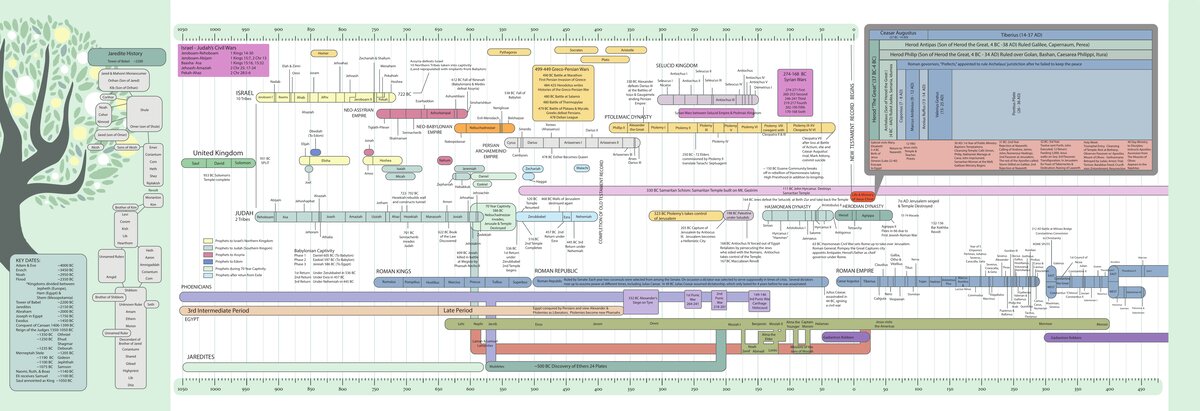
Tap to expand
Old Testament Timeline
From Creation through the Persian Period — tap the image to zoom, or download the full PDF.
Tap anywhere to close · Pinch to zoom