| Church Manuals | |
| Come Follow Me Manual — Week 18 | View |
| Scripture Helps: Old Testament | View |
| OT Seminary Teacher Manual | View |
| OT Institute Manual (Gen–2Sam) | View |
| Pearl of Great Price Manual | View |
| Scripture Reference | |
| Bible Dictionary | View |
| Topical Guide | View |
| Guide to the Scriptures | View |
| Church Media & Library | |
| Gospel for Kids (YouTube) | View |
| Bible Videos | View |
| Church Magazines | View |
| Gospel Library | View |

Week 18
Holiness to the Lord
Exodus 35–40; Leviticus 1; 4; 16; 19
April 27–May 3, 2026
5-Minute Overview
This Week 18 lesson uses a segmented format to help readers work through a larger catch-up bundle without flattening everything into one guide. Use the tabs to move through the five study-guide sections while keeping the normal weekly resources and insights in place.
Weekly Resources: Week 18
Exodus 35–40; Leviticus 1; 4; 16; 19 — Overview
“Let Them Make Me a Sanctuary; That I May Dwell Among Them”
Official Church Resources
OFFICIAL CHURCH RESOURCES▶
CHURCH MEDIA FOR FAMILIES▶
▶ Video Commentary
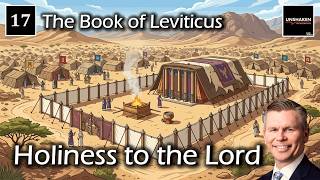
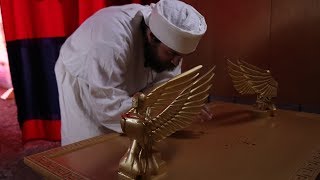
VIDEO COMMENTARY (17 videos)
▼



Specialized Audiences
WOMEN’S PERSPECTIVES (2 videos)
▶
FAMILY & CHILDREN’S RESOURCES (4 videos)
▶
Reference & Study Materials
BIBLE PROJECT VIDEOS THIS WEEK (13 videos)
▶
Book overview + theme & word study videos relevant to this week’s reading.




ACADEMIC & SCHOLARLY SITES▶
MAPS & BIBLICAL LOCATIONS▶
A Note from the Editor
▶︎
I owe you an apology — and an explanation. This lesson is late. Here's why.
When I originally built the CFM Corner weekly schedule, I made an error in the week assignments. My system had the Exodus and Leviticus material mapped to the wrong week numbers, which meant the study guides, resources, and navigation were all misaligned. Once I realized the mistake, I couldn't just patch it — the entire lesson had to be rebuilt from scratch to match the official Come, Follow Me manual sequence.
I realized my mistake when I went in to publish it on Friday, the process of repairing that took longer than expected, and I'm sorry for the delay. The good news is that the corrected schedule is now in place going forward, and this week's lesson has been rebuilt as a single consolidated study guide. It is a lot, but everything is in the proper place now.
Thank you for your patience. I know many of you rely on these guides for your weekly study, and I take that trust seriously.
What's in This Week's Study Guide
▶︎
Fair warning: this is a big one. The assigned reading covers the construction of the Tabernacle (Exodus 35–40) and four key chapters of Leviticus (1, 4, 16, 19) — but to make sense of what's being built and why, the study guide also walks through the chapters we've skipped or covered briefly in previous weeks. I've condensed the material several times, and I apologize for the information overload — but there was genuinely a lot of ground to cover.
Here's what you'll find:
- The Covenant Code (Exodus 21–24) — A brief overview of the case laws that apply the Ten Commandments to daily life, the protection of the vulnerable, and the blood covenant ratification on Sinai. These chapters were missed in last week's assignment and provide essential context.
- The Blueprint (Exodus 25–30) — God reveals the heavenly pattern for the Tabernacle, from the Ark and Mercy Seat in the Holy of Holies outward through the Holy Place furnishings, the structure itself, the priestly garments, and the courtyard. Every detail teaches theology.
- The Crisis (Exodus 31–34) — A brief recap of last week's material: the golden calf, Moses' intercession, and God's self-revelation of His own character in the Thirteen Attributes of Mercy.
- The Restoration (Exodus 35–40) — The people build what God designed, with willing hearts and Spirit-filled craftsmanship. The climax of Exodus: "The glory of the LORD filled the tabernacle" (40:34). Includes the powerful connection between the Tabernacle and Sinai — Ramban's teaching that the Tabernacle is "portable Sinai," carrying the revelatory encounter of the mountain forward as Israel journeys.
- The Full Book of Leviticus — Not just the four assigned chapters, but an overview of the entire book organized around the chiastic (menorah) pattern with the Day of Atonement at its center. The sacrificial system, priestly ordination, Nadab and Abihu, the purity laws, the Holiness Code, the festival calendar, the Sabbatical year and Jubilee, and the covenant blessings and curses — all briefly covered so you can see how the assigned chapters fit into the larger structure.
- **The Hebrew Name *Vayikra*** — Why the Hebrew title ("And He Called") tells us more than the English title "Leviticus" — God's voice has moved from the mountain into the tent.
The study guide uses assigned and not assigned markers throughout so you can always tell what's in the official reading and what's provided as context.
New: Ancient Egypt Cultural Guide
▶︎
New this week, I have added the Ancient Egypt and Biblical History guide to the Culture section. There were a lot of questions about Egypt in my Sunday School class last week and I have a dear friend who is currently in Egypt and she wanted more information. This prompted a ten-section deep dive into the civilization that shaped so much of the biblical narrative — from the pyramids to the Ptolemies, from Joseph in Goshen to the Holy Family's flight, from hieroglyphs to the Septuagint. Whether you're studying the Exodus, the plagues, the world the patriarchs lived in, or want to know more about the sites, this interactive guide will give you the background to read those stories with new depth. You'll find it in the Charts & Tools tab or directly in the Culture section of the site.
Coming Soon: The Tabernacle and Priestly Clothing Guide
▶︎
We are currently building a dedicated cultural guide on the Tabernacle of Moses and the priestly garments. This will be a visual, section-by-section walkthrough of every element — the courtyard, the Holy Place, the Holy of Holies, the four covering layers, the bronze altar, the laver, the menorah, the table of showbread, the altar of incense, the Ark and Mercy Seat, and the High Priest's garments from the golden plate on his turban to the bells and pomegranates at his hem.
This guide is designed to do two things. First, it will help you understand these chapters of Exodus and Leviticus — the blueprint, the construction, and the sacrificial system — in a way that bare text descriptions can't. Second, and perhaps more importantly, it will help you understand the temple. The Tabernacle is the prototype for every temple that followed, and the parallels between the ancient sanctuary and modern Latter-day Saint temple worship are profound: graduated zones of holiness, washing and anointing, sacred clothing, veils, altars, the progression from the outer court toward the presence of God. Understanding the Tabernacle deepens your understanding of the temple — and understanding the temple deepens your understanding of the Tabernacle.
We hope to have this guide up soon. Stay tuned.
This Week's Themes
▶︎
Even with all the material, the core message of this week is simple:
God wants to dwell with His people. The Tabernacle is God's idea — He designs it, He funds it through freewill offerings, He fills it with His glory. After rebellion, shattered tablets, and desperate intercession, God's response is not distance but dwelling. He moves into the neighborhood.
The crown of Leviticus is the Atonement. The entire book is arranged chiastically with the Day of Atonement (chapter 16) at its structural and theological center — everything before it prepares for atonement, everything after flows from it. On that one day, the High Priest enters the Holy of Holies, sprinkles blood on the Mercy Seat, and sends the scapegoat into the wilderness carrying Israel's sins away. Cleansing and removal. This is the hinge on which the whole book turns.
And the point of the Atonement is relational. What follows Yom Kippur in the text is not more ritual — it's Leviticus 19, the Holiness Code: "Ye shall be holy: for I the LORD your God am holy... thou shalt love thy neighbour as thyself." The Atonement makes us one with God; the command to love our neighbor makes us one as a people. Holiness is not withdrawal from the world — it is how you treat the people around you. The Atonement exists so that we can draw near to God and to each other.
Week 18 Weekly Insights | CFM Corner | OT 2026
Updated: April 30, 2026
Week 18
Exodus 35–40; Leviticus 1; 4; 16; 19 — Overview
"Let Them Make Me a Sanctuary; That I May Dwell Among Them"
1. Week 18: Exodus 35–40; Leviticus 1; 4; 16; 19 — Overview
This week spans the entire arc of the Tabernacle story and its aftermath — from God's revealed blueprint on the mountain, through the catastrophe of the golden calf, to the astonishing moment when divine glory fills the completed dwelling, and finally into Leviticus, where God teaches His people how to live in His presence without being consumed. The assigned reading (Exodus 35-40; Leviticus 1; 4; 16; 19) focuses on the construction and the sacrificial system, but the full arc from Exodus 25 through the end of Leviticus carries essential context. Here is the complete narrative so nothing is lost.
The Covenant Code (Exodus 21-24) — not assigned; missed in last week's reading
After the Ten Commandments (Exodus 20), God gives Moses the mishpatim (מִשְׁפָּטִים) — the "judgments" or case laws that translate those broad principles into daily practice. Chapters 21-23 form the Covenant Code, the oldest body of biblical law. "Thou shalt not kill" becomes specific rules about murder, manslaughter, and cities of refuge. "Thou shalt not steal" becomes restitution formulas for theft. "Keep the Sabbath" becomes a rest mandate that extends to servants, foreigners, and even animals. Throughout, God commands special protection for three vulnerable groups — the stranger (ger, גֵּר), the widow (almanah, אַלְמָנָה), and the orphan (yatom, יָתוֹם): "If thou afflict them in any wise, and they cry at all unto me, I will surely hear their cry" (22:22-23). The famous lex talionis — "eye for eye, tooth for tooth" (21:24) — is not a vengeance formula but a limitation on retribution: the punishment must match the crime, no more. Chapter 23 also establishes Israel's three annual pilgrimage festivals (shalosh regalim, שָׁלוֹשׁ רְגָלִים): Unleavened Bread (Chag HaMatzot, חַג הַמַּצּוֹת), Harvest (Shavuot, שָׁבוּעוֹת), and Ingathering (Sukkot, סֻכּוֹת).
Chapter 24 seals the covenant in blood. Moses builds an altar, sprinkles blood on both the altar (God's side) and the people (Israel's side), and declares: "Behold the blood of the covenant, which the LORD hath made with you" (24:8) — language Jesus echoes directly at the Last Supper: "This is my blood of the new covenant" (Matt 26:28). Then something extraordinary happens: Moses, Aaron, Nadab, Abihu, and seventy elders ascend the mountain and "they saw the God of Israel... and did eat and drink" (24:9-11) — a covenant meal in God's presence. Latter-day Saint readers should note D&C 84:23-27, which explains that God originally intended to give Israel the higher priesthood and His full presence, but they "hardened their hearts and could not endure his presence," so He gave them the lesser priesthood and "the law of carnal commandments" — making the Covenant Code an act of mercy, meeting the people where they were.
The Blueprint (Exodus 25-30) — not assigned but essential context, I will be adding a segment on the Tabernacle shortly
On Mount Sinai, God reveals the tavnit (תַּבְנִית) — the heavenly pattern for a portable sanctuary. He begins at the innermost point and works outward, and the purpose is stated before a single design detail: "Let them make me a sanctuary, that I may dwell among them" (Ex 25:8). Not in it — among them. The building is the vehicle; the people are the destination.
Chapter 25 begins with the furnishings of the innermost spaces, moving outward from the presence of God. In the Holy of Holies stand the Ark of the Covenant and the Mercy Seat (kapporet, כַּפֹּרֶת) flanked by two cherubim (כְּרוּבִים) — God's throne, where He promises to meet with Moses "from between the two cherubim" (25:22). Moving into the Holy Place, the table of showbread (shulchan, שֻׁלְחָן) holds twelve loaves representing the twelve tribes. The altar of incense (mizbeach haketoret, מִזְבֵּחַ הַקְּטֹרֶת — described later in chapter 30 but physically located here) stands before the veil at the center of the room, and the golden lampstand (menorah, מְנוֹרָה) with its seven branches and almond-blossom cups burns as the perpetual light inside God's dwelling.
Chapter 26 describes the structure that houses these furnishings. Acacia-wood frames form the walls, draped with four layers of covering: ten inner curtains of fine linen woven with cherubim (the ceiling visible from inside), goat-hair curtains over those, ram skins dyed red, and weatherproof tachash skins on the outside. Inside the structure, the parokhet (פָּרֹכֶת) — a vertical curtain hung from four gold-covered pillars — divides the Holy Place from the Holy of Holies, while a masakh (מָסָךְ) screen covers the entrance.
Chapter 27 moves outside the Tabernacle into the courtyard, where the bronze altar of burnt offering (mizbeach, מִזְבֵּחַ) stands for consuming sacrifices, surrounded by the linen courtyard enclosure. The chapter closes with instructions for pure olive oil to fuel the menorah's perpetual flame inside the Holy Place (27:20-21) — a light that must never go out.
Chapter 28 is the priestly wardrobe — Aaron's garments "for glory and for beauty" (28:2). The ephod (אֵפוֹד) with its two onyx shoulder-stones engraved with the twelve tribes' names, the breastplate (choshen, חֹשֶׁן) bearing twelve gemstones, the Urim and Thummim (אוּרִים וְתֻמִּים) for divine inquiry, the robe of blue with golden bells and pomegranates at the hem, and the golden plate on the turban inscribed Kodesh l'YHWH (קֹדֶשׁ לַיהוָה) — "Holy to the LORD." Every garment teaches: the High Priest carries Israel on his shoulders (responsibility) and over his heart (love) into God's presence.
Chapter 29 prescribes the seven-day priestly consecration ceremony — washing, anointing, blood on the right ear, right thumb, and right toe, consecrating the whole person for service. Chapter 30 adds the golden altar of incense (placed before the veil), the half-shekel census tax (ransom money), the bronze laver for priestly washing, and the sacred anointing oil and incense — both with formulas forbidden for common use.
The Crisis (Exodus 31-34) — covered in last week's reading
These chapters were part of Week 17's assignment (Exodus 19-20; 24; 31-34). Chapter 31 names Bezalel and Oholiab as Spirit-filled craftsmen and reestablishes the Sabbath as the covenant sign. Chapters 32-34 contain the golden calf catastrophe, Moses' shattering of the tablets, his desperate intercession — "blot me out of thy book" — God's withdrawal and Moses' refusal to accept an angel as substitute, and finally God's self-revelation of His own character: "The Lord, the Lord God, merciful and gracious, longsuffering, and abundant in goodness and truth" (Ex 34:6). Jewish tradition identifies thirteen attributes of mercy in this passage. The covenant is renewed. Moses descends with new tablets, his face shining with reflected glory — transformed by proximity to God.
The Restoration (Exodus 35-40) — assigned
Now the people build what God designed. Chapter 35 reiterates the Sabbath command (even sacred construction must rest), then Moses calls for freewill offerings. The response is overwhelming. Chapter 36 records that the people bring so much material Moses must command them to stop — the only time in Scripture the people are told to cease giving. Bezalel and the craftsmen begin construction.
Chapters 36-38 detail the building in meticulous parallel to the blueprint chapters (25-27), but with a crucial difference: the instructions moved from inside out (Ark first), while the construction moves from outside in (structure first, then furnishings). The text repeats "as the LORD commanded Moses" eighteen times — the willing obedience that answers the willing rebellion of the golden calf.
Chapter 39 describes the making of the priestly garments — again echoing chapter 28 detail for detail. When Moses inspects the finished work, the language deliberately echoes Genesis 1: "Moses saw all the work, and behold, they had done it... and Moses blessed them" (39:43), mirroring "God saw everything that he had made, and behold, it was very good" (Gen 1:31). The Tabernacle is a new creation.
Chapter 40 is the climax of Exodus. Moses erects the Tabernacle on the first day of the first month (1 Nisan) — the beginning of Israel's religious year (Exodus 12:2), just two weeks before the first anniversary of Passover. He places the Ark, hangs the veil, sets the table and lampstand, positions the altars, fills the laver. And then: "The glory of the LORD filled the tabernacle" (40:34). The God who threatened to consume this stiff-necked people now moves in among them. As Rashi teaches, the Mishkan (מִשְׁכָּן) is the proof that God forgave Israel for the golden calf.
The Tabernacle as Portable Sinai
Ramban (Nachmanides) offered one of the most theologically ambitious readings of the Tabernacle: it was designed to perpetuate the Sinai experience. The glory on the mountain became the glory on the Mercy Seat. Moses ascending through the cloud became the High Priest entering through the veil. The people don't leave Sinai behind — they carry it with them. The Tabernacle is portable Sinai, which is itself a representation of returning to Eden, entering back into the presence of the Lord. For Latter-day Saint readers, this connection is profound: the temple doesn't just remember a past theophany — it perpetuates the conditions for ongoing divine encounter, just as Joseph Smith taught it was a place to "receive the fulness of the Holy Ghost."
The Hebrew Name: Leviticus
The Hebrew name for Leviticus is Vayikra (וַיִּקְרָא) — "And He called." It's the first word of the book: "And the LORD called unto Moses, and spoke unto him out of the tabernacle." The English title "Leviticus" comes from the Greek Leuitikon (pertaining to the Levites), but the Hebrew name is more telling. God doesn't lecture from Sinai anymore — He calls from inside the tent. The voice has moved from the mountain into the neighborhood. The entire book is God speaking from within the dwelling He just moved into, teaching His people how to live near Him without being consumed.
The Leviticus Chiastic Structure
Before diving into the individual chapters, it helps to see how Leviticus is organized. Scholars have observed that it is not a random collection of laws but a carefully constructed literary whole, arranged in a chiastic menorah pattern with the Day of Atonement (chapter 16) at the structural and theological center.
Mary Douglas (Leviticus as Literature, Oxford, 1999) and Gordon Wenham (The Book of Leviticus, NICOT, 1979) both identified the arrangement:
| Layer | Opening (chs. 1-15) | Closing (chs. 17-27) | |
|---|---|---|---|
| A | Sacrificial laws (1-7) | <-Ritual-> | Festivals and vows (23-27) |
| B | Priestly ordination (8-10) | <-Priesthood-> | Priestly regulations (21-22) |
| C | Purity and impurity (11-15) | <-Purity-> | Holiness Code: moral/sexual purity (17-20) |
| CENTER: Day of Atonement (16) |
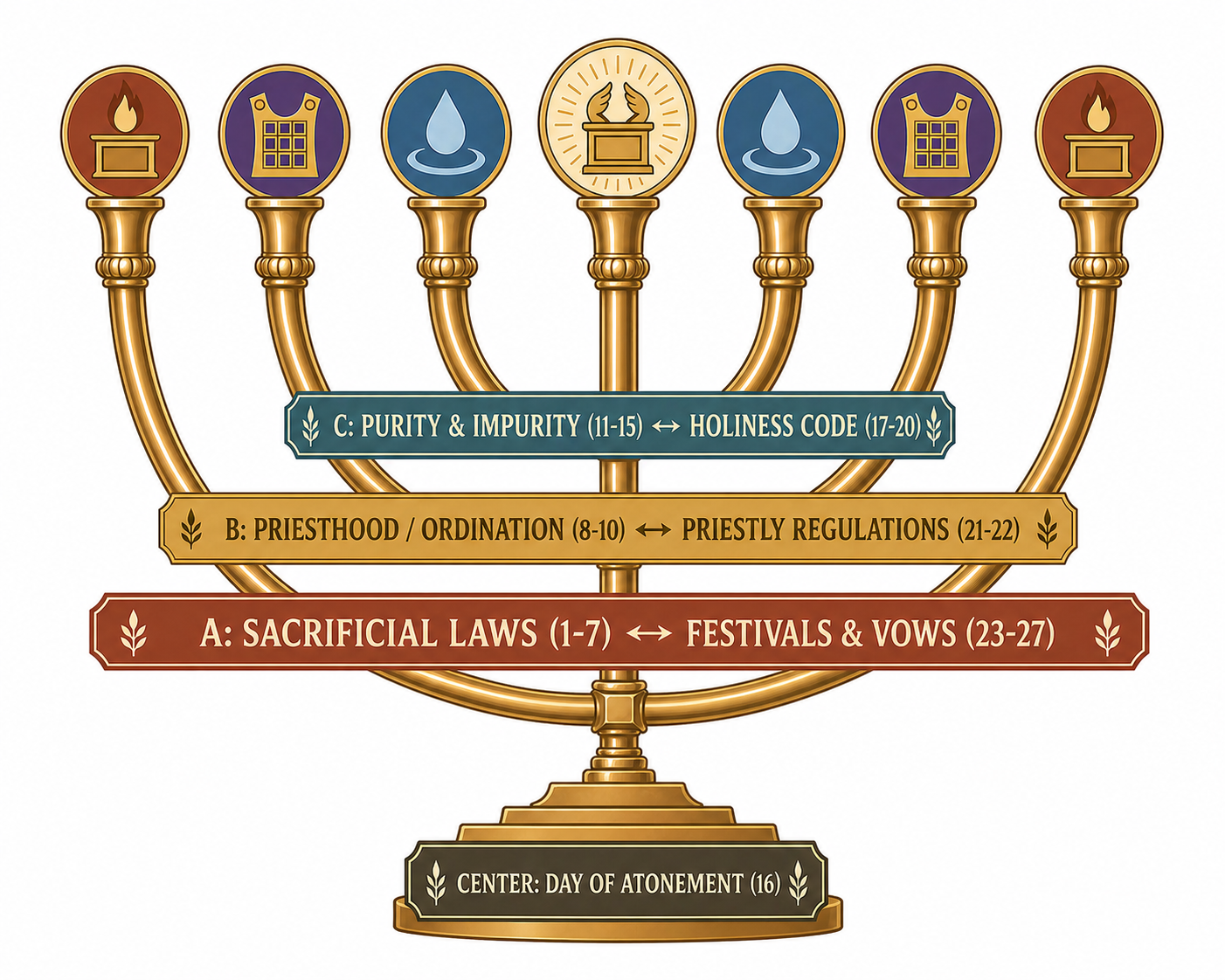
The entire book orbits around atonement. Everything before chapter 16 prepares for it — how to offer sacrifice, who may serve as priest, what constitutes cleanness. Everything after flows from it — how to live a holy life in response to the cleansing God has provided. The Day of Atonement is the hinge on which the whole book turns, and understanding this patter will help the rest of the book fall into place.
For Latter-day Saint readers, this resonates deeply. The temple ordinance is not one element of the gospel among many — it is the center around which everything else is organized: preparation before, covenant living after.
With that map in hand, here is what each section contains:
The Sacrificial System (Leviticus 1-7) — chapters 1 and 4 assigned; 2-3 and 5-7 not assigned
God has moved in. Now how do sinful people live alongside a holy God? Leviticus answers with an entire system of approach. The Hebrew word for offering — korban (קָרְבָּן) — comes from the root meaning "to draw near." Every sacrifice is an invitation to approach God, not a payment to appease Him.
Chapter 1 (assigned) introduces the olah (עֹלָה) — the burnt offering, consumed entirely on the altar. Nothing is kept by the worshiper; it all ascends to God. The olah represents total consecration — holding nothing back.
Chapters 2-3 (not assigned) complete the voluntary offering system. The minchah (מִנְחָה, grain offering, ch. 2) is the offering of daily labor — fine flour, oil, and frankincense, but never with leaven or honey (which ferment and corrupt). The shelamim (שְׁלָמִים, peace/fellowship offering, ch. 3) is the only sacrifice where the worshiper, the priest, and God all share the meal together — a covenant banquet expressing gratitude and wholeness (shalom).
Chapter 4 (assigned) introduces the chatat (חַטָּאת) — the sin offering, required when someone sins unintentionally. The blood is applied in graduated stages depending on who sinned: the High Priest's sin requires blood sprinkled before the veil and applied to the incense altar (the contamination reaches closer to God's presence); a common person's sin requires blood on the outer altar only. Sin doesn't just affect the sinner — it contaminates sacred space, and the chatat purifies it.
Chapters 5-7 (not assigned) add the asham (אָשָׁם, guilt/trespass offering, ch. 5-6), required for violations involving sacred property or defrauding a neighbor — notably, restitution plus 20% must be paid before the sacrifice is offered. God doesn't accept worship as a substitute for making things right. Chapter 7 provides procedural regulations for all the offerings, including the critical rule that sacrificial blood and fat belong exclusively to God.
Priestly Ordination and the Nadab/Abihu Crisis (Leviticus 8-10) — not assigned
Chapter 8 enacts the priestly consecration ceremony prescribed in Exodus 29 — washing, robing, anointing with oil, and blood applied to ear, thumb, and toe. The seven-day ordination mirrors a creation week, establishing the priesthood as a new-creation event.
Chapter 9 records the eighth day — the first public sacrifice. Aaron offers for himself and for the people, and "the glory of the LORD appeared unto all the people. And there came a fire out from before the LORD, and consumed upon the altar the burnt offering" (9:23-24). The people shout and fall on their faces. God's fire accepts the sacrifice.
Chapter 10 follows immediately with catastrophe. Nadab and Abihu, Aaron's eldest sons, offer "strange fire before the LORD, which he commanded them not" (10:1). Fire comes out from the LORD and kills them. Aaron is silent. The exact nature of their sin is debated — unauthorized incense, wrong timing, entering the Holy of Holies unbidden, or possibly intoxication (God immediately commands priests not to drink wine before serving, 10:8-9). Whatever the specifics, the lesson is devastating: proximity to God's holiness demands precise obedience. The same fire that accepted the sacrifice in chapter 9 consumes the priests in chapter 10. Holiness is not safe.
Clean and Unclean: The Purity System (Leviticus 11-15) — not assigned
These chapters establish the categories of ritual purity that govern daily life in Israel's camp:
Chapter 11 gives the dietary laws (kashrut, כַּשְׁרוּת) — land animals must chew the cud and have split hooves; fish must have fins and scales; specific birds and insects are prohibited. The purpose isn't hygiene but holiness: "Be holy, for I am holy" (11:44-45). The dietary laws make every meal a theological act — a daily reminder that Israel is set apart.
Chapters 12-13 address impurity from childbirth and skin diseases (tzara'at, צָרַעַת, traditionally but misleadingly translated "leprosy"). These are not moral judgments but ritual states requiring priestly diagnosis and prescribed purification periods. Chapter 14 gives the elaborate cleansing ritual for healed skin disease — including two birds (one killed, one released alive), echoing the two-goat pattern of Yom Kippur. Chapter 15 covers bodily discharges, establishing that normal biological processes create temporary impurity requiring washing and waiting — the body itself participates in the rhythm of sacred and ordinary.
The purity system teaches a fundamental principle: the boundary between holy and common, clean and unclean, must be actively maintained. Impurity is not sin — it is the natural state of mortal, embodied life that must be regularly addressed before approaching God.
The Center: Day of Atonement (Leviticus 16) — assigned
Chapter 16 is the structural and theological heart of Leviticus. Scholars have demonstrated that the entire book is arranged chiastically with Yom Kippur at its center — everything before prepares for atonement, everything after flows from it.
Once a year, on the tenth day of the seventh month, the High Priest performs the most sacred ritual in Israel's calendar. He bathes, dresses in plain white linen (not the golden garments of glory — humility before God), and enters the Holy of Holies — the only person, on the only day, permitted beyond the veil. He sprinkles sacrificial blood on the kapporet (כַּפֹּרֶת, Mercy Seat), purifying the sanctuary from Israel's accumulated sin.
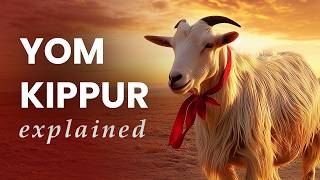
Two goats are presented. One is sacrificed as a sin offering. The other — the azazel (עֲזָאזֵל), the scapegoat — receives the symbolic transfer of all Israel's sins through Aaron's hands on its head, then is led into the wilderness, carrying the sins away "unto a land not inhabited" (16:22). One goat dies for purification; one goat carries sin away. Together they represent complete atonement — cleansing and removal.
The Holiness Code (Leviticus 17-20) — chapter 19 assigned; 17-18, 20 not assigned
After the Day of Atonement provides cleansing, the remainder of Leviticus addresses how a cleansed people should live. The Holiness Code (Kedoshim, קְדֹשִׁים) takes holiness out of the sanctuary and into every dimension of daily life.
Chapter 17 (not assigned) centralizes all slaughter at the Tabernacle and absolutely prohibits consuming blood: "the life of the flesh is in the blood: and I have given it to you upon the altar to make an atonement for your souls" (17:11) — one of the most theologically significant verses in Torah. Chapter 18 (not assigned) prohibits sexual violations — incest, adultery, child sacrifice to Molech, and other practices identified with Egypt and Canaan. The framing is explicit: "After the doings of the land of Egypt, wherein ye dwelt, shall ye not do... ye shall keep my statutes" (18:3-4).
Chapter 19 (assigned) is the crown of Leviticus. Kedoshim tihyu — "Ye shall be holy: for I the LORD your God am holy" (19:2) — is addressed to the entire congregation, not just priests. What follows is not more ritual but an ethical code for daily life: honor parents, keep the Sabbath, don't steal, don't lie, don't defraud workers, leave the edges of your field unharvested for the poor and the stranger, judge fairly, don't take revenge — culminating in "thou shalt love thy neighbour as thyself: I am the LORD" (19:18). Jesus called this the second greatest commandment. Rabbi Akiva called it the greatest principle in Torah. Holiness is not withdrawal from the world; it is how you treat the people in it.
Chapter 20 (not assigned) prescribes penalties for violations of chapters 18-19, establishing that holiness has consequences — separation from the community for those who choose to live by other standards.
Priestly Holiness and the Festival Calendar (Leviticus 21-25) — not assigned
Chapters 21-22 hold priests to higher standards of ritual purity — restrictions on mourning, marriage, and physical requirements for service. The principle: those who draw closest to God's presence bear the greatest responsibility for maintaining holiness.
Chapter 23 is the festival calendar — one of the most significant chapters in Leviticus for understanding Israel's worship rhythm and its prophetic fulfillment:
- Sabbath (weekly rest)
- Passover and Unleavened Bread (Pesach, פֶּסַח / Matzot, מַצּוֹת, Nisan 14-21) — redemption
- Firstfruits (Yom HaBikkurim, יוֹם הַבִּכּוּרִים) — the first sheaf of the harvest, waved before the Lord
- Feast of Weeks (Shavuot, שָׁבוּעוֹת / Pentecost, 50 days after Firstfruits) — the wheat harvest and, in later tradition, the giving of Torah at Sinai
- Feast of Trumpets (Yom Teruah, יוֹם תְּרוּעָה / Rosh Hashanah, Tishri 1) — the trumpet blast, later associated with judgment and repentance
- Day of Atonement (Yom Kippur, יוֹם כִּפּוּר, Tishri 10) — the fast, the High Priest enters the Holy of Holies
- Feast of Tabernacles (Sukkot, סֻכּוֹת, Tishri 15-22) — seven days dwelling in temporary booths, remembering the wilderness and anticipating God's future dwelling with His people
Each of these appointed times (mo'adim, מוֹעֲדִים) carries prophetic significance that extends far beyond Israel's agricultural calendar.
Chapter 24 (not assigned) addresses the lampstand oil and showbread (perpetual Tabernacle service), then records the case of a blasphemer and establishes the lex talionis — "eye for eye, tooth for tooth" — which in rabbinic interpretation was always understood as proportional monetary compensation, not literal mutilation.
Chapter 25 (not assigned) introduces the Sabbatical year (every seventh year, the land rests and debts are released) and the Jubilee (Yovel, יוֹבֵל, every fiftieth year), when all land returns to its original family, all Israelite slaves go free, and the economic slate is wiped clean. The theological basis: "The land shall not be sold for ever: for the land is mine; for ye are strangers and sojourners with me" (25:23). No one truly owns anything — God owns it all, and Israel is a tenant. The Jubilee is the most radical economic legislation in the ancient world.
Blessings, Curses, and Vows (Leviticus 26-27) — not assigned
Chapter 26 is the covenant conclusion — blessings for obedience and curses for disobedience, structured in escalating cycles. If Israel obeys, God promises rain, abundant harvests, peace, and His dwelling among them. If they rebel, five increasingly severe waves of discipline follow — disease, famine, wild beasts, siege, and exile. But even at the end of the curse sequence, God does not abandon: "And yet for all that, when they be in the land of their enemies, I will not cast them away, neither will I abhor them, to destroy them utterly, and to break my covenant with them: for I am the LORD their God" (26:44). The covenant is unbreakable from God's side.
Chapter 27 closes Leviticus with laws about vows, dedications, and tithes — the practical administration of voluntary commitments to God. The book that began with God calling from the Tabernacle ends with the people responding through their promises.
"And the glory of the LORD filled the tabernacle." (Exodus 40:34)
After everything — the revelation, the rebellion, the shattered tablets, Moses' desperate intercession — God's response is not distance but dwelling. He doesn't merely forgive from afar; He moves into the neighborhood. The entire narrative has been building to this: not just freedom from Egypt, but God's presence among His people. And Leviticus then teaches them (and us) the art of sacred nearness.
1. God Initiates the Dwelling
The Tabernacle is God's idea, not Israel's. He commands it. He designs it. He reveals the pattern. The theological weight of this cannot be overstated: the God of Sinai — fire, thunder, who said "do not come near" — now says, "Build me a house so I can live with you."
2. Blueprint Before Building, Crisis Between
The instructions (Ex 25-30) are given in a state of covenant communion. The building (Ex 35-40) happens in a context of covenant restoration. Between the instructions and construction stands the golden calf — proof that the greatest spiritual gifts are often followed by the greatest spiritual failures. The gap between blueprint and building is filled with sin, intercession, mercy, growth, and renewal.
3. God Reveals His Character After Failure
The single most important self-revelation of God's character in the Old Testament — the Thirteen Attributes of Mercy (Ex 34:6-7) — comes not in a moment of obedience but in a moment of failure and rebuilding broken relationships. God's first word about Himself after Israel's worst betrayal is not just or powerful but merciful and gracious.
4. Sacred Creativity
Bezalel is the first person in Scripture filled with God's Spirit — and it is for artistic craftsmanship, not prophecy or warfare. God's Spirit empowers creativity, beauty, wisdom, and skilled labor as sacred acts.
5. Drawing Close Through Offering
The sacrificial system isn't about appeasing an angry God. Korban (offering) comes from the root meaning "to draw near." Every sacrifice was an invitation to approach God.
6. Holiness Is Relational
Kedoshim tihyu — "You shall be holy" (Lev 19:2) — is addressed to the entire community, not just priests. What follows isn't more ritual but ethics: don't steal, don't lie, pay workers on time, leave food for the poor, don't take revenge — culminating in "love thy neighbour as thyself" (Lev 19:18).
| Chapters | Content | Assigned |
|---|---|---|
| Exodus 25-27 | Ark, Mercy Seat, lampstand, table, Tabernacle structure, courtyard, altar | — |
| Exodus 28-29 | Priestly garments "for glory and beauty"; seven-day consecration | — |
| Exodus 30 | Incense altar, census tax, laver, anointing oil, sacred incense | — |
| Exodus 31 | Bezalel and Oholiab named; Sabbath as covenant sign | Last week |
| Exodus 32-34 | Golden calf, Moses' intercession, Thirteen Attributes, covenant renewal | Last week |
| Exodus 35-40 | Freewill offerings, Spirit-filled construction, glory fills the Tabernacle | Yes |
| Leviticus 1 | **Burnt offering (olah) — total consecration** | Yes |
| Leviticus 2-3 | Grain offering (minchah); peace offering (shelamim) — covenant meal | — |
| Leviticus 4 | **Sin offering (chatat) — graduated blood purification** | Yes |
| Leviticus 5-7 | Guilt offering (asham); restitution + 20%; offering regulations | — |
| Leviticus 8-10 | Priestly ordination; fire accepts sacrifice; Nadab/Abihu killed by fire | — |
| Leviticus 11-15 | Dietary laws, skin diseases, bodily discharges — the purity system | — |
| Leviticus 16 | Day of Atonement (Yom Kippur) — two goats, High Priest enters Holy of Holies | Yes |
| Leviticus 17-18 | Blood prohibition ("life is in the blood"); sexual laws | — |
| Leviticus 19 | Holiness Code — "love thy neighbour as thyself" | Yes |
| Leviticus 20 | Penalties for violations of chs. 18-19 | — |
| Leviticus 21-22 | Priestly holiness standards | — |
| Leviticus 23 | Festival calendar: Passover, Firstfruits, Shavuot, Trumpets, Yom Kippur, Sukkot | — |
| Leviticus 24-25 | Lampstand/showbread; Sabbatical year and Jubilee | — |
| Leviticus 26-27 | Covenant blessings and curses; vows and tithes | — |
- Covenant Given (Ex 19-24): "All that the LORD hath said will we do"
- Blueprint Revealed (Ex 25-30): God shows Moses the pattern on the mountain
- Covenant Shattered (Ex 32-34): Golden calf, tablets broken, mercy pleaded
- God Reveals His Character (Ex 34:6-7): The Thirteen Attributes of Mercy
- Tabernacle Built (Ex 35-40): Willing hearts, Spirit-filled hands, "as the LORD commanded"
- God Moves In (Ex 40:34): Glory fills the Tabernacle — forgiveness made visible
- Drawing Close (Lev 1, 4): Sacrificial system as invitation to approach
- Annual Renewal (Lev 16): Yom Kippur — comprehensive atonement
- Holy Living (Lev 19): Holiness extends from sanctuary to street
The arc moves from revelation --> rebellion --> mercy --> indwelling --> access --> holiness. God doesn't just forgive — He comes closer.
- We see the full pattern: Blueprint, crisis, restoration, indwelling — the same pattern as every covenant life
- We see God's character: His self-revelation after failure is mercy first, judgment bounded
- We see Christ: The Mercy Seat, the High Priest, the sacrificial system, the scapegoat, the torn veil — all find fulfillment in the Savior
- We see the temple: Every element — graduated zones, veils, priestly garments, washing, anointing, altar, incense — anticipates modern temple worship
- We see ourselves: "Kedoshim tihyu" means holiness isn't reserved for spiritual elites — it's for the entire community, expressed in daily ethics
The Tabernacle was proof that God forgave Israel and chose to dwell among them despite their failures. Leviticus then taught them how to live in His presence — through offering, atonement, and holiness in daily life. What would it mean for you to believe that God wants to dwell with you — not despite your imperfections, but in the middle of them? And what does "holiness" look like not in the sanctuary, but in your neighborhood, your workplace, your daily relationships?
For deep-dive readers: The segment study guides in
05_Study_Guide_Segments/provide expanded treatments of each section — Exodus 25-30 (detailed furnishing symbolism and ANE parallels), Exodus 31-34 (golden calf, covenant renewal), Exodus 35-40 (construction and willing hearts), and Leviticus Overview (full offerings system and Yom Kippur procedure). This consolidated guide presents the unified narrative arc; the segments offer the full scholarly depth.
Week 18 Consolidated Study Guide | CFM Corner | OT 2026
2. Week 18: Historical and Cultural Context
Israel stands at Sinai. The covenant has been ratified in blood and though a shared meal in God's presence (Ex 24:1-11). Moses ascends into the cloud of glory for forty days. What he receives is not more law but a building plan — the most detailed architectural instructions in the Torah. What follows will encompass God's design for His dwelling, its near-destruction through idolatry, its construction by willing hearts, and the system of worship that allows sinful people to live alongside a holy God.
Temples in the Ancient Near East
Every major culture surrounding Israel built temples. Egyptian temples were massive stone structures with processional ways and inner sanctuaries where the god's image was tended daily — washed, dressed, fed. Mesopotamian ziggurats served as platforms connecting heaven and earth, with priesthood systems dedicated to maintaining the god's statue.
Israel's Tabernacle Was Radically Different
| ANE Temple | Israel's Tabernacle |
|---|---|
| Permanent stone structure | Portable tent — moves with the people |
| Divine image at the center | No image — only the Ark and Mercy Seat |
| God needs to be maintained | God provides for His people, not the reverse |
| Built by royal command and forced labor | Built by freewill offerings and Spirit-filled artisans |
| Located in the capital or sacred city | Located in the center of the camp — God in the middle with His people |
| Access limited by political rank | Access structured by holiness, not social status |
The Tabernacle as Cosmos
Regardless of the differences, the Tabernacle shared one significant connection with ANE temples — it symbolically represented the cosmos itself. Josephus writes in Antiquities (3.7.7): "If any one do without prejudice, and with judgment, look upon these things, he will find they were every one made in way of imitation and representation of the universe." Philo develops the same idea in The Life of Moses (2.74-76): the tabernacle is "a reflective model of the heavens."
The difference from pagan temples is not that Israel lacked cosmic symbolism — it is that Israel's cosmic temple contained no image. Where the idol should be, there is only the Ark and the Mercy Seat — the word of God and the place of atonement.
"And let them make me a sanctuary; that I may dwell among them." (Exodus 25:8)
Two words carry the theological weight:
- mikdash (מִקְדָּשׁ) — sanctuary, from the root q-d-sh, to be holy
- veshakhanti (וְשָׁכַנְתִּי) — "and I will dwell," from shachan, to dwell, to settle
The purpose is stated before the design. God begins with "I want to live among you." And the Hebrew says betokham (בְּתוֹכָם) — "among them," not "in it." The sanctuary is the vehicle; the people are the destination. God doesn't move into a building. He moves into a community.
The Tabernacle was organized into three concentric zones of increasing holiness:
| Zone | Hebrew | Access | Key Furnishings | Material |
|---|---|---|---|---|
| Courtyard | chatzer (חָצֵר) | All Israelites (with offerings) | Altar of Burnt Offering, Bronze Laver | Bronze |
| Holy Place | kodesh (קֹדֶשׁ) | Priests only, daily | Table of Showbread, Menorah, Incense Altar | Gold-overlaid wood |
| Holy of Holies | kodesh ha-kodashim (קֹדֶשׁ הַקֳּדָשִׁים) | High Priest only, once a year (Yom Kippur) | Ark, Mercy Seat, Cherubim | Pure gold |
Josephus maps these three zones onto the cosmos: the two outer divisions represent land and sea, "being of general access to all." The third — the Holy of Holies — represents heaven, "because heaven is inaccessible to men." The materials form a theological gradient: gold increases as you move inward; bronze marks the outer zone; blue yarn evokes heaven; scarlet evokes blood/earth, purple evokes a union between the two.
For a detailed exploration of the Ark, Mercy Seat, and Cherubim — including their ANE parallels, Josephus and Philo's descriptions, and rich Christological typology — see the separate Ark of the Covenant project in the Culture section.
The Ark (aron, אֲרוֹן) was the most sacred object in Israel's worship — a chest of acacia wood overlaid with gold, containing the tablets of the covenant. The Mercy Seat (kapporet, כַּפֹּרֶת) atop it was the designated meeting point: "There I will meet with thee, and I will commune with thee from above the mercy seat, from between the two cherubims" (Ex 25:22). The root of kapporet is kaphar — to cover, to atone. The place where God speaks is the place where atonement happens. Meeting and mercy are the same location.
God names the builders by name — Bezalel son of Uri, of Judah, and Oholiab son of Ahisamach, of Dan. This is the first time in Scripture that anyone is described as being filled with the Spirit of God for skilled work: "I have filled him with the spirit of God, in wisdom, and in understanding, and in knowledge, and in all manner of workmanship" (Ex 31:3).
The names carry meaning. Betzal'el (בְּצַלְאֵל) means "in the shadow of God." Oholiab (אָהֳלִיאָב) means "the Father's tent" — evoking the very structure he is called to build. The pairing of Judah (the royal tribe) and Dan (often marginalized in later tradition) suggests sacred work draws from the whole community, not just its elite.
The Talmud (Berakhot 55a) preserves a remarkable tradition: "Bezalel knew how to join the letters by which heaven and earth were created." When Moses told Bezalel to make the Tabernacle's furnishings before the structure itself, Bezalel challenged the order — shouldn't the house be built before its contents? Moses marveled: "Were you in the shadow of God (betzal El)?" The wordplay on his name suggests Bezalel operated within a divine intuition that grasped sacred order instinctively.
Another tradition illustrates this even more vividly. When God showed Moses the design of the Menorah — hammered from a single piece of gold, with its seven branches, almond-blossom cups, and intricate botanical forms — Moses could not grasp how to make it (Menachot 29a; Bamidbar Rabbah 15:10). After several failed attempts, Moses turned to Bezalel, who fashioned the Menorah without difficulty — even though he had never seen the heavenly prototype. A simple craftsman succeeded where the greatest prophet in Israel's history had struggled, not because he was greater than Moses but because God had prepared him with gifts Moses did not possess.
The lesson is as practical as it is profound. Leadership in God's work has always meant knowing when to step aside and let the prepared hands do what they were called to do. Moses was not diminished by needing Bezalel — he was wise enough to seek help, and humble enough to marvel at the result.
What the Calf Was
The golden calf of Exodus 32 was not a random act of imagination. Bull and calf imagery pervaded the religious world Israel had just left. The Apis bull was sacred in Egypt; in Canaanite religion, the storm god Baal was depicted standing on a bull. In the Minoan civilization similar traditions permeated the culture. The calf was embedded in the entire cultural network Israel inhabited — Egyptian, Canaanite, and Aegean alike.
When constructing the calf, the people likely did not think they were abandoning God entirely. Aaron proclaimed, "To morrow is a feast to the LORD" (32:5) — using the divine name YHWH. The sin was not that they chose a different god but that they tried to represent the true God in an image He had explicitly forbidden. The calf was a false mediator — a substitute for the divine presence they could not see and the prophet who had not returned.
Moses Breaks the Tablets
When Moses descends and sees the calf and the dancing, he shatters the tablets inscribed by God's own finger (32:19). In ANE legal practice, breaking the treaty document was a formal declaration that the covenant was void. Moses was performing a legal act: the covenant is over. That God later instructs Moses to hew new tablets (34:1) — writing on them again — is the sign that what was destroyed can be remade.
Moses' Shining Face
When Moses descends from his second encounter on Sinai, "the skin of his face shone" (34:29). The Hebrew verb is qaran (קָרַן), from the same root as qeren (horn/ray). The Vulgate famously translated this as "horned" (cornuta), which is why Michelangelo's Moses has horns.
Michelangelo, Moses (c. 1515). Marble, San Pietro in Vincoli, Rome. Photo: Wikimedia Commons, CC BY-SA 3.0.
The myth that Jews have horns — and the parallel accusation directed at Latter-day Saints — traces directly to this translation error. Jerome's 4th-century Vulgate rendered qaran as cornuta facies ("horned face"), and European artists from the 12th century onward depicted Moses with literal horns. Over centuries, the image detached from its biblical source and became an antisemitic trope: Jews were "horned" and therefore demonic. The same slander was applied to early Latter-day Saints, who were frequently accused of having horns — a charge rooted in the same medieval misreading of this passage. The irony is that the text describes the opposite of what the myth claims: Moses' face shone because he had been in the presence of God. The "horns" were rays of divine glory.
The theological point: proximity to God transforms. Moses did not generate the light. He reflected it. And the closer the encounter, the brighter the reflection.
When the Tabernacle is complete, "a cloud covered the tent of the congregation, and the glory of the LORD filled the tabernacle" (Ex 40:34). The Hebrew anan (עָנָן) — cloud — is the same word used for the rainbow covenant sign in Genesis 9:13-14: God set His bow ba-anan (בֶּעָנָן) — "in the cloud." The cloud that now fills the Tabernacle carries a covenant memory: the same God who promised never to destroy humanity now takes up residence among them.
Even Moses, who spoke with God "face to face," cannot enter the Tabernacle (40:35). The glory is so complete that human approach is temporarily impossible. The building is done; now God must make it His own.
God commands garments for Aaron and his sons lekhavod uletif'aret — "for glory and for beauty" (Ex 28:2). The High Priest carried Israel's names on his shoulders (strength) and over his heart (love) on twelve precious stones. The golden plate on his turban bore kodesh la-YHWH — "HOLINESS TO THE LORD."
Both Josephus and Philo understood the garments as a wearable model of the universe. Josephus (Antiquities 3.7.7): "The blue denoted the sky... the breastplate placed in the middle of the ephod represents the earth at the center of the world... the two sardonyxes on the shoulders represent the sun and moon." The priest, vested for service, was a walking cosmos — carrying the heavens on his shoulders, the stars on his heart, and the name of God on his brow.
For the full cosmic symbolism treatment with Josephus and Philo sources and the Armor of God table, see the Exodus 25-30 segment guide.
How Israel's System Differed
Ancient Near Eastern religions universally practiced animal sacrifice. But Israel's system was distinctive:
- No feeding the gods: Mesopotamian sacrifices were literally meals for the deities. Israel's God needs nothing.
- No manipulation: ANE sacrifice aimed to control or appease divine forces. Israel's sacrifice was responsive — devotion, gratitude, or repentance.
- Blood theology: "The life of the flesh is in the blood" (Lev 17:11). Blood was sacred because it represented life itself.
The Five Major Offering Types
| Type | Hebrew | Purpose |
|---|---|---|
| Burnt offering | olah (עֹלָה) | Complete dedication — entirely consumed by fire |
| Grain offering | minchah (מִנְחָה) | Thanksgiving, accompaniment — flour, oil, frankincense |
| Peace offering | shelamim (שְׁלָמִים) | Covenant fellowship — shared meal between God, priest, and worshiper |
| Sin offering | chatat (חַטָּאת) | Purification for unintentional sin |
| Guilt offering | asham (אָשָׁם) | Restitution for specific offenses |
The Graduated Blood Application of the Sin Offering
The chatat reveals how sin's contamination reaches different depths of sacred space depending on who sinned:
| Who Sinned | Animal | Where Blood Was Applied |
|---|---|---|
| Common person | Female goat or lamb | Horns of the burnt offering altar (outer courtyard) |
| Ruler | Male goat | Horns of the burnt offering altar |
| High Priest or whole community | Bull or male goat | Sprinkled seven times before the veil + horns of the incense altar |
| All Israel — Yom Kippur | Bull + goat | Sprinkled directly on the Mercy Seat (inside the Holy of Holies) |
This movement of atonement procession teaches that sin doesn't just affect the sinner; it has broader repercussions reaching even into the space where God dwells. The chatat purifies the sanctuary in layers so God's presence can continue to dwell among His people (see Jacob Milgrom, Leviticus 1-16, Anchor Bible, 1991).
The Hebrew word mo'ed (מוֹעֵד) — from the same root as the "tent of meeting" (ohel mo'ed) — means "appointed time" or "divine appointment." The festivals of Leviticus 23 are not merely celebrations; they are scheduled encounters with God.
The annual cycle of God's appointed times (moedim), showing the spring and fall festivals. The feasts form a prophetic pattern: the spring feasts (Passover through Shavuot/Pentecost) were fulfilled in Christ's first coming; the fall feasts (Trumpets through Sukkot) point toward His return.
| Festival | Hebrew | Timing | Significance |
|---|---|---|---|
| Passover | Pesach (פֶּסַח) | 14 Nisan (spring) | Deliverance from Egypt; lamb's blood |
| Unleavened Bread | Matzot (מַצּוֹת) | 15-21 Nisan | Purity; haste of departure |
| Firstfruits | Bikkurim (בִּכּוּרִים) | Sunday after Passover | First of the harvest; resurrection |
| Pentecost | Shavuot (שָׁבוּעוֹת) | 50 days after Firstfruits | Torah given; Spirit poured out |
| Trumpets | Yom Teruah (יוֹם תְּרוּעָה) | 1 Tishri (fall) | Awakening; gathering; judgment |
| Day of Atonement | Yom Kippur (יוֹם כִּפּוּר) | 10 Tishri | National cleansing; High Priest enters Holy of Holies |
| Tabernacles | Sukkot (סֻכּוֹת) | 15-21 Tishri | God dwelling with His people; harvest joy |
The Kohen Gadol's Procedure
Yom Kippur (10th of Tishri) was the only day the High Priest entered the Holy of Holies. The ritual was elaborate, precise, and deeply symbolic:
- Five mikvah immersions — complete purification
- Ten hand and foot washings at the bronze laver
- Vestment changes — alternating between golden garments and white linen. The white symbolized humility and purity; gold was associated with the golden calf and could not enter the Holy of Holies on the day of atonement for that very sin.
- Bull sacrifice — for the High Priest's own sins
- Incense cloud — carried into the Holy of Holies; the smoke shielded the priest from God's glory on the Mercy Seat
- Blood sprinkling — on the Mercy Seat, atoning for Israel
- The two-goat ritual — the defining act of the day
Two Goats, One Atonement
The two goats represent the full scope of atonement:
- The LORD's goat: Slaughtered; its blood sprinkled on the Mercy Seat. Blood pays the debt.
- The Azazel goat: Receives confession of all Israel's sins, then is led into the wilderness to eretz gezerah — "a land cut off." Sin is removed — carried where it can never return.
Together: sin is both atoned for and eliminated. The debt is paid AND the burden is carried away.

Messages of Christ — The Day of Atonement / Yom Kippur
LDS Typology
Christ fulfills both goats: He is the sin offering whose blood atones, AND the scapegoat who bears sins away to "a land not inhabited" — Gethsemane, Golgotha, the spirit world. He went where no one else could go, carrying what no one else could carry, so that what was carried there need never return.
Addressed to the Entire Community
Most of Leviticus addresses priests and Levites. But Leviticus 19 begins: "Speak unto all the congregation of the children of Israel" (19:2). This is holiness democratized — commanded of every person.
The holiness code covers:
- Agriculture: Leave gleanings for the poor (19:9-10)
- Commerce: Honest weights and measures (19:35-36)
- Employment: Pay workers on time (19:13)
- Justice: Don't show favoritism in court (19:15)
- Speech: Don't slander or bear tales (19:16)
- Relationships: Don't bear grudges; love your neighbor (19:17-18)
Holiness, in Leviticus 19, isn't something you do in the sanctuary. It's something you live in the field, the marketplace, the courtroom, and the home. Rabbi Akiva called "love thy neighbour as thyself" (19:18) "the great principle of Torah." Jesus cited the same verse as the second great commandment (Matt 22:39).
- God initiates: The Tabernacle is God's idea — He reveals the blueprint on the mountain
- Countercultural temple: No image, no royal command, portable, built by willing hearts
- Crisis between blueprint and building: The golden calf nearly destroyed everything; God's mercy restored everything
- The glory fills: The cloud settling on the Tabernacle is forgiveness made visible
- Sacrifice as approach: Korban means drawing close, not destruction
- Sin contaminates in layers: The chatat system purifies sacred space graduated by the offender's status
- Atonement is comprehensive: Yom Kippur both pays the debt and removes the burden
- Holiness is democratized: Leviticus 19 takes holiness out of the sanctuary and into daily life
Week 18 Consolidated Study Guide | CFM Corner | OT 2026
3. Week 18: Key Passages Study
The Text
"And the LORD spake unto Moses, saying, Speak unto the children of Israel, that they bring me an offering: of every man that giveth it willingly with his heart ye shall take my offering... And let them make me a sanctuary; that I may dwell among them. According to all that I shew thee, after the pattern of the tabernacle, and the pattern of all the instruments thereof, even so shall ye make it."
Key Hebrew
- terumah (תְּרוּמָה) — offering, contribution — from rum (רום), to raise up, to lift
- mikdash (מִקְדָּשׁ) — sanctuary — from q-d-sh (ק-ד-שׁ), to be holy
- veshakhanti betokham (וְשָׁכַנְתִּי בְּתוֹכָם) — "and I will dwell among them" — from shachan (שׁכן), to dwell
- tavnit (תַּבְנִית) — pattern, model, blueprint — what Moses was shown on the mountain
What It Meant in Context
This is the purpose statement for everything that follows. Before any detail of construction is given, God declares the why: "that I may dwell among them." The offering (terumah) comes from willing hearts — not extracted but lifted up. And the building must follow a revealed pattern (tavnit) shown on the mountain. Human initiative is invited; human invention is not.
The word tavnit (תַּבְנִית) itself may carry a visual wordplay that encodes the Tabernacle's purpose in its very letters. The word is framed by two tavs (ת...ת) — a letter whose ancient pictographic form was a cross or intersecting mark that looked like the letter X, traditionally. it was interpreted as a sign of the covenant (cf. Ezekiel 9:4, where a tav is placed on the foreheads of the faithful). Between the two tavs sits the root ben (בן) — "son" or "child," as in b'ni (בְּנִי), "my child." Read visually, the word tavnit pictures the covenant wrapping around God's children — two covenant marks encasing the child within. That is precisely the purpose of the Tabernacle and the temple: a place where God wraps the covenant around His community, enclosing His children in His presence, His promises, and His protection. The "pattern" shown on the mountain is not merely an architectural blueprint. It is a covenant embrace rendered in structure and space.
Christ-Centered Reading
John 1:14 says the Word "became flesh and tabernacled [ἐσκήνωσεν] among us." Christ is the ultimate fulfillment of Exodus 25:8 — God dwelling not in a tent but in a human body, not near His people but as one of them.
Application
God doesn't need a building. He wants proximity. The purpose of every sacred structure — ancient Tabernacle, Jerusalem temple, modern temple — is the same: "that I may dwell among them." The building is not the point. The God who meets you there is.
For a detailed exploration of the Ark, Mercy Seat, and Cherubim — including Josephus and Philo's descriptions, the Eden connection, and the coffin typology — see the Ark of the Covenant project in Codex.
The Text
"And thou shalt make a mercy seat of pure gold... And thou shalt make two cherubims of gold... And the cherubims shall stretch forth their wings on high, covering the mercy seat with their wings, and their faces shall look one to another... And there I will meet with thee, and I will commune with thee from above the mercy seat, from between the two cherubims which are upon the ark of the testimony."
Key Hebrew
- kapporet (כַּפֹּרֶת) — mercy seat — from kaphar (כפר), to cover, to atone
- keruvim (כְּרוּבִים) — cherubim — angelic guardians of God's throne
- veno'adeti lekha (וְנוֹעַדְתִּי לְךָ) — "and I will meet with you" — from ya'ad (יעד), to appoint a meeting (same root as moedim)
What It Meant in Context
The Mercy Seat is the designated point where God meets humanity. The cherubim face each other, wings extended — framing the point of meeting. In Eden, cherubim guarded against approach (Gen 3:24). Here, they frame the point of communion. The Mercy Seat reverses Eden's banishment.
Christ-Centered Reading
Romans 3:25 calls Christ the hilastērion — the same Greek word the LXX uses for kapporet. Christ is the Mercy Seat: the place where God meets sinful humanity, the cover over our transgressions, the point of atonement and communion.
Application
The place where God meets us is the place where atonement happens. Meeting and mercy are inseparable. You don't approach God and then receive grace. The very point of meeting is grace.
The Text
"And thou shalt make a candlestick of pure gold: of beaten work shall the candlestick be made: his shaft, and his branches, his bowls, his knops, and his flowers, shall be of the same... And look that thou make them after their pattern, which was shewed thee in the mount."
Key Hebrew
- menorah (מְנוֹרָה) — lampstand — from ner (נֵר), lamp
- miqshah (מִקְשָׁה) — beaten/hammered work — the entire Menorah from a single piece of gold
- meshukadim (מְשֻׁקָּדִים) — fashioned like almonds — from shaqed (שָׁקֵד), almond/watcher
What It Meant in Context
The Menorah was the sole source of light in the Holy Place. Its design was botanical — branches, blossoms, flowers — resembling a flowering tree cast in gold. The almond imagery connects to watchfulness (Jer 1:11-12) and first-fruits. Jewish tradition explicitly connects it to the Tree of Life in Eden. The Tree guarded by cherubim after the Fall (Gen 3:24) now reappears inside the sacred space. The Tabernacle is Eden restored — and the Menorah is the Tree that was lost.
Josephus and Philo both identified the seven lamps as representing the seven visible planets. Philo placed the Sun (shemesh) at the central lamp — more heliocentric than the later Ptolemaic geocentric model — with interior and exterior planets grouped on either side, like a mini-version of the solar system. The Menorah represented a golden model of this heavenly order.
Christ-Centered Reading
"I am the light of the world" (John 8:12). If the Menorah represents the Tree of Life, and the Tree represents "the love of God" (1 Ne 11:22), then Christ is both the Light and the Tree — the one who illuminates and the one who gives life, light, and enlightenment.
Application
The Menorah provided light not for itself but for the priests to see. Where do you provide light that others need to see by? Where does your life bear fruit that heals?
The Text
"And Moses returned unto the Lord, and said, Oh, this people have sinned a great sin, and have made them gods of gold. Yet now, if thou wilt forgive their sin—; and if not, blot me, I pray thee, out of thy book which thou hast written."
Analysis
The broken sentence — "if thou wilt forgive their sin—" — is one of the most powerful moments in the Old Testament. Moses cannot finish the sentence. The alternative is too terrible. So he pivots: if not, take me instead. He offers his own life and eternal standing in exchange for the people's survival.
This is substitutionary intercession in its purest Old Testament form. Moses does not minimize the sin. He names it plainly. Then he stands in the gap.
Christ-Centered Reading
This is the clearest Old Testament type of Christ's intercessory role. Christ does not minimize our sin. He names it, bears it, and offers Himself in our place. "He ever liveth to make intercession" (Heb 7:25). Moses' offer foreshadows what Christ actually accomplished.
Application
Moses refused to be saved alone. He would not accept a future that excluded the people he was called to serve. What does it mean to be the kind of person who refuses to go forward without the people you've been given?
The Text
"And the Lord descended in the cloud, and stood with him there, and proclaimed the name of the Lord. And the Lord passed by before him, and proclaimed, The Lord, The Lord God, merciful and gracious, longsuffering, and abundant in goodness and truth, keeping mercy for thousands, forgiving iniquity and transgression and sin, and that will by no means clear the guilty."
Analysis
This is the single most important self-revelation of God's character in the Old Testament. It is God describing Himself — not Moses interpreting, not a prophet paraphrasing. Jewish tradition identifies thirteen attributes of mercy (middot harachamim) in this passage, and it became the foundational text of repentance liturgy, recited on Yom Kippur and whenever the Torah ark is opened for penitential prayer. The Talmud (Rosh Hashanah 17b) teaches that God wrapped Himself in a tallit (prayer shawl) like a prayer leader and showed Moses this order of prayer, saying: "Whenever Israel sins, let them perform before Me this order of prayer, and I will forgive them."
The Thirteen Attributes
The exact division varies slightly among authorities, but the traditional enumeration (following Maimonides and most liturgical practice) is:
| # | Hebrew | English | What It Reveals |
|---|---|---|---|
| 1 | YHWH (יְהוָה) | "The LORD" | I Am, I exist, I will be. God is present. He is there. He is merciful before a person sins — His mercy precedes the offense |
| 2 | YHWH (יְהוָה) | "The LORD" (repeated) | God is merciful after a person sins and repents — His mercy survives the offense |
| 3 | El (אֵל) | "God" | The Almighty — yet His power is expressed through compassion, not destruction |
| 4 | Rachum (רַחוּם) | "Merciful" | From rechem (רֶחֶם), womb — visceral, maternal compassion |
| 5 | Channun (חַנּוּן) | "Gracious" | Freely given favor — not earned, not owed |
| 6 | Erekh appayim (אֶרֶךְ אַפַּיִם) | "Longsuffering" | Literally "long of nostrils." In Hebrew, af (אַף) means both "nose" and "anger" — because anger was pictured as heavy breathing through flared nostrils, the way a bull snorts before charging. A person who is short of nostrils (qetzer appayim) flares up instantly; a person who is long of nostrils takes a long, slow breath before reacting. God's anger is real — He is not indifferent — but His fuse is infinitely long. He breathes slowly where we would already be snorting. |
| 7 | Rav chesed (רַב חֶסֶד) | "Abundant in goodness/lovingkindness" | Overflowing covenant loyalty — chesed is the steadfast love that holds when everything else breaks |
| 8 | Emet (אֱמֶת) | "Truth" | Faithful, reliable, unchanging — God's character is not subject to mood |
| 9 | Notzer chesed la'alafim (נֹצֵר חֶסֶד לָאֲלָפִים) | "Keeping mercy for thousands" | His lovingkindness extends to thousands of generations — the reach of mercy dwarfs the reach of judgment |
| 10 | Nosei avon (נֹשֵׂא עָוֹן) | "Forgiving iniquity" | Avon = deliberate crookedness, moral distortion — He forgives even willful sin |
| 11 | Va-fesha (וָפֶשַׁע) | "And transgression" | Pesha = rebellion, defiance — the most severe category of sin, and still forgivable |
| 12 | V'chata'ah (וְחַטָּאָה) | "And sin" | Chata'ah = missing the mark, unintentional failure — no category of sin is excluded |
| 13 | V'nakeh (וְנַקֵּה) | "And that will by no means clear [the guilty]" | Justice is real — mercy does not mean indifference. But even this attribute, the rabbis note, limits judgment to three or four generations while mercy extends to thousands |
The structure is deliberate. Twelve of the thirteen attributes describe mercy, compassion, patience, and forgiveness. Only the thirteenth addresses judgment — and even that is bounded. Mercy extends to thousands of generations; judgment reaches three or four. The weight is overwhelmingly on the side of compassion.
The context makes this even more powerful: God proclaims this character after the golden calf, at the moment of covenant renewal. His first word about Himself after Israel's worst failure is not just or powerful but merciful and gracious.
Christ-Centered Reading
Christ embodies every attribute named here — mercy, grace, patience, truth, justice, and forgiving love. The covenant is not sustained by human performance. It is sustained by divine character.
Application
God reveals His deepest identity not in a moment of obedience but in a moment of failure and restoration. What does that tell us about where He meets us?
The Text
"And Moses said unto the children of Israel, See, the LORD hath called by name Bezaleel... And he hath filled him with the spirit of God, in wisdom, in understanding, and in knowledge, and in all manner of workmanship."
Key Hebrew
- Betzal'el (בְּצַלְאֵל) — "In the shadow/protection of God"
- ruach Elohim (רוּחַ אֱלֹהִים) — "Spirit of God"
- chokmah (חָכְמָה), tevunah (תְּבוּנָה), da'at (דַּעַת) — wisdom, understanding, knowledge
What It Meant in Context
This is the first explicit statement in the Bible of a person being filled with God's Spirit — and it's for artistic craftsmanship, not prophecy or warfare. Bezalel receives the same trio of spiritual gifts that Proverbs attributes to God Himself in creation (Prov 3:19-20). Sacred artistry is placed on the same level as prophetic inspiration.
Christ-Centered Reading
Christ is the ultimate artisan — "without him was not any thing made" (John 1:3). The Spirit that filled Bezalel to build God's earthly dwelling is the same Spirit that empowered Christ's creative and redemptive work.
Application
God's Spirit doesn't only operate in "spiritual" settings. Any skill consecrated to God's purposes can be Spirit-empowered work. The question isn't whether your talent is sacred enough, but whether you've invited the Spirit into it.
The Text
"Then a cloud covered the tent of the congregation, and the glory of the LORD filled the tabernacle. And Moses was not able to enter into the tent of the congregation, because the cloud abode thereon, and the glory of the LORD filled the tabernacle."
Key Hebrew
- kevod YHWH (כְּבוֹד יְהוָה) — "Glory of the LORD" — kavod means weight, heaviness, honor
- male' (מָלֵא) — filled — completely, leaving no room
What It Meant in Context
This is the climax of the entire book of Exodus. The journey that began with slavery in Egypt arrives not at the promised land but at something better: God's presence among His people. The cloud that led them out of Egypt now rests among them. Rashi: this is the proof of forgiveness after the golden calf. Even Moses, who spoke with God "face to face," cannot enter. The glory is that complete.
Christ-Centered Reading
John 1:14: "The Word was made flesh, and dwelt [literally tabernacled] among us, and we beheld his glory." Christ is the ultimate Mishkan — God's glory filling human form.
Application
We build, prepare, offer, and consecrate — but the filling is God's work. We can construct the conditions for His presence, but we cannot manufacture His glory. Our job is to build faithfully and leave room.

Messages of Christ — Mount Sinai and the Tabernacle of Moses | Explained
The Text
"And the LORD called unto Moses, and spake unto him out of the tabernacle... If his offering be a burnt sacrifice of the herd, let him offer a male without blemish: he shall offer it of his own voluntary will... And he shall put his hand upon the head of the burnt offering; and it shall be accepted for him to make atonement for him."
Key Hebrew
- vayikra (וַיִּקְרָא) — "And He called" — intimate address, not distant command
- olah (עֹלָה) — burnt offering — from alah (עלה), to ascend
- tamim (תָּמִים) — without blemish — whole, complete
- lirtzono (לִרְצֹנוֹ) — "of his own voluntary will" / "for his acceptance"
- samakh (סָמַךְ) — to lean, press — the worshiper's hand on the animal's head
What It Meant in Context
The olah was the most comprehensive sacrifice — entirely consumed by fire, nothing retained. The process had four steps: the worshiper chose an unblemished animal, brought it voluntarily, pressed his hand on its head (creating identification), and watched it ascend in smoke.
Christ-Centered Reading
Christ is the ultimate olah — without blemish (tamim), voluntarily given (lirtzono), ascending entirely to God. The hand-pressing (semikhah) foreshadows identification: He takes our place; we participate in His offering.
Application
The olah principle is consecration: holding nothing back. "Offer your whole souls as an offering unto him" (Omni 1:26). What areas of life are you retaining from God?
The Text
"And he shall take the two goats, and present them before the LORD... And Aaron shall cast lots upon the two goats; one lot for the LORD, and the other lot for the scapegoat... And he shall lay both his hands upon the head of the live goat, and confess over him all the iniquities of the children of Israel... and shall send him away... into the wilderness: And the goat shall bear upon him all their iniquities unto a land not inhabited."
Key Hebrew
- se'ir la'Azazel (שְׁעִיר לַעֲזָאזֵל) — goat for Azazel / the scapegoat
- kipper (כִּפֶּר) — to atone, cover — root of Kapporet and Kippur
- eretz gezerah (אֶרֶץ גְּזֵרָה) — "a land cut off" — where the scapegoat goes
What It Meant in Context
The two goats represent the full scope of atonement: the first goat's blood pays for sin; the second goat removes sin. Sin is both addressed and eliminated. The High Priest confessed all of Israel's sins over the scapegoat's head — a complete, public, national transfer.
There are multiple interpretations of Azazel, a single interpretation has not been agreed upon and is still debated. Rashi interpreted the name to refer to a rocky cliff. Ibn Ezra/Nahmanides interpreted it to refer to a wilderness spirit, noting the etymology "the goat that departs." Maimonides simply described it as a symbolic drama to induce repentance.
Christ-Centered Reading
The book of Hebrews reads Yom Kippur as the blueprint for Christ's work:
- Christ is both the High Priest who enters and the sacrifice whose blood is offered (Heb 9:11-12)
- He enters the heavenly Holy of Holies "once for all" — not annually, but permanently (Heb 9:24-26)
- He fulfills both goats: the blood that atones and the one who bears sins away (Heb 9:28; Isa 53:4-6)
The scapegoat carried sins to eretz gezerah — "a land cut off," a place of separation where no one lived and no one followed. Christ carried our sins to His own eretz gezerah: Gethsemane, where He bore the weight alone while His closest friends slept; Golgotha, where He was lifted up between heaven and earth, cut off from both; and beyond — "descending below all things" (D&C 88:6), so that He would know "according to the flesh how to succor his people according to their infirmities" (Alma 7:12). And finally, into depths no other being could enter, endure, and return from, until He did.
The two-goat pattern may also echo in Christ's trial before Pilate. On Yom Kippur, two goats were presented before the Lord, and lots were cast — one for the LORD, one for Azazel. One was sacrificed; the other was released into the wilderness. At Passover, Pilate presented two men before the crowd: Jesus and Barabbas (Matt 27:15-26; John 18:39-40). The crowd chose to release Barabbas and send Jesus to the cross — the innocent one bearing the sins of the guilty, the guilty one set free.
The name deepens the typology. Bar-Abbas (בַּר־אַבָּא) means "son of the father." Some early manuscripts of Matthew (preserved by Origen, 3rd century) give his full name as Jesus Barabbas — Jesus, son of the father. The crowd was asked to choose between two men who bore the same name and the same title: one a criminal, one the Son of God. They released the false and guilty "son of the father" and sent the true Son of the Father to to the cross. The Yom Kippur lots were cast one final time — and the Lamb of God became the sacrifice.

Messages of Christ — The Day of Atonement / Yom Kippur
Application
The scapegoat's journey into the wilderness holds two truths that must not be separated. First: Christ truly carries sins away. For those who have repented — who have done the honest, sometimes painful work of accountability, confession, restitution, and change — the burden is gone. It has been carried to eretz gezerah, and it does not come back. If you have walked that road, stop chasing the scapegoat into the wilderness to retrieve what Christ has already borne away.
But the Yom Kippur ritual did not bypass accountability. Before the scapegoat was sent out, the High Priest confessed — naming the sins openly, placing them deliberately. The people afflicted their souls in fasting and self-examination. There was no shortcut. The removal of sin followed the reckoning with sin, not the other way around. Christ's atonement is complete, but it does not erase the requirement for genuine repentance, nor does it shield us from the consequences our choices set in motion. Grace is not a loophole.
And yet — for the one who feels too far gone, too lost in the wilderness to return — the same God who sent the scapegoat out is the Shepherd who goes after the one lost sheep (Luke 15:4-6). He does not wait at the edge of the camp. He enters the eretz gezerah Himself, into the very wilderness where sin was sent, to find the one and bring them home.
The Text
"Thou shalt not hate thy brother in thine heart: thou shalt in any wise rebuke thy neighbour, and not suffer sin upon him. Thou shalt not avenge, nor bear any grudge against the children of thy people, but thou shalt love thy neighbour as thyself: I am the LORD."
Key Hebrew
- lo tisna (לֹא תִשְׂנָא) — "you shall not hate" — interior prohibition
- hokheach tokhiach (הוֹכֵחַ תּוֹכִיחַ) — "you shall surely rebuke" — emphatic doubling
- ve'ahavta lere'akha kamokha (וְאָהַבְתָּ לְרֵעֲךָ כָּמוֹךָ) — "love your neighbor as yourself"
What It Meant in Context
This is the climax of the Holiness Code. The sequence matters: (1) don't hate inwardly, (2) rebuke openly if necessary rather than letting sin fester, (3) don't take revenge or hold grudges, (4) love your neighbor as yourself. The movement is from interior to exterior, from restraint to active love. Rabbi Akiva called this "the great principle of Torah." The "neighbor" (re'a) originally meant fellow Israelites, but Lev 19:34 extends the same love to the stranger (ger), and Jesus universalizes it through the Good Samaritan.
Christ-Centered Reading
Jesus quotes this verse as the second great commandment (Matt 22:39). He didn't invent neighbor-love — He inherited and universalized it. "Be ye therefore perfect" (Matt 5:48) echoes kedoshim tihyu. The Sermon on the Mount is Leviticus 19 intensified.
Application
Verse 17 prohibits hating "in thine heart" — private resentment is as much a holiness violation as public injustice. Is there someone you smile at publicly while harboring grudges privately? Leviticus 19 calls that out.
| # | Passage | Theme | Key Phrase |
|---|---|---|---|
| 1 | Ex 25:1-9 | Purpose of the sanctuary | "That I may dwell among them" |
| 2 | Ex 25:17-22 | The Mercy Seat | "There I will meet with thee" |
| 3 | Ex 25:31-40 | The Menorah / Tree of Life | "After their pattern... in the mount" |
| 4 | Ex 32:30-32 | Moses' intercession | "Blot me... out of thy book" |
| 5 | Ex 34:5-7 | God's self-revelation | "Merciful and gracious" |
| 6 | Ex 35:30-35 | Bezalel filled with the Spirit | "Filled him with the spirit of God" |
| 7 | Ex 40:34-38 | Glory fills the Tabernacle | "The glory of the LORD filled" |
| 8 | Lev 1:1-9 | The burnt offering | "Of his own voluntary will" |
| 9 | Lev 16:7-22 | Two goats / Yom Kippur | "A land not inhabited" |
| 10 | Lev 19:17-18 | Love thy neighbour | "Love thy neighbour as thyself" |
Week 18 Consolidated Study Guide | CFM Corner | OT 2026
4. Week 18: Word Studies
Root: קרב (qarav), "to draw near, approach"
Appears: Leviticus 1:2, 3, 10, 14; 2:1; 3:1; and throughout Leviticus
Meaning
Korban is the general word for an offering brought to God. It does not mean "sacrifice" in the sense of destruction. It comes from the root qarav, "to draw near" — the vehicle by which the worshiper draws close to God. Every offering — burnt, grain, peace, sin, or guilt — was fundamentally an act of approach.
Theological Significance
- Sacrifice is invitation, not punishment: God designed the system to bring people closer
- The worshiper moves toward God: Korban implies action, will, and desire
- God isn't hungry: Unlike ANE religions where sacrifices "fed" the gods, Israel's sacrifice benefits the offerer
LDS Application
Temple worship follows the same logic: we don't go to perform rituals but to draw near to God. The sacrament, prayer, and consecrated living are all forms of korban. 3 Nephi 9:19-20 captures the transition: Christ ends animal sacrifice and asks for "a broken heart and a contrite spirit."
Cross-Language Connections
| Language | Term | Source |
|---|---|---|
| Hebrew | korban (קָרְבָּן) — "offering, that which is brought near," from qarav (קרב), to draw near | BLB H7133 |
| Greek (LXX) | δῶρον (dōron) — gift, offering; also προσφορά (prosphora) — that which is brought to | BLB G1435 |
| Latin (Vulgate) | oblatio — offering, from offerre (to bring before, to present) | Logeion: oblatio |
| English | offering — from OE offrian, to present to God; sacrifice — from Latin sacrificium (sacer + facere), to make sacred | Merriam-Webster: offering · Etymonline: sacrifice |
Root: עלה (alah), "to go up, ascend"
Appears: Leviticus 1:3, 4, 6, 9, 10, 13, 14, 17; 6:9-13
Meaning
The olah is the burnt offering — entirely consumed by fire on the altar. Nothing was retained. The name means "that which goes up" — the smoke rising to heaven. Of all the offerings, the olah required the most: total surrender, the best animal, completely consumed.
"The fire shall ever be burning upon the altar; it shall never go out" (Lev 6:13). The perpetual flame represents unbroken connection — "always having the Spirit."
LDS Application
Christ is the ultimate olah — the offering that ascended entirely to God, holding nothing back, not even His life. The olah principle then extends to us through the covenant of consecration: "Offer your whole souls as an offering unto him" (Omni 1:26). When we consecrate our time, talents, and possessions to God's purposes — without expectation of compensation or return — those are olah offerings. The time volunteered in a calling, the skill donated to a service project, the resources given with no strings attached, such as our tithes and offerings — these ascend entirely. They don't come back to us, and they were never meant to. That is the olah principle lived.
The sacrament, by contrast, is not an olah but a shelamim — a shared covenant meal in which God, priest, and worshiper all partake together. We eat the bread; it does not ascend. The sacrament table is God's table, and we are His guests.
Cross-Language Connections
| Language | Term | Source |
|---|---|---|
| Hebrew | olah (עֹלָה) — "burnt offering, that which ascends," from alah (עלה), to go up | BLB H5930 |
| Greek (LXX) | ὁλοκαύτωμα (holokautōma) — whole burnt offering; from ὅλος (holos), whole + καίω (kaiō), to burn | BLB G3646 |
| Latin (Vulgate) | holocaustum — whole burnt offering; from Greek via Latin | Logeion: holocaustum |
| English | burnt offering — OE bærnan + offrian; holocaust — from Greek holokaustos (the word's original meaning before its 20th-century usage and application) | Merriam-Webster: holocaust · Etymonline: holocaust |
Root: שׁכן (shachan, to dwell, settle, abide)
Related: שְׁכִינָה (Shechinah, the Divine Presence)
Appears: Exodus 25:9; 26:1; 35:11; 36:8-38; 38:21; 40:34-38
Meaning
Mishkan is the primary name for the Tabernacle — literally, "the place where [God] dwells." The same root gives us Shechinah — God's immanent, abiding presence. The same structure bears three names, each emphasizing a different theological dimension: Mikdash (holiness: it is set apart), Mishkan (dwelling: God lives there), Ohel Mo'ed (meeting: God encounters His people there).
Theological Significance
- God initiates: "Let them make me a sanctuary, that I may dwell among them" — He commands the dwelling
- Portable presence: Unlike pagan temples anchored to one location, the Mishkan traveled with the people
- Not IN the building, but AMONG the people: Betokham — the dwelling facilitates divine-human proximity
LDS Application
Modern temples carry the same theology: God's house among His people. The inscription "Holiness to the Lord — the House of the Lord" echoes the golden plate on the High Priest's turban. Temples aren't about the building but about the God who meets us there.
Cross-Language Connections
| Language | Term | Source |
|---|---|---|
| Hebrew | mishkan (מִשְׁכָּן) — "dwelling place," from shachan (שׁכן), to dwell | BLB H4908 |
| Greek (LXX) | σκηνή (skēnē) — tent, tabernacle; cf. σκηνόω (skēnoō), to dwell/tabernacle (John 1:14) | BLB G4633 |
| Latin (Vulgate) | tabernaculum — tent, dwelling; from taberna (hut, booth, tavern, place of refuge) | Logeion: tabernaculum |
| English | tabernacle — from Latin tabernaculum; dwell — from OE dwellan, to remain, to linger | Merriam-Webster: tabernacle · Etymonline: dwell |
Root: כ-ב-ד (K-B-D, to be heavy, weighty)
Appears: Exodus 33:18, 22; 34:29; 40:34-35
Meaning
Kavod literally means heaviness or weight. When applied to God, it denotes the visible, tangible manifestation of His presence — the weight of who He is made perceptible. The kavod fills the Tabernacle as cloud and fire (Ex 40:34). Moses asks to see it (33:18). It shines on his face afterward (34:29).
Theological Significance
God's glory is not decorative. It is substantial — heavy, real, consequential. To encounter it is to be changed. The kavod cannot be domesticated or reduced to an idea.
LDS Application
D&C 93:36: "The glory of God is intelligence, or, in other words, light and truth." The temple is where God's glory dwells. Moses' shining face is a type of what the temple promises: encounter with the kavod, and transformation as a result.
Cross-Language Connections
| Language | Term | Source |
|---|---|---|
| Hebrew | kavod (כָּבוֹד) — "glory, weight, honor," from kavad (כבד), to be heavy | BLB H3519 |
| Greek (LXX) | δόξα (doxa) — glory, splendor, honor; from δοκέω (dokeō), to seem, to appear | BLB G1391 |
| Latin (Vulgate) | gloria — glory, fame, renown | Logeion: gloria |
| English | glory — from Latin gloria; weight — from OE gewiht, from PIE wegh- (to carry) | Merriam-Webster: glory · Etymonline: glory |
Root: פ-נ-ה (P-N-H, to turn, to face)
Appears: Exodus 25:30; 33:11, 14, 15, 20, 23; 34:29, 33-35
Meaning
Panim is always grammatically plural — literally "faces." It means face, presence, or the front of something. When used of God, it denotes His personal, immediate presence. The entire drama of Exodus 33-34 is a drama of panim — the face of God turned toward, turned away, longed for, partially revealed, and reflected on Moses' own face.
Usage in Exodus 33-34
| Verse | Usage |
|---|---|
| 33:11 | "The Lord spake unto Moses face to face (panim el panim)" |
| 33:14 | "My presence (panai) shall go with thee" |
| 33:15 | "If thy presence (panekha) go not with me, carry us not up hence" |
| 33:20 | "Thou canst not see my face (panai): for there shall no man see me, and live" |
| 34:29 | "The skin of his face (panav) shone" |
LDS Application
When Moses insists on God's panim rather than an angel, he insists on the real thing. We seek not merely God's gifts or blessings at a distance, but His actual presence — in the temple, through the Holy Ghost, and ultimately face to face.
Cross-Language Connections
| Language | Term | Source |
|---|---|---|
| Hebrew | panim (פָּנִים) — "face, presence, front" (always plural) | BLB H6440 |
| Greek (LXX) | πρόσωπον (prosōpon) — face, countenance; from πρός (pros), toward + ὤψ (ōps), eye | BLB G4383 |
| Latin (Vulgate) | facies — face, appearance; from facere (to make, to do) | Logeion: facies |
| English | face — from Latin facies; presence — from Latin praesentia, from praesens (being at hand) | Merriam-Webster: presence · Etymonline: face |
Root: חטא (chata'), "to miss, go wrong, sin"
Appears: Leviticus 4:3, 8, 14, 20-35
Meaning
Chatat means both "sin" and "sin offering" — the same word for the disease and the cure. The root literally means "to miss the mark" — like an archer whose arrow goes wide. Modern scholarship increasingly translates chatat as "purification offering" because the blood was applied to sacred objects — purifying the sanctuary from contamination that sin causes.
Theological Significance
- Sin has spatial consequences: It contaminates sacred space, threatening God's willingness to dwell among Israel
- Blood purifies: The chatat cleanses what sin has defiled
- Unintentional sin still matters: The chatat addresses sins committed in ignorance. Unknown sin has real effects.
- The word is both problem and solution: God names the cure with the same word as the disease
The pattern of the curse becoming the cure runs deep in scripture. When Israel was bitten by fiery serpents in the wilderness, God told Moses to make a serpent of brass and set it on a pole — and anyone who looked upon it would live (Num 21:8-9). The source of death became the instrument of healing. The venom became the anti-venom. This is how anti-venom is actually made: the poison itself is passed through a living vessel, refined and transformed, until what once killed now heals. Christ is that vessel. He who "knew no sin" was made chatat — "to be sin for us" (2 Cor 5:21) — taking the poison of the Fall into Himself and, through the refining process of Gethsemane and Golgotha, producing the medicine that gives life. The brazen serpent, the chatat offering, and the Atonement all follow the same pattern: the thing that wounds, passed through the right vessel, becomes the thing that saves.
LDS Application
The principle that sin contaminates sacred space resonates with temple worthiness preparation. The sacrament functions as a weekly chatat — purification that restores covenant standing.
Cross-Language Connections
| Language | Term | Source |
|---|---|---|
| Hebrew | chatat (חַטָּאת) — "sin / sin offering," from chata' (חטא), to miss the mark | BLB H2403 |
| Greek (LXX) | ἁμαρτία (hamartia) — sin, missing the mark (same word for sin and sin offering) | BLB G266 |
| Latin (Vulgate) | peccatum — sin, offense; from peccare (to stumble, to err) | Logeion: peccatum |
| English | sin — from OE synn, guilt, offense; purification — from Latin purus + facere, to make clean | Merriam-Webster: sin · Etymonline: sin |
Root: כפר (kaphar) — "to cover" or "to ransom"
Related: kapporet (כַּפֹּרֶת) — Mercy Seat; Kippur (כִּפּוּר) — atonement (Yom Kippur)
Appears: Leviticus 1:4; 4:20, 26, 31, 35; 16:6-34 (nearly 50 times in Leviticus)
Meaning
Kipper is the central verb of atonement in the Hebrew Bible. Its meaning encompasses "to cover" (sin from God's sight), "to ransom" (the sinner from death's claim), and "to purge" (the sanctuary from contamination). All three dimensions are present in Leviticus.
Theological Significance
- Atonement is multi-dimensional: Not merely forgiveness, but covering, ransoming, and purifying
- The Mercy Seat defines the meeting place: The kapporet — from this root — is where God and humanity connect
- It's God's most-used verb in Leviticus: Atonement is the infrastructure of the book
LDS Application
The English at-one-ment captures the relational goal: making one what sin has divided. Christ covers, ransoms, and purges — addressing sin from every angle.
Cross-Language Connections
| Language | Term | Source |
|---|---|---|
| Hebrew | kipper (כִּפֶּר) — "to atone, cover, purge," from kaphar (כפר); related: kapporet (כַּפֹּרֶת), Mercy Seat | BLB H3722 |
| Greek (LXX) | ἐξιλάσκομαι (exilaskomai) — to make atonement; cf. ἱλαστήριον (hilastērion), mercy seat (Rom 3:25) | BLB G1656 |
| Latin (Vulgate) | expiare — to atone, purify from guilt; from ex- + piare (to appease) | Logeion: expiare |
| English | atone — Middle English at-one, to reconcile; atonement coined by Tyndale (1526) to render Hebrew kippur | Merriam-Webster: atone · Etymonline: atonement |
Root: ק-ד-שׁ (q-d-sh, to be holy, to set apart, to consecrate)
Related: kedoshim (קְדֹשִׁים, holy ones); kiddush (קִדּוּשׁ, sanctification); mikdash (מִקְדָּשׁ, sanctuary)
Appears: Leviticus 11:44-45; 19:2; 20:7, 26; Exodus 3:5; 19:6; 28:36
Meaning
Kadosh means "set apart, distinct, other." God is kadosh — fundamentally different from everything created. When Israel is called to be kadosh, they share in God's distinctiveness. Ramban warned that without the broader command to holiness, a person could follow every law and still become "a scoundrel with the Torah's permission" (naval birshut ha-Torah) — technically observant but spiritually corrupt. Holiness demands more than minimum compliance.
Theological Significance
- Not just "good" but "set apart": Holiness is about identity and purpose
- Addressed to ALL Israel: Lev 19:2 speaks to the entire congregation
- The K-D-Sh root pervades worship: Kiddush, Kaddish, Kedoshim, Kodesh Kodashim
LDS Application
"Holiness to the Lord" — inscribed on every Latter-day Saint temple — is Kodesh la-YHWH, the same phrase on the High Priest's golden plate (Ex 28:36). Temple worship involves consecration — setting apart time, resources, and self for God's purposes.
Cross-Language Connections
| Language | Term | Source |
|---|---|---|
| Hebrew | kadosh (קָדוֹשׁ) — "holy, set apart," from qadash (קדשׁ), to be holy | BLB H6918 |
| Greek (LXX) | ἅγιος (hagios) — holy, sacred; ἁγιάζω (hagiazō), to sanctify | BLB G40 |
| Latin (Vulgate) | sanctus — holy, sacred; from sancire (to make sacred, to confirm by oath) | Logeion: sanctus |
| English | holy — from OE hālig, whole, sacred; related to whole and hale; saint — from Latin sanctus | Merriam-Webster: holy · Etymonline: holy |
Root: Debated — possibly ez (עז, goat) + azal (אזל, to go away); or a proper name
Appears: Leviticus 16:8, 10 (twice), 26
Meaning
Azazel is one of the most debated words in the Hebrew Bible. Three major interpretations:
- Etymological: "The goat that departs" — ez (goat) + azal (to go away)
- Rashi: A steep, rocky cliff — a geographical term
- Ibn Ezra / Nahmanides: A wilderness entity — the goat returns sin to the realm of chaos
Theological Significance
- Sin is removed, not just forgiven: The scapegoat carries sin where it cannot come back
- Comprehensive transfer: "All the iniquities... all their transgressions in all their sins" — the language is exhaustive
- "A land not inhabited": Sin goes where no one lives — into nothingness
LDS Application
Christ bears our sins "to a land not inhabited" — He went where no mortal could go. The scapegoat typology powerfully prefigures the Savior carrying what we cannot carry to a place we cannot reach. Remembering past sins after repentance is chasing the scapegoat into the wilderness to bring it back.
Cross-Language Connections
| Language | Term | Source |
|---|---|---|
| Hebrew | azazel (עֲזָאזֵל) — debated: "goat that departs" (ez + azal), or a place name, or a wilderness entity | BLB H5799 |
| Greek (LXX) | ἀποπομπαῖος (apopompaios) — "the one sent away," the averter | BLB G683 |
| Latin (Vulgate) | caper emissarius — "the sent-away goat"; from emittere (to send out) | Logeion: emissarius |
| English | scapegoat — coined by Tyndale (1530) from escape goat; now means one who bears blame for others | Merriam-Webster: scapegoat · Etymonline: scapegoat |
Roots: ח-נ-ן (Ch-N-N, to be gracious, to show favor) + ר-ח-ם (R-Ch-M, to have compassion; related to rechem, womb)
Appears: Exodus 34:6 — "The Lord God, merciful and gracious"
Meaning
Rachum (merciful) derives from rechem — the womb. The mercy of God is womb-deep, maternal, visceral. It is not a policy decision; it is the kind of compassion a mother feels for the child she has carried. Channun (gracious) means to show favor freely — not earned, not owed, but given.
Theological Significance
These two words open God's self-description at the most critical moment in the covenant story. After Israel's worst betrayal, God's first word about Himself is not just or powerful. It is merciful and gracious. This is not a concession. It is His identity.
LDS Application
The Book of Mormon echoes this pairing throughout: "The Lord is merciful unto all who will, in the sincerity of their hearts, call upon his holy name" (Alma 38:4). Christ's character is the character proclaimed on Sinai.
Cross-Language Connections
| Language | Term | Source |
|---|---|---|
| Hebrew | channun (חַנּוּן) — "gracious," from chanan (חנן), to show favor; rachum (רַחוּם) — "merciful," from rechem (רֶחֶם), womb | BLB H2587 · BLB H7349 |
| Greek (LXX) | οἰκτίρμων (oiktirmōn) — compassionate; ἐλεήμων (eleēmōn) — merciful; χάρις (charis) — grace | BLB G3629 · BLB G5485 |
| Latin (Vulgate) | misericors — merciful (from miser + cor, "heart for the wretched"); clemens — gentle, merciful | Logeion: misericors |
| English | mercy — from Latin merces, reward, later "compassion"; grace — from Latin gratia, favor, thanks | Merriam-Webster: mercy · Etymonline: grace |
| Transliteration | Hebrew | Meaning | Key Verse |
|---|---|---|---|
| Korban | קָרְבָּן | Offering (drawing near) | Lev 1:2 |
| Olah | עֹלָה | Burnt offering (ascending) | Lev 1:3 |
| Mishkan | מִשְׁכָּן | Dwelling place / Tabernacle | Ex 25:9; 40:34 |
| Kavod | כָּבוֹד | Glory, weight, honor | Ex 33:18; 40:34 |
| Panim | פָּנִים | Face, presence | Ex 33:11, 14, 20 |
| Chatat | חַטָּאת | Sin / purification offering | Lev 4:3 |
| Kipper | כִּפֶּר | To atone, cover, purge | Lev 16:30 |
| Kadosh | קָדוֹשׁ | Holy, set apart | Lev 19:2 |
| Azazel | עֲזָאזֵל | Scapegoat / place of removal | Lev 16:8 |
| Channun v'Rachum | חַנּוּן וְרַחוּם | Gracious and merciful | Ex 34:6 |
Week 18 Consolidated Study Guide | CFM Corner | OT 2026
5. Week 18: Jewish Perspective
This week's reading spans God's revealed design for the Tabernacle, the golden calf crisis, the construction by willing hearts, and the opening of Leviticus with its sacrificial and ethical systems. Jewish tradition approaches these texts with layers of legal reasoning, mystical reflection, and moral exhortation. Together they answer a single question: How does a finite, sinful people sustain genuine relationship with a holy God?
The Teaching
Rashi (Rabbi Shlomo Yitzchaki, 1040-1105, France) notes a grammatical detail in Exodus 25:8 that carries enormous theological weight. The verse says: "Let them make me a sanctuary, that I may dwell among them" (betokham, בְּתוֹכָם). The pronoun is plural — "among them" — not singular — "in it" (betokho, בְּתוֹכוֹ).
The sanctuary facilitates divine presence among the people, not within the structure. God's dwelling is relational, not architectural. Later commentators — particularly the Malbim and the Shelah — extended this: each individual Israelite was called to build an inner sanctuary, a personal mikdash, so that God could dwell in every willing heart.
LDS Connection
Paul's teaching that the body is "the temple of the Holy Ghost" (1 Cor 6:19) carries the same logic. D&C 130:3 promises that the Father and Son will personally visit those who love Them. The Tabernacle's purpose — "among them" — is the first expression of what Latter-day Saints understand as personal divine indwelling through the Holy Ghost.
The Teaching
The golden calf (chet ha-egel) is one of the most discussed events in rabbinic literature. The Talmud, Midrash, and later commentators returned to it again and again — not to excuse it but to understand how a people who had witnessed the Red Sea and heard God's voice could fall so quickly.
Rashi notes that the timing was critical. The people expected Moses after forty days. When they miscounted and believed the day had passed, they panicked. The sin began with impatience — not atheism.
The Talmud (Sanhedrin 102a) offers a striking reading: the Israelites knew the idol had no power. Their sin was using the festival as pretext to abandon moral restraint as they participated in immoral activities.
Aaron's role is addressed in Leviticus Rabbah 10:3: Aaron saw that Hur had tried to resist the mob and was killed. Fearing the people would commit the greater sin of killing a priest, Aaron temporized — buying time. The rabbis don't call this heroism, but they resist calling it simple cowardice.
LDS Connection
The Book of Mormon describes the same cycle: a people who witness miracles, receive covenant promises, and then turn to substitutes when God's timing does not match their expectations. Helaman 12:2 observes that "in the days of their peace" the people "do harden their hearts, and do forget the Lord their God." The rabbinic insight that the sin began with impatience maps directly onto Latter-day Saint experience. The greatest spiritual risks often follow the greatest spiritual gifts. And then likewise, the greatest spiritual insights often come after the greatest spiritual failures.
The Teaching
The Talmud (Shabbat 87a) records that Moses broke the tablets deliberately and that God approved: "Well done that you broke them" (yishar kochakha she-shibarta). Moses destroyed the covenant document so that Israel would be judged for a lesser offense.
A remarkable tradition (Bava Batra 14b) holds that both the broken first tablets and the intact second tablets were placed together inside the Ark. Israel carried both: the record of their failure and the record of their restoration, side by side, in the holiest place. The message: the broken past is not erased. It is placed at the center, because renewal only has meaning in light of what was broken.
LDS Connection
The image of both tablets carried together in the Ark is one of the most powerful types of the Atonement in rabbinic literature. Christ does not erase our history of failure. He redeems it. The sacrament prayers ask that we "always remember him" — not that we forget what we were, but that we carry both the memory of brokenness and the reality of renewal into the holiest place. Elder Jeffrey R. Holland taught that "it is not possible for you to sink lower than the infinite light of Christ's Atonement shines" ("The Laborers in the Vineyard," April 2012 General Conference). The broken tablets inside the Ark say the same thing.
The Teaching
Jewish tradition identifies thirteen divine attributes in Exodus 34:6-7. The passage is universally treated as the foundational text of divine mercy, recited on Yom Kippur, on fast days, and whenever the Torah ark is opened for penitential prayer.
The Talmud (Rosh Hashanah 17b) teaches that God wrapped Himself in a tallit (prayer shawl) like a prayer leader and showed Moses the order of prayer, saying: "Whenever Israel sins, let them perform before Me this order of prayer, and I will forgive them." The image is extraordinary: God Himself models repentance liturgy.
Mercy extends to "thousands" (of generations); judgment reaches only "the third and fourth generation." Mercy is God's default posture. Judgment is real but bounded.
LDS Connection
Alma 42 wrestles with exactly this tension between mercy and justice. Moroni 7:48 prays for the "pure love of Christ" — the same womb-deep compassion (rachamim) that opens God's self-description in Exodus 34. The Thirteen Attributes are not cited by name in Restoration scripture, but their substance pervades it.
The Teaching
A significant strand of rabbinic interpretation (Rashi and Ramban) reads the entire tabernacle project as God's response to the golden calf. The Shechinah consenting to dwell among Israel after the calf is not incidental — it is the proof of forgiveness. God could have withdrawn. Instead, He moved in. The cloud of glory filling the Tabernacle at the end of Exodus 40 is the visual announcement: you are forgiven.
Ramban pushes further: the Tabernacle was designed to perpetuate the Sinai experience. The glory on the mountain → the glory on the Mercy Seat. Moses ascending through the cloud → the High Priest entering through the veil. The Tabernacle represents portable Sinai, itself being a representation of returning to Eden, entering back into the presence of the Lord.
The rabbinic tradition also frames the Tabernacle as divine accommodation. God meets His people where they are, not where they ought to be. He uses the material to teach the spiritual: water for baptism, bread for the sacrament, oil for healing, hands for blessing, and an ark (a coffin) for His Law. The Tabernacle is another great expression of this rich, symbolic principle.
LDS Connection
Latter-day Saints build temples for many of the same reasons. The temple is a house of symbolism and learning. It is the designated place where God's presence dwells. Here, the veil thins, similar symbols and ordinances mediate the encounter, this is a "moedim," a mode, a model where God's covenant is taught and where his presence is promised. Like the Tabernacle, it is both an accommodation to where we are and an invitation toward where God intends us to be.
The detail that God placed His Law inside an aron — a word that means both "ark" and "coffin" — opens a striking thread across scripture. The Law is literally housed in a coffin, and the kapporet — the Mercy Seat, the throne of God, the very place where atonement occurs — sits directly on top of it. The dead Law rests beneath the living mercy. It is covered, crowned, and fulfilled through the atonement of God whose presence dwells above it. Nephi saw this clearly: "The law hath become dead unto us, and we are made alive in Christ because of our faith; yet we keep the law because of the commandments" (2 Ne 25:25). He even coined a phrase for it — "the deadness of the law" — and set it against "that life which is in Christ" (2 Ne 25:27). The Law — word, tablets, covenant — rests in a coffin beneath God's throne, and finds its fulfillment in His atonement that rises above it.
Paul speaks from the same insight: "I through the law am dead to the law, that I might live unto God" (Gal 2:19). And again: "The letter killeth, but the spirit giveth life" (2 Cor 3:6). The Law in its coffin cannot save. But carried to the kapporet — the Mercy Seat, the place where God meets humanity — the dead letter finds the living Spirit of Christ. The Ark holds the word of God in a coffin. Christ holds the word of God in a glorified and resurrected body. One is a type; the other is the fulfillment.
The Teaching
Maimonides (1138-1204, Spain and Egypt) addressed a fundamental question in The Guide for the Perplexed (III:32, 45): why did God command a physical sanctuary at all? His answer: divine accommodation. Israel had lived for generations in Egypt, where temples and visible worship were the universal religious language. God redirected the impulse to build — channeling it away from idolatry and toward ordered, monotheistic worship.
The graduated design — with increasing restrictions of access — served a pedagogical function. It taught through the senses what holiness means: not everything is equal, not everywhere is the same, and approach to the divine requires preparation and humility.
LDS Connection
"Line upon line, precept upon precept" (2 Ne 28:30; Isa 28:10) borrowed from Isaiah, is the Latter-day Saint version of Maimonides' insight. Joseph Smith's principle that "God suits his mercies to the weaknesses of man" echoes Maimonides directly. Progressive revelation — adapted to the capacity of the people — is not a sign of divine limitation but of divine generosity.
The Teaching
The Talmud (Menachot 29a) records that when God showed Moses the Menorah's design, Moses found it too complex. God said: "Throw the gold into the fire." The Menorah emerged fully formed — the one piece requiring direct divine intervention.
The Midrash (Bamidbar Rabbah 15:10) extends the tradition. Even after God's fiery demonstration, Moses still struggled — so God directed him to Bezalel. Remarkably, Bezalel fashioned the Menorah immediately, without having seen the heavenly prototype. Moses marveled: Bezalel succeeded "without seeing" what God had shown him. The Midrash connects this to Bezalel's name — Betzal'el, "in the shadow of God" — implying a divine intuition that did not require visible demonstration.
LDS Connection
Three principles emerge. First, some sacred patterns exceed human capacity and require divine intervention. Second, God directed even Moses to someone with gifts Moses did not possess — leadership means knowing when to let prepared hands do what they were called to do. Third, the Spirit can communicate a pattern directly — some people carry knowledge given "in the shadow of God." These principles resonate with temple building, where revelatory guidance supplements human skill, and no single leader carries the whole work alone.
The Teaching
Ramban (1194-1270, Spain and Israel) asked: Why did the Torah need to command holiness at all? The Torah already prohibits the obvious evils. What work does "you shall be holy" do beyond those specifics?
His answer is one of the most searching moral insights in classical rabbinic literature. A person could technically comply with every commandment and still become — in Ramban's devastating phrase — a naval birshut ha-Torah (נָבָל בִּרְשׁוּת הַתּוֹרָה) — "a scoundrel with the Torah's permission." Such a person eats only permitted foods — but gluttonously. Drinks wine — but becomes a drunkard. Speaks only truth — but cruelly. They never violate a single commandment and yet are coarse, self-indulgent, and spiritually hollow.
Kedoshim tihyu calls Israel beyond technical compliance to self-restraint, sensitivity, and refinement of character in the space the law does not explicitly regulate.
LDS Connection
This maps precisely onto the concept of the "natural man" (Mosiah 3:19) who must be subdued at the level of desire. Elder Dallin H. Oaks taught that "the Final Judgment is not just an evaluation of a sum total of good and evil acts — what we have done. It is an acknowledgment of the final effect of our acts and thoughts — what we have become" ("The Challenge to Become," October 2000 General Conference). That distinction — doing versus becoming — inhabits the same moral space Ramban identified eight centuries earlier. Law compliance is the floor, not the ceiling.
- "Among them," not "in it" — Rashi: God's dwelling is relational; each person is a potential sanctuary
- The calf was impatience, not atheism — Rabbinic tradition: the sin began with substituting the visible for the invisible
- Broken tablets carried in the Ark — Israel's failure and restoration travel together in the holiest place
- God teaches repentance — The Thirteen Attributes are God modeling how to return to Him
- Forgiveness made visible — The Shechinah dwelling among Israel is the proof the golden calf was forgiven
- Divine accommodation — Maimonides: God meets people where they are and elevates them gradually
- The Menorah's mystery — Some sacred work exceeds human capacity; leadership means knowing when to step aside
- Beyond compliance — Ramban: holiness closes the gap between law-keeping and genuine transformation
| Topic | Traditional Source |
|---|---|
| "Among them" not "in it" | Rashi on Exodus 25:8; Malbim |
| Miscounting of forty days | Rashi on Exodus 32:1 |
| Sin as pretext for license | Talmud, Sanhedrin 102a |
| Aaron and Hur | Leviticus Rabbah 10:3 |
| God approved breaking tablets | Talmud, Shabbat 87a |
| Broken and whole tablets in Ark | Talmud, Bava Batra 14b |
| Thirteen Attributes liturgy | Talmud, Rosh Hashanah 17b |
| Tabernacle as response to calf | Rashi, Ramban on Exodus 35 |
| Divine accommodation | Maimonides, Guide for the Perplexed III:32, 45 |
| Menorah mystery | Talmud, Menachot 29a; Bamidbar Rabbah 15:10 |
| Bezalel knew the letters | Talmud, Berakhot 55a |
| Naval birshut ha-Torah | Ramban on Leviticus 19:2 |
Week 18 Consolidated Study Guide | CFM Corner | OT 2026
6. Week 18: Teaching Applications
This week covers the full Tabernacle arc — from God's blueprint on the mountain, through the golden calf crisis, to the glory filling the completed dwelling — then into Leviticus with the sacrificial system, the Day of Atonement, and the Holiness Code. The material is dense with ritual, but the teaching goal is simple: every ordinance, every sacrifice, every law of holiness was designed to answer one question — how does a fallen person draw near to a holy God? Christ is the answer Leviticus was pointing to all along.
For Young Children (Ages 3-7)
Focus: God wants to be with us
Story: "God asked Moses to build a special tent — called the Tabernacle — so that God could live close to His people. The people worked very hard together to build it. When they finished, something amazing happened: a bright cloud came down and filled the whole tent. That was God coming to be with them!"
Object Lesson: Build a blanket fort together. "When we built this, we made a place for our family to be together. God wanted a place to be together with His family too."
Song: "A Child's Prayer" (CS 12)
For Older Children (Ages 8-11)
Focus: What does it mean to be holy?
Read: Leviticus 19:2 — "Ye shall be holy: for I the LORD your God am holy."
Discussion:
- What does "holy" mean? (Set apart, special, dedicated to God)
- The Hebrew word kadosh (קָדוֹשׁ) means "set apart." What things in our lives are set apart as special?
- Leviticus 19 says being holy means being kind to the poor, telling the truth, not cheating, and loving your neighbor. Does that surprise you?
Activity: Make a "Holiness Map" — draw a typical day and write one way to act holy at each moment.
For Youth/Teens
Focus: What are you offering?
Read: Leviticus 1 (overview) and 3 Nephi 9:19-20
Discussion:
- The Hebrew word korban (קָרְבָּן) means "something that draws close." What does sacrifice actually do to your relationship with God?
- The burnt offering (olah) meant holding nothing back — the whole animal was consumed. What would it look like to hold nothing back from God?
- Is there something you've been keeping off the altar?
Challenge: This week, deliberately give God something that costs you something. Journal about what changes.
Lesson Approach 1: From Blueprint to Dwelling
Opening Question: "What does it feel like when you sense God's presence? What conditions make that possible?"
Key Scripture: Exodus 40:34 — "The glory of the LORD filled the tabernacle."
Background: The Malbim taught that each person is called to build a tabernacle for God in their heart. The Tabernacle's three zones (courtyard, Holy Place, Holy of Holies) represent increasing nearness to God. Rashi noted that God said "among them," not "in it."
Discussion:
- The Tabernacle moved from blueprint (Ex 25-30) through crisis (Ex 32-34) to completion (Ex 35-40). Has your spiritual life followed a similar arc — revelation, failure, restoration?
- The people brought so much Moses had to tell them to stop (Ex 36:5-7). What produces that kind of generosity?
- The cloud couldn't fill the Tabernacle until every detail was completed. Is there a part of your inner "tabernacle" you've been leaving unfinished?
Lesson Approach 2: The Mediator
Opening: Tell the story of Exodus 32:30-32 — Moses offering himself for the people.
Key Point: Moses' broken sentence ("if thou wilt forgive their sin—") is one of the most powerful moments in scripture. He cannot finish. He offers himself instead.
Discussion:
- Moses refused to be saved alone. What does it mean to be that kind of person?
- The Thirteen Attributes (Ex 34:6-7) reveal God's character after failure. Where have you experienced God's mercy most powerfully?
- How does knowing that the broken tablets were carried alongside the whole tablets in the Ark change how you think about your own past failures?
Lesson Approach 3: Holiness Is Ethical
Walk through Leviticus 19 quickly:
- Vv. 9-10: Leave grain for the poor
- Vv. 11-12: No lying, stealing, false oaths
- Vv. 13-14: Pay workers on time; don't exploit the disabled
- V. 15: Equal justice
- V. 16: Don't gossip
- V. 17: Don't hate in your heart
- V. 18: "Love thy neighbour as thyself"
Key Insight: Ramban warned that without the broader command to holiness, a person could follow every law and still be "a scoundrel with the Torah's permission." Leviticus 19 closes that loophole.
Discussion: Which command from Leviticus 19 do you find most convicting? Most inspiring?
Junior Primary (Ages 3-7)
Story: "Moses and Israel built a special tent for Heavenly Father. Everyone helped! When they were finished, Heavenly Father's light came and filled the whole tent."
Song: "I Love to See the Temple" (CS 95)
Senior Primary (Ages 8-11)
Focus: Bezalel — God fills people with His Spirit for all kinds of work
Read: Exodus 35:30-31
Discussion: God filled Bezalel with the Holy Ghost for art, craftsmanship, and design. Your talents — even ones that don't seem "churchy" — are gifts from God.
Activity: Draw or write about a skill you have. Write: "God can use this for ___."
For Ages 12-14
Focus: Yom Kippur and the scapegoat — Christ goes where we cannot
Read: Leviticus 16:20-22
Discussion:
- Why a living goat, not a dead one? What does "carrying away" mean that "dying for" doesn't fully capture?
- The goat went "to a land not inhabited." Where did Christ go that no one else could follow?
- How does this change how you think about repentance — not just being forgiven, but having sins actually removed?
For Ages 15-18
Focus: God's self-revelation after failure
Read: Exodus 34:5-7 alongside Alma 42
Discussion:
- God reveals His deepest identity not in a moment of obedience but after Israel's worst sin. What does that tell us about where He meets us, and where he is willing to meet us?
- The Thirteen Attributes place mercy before judgment. How does this inform how we treat others who fail?
- Bezalel was filled with the Spirit for creative work. What assumptions do we carry about where the Spirit operates?
| Day | Reading | Journal Prompt |
|---|---|---|
| Monday | Exodus 25:1-22 | "God said 'among them,' not 'in it.' How am I preparing a dwelling for God in my life?" |
| Tuesday | Exodus 32:1-14, 30-32 | "When have I substituted something visible for the God I couldn't see?" |
| Wednesday | Exodus 34:5-7; 40:34-38 | "God reveals mercy after failure. Where do I need to receive that?" |
| Thursday | Leviticus 1:1-9 | "What am I holding back from God? The olah holds nothing back." |
| Friday | Leviticus 16:1-22 | "Do I believe my sins are truly gone — carried away?" |
| Saturday | Leviticus 19:1-18 | "Which verse convicts me most? Which inspires me most?" |
| Sunday | Exodus 35:30-35 | "What skill has God given me that I've never thought of as 'spiritual'?" |
- The Tabernacle is a pattern, not just a history — Its design is a blueprint for the inner life and the modern temple
- God reveals Himself after failure — The Thirteen Attributes come after the golden calf, not after obedience
- Korban means drawing close — Sacrifice was never about the animal; it was about closing the distance
- Holiness is ethical — Lev 19 defines holiness as fairness, generosity, honest speech, and love
- The scapegoat points to Christ — He carries our sins to a place we cannot follow
- God fills artisans with the Spirit — Creative and skilled work is sacred when consecrated
- We are each building a Mishkan — The Malbim's insight: make your life a dwelling place for God
Week 18 Consolidated Study Guide | CFM Corner | OT 2026
7. Week 18: Study Questions
- God says "Let them make me a sanctuary, that I may dwell among them" (Ex 25:8) — not "in it." What does this distinction teach about the purpose of sacred space?
- The instructions begin at the innermost point (the Ark) and move outward. Why might God reveal the design from the center, rather than starting with the walls?
- Exodus 36:5-7 records that the people brought MORE than was needed — Moses had to ask them to stop. What produces this kind of generosity? Have you experienced it?
- Bezalel was filled with God's Spirit for artistic craftsmanship — the first person in the Bible described this way (Ex 35:30-33). What does this teach about the range of spiritual gifts?
- Exodus 40:34 says the cloud filled the Tabernacle so completely that "Moses was not able to enter." What does this suggest about the relationship between human effort and divine presence?
- The cloud rested when Israel camped and lifted when they were to move (Ex 40:36-38). How do you discern when to stay and when to move in your own life?
- The trigger for the golden calf was Moses' absence (Ex 32:1). The people couldn't see their mediator and couldn't see their God. When have you been tempted to substitute something visible for the God you couldn't see?
- Aaron proclaimed "a feast to the LORD" using God's own name (Ex 32:5) while standing before an idol. How do we fold idolatry into legitimate-looking worship?
- Moses' broken sentence — "if thou wilt forgive their sin—" (Ex 32:31-32) — is one of the most powerful moments in scripture. He cannot finish. What does his willingness to be "blotted out" teach about intercession?
- God reveals His character after Israel's worst failure (Ex 34:6-7). His first words about Himself are "merciful and gracious." What does it mean that God's self-revelation comes in a moment of restoration, not obedience?
- Both the broken tablets and the whole tablets were placed in the Ark (Bava Batra 14b). What does it mean to carry both your failure and your restoration in the holiest place?
- Moses' face shone after being with God — and he didn't know it (Ex 34:29). What does it mean that spiritual transformation is often involuntary and invisible to the one experiencing it?
- The Hebrew word korban means "something which draws close." How does knowing this change your reading of the sacrificial system?
- The burnt offering (olah) was entirely consumed — the worshiper held nothing back. What areas of life are you retaining from God?
- The worshiper placed his hand on the animal's head before it was slain (Lev 1:4). What does this personal identification communicate about the nature of sacrifice?
- The sin offering (chatat) addressed unintentional sin — violations the person didn't know about. Are there sins you don't know about? What does it mean that God provides atonement even for what we're unaware of?
- The blood of the chatat was applied in different places depending on who sinned — deeper into the sanctuary for higher-status offenders. What does this graduated system teach about leadership and accountability?
- 3 Nephi 9:19-20 transitions from animal sacrifice to "a broken heart and a contrite spirit." What's the relationship between the ancient korban system and the sacrament?
- The High Priest changed from golden garments to plain white linen before entering the Holy of Holies. Why humility rather than glory for the most sacred moment?
- The two goats of Yom Kippur — one whose blood pays, one who carries sins away. Why are both needed? What would be missing with only one?
- The scapegoat went "to a land not inhabited" (Lev 16:22). Do you live as though your repented sins are gone — carried away — or do you keep retrieving them from the wilderness?
- The people fasted and did no work on Yom Kippur — Shabbat Shabbaton, the most intense rest of the year. They could contribute nothing to their own atonement. How does this inform how we receive grace?
- Hebrews 9:7-12 reads the High Priest entering the Holy of Holies as a type of Christ. Walk through the parallel: where does the typology fit? Where does it transcend?
- "Ye shall be holy" (Lev 19:2) is addressed to the entire community, not just priests. What does this universal call imply about who God holds to a sacred standard?
- The gleaning law (Lev 19:9-10) is the provision that allowed Ruth to meet Boaz, changing the course of redemptive history. What does this suggest about the long reach of a single law faithfully kept?
- Lev 19:17 forbids hating your brother "in your heart" — private resentment is a holiness violation. Is there someone you smile at publicly while harboring grudges privately?
- Ramban warned that without the broader command to holiness, a person could follow every law and still be "a scoundrel with the Torah's permission." Give a modern example.
- What would the modern equivalent of "leaving the corners of your field" look like in your life?
- The Tabernacle, the sacrificial system, the Day of Atonement, and the Holiness Code all address the same underlying question. What is that question? How does each section answer it?
- The inscription on the High Priest's crown was "Holiness to the LORD" (Ex 28:36). The same phrase appears on Latter-day Saint temples today. What continuity does this establish across 3,500 years?
- Rashi taught the Tabernacle was built after the golden calf as proof of forgiveness. How does the sequence (sin --> covenant broken --> forgiveness --> sacred space built) mirror your own experience?
- The chiastic structure of Leviticus places the Day of Atonement at the center of the book — everything before prepares for it; everything after flows from it. How does this shape how you understand the Atonement of Christ in your own life?
- What does "Holiness unto the Lord" actually mean to you — not as a doctrinal phrase but as a lived reality?
- Which section challenged you most: the blueprint (Ex 25-30), the crisis (Ex 32-34), the building (Ex 35-40), the offerings (Lev 1, 4), the atonement (Lev 16), or the ethics (Lev 19)? Why?
- If you were to write your own "personal holiness code" modeled on Leviticus 19, what five commitments would it contain?
- The cloud of God's glory filled the Tabernacle when it was completed. Is there anywhere in your life where you've been working faithfully and waiting for God's presence to fill it?
- What is the single most important insight you gained from this week's reading?
- What specific action will you take this week because of what you studied?
Primary Level:
"Ye shall be holy: for I the LORD your God am holy." (Leviticus 19:2)
Youth Level:
"The fire shall ever be burning upon the altar; it shall never go out." (Leviticus 6:13)
Adult Level:
"The Lord, The Lord God, merciful and gracious, longsuffering, and abundant in goodness and truth." (Exodus 34:6)
Note: 38 questions total — 6 on the blueprint/building, 6 on the crisis/renewal, 6 on offerings, 5 on Yom Kippur, 5 on holiness, 4 cross-cutting, 6 personal reflection — plus 3 scripture memorization options.
Week 18 Consolidated Study Guide | CFM Corner | OT 2026
Previous File: 06_Teaching_Applications.md
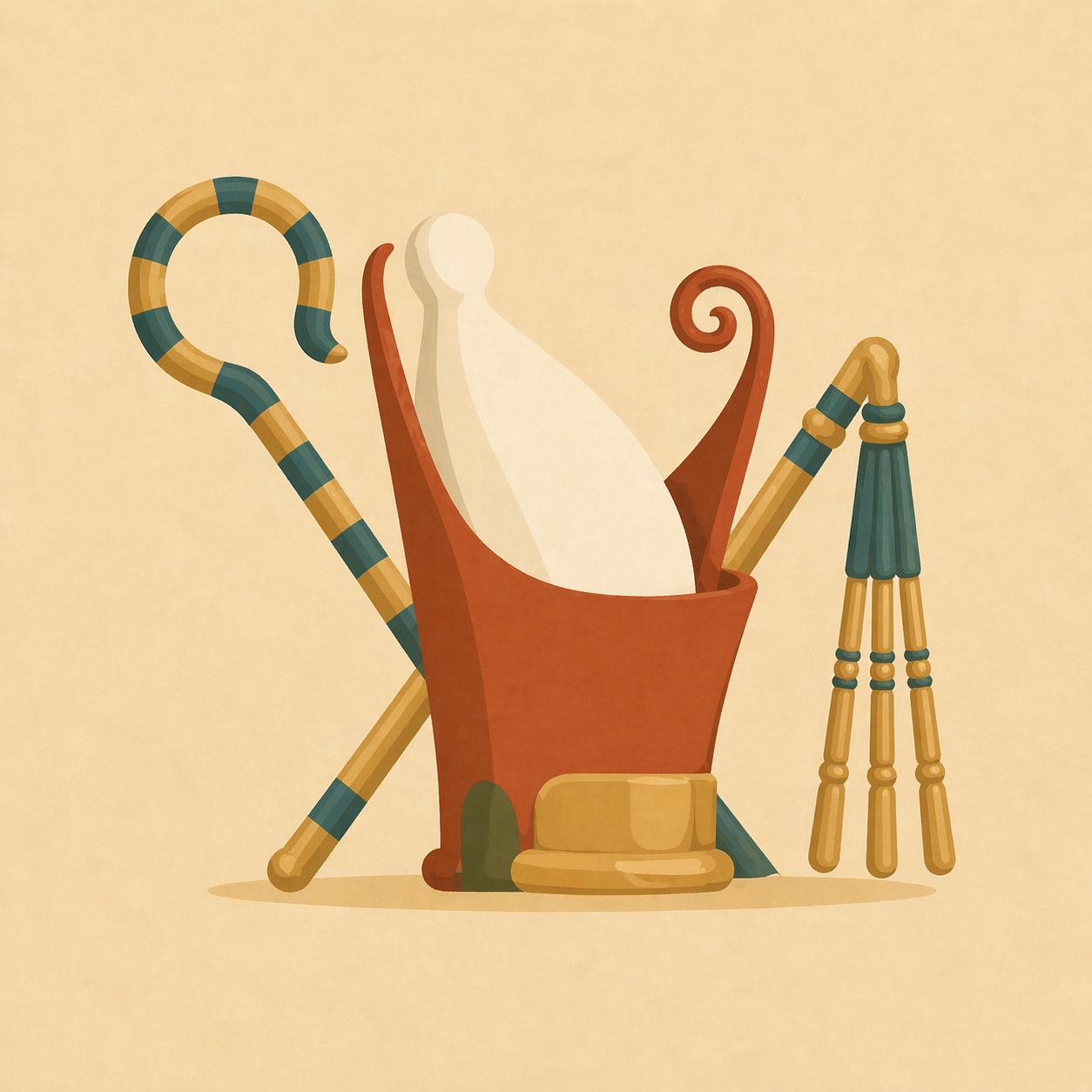
Explore Our Hebrew Language Journey →
Lessons, interactive charts, and tools for learning biblical Hebrew
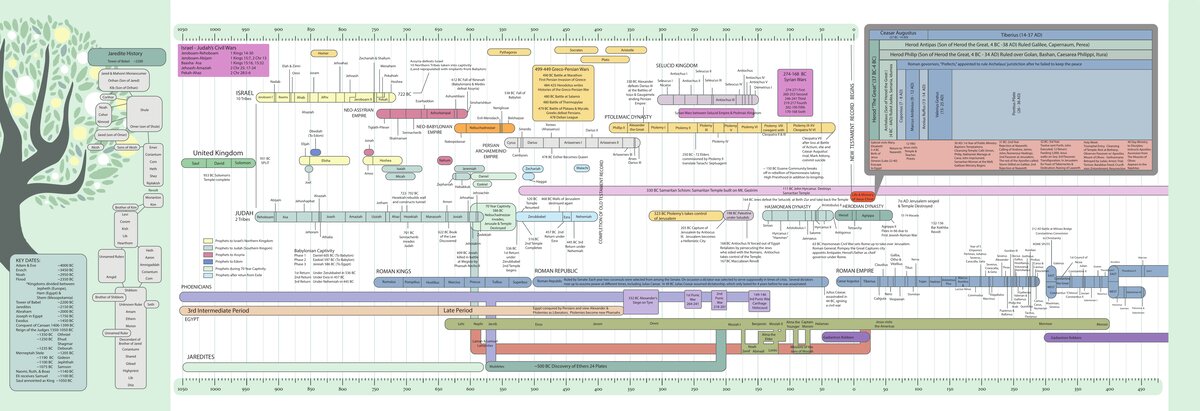
Tap to expand
Old Testament Timeline
From Creation through the Persian Period — tap the image to zoom, or download the full PDF.
Tap anywhere to close · Pinch to zoom