| Church Manuals | |
| Come Follow Me Manual — Week 17 | View |
| Scripture Helps: Old Testament | View |
| OT Seminary Teacher Manual | View |
| OT Institute Manual (Gen–2Sam) | View |
| Pearl of Great Price Manual | View |
| Scripture Reference | |
| Bible Dictionary | View |
| Topical Guide | View |
| Guide to the Scriptures | View |
| Church Media & Library | |
| Gospel for Kids (YouTube) | View |
| Bible Videos | View |
| Church Magazines | View |
| Gospel Library | View |
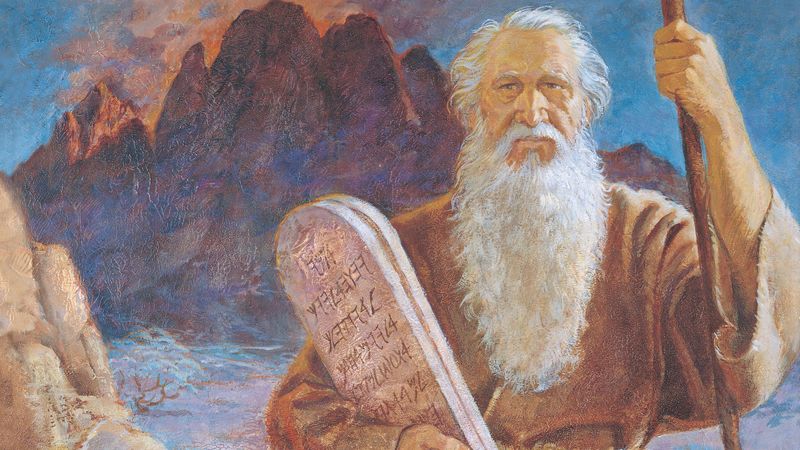
Week 17
All That the Lord Hath Spoken We Will Do
Exodus 18–20
April 20–26, 2026
5-Minute Overview
Three months after the Exodus, Israel camps at Sinai. God proposes a covenant: if they obey, they will be His segullah — His most treasured possession — a kingdom of priests and a holy nation. The people respond with one voice: 'All that the Lord hath spoken we will do.' After three days of preparation, God descends in fire and thunder and speaks the Ten Commandments. But the commandments begin not with 'Thou shalt' but with 'I am the LORD thy God' — identity before instruction, grace before law.
Official Church Resources
OFFICIAL CHURCH RESOURCES▶
CHURCH MEDIA FOR FAMILIES▶
▶ Video Commentary
VIDEO COMMENTARY (12 videos)
▼


Specialized Audiences
WOMEN’S PERSPECTIVES (2 videos)
▶
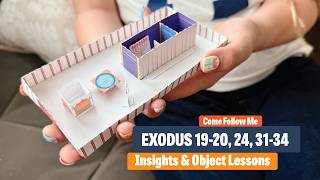
FAMILY & CHILDREN’S RESOURCES (4 videos)
▶

Reference & Study Materials
BIBLE PROJECT VIDEOS THIS WEEK (13 videos)
▶
Book overview + theme & word study videos relevant to this week’s reading.





ACADEMIC & SCHOLARLY SITES▶
MAPS & BIBLICAL LOCATIONS▶
A Letter to Fellow Students
▶︎
Three months ago these people were making bricks. They had no army, no constitution, no priesthood structure, no written law. They were property. And now, standing at the base of a smoking mountain in the middle of the Sinai desert, God says to them: you are my crown jewels. You are a kingdom of priests. You are a holy nation.
The distance between slave and priest is not measured in miles. It is measured in identity. And identity is what Sinai is about. Before God gives a single commandment, He makes a declaration: "I am the LORD thy God, which have brought thee out of the land of Egypt, out of the house of bondage" (Exodus 20:2). That sentence — not the Ten Commandments — is the foundation of everything that follows. God saved them first. The commandments are the grateful response of rescued people, not the ladder rungs of people trying to earn rescue.
This is the gospel order. NOT: Law → Obedience → Salvation. BUT: Salvation → Covenant → Obedience as grateful response. Grace before law. Always.
And the Hebrew deepens it. The preamble to the Ten Commandments is a verbless sentence — no "am" in the original. God places His pronoun next to His name: אָנֹכִי יְהוָה אֱלֹהֶיךָ — "I — the LORD your God." The absence of a verb makes the statement timeless and absolute. Not "I was" or "I will be" — simply I AM. (See Hebrew Lesson 13 for why this matters.)
Dr. Aaron Schade, on this week's Follow Him podcast, frames the Sinai experience as nothing less than a new creation story. The language of Exodus 19:4 — God bearing Israel on eagle's wings through the tohu (the same word for the formless void of Genesis 1) — deliberately echoes creation. God is not merely legislating. He is making a people. And He is using the same vocabulary He used to make the world.
But here is the part that breaks your heart: they said yes. All of them. "All that the Lord hath spoken we will do" (Exodus 19:8). Unified. Eager. Ready. And then — within weeks — a golden calf. The distance between covenant and catastrophe is terrifyingly short. As Lynne Hilton Wilson puts it: "How you know what you're worshiping is where you're spending your time, talents, and energy."
We have all stood at Sinai. We have all said yes. The question this week is not whether we made the covenant — it is whether we are still living it.
What's in This Week's Materials
▶︎
The Reading: Exodus 18–20
▶︎
Three chapters that move from Jethro's arrival to the voice of God on the mountain. If you read nothing else, read these three passages:
- Exodus 19:3–8 — The covenant proposal. God declares Israel's identity as segullah, kingdom of priests, and holy nation. The people respond: "All that the Lord hath spoken we will do."
- Exodus 20:1–17 — The Ten Commandments — but start at verse 2, the preamble nobody reads. It changes everything.
- Exodus 18:17–23 — Jethro's counsel on delegation. A Midianite priest teaches God's prophet how to lead. Truth can come from outside the covenant community.
The theological center is not the commandments themselves — it is the preamble. Everything depends on the sentence that comes before "Thou shalt."
In the Study Guide
▶︎
Six word studies this week, each unpacking a key concept from Sinai: qadash (to sanctify), segullah (peculiar treasure), kohen (priest), yare (fear/reverence), Torah (instruction), and edut (testimony/witness). The Jewish Perspective section includes the midrash of God offering Torah to all nations, the practice of na'aseh v'nishma ("we will do and we will hear"), and the linguistic connection between midbar (wilderness) and davar (word).
In Charts and Tools
▶︎
This week's Charts tab includes three major pieces — see the Featured Article sections above for full previews:
- Shavuot: The Feast of Weeks / Pentecost — From Sinai to Pentecost to the temple in Bountiful. Includes the Beatitudes side-by-side, the Book of Ruth, recipes, and family activities.
- The Voice at the Mountain: Biblical Instruments — All ten instruments of the Hebrew Bible with audio/video demonstrations, Talmudic traditions, and an interactive slideshow.
- Hebrew Lesson 13: Verbless Sentences — How Hebrew says "I am the LORD your God" without a verb, and why the missing verb carries theological weight. Anchored in Exodus 20:2, the preamble to the Ten Commandments.
In the Resources Tab
▶︎
Video highlights worth your time:
- Dr. Aaron Schade (Follow Him 2026) on creation language at Sinai, the segulah word study, the graven image as inversion of the imago Dei, and the Levitical priesthood as addition not subtraction
- Lynne Hilton Wilson (Scripture Central) on women at Sinai, kingdom of priests and priestesses, the Sabbath as entering God's rest, and the JST higher law
- Don't Miss This and Talking Scripture with Week 17 episodes covering Exodus 19–20; 24; 31–34
- Bible Project on Holiness, The Law, and Shema/Listen — essential context for understanding what Torah means
Featured Article: The Voice at the Mountain — Biblical Instruments
▶︎
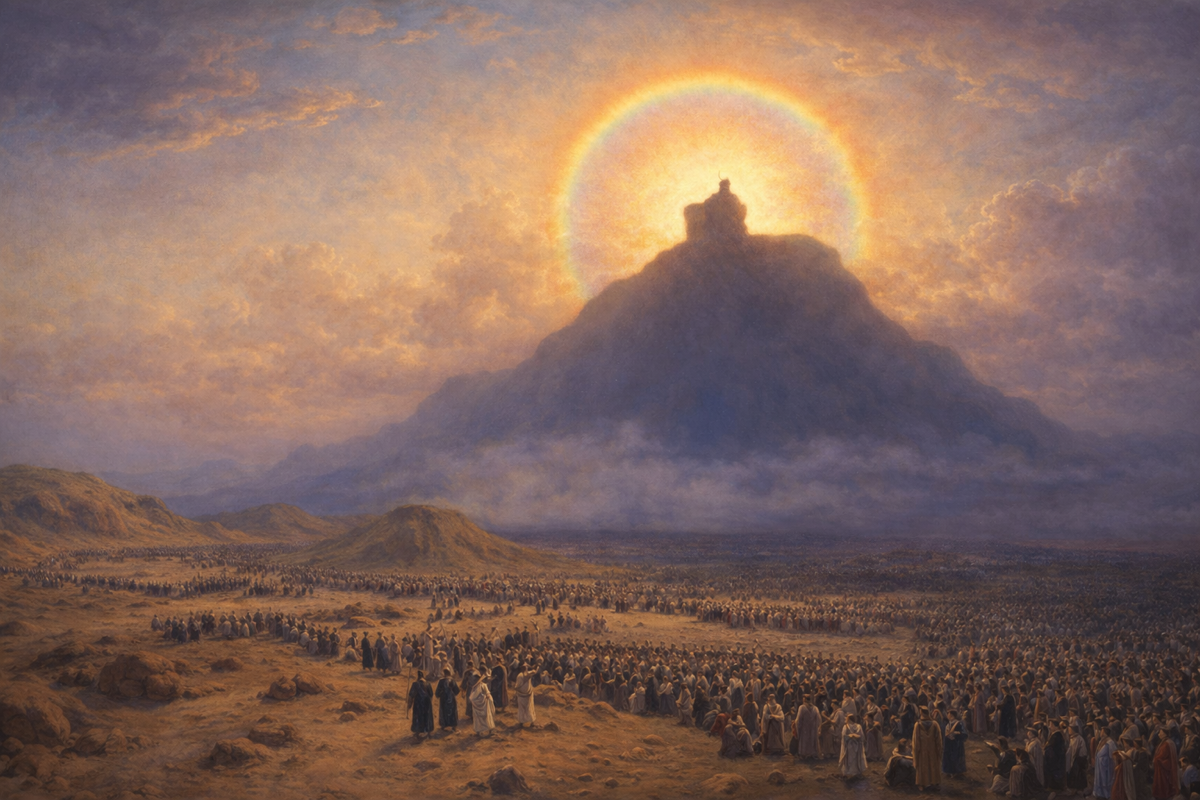
When God descended on Mount Sinai, the Torah tells us, He did not come in silence. He came in thunder, in trumpet, in a voice that shook the earth. This week's featured article surveys all ten named musical instruments in the Hebrew Bible — from the divine shofar at Sinai to the golden bells on the High Priest's robe — and traces how Israel's encounter with God's voice shaped an entire tradition of sacred music.
This is an interactive experience. Each instrument section includes:
- The Hebrew term with linked lexicon entries
- Embedded audio and video demonstrations — hear the shofar blasts (tekiah, shevarim, teruah), the sound of Tutankhamun's 3,264-year-old silver trumpets, a master frame drummer playing the tof, a recreated biblical lyre, and more
- Talmudic traditions from Arakhin, Rosh Hashanah, Sukkah, and Tamid — including the gold-plated flute parable, the harp's strings mapping cosmic ages (7 → 8 → 10), the shofar as "prosecutor cannot become advocate," and the interrupted song at the Temple's destruction
- A browsable slideshow of AI-generated instrument paintings that link directly to each section
The article closes with a connection between the Hebrew word hallel (to praise / to shine) and the promise the Lord gave Emma Smith: "the song of the righteous is a prayer unto me, and it shall be answered with a blessing upon their heads" (D&C 25:12). Praise ascending, light returning — hallel becoming halo.
Featured Article: Shavuot — The Feast of Weeks / Pentecost
▶︎
This week's reading (Exodus 19–20) is Shavuot. The feast commemorates the very event we are studying — the giving of the Torah at Sinai. One of our most extensive feast day articles, it traces the thread from the ancient wheat harvest, through the giving of the law, to the descent of the Spirit at Pentecost, to Christ's appearance at the temple in Bountiful.
What's inside:
- The First Shavuot at Sinai — timing, what happened, and five rabbinic traditions
- The Beatitudes Side-by-Side — an interactive three-column comparison of Psalm 119, Matthew 5, and 3 Nephi 12
- The Ten Commandments — all ten explored with Hebrew word studies, sourced insights from Dr. Aaron Schade and Lynne Hilton Wilson, and Latter-day Saint connections
- The Book of Ruth — why she is read on Shavuot, the kanaph wordplay, and the hesed theology
- Four Mountains: A Temple Progression — Sinai, Sermon on the Mount, Sermon at the Temple, latter-day mountain of the Lord's house
- Traditional Shavuot Foods — 11 recipes with images, from cheesecake and blintzes to Sephardic kadeh and Iraqi kahi
- Family Shavuot Activities — five ways to bring the feast home
The Creation of a People: Eagle's Wings and the New Genesis
▶︎
Exodus 19:4 is one of the most overlooked verses in the chapter:
"Ye have seen what I did unto the Egyptians, and how I bare you on eagles' wings, and brought you unto myself."
Dr. Aaron Schade identifies something remarkable in the Hebrew: God is using creation language. The wilderness Israel crossed is described with vocabulary that echoes Genesis 1. Deuteronomy 32:10–11 makes the parallel explicit — God found Israel "in a desert land, and in the waste howling wilderness" (the same tohu language of the formless void) and "as an eagle stirreth up her nest, fluttereth over her young" — using rachaf, the same verb for the Spirit "hovering" over the waters in Genesis 1:2.
This is not coincidence. God is framing the Sinai covenant as a new creation. Just as He spoke the world into being, He is now speaking a people into being. The wilderness is the raw material — formless, void, hostile — and God hovers over it and brings forth something ordered, purposeful, and alive.
The parallel phrasing in Exodus 19:3 reinforces this: "Thus shalt thou say to the house of Jacob, and tell the children of Israel." Schade notes that the dual naming is deliberate — it invokes Jacob's wrestle with God and his name-change to Israel. God is signaling that He is about to do for the nation what He did for the patriarch: transform them through encounter.
What This Means for Us
▶︎
If Sinai is a creation story, then every covenant is a creation story. Baptism. Temple covenants. The sacrament each week. God is not merely recording our compliance — He is making something new. The formless wilderness of our lives becomes the material God uses to create a people who bear His name.
As Schade puts it: "God is in relentless pursuit. If you go back and look at some of the parallel language here, it's using verbs that are found in the creation story in Genesis."
Grace Before Law: The Preamble Nobody Reads
▶︎
Ask most people what the first of the Ten Commandments is, and they will say: "Thou shalt have no other gods before me." They are wrong. The Ten Commandments begin at Exodus 20:2:
"I am the LORD thy God, which have brought thee out of the land of Egypt, out of the house of bondage."
This preamble is not a warm-up. It is the theological foundation without which the commandments make no sense. God establishes two things before He commands anything:
- Who He is: "I am the LORD thy God" — identity, relationship, personal claim
- What He has done: "which have brought thee out" — salvation history, demonstrated love
The structure maps to the ancient suzerain-vassal treaty: the great king identifies himself, recounts his past benefits, and then states his expectations. The commandments are covenant stipulations grounded in a relationship that already exists. Israel doesn't obey to earn deliverance — they obey because they have already been delivered.
The Hebrew Grammar of Identity
▶︎
The Hebrew text of the preamble is a verbless sentence: אָנֹכִי יְהוָה אֱלֹהֶיךָ — literally, "I — the LORD your God." No verb "am." Hebrew Lesson 13 explains that verbless clauses in Hebrew express timeless, absolute truths. God's identity is not contingent on tense. He is not "was" or "will be" — He simply is.
The opening word אָנֹכִי (anokhi) is the emphatic first-person pronoun. Hebrew normally embeds the subject in the verb; the standalone pronoun exists for emphasis. God begins His covenant not with a command but with a self-declaration: I, Myself — not a god, not any god, but I, the specific God who acted in your history.
And then comes the causative verb הוֹצֵאתִיךָ (hotzeiticha) — "I caused you to go out." God did not merely open the door. He actively extracted them from bondage. The suffix -cha ("you") makes it personal and direct: I brought you out.
The Teaching With Power Reframe
▶︎
The Teaching With Power video suggests reframing the commandments entirely: instead of "Ten Commandments," think "Ten Freedoms." Instead of restrictions, see descriptions of what love looks like in practice. Elder L. Tom Perry taught: "Men and women receive their agency as a gift from God, but their liberty and, in turn, their eternal happiness come from obedience to His laws" ("Obedience to Law Is Liberty," April 2013).
The preamble is the key. Without it, the commandments are arbitrary legislation from a distant authority. With it, they are the grateful response of people who know they are loved.
A Kingdom of Priests — and Priestesses
▶︎
Exodus 19:5–6 contains the most revolutionary identity statement in the ancient world:
"Ye shall be a peculiar treasure unto me above all people... and ye shall be unto me a kingdom of priests, and an holy nation."
Three titles, each one astonishing.
Segullah: Crown Jewels, Not Tax Revenue
▶︎
The Hebrew segullah appears in Akkadian as sikiltum — a king's private treasury, his personal property as distinct from the state treasury. A segullah is not merely "property" but the king's most valued, personally guarded possession. Crown jewels, not tax revenue.
The English "peculiar" preserves this perfectly — from Latin peculium, meaning "private property." It has nothing to do with "strange." Dr. Schade captures the meaning: "A king who loves you, who cares about you, who in his eyes views you as a segulah, which means something like the most valued possession that he could ever have."
Mamlekhet Kohanim: Every Citizen a Mediator
▶︎
The construct phrase מַמְלֶכֶת כֹּהֲנִים (mamlekhet kohanim) — "kingdom of priests" — was without parallel in the ancient Near East. In pagan nations, only elite priests had access to deity. Only they could enter sacred precincts, offer sacrifice, and mediate divine will. The idea that an entire nation could function as priests was revolutionary.
Moses himself embodied this vision. When Eldad and Medad prophesied in the camp and Joshua urged Moses to stop them, Moses replied: "Enviest thou for my sake? would God that all the LORD's people were prophets, and that the LORD would put his spirit upon them!" (Numbers 11:29). Moses didn't want to guard prophetic authority for an elite — he wanted it spread to every person.
Priestesses in the Restoration
▶︎
Lynne Hilton Wilson presses the text further through the lens of the Restoration. She notes that when Joseph Smith organized the Relief Society, he said he wanted to organize the women "as a kingdom of priestesses as in the time of Enoch and in the time of Paul." Wilson reads Exodus 19:6 as "kingdom of priests and priestesses" — the calling belongs to all Israel, men and women and children.
Wilson also highlights that all Ten Commandments apply equally to men, women, and children. And she draws attention to Exodus 21–23, which contains specific laws protecting women: female servants, abused women, pregnant women, widows, and orphans. "This is not just a leadership manual," she says. "This is a text for families, for organizations, for humans, individuals, women, men, and children who need to draw closer to God."
Temple worship fulfills Exodus 19:6. Through priesthood ordinances, men and women alike participate in priestly ministry — not metaphorically but covenantally.
The Ten Words: Not Commandments but a Covenant Reality
▶︎
The Hebrew Bible never calls the Decalogue "Ten Commandments." The phrase in Exodus 34:28 is עֲשֶׂרֶת הַדְּבָרִים (aseret ha-devarim) — the "Ten Words" or "Ten Sayings." The Greek Dekalogos preserves this: deka (ten) + logos (words).
Why does this matter? Because calling them "words" (devarim) rather than "commands" (mitzvot) shifts the emphasis. These are not primarily rules to follow but declarations from God — utterances that reveal His character and His vision for covenant life. The Hebrew davar means both "word" and "thing/matter" — a word in Hebrew is not abstract speech but a reality that accomplishes something. When God speaks His "ten words," He is creating a covenant reality, just as He spoke creation into existence.
Torah: The Archer's Aim
▶︎
The Hebrew word for this entire body of instruction — Torah — comes from a root meaning "to throw, to cast, to direct, to teach." The root image is of an archer shooting an arrow toward a target. Torah is God aiming His people toward the right path. The related word for sin — chata (חָטָא) — means "to miss the mark." Torah directs; sin misses.
Translating Torah as merely "law" flattens the relational dimension. God is not a distant legislator issuing statutes; He is a Father teaching His children how to walk. As the word study notes: Torah appears before Sinai (Exodus 18:16, 20) — Moses was already teaching Torah. The Ten Words are not the beginning of Torah but its crystallization.
Expanding the Commandments
▶︎
Dr. Schade, in Follow Him Part 2, expands several commandments beyond their surface reading:
"Thou shalt not steal" reaches far beyond property: "What about the concept of stealing someone's dignity? What about robbing someone of hope? Stealing someone's confidence in themselves or in God, or robbing and stealing justice from the downtrodden or the most vulnerable?"
"Thou shalt not bear false witness" includes gossip, taking things out of context, and deliberately painting a false picture of someone.
"Thou shalt not kill" extends to killing reputations, killing confidence, killing trust.
The Teaching With Power video suggests that the whole Ten Commandments might be better understood as "Ten Freedoms" — descriptions of what love looks like in practice, given not because God wants to restrict but because "the Lord loved us" (Deuteronomy 7:8).
The Sabbath as Unfinished Creation
▶︎
The Sabbath commandment stands at the hinge between the two tables — between loving God and loving neighbor — and it carries more theological weight than any other single commandment in Exodus 20.
The Seventh Day Is Still Open
▶︎
Dr. Schade offers a striking observation: in Genesis 1, each day of creation concludes with "and the evening and the morning were the [first/second/third…] day." But the seventh day has no such closing formula. The seventh day of creation is presented as an unfinished, open chapter. The story of creation is still unfolding.
This frames the Sabbath not as commemoration of a completed event but as participation in an ongoing one. "It's not about what you don't do," Schade says. "It's about what you create." Relationships, goodness, kindness, service, love — the Sabbath is a day of personal creation, mirroring God's own work.
Rest = The Fullness of God's Glory
▶︎
Lynne Hilton Wilson anchors the Sabbath in a definition from Doctrine and Covenants 84:24: "the rest of the Lord is the fullness of his glory." She traces this language through D&C 19, D&C 84, and D&C 121:32 ("entered into his eternal presence and into his immortal rest"), showing that "rest" in scripture consistently means entering God's presence, not ceasing activity.
If rest means the fullness of God's glory, then the Sabbath commandment is not "stop working." It is: enter my presence. "On the seventh day, let us enter into his presence," Wilson says. "Let us figuratively take off our shoes during the sacrament and enter into his presence."
The Sabbath as Covenant Sign
▶︎
President Russell M. Nelson taught: "Pondering these scriptures has helped me to understand, my behavior on the Sabbath constitutes my sign to the Lord of my regard for him and for my covenants with him" ("The Sabbath Is a Delight," April 2015).
Wilson asks the application question directly: "If you looked at your weeks, are the things you're doing on the Sabbath a sign to God of your commitment to him? Can you honestly say you are entering into his presence on this day?"
The Hebrew shabbat connects linguistically to shaba — to swear oaths. The Sabbath is not merely a day of rest. It is a weekly oath, a covenant sign, a personal pledge.
Shavuot: The Feast That Remembers This Week
▶︎
If you read only one supplementary resource this week, make it the Shavuot article. The feast of Shavuot (Weeks / Pentecost) is the Jewish anniversary of this very event — the giving of Torah at Sinai — and it connects this week's reading to threads that run through the entire scriptural story.
From Sinai to Pentecost to Bountiful
▶︎
The rabbis calculated that the Ten Commandments were given on Sivan 6 — fifty days after Passover. This makes Shavuot the anniversary of Exodus 19–20. But the feast doesn't stop at Sinai. On the same feast day, centuries later, the Holy Spirit descended on the apostles at Pentecost (Acts 2). What was written on stone at Sinai was written on hearts at Pentecost — the same Torah, the same covenant, internalized through the Spirit. Jeremiah prophesied exactly this: "I will put my law in their inward parts, and write it in their hearts" (Jeremiah 31:33).
And then there is 3 Nephi. The Shavuot article traces the pattern one step further: Christ's appearance at the temple in Bountiful follows the same structural arc as Sinai. A theophany. A covenant people gathered at a holy mountain. A voice from heaven declaring identity. And then — the Beatitudes. The higher law delivered not on stone but by the Lawgiver Himself.
The Beatitudes as Higher Torah
▶︎
The article includes an interactive three-column comparison of Psalm 119, the Sermon on the Mount (Matthew 5), and the Sermon at the Temple (3 Nephi 12). The parallels are structural, not just thematic:
- Psalm 119:1–2 opens with a doubled ashrei ("blessed") — the same Torah word for covenant blessedness
- Matthew 5:3 begins the Beatitudes with the same word (makarioi in Greek)
- 3 Nephi 12:1–2 adds something Matthew does not: "Blessed are ye if ye shall give heed unto the words of these twelve whom I have chosen… and blessed are ye if ye shall believe in me and be baptized… with fire and with the Holy Ghost."
At Bountiful, Christ doesn't simply repeat the Sermon on the Mount. He adds covenant specificity — baptism, the Holy Ghost, His name. The higher law is the same Torah, but more: more personal, more covenantal, more empowered by the Spirit.
Ruth, Hesed, and Voluntary Covenant
▶︎
The Book of Ruth is read on Shavuot because Ruth embodies something Israel struggled to do: voluntary, unconditional acceptance of the covenant. Her declaration to Naomi — "Thy people shall be my people, and thy God my God" (Ruth 1:16) — echoes Israel's "All that the Lord hath spoken we will do." But Ruth said it with no thunder, no fire, no miraculous signs. She said it on a dusty road, with nothing to gain and everything to lose.
The kanaph wordplay in Ruth is exquisite. Boaz blesses Ruth: "The LORD God of Israel, under whose wings (kanaph) thou art come to trust" (Ruth 2:12). Then Ruth asks Boaz to spread his skirt (kanaph — the same word) over her (Ruth 3:9). The word that describes God's sheltering protection becomes the word for covenantal marriage. God's kanaph and Boaz's kanaph are the same gesture: covering, protecting, claiming.
The Shavuot article traces this thread through Psalm 36:7 ("under the shadow of thy wings") to Matthew 23:37 ("as a hen gathereth her chickens under her wings") — Jesus using the same kanaph language to describe His desire to gather and protect.
Shavuot Traditions and Family Activities
▶︎
The article also includes practical content for families: traditional Shavuot foods with 11 recipe cards (from Ashkenazi cheesecake and blintzes to Sephardic kadeh and Iraqi kahi), a family Tikkun (late-night scripture study), a Four Mountains FHE lesson tracing the temple progression from Sinai to the latter days, and instructions for decorating with greenery and wheat — all drawn from Jewish observance and adapted for Latter-day Saint families.
The Graven Image and the Image of God
▶︎
Dr. Schade uncovers a connection in Exodus 20:4 that transforms the second commandment:
"Thou shalt not make unto thee any graven image, or any likeness of any thing…"
The words "image" (tselem) and "likeness" (demut) are the same Hebrew words used in Genesis 1:26–27: "Let us make man in our image (tselem), after our likeness (demut)." In the creation account, these words describe humanity as bearing the imago Dei — made in God's image.
Schade goes further: Mesopotamian and Egyptian ritual texts describe fashioning idols using the same vocabulary — making an "image" and "likeness" and then ritually breathing life into it in a garden setting. The graven image prohibition is not merely about statues. It is about inversion — taking the language of divine creation and turning it toward false worship.
"By making these other images," Schade says, "it may deflect what you see in yourself. This isn't just about what you see in me, but perhaps it's diminishing what you see in yourself." The commandment against graven images protects not only God's honor but our identity. We are the image-bearers. Creating false gods obscures the real image — the one stamped on every human being at creation.
New Language Tools: Verbless Sentences and the Grammar of Eternity
▶︎
This week's Hebrew Lesson 13 explains one of the most distinctive features of Biblical Hebrew: the verbless sentence. English requires "is" or "am" in every clause — "I am the LORD." Hebrew simply places the subject next to the predicate and lets the reader supply the verb: אָנֹכִי יְהוָה — "I [am] the LORD."
This is not a grammatical quirk. It is a theological statement. Verbless sentences in Hebrew express timeless, present realities — states of being so fundamental they transcend tense. God's identity in Exodus 20:2 is verbless because it is eternal. He does not become the LORD. He does not was the LORD. He IS.
The lesson also introduces a crucial distinction: when Hebrew does use the verb הָיָה (hayah, "to be"), it indicates a change in state — something was not true before, or will become true in the future. Exodus 19:6 uses a verb: "ye shall be unto me a kingdom of priests." Israel's destiny requires a verb because it lies in the future — it is something they are becoming. But God's identity requires no verb because it is something He already and always is.
The lesson includes five practice exercises from Exodus 18–20 and bridges to Lesson 14 on the construct state (semikhut).
This Week's Invitation
▶︎
As you read Exodus 18–20 this week, listen for what God says about who you are before He tells you what to do:
Start with the preamble. Read Exodus 20:2 slowly, out loud. God establishes relationship — who He is, what He has done for you — before He gives a single instruction. This is the gospel order. Grace first. Always.
Hear your title. You are segullah — not tax revenue but crown jewels, the king's most valued personal treasure. You are mamlekhet kohanim — a kingdom of priests, not spectators at worship but active mediators of God's grace. This is not aspiration. This is identity.
Expand the commandments. Go beyond the surface. Ask: Am I stealing dignity? Am I bearing false witness through gossip or out-of-context quoting? Am I killing someone's confidence? The Ten Words probe deeper than behavior — they reach into the heart.
Create the Sabbath. The seventh day of creation has no closing formula — it is still open. The Sabbath is not a day to stop but a day to create. What will you create this week? A relationship healed? A kindness offered? A moment of genuine worship?
Identify your golden calves. Within weeks of saying "all that the Lord hath spoken we will do," Israel was worshiping a calf made from their own jewelry. Wilson's question is pointed: where are you spending your time, talents, and energy? That is what you worship.
Remember na'aseh v'nishma. Israel said "we will do and we will hear" — committing to act before fully understanding. The Talmud says this is the secret of the angels. Nephi's "I will go and do" is the same posture. Every covenant you have made carries this structure: a promise made in trust, before you could see the full picture.
Everything at Sinai begins with identity. God does not say "obey and you might become my people." He says "you ARE my people — now live like it." The commandments don't create the relationship. They flow from it. You were rescued before you were instructed. You were loved before you were commanded.
The question is not whether God has claimed you. He has. The question is whether you will claim Him back.
Week 17 Study Guide | CFM Corner | OT 2026
Week 17
Exodus 18–20 — Overview
"All That the Lord Hath Spoken We Will Do"
1. Week 17: Exodus 18–20 — Overview
1. Identity Before Instruction
The covenant at Sinai isn't "do these things to become God's people." It's "you ARE my people—now live like it." The preamble to the Ten Commandments (Ex 20:2) establishes this clearly: "I am the LORD thy God, which have brought thee out of the land of Egypt." God saved them FIRST. The commandments follow as grateful response, not ladder rungs to earn salvation.
2. Kingdom of Priests (Ex 19:5-6)
"If ye will obey my voice indeed, and keep my covenant, then ye shall be a peculiar treasure unto me above all people... And ye shall be unto me a kingdom of priests, and an holy nation."
Three transformative identity markers:
- Peculiar treasure (segullah) — Not "weird" but personally treasured, like crown jewels
- Kingdom of priests — Every Israelite has priestly access to God
- Holy nation — Set apart for sacred purposes
This promise finds fulfillment in the New Testament: "But ye are a chosen generation, a royal priesthood, an holy nation, a peculiar people" (1 Peter 2:9).
3. Wise Leadership: Delegation
Moses was wearing himself out judging every case alone. Jethro's counsel (Ex 18:17-23) established a principle that echoes through every organization: leaders can't do everything themselves. Delegation isn't weakness; it's wisdom. It allows more people to serve and prevents leadership burnout.
4. The Two Tables
The Ten Commandments divide naturally into two relationships:
- Commands 1-4: Loving God (no other gods, no idols, honor His name, keep His Sabbath)
- Commands 5-10: Loving neighbor (honor parents, don't kill, don't commit adultery, don't steal, don't lie, don't covet)
Jesus summarized: Love God with all your heart; love your neighbor as yourself (Matt 22:37-40). The two tables aren't separate—they're interconnected. We can't claim to love God while hating our neighbor (John 4:20">1 John 4:20).
5. Proving, Not Punishing
"Fear not: for God is come to prove you, and that his fear may be before your faces, that ye sin not" (Ex 20:20).
God tests to reveal what's in our hearts and to develop character—not to trick us into failure. Commandments aren't traps; they're guardrails that protect us from spiritual destruction.
| Sinai Pattern | Fulfillment |
|---|---|
| Israel delivered from Egypt | We delivered from sin |
| Israel becomes kingdom of priests | Church is "royal priesthood" (1 Peter 2:9) |
| Law written on stone | Law written on hearts (Jer 31:33; 2 Cor 3:3) |
| Moses mediates covenant | Christ is "mediator of a better covenant" (Heb 8:6) |
| Sinai theophany (thunder, fire) | Pentecost (Spirit descends like fire, Acts 2) |
The Come, Follow Me manual focuses on personal application: What "other gods" compete for our devotion? How do we prepare for sacred experiences? How do the commandments protect rather than restrict? The manual also highlights the Sabbath as "delight" (Isaiah 58:13), inviting us to see the fourth commandment not as burden but as gift.
- What does it mean for you personally to be God's "peculiar treasure"?
- How do you prepare to meet God in worship? What difference does preparation make?
- Jethro saw Moses burning out. Who in your life might need you to share their burden?
- Which of the Ten Commandments feels most challenging in modern life? Why?
- How does understanding "grace before law" (Ex 20:2) change how you view obedience?
2. Week 17: Historical and Cultural Context
Mount Sinai: Sacred Geography
Location Debated:
- Traditional site: Jebel Musa ("Mount of Moses") in southern Sinai Peninsula
- Alternative: Jebel al-Lawz in Saudi Arabia (ancient Midian)
What matters isn't the precise location but the theological significance: mountains in the ancient Near East were considered meeting places between heaven and earth. God condescended to meet Israel in a visible, audible way at a specific place.
Timeline
| Event | Reference |
|---|---|
| Arrival at Sinai | Exodus 19:1 (third month after leaving Egypt) |
| Jethro's visit | Exodus 18:1-27 |
| Covenant proposal | Exodus 19:3-8 |
| Three days of preparation | Exodus 19:10-15 |
| God descends on Sinai | Exodus 19:16-20 |
| Ten Commandments given | Exodus 20:1-17 |
Suzerain-Vassal Treaties
The Sinai covenant follows recognized treaty formulas from ancient Near Eastern diplomacy:
| Treaty Element | Exodus Parallel |
|---|---|
| Preamble (identifies parties) | "I am the LORD thy God" (20:2a) |
| Historical prologue (recounts relationship) | "which have brought thee out of Egypt" (20:2b) |
| Stipulations (requirements) | The Ten Commandments (20:3-17) |
| Blessings/Curses (consequences) | Developed in Deuteronomy 28 |
| Witnesses (called to testify) | Heaven and earth (Deut 30:19) |
Significance: God wasn't arbitrarily commanding. He entered covenant relationship using legal language Israel's neighbors would recognize. The difference: pagan treaties were between powerful kings and conquered peoples. This treaty was between the King of the universe and former slaves—an act of grace, not conquest.
Exodus 19:16-19: Divine Manifestation
"There were thunders and lightnings, and a thick cloud upon the mount, and the voice of the trumpet exceeding loud... mount Sinai was altogether on a smoke, because the LORD descended upon it in fire."
Elements of the theophany:
- Thunder and lightning
- Thick cloud
- Supernatural trumpet sound
- Smoke and fire
- Earthquake
Ancient context: Pagan gods like Baal and Zeus were associated with storm phenomena. But YHWH isn't just another storm deity—He's the Creator using His creation to reveal Himself. The elements aren't God; they announce His presence.
Temple connection: The Tabernacle (Ex 40:34-35) and later the Temple (1 Kings 8:10-11) would be filled with God's cloud-presence. Sinai established the pattern: where God dwells with His people, His glory is manifest.
The Two Tables
Traditional understanding:
- First table (Commands 1-4): Vertical relationship—how to love God
- Second table (Commands 5-10): Horizontal relationship—how to love neighbor
Rabbinic variation: Some traditions place "Honor your father and mother" on the first table because parents give life, making them God's partners in creation.
Physical tablets: Likely small enough to be portable (stored in the Ark), not the massive slabs depicted in films. Clay tablets from this era were typically hand-sized.
Why These Commands?
The Ten Commandments weren't arbitrary choices. One way to read them is through the threats they address — the fundamental dangers to covenant community. But each commandment carries multiple layers: the sin it prevents, the virtue it cultivates, the divine attribute it reflects, and the covenant blessing it unlocks. (For a deeper treatment exploring the Telestial, Terrestrial, and Celestial dimensions of each commandment, see our Shavuot article's interactive commandment cards.)
Here is one lens — the threat each commandment guards against:
| Command | Hebrew | Threat Addressed |
|---|---|---|
| No other gods | אֱלֹהִים אֲחֵרִים (elohim acherim) | Divided loyalty destroys covenant |
| No idols | פֶּסֶל (pesel) | Reshaping God's person and nature reduces Him to a tool and breeds misunderstanding |
| Don't misuse name | לַשָּׁוְא (lashav) | False oaths corrupt justice system and misrepresent God's will |
| Sabbath | Genesis 2:2">שַׁבָּת (shabbat) | Endless work denies human dignity and diverts focus from what matters most |
| Honor parents | כַּבֵּד (kabbed) | Broken families collapse societies |
| No murder | רָצַח (ratsach) | Violence destroys community |
| No adultery | נָאַף (na'aph) | Unfaithfulness breaks trust |
| No stealing | גָּנַב (ganav) | Property theft breeds chaos |
| No false witness | עֵד שָׁקֶר (ed shaqer) | Lying corrupts courts and destroys trust |
| No coveting | חָמַד (chamad) | Internal desire births external sin |
Exodus 20:2 — The Forgotten Verse
"I am the LORD thy God, which have brought thee out of the land of Egypt, out of the house of bondage."
This verse is not just introduction—it's foundation. Notice the order:
- God identifies Himself — "I am the LORD thy God"
- God recounts His grace — "which have brought thee out"
- Then come the commands — "Thou shalt..."
The Ten Commandments don't say "Do this to be saved." They say "I ALREADY saved you—now live accordingly." Law follows grace. Obedience flows from relationship, not toward it.
Exodus 18:21 — Four Qualifications for Leaders
| Qualification | Hebrew/Meaning | Modern Application |
|---|---|---|
| Able men | חַיִל (chayil) — capable, competent | Skilled for the role |
| Fear God | יִרְאֵי אֱלֹהִים (yir'ei Elohim) — reverent toward God | Spiritually grounded |
| Men of truth | אַנְשֵׁי אֱמֶת (anshei emet) — honest | Trustworthy |
| Hating covetousness | שֹׂנְאֵי בָצַע (son'ei batsa) — reject bribes | Not self-serving |
Hierarchical Structure
- Moses: Represents people to God; teaches statutes and laws
- Rulers of thousands: Major judicial matters
- Rulers of hundreds, fifties, tens: Progressively smaller matters
This structure appears throughout Israel's history and finds echo in modern Church organization: stake presidents, bishops, elders quorum presidents, ministering assignments.
Jewish Tradition
While not explicit in Torah, rabbinic tradition connects Shavuot (the Feast of Weeks, 50 days after Passover) with the giving of the Torah at Sinai.
Calculation:
- Exodus from Egypt: Nisan 15 (Passover)
- Arrival at Sinai: Sivan 1 (Ex 19:1, "third month")
- Ten Commandments: Sivan 6 (50 days after Passover)
Modern practice: Jews celebrate Shavuot with all-night Torah study, reading the Ten Commandments in synagogue, and decorating with flowers (representing Mount Sinai blooming).
Christian Pentecost
Acts 2 records the Holy Spirit descending 50 days after Jesus' resurrection—on Shavuot. The connection is profound:
- Sinai: Law written on stone tablets
- Pentecost: Law written on hearts by the Spirit (Jer 31:33; 2 Cor 3:3)
Both events mark covenant community formation: Israel at Sinai, the Church at Pentecost.
3. Week 17: Key Passages Study
Text (KJV)
"And Moses' father in law said unto him, The thing that thou doest is not good. Thou wilt surely wear away, both thou, and this people that is with thee: for this thing is too heavy for thee; thou art not able to perform it thyself alone. Hearken now unto my voice, I will give thee counsel... thou shalt provide out of all the people able men, such as fear God, men of truth, hating covetousness; and place such over them, to be rulers of thousands, and rulers of hundreds, rulers of fifties, and rulers of tens."
Literary Analysis
Jethro, a Midianite priest, offers wisdom to Moses the prophet. This is remarkable: non-Israelite counsel is welcomed and implemented. Truth can come from outside covenant community.
Structure of the counsel:
- Diagnosis: You're doing too much; you'll burn out (v. 17-18)
- Solution: Teach the law broadly, then delegate judgment (v. 19-22)
- Criteria: Four qualifications for appointed leaders (v. 21)
- Result: Moses handles hard cases; others handle routine matters (v. 22)
Theological Significance
- Even prophets need help. Moses' gifts didn't exempt him from human limits.
- Delegation multiplies ministry. More people serving means more people blessed.
- Character qualifies for leadership. Ability, faithfulness, honesty, integrity.
LDS Connection
The Church operates on Jethro's principle: stake presidents delegate to bishops, bishops to auxiliary leaders, parents to youth leaders. President Gordon B. Hinckley counseled leaders: "Delegate to others every aspect of the work that you legitimately can. And then leave matters in the hands of the Lord" ("The Shepherds of Israel," October 2003).
Text (KJV)
"Now therefore, if ye will obey my voice indeed, and keep my covenant, then ye shall be a peculiar treasure unto me above all people: for all the earth is mine: And ye shall be unto me a kingdom of priests, and an holy nation."
Literary Analysis
This is THE defining statement of Israel's identity. Notice the conditional structure: "IF ye will obey... THEN ye shall be." But this isn't salvation by works — Israel is already delivered. The condition is about maintaining covenant relationship, not earning initial acceptance.
Hebrew Analysis of the Three Identity Markers
The Hebrew packs three extraordinary titles into a single verse:
| Hebrew | Transliteration | KJV | Meaning |
|---|---|---|---|
| סְגֻלָּה | segullah | "peculiar treasure" | King's personal treasure — crown jewels, not tax revenue |
| מַמְלֶכֶת כֹּהֲנִים | mamlekhet kohanim | "kingdom of priests" | Entire nation functions as priests to the world |
| גּוֹי קָדוֹשׁ | goy qadosh | "holy nation" | Set apart for sacred purpose |
The phrase goy qadosh is striking: goy (גּוֹי) typically means "nation" and is later used for Gentile nations. Here God applies it to Israel — reminding them that they are one nation among many, elevated not by inherent merit but by divine choice.
The construct mamlekhet kohanim ("kingdom of priests") is grammatically a construct chain — the kingdom consists of priests. It is not a kingdom that has priests; it is a kingdom made of priests. Every citizen is a mediator.
Theological Significance
- Identity precedes instruction. God tells them who they ARE before telling them what to DO.
- Priestly access for all. In pagan nations, only elite priests approached deity. Here, all Israel has access. Moses himself would later embody this vision. When Eldad and Medad prophesied in the camp and Joshua urged Moses to stop them, Moses replied: "Enviest thou for my sake? would God that all the LORD's people were prophets, and that the LORD would put his spirit upon them!" (Numbers 11:29). Moses didn't want to guard prophetic authority for an elite — he wanted it spread to every person. That is the heart of "kingdom of priests."
- Global purpose. "All the earth is mine" — Israel's calling was for the world's benefit, not Israel's privilege alone.
LDS Connection
Temple worship fulfills this passage. Through priesthood ordinances, Latter-day Saints become what God promised Israel: "a royal priesthood" (1 Peter 2:9). Women and men alike participate in priestly ministry through temple ordinances and covenants.
Text (KJV)
"And the LORD said unto Moses, Go unto the people, and sanctify them to day and to morrow, and let them wash their clothes, And be ready against the third day: for the third day the LORD will come down in the sight of all the people upon mount Sinai."
Literary Analysis
Meeting God requires preparation. The physical acts—washing clothes, setting boundaries—symbolize spiritual readiness. Three days of preparation echo patterns throughout scripture.
Preparation requirements:
- Sanctification (being set apart)
- Washing (external purity symbolizing internal)
- Time (three days—not rushed)
- Boundaries (can't casually approach holy God)
Theological Significance
- Holiness demands preparation. We don't stumble into God's presence.
- External symbolizes internal. Washing clothes points to heart purification.
- Third day pattern. This "third day" resurrection timing appears throughout scripture (Hosea 6:2; Luke 24:46).
LDS Connection
Temple preparation follows this pattern: worthiness interviews, temple recommends, temple clothing, reverent mindset. President Gordon B. Hinckley taught, "In missionary work, as in all else, preparation precedes power" (cited in Elder Robert L. Backman, "Called to Serve," October 1987). We prepare for sacred experiences through obedience and spiritual readiness.
Text (KJV)
"I am the LORD thy God, which have brought thee out of the land of Egypt, out of the house of bondage."
Literary and Hebrew Analysis
This verse is often overlooked — read as mere introduction to the "real" commandments. But it is foundational. Without it, the Ten Commandments become arbitrary rules. With it, they are the grateful response of rescued people.
The Hebrew text reads:
אָנֹכִי יְהוָה אֱלֹהֶיךָ אֲשֶׁר הוֹצֵאתִיךָ מֵאֶרֶץ מִצְרַיִם מִבֵּית עֲבָדִים
The opening word is אָנֹכִי (anokhi) — the emphatic first-person pronoun "I." Hebrew normally embeds the subject in the verb; the standalone pronoun exists for emphasis (as we learned in Hebrew Lesson 12). God begins His covenant not with a command but with a self-declaration: I, Myself — not a god, not any god, but I, the specific God who acted in your history.
Note that this entire opening clause is a verbless sentence — there is no "am" in the Hebrew. God simply places His pronoun next to His name: "I — the LORD your God." The absence of a verb makes the statement timeless and absolute. (See Hebrew Lesson 13 for how verbless sentences work and why this matters theologically.)
The verb הוֹצֵאתִיךָ (hotzeiticha) is the Hiphil (causative) form of yatza (to go out) — literally "I caused you to go out." God did not merely open the door. He actively extracted them from bondage. The suffix -cha ("you") makes it personal and direct: I brought you out.
Two parts, one theological architecture:
- Identity statement: "I am the LORD thy God" — who God IS
- Salvation history: "which have brought thee out" — what God HAS DONE
This maps exactly to the suzerain-vassal treaty pattern: the preamble identifies the king, the historical prologue recounts his past benefits. God is using the most formal, legally binding structure available to anchor the commandments in relationship, not abstraction.
Theological Significance
- Grace before law. God saved Israel BEFORE giving commandments.
- Relationship grounds obedience. We obey because He has already saved us.
- The gospel order. NOT: Law → Obedience → Salvation. BUT: Salvation → Covenant → Obedience.
LDS Connection
This order mirrors our experience: Christ saves us by grace; we respond through covenant faithfulness. As President David O. McKay taught, "The purpose of the gospel is to make bad men good and good men better — to change men's lives" (cited in Elder William H. Bennett, "Be a Missionary Always," April 1972).
Summary Overview
First Table — Loving God:
| # | Command | Text | Core Issue |
|---|---|---|---|
| 1 | No other gods | "Thou shalt have no other gods before me" | Loyalty |
| 2 | No idols | "Thou shalt not make unto thee any graven image" | Worship |
| 3 | Don't misuse name | "Thou shalt not take the name of the LORD... in vain" | Reverence |
| 4 | Keep Sabbath | "Remember the sabbath day, to keep it holy" | Rest/Trust |
Elder Dallin H. Oaks identified modern applications of the First Commandment:
"Cultural and family traditions, political correctness, career aspirations, material possessions, recreational pursuits, power, prominence, and prestige" can all become false gods competing for our allegiance. He asked pointedly: "Are we serving priorities or gods ahead of the God we profess to worship?"
(No Other Gods, October 2013)
Second Table — Loving Neighbor:
| # | Command | Text | Core Issue |
|---|---|---|---|
| 5 | Honor parents | "Honour thy father and thy mother" | Authority |
| 6 | No murder | "Thou shalt not kill" | Life |
| 7 | No adultery | "Thou shalt not commit adultery" | Faithfulness |
| 8 | No stealing | "Thou shalt not steal" | Property |
| 9 | No false witness | "Thou shalt not bear false witness" | Truth |
| 10 | No coveting | "Thou shalt not covet" | Desire |
Theological Significance
Jesus summarized both tables: "Thou shalt love the Lord thy God with all thy heart... This is the first and great commandment. And the second is like unto it, Thou shalt love thy neighbour as thyself" (Matt 22:37-39). The commandments aren't restrictions but descriptions of how love operates in relationship with God and others.
Elder L. Tom Perry taught this principle beautifully:
"Men and women receive their agency as a gift from God, but their liberty and, in turn, their eternal happiness come from obedience to His laws... His commandments are the road map He has given us to return to Him, which is the only way we will be eternally happy."
(Obedience to Law Is Liberty, April 2013)
Text (KJV)
"And Moses said unto the people, Fear not: for God is come to prove you, and that his fear may be before your faces, that ye sin not."
Literary Analysis
The people were terrified by the theophany (v. 18-19). Moses distinguishes two kinds of fear:
- Terror (what they felt) — unhealthy, paralyzing
- Reverence (what God wants) — healthy, sin-preventing
The Hebrew word יָרֵא (yare) carries both meanings. Context determines which applies.
Theological Significance
- Testing reveals hearts. God "proves" not to condemn but to develop.
- Holy fear prevents sin. Awe of God creates healthy boundaries.
- Commandments protect. Elder Russell M. Nelson taught that while "doctors cannot immunize against iniquity," spiritual protection comes from the Lord through covenant obedience ("Children of the Covenant," April 1995).
LDS Connection
Abraham 3:25 uses similar language: "We will prove them herewith, to see if they will do all things whatsoever the Lord their God shall command them." Mortality is testing ground. Commandments are the curriculum.
4. Week 17: Exodus 18-20 — Word Studies
Hebrew Analysis
| Language | Term | Reference |
|---|---|---|
| Hebrew | Exodus 19:10">קָדַשׁ (Exodus 19:10">qadash) | Exodus 19:10 |
| Greek (LXX) | ἁγιάζω (hagiazo) | John 17:17 |
| Latin (Vulgate) | sanctifico | Exodus 19:10 (Vg) |
| English | sanctify (1828) · Etymonline: sanctify | — |
Root and Derivatives
The root Exodus 19:10">ק-ד-שׁ (Q-D-Sh) means "to set apart, consecrate, make holy." Key derivatives:
- Qadash (Exodus 19:10">קָדַשׁ): Verb, "to sanctify, consecrate, set apart"
- Qodesh (Exodus 15:11">קֹדֶשׁ): Noun, "holiness, sacredness, a holy thing"
- Qadosh (Isaiah 6:3">קָדוֹשׁ): Adjective, "holy, sacred, set apart"
- Miqdash (Exodus 25:8">מִקְדָּשׁ): Noun, "sanctuary, holy place" (from the same root — the place made holy)
Semantic Range
Qadash encompasses:
- Ritual consecration — setting apart objects, places, or people for sacred use
- Moral purification — internal preparation to approach God
- Divine election — God choosing and setting apart a people for Himself
- Temporal dedication — sanctifying a day (the Sabbath, Exodus 20:8)
Key Passage
"Go unto the people, and sanctify [qadash] them to day and to morrow, and let them wash their clothes, And be ready against the third day" (Exodus 19:10-11)
The command to sanctify precedes the encounter with God. Israel must be set apart before meeting the Holy One. The external washing of garments symbolizes internal preparation — but the sanctification itself is not self-generated. Moses sanctifies the people (19:14); God sanctifies the mountain (19:23). Holiness flows downward from God's presence, not upward from human effort.
LDS Connection
The sacrament prayer asks that we might "always have his Spirit" — an ongoing sanctification renewed weekly. Temple ordinances consecrate us as God's own, echoing the Sinai pattern: preparation, covenant, and the promise of God's presence.
Cross-Language Connections
| Language | Term | Reference |
|---|---|---|
| Hebrew | Exodus 19:10">קָדַשׁ (Exodus 19:10">qadash) | Exodus 19:10 |
| Greek (LXX/NT) | ἁγιάζω (hagiazo) | John 17:17 |
| Latin (Vulgate) | sanctifico | Exodus 19:10 (Vg) |
| English | sanctify (1828) · holy (1828) · Etymonline: holy | — |
Hebrew Analysis
| Language | Term | Reference |
|---|---|---|
| Hebrew | סְגֻלָּה (segullah) | Exodus 19:5 |
| Greek (LXX) | περιούσιος (periousios) | Titus 2:14 |
| Latin (Vulgate) | peculium | Exodus 19:5 (Vg) |
| English | peculiar (1828) · treasure (1828) · Etymonline: peculiar | — |
Etymology and Meaning
The root ס-ג-ל (S-G-L) appears in Akkadian as sikiltum, referring to a king's private treasury — his personal property as distinct from the state treasury. A segullah is not merely "property" but the king's most valued, personally guarded possession: crown jewels, not tax revenue.
The English "peculiar" in the KJV preserves this sense perfectly — from Latin peculium, meaning "private property" (related to pecus, cattle — one's personal herd). It has nothing to do with "strange" or "odd."
Modern Translations
| Translation | Rendering |
|---|---|
| KJV | "peculiar treasure" |
| ESV | "treasured possession" |
| NIV | "treasured possession" |
| NKJV | "special treasure" |
| NASB | "My own possession" |
Key Passage
"If ye will obey my voice indeed, and keep my covenant, then ye shall be a peculiar treasure [segullah] unto me above all people: for all the earth is mine" (Exodus 19:5)
The phrase "for all the earth is mine" is critical. God is not claiming Israel because He lacks options. All nations belong to Him. But Israel is His segullah — chosen not by default but by desire. Among all His possessions, this one He holds closest.
LDS Connection
Being God's segullah transforms identity: we don't serve to earn His love; we serve because we already have it. God knows each of us personally and treasures us individually — not as a mass, but as His own.
Cross-Language Connections
| Language | Term | Reference |
|---|---|---|
| Hebrew | סְגֻלָּה (segullah) | Exodus 19:5 |
| Greek (LXX/NT) | περιούσιος (periousios) | Titus 2:14 |
| Latin (Vulgate) | peculium | Exodus 19:5 (Vg) |
| English | peculiar (1828) · treasure (1828) · Etymonline: peculiar | — |
Hebrew Analysis
| Language | Term | Reference |
|---|---|---|
| Hebrew | כֹּהֵן (kohen) | Exodus 19:6 |
| Greek (LXX) | ἱεράτευμα (hierateuma) | 1 Peter 2:9 |
| Latin (Vulgate) | sacerdos | Exodus 19:6 (Vg) |
| English | priest (1828) · Etymonline: priest | — |
Root and Derivatives
The root כ-ה-ן (K-H-N) carries the sense of ministering before God and mediating between the divine and human realms. Key forms:
- Kohen (כֹּהֵן): Noun, "priest"
- Kehunnah (כְּהֻנָּה): Noun, "priesthood, priestly office"
- Kohen Gadol (כֹּהֵן גָּדוֹל): "High Priest" (literally "great priest")
The Revolutionary Phrase
The construct phrase in Exodus 19:6 is מַמְלֶכֶת כֹּהֲנִים (mamlekhet kohanim) — "a kingdom of priests." In the ancient Near East, priests were an elite class with exclusive access to deity. Only they could enter sacred precincts, offer sacrifice, and mediate divine will. The idea that an entire nation could function as priests was without parallel.
This is not abolishing priestly office (the Levitical priesthood will be established soon). It is declaring that Israel as a whole has a priestly calling — to mediate between God and the nations, to be the world's intercessors.
Key Passage
"And ye shall be unto me a kingdom of priests [mamlekhet kohanim], and an holy nation" (Exodus 19:6)
New Testament Fulfillment
Peter applies this language directly to the Church:
"But ye are a chosen generation, a royal priesthood, an holy nation, a peculiar people" (1 Peter 2:9)
"And hath made us kings and priests unto God and his Father" (Revelation 1:6)
LDS Connection
Temple worship fulfills this passage. All endowed members — men and women — participate in priestly functions through temple ordinances. The "kingdom of priests" is not metaphor; it is covenant identity, realized through sacred ordinances.
Cross-Language Connections
| Language | Term | Reference |
|---|---|---|
| Hebrew | כֹּהֵן (kohen) | Exodus 19:6 |
| Greek (LXX/NT) | ἱεράτευμα (hierateuma) | 1 Peter 2:9 |
| Latin (Vulgate) | sacerdos | Exodus 19:6 (Vg) |
| English | priest (1828) · minister (1828) · Etymonline: priest | — |
Hebrew Analysis
| Language | Term | Reference |
|---|---|---|
| Hebrew | יָרֵא (Genesis 22:12">yare) | Exodus 20:20 |
| Greek (LXX) | φοβέω (phobeo) | Matthew 10:28 |
| Latin (Vulgate) | timeo | Exodus 20:20 (Vg) |
| English | fear (1828) · reverence (1828) · Etymonline: fear | — |
Root and Derivatives
The root Genesis 22:12">י-ר-א (Y-R-A) spans a semantic range from terror to worship. Key forms:
- Yare (יָרֵא): Verb/adjective, "to fear, to be afraid; one who fears"
- Yir'ah (יִרְאָה): Noun, "fear, reverence, awe"
- Mora (מוֹרָא): Noun, "fear, dread, awesome thing"
- Nora (נוֹרָא): Adjective, "fearsome, awesome, dreadful" (used of God in Deuteronomy 10:17)
The Two Fears of Exodus 20
Moses uses the same Hebrew root in two opposite senses within a single verse:
"Fear not [al-tira'u]: for God is come to prove you, and that his fear [yir'ato] may be before your faces, that ye sin not" (Exodus 20:20)
| Hebrew | Meaning in Context |
|---|---|
| אַל־תִּירָאוּ (al-tira'u) | Do not be terrified — stop panicking |
| יִרְאָתוֹ (yir'ato) | His reverence — healthy awe that prevents sin |
Moses is not contradicting himself. He is distinguishing between paralyzing dread (which distances us from God) and reverent awe (which draws us close while keeping us humble). Terror drives people away — the people "removed, and stood afar off" (Exodus 20:18). Reverence draws us near with appropriate gravity.
Key Passage
"The fear of the LORD is the beginning of wisdom" (Proverbs 9:10)
This is not cowering dread but the foundational posture of a creature before the Creator — the recognition that God is God and we are not.
LDS Connection
We approach God "with confidence" (Hebrews 4:16) but not casualness. Healthy reverence shapes how we pray, worship, and speak about sacred things. The temple embodies this balance: we are welcomed into God's house but enter with preparation, appropriate clothing, and hushed tones.
Cross-Language Connections
| Language | Term | Reference |
|---|---|---|
| Hebrew | יָרֵא (Genesis 22:12">yare) | Exodus 20:20 |
| Greek (LXX/NT) | φοβέω (phobeo) | Matthew 10:28 |
| Latin (Vulgate) | timeo, reverentia | Exodus 20:20 (Vg) |
| English | fear (1828) · awe (1828) · Etymonline: fear | — |
Hebrew Analysis
| Language | Term | Reference |
|---|---|---|
| Hebrew | תּוֹרָה (Deuteronomy 4:44">Torah) | Exodus 18:16, 20 |
| Greek (LXX) | νόμος (nomos) | Romans 3:21 |
| Latin (Vulgate) | lex | Exodus 18:16 (Vg) |
| English | law (1828) · instruction (1828) · Etymonline: law | — |
Root and Derivatives
The root י-ר-ה (Y-R-H) means "to throw, to cast, to direct, to teach." Key derivatives:
- Torah (תּוֹרָה): Noun, "instruction, teaching, law, direction"
- Yarah (יָרָה): Verb, "to throw, to shoot (an arrow), to teach, to point the way"
- Moreh (Genesis 12:6">מוֹרֶה): Noun, "teacher, one who directs" (from the same root)
The root image is of an archer shooting an arrow toward a target. Torah is God aiming His people toward the right path. The related word for sin — chata (חָטָא) — means "to miss the mark." Torah directs; sin misses.
Why "Instruction" Not Just "Law"
The Greek nomos and English "law" emphasize legislation and rules. But the Hebrew Torah is broader: it is instruction, guidance, direction from a parent to a child. Translating Torah as merely "law" flattens the relational dimension. God is not a distant legislator issuing statutes; He is a Father teaching His children how to walk.
Key Passage
"Be thou for the people to God-ward, that thou mayest bring the causes unto God: And thou shalt teach them ordinances and laws [torot, plural of Torah], and shalt shew them the way wherein they must walk" (Exodus 18:19-20)
This verse appears before Sinai — Moses is already teaching Torah. The Ten Commandments are not the beginning of Torah but its crystallization. Torah is the entire package: instruction, direction, covenant guidance for how to live as God's people.
LDS Connection
The Jewish name for the five books of Moses — Torah — reframes how we read them. These are not primarily a law code but a teaching document. God is the ultimate moreh (teacher), and the scriptures are His curriculum. "The glory of God is intelligence" (D&C 93:36) resonates with a God who instructs before He commands.
Cross-Language Connections
| Language | Term | Reference |
|---|---|---|
| Hebrew | תּוֹרָה (Deuteronomy 4:44">Torah) | Exodus 18:16 |
| Greek (LXX/NT) | νόμος (nomos) | Romans 3:21 |
| Latin (Vulgate) | lex | Exodus 18:16 (Vg) |
| English | law (1828) · instruction (1828) · Etymonline: law | — |
Hebrew Analysis
| Language | Term | Reference |
|---|---|---|
| Hebrew | עֵדוּת (edut) | Exodus 25:16 |
| Greek (LXX) | μαρτύριον (martyrion) | Acts 7:44 |
| Latin (Vulgate) | testimonium | Exodus 25:16 (Vg) |
| English | testimony (1828) · witness (1828) · Etymonline: testimony | — |
Root and Derivatives
The root ע-ו-ד (Ayin-Vav-Dalet) carries the sense of witness, testimony, attestation. Key forms:
- Edut (עֵדוּת): Noun, "testimony, witness, attestation"
- Ed (עֵד): Noun, "witness"
- Edah (עֵדָה): Noun, "congregation" (those gathered as witnesses)
Why "Tablets of Testimony"?
The stone tablets are not called "tablets of the law" in Hebrew. They are called לֻחֹת הָעֵדֻת (luchot ha-edut) — "tablets of the testimony" (Exodus 31:18, 32:15, 34:29). The ark that holds them is the אֲרוֹן הָעֵדֻת (aron ha-edut) — "ark of the testimony."
This naming is theologically significant. The tablets are not primarily a legal document; they are a witness — God's testimony of who He is and what He expects. The covenant is not bureaucratic regulation but personal attestation: God declaring Himself and His relationship with Israel.
The Greek Connection
The Greek martyrion (witness, testimony) gives us the English word martyr — one who witnesses unto death. The tablets are God's "martyrion" — His witness placed in the most sacred space in Israel. Stephen refers to the "tabernacle of witness" (skene tou martyriou) in Acts 7:44, connecting the testimony at Sinai to the entire tabernacle system.
Key Passage
"And thou shalt put into the ark the testimony [edut] which I shall give thee" (Exodus 25:16)
The tablets of testimony were placed inside the Ark, beneath the mercy seat (kapporet), where God's presence dwelt. God's testimony and God's mercy occupy the same sacred space.
LDS Connection
We speak of "bearing testimony" — being a witness. The tablets of edut remind us that testimony is not opinion but witness: a declaration of what God has done and who He is. The sacrament table, like the Ark, holds the testimony of God's covenant with His people.
Cross-Language Connections
| Language | Term | Reference |
|---|---|---|
| Hebrew | עֵדוּת (edut) | Exodus 25:16 |
| Greek (LXX/NT) | μαρτύριον (martyrion) | Acts 7:44 |
| Latin (Vulgate) | testimonium | Exodus 25:16 (Vg) |
| English | testimony (1828) · witness (1828) · Etymonline: testimony | — |
| Hebrew | Transliteration | Strong's | Meaning | Key Verse |
|---|---|---|---|---|
| Exodus 19:10">קָדַשׁ | Qadash | H6942 | To sanctify, set apart | Exodus 19:10 |
| סְגֻלָּה | Segullah | H5459 | Treasured possession | Exodus 19:5 |
| כֹּהֵן | Kohen | H3548 | Priest | Exodus 19:6 |
| יָרֵא | Yare | H3372 | Fear, reverence | Exodus 20:20 |
| תּוֹרָה | Torah | H8451 | Instruction, law, teaching | Exodus 18:16 |
| עֵדוּת | Edut | H5715 | Testimony, witness | Exodus 25:16 |
5. Week 17: Jewish Perspective
The giving of the Torah at Sinai is the central event in Jewish religious consciousness—even more foundational than the Exodus itself. While the Exodus was liberation, Sinai was transformation: slaves became a covenant people. Jewish tradition has developed rich practices and interpretations around this moment. This section draws from rabbinic sources to deepen our understanding.
Biblical Foundation
Shavuot (שָׁבֻעוֹת, "Weeks") is one of the three pilgrimage festivals (with Passover and Sukkot). In the Torah, it's primarily an agricultural festival—celebrating the wheat harvest seven weeks after Passover (Lev 23:15-21).
Rabbinic Development
Jewish tradition connected Shavuot with the giving of the Torah at Sinai. While not explicit in the Torah itself, rabbis calculated the timing:
| Event | Date |
|---|---|
| Exodus from Egypt | Nisan 15 (Passover) |
| Arrival at Sinai | Sivan 1 (Ex 19:1, "third month") |
| Ten Commandments given | Sivan 6 (50 days after Passover) |
This makes Shavuot the anniversary of receiving Torah—the Jewish "constitution."
Modern Observance
Tikkun Leil Shavuot: The practice of staying awake all night studying Torah. According to midrash, Israel overslept on the morning God was to give the Torah, so Moses had to wake them. To atone for this, Jews stay awake all night demonstrating eagerness for God's word.
Reading the Ten Commandments: Synagogues read the Decalogue during Shavuot morning services.
Book of Ruth: Read during Shavuot because Ruth (a convert) exemplifies choosing Torah.
LDS Resonance
We "stay awake" spiritually through daily scripture study. Just as Jews annually renew their commitment to Torah, we weekly renew covenant through the sacrament. The spiritual alertness Shavuot cultivates—eagerness for God's word—applies to our preparation for Sabbath worship.
The Text (Exodus 19:10-11, 14-15)
"Go unto the people, and sanctify them to day and to morrow, and let them wash their clothes, And be ready against the third day: for the third day the LORD will come down in the sight of all the people upon mount Sinai."
Rabbinic Interpretation
The Talmud (Shabbat 87a) carefully analyzes the three days of preparation. Moses added a day of sanctification beyond God's original command—demonstrating how Israel treated encounter with God with utmost seriousness.
Washing garments: The rabbis saw physical cleansing as symbol for spiritual preparation. Just as priests later washed before service, all Israel prepared bodily to meet the Holy One.
Boundaries: Exodus 19:12-13 establishes limits—no touching the mountain on penalty of death. The Mekhilta notes that boundaries teach reverence: not everything holy is immediately accessible. Approach requires preparation.
Meaning
Three days of sanctification established a pattern: meeting God demands preparation. The temporal gap between invitation and encounter allowed Israel to ready themselves—physically, spiritually, communally. Holiness cannot be rushed.
LDS Resonance
Temple preparation follows this model: worthiness interviews, temple recommends, appropriate clothing, reverent mindset. We don't stumble into sacred space; we prepare to enter. The three-day pattern echoes in our Sabbath preparation—Saturday readying us for Sunday worship.
Rabbinic Teaching
The midrash and later tradition understood the two tablets as representing different dimensions:
One view:
- First tablet: Commands relating to God (1-5)
- Second tablet: Commands relating to people (6-10)
Another view:
- The tablets were duplicates (like treaty copies), one for God, one for Israel
Symbolic interpretations:
- Two tablets = Two hands of God reaching to humanity
- Two tablets = Two witnesses (Deut 19:15)
- Five on each = Corresponding to ten fingers, embedding Torah in our actions
The Broken Tablets
Moses broke the first tablets when he saw the golden calf (Ex 32:19). The Talmud (Menachot 99a) teaches that both the broken tablets and the whole tablets were kept in the Ark. This suggests that even our broken efforts at covenant faithfulness have value—God keeps our fragments alongside our wholeness.
LDS Resonance
The Book of Mormon carries this theme: the brass plates (whole), the gold plates (restored after loss), the 116 pages (broken, irreplaceable). Sacred things can be broken through sin but aren't forgotten. The Atonement makes whole what we have shattered.
The Collective Experience
Jewish tradition emphasizes that ALL Israel—past, present, and future—stood at Sinai. The Midrash (Exodus Rabbah 28:6) teaches:
"Not only with you alone do I make this covenant... but with those who are standing here with us today before the LORD our God, and also with those who are not here with us today" (Deut 29:14-15).
This was interpreted to mean that the souls of all future generations were present at Sinai. Every Jew—including converts—was "there."
Meaning
Sinai isn't just history; it's ongoing identity. Each generation inherits the covenant not as second-hand tradition but as living participation. The Shavuot liturgy makes this explicit: we celebrate receiving the Torah, not commemorating ancestors receiving it.
LDS Resonance
We understand this through temple work. Those who receive ordinances by proxy were, in a sense, "present" in the covenant when made. Additionally, all baptized members enter Sinai's covenant—grafted into Israel (Rom 11:17), standing where Israel stood.
Rabbinic Description
The midrash imaginatively describes God's voice at Sinai:
Exodus Rabbah 5:9: "The voice went forth and was divided into seventy languages, so that all nations heard it."
Exodus Rabbah 29:9: "The voice went forth according to each person's capacity—elders heard according to their strength, young men according to theirs, children, women, and Moses each heard according to their capacity."
Meaning
Torah is universal (seventy languages = all nations) yet personal (each according to capacity). God's word adapts to the hearer without losing its integrity.
LDS Resonance
The Spirit speaks "according to their language, unto their understanding" (2 Ne 31:3). Scripture is both fixed (the text) and dynamic (Spirit-illuminated for each reader). The same verse can strike differently at different life stages—God's voice meeting our capacity.
Midrashic Reasoning
Midrash Tehillim 68:9: The mountains argued over which would host the revelation. Mount Tabor claimed its height; Mount Carmel its beauty. God chose lowly Sinai—teaching that Torah is given to the humble, not the proud.
Mekhilta d'Rabbi Ishmael: Torah was given in the wilderness (midbar) because:
- Like wilderness, Torah is free to all—ownerless, accessible
- Those who don't make themselves like wilderness (humble, open) cannot acquire Torah
- In the wilderness, there are no distractions—focus on God alone
The Linguistic Connection: Wilderness and Word
The Hebrew word for wilderness — מִדְבָּר (midbar) — shares the root ד-ב-ר (D-B-R) with דָּבָר (davar), meaning "word, thing, matter." The wilderness is, at the level of the language itself, the place of the word — the space where God speaks and His people learn to hear.
This is not coincidence. Israel spent forty years in the midbar learning to receive and interpret God's davar. The wilderness stripped away Egypt's distractions — its food, its security, its gods — and left Israel dependent on one thing: the word of the Lord. Manna came daily, but only in response to trust. Water came from the rock, but only after the prophet spoke. The wilderness was God's classroom, and silence was its pedagogy.
LDS Resonance
Sacred groves, lonely hills, humble rooms—God often reveals Himself in unlikely places. Joseph Smith's grove was obscure; the Sacred Grove didn't become famous until revelation made it so. Humility of setting matches required humility of heart.
Our own wilderness seasons — times of loss, uncertainty, stripping away — often become the seasons when we hear God most clearly. When the noise of comfort and routine falls silent, the davar becomes audible. The question the midbar poses to each of us is the same one it posed to Israel: Will you trust the word when there is nothing else to rely on?
The Hebrew Name
The Hebrew Bible never calls the Decalogue "Ten Commandments." The phrase in Exodus 34:28 is עֲשֶׂרֶת הַדְּבָרִים (aseret ha-devarim) — the "Ten Words" or "Ten Sayings." The Greek Dekalogos (δεκάλογος, "Decalogue") preserves this: deka (ten) + logos (words).
Why This Matters
Calling them "words" (devarim) rather than "commands" (mitzvot) shifts the emphasis. These are not primarily rules to follow but declarations from God — utterances that reveal His character and His vision for covenant life. The Hebrew davar means both "word" and "thing/matter" — a word in Hebrew is not abstract speech but a reality that accomplishes something.
When God speaks His "ten words," He is not merely legislating. He is creating a covenant reality, just as He spoke creation into existence.
LDS Resonance
We speak of "the Word" (Christ) and the "word of God" (scripture). In Hebrew thought, a word from God carries creative power — it does what it says. The Ten Words are not restrictions imposed from outside but realities spoken into being by the God who first said "Let there be light."
The Midrash (Sifre Deuteronomy 343)
One of the most celebrated midrashim teaches that before giving the Torah to Israel, God offered it to every nation on earth:
- He went to the children of Esau: "Will you accept the Torah?" They asked, "What is written in it?" He said, "Thou shalt not murder." They replied, "We cannot accept it — our father Esau was promised he would live by the sword."
- He went to the children of Ammon and Moab: "Will you accept the Torah?" They asked what was in it. He said, "Thou shalt not commit adultery." They declined.
- He went to the children of Ishmael. They asked what was in it. He said, "Thou shalt not steal." They refused.
Finally, He came to Israel. They did not ask what was in it. They said: "All that the LORD hath spoken we will do" (Exodus 19:8) — accepting before hearing the terms.
Meaning
Israel's distinction is not ethnic superiority but willingness. They accepted the covenant without conditions. The midrash teaches that Torah was not forced on Israel — it was offered freely and freely accepted.
LDS Resonance
This mirrors the premortal council. When the plan was presented, we did not demand to see all the details first. We chose — and our willingness to accept the terms, even before fully understanding them, is what brought us here.
The Talmudic Teaching (Shabbat 88a)
In Exodus 24:7, Israel responds to the covenant with a phrase that has puzzled and inspired commentators for millennia:
נַעֲשֶׂה וְנִשְׁמָע (na'aseh v'nishma) — "We will do and we will hear"
The order is reversed from what we'd expect. Normally you hear (understand) first, then act. Israel commits to doing before they fully understand. The Talmud says that when Israel said this, a heavenly voice declared: "Who revealed to My children this secret that the ministering angels use?" — because angels obey before they understand.
Meaning
Faith precedes full comprehension. Covenant is not a contract you sign after reading every clause — it is a relationship entered with trust. Obedience that waits for complete understanding is not faith; it is negotiation.
LDS Resonance
Nephi's declaration — "I will go and do the things which the Lord hath commanded" (1 Nephi 3:7) — is a na'aseh v'nishma moment. He commits to act before knowing how the task will be accomplished. Every baptismal covenant and temple covenant carries this same structure: we promise before we fully grasp what will be required.
| Topic | Traditional Source |
|---|---|
| Shavuot timing calculation | Talmud, Shabbat 86b |
| Three days of sanctification | Talmud, Shabbat 87a; Mekhilta |
| Broken tablets in the Ark | Talmud, Menachot 99a |
| All souls at Sinai | Exodus Rabbah 28:6; Deuteronomy 29:14-15 |
| Voice in seventy languages | Exodus Rabbah 5:9 |
| Voice according to capacity | Exodus Rabbah 29:9 |
| Why Sinai was chosen | Midrash Tehillim 68:9; Mekhilta d'Rabbi Ishmael |
| Torah offered to all nations | Sifre Deuteronomy 343 |
| "We will do and we will hear" | Talmud, Shabbat 88a |
| "Ten Words" terminology | Exodus 34:28; Deuteronomy 4:13, 10:4 |
6. Week 17: Teaching Applications
This week's material offers rich teaching opportunities across all settings. The covenant at Sinai establishes identity; the Ten Commandments guide relationship with God and neighbor; Jethro's counsel models wise leadership. The themes connect directly to temple worship, Sabbath observance, and daily discipleship.
For Young Children (Ages 3–7)
Focus: The Ten Commandments are God's rules that help us
Object Lesson: Set up toy cars on a play road with guardrails (blocks or rulers). Show what happens without guardrails (cars go off the road) versus with them (cars stay safe). Explain: "God's commandments are like guardrails. They keep us safe and happy."
Activity: Draw a stone tablet and list simple commandments: "Love God. Love others. Tell the truth. Be kind to Mom and Dad."
Song: "Keep the Commandments" (CS 146)
Discussion Question: "Why does God give us rules? Does He give them to make us sad or happy?"
For Older Children (Ages 8–11)
Focus: The Two Tables of the Law
Activity: Create two poster boards:
- Table 1: "Love God" (draw pictures representing first four commandments)
- Table 2: "Love Others" (draw pictures representing last six commandments)
Discuss how Jesus summarized both tables (Matt 22:37-40).
Discussion Questions:
- Which commandment do you think is hardest to keep today? Why?
- How does loving God help us love other people?
- What would our family be like if we all kept these commandments perfectly?
Challenge: This week, focus on one commandment and find ways to keep it better as a family.
For Youth/Teens
Focus: Modern Idols and the First Commandment
Discussion: The First Commandment ("no other gods before me") isn't just about statues.
See also: Elder Dallin H. Oaks, No Other Gods (October 2013) — identifies modern idols competing for our allegiance. Full quote in Key Passages Study (Passage 5).
Questions:
- What "modern idols" do you see competing for attention around you? (careers, material possessions, politics, social media, etc.)
- How can good things (career, hobbies, even family traditions) become idols?
- What does it look like practically to have "no other gods" in your life?
- Elder Oaks asked: "Are we serving priorities or gods ahead of the God we profess to worship?" How would you answer?
The Tenth Commandment Connection: Coveting is related—social media especially encourages comparison. What's the antidote? (Gratitude and prioritizing God)
Activity: Consider a "gratitude detox"—for one week, post only things you're grateful for, not things you want others to admire.
Lesson Approach 1: Grace Before Law
Opening: Ask: "What's the first word of the Ten Commandments?" (Most will jump to 'Thou shalt not...')
Key Point: The Ten Commandments actually begin with Exodus 20:2: "I am the LORD thy God, which have brought thee out of the land of Egypt."
Discussion:
- Why does God remind Israel of the Exodus BEFORE giving commands?
- What difference does it make that God saved them FIRST?
- How does this challenge the idea that we "earn" God's favor through obedience?
Gospel Order:
- NOT: Law → Obedience → Salvation
- BUT: Salvation → Covenant → Obedience as grateful response
See also: Elder L. Tom Perry, Obedience to Law Is Liberty (April 2013) — how commandments bring freedom, not restriction. Full quote in Key Passages Study (Passage 5).
Commandments aren't restrictions on freedom—they ARE the path to freedom.
Lesson Approach 2: Kingdom of Priests
Opening: Read Exodus 19:5-6 and 1 Peter 2:9. Ask: "What does it mean to be a 'kingdom of priests'?"
Key Points:
- In pagan nations, only elite priests approached gods. In Israel, ALL had access.
- Peter applies this language to the Church—we're ALL called to priestly ministry.
- Temple worship fulfills this: we participate in sacred ordinances, not as spectators but as priests.
Discussion:
- What does "priestly" ministry look like in daily life? (ministering, service, blessing others)
- How does the temple make us a "royal priesthood"?
- Both men and women participate in temple ordinances. How does this reflect "kingdom of priests"?
Testimony: We don't just attend worship; we're called to BE ministers of Christ in our homes, wards, and communities.
Junior Primary (Ages 3–7)
Visual: Simple drawings of the ten commandments
Story: "God loved His people so much! He saved them from Egypt and brought them to a special mountain. There He gave them rules to help them be happy. He said, 'Love Me most of all! Love your family! Be kind and honest!' These rules help us be happy too."
Activity: Fingerplay—count ten commandments on fingers. "God gave us TEN rules to help us be happy!"
Song: "Choose the Right" (CS 160)
Testimony: When we follow God's commandments, we show Him we love Him.
Senior Primary (Ages 8–11)
Focus: Preparing to Meet God
Discussion: Read Exodus 19:10-11. Israel had to prepare for three days before meeting God.
Questions:
- Why did they have to wash their clothes and get ready?
- How do we prepare to worship God? (Before church, before the temple)
- What does "being ready" look like in your heart, not just your clothes?
Activity: Create a "Preparing for the Sabbath" checklist together—things we can do Saturday night and Sunday morning to be ready to worship.
Application: Just like Israel prepared to meet God, we prepare for sacred experiences through clean hearts, willing minds, and reverent attitudes.
For Ages 12–14
Focus: Jethro's Counsel on Delegation
Opening Activity: Give one volunteer a ridiculous task: "Carry all these items across the room by yourself." (Stack books, balls, boxes until it's impossible.) Then ask: "What's wrong with this picture?"
Discussion:
- Moses was doing EVERYTHING alone. What was Jethro's diagnosis? ("Thou wilt surely wear away")
- Why do leaders sometimes try to do everything themselves?
- How did sharing the load help both Moses AND the people?
Application: In your family, ward, or school, who could use help? How can you be an "Aaron and Hur" (holding up Moses' arms) or a "ruler of tens" (serving in small ways)?
Challenge: This week, look for one person carrying too much and offer to help.
For Ages 15–18
Focus: Sabbath as Delight, Not Burden
Discussion: Read Exodus 20:8-11 and Isaiah 58:13 ("call the sabbath a delight").
Elder Russell M. Nelson taught that rather than relying on lists of dos and don'ts, he learned to ask one question: "What sign do I want to give to God?" That question, he said, "made my choices about the Sabbath day crystal clear" ("The Sabbath Is a Delight," April 2015).
Questions:
- What's the difference between asking "What can I NOT do on Sunday?" versus "How can I draw closer to God?"
- What activities actually feel restful and worshipful to you?
- How can Sabbath strengthen family relationships?
Three Principles:
- Rest — Cease from worldly labor
- Worship — Attend church, partake sacrament, study
- Serve — Minister to others
Activity: Write your personal "Sabbath Manifesto"—what will Sabbath look like for you?
Focus: The Ten Commandments as Missionary Teaching
Foundation: The Ten Commandments reveal universal moral truth. When teaching investigators:
- Show the preamble (Ex 20:2): God's grace precedes commandments
- Teach the two tables: Loving God + Loving neighbor
- Connect to Christ's summary: Matthew 22:37-40
- Apply to modern life: Honesty, fidelity, Sabbath, worship
Discussion:
- How do you respond when investigators say, "The Ten Commandments are just old rules"?
- How does the preamble change the nature of obedience?
- Which commandments generate most questions from investigators?
Role Play: Practice teaching the Ten Commandments as expression of love, not arbitrary restriction.
Daily Focus Guide
Day 1 (Monday): Read Exodus 18:13-27. Focus on delegation. Journal: "Where am I trying to do too much alone? Who could help?"
Day 2 (Tuesday): Read Exodus 19:1-8. Focus on covenant proposal. Journal: "What does it mean that I am God's 'peculiar treasure'?"
Day 3 (Wednesday): Read Exodus 19:9-15. Focus on preparation. Journal: "How do I prepare for sacred experiences? What could I do better?"
Day 4 (Thursday): Read Exodus 20:1-11 (First Table). Journal: "Which command toward God do I need to strengthen?"
Day 5 (Friday): Read Exodus 20:12-17 (Second Table). Journal: "Which command toward others do I need to strengthen?"
Day 6 (Saturday): Read Exodus 20:18-26. Focus on "God is come to prove you." Journal: "How are commandments protecting me right now?"
Day 7 (Sunday): Re-read Exodus 19:5-6 and 1 Peter 2:9. Journal: "How can I live as a member of the 'royal priesthood' this week?"
- Identity precedes instruction. God tells us who we ARE (treasured, priestly, holy) before telling us what to DO.
- Grace precedes law. The preamble (Ex 20:2) establishes that obedience responds to salvation, not earns it.
- Commandments protect, not restrict. They're guardrails, not prison bars.
- Wise leaders delegate. Even Moses couldn't do it alone.
- Preparation precedes sacred encounter. We don't stumble into God's presence.
- We are kingdom of priests. Through temple ordinances and daily ministry, we fulfill Israel's calling.
Conference Talks:
- Obedience to Law Is Liberty — Elder L. Tom Perry (April 2013): How commandments bring freedom, not restriction
- No Other Gods — Elder Dallin H. Oaks (October 2013): Identifying modern idols and prioritizing God
Scholarly Articles:
- A Kingdom of Priests, and an Holy Nation — RSC: Scholarly treatment of Israel's covenant identity at Sinai
- Torah in the Mouth: An Introduction to the Rabbinic Oral Law — RSC: Jewish perspective on Torah interpretation
Scripture Central:
- CFM OT 2026 Week 17 — KnoWhys and additional resources for Exodus 18-20
7. Week 17: Study Questions
Identity and Covenant (Exodus 19)
- God calls Israel His "peculiar treasure" (Ex 19:5). What does it mean for your self-understanding that God personally treasures you—not just tolerates you?
- Israel had to prepare for three days before meeting God. How do you prepare for sacred experiences (Sabbath worship, temple attendance, personal prayer)? What could you do differently?
- The people said, "All that the LORD hath spoken we will do" (Ex 19:8). Have you made similar commitments? How have you kept them?
The Ten Commandments (Exodus 20)
- Which of the Ten Commandments feels most challenging in your current life stage? Why? What would obedience require?
- The tenth commandment addresses coveting—internal desire, not just external action. In an age of social media comparison, how does coveting manifest in your life?
- The preamble (Ex 20:2) reminds Israel that God ALREADY saved them before giving commandments. How does this change your understanding of obedience—is it earning favor or expressing gratitude?
Leadership and Service (Exodus 18)
- Jethro warned Moses, "Thou wilt surely wear away" (Ex 18:18). Where in your life are you trying to carry too much alone? Who could help?
- Jethro's four qualifications for leaders (Ex 18:21) were: able, God-fearing, honest, not self-serving. How do these apply to callings in the Church? To parenting?
- For All Ages: If you could only keep ONE commandment, which would you choose and why? (Discuss how all ten work together.)
- For Parents: How can we help our children understand commandments as protection rather than punishment?
- For Teens: Which commandment seems most outdated to your generation? How would you explain its relevance?
- For Young Children: God gave Moses rules on two stone tablets. What are some rules in our family? Why do we have them?
Theological Exploration
- Compare Exodus 19:5-6 with 1 Peter 2:9 and Revelation 1:6. How does the New Testament apply Sinai covenant language to the Church? What does this mean for us today?
- The Ten Commandments are sometimes seen as "negative" (mostly "thou shalt NOT"). How would you reframe each commandment positively? (Example: "Thou shalt not kill" → "Honor and protect life.")
- Examine the structure of ancient Near Eastern treaties (suzerain-vassal covenants). How does the Sinai covenant follow this pattern? What makes it different?
Comparative Study
- Compare Exodus 20 with Deuteronomy 5 (the second giving of the Ten Commandments). What differences do you notice? What might explain them?
- Trace the "third day" pattern: Exodus 19:11 (God descends), Hosea 6:2 (resurrection imagery), Luke 24:46 (Christ rises). What theological connection does the "third day" suggest?
- How does Jesus' summary of the Law (Matt 22:37-40) relate to the two tables of the Decalogue? Are any commandments left out?
Application Questions
- Elder Russell M. Nelson taught that while "doctors cannot immunize against iniquity," spiritual protection comes from the Lord through covenant obedience ("Children of the Covenant," April 1995). How have you experienced commandments protecting you from spiritual harm?
- The Sabbath command (Ex 20:8-11) is the longest of the ten. Why do you think God gave such detailed instruction about rest? What does this say about human tendencies?
- "Kingdom of priests" (Ex 19:6) suggests mediating between God and the world. In what specific ways can you serve as a "priest" in your sphere of influence this week?
- What is the single most important insight you gained from Exodus 18-20 this week?
- How does understanding "grace before law" (Ex 20:2) affect your relationship with God?
- What specific action will you take this week because of what you've studied?
- What question do you still have that you want to explore further?
Primary Level:
"All that the LORD hath spoken we will do." (Exodus 19:8)
Youth Level:
"Ye shall be unto me a kingdom of priests, and an holy nation." (Exodus 19:6)
Adult Level:
"I am the LORD thy God, which have brought thee out of the land of Egypt, out of the house of bondage. Thou shalt have no other gods before me." (Exodus 20:2-3)
Note: 13 questions for personal reflection, 4 for family discussion, 9 for deeper study, and 4 summary reflections provided.
Shavuot: The Feast of Weeks / Pentecost
From Sinai to Bountiful — how the ancient wheat harvest feast connects the giving of the Torah, the descent of the Spirit at Pentecost, and Christ's appearance at the temple in 3 Nephi. Includes the Beatitudes side-by-side, the Book of Ruth, and traditional Shavuot recipes.
The Voice at the Mountain: Biblical Instruments
An exploration of every named musical instrument in the Hebrew Bible — from the divine shofar at Sinai to the bells on the High Priest's robe — and how Israel's encounter with God's voice shaped a musical tradition that runs from Genesis to Revelation.
Hebrew Lesson 13: Sentences Without Verbs
How Hebrew says 'I am the LORD your God' without a verb — and why the missing verb carries theological weight. Anchored in Exodus 20:2, the preamble to the Ten Commandments.
Explore Our Hebrew Language Journey →
Lessons, interactive charts, and tools for learning biblical Hebrew
Tap to expand
Old Testament Timeline
From Creation through the Persian Period — tap the image to zoom, or download the full PDF.
Tap anywhere to close · Pinch to zoom