| Church Manuals | |
| Come Follow Me Manual | — |
| Scripture Helps | View |
| OT Seminary Teacher Manual | View |
| OT Institute Manual | View |
| Pearl of Great Price Manual | View |
| Scripture Reference | |
| Bible Dictionary | View |
| Topical Guide | View |
| Guide to the Scriptures | View |
| Church Media | |
| Gospel for Kids | View |
| Bible Videos | View |
| Church Publications & Library | |
| Church Magazines | View |
| Gospel Library | View |
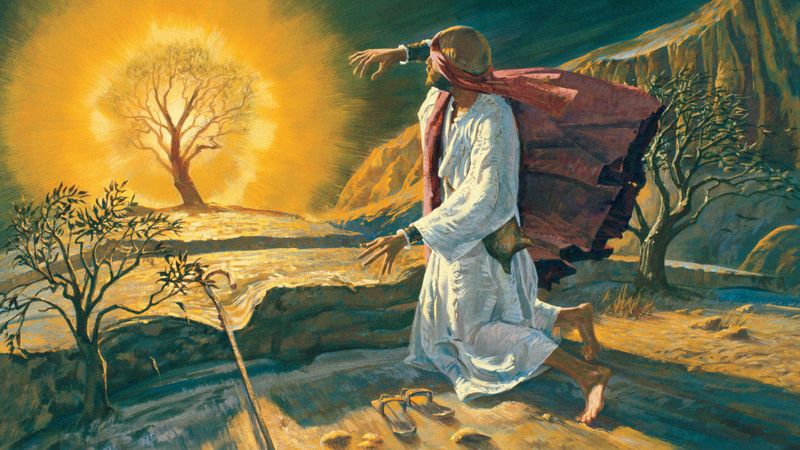
Week 13
I Have Remembered My Covenant
Exodus 1–6
March 23–29, 2026
5-Minute Overview
Israel multiplies in Egypt until a new Pharaoh enslaves them. Moses is born, hidden in a basket, and raised in Pharaoh's court. After killing an Egyptian, he flees to Midian. At the burning bush, God reveals His name and commissions Moses to deliver Israel. Despite Moses' objections, God sends him and Aaron to confront Pharaoh. The initial encounter makes things worse — Pharaoh increases the burden. God reaffirms the covenant: 'I have remembered my covenant.'
Weekly Resources: Week 13
Exodus 1–6
Mar 23–29
“I AM THAT I AM.”
— Exodus 3:14
Official Church Resources
OFFICIAL CHURCH RESOURCES
▶
CHURCH MEDIA FOR FAMILIES
▶

Video Commentary
Video Commentary (click [i] for details)
▼
 [i]
[i]Follow Him - Part 1
 [i]
[i]Follow Him - Part 2
 [i]
[i]Lynne Hilton Wilson (Scripture Central)
 [i]
[i]Scripture Insights
 [i]
[i]Talking Scripture
 [i]
[i]Teaching With Power
 [i]
[i]Don't Miss This

Specialized Audiences
Women's Perspectives
▶
 [i]
[i]Grounded
 [i]
[i]Our Mothers Knew It
Family & Children's Resources
▶
Reference & Study Materials

Exodus 1–6
Weekly videos, articles, and study helps for Exodus 1–6

Exodus 1–6
Study and Teaching Helps for Exodus 1–6
Bible Project
10 Videos This Week
BIBLE PROJECT VIDEOS THIS WEEK (10 videos)
▶




ACADEMIC & SCHOLARLY SITES (Homepages)
▶
MAPS & BIBLICAL LOCATIONS
▶
A Letter to Fellow Students
▼︎
We have arrived at one of the great turning points in all of scripture.
Genesis closed with Joseph's bones waiting in Egypt — a patriarch who saw the future and made his descendants swear to carry him home when God would "surely visit" them. Between that promise and this week's reading, four centuries of silence pass. Joseph's family of seventy becomes a nation of slaves. The friendly Pharaoh who elevated Joseph is replaced by one who "knew not Joseph." Israel multiplies, suffers, and cries out.
And God hears.
This week we witness the most significant theophany since Eden — God appearing in fire that does not consume, revealing His sacred name, commissioning a reluctant shepherd to confront the most powerful empire on earth. The words spoken at the burning bush — Ehyeh asher Ehyeh, "I AM THAT I AM" — will echo through every subsequent revelation: in the Tabernacle, in the Temple, in every "I am" statement Jesus makes in John's Gospel, in the pillar of light that descended on a grove in upstate New York.
What strikes me most about Exodus 1–6 is how human Moses remains. He offers five objections to his calling — inadequacy, lack of authority, lack of credibility, lack of eloquence, and finally just flat refusal. God answers each one. And when Moses finally obeys, the first result is disaster: Pharaoh increases Israel's burden, and the people blame Moses for making things worse.
This is the pattern. Deliverance rarely comes in the way we expect, and the initial steps of obedience often feel like failure. But God's word to Moses — "Now shalt thou see what I will do to Pharaoh" — reminds us that divine timing operates on a scale we cannot see from where we stand.
This week also coincides with Holy Week and Easter. As we read about God remembering His covenant with Israel and preparing their deliverance from bondage, we will also be remembering another deliverance — the one that fulfills all the patterns we have been tracing since Genesis 1. The Passover lamb, the blood on the doorposts, the night of watching, the morning of freedom: these are the shadows of which Easter is the substance.
May this week's study prepare us to see both deliverances more clearly.
What's in This Week's Materials
▶︎
The Reading: Exodus 1–6
Six chapters, approximately 150 verses. The reading divides naturally into three movements:
- Exodus 1–2 — Israel enslaved; Moses born, hidden, drawn from the water, raised in Pharaoh's court, flees to Midian after killing an Egyptian
- Exodus 3–4 — The burning bush; God reveals His name; Moses' five objections and God's answers; the signs given
- Exodus 5–6 — First confrontation with Pharaoh; things get worse; God reaffirms the covenant with the seven "I will" promises
If you read nothing else, read Exodus 3:1–15 (the burning bush and divine name revelation) and Exodus 6:2–8 (the "I have remembered my covenant" declaration with its seven promises).
Study Guide Highlights
This week's study guide is extensive — seven full sections covering overview, historical context, key passages, word studies, Jewish perspective, teaching applications, and study questions. A few highlights worth noting:
The Moses-Christ Typology Table in the Central Themes section maps the parallels between Moses and Jesus: both rescued as infants from murderous decrees, both rose to prominence, both called as deliverers and lawgivers, both lifted up (the brass serpent, the cross), both provided sustenance (manna/living water, bread of life). These are not coincidental resemblances but divinely orchestrated patterns.
The Five Objections Analysis traces Moses' resistance to his calling and God's patient answers. This section connects to the broader theme of God working through reluctant, imperfect instruments — a pattern that runs from Moses through Jonah through Joseph Smith.
The JST Clarifications address three significant restorations: the "angel of the LORD" becomes the "presence of the LORD" at the burning bush, Pharaoh hardens his own heart (preserving human agency), and the question about God's name being unknown to the patriarchs becomes a rhetorical question affirming it was known.
Hebrew Language Journey
This week's Language section includes additional vocabulary tools and support. I have added a new glossary section that lists some of the key terms we have studied in previous lessons and even has flashcards for you to get familiar with the different letters and terms.
Featured Articles & Cultural Materials
▶︎
With Holy Week and Easter upon us, this week features significant cultural and theological materials that connect Exodus to the broader story of redemption:
The Spring Festivals
The Passover Seder: A Step-by-Step Guide — Last week we introduced the Passover Seder itself. That guide walks through the covenant structure of the meal step by step and provides the foundation for much of what we are building on this week in both Holy Week and the Nephite Seder material.
Bikkurim: The Feast of Firstfruits — This week we expand the spring festival context with a detailed exploration of Bikkurim (Firstfruits). This is the feast Christ fulfilled on Resurrection morning. While priests waved barley sheaves in the Temple, Christ emerged from the tomb as "the firstfruits of them that slept" (1 Corinthians 15:20). The timing was not coincidental — it was divinely orchestrated.
The Bikkurim article traces the connection between bikkurim (firstfruits of harvest) and bechor (firstborn son) — both from the same Hebrew root. Christ is both: the Firstborn of the Father and the Firstfruits of resurrection. The article also includes an interactive timeline of the 50 days between Resurrection and Pentecost, showing how Christ's post-resurrection ministry fulfilled the Counting of the Omer.
The Holy Week Project
Holy Week: Walking with Christ — This comprehensive series walks through each day of Passion Week, from Palm Sunday through Resurrection morning. The project presents both the traditional chronology and an alternative chronology that better fits Jewish feast-day usage and the scriptural wording about "Sabbaths" (plural) and the three days in the tomb.
The alternative reading suggests Jesus may have been crucified on Thursday (14 Nisan), with Sunday being Bikkurim — supporting a full three days in the tomb and aligning the Resurrection with the Firstfruits offering precisely. Whether you hold to the traditional Friday crucifixion or explore the Thursday alternative, both timelines illuminate the festival connections.
The Nephite Connection
Alma 5 and the Nephite Seder — I want to draw particular attention to this article. Several years ago I noticed something remarkable: in Alma 5, Alma walks his congregation through all fifteen steps of the Passover Seder. Delivered around 83 BC, this may be the oldest recorded Seder in existence — predating the Mishnah's codification by nearly three centuries.
In other words, this is the Passover Seder from a Nephite perspective. It shows how Book of Mormon prophets were preserving and teaching the same covenant drama that ancient Israel acted out at Passover — deliverance from bondage, covenant renewal, remembrance, redemption, and the hope of entering God's presence. Reading Alma 5 through this lens makes the sermon feel far more temple-centered, covenantal, and liturgical than we often realize.
This discovery changed how I see both the Passover and the Book of Mormon. The Nephites did not abandon their Israelite heritage when they crossed the ocean. They preserved the sacred temple patterns of the First Temple period — patterns that continued through Alma's generation and find their ultimate fulfillment in the Savior's appearance at the temple in Bountiful.
These cultural materials are not academic exercises. They help us see the covenant pattern more clearly — the same pattern we have been tracing since Adam, through Enoch, Noah, Abraham, Isaac, Jacob, Joseph, and now Moses. The ancient rhythms are not foreign relics but part of the same living covenant reality that continues in the restored Church today.
This Week's Central Theme: "I Have Remembered My Covenant"
▶︎
The phrase that gives this week its title — "I have remembered my covenant" (Exodus 6:5) — is one of the most theologically loaded statements in scripture.
In Hebrew thought, to "remember" (zakar) does not mean to recall something forgotten. God does not forget. To remember means to act on behalf of — to bring something into active operation. When God "remembered" Noah in the ark, the waters began to recede. When God "remembered" Rachel, she conceived. When God "remembered" His covenant, He set in motion the greatest deliverance the ancient world would ever see.
Exodus 6:6–8 contains seven "I will" promises — a covenant charter for Israel's deliverance:
- "I will bring you out" — from under Egyptian burdens
- "I will rid you" — from bondage
- "I will redeem you" — with an outstretched arm
- "I will take you to me" — for a people
- "I will be to you a God" — the covenant formula
- "I will bring you in" — to the promised land
- "I will give it you" — for an heritage
Notice the structure: liberation from bondage, covenant relationship established, inheritance received. This is the pattern of the gospel itself. We are brought out of spiritual bondage, taken into covenant relationship with God, and promised an eternal inheritance. Exodus is not merely ancient history — it is the template for every soul's journey home.
The revelation of the divine name at the burning bush — Ehyeh asher Ehyeh, "I AM THAT I AM" — is connected directly to this covenant remembrance. The name YHWH is not a philosophical abstraction about existence. It is a covenant name: "I will be with you. I will be whatever you need me to be. I am the God who acts in history to redeem my people."
This same I AM appears throughout scripture: to Abraham ("I am thy shield"), to Jacob ("I am the God of Bethel"), to Moses ("I AM hath sent me"), and ultimately in John's Gospel where Jesus declares "Before Abraham was, I AM." The burning bush points forward to the cross. The God who delivers Israel from Egypt is the same God who delivers all humanity from death.
Getting the Most from This Week
▶︎
If you study alone, the study guide's Key Passages section will take you through the most significant verses with Hebrew word analysis and commentary. Pay particular attention to the burning bush theophany (Exodus 3:1–15) and Moses' five objections (Exodus 3:11, Exodus 3:13, Exodus 4:1, Exodus 4:10, Exodus 4:13). Notice how God meets each objection differently — sometimes with signs, sometimes with promises, sometimes with anger.
If you teach a class or family, the Moses-Christ typology table provides rich discussion material. Ask learners to identify the parallels before showing the completed chart. The question "How does knowing God as I AM change how you pray?" often opens meaningful conversation.
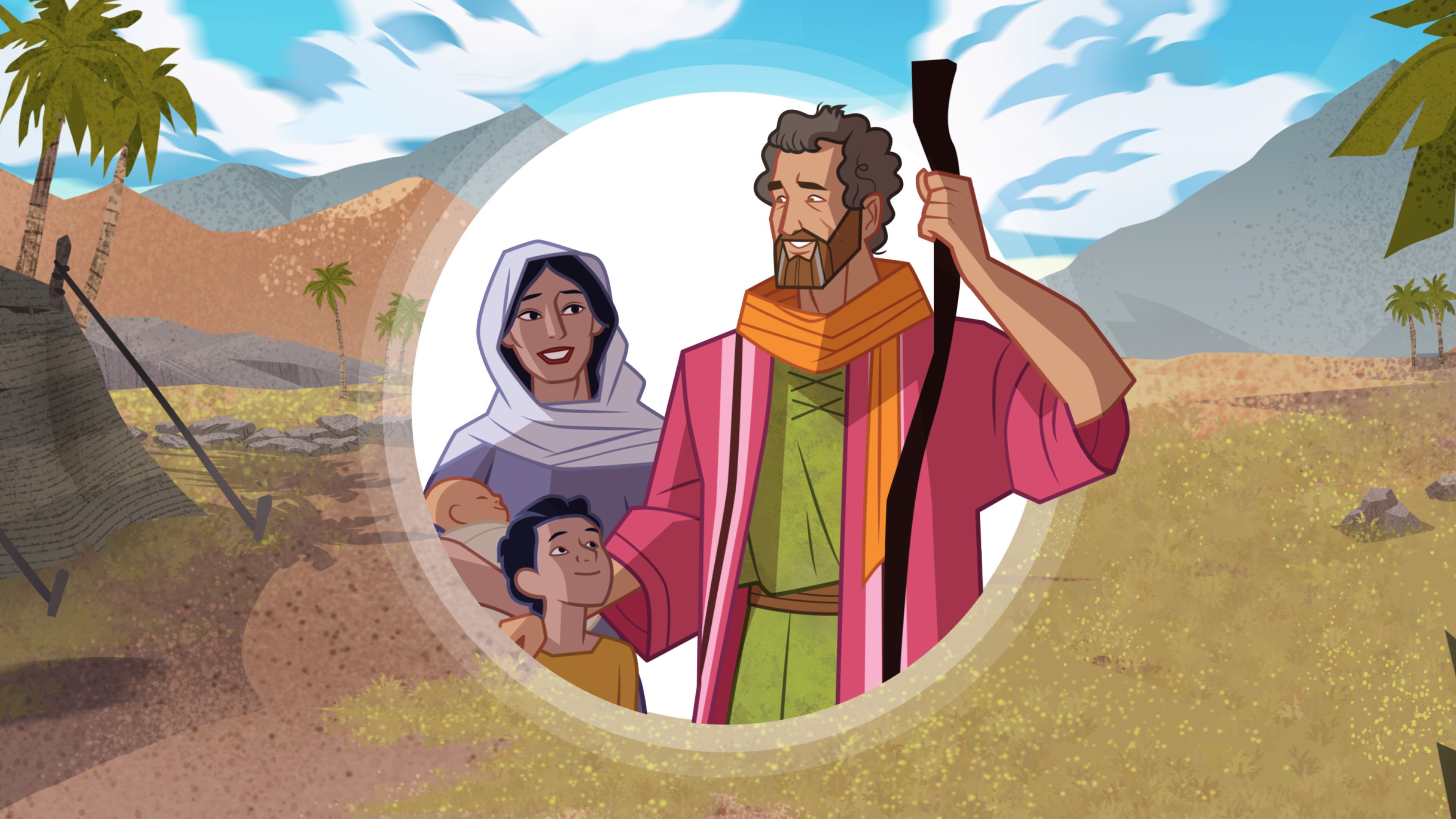
For children, the story of baby Moses in the basket is one of the most memorable in scripture. Help them see the courage of Jochebed (Moses' mother), Miriam (his sister), and even Pharaoh's daughter — women who defied Pharaoh's decree and saved the deliverer. The midwives Shiphrah and Puah are also wonderful examples of moral courage.
For Easter preparation, read this week's Exodus passages alongside the Bikkurim article and the Holy Week series. Watch for the connections: the lamb, the blood, the night of deliverance, the morning of new life. The Exodus is the Old Testament's Easter — and Easter is the Exodus fulfilled.
For covenant pattern study, trace the connections back through Genesis. We have now followed the covenant through Adam (Eden), Enoch (Zion), Noah (ark), Abraham (circumcision), Isaac (Moriah), Jacob (ladder), Joseph (Egypt), and now Moses (burning bush). Each covenant holder receives a call, faces trials, and becomes an instrument of blessing for others. The pattern is consistent because the God who makes covenants is consistent.
As we enter Holy Week, may the words spoken to Moses at the burning bush resonate in our hearts: "I have surely seen the affliction of my people... I know their sorrows... and I am come down to deliver them." The God who remembered His covenant with Israel remembers His covenant with us.
Week 13
Exodus 1–6
"I Have Remembered My Covenant"
March 23–29, 2026
1. Exodus 1–6
| Element | Details |
|---|---|
| Week | 13 |
| Dates | March 23–29, 2026 |
| Reading | Exodus 1–6 |
| CFM Manual | Exodus 1–6 Lesson |
| Total Chapters | 6 (Exodus 1–6) |
| Approximate Verses | ~150 verses |
This week opens the Book of Exodus—שְׁמוֹת (Shemot, "Names")—the second book of the Torah. Between Genesis and Exodus, centuries have passed. Joseph's family of seventy has multiplied into a nation; the friendly Pharaoh who elevated Joseph has been replaced by one who "knew not Joseph." Israel is enslaved, and their cries rise to heaven. Into this darkness, God reveals Himself at the burning bush, speaks His sacred name, and commissions a reluctant prophet to deliver His people.
Exodus 1 sets the stage. The children of Israel multiply "exceedingly" until they fill the land (v.7). A new Pharaoh, threatened by their numbers, enslaves them with bitter bondage—taskmasters, brick-making, and ruthless labor. When slavery fails to limit their growth, Pharaoh commands the Hebrew midwives Shiphrah and Puah to kill male infants at birth. These courageous women "feared God" and refused (v.17). Pharaoh then decrees that all male Hebrew babies be cast into the Nile.
Exodus 2 tells Moses' origin. A Levite woman hides her infant three months, then places him in an ark (תֵּבָה, tevah—the same word used for Noah's ark) among the reeds. Pharaoh's daughter discovers him, names him Mosheh ("drawn out"), and raises him in the palace. As an adult, Moses sees an Egyptian beating a Hebrew, kills the Egyptian, and flees to Midian when the deed is discovered. There he marries Zipporah, daughter of the priest Reuel (Jethro), and shepherds flocks for forty years. Meanwhile, in Egypt, "God heard their groaning, and God remembered his covenant" (v.24).
Exodus 3 contains the burning bush theophany. At Horeb, the mountain of God, Moses sees a bush that burns but is not consumed. God declares: "I am the God of thy father, the God of Abraham, the God of Isaac, and the God of Jacob" (v.6). He commissions Moses to deliver Israel. When Moses asks God's name, the response is foundational: אֶהְיֶה אֲשֶׁר אֶהְיֶה (Ehyeh asher Ehyeh)—"I AM THAT I AM" (v.14). The sacred name YHWH (יהוה) is revealed: "This is my name for ever, and this is my memorial unto all generations" (v.15).
Exodus 4 records Moses' objections and God's answers. Moses protests his inadequacy: "Who am I, that I should go unto Pharaoh?" (Exodus 3:11). God answers: "Certainly I will be with thee." Moses then asks what he should tell Israel when they demand to know by whose authority he comes—"What is his name?" (Exodus 3:13). God responds with the revelation of His sacred name: I AM THAT I AM. Moses protests the people won't believe him: God gives three signs (rod-serpent, leprous hand, water-blood). Moses protests his lack of eloquence: "I am slow of speech." God responds: "Who hath made man's mouth? Have not I the LORD?" Finally Moses simply refuses: "Send someone else." God's anger kindles, but He provides Aaron as spokesman.
Exodus 5 narrates the disastrous first encounter with Pharaoh. Moses and Aaron declare: "Thus saith the LORD God of Israel, Let my people go." Pharaoh responds: "Who is the LORD, that I should obey his voice? I know not the LORD, neither will I let Israel go" (v.2). Rather than release Israel, Pharaoh increases their burden—they must now gather their own straw while maintaining the same brick quota. The Israelite foremen blame Moses: "Ye have made our savour to be abhorred in the eyes of Pharaoh."
Exodus 6 contains God's recommissioning of Moses. The Lord reaffirms the covenant: "I am the LORD: and I appeared unto Abraham, unto Isaac, and unto Jacob... but by my name JEHOVAH was I not known to them. And I have also established my covenant with them... I have also heard the groaning of the children of Israel... and I have remembered my covenant" (vv.2–5). God outlines seven "I will" promises (vv.6–8), culminating in: "I will bring you in unto the land... and I will give it you for an heritage: I am the LORD."
Theme 1: The Divine Name — I AM THAT I AM
The revelation of God's name at the burning bush is one of Scripture's most significant theological moments. When Moses asks, "What is his name?" God responds with אֶהְיֶה אֲשֶׁר אֶהְיֶה (Ehyeh asher Ehyeh).
The Hebrew verb הָיָה (hayah) means "to be" or "to become." Ehyeh is the first-person form: "I am" or "I will be." This is not a static philosophical statement about existence—it is a promise of presence: "I will be with you. I will be whatever you need me to be."
The sacred name YHWH (יהוה) is the third-person form: "He Is" or "He Will Be." This name appears over 6,800 times in the Hebrew Bible. Every time you see "LORD" in small capitals in English Bibles, you are reading this divine name.
Application: How does knowing God as "I AM"—the eternally present, covenant-keeping God—change how you approach Him in prayer?
Theme 2: Moses as Type of Christ
Dr. Ugo Perego observes the powerful Christological parallels between Moses and Jesus:
| Moses | Christ |
|---|---|
| Rescued as a baby from Pharaoh's decree | Rescued from Herod's massacre of innocents |
| Rose to prominence in Egypt | Grew "in favour with God and man" |
| Called as deliverer and lawgiver | The ultimate Deliverer and Lawgiver |
| Provided water and manna | Living Water and Bread of Life |
| Raised the brass serpent to heal | Lifted on the cross to save |
| Power over the serpent (rod) | Power to crush the serpent's head |
Source: FAIR Article, "Come, Follow Me — Old Testament: Exodus 1–6" by Ugo A. Perego
Theme 3: "I Have Remembered My Covenant"
God's statement "I have remembered my covenant" (Exodus 6:5) does not mean He had forgotten. In Hebrew thought, to "remember" (zakar) means to act on behalf of someone. God's remembering triggers His redemptive action.
The covenant with Abraham included three promises:
- Land — "I will bring you in unto the land" (Exodus 6:8)
- Seed — Israel multiplied "exceedingly" (Exodus 1:7)
- Blessing — "I will take you to me for a people" (Exodus 6:7)
Exodus is the story of God fulfilling these covenant promises.
Theme 4: The Reluctant Prophet
Moses offers five objections to his calling—making him perhaps the most human of all the prophets:
- "Who am I?" (Exodus 3:11) — Inadequacy
- "What is his name?" (Exodus 3:13) — Authority
- "They will not believe me" (Exodus 4:1) — Credibility
- "I am not eloquent" (Exodus 4:10) — Ability
- "Send someone else" (Exodus 4:13) — Refusal
God answers each objection, sometimes with signs, sometimes with promises, and finally with righteous anger when Moses simply refuses. Yet God still works with Moses, providing Aaron as spokesman.
Application: God does not wait for perfect instruments. He works through reluctant, flawed people who finally say yes—even when that yes is sometimes halfhearted or inadequate.
Theme 5: Exodus as New Beginning — Burning Bush and Pillar of Light
As Dr. Perego observes, the Exodus narrative parallels the Restoration:
"In the dispensation of the fullness of times, we found ourselves in a world compared to the telestial kingdom... born slaves of sin, corruption, appetites, and mortality into a spiritual Egypt. Thankfully, the Lord has remembered His children again. He came back to earth through what could be compared to a second condescension event. In the likeness of a man, the Father and the Son appeared to young Joseph Smith in the sacred grove, this time not in the form of a burning bush, but as a pillar of light."
Source: FAIR Article, "Come, Follow Me — Old Testament: Exodus 1–6" by Ugo A. Perego
Just as Moses received commandments and covenants at the burning bush, Joseph Smith received them at the Sacred Grove. Both prophets were reluctant. Both were sent to deliver God's people from bondage—one physical, one spiritual.
| Person | Role | Significance This Week |
|---|---|---|
| Moses | Deliverer-prophet | Called at burning bush; receives divine name; confronts Pharaoh |
| Pharaoh | King of Egypt | "Knew not Joseph"; enslaves Israel; hardens heart |
| Shiphrah & Puah | Hebrew midwives | Fear God; save infant boys; rewarded with households |
| Jochebed | Moses' mother | Hides Moses; places him in ark; nurses him |
| Miriam | Moses' sister | Watches over Moses; suggests Hebrew nurse |
| Pharaoh's daughter | Egyptian princess | Draws Moses from water; adopts him |
| Zipporah | Moses' wife | Daughter of Jethro; mother of Gershom |
| Jethro (Reuel) | Priest of Midian | Moses' father-in-law; gives priesthood (D&C 84:6) |
| Aaron | Moses' brother | Called as Moses' spokesman |
Historical Period: Late Bronze Age
Approximate Dates: ~1400–1300 BC (or ~1250 BC in some chronologies)
Moses' Life Stages: 40 years in Egypt, 40 years in Midian, 40 years leading Israel
Key Location: Egypt → Midian → Horeb (Sinai)
Relationship to Previous/Next Weeks
Week 12: Joseph's death; Israel in Egypt; Genesis concludes
Week 13: Moses' birth; burning bush; Exodus begins (Exodus 1–6)
Week 14: The plagues begin; Passover instituted (Exodus 7–13)
Book of Mormon Connections
- 1 Nephi 17:23–30: Nephi recounts Moses delivering Israel
- Mosiah 13:33: "God himself shall come down among the children of men... Moses said"
- Helaman 8:11: Moses' testimony of Christ
Doctrine and Covenants Connections
- D&C 84:6: Moses received priesthood from Jethro
- D&C 29:46: "I am the same that spake, and the world was made, and all things came by me"
- D&C 39:1: Christ identifies as "I AM"
Pearl of Great Price Connections
- Moses 1:1–6: God reveals His glory to Moses
- Abraham 1:16–18: Jehovah identifies as God of Abraham, Isaac, Jacob
JST Additions
- JST Exodus 3:2: Changes "angel of the Lord" to "presence of the Lord"
- JST Exodus 4:21: Clarifies Pharaoh chose to harden his own heart
- JST Exodus 6:3: Changes from "was not known" to "was not my name known?"
- The Divine Name: God reveals Himself as YHWH—I AM—the covenant-keeping, ever-present God
- Covenant Faithfulness: "I have remembered my covenant" — God acts on His promises
- Divine Commission: God calls imperfect people and equips them for His work
- Deliverance from Bondage: Physical exodus foreshadows spiritual redemption
- Restoration Parallel: Burning bush/Sacred Grove — God reveals Himself to deliver His people
- Holy Ground: "Put off thy shoes from off thy feet, for the place whereon thou standest is holy ground" (Exodus 3:5) — temple protocol of reverence
- Divine Presence: The bush burns but is not consumed — God's presence sanctifies rather than destroys
- The Name: The sacred name YHWH connects to temple worship and covenant-making
- Priesthood: Moses receives priesthood from Jethro (D&C 84:6) — priesthood authority for temple ordinances
- Covenant Renewal: "I will take you to me for a people, and I will be to you a God" (Exodus 6:7) — covenant formula
Manual Focus: The burning bush experience; the divine name "I AM"; God's covenant faithfulness; overcoming feelings of inadequacy; Moses as type of Christ.
Key Questions from Manual:
- How has God shown you that He remembers His covenant with you?
- What can I learn from Moses about accepting calls from God?
- How does knowing God as "I AM" strengthen my faith?
- In what ways is Moses a type of Christ?
Essential Reading:
- Exodus 3:1–15 — Burning bush; divine name revealed
- Exodus 4:10–17 — Moses' objections and God's answers
- Exodus 6:2–8 — "I have remembered my covenant"
For Deep Study:
- Exodus 1:15–21 — The courageous midwives
- Exodus 2:1–10 — Moses' birth and rescue
- Exodus 5 — First confrontation with Pharaoh
| File | Content Focus |
|---|---|
| 01_Week_Overview | This overview document |
| 02_Historical_Cultural_Context | Egyptian slavery, Midian, theophany traditions |
| 03_Key_Passages_Study | Burning bush, divine name, covenant promises |
| 04_Word_Studies | YHWH, Ehyeh, Seneh, Tevah, Goel |
| 05_Jewish_Perspective | Midrash on Moses, rabbinic name theology |
| 06_Teaching_Applications | Teaching across seven settings |
| 07_Study_Questions | Comprehensive reflection questions |
2. Week 13: Historical and Cultural Context
The Gap Between Genesis and Exodus
Exodus 1:1 opens with a list of Jacob's sons who came to Egypt—a direct link to Genesis 46. But between these two books, centuries have passed. The text provides few chronological markers, but estimates range from 215 to 430 years of Israelite residence in Egypt before the Exodus.
Key transitions:
- Joseph's generation dies (Ex. 1:6)
- Israel multiplies exponentially (Ex. 1:7)
- A new dynasty rises: "a new king over Egypt, which knew not Joseph" (Ex. 1:8)
Who Was This Pharaoh?
The identity of the Exodus Pharaoh remains debated among scholars. Two main theories:
| Theory | Pharaoh | Approximate Date |
|---|---|---|
| Early Date | Thutmose III or Amenhotep II (18th Dynasty) | ~1446 BC |
| Late Date | Ramesses II (19th Dynasty) | ~1250 BC |
The phrase "knew not Joseph" could mean:
- A literal new dynasty with no memory of Joseph's contribution
- A political choice to ignore Joseph's legacy for nationalistic reasons
- A deliberate erasure of foreign (Hyksos-era) influence from Egyptian memory
The Hyksos—Semitic rulers who controlled Egypt during the Second Intermediate Period (1650–1550 BC)—may connect to Joseph's rise. Their expulsion could explain why a later Pharaoh felt threatened by a large Semitic population.
Egyptian Slavery — The Historical Reality
Exodus describes Israel's bondage with vivid terminology:
| Hebrew Term | Meaning | Context |
|---|---|---|
| עֲבֹדָה (avodah) | Labor, service, work | The same word used for worship |
| פָּרֶךְ (parekh) | Harshness, rigor | "With rigour" (Exodus 1:13–14) |
| מָרַר (marar) | Bitter | "Made their lives bitter" (Exodus 1:14) |
Israelites built "treasure cities, Pithom and Raamses" (Exodus 1:11). Archaeological evidence confirms:
- Pithom (Tell el-Retaba or Tell el-Maskhuta): Storage city in eastern Delta
- Raamses/Pi-Ramesses: Capital city built by Ramesses II, requiring massive labor
Egyptian records depict Semitic workers making bricks, consistent with Exodus 5:6–18.
1. Goshen — Land of Plenty
Located in the eastern Nile Delta, Goshen (also called "the land of Rameses") was:
- Fertile grazing land suitable for Jacob's pastoral family
- Separate from main Egyptian population centers
- Eventually the site of Israelite oppression
2. Midian — Land of Refuge
When Moses fled Egypt, he traveled to Midian—a region east of the Gulf of Aqaba, in modern-day northwestern Saudi Arabia or southern Jordan.
The Midianites were:
- Descendants of Abraham through Keturah (Genesis 25:1–2)
- A priestly clan (Jethro was "priest of Midian")
- Possibly connected to the worship of YHWH before the Exodus
Significance: Moses spent forty years in Midian, married Zipporah, and received priesthood from Jethro (D&C 84:6).
3. Horeb/Sinai — The Mountain of God
Moses encountered God at "Horeb, the mountain of God" (Exodus 3:1). Horeb and Sinai appear to be two names for the same location—or different peaks of the same mountain range.
Traditional identification: Jebel Musa in the southern Sinai Peninsula, where St. Catherine's Monastery now stands.
The term "mountain of God" (har ha'elohim) suggests this site was already associated with divine presence before Moses' arrival—possibly known to Midianite priests.
The Hebrew Midwives — Moral Courage
Shiphrah (שִׁפְרָה, "beauty") and Puah (פּוּעָה, "splendid") are among the first named heroines in Scripture. Their defiance of Pharaoh raises enduring questions:
Civil disobedience: When human law conflicts with divine law, whom do we obey? The midwives "feared God" more than Pharaoh (Exodus 1:17). Peter later articulated the same principle: "We ought to obey God rather than men" (Acts 5:29).
The "lie" question: The midwives told Pharaoh that Hebrew women deliver before they arrive (Exodus 1:19). Was this deception justified? Rabbinic tradition generally defends them—protecting innocent life takes precedence over strict truthfulness to a murderous tyrant.
God's response: "Therefore God dealt well with the midwives... and made them houses" (Exodus 1:20–21). Whether "houses" means physical dwellings or family lines (בָּתִּים, batim, can mean both), God rewarded their courage.
The Ark in the Reeds — Echoes of Noah
Moses' mother places him in a תֵּבָה (tevah)—the same Hebrew word used exclusively for Noah's ark (Genesis 6:14). This is not coincidence:
| Noah's Ark | Moses' Ark |
|---|---|
| Saves humanity through water | Saves deliverer through water |
| Covered with pitch (kopher) | Covered with pitch (chemar) |
| Preserves life during judgment | Preserves life despite judgment |
| Emerges to covenant renewal | Emerges to covenant fulfillment |
Both tevah vessels carry salvation through destructive waters.
Theophany at the Burning Bush
The burning bush (סְנֶה, seneh) represents one of Scripture's classic theophanies—divine appearances that paradoxically reveal and conceal:
Fire that does not consume: The bush burns but is not destroyed. This signals God's holy presence that sanctifies rather than destroys. Later, God will appear as fire on Sinai, in the pillar of fire, and over the Tabernacle.
"Put off thy shoes": Removing sandals was an ancient Near Eastern sign of:
- Reverence in sacred space
- Submission and vulnerability
- Recognition of holy ground
Egyptian priests went barefoot in temples; this command connected with Moses' Egyptian upbringing while establishing a new sacred protocol.
The Divine Name — Ancient Near Eastern Context
When Moses asks God's name (Exodus 3:13), he's not asking for information God lacks. In the ancient world, knowing a deity's name meant:
- Having a relationship with that deity
- Being able to invoke that deity legitimately
- Understanding that deity's character and domain
God's response—"I AM THAT I AM"—both reveals and transcends ancient naming conventions. Unlike gods named for functions (sun god, storm god), YHWH's name declares His being: existence itself, eternal presence, covenant faithfulness.
Pharaoh as Divine
Egyptian Pharaohs were considered incarnations of Horus (falcon god) and, after death, merged with Osiris. Pharaoh was:
- The living god who mediated between heaven and earth
- The source of ma'at (cosmic order and justice)
- The ultimate authority over life and death
This explains the stakes in Moses' confrontation: it wasn't merely political but cosmological. When Pharaoh asks, "Who is the LORD, that I should obey his voice?" (Exodus 5:2), he's asserting his own divine status against an unknown deity.
Polytheism and the Plagues
Egypt's pantheon included hundreds of deities:
- Ra/Amon-Ra: Sun god, supreme deity
- Hapi: Nile god
- Khnum: Creator god (formed humans on potter's wheel)
- Isis/Osiris: Death and resurrection deities
The coming plagues (Exodus 7–12) will systematically challenge these gods. Each plague demonstrates YHWH's sovereignty over a domain Egyptians attributed to their deities.
Exodus 3:14 — "I AM THAT I AM"
The Hebrew אֶהְיֶה אֲשֶׁר אֶהְיֶה (Ehyeh asher Ehyeh) has been translated variously:
| Translation | Emphasis |
|---|---|
| "I AM THAT I AM" (KJV) | Self-existence, eternal being |
| "I AM WHO I AM" (NIV, NRSV) | Self-determination |
| "I WILL BE WHAT I WILL BE" (ASV margin) | Future-oriented promise |
| "I cause to be what I cause to be" | Causative (creator emphasis) |
The Hebrew ehyeh (from hayah, "to be") is imperfect tense, which can indicate:
- Continuous state: "I am being"
- Future action: "I will be"
- Characteristic: "I am the one who is"
JST Exodus 4:21 — Hardening of Pharaoh's Heart
The King James reading—"I will harden his heart"—has troubled readers for millennia. The Joseph Smith Translation clarifies:
KJV: "And the LORD said unto Moses... I will harden his heart, that he shall not let the people go."
JST: "And the LORD said unto Moses... Pharaoh will harden his heart, that he will not let the people go."
The Hebrew verb חָזַק (chazaq) means "to strengthen" or "to make firm." The JST preserves human agency: Pharaoh strengthens his own resolve against God. God foreknows Pharaoh's choice without causing it.
JST Exodus 6:3 — Was the Name Unknown?
KJV: "And I appeared unto Abraham, unto Isaac, and unto Jacob, by the name of God Almighty, but by my name JEHOVAH was I not known to them."
This seems to contradict passages where the patriarchs used YHWH (Genesis 15:7; 22:14; 28:13).
JST: Changes to a rhetorical question: "And was not my name known unto them?"
This resolves the tension: the patriarchs did know the name, but its full significance—as covenant deliverer—would be revealed through the Exodus.
| Location | Significance |
|---|---|
| Egypt (Goshen) | Israelite homeland in bondage; site of oppression |
| Pithom & Raamses | Treasure cities built by slave labor |
| Midian | Moses' refuge; receives priesthood from Jethro |
| Horeb/Sinai | Mountain of God; burning bush theophany |
| The Nile | River of life and death; Moses' basket placed here |
3. Week 13: Key Passages Study
"And the king of Egypt spake to the Hebrew midwives, of which the name of the one was Shiphrah, and the name of the other Puah: And he said, When ye do the office of a midwife to the Hebrew women, and see them upon the stools; if it be a son, then ye shall kill him: but if it be a daughter, then she shall live. But the midwives feared God, and did not as the king of Egypt commanded them, but saved the men children alive."
Literary Analysis
The narrative contrasts two authorities:
- Pharaoh: Commands death ("ye shall kill him")
- God: Commands life (implicitly, through creation mandate)
The midwives' names are preserved while Pharaoh remains unnamed—a deliberate literary reversal. The powerful king fades into anonymity; the servant women receive eternal memorial.
Theological Significance
Civil disobedience: When human law commands evil, divine law takes precedence. The midwives "feared God" (yare' et ha'elohim) rather than Pharaoh. This fear is not terror but reverential awe that produces moral courage.
Divine reward: "God dealt well with the midwives... and made them houses" (Exodus 1:20–21). The Hebrew בָּתִּים (batim, "houses") likely means family lines or households—God blessed them with the very thing Pharaoh tried to destroy: future generations.
LDS Connection
President Thomas S. Monson taught: "May we ever choose the harder right instead of the easier wrong" ("Choices," April 2016 General Conference). The midwives chose the harder right, risking their lives to obey God rather than man.
"And there went a man of the house of Levi, and took to wife a daughter of Levi. And the woman conceived, and bare a son: and when she saw him that he was a goodly child, she hid him three months. And when she could not longer hide him, she took for him an ark of bulrushes, and daubed it with slime and with pitch, and put the child therein; and she laid it in the flags by the river's brink."
Literary Analysis
The word "ark" (תֵּבָה, tevah) appears only twice in Scripture:
- Noah's ark (Genesis 6–9)
- Moses' basket (Exodus 2)
This deliberate linguistic echo establishes Moses as a new Noah—one who will bring humanity (through Israel) through waters of judgment to covenant renewal.
The Women Who Saved Moses
Five women ensure Moses' survival:
- Jochebed (mother) — Hides him, builds the ark
- Miriam (sister) — Watches over him, suggests a nurse
- Pharaoh's daughter — Rescues him, adopts him
- Shiphrah — Refused to kill Hebrew boys
- Puah — Refused to kill Hebrew boys
The deliverer of Israel is saved by women working across ethnic and social boundaries.
Christological Type
| Moses | Christ |
|---|---|
| Male child under death sentence | Male child under Herod's decree |
| Rescued from water | Baptized in water |
| Raised in foreign court | Fled to Egypt as infant |
| Called to deliver God's people | Called to deliver all people |
LDS Connection
Elder Jeffrey R. Holland taught: "Surely the thing God enjoys most about being God is the thrill of being merciful, especially to those who don't expect it and often feel they don't deserve it" ("The Laborers in the Vineyard," April 2012). Pharaoh's daughter extends mercy to an enemy's child—and God's purposes advance.
"Now Moses kept the flock of Jethro his father in law, the priest of Midian: and he led the flock to the backside of the desert, and came to the mountain of God, even to Horeb. And the angel of the LORD appeared unto him in a flame of fire out of the midst of a bush: and he looked, and, behold, the bush burned with fire, and the bush was not consumed."
Literary Analysis
Setting: "The backside of the desert" (achar hamidbar) — Moses is in the most remote place possible. God finds him there.
The paradox: Fire that burns but does not consume. This signals divine presence that sanctifies rather than destroys—the same fire that will appear on Sinai, in the pillar, and over the Tabernacle.
JST clarification: The JST changes "angel of the LORD" to "presence of the LORD" (JST Exodus 3:2), making clear this is a direct divine theophany, not a mediated angelic appearance.
The Command to Remove Sandals
"Put off thy shoes from off thy feet, for the place whereon thou standest is holy ground" (Exodus 3:5).
This establishes a foundational principle: holiness belongs to places where God is present. The ground has not changed; God's presence makes it holy. Removing shoes signifies:
- Vulnerability before God
- Recognition of sacred space
- Submission to divine authority
LDS Connection
Dr. Ugo Perego connects the burning bush to the Sacred Grove: "The Father and the Son appeared to young Joseph Smith in the sacred grove, this time not in the form of a burning bush, but as a pillar of light" (FAIR, Exodus 1–6). Both revelations inaugurate new dispensations with personal theophany and prophetic calling.
"And Moses said unto God, Behold, when I come unto the children of Israel, and shall say unto them, The God of your fathers hath sent me unto you; and they shall say to me, What is his name? what shall I say unto them? And God said unto Moses, I AM THAT I AM: and he said, Thus shalt thou say unto the children of Israel, I AM hath sent me unto you."
Linguistic Analysis
Hebrew: אֶהְיֶה אֲשֶׁר אֶהְיֶה (Ehyeh asher Ehyeh)
| Component | Meaning |
|---|---|
| אֶהְיֶה (Ehyeh) | "I am" or "I will be" (1st person imperfect of hayah) |
| אֲשֶׁר (asher) | "that which," "who," "what" |
| אֶהְיֶה (Ehyeh) | Repeated — emphasizing self-existence |
The name YHWH (יהוה) is derived from the same root but in third person: "He is" or "He causes to be."
Theological Significance
This is not a riddle or evasion. God reveals His essential character:
- Self-existence: Unlike pagan gods derived from cosmic forces, YHWH simply IS
- Eternal presence: "I AM" spans all time—past, present, future
- Covenant faithfulness: This name is connected to "the God of Abraham, Isaac, and Jacob"
- Personal relationship: God shares His name with Israel
New Testament Connection
Jesus applies this name to Himself: "Before Abraham was, I am" (John 8:58). The Jews understood immediately—they picked up stones to kill Him for claiming divine identity.
LDS Connection
D&C 39:1 records the Lord saying: "Hearken and listen to the voice of him who is from all eternity to all eternity, the Great I AM." The Restoration confirms Christ as the Jehovah of the Old Testament, the I AM who spoke to Moses.
"And Moses said unto the LORD, O my Lord, I am not eloquent, neither heretofore, nor since thou hast spoken unto thy servant: but I am slow of speech, and of a slow tongue. And the LORD said unto him, Who hath made man's mouth? or who maketh the dumb, or deaf, or the seeing, or the blind? have not I the LORD? Now therefore go, and I will be with thy mouth, and teach thee what thou shalt say."
Literary Analysis
Moses offers five objections throughout chapters 3–4:
- "Who am I?" (Exodus 3:11) — Inadequacy
- "What is his name?" (Exodus 3:13) — Authority
- "They will not believe me" (Exodus 4:1) — Credibility
- "I am not eloquent" (Exodus 4:10) — Ability
- "Send someone else" (Exodus 4:13) — Refusal
God answers each with assurance, signs, or (finally) anger. But notice: God doesn't deny Moses' weakness. He simply promises His presence: "I will be with thy mouth."
The Hebrew Phrase
Moses describes himself as כְבַד־פֶּה וּכְבַד לָשׁוֹן (kevad peh ukhevad lashon) — "heavy of mouth and heavy of tongue."
The word כָּבֵד (kaved, "heavy") is the same root as כָּבוֹד (kavod, "glory"). There's wordplay: Moses feels his mouth is heavy (burdened); God's glory (heavy with honor) will speak through it anyway.
God's Response
"Who hath made man's mouth?" The Creator who made the tongue can empower the tongue. The blind, deaf, and mute exist within God's sovereign design—not as mistakes but as part of His purposes.
LDS Connection
Elder David A. Bednar taught that the Savior's enabling power strengthens disciples "to do and be good and to serve beyond our own individual desire and natural capacity" ("Strength beyond Our Own," Liahona, Mar. 2015). Moses' weakness becomes a conduit for God's power—"my grace is sufficient for thee" (2 Corinthians 12:9).
"And God spake unto Moses, and said unto him, I am the LORD: And I appeared unto Abraham, unto Isaac, and unto Jacob, by the name of God Almighty, but by my name JEHOVAH was I not known to them. And I have also established my covenant with them, to give them the land of Canaan... And I have also heard the groaning of the children of Israel... and I have remembered my covenant."
Literary Analysis
Seven "I will" Statements (Exodus 6:6–8):
- "I will bring you out from under the burdens of the Egyptians"
- "I will rid you out of their bondage"
- "I will redeem you with a stretched out arm"
- "I will take you to me for a people"
- "I will be to you a God"
- "I will bring you in unto the land"
- "I will give it you for an heritage"
This sevenfold structure suggests completeness and totality. God's redemption will be thorough.
The Covenant Formula
"I will take you to me for a people, and I will be to you a God" (Exodus 6:7) is the classic covenant formula appearing throughout Scripture:
This reciprocal relationship defines the entire biblical story: God choosing a people, people belonging to God.
"I Have Remembered"
The Hebrew זָכַר (zakar, "to remember") does not mean God had forgotten. In Hebrew thought, to "remember" means to act on behalf of someone. God's remembering triggers redemptive action.
The same word appears:
- "God remembered Noah" (Gen. 8:1) — and sent wind to recede the waters
- "God remembered Rachel" (Gen. 30:22) — and opened her womb
- "God remembered his covenant" (Ex. 6:5) — and sent Moses
LDS Connection
Elder Gerrit W. Gong taught that we can "always remember Him by having confidence in His covenants, promises, and assurances" ("Always Remember Him," April 2016). The God who remembered Israel in Egypt remembers His covenant people today.
The parallels between Moses and Christ established in these chapters form a foundation for understanding the entire Exodus narrative:
| Moses | Christ |
|---|---|
| Preserved as infant despite death decree | Preserved from Herod's massacre |
| Drawn from water | Baptized in water |
| Raised in royal household | King of kings |
| Fled to foreign land (Midian) | Fled to Egypt |
| Called at burning bush | Called at baptism |
| Received divine name to declare | "I am the way, the truth, and the life" |
| Reluctant prophet | "Father, if it be possible, let this cup pass" |
| Sent to deliver Israel from bondage | Sent to deliver all from sin |
| Pharaoh refused to acknowledge God | Religious leaders rejected Christ |
| Signs and wonders confirmed calling | Signs and wonders confirmed ministry |
4. Week 13: Word Studies
Root: ה-י-ה (H-Y-H, "to be")
Appears: Exodus 3:15 — "The LORD God of your fathers... this is my name for ever"
Meaning
The divine name YHWH (יהוה) is the personal name of Israel's God, appearing over 6,800 times in the Hebrew Bible. When you see "LORD" in small capitals in English Bibles, you are reading this name.
Greek / Latin / English parallels: Greek κύριος (kyrios, "Lord"), Latin Dominus, English lord.
Pronunciation
The exact pronunciation was lost when Jews ceased speaking the name aloud out of reverence. The form "Jehovah" comes from combining YHWH's consonants with the vowels of אֲדֹנָי (Adonai, "Lord"). Most scholars believe the original pronunciation was closer to "Yahweh."
Etymology
The name derives from the verb הָיָה (hayah, "to be"). YHWH is the third-person form: "He is," "He will be," or "He causes to be." The name connects directly to God's self-revelation: "I AM THAT I AM" (Exodus 3:14).
Theological Significance
- Self-existence: Unlike created beings, God simply IS
- Eternality: YHWH transcends time—past, present, future
- Covenant faithfulness: "The God of Abraham, Isaac, and Jacob"
- Personal relationship: God shares His personal name with Israel
LDS Application
D&C 110:3 records the resurrected Christ identifying Himself: "I am the first and the last; I am he who liveth, I am he who was slain; I am your advocate with the Father." The Latter-day Saints understand Jesus Christ as the Jehovah of the Old Testament—the YHWH who spoke to Moses.
Root: ה-י-ה (H-Y-H, "to be")
Appears: Exodus 3:14 — "I AM THAT I AM... I AM hath sent me unto you"
Meaning
Ehyeh is the first-person singular form of the verb "to be" in the imperfect (or qal imperfect) tense. It can mean:
- "I am" (present continuous)
- "I will be" (future)
- "I am being" (ongoing state)
Greek / Latin / English parallels: Greek εἰμί (eimi, "I am / to be"), Latin sum, English be / am.
The Full Phrase
אֶהְיֶה אֲשֶׁר אֶהְיֶה (Ehyeh asher Ehyeh)
| Translation | Emphasis |
|---|---|
| "I AM THAT I AM" (KJV) | Self-existence |
| "I AM WHO I AM" (NIV) | Self-definition |
| "I WILL BE WHAT I WILL BE" (margin) | Promissory |
| "I am the One who is" | Ontological |
Why Two Forms?
Ehyeh (first person): What God says about Himself — "I am"
YHWH (third person): What Israel says about God — "He is"
Moses asks for a name Israel can use. God gives His own self-designation (Ehyeh) and then translates it to third person (YHWH) for Israel's use.
New Testament Connection
Jesus' "I am" statements in John's Gospel echo this divine name:
- "I am the bread of life" (John 6:35)
- "I am the light of the world" (John 8:12)
- "Before Abraham was, I am" (John 8:58)
The Jews understood Jesus was claiming to be YHWH—hence their attempt to stone Him.
Root: Possibly ס-נ-ה (uncertain etymology)
Appears: Exodus 3:2–4 — "The bush burned with fire, and the bush was not consumed"
Meaning
The סְנֶה (seneh) was likely a thorny acacia shrub common in the Sinai region. The word appears only in the burning bush account (Exodus 3:2–4) and in Moses' blessing (Deuteronomy 33:16).
Greek / Latin / English parallels: Greek βάτος (batos, "bush / bramble"), Latin rubus, English bush / bramble.
Wordplay
Some scholars note the similarity between סְנֶה (seneh, "bush") and סִינַי (Sinai). Whether etymologically connected or not, the text links them:
- God appears in the seneh at Sinai
- Both become sites of divine revelation
- Both involve fire that does not destroy
Theological Significance
Fire that does not consume: The paradox signals divine presence. Ordinary fire destroys; divine fire sanctifies. This same fire will:
- Lead Israel as a pillar by night (Ex. 13:21)
- Descend on Sinai (Ex. 19:18)
- Dwell over the Tabernacle (Ex. 40:38)
- Appear at Pentecost (Acts 2:3)
LDS Application
Just as the bush burned without being consumed, so the temple is the place where mortals encounter divine glory without destruction. We enter sacred space where God's presence dwells—like Moses, we are on holy ground.
Root: Uncertain (possibly Egyptian origin)
Appears: Exodus 2:3, 5 — "She took for him an ark of bulrushes"
Meaning
Tevah refers to a box, chest, or vessel designed to protect and preserve. The word appears only twice in Scripture:
- Noah's ark (Genesis 6–9)
- Moses' basket (Exodus 2)
This is not the word for the Ark of the Covenant, which is אָרוֹן (aron).
Greek / Latin / English parallels: Greek κιβωτός (kibōtos, "ark / chest"), Latin arca, English ark / chest.
Theological Significance
The deliberate use of tevah for both Noah's ark and Moses' basket creates a literary and theological connection:
| Noah's Tevah | Moses' Tevah |
|---|---|
| Saves humanity through water | Saves deliverer through water |
| Covered with pitch (kopher) | Covered with pitch (chemar/bitumen) |
| Preserves life during judgment | Preserves life despite Pharaoh's decree |
| Emerges to covenant renewal | Emerges to covenant fulfillment |
Both tevah vessels carry salvation through threatening waters.
LDS Application
Elder Ronald A. Rasband taught, "As we stay on the covenant path, we need not fear" ("Be Not Troubled," Oct. 2018). Like Noah's ark and Moses' basket, the covenant community preserves and protects God's people through the waters of adversity.
Root: ג-א-ל (G-'-L)
Appears: Exodus 6:6 — "I will redeem you with a stretched out arm"
Meaning
Ga'al means to redeem, act as kinsman-redeemer, reclaim, or buy back. The related noun גֹּאֵל (go'el) is the "redeemer" or "kinsman-redeemer."
Greek / Latin / English parallels: Greek λυτρόω (lytroō, "to redeem"), Latin redimere, English redeem.
Key Usages
| Passage | Context |
|---|---|
| Exodus 6:6 | "I will redeem you" — God as Redeemer |
| Leviticus 25:25 | Kinsman buys back family land |
| Ruth 4:4–6 | Boaz as kinsman-redeemer |
| Isaiah 43:14 | "Your Redeemer, the Holy One of Israel" |
| Job 19:25 | "I know that my redeemer liveth" |
Theological Significance
The go'el (kinsman-redeemer) was the nearest relative who had:
- Right to redeem (close family relationship)
- Resources to redeem (able to pay the price)
- Resolve to redeem (willing to act)
God identifies Himself as Israel's go'el: He is near (covenant relationship), He is able (infinite power), He is willing (covenant faithfulness).
Christological Connection
Jesus Christ is the ultimate Go'el:
- Near: He became our kinsman through incarnation
- Able: His infinite Atonement covers all sin
- Willing: "No man taketh [my life] from me, but I lay it down of myself" (John 10:18)
LDS Application
In LDS theology, redemption involves both deliverance from sin (spiritual redemption) and resurrection (physical redemption). Christ as Redeemer accomplishes both—He "buyeth back" His people from bondage to death and sin.
Root: ז-כ-ר (Z-K-R)
Appears: Exodus 6:5 — "I have remembered my covenant"
Meaning
Zakar means to remember, recall, or be mindful of. But in Hebrew thought, "remembering" is not merely cognitive—it leads to action.
Greek / Latin / English parallels: Greek μιμνῄσκομαι (mimnēskomai, "to remember"), Latin recordor, English remember.
Key Usages
| Passage | Context | Result |
|---|---|---|
| Genesis 8:1 | "God remembered Noah" | Sent wind to recede waters |
| Genesis 30:22 | "God remembered Rachel" | Opened her womb |
| Exodus 2:24 | "God remembered his covenant" | Heard Israel's groaning |
| Psalm 105:8 | "He hath remembered his covenant for ever" | Ongoing faithfulness |
Theological Significance
When Scripture says God "remembers," it does not mean He had forgotten. Divine remembering means:
- Attention: God turns His focus toward someone
- Action: God intervenes on their behalf
- Covenant faithfulness: God honors His promises
The opposite—"forgetting"—means withholding action, not ignorance.
LDS Application
The sacrament prayers use this concept: "that they may... always remember him" (D&C 20:77). Our "remembering" Christ should lead to action—keeping His commandments. Similarly, when God "remembers" His covenant with us, redemptive action follows.
5. Week 13: Jewish Perspective
The opening chapters of Exodus (Shemot, "Names") have generated rich rabbinic commentary across millennia. The rabbis explored every detail of Moses' birth, the burning bush theophany, and the revelation of the divine name. This section draws from Exodus Rabbah, Talmud, and classical commentators to illuminate the text's deeper layers.
The book opens: "Now these are the names (shemot) of the children of Israel" (Exodus 1:1). The rabbis asked: Why list names we already know from Genesis?
Exodus Rabbah 1:3 teaches that Israel merited redemption because they preserved four things in Egypt:
- Their names — they did not adopt Egyptian names
- Their language — they continued speaking Hebrew
- Their modesty — they maintained moral standards
- Their unity — they did not inform on one another
"By the merit of these four things, Israel was redeemed from Egypt."
LDS Connection
President Russell M. Nelson has emphasized the covenant power of taking the Savior's name upon us ("The Correct Name of the Church," Oct. 2018). Just as Israel preserved their identity through names, Latter-day Saints take upon themselves the name of Christ at baptism and renew that covenant weekly in the sacrament.
The midwives Shiphrah and Puah defied Pharaoh's command to kill Hebrew boys (Exodus 1:15–21).
Talmud Sotah 11b identifies these women:
"Shiphrah—this is Jochebed... Puah—this is Miriam."
The Talmud explains the names as epithets:
- Shiphrah: from the root meaning "to beautify" — she would beautify (meshaperet) the newborns
- Puah: from the root meaning "to cry out" — she would speak (po'ah) and coo to calm crying infants
By this interpretation, Moses' own mother and sister worked as midwives, putting themselves at tremendous risk.
LDS Connection
These women "feared God" more than Pharaoh (Exodus 1:17). The doctrine of divine authority superseding human authority appears throughout scripture. Peter declared: "We ought to obey God rather than men" (Acts 5:29). In our day, prophets have taught that we must follow divine law even when human laws conflict.
Moses' basket is called a תֵּבָה (tevah)—the same word used for Noah's ark (Exodus 2:3).
Exodus Rabbah 1:20 draws the connection:
"Why is it called tevah? Because just as Noah's ark saved the world, so this ark would save one who would save Israel."
The midrash notes additional parallels:
- Both arks are covered with pitch
- Both float on waters of judgment
- Both carry the means of salvation for humanity
LDS Connection
Modern apostles teach that disciples on the covenant path need not fear in perilous times (Ronald A. Rasband, "Be Not Troubled," Oct. 2018). Just as the tevah carried Noah and Moses through destructive waters, the covenant path provides protection through the storms of mortality. The waters that threaten destruction become the means of deliverance for those inside the ark.
The rabbis asked: Why did God reveal Himself in a lowly thornbush (seneh) rather than a majestic cedar or oak?
Exodus Rabbah 2:5 offers several explanations:
- Solidarity with Israel: Just as Israel was in lowliness (slavery), God revealed Himself in a lowly bush
- Accessibility: The thornbush is common everywhere — so God is accessible everywhere
- Indestructibility: The thornbush, though humble, is hard to destroy — so Israel, though persecuted, cannot be destroyed
"Why the thornbush? To teach that there is no place devoid of the Divine Presence—even a thornbush."
LDS Connection
The idea that God reveals Himself in humble circumstances resonates with Restoration history. The First Vision occurred not in a cathedral but in a grove of trees. Joseph Smith was a farm boy, not a theologian. God chooses the weak things of the world to confound the mighty (1 Corinthians 1:27).
Moses asks God: "What is his name? What shall I say unto them?" (Exodus 3:13).
Exodus Rabbah 3:6 explains why Moses needed to know the name:
"Moses said before the Holy One: 'Master of the Universe! They will say to me: What is His name? What shall I answer them?' God said: 'Tell them that I am who I was, I am who I am, I am who I will be.'"
The midrash interprets "I AM THAT I AM" (Ehyeh asher Ehyeh) as encompassing all times:
- Past: "I was with them in this bondage"
- Present: "I am with them now"
- Future: "I will be with them in future oppressions"
LDS Connection
Latter-day revelation confirms that Christ is the eternal I AM. D&C 39:1 records: "Hearken and listen to the voice of him who is from all eternity to all eternity, the Great I AM." The same God who spoke to Moses spoke to Joseph Smith—unchanging, ever-present, covenant-keeping.
Moses offered five objections to his calling (Exodus 3:11–4:13). The rabbis viewed this not as cowardice but as profound humility.
Exodus Rabbah 3:4 teaches:
"Moses' humility is greater than Abraham's or David's. When Abraham was told to sacrifice Isaac, he rose early. When David was offered kingship, he accepted. But Moses said: 'Who am I?' — he was the humblest of all men."
The midrash connects Moses' humility to his effectiveness:
"Because he was humble, he was chosen. God does not choose the proud."
LDS Connection
The Lord revealed to Joseph Smith: "Be thou humble; and the Lord thy God shall lead thee by the hand" (D&C 112:10). Moses' reluctance models appropriate humility before divine calling. The Prophet Joseph Smith similarly described his weaknesses—yet God worked through him.
Moses protests: "I am slow of speech, and of a slow tongue" (Exodus 4:10).
Exodus Rabbah 1:26 provides backstory:
When Moses was a child in Pharaoh's palace, he reached for Pharaoh's crown. Pharaoh's advisors saw this as a sign Moses would seize the throne. To test the child, they placed a gold bowl and burning coals before him. If Moses chose gold, he was dangerous; if coals, he was innocent. Moses reached for the gold, but the angel Gabriel pushed his hand toward the coals. Moses put the coal to his mouth, burning his tongue.
This legend explains Moses' speech impediment while preserving his character—he wasn't naturally greedy; divine intervention protected him.
LDS Connection
God works through imperfect instruments. Elder David A. Bednar taught that the Savior strengthens us "to do and be good and to serve beyond our own individual desire and natural capacity" ("Strength beyond Our Own," Liahona, Mar. 2015). Moses' weakness became the occasion for Aaron's partnership and for God's glory to be more evident. "My strength is made perfect in weakness" (2 Corinthians 12:9).
The text says God "hardened" Pharaoh's heart (Exodus 4:21). The rabbis grappled with this apparent denial of free will.
Maimonides (Rambam) explains in his commentary:
"Pharaoh's early refusals were his own choice. Only after he had repeatedly chosen evil did God 'strengthen' his heart—not to prevent repentance but as punishment for earlier sins. He lost the opportunity to repent because he had so thoroughly corrupted himself."
The Hebrew חָזַק (chazaq) means "to strengthen" — God strengthened Pharaoh's resolve in the direction Pharaoh had already chosen.
The JST supports this reading: "Pharaoh will harden his heart" (JST Exodus 4:21) — preserving human agency.
LDS Connection
The Book of Mormon teaches this principle directly: "He that hardeneth his heart, the same receiveth the lesser portion of the word; and he that will not harden his heart, to him is given the greater portion" (Alma 12:10). Pharaoh's hardening was the cumulative result of his choices, not divine coercion.
God declares: "I have remembered (zakarti) my covenant" (Exodus 6:5).
Exodus Rabbah 3:8 teaches:
"When does God 'remember'? When Israel cries out. Their groaning reached before Him, and He acted on the covenant."
The midrash connects divine remembering to prayer:
"The Holy One never forgets His promises. But when Israel prays, their prayers 'remind' God—not that He had forgotten, but that the time for action has come."
LDS Connection
The covenant remains operative even when circumstances seem hopeless. President Henry B. Eyring taught that covenant remembrance invites the Lord's sustaining presence ("Remembering Him Always," Dec. 2005). Israel's four hundred years of bondage did not void the Abrahamic covenant; God was working on His timetable.
God commands: "Put off thy shoes from off thy feet, for the place whereon thou standest is holy ground" (Exodus 3:5).
Exodus Rabbah 2:6 asks: What made the ground holy?
"It was not inherently holy. The Presence of God sanctified it. Wherever God reveals Himself, that place becomes holy."
This principle would later apply to:
- Mount Sinai
- The Tabernacle
- The Temple in Jerusalem
LDS Connection
Temples are holy ground because God's presence dwells there. We remove shoes symbolically through proper temple dress and spiritual preparation. The ground of the Sacred Grove became holy when the Father and Son appeared there. Wherever God manifests Himself, we stand on holy ground.
| Source | Citation | Sefaria Link | Notes |
|---|---|---|---|
| Exodus Rabbah 1:3 | Merit of four things | Sefaria | Names, language, modesty, unity |
| Talmud Sotah 11b | Midwives as Jochebed/Miriam | Sefaria | Etymology of names |
| Exodus Rabbah 1:20 | Moses' ark parallels Noah | Sefaria | Tevah connection |
| Exodus Rabbah 2:5 | Why the thornbush | Sefaria | Divine accessibility |
| Exodus Rabbah 3:6 | Divine name explained | Sefaria | Past, present, future |
| Exodus Rabbah 3:4 | Moses' humility | Sefaria | Greater than Abraham/David |
| Exodus Rabbah 1:26 | Coal legend | Sefaria | Moses' speech impediment |
| Maimonides | Hardening of heart | Commentary on Exodus | Agency preserved |
| Exodus Rabbah 3:8 | Divine remembering | Sefaria | Prayer activates covenant |
| Exodus Rabbah 2:6 | Holy ground | Sefaria | Presence sanctifies place |
6. Week 13: Teaching Applications
This week's material offers rich teaching opportunities across all settings. The themes—divine calling, covenant faithfulness, overcoming inadequacy, and deliverance from bondage—resonate with learners of every age. The burning bush theophany and revelation of God's name provide powerful spiritual anchors.
For Young Children (Ages 3–7)
Focus: God speaks to Moses at the burning bush
Object Lesson: Light a candle (with appropriate safety). Explain: "This fire burns the candle down. But Moses saw a bush that burned and burned but didn't get used up! God was in the fire. When God is with us, we don't get 'used up' either—He gives us strength."
Activity: Draw or color a picture of Moses at the burning bush. Practice saying: "I AM" — this is God's name!
Song: "I Am a Child of God" — connect to God telling Moses who He is
Discussion Question: "God said to Moses, 'I will be with you.' When do you feel like God is with you?"
For Older Children (Ages 8–11)
Focus: Moses' five objections and God's answers
Activity: Create a two-column chart:
- Column 1: Moses' objections ("Who am I?" "What if they don't believe me?" etc.)
- Column 2: God's answers ("I will be with thee," signs given, etc.)
Discussion: "Have you ever felt like you couldn't do something God or your parents asked? What helped you try anyway?"
Scripture Chain: Read Exodus 4:10–12 together. God made Moses' mouth—He can help Moses speak.
Challenge: This week, try something that feels hard and ask Heavenly Father for help.
For Youth/Teens
Focus: Responding to God's call despite feeling inadequate
Discussion Questions:
- Moses gave five reasons why he couldn't do what God asked. Have you ever made excuses when asked to do something hard?
- God didn't remove Moses' weaknesses—He promised to be with him. How is that different from what we might expect?
- The midwives "feared God" more than Pharaoh. What does it mean to fear God more than people?
Application: Write in your journal about something you feel God is asking you to do but you feel unqualified for. What would it look like to say "yes" anyway?
Video: Consider "The Burning Bush" from the Church media library
Lesson Approach 1: The Divine Name
Opening Question: "If someone asked you, 'Who is your God?'—not 'What do you believe?' but 'Who is He?'—what would you say?"
Key Scriptures:
- Exodus 3:13–15 — "I AM THAT I AM"
- John 8:58 — "Before Abraham was, I am"
- D&C 39:1 — "The Great I AM"
Discussion:
- Why did Moses need to know God's name?
- What does "I AM" reveal about God's character?
- How does knowing Jesus is the "I AM" of the Old Testament affect your relationship with Him?
Testimony: The God who spoke to Moses is the same God who speaks to us today. He is always present ("I AM"), always faithful ("I have remembered my covenant"), always accessible (even in a thornbush).
Lesson Approach 2: "I Have Remembered My Covenant"
Opening: Display or draw a simple timeline: Abraham → Isaac → Jacob → Egypt (400 years) → Moses. Ask: "Did God forget His promises during those 400 years?"
Key Scripture: Exodus 6:2–8 — The seven "I will" statements
Activity: List the seven "I will" promises on the board. Ask: Which of these apply to us today?
Discussion:
- What does it mean that God "remembered" His covenant? (He didn't forget—to remember means to act)
- How has God shown that He remembers His covenant with you?
- The Israelites didn't believe Moses at first (Exodus 6:9). Why is it sometimes hard to believe God's promises when we're suffering?
Closing: God's promises to Israel were fulfilled. His promises to us will also be fulfilled—in His time, in His way.
Junior Primary (Ages 3–7)
Visual: Large picture of Moses at the burning bush
Story: Tell the story simply: "Moses was watching sheep. He saw a bush on fire—but it didn't burn up! God was in the fire. God said, 'Moses, I need you to help my people.' Moses was scared. He said, 'I can't talk very well.' But God said, 'I will help you.'"
Activity: Sing "I'm Trying to Be like Jesus" — discuss how Jesus helps us do hard things, just like God helped Moses.
Testimony: God asks us to do hard things too—be kind, share, tell the truth. And He promises to help us, just like He helped Moses.
Senior Primary (Ages 8–11)
Focus: Standing for the right even when it's hard
Hero Spotlight: Shiphrah and Puah — the midwives who said "no" to Pharaoh because they feared God more.
Discussion:
- What did Pharaoh tell the midwives to do? (Kill baby boys)
- What did they do instead? (Saved the babies)
- Were they scared? (Probably! Pharaoh was powerful!)
- Why did they disobey Pharaoh? (They feared God more)
Application: "Sometimes friends or even adults might ask us to do something wrong. Like the midwives, we can choose to obey God instead. What might that look like for us?"
CTR Connection: The midwives chose the right even when it was scary. We can too!
For Ages 12–14
Focus: Feeling inadequate for God's work
Opening Activity: On slips of paper, have youth anonymously write something they've been asked to do (calling, assignment, family responsibility) that they feel unqualified for. Collect and read a few aloud (without identifying anyone).
Scripture Study: Read Exodus 4:10–17 together.
Discussion:
- What was Moses' concern? (Not eloquent, slow of speech)
- Did God remove his weakness? (No—He promised to help and gave Aaron)
- What does this teach us about how God uses imperfect people?
Prophet Quote: Elder Jeffrey R. Holland taught, "Except in the case of His only perfect Begotten Son, imperfect people are all God has ever had to work with" ("Lord, I Believe," April 2013).
Challenge: This week, accept an opportunity to serve even if you don't feel ready. Trust that God will equip you.
For Ages 15–18
Focus: The burning bush as pattern for personal revelation
Discussion Questions:
- Moses was "in the backside of the desert" — the most remote place possible. Yet God found him there. What does this teach about where revelation can come?
- God told Moses to remove his sandals. What do we "remove" to stand on holy ground? (Distractions, pride, unworthiness)
- Moses asked God's name—he wanted to know WHO he was dealing with. How well do you know the God you worship?
Personal Application: The burning bush wasn't searching for Moses. Moses was just doing his job (shepherding). Revelation often comes in ordinary moments when we're available.
Challenge: Create space for God to speak: put away phone, sit in silence, write in journal. See what happens.
Focus: The Divine Name in LDS Theology
Doctrinal Foundation:
- YHWH (Jehovah) = Jesus Christ, the God of the Old Testament
- The Father is Elohim; the Son is Jehovah
- This is explicit LDS doctrine (Bible Dictionary, "Jehovah")
Key Scriptures:
- Exodus 3:14 — "I AM THAT I AM"
- John 8:58 — Jesus claims this name
- D&C 110:3–4 — Christ appears to Joseph Smith and Oliver Cowdery as Jehovah
- 3 Nephi 15:5 — Christ confirms He gave the law to Moses
Discussion:
- Why does it matter doctrinally that Jesus is the Jehovah of the Old Testament?
- How does this affect how we read Old Testament passages about "the LORD"?
- What does it mean that the God who delivered Israel from Egypt is the same God who atoned for our sins?
Mission Application: When teaching investigators, be prepared to explain that Jesus Christ has always been our Savior—He ministered to prophets throughout history, not just during His mortal ministry.
Daily Focus Guide
Day 1 (Monday): Read Exodus 1. Note the courage of the midwives. Journal: "When have I needed courage to obey God over people?"
Day 2 (Tuesday): Read Exodus 2. Notice the tevah (ark) connection to Noah. Journal: "How is the covenant path like an ark of safety in my life?"
Day 3 (Wednesday): Read Exodus 3:1–10. Focus on "holy ground." Journal: "Where do I encounter holy ground? How do I prepare to stand there?"
Day 4 (Thursday): Read Exodus 3:11–22. List Moses' objections and God's answers. Journal: "What objections do I raise when God asks something of me?"
Day 5 (Friday): Read Exodus 4. Notice God's patience with Moses' reluctance. Journal: "How has God been patient with me?"
Day 6 (Saturday): Read Exodus 5–6. Notice that things got worse before they got better. Journal: "How do I respond when obedience seems to make things harder?"
Day 7 (Sunday): Review Exodus 6:2–8 (the seven "I will" promises). Journal: "Which of God's promises do I need to trust more deeply?"
- God remembers His covenants — even when centuries pass, even when circumstances seem hopeless.
- God calls imperfect people — Moses' weaknesses didn't disqualify him; they became occasions for God's power.
- "I AM" is always present — the divine name assures us that God was, is, and will be with us.
- Deliverance requires faith before seeing results — things got worse for Israel after Moses first confronted Pharaoh.
- Holy ground is wherever God's presence dwells — we can encounter it in temples, homes, and daily life.
7. Week 13: Study Questions
The Midwives' Courage (Exodus 1:15–21)
- The midwives "feared God" more than Pharaoh. What does it mean to "fear God" in a healthy, reverent way versus an unhealthy, anxious way?
- Have you ever faced a situation where obeying God meant disobeying human authority or social pressure? How did you respond?
- The midwives' names are preserved while Pharaoh remains anonymous in the text. What does this literary choice suggest about what God values?
Moses' Preparation (Exodus 2:1–22)
- Moses spent forty years in Pharaoh's court and forty years as a shepherd in Midian before his calling. How might both experiences have prepared him for leadership?
- The word tevah (ark) connects Moses' basket to Noah's ark. How does the concept of an "ark of safety" apply to your life today?
- Moses fled Egypt after killing the Egyptian, then lived forty years in obscurity. Have you experienced seasons of waiting or "wilderness time" that later proved purposeful?
The Burning Bush (Exodus 3:1–15)
- God appeared in a humble thornbush rather than a majestic tree. What does this suggest about where and how God might reveal Himself to you?
- "Put off thy shoes from off thy feet, for the place whereon thou standest is holy ground" (Exodus 3:5). What makes a place "holy"? How do you prepare yourself to encounter sacred space?
- Moses asked God, "What is his name?" Why is knowing God's name significant for a relationship with Him?
- "I AM THAT I AM" — what does this name reveal about God's character and His relationship to time, existence, and covenant?
Moses' Objections (Exodus 3:11–4:17)
- Moses offered five objections to his calling. Which of his concerns do you most relate to?
- "Who am I?" (inadequacy)
- "What is his name?" (authority)
- "They will not believe me" (credibility)
- "I am not eloquent" (ability)
- "Send someone else" (refusal)
- God didn't remove Moses' weaknesses—He promised to be present through them. How does this approach differ from what we might expect or desire?
- God's anger "kindled" at Moses' final refusal (Exodus 4:14), yet He still provided Aaron as a helper. What does this teach about God's response to our reluctance?
- Have you ever said "yes" to something you felt unqualified for? What happened?
"I Have Remembered My Covenant" (Exodus 6:2–8)
- God declares "I have remembered my covenant." In Hebrew thought, to "remember" means to act on behalf of someone. When have you felt God "remembering" you?
- God makes seven "I will" promises in Exodus 6:6–8. Which promise speaks most powerfully to your current circumstances?
- After God's assurances, the Israelites "hearkened not unto Moses for anguish of spirit, and for cruel bondage" (Exodus 6:9). How does prolonged suffering affect our ability to receive good news?
- Things got worse for Israel after Moses' first confrontation with Pharaoh (chapter 5). How do you respond when obedience seems to make things harder before they get better?
Covenant Faithfulness
- Four hundred years passed between Joseph's death and Moses' calling. How do you maintain faith in God's promises when fulfillment seems impossibly distant?
- The Abrahamic covenant promised land, seed, and blessing. How do you see these promises working in your own covenant relationship with God?
Calling and Preparation
- Moses was prepared by experiences in both Pharaoh's court and Midianite wilderness. How might "secular" experiences prepare us for "spiritual" callings?
- The rabbis taught that Moses' humility exceeded Abraham's and David's. How does humility relate to effective leadership or service?
The Divine Name
- Jesus claimed the name "I AM" (John 8:58), and the Jews understood this as a claim to divinity. How does knowing Jesus is the Jehovah of the Old Testament affect your understanding of either testament?
- D&C 39:1 identifies Christ as "the Great I AM." How does this identification help you understand the continuity of God's work across dispensations?
Types and Shadows
- Moses is often identified as a "type of Christ." What parallels do you see between Moses' life and Jesus' life/mission?
- The burning bush experience has been compared to the First Vision. What similarities do you notice? What differences?
Historical and Cultural
- Pharaoh "knew not Joseph" (Exodus 1:8). How might political changes and cultural memory loss explain the shift from honored guests to enslaved people?
- The JST changes "angel of the LORD" (Exodus 3:2) to "presence of the LORD." What theological difference does this make?
- The JST clarifies that Pharaoh hardened his own heart (JST Exodus 4:21). Why is this distinction important for understanding divine justice and human agency?
Theological
- God reveals His name as connected to "the God of Abraham, Isaac, and Jacob" (Exodus 3:15–16). Why does God identify Himself through ancestral relationships rather than abstract attributes?
- "I will take you to me for a people, and I will be to you a God" (Exodus 6:7) is the classic covenant formula. How does this mutual belonging define your identity as a covenant person?
- Moses was called to deliver Israel from physical bondage. In what ways does Christ deliver us from spiritual bondage?
Application
- The midwives' courage saved Moses, who saved Israel, who brought forth the Messiah. How might your small acts of faithfulness have unseen consequences?
- Moses encountered God while doing his ordinary job (shepherding). Where in your ordinary life might you be missing divine encounters?
- God promised to be "with" Moses' mouth and teach him what to say (Exodus 4:12). How have you experienced divine help in moments when you needed words?
- What is the single most important truth you learned from Exodus 1–6 this week?
- What question do you still have that you want to explore further?
- What specific action will you take this week because of what you've studied?
Note: 38 questions provided for comprehensive personal and group study.
Week 13 Vocabulary & Flashcards
Review the key Hebrew terms for Exodus 1–6, including YHWH, hayah, seneh, tevah, ga'al, and zakar, with linked vocabulary and flashcards.
Hebrew Language Journey
Explore the full Hebrew learning section with lessons on roots, vowels, prepositions, and the building blocks that support weekly word-study work.
Bikkurim: The Feast of Firstfruits
A major companion project on firstfruits, resurrection, counting the Omer, covenant offering, and harvest theology.
The Passover Seder: A Step-by-Step Guide
Walk through the fifteen steps of the Passover Seder with covenant, temple, and Last Supper connections.
Holy Week: Walking with Christ
Follow the Holy Week project day by day, with chronology, locations, scriptural fulfillment, and festival connections.
The Four Cups and the Wedding Covenant
A study-library article connecting Exodus 6, Passover, covenant promise, and the symbolic structure of redemption.
Alma 5: The Nephite Seder
A companion article tracing Passover and redemption patterns through Alma's great sermon and covenant renewal language.
The Seven Last Sermons of Christ
A Holy Week companion article connecting Christ's final sayings from the cross to the Messianic Psalms and Passover imagery.
Explore Our Hebrew Language Journey →
Lessons, interactive charts, and tools for learning biblical Hebrew
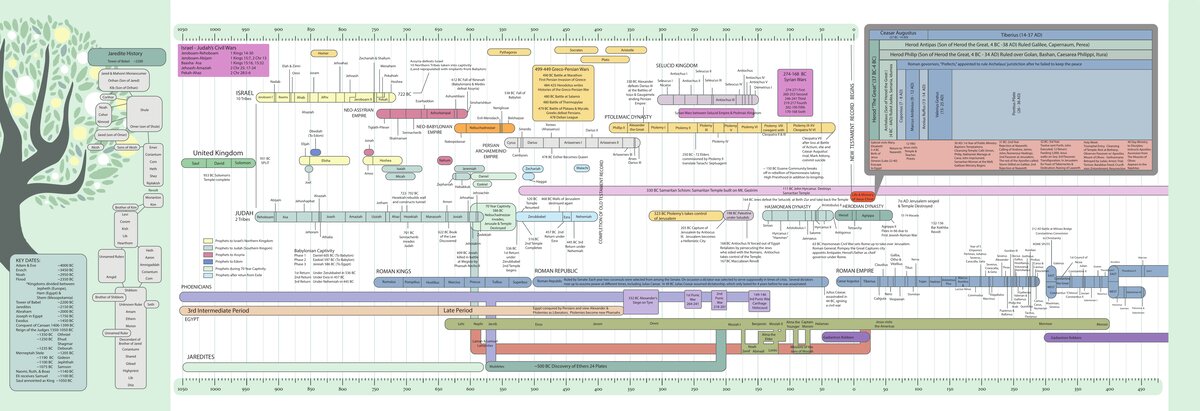
Tap to expand
Old Testament Timeline
From Creation through the Persian Period — tap the image to zoom, or download the full PDF.
Tap anywhere to close · Pinch to zoom