| Church Manuals | |
| Come Follow Me Manual — Week 12 | View |
| Scripture Helps: Old Testament | View |
| OT Seminary Teacher Manual | View |
| OT Institute Manual (Gen–2Sam) | View |
| Pearl of Great Price Manual | View |
| Scripture Reference | |
| Bible Dictionary | View |
| Topical Guide | View |
| Guide to the Scriptures | View |
| Church Media & Library | |
| Gospel for Kids (YouTube) | View |
| Bible Videos | View |
| Church Magazines | View |
| Gospel Library | View |
Week 12
God Meant It unto Good
Genesis 42–50
March 16–22, 2026
5-Minute Overview
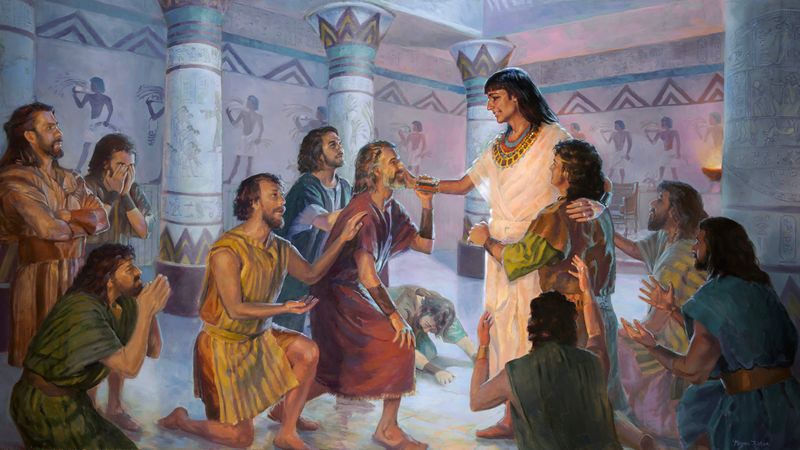
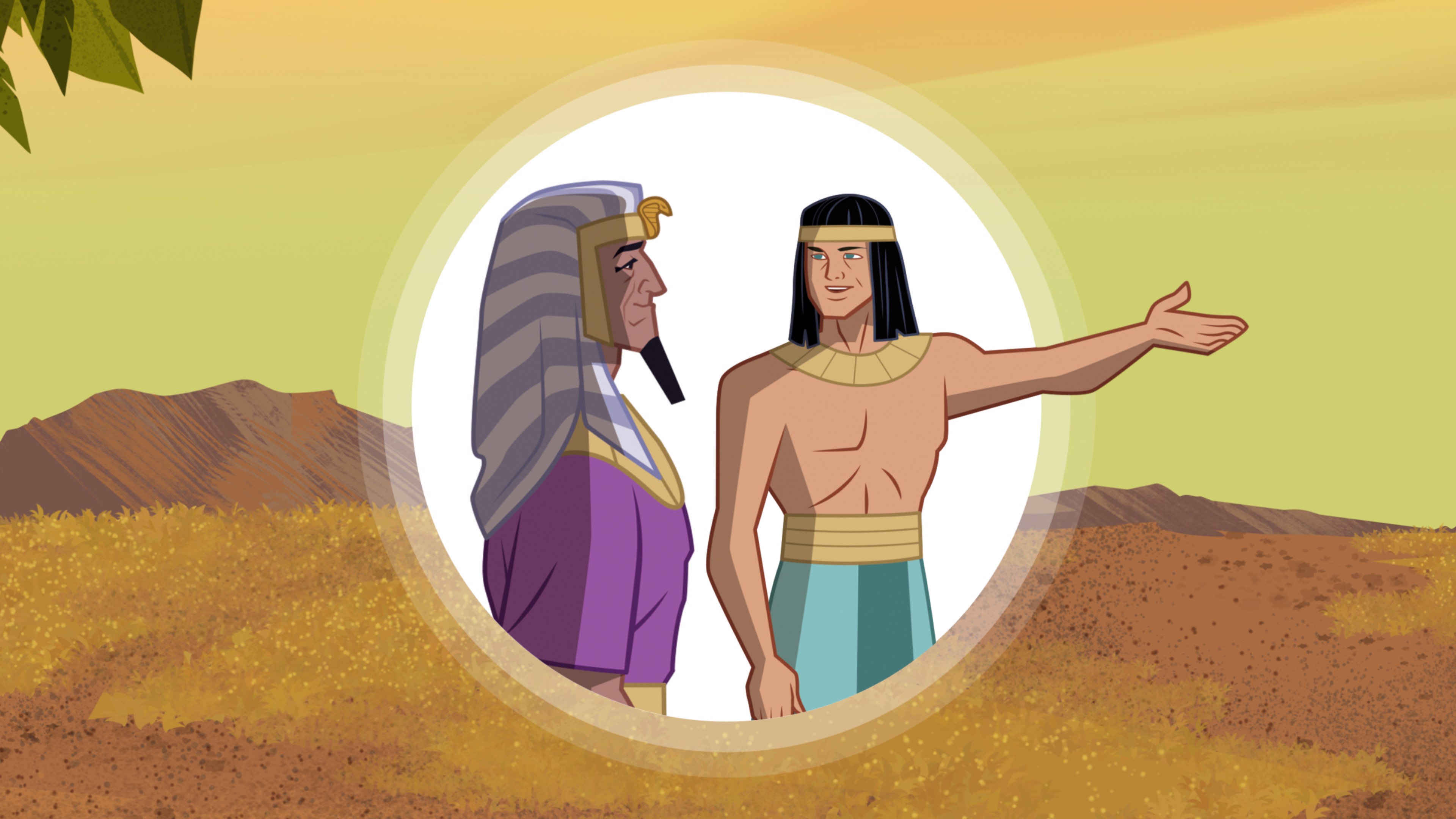
Famine drives Joseph's brothers to Egypt where they unknowingly bow before their brother. Joseph tests them through Benjamin and Judah's plea, then reveals himself in one of the most emotional scenes in scripture. Jacob's family migrates to Goshen, and the aged patriarch blesses Ephraim and Manasseh with crossed hands — placing the younger before the elder. Jacob's final blessings over his twelve sons culminate in the Shiloh prophecy. Joseph's dying charge: 'God will surely visit you.'
Official Church Resources
OFFICIAL CHURCH RESOURCES▶
CHURCH MEDIA FOR FAMILIES▶

▶ Video Commentary
VIDEO COMMENTARY (12 videos)
▼



Specialized Audiences
WOMEN’S PERSPECTIVES (2 videos)
▶

FAMILY & CHILDREN’S RESOURCES (3 videos)
▶
Reference & Study Materials

BIBLE PROJECT VIDEOS THIS WEEK (10 videos)
▶
Book overview + theme & word study videos relevant to this week’s reading.





ACADEMIC & SCHOLARLY SITES▶
MAPS & BIBLICAL LOCATIONS▶
A Letter to Fellow Students
▼︎
My apologies for the late post this week. I have been working on the Passover Seder guide and wanted to make sure everything was in good shape — it is such a fundamental part of so many traditions, and with Holy Week and Easter approaching, the timing felt especially significant.
I am genuinely excited about this Seder guide. It is unique in many ways — we examine the Passover from multiple perspectives. We explore the ancient Temple traditions, the musical traditions, and the cyclical and ascending pattern of redemption that runs through the entire ritual. We view this pattern from the Jewish perspective and the Last Supper perspective, but we also explore it from the Nephite perspective. This is a pattern I recognized several years ago, one I hadn't seen explored anywhere before. In Alma 5, Alma walks through all fifteen steps of the Seder. Delivered around 83 BC, this may be the oldest recorded Seder in existence — predating the Mishnah's codification of the ritual by nearly three centuries and demonstrating the sacred temple patterns of the First Temple period. Discovering this connection profoundly changed the way I see both the Passover and the Book of Mormon. And not only do we explore these ancient patterns, we examine how and why they are still relevant to us today.
In lieu of a Hebrew language lesson this week, we are focusing on cultural insights that tie directly into our study of Joseph and the Passover season.
And what a week to do so. Genesis 42–50 brings the Joseph narrative to its climax, and the connections to Passover are everywhere once you start looking. Joseph sold for silver, stripped of his coat, cast into a pit, and left for dead — only to rise again and become the savior of his family. The brothers who betrayed him bow before him without recognizing who he is. And when the moment of revelation comes, Joseph weeps on their necks and offers forgiveness rather than vengeance.
There is a phrase in this week's reading that will stay with you: "Ye thought evil against me; but God meant it unto good." That is not the prosperity gospel. It is not saying that bad things are secretly good things. It is saying that God takes what life throws at us, including things that hurt us, and can weave them into salvation. Joseph doesn't minimize his brothers' sin — they did think and do evil. But God's purposes transcend human malice.
That is the theological heart of Genesis. And it is the theological heart of Passover. What Pharaoh intended for Israel's destruction became the occasion for their deliverance. What Joseph's brothers intended for his destruction became the means of their survival. What Christ's enemies intended at Calvary became the salvation of the world.
This week we sit with that pattern and let it do its work.
What's in This Week's Materials
▶︎
📖 The Reading: Genesis 42–50
Nine chapters, roughly 280 verses. This is the longest reading assignment in weeks, but it reads like a novel. If you read nothing else, read these sections:
- Genesis 44:18–34 — Judah's speech. The longest speech in Genesis. Twenty-two years earlier, Judah suggested selling Joseph for profit. Now he offers himself as a slave in Benjamin's place: "How shall I go up to my father, and the lad be not with me?" The transformation is complete.
- Genesis 45:1–15 — Joseph reveals himself. "I am Joseph; doth my father yet live?" The brothers are terrified, but Joseph comforts them: "Be not grieved, nor angry with yourselves... God did send me before you to preserve life."
- Genesis 48:13–19 — The crossed-hands blessing. Jacob deliberately places his right hand on the younger Ephraim, not the firstborn Manasseh: "I know it, my son, I know it." The younger-over-elder pattern continues.
- Genesis 50:15–21 — "God meant it unto good." Joseph's final statement on providence, forgiveness, and redemption.
Don't rush through Genesis 49. Jacob's deathbed blessings over his twelve sons are prophetic oracles, not just paternal wishes. Judah receives the Shiloh prophecy ("until Shiloh come"), Joseph receives the longest blessing ("a fruitful bough... whose branches run over the wall"), and each blessing shaped the Israelite's identity and mission even to this day.
📚 Study Guide Highlights
The Joseph-Christ Typology Table (in the Overview) completes the parallels we began last week. Joseph rejected by brothers, sold for silver, falsely accused, exalted to the right hand of power, unrecognized by those who wronged him, revealed with weeping, forgiving those who sold him, saving the very ones who rejected him. The chart maps each parallel side by side — from Genesis through Zechariah 12:10: "They shall look upon me whom they have pierced."
Judah's Transformation Analysis (Key Passages, Passage 2) goes deep into Genesis 44. The study guide traces Judah's journey from the man who suggested selling his brother for profit to the man who offers his own life for Benjamin. The substitutionary pattern is striking: a guilty one (Judah) offers himself in place of an innocent one (Benjamin). This is the pattern Christ would fulfill, only in the opposite direction.
The Forgiveness as Long-Term Action insight (Passage 3) includes a striking observation from Jennifer Roach: Joseph's years of grain storage were themselves an act of forgiveness in process. The very grain that saves Joseph's brothers was stored by the brother they sold. Joseph didn't wait for an apology to begin building the infrastructure of reconciliation — he worked it out over years, transforming the evil done against him into the means of deliverance.
Conference Talks paired with the text this week:
- Elder Joseph B. Wirthlin's "Personal Integrity" (April 1990) — Joseph as a model who could have retaliated but chose what was right and good.
- President Thomas S. Monson's "Compassion" (April 2001) — Joseph as the defining Old Testament example of compassion.
- Elder David E. Sorensen's "Forgiveness Will Change Bitterness to Love" (April 2003) — Joseph's forgiveness with the important clarification: "Forgiveness does not require us to accept or tolerate evil."
Word Studies this week include Shiloh (the Messianic title in Jacob's blessing of Judah), salach (the word for divine forgiveness used by Joseph's brothers), and melo hagoyim ("fullness of nations" — Jacob's prophecy over Ephraim that Paul later quotes in Romans 11:25).
🔤 Hebrew Language Journey — On Hold This Week
Our Hebrew lessons are taking a pause this week. Lesson 11 is written and waiting — focusing on prepositions that carry their pronouns with them — but with Passover approaching and so much cultural material to cover, I wanted to make space for the connections between Joseph's story and the sacred patterns of the Seder.
Next week we will pick up where we left off. In the meantime, the Passover materials themselves are full of Hebrew language insights: the meaning of Pesach, the structure of Maggid, the four questions, the Dayenu.
Featured Articles
▶︎
This week's featured articles tie directly into the Passover themes running through our study:
Alma 5: The Nephite Seder — A structured reading of Alma's great sermon through the lens of the 15-step Passover Seder. Alma walks the Nephites through the same sacred pattern Israel has followed for millennia — from sanctification to redemption to being accepted of God. Notice the significant role music plays in these ancient traditions: the Hallel psalms sung during the Seder, the hymn Jesus and the apostles sang before Gethsemane, and the songs of deliverance that echo through scripture whenever God's people remember His saving acts.
The Four Cups and the Wedding Covenant — How the four cups of Passover reveal God's covenant with Israel as a marriage. Each cup corresponds to a promise in Exodus 6:6–7 and to the covenants we make on the covenant path today.
The Passover Seder: A Step-by-Step Guide — Walk through all fifteen steps of the Passover Seder with connections to the Last Supper, Alma's prophetic call to repentance, and the temple covenants.
This Week's Central Theme
▶︎
When we read the Old Testament, we can frequently get caught up in the history — the names, the places, the chronology — and that trips us up sometimes. But to these ancient authors, they were not trying to preserve a historical record as much as they were trying to teach us about the covenant pattern. We have been seeing this again and again: with Adam, Enoch, Noah, Abraham, Isaac, Jacob, the twelve tribes. These are the core themes we should be focusing on, and they are beautifully preserved in sacred traditions like the Passover.
Joseph's story is one of the clearest examples. The fifteen steps of the Passover Seder are not just rituals but a journey of the soul toward sanctification, redemption, and acceptance before God. And Joseph's narrative walks through every element: the descent into bondage, the unexpected reversal, the revelation of hidden identity, the forgiveness of those who caused the suffering, the feast that celebrates deliverance.
The phrase "God meant it unto good" is not a cliché. It is a theology. Joseph is saying that two things operated simultaneously on the same event: human evil and divine providence. The brothers acted from hatred. God worked through their hatred to accomplish salvation. This is not fatalism ("whatever happens was meant to be"). This is redemptive theology: God takes human deficits, shortcomings, and mistakes and intentionally weaves it into growth and deliverance.
Joseph's statement anticipates Paul's words in Romans 8:28: "All things work together for good to them that love God." Both texts affirm that God works in all circumstances, that human evil doesn't derail God's purposes, and that the result will ultimately be "good" — salvation for those who are willing to turn to Him.
Getting the Most from This Week
▶︎
If you study alone, the Key Passages section of the study guide will take you through the seven most important passages this week: Joseph's revelation, Judah's transformation, "God meant it unto good," the crossed-hands blessing, the blessings of Judah and Joseph, and Joseph's prophecy of the Exodus. Each includes Hebrew word analysis and conference commentary.
If you teach a class or family, the Joseph-Christ typology table is one of the most discussion-rich tools in the guide. Ask learners to find the parallels themselves before showing them the completed chart. Judah's speech in Genesis 44 is also remarkable for discussion: What evidence of genuine repentance does Judah demonstrate? How does his transformation illustrate the gospel pattern of change?
For children, the videos in the Family & Children's Resources tab tell Joseph's story in accessible, engaging ways. The moment Joseph reveals himself to his brothers is one of the most emotionally powerful scenes in scripture — even young children respond to it.
For Passover preparation, the Seder guide walks through all fifteen steps with connections to this week's reading. The timing is intentional: Joseph's story sets the stage for Exodus, and the Seder celebrates the deliverance that Joseph prophesied would come: "God will surely visit you, and bring you out of this land."
The materials are here. Joseph's story is one of the greatest narratives ever written — betrayal and forgiveness, suffering and providence, death and resurrection. Take your time with it this week.
As we prepare for Easter, may we see in Joseph's story the same pattern of death and resurrection, betrayal and forgiveness, that we celebrate in the Savior's Atonement.
Week 12
Genesis 42–50
"God Meant It unto Good"
March 16–22, 2026
1. Genesis 42–50
| Element | Details |
|---|---|
| Week | 12 |
| Dates | March 16–22, 2026 |
| Reading | Genesis 42–50 |
| CFM Manual | Genesis 42–50 Lesson |
| Total Chapters | 9 (Genesis 42–50) |
| Approximate Verses | ~280 verses |
This week concludes the Joseph cycle with one of the most emotionally powerful narratives in scripture: Joseph's reunion with his brothers, his revelation of his identity, Jacob's migration to Egypt, the patriarchal blessings, and Joseph's death. The theme—"God meant it unto good"—captures Joseph's theology of providence: what humans intend for evil, God weaves into salvation.
Genesis 42 opens with famine gripping Canaan. Jacob sends ten sons to buy grain in Egypt; Benjamin stays behind. The brothers bow before Joseph—fulfilling his dreams—but don't recognize him. Joseph speaks harshly, accuses them of being spies, and demands they bring Benjamin. He imprisons Simeon as surety, returns their money secretly in their sacks, and sends them home terrified.
Genesis 43 narrates the return. Only starvation compels Jacob to release Benjamin. Judah pledges his life as guarantee. In Egypt, Joseph sees Benjamin—his only full brother—and is overcome with emotion, weeping privately. He hosts a feast, seating the brothers in birth order (to their astonishment) and giving Benjamin five times the portions of others.
Genesis 44 describes Joseph's final test. His silver cup is hidden in Benjamin's sack. When discovered, the brothers are hauled back. Judah delivers an impassioned speech, offering himself as slave in Benjamin's place: "How shall I go up to my father, and the lad be not with me?" (Genesis 44:34). This is the transformation Joseph needed to see—the same brothers who sold him now willing to sacrifice for Rachel's other son.
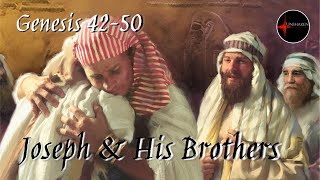
Genesis 45 brings the revelation. Joseph can no longer contain himself: "I am Joseph; doth my father yet live?" (Genesis 45:3). The brothers are terrified, but Joseph comforts them: "Be not grieved, nor angry with yourselves, that ye sold me hither: for God did send me before you to preserve life" (Genesis 45:5). He weeps on Benjamin's neck, kisses all his brothers, and sends them to bring Jacob.
Genesis 46 records Jacob's journey to Egypt. At Beersheba, God appears in a vision: "Fear not to go down into Egypt; for I will there make of thee a great nation" (Genesis 46:3). The chapter lists Jacob's descendants—seventy souls entering Egypt. Joseph meets his father, and they weep together.
Genesis 47 describes Israel's settlement in Goshen, the best land. Jacob, now 130 years old, blesses Pharaoh. Joseph administers Egypt through the remaining famine years, acquiring land and establishing a system of taxation. Jacob lives seventeen more years in Egypt.
Genesis 48 contains Jacob's adoption of Ephraim and Manasseh as his own sons—giving Joseph a double portion. In a deliberate act, Jacob places his right hand on the younger Ephraim, not the firstborn Manasseh, prophesying that Ephraim's seed "shall become a multitude of nations" (Genesis 48:19).
Genesis 49 presents Jacob's deathbed blessings to all twelve sons—prophetic oracles rich with symbolism. Judah receives the royal promise: "The sceptre shall not depart from Judah... until Shiloh come" (Genesis 49:10)—a Messianic prophecy. Joseph receives the longest blessing: "a fruitful bough... whose branches run over the wall" (Genesis 49:22)—fulfilled in his descendants spreading to the Americas.
Genesis 50 closes with Jacob's death and burial at Machpelah in Canaan. The brothers fear Joseph will now take revenge; instead, he reassures them with the week's theme: "Ye thought evil against me; but God meant it unto good, to bring to pass, as it is this day, to save much people alive" (Genesis 50:20). Joseph lives to 110, sees his great-great-grandchildren, and before dying prophesies that God will visit Israel and bring them out of Egypt. His bones are embalmed for that future exodus.
Theme 1: "God Meant It unto Good" — Providence and Redemption
Joseph's statement in Genesis 50:20 is one of Scripture's clearest articulations of divine providence:
"Ye thought evil against me; but God meant it unto good, to bring to pass, as it is this day, to save much people alive."
This is not fatalism ("whatever happens was meant to be") but redemptive theology: God takes what humans intend for harm and weaves it into salvation. Joseph doesn't minimize his brothers' sin—they did think evil. But God's purposes transcend human malice.
Application: What painful experiences in your life might God be weaving into good? How does Joseph's perspective help you interpret your own suffering?
Theme 2: Joseph as Type of Christ — Complete
The Christological parallels that began in Week 11 reach their culmination:
| Joseph | Christ |
|---|---|
| Rejected by brothers | Rejected by His own |
| Sold for silver | Betrayed for silver |
| Falsely accused, imprisoned | Falsely accused, crucified |
| Exalted to Pharaoh's right hand | Exalted to Father's right hand |
| Brothers don't recognize him | Israel doesn't recognize Him |
| Joseph reveals himself and weeps | Christ will reveal Himself to Israel |
| Forgives those who sold him | Forgives those who crucified Him |
| Provides bread, saves from death | Bread of Life, saves from death |
| Saves the very ones who rejected him | Saves those who rejected Him |
The reunion scene (Gen. 45) prefigures what Zechariah prophesies: "They shall look upon me whom they have pierced, and they shall mourn for him, as one mourneth for his only son" (Zechariah 12:10).
Theme 3: Forgiveness and Reconciliation
Joseph's forgiveness is remarkable:
- He had power to destroy his brothers
- They genuinely wronged him
- Twenty-two years had passed
- Yet he wept, kissed them, and refused revenge
His forgiveness was not passive—he tested them first (Gen. 42–44), ensuring genuine change. But once he saw Judah offer himself for Benjamin, Joseph knew transformation had occurred. Forgiveness followed.
Application: What does Joseph's example teach about forgiving those who have deeply wronged you? Is forgiveness the same as trust?
Theme 4: Jacob's Prophetic Blessings
Jacob's blessings (Gen. 49) are prophetic oracles, not just paternal wishes:
Judah (49:8–12): Royal tribe; "Shiloh" prophecy points to Christ
Joseph (49:22–26): Fruitful bough; branches "run over the wall" (to the Americas)
Ephraim (48:19): "Multitude of nations" (melo hagoyim)—fulfilled in scattered Israel
These blessings shaped Israelite identity for millennia and contain Messianic and Restoration prophecies.
Theme 5: Joseph's Prophecy of Moses and Joseph Smith
The JST of Genesis 50 expands Joseph's deathbed prophecy dramatically:
"A seer shall the Lord my God raise up, who shall be a choice seer unto the fruit of my loins... his name shall be called after me; and it shall be after the name of his father" (JST Gen. 50:33)
Joseph of Egypt prophesied of Moses (who would deliver Israel) and Joseph Smith (who would restore truth). The name prophecy—"Joseph, son of Joseph"—was literally fulfilled.
| Person | Role | Significance This Week |
|---|---|---|
| Joseph | Vizier of Egypt | Reveals identity; forgives brothers; administers Egypt |
| Jacob (Israel) | Patriarch | Migrates to Egypt; blesses sons; dies at 147 |
| Benjamin | Joseph's full brother | Object of Joseph's tests; reunited with Joseph |
| Judah | Fourth son | Offers himself for Benjamin; transformation complete |
| Ephraim & Manasseh | Joseph's sons | Adopted by Jacob; Ephraim receives greater blessing |
| Pharaoh | King of Egypt | Welcomes Jacob's family; gives them Goshen |
Historical Period: Middle Bronze Age
Approximate Dates: ~1850–1800 BC
Jacob's Age: 130 when entering Egypt; dies at 147
Joseph's Age: ~39 when family arrives; dies at 110
Relationship to Previous/Next Weeks
Week 11: Joseph sold; rises in Egypt (Gen. 37–41)
Week 12: Joseph reconciled; Jacob's blessings; Genesis concludes (Gen. 42–50)
Week 13: Moses' birth; Exodus begins (Exodus 1–6)
Book of Mormon Connections
- 2 Nephi 3:4–24: Lehi quotes Joseph's prophecies about Moses and Joseph Smith
- Alma 46:24–25: Jacob's prophecy that Joseph's "coat" (remnant) would be preserved
- 1 Nephi 15:12: "Branches" of Joseph running over the wall
Doctrine and Covenants Connections
- D&C 27:10: Joseph committed keys to Joseph Smith
- D&C 133:30–34: Ephraim's role in latter-day gathering
JST Additions
- JST Genesis 50:24–38: Expanded prophecy of Moses and Joseph Smith
- Divine Providence: God means for good what others intend for evil (Gen. 50:20)
- Forgiveness: Christlike forgiveness heals families (Gen. 45; 50:15–21)
- Patriarchal Blessings: Prophetic words shape destiny (Gen. 48–49)
- Messianic Prophecy: Shiloh will come from Judah (Gen. 49:10)
- Restoration Prophecy: A latter-day seer named Joseph (JST Gen. 50)
- Adoption: Jacob adopts Ephraim and Manasseh (Gen. 48)—temple sealings extend family across generations
- Blessings: Patriarchal blessings (Gen. 49) parallel temple blessings
- Reconciliation: Joseph's forgiveness enables family unity—temple work unites generations
- "Branches over the wall": Temple work extends covenant to scattered Israel
Manual Focus: Joseph as type of Christ; forgiveness brings healing; Jacob's prophetic blessings; finding meaning in trials; Joseph's prophecy of Joseph Smith.
Key Questions from Manual:
- How is Joseph's life like Christ's mission?
- What gave Joseph the strength to forgive?
- What do Jacob's blessings teach about patriarchal blessings?
- How can I find meaning in my trials?
Essential Reading:
- Genesis 45:1–15 — Joseph reveals himself
- Genesis 48:8–20 — Ephraim and Manasseh blessed
- Genesis 49:8–12, 22–26 — Judah and Joseph's blessings
- Genesis 50:15–21 — "God meant it unto good"
For Deep Study:
- Genesis 44 — Judah's speech
- Genesis 46:1–7 — God's vision to Jacob
- JST Genesis 50:24–38 — Prophecy of Moses and Joseph Smith
| File | Content Focus |
|---|---|
| 01_Week_Overview | This overview document |
| 02_Historical_Cultural_Context | Egyptian embalming, Goshen, adoption customs |
| 03_Key_Passages_Study | Joseph's revelation, forgiveness, Jacob's blessings |
| 04_Word_Studies | Shiloh, melo hagoyim, salach, nachash |
| 05_Teaching_Applications | Teaching forgiveness, providence, patriarchal blessings |
| 06_Study_Questions | Comprehensive questions for study |
2. Week 12: Historical & Cultural Context
The Famine and Grain Distribution
The famine that drove Jacob's family to Egypt fits known patterns of Nile-dependent agriculture. Egypt's prosperity depended on annual flooding; seven years of low floods would devastate the entire region. Egyptian records document severe famines, and the practice of centralized grain storage under royal authority is well attested.
Joseph's role as grain administrator—with authority to sell to foreigners—matches Egyptian administrative structures. The title "second to Pharaoh" corresponds to known vizier positions.
Bowing Before Joseph
When Joseph's brothers "bowed down themselves before him with their faces to the earth" (Genesis 42:6), they fulfilled Joseph's dreams exactly. In ANE court protocol, prostration before high officials was required. The brothers performed standard courtesy, not knowing they were fulfilling prophecy.
Egyptian Testing of Foreigners
Joseph's harsh treatment of his brothers—accusing them of being spies, imprisoning Simeon, demanding Benjamin—reflects genuine Egyptian suspicion of Asiatic peoples. Egypt's northeastern border was a point of vulnerability; authorities routinely interrogated foreigners about their intentions.
Joseph's tests served multiple purposes:
- Determined if brothers had changed
- Protected Benjamin from potential harm
- Arranged circumstances for revelation
- Tested whether they would sacrifice Benjamin as they had sacrificed him
The Silver Cup and Divination
Joseph's silver cup (Gen. 44:2, 5) was described as used for divination (nachash). Cup divination (lecanomancy) was practiced in ancient Egypt—interpreting patterns formed by liquid, oil, or objects in water. Whether Joseph actually practiced divination or merely used the claim to test his brothers is debated. The accusation heightened the drama and the apparent impossibility of escape.
Goshen (Hebrew: גֹּשֶׁן) was located in the eastern Nile Delta, likely in the area later called "the land of Rameses" (Genesis 47:11). This region offered:
- Excellent pastureland — ideal for Jacob's flocks and herds
- Separation from Egyptians — shepherds were "an abomination" to Egyptians (Gen. 46:34), so separate settlement avoided cultural conflict
- Proximity to Canaan — positioned for eventual return
- Fertile soil — "the best of the land" (Gen. 47:6)
Archaeological evidence suggests Semitic peoples settled in the eastern Delta during the Second Intermediate Period, consistent with the biblical timeline.
Genesis 50:2–3 describes Jacob's embalming:
"And Joseph commanded his servants the physicians to embalm his father: and the physicians embalmed Israel. And forty days were fulfilled for him; for so are fulfilled the days of those which are embalmed."
The Process:
Egyptian mummification was a complex, multi-week process involving:
- Removal of internal organs
- Desiccation with natron (salt)
- Wrapping with linen
- Application of resins and oils
Seventy Days of Mourning:
The text notes "the Egyptians mourned for him threescore and ten days" (Gen. 50:3). This matches Egyptian practice—approximately 40 days for embalming plus 30 days of formal mourning.
Joseph's Embalming:
Genesis 50:26 notes Joseph was also embalmed and "put in a coffin in Egypt." His bones were later carried out during the Exodus (Exodus 13:19) and buried at Shechem (Joshua 24:32).
Jacob's adoption of Ephraim and Manasseh (Genesis 48:5) follows known ANE adoption patterns:
"Ephraim and Manasseh... are mine; as Reuben and Simeon, they shall be mine."
This legal act:
- Gave Joseph a double portion — two tribes instead of one
- Elevated grandsons to sons — equal standing with Jacob's direct sons
- Bypassed Reuben — who had forfeited birthright (Gen. 35:22; 49:3–4)
- Ensured Rachel's legacy — her line received prominent inheritance
Nuzi tablets document similar adoption practices, including elevating grandsons to heir status.
The Crossed Hands
Jacob deliberately placed his right hand on Ephraim (the younger) instead of Manasseh (the firstborn). Joseph tried to correct this, but Jacob refused: "I know it, my son, I know it" (Genesis 48:19).
This pattern—younger over elder—recurs throughout Genesis:
- Isaac over Ishmael
- Jacob over Esau
- Joseph over his older brothers
- Ephraim over Manasseh
The pattern demonstrates that God's election operates by grace, not natural right.
Deathbed blessings carried enormous weight in the ancient world. They were considered:
- Prophetic — words that shaped the future
- Irrevocable — once spoken, binding
- Definitive — determining inheritance and destiny
Jacob's blessings in Genesis 49 combine:
- Assessment of character — Reuben's instability, Simeon and Levi's violence
- Prophetic oracle — Judah's kingship, Joseph's fruitfulness
- Covenant transmission — passing Abrahamic promises to specific sons
The Blessing of Judah
Genesis 49:10: "The sceptre shall not depart from Judah, nor a lawgiver from between his feet, until Shiloh come; and unto him shall the gathering of the people be."
Shiloh (שִׁילֹה) is one of the most debated terms in Genesis:
- Traditional Messianic interpretation: "Until He comes whose right it is" (cf. Ezekiel 21:27)
- Some read: "Until tribute comes to him"
- The LDS Standard Works heading identifies this as Messianic prophecy pointing to Christ
The royal line of David came through Judah, and Christ was "the Lion of the tribe of Judah" (Revelation 5:5).
The Blessing of Joseph
Genesis 49:22–26 is the longest blessing, rich with imagery:
- "Fruitful bough" — prolific descendants
- "Branches run over the wall" — spread beyond Canaan (to the Americas)
- "Archers have sorely grieved him" — persecution
- "His bow abode in strength" — endurance
- "The Shepherd, the Stone of Israel" — Christ
- "Blessings of heaven above... of the deep... of the breasts and womb" — comprehensive blessing
Latter-day Saint interpretation sees this fulfilled in the Nephites, Lamanites, and latter-day tribes of Ephraim and Manasseh.
| Term | Meaning | Significance |
|---|---|---|
| Goshen | Region in Nile Delta | Israel's settlement area |
| Embalming | Mummification | Egyptian preservation of Jacob and Joseph |
| Shiloh | Debated; likely Messianic title | Prophecy of Christ from Judah |
| Sceptre | Royal staff | Kingship promise to Judah |
| Fruitful bough | Prolific vine/branch | Joseph's descendants spread |
| Coffin (aron) | Chest/ark | Joseph's burial container |
Key Locations This Week
- Goshen — Israel's settlement in Egypt (Gen. 45:10; 46:28–34; 47:1–6)
- Machpelah — Jacob's burial place in Canaan (Gen. 50:13)
- Shechem — Where Joseph's bones were eventually buried (Josh. 24:32)
- Beersheba — Where God appeared to Jacob before Egypt (Gen. 46:1)
Genesis 46:27 counts "all the souls of the house of Jacob, which came into Egypt, were threescore and ten" (70). This number has symbolic significance:
- Seventy nations in Genesis 10
- Seventy elders of Israel (Exodus 24:1)
- Seventy members of the Sanhedrin
Acts 7:14 gives the number as 75, following the LXX which includes additional descendants. The discrepancy reflects different counting methods, not error.
Genesis 47:13–26 describes Joseph's administration during famine:
- Egyptians spent money for grain
- Then traded livestock
- Then sold their land
- Finally became servants to Pharaoh
By the famine's end, Pharaoh owned virtually all Egyptian land. Joseph established a 20% tax (one-fifth) that continued thereafter. Only priestly lands were exempt.
This account has troubled some readers, but the text presents Joseph as saving Egypt from starvation—a pragmatic administrator in crisis, not an exploiter.
3. Week 12: Key Passages Study
The Text
"Then Joseph could not refrain himself before all them that stood by him; and he cried, Cause every man to go out from me. And there stood no man with him, while Joseph made himself known unto his brethren. And he wept aloud: and the Egyptians and the house of Pharaoh heard. And Joseph said unto his brethren, I am Joseph; doth my father yet live? And his brethren could not answer him; for they were troubled at his presence. And Joseph said unto his brethren, Come near to me, I pray you. And they came near. And he said, I am Joseph your brother, whom ye sold into Egypt. Now therefore be not grieved, nor angry with yourselves, that ye sold me hither: for God did send me before you to preserve life. For these two years hath the famine been in the land: and yet there are five years, in the which there shall neither be earing nor harvest. And God sent me before you to preserve you a posterity in the earth, and to save your lives by a great deliverance. So now it was not you that sent me hither, but God."
Key Observations
Structural Analysis:
- Private revelation (v. 1) — Joseph clears the room
- Emotional release (v. 2) — Twenty-two years of grief pour out
- Identity statement (v. 3) — "I am Joseph"
- Brothers' terror (v. 3b) — "troubled at his presence"
- Reassurance (vv. 4–5) — "Be not grieved"
- Theological interpretation (vv. 5–8) — "God did send me"
The Question: "Doth my father yet live?"
Joseph had already learned Jacob was alive (Gen. 43:27–28), but this emotional cry reveals his deepest longing. It's the question of a son separated for over two decades.
Three Times "God Sent Me":
- v. 5: "God did send me before you to preserve life"
- v. 7: "God sent me before you to preserve you a posterity"
- v. 8: "It was not you that sent me hither, but God"
Joseph's theology is clear: human evil and divine providence operate simultaneously. The brothers sold him; God sent him.
Conference Commentary
Elder Joseph B. Wirthlin called Joseph "a model of integrity" and reflected on this scene: "In a tender, touching scene, Joseph identified himself to his brothers and forgave them. I suppose he could have retaliated for their mistreatment of him by making them slaves, having them imprisoned, or even having them put to death. But he did what was right and good." He connected Joseph's faithfulness to Romans 8:28: "His life is evidence that 'all things work together for good to [those who] love God.'"
— "Personal Integrity," April 1990 General Conference (link)
President Thomas S. Monson identified Joseph's response as the defining Old Testament example of compassion: "Joseph could have dealt harshly with his brothers for the callous and cruel treatment he had earlier received from them. However, he was kind and gracious to them." His conclusion: "Joseph exemplified the magnificent virtue of compassion."
— "Compassion," April 2001 General Conference (link)
Christological Typology
This scene prefigures Christ's future revelation to Israel:
| Joseph | Christ |
|---|---|
| Hidden identity suddenly revealed | "They shall look upon me whom they have pierced" (Zech. 12:10) |
| Brothers terrified | "They shall mourn for him" |
| Joseph weeps | Christ has compassion on Israel |
| "I am Joseph" | "I am Jesus" (to Saul, Acts 9:5) |
| Forgives those who sold him | "Father, forgive them" |
| Provides salvation | Brings eternal life |
Application Questions
- Joseph waited until the right moment to reveal himself. When might God ask us to wait before revealing something?
- How does Joseph's interpretation of his suffering change how you view your own trials?
- What does "God sent me" teach about the relationship between human agency and divine sovereignty?
The Text
"Now therefore, I pray thee, let thy servant abide instead of the lad a bondman to my lord; and let the lad go up with his brethren. For how shall I go up to my father, and the lad be not with me? lest peradventure I see the evil that shall come on my father."
Context
Joseph's silver cup has been found in Benjamin's sack. The brothers are brought back. Joseph declares Benjamin will become his slave. Judah steps forward with an impassioned speech (vv. 18–34)—the longest speech in Genesis.
Key Observations
Judah's Complete Transformation:
Twenty-two years earlier, Judah:
- Suggested selling Joseph for profit (Gen. 37:26–27)
- Abandoned his father to grief
- Showed no concern for family unity
Now Judah:
- Offers himself as substitute for Benjamin
- Prioritizes his father's wellbeing
- Takes full responsibility
The Speech's Structure:
- Recounts history (vv. 18–29) — Shows understanding of what's at stake
- Describes father's love (vv. 30–31) — "His life is bound up in the lad's life"
- Accepts personal responsibility (v. 32) — "I became surety for the lad"
- Offers substitution (v. 33) — "Let me be a bondman instead"
- Expresses love (v. 34) — Cannot bear to see his father suffer
The Substitutionary Pattern:
Judah's offer is substitutionary atonement in seed form:
- An innocent one (Benjamin) threatened with bondage
- A guilty one (Judah—who sold Joseph) offers himself instead
- The substitute's sacrifice would free the innocent
This is the pattern Christ would fulfill: the guilty offering Himself for the guilty, freeing all.
Why This Speech Matters
This is the moment Joseph needed to see. His tests weren't about revenge—they answered a question: Have my brothers changed? When Judah offers his life for Rachel's other son, Joseph has his answer. The brothers who sold one of Rachel's sons are now willing to die for the other.
Application Questions
- What evidence of genuine repentance does Judah demonstrate?
- How does Judah's transformation illustrate the gospel pattern of change?
- When have you seen someone's character completely transformed over time?
The Text
"And Joseph said unto them, Fear not: for am I in the place of God? But as for you, ye thought evil against me; but God meant it unto good, to bring to pass, as it is this day, to save much people alive. Now therefore fear ye not: I will nourish you, and your little ones. And he comforted them, and spake kindly unto them."
Context
Jacob has died. The brothers fear Joseph will now take revenge—with their father no longer protecting them, Joseph has unlimited power to destroy them. They send a message claiming Jacob requested Joseph forgive them (possibly fabricated), then prostrate themselves before him.
Key Observations
"Am I in the Place of God?"
Joseph refuses to usurp God's role as judge. Vengeance belongs to God, not Joseph. This remarkable restraint comes from theological conviction, not weakness.
The Pivot Word: "But"
"Ye thought evil against me; but God meant it unto good."
This single word (waw adversative in Hebrew) holds the entire theology of providence. Human intention and divine intention operated on the same event with opposite purposes. The brothers acted from hatred; God worked through their hatred to accomplish salvation.
Three Elements of Joseph's Response:
- Theological clarity — Understands God's sovereignty (v. 20)
- Practical provision — "I will nourish you" (v. 21)
- Emotional comfort — "Spake kindly unto them" (v. 21)
Forgiveness isn't just a statement—it's sustained relationship.
Forgiveness as Long-Term Action:
Mental health therapist Jennifer Roach offers a striking observation: Joseph's years of grain storage were themselves an act of forgiveness in process. As she puts it, his forgiveness says in effect: "Not only am I going to forgive you, but I am spending years to make sure you and your children don't die." The very grain that saves Joseph's brothers was stored by the brother they sold. Joseph didn't wait for an apology to begin building the infrastructure of reconciliation—he worked it out over years, transforming the evil done against him into the means of deliverance.
— "Come, Follow Me Week 12 – Genesis 42–50," Jennifer Roach, FAIR
Romans 8:28 Connection
Joseph's statement anticipates Paul: "And we know that all things work together for good to them that love God, to them who are the called according to his purpose" (Romans 8:28).
Both texts affirm:
- God works in all circumstances
- Human evil doesn't derail God's purposes
- The result is "good"—salvation for many
Conference Commentary
Elder Brook P. Hales used Joseph's story as the primary scriptural example of God's greater purposes working through apparent misfortune: "If ever a person might have felt that his prayers were not answered in the way he had hoped, it could have been Joseph. In reality, his apparent misfortune resulted in great blessings to him and saved his family from starvation." Elder Hales's point reinforces Joseph's own interpretation: God was answering prayers Joseph hadn't yet prayed.
— "Answers to Prayer," April 2019 General Conference (link)
Elder David E. Sorensen contrasted Joseph's forgiveness with a tragic modern story of neighbors whose unforgiveness escalated to murder. Against that backdrop, he highlighted Joseph's choice: "Surely at that moment Joseph had the power to exact revenge. He might have put his brethren in prison or sentenced them to death. Instead he confirmed his forgiveness." Elder Sorensen drew the principle: "Joseph's will to forgive changed bitterness to love." He also clarified an important distinction: "Forgiveness does not require us to accept or tolerate evil. It does not require us to ignore the wrong that we see in the world around us or in our own lives."
— "Forgiveness Will Change Bitterness to Love," April 2003 General Conference (link)
Application Questions
- How does "God meant it unto good" differ from "everything happens for a reason"?
- What does Joseph's response teach about the relationship between forgiveness and justice?
- How can you release judgment to God while still maintaining healthy boundaries?
The Text
"And Joseph took them both, Ephraim in his right hand toward Israel's left hand, and Manasseh in his left hand toward Israel's right hand, and brought them near unto him. And Israel stretched out his right hand, and laid it upon Ephraim's head, who was the younger, and his left hand upon Manasseh's head, guiding his hands wittingly; for Manasseh was the firstborn.... And when Joseph saw that his father laid his right hand upon the head of Ephraim, it displeased him: and he held up his father's hand, to remove it from Ephraim's head unto Manasseh's head. And Joseph said unto his father, Not so, my father: for this is the firstborn; put thy right hand upon his head. And his father refused, and said, I know it, my son, I know it."
Key Observations
The Deliberate Crossing:
The Hebrew emphasizes Jacob's intention: שִׂכֵּל (sikkel) — "guiding wittingly," acting with insight and purpose. This was no accident of blind old age. Jacob knowingly crossed his hands to place the greater blessing on the younger.
The Pattern Continues:
- Isaac over Ishmael (younger over elder)
- Jacob over Esau (younger over elder)
- Joseph over his brothers (younger over elder)
- Ephraim over Manasseh (younger over elder)
Each generation reinforces the principle: God's election operates by grace, not natural right.
"I Know It, My Son":
Jacob's response to Joseph's correction is profound: "I know it." Jacob himself had received blessing over his elder brother. He understood the pattern because he had lived it. The deceiver who stole blessing now bestows blessing according to prophetic knowledge.
The Prophecy (v. 19):
"His younger brother shall be greater than he, and his seed shall become a multitude of nations" (melo hagoyim).
This phrase—"fullness of the nations"—appears in Romans 11:25 regarding the gathering of Gentiles. Ephraim's descendants would include the "multitude of nations" scattered across the earth.
LDS Application
Latter-day Saint patriarchal blessings frequently identify members as belonging to Ephraim. Jacob's blessing finds fulfillment in:
- The gathering of Israel in the latter days
- The Restoration coming through Joseph Smith (of Ephraim)
- Members from every nation joining the covenant
Application Questions
- Why does God consistently choose the younger over the elder in Genesis?
- What does Jacob's deliberate action teach about spiritual discernment?
- How does belonging to the house of Israel (often Ephraim) shape your identity?
The Text
"The sceptre shall not depart from Judah, nor a lawgiver from between his feet, until Shiloh come; and unto him shall the gathering of the people be."
Context
Jacob gathers his twelve sons for deathbed blessings—prophetic oracles that would shape their descendants' futures. Judah's blessing is royal, pointing to kingship.
Key Observations
Structure of Judah's Blessing:
- v. 8: Praise from brothers; victory over enemies
- v. 9: Lion imagery—power and majesty
- v. 10: Royal promise—sceptre, Shiloh
- vv. 11–12: Abundance—vines, wine, milk
The Lion of Judah:
"Judah is a lion's whelp... he stooped down, he couched as a lion, and as an old lion; who shall rouse him up?"
This imagery culminates in Revelation 5:5: "The Lion of the tribe of Judah, the Root of David, hath prevailed."
The Shiloh Prophecy:
The word שִׁילֹה (Shiloh) is one of the most discussed terms in Genesis:
| Interpretation | Reading |
|---|---|
| Messianic title | "Until He comes to whom it belongs" |
| Place name | Reference to the town Shiloh |
| "Tribute to him" | Related to שָׁלָה, "tranquility" |
| "His son" | Reading שֶׁלּוֹ as "that which is his" |
The traditional Jewish and Christian reading is Messianic: kingship remains with Judah until the ultimate King comes. The sceptre passed to David, continued through his line, and finds fulfillment in Christ.
"Unto Him Shall the Gathering Be":
The Hebrew יִקְּהַת (yiqhat) suggests obedience, gathering, assembly. The nations will gather to Shiloh—the Messiah. This is fulfilled in Christ and will be completed at His return.
Application Questions
- How does the Shiloh prophecy strengthen your testimony of Christ?
- What does it mean that the "gathering of the people" belongs to Christ?
- How does Judah's transformation (from selling Joseph to this royal blessing) illustrate grace?
The Text
"Joseph is a fruitful bough, even a fruitful bough by a well; whose branches run over the wall.... The blessings of thy father have prevailed above the blessings of my progenitors unto the utmost bound of the everlasting hills: they shall be on the head of Joseph, and on the crown of the head of him that was separate from his brethren."
Key Observations
The Longest Blessing:
Joseph receives the most extensive blessing of the twelve—appropriate for the son who received the birthright (double portion through Ephraim and Manasseh).
"Branches Run Over the Wall":
The Hebrew פֹּרָת (porat, "fruitful") connects to Joseph's name (from the same root). His descendants would spread beyond Canaan's boundaries—"over the wall."
Latter-day Saint interpretation sees this fulfilled in:
- Lehi's family crossing the ocean to the Americas
- The scattering of Israel to all nations
- The latter-day gathering from "the utmost bound of the everlasting hills"
"Everlasting Hills":
This phrase has been applied to the Americas—particularly the Rocky Mountains and Andes. While the primary meaning refers to ancient mountains (symbols of permanence), the Restoration reading connects Joseph's blessing to the Western Hemisphere.
"Separate from His Brethren":
The Hebrew נָזִיר (nazir) means "separated, consecrated, crowned." Joseph was:
- Separated by sale to Egypt
- Separated by position (vizier)
- Consecrated for special purpose
- Crowned with blessing
Book of Mormon Connection
1 Nephi 15:12: "The house of Israel was compared unto an olive tree, by the Spirit of the Lord which was in our father; and behold, are we not broken off from the house of Israel?"
Nephi and his family were literal branches of Joseph "running over the wall" to the Americas.
Application Questions
- How does Joseph's blessing shape your understanding of the Book of Mormon?
- What does it mean to be part of Joseph's lineage today?
- How is the "gathering" from the everlasting hills happening in our time?
The Text
"And Joseph said unto his brethren, I die: and God will surely visit you, and bring you out of this land unto the land which he sware to Abraham, to Isaac, and to Jacob. And Joseph took an oath of the children of Israel, saying, God will surely visit you, and ye shall carry up my bones from hence. So Joseph died, being an hundred and ten years old: and they embalmed him, and he was put in a coffin in Egypt."
Key Observations
"God Will Surely Visit You":
The Hebrew construction פָּקֹד יִפְקֹד (paqod yifqod) is emphatic—"visiting, He will visit" or "surely visit." This becomes a key phrase:
- Exodus 3:16: God uses this exact phrase to Moses
- Exodus 13:19: Moses remembers Joseph's oath
Joseph's prophecy spans 400 years. He died around 1800 BC; the Exodus occurred around 1446 BC. His bones waited in that coffin for centuries.
Joseph's Bones:
The trajectory:
- Genesis 50:26 — Embalmed, placed in coffin in Egypt
- Exodus 13:19 — Moses carries bones out of Egypt
- Joshua 24:32 — Buried at Shechem in the land Jacob had purchased
Joseph's bones were themselves a prophecy—silent testimony that the Exodus would come.
The Final Word of Genesis: "In Egypt"
Genesis begins with creation and ends with a coffin in Egypt. The book concludes in exile, awaiting redemption. This sets up Exodus perfectly: Israel needs deliverance.
JST Expansion
The Joseph Smith Translation of Genesis 50 significantly expands Joseph's prophecy to include:
- A prophet like Moses who would deliver Israel
- A latter-day seer named Joseph, son of Joseph
- The Book of Mormon bringing truth in the last days
2 Nephi 3 quotes this expanded prophecy through Lehi.
Application Questions
- What does Joseph's faith in a future he wouldn't see teach about patience?
- How do Joseph's bones represent faith across generations?
- What "bones" (testimonies, records, promises) do we carry from our ancestors?
4. Week 12: Word Studies
Root: Disputed; possibly ש-ל-ה (Sh-L-H, "tranquility") or שֶׁלּוֹ ("that which is his")
Appears: Genesis 49:10 — "until Shiloh come"
Meaning
Shiloh is one of the most debated words in the Hebrew Bible. Major interpretations include:
| Interpretation | Hebrew Reading | Meaning |
|---|---|---|
| Messianic title | שֶׁלֹּה / שִׁילֹה | "He to whom it belongs" |
| Place name | שִׁילֹה | The town Shiloh |
| "Tribute" | שַׁי לוֹ | "Gift to him" |
| "His son" | שֵׁל + יָהּ | Related to offspring |
| "Peace/rest" | שָׁלָה | "Tranquility" |
Traditional Messianic Reading
The most enduring interpretation understands Shiloh as a Messianic title meaning "He to whom it belongs" or "He whose right it is." This reading connects to Ezekiel 21:27: "Until he come whose right it is; and I will give it him."
The sceptre (kingship) remains with Judah until the ultimate King arrives—then all authority transfers to Him.
LXX Translation
The Septuagint renders the phrase: "Until that which is stored up for him comes" (τὰ ἀποκείμενα αὐτῷ)—supporting the Messianic reading of something/someone "belonging to him."
Fulfillment
- David (from Judah) received the sceptre
- The Davidic line continued until Babylon's destruction of Jerusalem
- Jewish kings (Hasmoneans, Herod) ruled until Christ's time
- Christ, "the Lion of the tribe of Judah" (Revelation 5:5), is the ultimate fulfillment
LDS Application
The LDS Bible chapter heading for Genesis 49 identifies the Shiloh prophecy as pointing to Christ. This prophecy anchors the tribal importance of Judah—from whom Christ descended.
Root: ס-ל-ח (S-L-Ch)
Appears: Genesis 50:17 — "Forgive, I pray thee now, the trespass of thy brethren"
Meaning
The verb salach means to forgive, pardon, spare. It's used almost exclusively with God as the subject—making the brothers' request remarkable. They're asking Joseph to exercise divine-like forgiveness.
Key Usages
| Passage | Context |
|---|---|
| Genesis 50:17 | Brothers request Joseph's forgiveness |
| Exodus 34:9 | Moses asks God to pardon Israel |
| Numbers 14:19–20 | "Pardon... I have pardoned" |
| 1 Kings 8:30, 34, 36, 39, 50 | Solomon's prayer for divine forgiveness |
| Psalm 103:3 | "Who forgiveth all thine iniquities" |
Theological Significance
Salach implies:
- Cancellation of debt — The offense is released
- Restoration of relationship — Not just legal pardon
- Divine prerogative — Forgiveness ultimately belongs to God
When the brothers ask Joseph to salach, they acknowledge their sin's weight. Joseph's response—"Am I in the place of God?"—affirms that ultimate forgiveness is God's domain, yet Joseph extends practical forgiveness and continued provision.
Related Word: נָשָׂא (nasa)
Genesis 50:17 also uses nasa ("forgive" / "lift up"): "Forgive (nasa) the trespass of the servants of the God of thy father."
Nasa literally means "to lift, carry, take away." Forgiveness lifts the burden of sin from the offender. This connects to the scapegoat imagery (Leviticus 16:22) where the goat "bears" (nasa) Israel's sins into the wilderness.
Root: מ-ל-א (M-L-A, "to be full") + גּוֹי (goy, "nation")
Appears: Genesis 48:19 — "his seed shall become a multitude of nations"
Meaning
Jacob blesses Ephraim with this phrase: his descendants will become melo hagoyim—literally "fullness of the nations" or "a multitude of nations."
Grammatical Analysis
- מְלֹא (melo): fullness, that which fills
- הַ (ha): the (definite article)
- גּוֹיִם (goyim): nations (plural of goy)
The phrase suggests not just "many nations" but "the fullness of nations"—completeness, totality.
New Testament Connection
Paul uses the Greek equivalent (πλήρωμα τῶν ἐθνῶν, pleroma ton ethnon) in Romans 11:25: "Blindness in part is happened to Israel, until the fulness of the Gentiles be come in."
The connection suggests:
- Ephraim's descendants would scatter among all nations
- They would become indistinguishable from Gentiles
- In the last days, they would be gathered as the "fullness" enters
LDS Application
Latter-day Saint theology emphasizes:
- Many church members are identified as Ephraim in patriarchal blessings
- The "gathering of Israel" involves Ephraim's scattered descendants
- The "fullness of the Gentiles" relates to missionary work bringing Ephraim's children back
President Russell M. Nelson has taught that the gathering of Israel is "the most important thing taking place on earth today"—this gathering fulfills Jacob's ancient prophecy about Ephraim.
Root: ח-נ-ט (Ch-N-T)
Appears: Genesis 50:2, 3, 26 — "to embalm... embalmed"
Meaning
Chanat means to embalm, to preserve a body through mummification. This word appears only in Genesis 50, describing the Egyptian treatment of Jacob and Joseph's bodies.
Egyptian Context
The Hebrew term likely derives from Egyptian embalming practices:
- 40 days for the embalming process itself (Gen. 50:3)
- 70 days total mourning period
- Use of natron, resins, and linen wrapping
Egyptian mummification was highly developed by Joseph's time (Middle Kingdom period). The practice aimed to preserve the body for the afterlife.
Theological Tension
Embalming was distinctly Egyptian—not Israelite practice. Why did Jacob and Joseph receive it?
- Practical necessity: Transporting Jacob to Canaan required preservation
- Joseph's position: As Egyptian vizier, Egyptian customs applied
- Prophetic purpose: Joseph's preserved body would accompany the Exodus
Joseph's Coffin
Genesis 50:26: "He was put in a coffin (aron) in Egypt."
The word אָרוֹן (aron) is the same word used for the Ark of the Covenant. Joseph's bones, in their aron, awaited the same exodus that would eventually house the aron containing God's covenant.
Root: פ-ק-ד (P-Q-D)
Appears: Genesis 50:24, 25 — "God will surely visit you"
Meaning
Paqad is a rich Hebrew verb meaning:
- To visit (for blessing or judgment)
- To attend to, take notice of
- To appoint, number, muster
- To care for, look after
The Doubled Form
Genesis 50:24 uses the emphatic construction פָּקֹד יִפְקֹד (paqod yifqod): "visiting, He will visit" — "He will surely visit."
This grammatical intensification (infinitive absolute + finite verb) emphasizes certainty. Joseph speaks with prophetic confidence: God will act.
Key Usages of Paqad
| Passage | Context | Meaning |
|---|---|---|
| Genesis 21:1 | "The LORD visited Sarah" | Blessed with Isaac |
| Genesis 50:24–25 | "God will surely visit you" | Future Exodus |
| Exodus 3:16 | "I have surely visited you" | Moses' commission |
| Exodus 13:19 | "God will surely visit you" | Moses remembers Joseph |
| Ruth 1:6 | "The LORD had visited his people" | Ended famine |
| Luke 1:68 | "He hath visited and redeemed his people" | Christ's coming |
Theological Significance
When God "visits" (paqad), He:
- Notices — Sees His people's condition
- Remembers — Recalls His covenant promises
- Acts — Intervenes to deliver
Joseph's prophecy uses the same word God Himself will use to Moses. Joseph spoke with prophetic precision—the exact vocabulary of future deliverance.
Root: נ-ז-ר (N-Z-R, "to separate, consecrate")
Appears: Genesis 49:26 — "him that was separate from his brethren"
Meaning
Nazir can mean:
- Separated one — Set apart from others
- Consecrated one — Dedicated to God
- Crowned one — Wearing a crown or diadem
The term is best known from the Nazirite vow (Numbers 6), where individuals consecrated themselves to God through specific practices.
Joseph as Nazir
Jacob calls Joseph the nazir of his brothers. This captures multiple meanings:
- Separated: Joseph was literally separated—sold to Egypt
- Consecrated: Joseph lived a holy life despite circumstances
- Crowned: Joseph received authority and honor
The word connects Joseph's suffering (separation) with his exaltation (consecration/crowning). His separation wasn't punishment—it was preparation for a sacred role.
Typological Connection
Christ is the ultimate nazir:
- Separated from sinners (Hebrews 7:26)
- Consecrated by the Father (John 10:36)
- Crowned with glory and honor (Hebrews 2:9)
Root: ב-ר-כ (B-R-K, "to bless")
Appears: Genesis 49:25, 26, 28 — "blessings of thy father... these are the twelve tribes of Israel: and this is it that their father spake unto them, and blessed them"
Meaning
Berakah (blessing) comes from the root meaning "to kneel" (berek = knee). The connection may relate to:
- Kneeling to receive blessing
- Camels kneeling to drink (blessing of water)
- Posture of submission and reception
Blessings in Genesis 49
Jacob's deathbed blessings (berakot) combine:
- Assessment — Character evaluation
- Prophecy — Future prediction
- Pronouncement — Performative speech that shapes reality
The Weight of Spoken Blessing
In the ancient world, patriarchal blessings were:
- Irrevocable — Once spoken, binding
- Prophetic — Considered divinely inspired
- Definitive — Shaped descendants' futures
Isaac couldn't recall his blessing from Jacob (Genesis 27). The words had power beyond the speaker's control.
Joseph's Abundant Blessing
Genesis 49:25–26 heaps blessing upon blessing for Joseph:
- Blessings of heaven above
- Blessings of the deep beneath
- Blessings of breasts and womb
- Blessings of father (greater than ancestors)
- Blessings to the "utmost bound of the everlasting hills"
This cascade reflects Joseph's abundant inheritance—a double portion through Ephraim and Manasseh.
Root: Uncertain; possibly Egyptian origin
Appears: Genesis 45:10; 46:28, 29, 34; 47:1, 4, 6, 27; 50:8
Meaning
Goshen was the region in Egypt's eastern Nile Delta where Israel settled. The name may derive from:
- Egyptian Gsm or Ksm (a geographical designation)
- Semitic root meaning "draw near" or "approach"
Description in Genesis
| Reference | Description |
|---|---|
| 45:10 | "Thou shalt dwell in the land of Goshen, and... be near unto me" |
| 46:34 | Given because Egyptians disdained shepherds |
| 47:6 | "The best of the land... in the land of Goshen" |
| 47:11 | Also called "the land of Rameses" |
| 47:27 | "Israel dwelt... in Goshen; and they... grew, and multiplied" |
Strategic Location
Goshen offered:
- Separation — Distance from Egyptian population centers
- Pastureland — Ideal for Jacob's flocks
- Fertility — "The best of the land"
- Proximity — Close to Canaan for future return
- Protection — Joseph could watch over his family
Archaeological Considerations
The region corresponds to the Wadi Tumilat in the eastern Delta. Egyptian records document Semitic peoples settling in this area during the Second Intermediate Period—consistent with the biblical timeline for Joseph and Jacob.
5. Week 12: Jewish Perspective
Before Judah's dramatic confrontation, the Targum Onkelos quietly addresses a troubling question: Does Joseph practice divination? When Joseph's steward accuses the brothers of stealing the goblet, the Hebrew text reads: "Is not this the one from which my lord drinks, and he indeed yenachesh --- divines --- by it?" (Genesis 44:5). The verb nachash means "to divine" or "to practice sorcery" --- an activity strictly forbidden in the Torah (Leviticus 19:26; Deuteronomy 18:10).
The Targum replaces the offending verb entirely. In both verse 5 and verse 15, Onkelos renders nachash as badaqa mevadeq --- "testing, he tests":
Verse 5: "Is not this the one from which my lord drinks, and he indeed tests by it?" (hu badaqa mevadeq beh)
Verse 15: "Did you not know that a man like me can indeed test?" (badaqa mevadeq guvra di khevati)
The interpretive move is deliberate: Joseph does not practice forbidden divination. He tests people --- probing their character and honesty, as he has been doing throughout the entire brother-reunion narrative. The Targum protects Joseph's righteousness while simultaneously highlighting his method: the goblet, the planted silver, the demand for Benjamin were all tests designed to reveal whether the brothers had truly repented.
Teaching implication: The Targum's reading resolves a moral problem that has troubled readers for millennia: how can Joseph, the righteous one (ha-tzaddik), practice an art that Moses will later condemn? Onkelos answers by reframing the entire scene: Joseph was never divining --- he was discerning. The distinction between nachash (divination) and bedikah (testing/examination) preserves the integrity of the patriarch while revealing the deeper purpose of the entire goblet episode. Every apparent cruelty was, in fact, a test of character.
LDS Connection
The Targumic distinction between divination and righteous testing resonates with the Latter-day Saint understanding of divine probation. Just as Joseph tested his brothers not out of cruelty but to determine whether they had changed, God places His children in probationary circumstances designed to reveal the condition of their hearts (Abraham 3:25: "We will prove them herewith, to see if they will do all things whatsoever the Lord their God shall command them"). The planted goblet mirrors the mortal condition: a test that looks arbitrary or even cruel from the outside but serves a redemptive purpose understood only by the one who designed it. Joseph's testing also reflects the role of righteous leaders who must sometimes allow difficult circumstances in order to bring genuine repentance to the surface --- a principle evident in the Lord's dealings with the early Saints (D&C 105:6).
When Judah "drew near" (vayigash) to Joseph, the rabbis found three layers of meaning in this single word. The Midrash records a dispute over what kind of approach Judah intended, with Rabbi Elazar offering the definitive resolution:
Rabbi Yehuda said: He approached for battle. Rabbi Nehemya said: He approached for conciliation. The Rabbis said: He approached for prayer. Rabbi Elazar resolved: "If for war, I am coming; if for conciliation, I am coming; if for prayer, I am coming."
Teaching implication: The triple interpretation reveals that Judah came fully prepared --- for confrontation if necessary, for diplomacy if possible, and for divine help regardless. Rabbi Elazar's resolution suggests that true courage integrates all three: the willingness to fight, the desire to make peace, and the humility to pray. Judah approaches as a complete man.
LDS Connection
This threefold posture mirrors the Latter-day Saint understanding of how to approach difficult moments of reconciliation or advocacy. Just as Judah was prepared for every possible outcome while remaining anchored in prayer, disciples of Christ are counseled to act with both courage and meekness, trusting that God will direct the outcome. The readiness to act boldly, tempered by the willingness to reconcile and the constancy of prayerful dependence, reflects the covenant balance described in Doctrine and D&C 121:41-43: boldness combined with charity and long-suffering.
Genesis Rabbah offers a vivid parable for what Judah accomplished through his extended speech to Joseph, drawing on Proverbs 20:5 ("Counsel in the heart of man is like deep water; but a man of understanding will draw it out"):
"A deep well filled with cold, excellent water, but no one was able to drink from it. Someone came and tied rope to rope, thread to thread, drew from it, and drank. So Judah did not relent from responding to Joseph word after word until he touched his heart."
Teaching implication: The rabbis understood that Joseph's composure was not coldness --- it was a deep well. Joseph's love and grief were real but buried under years of pain and the burden of testing his brothers. Judah's words served as the rope, drawing out what was already there. Genuine reconciliation often requires this patient, persistent labor of drawing out the good in another person.
LDS Connection
This parable illuminates the Latter-day Saint teaching that the Atonement does not merely impose forgiveness from the outside but draws out our deepest capacity for love and healing. Just as Judah's words reached Joseph's hidden compassion, the Spirit works through patient, persistent ministry to reach hearts that may appear unyielding. Home ministers, parents, and friends who continue to reach out --- "rope to rope, thread to thread" --- may be doing the very work the rabbis describe: not creating something new, but drawing up what God has already placed within.
When Joseph revealed himself and his brothers stood in stunned silence, the Midrash draws a sobering lesson about divine judgment:
Abba Kohen Bardela said: "Woe unto us from the Day of Judgment! Woe unto us from the day of rebuke! Joseph was the youngest of the tribes, and his brothers were unable to withstand his rebuke. When the Holy One blessed be He comes to rebuke each person according to what he is --- all the more so!"
Teaching implication: The brothers were terrified not by any threat Joseph made but simply by the words "I am Joseph." The truth itself was the rebuke. The rabbis extrapolate: if a brother's identity could silence ten grown men, what will it be like when God reveals the full truth of our lives? This teaching frames divine judgment not as vindictive punishment but as the moment when all self-deception falls away and we see ourselves as we truly are.
LDS Connection
This teaching powerfully connects to the Latter-day Saint understanding of the judgment as a moment of perfect self-knowledge. Alma 12:14 describes those who will "stand before God" and have "a perfect knowledge of all our guilt." Like Joseph's brothers, we will not be judged by an external accusation but by recognition of a truth we have always known. The Atonement of Jesus Christ is the provision that transforms this terrifying moment from one of condemnation into one of healing --- so that we need not "shrink" from God's presence but can be "clasped in the arms of Jesus" (Mormon 5:11).
When Joseph and Benjamin embraced and wept, the Torah specifies that Joseph wept "on Benjamin's necks" (tzav'arav, plural) and Benjamin wept "on his neck." The rabbis find prophetic significance in the unusual plural:
Joseph fell upon Benjamin's necks and wept --- Joseph saw through the Divine Spirit that two Temples were destined to be built in Benjamin's portion and were destined to be destroyed. "And Benjamin wept on his neck" --- Benjamin saw that the Tabernacle in Shiloh was destined to be fashioned in Joseph's portion and was destined to be destroyed.
Teaching implication: The rabbis transform this intimate family reunion into a vision of national tragedy. Joseph and Benjamin each wept not for their own sorrow but for the destruction that would occur in the other's territory. The Jerusalem Temple (in Benjamin's allotment) and the Tabernacle at Shiloh (in Ephraim/Joseph's allotment) both would fall. The brothers' tears become prophetic mourning --- weeping for a future they could see but not prevent.
LDS Connection
This midrashic reading adds a profound dimension to the Joseph-Christ typology. Just as Joseph wept for destruction he foresaw in Benjamin's territory, Christ wept over Jerusalem, foreseeing the Temple's destruction (Luke 19:41-44). The capacity to weep for another's future suffering --- rather than for one's own past pain --- marks the highest form of prophetic empathy. In the Latter-day Saint understanding, Christ weeps not from weakness but from an infinite awareness of what His people will suffer (Moses 7:28-37).
Genesis Rabbah draws a stunning connection between Joseph's tears of reconciliation and God's future redemption of Israel:
"Just as Joseph placated his brothers only through weeping, so the Holy One blessed be He will redeem Israel only through weeping," as it is stated: "They shall come with weeping, and with supplications will I lead them" (Jeremiah 31:9).
Teaching implication: The rabbis insist that redemption and tears are not opposites --- tears are the very medium through which redemption arrives. Joseph's weeping was not a sign that reconciliation was incomplete; it was the mechanism by which reconciliation became real. Similarly, Israel's future restoration will come not despite mourning but through it.
LDS Connection
This rabbinic principle resonates deeply with the Latter-day Saint emphasis on "godly sorrow" as the prerequisite for genuine change (2 Corinthians 7:10). The Book of Mormon repeatedly pairs weeping with divine encounter --- Enos's "soul hungered" in prayer (Enos 1:4), the people of King Benjamin "cried aloud with one voice" before receiving remission of their sins (Mosiah 4:2), and the resurrected Christ wept with the Nephites before blessing their children (3 Nephi 17:21-22). In each case, tears were not interruptions to the sacred moment but its essential texture.
When Jacob saw the wagons (agalot) Joseph sent from Egypt, his spirit revived. The rabbis find a deeper message in this detail through wordplay:
What had Joseph known [was the last thing Jacob was studying]? He knew that Jacob was engaged in the chapter of the beheaded calf (eglah arufah) when they parted. He sent wagons (agalot) as a sign, since agalot and eglah share the same root. This is to teach you that everywhere Jacob would settle he would study Torah.
The eglah arufah ceremony (Deuteronomy 21:1-9) was performed when a murdered body was found between two cities and the killer was unknown. The elders of the nearest city would break a heifer's neck and declare their innocence.
The Targum Onkelos offers a stunning reading of what happened when Jacob's spirit "revived." Where the Hebrew simply says "the spirit of Jacob their father revived" (vattechi ruach Ya'aqov, Genesis 45:27), Onkelos renders: "And the spirit of prophecy rested upon Jacob their father" (u-shrat ruach nevuah levat Ya'aqov). The rabbis understood that Jacob had lost the gift of prophecy during his years of mourning --- the Shekhinah departs from one who is consumed by grief. When he saw the wagons and understood that Joseph lived, the prophetic spirit returned (Targum Onkelos, Genesis 45:27).
Teaching implication: Jacob's spirit revived not because of the wealth the wagons represented but because of the Torah knowledge they encoded. Joseph's signal proved that despite decades in Egyptian culture, he remained his father's son --- a student of Torah. The Targum's rendering deepens this further: the wagons did not merely lift Jacob's mood --- they restored his prophetic capacity. Twenty-two years of grief had silenced the divine voice within him; Joseph's Torah-encoded message reopened the channel. By alluding to the eglah arufah, Joseph also acknowledged the moral dimensions of his brothers' past actions: the ceremony addressed communal responsibility for innocent blood.
LDS Connection
This tradition underscores the principle that covenant identity persists even in "Egypt." For Latter-day Saint readers, Joseph's ability to signal his continued faithfulness through scripture study resonates with the teaching that maintaining spiritual practices in hostile environments is the truest mark of discipleship. The Targum's insight that Jacob's prophetic spirit was restored --- not merely his emotional well-being --- parallels the Latter-day Saint understanding that prolonged grief, bitterness, or spiritual neglect can cause us to lose sensitivity to the Spirit, while reconnection with covenant truths can restore it. The eglah arufah wordplay also carries additional resonance: the ceremony addressed communal responsibility for shed blood --- precisely the issue at stake between Joseph and his brothers. Joseph demonstrated both his continued spiritual identity and his awareness of the moral reckoning still to come.
When Jacob prepared to descend into Egypt, he sent Judah ahead "to direct the way before him unto Goshen" (Genesis 46:28). The Midrash offers two interpretations of Judah's mission:
One said: To arrange a residence for him. And one said: To arrange an academy (beit midrash) in which he would teach Torah matters.
Teaching implication: Before Jacob secured housing, food, or political protection in Egypt, he ensured that a place of Torah study was established. The rabbis elevate this detail into a principle: spiritual infrastructure must precede physical settlement. A community without a house of learning is not yet a community --- even if it has every material comfort.
LDS Connection
This rabbinic insight mirrors the Latter-day Saint pattern of establishing worship and education as the first priorities in any new community. When the early Saints arrived in the Salt Lake Valley, one of their earliest acts was planning the temple site. The emphasis on seminaries, institutes, and family scripture study reflects the same instinct the rabbis attribute to Jacob: before anything else, establish a place where the next generation can learn the covenant.
Joseph selected only five of his brothers to present before Pharaoh. The Midrash explains his strategic reasoning:
Joseph selected the five weakest of his brothers to present before Pharaoh. He reasoned: "If I present the mighty ones before Pharaoh, he will see them and make them his warriors."
Teaching implication: Joseph's selection was an act of protective wisdom. He understood that displaying the full strength of his family before a powerful king would invite co-optation rather than hospitality. By presenting his less physically imposing brothers, Joseph ensured that Pharaoh would see them as harmless shepherds rather than potential military assets. This is diplomacy as family protection.
LDS Connection
Joseph's strategic humility before Pharaoh illustrates a principle found throughout Latter-day Saint history: the wisdom of not provoking unnecessary opposition. Just as Joseph understood the dangers of displaying too much strength before a ruler, the Lord counsels His people to be "wise as serpents, and harmless as doves" (Matthew 10:16). Joseph's protective instinct --- shielding his family from a ruler who might exploit them --- reflects the covenant duty to safeguard one's household while navigating the realities of living among those who do not share covenant values.
Two teachings from Genesis Rabbah 96 frame Jacob's final years with profound theological insight --- one about the persistence of life, the other about the nature of kindness.
Reish Lakish said: "Jacob our father did not die." ... Just as his descendants are alive, so he is alive.
The Talmud (Ta'anit 5b) records the same tradition, with Rav Nahman challenging Rav Yitzhak: "Was it for nothing that they mourned him, embalmed him, and buried him?" The answer: "I am expounding a verse --- 'Fear not, My servant Jacob ... for I will save you from afar, and your seed from the land of their captivity' (Jeremiah 30:10). The verse compares him to his seed: just as his seed is alive, so he is alive."
The companion teaching concerns Jacob's request that Joseph bury him in Canaan --- described as an act of "kindness and truth" (chesed ve-emet):
Rabbi Elazar said: What is "kindness and truth" (chesed shel emet)? It is kindness done for the dead, for one who performs kindness for the dead does not expect repayment.
Teaching implication: These two teachings form a paradox at the heart of Jewish thought about death and continuity. On one hand, the righteous never truly die --- they persist through their descendants and their influence. On the other hand, the highest form of human kindness is kindness shown to the dead, precisely because it can never be reciprocated. The dead cannot repay --- and yet the dead are somehow still alive. Together, these teachings suggest that the covenant relationship transcends the boundary between life and death.
LDS Connection
Reish Lakish's teaching that "Jacob did not die" resonates profoundly with the Latter-day Saint understanding of eternal family bonds. In the temple, Latter-day Saints perform ordinances for the dead --- a practice that is, by definition, chesed shel emet in the rabbinic sense: kindness for those who cannot repay. Yet the temple also affirms that those ancestors are alive, as the Savior taught: "He is not the God of the dead, but the God of the living: for all live unto him" (Luke 20:38). The rabbinic and Latter-day Saint traditions converge on this point: death does not sever the covenant, and the highest kindness flows toward those beyond mortal reach.
Jacob's blessing over Ephraim and Manasseh --- "may they proliferate like fish (veyidgu) in the midst of the land" --- receives extended treatment in Genesis Rabbah:
"Just as the eye does not have dominion over the fish [because they are covered by water], so the evil eye will have no dominion over your descendants." ... Just as fish grow in water but when a single drop falls from above they receive it thirstily, as if they had never tasted water in all their days --- so it is with Israel: they grow in the water of Torah, but when they hear a novel matter of Torah, they receive it thirstily as if they had never heard a matter of Torah in all their days.
Teaching implication: The rabbis derive two lessons from the fish imagery. First, Joseph's descendants would be shielded from the "evil eye" --- protected from envious destruction, just as fish are hidden beneath the water's surface. Second, like fish that remain perpetually thirsty despite living in water, Israel's relationship to Torah should be one of endless, unsatisfied desire for more knowledge --- never complacent, always hungering for the next revelation.
LDS Connection
The image of spiritual thirst despite being immersed in "water" resonates with Alma 32:41-42, where Alma describes the process of nourishing the word of God as ongoing --- even those who have tasted the fruit continue tending the tree. The protection-from-the-evil-eye tradition also connects to the Latter-day Saint practice of declaring Ephraimite lineage in patriarchal blessings. The tribal identity is not merely genealogical but carries with it Jacob's ancient protective blessing --- a covenant promise of divine covering.
When Jacob grants Joseph "one portion above your brothers, which I took from the Amorite with my sword and with my bow" (Genesis 48:22), the Targum Onkelos replaces the military language entirely:
"Which I took from the Amorite with my prayer and with my petition (bi-tzeloti u-ve-va'uti)."
This is one of the most celebrated interpretive expansions in the Targum. Jacob's "sword and bow" become prayer and supplication. The tradition that Jacob's true weapons were spiritual rather than military is reinforced in Genesis Rabbah, where Rabbi Yehuda interprets the same verse: "Sword" means prayer and "bow" means supplication (Genesis Rabbah 97).
Teaching implication: The Targum's rendering transforms the entire concept of spiritual inheritance. What Jacob bequeaths to Joseph is not a tract of land conquered by violence but a territory secured through the power of prayer. The "Amorite" was overcome not by iron but by faith. This reading insists that the patriarchal legacy is fundamentally spiritual --- and that prayer is the most potent weapon in the covenant arsenal.
LDS Connection
This teaching aligns powerfully with the Latter-day Saint understanding that "the weapons of our warfare are not carnal" (2 Corinthians 10:4). The Targum's transformation of sword into prayer and bow into petition mirrors the Book of Mormon's anti-Nephi-Lehies, who buried their weapons of war and replaced them with covenantal devotion (Alma 24:17-19). For Latter-day Saints, the idea that Jacob conquered through prayer rather than military force underscores the temple-centered theology of power: the greatest spiritual inheritance is access to God through prayer, not dominion through force.
The Targum Onkelos introduces one of its most theologically distinctive concepts in Jacob's blessings --- the Memra (מֵימְרָא, "the Word") of God:
"And the Memra (Word) of the Lord shall be at your aid" (vi-yehei meimra da-YY be-sa'dekhon).
Where the Hebrew reads simply "God shall be with you," Onkelos interposes the Memra --- God's Word --- as the mediating divine presence. The concept appears again in Jacob's blessing of Joseph:
"This strength was his from before the mighty God of Jacob, by whose Word (be-meimreh) He sustains the fathers and the sons, the seed of Israel."
The Memra theology preserves divine transcendence --- God does not dwell "with" humans in a physical sense --- while affirming His active, sustaining presence through His Word. The Aramaic Memra functions as an intermediary concept: God remains wholly other, yet His Word walks with, sustains, and aids His covenant people.
Teaching implication: The Memra doctrine reveals that even in the earliest layers of Jewish biblical interpretation, there was a recognized need for a concept that could bridge the gap between an infinite, transcendent God and His finite, embodied people. God does not diminish Himself to be "with" Jacob's descendants; rather, His Word goes forth as the vehicle of His presence and sustaining power. The patriarchs and their children are sustained not by God's physical proximity but by His Word.
LDS Connection
The Memra concept resonates with the Johannine prologue: "In the beginning was the Word, and the Word was with God, and the Word was God" (John 1:1). For Latter-day Saints, the identification of Christ as the pre-mortal Jehovah --- the God who spoke to the patriarchs, who sustained Israel, and who mediated the Father's presence --- maps directly onto the Targumic pattern. The Memra that "sustains the fathers and the sons" is, in Latter-day Saint theology, the pre-mortal Christ who covenanted with Abraham, appeared to Jacob, and walked with Israel through the wilderness. The Targum's theological instinct --- that God's presence requires a mediating Word --- anticipates the Christological claim at the heart of the Restoration.
One of the most beloved rabbinic traditions connects the Shema --- Judaism's central declaration of faith --- to Jacob's deathbed scene:
Elazar ben Ahui said: From here Israel merited the recitation of Shema. When Jacob our patriarch was passing from the world, he called his twelve sons. He said to them: "Do you have in your heart dissension over the Holy One blessed be He?" They said: "Hear, Israel our father, just as you do not have in your heart dissension over the Holy One blessed be He, so there is no dissension in our hearts. Rather, the Lord is our God, the Lord is one." He too expressed with his lips and said: "Blessed be the name of His glorious kingdom for ever and ever."
Rabbi Berekhya adds: "That is why Israel recites early in the morning and late in the evening each day: 'Hear, Israel, our patriarch, from the Cave of Machpelah: the same matter that you commanded us, we still practice it: The Lord is our God, the Lord is one.'"
Teaching implication: In this reading, "Hear, O Israel" is not addressed to the nation in the abstract but to the patriarch Jacob himself. Every time a Jew recites the Shema, they are speaking to their dying father, reassuring him that faith has not been lost. The whispered "Blessed be the name of His glorious kingdom" that follows the Shema in Jewish liturgy preserves Jacob's response --- his relief that his children remain faithful.
LDS Connection
This tradition reframes daily worship as an act of filial devotion --- speaking to ancestors, keeping covenant promises made at a parent's deathbed. For Latter-day Saints, who emphasize the eternal nature of family bonds, this is deeply resonant. Temple covenants are, in a sense, the Latter-day Saint version of this same impulse: we stand before God and declare to our ancestors that the covenant they kept has not been broken. The Shema tradition reminds us that every act of worship is also an act of generational faithfulness.
Jacob's blessing of Judah as a lion cub carries Messianic weight in the Midrash:
"Judah is a lion cub" --- this teaches that he gave him the strength of a lion and the boldness of its cubs. "From prey, my son, you ascended" --- from the prey of Joseph you rose and became elevated. From the prey of Tamar, you rose and became elevated. "He crouches, lies" --- from Peretz until David. "He crouches, lies [shakhav]" --- from David until Zedekiah. Some say: "He crouches, lies" --- from Peretz until Zedekiah; "he crouches, lies [shakhav]" --- from Zedekiah until the messianic king.
The Targum Onkelos confirms this connection between royalty and repentance. Where the Hebrew text reads "Judah, your brothers shall praise you [yodukha]" (Genesis 49:8), Onkelos renders: "Judah, you confessed and were not ashamed (att odita ve-la veheitta); therefore your brothers shall give thanks on your account" (Targum Onkelos, Genesis 49:8). The Targum transforms the Hebrew wordplay on Judah's name (Yehudah / yodukha) from an act of praise by others into an act of confession by Judah himself. In the Targumic reading, it is precisely because Judah confessed --- publicly, in the matter of Tamar (Genesis 38:26) --- that he merited kingship. The dynasty begins not with a crown but with an admission of guilt.
Teaching implication: The rabbis read Judah's lion imagery as describing a dynasty that passes through stages --- from initial kingship through exile and ultimately to the Messiah. Remarkably, both the Midrash and the Targum credit Judah's elevation not to military prowess but to two moral crises: his intervention to save Joseph from death (Genesis 37:26) and his public confession of wrongdoing with Tamar (Genesis 38:26). Judah "rose" through repentance, not conquest. The Targum makes the point explicit: the very name "Judah" encodes the principle that confession (hoda'ah) and praise (hodayah) share the same root. To acknowledge one's sin before God and community is itself an act of worship.
LDS Connection
Revelation 5:5 identifies Christ as "the Lion of the tribe of Judah" --- the ultimate fulfillment of Jacob's prophecy. For Latter-day Saints, the rabbinic observation that Judah's royalty was earned through repentance rather than force offers a powerful template: the Messianic King inherits His kingdom not through conquest but through the ultimate act of self-sacrifice. The lion who lies down is the same lamb who was slain (Revelation 5:5-6). The Targumic insight that Judah "confessed and was not ashamed" also resonates with Doctrine and D&C 58:43: "By this ye may know if a man repenteth of his sins --- behold, he will confess them and forsake them." In both traditions, genuine confession --- public, unashamed, complete --- is not a mark of weakness but the foundation of spiritual authority.
The Shiloh prophecy is one of the most ancient Messianic prophecies in scripture. Multiple rabbinic sources identify Shiloh explicitly as the Messiah.
The Targum Onkelos renders the verse with unmistakable clarity:
"The one exercising dominion shall not depart from the house of Judah, nor the scribe from his descendants' descendants, forever, until the Messiah comes, to whom the kingdom belongs, and to him the peoples shall be obedient."
Genesis Rabbah confirms this reading:
"Until Shiloh arrives" --- this is the messianic king. "And to him nations will assemble" --- he will come and blunt the teeth of the idolaters.
The Talmud takes this further, recording that different rabbinic academies each claimed the Messiah's name reflected their own teacher:
"The school of Rabbi Sheila says: Shiloh is his name, as it is stated: 'Until Shiloh shall come' (Genesis 49:10). The school of Rabbi Yannai says: Yinnon is his name... And the Rabbis say: The leper of the house of Rabbi Yehuda HaNasi is his name, as it is stated: 'Indeed our illnesses he did bear and our pains he endured; yet we did esteem him injured, stricken by God, and afflicted' (Isaiah 53:4)."
--- Sanhedrin 98b
The Targum continues its Messianic vision into the very next verse. Where the Hebrew of Genesis 49:11 reads poetically about binding a donkey to a vine and washing garments in wine, Onkelos renders:
"Israel shall surround his city; the people shall build his Temple; the righteous shall be round about him, and those who study Torah in his instruction. His garments shall be fine purple; his coverings wool dyed crimson and [many] colors."
The pastoral imagery of vines and wine is entirely replaced with a vision of the Messianic city: a Temple at its center, the righteous forming its community, Torah study as its defining activity, and royal garments signifying the Messiah's sovereign splendor. The donkey and the vine vanish; in their place stands a city built around worship, learning, and covenant.
Teaching implication: The convergence of Targum, Midrash, and Talmud on the Messianic reading of "Shiloh" demonstrates how deeply embedded this interpretation was in early Jewish thought. The Talmudic passage is particularly striking because it connects the Messiah's identity to Isaiah 53:4 --- the Suffering Servant passage --- suggesting an ancient tradition of a Messiah who suffers vicariously. The Targumic expansion of verse 11 adds a further dimension: the Messiah is not simply a king who arrives but the center of a rebuilt, Torah-centered community. The Messianic hope includes not just a person but a place --- a city, a Temple, and a people gathered in righteousness.
LDS Connection
The Shiloh prophecy holds special significance in Latter-day Saint scripture study. The LDS Bible chapter heading for Genesis 49 identifies this prophecy as pointing to Christ. The Targum's explicit rendering --- "until the Messiah comes, to whom the kingdom belongs" --- confirms the Christological reading. The Talmudic connection to Isaiah 53:4 is especially significant, as it preserves an ancient Jewish awareness that the Messiah would be a suffering figure --- a truth central to the Book of Mormon's Messianic theology (Mosiah 14, which quotes Isaiah 53 in full). The Targumic vision of the Messianic city in verse 11 --- Temple at the center, the righteous gathered around, Torah study as its purpose --- parallels the Latter-day Saint vision of Zion as described in Moses 7:18-19 and the New Jerusalem prophecies of Ether 13:3-8. In both traditions, the Messiah does not come to a vacuum but to a prepared people, living in a consecrated city, centered on covenant worship.
Jacob's blessing of Benjamin --- "Benjamin is a ravenous wolf; in the morning he devours the prey, and at evening he divides the spoil" (Genesis 49:27) --- receives one of the most dramatic transformations in all of Targum Onkelos. The entire animal metaphor is replaced with a vision of the Temple:
"Benjamin --- in his land the Shekhinah (Divine Presence) shall dwell, and in his inheritance the Temple shall be built. In the morning and in the evening the priests shall offer the sacrifice, and at the time of evening they shall divide the remainder of their portions from the rest of the holy offerings."
The wolf that "devours" in the morning and "divides spoil" at evening becomes the Tamid offering --- the perpetual morning and evening sacrifice performed in the Temple. The "dividing of spoil" becomes the priests distributing their portions of the sacrificial offerings. The ferocious predator is wholly reimagined as the place where God's presence dwells.
Genesis Rabbah 99 adds a further dimension. Rabbi Akiva taught that the Temple was built in Benjamin's territory specifically "because Benjamin did not participate in the sale of Joseph" (Genesis Rabbah 99). The one whose hands were clean of that foundational sin merited the dwelling place of God.
Teaching implication: The Targum's transformation of wolf into Temple captures a profound theological principle: the fiercest energies of a tribe can be redirected toward sacred purpose. What looks like predatory violence in the raw language of blessing becomes, in the interpretive tradition, the daily rhythm of worship --- consuming in the morning, distributing in the evening, all in the service of God's presence. Benjamin's "devouring" becomes the altar's consuming flame; his "dividing" becomes the equitable sharing of holy things.
LDS Connection
The Targumic reading illuminates the Latter-day Saint understanding that sacred space transforms human nature. The temple does not merely house worship --- it reorders the very energies of the tribes. For Latter-day Saints, the temple is the place where the "natural man" (Mosiah 3:19) is not destroyed but consecrated --- fierce loyalty becomes covenant devotion, protective instinct becomes priestly service. Rabbi Akiva's teaching adds another layer: the Temple was granted to the one who did not participate in the sin against Joseph. In Latter-day Saint terms, the privilege of temple service is connected to moral worthiness --- specifically, the refusal to harm or betray a brother.
Genesis Rabbah 99 preserves a sweeping tradition that reads Jacob's tribal blessings as a coded prophecy of Israel's passage through the four great empires of world history. The Midrash declares that "Jacob paired two with two" --- matching four tribes against four world kingdoms:
Judah opposite the kingdom of Babylon --- "this one was likened to a lion and that one was likened to a lion. This one was likened to a lion: 'Judah is a lion cub' (Genesis 49:9); and that one was likened to a lion: 'The first was like a lion' (Daniel 7:4). Into the hands of whom would the kingdom of Babylon fall? Into the hands of Daniel, who descended from Judah."
Benjamin opposite the kingdom of Media --- "this one was likened to a wolf: 'Benjamin is a wolf that mauls' (Genesis 49:27); and that one was likened to a wolf."
Levi opposite the kingdom of Greece --- "this one is the third tribe, and that one is the third kingdom. This one has three letters, and that one has three letters. These sound horns, and those sound trumpets. These wear hats, and those wear helmets... The many came and fell into the hand of the few. Into whose hands did the kingdom of Greece fall? Into the hands of the Hasmoneans, who were from Levi."
Joseph opposite the kingdom of Edom (Rome) --- "this one has horns: 'the firstborn bull is his majesty' (Deuteronomy 33:17); and that one has horns: 'and concerning the ten horns that were on its head' (Daniel 7:20). This one forsook licentiousness, and that one cleaves to licentiousness. This one was scrupulous regarding his father's honor, and that one demeaned his father's honor. Of this one it is stated: 'I fear God' (Genesis 42:18); of that one it is stated: 'And he did not fear God' (Deuteronomy 25:18). Into whose hands will the kingdom [of Edom] fall? Into the hands of the one anointed for war, who comes from Joseph."
The Midrash concludes with a tradition from Rabbi Pinḥas in the name of Rabbi Shmuel bar Naḥman: "There is a tradition that Esau will fall only into the hands of Rachel's descendants."
Teaching implication: This extraordinary tradition transforms Jacob's deathbed blessings from pastoral poetry into a prophetic map of world history. Each tribe's symbolic animal or characteristic anticipates and ultimately defeats its imperial counterpart. The scheme carries a radical theological claim: the great empires are not random forces of history but divinely appointed adversaries, each matched by a specific Israelite tribe whose spiritual qualities will overcome that particular form of worldly power. Judah's lion overcomes Babylon's lion through righteousness; Levi's few overcome Greece's many through covenant merit; Joseph's moral purity overcomes Edom's licentiousness.
LDS Connection
This four-kingdom schema resonates powerfully with the Latter-day Saint reading of Nebuchadnezzar's dream in Daniel 2, where a stone "cut without hands" destroys the great image representing the succession of empires. For Latter-day Saints, the stone is the kingdom of God in the last days --- the restored Church. The Midrash adds a striking parallel: just as Daniel 2 envisions one final kingdom overcoming all empires, Genesis Rabbah envisions specific tribes of Israel equipped to overcome each empire individually. Joseph's role as the one who defeats Edom (Rome/the final empire) through the "one anointed for war" (mashiaḥ milḥamah) carries particular weight, as it places a "Messiah son of Joseph" at the climactic moment of world history --- a figure who parallels the Latter-day Saint understanding of Christ's role in the final gathering of Israel (D&C 133:26-34).
The Talmud preserves an elaborate tradition about the honor shown to Jacob during his funeral procession from Egypt to Canaan:
Once they saw the crown of Joseph --- who was king --- hanging on the casket of Jacob, they all took their crowns and hung them on the casket of Jacob. A Sage taught: Thirty-six crowns were hung on the casket of Jacob.
--- Sotah 13a
Teaching implication: The kings and rulers who lined Jacob's funeral route removed their own symbols of authority and placed them on the patriarch's coffin. The number thirty-six --- triple the number of tribes --- represents a superabundance of honor. The rabbis teach that true greatness draws tribute even from those who claim dominion: the whole world acknowledged Jacob's stature by laying down their crowns before a man whose only weapon had been his covenant with God.
LDS Connection
This image of crowns laid at a righteous person's casket inverts the world's understanding of power. In the Latter-day Saint temple tradition, crowns and priesthood authority are bestowed on the faithful --- not through worldly conquest but through covenant faithfulness. Jacob, who wrestled with God and prevailed, receives the tribute of earthly kings not because he conquered them but because his covenant with God outshone their temporal rule. The image anticipates Revelation 4:10, where the twenty-four elders cast their crowns before the throne of God.
Genesis Rabbah provides Joseph's extended reasoning for why he would never harm his brothers:
He said to them: "You were likened to the stars; can anyone eliminate the stars? Ten stars sought to eliminate one star and were unable to overcome it. Can I change the natural order of the world and eliminate twelve tribes?" ... "Moreover, before you descended to here, they would call me a slave. After you descended, I informed them of my distinguished lineage. If I were to kill you, they would say: This one cannot be trusted. He did not keep faith with his brothers; with whom will he keep faith?"
Joseph's concluding argument is theological: "Shall I become an antagonist to my father? My father begets and I bury? Shall I become an antagonist to the Holy One blessed be He? The Holy One blessed be He blesses and I diminish?"
The Midrash then applies this a fortiori: "If Joseph, who spoke gentle words to the heart of the tribes, was able to comfort them so, when the Holy One blessed be He comes to comfort Jerusalem, all the more so," citing Isaiah 40:1: "Comfort, comfort My people."
The Targum Onkelos renders Joseph's pivotal question with a significant interpretive shift. Where the Hebrew reads "Am I in the place of God?" (hatachat Elohim ani), Onkelos translates positively: "I am one who fears God" (dachala da-YY ana) --- transforming the rhetorical question into a declaration of piety as the ground for forgiveness.
Teaching implication: Joseph offers three arguments against revenge: cosmological (the twelve tribes are part of God's fixed order), practical (killing his brothers would destroy his own credibility), and theological (harming them would oppose both his father and God). Together, these arguments elevate forgiveness from mere sentiment to cosmic necessity. The Midrash's connection to Isaiah 40 transforms Joseph's personal forgiveness into a preview of God's ultimate consolation of Israel.
LDS Connection
Joseph's reasoning that vengeance would make him an "antagonist to God" resonates with the Lord's declaration in Doctrine and D&C 64:10: "I, the Lord, will forgive whom I will forgive, but of you it is required to forgive all men." Joseph arrives at this same conclusion through reason: since God is blessing these twelve tribes, opposing them would mean opposing God's own work. For Latter-day Saints, forgiveness is not merely a personal virtue but a participation in God's redemptive plan --- and unforgiveness, by extension, is a form of opposing divine purposes.
The most haunting image in rabbinic tradition about Joseph concerns the fate of his coffin. The Talmud records that the Egyptians sank Joseph's metal casket in the Nile to prevent the Israelites from ever finding it and leaving:
Serah, the daughter of Asher, remained from that generation. She said to Moses: "The Egyptians fashioned a metal casket for him and set it in the Nile River." Moses went and stood on the bank of the Nile. He called out: "Joseph, Joseph, the time has arrived that the Holy One blessed be He swore that He would redeem you." Immediately, the casket of Joseph floated to the top of the water.
--- Sotah 13a
The Talmud then describes the remarkable journey that followed:
These two arks --- one, the casket of a dead man, Joseph, and one, the Ark of the Divine Presence, the Ark of the Covenant --- were traveling together throughout the wilderness. The nations of the world would say: "What is the nature of these two arks?" Israel would respond: "This one is the casket of a dead man, and this is the Ark of the Divine Presence." ... "This one fulfilled all that is written in this one."
--- Sotah 13a
The rabbis explain why Joseph's bones were ultimately buried in Shechem: "His brothers kidnapped him from Shechem, and to Shechem we should return his lost body" (Sotah 13b).
Teaching implication: The image of two arks traveling side by side --- one containing the bones of a righteous man, the other containing the tablets of God's covenant --- expresses the rabbinic conviction that a life lived in faithfulness to God's commandments is itself a kind of holy ark. Joseph's body traveled alongside the Torah because he had embodied it. And the return to Shechem completes a circle of justice: what was stolen is restored to where it was taken.
LDS Connection
The two-arks tradition carries extraordinary power for Latter-day Saints. The pairing of Joseph's coffin with the Ark of the Covenant anticipates the Latter-day Saint understanding that the restoration of Israel's covenant and the gathering of Joseph's descendants are parallel, inseparable processes. Just as Joseph's bones and God's covenant traveled together through the wilderness toward the promised land, so the Book of Mormon (a record of Joseph's descendants) and the restored priesthood covenant move together through the latter-day "wilderness" toward Zion. The pattern established in the Exodus continues in the Restoration.
Divine Providence and Human Agency
The rabbinic treatment of Genesis 50:20 preserves a sophisticated theology of providence that avoids both fatalism and chaos. The Targum Onkelos renders the verse: "You thought evil against me; from before the Lord it was intended for good" --- adding the phrase "from before the Lord" (min qodam YY) to make the divine agency explicit. This is not "everything happens for a reason" but a precise theological claim: God redirects human evil without excusing it. This parallels the Book of Mormon's teaching that God "worketh all things according to his will" while preserving human agency (Alma 40:3; 2 Nephi 2:13-16).
The Prophetic Pattern of Joseph
The entire Joseph cycle, as read through rabbinic eyes, follows a pattern that Latter-day Saints recognize as typological: rejection by brothers, descent into a kind of death, elevation to saving power, eventual recognition by those who rejected him, and provision of bread for the starving. The rabbis themselves draw the parallel explicitly through the "redemption through weeping" tradition (Genesis Rabbah 93) and the "two arks" imagery (Sotah 13a). For Latter-day Saints, this pattern is not merely literary but prophetic --- pointing simultaneously to Christ's first coming and to the future moment when "they shall look upon me whom they have pierced, and they shall mourn" (Zechariah 12:10; D&C 45:51-53).
Torah Study as First Priority
The rabbinic emphasis on establishing a beit midrash before settling in Egypt (Genesis Rabbah 95) and the conviction that "everywhere Jacob settled, he studied Torah" illuminate a principle that runs throughout Latter-day Saint practice: wherever the Saints go, they build not just homes but houses of learning and worship. From Kirtland's School of the Prophets to the worldwide seminary and institute system, the pattern of prioritizing spiritual education echoes Jacob's ancient precedent.
The Targum Onkelos as Theological Witness
A distinctive feature of the Jewish Perspective on these chapters is the extraordinary contribution of the Targum Onkelos --- the authoritative Aramaic translation of the Torah, likely finalized in the second century CE. In Genesis 42-50, the Targum does not merely translate: it interprets, clarifies, and sometimes transforms the Hebrew text in theologically significant ways. Joseph does not divine but tests (44:5). Jacob does not merely revive --- the spirit of prophecy returns to him (45:27). His sword and bow become prayer and petition (48:22). God's presence is mediated through the Memra --- the divine Word (48:21; 49:24-25). Judah's praise becomes his confession (49:8). The Shiloh prophecy becomes an explicit reference to the Messiah (49:10). Benjamin's wolf becomes the Temple and the Shekhinah (49:27). Taken together, these readings reveal a coherent theology: the Targum consistently spiritualizes physical imagery, makes divine agency explicit, and reads the patriarchal blessings as pointing toward the Messianic future --- a pattern that resonates deeply with Latter-day Saint hermeneutics.
| Source | Reference | Sefaria |
|---|---|---|
| Genesis Rabbah | 93 (Judah's approach, deep well, Day of Judgment, weeping) | Link |
| Genesis Rabbah | 95 (wagons, academy, five brothers) | Link |
| Genesis Rabbah | 96 ("Jacob did not die," chesed shel emet) | Link |
| Genesis Rabbah | 97 (fish blessing, Ephraim-Manasseh, sword and bow) | Link |
| Genesis Rabbah | 98 (Shema, Judah's lion, Shiloh prophecy) | Link |
| Genesis Rabbah | 99 (Temple in Benjamin's territory, four kingdoms) | Link |
| Genesis Rabbah | 100 (Joseph's forgiveness logic, funeral) | Link |
| Talmud Bavli | Sotah 13a (crowns, coffin in Nile, two arks) | Link |
| Talmud Bavli | Sotah 13b (bones to Shechem, Joseph died first) | Link |
| Talmud Bavli | Sanhedrin 98b (Shiloh as Messiah's name) | Link |
| Talmud Bavli | Ta'anit 5b ("Jacob did not die") | Link |
| Targum Onkelos | Genesis 44:5, 15 (testing, not divining) | Link |
| Targum Onkelos | Genesis 45:27 (spirit of prophecy returned) | Link |
| Targum Onkelos | Genesis 48:21-22 (Memra, prayer and petition) | Link |
| Targum Onkelos | Genesis 49:8 (Judah confessed, was not ashamed) | Link |
| Targum Onkelos | Genesis 49:10 (Shiloh = Messiah) | Link |
| Targum Onkelos | Genesis 49:11 (Messianic city, Temple, righteous) | Link |
| Targum Onkelos | Genesis 49:24-25 (Memra sustains Israel) | Link |
| Targum Onkelos | Genesis 49:27 (Benjamin = Temple, Shekhinah) | Link |
| Targum Onkelos | Genesis 50:19-20 ("from before the Lord") | Link |
Document created: March 2026 | Week 12 Study Guide --- File 5 of 7
6. Week 12: Teaching Applications
The Challenge
Genesis 50:20 is one of the most quoted verses in scripture—and one of the most misunderstood. Students may reduce it to "everything happens for a reason" or passive fatalism. Teaching this passage well requires nuance.
What Joseph Does NOT Say
| Common Misreading | What Joseph Actually Says |
|---|---|
| "It wasn't that bad" | He acknowledges they "thought evil" |
| "You didn't really hurt me" | He was sold, enslaved, imprisoned |
| "God caused you to do it" | "Ye thought evil" — they were responsible |
| "It all worked out, so forget it" | He weeps repeatedly; the pain was real |
Joseph holds human responsibility and divine sovereignty together without collapsing either.
Teaching Strategy: The Two Threads
Draw two parallel lines on the board:
Human Thread:
Brothers' jealousy → Conspiracy → Sale → Joseph's suffering
Divine Thread:
Positioning → Preparation → Providence → Salvation
Both lines are real. They run simultaneously. God's purposes don't excuse human sin; human sin doesn't thwart God's purposes.
The Key Distinction
| "Everything happens for a reason" | "God meant it unto good" |
|---|---|
| Passive acceptance | Active theological interpretation |
| Minimizes evil | Acknowledges evil clearly |
| Fatalistic | Hopeful |
| Removes human responsibility | Maintains human responsibility |
| Generic | Specific to God's redemptive work |
Discussion Questions
- How does Joseph's statement differ from saying "Everything happens for a reason"?
- Does "God meant it unto good" mean God caused Joseph's suffering?
- How can we find meaning in trials without minimizing real pain?
Elder Bednar's Insight
"The Savior is not a cosmic vending machine into which we insert the coins of prayer and good works to obtain blessings. Rather, He is the Good Shepherd who leads us to safety and security."
— David A. Bednar
God works through circumstances, not as a mechanical cause-and-effect system.
Joseph's Forgiveness Process
Joseph's forgiveness wasn't instant or cheap. The narrative shows stages:
- Time — Twenty-two years had passed
- Testing — Joseph tested his brothers (Gen. 42–44)
- Evidence of change — Judah's speech showed transformation
- Emotional processing — Joseph wept multiple times
- Verbal declaration — "Be not grieved" (Gen. 45:5)
- Continued relationship — "I will nourish you" (Gen. 50:21)
Teaching Strategy: Forgiveness vs. Trust
Create a comparison:
| Forgiveness | Trust |
|---|---|
| Can be immediate | Must be rebuilt over time |
| Decision | Process |
| Releases the offender | Based on demonstrated change |
| Required by God | Wisdom-based |
| One-directional | Relational |
Joseph forgave, but he also tested. He needed to see if his brothers had changed before full reconciliation. Forgiveness and trust are related but distinct.
Key Question
Joseph asked, "Am I in the place of God?" (Gen. 50:19)
This question reveals the heart of forgiveness:
- Vengeance belongs to God, not us
- Holding grudges claims a divine prerogative
- Forgiveness releases judgment to the only qualified Judge
Discussion Questions
- What did Joseph's tests reveal about his brothers?
- Can you forgive someone and still maintain boundaries?
- What does "Am I in the place of God?" teach about releasing judgment?
Modern Application
Help learners distinguish:
- Forgiveness does NOT mean pretending harm didn't happen
- Forgiveness does NOT mean automatic restoration of trust
- Forgiveness does NOT mean accepting ongoing abuse
- Forgiveness DOES mean releasing the right to revenge
- Forgiveness DOES mean wishing the offender well
- Forgiveness DOES mean refusing to be defined by bitterness
The Genesis 49 Model
Jacob's deathbed blessings (Gen. 49) provide context for understanding patriarchal blessings today:
| Ancient Blessing | Modern Parallel |
|---|---|
| Father spoke over sons | Patriarch speaks over individuals |
| Prophetic content | Personal revelation |
| Shaped destiny | Guides life decisions |
| Declared lineage | Declares tribal lineage |
| Given near end of life | Given at any appropriate time |
Teaching Strategy: What Patriarchal Blessings Are and Aren't
What They ARE:
- Personal scripture for your life
- Prophetic counsel and guidance
- Declaration of tribal lineage
- Conditional promises based on faithfulness
- A gift of love from Heavenly Father
What They AREN'T:
- Fortune telling
- Rigid prediction of every life event
- Guarantee regardless of choices
- Comparison tool with others
- Literal in every detail
Handling the "Unfulfilled Blessing" Question
Some learners struggle when life doesn't match their blessing. Teaching points:
- Conditional language: Most promises are conditional on faithfulness
- Eternal timeline: Some promises extend beyond mortality
- Symbolic interpretation: Not all language is literal
- Living document: Blessings may unfold differently than expected
- Agency factor: Others' choices affect outcomes
Discussion Questions
- How do Jacob's blessings help you understand your own patriarchal blessing?
- What does it mean that blessings are both prophetic and conditional?
- How often do you study your patriarchal blessing?
President Monson's Counsel
"Your patriarchal blessing is your personal Liahona. Read it frequently. Study it carefully. Be guided by its cautions. Live to merit its promises."
— Thomas S. Monson
Joseph's Timeline of Suffering
| Age | Event | What Joseph Saw | What God Was Doing |
|---|---|---|---|
| 17 | Sold | Betrayal, slavery | Positioning in Egypt |
| 17–30 | Potiphar's house | Servitude, false accusation | Administrative training |
| ~28 | Prison | Abandonment, being forgotten | Connection to royal household |
| 30 | Elevated | Vindication | Perfect timing for famine |
| 39+ | Reunion | Redemption | Family salvation |
Joseph couldn't see God's hand during most of this timeline. Only looking back could he say "God sent me."
Teaching Strategy: The Hindsight Principle
Ask learners to share (appropriately) experiences where:
- A setback later revealed itself as positioning
- A closed door led to an open one
- Suffering prepared them for a future role
Then discuss: If we can see God's hand looking back, what does that suggest about our current trials?
The "Yet" Theology
When things are hard, we can add "yet":
- "I don't understand yet"
- "I can't see the purpose yet"
- "This hasn't worked out yet"
Joseph spent thirteen years in the "yet" before his elevation.
Discussion Questions
- What trial in your past can you now see differently?
- How does Joseph's story encourage you in current struggles?
- What does it mean to trust God's timing when we can't see His plan?
Elder Holland's Words
"Some blessings come soon, some come late, and some don't come until heaven; but for those who embrace the gospel of Jesus Christ, they come."
— Jeffrey R. Holland
The Arc of Judah's Character
| Genesis 37–38 | Genesis 44 |
|---|---|
| Suggests selling Joseph for profit | Offers himself as substitute |
| Disregards father's grief | Cannot bear to see father suffer |
| Abandons family responsibility | Takes full responsibility |
| Seeks personal gain | Sacrifices for brother |
| No concern for Benjamin | Willing to die for Benjamin |
Twenty-two years separate these two Judahs. The transformation is complete.
Teaching Strategy: The Repentance Process in Judah
Map Judah's change onto the repentance process:
- Recognition (Gen. 38:26) — "She is more righteous than I" (admits wrongdoing with Tamar)
- Responsibility (Gen. 44:32) — "I became surety for the lad unto my father"
- Restitution (Gen. 44:33) — "Let thy servant abide instead of the lad"
- Reformation — Demonstrated through protective, self-sacrificing behavior
Judah's transformation wasn't merely stated—it was demonstrated through action.
Why This Matters
Joseph's test wasn't revenge—it was verification. He needed to know: Would my brothers do to Benjamin what they did to me?
When Judah offered his life, Joseph had his answer. The brothers who sold one of Rachel's sons were now willing to die for the other.
Discussion Questions
- What evidence proves Judah had genuinely changed?
- How does Judah's transformation illustrate true repentance?
- What does Joseph's waiting teach about the relationship between forgiveness and trust?
Application
When someone has hurt us, what evidence of change might we appropriately hope to see before restoring full trust?
The Full Typology
This week completes the Joseph-Christ typology begun last week:
| Joseph (Genesis 42–50) | Christ |
|---|---|
| Brothers don't recognize him at first | Israel didn't recognize their Messiah |
| Joseph weeps when revealing himself | Christ has compassion on Israel |
| "I am Joseph" | "I am Jesus" (Acts 9:5) |
| Brothers terrified at revelation | "They shall mourn" when they see Him (Zech. 12:10) |
| Joseph forgives freely | Christ forgives from the cross |
| Joseph provides bread | Christ is the Bread of Life |
| Joseph saves those who rejected him | Christ saves those who rejected Him |
| Joseph brings family to Egypt (safety) | Christ brings us to the Father's presence |
| Joseph gives "best of the land" | Christ prepares mansions for us |
Teaching Strategy: The Recognition Scene
Compare Genesis 45:1–3 with prophesied future events:
- Joseph reveals himself to brothers
- Brothers are "troubled" (terrified)
- Joseph weeps
- Joseph comforts and forgives
Zechariah 12:10 / D&C 45:51–53:
- Christ will reveal Himself to Israel
- They will mourn when they see Him
- They will ask about His wounds
- He will acknowledge His identity
The future is written in Joseph's past.
Discussion Questions
- Which Joseph-Christ parallel strikes you most powerfully?
- How does Joseph's story help you understand Christ's mission?
- What does it mean that Christ saves the very ones who rejected Him?
For Families with Children
"God Meant It unto Good" Activity:
- Share a simplified version of Joseph's story
- Have children identify "bad things" that happened to Joseph
- Then identify "good things" that came from each
- Discuss how God can bring good from hard experiences
Forgiveness Role Play:
- Act out the reunion scene (simplified)
- Discuss what made Joseph able to forgive
- Practice saying "I forgive you" and "I'm sorry"
For Youth
Providence Timeline:
- Have youth create a timeline of their life
- Mark difficult experiences
- Add notes about any good that came from those difficulties (or might come)
- Discuss trusting God's unseen purposes
The Judah Challenge:
- Identify an area where change is needed
- What would "demonstrated change" look like?
- Create an action plan for real transformation
Patriarchal Blessing Study:
- If they have their blessing, encourage regular study
- If not, discuss preparation for receiving it
- Journal about promises and counsel that stand out
For Sunday School / Institute
Deep Dive: Shiloh Prophecy:
- Study Genesis 49:10 in detail
- Compare various translations and interpretations
- Discuss Messianic implications
- Connect to Revelation 5:5
Comparative Study:
- Compare Joseph's forgiveness with Christ's from the cross
- Compare Judah's substitutionary offer with Christ's atonement
- Discuss how Genesis prepares us for the gospel
Providence Testimonies:
- Invite members to share "Joseph moments" where difficulty became preparation
- Discuss how to maintain faith during the "waiting" periods
- Build collective testimony of God's hand in our lives
7. Week 12: Study Questions
Observation Questions
- What drove Jacob to send his sons to Egypt?
- How many of Jacob's sons went to Egypt on the first trip?
- Why did Jacob keep Benjamin behind?
- How did Joseph's brothers approach him when they arrived?
- What accusation did Joseph make against his brothers?
- How did the brothers respond to the accusation of being spies?
- What did Joseph demand as proof of their honesty?
- Which brother was imprisoned as surety?
- What did Joseph secretly put in his brothers' sacks?
- Where did one brother discover the returned silver?
- How did the brothers interpret the returned silver?
- What was Jacob's reaction when he learned about Simeon and the demand for Benjamin?
- What offer did Reuben make to Jacob?
- Did Jacob accept Reuben's offer?
Interpretation Questions
- How does the brothers' bowing before Joseph fulfill his earlier dreams?
- Why did Joseph speak harshly and treat them like strangers?
- Why did Joseph overhear the brothers' conversation in verse 21?
- What does the brothers' guilt about Joseph (v. 21) reveal about their conscience?
- Why did Joseph weep privately (v. 24)?
- What were Joseph's possible motivations for his tests?
- Why return the silver in their sacks?
- Why does the text record the brothers' fear when they found the silver?
Application Questions
- When have you experienced consequences long after a wrong action?
- How does guilt about past sins affect present circumstances?
- What does this chapter teach about the patience required for reconciliation?
Observation Questions
- What finally compelled Jacob to send Benjamin to Egypt?
- Who persuaded Jacob to release Benjamin?
- What did Judah offer as guarantee for Benjamin's safety?
- What gifts did Jacob send to Egypt?
- How much silver did the brothers bring?
- What happened when Joseph saw Benjamin?
- Where were the brothers taken, and why were they afraid?
- How did the steward respond to their fear about the silver?
- Who else was brought to them?
- What did Joseph ask about when he saw them?
- How did Joseph react when he saw Benjamin?
- Why did Joseph leave the room?
- How were the Egyptians and Hebrews seated at the meal?
- In what order were the brothers seated?
- How much more food did Benjamin receive than his brothers?
Interpretation Questions
- Compare Reuben's offer (42:37) with Judah's offer (43:9). How do they differ?
- Why did the brothers bring double silver?
- What was the significance of Joseph asking about their father?
- Why did Joseph weep when he saw Benjamin?
- What does the seating arrangement (in birth order) suggest?
- Why give Benjamin five times more food?
- What was Joseph testing by his treatment of Benjamin?
Application Questions
- What does Judah's guarantee teach about taking responsibility for others?
- How do we sometimes fail to recognize God's provision because of past fear?
- When have you seen favoritism cause tension in a family?
Observation Questions
- What did Joseph command his steward to do with the brothers' sacks?
- Whose sack contained the silver cup?
- What was the cup allegedly used for?
- How did the brothers respond when overtaken?
- What punishment did the brothers propose if the cup was found?
- What punishment did the steward actually declare?
- In whose sack was the cup found?
- What did the brothers do when they returned to Joseph?
- How did Judah describe their situation before God?
- What did Judah recount about their father's feelings for Benjamin?
- What did Judah offer to do in Benjamin's place?
- What reason did Judah give for not returning without Benjamin?
Interpretation Questions
- Why did Joseph plant the cup specifically in Benjamin's sack?
- What was Joseph testing with this elaborate trap?
- Why did Joseph claim the cup was used for divination?
- How does the brothers' response differ from when they sold Joseph?
- Why is Judah's speech (vv. 18–34) considered the turning point?
- What transformation does Judah's speech reveal?
- How does Judah's offer to substitute himself echo the later concept of atonement?
- Why does Judah mention his father so frequently in his speech?
Application Questions
- How does Judah's willingness to suffer for Benjamin demonstrate repentance?
- What does substitutionary sacrifice mean in your life?
- When have you taken responsibility that wasn't originally yours?
Observation Questions
- What could Joseph no longer do (v. 1)?
- Who was present when Joseph revealed himself?
- What were Joseph's first words to his brothers?
- How did the brothers react?
- How many times does Joseph mention God sending him to Egypt?
- How many more years of famine did Joseph say remained?
- What did Joseph tell his brothers to do?
- Where did Joseph say his family should settle?
- What did Joseph do after speaking to Benjamin?
- How did Pharaoh react to the news?
- What provisions did Pharaoh offer Jacob's family?
- What did Joseph give each of his brothers?
- What did Joseph give Benjamin?
- What parting instruction did Joseph give his brothers?
Interpretation Questions
- Why did Joseph clear the room before revealing himself?
- Why were the brothers "troubled" (terrified) at Joseph's identity?
- How does Joseph interpret his entire experience (vv. 5–8)?
- What is the theological significance of "God did send me"?
- How does Joseph distinguish between human intention and divine purpose?
- What does Joseph's weeping reveal about his emotional state?
- Why the instruction "See that ye fall not out by the way" (v. 24)?
Application Questions
- How does Joseph's revelation prefigure Christ's future revelation to Israel?
- What does Joseph's interpretation of suffering teach about finding meaning in trials?
- How can you "see God's hand" in difficult experiences?
Observation Questions
- Where did Jacob stop to offer sacrifices?
- How did God communicate with Jacob?
- What did God promise Jacob about going to Egypt?
- Who would close Jacob's eyes at death?
- How many of Jacob's family went to Egypt?
- Who did Jacob send ahead to Goshen?
- What did Joseph do when he met his father?
- What did Jacob say after seeing Joseph?
- What instructions did Joseph give about their occupation?
- Why did Joseph specify they were shepherds?
Interpretation Questions
- Why was God's assurance needed for Jacob to go to Egypt?
- What is the significance of the number seventy?
- Why is Goshen specified as the settlement location?
- Why were shepherds "an abomination" to Egyptians?
- How did Joseph's instructions protect his family?
Application Questions
- When have you needed divine assurance before a major move?
- How does God lead us to "unexpected Egypts" for our good?
- What boundaries help us maintain identity in a foreign culture?
Observation Questions
- How many brothers did Joseph bring before Pharaoh?
- What did Pharaoh offer Joseph's family?
- How old was Jacob when he came before Pharaoh?
- How did Jacob describe his years?
- What did Jacob do for Pharaoh?
- Where did Israel settle?
- During the famine, what did Egyptians give for food?
- After their money was gone, what did they give?
- Finally, what did they sell?
- What percentage tax did Joseph establish?
- Whose land was exempt from purchase?
- How long did Jacob live in Egypt?
- What did Jacob make Joseph promise?
Interpretation Questions
- Why did Jacob describe his life as "few and evil"?
- What did it mean for Jacob to "bless" Pharaoh?
- Was Joseph's economic policy just or exploitative?
- How did Joseph's administration save Egypt from starvation?
- Why did Jacob want to be buried in Canaan?
- What was the significance of the hand under the thigh in oath-taking?
Application Questions
- How do you view your life's years—"few and evil" or blessed?
- What legacy do you want regarding your final resting place?
- How do we serve employers faithfully while maintaining integrity?
Observation Questions
- Who told Joseph that Jacob was sick?
- What did Jacob recount to Joseph about God's appearance?
- What did Jacob declare about Ephraim and Manasseh?
- What did this declaration mean for Joseph's inheritance?
- Why did Jacob mention Rachel's burial?
- How did Jacob's eyesight affect the scene?
- How did Joseph position his sons before Jacob?
- What did Jacob do with his hands?
- Which grandson received the right hand?
- How did Joseph try to correct his father?
- What was Jacob's response?
- What did Jacob prophesy about Ephraim's descendants?
Interpretation Questions
- Why did Jacob adopt Ephraim and Manasseh as his own sons?
- How did this adoption give Joseph a double portion?
- Why did Jacob cross his hands deliberately?
- What does "I know it, my son, I know it" reveal about Jacob?
- What does "multitude of nations" (melo hagoyim) mean prophetically?
- How does the younger-over-elder pattern continue here?
- What is the significance of Jacob blessing "in the name" of Abraham and Isaac?
Application Questions
- How does adoption into God's family give us inheritance?
- What does Ephraim's blessing mean for Latter-day Saints?
- How do patriarchal blessings function similarly to Jacob's blessings?
Observation Questions
- What did Jacob call his sons to hear?
- What was Reuben's birthright status, and why did he lose it?
- What curse did Simeon and Levi receive, and why?
- What animal imagery describes Judah?
- What would not depart from Judah?
- Who is Shiloh?
- What animal is Zebulun associated with?
- What animal is Issachar compared to?
- What animal represents Dan?
- What are Gad, Asher, and Naphtali known for?
- What imagery describes Joseph?
- What does "branches run over the wall" suggest?
- Who is called "the shepherd, the stone of Israel"?
- What animal represents Benjamin?
- Where did Jacob command his burial?
- Who was buried at Machpelah?
Interpretation Questions
- How do Jacob's blessings combine assessment and prophecy?
- What does "until Shiloh come" mean?
- How was the Shiloh prophecy fulfilled in Christ?
- What is the Messianic significance of "the Lion of the tribe of Judah"?
- How does Joseph's blessing extend to the Americas?
- What does "separate from his brethren" (nazir) mean?
- Why is Joseph's blessing the longest?
- How do these blessings shape Israelite tribal identities?
Application Questions
- How do Jacob's prophecies strengthen your faith in scripture?
- What does the Judah-Christ connection mean for your testimony?
- How is Joseph's blessing being fulfilled in the latter-day gathering?
Observation Questions
- How did Joseph respond to Jacob's death?
- Who embalmed Jacob?
- How long did the embalming process take?
- How long did the Egyptians mourn Jacob?
- Where was Jacob buried?
- Who accompanied the burial procession?
- What did the brothers fear after Jacob's death?
- What message did they send Joseph?
- How did Joseph respond to their message?
- What question did Joseph ask in verse 19?
- What famous statement did Joseph make in verse 20?
- What promise did Joseph make to his brothers?
- How old was Joseph when he died?
- Whose children did Joseph see?
- What did Joseph prophesy before his death?
- What oath did Joseph require?
- What was done with Joseph's body?
Interpretation Questions
- Why the elaborate Egyptian mourning for Jacob?
- Why did the brothers fear Joseph after Jacob's death?
- Was the brothers' message about Jacob's request genuine?
- What does "Am I in the place of God?" teach about forgiveness?
- How does "God meant it unto good" summarize Joseph's theology?
- What is the relationship between human evil and divine purpose in verse 20?
- How does Joseph's forgiveness extend beyond words to action?
- Why did Joseph want his bones carried out of Egypt?
- How does Genesis end, and what does this set up?
Application Questions
- How can you forgive while acknowledging real harm?
- What does "God meant it unto good" mean for your trials?
- What testimony do you want to leave for future generations?
Joseph as Type of Christ
- List all parallels between Joseph's reunion with his brothers and Christ's future revelation to Israel.
- How does Joseph's forgiveness mirror Christ's forgiveness from the cross?
- In what ways does Joseph "save much people alive" as Christ saves?
- How does Joseph's provision of bread relate to Christ as Bread of Life?
Divine Providence
- Trace God's hand through every stage of Joseph's life.
- At what points could Joseph see God's purpose? At what points was it hidden?
- How does Joseph's statement in 50:20 relate to Romans 8:28?
- What does Joseph's experience teach about waiting on God's timing?
Forgiveness and Reconciliation
- What evidence of change did Joseph require before full reconciliation?
- How does Judah's transformation demonstrate genuine repentance?
- What is the relationship between forgiveness and restored trust?
- How did Joseph "comfort" his brothers after forgiving them?
Patriarchal Blessings and Prophecy
- How did Jacob's blessings shape Israel's future?
- What makes the Shiloh prophecy Messianic?
- How does Joseph's blessing connect to the Book of Mormon?
- What does melo hagoyim mean for the latter-day gathering?
Family and Covenant
- How did Joseph's forgiveness heal his family?
- What role did Judah play in the family's transformation?
- How does Jacob's death bring the family together?
- What does Joseph's oath about his bones teach about covenant memory?
- How does the Joseph cycle resolve the family dysfunction that began with Abraham?
- What does Joseph's life teach about suffering that serves God's purposes?
- How does Genesis end with hope despite ending "in a coffin in Egypt"?
- What preparations does Genesis make for Exodus?
- How does Joseph's prophecy of future visitation encourage faith during waiting periods?
The Four Cups and the Wedding Covenant: Passover as Prophetic Marriage
How the four cups of Passover, the seven feast days, and the kinsman redeemer reveal God's covenant with Israel as a marriage — from the Seder table to the Second Coming.
Alma 5: The Nephite Seder — A 15-Step Pattern of Repentance and Redemption
A structured reading of Alma 5 through the lens of the Passover Seder — mapping each of the 15 traditional steps to Alma's prophetic call to repentance, sanctification, and acceptance before God.
The Passover Seder: A Step-by-Step Guide
Walk through all fifteen steps of the Passover Seder with Latter-day Saint connections, Temple parallels, and Last Supper insights at every stage.
Explore Our Hebrew Language Journey →
Lessons, interactive charts, and tools for learning biblical Hebrew
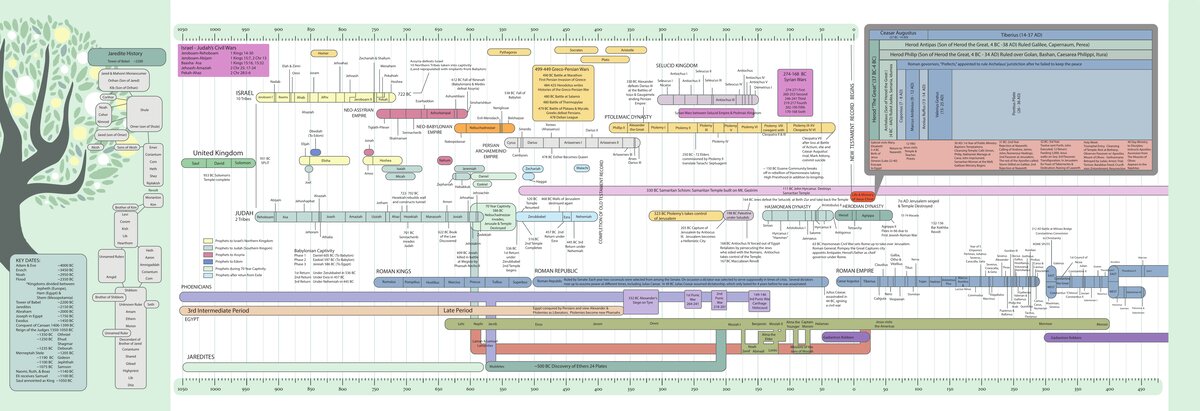
Tap to expand
Old Testament Timeline
From Creation through the Persian Period — tap the image to zoom, or download the full PDF.
Tap anywhere to close · Pinch to zoom