| Church Manuals | |
| Come Follow Me Manual | — |
| Scripture Helps | View |
| OT Seminary Teacher Manual | View |
| OT Institute Manual | View |
| Pearl of Great Price Manual | View |
| Scripture Reference | |
| Bible Dictionary | View |
| Topical Guide | View |
| Guide to the Scriptures | View |
| Church Media | |
| Gospel for Kids | View |
| Bible Videos | View |
| Church Publications & Library | |
| Church Magazines | View |
| Gospel Library | View |
Week 07
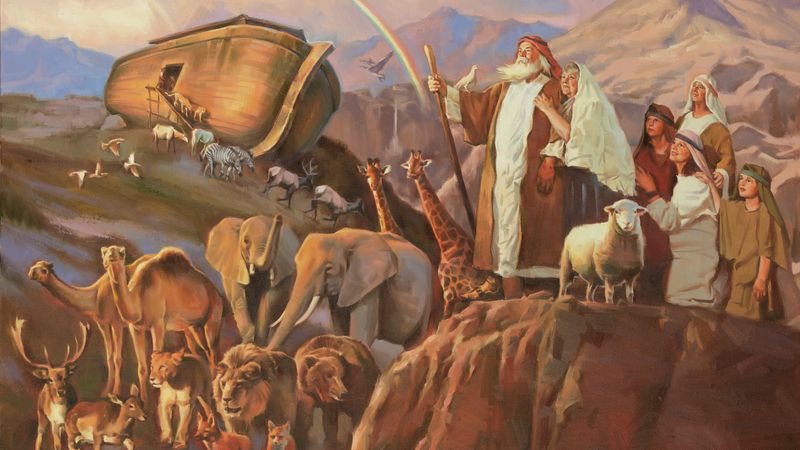
Noah, the Flood, and the Tower of Babel
Genesis 6–11; Moses 8
February 9–15, 2026
5-Minute Overview
You'll follow Noah from prophet to shipbuilder as the world descends into violence so pervasive that 'every imagination of the thoughts of his heart was only evil continually.' Moses 8 restores Noah's years of preaching repentance before the Flood — he wasn't just building a boat, he was pleading for people to change. You'll explore how the Flood narrative parallels the Creation in reverse (and then re-creation), why the rainbow is a covenant sign, and how the Tower of Babel story explains the scattering of nations — setting the stage for God to call one man, Abraham, to gather them back.
Official Church Resources
OFFICIAL CHURCH RESOURCES
▶︎
CHURCH MEDIA FOR FAMILIES
▶︎
Video Commentary
Video Commentary
▼︎

Specialized Audiences
Women's Perspectives
▶︎

Family & Children's Resources
▶︎
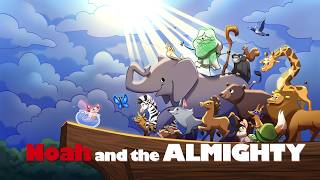
Reference & Study Materials

Genesis 6–11; Moses 8
Weekly videos

Genesis 6–11; Moses 8
Study & Teaching Helps
Bible Project
4 Videos This Week
BIBLE PROJECT VIDEOS THIS WEEK (4 videos)
▶︎


ACADEMIC & SCHOLARLY SITES (Homepages)
▶︎
MAPS & BIBLICAL LOCATIONS
▶︎
A Letter to Fellow Students
▼︎
"Noah found grace in the eyes of the Lord."
With this simple statement in Genesis 6:8, we encounter the first use of the word "grace" in all of scripture. Before Moses received the law, before any prophet declared conditions for salvation, grace appears—unearned, unmerited, extended to one man in a world drowning in wickedness.
This week we read one of the most familiar stories in all scripture—and one of the most misunderstood. Noah's Ark is not a children's tale about animals marching two-by-two. It is a carefully crafted theological narrative about judgment and mercy, about a God who weeps over wickedness (as we learned last week in Moses 7) and yet provides a way of deliverance for those who will enter His sacred space.
We'll discover that the Ark was designed as a floating temple—the only man-made structure in the Bible besides the Tabernacle and Solomon's Temple whose design was directly revealed by God. We'll see how the Flood mirrors the Creation narrative in reverse, and how the story of Babel stands as a warning against counterfeit temples built on human pride.
But first, let's continue building our Hebrew foundation.
Our Hebrew Journey Continues
▶︎
Over the past two weeks, we've introduced the 22 consonants of the Hebrew alphabet and the vowel system—both the ancient "mother letters" (matres lectionis) and the medieval Masoretic dots and dashes (niqqud). This week we introduce the dagesh—a small but powerful dot that changes how certain Hebrew letters are pronounced—along with a reference chart that classifies all 22 Hebrew consonants by how they behave in grammar.
Some of what you'll see in this week's charts—particularly the letter classification system—may not make complete sense just yet. That's perfectly fine. I'm introducing these concepts now so that as we explore Hebrew words in future lessons, you'll already have the foundation to recognize patterns. Think of it as planting seeds: the more familiar these ideas become now, the more naturally they'll click as we start pronouncing and parsing Hebrew words together in the weeks ahead.
Understanding the dagesh helps explain why the same Hebrew letter can sound different in different words, and why transliterations of Hebrew names vary so widely. It's also essential for using lexicons and concordances accurately.
The Dagesh: A Dot That Changes Everything
▶︎
As you've begun exploring Hebrew, you may have noticed that some letters have a small dot in their center. This dot is called a dagesh (דָּגֵשׁ, from a root meaning "to pierce" or "to thrust"). Despite its small size, the dagesh serves three distinct functions—and understanding them will help you read Hebrew texts and use study tools more effectively.
Three Functions of the Dagesh
▶︎
Hebrew distinguishes between two names for the dagesh, but it actually performs three related jobs:
1. Dagesh Qal / Lene (Light Dagesh) — Affects only six specific letters, hardening their pronunciation from a soft (fricative) sound to a hard (plosive) sound.
2. Dagesh Chazaq / Forte (Strong Dagesh) — Can appear in almost any letter (with a few exceptions we'll discuss), indicating that the consonant is doubled. This doubling can signal several different grammatical situations:
- Verb-stem doubling — marks the intensive Piel, Pual, and Hitpael verb stems
- Assimilated letter — a weak consonant (usually Nun) drops out and merges into the following letter
- Definite article — the Hebrew prefix הַ ("the") triggers doubling of the next consonant
- Wayyiqtol (Vav consecutive) — the narrative-past prefix וַ doubles the prefix letter of the verb
3. Marking assimilation — When a weak letter like Nun drops out entirely, the dagesh in the following consonant is the only visible trace that the letter was ever there. This is technically a use of the Dagesh Chazaq, but it's helpful to recognize it as its own pattern.
For newcomers to Hebrew, most of the terms and concept mentioned above are going to sound like gobbely-gook, and that is okay. The most important take away right now is the dagesh lene, because it changes how six common letters are pronounced and you will come across this a lot.
The Begadkefat Letters
▶︎
Six Hebrew consonants can be pronounced in two different ways: a "hard" (plosive) sound when they have a dagesh, and a "soft" (fricative) sound when they don't. These six letters are called the begadkefat (בְּגַדְכְּפַת) letters—a mnemonic word made from the letters themselves.
| Letter | Name | With Dagesh (Hard) | Without Dagesh (Soft) |
|---|---|---|---|
| בּ | Bet | /b/ as in "boy" | /v/ as in "vine" |
| גּ | Gimel | /g/ as in "go" | /gh/ (soft throat sound)* |
| דּ | Dalet | /d/ as in "dog" | /th/ as in "this"* |
| כּ | Kaf | /k/ as in "king" | /kh/ as in "Bach" |
| פּ | Pe | /p/ as in "pen" | /f/ as in "phone" |
| תּ | Tav | /t/ as in "top" | /th/ as in "think"* |
*The soft forms of Gimel, Dalet, and Tav are largely lost in modern Israeli pronunciation but were preserved in Yemenite and other traditional communities.
Why This Matters for Bible Study
▶︎
Understanding the dagesh explains variations you'll encounter in transliterations:
The same letter, different sounds:Name variations:- תּוֹרָה — Tav with dagesh: "Torah" (not "Thorah")
- שַׁבָּת — Bet with dagesh: "Shabbat" (not "Shavat")
- אַבְרָהָם — Bet without dagesh: "Avraham" (though English uses "Abraham")
The Rule (Simplified)
▶︎
At the beginning of a word or after a closed syllable, begadkefat letters take a dagesh (hard sound). After a vowel (an open syllable), they lose the dagesh (soft sound).
A closed syllable is one that ends with a consonant — the consonant "closes" the syllable like shutting a door. An open syllable ends with a vowel sound, leaving the syllable "open." For example, in the English word "bas-ket," both syllables are closed (each ends on a consonant). In "ba-by," both syllables are open (each ends on a vowel sound).
Example: The word מִדְבָּר (midbar, "wilderness/desert")- The ד (dalet) has no dagesh because it follows the vowel /i/ (an open syllable: mi-)
- The בּ (bet) has a dagesh because it follows a closed syllable (mid-) — the dalet closes the syllable before the bet
The Dagesh Forte: Doubling
▶︎
When the dagesh appears in letters other than the begadkefat six, or when context indicates doubling rather than hardening, it's called a dagesh forte (or dagesh chazaq). This marks consonant gemination (doubling)—the letter is held longer or pronounced twice.
Examples:- הַמֶּלֶךְ (hammelekh, "the king") — The מּ (Mem) has a dagesh forte triggered by the definite article הַ. The Mem is doubled: ham-melekh.
- שַׁבָּת (shabbat, "sabbath") — The בּ (Bet) is both hardened (dagesh lene → /b/) AND doubled (dagesh forte): shab-bat.
Seeing the Dagesh in This Week's Words
▶︎
Several key words from this week's reading demonstrate these dagesh concepts in action:
- תֵּבָה (tevah, "ark") — The תּ (Tav) carries a dagesh lene, giving it the hard /t/ sound. Without the dagesh, Tav would historically soften to /th/.
- הַמַּבּוּל (hammabbul, "the flood") — This word contains two dagesh fortes. The מּ (Mem) is doubled by the definite article הַ, and the בּ (Bet) carries a dagesh forte that both hardens it to /b/ and doubles it.
- בְּרִית (berit, "covenant") — The בּ (Bet) at the start of the word carries a dagesh lene, giving it the hard /b/ sound rather than /v/.
- כָּפַר (kafar, "to cover/atone") — The כּ (Kaf) begins the word with a dagesh lene, producing the hard /k/ sound instead of the soft /kh/. This root connects "pitch" (the Ark's waterproofing in Genesis 6:14) to "atonement" (kippur), as in Yom Kippur.
- מִזְבֵּחַ (mizbeach, "altar") — The בּ (Bet) carries a dagesh lene after a closed syllable, hardening it to /b/. The word comes from the root ז-ב-ח (z-b-ch, "to slaughter/sacrifice").
- קֶשֶׁת (qeshet, "bow/rainbow") — The ת (Tav) at the end has no dagesh, which historically would give it the soft /th/ sound. This is the bow of the covenant sign in Genesis 9:13.
The Letter Classification Chart
▶︎
This week's Dagesh & Letter Classification Chart goes beyond the dagesh to classify all 22 Hebrew consonants into groups based on how they behave grammatically:
- Guttural letters (א ה ח ע) — Throat sounds that reject the dagesh forte and require special vowels
- Weak letters (א ה ו י נ) — Letters that can drop out or change form, leaving a dagesh as their only trace
- BeGaD KePhaT letters (בּ גּ דּ כּ פּ תּ) — The six letters whose sound changes with the dagesh lene
- Sibilants (שׂ שׁ ס צ ז) — Hissing/buzzing sounds that trigger special changes in certain verb stems
- Resh (ר) — A letter that behaves uniquely, sometimes acting like a guttural
As we encounter Hebrew words in future weeks, these groupings will help explain why certain letters behave unexpectedly—why vowels change near gutturals, why Nun disappears in certain verb forms, and why some letters resist the dagesh.
Practical Application
▶︎
When you look up a Hebrew word in Blue Letter Bible or another lexicon:
- Note whether begadkefat letters have the dagesh
- This affects both pronunciation AND how the word might be transliterated
- Words that look different in English may share the same Hebrew root
This knowledge also helps with Greek: when Hebrew names entered Greek (and later English through Greek), the soft begadkefat sounds were often preserved differently. This is why "David" preserves the /v/ sound of דָּוִד (David) while "Beth-lehem" preserves the /b/ sound of בֵּית (bet, "house").
This Week's Charts
▶︎
For a comprehensive visual reference, explore the two new charts available this week:
- Hebrew Dagesh & Letter Classifications — A complete guide to the dagesh system and how all 22 consonants are classified. This builds on the Hebrew Alphabet Chart from Week 5 and the Hebrew Vowels Chart from Week 6.
- Genesis 6–11 & Moses 8 Side-by-Side Comparison — See exactly what the Restoration adds to the biblical Flood narrative. This comparison highlights the additional context, doctrinal clarity, and prophetic detail that Moses 8 provides alongside Genesis.
"Noah Found Grace": The First Mention of Grace
▶︎
Genesis 6:8 contains one of the most significant firsts in scripture: "But Noah found grace in the eyes of the Lord."
The Hebrew word is חֵן (chen)—meaning favor, grace, acceptance. This is its first appearance in the Bible.
The Noah Wordplay
▶︎
Hebrew delights in wordplay, and here we find a beautiful example. The name "Noah" (נֹחַ, Noach) and the word "grace" (חֵן, chen) are near-anagrams:
- נֹחַ = Nun-Chet (N-CH)
- חֵן = Chet-Nun (CH-N)
The letters are reversed! This is not accidental. The inspired author embedded in Noah's very name his relationship to divine grace. Noah's life would be a mirror of chen—grace reflected back to its source.
Grace Before Law
▶︎
The theological implications are profound. Grace appears in Genesis long before Sinai. Before the law was given, before conditions were set, God extended favor to a righteous man in an unrighteous world.
This pattern—grace enabling righteousness rather than merely rewarding it—is foundational to the gospel. As Paul would later write: "By grace are ye saved through faith" (Ephesians 2:8).
Noah didn't earn God's favor through perfect works that then qualified him for selection. Rather, God's grace found Noah, enabled his righteousness, and made possible his faithfulness in building an ark when no one else believed.
The Ark as Floating Temple
▶︎
Perhaps the most remarkable insight from modern scholarship is the recognition that Noah's Ark was designed as a temple. Apart from the Tabernacle of Moses and the Temple of Solomon, Noah's Ark is the only man-made structure in the Bible whose design was directly revealed by God. Latter-day Saints will recognize other examples in the Book of Mormon—the barges built by the brother of Jared and the ship built by Nephi were also constructed according to divine instruction. When we eventually reach those accounts, this temple-vessel perspective may help us analyze them in a new light as well.
Striking Parallels
▶︎
| Feature | Noah's Ark | Tabernacle/Temple |
|---|---|---|
| Design revealed by God | Genesis 6:14–16 | Exodus 25:9 |
| Three levels | Three decks | Three divisions, upward succession (courtyard, holy place, most holy place) |
| Height per level | ~10 cubits each | 10 cubits |
| Rectangular, non-navigable | No oars or rudder | Stationary sacred space |
| Preserves covenant community | Noah's family through flood | Israel through wilderness and in the Promised Land |
| Contains life forms | Animals representing creation | Cherubim, tree imagery, creation symbolism |
The Hebrew Word Tevah
▶︎
The Hebrew word for Noah's Ark is תֵּבָה (tevah). Remarkably, this word appears only twice in the Hebrew Bible:
- Noah's Ark — Genesis 6:14
- Moses's basket — Exodus 2:3
Both are vessels of deliverance through water—floating containers that preserve a deliverer. Both involve divine protection. The connection is intentional.
In Mishnaic Hebrew (the language used after the biblical period), tevah became the standard term for the Ark of the Covenant, strengthening the temple connection.
The Ark's Shape
▶︎
Notice what the Ark was NOT: it was not a boat. It had no oars, no rudder, no means of navigation. Its shape was rectangular—a floating box, not a ship.
This is precisely the point. The Ark's movement depended entirely on God's will, not human navigation. Within this floating sanctuary was preserved a "mini replica of Creation," the nucleus of a new world.
Jeffrey M. Bradshaw observes: "Noah's Ark is a temple in the sense that it was a structure built according to God's revealed design, in which a righteous family could find refuge from destruction and emerge into a new creation."
The Flood as De-Creation and Re-Creation
▶︎
The Flood narrative deliberately mirrors the Creation account. The waters that return in Genesis 7 are the same "waters" that existed before Creation in Genesis 1:2. The Flood is not merely destruction—it is de-creation followed by re-creation.
Striking Parallels
▶︎
| Creation (Genesis 1) | Flood/Re-Creation (Genesis 7–8) |
|---|---|
| "Spirit of God moved upon the face of the waters" (1:2) | Ark "went upon the face of the waters" (7:18) |
| Waters separated, dry land appears (1:9) | Waters recede, mountains appear (8:5) |
| Vegetation, animals, then humans created | Vegetation returns, animals exit, humanity begins again |
| "Be fruitful, and multiply" (1:28) | "Be fruitful, and multiply" (9:1) |
| Covenant with all creation implied | Covenant with Noah and all creatures explicit (9:9–17) |
The theological message: God can restart, cleanse, and renew His creation while preserving a righteous remnant.
"God Remembered Noah"
▶︎
Genesis 8:1 contains a pivotal statement: "And God remembered Noah."
The Hebrew word is זָכַר (zakar). But this does not mean God had forgotten and then recalled. In biblical Hebrew, when God "remembers," it means He acts faithfully on behalf of His covenant partners.
When God "remembered" Noah, He sent the wind to dry the earth. When God "remembered" His covenant with Abraham, Isaac, and Jacob, He initiated the Exodus (Exodus 2:24). When God "remembers," things happen.
This is the same covenantal "remembering" we invoke in the sacrament: "that they may always remember him" (Moroni 4:3). We ask to remember Christ as God remembers us—with faithful action.
Moses 8: What Genesis Doesn't Tell Us
▶︎
The Restoration provides crucial context that transforms our understanding of the Flood narrative.
The "Sons of God" Clarified
▶︎
One of the most debated passages in Genesis 6 concerns the "sons of God" who took "daughters of men" as wives (Genesis 6:2). Ancient traditions proposed various interpretations—fallen angels, divine beings, descendants of Seth.
Moses 8 provides the answer:
"And Noah and his sons hearkened unto the Lord, and gave heed, and they were called the sons of God. And when these men began to multiply on the face of the earth, and daughters were born unto them, the sons of men saw that those daughters were fair, and they took them wives, even as they chose." (Moses 8:13–14)
The "sons of God" were Noah's righteous descendants—covenant-keeping followers who abandoned their covenants by intermarrying with the "daughters of men" (those outside the covenant). The problem was not supernatural beings mixing with humans, but covenant people mixing with unbelievers.
This connects directly to the Tower of Babel account, where the Hebrew word balal ("confound") means "to mix" or "mingle." The confusion of Babel was not merely linguistic but covenantal—the scattering that occurs when covenant identity is lost through mingling.
Noah as Gospel Preacher
▶︎
Moses 8 also reveals that Noah preached the same gospel we know today:
"And the Lord ordained Noah after his own order, and commanded him that he should go forth and declare his Gospel unto the children of men, even as it was given unto Enoch." (Moses 8:19)
"Believe and repent of your sins and be baptized in the name of Jesus Christ, the Son of God, even as our fathers, and ye shall receive the Holy Ghost." (Moses 8:24)
Noah was not simply warning people about a flood. He was preaching faith in Jesus Christ, repentance, baptism, and the gift of the Holy Ghost—the same first principles and ordinances revealed to Enoch and Adam before him.
The Tower of Babel: The Anti-Temple
▶︎
If Noah's Ark represents the true temple—a structure revealed by God for salvation—then the Tower of Babel represents its counterfeit: a structure designed by humans to reach heaven through their own effort.
The Desire to "Make Us a Name"
▶︎
The builders' motivation reveals their error: "Let us build us a city and a tower, whose top may reach unto heaven; and let us make us a name" (Genesis 11:4).
Throughout scripture, God gives names to His covenant people. He renamed Abram to Abraham, Jacob to Israel, Saul to Paul. A name given by God represents covenant identity and divine calling.
But the Babel builders sought to "make themselves a name"—to establish their own identity and significance apart from God. Their tower was an attempt to reach heaven through human achievement rather than divine covenant.
The Wordplay of Babel
▶︎
The Hebrew word for "confound" is בָּלַל (balal), meaning "to mix" or "confuse." The name "Babel" (בָּבֶל, bavel) sounds like balal.
The Babylonians understood their city's name to mean "gate of god" (bab-ili in Akkadian). But the Hebrew author subverts this proud claim with a pun: Babel is not the "gate of god" but the place of "confusion"—divine judgment on human pride.
Pentecost: The Reversal
▶︎
The scattering and confusion of Babel finds its reversal at Pentecost. When the Holy Spirit descended and the apostles spoke in tongues, "every man heard them speak in his own language" (Acts 2:6).
Where Babel scattered through confusion of speech, Pentecost gathered through the gift of understanding. The true temple experience—receiving the Spirit—reverses the curse of Babel and begins the gathering of Israel.
Your Study Guide: What's Inside
▶︎
The Week 7 Study Guide contains six comprehensive files to support your study:
01. Week Overview
▶︎
What it covers: A complete reading summary placing Genesis 6–11 and Moses 8 in context. Includes the five central themes (Ark as Temple, Flood as De-Creation/Re-Creation, Noah as Prophet-Priest, Tower of Babel as Anti-Temple, Grace Before Law), key figures, timeline placement, and temple connections.
Best for: Getting oriented before deep study; understanding the big picture.
02. Historical & Cultural Context
▶︎
What it covers: Ancient Near Eastern background including:
- The Gilgamesh Epic and other Mesopotamian flood narratives
- Archaeological evidence for flood traditions across cultures
- Mesopotamian ziggurat architecture and Babel parallels
- The "sons of God" in ancient Jewish interpretation
03. Key Passages Study
▶︎
What it covers: In-depth analysis of key verses including:
- "Noah Found Grace" (Genesis 6:8)
- The Ark's Design (Genesis 6:14–16)
- The Noahic Covenant (Genesis 9:8–17)
- Noah's Tent Incident (Genesis 9:20–27)
- The Tower of Babel (Genesis 11:1–9)
04. Word Studies
▶︎
What it covers: Hebrew terms with full linguistic analysis:
- חֵן (chen) — "grace, favor" (first biblical occurrence)
- תֵּבָה (tevah) — "ark" (temple vessel)
- בְּרִית (berith) — "covenant"
- זָכַר (zakar) — "remember" (covenantal action)
- בָּלַל (balal) — "confound" (mix, mingle)
05. Teaching Applications
▶︎
What it covers: Ready-to-use applications for seven teaching contexts:
- Personal Study, Family Home Evening, Sunday School, Seminary/Institute, Relief Society/Elders Quorum, Primary, Missionary Teaching
06. Study Questions
▶︎
What it covers: 187 questions organized by category for individual and group study.
Best for: Self-assessment; class discussion; journal prompts.
Reflection Questions
▶︎
As you study this week, consider:
- On Grace: What does it mean that grace appears before the law in scripture? How does this affect your understanding of the relationship between grace and works?
- On the Ark as Temple: If the Ark was designed as a temple, what does that teach about the purpose of temples? What are we being preserved from—and for?
- On Remembering: How is God's "remembering" different from human memory? What would it mean to "remember" Christ as God remembers His covenant?
- On Babel: What are modern equivalents of "making ourselves a name"? How do we avoid building our own towers of pride while still striving for excellence?
- On Mingling: Moses 8 describes the "sons of God" losing their covenant identity through intermarriage. What are modern ways covenant identity is diluted? How do we remain "in the world but not of the world"?
A Final Thought: Finding Grace
▶︎
In a world that had become so wicked that "every imagination of the thoughts of [man's] heart was only evil continually" (Genesis 6:5), God wept—as we learned last week from Moses 7. But He did not abandon His children.
He extended grace.
Not because Noah had earned it through perfect performance. Not because Noah had achieved some threshold of righteousness that obligated God to save him. But because God is gracious—because chen is who He is.
Noah then responded to grace with faithfulness. He built an ark when no one believed. He preached the gospel when no one listened. He preserved what God wanted preserved through the waters of judgment.
This is still the pattern. Grace comes first. Then we respond. Then we build, and preach, and preserve what God wants us to preserve.
The Ark is still being built. The invitation is still open. And grace is still finding those who will enter.
Weekly Insights | CFM Corner | OT 2026 Week 07: Genesis 6–11; Moses 8
Week 7
Genesis 6–11; Moses 8
Noah, the Flood, and the Tower of Babel
February 9–15, 2026
1. Week Overview
| Element | Details |
|---|---|
| Week | 07 |
| Dates | February 9–15, 2026 |
| Reading | Genesis 6–11; Moses 8 |
| CFM Manual | Genesis 6–11; Moses 8 Lesson |
| Total Chapters | 7 (Genesis 6–11 plus Moses 8) |
| Approximate Verses | ~200 verses |
This week we encounter one of the most iconic narratives in all scripture—the story of Noah and the Flood. Far from being a simple children's story about animals on a boat, the biblical account is a carefully crafted theological narrative filled with temple symbolism, covenant themes, and profound insights about God's relationship with humanity. Genesis 6–11 also contains the genealogies connecting Noah to Abraham and the enigmatic Tower of Babel account.
Moses 8:1–21 provides Restoration context unavailable in Genesis. We learn that Noah's birth fulfilled a covenant God made with Enoch (Moses 7:52). Noah preached "the first principles and ordinances of the Gospel" and announced "the coming of Jesus Christ in the meridian of time" (Moses 8:16, 19, 23–24). The chapter also clarifies the mysterious "sons of God" passage from Genesis 6—identifying them not as fallen angels (as some traditions claim) but as Noah's righteous descendants who abandoned their covenants by intermarrying with the "daughters of men" (Moses 8:13–15).
Genesis 6:5–22 introduces the Flood narrative. God sees that "every imagination of the thoughts of [man's] heart was only evil continually" (v. 5) and "it repented the Lord that he had made man" (v. 6)—language that echoes the weeping God of Moses 7. But "Noah found grace in the eyes of the Lord" (v. 8)—the first use of the word "grace" (chen) in the Bible. God reveals the ark's design: a rectangular structure with three decks whose dimensions mirror the later Tabernacle.
Genesis 7–8 recounts the Flood itself, structured to parallel the Creation narrative. Just as the Spirit of God moved "upon the face of the waters" at Creation (Genesis 1:2), so the Ark moves "upon the face of the waters" (Genesis 7:18)—these are the only two verses in the Bible with this exact phrase. The Flood is a de-creation followed by re-creation: waters return, land emerges, animals emerge, and humanity begins again in an Eden-like garden.
Genesis 9:1–17 establishes the Noahic covenant with its famous rainbow sign. God blesses Noah using creation language: "Be fruitful, and multiply, and replenish the earth" (v. 1)—the same command given to Adam (Genesis 1:28). The prohibition against blood (vv. 4–6) becomes foundational for later Torah legislation.
Genesis 9:18–29 contains the puzzling incident where Noah, after planting a vineyard, becomes "drunken" and is found "uncovered within his tent" (vv. 21–22). Ham sees his father's nakedness, leading to a curse upon Ham's son Canaan. Scholarly analysis suggests this may describe a vision experience in a sacred tent—Noah "was not drunk, but in a vision," according to a statement attributed to Joseph Smith.
Genesis 10 (the "Table of Nations") traces Noah's descendants through Shem, Ham, and Japheth, establishing the geographical and ethnic origin of known ancient peoples.
Genesis 11:1–9 recounts the Tower of Babel. The builders seek to "make us a name" (v. 4)—in direct contrast to God's pattern of giving names to the faithful. Their tower, likely a Mesopotamian ziggurat, represents a counterfeit temple: an attempt to reach heaven through human effort rather than divine covenant.
Genesis 11:10–32 provides the genealogy from Shem to Abram (Abraham), bridging the primeval history to the patriarchal narratives that begin next week.
Theme 1: Noah's Ark as Floating Temple
Perhaps the most significant insight from modern scholarship is the recognition that Noah's Ark was designed as a temple. Apart from the Tabernacle of Moses and the Temple of Solomon, Noah's Ark is the only man-made structure in the Bible whose design was directly revealed by God.
The parallels are remarkable:
- Three-deck structure: The Ark's three floors correspond to the Tabernacle's three divisions (courtyard, holy place, most holy place) and the threefold layout of Eden
- Identical height: Each deck of the Ark was exactly the same height as the Tabernacle (10 cubits)
- Same Hebrew term: The word tevah (תֵּבָה) for Noah's Ark later became the standard word for the Ark of the Covenant in Mishnaic Hebrew
- Same Greek term: The Septuagint uses kibotos (κιβωτός) for both Noah's Ark and the Ark of the Covenant
- Matching ratios: The width-to-height ratio of both arks is 3:5
The Ark's rectangular, un-boat-like shape reinforces its temple nature. It had no oars or rudder—its movement depended entirely on God's will, not human navigation. Within this floating sanctuary was preserved a "mini replica of Creation," the nucleus of a new world.
Theme 2: The Flood as De-Creation and Re-Creation
The Flood narrative deliberately mirrors the Creation account in Genesis 1. Consider the parallels:
| Creation (Genesis 1) | Flood/Re-Creation (Genesis 7–8) |
|---|---|
| Spirit moves on waters | Ark moves on waters |
| Waters separated, dry land appears | Waters recede, mountains appear |
| Vegetation, animals, humans created | Vegetation returns, animals exit, humans begin again |
| God blesses: "Be fruitful, multiply" | God blesses: "Be fruitful, multiply" |
| Covenant with all creation | Covenant with Noah and all creatures |
The Flood is not mere destruction but reversal—a return to the watery chaos of Genesis 1:2—followed by a new creation. The theological message: God can restart, cleanse, and renew His creation while preserving a righteous remnant.
Theme 3: Noah as Prophet, Priest, and Type of Adam
Modern revelation amplifies what we know about Noah from the Bible:
- His birth fulfilled God's covenant with Enoch (Moses 7:52)
- He was ordained to the priesthood at age ten (D&C 107:52)
- He preached the gospel and announced Christ's coming (Moses 8:16, 19, 23–24)
- He conferred priesthood on his posterity (D&C 84:14–15)
- He visited Joseph Smith as the angel Gabriel (D&C 128:21)
- He will return at the Second Coming (D&C 27:5–7)
Joseph Smith taught that Noah stands second only to Adam in priesthood authority: "The Priesthood was first given to Adam... Then to Noah, who is Gabriel: called of God to this office, and was the father of all living in this day, and to him was given the dominion."
Like Adam, Noah is portrayed as a type of God Himself. He forms and fills a microcosmic world (the Ark) in imitation of the Creator God. He plants a garden after the Flood, echoing Eden. His emergence onto Mount Ararat parallels the emergence of dry land at Creation.
Theme 4: The Tower of Babel as Anti-Temple
The Tower of Babel story (Genesis 11:1–9) presents a deliberate contrast with both Noah's Ark and the later Tabernacle. While Noah built according to divine revelation, the Babel builders constructed according to human ambition.
Key contrasts:
- Name: Babel builders seek to "make us a name" (v. 4); God gives names to the faithful (Abram → Abraham)
- Unity: Babel's unity is in rebellion; Zion's unity is in righteousness
- Direction: Babel reaches up to heaven by human effort; temple worship involves God coming down to His people
- Result: Babel leads to scattering; temple covenant leads to gathering
The tower was almost certainly a Mesopotamian ziggurat—a stepped pyramid with a temple at its peak where gods were believed to descend. The biblical narrative presents this as a counterfeit of true temple worship: an attempt to reach heaven through collective human effort rather than through covenant relationship with God.
Hugh Nibley connected the "confounding" of languages with the mingling of covenant people with unbelievers—exactly what Moses 8 describes happening in Noah's day with the "sons of God" and "daughters of men."
Theme 5: Grace Before the Law
Genesis 6:8 contains the first occurrence of the word "grace" (chen, חֵן) in the Bible: "Noah found grace in the eyes of the Lord." This is significant theologically—grace appears in the biblical narrative long before the Mosaic law.
The Hebrew chen conveys "favor" or "gracious kindness"—an unearned gift from a superior to an inferior. Noah did not earn God's favor through perfect righteousness alone; rather, God graciously extended favor to Noah, enabling his righteousness.
This theme continues throughout the Flood narrative. God remembers Noah (Genesis 8:1)—not because He had forgotten, but because zakar (remember) implies faithful action on behalf of covenant partners. God's grace initiates, sustains, and completes Noah's deliverance.
| Person | Role | Significance This Week |
|---|---|---|
| Noah | Prophet, Priest, Patriarch | Builder of the Ark-temple; preacher of righteousness; new "Adam" for post-Flood world |
| Shem | Son of Noah | Ancestor of the Semitic peoples and of Abraham; shows reverence to his father |
| Ham | Son of Noah | Father of Canaan; violates the sacred boundary of Noah's tent |
| Japheth | Son of Noah | Ancestor of Indo-European peoples; shows reverence with Shem |
| Canaan | Grandson of Noah | Receives curse for his father Ham's transgression; ancestor of Canaanite peoples |
| Nimrod | Great-grandson of Ham | "Mighty hunter before the Lord"; associated with Babel/Babylon and Nineveh |
Historical Period: Pre-Flood and Early Post-Flood World
Approximate Dates: Traditional chronology places the Flood approximately 1,656 years after Creation (using Masoretic text). The Babel account occurs sometime after this, before the call of Abraham.
Biblical Timeline Position: Moses 8 and Genesis 6–9 conclude the antediluvian era begun in Genesis 4–5 / Moses 5–7. Genesis 10–11 bridges to the patriarchal narratives beginning with Abraham in Genesis 12.
Relationship to Previous Weeks
Week 05 (Genesis 5; Moses 6): Introduced Enoch's ministry and the fundamental doctrines of the Fall, repentance, and baptism. Also established the genealogy from Adam to Noah.
Week 06 (Moses 7): Revealed God's covenant with Enoch promising Noah's mission (Moses 7:52). Also showed the weeping God—the same divine grief appears in Genesis 6:6.
Week 07 (Genesis 6–11; Moses 8): Fulfills the prophecies about Noah, recounts the Flood, and bridges to Abraham.
Book of Moses (Chapter 8)
- Author: Moses, restored through Joseph Smith
- Source Date: Original to Moses (~1446 BC); restored December 1830
- Original Audience: Israel; through restoration, the whole Church
- Setting: Continuation of Moses's prophetic vision
- Purpose: To reveal the gospel context of Noah's ministry
- Key Themes: "Sons of God" and "daughters of men," gospel preaching, covenant succession
- Literary Genre: Prophetic narrative
Book of Genesis (Chapters 6–11)
- Author: Traditionally Moses; compiled from earlier sources
- Source Date: Written form ~15th–5th century BC
- Original Audience: Ancient Israel
- Setting: Primeval and early post-Flood history
- Purpose: To establish covenant origins and the need for Abraham's call
- Key Themes: Judgment and mercy, covenant renewal, dispersion of nations
- Literary Genre: Narrative, genealogy, etiological account
Book of Mormon Connections
- Ether 1:33–43: The Jaredites depart from Babel when languages are confounded
- Ether 6:1–12: Jaredite barges echo Noah's Ark—sealed vessels crossing deep waters with shining stones for light
- 1 Nephi 8:26–27: The "great and spacious building" parallels Babel—pride, worldly wisdom, no foundation
Doctrine and Covenants Connections
- D&C 27:5–7: Noah (Gabriel) will return at the Second Coming
- D&C 84:14–15: Priesthood descended through Noah
- D&C 107:52: Noah ordained at age ten
- D&C 128:21: Noah visited Joseph Smith as Gabriel
Pearl of Great Price Connections
- Moses 7:42–52: Prophecy of the Flood and covenant with Enoch regarding Noah
- Moses 8:1–30: Full context of Noah's ministry and the wickedness that preceded the Flood
- The Ark as Temple: Noah's Ark was designed as a floating temple, preserving covenant Israel through the waters of judgment (Genesis 6:14–16).
- Grace Before Law: "Noah found grace in the eyes of the Lord" (Genesis 6:8)—the first biblical use of "grace."
- Covenant Renewal: The Noahic covenant establishes patterns for later covenants: blessings, signs (rainbow), and stipulations (Genesis 9:1–17).
- Noah as Gabriel: Modern revelation identifies Noah as the angel Gabriel, second in authority to Adam/Michael (D&C 128:21).
- The "Sons of God": Moses 8 clarifies that the "sons of God" were covenant-keeping descendants of Seth who apostatized by marrying outside the covenant (Moses 8:13–15).
- Counterfeit Temple: The Tower of Babel represents human attempt to reach heaven outside divine covenant—an anti-temple (Genesis 11:4).
- Scattering and Gathering: Babel's scattering reverses at the gathering of Israel; the confusion of tongues will be healed when Zion is established.
The temple themes in this week's reading are pervasive:
- The Ark as Temple: Three-level structure matching the Tabernacle, built by divine revelation, serving as the locus of God's preserving presence
- Mountain Emergence: The Ark resting on Ararat parallels the emergence of the Foundation Stone at Creation—the primordial mount upon which temples are built
- Noah's Sacred Tent: After the Flood, Noah establishes a "tent of meeting" where he experiences vision—foreshadowing the Tabernacle
- Covenant at the Altar: Noah builds an altar and offers sacrifice (Genesis 8:20)—the first post-Flood act
- Babel as Counterfeit Temple: The ziggurat was a temple structure, but built for human glory rather than divine worship
- Shining Stones: Jewish tradition holds that the tsohar lighting the Ark was a luminous stone—connecting to the brother of Jared's stones (Ether 3:1–6) and the Urim and Thummim
Manual Focus: Understanding the Flood as a story of judgment, mercy, and new beginnings; seeing the rainbow as a sign of God's covenants.
Key Questions from Manual:
- What does the Flood teach us about God's patience and His justice?
- How does Noah exemplify faithfulness despite surrounding wickedness?
- What parallels exist between Noah's day and our day?
- What does the rainbow covenant teach about God's promises?
Manual's Suggested Activities:
- Create a visual representation of the Ark's design
- Discuss how the Flood/rainbow story teaches children about God's covenants
- Identify personal applications from Noah's faithfulness amid wickedness
If You Have Limited Time (Essential Reading):
- Moses 8:13–30 — Restoration context for Noah's ministry
- Genesis 6:5–22 — The Flood introduction and Ark design
- Genesis 9:1–17 — The Noahic covenant
- Genesis 11:1–9 — Tower of Babel
If You Have More Time (Full Reading with Highlights):
- Read all assigned chapters, noting:
- Temple imagery in the Ark's description
- Parallels between Flood and Creation accounts
- Covenant language and signs
- Genealogical connections to Abraham
For Deep Study:
- Compare the Gilgamesh Epic's Flood account with Genesis
- Study the Jaredite barge account in Ether 6 for parallels
- Trace the "sons of God" interpretation through Jewish and Christian history
The following scholarly essays provide deep background on this week's readings:
| Essay # | Title | Focus |
|---|---|---|
| #75 | The Sons of God and the Sons of Men | Moses 8 clarification of "sons of God" |
| #76 | Was Noah's Ark Designed as a Floating Temple? | Ark-Tabernacle parallels |
| #77 | Was Noah Drunk or in a Vision? | Alternative interpretation of Genesis 9:20–27 |
Sources: Jeffrey M. Bradshaw, Book of Moses Essay Series (Interpreter Foundation)
| File | Content Focus |
|---|---|
| 01_Week_Overview | This overview document |
| 02_Historical_Cultural_Context | Ancient Flood narratives, Mesopotamian parallels, temple symbolism |
| 03_Key_Passages_Study | Detailed analysis of key verses with cross-references |
| 04_Word_Studies | Hebrew terms: chen (grace), tevah (ark), berith (covenant), zakar (remember) |
| 05_Teaching_Applications | Personal study, family, Sunday School, Seminary applications |
| 06_Study_Questions | Questions for individual and group study |
File Status: Complete Created: January 20, 2026 Last Updated: January 20, 2026 Next File: 02_Historical_Cultural_Context.md
2. Historical & Cultural Context
Sections in This File:
- Historical Setting — Timeline and context
- Ancient Flood Narratives — Mesopotamian parallels
- The Ark as Temple — Temple symbolism and design
- Evidence of Antiquity — Ancient parallels confirming restoration
- The Tower of Babel — Ziggurat culture
- Jewish Interpretive Traditions — Rabbinic perspectives
- Latter-day Prophetic Commentary — Restoration insights
Timeline and Context
| Element | Details |
|---|---|
| Period | Pre-Flood (Antediluvian) through Early Post-Flood Era |
| Traditional Dating | Flood: ~2348 BC (Ussher); Tower of Babel: ~2242 BC |
| Genealogical Position | Noah: 10th generation from Adam (through Seth) |
| Key Transition | End of antediluvian world; beginning of post-Flood civilization |
| Geographic Focus | Mesopotamia ("between the rivers" Tigris and Euphrates) |
The Antediluvian World
The world before the Flood is described in both Genesis and Moses as characterized by escalating wickedness:
Moses 8:20–22 reveals that Noah "called upon the children of men that they should repent; but they hearkened not unto his words." The wicked claimed to be "sons of God" themselves, boasting of their marriages and "mighty men... of great renown." This corruption extended to a point where "every imagination of the thoughts of [man's] heart was only evil continually" (Genesis 6:5).
Restoration Context: Moses 8 clarifies the enigmatic "sons of God" passage from Genesis 6:1–4. Rather than fallen angels (as many ancient traditions claimed), the Book of Moses identifies these as righteous descendants of Seth who abandoned their covenants:
> "Noah and his sons hearkened unto the Lord, and gave heed, and they were called the sons of God. And when these men began to multiply on the face of the earth, and daughters were born unto them, the sons of men saw that those daughters were fair, and they took them wives, even as they chose." (Moses 8:13–14)
The term "sons of God" (bene elohim) refers to covenant-keeping people, while "daughters of men" refers to those outside the covenant. The sin was intermarriage that led to apostasy—a pattern that recurs throughout scripture.
Mesopotamian Parallels
The biblical Flood account exists within a broader ancient Near Eastern literary context. Several Mesopotamian texts describe a catastrophic flood:
| Text | Date | Flood Hero | Key Features |
|---|---|---|---|
| Sumerian Flood Story | ~1600 BC (earliest copy) | Ziusudra | King-priest receives divine warning; gods reward him with eternal life |
| Atrahasis Epic | ~1700 BC | Atrahasis | Population control motivation; detailed construction; gods regret decision |
| Gilgamesh Epic (Tablet XI) | ~1200 BC (Akkadian) | Utnapishtim | Most detailed account; cube-shaped boat; seven-day flood; bird test |
Primary Source Links
Gilgamesh Epic (Tablet XI - The Flood):
- British Museum: The Flood Tablet (K.3375) — The actual cuneiform tablet discovered at Nineveh
- Livius: Gilgamesh Flood Translation — Full scholarly translation with notes
- Sacred Texts: Epic of Gilgamesh, Tablet XI — R. Campbell Thompson translation
- ETANA: Flood Story in Gilgamesh — Electronic Tools and Ancient Near East Archives
Atrahasis Epic:
- Bible Odyssey (SBL): Atrahasis — Society of Biblical Literature scholarly overview
- Livius: Atrahasis Translation — B.R. Foster translation adapted
- World History Encyclopedia: Atrahasis Epic — Accessible scholarly article
Sumerian Flood Story (Ziusudra / Eridu Genesis):
- ETCSL Oxford: The Flood Story — Electronic Text Corpus of Sumerian Literature (scholarly standard)
- Livius: Sumerian Flood Version — Overview with context
- Livius: Eridu Genesis Translation — Full translation
Podcast Resources:
- The Ancient Tradition: Audio Writ - "The Ark Tablet" — Episode covering the Atrahasis flood narrative and the circular boat tablet discovered by Dr. Irving Finkel
- The Ancient Tradition: "The Enuma Elish" — Episodes on Babylonian creation myths (Tablets I-VII)
- The Ancient Tradition: "The Kesh Temple Hymn" — Ancient Sumerian temple traditions
General ANE Collections:
- Internet Archive: Ancient Near Eastern Texts (ANET) — Pritchard's classic scholarly collection
- JSTOR: ANET with Supplement — Academic access
Comparative Elements
Scholars have long noted both similarities and significant differences between these accounts and Genesis:
Similarities:
- Divine warning to one righteous man
- Construction of a large vessel
- Preservation of animals
- Flood covers all land
- Vessel rests on a mountain
- Birds sent to test conditions (raven and dove)
- Sacrifice offered after disembarkation
- Divine promise/blessing follows
Significant Differences:
| Element | Mesopotamian Accounts | Biblical Account |
|---|---|---|
| Divine motivation | Noise/overpopulation annoys gods | Moral corruption of humanity |
| God's character | Multiple gods who scheme and regret | One God acting in righteousness |
| Boat shape | Cube (Gilgamesh); coracle (Atrahasis tablet) | Rectangular box (temple dimensions) |
| Covenant | No explicit covenant | Formal covenant with rainbow sign |
| Humanity's future | Limits placed on population | "Be fruitful and multiply" blessing |
| Moral framework | Arbitrary divine action | Judgment tied to human wickedness |
The Boat Shape Question
One of the most striking differences involves the vessel's shape. In the Gilgamesh Epic, Utnapishtim's boat is a cube—equal in all dimensions. A recently translated Old Babylonian tablet describes a round, coracle-shaped vessel. But Genesis describes a rectangular structure with specific dimensions (300 × 50 × 30 cubits) that would be highly unstable as a boat but matches the proportions and layout of the later Tabernacle.
This difference is theologically significant: the biblical author was not simply borrowing from Mesopotamian sources but crafting a narrative that highlighted temple themes unavailable in the pagan versions.
Biblical Scholars' Consensus
Modern scholarship increasingly recognizes that Noah's Ark was designed as a floating temple. Jeffrey M. Bradshaw notes: "There is a growing consensus among Bible scholars that, like the Tabernacle, Noah's Ark 'was designed as a temple.'"
This insight transforms our reading of the Flood narrative from a survival story into a temple narrative—a preservation of sacred space through judgment waters.
Structural Parallels
Three-Level Structure: The Ark's three decks correspond to:
- The threefold divisions of the Tabernacle (courtyard, holy place, most holy place)
- The threefold layout of the Garden of Eden (world, garden, tree/presence)
- Ancient cosmic geography (underworld, earth, heavens)
Dimensional Correspondence:
- Each deck of Noah's Ark was exactly the same height as the Tabernacle (10 cubits)
- Each deck was three times the area of the Tabernacle court
- The width-to-height ratio of both Noah's Ark and the Ark of the Covenant is 3:5
Linguistic Connections:
- The Hebrew term tevah (תֵּבָה) for Noah's Ark later became the standard word for the Ark of the Covenant in Mishnaic Hebrew
- The Septuagint uses the same Greek term, kibotos (κιβωτός), for both Noah's Ark and the Ark of the Covenant
- The word tevah appears in only one other place in the Bible—for the basket holding baby Moses (Exodus 2:3)
Materials and Temple Allusions
Genesis 6:14 reads: "Make thee an ark of gopher wood; rooms shalt thou make in the ark, and shalt pitch it within and without with pitch."
Each material carries temple connotations:
Gopher Wood (גֹּפֶר):
- The term appears only here in the Bible
- Likely cypress—known for fragrance, longevity, and resistance to rot
- Cypress was used to make temple doors—"gateways to Paradise"
- Ancient mythology connects cypress with Eden-like settings
*Pitch (כֹּפֶר, kopher):*
- The Hebrew creates wordplay: gopher wood covered with kopher (pitch)
- Kopher is related to kippur ("atonement") and kapporeth ("mercy seat")
- The smearing/covering motion echoes priestly atonement rituals
- Just as pitch sealed the Ark against judgment waters, the mercy seat mediates between sinful humanity and divine holiness
Reeds:
- An alternate reading of the Hebrew for "rooms" (qinnim) suggests "woven-of-reeds"
- In Mesopotamian flood stories, the flood hero receives divine warning in a "reed-hut temple"
- The god Enki instructs Ziusudra to tear down the reed-hut temple and use its materials for the boat—connecting temple and vessel
The Tsohar: Light in the Ark
Genesis 6:16 mentions a tsohar (צֹהַר)—often translated "window" but of uncertain meaning. Jewish tradition interprets this as a shining stone:
> "One small part of the precious light of Creation—a light that appeared before God created the sun, moon, and stars and that made it possible 'to see from one end of the world to the other'—was preserved in a stone... given to Adam 'as a token of the world [Adam and Eve] had left behind.'" (Jewish tradition as summarized by Howard Schwartz)
This tradition claims the stone passed from Adam through the patriarchs to Noah, who hung it in the Ark to provide light. Readers of the Book of Mormon will immediately recognize the parallel to the brother of Jared's sixteen shining stones (Ether 3:1–6).
The tsohar provided not only practical light but spiritual light—vision and revelation. This connects the Ark to the Urim and Thummim tradition and to the Restoration's understanding of seer stones.
Source: Jeffrey M. Bradshaw, "Was Noah's Ark Designed as a Floating Temple?" (Interpreter Foundation, Essay #76)
The following parallels demonstrate how the Book of Moses and Joseph Smith's revelations about Noah preserve authentic ancient details unavailable to the Prophet through any 19th-century source.
Evidence of Antiquity: The Ark as Floating Temple
Details Unknown to Joseph Smith:
| Book of Moses/Genesis Detail | Ancient Parallel | Discovery/Translation |
|---|---|---|
| Ark's three-deck structure | Tabernacle's three divisions | Scholarly consensus developed 20th century |
| Rectangular "box" shape | Not matching Mesopotamian circular/cube vessels | Gilgamesh parallels analyzed 20th century |
| Tevah terminology | Same word used for Ark of Covenant in Mishnaic Hebrew | Hebrew linguistic analysis post-1830 |
| Temple materials (kopher/kapporeth) | Atonement wordplay in construction | Hebrew root analysis post-1830 |
Why This Matters: The temple symbolism in Noah's Ark was not recognized by scholars until the 20th century. Joseph Smith's inspired translation preserved a narrative framework that emphasizes these temple themes—themes that would later be confirmed by scholarship.
Source: Jeffrey M. Bradshaw, "Was Noah's Ark Designed as a Floating Temple?" (Interpreter Foundation, Essay #76)
Evidence of Antiquity: The Shining Stone (Tsohar)
One of the most remarkable parallels involves the source of light within the Ark.
The Biblical Question: How did Noah see inside the sealed Ark during the 40 days of darkness?
Jewish Tradition: The tsohar was a luminous stone—part of the primordial light of Creation preserved and passed through the patriarchs.
Book of Mormon Parallel: The brother of Jared faces the identical problem with his sealed barges and prepares sixteen stones that the Lord touches to make shine (Ether 3:1–6; 6:2–3).
Joseph Smith's Access: The Jewish traditions about the tsohar as a shining stone were preserved in Hebrew midrashic literature unavailable in English in 1829. Yet the Book of Mormon independently attests to this tradition with its own shining stones.
M. Catherine Thomas observes that these stones provided "not only practical light, but spiritual light as well"—connecting to the Urim and Thummim and Joseph Smith's own seer stone.
| Shining Stone Tradition | Source | Available to JS? |
|---|---|---|
| Noah's tsohar | Genesis 6:16 + Midrash | Hebrew text only |
| Stone passed Adam → Noah | Jewish tradition (Schwartz) | Not in English 1829 |
| Brother of Jared's stones | Ether 3, 6 | Dictated 1829 |
| Abraham's Urim and Thummim | Abraham 3:1 | Revealed 1835 |
Source: Jeffrey M. Bradshaw, "Was Noah Drunk or in a Vision?" (Interpreter Foundation, Essay #77)
Evidence of Antiquity: Noah in Vision, Not Drunk
The enigmatic incident in Genesis 9:20–27 has puzzled readers for millennia. Was Noah, the righteous preacher who just saved humanity, really drunk and exposed in his tent?
The Traditional Reading: Noah planted a vineyard, became drunk, was found naked by Ham, and upon awakening cursed Canaan.
Alternative Ancient Reading: A secondhand statement attributed to Joseph Smith asserts that Noah "was not drunk, but in a vision."
Ancient Support:
- Genesis Apocryphon (Dead Sea Scrolls): Immediately after describing a ritual where Noah and his family drank wine, the text reports a divine dream vision revealing the fate of Noah's posterity.
- The "Tent" Question: The Hebrew text says Noah was in "her tent"—using a feminine possessive. The Zohar interprets this as "the tent of Shekhinah," the divine presence. Noah was in a sacred tent of meeting, not merely his personal dwelling.
- Ritual Context: The book of Jubilees specifies that Noah "guarded" the wine until a festival, then "made a feast with rejoicing. And he made a burnt offering to the Lord." Wine in this context was sacramental, not recreational.
- Visionary Parallels: Noah's fitness to enter God's presence is explored by scholar Michael Morales: "As the priestly figure able to ascend the mountain of Yahweh..., Noah stands as a new Adam, the primordial man who dwells in the divine Presence."
| Traditional Interpretation | Vision Interpretation |
|---|---|
| Noah drinks excessively | Noah participates in covenant ritual |
| Becomes intoxicated | Enters visionary state |
| Is exposed in his tent | Is enwrapped in sacred tent/presence |
| Ham sees physical nakedness | Ham intrudes on sacred vision |
| Curse seems disproportionate | Curse reflects violation of sacred boundary |
Why This Matters: The alternative reading—supported by ancient Jewish sources unavailable to Joseph Smith—transforms a troubling passage into a temple narrative consistent with the broader Flood account. The Prophet's insight aligns with ancient traditions he could not have known.
Source: Jeffrey M. Bradshaw, "Was Noah Drunk or in a Vision?" (Interpreter Foundation, Essay #77)
Evidence of Antiquity: The "Sons of God" Clarification
Genesis 6:1–4 is one of the most debated passages in the Bible. Who are the "sons of God" who married the "daughters of men"?
Ancient Interpretations:
- Fallen Angel Theory: 1 Enoch, Book of Giants, and early Jewish/Christian traditions identified the "sons of God" as rebellious angels (Watchers) who descended to mate with human women, producing giants (Nephilim).
- Sethite Theory: Some Church Fathers (e.g., Ephrem the Syrian) saw the "sons of God" as righteous Sethites who intermarried with Cainite women.
- Royalty Theory: Mesopotamian parallels suggest these were divine-kings or semi-divine rulers.
Book of Moses Resolution: Moses 8:13–15 provides a clear Sethite interpretation:
> "Noah and his sons hearkened unto the Lord, and gave heed, and they were called the sons of God. And when these men began to multiply on the face of the earth, and daughters were born unto them, the sons of men saw that those daughters were fair..."
The Book of Moses aligns with the Sethite tradition—a minority view in Joseph Smith's day—presenting the sin as covenant apostasy through intermarriage, not angelic rebellion.
Ephrem the Syrian (4th century AD): > "Those who lived on higher ground, who were called 'the children of God,' left their own region and came down to take wives from the daughters of Cain down below."
Islamic Source (Preserved in Arabic): > "But one errs and misunderstands [if] he says that 'angels' descended to 'mortal women.' Instead, it is the sons of Seth who descend from the holy mountain..."
Joseph Smith's clarification matches ancient sources that were either unavailable or obscure in 1830s America.
Source: Jeffrey M. Bradshaw, "The Sons of God and the Sons of Men" (Interpreter Foundation, Essay #75)
Mesopotamian Ziggurats
The Tower of Babel was almost certainly a Mesopotamian ziggurat—a stepped pyramid with a temple at its peak. Archaeological evidence reveals:
- Etemenanki ("Foundation of Heaven and Earth"): A massive ziggurat in Babylon, rebuilt multiple times, possibly the biblical Tower
- Construction: Made of sun-dried mud bricks with bitumen mortar—matching Genesis 11:3
- Purpose: A cosmic mountain where gods descended to receive worship
- Height: Nebuchadnezzar's inscription describes towers reaching "to heaven"
Primary Source Links for Tower of Babel / Ziggurats
Archaeological & Historical:
- Livius: Etemenanki (the "Tower of Babel") — Scholarly article with archaeological details and inscriptions
- Cambridge Core: The Tower of Babylon Stele — Academic journal article on Nebuchadnezzar's stele showing the ziggurat
- Bible Archaeology: Tower of Babel Evidence — Associates for Biblical Research
Podcast Resources:
- Accordance Bible: The Ziggurat of Babylon (Lighting the Lamp #118) — Dr. J discusses the Tower of Babel in its Ancient Near Eastern context
Ancient Records of Construction
An inscription from Nebuchadnezzar II describes mobilizing workers from across his empire:
> "I mobilized [all] countries everywhere, [each and] every ruler [who] had been raised to prominence over all the people of the world... from the upper sea [to the] lower [sea,] the [distant nations, the teeming people of] the world..."
This matches the Genesis imagery of "the whole earth" gathering to build—and hints at the "confounding" of languages among workers from diverse regions.
The Confounding of Languages
The Hebrew word for "confound" (balal, בָּלַל) means "to mix, mingle, confuse." This creates wordplay with "Babel" (bavel, בָּבֶל).
Hugh Nibley argued that the "confusion" of tongues was connected to the mingling of covenant people with unbelievers—exactly what Moses 8 describes happening before the Flood. The Book of Ether confirms this reading:
> "Cry unto the Lord, that he will not confound us that we may not understand our words." (Ether 1:34)
The Jaredites' language was preserved because they remained separate from the confusion/mingling at Babel.
Babel as Anti-Temple
The Tower represents a counterfeit temple:
| True Temple Pattern | Babel's Counterfeit |
|---|---|
| God reveals design | Humans design without revelation |
| God gives names to the faithful | Builders seek to "make us a name" |
| Unity through covenant | Unity through rebellion |
| Ascent by divine invitation | Ascent by human ambition |
| Results in blessing | Results in scattering |
Source: Jeffrey M. Bradshaw, "What Was All the Confusion About at the Tower of Babel?" (Interpreter Foundation, KnoWhy OTL06C)
Noah in Rabbinic Literature
Noah's Righteousness: The Talmud debates whether "righteous in his generations" (Genesis 6:9) is praise or faint praise:
- Rabbi Yochanan: "In his generations, but not in other generations" (he was only righteous by comparison to a wicked age)
- Resh Lakish: "In his generations—how much more so in other generations!" (if he remained righteous despite his environment, he would have been even greater in a better age)
Noah's Birth (1 Enoch 106): Pseudepigraphal traditions describe Noah's miraculous birth: > "When the child was born, his body was whiter than snow and redder than a rose, his hair was all white and like white wool and curly. Glorious was his face. When he opened his eyes, the house shone like the sun. And he stood up from the hands of the midwife, and he opened his mouth and praised the Lord of eternity."
This "glorious" appearance prefigures Noah's priestly role—a theme the Book of Moses also emphasizes.
The Raven and Dove: Midrash Rabbah explains why Noah sent both birds:
- The raven, an unclean bird, represents judgment
- The dove, a clean bird, represents peace/rest (hence the olive branch)
- The dove's three journeys parallel the three divisions of the Tabernacle
Ham's Sin
Rabbinic sources debate what Ham actually did:
- Literal reading: He saw his father's nakedness
- Midrashic reading: He castrated his father (preventing more children)
- Zoharic reading: He violated the sacred boundary of the divine tent
The latter interpretation aligns with the vision reading supported by Joseph Smith's statement.
Joseph Smith on Noah
Noah's Authority: > "The Priesthood was first given to Adam... Then to Noah, who is Gabriel: called of God to this office, and was the father of all living in this day, and to him was given the dominion. These men held keys first on earth, and then in heaven." (TPJS, 157)
Noah as Gabriel: Modern revelation identifies Noah as the angel Gabriel, who announced the births of John the Baptist and Jesus Christ (Luke 1:19, 26). This elevates Noah to second place among all prophets, subordinate only to Adam/Michael.
Noah's Vision: According to a secondhand account, Joseph Smith taught that Noah in Genesis 9 "was not drunk, but in a vision"—a reading confirmed by ancient Jewish sources unavailable in 1830.
Brigham Young on the Flood
President Young taught that the Flood was literal but its effects may have been geographically limited: > "Whether the water covered the whole earth is a question we do not know about... We do know that in the days of Noah, the Lord destroyed that wicked people."
Modern Prophetic Emphasis
Recent Church curriculum emphasizes:
- Noah as "preacher of righteousness" (Moses 8; 2 Peter 2:5)
- The Flood as type of baptism (1 Peter 3:20–21)
- The rainbow as covenant sign still in effect
- Preparation for Christ's Second Coming ("as in the days of Noah")
| Essay # | Title | Focus |
|---|---|---|
| #75 | The Sons of God and the Sons of Men | Moses 8 clarification; Sethite vs. angel theory |
| #76 | Was Noah's Ark Designed as a Floating Temple? | Ark-Tabernacle parallels; temple symbolism |
| #77 | Was Noah Drunk or in a Vision? | Genesis 9 alternative reading; shining stones |
Additional Resources:
- KnoWhy OTL06A: Was Noah's Ark Designed as a Floating Temple?
- KnoWhy OTL06B: Was Noah Drunk or in a Vision?
- KnoWhy OTL06C: What Was All the Confusion About at the Tower of Babel?
File Status: Complete Created: January 20, 2026 Last Updated: January 20, 2026 Next File: 03_Key_Passages_Study.md
3. Key Passages Study
Key Passages in This File:
- Passage 1: Noah Found Grace — Genesis 6:8; Moses 8:27
- Passage 2: The Ark's Design — Genesis 6:14–16
- Passage 3: The Noahic Covenant — Genesis 9:8–17
- Passage 4: The Sons of God and Daughters of Men — Moses 8:13–15; Genesis 6:1–4
- Passage 5: The Tower of Babel — Genesis 11:1–9
Complete Scripture Text
> "But Noah found grace in the eyes of the Lord."
> "And thus Noah found grace in the eyes of the Lord; for Noah was a just man, and perfect in his generation; and he walked with God, as did also his three sons, Shem, Ham, and Japheth."
Literary Structure
This verse serves as a pivot point in the primeval narrative:
- Before (Genesis 6:1–7): The escalating wickedness of humanity leading to God's grief
- The Pivot (6:8): "But Noah..."
- After (6:9ff): The introduction of the Flood solution
The Hebrew structure emphasizes contrast through the adversative conjunction wayimtsa ("but he found"). In the midst of universal corruption, one man stands out.
Chiastic Pattern in Genesis 6:5–8:
``` A The Lord saw wickedness was great (v. 5) B It grieved Him in His heart (v. 6) C I will destroy man (v. 7a) B' It repented the Lord (v. 7b) A' But Noah found grace (v. 8) ```
The center (C) is judgment; the frame moves from grief to grace.
Hebrew Insights
חֵן (chen) — "Grace"
- Strong's H2580
- Root: חָנַן (chanan) — "to be gracious, show favor"
- This is the first occurrence of "grace" in the Bible
- Chen conveys unmerited favor from a superior to an inferior
- Related to: חַנּוּן (channun, "gracious") — an attribute of God (Exodus 34:6)
Wordplay: The name "Noah" (נֹחַ, Noach) and "grace" (חֵן, chen) are near-anagrams in Hebrew:
- נֹחַ = Nun-Chet (N-CH)
- חֵן = Chet-Nun (CH-N)
This wordplay suggests Noah's very name encapsulates his relationship to divine grace.
מָצָא (matsa) — "Found"
- Strong's H4672
- To find, discover, encounter
- Implies seeking and discovering—Noah did not stumble upon grace; he found it through seeking God
בְּעֵינֵי יְהוָה (be'eynei Yahweh) — "In the Eyes of the Lord"
- Eyes in Hebrew symbolize perception, attention, and favor
- To find grace "in the eyes of" someone means to gain their approval and attention
- This phrase appears 36 times in the Hebrew Bible
Doctrinal Analysis
Grace Before Law: Genesis 6:8 establishes that grace precedes and enables human righteousness. This is significant:
- Grace appears in scripture before the Mosaic law
- Noah's righteousness did not earn grace; grace enabled righteousness
- The pattern: God extends favor → Human responds in obedience
Moses 8:27 Expansion: The Book of Moses adds context to Genesis 6:8:
- Noah was "just" (tsaddiq) — righteous, in right standing
- Noah was "perfect" (tamim) — complete, whole, blameless (not sinless)
- Noah "walked with God" — the same phrase used of Enoch (Genesis 5:24)
- His three sons shared this walk
Theological Implications:
- Grace is foundational — It appears first in the story of salvation, not law
- Grace and works cooperate — Noah found grace AND was just/perfect
- Grace enables obedience — Divine favor preceded and enabled Noah's response
- Grace is covenantal — It extends to Noah's family
Cross-References
| Reference | Connection |
|---|---|
| Ephesians 2:8 | "By grace are ye saved through faith" |
| 2 Nephi 25:23 | "By grace that we are saved, after all we can do" |
| 2 Nephi 10:24 | "Reconcile yourselves... through the grace of God" |
| Moroni 10:32 | "By his grace ye may be perfect in Christ" |
| D&C 93:12 | Christ "received grace for grace" |
Reflection Questions
- What does it mean that "grace" appears in the Bible before "law"? How does this shape our understanding of God's character?
- The Hebrew wordplay connects Noah's name to grace. In what ways has your own name or identity been shaped by God's grace?
- Moses 8:27 says Noah "walked with God" like Enoch. What does it look like to "walk with God" in the 21st century?
Complete Scripture Text
> "14 Make thee an ark of gopher wood; rooms shalt thou make in the ark, and shalt pitch it within and without with pitch. > > 15 And this is the fashion which thou shalt make it of: The length of the ark shall be three hundred cubits, the breadth of it fifty cubits, and the height of it thirty cubits. > > 16 A window shalt thou make to the ark, and in a cubit shalt thou finish it above; and the door of the ark shalt thou set in the side thereof; with lower, second, and third stories shalt thou make it."
Literary Structure
The Ark's design is presented in divinely revealed specifications, placing it alongside only two other structures in scripture:
- The Tabernacle of Moses (Exodus 25–27)
- The Temple of Solomon (1 Kings 6)
The description follows an organized pattern:
- Materials (v. 14a): gopher wood
- Internal structure (v. 14b): rooms/compartments
- Waterproofing (v. 14c): pitch within and without
- Dimensions (v. 15): 300 × 50 × 30 cubits
- Light source (v. 16a): tsohar/window
- Access (v. 16b): door in the side
- Levels (v. 16c): three stories
Hebrew Insights
תֵּבָה (tevah) — "Ark"
- Strong's H8392
- Appears only here and in Exodus 2:3, 5 (Moses's basket)
- NOT the same word as the Ark of the Covenant (aron)
- In Mishnaic Hebrew, tevah became the standard term for the Ark of the Covenant
- The Septuagint uses kibotos (κιβωτός) for both Noah's Ark and the Ark of the Covenant
גֹּפֶר (gopher) — "Gopher Wood"
- Strong's H1613
- Appears only here in the Bible
- Likely cypress—known for fragrance, longevity, rot resistance
- Creates wordplay with kopher (pitch) in the same verse
כֹּפֶר (kopher) — "Pitch"
- Strong's H3724
- Related to כָּפַר (kaphar) — "to cover, atone"
- Same root as כִּפֻּרִים (kippur) — "atonement" (as in Yom Kippur)
- Same root as כַּפֹּרֶת (kapporeth) — "mercy seat" over the Ark of the Covenant
- The pitch "covers" the Ark just as the mercy seat "covers" the sins of Israel
צֹהַר (tsohar) — "Window" or "Light"
- Strong's H6672
- Meaning uncertain—possibly window, roof, or light source
- Related to צָהַר (tsahar) — "to shine, press oil"
- Jewish tradition interprets as a shining stone (see Evidence of Antiquity below)
Temple Symbolism Analysis
Three-Level Structure: The Ark's three decks correspond to sacred tripartite divisions:
| Level | Ark | Tabernacle | Eden |
|---|---|---|---|
| Third | Upper deck | Most Holy Place | Tree of Life |
| Second | Middle deck | Holy Place | Garden |
| First | Lower deck | Courtyard | World outside |
Dimensional Correspondences:
- Each deck was 10 cubits high = same height as the Tabernacle
- Each deck was 3× the area of the Tabernacle court
- Width-to-height ratio (50:30 = 5:3) matches the Ark of the Covenant
The Door: The single door "in the side" prefigures:
- The single entrance to the Tabernacle
- Christ as "the door" (John 10:9)
- The wound in Christ's side (John 19:34)
Evidence of Antiquity: The Ark as Floating Temple
The Scholarly Consensus:
Modern Bible scholarship—developed primarily in the 20th century—recognizes that Noah's Ark was designed as a floating temple. This insight was unavailable to Joseph Smith, yet the temple themes in the Book of Moses align perfectly with it.
Key Parallels Unknown in 1830:
| Ark Feature | Temple Parallel | When Recognized |
|---|---|---|
| Three-deck structure | Tabernacle's three divisions | 20th century scholarship |
| Rectangular "box" shape | Differs from Mesopotamian round/cube vessels | Post-Gilgamesh analysis |
| Kopher (pitch) wordplay | Kaphar (atone), kapporeth (mercy seat) | Hebrew linguistic analysis |
| Tevah terminology | Used for Ark of Covenant in Mishnaic Hebrew | Post-biblical Hebrew studies |
| Materials with sacred connotation | Cypress = temple doors; pitch = atonement | Modern ANE scholarship |
Jeffrey M. Bradshaw notes: "There is a growing consensus among Bible scholars that, like the Tabernacle, Noah's Ark 'was designed as a temple.'"
The Ark was a mobile sanctuary—preserving sacred space through judgment waters—just as the Tabernacle was a mobile temple for wilderness Israel.
Source: Jeffrey M. Bradshaw, "Was Noah's Ark Designed as a Floating Temple?" (Interpreter Foundation, Essay #76)
Evidence of Antiquity: The Tsohar as Shining Stone
The Problem: How did Noah see inside the sealed Ark during 40 days of darkness?
Jewish Tradition: The tsohar was a luminous stone—part of the primordial light of Creation—passed from Adam through the patriarchs to Noah.
Book of Mormon Parallel: The brother of Jared faces the identical problem with sealed barges and prepares sixteen stones that the Lord touches to make shine (Ether 3:1–6).
This tradition was preserved in Hebrew midrashic literature unavailable in English in 1829. Yet the Book of Mormon independently attests to the shining stone tradition.
Source: Jeffrey M. Bradshaw, "Was Noah Drunk or in a Vision?" (Interpreter Foundation, Essay #77)
Cross-References
| Reference | Connection |
|---|---|
| Hebrews 11:7 | "By faith Noah... prepared an ark to the saving of his house" |
| 1 Peter 3:20–21 | Ark/Flood as type of baptism |
| Exodus 25:10–22 | Ark of the Covenant specifications |
| Ether 2:16–25 | Jaredite barges—similar sealed vessels |
| D&C 88:25 | Earth abides celestial law |
Reflection Questions
- Why might God have designed the Ark to resemble the later Tabernacle? What does this suggest about God's purposes in the Flood?
- The pitch (kopher) that sealed the Ark comes from the same Hebrew root as atonement (kippur). How does this wordplay deepen your understanding of salvation?
- If the Ark was a floating temple, what does that suggest about God's presence during the Flood? How does this compare with God's promise to never leave or forsake His people?
Complete Scripture Text
> "8 And God spake unto Noah, and to his sons with him, saying, > > 9 And I, behold, I establish my covenant with you, and with your seed after you; > > 10 And with every living creature that is with you, of the fowl, of the cattle, and of every beast of the earth with you; from all that go out of the ark, to every beast of the earth. > > 11 And I will establish my covenant with you; neither shall all flesh be cut off any more by the waters of a flood; neither shall there any more be a flood to destroy the earth. > > 12 And God said, This is the token of the covenant which I make between me and you and every living creature that is with you, for perpetual generations: > > 13 I do set my bow in the cloud, and it shall be for a token of a covenant between me and the earth. > > 14 And it shall come to pass, when I bring a cloud over the earth, that the bow shall be seen in the cloud: > > 15 And I will remember my covenant, which is between me and you and every living creature of all flesh; and the waters shall no more become a flood to destroy all flesh. > > 16 And the bow shall be in the cloud; and I will look upon it, that I may remember the everlasting covenant between God and every living creature of all flesh that is upon the earth. > > 17 And God said unto Noah, This is the token of the covenant, which I have established between me and all flesh that is upon the earth."
Literary Structure
The covenant declaration follows a formal suzerainty treaty pattern common in the ancient Near East:
- Preamble (v. 8): "God spake unto Noah"
- Historical Prologue (implied): The Flood deliverance
- Stipulations (vv. 1–7, earlier): Be fruitful; don't eat blood; capital punishment for murder
- Covenant Promise (vv. 9–11): No more flood to destroy all flesh
- Sign/Witness (vv. 12–17): The rainbow
Keyword Repetition: The word "covenant" (berith) appears 7 times in these 10 verses—the number of completion and divine perfection.
Hebrew Insights
בְּרִית (berith) — "Covenant"
- Strong's H1285
- Root possibly related to "cutting" (karath) — covenants were "cut" through sacrifice
- First covenant explicitly named in scripture (though covenant concepts appear earlier)
- Type: Unconditional/promissory covenant (God commits Himself regardless of human response)
קֶשֶׁת (qesheth) — "Bow"
- Strong's H7198
- Primary meaning: warrior's bow (weapon)
- The same word is used for a hunting/war bow
- God "hangs up" His war bow in the sky—a sign of peace
- The bow points upward toward heaven, not downward toward earth
זָכַר (zakar) — "Remember"
- Strong's H2142
- Not simply mental recall but covenantal action
- When God "remembers," He acts faithfully on behalf of covenant partners
- Same word used in Genesis 8:1: "God remembered Noah"
אוֹת (oth) — "Token/Sign"
- Strong's H226
- A visible reminder of covenant commitment
- Other covenant signs: circumcision (Genesis 17:11), Sabbath (Exodus 31:13)
Doctrinal Analysis
Scope of the Covenant: This is the broadest covenant in scripture:
- Includes Noah, his sons, and all descendants (all humanity)
- Includes "every living creature"—animals, birds, "every beast of the earth"
- Extends to "perpetual generations"
- Applies to "all flesh that is upon the earth"
The Rainbow as Divine Disarmament: The Hebrew qesheth is the warrior's bow. By placing His bow in the sky, God symbolically:
- Hangs up His weapon of judgment
- Points the bow away from earth (toward heaven)
- Declares peace with creation
Ancient Near Eastern iconography often depicted storm gods with bows. The biblical transformation of the bow into a peace sign is theologically significant.
An Unconditional Covenant: Unlike later covenants (Mosaic, etc.), the Noahic covenant is unilateral:
- God binds Himself without requiring human conditions
- The promise stands regardless of human faithfulness
- Earth will never again be destroyed by flood—period
This reflects pure grace: God commits to preserve creation despite human wickedness (which would return after the Flood).
The Rainbow Across Scripture: From Noah to the New Jerusalem
The rainbow of the Noahic covenant reappears at crucial moments throughout scripture, always in connection with God's throne, His covenant faithfulness, and the culmination of His redemptive plan.
The JST Connection: The Rainbow and Enoch's Covenant (JST Genesis 9:21–22)
Joseph Smith's inspired translation dramatically expands the rainbow's significance. Where the KJV records simply a promise against future floods, the JST reveals that the rainbow symbolizes the reunification of heavenly and earthly Zion:
> "And I will look upon [the bow], that I may remember the everlasting covenant, which I made unto thy father Enoch; that, when men should keep all my commandments, Zion should again come on the earth." (JST Genesis 9:21)
The following verse continues the eschatological vision:
> "And when men should keep all my commandments, Zion should again come on the earth, the city of Enoch which I have caught up unto myself. And this is mine everlasting covenant, that when thy posterity shall embrace the truth, and look upward, then shall Zion look downward, and all the heavens shall shake with gladness, and the earth shall tremble with joy." (JST Genesis 9:21–22)
This transforms the rainbow from a mere meteorological reminder into a covenant token signifying:
- Covenant continuity: The rainbow connects Noah backward to Enoch and forward to the millennial gathering
- Heavenly-earthly reunion: The bow's arch symbolizes both perspectives—God looking down and His people looking upward
- Zion's return: Every rainbow anticipates the day when Enoch's city descends to meet terrestrial Zion
As one scholar notes, the rainbow represents "the reunification of God's children through the fulfillment of covenants" across pre-flood, flood, and millennial periods.
Source: Andrew C. Skinner, "The Rainbow as a Token in Genesis" (BYU Religious Studies Center)
Enoch's Throne Vision (Moses 7; 1 Enoch 14)
The JST tells us the rainbow memorializes a covenant made with "thy father Enoch." What did Enoch see? The Book of Moses preserves Enoch's account of his heavenly ascent:
> "I beheld the heavens open, and I was clothed upon with glory; And I saw the Lord; and he stood before my face, and he talked with me, even as a man talketh one with another, face to face." (Moses 7:3–4)
Enoch describes God's throne directly: "Naught but peace, justice, and truth is the habitation of thy throne; and mercy shall go before thy face and have no end" (Moses 7:31). Later, he testifies: "Thou hast made me, and given unto me a right to thy throne, and not of myself, but through thine own grace" (Moses 7:59).
The ancient pseudepigraphal account in 1 Enoch 14:9–22 adds vivid detail to this throne theophany:
> "And I looked and saw therein a lofty throne: its appearance was as crystal, and the wheels thereof as the shining sun... And the Great Glory sat thereon, and His raiment shone more brightly than the sun and was whiter than any snow."
The description of radiant, multi-colored glory surrounding God's throne connects directly to the rainbow imagery. Jewish interpretive tradition understood Enoch's throne vision as including the brilliant, many-colored glory later manifested as the rainbow. The rainbow covenant given to Noah was a visible manifestation of what Enoch had already witnessed in heaven—the radiant glory surrounding God's throne.
Significantly, both the Book of Moses and ancient Enochic traditions describe Enoch being "clothed upon with glory" and receiving "a right to [God's] throne"—parallels that Joseph Smith could not have known from sources available in 1830.
Throne Theophanies in the Book of Mormon (1 Nephi 1:8–10; Alma 36:22)
The Book of Mormon opens with Lehi experiencing a throne theophany that parallels Ezekiel's vision:
> "And being thus overcome with the Spirit, he was carried away in a vision, even that he saw the heavens open, and he thought he saw God sitting upon his throne, surrounded with numberless concourses of angels in the attitude of singing and praising their God. And it came to pass that he saw One descending out of the midst of heaven, and he beheld that his luster was above that of the sun at noon-day." (1 Nephi 1:8–9)
Centuries later, Alma the Younger experienced the same vision during his conversion. He explicitly connects his experience to Lehi's:
> "Yea, methought I saw, even as our father Lehi saw, God sitting upon his throne, surrounded with numberless concourses of angels, in the attitude of singing and praising their God; yea, and my soul did long to be there." (Alma 36:22)
Alma's phrase "even as our father Lehi saw" confirms that Lehi's throne theophany was preserved and known among the Nephites as a touchstone of prophetic experience. The vision of God enthroned amid angelic praise became a marker of authentic spiritual encounter.
While neither Lehi nor Alma explicitly describes a rainbow, the elements of their visions—the opened heavens, the throne, the descending glory brighter than the sun—echo the same throne theophany tradition found in Ezekiel 1. Blake Ostler has identified eight characteristics of ancient Near Eastern throne theophanies that appear in Lehi's vision, demonstrating the Book of Mormon's connection to authentic prophetic call narratives.
The "luster above that of the sun at noon-day" corresponds to the radiant glory that Ezekiel describes as appearing "like unto an emerald" rainbow (Ezekiel 1:28). In both visions, the overwhelming brightness signifies God's covenant presence.
Ezekiel's Throne Theophany (Ezekiel 1:28)
When Ezekiel beholds God's glory in the famous "wheels within wheels" vision, the description climaxes with the rainbow:
> "As the appearance of the bow that is in the cloud in the day of rain, so was the appearance of the brightness round about. This was the appearance of the likeness of the glory of the Lord." (Ezekiel 1:28)
The rainbow is not mere decoration—it is the manifestation of God's glory. Ezekiel recognizes it specifically as "the bow that is in the cloud in the day of rain"—a direct allusion to the Noahic covenant. The message: the same God who promised never again to destroy the earth by flood now reveals Himself to exiled Israel. His covenant faithfulness endures.
The Heavenly Throne Room (Revelation 4:3)
John's vision of God's throne echoes Ezekiel but adds a striking detail:
> "And he that sat was to look upon like a jasper and a sardine stone: and there was a rainbow round about the throne, in sight like unto an emerald." (Revelation 4:3)
The emerald-green rainbow encircling the throne connects several themes:
- Covenant continuity: The Noahic promise still frames the heavenly reality
- Judgment tempered by mercy: Even in Revelation's judgment scenes, the rainbow testifies to God's covenant faithfulness
- Creation restored: Green is the color of life and renewal—the new creation inaugurated
The High Priest's Breastplate: A Frozen Rainbow
The High Priest's breastplate (Exodus 28:15–21) contained twelve precious stones representing the twelve tribes of Israel:
| Row | Stones |
|---|---|
| First | Sardius, Topaz, Carbuncle |
| Second | Emerald, Sapphire, Diamond |
| Third | Ligure, Agate, Amethyst |
| Fourth | Beryl, Onyx, Jasper |
Jewish tradition described this arrangement as a "frozen rainbow"—the spectrum of colors from Noah's covenant bow, now crystallized over the heart of the High Priest. When the High Priest entered God's presence, he carried Israel on his heart beneath the same colors that surround God's throne.
The Stones of Fire and the Covering Cherub (Ezekiel 28:13–14)
In Ezekiel's oracle against the King of Tyre (often understood as describing the fallen cherub), we read:
> "Thou hast been in Eden the garden of God; every precious stone was thy covering... Thou art the anointed cherub that covereth; and I have set thee so: thou wast upon the holy mountain of God; thou hast walked up and down in the midst of the stones of fire." (Ezekiel 28:13–14)
The nine stones listed match those in the High Priest's breastplate. The "stones of fire" may represent the living, radiant version of what appears in static form on the breastplate—the very colors of the rainbow throne translated into the covering of the cherubim who attend God's presence.
The New Jerusalem's Foundations (Revelation 21:19–20)
The foundations of the New Jerusalem are described with twelve precious stones:
> "And the foundations of the wall of the city were garnished with all manner of precious stones. The first foundation was jasper; the second, sapphire; the third, a chalcedony; the fourth, an emerald..." (Revelation 21:19–20)
These twelve stones—corresponding to the twelve apostles and echoing the High Priest's breastplate—form a permanent, structural rainbow. The New Jerusalem is built upon the covenant promises of God. What Noah saw arched across the sky, what Moses wore over his heart, and what encircles God's throne becomes the foundation of the eternal city.
The Mighty Angel with the Rainbow (Revelation 10:1)
A powerful angel appears in John's vision:
> "And I saw another mighty angel come down from heaven, clothed with a cloud: and a rainbow was upon his head..." (Revelation 10:1)
This angel—often identified in Latter-day Saint interpretation with the Archangel Michael or even Christ Himself—wears the rainbow as a crown. The covenant sign has become a diadem of divine authority.
Joseph Smith on the Rainbow and the Second Coming
Joseph Smith taught that the rainbow's presence or absence would serve as a sign regarding the Lord's coming. According to the Teachings of the Prophet Joseph Smith (p. 340–341):
> "I have asked of the Lord concerning His coming; and while asking the Lord, He gave a sign and said, 'In the days of Noah I set a bow in the heavens as a sign and token that in any year that the bow should be seen the Lord would not come; but there should be seed time and harvest during that year: but whenever you see the bow withdrawn, it shall be a token that there shall be famine, pestilence, and great distress among the nations, and that the coming of the Messiah is not far distant.'"
This teaching transforms every rainbow into a prophetic message: so long as the bow appears, the covenant stands and harvest continues. When it is withdrawn, the final events approach.
Synthesis: The Rainbow's Scriptural Journey
| Location | Form | Significance |
|---|---|---|
| Noah's sky | Visible bow | Covenant promise; divine disarmament |
| Enoch's throne vision (Moses 7; 1 Enoch 14) | Radiant glory; clothed upon | The heavenly original of the earthly sign |
| JST Genesis 9:21–22 | Token of Enoch's covenant | Heavenly-earthly reunion; Zion's return |
| Book of Mormon theophanies (1 Nephi 1; Alma 36) | Luster above the sun; throne amid angels | Prophetic call; radiant covenant presence |
| Ezekiel's theophany | "Glory of the Lord" | Covenant faithfulness to exiled Israel |
| High Priest's breastplate | Precious stones | Israel carried on the heart before God |
| Ezekiel's cherub | Stones of fire | Covering of those who attend God's presence |
| Revelation 4 throne | Emerald rainbow | Mercy encircling judgment |
| Revelation 10 angel | Rainbow crown | Divine authority and covenant power |
| New Jerusalem | Foundation stones | Eternal covenant made permanent structure |
| Joseph Smith's teaching | Visible/withdrawn | Sign of the times; Second Coming indicator |
The rainbow is not merely a meteorological phenomenon explained by covenant theology. It is a thread woven through the entire biblical tapestry—from Eden's cherub to the New Jerusalem's foundations, from Noah's terror to John's wonder. It testifies that God remembers His covenants and that His mercy encircles even His most awesome judgments.
Cross-References
| Reference | Connection |
|---|---|
| Isaiah 54:9–10 | "The waters of Noah... my kindness shall not depart" |
| Moses 7:3–4, 31, 59 | Enoch's throne vision; clothed with glory |
| 1 Enoch 14:9–22 | Enoch's throne vision; radiant glory |
| JST Genesis 9:21–22 | Rainbow as token of Enoch's covenant; Zion's return |
| 1 Nephi 1:8–10 | Lehi's throne theophany; luster above the sun |
| Alma 36:22 | Alma's throne theophany; "even as our father Lehi saw" |
| Ezekiel 1:28 | Rainbow as "the glory of the Lord" |
| Ezekiel 28:13–14 | Covering cherub; stones of fire |
| Exodus 28:15–21 | High Priest's breastplate stones |
| Revelation 4:3 | Emerald rainbow around heavenly throne |
| Revelation 10:1 | Mighty angel with rainbow on head |
| Revelation 21:19–20 | New Jerusalem foundations: twelve stones |
| D&C 84:99–101 | "The Lord hath brought down Zion from above" |
| TPJS pp. 340–341 | Joseph Smith: rainbow as sign of Second Coming |
Reflection Questions
- The rainbow is a war bow hung up in peace. How does this image change your understanding of God's character after the Flood?
- When God says He will "remember" His covenant, He means He will act faithfully. What covenants has God made with you, and how has He "remembered" them?
- The Noahic covenant extends to all creatures. What does this suggest about God's care for the natural world?
- The rainbow appears around God's throne in Ezekiel and Revelation. What does it mean that the covenant sign given to Noah frames the very presence of God?
- Joseph Smith taught that the rainbow's withdrawal would signal the nearness of the Second Coming. How does this teaching affect how you view a rainbow today?
Complete Scripture Text
> "13 And Noah and his sons hearkened unto the Lord, and gave heed, and they were called the sons of God. > > 14 And when these men began to multiply on the face of the earth, and daughters were born unto them, the sons of men saw that those daughters were fair, and they took them wives, even as they chose. > > 15 And the Lord said unto Noah: The daughters of thy sons have sold themselves; for behold mine anger is kindled against the sons of men, for they will not hearken to my voice."
> "1 And it came to pass, when men began to multiply on the face of the earth, and daughters were born unto them, > > 2 That the sons of God saw the daughters of men that they were fair; and they took them wives of all which they chose. > > 3 And the Lord said, My spirit shall not always strive with man, for that he also is flesh: yet his days shall be an hundred and twenty years. > > 4 There were giants in the earth in those days; and also after that, when the sons of God came in unto the daughters of men, and they bare children to them, the same became mighty men which were of old, men of renown."
Literary Structure
The Genesis passage is one of the most enigmatic in scripture. Moses 8 provides clarifying restoration:
Genesis 6:1–4 Ambiguity:
- Who are the "sons of God"? (Angels? Sethites? Divine kings?)
- Who are the "daughters of men"? (All women? Cainites?)
- What is the sin described?
- Who are the "giants" (nephilim)?
Moses 8:13–15 Clarification:
- "Sons of God" = Noah and his sons who "hearkened unto the Lord"
- "Sons of men" = those outside the covenant
- The sin = intermarriage that led to apostasy
- The daughters "sold themselves" — spiritual prostitution
Hebrew Insights
בְּנֵי הָאֱלֹהִים (bene ha'elohim) — "Sons of God"
- Strong's H1121 + H430
- Literally: "sons of the gods" or "divine beings"
- In Job 1:6; 2:1; 38:7 — refers to heavenly beings/angels
- In Psalm 82:6 — "Ye are gods; and all of you are children of the most High"
- Moses 8 interprets as covenant people who follow God
בְּנוֹת הָאָדָם (benoth ha'adam) — "Daughters of Men"
- Literally: "daughters of mankind/Adam"
- Contrast with "sons of God" suggests spiritual distinction, not species difference
נְפִלִים (nephilim) — "Giants"
- Strong's H5303
- Root possibly נָפַל (naphal) — "to fall" (hence "fallen ones")
- Or from root meaning "wonder" or "mighty"
- Often translated "giants" but could mean "tyrants" or "fallen warriors"
Ancient Interpretations
Fallen Angel Theory:
- 1 Enoch (Book of Watchers) describes angels who descended to mate with women
- Book of Giants (Qumran) expands this tradition
- Some early Church Fathers accepted this view
- This interpretation was popular in Second Temple Judaism
Sethite Theory:
- "Sons of God" = righteous Sethites (line of Seth)
- "Daughters of men" = worldly Cainites (line of Cain)
- The sin = intermarriage leading to apostasy
- Ephrem the Syrian (4th century) promoted this view
Book of Moses Resolution: Moses 8 clearly adopts the Sethite interpretation—a minority view in Joseph Smith's day:
> "Noah and his sons hearkened unto the Lord, and gave heed, and they were called the sons of God" (Moses 8:13)
The title "sons of God" is earned through covenant faithfulness, not angelic nature.
Evidence of Antiquity: The Sethite Interpretation
Why This Matters:
In the 1830s, the fallen angel interpretation was the dominant reading of Genesis 6:1–4. The Sethite view, though ancient, was less common in Protestant circles.
Ancient Support for the Book of Moses:
Ephrem the Syrian (306–373 AD): > "Those who lived on higher ground, who were called 'the children of God,' left their own region and came down to take wives from the daughters of Cain down below."
Islamic Source (Arabic): > "But one errs and misunderstands [if] he says that 'angels' descended to 'mortal women.' Instead, it is the sons of Seth who descend from the holy mountain to the daughters of Cain the accursed."
Joseph Smith's clarification aligns with ancient sources that were obscure or unavailable in 1830s America.
Source: Jeffrey M. Bradshaw, "The Sons of God and the Sons of Men" (Interpreter Foundation, Essay #75)
Cross-References
| Reference | Connection |
|---|---|
| Moses 5:52–55 | "Sons of men" — followers of Cain's secret combinations |
| Moses 6:15, 23 | Contrast between covenant and worldly lineages |
| 1 John 3:1–2 | "Beloved, now are we the sons of God" |
| D&C 76:58 | Those who become "gods, even the sons of God" |
| 2 Corinthians 6:14 | "Be ye not unequally yoked together with unbelievers" |
Reflection Questions
- The Book of Moses clarifies that "sons of God" refers to covenant-keepers, not angels. How does this interpretation affect your understanding of the pre-Flood wickedness?
- The sin described is intermarriage that led to apostasy. How do modern prophets apply this principle to temple marriage and marrying within the faith?
- Why might later traditions have preferred the "fallen angel" interpretation? What theological problems does the Sethite view solve?
Complete Scripture Text
> "1 And the whole earth was of one language, and of one speech. > > 2 And it came to pass, as they journeyed from the east, that they found a plain in the land of Shinar; and they dwelt there. > > 3 And they said one to another, Go to, let us make brick, and burn them throughly. And they had brick for stone, and slime had they for morter. > > 4 And they said, Go to, let us build us a city and a tower, whose top may reach unto heaven; and let us make us a name, lest we be scattered abroad upon the face of the whole earth. > > 5 And the Lord came down to see the city and the tower, which the children of men builded. > > 6 And the Lord said, Behold, the people is one, and they have all one language; and this they begin to do: and now nothing will be restrained from them, which they have imagined to do. > > 7 Go to, let us go down, and there confound their language, that they may not understand one another's speech. > > 8 So the Lord scattered them abroad from thence upon the face of all the earth: and they left off to build the city. > > 9 Therefore is the name of it called Babel; because the Lord did there confound the language of all the earth: and from thence did the Lord scatter them abroad upon the face of all the earth."
Literary Structure
The narrative exhibits careful chiastic structure:
``` A All the earth: one language (v. 1) B There (in Shinar) (v. 2) C They said to one another (v. 3) D Let us make bricks / build (v. 3–4a) E "Let us make a name" (v. 4b) F The Lord came DOWN (v. 5) E' The Lord addresses the name issue (v. 6) D' "Let us go down" / confound (v. 7) C' They could not understand one another (v. 7b) B' From there (scattered) (v. 8) A' All the earth: language confounded (v. 9) ```
The center (F) is the Lord's descent—the ironic reversal. Humanity tried to reach heaven; instead, God must "come down" even to see their puny tower.
Hebrew Insights
בָּבֶל (babel) — "Babel/Babylon"
- Strong's H894
- Akkadian meaning: bab-ili = "gate of god(s)"
- Hebrew wordplay: sounds like balal (בָּלַל) = "to confuse/mix"
- The Babylonians claimed their city was "the gate of heaven"
- The Hebrew author subverts this: Babel = confusion
שָׁמַיִם (shamayim) — "Heaven"
- Strong's H8064
- "A tower whose top may reach unto heaven"
- This phrase echoes Deuteronomy 1:28: "cities great and fenced up to heaven"
- Ancient hyberbole for very tall structures, not literal heaven-reaching
נַעֲשֶׂה־לָּנוּ שֵׁם (na'aseh-lanu shem) — "Let us make us a name"
- Contrast with Abraham, to whom God says: "I will make thy name great" (Genesis 12:2)
- The builders seize what God reserves the right to give
- Throughout scripture, God names/renames the faithful (Abram→Abraham, Jacob→Israel)
בָּלַל (balal) — "Confound"
- Strong's H1101
- "To mix, mingle, confuse"
- Latin confundere = "pour together"
- Not just linguistic confusion but the mixing/mingling of peoples
Ancient Near Eastern Context
Mesopotamian Ziggurats: The Tower of Babel was almost certainly a ziggurat—a stepped temple-tower:
- Base: large square platform
- Design: Stacked rectangular tiers decreasing in size
- Top: A temple or shrine where the god would descend
- Purpose: A cosmic mountain—the meeting point of heaven and earth
Etemenanki ("Foundation of Heaven and Earth"): The famous Babylonian ziggurat may be the Tower of Babel:
- Dedicated to the god Marduk
- Rebuilt multiple times (Nebuchadnezzar II left inscriptions)
- Described as reaching "to heaven"
- Required workers from across the empire
Archaeological Confirmation: Nebuchadnezzar II's inscription describes gathering workers from diverse regions: > "I mobilized [all] countries everywhere... from the upper sea [to the] lower [sea,] the [distant nations, the teeming people of] the world..."
This matches the Genesis imagery of "the whole earth" gathering to build—and hints at the multilingual nature of the workforce.
The Tower as Anti-Temple
The Tower of Babel represents a counterfeit temple:
| True Temple Pattern | Babel's Counterfeit |
|---|---|
| God reveals the design | Humans design without revelation |
| God gives names to the faithful | Builders seek to "make us a name" |
| Unity through covenant obedience | Unity through rebellious collaboration |
| Ascent by divine invitation | Ascent by human ambition |
| Results in blessing and gathering | Results in scattering and confusion |
The Book of Mormon Parallel: Nephi's vision includes a "great and spacious building" that "stood as it were in the air, high above the earth" (1 Nephi 8:26; 11:35–36). Like Babel, it represents "the pride of the world" and "vain imaginations"—and like Babel, "it fell, and the fall thereof was exceedingly great."
Cross-References
| Reference | Connection |
|---|---|
| Ether 1:33–37 | Jaredites preserved from the confounding |
| 1 Nephi 8:26–27 | Great and spacious building parallels Babel |
| Acts 2:1–11 | Pentecost reverses Babel—all hear in their own tongue |
| Zephaniah 3:9 | God will restore "a pure language" |
| D&C 88:104 | "To every man in his own language" |
Reflection Questions
- The builders sought to "make us a name." How does this contrast with God's promise to Abraham that "I will make thy name great"? What's the difference between seizing and receiving?
- The Lord "came down" to see the tower. What does this ironic detail reveal about the gap between human ambition and divine reality?
- Pentecost is often seen as a reversal of Babel. How does the gift of tongues at Pentecost heal what was broken at Babel?
| Passage | Key Theme | Evidence of Antiquity |
|---|---|---|
| Genesis 6:8; Moses 8:27 | Grace before law | Noah/chen wordplay (Hebrew analysis) |
| Genesis 6:14–16 | Ark as floating temple | Tabernacle parallels; tsohar as shining stone |
| Genesis 9:8–17 | Noahic covenant | Rainbow as hung-up war bow |
| Moses 8:13–15; Genesis 6:1–4 | Sons of God clarified | Sethite interpretation in obscure sources |
| Genesis 11:1–9 | Tower as anti-temple | Ziggurat archaeology; Babel/balal wordplay |
| *Week 07 Study Guide | CFM Corner | OT 2026* |
|---|
File Status: Complete Last Updated: January 20, 2026 Next File: 04_Word_Studies.md
4. Word Studies
Words Studied in This File:
- Noach (נֹחַ) — "Noah" — Rest and comfort
- Chen (חֵן) — "Grace" — The first occurrence of grace in scripture
- Tevah (תֵּבָה) — "Ark" — The vessel of salvation
- Berith (בְּרִית) — "Covenant" — Divine agreement
- Zakar (זָכַר) — "Remember" — Covenantal action
- Balal (בָּלַל) — "Confound" — To mix or confuse
Layer 1: Hebrew Foundation
Hebrew: Noach (נֹחַ) Pronunciation: NO-akh (with a guttural "ch" as in Bach)
Etymology and Root: The name Noah derives from the root nuach (נוּחַ) — meaning "to rest, settle down, be at rest."
*Semantic Range of nuach:*
- To rest, settle, repose
- To be quiet, remain
- To cause to rest, give rest
- To set down, deposit
The Naming Prophecy: Lamech named his son and explained the meaning:
> "And he called his name Noah, saying, This same shall comfort us concerning our work and toil of our hands, because of the ground which the Lord hath cursed." (Genesis 5:29)
Important Wordplay: Lamech's explanation uses nacham (נָחַם, "comfort") — not nuach ("rest"). This creates a prophetic pun:
- Noach (נֹחַ) sounds like nacham (נָחַם)
- Noah would bring both "rest" (from the root of his name) and "comfort" (from Lamech's prophecy)
*Key Occurrences of nuach***
| Reference | Translation | Context |
|---|---|---|
| Genesis 8:4 | "rested" | The ark rested on Ararat |
| Exodus 20:11 | "rested" | God rested on the seventh day |
| Isaiah 11:2 | "rest" | The Spirit of the Lord shall rest upon him |
| Isaiah 63:14 | "rest" | The Spirit gave them rest |
The Noah-Grace Wordplay: As noted in the chen entry below, Noah's name (נֹחַ) and "grace" (חֵן) are near-anagrams:
- Noach (נֹחַ) = Nun-Chet (N-CH)
- Chen (חֵן) = Chet-Nun (CH-N)
This reversal is theologically profound: Noah found grace (חֵן) because of who he was (נֹחַ)—the one who brings rest.
Layer 2: Greek (Septuagint)
Greek (LXX): Nōe (Νῶε) Pronunciation: NO-eh
The Septuagint transliterates the Hebrew name rather than translating its meaning.
New Testament Usage:
- Matthew 24:37–38: "As the days of Noe were..."
- Luke 17:26–27: "As it was in the days of Noe..."
- Hebrews 11:7: "By faith Noah... prepared an ark"
- 1 Peter 3:20: "In the days of Noah... eight souls were saved"
- 2 Peter 2:5: "Saved Noah the eighth person, a preacher of righteousness"
Layer 3: Latin (Vulgate)
Latin: Noe Pronunciation: NO-eh
Jerome retained the Greek transliteration in the Vulgate.
Layer 4: English Etymology
Etymology Online: Noah
Development:
- From Hebrew Noach via Greek Nōe and Latin Noe
- The English spelling "Noah" adds the final 'h' to represent the Hebrew letter chet (ח)
Layer 5: Webster 1828 Definition
> NOAH, n. > > The patriarch who, with his family, was preserved in the ark during the deluge. His name signifies rest or comfort.
Theological Significance
Rest from the Curse: Lamech's prophecy (Genesis 5:29) connects Noah to the curse of Genesis 3:17–19. Noah would bring "comfort" and "rest" from the toilsome labor caused by the cursed ground.
Jewish Tradition: Noah as Inventor of the Plow: The rabbinical sages (Chazal) noted that Noah doesn't seem to deliver on the hope of providing "rest" in the biblical narrative itself. To explain how Noah fulfilled Lamech's prophecy, they credited him with the invention of the plow and other agricultural tools.
According to Midrash Tanchuma (Genesis 11): > "Once Noah was born, he invented plows, scythes, spades, and all kinds of tools."
This tradition is also found in Genesis Rabbah 25:2, Rashi's commentary, and Zohar 1:58b. The medieval commentator Rashi explains that before Noah, people worked the ground with their bare hands or with primitive spades—exhausting labor under the curse. By inventing the plow and harnessing animals to draw it, Noah dramatically eased human toil, literally providing "rest" (nuach) and "comfort" (nacham) from the curse.
This tradition gives concrete meaning to Lamech's prophecy: Noah didn't merely survive the Flood—he transformed agriculture and lifted humanity's burden even before the deluge came.
Typological Fulfillment:
- The Ark Rested (Genesis 8:4): The verb nuach appears when the ark "rested" on Ararat—Noah's very name enacted.
- Sabbath Rest: The same root describes God's Sabbath rest (Exodus 20:11), connecting Noah to creation themes.
- Messianic Rest: Isaiah prophesies that the Spirit will "rest" (nuach) on the Messiah (Isaiah 11:2).
Latter-day Saint Connection: The Doctrine and Covenants identifies Noah as the angel Gabriel (D&C 27:7; D&C 128:21). As Gabriel, Noah continues his role of announcing divine comfort—he announced the births of John the Baptist and Jesus Christ (Luke 1:11–20, 26–38).
Layer 1: Hebrew Foundation
Hebrew: chen (חֵן) Pronunciation: khayn (rhymes with "rain") Root: chanan (חָנַן) — "to be gracious, show favor"
Semantic Range:
- Grace, favor, acceptance
- Kindness, charm, elegance
- Unmerited favor from a superior to an inferior
Key Occurrences
| Reference | Translation | Context |
|---|---|---|
| Genesis 6:8 | "grace" | First biblical occurrence - "Noah found grace" |
| Genesis 39:4 | "favour" | Joseph found favor with Potiphar |
| Exodus 33:13 | "grace" | Moses requests to find grace in God's sight |
| Proverbs 3:34 | "grace" | God gives grace to the lowly |
Related Words:
- channun (חַנּוּן) — "gracious" (attribute of God, Exodus 34:6)
- techinnah (תְּחִנָּה) — "supplication, plea for grace"
- chen al-chen (חֵן עַל־חֵן) — "grace upon grace" (cf. John 1:16)
The Noah Wordplay: The name "Noah" (Noach, נֹחַ) and "grace" (chen, חֵן) are near-anagrams in Hebrew:
- Noach (נֹחַ) = Nun-Chet (N-CH)
- Chen (חֵן) = Chet-Nun (CH-N)
This reversal is intentional—Noah's very name encapsulates his relationship to divine grace.
Layer 2: Greek (Septuagint)
Greek (LXX): charis (χάρις) Pronunciation: KHAH-rees
The Septuagint translates Hebrew chen with Greek charis, the word that becomes foundational for New Testament theology of grace.
New Testament Usage:
- John 1:14, 16–17: "full of grace and truth... grace for grace... grace and truth came by Jesus Christ"
- Ephesians 2:8: "By grace are ye saved through faith"
- Romans 5:20: "Where sin abounded, grace did much more abound"
Layer 3: Latin (Vulgate)
Latin: gratia Pronunciation: GRAH-tee-ah
Jerome's Vulgate translates both Hebrew chen and Greek charis as Latin gratia—the root of English "grace."
Related English Derivatives:
- Grace, gracious, graciousness
- Gratitude, grateful, gratify
- Gratis (free, without cost)
Layer 4: English Etymology
Etymology Online: grace
Development:
- c. 1200: From Old French grace — "pardon, divine favor, thanks"
- From Latin gratia — "favor, esteem, regard; pleasing quality, good will, gratitude"
- From gratus — "pleasing, agreeable, acceptable"
Semantic Development:
- Divine favor, mercy (theological)
- Virtue coming from God
- Elegance, beauty of form
- A short prayer before meals
- Title of honor ("Your Grace")
Layer 5: Webster 1828 Definition
> GRACE, n. [L. gratia] > > 1. Favor; good will; kindness; disposition to oblige another. > > 2. Appropriately, the free unmerited love and favor of God, the spring and source of all the benefits men receive from him. > > 3. Favorable influence of God; divine influence or the influence of the spirit, in renewing the heart and restraining from sin. > > 4. The application of Christ's righteousness to the sinner. > > 5. A state of reconciliation to God.
Theological Significance
First Occurrence Principle: Genesis 6:8 is the first use of "grace" in Scripture. This is theologically significant:
- Grace appears before the law
- Grace enables Noah's righteousness; it doesn't merely reward it
- The pattern: Divine favor → Human response
Book of Mormon Teaching: 2 Nephi 25:23: "We know that it is by grace that we are saved, after all we can do."
The relationship between grace and works mirrors Noah's story: God's grace enabled Noah's obedience, which in turn qualified him for deliverance.
Layer 1: Hebrew Foundation
Hebrew: tevah (תֵּבָה) Pronunciation: tay-VAH
Etymology: Possibly from Egyptian db't ("chest, coffin") or related Semitic roots meaning "box, container."
Key Occurrences
This word appears in only two contexts in the Hebrew Bible:
| Reference | Object | Context |
|---|---|---|
| Genesis 6:14–9:18 | Noah's Ark | The vessel that preserved life through the Flood |
| Exodus 2:3, 5 | Moses's basket | The vessel that preserved Moses through the Nile |
Important Distinction: Tevah is NOT the same word as the "Ark of the Covenant":
- Ark of the Covenant = aron (אָרוֹן)
However, in Mishnaic Hebrew (post-biblical), tevah became the standard term for the Ark of the Covenant, strengthening the temple connection.
Layer 2: Greek (Septuagint)
Greek (LXX): kibotos (κιβωτός) Pronunciation: kee-bo-TOSS
The Septuagint uses kibotos for BOTH:
- Noah's Ark (Genesis 6:14)
- The Ark of the Covenant (Exodus 25:10)
This unified translation strengthens the temple symbolism—both "arks" are vessels of divine presence and salvation.
New Testament Usage:
- Hebrews 11:7: Noah "prepared an ark [kiboton] to the saving of his house"
- 1 Peter 3:20: "Eight souls were saved by water" in the ark [kibotos]
- Hebrews 9:4: "The ark [kibotos] of the covenant"
Layer 3: Latin (Vulgate)
Latin: arca Pronunciation: AR-kah
Jerome uses arca for both Noah's Ark and the Ark of the Covenant. This is the source of English "ark."
Related English Derivatives:
- Ark (container, especially for sacred objects)
- Archive (place for records—originally a chest)
Layer 4: English Etymology
Etymology Online: ark
Development:
- Old English earc, ærc — "chest, coffer, box"
- From Latin arca — "chest, box, place for safe-keeping"
- Applied specifically to Noah's vessel and the Tabernacle's sacred chest
Layer 5: Webster 1828 Definition
> ARK, n. > > 1. A small close vessel, chest or coffer, such as that which was the repository of the tables of the covenant among the Jews. > > 2. The large floating vessel in which Noah and his family were preserved during the deluge. > > 3. A depository; a place of safety.
Temple Symbolism
The use of tevah connects Noah's Ark and Moses's basket as vessels of salvation:
- Both are floating containers
- Both preserve a deliverer through dangerous waters
- Both involve divine protection
The Ark's temple design (three levels, specific dimensions) reinforces the theological message: salvation comes through entering God's sacred space.
Source: Jeffrey M. Bradshaw, "Was Noah's Ark Designed as a Floating Temple?" (Interpreter Foundation, Essay #76)
Layer 1: Hebrew Foundation
Hebrew: berith (בְּרִית) Pronunciation: beh-REET
Etymology: Uncertain; possibly from:
- bara (בָּרָא) — "to create" (covenant creates relationship)
- barah (בָּרָה) — "to eat" (covenant meals)
- Akkadian birītu — "bond, fetter"
Common Phrase: karath berith (כָּרַת בְּרִית) — "to cut a covenant"
- Covenants were "cut" through animal sacrifice
- The parties walked between severed animal halves
- This ritual appears in Genesis 15:9–18 (Abrahamic covenant)
Covenant Types in Scripture
| Type | Description | Example |
|---|---|---|
| Royal Grant | Unconditional; sovereign bestows favor | Noahic, Abrahamic (land) |
| Suzerain-Vassal | Conditional; obligations on inferior party | Mosaic |
| Parity | Between equals; mutual obligations | David-Jonathan |
The Noahic covenant is a Royal Grant—God binds Himself unconditionally.
Layer 2: Greek (Septuagint)
Greek (LXX): diathēkē (διαθήκη) Pronunciation: dee-ah-THAY-kay
Interestingly, diathēkē in secular Greek meant "will, testament" (a one-sided disposition of property). The LXX translators chose this word to emphasize that biblical covenants originate from God's sovereign decision.
New Testament Usage:
- Matthew 26:28: "This is my blood of the new testament [diathēkē]"
- Hebrews 8:6: "A better covenant [diathēkē]"
- Hebrews 9:15: "The new testament [diathēkē]"
Layer 3: Latin (Vulgate)
Latin: testamentum or foedus Pronunciation: tes-tah-MEN-tum, FOY-dus
Jerome used both terms:
- Testamentum — will, testament (hence "Old/New Testament")
- Foedus — treaty, league, agreement
Layer 4: English Etymology
Etymology Online: covenant
Development:
- c. 1300: From Old French covenant — "agreement, pact, promise"
- From Latin convenire — "to come together, agree"
- Com- ("together") + venire ("to come")
A covenant is literally a "coming together"—a meeting of parties in agreement.
Layer 5: Webster 1828 Definition
> COVENANT, n. > > 1. A mutual consent or agreement of two or more persons, to do or to forbear some act or thing; a contract; stipulation. > > 2. In theology, the covenant of works, is that implied in the commands, prohibitions, and promises of God; the promise of God to man, that man's perfect obedience should entitle him to happiness. This covenant being broken by the fall of Adam, God in his infinite mercy established the covenant of grace, in which God freely offers to sinners redemption by Jesus Christ.
The Noahic Covenant
Genesis 9 presents the first explicitly named covenant in Scripture:
Unique Features:
- Universal scope: Includes all humanity and "every living creature"
- Unconditional: No human stipulations required for God's promise
- Perpetual: Extends to "perpetual generations"
- Visible sign: The rainbow (qesheth, קֶשֶׁת)
The word berith appears 7 times in Genesis 9:8–17—the number of completion.
Layer 1: Hebrew Foundation
Hebrew: zakar (זָכַר) Pronunciation: zah-KHAR
Semantic Range:
- To remember, recall, call to mind
- To mention, declare
- To act on behalf of (covenantal action)
Key Occurrences
| Reference | Context |
|---|---|
| Genesis 8:1 | "God remembered Noah" |
| Genesis 9:15–16 | "I will remember my covenant" |
| Exodus 2:24 | "God remembered his covenant with Abraham" |
| Psalm 105:8 | "He hath remembered his covenant for ever" |
Covenantal Significance: When God "remembers," it doesn't mean He had forgotten. Rather, zakar implies faithful action on behalf of covenant partners:
- Genesis 8:1: "God remembered Noah" — and sent a wind to dry the earth
- Exodus 2:24: "God remembered his covenant" — and initiated the Exodus
The opposite of zakar is not "forget" (shakach, שָׁכַח) but "ignore" or "fail to act."
Layer 2: Greek (Septuagint)
Greek (LXX): mimnēskomai (μιμνῄσκομαι) Pronunciation: mim-NACE-ko-my
Also translated with μνημονεύω (mnēmoneuō) — "to call to mind, mention."
New Testament Usage:
- Luke 1:72: "To remember his holy covenant" (Zechariah's prophecy)
- Hebrews 8:12: "Their sins... will I remember no more"
Layer 3: Latin (Vulgate)
Latin: recordor Pronunciation: reh-KOR-dor
From re- ("again") + cor ("heart") — literally "to bring back to the heart."
Layer 4: English Etymology
Etymology Online: remember
Development:
- c. 1300: From Old French remembrer — "recall to mind"
- From Latin rememorari — "recall to mind"
- Re- ("again") + memorari ("be mindful of")
Layer 5: Webster 1828 Definition
> REMEMBER, v.t. > > 1. To have in the mind an idea which had been in the mind before, and which recurs to the mind without effort. > > 2. To retain in the mind with effort; to keep from forgetting. > > 3. To think of and consider; to mention; to recollect and keep in view. > > 4. To mention; to recite. > > 5. To meditate. > > 6. To bear in mind with favor, or to reward. > > 7. To preserve from forgetting; to put in mind. "Remember me to your friends."
Theological Significance
God's "remembering" is a central covenantal concept:
- It assures the covenant community that God will act on their behalf
- It is triggered by covenant signs (rainbow, sacrifice, prayer)
- Human "remembering" (Sabbath, Passover, sacrament) is the response
The sacrament prayers echo this: "that they may always remember him" (Moroni 4:3)—inviting us to "remember" as God remembers: with faithful action.
Layer 1: Hebrew Foundation
Hebrew: balal (בָּלַל) Pronunciation: bah-LAHL
Semantic Range:
- To mix, mingle, confuse
- To pour, moisten, anoint (with oil)
- To confound, make indistinct
Key Occurrences
| Reference | Translation | Context |
|---|---|---|
| Genesis 11:7, 9 | "confound" | The Tower of Babel |
| Leviticus 2:4 | "mingled" | Oil mixed with flour offering |
| Isaiah 64:6 | "fade" (as a leaf mixed with wind) | Metaphor for decay |
The Babel Wordplay: The name "Babel" (bavel, בָּבֶל) sounds like balal:
- Babylonian etymology: bab-ili = "gate of god(s)" (proud claim)
- Hebrew wordplay: sounds like balal = "confusion" (divine judgment)
The inspired author subverts the Babylonians' proud name into a reminder of divine judgment.
Layer 2: Greek (Septuagint)
Greek (LXX): syncheo (συγχέω) Pronunciation: soon-KHEH-o
Meaning: "to pour together, commingle; to confuse, throw into disorder"
New Testament Usage:
- Acts 2:6: The crowd at Pentecost was "confounded" (synechythē) because each heard in their own language
- Acts 19:32: The assembly was "confused" (synkechymene)
Pentecost is a reversal of Babel—confusion becomes understanding.
Layer 3: Latin (Vulgate)
Latin: confundo Pronunciation: kon-FOON-do
From com- ("together") + fundo ("to pour") — literally "to pour together."
This is the source of English "confound" and "confuse."
Layer 4: English Etymology
Etymology Online: confound
Development:
- c. 1300: From Old French confondre — "to destroy, overthrow, ruin"
- From Latin confundere — "to pour together, mix, mingle"
- Original sense: to bring to ruin by mixing or mingling
The English word has shifted from "mix" to "perplex" over time.
Layer 5: Webster 1828 Definition
> CONFOUND, v.t. > > 1. To mingle and blend different things, so that their forms or natures cannot be distinguished; to mix. > > 2. To throw into disorder. > > 3. To perplex; to disturb the apprehension by indistinctness of ideas or words. > > 4. To abash; to throw the mind into disorder; to cast down; to make ashamed. > > 5. To destroy; to overthrow.
Theological Significance
The Nature of Babel's Confusion: Hugh Nibley argued that the "confounding" of languages was connected to the mingling of peoples—covenant people mixing with unbelievers:
> "In the book of Ether the confounding of people is not to be separated from the confounding of their languages; they are, and have always been, one and the same process." (Lehi in the Desert, p. 178)
This connects to Moses 8's description of the "sons of God" intermarrying with the "daughters of men"—the same pattern of confusion/mingling that preceded both the Flood and Babel.
The Jaredite Preservation: Ether 1:34–35: "Cry unto the Lord, that he will not confound us that we may not understand our words... And it came to pass that the Lord did have compassion upon Jared; therefore he did not confound the language of Jared."
The Jaredites were preserved from the confounding because they remained separate from the mingling.
| Transliteration | Hebrew | Meaning | Key Verse | Theological Theme |
|---|---|---|---|---|
| Noach | נֹחַ | Noah/Rest | Genesis 5:29 | Rest and comfort from the curse |
| chen | חֵן | Grace | Genesis 6:8 | Divine favor enables righteousness |
| tevah | תֵּבָה | Ark | Genesis 6:14 | Vessel of salvation; temple symbolism |
| berith | בְּרִית | Covenant | Genesis 9:9 | Divine commitment; unconditional promise |
| zakar | זָכַר | Remember | Genesis 8:1 | Faithful covenantal action |
| balal | בָּלַל | Confound | Genesis 11:7 | Divine judgment on human pride; mixing |
| *Week 07 Study Guide | CFM Corner | OT 2026* |
|---|
File Status: Complete Last Updated: January 20, 2026 Next File: 05_Teaching_Applications.md
5. Teaching Applications
Sections in This File:
- Personal Study Applications — Individual reflection
- Family Home Evening — Family activities
- Sunday School — Class discussion
- Seminary/Institute — Youth and young adult (includes Evidence of Antiquity)
- Relief Society & Priesthood — Adult discussions
- Children's Teaching Ideas — Primary-age activities
- Missionary Teaching — Investigator-focused
The story of Noah and the Flood is one of the most familiar in all scripture—so familiar that it risks becoming a mere children's story. These teaching applications are designed to help learners of all ages discover the profound theological depth of this narrative: the first biblical mention of grace, the Ark as a floating temple, the Noahic covenant's universal scope, and the Tower of Babel as a counterfeit temple. The goal is to move from "I know this story" to "I never saw it that way before."
Theme: Grace Before Law
Application: Genesis 6:8 is the first occurrence of "grace" (chen) in the Bible. Before the Flood narrative even begins, we learn that Noah "found grace in the eyes of the Lord."
Personal Reflection:
- Consider how grace precedes and enables obedience. Noah didn't earn grace through perfect works; grace enabled his righteous response.
- Journal about a time when you recognized God's grace working in your life before you were ready for it.
- Read 2 Nephi 25:23 and Moroni 10:32 alongside Genesis 6:8. How do these verses illuminate each other?
Scripture Chain: Genesis 6:8 → Ephesians 2:8 → 2 Nephi 10:24 → Moroni 10:32
Theme: God Remembers
Application: Genesis 8:1 says "God remembered Noah." In Hebrew, zakar doesn't mean God had forgotten—it means He acted faithfully on Noah's behalf.
Personal Reflection:
- When have you felt forgotten by God? How did He eventually "remember" you?
- The sacrament prayers invite us to "always remember him" (Moroni 4:3). How can you "remember" Christ the way God "remembered" Noah—through faithful action?
Activity 1: Building an Ark
Theme: Obedience to Revelation
Materials: Building blocks, cardboard boxes, or craft supplies
Activity:
- Give each family member vague instructions: "Build something to protect a family."
- Then give specific instructions (dimensions, materials, etc.) mimicking Genesis 6:14–16.
- Compare the results. Which is better—following our own ideas or God's specific revelation?
Discussion:
- God gave Noah exact instructions for the Ark. What "instructions" has God given our family?
- Noah built for 120 years without seeing rain. What are we building in faith?
Activity 2: Rainbow Covenant
Theme: God Keeps His Promises
Materials: Prism, flashlight, or rainbow craft supplies
Activity:
- Create a rainbow using a prism/water spray or draw one together.
- Discuss: The Hebrew word for "rainbow" (qesheth) also means "war bow." God hung up His weapon of judgment as a sign of peace.
Discussion:
- What promises has God made to our family? (Baptism, temple sealing, patriarchal blessings)
- How can we "remember" our covenants like God "remembers" His?
Song: "When I Am Baptized" (Children's Songbook, 103)—the rainbow imagery connects!
Activity 3: Tower of Babel vs. Temple
Theme: True vs. Counterfeit Worship
Materials: Building blocks in two sets
Activity:
- Build two towers: one representing Babel (reaching up to "make a name"), one representing the temple (designed by God to bring Him down to us).
- Discuss the difference between climbing to heaven by our efforts vs. receiving heaven's invitation.
Discussion:
- The Babel builders wanted to "make us a name." God promises to "make thy name great" to the faithful. What's the difference?
- How is the temple different from the Tower of Babel?
Lesson Focus 1: The Ark as Temple
Opening Question: "What shape do you picture Noah's Ark?"
Most people envision a boat shape (pointed bow, rounded hull). But Genesis describes a rectangular box—more like a building than a boat.
Teaching Approach:
- Read Genesis 6:14–16 carefully, noting the three-level structure.
- Compare with the Tabernacle's three divisions (courtyard, holy place, most holy place).
- Discuss: The Ark was a floating temple—sacred space preserved through judgment waters.
Discussion Questions:
- If the Ark was a temple, what does that suggest about God's presence during the Flood?
- How does entering the Ark parallel entering the temple today?
- The pitch (kopher) that sealed the Ark comes from the same root as "atonement" (kaphar). What does this teach about salvation?
Lesson Focus 2: Grace Before Law
Opening Question: "Where is the first mention of grace in the Bible?"
Teaching Approach:
- Read Genesis 6:8: "Noah found grace in the eyes of the Lord."
- Point out: This is the first use of "grace" in Scripture—before the law, before Sinai.
- Note the Hebrew wordplay: "Noah" (Noach) and "grace" (chen) are near-anagrams.
Discussion Questions:
- Did Noah earn grace through his righteousness, or did grace enable his righteousness?
- How does this compare with 2 Nephi 25:23?
- What is the relationship between grace and obedience in your own life?
Lesson Focus 3: The Rainbow as Divine Disarmament
Teaching Approach:
- Explain that the Hebrew word for "rainbow" (qesheth) also means "war bow."
- In ancient Near Eastern imagery, storm gods carried bows as weapons.
- By placing His bow in the sky—pointing away from earth—God symbolically disarms.
Discussion Questions:
- What does it mean that God "hangs up His weapon" after the Flood?
- How does this image of a disarmed God compare with the weeping God in Moses 7?
- The rainbow is visible after storms. How might this parallel our own trials?
Deep Dive 1: Moses 8 and the "Sons of God"
Context: Genesis 6:1–4 is one of the most debated passages in the Bible. Who are the "sons of God" who married "daughters of men"?
Teaching Approach:
- Present the three main interpretations:
- Fallen angels (Book of Enoch tradition)
- Divine kings/rulers (Mesopotamian parallel)
- Sethites intermarrying with Cainites (Book of Moses)
- Read Moses 8:13–15:
> "Noah and his sons hearkened unto the Lord... and they were called the sons of God."
- Discuss: The Book of Moses clarifies that "sons of God" are covenant-keepers, not angels. The sin was intermarriage leading to apostasy.
Application:
- How does this interpretation speak to the importance of temple marriage?
- What does it mean to be "called the sons [and daughters] of God" today?
Deep Dive 2: The Tower as Anti-Temple
Teaching Approach:
- Present the Tower of Babel as a Mesopotamian ziggurat—a temple structure.
- Compare true temple vs. Babel:
| True Temple | Tower of Babel |
|---|---|
| God reveals the design | Humans design without revelation |
| God gives names | Builders seek to "make a name" |
| Unity through covenant | Unity through rebellion |
| Ascent by divine invitation | Ascent by human ambition |
- Connect to 1 Nephi 8:26–27: The "great and spacious building" also represents pride and worldly wisdom.
Discussion:
- What modern "towers" do people build to reach heaven without God?
- How is the temple different from human attempts at self-salvation?
5. Evidence of Antiquity: Building Testimony
Moses 8 and the Flood narrative contain details that Joseph Smith couldn't have known but that have since been confirmed by scholarship.
Key Examples to Share with Students:
| Detail | Ancient Parallel | Discovery/Analysis |
|---|---|---|
| Ark as three-level temple | Tabernacle's three divisions | 20th century scholarship |
| Tsohar (shining stone for light) | Jewish midrashic tradition | Hebrew texts unavailable 1830 |
| "Sons of God" = Sethites | Ephrem the Syrian; Islamic sources | Obscure in 1830s |
| Ark's dimensions match Tabernacle | Precise mathematical analysis | Modern architectural studies |
| Noah "in a vision, not drunk" | Genesis Apocryphon (Dead Sea Scrolls) | Discovered 1947 |
Discussion Questions:
- What does it mean that Joseph Smith correctly interpreted passages in ways that weren't confirmed until the 20th century?
- How do these parallels strengthen your testimony of the Restoration?
Teaching Tip: Present these as evidence, not proof. The cumulative weight of multiple parallels is significant, but faith always requires a leap.
Sources: Jeffrey M. Bradshaw, Book of Moses Essays #75–#77 (Interpreter Foundation)
Discussion 1: "As in the Days of Noah"
Theme: The Savior compared the last days to Noah's time (Matthew 24:37–39).
Discussion Approach:
- Read Moses 8:20–22: Noah preached, but the people "hearkened not."
- They were "eating and drinking, marrying and giving in marriage"—not evil activities, but activities that distracted from eternal priorities.
Questions:
- What parallels do you see between Noah's day and our day?
- How can we avoid being so caught up in daily life that we miss prophetic warnings?
- Noah built the Ark for 120 years without seeing rain. What are we building in faith without yet seeing the fulfillment?
Discussion 2: The Covenant Community
Theme: Noah saved his entire family—salvation was communal.
Discussion Approach:
- Genesis 7:1: "Come thou and all thy house into the ark."
- The Ark preserved eight souls—not one righteous individual, but a covenant family.
Questions:
- How does the covenant path gather families, not just individuals?
- What can we do to bring "all our house" into the spiritual Ark?
- How does the temple sealing ordinance relate to Noah's family preservation?
Activity 1: Animal Parade
Theme: God Cares for All Creatures
Activity:
- Have children bring or draw pictures of animals.
- Discuss: God saved every kind of animal. What does this teach about His care for creation?
- Read Genesis 9:10: The covenant includes "every living creature."
Song: "The Wise Man and the Foolish Man" (Children's Songbook, 281)—connect to building on rock vs. sand, like Noah building on God's instructions.
Activity 2: Rainbow Promise
Theme: God Keeps His Promises
Craft: Make a rainbow with colored paper strips or paint.
Discussion (simplified):
- God promised never to flood the whole earth again.
- The rainbow reminds us that God keeps His promises.
- What promises has Heavenly Father made to you? (Baptism, blessing, etc.)
Activity 3: Building Towers
Theme: Following God's Plan
Activity:
- Give children blocks to build towers.
- First round: Build however you want (Babel—our way).
- Second round: Follow specific instructions (Temple—God's way).
Discussion:
- The Babel builders wanted to be famous without God.
- The temple is God's house, built His way.
- When do we try to do things our way instead of God's way?
Investigator Theme: God Offers a New Beginning
Teaching Approach:
- Share the Flood as a story of new beginnings—the old world washed away, a new covenant established.
- Connect to baptism: 1 Peter 3:20–21 explicitly compares the Flood to baptism.
Discussion:
- Have you ever wished you could start over? The Flood represents God's power to cleanse and renew.
- Baptism is our personal "flood"—the old life washed away, a new covenant made.
- Just as Noah entered the Ark to be saved, we enter the waters of baptism.
Investigator Theme: The First Mention of Grace
Teaching Approach:
- Share Genesis 6:8: "Noah found grace in the eyes of the Lord."
- Explain: Grace is God's favor extended to us—not because we're perfect, but because He loves us.
- Connect to the gospel: We are saved by grace through faith, and baptism is how we access that grace.
Scripture Chain: Genesis 6:8 → Ephesians 2:8 → 2 Nephi 25:23 → Moroni 10:32
| Theme | Moses/Genesis | Other Scriptures |
|---|---|---|
| Grace | Genesis 6:8 | Ephesians 2:8, 2 Nephi 25:23, Moroni 10:32 |
| Ark as temple | Genesis 6:14–16 | Exodus 25:10–22, Ether 2:16–25 |
| Flood and baptism | Genesis 7–8 | 1 Peter 3:20–21, Moses 6:59–60 |
| Rainbow covenant | Genesis 9:8–17 | Isaiah 54:9–10, Revelation 4:3 |
| Sons of God | Moses 8:13–15 | 1 John 3:1–2, D&C 76:58 |
| Tower of Babel | Genesis 11:1–9 | Ether 1:33–43, 1 Nephi 8:26–27 |
| *Week 07 Study Guide | CFM Corner | OT 2026* |
|---|
File Status: Complete Last Updated: January 20, 2026 Next File: 06_Study_Questions.md
6. Study Questions
Sections in This File:
- Section 1: Understanding the Text — 60 questions
- Section 2: Personal Application — 30 questions
- Section 3: Doctrinal Understanding — 30 questions
- Section 4: Modern Relevance — 30 questions
- Section 5: Synthesis Questions — 20 questions
- Section 6: Discussion Questions — 10 questions
- Bonus: Evidence of Antiquity Questions — 7 questions exploring ancient parallels
This document provides 187 questions for studying Genesis 6–11 and Moses 8, organized by category and difficulty. Use these questions for personal study, family discussions, Sunday School lessons, or seminary/institute classes.
Question Categories
| Category | Questions | Focus |
|---|---|---|
| Understanding the Text | 60 | Comprehension, context, vocabulary |
| Personal Application | 30 | How the passage applies to daily life |
| Doctrinal Understanding | 30 | Theological concepts and connections |
| Modern Relevance | 30 | Contemporary applications |
| Synthesis | 20 | Connecting ideas across passages |
| Discussion | 10 | Open-ended group conversation starters |
| Bonus: Evidence of Antiquity | 7 | Ancient parallels to Genesis/Moses |
The Pre-Flood World (Moses 8:1–22; Genesis 6:1–7)
- According to Moses 8:13, who were called "the sons of God"?
- What does Moses 8:14 say the "sons of men" saw in the daughters?
- According to Moses 8:15, what did the Lord say the daughters had done?
- How does Moses 8 differ from Genesis 6 in identifying the "sons of God"?
- What did the wicked claim about themselves in Moses 8:21?
- How did the people respond to Noah's preaching according to Moses 8:20?
- According to Genesis 6:3, how long would God's Spirit strive with man?
- What does Genesis 6:5 say about the thoughts of men's hearts?
- What was the Lord's emotional response in Genesis 6:6?
- Who are the nephilim mentioned in Genesis 6:4?
Noah and Grace (Genesis 6:8–13)
- What did Noah find in the eyes of the Lord (Genesis 6:8)?
- How is Noah described in Genesis 6:9?
- What phrase is used to describe Noah's relationship with God in Genesis 6:9?
- Name Noah's three sons mentioned in Genesis 6:10.
- What two conditions characterized the earth before the Flood (Genesis 6:11–12)?
The Ark's Design (Genesis 6:14–22)
- What type of wood was the Ark to be made from (Genesis 6:14)?
- What was to be applied inside and outside the Ark (Genesis 6:14)?
- What were the dimensions of the Ark in cubits (Genesis 6:15)?
- How many stories did the Ark have (Genesis 6:16)?
- Where was the door to be placed (Genesis 6:16)?
- What is a tsohar (Genesis 6:16)?
- How many of each clean animal was Noah to take (Genesis 7:2)?
- How many of each unclean animal was Noah to take (Genesis 7:2)?
- How did Noah respond to God's instructions (Genesis 6:22)?
The Flood (Genesis 7–8)
- How old was Noah when the Flood began (Genesis 7:6)?
- How many people were saved on the Ark (Genesis 7:13)?
- Who shut the door of the Ark (Genesis 7:16)?
- How many days and nights did it rain (Genesis 7:12)?
- What phrase in Genesis 7:18 echoes Genesis 1:2?
- What mountains did the Ark rest on (Genesis 8:4)?
- What bird did Noah first send out (Genesis 8:7)?
- What did the dove bring back on its second mission (Genesis 8:11)?
- What happened when the dove was sent out the third time (Genesis 8:12)?
- What does Genesis 8:1 say God did for Noah?
- What was the first thing Noah did after leaving the Ark (Genesis 8:20)?
The Noahic Covenant (Genesis 9:1–17)
- What command from Genesis 1:28 is repeated in Genesis 9:1?
- What is now permitted for food that was not before (Genesis 9:3)?
- What is prohibited in Genesis 9:4?
- What penalty is established for murder (Genesis 9:6)?
- With whom does God make His covenant (Genesis 9:9–10)?
- What is God's promise in the covenant (Genesis 9:11)?
- What is the sign (token) of the covenant (Genesis 9:12–13)?
- How many times does the word "covenant" appear in Genesis 9:8–17?
- What is the Hebrew word for "bow" in Genesis 9:13?
- What does God say He will do when He sees the bow (Genesis 9:16)?
Noah's Vineyard (Genesis 9:18–29)
- What did Noah plant after the Flood (Genesis 9:20)?
- What happened to Noah in his tent (Genesis 9:21)?
- What did Ham do when he found Noah (Genesis 9:22)?
- How did Shem and Japheth respond (Genesis 9:23)?
- Upon whom did Noah pronounce a curse (Genesis 9:25)?
The Table of Nations (Genesis 10)
- Who are the three sons whose descendants are listed in Genesis 10?
- Who was Nimrod, and how is he described (Genesis 10:8–9)?
- What cities did Nimrod build (Genesis 10:10–12)?
- From which son of Noah did Abraham descend?
The Tower of Babel (Genesis 11:1–9)
- What was the linguistic condition of the earth at first (Genesis 11:1)?
- Where did the people settle (Genesis 11:2)?
- What materials did they use to build (Genesis 11:3)?
- What two things did they decide to build (Genesis 11:4)?
- What was their stated goal in Genesis 11:4?
- What did the Lord do in response (Genesis 11:7–8)?
- Noah "found grace" before he was saved. How have you experienced God's grace before you were ready for it?
- Noah built the Ark for 120 years without seeing rain. What are you building in faith without yet seeing the fulfillment?
- The wicked were "eating, drinking, marrying"—not evil activities. How can good things distract from eternal priorities?
- Noah "walked with God." What does it look like to walk with God in your daily routine?
- The Ark had only one door. What is the "one door" to salvation for you?
- God "remembered" Noah by acting on his behalf. When has God "remembered" you through faithful action?
- The rainbow is a sign of God's promise. What signs remind you of God's covenants with you?
- The pitch (kopher) sealed the Ark from judgment waters. How does the Atonement (kippur) seal you?
- Noah's family was saved together. How are you working to bring your family into the spiritual Ark?
- The Babel builders wanted to "make us a name." When have you sought recognition instead of God's approval?
- The scattering at Babel was a consequence of rebellion. How does obedience lead to gathering?
- Noah was "perfect in his generations" (complete, not sinless). In what area is God calling you toward completeness?
- Moses 8 clarifies the "sons of God" issue. What doctrinal questions has the Restoration clarified for you?
- The Ark's three levels correspond to the Temple's three divisions. How does temple worship provide a refuge?
- God "came down" to see the tower—it wasn't as impressive as they thought. How does this humble your ambitions?
- Noah offered sacrifice immediately after leaving the Ark. What is your first response after God delivers you?
- The earth was "corrupt" and "filled with violence." How do you maintain righteousness in a corrupt world?
- Shem and Japheth covered their father with reverence. How do you treat the weaknesses of your parents/leaders?
- The covenant extends to "every living creature." How does this affect your view of creation care?
- The pre-Flood world claimed to be righteous while rejecting Noah. When has false confidence blinded people?
- Noah preached for 120 years without converts. How do you maintain faith when efforts seem fruitless?
- The Ark was sealed from the outside—Noah couldn't leave. When has God "closed doors" for your protection?
- "Grace" (chen) is an anagram of "Noah" (Noach). How does your identity connect to God's grace?
- The rainbow points upward—God's weapon laid down. How has God shown you peace after judgment?
- The Tower was never finished. What incomplete projects remind you of misdirected effort?
- The Flood was both judgment and salvation. How has discipline become deliverance in your life?
- Noah was "righteous in his generation" despite surrounding wickedness. Who inspires you similarly?
- The Jaredites were preserved from the confusion at Babel. How has God preserved your family's faith?
- The dove found no rest until land appeared. When have you wandered seeking rest that only God provides?
- Moses 8 reveals Noah as a preacher of the gospel. How does this change your view of him?
- Why is it significant that "grace" first appears in Genesis 6:8 rather than after the law?
- How does the Ark-as-temple reading change your understanding of the Flood narrative?
- What does the unconditional nature of the Noahic covenant teach about God's character?
- Why might the Ark's dimensions match the Tabernacle's proportions?
- How does 1 Peter 3:20–21 connect the Flood to baptism?
- What is the theological significance of God "remembering" (zakar) Noah?
- How does Moses 8's Sethite interpretation of "sons of God" differ from the angelic interpretation?
- What does the rainbow as a "war bow" suggest about God's relationship to judgment?
- How does the Flood narrative echo the Creation account in Genesis 1?
- Why might God include animals in the Noahic covenant (Genesis 9:10)?
- What does the "pitch" (kopher) wordplay with "atonement" (kaphar) suggest?
- How does the Tower of Babel represent a counterfeit temple?
- What is the relationship between grace and obedience in Noah's story?
- Why does the Lord "come down" to see the tower (Genesis 11:5)?
- How does Noah's post-Flood sacrifice (Genesis 8:20) prefigure temple worship?
- What does the Flood as "de-creation and re-creation" teach about God's power?
- How does the prohibition against eating blood (Genesis 9:4) relate to the Atonement?
- What is the doctrinal significance of Noah being identified as Gabriel?
- How does the Babel account contrast with Pentecost (Acts 2)?
- What does the three-level Ark teach about sacred space?
- How does the "one door" of the Ark relate to Jesus as "the door" (John 10:9)?
- What is the significance of the Ark resting on a mountain?
- How does the phrase "perfect in his generations" differ from "sinless"?
- What does the covenant sign (rainbow) teach about visible reminders of promises?
- How does Noah's story foreshadow the final gathering of the elect?
- What does the "confounding" (balal) of languages suggest about unity and division?
- How does the genealogy of Genesis 11 connect Noah to Abraham?
- What is the doctrinal significance of eight souls being saved (1 Peter 3:20)?
- How does the Jaredite departure from Babel relate to the scattering and gathering of Israel?
- What does the shining stone (tsohar) tradition teach about divine light in sealed vessels?
- Jesus compared the last days to Noah's time (Matthew 24:37–39). What parallels do you see?
- How do modern prophets function as "preachers of righteousness" like Noah?
- What modern "towers" do people build to reach heaven without God?
- How does the temple serve as a spiritual Ark in our day?
- The pre-Flood world was filled with violence. How should we respond to modern violence?
- The Babel builders sought to "make a name." How does social media reflect this temptation?
- How does the rainbow covenant speak to environmental concerns?
- What modern practices parallel the "mingling" that Moses 8 describes?
- How does the restoration of the gospel reverse the confusion of Babel?
- The wicked mocked Noah's preparations. How do people mock spiritual preparation today?
- Noah was ordained at age 10 (D&C 107:52). What does this teach about youth and priesthood?
- The Flood came suddenly while people were living normally. How does this inform our readiness?
- How does the principle of gathering relate to the Ark?
- The Ark preserved biodiversity. What responsibility do we have for creation?
- Noah's family was saved together. How does this relate to temple sealing?
- The Tower was built by collective effort in rebellion. When does collective effort go wrong?
- The pre-Flood world had advanced technology (cities, music, metallurgy). Does technology guarantee morality?
- How does the first mention of "grace" inform modern grace vs. works debates?
- What is the modern equivalent of preaching for 120 years without converts?
- The rainbow appears after storms. How does this pattern apply to trials?
- Noah had to wait inside the Ark before God opened the door. When is waiting part of God's plan?
- The Table of Nations shows all humanity descending from Noah. What does this teach about human unity?
- How does the "one language" before Babel compare to modern globalization?
- The Babel builders settled instead of spreading out. When is settling down disobedience?
- How does the Restoration clarify confusing passages like "sons of God"?
- Noah's righteousness preserved his family. How does one person's righteousness affect others?
- The Ark had to be built before the rain came. What should we build before coming challenges?
- The covenant included "perpetual generations." What long-term promises guide your life?
- Ham's disrespect led to consequences for his descendants. How does family behavior affect future generations?
- How does the Babel story relate to the temple's role in gathering languages through translation?
- Compare the weeping God of Moses 7 with the grieving God of Genesis 6:6. What do these passages together teach about divine emotion?
- How does Noah's role as "preacher of righteousness" (Moses 8:19) continue Enoch's ministry from the previous week?
- Compare the translation of Enoch's city with Noah's preservation. Both involve deliverance—how do they differ?
- The Ark's three levels parallel the Temple's three divisions. How does this compare to the three degrees of glory (D&C 76)?
- Compare the "sons of God" in Moses 8 with the "children of God" in Moses 7:1. What makes someone a child of God?
- How does the Flood as baptism (1 Peter 3:20–21) connect to the baptism teachings in Moses 6?
- Compare the Tower of Babel with Lehi's "great and spacious building" (1 Nephi 8:26). What do they have in common?
- How do Noah's Ark and the brother of Jared's barges (Ether 2–6) illuminate each other?
- Compare the scattering at Babel with the gathering of Israel. How is Zion the reversal of Babel?
- How does the genealogy from Adam to Noah (Genesis 5) connect to the genealogy from Noah to Abraham (Genesis 11)?
- Compare God "remembering" Noah (Genesis 8:1) with God "remembering" His covenant with Abraham (Exodus 2:24).
- How does the Noahic covenant (unconditional) differ from the Mosaic covenant (conditional)?
- Compare the "one heart and one mind" of Zion (Moses 7:18) with the "one language" of Babel (Genesis 11:1). When is unity good or bad?
- How does Noah as Gabriel (D&C 128:21) connect the Old Testament to the New Testament (Luke 1)?
- Compare the pitch (kopher) covering the Ark with the mercy seat (kapporeth) covering the law. What do both teach about atonement?
- How does the Flood's de-creation parallel the last days' destructions (Matthew 24)?
- Compare Eve's transgression leading to Fall with Ham's transgression leading to curse. What patterns emerge?
- How does the covenant promise to "every living creature" (Genesis 9:10) connect to the animals' salvation in D&C 77:2–3?
- Compare Noah's altar sacrifice (Genesis 8:20) with Adam's sacrifice (Moses 5:5–7).
- How does the restoration of "one language" prophesied in Zephaniah 3:9 reverse Babel's curse?
- Grace vs. Works: Noah "found grace" AND was "just and perfect." How do grace and obedience work together? Is it grace → obedience or obedience → grace?
- Divine Emotion: Genesis 6:6 says God was "grieved" and "it repented the Lord." Does God change His mind? Can an eternal God experience grief? How does this relate to Moses 7's weeping God?
- Scope of the Flood: Was the Flood global or regional? Does the answer matter theologically? What does modern revelation say?
- Animal Sacrifice: Noah sacrificed animals immediately after the Flood (Genesis 8:20). Why did God accept animal sacrifice before rejecting it later?
- Ham's Sin: What exactly did Ham do? Why was Canaan cursed for his father's sin? What alternative readings exist?
- The Nephilim: Who were the "giants" (nephilim) of Genesis 6:4? Why might Moses 8 omit this detail?
- Unity in Rebellion: The Babel builders were unified but rebellious. Is unity always good? When is diversity better than unity?
- Long Lives: The pre-Flood patriarchs lived 900+ years. How should we interpret these ages? Did longevity change after the Flood?
- Divine Violence: God destroyed all life except those on the Ark. How do we reconcile a loving God with such destruction?
- Modern Arks: If the temple is our spiritual Ark, who is being saved and who is being left behind? Is this fair?
The following questions explore ancient parallels to Genesis/Moses that Joseph Smith couldn't have known. These parallels strengthen the case for the ancient origins and inspired restoration of these texts.
- The Ark as Temple: Modern scholarship recognizes the Ark was designed as a floating temple—its three levels matching the Tabernacle, its dimensions proportional to sacred structures. This insight was developed in the 20th century. What does it mean that Joseph Smith's inspired translation emphasizes themes that scholars wouldn't recognize until 100 years later?
- *The Shining Stone (Tsohar):* Jewish tradition holds that Noah's Ark was lit by a luminous stone—part of the primordial light of Creation. The Book of Mormon describes the brother of Jared preparing sixteen shining stones for similar sealed vessels (Ether 3:1–6). This Jewish tradition was preserved in Hebrew texts unavailable in 1829 English. How do you explain this correspondence?
- Noah in Vision: A secondhand statement attributed to Joseph Smith claims Noah "was not drunk, but in a vision" in Genesis 9. The Genesis Apocryphon (discovered 1947) describes Noah receiving a vision after a ritual involving wine. Joseph Smith's insight aligns with a Dead Sea Scroll he couldn't have known. What does this suggest about prophetic knowledge?
- The Sethite Interpretation: Moses 8 identifies the "sons of God" as Noah's righteous descendants who intermarried with the wicked—the Sethite view. This was a minority interpretation in 1830s America. Yet it matches ancient sources like Ephrem the Syrian (4th century AD) and obscure Islamic traditions. How did Joseph Smith arrive at this ancient reading?
- Pitch and Atonement: The Hebrew word for "pitch" (kopher) covering the Ark comes from the same root as "atonement" (kippur) and "mercy seat" (kapporeth). This wordplay—impossible to see in English—creates a theological connection between the Ark's sealing and the Tabernacle's atonement rituals. Was Joseph Smith aware of this Hebrew connection?
- The Tower as Ziggurat: Modern archaeology has confirmed that Mesopotamian ziggurats (stepped temple-towers) existed and were built with bitumen and baked brick as Genesis 11:3 describes. Inscriptions describe gathering workers from across empires—matching the "whole earth" language. How accurately does Genesis describe a historical building practice?
- Critical Thinking: Some might argue these parallels are coincidences or that Joseph Smith had access to sources we don't know about. How do you evaluate the cumulative weight of multiple independent parallels? What standard of evidence should be applied to claims of restoration?
Sources: Jeffrey M. Bradshaw, Book of Moses Essays #75–#77 (Interpreter Foundation); Hugh W. Nibley, Enoch the Prophet
Personal Study
- Select 5–10 questions that address your current needs
- Journal your responses
- Cross-reference suggested scriptures
- Return to questions as understanding deepens
Family Discussion
- Choose 2–3 questions appropriate for family members' ages
- Use the simpler Understanding questions for children
- Use Discussion questions for teenagers and adults
Sunday School / Seminary
- Select questions matching lesson objectives
- Use Understanding questions to establish baseline knowledge
- Progress to Application and Synthesis for deeper discussion
- End with Discussion questions for open conversation
Scripture Journal Template
For each question, consider recording:
- Your initial response
- Cross-references that inform your answer
- Personal application
- Further questions that arise
| *Week 07 Study Guide | CFM Corner | OT 2026* |
|---|
File Status: Complete Last Updated: January 20, 2026 Total Questions: 187 (including 7 Evidence of Antiquity bonus questions)
Explore Our Hebrew Language Journey →
Lessons, interactive charts, and tools for learning biblical Hebrew
Tap to expand
Old Testament Timeline
From Creation through the Persian Period — tap the image to zoom, or download the full PDF.
Tap anywhere to close · Pinch to zoom