| Church Manuals | |
| Come Follow Me Manual | — |
| Scripture Helps | View |
| OT Seminary Teacher Manual | View |
| OT Institute Manual | View |
| Pearl of Great Price Manual | View |
| Scripture Reference | |
| Bible Dictionary | View |
| Topical Guide | View |
| Guide to the Scriptures | View |
| Church Media | |
| Gospel for Kids | View |
| Bible Videos | View |
| Church Publications & Library | |
| Church Magazines | View |
| Gospel Library | View |
Week 06
Zion — The City of Enoch
Moses 7
February 2–8, 2026
5-Minute Overview
You'll spend an entire week in one of the most remarkable chapters the Restoration has given us. Moses 7 takes Enoch from a reluctant prophet who calls himself 'but a lad' to a seer who beholds all of history. You'll encounter one of the most theologically daring images in scripture — God weeping — and wrestle with why an omnipotent Being chooses to feel sorrow. You'll watch Enoch's people become so unified in righteousness that they're called 'Zion, because they were of one heart and one mind,' and then see the entire city taken into heaven.
Official Church Resources
OFFICIAL CHURCH RESOURCES
▶︎
Video Commentary

Specialized Audiences
Women's Perspectives
▶︎
Family & Children's Resources
▶︎

Reference & Study Materials


ACADEMIC & SCHOLARLY SITES (Homepages)
▶︎
MAPS & BIBLICAL LOCATIONS
▶︎
A Letter to Fellow Students
▶︎
Last week we explored the remarkable claim in Moses 6 that writing itself was a divine gift—a "pure and undefiled" language given to Adam and his descendants. We traced the alphabet's origins from Proto-Sinaitic pictographs through Paleo-Hebrew to the Aramaic script used today. This week we are going to build on that foundation and introduce the vowels, a little about their history, and explore how they work.
We will combine this with this week's reading of Moses 7—one of the most remarkable chapters in all of Restoration scripture. Where Genesis offers only four cryptic verses about Enoch ("Enoch walked with God: and he was not; for God took him" — Genesis 5:24), Moses 7 expands this into 69 verses of prophetic vision spanning from the antediluvian world to the Second Coming.
Later in this lesson, we'll examine ancient documents discovered long after Joseph Smith's death—texts he could not have read, in languages he did not know, from manuscripts that had not yet been found. What Joseph revealed in 1830 continues to find remarkable validation in these discoveries, and the parallels run both ways: ancient texts illuminate our scripture, while our scripture provides context that scholars lack.
But first, let's continue building our Hebrew foundation.
Why We're Introducing Hebrew
You may have noticed that these Weekly Insights include lessons on the Hebrew language. This is intentional. One of our goals this year is to help you gain enough familiarity with Hebrew that you can begin to access the Hebrew Bible on its own terms—using lexicons, concordances, and study tools to discover meanings that don't always come through in translation.
We're not trying to make you fluent. We're trying to give you enough foundation that when you encounter a Hebrew word in your study, you can look it up, understand its root, and see how it connects to other biblical concepts. The scriptures were written in Hebrew for a reason. The more we understand that original language, the more the text opens up to us.
Last week we introduced the 22 consonants of the Hebrew alphabet. This week we continue with the vowel system—both the ancient "mother letters" that hint at vowels and the medieval Masoretic dots and dashes that preserve traditional pronunciation. These tools will serve you throughout this year's study.
The Chapter That Changes Everything
▶︎
In this lesson, we are going to examine some things that are genuinely astonishing about Moses 7. The parallels between this revealed text and ancient documents discovered long after Joseph Smith's death are not vague or general—they are specific, detailed, and increasingly difficult to explain away.
But before we examine these parallels, we need to understand what these ancient documents actually are. Many Latter-day Saints have never heard of them.
What Are These Ancient Enoch Texts?
▶︎
1 Enoch (Ethiopian Enoch) — A collection of apocalyptic writings attributed to Enoch, preserved in the Ethiopian Orthodox canon. It contains elaborate visions of heaven, the fall of the "Watchers" (rebellious angels), the coming judgment, and a messianic figure called the "Son of Man." While portions were known to early Christians (Jude 14-15 quotes it directly), the complete text wasn't available in English until Richard Laurence's translation in 1821—and even then, it was an obscure scholarly work virtually unknown in frontier America. (Alternative scholarly translation at CCEL)
2 Enoch (Slavonic Enoch) — A separate Enoch text preserved only in Old Church Slavonic manuscripts. It describes Enoch's ascent through seven heavens, his transformation into an angelic being, and his being "clothed with glory." The first English translation appeared in 1896—66 years after Joseph Smith dictated Moses 7. (Scholarly background at Marquette University)
3 Enoch (Hebrew Enoch) — A Jewish mystical text describing Enoch's transformation into the angel Metatron and his enthronement in heaven. Not translated into English until Hugo Odeberg's 1928 scholarly edition.
The Book of Giants — Fragments discovered among the Dead Sea Scrolls at Qumran in 1948. This text expands on the Genesis 6 account of the Nephilim (giants), describing their dreams, their awareness of coming judgment, and the earth mourning because of their wickedness. Joseph Smith died 104 years before these fragments were discovered. (View original fragments at the Dead Sea Scrolls Digital Library)
Midrash Rabbah and Zohar — Jewish rabbinic commentaries and mystical texts containing traditions about Enoch and God's emotional response to human wickedness. These were not available in English in 1830 and would have required knowledge of Hebrew and Aramaic to access.
The question scholars must grapple with: How did an uneducated frontier farmer produce a text in 1830 that matches documents he could not have read, in languages he did not know, from manuscripts that had not yet been discovered?
With that background, consider what Joseph Smith could not have known in 1830:
| Detail in Moses 7 | Ancient Parallel | Discovery Date |
|---|---|---|
| God weeps (7:28-29) | 1 Enoch, Midrash Rabbah, Zohar | Not available in English 1830 |
| Earth as "mother of men" crying out (7:48) | Book of Giants (Qumran) | Discovered 1948 |
| Enoch receives "right to throne" (7:59) | Nineveh tablet, 3 Enoch | Not translated until 20th century |
| Enoch "clothed with glory" (7:3) | 2 Enoch 22:8-10 | First English translation 1896 |
| Giants "stood afar off" (7:15) | Book of Giants: righteous on "skirts of four huge mountains" | Discovered at Qumran 1948 |
When renowned Aramaic scholar Matthew Black was confronted with these parallels, Hugh Nibley reported that it "really staggered him." Black's response? "Well, someday we will find out the source that Joseph Smith used."
No such source has ever been found. And 195 years of scholarship have only strengthened the case that Moses 7 contains authentic ancient material.
At a Glance: This Week's Themes
▶︎
Moses 7 presents five themes that together constitute one of the most theologically profound chapters in all scripture:
Key Themes Emerging:- The Weeping God—divine emotion and the nature of Godhood
- The Definition of Zion—one heart, one mind, no poor among them
- Collective Translation—an entire city removed to heaven
- Panoramic Vision—from the Flood to the Second Coming
- The Earth as Mother—a speaking, suffering, covenantal being
The Weeping God: "How Is It That Thou Canst Weep?"
▶︎
Perhaps no passage in Restoration scripture more directly challenges traditional Christian theology than Moses 7:28–37.
The doctrine of divine impassibility—that God cannot suffer, change, or be affected by His creatures—had been a cornerstone of classical theism since the Church Fathers merged biblical revelation with Greek philosophical categories. Augustine, Anselm, and Thomas Aquinas all affirmed that God is "without passions in the proper sense."
Enoch's question to God perfectly articulates this classical position:
"How is it that thou canst weep, seeing thou art holy, and from all eternity to all eternity? And were it possible that man could number the particles of the earth, yea, millions of earths like this, it would not be a beginning to the number of thy creations; and thy curtains are stretched out still; and yet... the heavens weep, and shed forth their tears as the rain upon the mountains?" (Moses 7:29–31)
How can a Being so vast, so eternal, so holy, be moved to tears by creatures so small?
God's Response
▶︎
God does not deny His weeping or explain it away as anthropomorphism. Instead, He reveals the reason:
"Behold these thy brethren; they are the workmanship of mine own hands, and I gave unto them their knowledge, in the day I created them; and in the Garden of Eden, gave I unto man his agency; And unto thy brethren have I said, and also given commandment, that they should love one another, and that they should choose me, their Father; but behold, they are without affection, and they hate their own blood." (Moses 7:32–33)
The theological implications are profound. God's weeping is not weakness but love. A God who cannot grieve cannot truly love—love requires vulnerability to the beloved.
This connects directly to Week 05's teaching on the Fall and agency (Moses 6:48–56). The same agency that enables progression also enables rebellion. God cannot give agency without accepting that some will use it to choose misery. His weeping is the consequence of love that grants genuine freedom.
Ancient Witnesses to the Weeping God
▶︎
While Moses 7's weeping God has no parallel in the Bible, it appears prominently in ancient Jewish and early Christian sources unknown to Joseph Smith:
Midrash Rabbah on Lamentations: God Himself weeps at the destruction of the temple. When the angels try to stop Him, God replies: "If thou lettest Me not weep now, I will repair to a place which thou hast not permission to enter, and will weep there." 1 Enoch (Book of Parables): Enoch "wept bitterly" over wickedness, and heaven joins in his sorrow. Zohar: A full "chorus of weeping" begins with the Messiah and expands to include all heaven.As Hugh Nibley observed: "There is, to say the least, no gloating in heaven over the fate of the wicked world."
The Definition of Zion: Three Essential Qualities
▶︎
Moses 7:18 provides the scriptural definition that shapes Latter-day Saint understanding of Zion:
"The Lord called his people Zion, because they were of one heart and one mind, and dwelt in righteousness; and there was no poor among them."
Notice what Zion is not in this definition. It is not primarily a geographical location, a political system, or even a temple. Zion is a people characterized by three qualities:
1. Unity: "One Heart and One Mind"
▶︎
The Hebrew concept involves levav (לֵבָב)—the heart as seat of will and emotion—united in communal purpose. This is not uniformity that erases individuality but unity of covenant, purpose, and mutual love.
The early Church in Acts achieved something similar: "the multitude of them that believed were of one heart and of one soul" (Acts 4:32). The Nephites after Christ's visit "were in one, the children of Christ" (4 Nephi 1:17).
2. Righteousness: "Dwelt in Righteousness"
▶︎
The Hebrew tsedaqah (צְדָקָה) implies right relationship—with God and with each other. Zion righteousness is not merely personal piety but covenantal fidelity that shapes community life.
3. Economic Equality: "No Poor Among Them"
▶︎
This phrase echoes Deuteronomy 15:4—"there shall be no poor among you"—which describes the result of faithful observance of sabbatical year and jubilee laws. In Enoch's Zion, this equality came through consecration.
President Brigham Young frequently referenced this verse: "We should have no poor; we should all be alike partakers of the good things of this world" (Journal of Discourses 19:47).
Translation of a City: "In Process of Time"
▶︎
The translation of Enoch's city presents a remarkable doctrine: "Zion, in process of time, was taken up into heaven" (Moses 7:21).
This was not merely Enoch's individual translation (as recorded in Genesis 5:24) but the collective translation of an entire community.
The phrase "in process of time" is significant. Translation was not instantaneous but gradual—the community grew in righteousness until reaching a threshold that qualified them for removal from the terrestrial sphere. Joseph Smith taught that translated beings inhabit "a place prepared for such characters... of the terrestrial order" (Teachings of the Prophet Joseph Smith, 170), serving as "ministering angels unto many planets."
Unique to Restoration Scripture
▶︎
While individual translation (Enoch, Elijah) appears across cultures, the translation of an entire community is virtually unique to Moses 7. Yet ancient sources hint at this possibility:
Mandaean Enoch Fragments: Describe others besides Enoch ascending bodily with him. Late Midrash: Contains traditions of group ascension with righteous leaders.As David Larsen observes: "Can an entire community ascend to heaven?" Moses 7 answers affirmatively—a concept with few parallels in world literature.
The Earth Speaks: "The Mother of Men"
▶︎
A remarkable feature of Moses 7 is the personification of the earth as a speaking, suffering, covenantal being:
"And it came to pass that Enoch looked upon the earth; and he heard a voice from the bowels thereof, saying: Wo, wo is me, the mother of men; I am pained, I am weary, because of the wickedness of my children. When shall I rest, and be cleansed from the filthiness which is gone forth out of me?" (Moses 7:48)
This is not merely poetic personification. The earth speaks, mourns, and anticipates rest.
The Qumran Discovery
▶︎
This precise motif—the earth as "mother of men" complaining about wickedness—appears nowhere in the Bible. But it does appear in the Book of Giants discovered at Qumran in 1948:
"Through your fornication on the earth, and it (the earth) has [risen up ag]ainst y[ou and is crying out] and raising accusation against you." (4Q203, Frag. 8:6–12)
Andrew Skinner notes three key correspondences:
- Both texts have the earth itself complaining
- Both describe wickedness as "filthiness" or "fornication"
- Both anticipate destruction to cleanse the earth
The Promise of Reunion
▶︎
Moses 7 ends with one of the most tender promises in scripture:
"And the Lord said unto Enoch: Then shalt thou and all thy city meet them there, and we will receive them into our bosom, and they shall see us; and we will fall upon their necks, and they shall fall upon our necks, and we will kiss each other." (Moses 7:63)
The embrace imagery suggests intimate reunion after long separation. Two Zion communities—one ancient, one latter-day—embracing after millennia apart. This is not distant, impersonal salvation but reunion, embrace, tears of joy.
This is the ultimate hope of the gathering of Israel.
Continuing Our Hebrew Journey: The Vowels
▶︎
Last week we introduced the Hebrew alphabet as an abjad—a writing system of 22 consonants with no vowels. We noted that ancient readers supplied vowels from context, much as you can read "rd ths sntnc" as "read this sentence." But this raises an important question: How do we know how to pronounce ancient Hebrew words today?
The answer involves two systems: one ancient, one medieval.
The Mother Letters: Matres Lectionis
▶︎
Long before the Masoretes added vowel marks to the biblical text, Hebrew scribes developed a partial solution to the vowel problem. They began using certain consonants to hint at vowel sounds. These consonants came to be called matres lectionis (Latin for "mothers of reading")—letters that "give birth" to vowel sounds.
Three consonants serve as these "mother letters":
| Letter | Hebrew | Name | Consonant Sound | Vowel Hint |
|---|---|---|---|---|
| א | Aleph | אָלֶף | Silent (glottal stop) | Sometimes marks /a/ or /e/ |
| ה | He | הֵא | /h/ | Marks /a/, /e/, or /o/ at word endings |
| ו | Vav | וָו | /v/ or /w/ | Marks /o/ or /u/ |
| י | Yod | יוֹד | /y/ | Marks /i/ or /e/ |
When these letters appear in a word without their consonant sound, they signal a vowel:
Examples:- תּוֹרָה (Torah) — The Vav signals the /o/ sound; the final He is silent, marking the /a/ sound
- הִיא (hi, "she") — The Yod signals the /i/ sound; it's not pronounced as the consonant /y/
- מוֹשֶׁה (Moshe/Moses) — The Vav signals /o/; the final He is silent, marking the /e/ sound
A note on Aleph: While Aleph is traditionally listed among the matres lectionis, it functions differently than the others. In biblical Hebrew, Aleph was not systematically developed as a vowel marker. More often, it appears as a glottal stop, and in modern pronunciations as a silent root consonant (as in רֹאשׁ, rosh, "head," where Aleph is part of the root ר-א-ש) rather than as a letter added purely to indicate a vowel. When Aleph does mark vowels, it typically indicates /a/ sounds, but clear examples are rare and often involve loanwords or foreign names.
This system was never complete—it only hinted at some vowels in some positions. But it helped preserve pronunciation across generations. When you see these letters in Hebrew words and they don't seem to function as consonants, they're likely serving as matres lectionis.
Why These Four Letters?
▶︎
The choice of these letters wasn't arbitrary. They are the "weakest" consonants in Hebrew—produced with the least obstruction of airflow, they naturally blend into vowel sounds:
- Aleph (א) is a glottal stop—barely a consonant at all. It easily fades into the vowel that follows.
- He (ה) is a light breath sound that naturally trails off into the preceding vowel, especially at word endings.
- Vav (ו) as /w/ naturally glides into /o/ or /u/ sounds.
- Yod (י) as /y/ naturally glides into /i/ or /e/ sounds.
Linguists call Vav and Yod semivowels or glides—consonants that hover at the boundary between consonant and vowel. Their dual nature made them perfect candidates for vowel markers.
A historical note: When the Greeks adopted the Phoenician alphabet (closely related to Hebrew) around the 9th century BCE, they had no use for these guttural and glide consonants that didn't exist in Greek. So they repurposed them as dedicated vowel letters: Aleph became Alpha (Α, α), He became Epsilon (Ε, ε), Vav became Upsilon (Υ, υ), and Yod became Iota (Ι, ι). This was a revolutionary innovation—the first true alphabet with full vowel representation. The matres lectionis, then, represent an intermediate stage: Hebrew scribes recognized that these consonants could hint at vowels, but they never took the final step of converting them entirely.
The silent "h" in English: You've likely noticed that many biblical names end with a silent "h"—Leah, Sarah, Isaiah, Jeremiah, Judah, Noah. This reflects the Hebrew final He (ה) being transliterated into English. In Hebrew, this He marks the final vowel sound but is itself silent. When English translators encountered these names, they kept the "h" in the spelling even though it isn't pronounced. So when you see that silent "h" at the end of a biblical name, you're seeing the echos of Hebrew.
The Masoretic Revolution: Niqqud
▶︎
Between the 5th and 10th centuries CE, Jewish scholars known as the Masoretes (from masorah, מָסוֹרָה, meaning "tradition") undertook a monumental project: preserving the exact pronunciation of the Hebrew Bible for all time.
By this period, Hebrew was no longer a living spoken language for most Jews. Aramaic, Greek, and later Arabic had become the common tongues. The Masoretes feared that the traditional pronunciation—passed down orally for generations—would be lost forever.
Their solution was brilliant: they invented a system of dots and dashes called niqqud (נִקּוּד, "dotting") that could be placed around the consonants without changing the consonantal text itself. The sacred letters remained untouched; the vowel marks simply floated above, below, and within them.
The Three Masoretic Schools
▶︎
Three centers of Masoretic activity developed different systems:
| School | Location | Period | Notes |
|---|---|---|---|
| Babylonian | Mesopotamia | 6th–8th c. | Vowels placed above letters; now obsolete |
| Palestinian | Israel | 6th–8th c. | Intermediate system; fragments survive |
| Tiberian | Tiberias, Galilee | 8th–10th c. | Vowels above and below; became the standard |
The Tiberian system eventually won out and is what we see in Hebrew Bibles today. The most authoritative Tiberian manuscript is the Leningrad Codex (1008 CE), which serves as the basis for most modern Hebrew Bible editions.
The Tiberian Vowel System
▶︎
The Tiberian Masoretes developed a comprehensive system of vowel marks. Here are the primary vowels:
| Name | Symbol | Sound | Example |
|---|---|---|---|
| Qamats | בָ | /a/ as in "father" | בָּרָא (bara, "created") |
| Patach | בַ | /a/ as in "father" | בַּת (bat, "daughter") |
| Tsere | בֵ | /e/ as in "they" | בֵּן (ben, "son") |
| Segol | בֶ | /e/ as in "bed" | מֶלֶךְ (melekh, "king") |
| Chiriq | בִ | /i/ as in "machine" | בִּית (bit, from bayit) |
| Cholem | בֹ | /o/ as in "go" | קֹדֶשׁ (qodesh, "holy") |
| Qibbuts | בֻ | /u/ as in "flute" | קֻדָּשׁ (quddash, "sanctified") |
| Shureq | בּוּ | /u/ as in "flute" | שָׁלוֹם (shalom) |
| Sheva | בְ | very short or silent | בְּרֵאשִׁית (b'reshit) |
Click on the Vowel button above to hear examples of these sounds. Notice how Vav combines with the Cholem dot (בֹּ) to form the full /o/ vowel, and with dagesh (בּוּ) to form shureq (/u/). The matres lectionis system continues to work alongside the Masoretic vowel points.
Reading Pointed Hebrew: An Example
▶︎
Let's look at the opening word of Genesis with full Masoretic pointing:
בְּרֵאשִׁית (B'reshit — "In the beginning")Breaking it down:
- בְּ — Bet with sheva (bə) and dagesh (hard /b/)
- רֵ — Resh with tsere (re)
- א — Aleph (root consonant from ר-א-שׁ "head/beginning")
- שִׁ — Shin with chiriq (shi)
- י — Yod (serving as mater lectionis for /i/)
- ת — Tav (t)
Why This Matters for Scripture Study
▶︎
Understanding the vowel system helps in several ways:
- Recognizing word roots: Hebrew words built on the same consonantal root (like K-T-B for "writing") will look similar even when vowels differ. Knowing the consonants carry the core meaning helps you see connections.
- Using study tools: Resources like Blue Letter Bible show both consonants and vowel points. Understanding what you're looking at makes these tools more useful.
- Appreciating the Masoretic achievement: The Masoretes devoted centuries to preserving pronunciation, accents, and textual notes. Their dedication made it possible for us to hear the scriptures approximately as ancient Israel heard them.
- Understanding textual discussions: When scholars debate whether a word should be read differently (like the divine name YHWH, pointed as Adonai), they're discussing the relationship between consonants and vowel points.
The Divine Name: A Special Case
▶︎
The most famous example of matres lectionis involves the divine name: יהוה (YHWH). These four consonants—Yod, He, Vav, He—form the name revealed to Moses at the burning bush (Exodus 3:14).
Out of reverence, Jews stopped pronouncing this name aloud, substituting Adonai (אֲדֹנָי, "Lord") when reading scripture. The Masoretes placed the vowel points of Adonai around the consonants YHWH as a reminder to make this substitution.
Medieval Christian scholars who didn't understand this convention read the consonants YHWH with the vowels of Adonai, producing the hybrid form "Jehovah"—a name that never existed in ancient Hebrew but became embedded in English tradition, including the King James Bible.
Modern scholars generally reconstruct the original pronunciation as Yahweh, though certainty is impossible since the name wasn't spoken aloud for millennia.
For Further Exploration
▶︎
As you encounter Hebrew in your scripture study, remember:
- The 22 consonants carry the core meaning of words
- The matres lectionis (Aleph, Vav, Yod) hint at vowels in the original text
- The Masoretic niqqud preserves traditional pronunciation with dots and dashes
- The consonantal text is older and more authoritative; the vowel points represent one tradition of pronunciation
Next week we will build on this foundation as we examine specific Hebrew words in Genesis 6–11 and the story of Noah.
Your Study Guide: What's Inside
▶︎
The Week 6 Study Guide contains six comprehensive files to support your study:
01. Week Overview
▶︎
What it covers: A complete reading summary placing Moses 7 in context—the expansion of 4 Genesis verses into 69 verses of prophetic vision. Includes the five central themes, key figures, timeline placement, and temple connections.
Best for: Getting oriented before deep study; understanding the big picture.
02. Historical & Cultural Context
▶︎
What it covers: Ancient Near Eastern background including:
- Evidence of antiquity: specific parallels to 1 Enoch, 2 Enoch, Book of Giants
- The weeping God in ancient Jewish and Christian sources
- The concept of Zion in ancient and modern context
- Translation in ancient and Restoration understanding
- The Flood in ANE context
03. Key Passages Study
▶︎
What it covers: In-depth analysis of key verses including:
- The Definition of Zion (Moses 7:18)
- The Weeping God (Moses 7:28–37)
- The Earth's Complaint (Moses 7:48)
- The Crucifixion Foreseen (Moses 7:55–56)
- The Return of Zion (Moses 7:62–64)
04. Word Studies
▶︎
05. Teaching Applications
▶︎
What it covers: Ready-to-use applications for seven teaching contexts:
- Personal Study, Family Home Evening, Sunday School, Seminary/Institute, Relief Society/Elders Quorum, Primary, Missionary Teaching
06. Study Questions
▶︎
What it covers: 180+ questions organized by category for individual and group study.
Best for: Self-assessment; class discussion; journal prompts.
Reflection Questions
▶︎
As you study this week, consider:
- On Divine Emotion: What does it change to know that God weeps? How does this affect your understanding of His character and your relationship with Him?
- On Building Zion: Which of the three Zion qualities (unity, righteousness, no poor) is most needed in your family or community? What is one practical step toward that quality?
- On Agency: God gave agency "in the Garden of Eden" (Moses 7:32). How does this connect to His weeping? What does it teach about the cost of genuine love?
- On the Earth: What does it mean that the earth is "the mother of men" who cries out in weariness? How should this shape our relationship with creation?
- On Hope: The reunion described in Moses 7:63—the embrace, the kiss, the falling upon necks—what does this intimate language teach about what we're working toward?
A Final Thought: The God Who Weeps
▶︎
In a world of theological systems that place God at infinite distance—impassible, unchanging, unmoved—Moses 7 reveals something radical: a Father who weeps.
Not a God who observes suffering with detached serenity. Not a divine clockmaker who set the universe in motion and stepped back. But a Father whose children's choices matter to Him. A God who gave agency knowing it would break His heart. A Creator who looks upon the workmanship of His own hands and weeps because they "hate their own blood."
This is not weakness. This is love.
And it is the kind of God who builds Zion—not by force, not by compulsion, but by invitation, by covenant, by patient longing for the day when "there was no poor among them" because they finally chose to become one.
Enoch saw that day. We're invited to build toward it.
Weekly Insights | CFM Corner | OT 2026 Week 06: Moses 7
Week 6
Moses 7
Zion, the Weeping God, and the Translation of a City
February 2–8, 2026
1. Week Overview
| Element | Details |
|---|---|
| Week | 06 |
| Dates | February 2–8, 2026 |
| Reading | Moses 7 |
| CFM Manual | Moses 7 Lesson |
| Total Chapters | 1 (69 verses in Moses 7) |
| Approximate Verses | 69 verses (expanded from 4 verses in Genesis 5:21–24) |
This week we encounter one of the most theologically significant chapters in all Restoration scripture. Moses 7 transforms four cryptic verses about Enoch in Genesis 5 into a 69-verse panoramic vision spanning from the pre-Flood world to the Second Coming. Where Genesis merely says Enoch "walked with God... and was not; for God took him" (Genesis 5:24), Moses 7 reveals what that walk entailed: a reluctant prophet becoming a mighty preacher, the establishment of a Zion community so righteous that an entire city was translated, and most remarkably, a vision in which Enoch beholds something unprecedented—God weeping.
Moses 7:1–20 continues from Moses 6, showing Enoch's prophetic ministry expanding to global scope. The prophet who once considered himself "but a lad" now speaks with power that shakes nations. Mountains flee, rivers change course, and enemies are terrified as Enoch preaches repentance. Yet the emphasis is not on miraculous power but on the community Enoch builds—a people who achieve a state of righteousness that warrants a special designation.
Moses 7:21–31 contains the defining verse for Latter-day Saint understanding of Zion: "The Lord called his people Zion, because they were of one heart and one mind, and dwelt in righteousness; and there was no poor among them" (Moses 7:18). This Zion community is then "taken up into heaven" (v. 21)—not just Enoch individually, but the entire city. Following this translation, Enoch's vision shifts to the "residue of the people" left behind, and he witnesses something that stops him in his tracks: God weeps.
Moses 7:32–40 presents Enoch's theological struggle with a weeping God. His question—"How is it that thou canst weep, seeing thou art holy, and from all eternity to all eternity?"—articulates the classic problem of divine impassibility: How can an eternal, infinite God experience grief? God's response reveals a Father whose creations are "the workmanship of mine own hands," who gave them agency in Eden, and who commanded them to "love one another, and that they should choose me, their Father." The weeping comes because "they are without affection, and they hate their own blood" (v. 33).
Moses 7:41–57 expands the vision as Enoch himself begins to weep. He witnesses the Flood, the spirit prison, and the entire panorama of human history. He sees "the day of the coming of the Son of Man, even in the flesh" (v. 47)—Christ's mortal ministry—and then "the Son of Man lifted up on the cross" (v. 55). At this moment, creation itself responds: "the heavens were veiled," "all the creations of God mourned," and "the earth groaned" (v. 56).
Moses 7:58–69 brings the vision to its climax with the promise of a latter-day Zion. Righteousness will "sweep the earth as with a flood" (v. 62), gathering the elect to a prepared place. And then Enoch's ancient city—held in reserve for thousands of years—will return: "Then shalt thou and all thy city meet them there... and we will fall upon their necks, and they shall fall upon our necks, and we will kiss each other" (v. 63). The chapter ends with this reunion as the ultimate hope: two Zion communities embracing after millennia of separation.
Theme 1: The Weeping God—Divine Passibility and the Nature of Godhood
Perhaps no passage in Restoration scripture more directly challenges traditional Christian theology than Moses 7:28–37. The doctrine of divine impassibility—that God cannot suffer, change, or be affected by creatures—had been a cornerstone of classical theism since the Church Fathers merged biblical revelation with Greek philosophical categories. Augustine, Anselm, and Thomas Aquinas all affirmed that God is "without passions in the proper sense," incapable of emotional disturbance.
Enoch's question to God perfectly articulates this classical position: "How is it that thou canst weep, seeing thou art holy, and from all eternity to all eternity? And were it possible that man could number the particles of the earth, yea, millions of earths like this, it would not be a beginning to the number of thy creations; and thy curtains are stretched out still; and yet... the heavens weep, and shed forth their tears as the rain upon the mountains?" (Moses 7:29–31). How can a Being so vast, so eternal, so holy, be moved to tears by the actions of creatures so small?
God's response revolutionizes our understanding of divine nature. He does not deny His weeping or explain it away as anthropomorphism. Instead, He reveals the reason: these are "the workmanship of mine own hands" (v. 32). They are His children, to whom He gave agency "in the Garden of Eden" (v. 32). He commanded them to love and to choose Him as Father. But "they are without affection, and they hate their own blood" (v. 33).
The theological implications are profound. God's weeping is not weakness but love. A God who cannot grieve cannot truly love—love requires vulnerability to the beloved. President Spencer W. Kimball taught: "The Lord is not a static, impassive being. He has feelings, deep feelings, and He is affected by the conduct of His children" (as cited in Teachings of Presidents of the Church: Spencer W. Kimball). The weeping God is not diminished by His tears; He is revealed as a Father whose children's choices genuinely matter to Him.
This theme connects directly to Week 05's teaching on the Fall and agency (Moses 6:48–56). The same agency that enables progression also enables rebellion. God cannot give agency without accepting that some will use it to choose misery. His weeping is the consequence of love that grants genuine freedom.
Theme 2: The Definition of Zion—One Heart, One Mind, No Poor
Moses 7:18 provides the scriptural definition that shapes Latter-day Saint understanding of Zion: "The Lord called his people Zion, because they were of one heart and one mind, and dwelt in righteousness; and there was no poor among them."
Notice what Zion is not in this definition. It is not primarily a geographical location, a political system, or even a temple. Zion is a people characterized by three qualities:
Unity ("one heart and one mind"): The Hebrew concept behind this phrase involves levav (לֵבָב, heart—the seat of will and emotion) and the unity of communal intention. The early Church in Acts achieved something similar: "the multitude of them that believed were of one heart and of one soul" (Acts 4:32). The Nephites after Christ's visit "were in one, the children of Christ" (4 Nephi 1:17). This is not uniformity that erases individuality but unity of purpose, covenantal commitment, and mutual love.
Righteousness ("dwelt in righteousness"): The Hebrew tsedaqah (צְדָקָה) implies right relationship—with God and with each other. Zion righteousness is not merely personal piety but covenantal fidelity that shapes community life.
Economic equality ("no poor among them"): This phrase echoes Deuteronomy 15:4—"there shall be no poor among you"—which describes the result of faithful observance of sabbatical year and jubilee laws. In Enoch's Zion, this equality came through consecration: "every man dealt justly with his neighbor" (implied in the broader context). The law of consecration revealed in D&C 42 and 82 follows this Enochian pattern.
President Brigham Young frequently referenced this verse: "We should have no poor; we should all be alike partakers of the good things of this world" (Journal of Discourses 19:47). The modern effort to build Zion involves not just personal sanctification but the creation of communities characterized by these three qualities.
Theme 3: Translation of an Entire City—Collective Righteousness and Collective Destiny
The translation of Enoch's city presents a remarkable doctrine: "Zion, in process of time, was taken up into heaven" (Moses 7:21). This was not merely Enoch's individual translation (as recorded in Genesis 5:24) but the collective translation of an entire community.
The phrase "in process of time" is significant. Translation was not instantaneous but gradual—the community grew in righteousness until reaching a threshold that qualified them for removal from the terrestrial sphere. Joseph Smith taught that translated beings inhabit "a place prepared for such characters... of the terrestrial order" (TPJS, 170), serving as "ministering angels unto many planets."
The theological significance is that righteousness can be communal, not just individual. Latter-day Saint theology emphasizes that we are saved as families and as covenant communities, not merely as isolated individuals. The celestial kingdom is described as a social order: "the same sociality which exists among us here will exist among us there, only it will be coupled with eternal glory" (D&C 130:2).
Enoch's translated city becomes the prototype for the latter-day Zion. The promise is that these two communities will eventually reunite: "Then shalt thou and all thy city meet them there, and we will receive them into our bosom, and they shall see us; and we will fall upon their necks, and they shall fall upon our necks, and we will kiss each other" (Moses 7:63). The embrace imagery suggests intimate reunion after long separation—the culmination of the gathering of Israel.
Theme 4: Prophetic Vision—From the Flood to the Second Coming
Moses 7 places Enoch among the great visionary prophets who saw the entire sweep of human history. Like Nephi (1 Nephi 11–14), the brother of Jared (Ether 3:25), and John the Revelator, Enoch received a panoramic vision extending from his day to the end of time.
The vision includes:
- The Flood: Enoch sees "the power of Satan" extending over the earth and God's decision to destroy the wicked by water (Moses 7:38–43)
- The Spirit Prison: Souls of the wicked "looking forth for the glory of God" and "for the day of their redemption from bondage" (Moses 7:38–39)
- Christ's Mortal Ministry: "The coming of the Son of Man, even in the flesh" (Moses 7:47)
- The Crucifixion: "The Son of Man lifted up on the cross" (Moses 7:55)
- Creation's Response: "The earth groaned... the rocks were rent" (Moses 7:56)
- The Latter-day Gathering: "Righteousness... sweep the earth as with a flood" (Moses 7:62)
- The Return of Zion: The reunion of the ancient and latter-day Zion communities (Moses 7:63)
- The Millennial Rest: A "thousand years shall the earth rest" (Moses 7:64)
- The End of Wickedness: The final judgment (Moses 7:65–67)
This panoramic vision demonstrates that prophets throughout history understood the plan of salvation in its fullness. The Atonement was not a late addition to God's plan but anticipated from before the foundation of the world.
Theme 5: The Earth's Covenant Relationship—A Living, Speaking, Suffering Creation
A remarkable feature of Moses 7 is the personification of the earth as a speaking, suffering, covenantal being. In Moses 7:48, Enoch hears "the earth ... saying: Wo, wo is me, the mother of men; I am pained, I am weary, because of the wickedness of my children. When shall I rest, and be cleansed from the filthiness which is gone forth out of me?"
This is not merely poetic personification. The earth speaks, mourns, and anticipates rest. At the crucifixion, "the earth groaned" (Moses 7:56). The earth has a covenantal relationship with its Creator and will eventually "rest" for a thousand years (Moses 7:64).
This theme connects to the broader Restoration teaching about creation's sentience. D&C 88:25–26 teaches that "the earth abideth the law of a celestial kingdom" and "shall be sanctified... and given to them who have kept the law." D&C 77:2 reveals that even animals "shall be saved" and "shall dwell in eternal felicity."
| Person | Role | Significance This Week |
|---|---|---|
| Enoch | Prophet, Builder of Zion | His ministry reaches culmination; he builds a community worthy of translation |
| God the Father | The Weeping God | Reveals His emotional nature; explains why He grieves over rebellious children |
| Satan | Adversary | Holds a "great chain" over the wicked; spreads "a great darkness over all the face of the earth" (Moses 7:26) |
| The People of Zion | Translated Community | Achieve the standard of righteousness that defines Zion |
| Noah | Preacher of Righteousness | Seen in vision as continuing Enoch's warning to a wicked generation |
| The Earth | Speaking, Covenantal Being | Cries out in weariness, anticipates rest |
Historical Period: Pre-Flood Era (Antediluvian World)
Approximate Dates: Traditional chronology places Enoch approximately seven generations after Adam. The genealogies in Genesis 5 suggest Enoch was born around 622 years after creation (using Masoretic text chronology) and was translated after 365 years of life.
Biblical Timeline Position: Moses 7 continues the Enoch material from Moses 6, covering the period between Enoch's prophetic call and the Flood (which comes in Moses 8 / Genesis 6–9).
Relationship to Previous Weeks
Week 04 (Genesis 3–4; Moses 4–5): Established the consequences of the Fall and the beginning of human wickedness through Cain's rebellion and the founding of secret combinations.
Week 05 (Genesis 5; Moses 6): Introduced Enoch's call, his reluctant acceptance of prophetic ministry, and the fundamental doctrines of the Fall, repentance, and baptism.
Week 06 (Moses 7): Brings Enoch's ministry to fulfillment. The doctrines taught in Moses 6 now produce fruit: a community righteous enough to be translated. The wickedness introduced in Moses 4–5 now reaches a level requiring divine intervention (the Flood).
Book of Moses (Chapter 7)
- Author: Moses, restored through Joseph Smith
- Source Date: Original to Moses (~1446 BC); restored December 1830
- Original Audience: Israel; through restoration, the whole Church
- Setting: Continuation of Moses's prophetic vision begun in Moses 1
- Purpose: To reveal Enoch's ministry, the establishment of Zion, and prophetic visions of human history
- Key Themes: Zion, divine emotion, translation, prophetic vision, latter-day gathering
- Literary Genre: Prophetic vision / apocalyptic narrative
Comparison with Genesis
| Genesis 5:21–24 | Moses 7 |
|---|---|
| 4 verses | 69 verses |
| "Enoch walked with God" | Details of Enoch's ministry and miracles |
| "God took him" | Entire city translated |
| No mention of Zion | Defines Zion (v. 18) |
| No emotion attributed to God | God weeps (vv. 28–37) |
| No prophetic visions | Panoramic vision from Flood to Second Coming |
Book of Mormon Connections
- 4 Nephi 1:1–3, 15–17: The post-Christ Nephite society achieved a Zion-like state: "no contentions... no poor among them"
- 3 Nephi 17:21–22: Jesus weeps among the Nephites—divine emotion displayed
- Ether 13:2–6: The New Jerusalem and the return of Enoch's city
Doctrine and Covenants Connections
- D&C 38:4: "I am the same which have taken the Zion of Enoch into mine own bosom"
- D&C 45:11–14: The return of Enoch's city
- D&C 84:99–100: "The Lord hath brought again Zion"
- D&C 97:21: "Zion is the pure in heart"
Pearl of Great Price Connections
- Moses 6:27–36: Enoch's call (continues into Moses 7)
- Abraham 2:6: The promise to gather the elect (echoes Moses 7:62)
- Divine Passibility: God has emotions; He can and does weep over His children's choices (Moses 7:28–37).
- The Definition of Zion: Zion is a people of one heart and one mind, dwelling in righteousness, with no poor among them (Moses 7:18).
- Collective Translation: An entire community can be translated based on collective righteousness (Moses 7:21).
- The Atonement Foreseen: Prophets from the earliest ages understood and anticipated Christ's sacrifice (Moses 7:45–47, 55–56).
- The Earth as Covenantal Being: The earth speaks, suffers, and anticipates rest (Moses 7:48, 61, 64).
- The Return of Zion: Enoch's translated city will return to meet the latter-day Zion (Moses 7:62–64).
- Agency Given in Eden: Agency is a gift given "in the Garden of Eden" (Moses 7:32), connecting back to Week 04's study of the Fall.
Moses 7 contains significant temple themes:
- Translation as Temple Ascent: The translation of Zion parallels temple imagery of ascending to God's presence. Just as priests ascend through temple spaces of increasing holiness, Enoch's community ascends to God's "abode" (Moses 7:21).
- The Divine Council: Enoch participates in a heavenly council, viewing earth from God's perspective—a temple theme of entering divine deliberations.
- Covenant Community: Zion's characteristics (unity, righteousness, consecration) parallel temple covenant expectations.
- The Return and Embrace: Moses 7:63 describes the reunion of two Zion communities in language reminiscent of temple ordinances: "we will receive them into our bosom... we will fall upon their necks... we will kiss each other."
Manual Focus: Understanding Zion and how we can help build it today.
Key Questions from Manual:
- What can we learn about God's nature from His weeping?
- How can our families and communities become "Zion"?
- What does it mean that Enoch's entire city was translated?
- How does the promise of Zion's return give us hope?
Manual's Suggested Activities:
- Identify specific ways to be "of one heart and one mind" with family members
- Discuss how to eliminate "poor among [us]" in practical, local ways
- Study the parallels between Enoch's Zion and the post-Christ Nephite society (4 Nephi)
If You Have Limited Time (Essential Reading):
- Moses 7:18 — Definition of Zion
- Moses 7:28–37 — God weeps
- Moses 7:62–64 — The return of Zion
If You Have More Time (Full Reading with Highlights):
- Read all 69 verses, noting:
- Every time emotion is attributed to God
- The progression from Enoch's ministry (vv. 1–20) to vision (vv. 21–67) to promise (vv. 62–69)
- How the earth is personified
For Deep Study:
- Compare Moses 7 with 1 Enoch (available online) to see similarities and differences
- Trace the "Zion" concept through D&C 57, 97, and 105
- Study President Brigham Young's teachings on building Zion (Journal of Discourses vols. 1, 2, 17)
The Weeping God (Scripture Central)
Taylor Halverson and Tyler Griffin discuss how Moses 7:28–37 challenges classical theology's doctrine of divine impassibility. The weeping God reveals a Father whose love makes Him vulnerable to His children's choices. This is not weakness but the necessary corollary of genuine love.
Zion as Community (Follow Him Podcast)
Hank Smith and John Bytheway explore how Moses 7:18 defines Zion in relational rather than geographical terms. Building Zion today means creating communities characterized by unity, righteousness, and economic equality—starting in our own homes.
The Return of Enoch's City (Interpreter Foundation)
Jeffrey M. Bradshaw's essays on Moses 7 explore the ancient Enoch traditions and how Moses 7 both draws from and transforms them. The promise of Zion's return provides the hope that sustains the gathering of Israel.
Translation and Terrestrial Order (LDS Perspectives)
Discussion of Joseph Smith's teachings on translated beings and their role as "ministering angels unto many planets." Enoch's city has not been idle during its millennia of separation from earth.
| File | Content Focus |
|---|---|
| 01_Week_Overview | This overview document |
| 02_Historical_Cultural_Context | Ancient Enoch traditions, 1 Enoch parallels, divine impassibility in Christian history |
| 03_Key_Passages_Study | Detailed analysis of key verses with cross-references |
| 04_Word_Studies | Hebrew terms: Tsiyon, bakah (weep), echad (one), laqach (take/translate) |
| 05_Teaching_Applications | Personal study, family, Sunday School, Seminary applications |
| 06_Study_Questions | 180 questions for individual and group study |
2. Historical & Cultural Context
What This Section Covers:
- Historical Setting — Quick-reference overview of dates and context
- Evidence of Antiquity — Why Moses 7 contains details Joseph Smith couldn't have known
- Overview of Ancient Enoch Traditions — The rich background of Enoch literature
- The Biblical Foundation — The mysterious four verses in Genesis
- Extra-Biblical Enoch Literature — 1 Enoch, 2 Enoch, 3 Enoch, Book of Giants
- The Weeping God — Challenging divine impassibility
- The Concept of Zion — From place to people
- Translation — Individual vs. collective translation
- The Flood in Ancient Context — ANE parallels
- The Earth as Covenantal Being — The personified earth
- Apocalyptic Literature — Moses 7's literary genre
| Aspect | Detail |
|---|---|
| Events Described | Enoch's grand vision—from his ministry through the Flood to the Second Coming |
| Narrative Timeframe | ~3000 BC (traditional); seventh generation from Adam |
| Moses 7 Restoration | June–October 1830, Joseph Smith's inspired revision of the Bible |
| Zion's Development | 365 years of communal righteousness before translation (Moses 7:68) |
| Vision Scope | Antediluvian era → Flood → Christ's ministry → Apostasy → Restoration → Millennium |
| Key Ancient Parallels | 1 Enoch, 2 Enoch, 3 Enoch, Book of Giants (Qumran), Midrash, Mandaean texts |
Moses 7 presents Enoch's sweeping vision of human history—from the wickedness that surrounded him to the triumphant return of Zion at the Second Coming. This chapter is unparalleled in scripture for its emotional intensity (a God who weeps), its communal theology (an entire city translated), and its eschatological scope (spanning millennia in a single vision). The recording of this vision came through Joseph Smith in 1830, but the content resonates with ancient Enoch traditions preserved across multiple cultures—traditions largely unavailable to Joseph Smith.
Recent scholarship has identified striking parallels between specific details in Moses 7 and ancient texts that Joseph Smith could not have known. These parallels strengthen the case for the ancient origins of the Book of Moses.
Summary of Ancient Parallels
| Detail in Moses 7 | Ancient Parallel | Discovery/Access Date |
|---|---|---|
| God weeps (7:28-29) | 1 Enoch, Midrash Rabbah, Zohar, Apocalypse of Paul | Not available in English 1830 |
| Heavens weep (7:28, 40) | Midrash, Jewish tradition (Creation weeping) | Hebrew/Aramaic texts unavailable 1830 |
| Earth as "mother of men" complaining (7:48) | Book of Giants (4Q203), 1 Enoch 7–9 | Qumran discovery 1948 |
| Enoch receives "right to throne" (7:59) | Nineveh tablet (pre-1100 BC), 1 Enoch, 3 Enoch | Not translated until 20th century |
| Enoch "clothed with glory" (7:3) | 2 Enoch 22:8-10 (celestial clothing) | First English translation 1896 |
| Collective translation of Zion (7:21, 69) | Mandaean fragments, late midrash | 19th century (Western access) |
| "Bosom" imagery (6× in ch. 7) | Second Temple "Abraham's bosom" tradition | Scholarly analysis 20th century |
| Giants "stood afar off" (7:15) | Book of Giants: righteous on "skirts of four huge mountains" | Qumran discovery 1948 |
Each parallel is explored in detail below and in the Key Passages file.
The Weeping God: An Ancient Motif (Moses 7:28–37)
The portrayal of a weeping God in Moses 7 has no parallel in the Bible—yet it appears prominently in ancient Jewish and early Christian sources unknown to Joseph Smith:
1 Enoch (Book of Parables): Enoch "wept bitterly" over the wickedness of mankind, and heaven joins in his sorrow.
Midrash Rabbah on Lamentations: God Himself weeps at the destruction of the temple. When the angels try to stop Him, God replies: "If thou lettest Me not weep now, I will repair to a place which thou hast not permission to enter, and will weep there."
Apocalypse of Paul: The apostle meets Enoch "within the gate of Paradise" and sees him weep. Enoch explains: "We are hurt by men, and they grieve us greatly."
Zohar: A full "chorus of weeping" begins with the Messiah and expands to include all heaven.
As Hugh Nibley observed: "There is, to say the least, no gloating in heaven over the fate of the wicked world. [And it] is Enoch who leads the weeping."
Source: Jeffrey M. Bradshaw, "The Weeping of Enoch" (Interpreter Foundation, Essay #28)
The Complaining Earth: "Mother of Men" (Moses 7:48)
Moses 7:48 presents the earth speaking as "the mother of men," asking to be cleansed from wickedness. This precise motif appears nowhere in the Bible—but it does appear in the Dead Sea Scrolls:
Book of Giants (4Q203, Frag. 8:6–12): > "Through your fornication on the earth, and it (the earth) has [risen up ag]ainst y[ou and is crying out] and raising accusation against you."
1 Enoch 7:4–6; 8:4: > "The earth, devoid (of inhabitants), raises the voice of their cries to the gates of heaven."
Andrew Skinner notes three key correspondences between Moses 7 and the Qumran text:
- Nature of wickedness: Book of Giants uses "fornication" (Aramaic znwtkwn), semantically equivalent to Moses 7's "filthiness"
- Direct complaint: Both texts have the earth itself complaining
- Plea for cleansing: Both anticipate destruction to cleanse the earth
Why This Matters: The Book of Giants was not discovered until 1948 at Qumran and not translated until decades later. Joseph Smith could not have known this text.
Source: Jeffrey M. Bradshaw, "The Complaining Voice of the Earth" (Interpreter Foundation, Essay #26); Andrew C. Skinner, "Joseph Smith Vindicated Again"
Enoch's Transfiguration and Throne Rights (Moses 7:3, 59)
Moses 7:3 describes Enoch being "clothed upon with glory," and 7:59 states that God has "given unto me a right to thy throne." Both concepts have striking ancient parallels:
2 Enoch 22:8–10 (Slavonic): > "And the Lord said to Michael, 'Go, and extract Enoch from his earthly clothing. And anoint him with my delightful oil, and put him into the clothes of my glory.' ... And I looked at myself, and I had become like one of his glorious ones."
Nineveh Tablet (pre-1100 BC): An ancient tablet describes Enmeduranki (identified with Enoch by scholars) being "set on a large throne of gold" by the gods.
1 Enoch Book of Parables 45:3: > God's Chosen One "will sit on the throne of glory."
3 Enoch: > Enoch declares: "He (God) made me a throne like the throne of glory."
Hugh Nibley showed these parallels to Matthew Black, a prominent Enoch scholar. Nibley later reported that they "really knocked Professor Black over. … It really staggered him."
Source: Jeffrey M. Bradshaw, "Enoch's Transfiguration" (Interpreter Foundation, Essay #22)
Collective Translation: Unique to Moses 7
While individual translation (Enoch, Elijah) appears across cultures, the translation of an entire community is virtually unique to Moses 7—yet ancient sources hint at this possibility:
Mandaean Enoch Fragments: Describe others besides Enoch ascending bodily with him.
Late Midrash: Contains traditions of group ascension with righteous leaders.
As David Larsen notes: "Can an entire community ascend to heaven?" Moses 7 answers affirmatively—a concept with few parallels in world literature but attested in fragmentary ancient sources.
Source: Jeffrey M. Bradshaw, "God Receives Zion" (Interpreter Foundation, Essay #30); David J. Larsen, "Enoch and the City of Zion" (BYU Studies)
For Further Study: Interpreter Foundation Essays
The following essays from Jeffrey M. Bradshaw's "Book of Moses Essay Series" directly address Moses 7's ancient parallels:
| Essay # | Title | Focus |
|---|---|---|
| #22 | Enoch's Transfiguration | Celestial clothing, 2 Enoch parallels |
| #24 | End of the Wicked, Beginnings of Zion | Book of Giants parallels, decisive battle |
| #25 | A Chorus of Weeping | Structure of weeping motif |
| #26 | The Complaining Voice of the Earth | Qumran parallels to earth's complaint |
| #27 | The Weeping Voice of the Heavens | Creation weeping at Flood |
| #28 | The Weeping of Enoch | Ancient sources on Enoch's weeping |
| #29 | The Earth Shall Rest | Eschatological parallels |
| #30 | God Receives Zion | Collective translation, "bosom" imagery |
The figure of Enoch occupies a unique place in ancient religious imagination. Despite receiving only four verses in Genesis (5:21–24), Enoch generated more extra-biblical literature than perhaps any other Old Testament figure. The cryptic phrase "Enoch walked with God: and he was not; for God took him" sparked centuries of speculation about what this patriarch experienced, learned, and revealed.
Moses 7 enters this rich tradition not as a late invention but as a Restoration of what was always known about Enoch among the covenant people—knowledge preserved in fragmentary form across multiple ancient traditions and now restored in fullness through prophetic revelation.
The Mysterious Four Verses
The Hebrew text of Genesis 5:21–24 reads:
> וַיְחִי חֲנוֹךְ חָמֵשׁ וְשִׁשִּׁים שָׁנָה וַיּוֹלֶד אֶת־מְתוּשָׁלַח׃ וַיִּתְהַלֵּךְ חֲנוֹךְ אֶת־הָאֱלֹהִים אַחֲרֵי הוֹלִידוֹ אֶת־מְתוּשֶׁלַח שְׁלֹשׁ מֵאוֹת שָׁנָה וַיּוֹלֶד בָּנִים וּבָנוֹת׃ וַיְהִי כָּל־יְמֵי חֲנוֹךְ חָמֵשׁ וְשִׁשִּׁים שָׁנָה וּשְׁלֹשׁ מֵאוֹת שָׁנָה׃ וַיִּתְהַלֵּךְ חֲנוֹךְ אֶת־הָאֱלֹהִים וְאֵינֶנּוּ כִּי־לָקַח אֹתוֹ אֱלֹהִים׃
Translation: "And Enoch lived sixty-five years and begat Methuselah. And Enoch walked with God after he begat Methuselah three hundred years, and begat sons and daughters. And all the days of Enoch were three hundred sixty-five years. And Enoch walked with God, and he was not, for God took him."
Key Phrases and Their Significance
"Walked with God" (וַיִּתְהַלֵּךְ... אֶת־הָאֱלֹהִים): The verb hithallek (הִתְהַלֵּךְ) is the hithpael (reflexive) form of halak (to walk). This form appears only twice in Genesis 5 (for Enoch) and is also used of Noah (Genesis 6:9). The preposition et (אֶת) suggests intimate companionship—walking "with" God rather than merely "before" Him.
"He was not" (וְאֵינֶנּוּ): This phrase (einenu) literally means "and-he-was-not-there." It does not say he died; it says he ceased to be present. The contrast with other Genesis 5 patriarchs is stark—each ends with "and he died" (וַיָּמֹת), but Enoch's entry conspicuously lacks this formula.
"God took him" (לָקַח אֹתוֹ אֱלֹהִים): The verb laqach (לָקַח) means "to take, receive, fetch." It is used for taking a wife (Genesis 4:19), receiving instruction (Proverbs 4:2), and being taken by God. The same root appears when Elijah is "taken" (2 Kings 2:10). God actively removed Enoch from earthly existence.
365 Years: The number 365—the days in a solar year—may carry symbolic weight. In Mesopotamian tradition, the sun god Shamash was associated with cosmic knowledge. Enoch's lifespan matching the solar year may hint at his acquisition of celestial/cosmological wisdom.
1 Enoch (Ethiopic Enoch)
The most extensive and influential Enoch text is 1 Enoch, preserved in Ethiopic (Ge'ez) and representing traditions that may date to the 3rd century BC. It was considered scripture by the Ethiopian Orthodox Church and was quoted in the New Testament (Jude 1:14–15).
Structure of 1 Enoch
| Section | Chapters | Content |
|---|---|---|
| Book of the Watchers | 1–36 | Fallen angels (Watchers) corrupt humanity; Enoch intercedes; tours of heaven and Sheol |
| Book of Parables (Similitudes) | 37–71 | Messianic visions; the "Son of Man"; eschatological judgment |
| Astronomical Book | 72–82 | Solar and lunar calendars; cosmic mechanics |
| Book of Dream Visions | 83–90 | Animal Apocalypse (history as animals); Flood visions |
| Epistle of Enoch | 91–108 | Woe oracles; ethical exhortations; Apocalypse of Weeks |
The Watchers Tradition
The Book of the Watchers expands Genesis 6:1–4 (the "sons of God" marrying "daughters of men") into a full narrative of angelic rebellion. Two hundred angels, led by Shemihazah and Azazel, descend to Mount Hermon, take human wives, and teach forbidden knowledge:
- Azazel teaches metalworking, weapons, and cosmetics
- Shemihazah leads the angelic corruption
- Their offspring, the Nephilim/Giants, wreak havoc
The term "Nephilim" derives from the Hebrew naphal (to fall), suggesting these were "fallen ones"—not merely physical giants but beings with extraordinary capacity who chose apostasy over righteousness. (See expanded discussion under "The Book of Giants" below.)
Enoch is called to pronounce judgment on these rebellious angels—a remarkable role where a mortal prophet judges celestial beings.
Parallels with Moses 7
| 1 Enoch | Moses 7 |
|---|---|
| Enoch ascends to heaven | Enoch's vision shows him "all the inhabitants of the earth" (7:21) |
| Enoch sees cosmic secrets | Enoch sees history from Flood to Second Coming |
| Enoch intercedes for fallen angels | Enoch weeps with God over wicked humanity |
| Emphasis on cosmological knowledge | Emphasis on ethical community (Zion) |
| Enoch as cosmic tour guide | Enoch as community builder and prophet |
2 Enoch (Slavonic Enoch)
2 Enoch, preserved in Old Church Slavonic, describes Enoch's ascent through seven (or ten) heavens. In the seventh heaven, Enoch encounters God's throne and is transformed:
> "And the Lord said to Michael, 'Go, and extract Enoch from his earthly clothing. And anoint him with my delightful oil, and put him into the clothes of my glory.' And Michael did as the Lord had said to him. He anointed me and he clothed me. And the appearance of that oil is greater than the greatest light, and its ointment is like sweet dew, and its fragrance like myrrh; and it is like the rays of the glittering sun. And I looked at myself, and I had become like one of his glorious ones, and there was no observable difference." (2 Enoch 22:8–10, Andersen translation)
This transformation motif—a mortal becoming glorious—resonates with Latter-day Saint temple theology but is absent from Moses 7's emphasis on community rather than individual transformation.
3 Enoch (Hebrew Enoch / Sefer Hekhalot)
3 Enoch, a later Jewish mystical text (perhaps 5th–6th century AD), presents Enoch as transformed into the angel Metatron, "the lesser YHWH." Rabbi Ishmael ascends to heaven and learns from Metatron/Enoch the secrets of the heavenly realm.
Key features:
- Enoch becomes the highest angel
- He possesses 72 names
- He is called "Prince of the Divine Presence"
- He serves as heavenly scribe
The Book of Giants
Among the Dead Sea Scrolls (Qumran), fragments of the "Book of Giants" survive. This text, related to 1 Enoch, expands the Watchers narrative and includes the giants having troubling dreams that Enoch interprets. Hugh Nibley extensively analyzed parallels between the Book of Giants and the Book of Moses.
The Nephilim as "Fallen Ones"
The term Nephilim (נְפִילִים) in Genesis 6:4 and Numbers 13:33 is often translated as "giants," but this may obscure the deeper meaning embedded in the Hebrew root. The word derives from naphal (נָפַל), meaning "to fall." This etymology suggests that the Nephilim were not primarily defined by their physical stature but by their spiritual condition—they were "the fallen ones."
Book of Giants Interpretation:
The Book of Giants (4Q203, 4Q530-532, 6Q8) provides crucial context for understanding the Nephilim. In this text, the "giants" are portrayed not merely as physically large beings but as morally corrupt individuals who:
- Possessed extraordinary knowledge: They inherited forbidden wisdom from the Watchers—metallurgy, enchantments, astrology, and warfare techniques
- Used that knowledge for selfish ends: Rather than blessing humanity, they exploited their advantages for personal power and domination
- Brought destruction upon the earth: Their violence and corruption necessitated divine judgment
The Book of Giants presents these figures as receiving prophetic dreams warning them of their impending destruction—dreams that only Enoch could interpret. Their "falling" was not from heaven (as with the Watchers/angels) but from their potential. They were beings with great capacity who chose apostasy over righteousness.
A Pattern of "Fallen Ones":
This interpretation illuminates a recurring scriptural pattern—individuals or groups with extraordinary knowledge and capacity who use it for selfish ambitions rather than covenant purposes:
| Figure/Group | Great Capacity | The Fall | Source |
|---|---|---|---|
| Lucifer | "Son of the Morning," highest status in premortal realm | Sought God's power and glory for himself | Isaiah 14:12; Moses 4:1-4 |
| Cain | Knew God personally, received divine instruction | Loved Satan more than God; murdered Abel for gain | Moses 5:16-31 |
| Pre-Flood Nephilim | Sons of God, inherited divine knowledge | Used knowledge for violence and corruption | Genesis 6:1-4; Book of Giants |
| Korihor | Highly intelligent, persuasive teacher | Used abilities to lead people from faith | Alma 30 |
| Sons of Perdition | Knew God's power, had the Holy Ghost | Denied after perfect knowledge | D&C 76:31-35 |
Connection to Moses 7:
Moses 7:15 describes how "the giants of the land, also, stood afar off" when faced with Enoch's preaching. The Book of Giants (4Q531) similarly describes the righteous gathering on "the skirts of four huge mountains" while the giants await judgment. In both texts, the Nephilim are portrayed as those who had opportunity for righteousness but chose otherwise—their "falling" being a moral descent rather than physical.
This understanding transforms the "giants" from mythological monsters into a sobering warning: those with the greatest capacity bear the greatest responsibility. To possess covenant knowledge and priesthood power while pursuing selfish ambitions is to become one of the "fallen ones."
Why This Matters for Moses 7:
Understanding the Nephilim as "fallen ones" deepens our appreciation for Enoch's achievement. While the Nephilim used their knowledge to dominate and destroy, Enoch used his to build Zion—a community "of one heart and one mind" with "no poor among them" (Moses 7:18). The contrast is deliberate: the same generation that produced the Nephilim also produced Zion. Access to divine knowledge does not determine outcomes; how we use that knowledge does.
| Feature | 1 Enoch / 2 Enoch / 3 Enoch | Moses 7 |
|---|---|---|
| Primary Focus | Cosmological secrets, angelic hierarchies | Ethical community, Zion |
| Enoch's Role | Tour guide through heavens, angelic judge | Prophet, community builder |
| Translation | Individual transformation | Collective translation of city |
| Divine Emotion | God is distant judge | God weeps |
| Social Concern | Minimal | Central: "no poor among them" |
| Christology | "Son of Man" figure (ambiguous) | Explicit Christ prophecy (7:47, 55) |
| Last Days | Eschatological judgment | Zion's return, reunion of communities |
Significance of the Differences
Moses 7 does not simply copy from ancient Enoch traditions—it transforms them. Where 1 Enoch emphasizes Enoch's acquisition of secret knowledge, Moses 7 emphasizes his creation of a righteous community. Where 2 Enoch focuses on individual transformation, Moses 7 focuses on collective translation. Where traditional Enoch literature presents God as distant cosmic ruler, Moses 7 reveals a weeping Father.
These differences suggest that Moses 7 represents an independent tradition—or, in Latter-day Saint understanding, the original tradition from which the others derive in fragmentary, corrupted form.
Classical Theism and Divine Impassibility
The doctrine of divine impassibility—that God cannot suffer, change, or be affected by creatures—became a cornerstone of classical Christian theology as the Church Fathers synthesized biblical revelation with Greek philosophical categories.
Key Figures
Philo of Alexandria (c. 20 BC – 50 AD): Jewish philosopher who heavily influenced Christian thought. Philo argued that God is utterly transcendent and unchanging. Anthropomorphic language about God (hands, eyes, emotions) must be understood allegorically.
Augustine of Hippo (354–430 AD): Affirmed that God's love is not "passion" in the sense of emotional disturbance. God loves but is not affected by that love in the way humans are affected.
Anselm of Canterbury (1033–1109 AD): In the Proslogion, Anselm wrote: "Thou art compassionate in terms of our experience, and not compassionate in terms of thy being." God appears compassionate from our perspective but experiences no actual emotion.
Thomas Aquinas (1225–1274 AD): In the Summa Theologica, Aquinas argued that God has no "passions" (emotional states caused by external agents). Divine "anger" or "love" must be understood as God willing certain effects, not experiencing emotional states.
The Philosophical Background
This doctrine derived from Greek philosophy, particularly:
Plato: The ideal Forms are perfect, unchanging, beyond affection by the material world. If God is perfect, He must be similarly unchanging.
Aristotle: The "Unmoved Mover" is pure actuality, with no potentiality. Change implies movement from potential to actual, which would indicate imperfection in God.
Stoicism: The goal of the sage is apatheia—freedom from passion. If human perfection involves emotional detachment, divine perfection must even more so.
Moses 7's Radical Alternative
Against this entire tradition, Moses 7 presents a God who weeps. The text offers no apology, no allegorical interpretation. God Himself explains the reason for His weeping: His children—"the workmanship of mine own hands"—have rejected Him and become "without affection" (Moses 7:32–33).
Latter-day Saint theology, informed by additional revelation, rejects divine impassibility:
- D&C 76:1 describes "the great love of our Father"
- D&C 121:7–8 implies divine empathy with human suffering
- The Atonement itself involves God experiencing the full range of human pain
Elder Jeffrey R. Holland taught: "I am convinced that in the garden and on the cross, the weight of human sin and sorrow was placed upon a Being who knew no sin, who felt with perfect clarity every one of our transgressions and shortcomings" ("None Were With Him," General Conference, April 2009). A God who can suffer in the Atonement is a God who can weep over His children's choices.
Biblical Development of "Zion"
The term Tsiyon (צִיּוֹן) appears 152 times in the Hebrew Bible, undergoing significant semantic development:
| Period | Meaning | Key References |
|---|---|---|
| Jebusite/Early Davidic | A specific fortress/hill | 2 Samuel 5:7: "David took the stronghold of Zion" |
| Temple Era | Mount Moriah, Temple Mount | Psalm 132:13: "The LORD hath chosen Zion" |
| Poetic/Prophetic | Jerusalem as a whole | Isaiah 2:3: "Out of Zion shall go forth the law" |
| Eschatological | Future gathering place | Micah 4:2: "The mountain of the house of the LORD" |
| Personified | Daughter Zion (people) | Isaiah 52:2: "Shake thyself from the dust... O captive daughter of Zion" |
Etymology Debate
The etymology of Tsiyon remains uncertain:
- *From tsun (צון):* "to protect" — Zion as fortress/citadel
- *From tsiyyah (צִיָּה):* "dry/parched land" — possibly referring to terrain
- *From tsiyun (צִיּוּן):* "marker/monument" — Zion as memorial or sign
Moses 7's Redefinition
Moses 7:18 provides a definition unique in scripture: "The Lord called his people Zion, because they were of one heart and one mind, and dwelt in righteousness; and there was no poor among them."
This shifts Zion from geography to character:
- Zion is not primarily a place but a people
- The defining characteristics are ethical, not locational
- Three marks: unity, righteousness, economic equality
This redefinition has profound implications for Latter-day Saint theology. President Spencer W. Kimball taught: "May I suggest three things that we must do to establish Zion... First, we must eliminate the individual tendency to selfishness... Second, we must cooperate completely and work in harmony... Third, we must lay on the altar and sacrifice whatever is required by the Lord" ("Becoming the Pure in Heart," General Conference, April 1978).
Ancient Near Eastern and Biblical Parallels
The concept of humans being taken to heaven without dying appears across cultures:
| Tradition | Figure | Description |
|---|---|---|
| Hebrew Bible | Enoch (Genesis 5:24) | "God took him" |
| Hebrew Bible | Elijah (2 Kings 2:11) | "Went up by a whirlwind into heaven" |
| Greek Mythology | Ganymede | Taken to Olympus by Zeus |
| Greek Mythology | Heracles | Assumed into divine status |
| Roman Tradition | Romulus | Disappeared; assumed into heaven |
| Mesopotamian | Utnapishtim | Granted immortality after Flood |
Collective Translation: Unique to Moses 7
What sets Moses 7 apart is the translation of an entire community, not just an individual. "Zion, in process of time, was taken up into heaven" (Moses 7:21).
This collective translation has few if any parallels in world literature. It establishes a pattern:
- Righteousness is communal, not just individual
- Salvation involves covenant community
- The celestial goal is social, not solitary
Joseph Smith's Clarification
Joseph Smith taught that translated beings:
- Do not immediately enter God's presence in fullness
- Inhabit "a place prepared for such characters... of the terrestrial order"
- Serve as "ministering angels unto many planets" (TPJS, 170)
This suggests that Enoch's city has not been idle during the millennia since translation. The community continues its work of ministry on a cosmic scale.
Mesopotamian Flood Traditions
Moses 7:38–52 positions the Flood within Enoch's prophetic vision. This narrative connects to broader ANE traditions:
Gilgamesh Epic (Tablet XI)
Utnapishtim, the Babylonian Noah figure, tells Gilgamesh how he survived the divine flood:
- The gods decided to destroy humanity
- Ea warned Utnapishtim to build a boat
- He loaded family, craftsmen, and "seed of all living creatures"
- After seven days, the flood subsided
- He sent out birds (dove, swallow, raven)
- He offered sacrifice
Atrahasis Epic
An earlier Akkadian text providing more backstory:
- Humanity's noise disturbed the gods' sleep
- The gods sent plague, then drought, then flood
- Enki (Ea) warned Atrahasis
- Similar boat-building and survival
Sumerian Flood Story
The oldest version, featuring Ziusudra as the hero.
Distinctive Elements in Moses 7
Moses 7's flood narrative differs from ANE parallels in crucial ways:
| ANE Traditions | Moses 7 |
|---|---|
| Gods annoyed by human noise | God grieves over human wickedness |
| Capricious divine decision | Moral cause: "among all the workmanship of mine hands there has not been so great wickedness" (7:36) |
| One god warns hero secretly | God openly announces judgment through Enoch |
| Focus on hero's survival | Focus on God's emotional response |
| No redemption for drowned | "Spirits in prison" await redemption (7:38–39) |
The "spirits in prison" concept anticipates 1 Peter 3:19–20 and the Latter-day Saint doctrine of work for the dead. Even those destroyed in the Flood are not beyond redemption's reach.
Personification in Moses 7
Moses 7:48–49 presents a remarkable personification:
> "And it came to pass that Enoch looked upon the earth; and he heard a voice from the bowels thereof, saying: Wo, wo is me, the mother of men; I am pained, I am weary, because of the wickedness of my children. When shall I rest, and be cleansed from the filthiness which is gone forth out of me? When will my Creator sanctify me, that I may rest, and righteousness for a season abide upon my face?"
Ancient Near Eastern Background
Personification of the earth appears in various ANE traditions:
- Sumerian: Ki (earth) as divine being, mother of gods
- Egyptian: Geb (earth god) and Nut (sky goddess)
- Greek: Gaia as primordial earth goddess
However, these are typically deities in their own right. Moses 7 presents the earth as a covenantal being in relationship with its Creator—not a goddess but a created entity with sentience and moral concern.
Restoration Expansion
Latter-day revelation expands this concept:
- D&C 88:25–26: "The earth abideth the law of a celestial kingdom... it shall be sanctified"
- D&C 77:2: "That which is spiritual being in the likeness of that which is temporal... the spirit of man in the likeness of his person"
- D&C 130:9: "This earth, in its sanctified and immortal state, will be made like unto crystal"
The earth's groaning (Moses 7:56) at the crucifixion and its promised "rest" for a thousand years (Moses 7:64) suggest ongoing covenantal relationship between creation and Creator.
Characteristics of Jewish Apocalyptic
Moses 7 shares features with Jewish apocalyptic literature (Daniel, 1 Enoch, 4 Ezra, 2 Baruch):
- Heavenly Visions: Prophet sees from cosmic/divine perspective
- Historical Sweep: Vision spans from past to eschatological future
- Angelic Mediation: Heavenly beings explain visions
- Symbolic Imagery: Animals, numbers, cosmic phenomena
- Dualistic Conflict: Good vs. evil on universal scale
- Eschatological Hope: Vindication of the righteous at the end
Unique Elements in Moses 7
While sharing apocalyptic features, Moses 7 differs significantly:
| Typical Apocalyptic | Moses 7 |
|---|---|
| Pessimistic about present age | Hope through Zion community |
| Focus on cosmic speculation | Focus on ethical community |
| God as distant judge | God as weeping Father |
| Secret knowledge for elite | Community righteousness available to all |
| Coded symbols requiring interpretation | Relatively straightforward narrative |
Moses 7 uses apocalyptic framework but fills it with prophetic (ethical) content. The goal is not esoteric knowledge but Zion community.
- Why might Genesis preserve only four verses about Enoch when such extensive traditions existed?
- How does Moses 7's portrait of a weeping God affect your understanding of divine nature?
- What would it look like to apply the Moses 7:18 definition of Zion to your family? Your ward?
- How does the concept of collective translation (a whole city) change our understanding of salvation?
- What is the significance of the earth being portrayed as a speaking, suffering being?
- How do the "spirits in prison" (Moses 7:38) connect to temple work for the dead?
Ancient Enoch Literature
- R.H. Charles, The Book of Enoch (1917) — Classic translation of 1 Enoch
- F.I. Andersen, "2 Enoch" in The Old Testament Pseudepigrapha, vol. 1
- P.S. Alexander, "3 Enoch" in The Old Testament Pseudepigrapha, vol. 1
- J.T. Milik, The Books of Enoch: Aramaic Fragments from Qumran
Hugh Nibley on Enoch
- Enoch the Prophet (Collected Works of Hugh Nibley, Vol. 2)
- "A Strange Thing in the Land: The Return of the Book of Enoch" in Ensign (1975–1977)
Interpreter Foundation Essays
- Jeffrey M. Bradshaw, "Book of Moses Essays" #21–30 on Enoch's Grand Vision
- KnoWhy OTL05B — Temple Covenants in Moses 5–8
- KnoWhy OTL05C — Joseph Smith and Ancient Enoch Manuscripts
Divine Impassibility Debate
- Thomas G. Weinandy, Does God Suffer? (2000)
- Terence E. Fretheim, The Suffering of God (1984)
- Clark Pinnock, Most Moved Mover (2001)
| *Week 06 Study Guide | CFM Corner | OT 2026* |
|---|
3. Key Passages Study
Key Passages in This File:
- Passage 1: The Definition of Zion — Moses 7:18
- Passage 2: God Weeps — Moses 7:28–29
- Passage 3: The Reason for God's Sorrow — Moses 7:32–33
- Passage 4: Zion Taken Up — Moses 7:21
- Passage 5: The Return of Zion — Moses 7:62–64
Complete Scripture Text
> "And the Lord called his people Zion, because they were of one heart and one mind, and dwelt in righteousness; and there was no poor among them."
Literary Structure Analysis
This single verse contains a fourfold definition structured as:
``` SUBJECT: "The Lord called his people Zion" REASON ("because"):
- "they were of one heart and one mind" [UNITY]
- "and dwelt in righteousness" [RIGHTEOUSNESS]
- "and there was no poor among them" [EQUALITY]
```
The structure moves from internal state (heart/mind) to external behavior (dwelling in righteousness) to social condition (no poor). This is not accidental—Zion begins with interior transformation and manifests in community life.
Hebrew Insights
| English | Hebrew Concept | Significance |
|---|---|---|
| "Heart" | lev / levav (לֵב / לֵבָב) | The seat of will, intellect, and emotion; the whole inner person |
| "Mind" | Likely rendering of lev as well | Hebrew does not distinguish heart/mind as English does |
| "One" | echad (אֶחָד) | Unity while maintaining distinction (cf. "the LORD is one," Deuteronomy 6:4) |
| "Dwelt" | yashav (יָשַׁב) | To sit, remain, inhabit; implies settled, continuous residence |
| "Righteousness" | tsedaqah (צְדָקָה) | Right relationship; covenant fidelity; justice in social dealings |
| "Poor" | ani / evyon (עָנִי / אֶבְיוֹן) | The afflicted, needy; those lacking resources |
The word echad is particularly significant. It describes a unity that does not erase distinction—the same word used in "the LORD is one" (Deuteronomy 6:4) and "they shall be one flesh" (Genesis 2:24). Zion's unity is not uniformity but harmony.
Historical & Cultural Context
Deuteronomy 15:4 Background
Moses 7:18 echoes Deuteronomy 15:4: "Save when there shall be no poor among you; for the LORD shall greatly bless thee." The context there is sabbatical year laws—every seventh year, debts were released and provision made for the poor. If Israel faithfully observed these laws, poverty would be eliminated.
Enoch's Zion achieved what Israel was promised through covenant faithfulness: complete economic justice through voluntary consecration.
Acts 4:32-35 Parallel
The early Christian church briefly achieved a similar state: "the multitude of them that believed were of one heart and of one soul: neither said any of them that ought of the things which he possessed was his own; but they had all things common" (Acts 4:32).
Doctrinal Analysis
Three Marks of Zion
1. Unity ("one heart and one mind") This is not uniformity of opinion but unity of purpose and love. President Henry B. Eyring taught: "The Lord requires that His people be one in heart. He sets for them the high standard of being one with Him and the Father" ("That We May Be One," General Conference, April 1998).
2. Righteousness ("dwelt in righteousness") The Hebrew concept of tsedaqah implies right relationships—with God (vertical) and with each other (horizontal). Righteousness in Hebrew thought is always covenantal and communal.
3. Economic Equality ("no poor among them") This was achieved not through compulsion but through consecration. D&C 42:30 describes the law of consecration: "Thou shalt consecrate of thy properties for their support."
Zion as People, Not Place
This verse fundamentally redefines Zion. While "Zion" in biblical usage typically refers to a location (the hill, the temple mount, Jerusalem), Moses 7:18 makes Zion a description of a people's character. D&C 97:21 confirms this: "Zion is the pure in heart."
Cross-References
| Reference | Connection |
|---|---|
| Acts 4:32 | "The multitude of them that believed were of one heart and of one soul" |
| 4 Nephi 1:3 | "They had all things common among them; therefore there were not rich and poor" |
| D&C 38:27 | "If ye are not one ye are not mine" |
| D&C 97:21 | "Zion is the pure in heart" |
| D&C 104:15-18 | "The earth is full, and there is enough and to spare" |
| Deuteronomy 15:4 | "There shall be no poor among you" |
Latter-day Saint Connections
The Law of Consecration
Moses 7:18 provides the scriptural foundation for the law of consecration revealed in D&C 42 and 82. The early Saints in Kirtland and Missouri attempted to establish this order, with varying success.
Modern Application
President Spencer W. Kimball outlined how we can work toward Zion today:
- "Eliminate the individual tendency to selfishness"
- "Cooperate completely and work in harmony"
- "Lay on the altar and sacrifice whatever is required by the Lord"
("Becoming the Pure in Heart," General Conference, April 1978)
Modern Prophets on This Passage
> "We know that the Savior will come to a people who have been gathered and prepared to live as the people did in the city of Enoch. The people there were united in faith in Jesus Christ and had become so completely pure that they were taken up to heaven."
Reference: President Henry B. Eyring, "Sisters in Zion," General Conference (October 2020).
> "If men are to be brought again into the presence of the Father, they must be sanctified; they must be pure. The people of Enoch were of one heart and of one mind and dwelt in righteousness, and there was no poor among them, and the Lord called His people Zion."
Reference: President Dallin H. Oaks, "The Challenge to Become," General Conference (October 2000).
Reflection Questions
- In what specific ways could your family become more "of one heart and one mind"?
- How does the Hebrew meaning of "one" (echad—unity in diversity) change your understanding of Zion?
- What does it mean to "dwell in righteousness" in your daily life?
- How can you help ensure there are "no poor" among your community?
- What would a Zion ward/branch look like in practice?
Complete Scripture Text
> "And it came to pass that the God of heaven looked upon the residue of the people, and he wept; and Enoch bore record of it, saying: How is it that the heavens weep, and shed forth their tears as the rain upon the mountains? > > And Enoch said unto the Lord: How is it that thou canst weep, seeing thou art holy, and from all eternity to all eternity?"
Literary Structure Analysis
``` NARRATIVE: "The God of heaven looked... and he wept" WITNESS: "Enoch bore record of it" FIRST QUESTION (poetic): "How is it that the heavens weep, and shed forth their tears as the rain upon the mountains?" SECOND QUESTION (theological): "How is it that thou canst weep, seeing thou art holy, and from all eternity to all eternity?" ```
Enoch's questions move from observation (the heavens weeping) to theological problem (how can an eternal, holy Being weep?). The second question articulates the classical doctrine of divine impassibility, which the passage then overturns.
Hebrew Insights
| English | Hebrew Concept | Significance |
|---|---|---|
| "Wept" | bakah (בָּכָה) | To weep, bewail; intense emotional mourning |
| "Looked upon" | nabat (נָבַט) | To look with attention; to regard with concern |
| "Holy" | qadosh (קָדוֹשׁ) | Set apart, sacred, transcendent |
| "From eternity to eternity" | olam (עוֹלָם) | Perpetual duration; unending time |
The verb bakah (weep) is the same used for:
- Abraham mourning Sarah (Genesis 23:2)
- Joseph weeping for his father (Genesis 50:1)
- Israel weeping in Egypt (Exodus 2:6)
This is not a metaphor for divine displeasure but genuine emotional grief.
Historical & Cultural Context
Divine Impassibility in Classical Theology
Enoch's question articulates the classical theological position that God cannot suffer or be affected by creatures. This doctrine developed as Christian theologians synthesized biblical revelation with Greek philosophy:
- Plato: The perfect Forms are unchanging
- Aristotle: The "Unmoved Mover" has no potentiality
- Stoicism: The sage achieves apatheia (freedom from passion)
By this reasoning, if God is perfect, He must be beyond emotional disturbance.
Biblical Anthropomorphisms
Traditional theology explained passages attributing emotions to God as "anthropomorphisms"—human language accommodating our limited understanding. When Scripture says God is "angry" or "pleased," this was understood as God willing certain effects, not experiencing emotional states.
Moses 7:28-37 directly challenges this interpretation by having God Himself explain why He weeps.
Doctrinal Analysis
The Theological Problem
Enoch perfectly articulates the difficulty:
- God is holy (set apart, transcendent)
- God is eternal ("from all eternity to all eternity")
- God's creations are virtually infinite ("millions of earths")
- Therefore, how can such a Being be moved by creatures so small?
God's Response (vv. 32-37)
God's answer reveals the source of His weeping:
- These are "the workmanship of mine own hands" (v. 32)
- He gave them agency "in the Garden of Eden" (v. 32)
- He commanded them to "love one another" and "choose me, their Father" (v. 33)
- But they "are without affection, and they hate their own blood" (v. 33)
God weeps because He is a Father, and these are His children. Love makes Him vulnerable to grief.
Latter-day Saint Theology
Restoration theology rejects divine impassibility:
- God has a glorified body of flesh and bones (D&C 130:22)
- God experiences genuine emotion
- The Atonement involved infinite suffering
- Divine love is not merely willing good but actually caring
Evidence of Antiquity: The Weeping God Motif
Ancient Parallels Discovered After 1830:
The portrayal of a weeping God has no parallel in the Bible—yet it appears in ancient Jewish and early Christian sources unavailable to Joseph Smith:
| Source | Text | Discovery/Translation |
|---|---|---|
| Midrash Rabbah | God says: "If thou lettest Me not weep now, I will repair to a place which thou hast not permission to enter, and will weep there." | Hebrew texts unavailable 1830 |
| Apocalypse of Paul | Enoch "within the gate of Paradise" weeps: "We are hurt by men, and they grieve us greatly." | Not translated until later |
| Zohar | A "chorus of weeping" begins with the Messiah and expands to all heaven | Kabbalistic text unavailable |
| 1 Enoch | Enoch "wept bitterly... my tears did not cease" | First English 1821 (partial); full 1912 |
Hugh Nibley observed: "There is, to say the least, no gloating in heaven over the fate of the wicked world. [And it] is Enoch who leads the weeping."
Why This Matters: The "weeping prophet" motif is well-attested in ancient Enoch traditions but appears nowhere in sources available to Joseph Smith in 1830. The Book of Moses independently preserves this ancient pattern.
Source: Jeffrey M. Bradshaw, "The Weeping of Enoch" (Interpreter Foundation, Essay #28)
Cross-References
| Reference | Connection |
|---|---|
| John 11:35 | "Jesus wept" — Christ's tears at Lazarus's tomb |
| Luke 19:41 | Jesus wept over Jerusalem |
| 3 Nephi 17:21 | Jesus "wept" among the Nephites |
| D&C 76:1 | "The great love of our Father" |
| Abraham 3:25-26 | God's purpose: "to see if they will do all things" |
Latter-day Saint Connections
Jesus Weeping
The New Testament records Jesus weeping on at least two occasions:
- At Lazarus's tomb (John 11:35)
- Over Jerusalem (Luke 19:41)
If Jesus Christ—who perfectly reflects the Father's character—can weep, then the Father's weeping in Moses 7 is consistent.
The Atonement
A God who cannot suffer cannot atone. The Atonement required that Christ experience the full range of human pain. Elder Jeffrey R. Holland taught: "I am convinced that in the garden and on the cross, the weight of human sin and sorrow was placed upon a Being who knew no sin, who felt with perfect clarity every one of our transgressions and shortcomings" ("None Were With Him," General Conference, April 2009).
Modern Prophets on This Passage
> "In the Pearl of Great Price is found an account in which Enoch was shown a vision of the generations of humanity down to and past the time of the Great Flood. He observed that 'the God of heaven looked upon the residue of the people, and he wept.' An overwhelmed Enoch asked, 'How is it that thou canst weep?' He could not understand how a Being so great could shed tears."
Reference: Elder D. Todd Christofferson, "The Joy of the Saints," General Conference (October 2019).
> "This doctrine—that God can weep—teaches us volumes about the divine character. Our Father in Heaven feels what we feel. He weeps when we make choices that lead to misery. But He also rejoices when we choose the path of happiness."
Reference: Elder Gerrit W. Gong, "Room in the Inn," General Conference (April 2021).
Reflection Questions
- How does knowing that God can weep change your relationship with Him?
- Why might it be important that God experiences genuine emotion rather than merely "willing" certain effects?
- What does it mean that God's weeping comes from love, not weakness?
- How does divine weeping relate to the Atonement of Jesus Christ?
- When have you sensed that Heavenly Father grieves with you or for you?
Complete Scripture Text
> "The Lord said unto Enoch: Behold these thy brethren; they are the workmanship of mine own hands, and I gave unto them their knowledge, in the day I created them; and in the Garden of Eden, gave I unto man his agency; > > And unto thy brethren have I said, and also given commandment, that they should love one another, and that they should choose me, their Father; but behold, they are without affection, and they hate their own blood."
Literary Structure Analysis
``` IDENTITY: "They are the workmanship of mine own hands" GIFTS GIVEN:
- Knowledge: "I gave unto them their knowledge"
- Agency: "in the Garden of Eden, gave I unto man his agency"
COMMANDMENTS:
- "That they should love one another"
- "That they should choose me, their Father"
RESULT:
- "They are without affection"
- "They hate their own blood"
```
The structure shows God's investment (creation, knowledge, agency, commandment) contrasted with humanity's response (rejection, hatred). The tragedy is not that creatures fail their Creator but that children reject their Father.
Hebrew Insights
| English | Hebrew Concept | Significance |
|---|---|---|
| "Workmanship" | maaseh (מַעֲשֶׂה) | Work, deed, creation; implies personal craftsmanship |
| "Knowledge" | daat (דַּעַת) | Experiential knowledge; intimate acquaintance |
| "Agency" | No Hebrew equivalent in text | Unique Restoration term; Hebrew concept: bechirah (בְּחִירָה) = choice |
| "Love" | ahavah (אַהֲבָה) | Covenantal love; committed affection |
| "Without affection" | Greek astorgos (ἄστοργος) in Romans 1:31 = lacking natural family love | |
| "Blood" | dam (דָּם) | Blood as life-force; kinship |
The phrase "hate their own blood" uses dam (blood) to indicate kinship—they hate their own family, their own kindred. This is the ultimate inversion of God's command to "love one another."
Historical & Cultural Context
Agency in Eden
The phrase "in the Garden of Eden, gave I unto man his agency" places the gift of agency at creation itself, not at the Fall. Adam and Eve possessed agency before partaking of the forbidden fruit—they chose to partake using that agency.
This differs from some traditional Christian theologies that see human freedom as corrupted or lost at the Fall. Latter-day Saint theology holds that agency was the gift, and the Fall was its first major exercise.
The Two Great Commandments
God's commandments here—"love one another" and "choose me, their Father"—parallel the two great commandments Jesus identified:
- "Thou shalt love the Lord thy God" (Matthew 22:37)
- "Thou shalt love thy neighbour as thyself" (Matthew 22:39)
These were not new commandments in Jesus's day; they were already given in Eden.
Doctrinal Analysis
"Workmanship of Mine Own Hands"
This phrase emphasizes personal investment. God is not a distant watchmaker; He is a craftsman who formed these beings personally. The phrase echoes:
- Isaiah 64:8: "We are the clay, and thou our potter; and we all are the work of thy hand"
- Psalm 139:14: "I am fearfully and wonderfully made"
Agency as Edenic Gift
The explicit statement that agency was given "in the Garden of Eden" is significant:
- Agency preceded the Fall
- Agency is a divine gift, not merely a human capacity
- God deliberately created beings capable of rejecting Him
This connects to 2 Nephi 2:27: "Wherefore, men are free according to the flesh... free to choose liberty and eternal life... or to choose captivity and death."
The Inversion
God commanded love; they became "without affection." God commanded choosing the Father; they "hate their own blood." The rejection is complete—not just neglect but active hatred.
Cross-References
| Reference | Connection |
|---|---|
| Matthew 22:37-39 | Love God and neighbor: the two great commandments |
| 1 John 4:20 | "He that loveth not his brother... cannot love God" |
| 2 Nephi 2:27 | "Men are free... free to choose" |
| D&C 93:30-31 | "All truth is independent in that sphere in which God has placed it, to act for itself" |
| Moroni 7:48 | "Pray unto the Father... that ye may be filled with this love" |
Latter-day Saint Connections
The Plan of Salvation
This passage illuminates the plan:
- God created us personally ("workmanship of mine own hands")
- God gave us knowledge and agency
- God commanded love (vertical: "choose me"; horizontal: "love one another")
- We can choose to accept or reject
The entire plan depends on agency being real. A plan that forced obedience would not produce "workmanship" worthy of God.
Modern Prophets on This Passage
> "Agency is the ability and freedom God gives us to choose and to act for ourselves. Agency is essential in the plan of salvation... Without agency, we would be unable to make right choices and progress."
Reference: True to the Faith: A Gospel Reference (2004), "Agency." Full entry
> "God gave us moral agency, and we used it before we were born to choose to come to earth and be subject to the experiences of mortality. God will never force us to be righteous; our choices must be free."
Reference: Elder D. Todd Christofferson, "Free Forever, to Act for Themselves," General Conference (October 2014).
Reflection Questions
- What does it mean to you that you are "the workmanship of [God's] own hands"?
- How does knowing that agency was given in Eden affect your understanding of the Fall?
- In what ways might we be "without affection" or "hate [our] own blood" today?
- How do the two commandments (love God, love neighbor) connect?
- Why would God create beings capable of rejecting Him?
Complete Scripture Text
> "And it came to pass that the Lord showed unto Enoch all the inhabitants of the earth; and he beheld, and lo, Zion, in process of time, was taken up into heaven. And the Lord said unto Enoch: Behold mine abode forever."
Literary Structure Analysis
``` VISION SCOPE: "The Lord showed unto Enoch all the inhabitants of the earth" OBSERVATION: "He beheld, and lo" EVENT: "Zion, in process of time, was taken up into heaven" DIVINE DECLARATION: "Behold mine abode forever" ```
The phrase "in process of time" is significant—translation was gradual, not instantaneous. The community grew in righteousness until reaching a threshold that qualified them for removal from the mortal sphere.
Hebrew Insights
| English | Hebrew Concept | Significance |
|---|---|---|
| "Taken up" | laqach (לָקַח) | To take, receive; same verb used for Enoch individually in Genesis 5:24 |
| "Heaven" | shamayim (שָׁמַיִם) | The heavens; sky; dwelling of God |
| "Abode" | maon (מָעוֹן) | Dwelling place, habitation; often used of God's heavenly dwelling |
The verb laqach connects this collective translation to Enoch's individual translation in Genesis 5:24 ("God took him"). The same divine action that removed Enoch now removes his entire city.
Historical & Cultural Context
Translation in Ancient Traditions
Individual translation (removal to heaven without death) appears in:
- Enoch (Genesis 5:24)
- Elijah (2 Kings 2:11)
- Greek tradition: Ganymede, Heracles
- Roman tradition: Romulus
But collective translation—an entire city—is unique to Moses 7.
Joseph Smith on Translated Beings
Joseph Smith taught: "Many have supposed that the doctrine of translation was a doctrine whereby men were taken immediately into the presence of God, and into an eternal fulness, but this is a mistaken idea. Their place of habitation is that of the terrestrial order, and a place prepared for such characters He held in reserve to be ministering angels unto many planets" (TPJS, 170).
This clarifies that Enoch's city was not immediately glorified but holds a terrestrial status, engaged in ongoing ministry.
Doctrinal Analysis
Collective Righteousness
The translation of an entire city demonstrates that righteousness can be communal:
- Not just individual saints but a covenant community
- The qualities of Zion (Moses 7:18) were achieved collectively
- Salvation is social, not solitary
"In Process of Time"
This phrase indicates gradual development. The city did not become translation-worthy overnight. Over time, the community:
- Achieved unity ("one heart and one mind")
- Established righteousness ("dwelt in righteousness")
- Eliminated inequality ("no poor among them")
This offers hope: Zion is built incrementally, choice by choice, covenant by covenant.
"Mine Abode Forever"
God's declaration suggests that Zion becomes His dwelling place. This connects to temple theology—the temple is God's house, and Zion is ultimately an extended temple-community where God can dwell.
Evidence of Antiquity: Collective Translation
An Unusual Claim with Ancient Echoes:
While individual translation appears across cultures (Enoch, Elijah, Heracles, Romulus), the collective translation of an entire city is virtually unique to Moses 7. Yet fragmentary ancient sources hint at this possibility:
Mandaean Enoch Fragments: Describe others besides Enoch ascending bodily with him.
Late Midrash: Contains traditions of group ascension with righteous leaders.
2 Baruch 4:2–3: "It is that [city] which will be revealed, with me, that was already prepared from the moment that I decided to create Paradise."
4 Ezra 13:35: "Zion will come and be made manifest to all people, prepared and built."
The "Bosom" Imagery: Moses 7 uses "bosom" six times—a term connected to Second Temple traditions of Abraham's bosom as the gathering place of the righteous. The imagery of God receiving Zion "into his own bosom" echoes these ancient concepts.
As David J. Larsen asks: "Can an entire community ascend to heaven?" Moses 7 answers affirmatively—a concept with few parallels in world literature but attested in fragmentary ancient sources.
Source: Jeffrey M. Bradshaw, "God Receives Zion" (Interpreter Foundation, Essay #30)
Cross-References
| Reference | Connection |
|---|---|
| Genesis 5:24 | "God took him" — Enoch's individual translation |
| 2 Kings 2:11 | Elijah "went up by a whirlwind into heaven" |
| D&C 38:4 | "I am the same which have taken the Zion of Enoch into mine own bosom" |
| D&C 45:11-12 | The return of Enoch's city |
| Hebrews 11:5 | "By faith Enoch was translated that he should not see death" |
Latter-day Saint Connections
The City Will Return
Moses 7:62-64 promises that Enoch's translated city will return to meet the latter-day Zion. This return is part of the restoration of all things.
Temple Pattern
The translation of Zion parallels temple ascent:
- Progressive sanctification
- Movement from earthly to heavenly sphere
- Entering God's presence ("mine abode")
Modern Prophets on This Passage
> "The Lord has taken into His care this city, the City of Zion. And it is reserved, along with the earth that was translated with it, to come again at the time of the Second Coming of the Savior."
Reference: Elder Bruce R. McConkie, The Millennial Messiah (1982), p. 119.
> "In the future, the Lord will bring Zion and the New Jerusalem together. At that day, 'the city of Enoch which was taken up, and the city of holiness, even Zion' will come down from heaven."
Reference: Encyclopedia of Mormonism, "Enoch: LDS Sources."
Reflection Questions
- What does "in process of time" teach about how Zion is achieved?
- How does collective translation challenge individualistic views of salvation?
- What would it look like for your family or ward to progress "in process of time" toward Zion qualities?
- Why might God declare Zion "mine abode forever"?
- How does knowing Zion's city will return affect your understanding of the last days?
Complete Scripture Text
> "And righteousness will I send down out of heaven; and truth will I cause to sweep the earth as with a flood, to gather out mine elect from the four quarters of the earth, unto a place which I shall prepare, an Holy City, that my people may gird up their loins, and be looking forth for the time of my coming; for there shall be my tabernacle, and it shall be called Zion, a New Jerusalem. > > And the Lord said unto Enoch: Then shalt thou and all thy city meet them there, and we will receive them into our bosom, and they shall see us; and we will fall upon their necks, and they shall fall upon our necks, and we will kiss each other; > > And there shall be mine abode, and it shall be Zion, which shall come forth out of all the creations which I have made; and for the space of a thousand years the earth shall rest."
Literary Structure Analysis
``` PROMISE 1: "Righteousness will I send down out of heaven" PROMISE 2: "Truth will I cause to sweep the earth as with a flood" PURPOSE: "To gather out mine elect from the four quarters of the earth" DESTINATION: "An Holy City... Zion, a New Jerusalem" REUNION: "Thou and all thy city meet them there" EMBRACE: "We will fall upon their necks... kiss each other" CULMINATION: "For the space of a thousand years the earth shall rest" ```
The passage moves from divine action (sending righteousness and truth) through gathering and reunion to millennial rest. The imagery of embrace ("fall upon their necks... kiss each other") suggests intimate reunion after long separation.
Hebrew Insights
| English | Hebrew Concept | Significance |
|---|---|---|
| "Righteousness" | tsedaqah (צְדָקָה) | Justice, righteous acts; covenant fidelity |
| "Truth" | emet (אֱמֶת) | Faithfulness, reliability, truth |
| "Flood" | mabbul (מַבּוּל) | The flood (technical term for Noah's flood) |
| "Gather" | qabats (קָבַץ) | To collect, assemble, gather from dispersion |
| "Rest" | shabbat (שָׁבַת) | To cease, rest; root of "Sabbath" |
The imagery of truth "sweeping the earth as with a flood" reverses the destruction of Noah's flood. Where water destroyed, truth will restore.
Historical & Cultural Context
The Embrace Imagery
"Fall upon their necks... kiss each other" echoes reunion scenes in the Hebrew Bible:
- Jacob and Esau: "Esau ran to meet him, and embraced him, and fell on his neck, and kissed him" (Genesis 33:4)
- Joseph and his brothers: "He fell upon his brother Benjamin's neck, and wept" (Genesis 45:14)
This is not formal greeting but passionate reunion of long-separated family.
"New Jerusalem"
The concept of a New Jerusalem appears in:
- Isaiah 65:17-19: "I create Jerusalem a rejoicing"
- Revelation 21:2: "I John saw the holy city, new Jerusalem, coming down from God out of heaven"
- 3 Nephi 21:23-24: New Jerusalem built on American continent
- Ether 13:3-6: New Jerusalem as fulfillment of promises
Doctrinal Analysis
Righteousness from Heaven
"Righteousness will I send down out of heaven" has been interpreted as:
- The Book of Mormon (coming forth from the earth, meeting righteousness from heaven)
- The Restoration of the gospel
- Divine intervention in the last days
President Ezra Taft Benson taught that the Book of Mormon is the "righteousness" while the "truth" that sweeps the earth is the gospel message ("The Book of Mormon—Keystone of Our Religion," General Conference, October 1986).
The Gathering
"Gather out mine elect from the four quarters of the earth" describes the latter-day gathering of Israel:
- Physical gathering to covenant lands
- Spiritual gathering through conversion and covenant
- Preparation for Christ's return
Two Zions Meet
The reunion of Enoch's ancient city with the latter-day Zion is remarkable doctrine:
- Enoch's city has been preserved in translation for millennia
- The latter-day Saints build a New Jerusalem
- At Christ's coming, the two communities reunite
- The embrace imagery suggests joy, not formality
Millennial Rest
"For the space of a thousand years the earth shall rest" echoes the Sabbath pattern:
- Six days of work, seventh of rest
- Six thousand years of mortality, seventh thousand of millennial rest
- The earth's "rest" connects to Moses 7:48 where the earth asked, "When shall I rest?"
Cross-References
| Reference | Connection |
|---|---|
| D&C 45:66-67 | "It shall be called the New Jerusalem, a land of peace" |
| Ether 13:3-6 | New Jerusalem built in Americas; Zion coming down from heaven |
| Articles of Faith 1:10 | "Zion (the New Jerusalem) will be built upon the American continent" |
| Revelation 21:2 | "The holy city, new Jerusalem, coming down from God out of heaven" |
| D&C 77:12 | The seventh seal opens the seventh thousand years |
Latter-day Saint Connections
The Tenth Article of Faith
"We believe... that Zion (the New Jerusalem) will be built upon the American continent; that Christ will reign personally upon the earth; and, that the earth will be renewed and receive its paradisiacal glory."
This encapsulates Moses 7:62-64: Zion built, Christ reigning, earth renewed.
Independence, Missouri
D&C 57:1-3 identifies Independence, Missouri, as the "center place" of Zion, where the New Jerusalem will be built.
Modern Prophets on This Passage
> "The city of Enoch will return and will be joined with a city, or cities of Zion here. That will complete the restoration of all things. What a glorious day that will be!"
Reference: President Joseph Fielding Smith, Doctrines of Salvation, vol. 3, p. 68.
> "In the future, the Lord will bring Zion and the New Jerusalem together. At that day, 'the city of Enoch which was taken up, and the city of holiness, even Zion' will come down from heaven, and 'the Lord shall be in their midst, and his glory shall be upon them, and he will be their king and their lawgiver.'"
Reference: Encyclopedia of Mormonism, "Enoch: LDS Sources."
Reflection Questions
- What does it mean that truth will "sweep the earth as with a flood"—reversing the destruction of Noah's day?
- How are you participating in the gathering of the elect?
- What does the embrace imagery ("fall upon their necks... kiss each other") suggest about the reunion of the two Zions?
- How does the promise of millennial rest give hope during mortality's challenges?
- What would it be like to meet Enoch and the translated Saints?
| Passage | Verse(s) | Doctrine |
|---|---|---|
| Definition of Zion | 7:18 | Zion is a people: one heart, one mind, righteous, no poor |
| God Weeps | 7:28-29 | God has genuine emotion; He weeps over His children |
| Reason for Sorrow | 7:32-33 | Agency given in Eden; children reject love command |
| Zion Taken Up | 7:21 | Collective translation of entire city |
| Return of Zion | 7:62-64 | Two Zions will reunite; millennial rest promised |
| *Week 06 Study Guide | CFM Corner | OT 2026* |
|---|
4. Word Studies
Moses 7 contains some of the most theologically significant vocabulary in Restoration scripture. Key terms like Tsiyon (Zion), bakah (weep), echad (one), and lev (heart) carry rich meanings that deepen our understanding of Enoch's vision.
Why Study Hebrew for Moses 7?
- Zion defined — Understanding Tsiyon's Hebrew background illuminates what Zion truly means
- Divine emotion — The Hebrew vocabulary of weeping and grief reveals God's heart
- Unity concepts — "One heart and one mind" uses echad, a word with profound theological weight
- Translation — The language of "taking" (laqach) connects Enoch to Elijah and others
1. Tsiyon — Zion
צִיּוֹן
Layer 1: Hebrew Foundation
| Element | Details |
|---|---|
| Transliteration | Tsiyon |
| Pronunciation | tsee-YONE |
| Root | Uncertain; possibly ts-y-y (צ-י-י) |
| Root Meaning | Perhaps "dry land," "monument," or "fortress" |
| Part of Speech | Proper noun (place name) |
Key Insight: The etymology of Tsiyon is debated. Proposed meanings include:
- "Fortress" or "citadel" (from a root meaning "to protect")
- "Dry place" or "parched ground"
- "Sign" or "monument" (from tsiyun, a marker)
Whatever the origin, Moses 7:18 transforms the meaning: Zion is not primarily a place but a people characterized by unity, righteousness, and equality.
Biblical Development:
- 2 Samuel 5:7 — The Jebusite fortress David captured
- Psalm 132:13 — Where God chose to dwell
- Isaiah 2:3 — "Out of Zion shall go forth the law"
- Micah 4:2 — Eschatological gathering place
Restoration Usage:
- Moses 7:18 — Definition: one heart, one mind, no poor
- D&C 97:21 — "Zion is the pure in heart"
Layer 2: Greek Analysis (Septuagint)
| Element | Details |
|---|---|
| LXX Translation | Σιών (Siōn) |
| Meaning | Transliteration of Hebrew Tsiyon |
Why This Matters: Greek Sion appears throughout the New Testament (Romans 9:33, Hebrews 12:22, Revelation 14:1), connecting Old Testament hopes to New Testament fulfillment and eschatological consummation.
Layer 3: Latin Analysis (Vulgate)
| Element | Details |
|---|---|
| Vulgate Translation | Sion |
| Meaning | Direct transliteration |
Influence on English: Through Latin, "Zion" entered English hymnody and theological vocabulary as the paradigm of God's holy city and gathered people.
Layer 4: English Etymology
| Element | Details |
|---|---|
| Etymology | Zion — From Hebrew via Greek and Latin |
| Development | Used metaphorically for heaven, the Church, and idealized community |
Layer 5: Webster 1828 Definition
> ZION, n. > A hill in Jerusalem, on which the temple was built. > In Scripture, the church of God; the kingdom of heaven; heaven.
Joseph Smith Era Understanding: "Zion" in 1828 already carried both geographical (Jerusalem) and spiritual (God's people, heaven) meanings—preparing the ground for Restoration revelation.
2. bakah — Weep
בָּכָה
Layer 1: Hebrew Foundation
| Element | Details |
|---|---|
| Transliteration | bakah |
| Pronunciation | baw-KAW |
| Root | b-k-h (ב-כ-ה) |
| Root Meaning | To weep, cry, shed tears |
| Part of Speech | Verb (Qal stem) |
Key Insight: Hebrew bakah describes genuine weeping with tears—not mere disappointment but deep emotional grief. When Moses 7:28 says God "wept" (using terminology parallel to bakah), it conveys authentic divine sorrow.
Biblical Occurrences:
- Genesis 21:16 — Hagar wept over Ishmael
- Genesis 50:1 — Joseph wept over Jacob
- 2 Kings 20:3 — Hezekiah wept before the Lord
- Psalm 137:1 — "By the rivers of Babylon... we wept"
Theological Significance: Bakah is used for human grief over death, loss, and sin. Its application to God in Moses 7 is theologically revolutionary—God experiences genuine grief when His children reject Him.
Layer 2: Greek Analysis (Septuagint)
| Element | Details |
|---|---|
| LXX Translation | κλαίω (klaiō) |
| Meaning | To weep, wail, lament |
Why This Matters: Greek klaiō is used for Jesus weeping over Lazarus (John 11:35) and over Jerusalem (Luke 19:41). The incarnate Son demonstrates the same capacity for grief that the Father shows in Moses 7.
Layer 3: Latin Analysis (Vulgate)
| Element | Details |
|---|---|
| Vulgate Translation | fleo |
| Meaning | To weep, cry, lament |
Influence on English: Latin fleo gives us "feeble" (originally "lamentable") and connects to the emotional vocabulary of grief in Romance languages.
Layer 4: English Etymology
| Element | Details |
|---|---|
| Etymology | weep — From Old English wēpan |
| Development | Related to "woe"; originally meant to cry out, later specifically to shed tears |
Layer 5: Webster 1828 Definition
> WEEP, v.i. > 1. To express sorrow by shedding tears; to lament. > 2. To shed tears from any passion. > 3. To lament; to complain. > 4. To flow in drops; to drip.
Joseph Smith Era Understanding: "Weep" in 1828 meant shedding tears in genuine sorrow—exactly what Moses 7 attributes to God.
3. echad — One
אֶחָד
Layer 1: Hebrew Foundation
| Element | Details |
|---|---|
| Transliteration | echad |
| Pronunciation | eh-KHAHD |
| Root | ʾ-ch-d (א-ח-ד) |
| Root Meaning | One, single, united, first |
| Part of Speech | Numeral/adjective |
Key Insight: When Moses 7:18 describes Zion as "one heart and one mind," it uses language parallel to echad—the same word in the Shema (Deuteronomy 6:4: "The LORD our God is one LORD"). This word can mean simple numerical oneness or compound unity (as in Genesis 2:24: husband and wife become "one flesh").
Biblical Occurrences:
- Deuteronomy 6:4 — The Shema: "The LORD our God is one (echad) LORD"
- Genesis 2:24 — "They shall be one (echad) flesh"
- Ezekiel 37:17 — Two sticks become "one (echad)"
Theological Significance: Echad allows for unity-in-plurality. The Godhead can be "one" while comprising distinct persons. Zion can be "one" while including diverse individuals. This is unity through covenant and purpose, not absorption into sameness.
Layer 2: Greek Analysis (Septuagint)
| Element | Details |
|---|---|
| LXX Translation | εἷς (heis) |
| Meaning | One (numeral) |
Why This Matters: Greek heis appears in John 17:11, 21–22 where Jesus prays "that they may be one, as we are." The unity of believers mirrors the unity of Father and Son.
Layer 3: Latin Analysis (Vulgate)
| Element | Details |
|---|---|
| Vulgate Translation | unus |
| Meaning | One, single, the same |
Influence on English: Latin unus gives us "union," "unity," "unite"—all capturing the idea of distinct elements coming together as one.
Layer 4: English Etymology
| Element | Details |
|---|---|
| Etymology | one — From Old English ān |
| Development | Cognate with Latin unus and Greek oinos (archaic); basic numeral |
Layer 5: Webster 1828 Definition
> ONE, a. > 1. Single in number. > 2. Indefinitely, a single person or thing. > 3. Closely united; as, one heart and soul. > 4. The same; identical.
Joseph Smith Era Understanding: Webster's third definition—"closely united; as, one heart and soul"—exactly matches Moses 7:18's description of Zion.
4. lev — Heart
לֵב
Layer 1: Hebrew Foundation
| Element | Details |
|---|---|
| Transliteration | lev (also levav) |
| Pronunciation | LEV (or leh-VAHV) |
| Root | l-b-b (ל-ב-ב) |
| Root Meaning | Heart, mind, inner person, will |
| Part of Speech | Noun (masculine) |
Key Insight: Hebrew lev encompasses what English divides between "heart" (emotions) and "mind" (reason). The heart in Hebrew thought is the seat of intellect, will, emotion, and moral decision. When Moses 7:18 says Zion was "one heart," it means unified in thought, will, emotion, and purpose.
Biblical Occurrences:
- Deuteronomy 6:5 — "Love the LORD thy God with all thine heart (lev)"
- Proverbs 4:23 — "Keep thy heart (lev) with all diligence"
- Jeremiah 17:9 — "The heart (lev) is deceitful above all things"
- Ezekiel 36:26 — "A new heart (lev) also will I give you"
Theological Significance: Zion's "one heart" is not merely emotional harmony but intellectual, volitional, and moral alignment around God's purposes.
Layer 2: Greek Analysis (Septuagint)
| Element | Details |
|---|---|
| LXX Translation | καρδία (kardia) |
| Meaning | Heart, mind, inner self |
Why This Matters: Greek kardia appears in Acts 4:32: "The multitude of them that believed were of one heart (kardia) and of one soul"—the New Testament echo of Zion.
Layer 3: Latin Analysis (Vulgate)
| Element | Details |
|---|---|
| Vulgate Translation | cor |
| Meaning | Heart, mind, soul |
Influence on English: Latin cor gives us "core," "cordial," "courage," and "accord"—all relating to the heart as center of personality and relationship.
Layer 4: English Etymology
| Element | Details |
|---|---|
| Etymology | heart — From Old English heorte |
| Development | Originally the physical organ; expanded to seat of emotion, courage, and central essence |
Layer 5: Webster 1828 Definition
> HEART, n. > 1. A muscular viscus... > 2. The seat of the affections and passions. > 3. The seat of the understanding. > 4. The seat of the will. > 5. The seat of courage. > 6. The inner part of any thing; the middle part or interior.
Joseph Smith Era Understanding: Webster captures the Hebrew range: seat of affection, understanding, and will. "One heart" thus means unified in all these dimensions.
5. laqach — Took (Translated)
לָקַח
Layer 1: Hebrew Foundation
| Element | Details |
|---|---|
| Transliteration | laqach |
| Pronunciation | law-KAKH |
| Root | l-q-ch (ל-ק-ח) |
| Root Meaning | To take, receive, seize, fetch |
| Part of Speech | Verb (Qal stem) |
Key Insight: When scripture says Enoch "was taken" (Genesis 5:24) or that God "took" Zion (Moses 7:21 uses equivalent language), the Hebrew verb is laqach. This same verb describes Elijah being "taken" (2 Kings 2:3, 5, 9–10), creating a theological pattern: laqach by God = translation.
Biblical Occurrences:
- Genesis 5:24 — "God took (laqach) him"
- 2 Kings 2:3, 5, 9–10 — Elijah will be "taken (laqach)"
- Genesis 2:15 — God "took (laqach) the man and put him in Eden"
Theological Significance: Divine laqach implies God's active initiative. Enoch and Zion did not escape on their own merit; God reached out and took them. Translation is God's gift, not human achievement.
Layer 2: Greek Analysis (Septuagint)
| Element | Details |
|---|---|
| LXX Translation | μετατίθημι (metatithēmi) |
| Meaning | To transfer, translate, change place |
Why This Matters: The Greek metatithēmi is where we get "translate" in the sense of Enoch's translation. Hebrews 11:5 uses this word: "By faith Enoch was translated (metetethe)."
Layer 3: Latin Analysis (Vulgate)
| Element | Details |
|---|---|
| Vulgate Translation | tulit |
| Meaning | Took, carried (from tollo) |
Influence on English: Latin tollo (perfect tuli) in its sense of "lifted up" connects to concepts of exaltation and elevation.
Layer 4: English Etymology
| Element | Details |
|---|---|
| Etymology | translate — From Latin translatus, "carried across" |
| Development | Trans- (across) + latus (carried); originally physical transfer, then language transfer |
Layer 5: Webster 1828 Definition
> TRANSLATE, v.t. > 1. To bear, carry or remove from one place to another. > 2. To remove or convey to heaven, as a human being, without death. > 3. To transfer; to convey from one to another.
Joseph Smith Era Understanding: Webster's second definition addresses translation in Enoch's sense: "to convey to heaven, as a human being, without death."
6. Nephilim — Giants / Fallen Ones
נְפִילִים
Layer 1: Hebrew Foundation
| Element | Details |
|---|---|
| Transliteration | Nephilim |
| Pronunciation | neh-fee-LEEM |
| Root | n-p-l (נ-פ-ל) |
| Root Meaning | To fall, fall down, be cast down |
| Part of Speech | Noun (masculine plural) |
Key Insight: The word Nephilim derives from the Hebrew root naphal (נָפַל), meaning "to fall." This etymology opens two primary interpretations:
- "Fallen Ones" — Those who had fallen from righteousness; apostates who once possessed great knowledge, covenant blessings, or priesthood power but used these gifts to serve their own ambitions rather than God's purposes.
- "Those Who Cause Others to Fall" — Violent oppressors who brought destruction and moral collapse to society.
The traditional translation as "giants" (following the Septuagint) may reflect their outsized influence and power rather than literal physical stature. These were likely individuals or groups of great capability—perhaps possessing sacred knowledge, patriarchal authority, or political power—who became corrupted.
Contextual Background: While Nephilim appears in Genesis 6:4 (the chapter immediately following Moses 7's narrative), Moses 7 provides the theological backdrop. The "sons of men" who rejected Enoch's preaching (Moses 7:15–16) and those "without affection" who "hate their own blood" (Moses 7:33) represent this same pattern of apostasy.
Biblical Occurrences:
- Genesis 6:4 — "There were giants (Nephilim) in the earth in those days"
- Numbers 13:33 — The spies saw Nephilim in Canaan (the sons of Anak)
Restoration Perspective: The Book of Moses expands our understanding of the pre-Flood world. Rather than focusing on mythological giants, Moses 7 emphasizes the moral stature of Enoch's opponents:
- They had "sought their own counsels in the dark" (Moses 5:51)
- Satan had "great dominion among men" (Moses 6:15)
- The people "would not hearken" despite possessing knowledge (Moses 7:26)
This suggests the Nephilim were not simply large humans but apostates of great capacity—those who had received light and knowledge but deliberately chose darkness. Their "fall" was spiritual before it was anything else.
Evidence of Antiquity: The Enochic literature from Second Temple Judaism (1 Enoch, 2 Enoch) extensively discusses the "Watchers"—heavenly beings who fell through mixing with humanity. While Joseph Smith's Moses 7 predates his access to these texts, the shared emphasis on "falling" from righteousness rather than mythological giant-lore demonstrates authentic ancient connections.
Layer 2: Greek Analysis (Septuagint)
| Element | Details |
|---|---|
| LXX Translation | γίγαντες (gigantes) |
| Meaning | Giants, earth-born ones |
Why This Matters: The Septuagint translators chose gigantes (whence English "giants"), which in Greek mythology referred to the earth-born beings who warred against the gods. This interpretive choice emphasized physical power over the Hebrew root's focus on "falling." The KJV followed this Greek tradition.
However, the original Hebrew points to moral failure rather than physical size. Understanding Nephilim as "fallen ones" restores the ethical dimension that the Greek translation obscured.
Layer 3: Latin Analysis (Vulgate)
| Element | Details |
|---|---|
| Vulgate Translation | gigantes |
| Meaning | Giants |
Influence on English: Jerome followed the Septuagint, cementing "giants" as the standard translation. Medieval and early modern readers imagined literal giant humans, losing the Hebrew wordplay on "falling."
Layer 4: English Etymology
| Element | Details |
|---|---|
| Etymology | giant — From Greek gigas via Latin |
| Development | Originally mythological; came to mean any person of exceptional size or power |
Alternative Translation: Modern scholarship increasingly favors "fallen ones" as the more accurate translation, capturing the Hebrew root meaning. Some translations now footnote this alternative: "Nephilim (fallen ones)."
Layer 5: Webster 1828 Definition
> GIANT, n. > 1. A man of extraordinary bulk and stature. > 2. A person of extraordinary strength or powers. > 3. In Scripture, men of great stature and strength, the offspring of the "sons of God" and "daughters of men."
Joseph Smith Era Understanding: Webster's third definition reflects the traditional reading. Joseph Smith's revealed text in Moses 7, however, provides context that emphasizes the moral dimension: these were people of extraordinary power and knowledge who had apostatized, using their God-given capacities for selfish and violent ends.
Theological Application: The Pattern of the "Fallen Ones"
The Nephilim pattern—those with great gifts who apostatize—recurs throughout scripture:
| Figure/Group | Gift/Position | Fall |
|---|---|---|
| Lucifer | Light-bearer, son of the morning | Sought God's throne (Isaiah 14:12–14) |
| Cain | Covenantal knowledge | "Loved Satan more than God" (Moses 5:18) |
| Pre-Flood world | Knowledge "taught freely" (Moses 6:58) | "Every imagination... evil continually" (Moses 8:22) |
| Korihor | Education, eloquence | Denied Christ, taught materialism (Alma 30:12–18) |
| Sons of Perdition | Full knowledge of truth | Deny the Holy Ghost (D&C 76:31–35) |
The warning for modern readers: spiritual gifts and knowledge bring responsibility. The greater the light received, the greater the fall when that light is rejected. The Nephilim were "giants" not primarily in stature but in capacity for either good or evil.
| Term | Transliteration | Meaning | Significance |
|---|---|---|---|
| צִיּוֹן | Tsiyon | Zion | People characterized by unity, righteousness, equality |
| בָּכָה | bakah | Weep | Genuine tears of grief—used of God |
| אֶחָד | echad | One | Compound unity; distinct persons unified in purpose |
| לֵב | lev | Heart | Seat of intellect, will, emotion, and moral decision |
| לָקַח | laqach | Took | Divine initiative in translation |
| נְפִילִים | Nephilim | Fallen Ones / Giants | Apostates of great capacity who used their gifts for selfish ambition |
| *Week 06 Study Guide | CFM Corner | OT 2026* |
|---|
5. Teaching Applications
What This Section Covers:
- Personal Study Applications — Individual reflection and application
- Family Home Evening — Family activities and discussions
- Sunday School — Class discussion and engagement
- Seminary/Institute — Youth and young adult engagement (includes Evidence of Antiquity)
- Missionary Teaching — Investigator-focused teaching
- Cross-Reference Summary — Key doctrinal connections
Moses 7 presents one of the most emotionally powerful chapters in all scripture—a God who weeps, a city taken to heaven, and a vision spanning from creation to the Second Coming. The following applications are organized by teaching context to help you adapt these profound truths for your specific audience.
Individual Reflection and Application
Theme: Understanding God's Heart
Moses 7:28–37 reveals a God who weeps over His children—a doctrine that transforms how we relate to our Heavenly Father.
Personal Application Ideas:
- Sit with a Weeping God
- Read Moses 7:28–37 slowly, prayerfully
- Journal: How does knowing God weeps change how I see Him?
- Consider: What in my life might cause God to weep? What might bring Him joy?
- Evaluate Your Zion Contribution
- Moses 7:18 defines Zion: one heart, one mind, righteousness, no poor
- Self-examine: Am I contributing to or detracting from these qualities in my ward/family?
- Plan: One specific action to increase unity or reduce poverty in my community
- Walk with God Like Enoch
- Enoch walked with God despite feeling young, hated, and inadequate (Moses 6:31)
- Identify your "Enoch objections"—what makes you feel unqualified?
- Claim God's promise: "Walk with me" (Moses 6:34)
- Vision of Hope
- Moses 7:62–64 promises the return of Zion and reunion with translated beings
- Meditate: What does it mean that Enoch's city will "meet" the last-days Zion?
- Journal: How does this hope affect my present-day choices?
Discussion Questions for Personal Pondering:
- Why might God choose to reveal His weeping to Enoch?
- How does Zion's definition challenge modern individualism?
- What would it take for your ward to be "of one heart and one mind"?
Family Activities and Discussions
Theme: Building Zion at Home
The family is the first Zion community. Moses 7:18's definition applies directly to family life.
Activity Ideas:
- The Zion Checklist (All Ages)
- Write the four Zion qualities on paper:
- One heart
- One mind
- Dwell in righteousness
- No poor among them
- Discuss: How can our family improve in each area this week?
- Let children suggest specific actions
- God Weeps Object Lesson (Ages 5+)
- Have a parent pretend to cry over a broken/dirty toy
- Discussion: Why would a parent cry over a toy? (Because they made it and love it)
- Read Moses 7:28–33: God cries because He made us and loves us
- Application: What can we do to bring God joy instead of tears?
- Family Unity Challenge (Ages 8+)
- Identify one area where the family is divided (chores, screen time, etc.)
- Work together to create a solution everyone agrees with
- Celebrate achieving "one mind" on that issue
- Discuss: This is how Zion works—unity through love
- Translated City Discussion (Teens/Adults)
- Read Moses 7:21 and 7:62–64
- Questions:
- What does it mean that a whole city was translated?
- Why does Zion return to meet the last-days Saints?
- How should this future affect our present?
Simple Object Lessons:
- The Puzzle: Show a puzzle with missing pieces. Key teaching: Zion requires everyone. If one piece is missing, the picture is incomplete.
- The Rope: Braid three cords together (or let children try). A single strand breaks easily; braided strands are strong. Key teaching: "One heart and one mind" means strength through unity.
Family Discussion Questions:
- What does it feel like when our family is "of one heart"?
- How can we help each other so there's "no poor among us"?
- Why did God cry when people stopped loving each other?
Class Discussion and Engagement
Theme: The Weeping God and Zion's Pattern
Moses 7 challenges traditional assumptions about God while providing a pattern for community.
Discussion Approaches:
- Why Does God Weep?
- Read Moses 7:28–29
- Ask: What about this passage surprises you?
- Discuss traditional theology: God is "impassible" (cannot suffer)
- Restoration insight: God has a glorified body and feels genuine emotion
- Application: How does a weeping God change your prayers?
- The Definition of Zion
- Write Moses 7:18 on the board
- Parse each element:
- "One heart" — emotional/spiritual unity
- "One mind" — intellectual/purposive unity
- "Dwelt in righteousness" — moral purity
- "No poor among them" — economic equality
- Discuss: Which is hardest for us today? Why?
- Collective Translation
- Point out: Not just Enoch but the whole city was translated (Moses 7:21)
- Question: What does this suggest about salvation—individual or communal?
- Cross-reference D&C 128:15: "They without us cannot be made perfect—neither can we without our dead be made perfect"
- The Return of Zion
- Read Moses 7:62–64
- Imagery: "Fall upon their necks... kiss each other"
- Question: What kind of reunion is described here?
- Application: How should this promise shape our gathering efforts?
Whiteboard Ideas:
| Why God Weeps | Reference |
|---|---|
| Rejected His counsel | Moses 7:32–33 |
| Hate their own blood | Moses 7:33 |
| Without affection | Moses 7:33 |
| Misery comes upon them | Moses 7:37 |
Youth and Young Adult Engagement
Theme: God's Emotions and Our Response
Young people often struggle with a distant, impersonal God. Moses 7 reveals a Father who feels deeply.
Teaching Approaches:
- Challenging Traditional Theology
- Explain "divine impassibility" (God cannot suffer)
- Read Moses 7:28–29
- Discussion: Which view of God is more relatable? More biblical?
- Cross-reference: Jesus wept (John 11:35, Luke 19:41)
- Building Zion in Your Context
- Moses 7:18: one heart, one mind, righteousness, no poor
- Adapt to youth contexts:
- Seminary class, youth group, quorum, class
- What would "no poor among us" look like in a school context?
- What divides us? What could unite us?
- Enoch's Sweep of History
- Moses 7 covers from Enoch's day to the Second Coming
- Trace the vision: Flood → Christ's ministry → Apostasy → Restoration → Return of Zion
- Question: Where are we in this timeline?
- Application: What's our role in preparing for Zion's return?
- The Agency Passage
- Moses 7:32: "In the Garden of Eden, gave I unto man his agency"
- Why does God emphasize agency in explaining why He weeps?
- Discussion: Can God love us without giving us freedom to reject Him?
- Deep dive: Love, agency, and the problem of evil
- Evidence of Antiquity: Building Testimony
Moses 7 contains details discovered in ancient texts after Joseph Smith's death. This pattern of ancient parallels strengthens testimonies—Joseph Smith got details right he couldn't have known.
Key Examples to Share with Students:
| Moses 7 Detail | Ancient Parallel | Discovery Date |
|---|---|---|
| God weeps (7:28-29) | Midrash Rabbah, Apocalypse of Paul, Zohar | Not available in English 1830 |
| Earth as "mother of men" (7:48) | Book of Giants (4Q203) at Qumran | Discovered 1948 |
| Enoch "clothed with glory" (7:3) | 2 Enoch 22 (Slavonic) | First English 1896 |
| Throne rights given to Enoch (7:59) | Nineveh tablet (pre-1100 BC), 3 Enoch | 20th century translations |
Discussion Questions:
- What does it mean that Joseph Smith described things he couldn't have known?
- How does this affect your testimony of the Book of Moses?
- Why might God preserve these details in obscure texts until they could vindicate His prophet?
Teaching Tip: Don't overstate the case—these parallels don't "prove" the Book of Moses in a laboratory sense. But they do show that Moses 7 fits authentically into ancient Enoch traditions in ways Joseph Smith couldn't have fabricated. The cumulative weight of these parallels is significant.
Sources: Jeffrey M. Bradshaw's Book of Moses Essays #22–#30 (Interpreter Foundation)
Investigator-Focused Teaching
Theme: A God Who Cares
Many people believe in a distant, impersonal God or no God at all. Moses 7 reveals a Father who weeps.
Teaching Approaches:
- A Personal God
- Many feel God (if He exists) doesn't care about individuals
- Moses 7:28–37 shows a God who weeps over His children
- Question: What kind of God would you want to believe in?
- Application: A weeping God is personally invested in your life
- The Purpose of Community
- Moses 7:18 defines ideal community: unity, righteousness, equality
- Connection: This is what the Church strives to become
- Invitation: Join a community becoming Zion
- God's Plan Includes You
- Moses 7:62: "Righteousness... to gather out mine elect"
- You are being gathered
- The gathering is both now (joining the Church) and future (Christ's return)
Key Doctrinal Connections
| Topic | Primary Passage | Cross-References |
|---|---|---|
| Zion defined | Moses 7:18 | Acts 4:32, 4 Nephi 1:3, D&C 97:21 |
| God weeps | Moses 7:28–37 | John 11:35, Luke 19:41, 3 Nephi 17:21 |
| Collective translation | Moses 7:21 | Genesis 5:24, Hebrews 11:5, D&C 38:4 |
| Agency | Moses 7:32 | 2 Nephi 2:27, D&C 101:78 |
| Return of Zion | Moses 7:62–64 | D&C 45:11–14, Articles of Faith 1:10 |
| *Week 06 Study Guide | CFM Corner | OT 2026* |
|---|
6. Study Questions
Sections in This File:
- Section 1: Understanding the Text — 60 questions
- Section 2: Personal Application — 30 questions
- Section 3: Doctrinal Understanding — 30 questions
- Section 4: Modern Relevance — 30 questions
- Section 5: Synthesis Questions — 20 questions
- Section 6: Discussion Questions — 10 questions
- Bonus: Evidence of Antiquity Questions — 7 questions exploring ancient parallels
This document provides 187 questions for studying Moses 7, organized by category and difficulty. Use these questions for personal study, family discussions, Sunday School lessons, or seminary/institute classes.
Question Categories
| Category | Questions | Focus |
|---|---|---|
| Understanding the Text | 60 | Comprehension, context, vocabulary |
| Personal Application | 30 | How the passage applies to daily life |
| Doctrinal Understanding | 30 | Theological concepts and connections |
| Modern Relevance | 30 | Contemporary applications |
| Synthesis | 20 | Connecting ideas across passages |
| Discussion | 10 | Open-ended group conversation starters |
| Bonus: Evidence of Antiquity | 7 | Ancient parallels to Moses 7 |
Enoch's Ministry (Moses 7:1–20)
- According to Moses 7:13, what happened when Enoch spoke the word of the Lord?
- How did the nations respond to Enoch's preaching (Moses 7:13–15)?
- What natural phenomena accompanied Enoch's preaching (Moses 7:13)?
- Why did "all nations fear greatly" Enoch (Moses 7:17)?
- What did the Lord do to "the land that was cursed" (Moses 7:8)?
- Who were the "people of Canaan" mentioned in Moses 7:6–8?
- How is Enoch's power described in Moses 7:13?
- What happened to the rivers when Enoch spoke (Moses 7:13)?
- According to Moses 7:16, how long did the people of the land dwell "in righteousness"?
- What weapons did the enemies of God's people use (Moses 7:15)?
The Definition of Zion (Moses 7:18–21)
- What three characteristics defined Zion according to Moses 7:18?
- What does "one heart and one mind" mean in the context of Moses 7:18?
- What economic condition characterized Zion (Moses 7:18)?
- What name did the Lord give to His people (Moses 7:18)?
- What happened to Zion "in process of time" (Moses 7:21)?
- What did the Lord call Zion after it was taken up (Moses 7:21)?
- How does "dwelt in righteousness" differ from "were righteous"?
- What does the phrase "in process of time" suggest about how translation occurred?
- According to Moses 7:19, why couldn't enemies come against Zion?
- What does "mine abode forever" indicate about Zion's significance?
God Weeps (Moses 7:28–37)
- What did Enoch see that caused him to ask, "How is it that the heavens weep?" (Moses 7:28–29)?
- How does Enoch describe God's extent—"millions of earths" (Moses 7:30)?
- Why does Enoch believe God should be incapable of weeping (Moses 7:29)?
- What attribute of God does Enoch emphasize in his question—"thou art holy" (Moses 7:29)?
- What phrase does God use to describe humanity—"the workmanship of mine own hands" (Moses 7:32)?
- Where did God give man his agency according to Moses 7:32?
- What two commandments did God give "thy brethren" (Moses 7:33)?
- What does "without affection" mean in the context of Moses 7:33?
- What does it mean that they "hate their own blood" (Moses 7:33)?
- According to Moses 7:34–35, what else did God give besides commandments?
The Flood Vision (Moses 7:38–52)
- What did Enoch see happening among "the rest of the people" (Moses 7:38)?
- What does "a prison have I prepared for them" refer to (Moses 7:38)?
- According to Moses 7:39, what is the "one" that God chose among all His workmanship?
- What did Noah preach to his generation (Moses 7:42)?
- How did the people respond to Noah's preaching (Moses 7:42)?
- What covered the earth in Moses 7:43?
- How did Enoch respond when he saw the Flood (Moses 7:44)?
- What question did Enoch ask regarding the timing of redemption (Moses 7:45)?
- What is meant by "the meridian of time" (Moses 7:46)?
- In what days would the Son of Man come in the flesh (Moses 7:46)?
The Crucifixion and Aftermath (Moses 7:47–57)
- What did Enoch see the Son of Man doing among the dead (Moses 7:47)?
- What voice did Enoch hear "from the bowels" of the earth (Moses 7:48)?
- What does the earth call herself (Moses 7:48)?
- What does the earth ask for in Moses 7:48?
- According to Moses 7:48, what has "gone forth" out of the earth?
- When the earth asks "When shall I rest?" what does this anticipate (Moses 7:48)?
- What did Enoch see happen to the Son of Man on the cross (Moses 7:55)?
- How did creation respond to the crucifixion (Moses 7:56)?
- What physical phenomena occurred when Christ was lifted up (Moses 7:56)?
- How long did "darkness" cover the earth (Moses 7:56)?
The Return of Zion (Moses 7:62–69)
- What will God send "down out of heaven" (Moses 7:62)?
- What will truth do to the earth according to Moses 7:62?
- What is the purpose of gathering the elect (Moses 7:62)?
- What will the Holy City be called (Moses 7:62)?
- Who will meet the latter-day Zion (Moses 7:63)?
- What physical expressions of reunion are described in Moses 7:63?
- How long will the earth rest (Moses 7:64)?
- What will happen "at the end thereof" after the millennial rest (Moses 7:64)?
- What does "the earth shall rest" parallel in scripture (hint: Sabbath)?
- How does Moses 7:64 connect to the earth's plea in Moses 7:48?
Unity and Community
- In what specific ways can you become "of one heart" with your family members?
- How can you contribute to having "no poor" among your immediate community?
- What prevents unity ("one mind") in your ward or branch, and how might you address it?
- How do you balance individual identity with community unity?
- What sacrifices might be required to achieve the Zion condition of "no poor among them"?
Divine Emotion and Relationships
- How does knowing that God can weep affect your relationship with Him?
- When have you sensed Heavenly Father's grief over your choices?
- How can understanding divine emotion deepen your prayers?
- If God weeps over human wickedness, how should you respond to wickedness around you?
- How does the "weeping God" contrast with distant or indifferent images of deity?
Agency and Accountability
- How does knowing that agency was given "in the Garden of Eden" affect your understanding of accountability?
- In what ways might you be "without affection" toward those around you?
- How do you balance respecting others' agency while mourning poor choices?
- What does it mean to "choose [God], their Father" in your daily decisions?
- How can you use your agency to build rather than destroy community?
Building Zion Today
- What would it look like if your family achieved Moses 7:18's characteristics for one day?
- How can you help eliminate emotional or spiritual "poverty" in your relationships?
- What step could you take this week toward "dwelling in righteousness"?
- How does personal righteousness contribute to or hinder community Zion?
- What modern-day equivalents of "Zion being taken up" might you experience spiritually?
Hope and Endurance
- How does the promise of Zion's return (Moses 7:62–64) give you hope during trials?
- What does "in process of time" teach about patience in spiritual growth?
- How can you maintain hope when progress toward Zion seems slow?
- What does the embrace imagery ("fall upon their necks") suggest about the joy of reunion?
- How does knowing the earth will "rest" for a thousand years affect your perspective on current struggles?
Personal Reflection
- If God asked you, "How is it that thou canst [your struggle]?" how would you answer?
- What would change if you truly believed you are "the workmanship of [God's] own hands"?
- How does Enoch's reluctant response to prophetic calling (Moses 6:31) relate to your own hesitations?
- What "mountains" (obstacles) in your life might "flee" if you exercised greater faith?
- How would your life differ if you fully accepted God's command to "love one another"?
Divine Nature
- How does Moses 7:28–37 challenge the classical doctrine of divine impassibility?
- What does God's weeping reveal about the nature of divine love?
- How does the phrase "workmanship of mine own hands" define our relationship to God?
- What does it mean that God "gave unto them their knowledge" (Moses 7:32)?
- How does divine weeping relate to the Atonement of Jesus Christ?
- What is the relationship between God's holiness and His ability to weep?
Agency and the Plan of Salvation
- Why would God create beings capable of rejecting Him?
- How does the statement "in the Garden of Eden, gave I unto man his agency" relate to the Fall?
- What is the connection between agency and the two great commandments (love God, love neighbor)?
- How does Moses 7:32–33 illuminate the purpose of mortality?
- What does "they are without affection" suggest about the consequences of rejecting God?
- How does agency make God vulnerable to grief?
Zion Theology
- How does Moses 7:18's definition of Zion differ from geographical definitions?
- What is the relationship between individual righteousness and collective Zion?
- How does the translation of an entire city challenge individualistic views of salvation?
- What does "mine abode forever" suggest about the relationship between Zion and temple?
- How does Moses 7:18 relate to the law of consecration (D&C 42, 82)?
- What does "in process of time" teach about how Zion is achieved?
Eschatology (Last Things)
- What does "righteousness... out of heaven" meeting "truth... from the earth" signify?
- How does the gathering of the elect relate to the building of Zion?
- What is the significance of two Zion communities reuniting (Moses 7:63)?
- How does the "thousand years" of rest relate to the Sabbath pattern?
- What happens "at the end" of the millennial rest (Moses 7:64)?
- How does the promise of Zion's return provide hope during apostasy?
Christology
- How does Moses 7:47 demonstrate that ancient prophets understood Christ's mission?
- What is the significance of calling Christ "the Righteous" in Moses 7:47?
- How does creation's response to the crucifixion (Moses 7:56) reveal Christ's cosmic significance?
- What does "spirits in prison" (Moses 7:38) anticipate about Christ's postmortal ministry?
- How does "the meridian of time" position Christ's mortal ministry?
- What does the vision of Christ "lifted up on the cross" teach Enoch?
Contemporary Applications
- How do modern media and technology make it easier or harder to become "of one heart and one mind"?
- What economic systems today best reflect the Zion condition of "no poor among them"?
- How can social media be used to build unity or destroy it?
- What modern examples of community righteousness have you observed?
- How do current global challenges relate to the wickedness that caused God to weep?
Church Applications
- How can your ward or branch better reflect the Zion characteristics of Moses 7:18?
- What role do ministering brothers and sisters play in achieving "no poor among them"?
- How does the fast offering program relate to Moses 7:18?
- What might "collective translation" look like spiritually for a congregation?
- How can church members balance diverse opinions with "one heart and one mind"?
Family Applications
- How can families work toward the Zion condition of Moses 7:18?
- What family practices contribute to being "of one heart and one mind"?
- How can families ensure there are no spiritually "poor" members?
- What would a "translated" family look like spiritually?
- How does family scripture study contribute to Zion-building?
Societal Applications
- How might Moses 7:18 principles apply to civic engagement?
- What would a Zion community look like in terms of criminal justice?
- How do environmental concerns relate to the earth's plea in Moses 7:48?
- What political or economic systems best align with "no poor among them"?
- How should believers respond when society becomes "without affection"?
Personal Challenges
- How can you maintain hope when society seems far from Zion?
- What personal changes would help you contribute to community unity?
- How can you avoid becoming "without affection" in a harsh world?
- What does "loving one another" look like in a polarized society?
- How can you "choose [God], their Father" amid competing loyalties?
Missionary Applications
- How does understanding divine emotion enhance missionary teaching?
- What does the gathering promise (Moses 7:62) mean for missionary work?
- How can missionaries help investigators feel they are "the workmanship of [God's] own hands"?
- What does "truth sweeping the earth as with a flood" look like today?
- How does the Zion vision motivate member missionary efforts?
Connecting Themes
- How does God's weeping in Moses 7 connect to Christ's weeping in the New Testament and Book of Mormon?
- What is the relationship between the "spirits in prison" (Moses 7:38) and vicarious ordinances?
- How does the definition of Zion (Moses 7:18) parallel 4 Nephi's description of the Nephites?
- What connections exist between Enoch's Zion and the New Jerusalem of Revelation 21?
- How does Moses 7 relate to the temple themes in Moses 1–6?
Across Dispensations
- How does Enoch's prophetic reluctance (Moses 6:31) parallel Moses at the burning bush?
- What similarities exist between Enoch's vision and Nephi's vision (1 Nephi 11–14)?
- How does the city of Enoch foreshadow the millennial Zion?
- What parallels exist between God's weeping and Jesus's lament over Jerusalem (Matthew 23:37)?
- How does the earth's groaning (Moses 7:48, 56) connect to Romans 8:22?
Doctrinal Integration
- How does Moses 7's agency teaching (v. 32) relate to 2 Nephi 2's discussion of agency?
- What is the relationship between the Flood (Moses 7:43) and baptism symbolism?
- How does "truth sweeping the earth as with a flood" (Moses 7:62) reverse the destruction of Noah's flood?
- What connections exist between Zion's translation and the three Nephites' transformation?
- How does Moses 7's eschatology relate to D&C 45's Second Coming prophecies?
Personal Synthesis
- How do the themes of divine emotion, agency, and Zion connect in Moses 7?
- What is the relationship between individual righteousness and collective translation?
- How does understanding God's weeping change your approach to repentance?
- What does the reunion of two Zions (Moses 7:63) teach about covenant community?
- How does the earth's sentience (Moses 7:48) affect your view of creation?
Open-Ended Conversation Starters
- The Weeping God: A prominent theologian once said that if God can suffer, He is not truly God. How would you respond to this claim based on Moses 7? What does divine emotion teach us about the nature of love and perfection?
- Zion and Politics: Some have argued that Moses 7:18 ("no poor among them") supports certain political or economic systems. What do you think is the best way to understand and apply this verse in a diverse society? Is Zion primarily a spiritual or social achievement?
- Collective vs. Individual Salvation: Moses 7 describes an entire city being translated, not just individuals. Does this challenge Western Christianity's emphasis on personal salvation? How should we understand the relationship between individual and communal righteousness?
- Agency's Cost: God weeps because His children, using the agency He gave them, choose wickedness. Was giving agency worth the cost? Could God have designed a plan without such risk? What does this teach about divine priorities?
- Earth as Mother: Moses 7:48 calls the earth "the mother of men" who is "pained" and "weary." How should this personification affect our treatment of the natural world? Is this merely poetic or does it reflect a deeper reality about creation's sentience?
- The Return of Enoch's City: Moses 7:63 promises that Enoch's ancient city will return to meet the latter-day Zion. How literally should we interpret this promise? What might this reunion look like? What does it teach about the continuity of covenant communities?
- Building Zion Today: Given that previous attempts to establish the law of consecration in the 1830s-1840s did not fully succeed, how should Latter-day Saints today approach the Zion ideal? What would "Zion" look like in your community?
- Divine Vulnerability: If God can be grieved by our choices, does this make Him vulnerable? Is vulnerability a weakness or a strength? How does the concept of a vulnerable God compare with other religious traditions' views of deity?
- Truth as Flood: Moses 7:62 says truth will "sweep the earth as with a flood." The Flood destroyed; truth restores. What does this reversal teach about God's purposes? How is missionary work a "flood" of truth rather than destruction?
- The Earth's Rest: The earth asks, "When shall I rest?" (Moses 7:48) and is promised a thousand years of rest (Moses 7:64). What does "rest" mean for the earth? For us? How does the Sabbath pattern illuminate this promise?
The following questions explore ancient parallels to Moses 7 discovered in texts unavailable to Joseph Smith. These parallels strengthen the case for the ancient origins of the Book of Moses.
- The Weeping God Motif: Moses 7:28 describes God weeping over His children—a concept absent from the Bible but found in Jewish sources like the Midrash Rabbah ("If thou lettest Me not weep now, I will repair to a place which thou hast not permission to enter"). What does it mean that this ancient Jewish tradition independently attests to a weeping God? How does this affect your view of Joseph Smith's prophetic work?
- The Earth as "Mother of Men": In Moses 7:48, the earth cries out as "the mother of men," asking to be cleansed. The Book of Giants (discovered at Qumran in 1948) contains a strikingly similar passage where the earth "rises up" and "raises accusation" against the wicked. How do you explain Joseph Smith accurately depicting a motif that wouldn't be discovered for over a century?
- Enoch's Celestial Clothing: Moses 7:3 describes Enoch being "clothed upon with glory." 2 Enoch 22 (not translated into English until 1896) describes Enoch being "extracted from his earthly clothing" and "put into the clothes of [God's] glory." What does this correspondence suggest about the Book of Moses?
- Throne Rights: Moses 7:59 records Enoch saying God has "given unto me a right to thy throne." Ancient tablets from Nineveh (pre-1100 BC) describe the Enoch-figure Enmeduranki being "set on a large throne of gold." Why might this ancient connection matter for understanding Moses 7?
- The Chorus of Weeping: In Moses 7, three distinct parties weep: God (7:28), the heavens (7:28, 40), and Enoch (7:41), while the earth complains (7:48). This precise pattern appears in the laments of Jeremiah and in ancient Enoch literature. How does this structural parallel strengthen your confidence in Moses 7's ancient authenticity?
- Collective Translation: Individual translation (Enoch, Elijah) appears across cultures, but collective translation of an entire city is virtually unique to Moses 7. Yet Mandaean fragments and late midrash contain hints of group ascension. What does this rare motif suggest about the Book of Moses as a restoration of ancient knowledge?
- Critical Thinking: Some might argue these parallels are coincidence or that Joseph Smith could have accessed these sources through unknown means. What would you say to such objections? How do you evaluate the cumulative weight of multiple parallels?
Sources: Jeffrey M. Bradshaw, Book of Moses Essays #22–#30 (Interpreter Foundation); Andrew C. Skinner, "Joseph Smith Vindicated Again: Enoch, Moses 7:48, and Apocryphal Sources"; Hugh W. Nibley, Enoch the Prophet
Personal Study
- Select 5–10 questions that address your current needs
- Journal your responses
- Cross-reference suggested scriptures
- Return to questions as understanding deepens
Family Home Evening
- Choose 2–3 questions appropriate for your family's ages
- Encourage each family member to share their perspective
- Focus on application questions for practical takeaways
Sunday School / Quorum/Relief Society
- Use discussion questions (Section 6) for group conversation
- Pair understanding questions with application questions
- Allow time for participants to formulate responses
Seminary / Institute
- Work through sections systematically over multiple days
- Use synthesis questions to help students connect ideas
- Assign doctrinal understanding questions for deeper study
Personal Scripture Study Journal Prompts
Select one question per study session and write a full response, including:
- Your initial thoughts
- Cross-references that inform your answer
- Personal application
- Further questions that arise
| *Week 06 Study Guide | CFM Corner | OT 2026* |
|---|
Total Questions: 187 (including 7 Evidence of Antiquity bonus questions)
Explore Our Hebrew Language Journey →
Lessons, interactive charts, and tools for learning biblical Hebrew
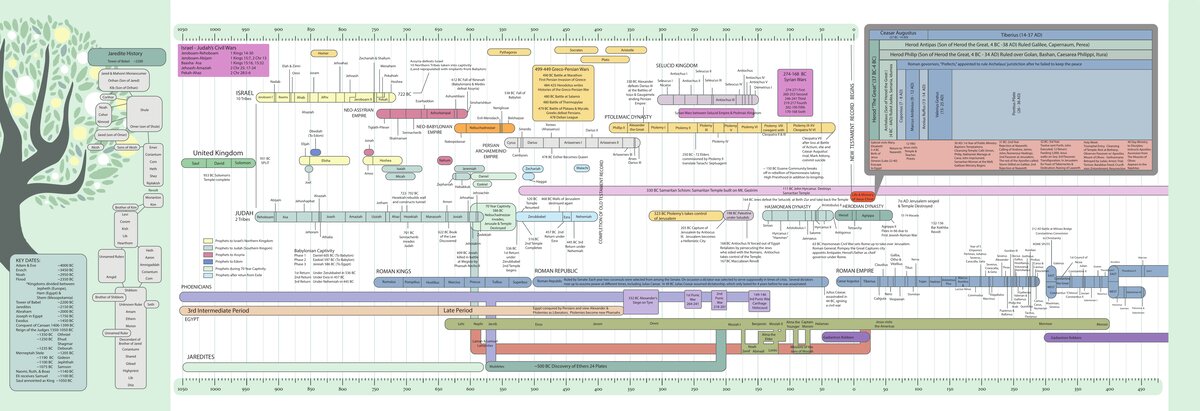
Tap to expand
Old Testament Timeline
From Creation through the Persian Period — tap the image to zoom, or download the full PDF.
Tap anywhere to close · Pinch to zoom