| Church Manuals | |
| Come Follow Me Manual | — |
| Scripture Helps | View |
| OT Seminary Teacher Manual | View |
| OT Institute Manual | View |
| Pearl of Great Price Manual | View |
| Scripture Reference | |
| Bible Dictionary | View |
| Topical Guide | View |
| Guide to the Scriptures | View |
| Church Media | |
| Gospel for Kids | View |
| Bible Videos | View |
| Church Publications & Library | |
| Church Magazines | View |
| Gospel Library | View |

Week 05
The Patriarchs from Adam to Enoch
Genesis 5; Moses 6
January 26–February 1, 2026
5-Minute Overview
You'll walk through the 'book of the generations of Adam' in Genesis 5 — a chapter most people skim — and discover that Moses 6 transforms it into one of the most doctrinally rich chapters in all of scripture. Moses 6 restores Adam's baptism, the gift of the Holy Ghost, a stunning sermon on the Fall and Atonement, and the beginning of Enoch's ministry. You'll see that the gospel wasn't invented in the New Testament; it was taught to Adam and handed down generation by generation through the patriarchs.
Official Church Resources
OFFICIAL CHURCH RESOURCES
▶︎
Video Commentary
Video Commentary (click [i] for details)
▼︎


Specialized Audiences
Women's Perspectives
▶︎
Family & Children's Resources
▶︎


Reference & Study Materials

Genesis 5; Moses 6
Weekly videos

Genesis 5; Moses 6
Study & Teaching Helps
Bible Project
3 Videos This Week
BIBLE PROJECT VIDEOS THIS WEEK (3 videos)
▶︎
ACADEMIC & SCHOLARLY SITES (Homepages)
▶︎
MAPS & BIBLICAL LOCATIONS
▶︎
JEWISH & SCHOLARLY RESOURCES
▶︎
A Letter to Fellow Students
▶︎
Last week we introduced a brief history about the Aleph-bet, and the evolution of Hebrew script from Proto-Sinaitic pictographs through Paleo-Hebrew to the Aramaic Square Script used today. We learned that the Torah we read uses letters adopted after the Babylonian exile—but the original tablets, the Brass Plates, and texts of the First Temple period were written in earlier scripts.
This week, as we learn about the Ancient writing system that Adam and Enoch taught to their posterity, I'm excited to share a new resource that brings some of this history to life: the Hebrew Alphabet Development Chart—an interactive visual and audio guide showing all 22 letters as they evolved across four script stages. This information is pulled from modern archeological sources that date from approximately the time period of Abraham (~1800 BCE) through the Second Temple Period (500 BCE-70 CE) and to modern day. While this only gives us part of the history, you can see how an ancient pictograph of an ox-head became Aleph (the ancestor of our letter A), an image of a house became Bet (the ancestor of our letter B), the pictograph of an ancient type of boomerang became Gimel (a word also related to a camel, which was the ancestor of our letters G and C). Each letter's journey from pictograph to modern form tells a story about how writing itself developed.
And why does this matter for our study this week? Because Moses 6 makes an extraordinary claim:
"And a book of remembrance was kept, in the which was recorded, in the language of Adam, for it was given unto as many as called upon God to write by the spirit of inspiration; And by them their children were taught to read and write, having a language which was pure and undefiled." (Moses 6:5–6)
Writing as a divine gift. Literacy from the beginning. A pure language. These are remarkable assertions—and they connect directly to questions scholars have long pondered about the origins of the alphabet.
The Origin of Writing: Divine Gift or Human Invention?
▶︎
In his essay "Genesis of the Written Word," Hugh Nibley opens with a remarkable case study. In 1904, an Apache named Silas John claimed to receive a complete writing system through divine revelation. Documented in Science magazine, the system proved "highly efficient" and functional—emerging suddenly, with no evolutionary development, for a sacred purpose.
Nibley's point: If a complete writing system could emerge through revelation in 1904 to a semiliterate Apache, why couldn't it have happened earlier?
The scholarly consensus today holds that the alphabet emerged around 1850–1550 BCE in the Sinai Peninsula, likely among Semitic-speaking workers in Egyptian turquoise mines. These workers adapted Egyptian hieroglyphs into a simplified system based on what scholars call the acrophonic principle: each pictograph represented the first sound of the thing it depicted.
Consider:
- The ox-head pictograph (called 'alpu in Proto-Sinaitic) represented the /ʔ/ sound (glottal stop)
- The house pictograph (baytu) represented the /b/ sound
- The stick figure (hillul, "jubilation") represented the /h/ sound
This wasn't gradual evolution—it was a cognitive breakthrough. As Hebrew scholar William Albright observed, the alphabet reduced thousands of Egyptian hieroglyphs and Mesopotamian cuneiform signs to just 22 characters, making literacy accessible beyond the priestly and scribal elite for the first time in known human history.
The question remains: Was this breakthrough purely human ingenuity? Or does the ancient testimony—preserved in Moses 6—point to something more? The universality of claims about writing as a divine gift across cultures, combined with the sudden emergence of the alphabet in the archaeological record, invites reflection.
At a Glance: This Week's Themes
▶︎
This week we encounter what may appear at first glance to be the least interesting chapter in Genesis—a genealogy. Yet Genesis 5 is far more than a list of names. It is theological architecture, connecting creation to the Flood while making a profound statement about human mortality.
Key Themes Emerging:- Genealogy as theology—the toledot "generations" formula as covenant structure
- The book of remembrance and sacred record-keeping
- The reluctant prophet pattern: Enoch, Moses, Jeremiah, Joseph Smith
- The gospel taught from Adam—Christ known by name before the Flood
Your Study Guide: What's Inside
▶︎
The Week 5 Study Guide contains six comprehensive files to support your study. Here's what you'll find in each:
01. Week Overview
▶︎
What it covers:
A complete reading summary placing Genesis 5 and Moses 6 in context. You'll find:
- The five central themes of the week (Genealogy as Theology, Book of Remembrance, Walking with God, Reluctant Prophet Pattern, Gospel Taught from Adam)
- Key figures: Adam, Eve, Seth, Enoch, Methuselah, Lamech, Noah
- Evidence of antiquity: Book of Giants parallels, Mahijah/Mahujah names
- Timeline placement showing the remarkable overlap of patriarchal lives
- Temple connections and Restoration scripture links
Best for:
Getting oriented before deep study; understanding the big picture.
02. Historical & Cultural Context
▶︎
What it covers:
Ancient Near Eastern background that illuminates the text:
- Evidence of antiquity: Why Moses 6 contains details Joseph Smith couldn't have known
- The Sumerian King List parallel (including the significant seventh position)
- The "wild man" designation and its Book of Giants connection
- Enoch's power over elements and Mandaean parallels
- The book of remembrance in ancient context
- Patriarchal lifespans: interpretive approaches
- Hugh Nibley's "Genesis of the Written Word" on divine origins of writing
Best for:
Understanding the ancient world behind the text; seeing how modern scholarship validates the Restoration.
03. Key Passages Study
▶︎
What it covers:
Five in-depth passage analyses:
- The Book of Remembrance (Moses 6:5–6) — Sacred record-keeping from Adam
- Enoch's Walk with God (Genesis 5:21–24) — What "walking with God" means
- Enoch's Prophetic Call (Moses 6:26–34) — The reluctant prophet pattern
- The Doctrine of the Fall (Moses 6:48–56) — The plan of redemption explained
- Adam's Baptism and the Holy Ghost (Moses 6:64–68) — The first recorded ordinances
Each passage includes Hebrew insights, historical context, doctrinal analysis, cross-references, and reflection questions.
Best for:
Deep study of specific passages; lesson preparation; personal meditation.
04. Word Studies
▶︎
What it covers:
Six key Hebrew terms with full linguistic analysis:
- toledot (generations) — The book's structuring formula
- halak (walked) — Continuous lifestyle with God
- laqach (took) — Divine initiative in translation
- sefer zikkaron (book of remembrance) — Sacred record-keeping
- na'ar (lad) — Prophetic inadequacy
- einenu (he was not) — Mysterious absence
Plus scholarly insights on Mahijah/Mahujah, Enoch as "lad" in ancient tradition, and the water-blood-Spirit formula.
Best for:
Understanding key terms; deepening appreciation for the Hebrew text; teaching vocabulary.
05. Teaching Applications
▶︎
What it covers:
Ready-to-use applications for five teaching contexts:
- Personal Study — Walking with God, keeping a book of remembrance, embracing inadequacy
- Family Home Evening — The chain of generations, timeline activities, book of remembrance project
- Sunday School — "How much did Adam know?" discussion, genealogy analysis
- Seminary/Institute — Enoch's reluctance pattern comparison, ancient parallels
- Missionary Teaching — Plan of salvation from Adam, Christ known by name
Best for:
Teachers, parents, missionaries preparing lessons.
06. Study Questions
▶︎
What it covers:
185 questions organized by category:
- Understanding the Text (60 questions)
- Personal Application (30 questions)
- Doctrinal Understanding (30 questions)
- Modern Relevance (30 questions)
- Synthesis and Commitment (20 questions)
- Discussion Starters (10 questions)
- Bonus: Evidence of Antiquity (5 questions)
Best for:
Self-assessment; class discussion; journal prompts; scripture mastery.
Special Resources This Week
▶︎
This week we've created an interactive HTML resource that places Genesis 5 and Moses 6 side by side, allowing you to see exactly how the Restoration expands our understanding of the antediluvian period.
What you'll discover:- Genesis 5 gives us 32 verses of genealogy with a cryptic four-verse note about Enoch
- Moses 6 provides 68 verses revealing the full gospel taught to Adam
- The comparison shows how these accounts converge and differ
An interactive visual guide showing all 22 Hebrew letters as they evolved across four script stages:
| Stage | Period | Description |
|---|---|---|
| Proto-Sinaitic | c. 1850 BCE | Original pictographic forms from Sinai |
| Paleo-Hebrew/Phoenician | c. 1000 BCE | Early Israelite script (First Temple period) |
| Middle Hebrew | c. 500 BCE | Transitional Persian period forms |
| Late/Modern Square Script | c. 200 BCE – Present | The Hebrew letters we see today |
- All 22 letters with embedded images showing actual script evolution
- Phoenician Unicode characters
- Modern Hebrew letters
- IPA pronunciation guides
- Latin transliterations
- Pictograph meanings and sound descriptions
- Understanding Hebrew alphabet origins
- Word study context (letter pictographic meanings)
- Visual aid for teaching the "acrophonic principle"
- Connecting Moses 6's "book of remembrance" to ancient writing systems
The Hebrew Alphabet: A Gift from God?
▶︎
The Scholarly Consensus on Alphabet Origins
▶︎
The alphabet represents one of humanity's most significant intellectual achievements. Unlike the thousands of signs required for Egyptian hieroglyphics or Mesopotamian cuneiform, the alphabet reduced writing to approximately 22–30 characters representing individual sounds.
Key Historical Development:| Period | Development | Significance |
|---|---|---|
| c. 1850–1550 BCE | Proto-Sinaitic script emerges | First alphabetic writing; likely invented by Semitic workers in Egyptian Sinai mines |
| c. 1200–1050 BCE | Proto-Canaanite | Regional variations develop in Canaan |
| c. 1050–850 BCE | Phoenician alphabet | Standardized 22-letter system spreads through Mediterranean trade |
| c. 1000–586 BCE | Paleo-Hebrew (Ktav Ivri) | Script used during First Temple period—Moses, David, Isaiah wrote in this |
| c. 500 BCE onward | Aramaic Square Script (Ktav Ashuri) | "Assyrian script" adopted after Babylonian exile—the Hebrew letters we see today |
The Discovery at Wadi el-Hol
▶︎
In 1999, Egyptologists John and Deborah Darnell discovered ancient inscriptions at Wadi el-Hol in Egypt's Western Desert dating to approximately 1900–1800 BCE. These inscriptions, along with those at Serabit el-Khadim in Sinai, represent the earliest known alphabetic writing.
The prevailing scholarly view, championed by scholars from Sir Alan Gardiner to Orly Goldwasser, is that the alphabet emerged from a brilliant insight: Egyptian hieroglyphs could be simplified and adapted using the acrophonic principle, where each symbol represents only the first sound of what it depicts.
The Acrophonic Principle
▶︎
Consider how letters got their names and sounds:
| Letter | Proto-Sinaitic Picture | Original Word | Sound Value |
|---|---|---|---|
| A (Aleph) | Ox head | 'alpu (ox) | /ʔ/ (glottal stop) |
| B (Bet) | House floor plan | baytu (house) | /b/ |
| G (Gimel) | Throwing stick | gamlu (throw-stick) | /g/ |
| D (Dalet) | Door | daltu (door) | /d/ |
| M (Mem) | Water waves | mayim (water) | /m/ |
Turn our letter "A" upside down and you can still see the ox-head with its two horns. The letter "M" preserves the waves of water. These aren't coincidences—they're fossilized evidence of the alphabet's pictographic origins.
Why 22 Letters?
▶︎
The Proto-Sinaitic inventors reduced the complexity of Egyptian writing to exactly 22 consonant signs. Why this number?
Scholars note that 22 was sufficient to represent the consonantal phonemes of Northwest Semitic languages while remaining small enough for rapid learning. The number also carries symbolic weight in Hebrew tradition—many Hebraic words and verses intentionally use the letters symbolically.
Most significantly, Psalm 119 is structured as a 22-section acrostic, with each section devoted to one letter of the Hebrew alphabet. This "alphabetic psalm" celebrates God's word using the very structure of the alphabet itself—suggesting the ancient Israelites saw the alphabet as more than just a utilitarian tool.
The Book of Moses Claim
▶︎
Moses 6:5–6 makes a remarkable assertion: writing was given "by the spirit of inspiration" and existed from Adam's time in a language that was "pure and undefiled."
This claim invites us to consider: What if the alphabet's emergence wasn't merely human ingenuity responding to practical needs? What if writing truly was a gift from heaven—a gift perhaps lost, and in the process of restoration and recovery?
Understanding the Hebrew Abjad: Consonants Without Vowels
▶︎
What Is an Abjad?
▶︎
You may have noticed something unusual about the Hebrew alphabet: it contains only 22 letters, all of them consonants. There are no vowels. This type of writing system is called an abjad (from the Arabic letters alif-ba-jim-dal).
Unlike our English alphabet, which represents both consonants and vowels, an abjad represents only consonant sounds. Readers are expected to supply the vowels from context and their knowledge of the language.
Consider this English example: If I write "rd ths sntnc", you can probably read "read this sentence" because you know the words. That's essentially how ancient Hebrew worked.
| Writing System | Type | Vowels | Examples |
|---|---|---|---|
| English | Alphabet | Fully written | A, E, I, O, U |
| Hebrew (biblical) | Abjad | Not written (implied) | Only consonants |
| Hebrew (pointed) | Abjad + diacritics | Vowel marks added | Masoretic pointing |
| Arabic | Abjad | Usually not written | Similar to Hebrew |
Why No Vowels?
▶︎
Several factors contributed to the consonant-only system:
- Semitic language structure: Hebrew and other Semitic languages are built on consonantal roots (typically three consonants) that carry core meaning. The root K-T-B (כתב) relates to writing: katav (he wrote), kotev (writer), miktav (letter), ketuvim (writings). The consonants carry the semantic core; vowels modify grammar and function.
- Economy of space: Writing materials (papyrus, parchment, stone) were expensive. Fewer characters meant more efficient use of space.
- Assumed fluency: Ancient readers knew their language well enough to supply vowels from context—just as you read "rd ths sntnc" without difficulty.
The Masoretic Solution: Adding Vowel Points
▶︎
By the early centuries CE, Hebrew was no longer a living spoken language for most Jews. To preserve the traditional pronunciation of the scriptures, Jewish scholars called Masoretes (from masorah, meaning "tradition") developed a system of dots and dashes placed above, below, and within consonants to indicate vowels.
This is why modern Hebrew Bibles look different from ancient manuscripts:
| Without Vowels (Ancient) | With Vowels (Masoretic) |
|---|---|
| בראשית | בְּרֵאשִׁית |
| ברא | בָּרָא |
| אלהים | אֱלֹהִים |
The Masoretic vowel system was finalized between the 7th and 10th centuries CE. Next week, we'll explore these vowel marks in detail as we study Genesis 6–11.
Reading Hebrew: Right to Left
▶︎
Hebrew is read from right to left—the opposite of English. This takes some getting used to, but once you recognize it, navigating Hebrew text becomes much easier.
```
English: In the beginning God created...
─────────────────────────────►
Hebrew: ...בָּרָא אֱלֹהִים בְּרֵאשִׁית
◄─────────────────────────────
(B'reshit Elohim bara...)
```
When you see Hebrew text in a concordance or study tool, remember:
- Start at the right side
- Move leftward
- Each letter represents a consonant sound
- Vowel points (if present) appear as dots and dashes around the consonants
Using the Blue Letter Bible (BLB) Concordance
▶︎
One of the best free tools for Hebrew word study is the Blue Letter Bible (blueletterbible.org). We use BLB throughout CFM Corner for several reasons:
Why BLB?- Free and accessible: No subscription required
- Strong's Concordance integration: Links every Hebrew word to its lexical entry
- Multiple translations: Compare KJV, ESV, NASB, and others
- Pronunciation guides: Audio and transliteration for Hebrew words
BLB relies primarily on public domain resources, including:
- Strong's Concordance (1890): A valuable starting point, but over 130 years old
- Gesenius' Hebrew Lexicon (1857): Similarly dated
More current scholarship is available in resources like the HALOT (Hebrew and Aramaic Lexicon of the Old Testament) or the DCH (Dictionary of Classical Hebrew), but these cost hundreds of dollars. Our goal with CFM Corner is to make quality study resources freely available to everyone.
How to Use BLB for Hebrew Study:- Navigate to a verse: Go to blueletterbible.org and enter your reference (e.g., Genesis 5:24)
- Click "Tools": This opens study resources for that verse
- Select "Interlinear": This shows the Hebrew text word by word
- Click a Strong's number (e.g., H1980 for "walked"): This opens the lexicon entry with:
- Hebrew letters and vowel points
- Transliteration
- Pronunciation
- Definition and word usage
- Explore "Concordance": See every place this word appears in the Old Testament
"And Enoch walked with God: and he was not; for God took him."
| English | Hebrew | Transliteration | Strong's | Meaning |
|---|---|---|---|---|
| walked | הִתְהַלֶּךְ | hith-hal-LEK | H1980 | to walk, go, come |
| took | לָקַח | la-QACH | H3947 | to take, receive, seize |
The word "walked" here is hithallek—a Hebrew verb form (Hithpael) indicating continuous, reflexive action. Enoch didn't just walk once; he continually walked back and forth with God as a lifestyle.
Quick Reference: The 22 Hebrew Letters
▶︎
For your reference, here are the 22 consonants of the Hebrew abjad:
| # | Name | Hebrew | Sound | Pictograph Origin |
|---|---|---|---|---|
| 1 | Aleph | א | silent/glottal stop | Ox head |
| 2 | Bet | ב | b/v | House |
| 3 | Gimel | ג | g | Camel/throwing stick |
| 4 | Dalet | ד | d | Door |
| 5 | He | ה | h | Window/arms raised |
| 6 | Waw/Vav | ו | v/w | Hook/nail |
| 7 | Zayin | ז | z | Weapon |
| 8 | Chet | ח | ch (guttural) | Fence |
| 9 | Tet | ט | t (emphatic) | Basket/wheel |
| 10 | Yod | י | y | Hand/arm |
| 11 | Kaf | כ | k/kh | Palm of hand |
| 12 | Lamed | ל | l | Goad/staff |
| 13 | Mem | מ | m | Water |
| 14 | Nun | נ | n | Fish/serpent |
| 15 | Samech | ס | s | Support/pillar |
| 16 | Ayin | ע | silent (guttural) | Eye |
| 17 | Pe | פ | p/f | Mouth |
| 18 | Tsade | צ | ts | Fishhook/plant |
| 19 | Qof | ק | q (back of throat) | Back of head |
| 20 | Resh | ר | r | Head |
| 21 | Shin | ש | sh/s | Tooth |
| 22 | Tav | ת | t | Mark/cross |
For audio pronunciations and visual script evolution, see the Hebrew Alphabet Development Chart in this week's resources.
The "And He Died" Pattern
▶︎
Death as the Defining Feature
▶︎
Genesis 5 employs a rigid formulaic structure:
"[X] lived [Y] years and begat [Z]. And [X] lived after he begat [Z] [W] years, and begat sons and daughters. And all the days of [X] were [Y+W] years: and he died."
This formula repeats with drum-like regularity—"and he died... and he died... and he died"—creating a literary effect. The mortality of humanity, even in an age of extraordinary lifespans, is pounded into the reader's consciousness.
Then comes Enoch:
"And Enoch walked with God: and he was not; for God took him." (Genesis 5:24)
No "and he died." The pattern disruption is the point. In a genealogy of death, one man escaped. The literary structure makes Enoch's translation inescapable.
The Hebrew Insight
▶︎
The phrase "he was not" translates אֵינֶנּוּ (einenu)—a particle of negation with a third-person suffix. It implies absence from the earthly realm without stating death.
The Septuagint (Greek translation) reads "he was not found" (passive voice), suggesting people searched for Enoch but could not locate him—similar to the search for Elijah after his translation (2 Kings 2:17).
Hebrews 11:5 interprets this: "By faith Enoch was translated that he should not see death; and was not found, because God had translated him."The Gospel from Adam: What Did Adam Know?
▶︎
Moses 6:48–68 contains one of the clearest expositions of the plan of salvation in all scripture—and it was taught to Adam:
| Doctrine | Moses 6 Reference | What Adam Knew |
|---|---|---|
| The Fall's effects | 6:48–49 | Death, carnal nature, separation from God |
| Premortal existence | 6:51 | "Men before they were in the flesh" |
| Christ named | 6:52 | "Jesus Christ, the only name... whereby salvation shall come" |
| Repentance required | 6:52 | "Repent of all thy transgressions" |
| Baptism by immersion | 6:64–65 | "Laid under the water... brought forth out of the water" |
| Gift of Holy Ghost | 6:66 | "Baptized with fire, and with the Holy Ghost" |
| Born again | 6:59 | "Ye must be born again into the kingdom of heaven" |
| Innocence of children | 6:54 | Children are "whole from the foundation of the world" |
This demolishes the notion that the gospel was a New Testament invention. Adam knew Christ by name. Baptism was practiced from the beginning. The gift of the Holy Ghost was given from Adam onward.
The gospel is eternal.Evidence of Antiquity: The Mahijah/Mahujah Discovery
▶︎
One of the most remarkable evidences for the ancient origins of the Book of Moses comes from an obscure name that appears only in Joseph Smith's translation.
The Names in Moses 6–7
▶︎
"And there came a man unto him, whose name was Mahijah, and said unto him: Tell us plainly who thou art, and from whence thou comest?" (Moses 6:40)
A similar name, "Mahujah," appears in Moses 7:2.
The Discovery of the Book of Giants
▶︎
In 1948—over a century after Joseph Smith produced the Book of Moses—scholars discovered the Aramaic Book of Giants among the Dead Sea Scrolls at Qumran. This ancient text contains Enoch traditions that predate Christianity. Remarkably, one of its central characters is named Mahaway (Aramaic: MHWY).
Non-Latter-day Saint scholar Salvatore Cirillo concluded:
"The name Mahawai in the Book of Giants and the names Mahujah and Mahijah in the Book of Moses represent the strongest similarity between the Latter-day Saint revelations on Enoch and the pseudepigraphal books of Enoch."
Why This Matters
▶︎
| Question | Significance |
|---|---|
| Could Joseph have borrowed from the Bible? | Genesis 4:18 contains "Mehujael" and "Mehijael" as variants—but only visible in Hebrew, not the KJV. No evidence Joseph knew Hebrew in 1830. |
| Could Joseph have borrowed from the Book of Giants? | Impossible. Not discovered until 1948; not translated until 1976. |
| What about the "-el" ending? | Both Book of Giants (Mahaway) and Book of Moses (Mahijah/Mahujah) lack the theophoric "-el" ending. This correspondence cannot be explained by biblical borrowing. |
When renowned Aramaic scholar Matthew Black was confronted with this evidence, he reportedly said: "Well, someday we will find out the source that Joseph Smith used."
No such source has ever been found.
Reflection Questions
▶︎
As you study this week, consider:
- On Writing and Record-Keeping: What does it mean that Adam's family wrote "by the spirit of inspiration"? How does this apply to your own journal-keeping?
- On Walking with God: Enoch "walked with God" after he begat Methuselah. What responsibilities or relationships have drawn you closer to God?
- On Prophetic Inadequacy: Enoch felt too young, too despised, too slow of speech. When have you felt unqualified to serve—and how did God help you anyway?
- On the Gospel's Antiquity: What does it change to know that Adam knew Christ by name? That baptism was practiced before the Flood?
- On Translation vs. Death: Why does the pattern break for Enoch? What does his escape from "and he died" teach about God's purposes?
A Final Thought: The Chain of Generations
▶︎
Genesis 5 is about connections across time. According to the text, Adam lived 930 years—long enough to know Lamech, Noah's father. Methuselah, who knew Adam, lived until the year of the Flood. The knowledge of creation and the garden passed through remarkably few links to Noah.
We are links in this chain.
The "book of remembrance" continues today—in temple records, in family histories, in the journals we keep. Adam's descendants "were taught to read and write" so that sacred things would not be lost. We continue that work.
What will you write by the spirit of inspiration?
Weekly Insights | CFM Corner | OT 2026 Week 05: Genesis 5; Moses 6
Week 5
Genesis 5; Moses 6
The Book of Generations: Adam's Posterity and the Gospel's Antiquity
January 26–February 1, 2026
1. Week Overview
| Element | Details |
|---|---|
| Week | 05 |
| Dates | January 26–February 1, 2026 |
| Reading | Genesis 5; Moses 6 |
| CFM Manual | Genesis 5; Moses 6 Lesson |
| Total Chapters | 2 (across 2 books) |
| Approximate Verses | Genesis 5 (32), Moses 6 (68) = ~100 verses |
This week we encounter what may appear at first glance to be the least interesting chapter in Genesis—a genealogy listing ten patriarchs from Adam to Noah with their lifespans and descendants. Yet Genesis 5 is far more than a list of names. It is theological architecture, connecting the creation account to the flood narrative while making a profound statement about human mortality and divine purpose. The relentless refrain "and he died... and he died... and he died" echoes through the chapter like a funeral drum—until one man breaks the pattern. Of Enoch alone the text says, "he was not; for God took him" (Genesis 5:24). Those four words in Genesis generated more speculation in Jewish and Christian tradition than almost any other passage.
Moses 6 transforms our understanding of this era completely. Where Genesis gives us 32 verses of genealogy with a cryptic four-verse note about Enoch, Moses 6 provides 68 verses revealing the full gospel—the plan of redemption, baptism, the gift of the Holy Ghost, and the role of Jesus Christ—all taught to Adam and his descendants from the very beginning. Moses 6 answers the question: What did Adam actually know about salvation? The answer is stunning: everything. Adam knew Christ by name (Moses 6:52), was baptized by immersion (Moses 6:64–65), received the Holy Ghost (Moses 6:66), and understood the doctrine of the Fall and redemption in detail (Moses 6:48–62).
Moses 6 also introduces us to Enoch as more than a mysterious figure who "walked with God." We meet him as a young, reluctant prophet who felt inadequate: "I am but a lad, and all the people hate me; for I am slow of speech" (Moses 6:31). This pattern of prophetic inadequacy—echoing Moses, Jeremiah, and Joseph Smith—reveals that God consistently chooses those who feel unqualified. The calling precedes the capacity.
Together, these chapters establish three foundational truths: (1) The gospel of Jesus Christ has been known since Adam, (2) genealogical records carry theological weight, and (3) God's covenant purposes continue through faithful families despite a world descending into wickedness.
Theme 1: Genealogy as Theology
The toledot (תּוֹלְדֹת, "generations") formula that opens Genesis 5:1—"This is the book of the generations of Adam"—is not merely a record-keeping device. It is a theological statement. The Hebrew word toledot appears eleven times in Genesis as a structural marker, dividing the book into its major sections. Each toledot advances God's covenant purposes: from Adam to Noah, from Noah to Abraham, from Abraham to Isaac, from Isaac to Jacob. The genealogy demonstrates that God's plan unfolds through human history via specific and predictable patterns.
The ten-generation structure (Adam to Noah) parallels the ten-generation list from Shem to Abraham in Genesis 11, and both point forward to Matthew's genealogy of Christ (Matthew 1:1–17). The number ten in Hebrew thought often signifies completeness—a full measure. From Adam to the Flood represents a complete era; from the Flood to Abraham represents another. Christ is the culmination of all these genealogical threads.
The parallel between Genesis 5:1 ("This is the book of the generations [sefer toledot] of Adam") and Matthew 1:1 ("The book of the generation [biblos geneseōs] of Jesus Christ") is deliberate. Matthew presents Jesus as the new Adam, inaugurating a new creation and a new humanity.
Theme 2: The Book of Remembrance
Moses 6:5–6 introduces a concept with profound implications for Latter-day Saints:
> "And a book of remembrance was kept, in the which was recorded, in the language of Adam, for it was given unto as many as called upon God to write by the spirit of inspiration; And by them their children were taught to read and write, having a language which was pure and undefiled."
This passage establishes several remarkable truths:
- Literacy existed from the beginning — Adam's descendants could read and write
- Writing was a spiritual gift — They wrote "by the spirit of inspiration"
- Records were sacred — The "book of remembrance" carried theological weight
- The Adamic language was pure — A language free from corruption
The Hebrew phrase sefer zikkaron (סֵפֶר זִכָּרוֹן) appears in Malachi 3:16: "A book of remembrance was written before him for them that feared the LORD." This connects Adam's record-keeping to the celestial records God maintains. Temple work, family history, and personal journals all participate in this ancient pattern of sacred record-keeping.
Theme 3: Walking with God
The phrase "walked with God" (Genesis 5:22, 24) is reserved for only two people in Genesis: Enoch and Noah (Genesis 6:9). The Hebrew uses the Hithpael stem of halak (הָלַךְ), indicating continuous, reflexive action—a lifestyle of walking, not a single event.
Scripture distinguishes between walking with, before, and after God:
- Walking WITH God ('et, אֶת־) — Enoch, Noah — intimate proximity
- Walking BEFORE God (liphnei, לִפְנֵי) — Abraham (Genesis 17:1) — living in God's sight
- Walking AFTER God (acharei, אַחֲרֵי) — Israel (Deuteronomy 13:4) — following God's ways
Note: Hebrew has two particles spelled אֵת—one is the definite direct object marker (H853, untranslated), the other is a preposition meaning "with" (H854). Genesis 5:22 uses the preposition (H854), which the lexicon notes expresses "closer association than עִם" (the more common word for "with"). The Septuagint remarkably translates the phrase not as "walked with" but as "pleased God" (εὐηρέστησεν τῷ θεῷ), interpreting the walking as a life that delighted the Lord—the same language used in Hebrews 11:5: "before his translation he had this testimony, that he pleased God."
Theme 4: The Reluctant Prophet Pattern
Moses 6 reveals Enoch as a reluctant prophet, following a pattern seen throughout scripture:
| Prophet | Objection | Reference |
|---|---|---|
| Enoch | "I am but a lad, and all the people hate me; for I am slow of speech" | Moses 6:31 |
| Moses | "I am not eloquent... I am slow of speech, and of a slow tongue" | Exodus 4:10 |
| Jeremiah | "I cannot speak: for I am a child [na'ar]" | Jeremiah 1:6 |
| Joseph Smith | "An obscure boy... doomed to the necessity of obtaining a scanty maintenance by his daily labor" | JS-H 1:22–23 |
God's response to each is essentially the same: divine empowerment overcomes human inadequacy. To Enoch: "Go forth and do as I have commanded thee, and no man shall pierce thee. Open thy mouth, and it shall be filled" (Moses 6:32). To Moses: "I will be with thy mouth, and teach thee what thou shalt say" (Exodus 4:12). The pattern reveals that God does not call the qualified; He qualifies the called.
Theme 5: The Gospel Taught from Adam
Perhaps the most significant contribution of Moses 6 is revealing the antiquity of the gospel. Moses 6:48–68 contains one of the clearest expositions of the plan of salvation in all scripture—and it was taught to Adam:
| Doctrine | Moses 6 Reference | Significance |
|---|---|---|
| The Fall's effects | 6:48–49 | Death, carnal nature, separation from God |
| Premortal existence | 6:51 | "Men before they were in the flesh" |
| Christ named | 6:52 | "Jesus Christ, the only name... whereby salvation shall come" |
| Repentance required | 6:52 | "Repent of all thy transgressions" |
| Baptism by immersion | 6:64–65 | "Laid under the water... brought forth out of the water" |
| Gift of Holy Ghost | 6:66 | "Baptized with fire, and with the Holy Ghost" |
| Born again | 6:59 | "Ye must be born again into the kingdom of heaven" |
| Innocence of children | 6:54 | Children are "whole from the foundation of the world" |
This demolishes the notion that the gospel was a New Testament invention. Adam knew Christ by name. Baptism was practiced from the beginning. The gift of the Holy Ghost was given from Adam onward. The gospel is eternal.
| Person | Role | Significance This Week |
|---|---|---|
| Adam | First man, first prophet | Taught the gospel; baptized; kept the book of remembrance |
| Eve | Mother of all living | Partner in teaching children the gospel (Moses 5:12) |
| Seth | Third son of Adam | Replaced Abel in the covenant line (Genesis 5:3) |
| Enoch | Seventh from Adam | Walked with God; translated; preached repentance |
| Methuselah | Son of Enoch | Longest-lived human (969 years); died year of Flood |
| Lamech | Father of Noah | May have known Adam directly; prophesied of Noah |
| Noah | Tenth from Adam | Would "comfort us" from the cursed ground (Genesis 5:29) |
Enoch's Unique Position
Enoch is the seventh from Adam—a number of covenant significance. Jude 1:14 specifically identifies him this way: "Enoch also, the seventh from Adam, prophesied..." The number seven signifies completion and covenant. Being seventh from Adam, Enoch stands at a position of spiritual completeness in the patriarchal line.
The Book of Enoch (1 Enoch), though not canonical, was known to the New Testament authors. Jude 1:14–15 quotes 1 Enoch 1:9, and the letter shows familiarity with Enochic traditions. The Restoration scriptures provide an independent witness that Enoch was indeed a prophet of cosmic significance—but present him as a builder of Zion rather than a cosmic tour guide through heavenly realms.
One of the most remarkable aspects of the Book of Moses Enoch account is its correspondence with ancient manuscripts that Joseph Smith could not possibly have known. These parallels provide powerful evidence for the ancient origins of this restoration scripture.
The Problem for Critics
Jeffrey Bradshaw and other Interpreter Foundation scholars have documented that it would have been virtually impossible for Joseph Smith in 1830 to have been aware of the most important resemblances to ancient literature in his Enoch revelations.
| Ancient Text | Date Discovered | English Translation | Could Joseph Smith Have Known It? |
|---|---|---|---|
| 1 Enoch | 1773 | 1821 (Laurence) | "Scarcely conceivable" (Bushman); few unique parallels anyway |
| 2 Enoch | N/A | 1899 (first Western publication) | Impossible |
| 3 Enoch | N/A | Not in his lifetime | Impossible |
| Book of Giants | 1948 (Dead Sea Scrolls) | 1976 | Impossible |
The Book of Giants: Most Extensive Parallels
The Book of Giants, discovered at Qumran among the Dead Sea Scrolls in 1948, provides the most extensive series of significant parallels between a single ancient text and Joseph Smith's account:
| Parallel | Book of Moses | Book of Giants |
|---|---|---|
| Secret works and murders | Moses 6:15 | 1Q23, 9+14+15:2-4 |
| A "wild man" | Moses 6:38 | 4Q531, 22:8 |
| Mahijah questions Enoch | Moses 6:40 | 4Q530, 2:20-23 |
| Enoch reads record of deeds | Moses 6:46–47 | 4Q203, 7b col. ii |
| Trembling/weeping after reading | Moses 6:47 | 4Q203, 4:6 |
| "Conceived in sin" | Moses 6:55 | 4Q203, 8:6-9 |
The Mahijah/Mahujah Evidence
The names "Mahijah" (Moses 6:40) and "Mahujah" (Moses 7:2) in the Book of Moses correspond remarkably to Mahaway (MHWY) in the Book of Giants—a text not discovered until 1948 and not translated into English until 1976.
Non-Latter-day Saint scholar Salvatore Cirillo concluded: "The name Mahawai in the Book of Giants and the names Mahujah and Mahijah in the Book of Moses represent the strongest similarity between the Latter-day Saint revelations on Enoch and the pseudepigraphal books of Enoch."
When renowned Aramaic scholar Matthew Black was confronted with this evidence, he reportedly said: "Well, someday we will find out the source that Joseph Smith used." No such source has ever been found.
Enoch as "Lad" in Ancient Tradition
The Book of Moses describes Enoch protesting: "I am but a lad" (Moses 6:31). This is the only use of "lad" in all of Joseph Smith's revelations—yet it corresponds precisely to ancient Enochic tradition:
- 2 Enoch and 3 Enoch both feature Enoch with the title "lad" or "youth"
- In 3 Enoch, the angels challenge Enoch's status specifically because he is a "lad"
- Neither text was available in English in 1830
Heavenly Books in Jewish Tradition
The "book of remembrance" in Moses 6 fits precisely into ancient Jewish categories of heavenly books:
| Type | Description | Moses 6 Connection |
|---|---|---|
| Book of Life | Names of the righteous | Moses 6:5–6 |
| Book of Deeds | Record of works, good or evil | Moses 6:46–47 |
The Testament of Abraham depicts Enoch as "the heavenly being who is responsible for recording the deeds of mankind." Jubilees 10:17 states: "Enoch had been created as a witness to the generations of the world so that he might report every deed of each generation in the day of judgment." Thus, Enoch as a scribe and witness of the heavenly book of remembrance, as described in the Book of Moses, fits squarely into ancient Jewish teachings about Enoch.
Hugh Nibley's Assessment
Hugh Nibley, who spent decades comparing the Book of Moses with ancient Enoch literature, observed:
> "A Victor Hugo or an Anatole France can tell a convincing story when he is near to his own land and time, but let any writer, even the most learned, slip back a couple of thousand years and a few thousand miles around the globe, and he finds himself in a treacherous terrain from which the only escape lies in taking to the wings of fantasy. ... [The author of Moses 6–7] imparts his information in such simple, effortless, and matter-of-fact discourse that the reader easily overlooks the vast amount of detail that is woven into the natural and uncomplicated pattern. What writer of historical fiction has ever remotely approached such an achievement?"
Sources: Jeffrey M. Bradshaw, Book of Moses Essay Series (Interpreter Foundation); Hugh W. Nibley, Enoch the Prophet.
Historical Period: Primordial History (Pre-Flood Era)
Biblical Era: The age of the antediluvian patriarchs
Traditional Chronology (Anno Mundi):
| Event | Year (AM*) | Notes |
|---|---|---|
| Adam created | 1 | Beginning point |
| Seth born | 130 | Genesis 5:3 |
| Enoch born | 622 | Calculate from genealogy |
| Adam dies | 930 | Genesis 5:5 |
| Enoch translated | 987 | After 365 years |
| Methuselah dies | 1656 | Year of the Flood |
| Flood begins | 1656 | Genesis 7:6 |
*AM = Anno Mundi (Year of the World), counting from creation
Remarkable Overlap: According to this chronology, Adam lived long enough to know Lamech (Noah's father). Methuselah, who knew Adam, lived until the year of the Flood. This means the knowledge of the creation and the garden could have passed through only a few links to Noah.
Relationship to Week 04
Week 04 covered the Fall and its aftermath—the expulsion from Eden, Cain and Abel, and the beginning of human civilization outside the garden. Week 05 picks up the genealogical thread from Genesis 4:25–26 (Seth's birth) and expands it through ten generations to Noah. Moses 6 fills in what Genesis 4–5 omits: the gospel that was being taught alongside the genealogical succession.
Book of Genesis (Chapter 5)
- Author: Moses (traditional attribution)
- Original Audience: Israel in the wilderness
- Setting: Primordial history—the genealogy from Adam to Noah
- Purpose: To trace the covenant line through which God's promises continue
- Key Themes: Mortality ("and he died"), the exception of Enoch, genealogical continuity
- Literary Genre: Genealogy (toledot)
Book of Moses (Chapter 6)
- Author: Moses, restored through Joseph Smith
- Source Date: Original to Moses (~1446 BC); restored June–October 1830
- Original Audience: Israel; through restoration, the whole Church
- Setting: Continuation of the vision that began in Moses 1
- Purpose: To reveal the gospel's antiquity and Enoch's prophetic call
- Key Themes: Book of remembrance, Enoch's reluctant call, the plan of redemption explained to Adam
- Literary Genre: Prophetic vision/narrative
The Veil Pattern
Adam's baptism (Moses 6:64–66) establishes a pattern that temple worshippers recognize:
- Being "caught away by the Spirit" and "carried down into the water"
- "Born of the Spirit" and "quickened in the inner man"
- Hearing "a voice out of heaven"
This pattern—ordinance, spiritual transformation, divine confirmation—echoes through temple worship.
Enoch's Access to God's Presence
Enoch "walked with God"—language suggesting access to the divine presence that later becomes associated with the temple. D&C 107:49 clarifies: "And he saw the Lord, and he walked with him, and was before his face continually." This is temple language—being "before his face" continually.
The Book of Remembrance
The sefer zikkaron (book of remembrance) connects to temple record-keeping. D&C 128:24 teaches that "whatsoever you record on earth shall be recorded in heaven." Temple records—baptisms, sealings, ordinations—participate in this ancient pattern of sacred record-keeping begun by Adam.
Book of Mormon Connections
- 2 Nephi 2:22–25 — Lehi's explanation of the Fall, closely paralleling Moses 6:48–49
- 2 Nephi 31:5–21 — The doctrine of Christ: faith, repentance, baptism, Holy Ghost
- Mosiah 18:8–17 — Alma's baptisms at the Waters of Mormon, following Adam's pattern
- Alma 42:2–15 — The Fall and Atonement explained
- 3 Nephi 11:31–40 — Christ's doctrine, matching Moses 6's pattern
Doctrine and Covenants Connections
- D&C 20:17–31 — The Fall, justification, and sanctification
- D&C 29:36–45 — Fall of man, redemption through Christ
- D&C 84:99–100 — "The Lord hath brought again Zion... the Lord hath redeemed his people"
- D&C 107:41–57 — The order of the priesthood from Adam, including Adam's blessing on Enoch
- D&C 128:24 — Record-keeping as essential to salvation
Pearl of Great Price Connections
- Moses 5:4–12 — Adam and Eve taught the gospel after the Fall
- Moses 7 — Enoch's expanded ministry and Zion (next week)
- Abraham 1:31 — Abraham's access to "records of the fathers"
Monday–Tuesday: Read Genesis 5 slowly. Notice the repeated pattern: lived, begat, died. Then note Enoch's disruption of that pattern.
Wednesday–Thursday: Read Moses 6:1–47. Focus on the book of remembrance (vv. 5–6) and Enoch's call and preaching (vv. 26–47).
Friday–Saturday: Read Moses 6:48–68. This is the doctrinal heart of the week—the plan of salvation taught to Adam.
Sunday: Review the CFM lesson. Consider: What does Moses 6 reveal about the gospel that Genesis 5 does not? How does knowing the gospel was taught from Adam change your understanding of "the restoration"?
The Come, Follow Me manual emphasizes:
- The antiquity of the gospel: "The gospel of Jesus Christ has been on the earth since the days of Adam"
- Family instruction: The title "Teach These Things Freely unto Your Children" highlights intergenerational teaching
- Enoch's example: His initial reluctance and subsequent empowerment model discipleship for all
Video and Audio Resources
- Hugh Nibley Lecture 22: Enoch (Interpreter Foundation) — Foundational scholarly analysis connecting the Book of Moses to ancient Enoch traditions. Also available as video.
- Follow Him Podcast — Discussion of the "and he died" refrain and Enoch's disruption of the mortality pattern
- Scripture Central — Analysis of Enoch as prototype for last-days Zion community
- Pearl of Great Price Central — Scholarly articles on Adam's full gospel knowledge
Key Scholarly Sources
- Bradshaw, Jeffrey M. "Could Joseph Smith have drawn on ancient manuscripts when he translated the story of Enoch?" Interpreter 33 (2019): 305–373.
- Nibley, Hugh W. Enoch the Prophet. The Collected Works of Hugh Nibley 2. Salt Lake City: Deseret Book, 1986.
- Interpreter Foundation Book of Moses Essay Series: Essay #5 covers ancient Enoch manuscripts; Essay #10 covers the book of remembrance.
2. Historical & Cultural Context
What This Section Covers:
- Evidence of Antiquity — Why Moses 6 contains details Joseph Smith couldn't have known
- ANE Genealogies — Sumerian King List parallels and the significance of the tenth generation
- Book of Remembrance — Sacred record-keeping from Adam's time
- Origin of Writing — Nibley's "Genesis of the Written Word" and universal ancient testimony
- Patriarchal Lifespans — Interpretive approaches to the extraordinary ages
- Enoch in Ancient Traditions — Biblical and extra-biblical Enoch literature
- Walking with God — Hebrew analysis of this key phrase
- The Reluctant Prophet — Enoch's call and the biblical pattern
- Adam's Gospel Knowledge — The full gospel taught from the beginning
| Aspect | Detail |
|---|---|
| Events Described | Primordial history—Adam to Noah (~1,656 years by traditional chronology) |
| Genesis 5 Composition | Traditionally attributed to Moses (~1446 BC); scholarly dating varies |
| Moses 6 Restoration | June–October 1830, Joseph Smith's inspired revision of the Bible |
| Biblical Era | Pre-Flood / Antediluvian Period |
Genesis 5 and Moses 6 describe an era before recorded history—the "primeval" or "antediluvian" (pre-Flood) period. Yet the recording of these traditions occurred within specific cultural contexts. When Moses compiled the genealogy of Genesis 5, his Israelite audience had just emerged from Egypt—a culture obsessed with ancestral records, king lists, and the perpetuation of names. The emphasis on genealogy would have resonated powerfully with an audience who understood that names matter, lineage carries weight, and the past shapes the present.
Recent scholarship has identified striking parallels between specific details in Moses 6 and ancient texts that Joseph Smith could not have known. These parallels strengthen the case for the ancient origins of the Book of Moses.
Summary of Ancient Parallels
| Detail in Moses 6 | Ancient Parallel | Discovery/Access Date |
|---|---|---|
| "Wild man" (6:38) | Book of Giants (4Q531) | 1948 |
| Rivers turned from course (6:34) | Mandaean Ginza | 19th century (Western access) |
| Divine protection (6:32) | Mandaean Ginza | 19th century (Western access) |
| Book of Deeds read to wicked (6:46–47) | Book of Giants, Testament of Abraham | 1948 / unavailable in 1830 |
| Mahijah/Mahujah (6:40; 7:2) | Mahaway (MHWY) in Book of Giants | 1948 |
Each of these parallels is explored in detail below.
The "Wild Man" Designation (Moses 6:38)
When Enoch began preaching, the people described him with a curious phrase:
> "And they came forth to hear him, upon the high places, saying unto the tent-keepers: Tarry ye here and keep the tents, while we go yonder to behold the seer, for he prophesieth, and there is a strange thing in the land; a wild man hath come among us." (Moses 6:38)
The term "wild man" appears only once elsewhere in scripture—describing Ishmael (Genesis 16:12). However, a far more significant parallel exists in the Book of Giants from Qumran:
| Source | Context | Significance |
|---|---|---|
| Moses 6:38 | People call Enoch "a wild man" | May be mockery of his humble status |
| Book of Giants (4Q531) | Defeated gibbor laments: "the wild man they call [me]" | Self-deprecating admission of defeat by Enoch's enemies |
Two Interpretive Options:
- Enoch as "Holy Wild Man": Like John the Baptist, Enoch may have embodied the prophetic tradition of rough-clad preachers who confronted wickedness.
- Mockery by the Gibborim: In the warrior culture of the gibborim (Hebrew "mighty men"), calling someone a "wild man" was the highest compliment. The gibborim may have mockingly applied this term to Enoch—a mere "lad" (na'ar)—sarcastically.
Why This Matters: The single occurrence of "wild man" in Joseph Smith's scripture translations parallels the single occurrence in extant ancient Enoch literature (Book of Giants). The Book of Giants was not discovered until 1948 and not translated into English until 1976.
Enoch's Power Over the Elements (Moses 6:32, 34)
God promised Enoch remarkable power:
> "Open thy mouth, and it shall be filled... the mountains shall flee before thee, and the rivers shall turn from their course." (Moses 6:34)
This is fulfilled in Moses 7:13: "He spake the word of the Lord, and the earth trembled, and the mountains fled, even according to his command; and the rivers of water were turned out of their course."
The Mandaean Parallel:
The Mandaeans are an ancient religious community originating as a Jewish baptismal group in first-century Palestine. Their scripture, the Ginza, contains a remarkable parallel:
> "The [Supreme] Life replied, Arise, take thy way to the source of the waters, turn it from its course. … At this command Tauriel indeed turned the sweet water from its course."
We find no account of a river's course being turned by anyone in the Bible. It is thus remarkable that this precise event appears in both the Mandaean account (connected to Enoch/Enosh traditions) and in the Book of Moses.
Divine Protection: "No Man Shall Pierce Thee" (Moses 6:32)
God reassured the newly commissioned Enoch:
> "Go forth and do as I have commanded thee, and no man shall pierce thee." (Moses 6:32)
The Mandaean Parallel:
In the Ginza, a similar promise is given to Enosh (often confused with Enoch in ancient sources):
> "Little Enosh, fear not. You dread the dangers of this world; I am come to you to deliver you from them. Fear not the wicked... it shall not be given them to do any harm to thee."
Later, Enoch's enemies lament: "In vain have we attempted murder and fire against them; nothing has been able to overcome them."
The Book of Remembrance as a "Book of Deeds" (Moses 6:46–47)
Moses 6:46–47 describes Enoch reading from the "book of remembrance" to his wicked audience, causing them to tremble.
In the Book of Giants, Enoch similarly reads from a heavenly book—"two stone tablets" given to Mahujah as a witness of "their fallen state and betrayal of their ancient covenants." The Testament of Abraham depicts Enoch as the heavenly being responsible for recording mankind's deeds.
Sources: Jeffrey M. Bradshaw, Enoch's Preaching Mission essay series: Essays #5–#13 (Interpreter Foundation); Hugh W. Nibley, Enoch the Prophet.
The Purpose of Genealogies in the Ancient World
In the ancient Near East, genealogies served multiple essential functions far beyond mere record-keeping:
| Function | Description | Biblical Example |
|---|---|---|
| Legitimacy | Establishing royal, priestly, or prophetic authority | Matthew 1:1–17 (Jesus's royal lineage) |
| Identity | Connecting individuals to ancestors and covenantal traditions | Genesis 5 (Adam's line to Noah) |
| Theology | Demonstrating divine blessing or curse through lineage | Genesis 4 vs. Genesis 5 (Cain's vs. Seth's lines) |
| Chronology | Providing historical frameworks and marking epochs | Genesis 5 (creation to Flood); Genesis 11 (Flood to Abraham) |
| Inheritance | Determining property rights and tribal allocation | Numbers 26 (land distribution by tribe) |
| Polemic | Countering rival claims or establishing superiority | The ten-generation structure (completeness) |
The Sumerian King List: A Striking Parallel
One of the most significant ANE parallels to Genesis 5 is the Sumerian King List, an ancient Mesopotamian text that records kings who ruled "before the Flood" and those who ruled after. The parallels with Genesis 5 are remarkable:
| Feature | Genesis 5 | Sumerian King List |
|---|---|---|
| Pre-Flood rulers | 10 patriarchs (Adam to Noah) | 8 kings |
| Lifespans | Long but decreasing (~900+ years) | Astronomically long (tens of thousands of years) |
| Flood as dividing line | The Flood ends the antediluvian era | "Then the Flood swept over" |
| Post-Flood decline | Lifespans decrease dramatically | Reign lengths decrease dramatically |
| Structure | Linear genealogy with formulaic pattern | Linear king list with formulaic pattern |
| Seventh figure | Enoch (special—"walked with God," translated) | Enmeduranki (special—priest-king, received divine secrets) |
The Seventh Position: The parallels between Enoch and Enmeduranki deserve special attention:
| Enoch (Genesis 5) | Enmeduranki (Sumerian) |
|---|---|
| Seventh from Adam | Seventh king before the Flood |
| "Walked with God" | Received divine secrets from Shamash and Adad |
| Translated without death | Founder of the priestly order of bārû (diviners) |
| Lived 365 years (solar year number) | Associated with solar religion |
| Later traditions: cosmic secrets revealed | Later traditions: inventor of divination |
What This Means: The similarities suggest a shared cultural memory of the pre-Flood era, with both traditions recognizing something extraordinary about the seventh figure in the pre-Flood lineage. However, the differences are equally important:
- Genesis attributes Enoch's special status to righteousness ("walked with God"), not priestly technique
- The biblical text demystifies the extraordinary lifespans (hundreds, not tens of thousands of years)
- Enoch's knowledge comes from covenant relationship, not divination
The Number Ten: Symbolic Completeness
The ten-generation structure of Genesis 5 (Adam to Noah) is mirrored by a parallel ten-generation structure in Genesis 11 (Shem to Abraham). This is not coincidental:
``` Adam → Seth → Enosh → Kenan → Mahalalel → Jared → Enoch → Methuselah → Lamech → NOAH (10) ↓ FLOOD ↓ Shem → Arphaxad → Shelah → Eber → Peleg → Reu → Serug → Nahor → Terah → ABRAHAM (10) ```
The Number Ten in ANE Thought:
- In Mesopotamian mathematics (base-60 system), ten was a foundational unit, remember what we explored regarding how math was calculated differently in ancient times vs. modern day (Time, Number, and Creation)
- Ten often represented completeness or a full measure
- Ten plagues, Ten Commandments, ten virgins, tithing (tenth)—the number recurs throughout scripture
Theological Function: The ten-generation structure suggests that each era from Adam to Noah, and from Noah to Abraham, represents a complete epoch. When the ten generations are fulfilled, God acts decisively—the Flood in one case, the Abrahamic covenant in the other.
Genealogical Formulae: The "And He Died" Pattern
Genesis 5 employs a rigid formulaic structure:
> "[X] lived [Y] years and begat [Z]. And [X] lived after he begat [Z] [W] years, and begat sons and daughters. And all the days of [X] were [Y+W] years: and he died."
This formula repeats with drum-like regularity—"and he died... and he died... and he died"—creating a literary effect. The mortality of humanity, even in an age of extraordinary lifespans, is pounded into the reader's consciousness. Death is universal. Death is relentless. Death is the defining feature of post-Fall existence.
Then Comes Enoch: The formula shatters with Enoch: > "And Enoch walked with God: and he was not; for God took him." (Genesis 5:24)
No "and he died." The pattern disruption is the point. In a genealogy of death, one man escaped. The literary structure makes Enoch's translation inescapable.
Moses 6:5–6 and Sacred Record-Keeping
Moses 6:5–6 introduces a concept with profound implications:
> "And a book of remembrance was kept, in the which was recorded, in the language of Adam, for it was given unto as many as called upon God to write by the spirit of inspiration; And by them their children were taught to read and write, having a language which was pure and undefiled."
Ancient Royal Annals and Temple Records
Sacred record-keeping was central to ANE cultures:
| Culture | Record Type | Purpose | Parallel to Moses 6 |
|---|---|---|---|
| Mesopotamia | Royal annals, temple records | Document king's deeds, temple inventories | God's acts recorded for posterity |
| Egypt | Annals of the Kings, mortuary texts | Ensure pharaoh's name lives forever | Names preserved, "book of life" concept |
| Hittite | Treaty archives | Document covenants between nations | Covenant record-keeping |
| Israel | Court records (2 Samuel 8:16) | Official recorder (mazkir, "remembrancer") | Book of remembrance (zikkaron) |
The Hebrew Concept: Sefer Zikkaron
The phrase "book of remembrance" translates the Hebrew sefer zikkaron (סֵפֶר זִכָּרוֹן). This exact phrase appears in Malachi 3:16:
> "Then they that feared the LORD spake often one to another: and the LORD hearkened, and heard it, and a book of remembrance was written before him for them that feared the LORD, and that thought upon his name."
Related Concepts:
| Term | Reference | Meaning |
|---|---|---|
| sefer zikkaron | Malachi 3:16 | Book of remembrance for the righteous |
| sefer hayyim | Psalm 69:28 | Book of the living / Book of Life |
| sefer (memorial book) | Esther 6:1 | The king's chronicle of deeds |
| zikkaron (memorial) | Exodus 17:14 | Written memorial of victory |
The Theological Implication: If Adam's posterity kept a "book of remembrance," this implies:
- Literacy existed from the beginning — Adam's family could read and write
- Writing was a spiritual gift — They wrote "by the spirit of inspiration"
- Records were sacred — Not merely administrative but spiritually significant
- God remembers — The book mirrors heavenly record-keeping
The "Language of Adam": Pure and Undefiled
Moses 6:5–6 specifies that the book was written "in the language of Adam" — a language that was "pure and undefiled."
ANE and Jewish Traditions about Primordial Language:
| Source | Tradition |
|---|---|
| Jewish midrash | Hebrew was the original language; God spoke Hebrew at creation |
| Christian speculation | Various candidates proposed (Hebrew, Syriac, etc.) |
| Babel tradition | Languages confused at Babel; original unity lost |
| Restoration revelation | Joseph Smith taught some Adamic vocabulary (e.g., "Ahman," "Son Ahman") |
Connection to Zephaniah 3:9: > "For then will I turn to the people a pure language, that they may all call upon the name of the LORD, to serve him with one consent."
Zephaniah prophesies that in the last days, God will restore a "pure language" — possibly pointing to a restoration of what was lost at Babel or a renewed unity of understanding among God's covenant people.
Book of Mormon Parallel: Mormon describes his people's writing system as "reformed Egyptian" that had been "altered" over time (Mormon 9:32–33). Moroni adds: "none other people knoweth our language" (Mormon 9:34). The idea of a sacred language known only to the covenant community parallels Adam's "pure and undefiled" tongue.
The Origin of Writing: Divine Gift or Human Invention?
Moses 6:5's claim of early literacy challenges evolutionary assumptions about writing. Hugh Nibley explores this question in his essay "The Genesis of the Written Word" (Nibley on the Timely and the Timeless, 1978).
The Archaeological Problem:
Modern scholarship assumes writing evolved gradually from pictures to phonetic systems over millennia. Yet Nibley documents a striking problem:
| Scholar | Finding |
|---|---|
| Jean Capart | The development of Egyptian writing took only "a few decades," then remained unchanged "for thousands of years" |
| Alan Gardiner | Hieroglyphic "was a thing of rapid growth" but "once established remained immutable for fully 3,000 years" |
| Alexander Scharff | Writing was "introduced and perfected with astounding speed" |
| Elise Baumgartel | "There is no evidence of a gradual development of script in Egypt" |
Nibley poses the critical question: If writing evolved gradually, where are the "vast accumulations of transitional scribblings"—the "countless crude and stumbling attempts" that should exist on "stone, bone, clay, and wood"? But "there are no such accumulations of primitive writing anywhere."
Universal Ancient Testimony:
The ancients were unanimous in attributing writing to divine origin:
| Culture | Tradition |
|---|---|
| Egypt | Thoth, god of writing, descended from heaven to teach humanity; pharaoh claimed "I did not learn this from men, but from the gods" (Video: Thoth's Pill) |
| Babylon | The king ascended to heaven to receive "the tablets of destiny" containing "revelation of the hidden knowledge by the gods" |
| Jewish | "By far the overwhelming authority of Jewish tradition favors not Moses but Abraham as the inventor of the alphabet, though some say he inherited it from Enoch" (Nibley) |
| Enoch Traditions | Enoch credited across Jewish, Islamic, and Christian sources as the inventor of writing and teacher of astronomy |
The Temple-Writing Connection:
Nibley observes: "It is no accident that temple architecture and writing appear suddenly together." The earliest writing is found in temples dealing with religious matters. "Cultic writing has clear priority" over business writing. Writing and temples were connected because both served a sacred purpose: maintaining communication between heaven and earth.
Why This Matters for Moses 6:
Moses 6:5 claims that Adam's posterity could read and write "by the spirit of inspiration"—writing as a divine gift, not human invention. This corresponds precisely to what the ancients themselves claimed about the origin of writing. The Book of Moses presents a view consistent with universal ancient testimony rather than modern evolutionary assumptions.
Source: Hugh W. Nibley, "Genesis of the Written Word," in Nibley on the Timely and the Timeless (1978), 111–141. [Full notes]
The Long Lives of Genesis 5
The lifespans recorded in Genesis 5 present a puzzle:
| Patriarch | Lifespan | Notable |
|---|---|---|
| Adam | 930 years | First man; knew Lamech directly |
| Seth | 912 years | Replacement for Abel |
| Enosh | 905 years | "Then began men to call upon the name of the LORD" |
| Kenan | 910 years | — |
| Mahalalel | 895 years | — |
| Jared | 962 years | Father of Enoch |
| Enoch | 365 years | Translated; did not die |
| Methuselah | 969 years | Longest-lived; died year of Flood |
| Lamech | 777 years | Father of Noah; prophesied of him |
| Noah | 950 years | Survived the Flood |
Three Major Interpretive Approaches
1. Literalist View: The ages are historically accurate. Proponents suggest:
- Different pre-Flood atmospheric or environmental conditions
- Gradual genetic degradation after the Fall
- Divine intervention limiting human lifespan after the Flood (Genesis 6:3: "his days shall be an hundred and twenty years")
2. Symbolic/Numerological View: The numbers carry theological rather than historical meaning:
- Enoch's 365 years = the solar year (365 days) — perhaps connecting him to heavenly/cosmic order
- Lamech's 777 years = the sacred number seven tripled — completeness/perfection
- Numbers may represent dynasties, clans, or epochs rather than individuals
3. Textual Transmission View: The numbers became corrupted or altered during transmission:
- The Septuagint (Greek OT) has different numbers than the Hebrew Masoretic text
- The Samaritan Pentateuch has yet another set of numbers
- Scribal errors or intentional adjustments may have occurred
Latter-day Saint Perspective
The Church has not taken an official position on the exact interpretation of the ages. However:
- Prophets have generally accepted the historicity of the patriarchs themselves
- Questions about exact chronology remain open
- The theological function (mortality, Enoch's exception, covenant continuity) is emphasized over chronological precision
President Brigham Young: President Young taught that the earth's age and early history may differ from traditional calculations, leaving room for various interpretations while maintaining the scriptural narrative's reliability.
The Remarkable Overlap
If the Genesis 5 chronology is taken at face value, the patriarchs' lifespans create remarkable overlaps:
| Who Knew Whom | Overlap Period |
|---|---|
| Adam → Lamech (Noah's father) | Adam died when Lamech was 56 |
| Methuselah → Noah | Methuselah died the year of the Flood |
| Shem → Abraham | Shem outlived Abraham by 35 years |
Theological Significance: This means firsthand accounts of the Creation, the Garden, and the Fall could have passed through only a few links to Noah—and from Noah through Shem to Abraham. The patriarchal chain preserved direct testimony of the earliest events.
The Biblical Enoch (Genesis 5:21–24)
Genesis devotes only four verses to Enoch, yet his brief mention generated more speculation than almost any other passage:
> "And Enoch lived sixty and five years, and begat Methuselah: And Enoch walked with God after he begat Methuselah three hundred years, and begat sons and daughters: And all the days of Enoch were three hundred sixty and five years: And Enoch walked with God: and he was not; for God took him."
Key Phrases:
- "Walked with God" — Hebrew: hithallekh eth ha-Elohim (וַיִּתְהַלֵּךְ חֲנוֹךְ אֶת־הָאֱלֹהִים)
- "He was not" — Hebrew: einennu (וְאֵינֶנּוּ) — literally "he is not (here)"
- "God took him" — Hebrew: laqach (לָקַח) — the same verb used for Elijah's translation
Extra-Biblical Enoch Literature
The cryptic Genesis reference generated extensive elaboration in Second Temple Judaism:
1 Enoch (Ethiopic Enoch)
Date: Composed in stages, 3rd century BC – 1st century AD Preservation: Complete text survives in Ethiopic (Ge'ez); fragments in Aramaic from Qumran
Structure:
| Section | Chapters | Content |
|---|---|---|
| Book of the Watchers | 1–36 | Fallen angels ("Watchers"), their sin with women, giants |
| Book of Parables (Similitudes) | 37–71 | Messianic visions, "Son of Man" figure |
| Astronomical Book | 72–82 | Solar and lunar calendars, heavenly mechanics |
| Book of Dream Visions | 83–90 | Animal Apocalypse (symbolic history) |
| Epistle of Enoch | 91–108 | Ethical exhortations, apocalyptic weeks |
Influence on the New Testament: Jude 1:14–15 directly quotes 1 Enoch 1:9:
> "And Enoch also, the seventh from Adam, prophesied of these, saying, Behold, the Lord cometh with ten thousands of his saints, To execute judgment upon all..."
This confirms that early Christians knew and used the Enochic tradition.
2 Enoch (Slavonic Enoch)
Date: Perhaps 1st century AD Preservation: Old Church Slavonic manuscripts
Content:
- Enoch's journey through seven heavens
- Cosmological secrets revealed
- Enoch transformed into a glorious being
- Moral exhortations to his sons
3 Enoch (Hebrew Enoch)
Date: 5th–6th century AD (later Jewish mysticism) Content:
- Enoch becomes Metatron, the highest angel
- Called "the lesser YHWH"
- Serves as heavenly scribe and intermediary
The Book of Moses: A Distinctive Portrait
Moses 6–7 presents Enoch differently from these extra-biblical traditions:
| Extra-Biblical Enoch | Moses 6–7 Enoch |
|---|---|
| Cosmic tour guide; receives heavenly secrets | Prophet who preaches repentance |
| Focus on angelology, cosmology, calendars | Focus on righteousness, Zion, covenant |
| Becomes angelic being (Metatron) | Remains human but translated |
| Audience is initiates seeking hidden knowledge | Audience is ordinary sinners needing the gospel |
| Enoch passive recipient of visions | Enoch active prophet who builds a community |
The Restoration Contribution: Moses 6–7 presents Enoch not as a mystical figure who received cosmic secrets but as a prophet who felt inadequate ("I am but a lad, and all the people hate me; for I am slow of speech") yet became powerful through faith. His achievement was not ascending through heavens but building Zion—a righteous community taken to heaven together.
"God Took Him" — The Hebrew Laqach
The Hebrew verb laqach (לָקַח) in Genesis 5:24 ("God took him") is the same word used for:
- Elijah being "taken" in 2 Kings 2:3, 5, 9–10
- A husband "taking" a wife in marriage
- God "taking" Israel from Egypt
The Range of Meaning: Laqach suggests acquisition, selection, removal from one state to another. When God laqach Enoch, He removed him from mortality without death—selecting him for a different state of existence.
Translation in ANE and Mediterranean Traditions
The idea of humans being taken to divine realms without dying appears across cultures:
| Culture | Figure | Description |
|---|---|---|
| Hebrew | Enoch (Genesis 5:24) | "God took him" |
| Hebrew | Elijah (2 Kings 2:11) | Taken up by whirlwind |
| Mesopotamian | Utnapishtim (Gilgamesh Epic) | Granted immortality after the Flood |
| Greek | Ganymede | Taken to Olympus to serve the gods |
| Greek | Heracles | Ascended to Olympus after death |
| Roman | Romulus | Assumed into heaven, became divine |
What Distinguishes the Biblical Account:
- Moral basis: Enoch's translation is explicitly connected to his righteousness ("walked with God")
- Monotheistic context: One God takes; no pantheon politics
- Prophetic function: Enoch is taken to continue serving God, not to escape mortality
Latter-day Understanding of Translation
Joseph Smith clarified the doctrine of translation:
> "Many have supposed that the doctrine of translation was a doctrine whereby men were taken immediately into the presence of God, and into an eternal fulness, but this is a mistaken idea. Their place of habitation is that of the terrestrial order, and a place prepared for such characters He held in reserve to be ministering angels unto many planets." (TPJS, p. 170)
Key Points:
- Translation is not full exaltation but a preparatory state
- Translated beings remain mortal (not resurrected) but are changed
- They serve divine purposes across multiple worlds
- The Three Nephites and John the Beloved are later examples (3 Nephi 28; D&C 7)
Hebrew Analysis of Halak + Eth
The phrase "walked with God" deserves careful attention:
Hebrew: וַיִּתְהַלֵּךְ... אֶת־הָאֱלֹהִים (wayyithallekh... eth ha-Elohim)
| Element | Meaning |
|---|---|
| halak | To walk, go, travel |
| Hithpael stem | Reflexive/intensive—habitual, continuous action |
| eth | With, alongside (marks direct relationship) |
| ha-Elohim | The God, God (with definite article) |
The Hithpael Stem: The Hithpael indicates not a single walk but a lifestyle—continuous, habitual walking. Enoch's entire life was characterized by this intimate companionship.
Three Prepositions, Three Relationships
Scripture distinguishes between walking with, before, and after God:
| Preposition | Hebrew | Who | Meaning |
|---|---|---|---|
| WITH (eth) | אֵת | Enoch, Noah | Intimate companionship; walking alongside |
| BEFORE (liphnei) | לִפְנֵי | Abraham (Genesis 17:1) | Living in God's sight; conscious of His observation |
| AFTER (acharei) | אַחֲרֵי | Israel (Deuteronomy 13:4) | Following God's ways; obedience |
*The Preposition Eth: Walking with (eth) God suggests the closest relationship—not following behind, not living under observation, but walking alongside*. This is the language of friendship, partnership, shared direction.
The Septuagint's Remarkable Translation
The Greek Septuagint (LXX) translates "walked with God" not literally but interpretively:
Genesis 5:22 LXX: euērestēsen... tō theō (εὐηρέστησεν... τῷ θεῷ) — "pleased God"
This interpretation shapes Hebrews 11:5: > "By faith Enoch was translated that he should not see death; and was not found, because God had translated him: for before his translation he had this testimony, that he pleased God."
The Interpretive Move: The LXX translators understood that "walking with God" was not merely physical companionship but a life that brought God pleasure—a life of faith, righteousness, and covenant fidelity.
Enoch's Call and Objection (Moses 6:26–34)
Moses 6 reveals Enoch as a reluctant prophet:
> "And it came to pass that Enoch journeyed in the land... and as he journeyed... the Spirit of God descended out of heaven, and abode upon him. And he heard a voice from heaven, saying: Enoch, my son, prophesy unto this people, and say unto them—Repent..." (Moses 6:26–27)
Enoch's Response: > "And when Enoch had heard these words, he bowed himself to the earth, before the Lord, and spake before the Lord, saying: Why is it that I have found favor in thy sight, and am but a lad, and all the people hate me; for I am slow of speech; wherefore am I thy servant?" (Moses 6:31)
The Biblical Pattern of Prophetic Inadequacy
Enoch's objection follows a pattern seen throughout scripture:
| Prophet | Objection | Reference | God's Response |
|---|---|---|---|
| Enoch | "I am but a lad... slow of speech" | Moses 6:31 | "Open thy mouth, and it shall be filled" |
| Moses | "I am slow of speech, and of a slow tongue" | Exodus 4:10 | "I will be with thy mouth" |
| Jeremiah | "I cannot speak: for I am a child" | Jeremiah 1:6 | "Say not, I am a child... I am with thee" |
| Isaiah | "I am a man of unclean lips" | Isaiah 6:5 | Coal touches lips; "thy sin purged" |
| Gideon | "My family is poor... I am the least" | Judges 6:15 | "Surely I will be with thee" |
| Joseph Smith | "An obscure boy... doomed to scanty maintenance" | JS-H 1:22–23 | Visions, revelations, empowerment |
The Theological Point: God does not call the qualified; He qualifies the called. Human inadequacy becomes the canvas for divine empowerment. The pattern reveals that prophetic authority comes not from human credentials but from divine commissioning.
God's Response to Enoch
> "And the Lord said unto Enoch: Go forth and do as I have commanded thee, and no man shall pierce thee. Open thy mouth, and it shall be filled, and I will give thee utterance... Behold my Spirit is upon thee, wherefore all thy words will I justify; and the mountains shall flee before thee, and the rivers shall turn from their course; and thou shalt abide in me, and I in thee; therefore walk with me." (Moses 6:32–34)
Key Elements:
- Divine protection: "no man shall pierce thee"
- Divine empowerment: "it shall be filled"
- Divine presence: "abide in me, and I in thee"
- Divine invitation: "walk with me"
The phrase "walk with me" (Moses 6:34) connects Enoch's call to the Genesis 5 description ("walked with God"). The invitation to intimate companionship is the source of Enoch's prophetic power.
The Antiquity of the Gospel
One of the most significant contributions of Moses 6 is revealing that the gospel of Jesus Christ was known from the beginning:
> "And he also said unto him: If thou wilt turn unto me, and hearken unto my voice, and believe, and repent of all thy transgressions, and be baptized, even in water, in the name of mine Only Begotten Son, who is full of grace and truth, which is Jesus Christ, the only name which shall be given under heaven, whereby salvation shall come unto the children of men, ye shall receive the gift of the Holy Ghost..." (Moses 6:52)
The Doctrines Adam Knew
| Doctrine | Moses 6 Reference | Significance |
|---|---|---|
| The Fall and its effects | 6:48–49 | Death, carnal nature, separation from God |
| Premortal existence | 6:51 | "In the world men before they were in the flesh" |
| Christ named | 6:52 | "Jesus Christ, the only name... whereby salvation shall come" |
| Repentance required | 6:52 | "Repent of all thy transgressions" |
| Baptism by immersion | 6:64–65 | "Laid under the water... brought forth out of the water" |
| Gift of the Holy Ghost | 6:66 | "Baptized with fire, and with the Holy Ghost" |
| Born again | 6:59 | "Ye must be born again into the kingdom of heaven" |
| Innocence of children | 6:54 | Children are "whole from the foundation of the world" |
| The Father, Son, and Holy Ghost | 6:66 | "The Father, Son, and Holy Ghost... one God" |
The Three-Part Birth Symbolism
Moses 6:59–60 presents a remarkable threefold birth symbolism:
> "By reason of transgression cometh the fall, which fall bringeth death, and inasmuch as ye were born into the world by water, and blood, and the spirit, which I have made, and so became of dust a living soul, even so ye must be born again into the kingdom of heaven, of water, and of the Spirit, and be cleansed by blood, even the blood of mine Only Begotten..."
| Natural Birth | Spiritual Birth |
|---|---|
| Water (amniotic fluid) | Water (baptism) |
| Blood (birth process) | Blood (Christ's Atonement) |
| Spirit (breath of life) | Spirit (Holy Ghost) |
Theological Insight: The physical birth into mortality becomes a type of the spiritual birth into the kingdom. Every human being has already experienced water, blood, and spirit in entering the world—and must experience them again in entering God's kingdom.
- Ancient Parallels: What does it mean for your testimony that specific details in Moses 6 (wild man, rivers turned, divine protection) have parallels in texts discovered after Joseph Smith's death?
- Walking with God: What does it mean that Enoch "walked with God" (אֵת) rather than "before" or "after" God? How might you walk with God today?
- The Reluctant Prophet: Why does God consistently call those who feel inadequate? What does Enoch's response teach about how God qualifies the called?
- The Book of Remembrance: What does the concept of sacred record-keeping from Adam's time suggest about personal journals and family histories?
- The Gospel's Antiquity: How does Moses 6's revelation that Adam knew the gospel by name—including Jesus Christ—affect our understanding of religious history?
Recommended Resources
- Bible Dictionary: "Enoch"
- Guide to the Scriptures: "Translation"
- Pearl of Great Price Student Manual: Moses 6
Bible Project Videos
- Genesis 1–11 Overview — Includes genealogy context
- The Book of Enoch Explained — Extra-biblical traditions (not Bible Project; use discernment)
Academic Resources
- Scripture Central: Moses 6 Commentary
- Pearl of Great Price Central: Enoch Resources
- James C. VanderKam, Enoch and the Growth of an Apocalyptic Tradition — Scholarly treatment of Enochic literature
- George W.E. Nickelsburg, 1 Enoch: A Commentary — Standard academic commentary
Hugh Nibley on Writing Origins
- "Genesis of the Written Word" — In Nibley on the Timely and the Timeless (1978), pp. 111–141. Challenges evolutionary assumptions about writing's development; documents universal ancient testimony that writing came from heaven. [Vault Notes]
- Key arguments:
- Writing appears "suddenly" in Egypt without transitional forms
- No "vast accumulations of primitive scribblings" exist
- Temple and writing appear together; "cultic writing has clear priority"
- Ancients universally attributed writing to divine/heavenly origin
- Jewish tradition credits Abraham (or Enoch) as the alphabet inventor
Interpreter Foundation Resources
- Book of Moses Essay Series — Jeffrey M. Bradshaw's comprehensive essay series
- Essay #4: Enoch's Power Over the Elements — Mandaean parallels
- Essay #5: Ancient Enoch Manuscripts — Evidence Joseph Smith couldn't have known these texts
- Essay #6: The "Wild Man" — Book of Giants parallel
- Essay #10: Book of Remembrance — Heavenly books in Jewish tradition
- Hugh Nibley Lecture 22: Enoch — Audio lecture on Enoch traditions
Babylonian Tablets of Destiny
The "Tablets of Destiny" mentioned by Nibley appear in two major Mesopotamian myths. These tablets conferred supreme authority—"whoever possessed the tablet ruled the universe."
Primary Source Translations (Free Online):
- Sacred Texts: The Seven Tablets of Creation — Leonard W. King's 1902 translation of the Enuma Elish (Babylonian creation myth where Marduk takes the Tablets from Kingu)
- World History Encyclopedia: Enuma Elish Full Text — Readable full text with context
- GatewaysToBabylon: Myth of Anzu — Translation of the Anzu myth (demon bird steals Tablets from Enlil)
- OMNIKA: Epic of Anzu — Accessible version of the theft narrative
- Wikipedia: Tablet of Destinies) — Overview with scholarly references
Print Scholarly Translations:
- Stephanie Dalley, Myths from Mesopotamia (Oxford, 2000) — Standard accessible scholarly translation
- Wilfred Lambert, Babylonian Creation Myths (Eisenbrauns, 2013) — Definitive academic treatment
- Sophus Helle, Enuma Elish (Bloomsbury, 2024) — Most recent translation
Primary Texts
- 1 Enoch (R.H. Charles translation) — Full text of Ethiopic Enoch
- Blue Letter Bible: Genesis 5 — Hebrew text with lexicon
3. Key Passages Study
Key Passages in This Study:
- The Book of Remembrance — Moses 6:5–6
- Enoch's Walk with God — Genesis 5:21–24
- Enoch's Prophetic Call — Moses 6:26–34
- The Doctrine of the Fall — Moses 6:48–56
- Adam's Baptism and the Holy Ghost — Moses 6:64–68
This week's key passages were selected based on:
- Foundational Doctrine — Core teachings about genealogy, record-keeping, and the antiquity of the gospel
- Rich Hebrew Content — Where linguistic analysis unlocks deeper meaning
- Restoration Expansion — Where Moses 6 dramatically expands Genesis 5's cryptic account
- Pattern Recognition — The "reluctant prophet" pattern connecting Enoch to Moses, Jeremiah, and Joseph Smith
- Ordinance Origins — The first recorded baptism and gift of the Holy Ghost
Complete Scripture Text
Moses 6:5–6: > ⁵ And a book of remembrance was kept, in the which was recorded, in the language of Adam, for it was given unto as many as called upon God to write by the spirit of inspiration; > > ⁶ And by them their children were taught to read and write, having a language which was pure and undefiled.
Literary Structure Analysis
The Elements of Sacred Record-Keeping:
Moses 6:5–6 presents four interconnected components of the earliest record-keeping:
| Element | Text | Significance |
|---|---|---|
| The Record | "a book of remembrance was kept" | Physical documentation of spiritual events |
| The Language | "in the language of Adam" | A pure, primordial tongue |
| The Inspiration | "by the spirit of inspiration" | Divine enablement for writing |
| The Transmission | "their children were taught to read and write" | Intergenerational literacy |
Parallel to Malachi:
The phrase "book of remembrance" connects directly to Malachi 3:16:
> "Then they that feared the LORD spake often one to another: and the LORD hearkened, and heard it, and a book of remembrance was written before him for them that feared the LORD, and that thought upon his name."
Both passages describe heavenly record-keeping that mirrors earthly covenant faithfulness.
Hebrew Insights
| Hebrew | Transliteration | Strong's | Meaning in Context |
|---|---|---|---|
| סֵפֶר | sefer | H5612 | Book, scroll, document |
| זִכָּרוֹן | zikkaron | H2146 | Memorial, remembrance, record |
| כָּתַב | katav | H3789 | To write, record, inscribe |
*The Sefer Zikkaron Concept:*
The combination sefer zikkaron (סֵפֶר זִכָּרוֹן) appears explicitly in:
- Malachi 3:16 — Book of remembrance for those who fear the LORD
- Esther 6:1 — The king's chronicle (same concept, slightly different Hebrew construction)
Related concepts include:
- Sefer hayyim (סֵפֶר חַיִּים) — Book of Life (Psalm 69:28)
- Sefer toledot (סֵפֶר תּוֹלְדֹת) — Book of generations (Genesis 5:1)
Types of Heavenly Books in Jewish Tradition:
Ancient Jewish texts distinguish several categories of heavenly books:
| Type | Description | Biblical Reference |
|---|---|---|
| Book of Life | Names of the righteous are written | Psalm 69:28; Revelation 20:12 |
| Book of Fate | Records what will happen in advance | Predominant in Daniel and Jubilees |
| Book of Deeds | Heavenly accounting of works, good or evil | Moses 6:46–47; 1 Enoch 81:4 |
The Book of Moses account most closely resembles a Book of Deeds—a heavenly record that Enoch reads aloud, causing his wicked audience to tremble. The Zohar teaches that Enoch had a copy of the "book of the generations of Adam" from the same heavenly source that revealed it to Adam.
Source: Jeffrey M. Bradshaw, "Enoch Reads from a Book of Remembrance" (Interpreter Foundation, Essay #10)
Historical & Cultural Context
The Silas John Case: A Modern Parallel
In his essay "Genesis of the Written Word," Hugh Nibley opens with a remarkable case: In 1904, an Apache named Silas John claimed to receive a complete writing system through divine revelation. Documented in Science magazine, the system proved "highly efficient" and functional—emerging suddenly, with no evolutionary development, for a sacred purpose.
Nibley's point: If a complete writing system could emerge through revelation in 1904 to a "semiliterate Apache," why couldn't it have happened earlier? Moses 6:5's claim that Adam's posterity wrote "by the spirit of inspiration" describes exactly this pattern.
Writing as Sacred Mystery:
Why was writing universally treated as sacred in the ancient world? Nibley asks ten penetrating questions, including:
> "Why is writing 'always a mystery, a guild secret, a kingly and priestly monopoly'? ... Why is reading and writing identified with 'divination' (interpreting heaven's will)?"
Moses 6:5 answers: Because writing was a divine gift. It wasn't invented for "trivial matters" like commerce—it was given "by the spirit of inspiration" to record sacred things.
Stars as Letters:
The ancient philosopher Plotinus wrote: "We may think of the stars as letters inscribed on the heavens." Nibley notes that "alphabet, calendar, and temple naturally go together, all devised for handling messages from the stars and planets."
This connects to Moses 6's claim: The same God who wrote with stars (Genesis 1:14—lights as "signs") gave humanity the gift of writing. Celestial signs (otot) and alphabetic letters (otiyot) share the same Hebrew root.
Source: Hugh W. Nibley, "Genesis of the Written Word," in Nibley on the Timely and the Timeless (1978), 111–141. For fuller treatment, see [Historical Cultural Context]
The Language of Adam:
Moses 6:5 specifies writing "in the language of Adam"—a language that was "pure and undefiled":
- Jewish tradition: Hebrew was the original language of creation
- Restoration insight: Joseph Smith revealed some Adamic vocabulary (e.g., "Ahman," "Son Ahman")
- Zephaniah's prophecy: God will restore "a pure language" (Zephaniah 3:9)
Doctrinal Analysis
What This Passage Establishes:
- Literacy from the Beginning: Contrary to assumptions that writing was a late human development, Moses 6 claims Adam's descendants could read and write.
- Inspired Writing: The phrase "by the spirit of inspiration" elevates record-keeping from mere documentation to prophetic activity.
- Intergenerational Transmission: "Their children were taught" — gospel education was a family responsibility from the start.
- Sacred Language: The "pure and undefiled" language suggests something lost at Babel and potentially restored in the last days.
Temple Connection:
The "book of remembrance" concept connects directly to temple work. D&C 128:24 teaches that temple records on earth correspond to records in heaven: "Whatsoever you record on earth shall be recorded in heaven."
Cross-References
| Scripture | Connection |
|---|---|
| Malachi 3:16 | "A book of remembrance was written before him" |
| Abraham 1:31 | "A record of the fathers... preserved in mine own hands" |
| Moses 1:40 | "Thou shalt write the things which I shall speak" |
| D&C 128:24 | "Whatsoever you record on earth shall be recorded in heaven" |
| Zephaniah 3:9 | "I will turn to the people a pure language" |
Latter-day Saint Connections
Family History and Temple Work:
The "book of remembrance" is the scriptural foundation for modern family history work. Adam's descendants kept records; we continue that pattern. The names recorded in temple ordinances participate in the heavenly record-keeping begun in Eden.
Personal Journals:
Prophets have consistently encouraged journal-keeping as a continuation of this ancient pattern:
> "Get a notebook... and begin to write to yourself... Write your blessings to yourself. Note your achievements. You will find as time goes on that you can indeed write... It will become increasingly easier to write." > > — President Spencer W. Kimball, "The Angels May Quote from It," New Era, February 1975
Modern Prophets on This Passage
> "A young man I know is compiling a 'Dad journal.' Years ago, a car hit and killed his father. Now, to know his father, this courageous young man is preserving childhood memories and stories from family and friends."
Reference (General Conference): Elder Gerrit W. Gong, "We Each Have a Story," General Conference (April 2022), para. 18. Full talk: https://www.churchofjesuschrist.org/study/general-conference/2022/04/26gong?lang=eng
Reflection Questions
- What does it mean that Adam's family wrote "by the spirit of inspiration"? How does this apply to your own journal-keeping?
- Why would God preserve the concept of a "pure and undefiled" language?
- How does modern family history work connect to Adam's "book of remembrance"?
- What would be lost if Adam's descendants had not kept records?
- How does teaching children "to read and write" connect to family scripture study today?
Complete Scripture Text
Genesis 5:21–24 (KJV): > ²¹ And Enoch lived sixty and five years, and begat Methuselah: > > ²² And Enoch walked with God after he begat Methuselah three hundred years, and begat sons and daughters: > > ²³ And all the days of Enoch were three hundred sixty and five years: > > ²⁴ And Enoch walked with God: and he was not; for God took him.
Literary Structure Analysis
The Disruption of the Death Formula:
Genesis 5 employs a rigid pattern for each patriarch:
- "[X] lived [Y] years and begat [Z]"
- "[X] lived after [Z] [W] years and begat sons and daughters"
- "All the days of [X] were [Y+W] years"
- "And he died"
This formula repeats eight times with relentless regularity — "and he died... and he died... and he died."
Then comes Enoch:
The expected "and he died" is replaced with: "And Enoch walked with God: and he was not; for God took him."
The pattern disruption IS the message. In a genealogy of death, one man escaped. The literary structure makes Enoch's translation impossible to miss.
The 365-Year Lifespan:
Enoch lived 365 years — the number of days in a solar year. Whether literal or symbolic, this number connects Enoch to cosmic order, heavenly cycles, and completeness.
Hebrew Insights
| Hebrew | Transliteration | Strong's | Meaning in Context |
|---|---|---|---|
| הָלַךְ | halak | H1980 | To walk, go, travel; in Hithpael: continuous lifestyle |
| אֵת | eth | H854 | With, beside, alongside |
| אֵינֶנּוּ | einennu | H369 | He is not (here), he was not (found) |
| לָקַח | laqach | H3947 | To take, receive, acquire |
The Hithpael Stem:
"Walked with God" uses the Hithpael stem of halak (וַיִּתְהַלֵּךְ, wayyithallekh). This stem indicates:
- Reflexive action: Self-involved walking
- Continuous action: A lifestyle, not a single event
- Intensive force: Emphatic, habitual practice
Enoch didn't take one walk with God; he walked continuously, habitually, throughout his life.
Three Prepositions, Three Relationships:
| Preposition | Hebrew | Who | Meaning |
|---|---|---|---|
| WITH (eth) | אֵת | Enoch, Noah | Intimate companionship, walking alongside |
| BEFORE (liphnei) | לִפְנֵי | Abraham (Gen 17:1) | Living consciously in God's sight |
| AFTER (acharei) | אַחֲרֵי | Israel (Deut 13:4) | Following God's ways, obedience |
The preposition eth (with) suggests the closest relationship — not following behind, not living under observation, but walking alongside as a companion.
The Septuagint's Interpretation:
The Greek Septuagint (LXX) translates "walked with God" as euērestēsen tō theō (εὐηρέστησεν τῷ θεῷ) — "pleased God."
This interpretation shapes Hebrews 11:5: > "By faith Enoch was translated that he should not see death; and was not found, because God had translated him: for before his translation he had this testimony, that he pleased God."
The LXX translators understood "walking with God" as a life that delighted the Lord.
Historical & Cultural Context
"God Took Him" — Translation Traditions:
The Hebrew verb laqach (לָקַח) is the same word used for:
- Elijah being "taken" (2 Kings 2:3, 5, 9–10)
- A husband "taking" a wife in marriage
- God "taking" Israel from Egypt
ANE Parallels to Translation:
| Culture | Figure | Description |
|---|---|---|
| Mesopotamia | Utnapishtim | Granted immortality after the Flood (Gilgamesh Epic) |
| Mesopotamia | Enmeduranki | Seventh pre-Flood king; received divine secrets; founded priestly order |
| Greek | Ganymede | Taken to Olympus by Zeus |
| Greek | Heracles | Ascended to Olympus after death |
| Roman | Romulus | Assumed into heaven, became divine |
What Distinguishes Enoch:
Unlike these parallels:
- Enoch's translation is explicitly connected to righteousness ("walked with God")
- He was taken by the one true God, not a pantheon
- His translation serves prophetic purposes, not escape from mortality
Doctrinal Analysis
Why Only Two "Walked with God":
Genesis reserves the phrase "walked with God" (eth ha-Elohim) for only two people:
- Enoch (Genesis 5:22, 24)
- Noah (Genesis 6:9)
This distinguishes them from those who:
- "Walked before God" (Abraham, Genesis 17:1) — living in God's sight
- "Walked after God" (Israel, Deuteronomy 13:4) — following God's ways
Latter-day Understanding of Translation:
Joseph Smith clarified: > "Many have supposed that the doctrine of translation was a doctrine whereby men were taken immediately into the presence of God, and into an eternal fulness, but this is a mistaken idea. Their place of habitation is that of the terrestrial order, and a place prepared for such characters He held in reserve to be ministering angels unto many planets." (TPJS, p. 170)
Key Points:
- Translation is not full exaltation
- Translated beings remain mortal but changed
- They serve divine purposes across worlds
- Later examples: Elijah, Three Nephites, John the Beloved
Cross-References
| Scripture | Connection |
|---|---|
| Hebrews 11:5 | "By faith Enoch was translated" |
| Moses 7:69 | "Enoch and all his people walked with God" |
| D&C 107:49 | "He saw the Lord, and he walked with him, and was before his face continually" |
| 2 Kings 2:11 | Elijah taken up by a whirlwind |
| 3 Nephi 28:7–8 | Three Nephites changed/translated |
Latter-day Saint Connections
Temple Language:
"Walked with God... was before his face continually" (D&C 107:49) is temple language. To be "before the face" of God describes the ultimate goal of temple worship — returning to God's presence.
The Pattern for Zion:
Enoch's walk with God wasn't merely individual. Moses 7:69 extends the pattern: "And Enoch and all his people walked with God." The entire city achieved this relationship — the pattern for the last-days Zion.
Modern Prophets on This Passage
> "We know that the Savior will come to a people who have been gathered and prepared to live as the people did in the city of Enoch. The people there were united in faith in Jesus Christ and had become so completely pure that they were taken up to heaven."
Reference (General Conference): President Henry B. Eyring, "Sisters in Zion," General Conference (October 2020), para. 2. Full talk: https://www.churchofjesuschrist.org/study/general-conference/2020/10/35eyring?lang=eng
Reflection Questions
- What does it mean to "walk with" God rather than "before" or "after" Him?
- Why does Genesis 5's "and he died" pattern make Enoch's exception so striking?
- How did fatherhood (after begetting Methuselah) apparently intensify Enoch's walk with God?
- What is the connection between Enoch's individual righteousness and the city's collective translation?
- How does the Septuagint's "pleased God" help interpret "walked with God"?
Complete Scripture Text
Moses 6:26–27, 31–34: > ²⁶ And it came to pass that Enoch journeyed in the land, among the people... and as he journeyed, the Spirit of God descended out of heaven, and abode upon him. > > ²⁷ And he heard a voice from heaven, saying: Enoch, my son, prophesy unto this people, and say unto them—Repent... > > ³¹ And when Enoch had heard these words, he bowed himself to the earth, before the Lord, and spake before the Lord, saying: Why is it that I have found favor in thy sight, and am but a lad, and all the people hate me; for I am slow of speech; wherefore am I thy servant? > > ³² And the Lord said unto Enoch: Go forth and do as I have commanded thee, and no man shall pierce thee. Open thy mouth, and it shall be filled, and I will give thee utterance... > > ³³ Behold my Spirit is upon thee, wherefore all thy words will I justify; and the mountains shall flee before thee, and the rivers shall turn from their course; > > ³⁴ And thou shalt abide in me, and I in thee; therefore walk with me.
Literary Structure Analysis
The Call Narrative Pattern:
Enoch's call follows the classic prophetic call pattern seen throughout scripture:
| Element | Moses 6 | Moses' Call | Jeremiah's Call |
|---|---|---|---|
| Divine encounter | Spirit descended (v. 26) | Burning bush | Word of the LORD came |
| Commissioning | "Prophesy unto this people" (v. 27) | "Bring forth my people" | "I have set thee over the nations" |
| Objection | "I am but a lad, slow of speech" (v. 31) | "I am slow of speech" | "I cannot speak: for I am a child" |
| Reassurance | "No man shall pierce thee... it shall be filled" (v. 32) | "I will be with thy mouth" | "I am with thee" |
| Empowerment | "My Spirit is upon thee" (v. 33) | Signs given | "I have put my words in thy mouth" |
The Divine Invitation:
The call concludes with the remarkable phrase "therefore walk with me" (v. 34). This connects Enoch's commission to the Genesis 5 description ("walked with God"). The invitation to intimate companionship is both the source and the result of Enoch's prophetic power.
Hebrew Insights
| Term | Reference | Strong's | Meaning |
|---|---|---|---|
| נַעַר | na'ar | H5288 | Youth, lad, young man (used by Jeremiah in Jeremiah 1:6) |
| כָּבֵד פֶּה | kaved peh | H3515 + H6310 | Heavy of mouth; slow of speech (Moses in Exodus 4:10) |
The "Na'ar" Objection:
Both Enoch ("but a lad") and Jeremiah (Jeremiah 1:6: "I cannot speak: for I am a child [na'ar]") use the same Hebrew word for their objection. The term can mean anything from an infant to a young man in his twenties — but the point is inadequacy, not exact age.
Evidence of Antiquity: "Lad" in Ancient Enoch Literature:
Remarkably, "lad" is the only instance of this term in all of Joseph Smith's teachings and revelations. Yet it appears prominently as a title for Enoch in ancient Jewish mystical texts:
| Source | Tradition |
|---|---|
| 2 Enoch | Enoch called a "youth" in heavenly traditions |
| 3 Enoch | Enoch specifically called "lad" among the angels; angels challenge his status because he is a "lad" |
| Zohar | Enoch "became a youth" permanently when translated |
In 3 Enoch, Enoch explains why he bears this title: "And because I was the youngest among them and a 'lad' amongst them with respect to days, months, and years, therefore they called me 'lad.'" This matches his self-description in Moses 6:31.
"Slow of Speech" in Pseudepigraphal Texts:
Non-canonical Enoch sources corroborate that Enoch had speech challenges. Some accounts portray Enoch as "deliberate in his speech" and "often silent." Being "slow of speech" is not a common motif among biblical prophets—only Moses and Enoch are specifically described this way. In both cases, "it is the stammerer whose task it is to bring down God's word to the human world."
Source: Jeffrey M. Bradshaw, "Enoch As a Lad" (Essay #3) and "The Opening of Enoch's Mouth and Eyes" (Essay #2), Interpreter Foundation
Historical & Cultural Context
The Reluctant Prophet Pattern:
God consistently calls those who feel unqualified:
| Prophet | Objection | Reference | God's Response |
|---|---|---|---|
| Enoch | "I am but a lad... slow of speech" | Moses 6:31 | "Open thy mouth, and it shall be filled" |
| Moses | "I am slow of speech, and of a slow tongue" | Exodus 4:10 | "I will be with thy mouth" |
| Jeremiah | "I cannot speak: for I am a child" | Jeremiah 1:6 | "Say not, I am a child... I am with thee" |
| Isaiah | "I am a man of unclean lips" | Isaiah 6:5 | Coal touches lips; "thy sin purged" |
| Gideon | "My family is poor... I am the least" | Judges 6:15 | "Surely I will be with thee" |
| Joseph Smith | "An obscure boy... doomed to scanty maintenance" | JS-H 1:22–23 | Visions, revelations, empowerment |
The Theological Point:
God does not call the qualified; He qualifies the called. Human inadequacy becomes the canvas for divine empowerment.
Doctrinal Analysis
Four Elements of Divine Enabling:
Moses 6:32–34 reveals four components of God's response to prophetic inadequacy:
| Element | Text | Implication |
|---|---|---|
| Protection | "No man shall pierce thee" | Physical safety in ministry |
| Empowerment | "It shall be filled" | Divine words given |
| Validation | "All thy words will I justify" | God stands behind His prophet |
| Presence | "Walk with me" | Continuous companionship |
"Walk with Me":
The invitation "walk with me" (Moses 6:34) is remarkable. God doesn't merely command Enoch to obey; He invites him into intimate relationship. This invitation is the key that unlocks Enoch's transformation from reluctant youth to mighty prophet.
Cross-References
| Scripture | Connection |
|---|---|
| Exodus 4:10–12 | Moses: "I am slow of speech... I will be with thy mouth" |
| Jeremiah 1:6–8 | Jeremiah: "I cannot speak: for I am a child" |
| Isaiah 6:5–8 | Isaiah: "I am a man of unclean lips" |
| 1 Samuel 3:4–10 | Samuel: Called as a youth |
| JS-H 1:22–25 | Joseph Smith: Called despite obscurity |
Modern Prophets on This Passage
> "Please notice that at the time of Enoch's call to serve, he became acutely aware of his personal inadequacies and limitations. And I suspect all of us at one time or another in our Church service have felt much like Enoch... Enoch ultimately became a mighty prophet and a tool in God's hands to accomplish a great work, but he did not start his ministry that way! Rather, his capacity over time was magnified as he learned to abide in and walk with the Son of God."
Reference (General Conference): Elder David A. Bednar, "Abide in Me, and I in You; Therefore Walk with Me," General Conference (April 2023), para. 4, 7. Full talk: https://www.churchofjesuschrist.org/study/general-conference/2023/04/57bednar?lang=eng
> "When the Lord called Enoch to journey through the land and testify of Him, Enoch hesitated. He was just a lad, slow of speech. How could he walk that path in his condition? He was blinded by what was broken in him. The Lord's answer to what hindered him was simple and immediate: 'Walk with me.'"
Reference (General Conference): Sister Emily Belle Freeman, "Walking in Covenant Relationship with Christ," General Conference (October 2023), para. 6. Full talk: https://www.churchofjesuschrist.org/study/general-conference/2023/10/42freeman?lang=eng
Reflection Questions
- Why does God consistently choose those who feel inadequate?
- How does the invitation "walk with me" differ from a command to obey?
- What connection exists between "walk with me" (Moses 6:34) and "walked with God" (Genesis 5:24)?
- In what ways do you relate to Enoch's objections?
- How does divine empowerment ("it shall be filled") work in your own callings?
Complete Scripture Text
Moses 6:48–52, 55–56: > ⁴⁸ And he said unto them: Because that Adam fell, we are; and by his fall came death; and we are made partakers of misery and woe. > > ⁴⁹ Behold Satan hath come among the children of men, and tempteth them to worship him; and men have become carnal, sensual, and devilish, and are shut out from the presence of God. > > ⁵⁰ But God hath made known unto our fathers that all men must repent. > > ⁵¹ And he called upon our father Adam by his own voice, saying: I am God; I made the world, and men before they were in the flesh. > > ⁵² And he also said unto him: If thou wilt turn unto me, and hearken unto my voice, and believe, and repent of all thy transgressions, and be baptized, even in water, in the name of mine Only Begotten Son, who is full of grace and truth, which is Jesus Christ, the only name which shall be given under heaven, whereby salvation shall come unto the children of men, ye shall receive the gift of the Holy Ghost... > > ⁵⁵ And the Lord spake unto Adam, saying: Inasmuch as thy children are conceived in sin, even so when they begin to grow up, sin conceiveth in their hearts, and they taste the bitter, that they may know to prize the good. > > ⁵⁶ And it is given unto them to know good from evil; wherefore they are agents unto themselves, and I have given unto you another law and commandment.
Literary Structure Analysis
The Doctrinal Progression:
Moses 6:48–56 presents a complete theological framework:
| Verse(s) | Topic | Content |
|---|---|---|
| 48 | The Fall | "Because Adam fell, we are" |
| 49 | Satan's influence | "Carnal, sensual, and devilish" |
| 50 | The remedy | "All men must repent" |
| 51 | Premortal context | "Men before they were in the flesh" |
| 52 | The gospel | Faith, repentance, baptism, Holy Ghost |
| 55–56 | Agency | "Agents unto themselves" |
This is one of the clearest, most systematic presentations of the plan of salvation in all scripture — and it was given to Adam.
Hebrew Insights
| English | Hebrew Equivalent | Strong's | Meaning |
|---|---|---|---|
| "Carnal" | בָּשָׂר (basar) | H1320 | Flesh; earthly, mortal nature |
| "Repent" | שׁוּב (shuv) | H7725 | To turn, return, repent |
| "Agents" | — | — | Related to עָשָׂה (asah) — to do, act |
"Conceived in Sin":
Moses 6:55's phrase "conceived in sin" has been misunderstood. Note: it does NOT mean children are sinful at birth. The very next verse (6:54) clarifies: children are "whole from the foundation of the world." Rather, "conceived in sin" describes the mortal environment into which children are born — a fallen world where sin exists.
Historical & Cultural Context
The Antiquity of the Gospel:
Moses 6 makes a revolutionary claim: the full gospel — including Christ's name, baptism, and the Holy Ghost — was known to Adam. This challenges evolutionary assumptions about religious development:
| Secular assumption | Moses 6 claim |
|---|---|
| Religion evolved from primitive to sophisticated | Full gospel given at the beginning |
| Christ was a New Testament figure | Adam knew Christ by name |
| Baptism was a Jewish/Christian innovation | Adam was baptized |
| Trinitarian doctrine developed later | Father, Son, Holy Ghost taught to Adam |
Doctrinal Analysis
"Because Adam Fell, We Are":
This phrase (Moses 6:48) is the Latter-day Saint answer to Augustine's "original sin." Rather than condemning humanity, the Fall enabled human existence. Compare 2 Nephi 2:25: "Adam fell that men might be."
Christ Named to Adam:
Moses 6:52 explicitly names "Jesus Christ" — the Greek/Hebrew combination meaning "Anointed Savior." Adam didn't merely hope for a future deliverer; he knew the Redeemer's name.
"Men Before They Were in the Flesh":
Moses 6:51 casually affirms premortal existence: "I made the world, and men before they were in the flesh." This doctrine, lost from traditional Christianity, was known from the beginning.
Agency:
Moses 6:56 introduces the crucial term "agents unto themselves" — the doctrine of moral agency. Humans are not determined by nature or environment; they are genuine moral actors who choose between good and evil.
Cross-References
| Scripture | Connection |
|---|---|
| 2 Nephi 2:22–25 | "Adam fell that men might be; and men are, that they might have joy" |
| Mosiah 3:19 | "The natural man is an enemy to God" |
| Moroni 8:8 | "Little children are whole, for they are not capable of committing sin" |
| D&C 93:38 | "Every spirit of man was innocent in the beginning" |
| Abraham 3:22–23 | Intelligences before the world was |
Modern Prophets on This Passage
> "It takes persistent, rigorous spiritual work to repent and to put off the natural man through the Atonement of Jesus Christ."
Reference (General Conference): President Russell M. Nelson, "Let God Prevail," General Conference (October 2020), para. 29. Full talk: https://www.churchofjesuschrist.org/study/general-conference/2020/10/46nelson?lang=eng
> "Some are wont to say, 'The Savior loves me just as I am,' and that is certainly true. But He cannot take any of us into His kingdom just as we are, 'for no unclean thing can dwell there, or dwell in his presence' [Moses 6:57]. Our sins must first be resolved."
Reference (General Conference): Elder Kevin S. Hamilton (quoting Elder D. Todd Christofferson), "Then Will I Make Weak Things Become Strong," General Conference (April 2022), para. 11. Full talk: https://www.churchofjesuschrist.org/study/general-conference/2022/04/28hamilton?lang=eng
Reflection Questions
- How does "Because Adam fell, we are" differ from the doctrine of "original sin"?
- What does it mean that Adam knew Christ by name?
- How does premortal existence ("men before they were in the flesh") change your understanding of identity?
- What is the difference between being "conceived in sin" and being born sinful?
- How does agency ("agents unto themselves") interact with grace?
Complete Scripture Text
Moses 6:64–68: > ⁶⁴ And it came to pass, when the Lord had spoken with Adam, our father, that Adam cried unto the Lord, and he was caught away by the Spirit of the Lord, and was carried down into the water, and was laid under the water, and was brought forth out of the water. > > ⁶⁵ And thus he was baptized, and the Spirit of God descended upon him, and thus he was born of the Spirit, and became quickened in the inner man. > > ⁶⁶ And he heard a voice out of heaven, saying: Thou art baptized with fire, and with the Holy Ghost. This is the record of the Father, and the Son, from henceforth and forever; > > ⁶⁷ And thou art after the order of him who was without beginning of days or end of years, from all eternity to all eternity. > > ⁶⁸ Behold, thou art one in me, a son of God; and thus may all become my sons. Amen.
Literary Structure Analysis
The Baptismal Sequence:
Moses 6:64–66 presents a careful sequence:
| Step | Text | Element |
|---|---|---|
| 1 | "Caught away by the Spirit" | Divine initiative |
| 2 | "Carried down into the water" | Approach |
| 3 | "Laid under the water" | Immersion |
| 4 | "Brought forth out of the water" | Emergence (resurrection symbolism) |
| 5 | "Spirit of God descended upon him" | Gift of the Holy Ghost |
| 6 | "A voice out of heaven" | Divine confirmation |
Parallel to Christ's Baptism:
| Element | Adam (Moses 6:64–66) | Christ (Matthew 3:16–17) |
|---|---|---|
| Immersion | "Laid under the water" | "Went up straightway out of the water" |
| Spirit descends | "Spirit of God descended upon him" | "Spirit of God descending like a dove" |
| Voice from heaven | "A voice out of heaven" | "A voice from heaven, saying" |
| Divine confirmation | "Thou art baptized with fire" | "This is my beloved Son" |
Adam's baptism establishes the pattern that Christ Himself follows.
Hebrew Insights
| English | Greek (NT) | Meaning |
|---|---|---|
| "Baptized" | baptizō (βαπτίζω) | To dip, immerse, submerge |
| "Quickened" | zōopoieō (ζῳοποιέω) | Made alive, given life |
| "Born" | gennaō (γεννάω) | Begotten, born |
"Quickened in the Inner Man":
The phrase "quickened in the inner man" connects to Ephesians 3:16: "strengthened with might by his Spirit in the inner man." This describes spiritual transformation — the Holy Ghost changing the convert's nature from within.
The Water-Blood-Spirit Formula:
The combination of water, blood, and Spirit appears together in only two places in scripture:
| Moses 6:59–60 | 1 John 5:6–8 |
|---|---|
| "Born into the world by water, and blood, and the spirit... even so ye must be born again" | "There are three that bear witness in earth, the Spirit, and the water, and the blood: and these three agree in one" |
The arguments are similar but different in scope:
- 1 John: The three elements witness to Christ's mortal birth and redeeming death
- Moses 6: They symbolize mortal death and the possibility of spiritual rebirth for all humankind
This unique doctrinal formula connects the Book of Moses to Johannine theology in a way that suggests common ancient sources rather than modern composition.
Source: Jeffrey M. Bradshaw & Matthew L. Bowen, "By Water, and Blood, and the Spirit" (Interpreter Foundation, Essay #16)
Ancient Water Ritual Traditions:
No credible scholar today doubts that immersion was practiced by Jews for various religious purposes in pre-Christian times. Several ancient traditions speak of Adam's baptism:
| Source | Tradition |
|---|---|
| Islamic | Accounts of Adam and Eve's baptism |
| Christian | Early patristic references to Adam's water purification |
| Mandaean | Extensive baptismal traditions connected to Adam |
| Manichaean | Adam and Eve water rituals |
Egyptian Purification Rites:
The temple at Karnak contains an enormous artificial sacred lake where priests purified themselves. The waters symbolized the primeval waters from which creation emerged. Similar rites existed throughout the ancient Near East.
Connection to Solomon's Temple:
Scholar David Calabro has explored connections between Moses 6 and the "molten sea" in Solomon's Temple, noting that while "there is no evidence that the temple laver was used as a baptismal font, it was definitely large enough to suggest such a use." Joseph Smith's specifications for the Nauvoo Temple baptismal font were modeled after the Solomonic laver.
Source: Jeffrey M. Bradshaw & Matthew L. Bowen, "By the Water Ye Keep the Commandment" (Interpreter Foundation, Essay #17)
Doctrinal Analysis
The First Recorded Baptism:
Moses 6:64–65 describes the first baptism in scripture. Key implications:
- Baptism by immersion: "Laid under the water... brought forth out of the water" — unmistakable immersion language
- Distinct ordinances: Baptism of water precedes the gift of the Holy Ghost — two separate events
- Divine authority: Adam was "caught away by the Spirit" — God directed the ordinance
- Pattern established: Every subsequent baptism follows Adam's pattern
The Three-Part Birth:
Moses 6:59–60 (context) explains the symbolism:
| Natural Birth | Spiritual Birth |
|---|---|
| Water (amniotic fluid) | Water (baptism) |
| Blood (birth process) | Blood (Christ's Atonement) |
| Spirit (breath of life) | Spirit (Holy Ghost) |
"A Son of God":
The passage culminates in divine adoption: "Thou art one in me, a son of God; and thus may all become my sons" (v. 68). Baptism and the Holy Ghost make us children of Christ (Mosiah 5:7).
Cross-References
| Scripture | Connection |
|---|---|
| Matthew 3:16–17 | Christ's baptism follows Adam's pattern |
| 2 Nephi 31:13–14 | "Baptism of fire and of the Holy Ghost" |
| Mosiah 18:13–14 | Alma's baptisms at Waters of Mormon |
| 3 Nephi 11:23–26 | Christ establishes baptismal authority |
| D&C 20:72–74 | Modern baptismal ordinance |
Latter-day Saint Connections
Temple Parallels:
Adam's experience follows a pattern temple worshippers recognize:
- Being "caught away by the Spirit"
- Passing through water
- Receiving spiritual confirmation
- Hearing "a voice out of heaven"
- Being declared "a son of God"
The Gift of the Holy Ghost:
Adam received the Holy Ghost immediately after baptism — the same pattern followed in the Church today. The two ordinances are linked but distinct.
Modern Prophets on This Passage
> "What is the covenant path? It is the one path that leads to the celestial kingdom of God. We embark upon the path at the gate of baptism and then 'press forward with a steadfastness in Christ, having a perfect brightness of hope, and a love of God and of all men... to the end.'... What, then, is the difference of the covenant path?"
Reference (General Conference): Elder D. Todd Christofferson, "Why the Covenant Path," General Conference (April 2021), para. 4, 8. Full talk: https://www.churchofjesuschrist.org/study/general-conference/2021/04/54christofferson?lang=eng
Reflection Questions
- Why does Adam's baptism matter for understanding the gospel's antiquity?
- What does "laid under the water... brought forth out of the water" teach about baptismal mode?
- How does the parallel between Adam's baptism and Christ's baptism affect your understanding of the ordinance?
- What does it mean to be "quickened in the inner man"?
- How does baptism make us "sons of God"?
| Doctrine | Verse(s) | Significance |
|---|---|---|
| Book of Remembrance | Moses 6:5–6 | Sacred record-keeping from beginning |
| Teaching children | Moses 6:57–58 | Intergenerational gospel transmission |
| Walking with God | Genesis 5:22, 24 | Intimate companionship with the Lord |
| Translation | Genesis 5:24 | Some escape death for divine purposes |
| Fall's necessity | Moses 6:48–49 | "Because Adam fell, we are" |
| Premortal existence | Moses 6:51 | "Men before they were in the flesh" |
| Christ named to Adam | Moses 6:52 | Jesus Christ known from the beginning |
| Baptism by immersion | Moses 6:64–65 | Established ordinance from Adam |
| Gift of Holy Ghost | Moses 6:66–68 | Spiritual rebirth from the beginning |
| Agency | Moses 6:56 | "Agents unto themselves" |
Enhanced with Interpreter Foundation research on ancient Enoch literature and water ritual traditions.
4. Word Studies
Key Terms in This Study:
- toledot — Generations (the book's structuring formula)
- halak — Walked (continuous lifestyle with God)
- laqach — Took (divine initiative in translation)
- sefer zikkaron — Book of Remembrance
- na'ar — Lad (prophetic inadequacy)
- einenu — He was not (mysterious absence)
Scholarly Insights:
- Mahijah and Mahujah — Book of Giants parallel
- Enoch as "Lad" — Ancient Enoch literature
- Water, Blood, Spirit — 1 John parallel
This week's readings introduce us to the antediluvian patriarchs and Enoch's remarkable ministry. Key terms like toledot (generations), halak (walked), and laqach (took) reveal rich theological meanings beneath the surface of genealogical lists.
Why Study Hebrew for Genesis 5 and Moses 6?
- Genealogy as theology — Toledot is more than a list; it establishes covenantal continuity
- Walking with God — Halak describes a lifestyle, not a single event
- Translation explained — Laqach (took) opens our understanding of Enoch's departure
- Record-keeping — The sefer zikkaron (book of remembrance) establishes sacred record-keeping
1. toledot — Generations
תּוֹלְדֹת
Layer 1: Hebrew Foundation
| Element | Details |
|---|---|
| Transliteration | toledot |
| Pronunciation | toe-leh-DOTE |
| Root | y-l-d (י-ל-ד) |
| Root Meaning | To bear, bring forth, beget |
| Part of Speech | Noun (feminine plural) |
Key Insight: Toledot appears as a structural marker throughout Genesis, dividing the book into major sections. The phrase "these are the generations of..." (elleh toledot) introduces genealogies but also narratives—because genealogy in Hebrew thought is not merely a list but a theological statement about how God's purposes unfold through human history.
Occurrences This Week:
- Genesis 5:1 — "This is the book of the generations (תּוֹלְדֹת) of Adam"
Other Uses in Scripture:
- Genesis 2:4 — "These are the generations of the heavens and of the earth"
- Genesis 6:9 — "These are the generations of Noah"
- Matthew 1:1 — "The book of the generation (genesis) of Jesus Christ"
Theological Significance: The toledot formula connects Adam to Noah, Noah to Abraham, and ultimately points forward to Christ. Each genealogy is a theological argument: God's covenant purposes continue despite human failure.
Layer 2: Greek Analysis (Septuagint)
| Element | Details |
|---|---|
| LXX Translation | γένεσις (genesis) |
| Meaning | Origin, beginning, birth, race, lineage |
Why This Matters: The title "Genesis" comes from this Greek translation of toledot. When Matthew begins his Gospel with "the book of the genesis of Jesus Christ," he deliberately echoes Genesis 5:1, presenting Jesus as the new Adam inaugurating a new creation.
Layer 3: Latin Analysis (Vulgate)
| Element | Details |
|---|---|
| Vulgate Translation | generationes |
| Meaning | Generations, begetting, lineage |
Influence on English: Latin generatio gives us "generation," emphasizing both biological descent and the broader concept of an era or age.
Layer 4: English Etymology
| Element | Details |
|---|---|
| Etymology | generation — From Latin generationem, "a begetting" |
| Development | From PIE root gene- "give birth, beget"; related to "genus," "genetic," "genesis" |
Layer 5: Webster 1828 Definition
> GENERATION, n. > 1. The act of begetting; procreation. > 2. A race; a family; the people of the same period. > 3. The people living at a particular period. > 4. Progeny; offspring.
Joseph Smith Era Understanding: In the 1828 context, "generation" carried both biological (offspring) and temporal (contemporaries) meanings—both relevant to Genesis 5's genealogy.
2. halak — Walked
הָלַךְ
Layer 1: Hebrew Foundation
| Element | Details |
|---|---|
| Transliteration | halak |
| Pronunciation | haw-LAK |
| Root | h-l-k (ה-ל-ך) |
| Root Meaning | To walk, go, come, proceed |
| Part of Speech | Verb (Hithpael stem in Enoch passage) |
Key Insight: When the text says Enoch "walked with God," it uses the Hithpael stem (hithallak), indicating continuous, reflexive action—a lifestyle of walking, not a single journey. This same construction appears with Noah (Genesis 6:9) and in God's command to Abraham: "walk before me" (Genesis 17:1).
Occurrences This Week:
- Genesis 5:22 — "Enoch walked (הִתְהַלֶּךְ) with God"
- Genesis 5:24 — "Enoch walked (הִתְהַלֶּךְ) with God"
Other Uses in Scripture:
- Genesis 3:8 — God "walking in the garden"
- Micah 6:8 — "Walk humbly with thy God"
- D&C 107:49 — "He walked with him, and was before his face continually"
Theological Significance: Walking "with" God (eth) suggests intimate companionship. Abraham was told to walk "before" (liphnei) God; Israel was commanded to walk "after" (acharei) God. Only Enoch and Noah walked with God—a profound distinction.
Layer 2: Greek Analysis (Septuagint)
| Element | Details |
|---|---|
| LXX Translation | εὐαρέστησεν (euarestesen) |
| Meaning | "Was well-pleasing to" |
Why This Matters: Remarkably, the Septuagint does not translate "walked" but interprets it as "pleased God" (cf. Hebrews 11:5: "before his translation he had this testimony, that he pleased God"). The LXX translators understood that walking with God meant living in a way pleasing to Him.
Layer 3: Latin Analysis (Vulgate)
| Element | Details |
|---|---|
| Vulgate Translation | ambulavit |
| Meaning | Walked (from ambulo, to walk) |
Influence on English: Latin ambulare gives us "ambulance," "amble," and "perambulate"—all relating to movement or walking.
Layer 4: English Etymology
| Element | Details |
|---|---|
| Etymology | walk — From Old English wealcan "to roll, toss" |
| Development | Original meaning of moving by rolling; evolved to mean locomotion on foot |
Layer 5: Webster 1828 Definition
> WALK, v.i. > 1. To move slowly on the feet; to advance by steps. > 2. To move or go on the feet for exercise or amusement. > 3. To appear, as a specter. > 4. To act or move on the legs. > 5. In Scripture, to live and act or behave; to pursue a particular course of life.
Joseph Smith Era Understanding: Webster's fifth definition captures the scriptural usage—to "pursue a particular course of life." Enoch's walking with God was a lifelong pattern of righteous living.
3. laqach — Took (Translated)
לָקַח
Layer 1: Hebrew Foundation
| Element | Details |
|---|---|
| Transliteration | laqach |
| Pronunciation | law-KAKH |
| Root | l-q-ch (ל-ק-ח) |
| Root Meaning | To take, receive, fetch, seize |
| Part of Speech | Verb (Qal stem) |
Key Insight: The phrase "God took him" (laqach oto Elohim) is tantalizingly brief. The same verb describes Elijah's translation: "the LORD would take away (laqach) thy master from thy head" (2 Kings 2:3). The verb suggests God actively received Enoch rather than Enoch dying naturally.
Occurrences This Week:
- Genesis 5:24 — "God took (לָקַח) him"
Other Uses in Scripture:
- 2 Kings 2:3, 5, 9–10 — Elijah will be "taken" from Elisha
- Genesis 2:15 — God "took" the man and put him in Eden
- Genesis 24:3–4 — "Take" a wife for Isaac
Theological Significance: Laqach is used for taking a wife, taking possession, and divine taking. When God "takes" a person, it implies divine initiative and purpose. Enoch did not escape death on his own merit; God actively took him.
Layer 2: Greek Analysis (Septuagint)
| Element | Details |
|---|---|
| LXX Translation | μετέθηκεν (metetheken) |
| Meaning | "Transferred, translated" (from metatithemi) |
Why This Matters: The Greek metatithemi means "to transfer from one place to another" and gives us the English word "translate" in the sense of Enoch's translation. Hebrews 11:5 uses this same verb: "By faith Enoch was translated (metatetheis)."
Layer 3: Latin Analysis (Vulgate)
| Element | Details |
|---|---|
| Vulgate Translation | tulit |
| Meaning | Took, carried away (from tollo) |
Influence on English: Latin tollo in its perfect passive participle form gives us "extol" (to lift up in praise) and relates to "tolerate" (to bear).
Layer 4: English Etymology
| Element | Details |
|---|---|
| Etymology | translate — From Latin translatus, "carried across" |
| Development | Combined trans- (across) + latus (carried); original meaning "to carry from one place to another" |
Layer 5: Webster 1828 Definition
> TRANSLATE, v.t. > 1. To bear, carry or remove from one place to another. > 2. To remove or convey to heaven, as a human being, without death. > 3. To transfer; to convey from one to another. > 4. To cause to remove from one part of the body to another. > 5. To change. > 6. To interpret; to render into another language.
Joseph Smith Era Understanding: Webster's second definition specifically addresses Enoch-type translation: "to convey to heaven, as a human being, without death." This theological use was standard in 1828 English.
4. sefer zikkaron — Book of Remembrance
סֵפֶר זִכָּרוֹן
Layer 1: Hebrew Foundation
| Element | Details |
|---|---|
| Transliteration | sefer zikkaron |
| Pronunciation | SAY-fer zik-kaw-RONE |
| Root (sefer) | s-p-r (ס-פ-ר) — to count, recount, narrate |
| Root (zikkaron) | z-k-r (ז-כ-ר) — to remember |
| Part of Speech | Noun phrase (construct chain) |
Key Insight: Sefer can mean "book," "scroll," "document," or "written record." Zikkaron means "memorial" or "remembrance." Together, they describe a sacred record kept to preserve memory across generations. The concept appears in Moses 6:5 and connects to temple themes and eternal record-keeping.
Occurrences This Week:
- Moses 6:5 — "A book of remembrance was kept"
Other Uses in Scripture:
- Malachi 3:16 — "A book of remembrance was written before him"
- Esther 6:1 — "The book of records of the chronicles" (sefer ha-zikronot)
- Exodus 17:14 — "Write this for a memorial in a book"
Theological Significance: The book of remembrance establishes that sacred record-keeping began with Adam. This theme connects to temple records, genealogical work, and the Restoration emphasis on record-keeping (D&C 128:24).
Layer 2: Greek Analysis (Septuagint)
| Element | Details |
|---|---|
| LXX Translation (Mal 3:16) | βιβλίον μνημοσύνου (biblion mnemosynou) |
| Meaning | "Book of memorial/remembrance" |
Why This Matters: Greek biblion gives us "Bible" and "bibliography." Mnemosyne was the Greek goddess of memory, and mnemosynon means "memorial"—connecting remembrance to divine preservation.
Layer 3: Latin Analysis (Vulgate)
| Element | Details |
|---|---|
| Vulgate Translation | liber monumenti |
| Meaning | "Book of remembrance/monument" |
Influence on English: Latin liber gives us "library" and "liberal" (originally relating to books/learning). Monumentum gives us "monument"—something that preserves memory.
Layer 4: English Etymology
| Element | Details |
|---|---|
| Etymology | remembrance — From Old French remembrance |
| Development | From Latin rememorari "to call to mind again"; re- (again) + memor (mindful) |
Layer 5: Webster 1828 Definition
> REMEMBRANCE, n. > 1. The retaining or having in mind an idea which had been present before. > 2. Recollection; revival of any past idea or image in the mind. > 3. That which is remembered. > 4. Memorial; that which serves to bring to mind or keep in mind. > 5. The power of remembering; memory.
Joseph Smith Era Understanding: "Memorial; that which serves to bring to mind" aligns perfectly with the scriptural function of the book of remembrance—a sacred record designed to perpetuate spiritual memory across generations.
5. na'ar — Lad, Youth
נַעַר
Layer 1: Hebrew Foundation
| Element | Details |
|---|---|
| Transliteration | na'ar |
| Pronunciation | NAH-ar |
| Root | n-ʿ-r (נ-ע-ר) |
| Root Meaning | Young man, boy, servant, attendant |
| Part of Speech | Noun (masculine) |
Key Insight: When Enoch protests his inadequacy, he says "I am but a lad" (Moses 6:31). This echoes Jeremiah's objection: "I cannot speak: for I am a child (na'ar)" (Jeremiah 1:6). The term can describe anyone from an infant to a young soldier—it emphasizes inexperience and dependency rather than specific age.
Occurrences This Week:
- Moses 6:31 — "I am but a lad" (English translation; Hebrew in parallel)
Other Uses in Scripture:
- Jeremiah 1:6 — "I am a child (na'ar)"
- 1 Samuel 17:33 — David called a "youth (na'ar)"
- Genesis 22:5 — Isaac and the servants called "lad(s)"
Theological Significance: The pattern of prophetic reluctance based on youth appears repeatedly. God consistently chooses those who feel inadequate—Moses (slow of speech), Jeremiah (too young), Enoch (a despised youth). The calling precedes the capacity.
Layer 2: Greek Analysis (Septuagint)
| Element | Details |
|---|---|
| LXX Translation | παιδάριον (paidarion) |
| Meaning | Young boy, little child |
Why This Matters: Greek paidarion is a diminutive form, emphasizing youth and smallness. The LXX translators understood na'ar as emphasizing inexperience and inadequacy.
Layer 3: Latin Analysis (Vulgate)
| Element | Details |
|---|---|
| Vulgate Translation | puer |
| Meaning | Boy, child, servant |
Influence on English: Latin puer gives us "puerile" (childish) and connects to "pediatric" through the Greek cognate.
Layer 4: English Etymology
| Element | Details |
|---|---|
| Etymology | lad — Middle English of uncertain origin |
| Development | Possibly from Old Norse ladd or Scandinavian root; originally "serving man" or "young man" |
Layer 5: Webster 1828 Definition
> LAD, n. > 1. A young man or boy; a stripling. > 2. A companion; used in the north of England.
Joseph Smith Era Understanding: "Lad" in 1828 usage emphasized youth and inexperience—exactly Enoch's point when he protested his prophetic calling.
6. einenu — He was not
אֵינֶנּוּ
Layer 1: Hebrew Foundation
| Element | Details |
|---|---|
| Transliteration | einenu |
| Pronunciation | ay-NEN-oo |
| Root | ʾ-y-n (א-י-ן) |
| Root Meaning | Non-existence, nothing, not |
| Part of Speech | Particle of negation with 3ms suffix |
Key Insight: The phrase "he was not (einenu); for God took him" (Genesis 5:24) is strikingly mysterious. Every other patriarch in Genesis 5 concludes with "and he died." Enoch's entry breaks the pattern: "he was not." The word implies absence from the earthly realm without stating death.
Occurrences This Week:
- Genesis 5:24 — "He was not (אֵינֶנּוּ); for God took him"
Other Uses in Scripture:
- Genesis 37:30 — "The child is not (einenu)" (Joseph appears gone)
- Genesis 42:13, 36 — Joseph and Simeon "are not"
- Jeremiah 31:15 — "Her children... are not (einam)"
Theological Significance: The construction leaves room for ambiguity. Enoch "was not" on earth, but this does not necessarily mean he ceased to exist. Hebrews 11:5 interprets this as "translated that he should not see death."
Layer 2: Greek Analysis (Septuagint)
| Element | Details |
|---|---|
| LXX Translation | οὐχ ηὑρίσκετο (ouch heurisketo) |
| Meaning | "Was not found" |
Why This Matters: The LXX reads "he was not found" (passive voice), suggesting people searched for Enoch but could not locate him—similar to the search for Elijah after his translation (2 Kings 2:17).
Layer 3: Latin Analysis (Vulgate)
| Element | Details |
|---|---|
| Vulgate Translation | non apparuit |
| Meaning | "Did not appear" (from appareo) |
Influence on English: Latin appareo gives us "appear" and "apparent"—Enoch did not appear because he was no longer visible in the mortal realm.
Layer 4: English Etymology
| Element | Details |
|---|---|
| Etymology | was — From Old English wæs, past tense of wesan "to be" |
| Development | The negative "was not" states non-existence or absence in the past |
Layer 5: Webster 1828 Definition
> WAS, v.i. > The past tense of the substantive verb BE. > "The child was born." > "It was not so."
Joseph Smith Era Understanding: "Was not" in scriptural context carried theological weight. Genesis 5:24 uses the negative to distinguish Enoch from the death formula applied to all other patriarchs.
| Term | Transliteration | Meaning | Significance |
|---|---|---|---|
| תּוֹלְדֹת | toledot | Generations | Theological genealogy connecting Adam to Christ |
| הָלַךְ | halak | Walked | Continuous lifestyle of walking with God |
| לָקַח | laqach | Took | Divine initiative in Enoch's translation |
| סֵפֶר זִכָּרוֹן | sefer zikkaron | Book of remembrance | Sacred record-keeping from Adam |
| נַעַר | na'ar | Lad, youth | Prophetic inadequacy overcome by grace |
| אֵינֶנּוּ | einenu | He was not | Mysterious absence—translation, not death |
Mahijah and Mahujah: Evidence of Antiquity
One of the most remarkable evidences for the ancient origins of the Book of Moses Enoch account comes from an obscure name that appears only in Joseph Smith's translation.
The Names in Moses 6–7
In the Book of Moses, Mahijah appears as the only named character besides Enoch himself:
> "And there came a man unto him, whose name was Mahijah, and said unto him: Tell us plainly who thou art, and from whence thou comest?" (Moses 6:40)
A similar name, "Mahujah," appears later in Moses 7:2.
The Discovery of the Book of Giants
In 1948—over a century after Joseph Smith produced the Book of Moses—scholars discovered the Aramaic Book of Giants among the Dead Sea Scrolls at Qumran. This ancient text contains Enoch traditions that predate Christianity. Remarkably, one of its central characters is named Mahaway (Aramaic: MHWY).
The Scholarly Connection
Hugh Nibley was the first to recognize the correspondence between the Book of Giants' "Mahaway" and the Book of Moses names "Mahijah" and "Mahujah." Non-Latter-day Saint scholar Salvatore Cirillo, drawing on the work of Loren Stuckenbruck, concluded:
> "The name Mahawai in the Book of Giants and the names Mahujah and Mahijah in the Book of Moses represent the strongest similarity between the Latter-day Saint revelations on Enoch and the pseudepigraphal books of Enoch."
Why This Matters
| Question | Significance |
|---|---|
| Could Joseph have borrowed from the Bible? | Genesis 4:18 contains "Mehujael" and "Mehijael" as variants of the same name—but only visible in the Hebrew text, not the King James translation. There is no evidence Joseph Smith knew Hebrew in 1830 or had access to a Hebrew Bible. |
| Could Joseph have borrowed from the Book of Giants? | Impossible. The Book of Giants was not discovered until 1948, and not translated into English until 1976. |
| What about the "-el" ending? | Both the Book of Giants name (Mahaway) and the Book of Moses names (Mahijah/Mahujah) lack the theophoric "-el" ending found in the biblical "Mehujael." This is a striking correspondence that cannot be explained by biblical borrowing. |
Scholarly Response
When renowned Aramaic scholar Matthew Black was confronted with this evidence, he reportedly said: "Well, someday we will find out the source that Joseph Smith used."
No such source has ever been found. Meanwhile, additional ancient parallels continue to emerge between the Book of Moses and ancient Enoch traditions.
Akkadian Connection
Scholars have identified a potential common root behind these similar names in Akkadian maḫḫû, denoting a class of priests and seers who served as intermediaries and messengers bearing words of warning from the gods. This role parallels Mahaway's function in the Book of Giants and Mahijah's role in interrogating the prophet Enoch.
Enoch as "Lad" in Ancient Tradition
The title "lad" (na'ar) for Enoch has deep roots in ancient Jewish mystical literature:
| Source | Tradition |
|---|---|
| 2 Enoch | Enoch called a "youth" in heavenly traditions |
| 3 Enoch | Enoch specifically called "lad" among the angels |
| Zohar | Enoch "became a youth" permanently when translated |
In 3 Enoch, the angels challenge Enoch's status precisely because he is a "lad"—a newcomer to the divine realm. Yet Enoch's explanation matches Moses 6:31: he was called "lad" because "I was the youngest among them... with respect to days, months, and years."
This is the only use of the word "lad" in all of Joseph Smith's revelations—yet it corresponds precisely to ancient Enochic tradition unavailable in 1830.
Water, Blood, and Spirit: A Unique Doctrinal Formula
Moses 6:59–60 presents a distinctive threefold formula for spiritual rebirth:
> "By the water ye keep the commandment; by the Spirit ye are justified, and by the blood ye are sanctified."
This combination of water, blood, and Spirit appears together in only one other place in scripture: 1 John 5:6–8:
> "This is he that came by water and blood, even Jesus Christ... And there are three that bear witness in earth, the Spirit, and the water, and the blood: and these three agree in one."
The parallel is remarkable: both passages connect water, blood, and Spirit as witnesses of salvation. Yet the arguments differ in scope:
- 1 John: The three elements witness to Christ's mortal birth and redeeming death
- Moses 6: They symbolize mortal death and the possibility of spiritual rebirth for all humankind
This doctrinal formula—unknown in any other ancient Enoch literature—connects the Book of Moses to Johannine theology in a way that suggests common ancient sources rather than modern composition.
Sources: Jeffrey M. Bradshaw, Enoch's Prophetic Commission (Essays #1–#4) and The Teachings of Enoch (Essays #14–#21) essay series, Interpreter Foundation; Hugh W. Nibley, Enoch the Prophet.
| *Week 05 Study Guide | CFM Corner | OT 2026* |
|---|
5. Teaching Applications
Teaching Contexts in This Guide:
- Personal Study — Individual reflection and application
- Family Home Evening — Family activities and discussions
- Sunday School — Class discussion approaches
- Seminary/Institute — Youth and young adult engagement
- Missionary Teaching — Investigator-focused teaching
This week's readings may seem like a simple genealogy, but they contain profound truths about covenant continuity, prophetic calling, sacred record-keeping, and the doctrine of redemption taught from Adam forward. The following applications are organized by teaching context to help you adapt these powerful truths for your specific audience.
Teaching Insight: The Meaning of "Enoch"
The name "Enoch" (Hebrew ḥănôk) sounds identical to the Hebrew word for "train up" or "dedicate" (ḥnk). For a Hebrew speaker, the name would evoke "trained up" or "initiated"—bringing to mind someone familiar with the temple who could train and initiate others.
The same Hebrew root appears in Proverbs 22:6: "Train up [ḥănōk] a child in the way he should go." Hugh Nibley noted that "Enoch is the great initiate who becomes the great initiator"—a theme directly applicable to all teaching contexts.
Source: Jeffrey M. Bradshaw & Matthew L. Bowen, "Enoch as a Teacher" (Interpreter Foundation, Essay #14)
Individual Reflection and Application
Theme: Walking with God
Enoch "walked with God" (Genesis 5:22, 24)—a phrase used for only two people in Genesis (Enoch and Noah). This week invites us to consider what it means to walk with God in our daily lives.
Personal Application Ideas:
- Examine Your Walk
- Genesis 5:22 says Enoch walked with God "after he begat Methuselah"—his walk intensified after becoming a father
- Journal: What responsibilities or relationships have drawn me closer to God?
- Consider: Am I walking with God, before God, or after God? What's the difference?
- Keep a Book of Remembrance
- Moses 6:5–6 establishes record-keeping from the beginning
- Begin or renew a spiritual journal practice
- Ask: What spiritual experiences should I record for my descendants?
- Embrace Your Inadequacy
- Enoch felt inadequate: "I am but a lad, and all the people hate me; for I am slow of speech" (Moses 6:31)
- Identify areas where you feel unqualified to serve
- Claim God's promise: "Open thy mouth, and it shall be filled" (Moses 6:32)
- Understand the Doctrine of Redemption
- Moses 6:48–68 contains one of the clearest explanations of the plan of salvation in scripture
- Read slowly and identify each doctrinal element taught to Adam
- Ask: How complete was Adam's understanding of Christ?
Discussion Questions for Personal Pondering:
- What does it mean to walk "with" God rather than "before" or "after" God?
- Why does Moses 6 emphasize that Adam knew Christ by name?
- How can journal-keeping become a spiritual practice rather than a chore?
Family Activities and Discussions
Theme: Connecting Generations
The genealogy of Genesis 5 is about family connections across time—exactly what family history work is about today.
Activity Ideas:
- The Chain of Generations (All Ages)
- Create a paper chain with family members' names
- Each link represents one generation
- Show how the gospel passed from Adam to Seth to Enos to... (Genesis 5)
- Application: We are links in a chain—what will we pass to the next generation?
- Walk with God Timeline (Ages 6+)
- Draw a timeline of your day
- Mark moments when you "walked with God" (prayer, scripture, service, temple thoughts)
- Discuss: How can we increase these moments?
- Goal: Make every day more like Enoch's walk
- Book of Remembrance Project (Ages 8+)
- Start a family "book of remembrance"
- Each family member contributes one spiritual memory or testimony
- Read Moses 6:5 together
- Discuss why record-keeping matters to God
- Prophets Feel Inadequate Too (Teens/Adults)
- Compare Enoch's objections (Moses 6:31) with:
- Moses (Exodus 4:10)
- Jeremiah (Jeremiah 1:6)
- Joseph Smith (JS-H 1:22–23)
- Discussion: Why does God choose people who feel inadequate?
- Application: When have you felt unqualified but served anyway?
Simple Object Lessons:
- The Flashlight and Path: Walk in a dark room with a flashlight. You can only see the next few steps. Key teaching: We walk with God one step at a time; we don't need to see the whole path.
- The Journal: Show an old family letter or journal. Read something from it. Key teaching: Words written by ancestors still speak. What will your words say to future generations?
Family Discussion Questions:
- Why did God want a "book of remembrance" kept from the beginning?
- What would it be like to "walk with God" every day?
- Why did Enoch think he couldn't be a prophet?
Class Discussion and Engagement
Theme: The Plan of Salvation Taught from Adam
Moses 6 reveals that Adam knew the full plan of salvation, including Christ's name and the ordinances of baptism and the gift of the Holy Ghost.
Discussion Approaches:
- The "How Much Did Adam Know?" Question
- Start with: "What did Adam know about the Savior?"
- Have class members search Moses 6:52–68 for specific doctrines
- Create a class list on the board
- Likely discoveries: Christ's name, baptism, Holy Ghost, spiritual rebirth, Fall doctrine
- Discussion: Why does this matter for our understanding of gospel history?
- Enoch's Reluctance Pattern
- Draw parallels: Enoch → Moses → Jeremiah → Joseph Smith
- Each felt inadequate; each received divine empowerment
- Application: When has God called you beyond your comfort zone?
- Genesis 5 Genealogy Analysis
- Notice the pattern: "lived... begat... died"
- Exception: Enoch "was not; for God took him" (Genesis 5:24)
- Why does the text break its own pattern for Enoch?
- Cross-reference Hebrews 11:5
- The Book of Remembrance
- Moses 6:5–6 establishes literacy from the beginning
- Compare with Malachi 3:16
- Application to family history and temple work
- Modern parallel: D&C 128:24
Whiteboard Ideas:
| What Adam Knew | Scripture Reference |
|---|---|
| Christ's name | Moses 6:52 |
| Baptism by immersion | Moses 6:64–65 |
| Gift of Holy Ghost | Moses 6:66 |
| Born of Spirit | Moses 6:65 |
| Premortal existence | Moses 6:51 |
| Fall's necessity | Moses 6:48 |
Youth and Young Adult Engagement
Theme: Translation and Zion
Enoch's story goes far beyond Genesis 5's four verses. Moses 6–7 reveals Enoch as a mighty prophet who built Zion.
Teaching Approaches:
- The Unlikely Prophet
- Enoch's three objections: too young, despised, poor speaker (Moses 6:31)
- Connect to modern youth who feel inadequate
- God's response: "Walk with me" (Moses 6:34)
- Discussion: What makes God's calling different from worldly qualifications?
- Translation: What Is It?
- Genesis 5:24: "God took him"
- Hebrews 11:5: "translated that he should not see death"
- TPJS, p. 170: Terrestrial order, ministering angels
- Compare with Elijah (2 Kings 2:11), Moses (body preserved), John the Beloved (D&C 7), Three Nephites (3 Nephi 28)
- The Doctrine of Redemption Deep Dive
- Moses 6:59–62 is doctrine-dense
- Parse each phrase: blood, Spirit, water; natural man; new creature; born again
- Connect to temple language and symbolism
- Genealogy as Theology
- Why are genealogies in the Bible?
- Genesis 5: Adam to Noah (10 generations)
- Genesis 11: Shem to Abraham (10 generations)
- Matthew 1: Abraham to Christ (3 sets of 14)
- Pattern: God's covenant purposes continue through human history
- Evidence of Antiquity: Building Testimony
- Moses 6 contains details discovered in ancient texts after Joseph Smith's death
- Key examples to share with students:
- "Wild man" (Moses 6:38) — Exact term appears in Book of Giants (discovered 1948)
- "Lad" — Only use of this word in Joseph Smith's revelations, yet matches ancient Enoch tradition
- Mahijah/Mahujah — Name parallels "Mahaway" in Book of Giants (not translated until 1976)
- Discussion: What does it mean that Joseph Smith got these details right?
- Source: Jeffrey M. Bradshaw, Enoch's Preaching Mission series: Essays #5–#13 (Interpreter Foundation)
Investigator-Focused Teaching
Theme: Christ Was Known from the Beginning
Moses 6 demonstrates that the gospel of Jesus Christ is not a New Testament invention—Adam knew Christ by name.
Teaching Approaches:
- The Gospel Is Eternal
- Some believe Christ was unknown before His mortal ministry
- Moses 6:52: Adam knew "Jesus Christ" by name
- This helps explain why the Book of Mormon has such clear Christian doctrine
- Baptism from Adam
- Adam was baptized by immersion (Moses 6:64–65)
- The ordinance is the same in every dispensation
- Application: Baptism isn't just a Christian tradition—it's God's eternal pattern
- The Purpose of Life Explained
- Moses 6:48–62 clearly explains:
- Why mortality exists (the Fall)
- What the problem is (carnal nature, separation from God)
- What the solution is (faith, repentance, baptism, Holy Ghost)
- Use this as a plan of salvation teaching opportunity
Key Doctrinal Connections
| Topic | Primary Passage | Cross-References |
|---|---|---|
| Genealogy | Genesis 5:1–32 | Genesis 11, Matthew 1, Luke 3:23–38 |
| Walking with God | Genesis 5:22, 24 | Genesis 6:9, Micah 6:8, D&C 107:49 |
| Translation | Genesis 5:24 | Hebrews 11:5, 2 Kings 2:11, D&C 7, 3 Nephi 28 |
| Book of Remembrance | Moses 6:5–6 | Malachi 3:16, D&C 128:24, Abraham 1:31 |
| Enoch's Calling | Moses 6:26–36 | Exodus 4:10–12, Jeremiah 1:6–8, JS-H 1:22–23 |
| Plan of Redemption | Moses 6:48–68 | 2 Nephi 2:22–25, Alma 42:2–15 |
| *Week 05 Study Guide | CFM Corner | OT 2026* |
|---|
6. Study Questions
Question Categories:
- Understanding the Text (60) — Comprehension, observation, textual analysis
- Personal Application (30) — Individual life application
- Doctrinal Understanding (30) — Deeper doctrinal exploration
- Modern Relevance (30) — Contemporary connections
- Synthesis and Commitment (20) — Integration, action steps
- Discussion Starters (10) — Group/class conversation
- Evidence of Antiquity (5) — Ancient parallels discovered after 1830
| Category | Count | Purpose |
|---|---|---|
| Understanding the Text | 60 | Comprehension, observation, textual analysis |
| Personal Application | 30 | Individual life application |
| Doctrinal Understanding | 30 | Deeper doctrinal exploration |
| Modern Relevance | 30 | Contemporary connections |
| Synthesis and Commitment | 20 | Integration, action steps |
| Discussion Starters | 10 | Group/class conversation |
| Bonus: Evidence of Antiquity | 5 | Ancient parallels discovered after 1830 |
| Total | 185 |
The Genealogy of Adam (Genesis 5:1–32)
- What phrase opens Genesis 5:1, and where else does this phrase appear in Genesis?
- In whose image was Adam created (Genesis 5:1)?
- In whose likeness did Adam beget Seth (Genesis 5:3)?
- What pattern follows for each patriarch in Genesis 5 (name, lived, begat, etc.)?
- How old was Adam when Seth was born?
- How long did Adam live after Seth was born?
- What is the total number of years Adam lived?
- How old was Seth when he begat Enos?
- What pattern do all the patriarchs' records end with, except one?
- Which patriarch breaks the "and he died" pattern?
- How old was Enoch when he begat Methuselah?
- What does Genesis 5:22 say Enoch did after Methuselah was born?
- How many total years did Enoch live?
- Why is Enoch's lifespan of 365 years significant?
- What phrase replaces "and he died" in Enoch's record?
- Who lived the longest of all the patriarchs?
- How old was Methuselah when he died?
- What year did Methuselah die in relation to the Flood?
- What does Noah's name mean according to Genesis 5:29?
- What comfort was Noah expected to bring?
The Book of Remembrance (Moses 6:1–12)
- What was kept from the beginning according to Moses 6:5?
- In what language was the book of remembrance written?
- How did people write in this book according to Moses 6:5?
- What were children taught according to Moses 6:6?
- How is the language of Adam described?
- What preaching did Adam begin to do according to Moses 6:1?
- What did the sons and daughters of Adam begin to do in Moses 6:2?
- Who begat sons and daughters according to Moses 6:10?
- How is Enos described in Moses 6:13?
Enoch's Call (Moses 6:26–36)
- What descended from heaven and abode upon Enoch (Moses 6:26)?
- What did the voice from heaven command Enoch to do?
- What three objections did Enoch raise in Moses 6:31?
- How did Enoch describe himself in terms of age?
- What did Enoch say about how the people viewed him?
- What physical limitation did Enoch claim?
- What promise did God make about Enoch's speech in Moses 6:32?
- What did God promise no man would do to Enoch (Moses 6:32)?
- What was Enoch commanded to anoint his eyes with?
- What would Enoch see after washing his eyes?
- What command does God give Enoch in Moses 6:34?
The Doctrine of Redemption (Moses 6:48–68)
- What does Moses 6:48 identify as the reason "we are"?
- What three things came because of Adam's fall (Moses 6:48)?
- How are men described in Moses 6:49?
- What are men "shut out from" according to Moses 6:49?
- What has God made known to the fathers (Moses 6:50)?
- How did God call upon Adam (Moses 6:51)?
- Where does Moses 6:51 say men existed before?
- What name is given to the Savior in Moses 6:52?
- What must all men do according to Moses 6:52?
- In whose name must men be baptized?
- What gift will follow baptism (Moses 6:52)?
- Why do little children not need baptism (Moses 6:54)?
- What three elements are named in Moses 6:59?
- What is the purpose of being "born again" according to Moses 6:59?
- What symbolic meaning is given to water, blood, and Spirit in Moses 6:60?
- What happened when Adam was baptized (Moses 6:64–65)?
- What did the Spirit of God do after Adam came out of the water (Moses 6:65)?
- What did Adam become after receiving the Spirit (Moses 6:65)?
- What did the voice from heaven declare to Adam (Moses 6:66)?
- What is the "record of the Father, and the Son" (Moses 6:66)?
Walking with God
- What does it mean to "walk with God" in your daily life?
- Enoch's walk intensified after becoming a father—how have your responsibilities drawn you closer to God?
- What is the difference between walking "with" God, "before" God, and "after" God?
- How can you increase the moments when you consciously walk with God each day?
- What distractions pull you away from walking with God?
- Who in your life models what it means to walk with God?
Sacred Record-Keeping
- Do you keep a personal journal or spiritual record?
- What spiritual experiences should you record for your descendants?
- How can record-keeping strengthen your relationship with God?
- What "book of remembrance" practices could you begin this week?
- How do you feel when you read journals or letters from your ancestors?
- What might your great-grandchildren want to know about your spiritual life?
Prophetic Inadequacy
- When have you felt unqualified to serve in the Church?
- How did God help you serve despite your limitations?
- What modern equivalent do you have to Enoch's "slow of speech"?
- How does knowing that prophets felt inadequate affect your willingness to serve?
- What calling or responsibility currently stretches you beyond your comfort zone?
- How can you claim God's promise that He will fill your mouth?
Understanding Redemption
- How clearly did you understand the plan of salvation before joining the Church or gaining a testimony?
- Which aspect of the doctrine in Moses 6:48–68 is most meaningful to you?
- When have you experienced being "quickened in the inner man"?
- What does it mean to be "born of the Spirit" in your experience?
- How has your baptism affected your life?
- When have you felt the presence of the Holy Ghost most strongly?
Family History
- How do the genealogies of Genesis 5 connect to modern family history work?
- What does it mean that your ancestors are "waiting" for temple work?
- How can you contribute to the chain of generations in your family?
- What family history discovery has been most meaningful to you?
- How does genealogy become "theology" in your life?
- Who in your family tree would you most like to meet?
The Nature of Translation
- What does it mean that Enoch was "translated"?
- How does Hebrews 11:5 interpret Genesis 5:24?
- What is the difference between translation and resurrection?
- Who else in scripture was translated?
- According to Joseph Smith, what is the purpose of translated beings?
- Why might God translate some individuals rather than letting them die?
Premortal Existence
- What does Moses 6:51 teach about where we existed before mortality?
- How does this doctrine affect your understanding of human identity?
- What implications does premortal existence have for God's knowledge of us?
- How does this doctrine differ from traditional Christian teaching?
The Fall and Redemption
- According to Moses 6:48, what did the Fall make possible?
- What does "carnal, sensual, and devilish" mean (Moses 6:49)?
- How is mankind "shut out from the presence of God"?
- What is the remedy for our fallen condition?
- Why must we be "born again" to enter the kingdom of God?
Baptism from the Beginning
- What does Adam's baptism teach about the antiquity of the ordinance?
- Why would God establish baptism from Adam onward?
- How does this affect claims that baptism was a New Testament innovation?
- What pattern does Adam's baptism establish?
- How does Adam's baptism connect to your own?
The Gift of the Holy Ghost
- What happened to Adam after his baptism (Moses 6:65–66)?
- What does it mean to be "quickened in the inner man"?
- How is the gift of the Holy Ghost different from the Spirit's influence before baptism?
- What did the voice from heaven confirm to Adam?
- Why is the Holy Ghost called the "baptism of fire"?
Gospel Continuity
- What does Moses 6 reveal about Adam's knowledge of Christ?
- How does knowing Adam knew Christ by name affect your understanding of gospel history?
- Why might God reveal Christ's name so early in human history?
- How does this connect to the Book of Mormon's clear Christianity?
- What pattern of restoration and apostasy emerges from these texts?
Record-Keeping in the Digital Age
- How can modern technology help us keep better spiritual records?
- What digital tools could serve as a "book of remembrance"?
- How do you balance privacy concerns with preserving your spiritual journey?
- What format will still be accessible to your descendants?
- How is FamilySearch a modern "book of remembrance"?
Youth and Inadequacy
- How might a modern teenager relate to Enoch's feelings of inadequacy?
- What do we tell young people who feel unqualified to share the gospel?
- How does social media affect feelings of inadequacy in service?
- What modern prophets have spoken about serving despite limitations?
- How can youth leaders help young people embrace their callings?
Genealogy and Family History
- How has DNA testing changed our understanding of genealogy?
- What are the spiritual purposes of family history beyond "dead names"?
- How do the long lifespans in Genesis 5 challenge modern assumptions?
- What overlap existed between patriarchs according to Genesis 5 chronology?
- How does family history work relate to temple covenants?
Translation and Modern Questions
- Why doesn't translation happen in our dispensation?
- How do translated beings fit into the plan of salvation?
- What role might Enoch play at the Second Coming?
- How do we understand the Three Nephites and John the Beloved today?
- What do translated beings teach us about the relationship between mortality and immortality?
Walking with God Today
- What does it look like to "walk with God" in a busy modern life?
- How do modern conveniences help or hinder our walk with God?
- What spiritual practices support continuous companionship with God?
- How does temple attendance connect to walking with God?
- What role does covenant-keeping play in walking with God?
The Plan of Salvation Today
- How does Moses 6 help us teach the plan of salvation to investigators?
- Why is premortal existence a distinctive Latter-day Saint doctrine?
- How does the plan of salvation answer the question "Why am I here?"
- What hope does the plan of salvation offer to those who struggle with mortality?
- How does understanding the Fall affect our view of human nature?
Integration Questions
- How does Genesis 5's genealogy connect Adam to Christ?
- What does the parallel structure of genealogies (Adam–Noah, Shem–Abraham) suggest about God's purposes?
- How do the Restoration scriptures expand our understanding of Enoch?
- What pattern emerges when comparing Enoch, Moses, Jeremiah, and Joseph Smith's calls?
- How does Moses 6's clarity about Christ compare to traditional Christian assumptions about Old Testament knowledge?
Commitment Questions
- What specific action will you take this week to "walk with God"?
- How will you improve your personal record-keeping?
- What family history work can you do in the next month?
- How will you respond the next time you feel inadequate for a calling?
- What doctrine from Moses 6 will you share with someone this week?
Transformation Questions
- How has studying these chapters changed your understanding of the gospel's antiquity?
- What new insight about Enoch will you carry forward?
- How will you teach the plan of salvation differently because of Moses 6?
- What will you do differently in your baptismal covenant because of Adam's example?
- How has your view of genealogy changed this week?
Deepening Questions
- What questions remain after studying these chapters?
- What would you like to study further about Enoch?
- How will you continue exploring the doctrine of translation?
- What resources will you use to deepen your understanding of Hebrew scripture?
- Who will you discuss these chapters with this week?
Group/Class Discussion Questions
- Opening Question: If you could ask Enoch one question, what would it be?
- Textual Analysis: Why does Genesis devote only four verses to Enoch when he's one of only two people who "walked with God"?
- Comparison: How do you explain the extremely long lifespans in Genesis 5? Literal ages? Symbolic numbers? Something else?
- Doctrinal Exploration: What surprises you most about how much Adam knew about Christ and the plan of salvation?
- Personal Connection: When have you felt like Enoch—young, despised, or slow of speech—but still answered God's call?
- Application: What does a modern "book of remembrance" look like? How is it different from or similar to the ancient practice?
- Synthesis: How does the phrase "and he died" repeating in Genesis 5 make Enoch's "he was not; for God took him" stand out?
- Challenge Question: Why would God give Adam the full plan of salvation—including Christ's name, baptism, and the Holy Ghost—from the very beginning?
- Contemporary Relevance: How does the Restoration understanding of Enoch differ from what Jews and Christians traditionally believed about him?
- Closing Commitment: What one truth from this week's reading will you carry with you into the coming week?
These questions explore the remarkable parallels between Moses 6 and ancient texts discovered after Joseph Smith's death—parallels that strengthen testimony of the Book of Moses as ancient scripture.
- The "Wild Man" Parallel: Moses 6:38 calls Enoch "a wild man." This exact term appears in only one other ancient Enoch text—the Book of Giants from the Dead Sea Scrolls (discovered 1948). What does this correspondence suggest about the Book of Moses?
- The Name Mahijah: The name Mahijah (Moses 6:40) corresponds to "Mahaway" (MHWY) in the Book of Giants—the only named character who interrogates Enoch in ancient Enoch literature. The Book of Giants wasn't translated into English until 1976. How do you explain this correspondence?
- "Lad" in Ancient Tradition: Enoch calls himself a "lad" in Moses 6:31—the only use of this word in all of Joseph Smith's revelations. Yet "lad" is prominently featured as Enoch's title in 2 Enoch, 3 Enoch, and the Zohar. What does this suggest?
- Rivers Turned from Course: Moses 6:34 promises Enoch power to turn rivers from their course—fulfilled in Moses 7:13. A nearly identical event appears in Mandaean Enoch traditions. There is no such account anywhere in the Bible. How might this correspondence have occurred?
- What This Means: If Joseph Smith couldn't have known these ancient parallels (discovered 100+ years after his death), what are the possible explanations? How does this affect your testimony?
Sources: Jeffrey M. Bradshaw, Enoch's Preaching Mission (Essays #5–#13) and Enoch's Prophetic Commission (Essays #1–#4) essay series (Interpreter Foundation)
| *Week 05 Study Guide | CFM Corner | OT 2026* |
|---|
Enhanced with Interpreter Foundation research on ancient Enoch literature and evidence of antiquity.
Explore Our Hebrew Language Journey →
Lessons, interactive charts, and tools for learning biblical Hebrew
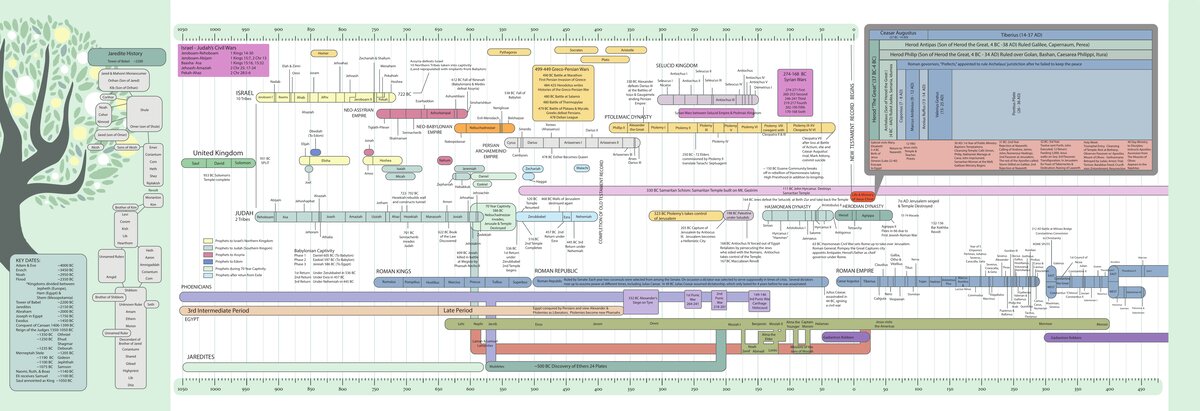
Tap to expand
Old Testament Timeline
From Creation through the Persian Period — tap the image to zoom, or download the full PDF.
Tap anywhere to close · Pinch to zoom