| Church Manuals | |
| Come Follow Me Manual | — |
| Scripture Helps | View |
| OT Seminary Teacher Manual | View |
| OT Institute Manual | View |
| Pearl of Great Price Manual | View |
| Scripture Reference | |
| Bible Dictionary | View |
| Topical Guide | View |
| Guide to the Scriptures | View |
| Church Media | |
| Gospel for Kids | View |
| Bible Videos | View |
| Church Publications & Library | |
| Church Magazines | View |
| Gospel Library | View |
Week 03
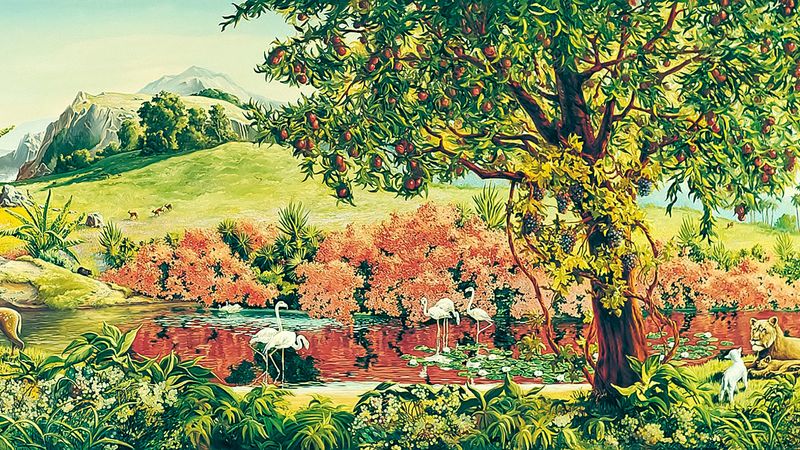
The Creation
Genesis 1–2; Moses 2–3; Abraham 4–5
January 12–18, 2026
5-Minute Overview
You'll read the Creation story not once but three times, comparing Genesis, Moses, and Abraham side by side. Each account adds distinctive details: Moses emphasizes that all things were created spiritually first, while Abraham introduces the 'Gods' working in council and organizing existing matter rather than creating from nothing. You'll explore the seven-day structure as a literary temple text, see how the Hebrew word *bara* differs from *asah*, and discover why the Creation accounts matter far more for theology than for science.
Official Church Resources
OFFICIAL CHURCH RESOURCES
▶︎
Video Commentary
Video Commentary (click [i] for details)
▼︎

Specialized Audiences
Women's Perspectives
▶︎
Family & Children's Resources
▶︎
Reference & Study Materials

Genesis 1–2; Moses 2–3; Abraham 4–5
Weekly videos

Genesis 1–2; Moses 2–3; Abraham 4–5
Study & Teaching Helps
Bible Project
1 Video This Week
ACADEMIC & SCHOLARLY SITES (Homepages)
▶︎
MAPS & BIBLICAL LOCATIONS
▶︎
JEWISH & SCHOLARLY RESOURCES
▶︎
A Note to Our Readers
Dear friends,
Thank you for your patience as we navigate a challenging season. Between ongoing hospitalizations and some home challenges that need attention, keeping up with CFM Corner has been more difficult than anticipated. I appreciate your understanding as we work to find our rhythm.
The good news: I've updated my process with AI assistance, which should make compiling these resources more manageable going forward. This allows me to focus my limited energy on the content that matters most while still providing you with quality study materials.
This week's approach is a bit different. Rather than duplicating information across multiple formats, I'm pointing you directly to our in-depth resources. The creation accounts deserve more than surface treatment, and the HTML documents linked below go deep—with side-by-side text comparisons, Hebrew word studies, and insights you won't find elsewhere.
Thank you for being part of this community. Your study matters, your questions matter, and your growth matters.
Warmly,
The CFM Corner Team
📚 What's New in 2026
We're reorganizing CFM Corner to serve you better. Here's how to navigate:
- Weekly Insights (this page) – Personal commentary, theme overview, and links to deeper resources
- Weekly Resources – Curated external links to videos, podcasts, and scholarly articles
- Original Content HTMLs – Our in-depth studies with interactive features, Hebrew analysis, and comparative tools
- Study Guide – Word studies, teaching applications, and discussion questions
This structure lets you choose your depth—quick overview or deep dive, depending on your time and needs.
At a Glance: Creation Week
▶︎
This week we encounter not one but three creation narratives—Genesis 1–2, Moses 2–3, and Abraham 4–5. Rather than viewing these as competing accounts, we're invited to see them as complementary windows into profound truths about God's nature, our divine identity, and the ongoing creative process in our lives.
Key Questions to Consider:
- Why does Moses emphasize "I, God" while Abraham speaks of "the Gods"?
- Why does Abraham use "organized" instead of "created"?
- What unique doctrines does each account contribute?
- How does the creation pattern apply to our own lives?
The Three Creation Accounts comparison above explores these questions with side-by-side text. Hebrew word studies are available in the Study Guide.
Closing Thought
▶︎
President Emily Bell Freeman's insight captures the spirit of this week:
"Within the beautiful imagery of the creation, in the midst of every step, there is an oft-repeated phrase: God saw that it was good."
God doesn't wait for perfection to pronounce His work good. Neither should we. The very act of striving, learning, and growing—messy as it is—is pleasing to Him.
Weekly Insights v3.1 | January 12, 2026
Original content by CFM Corner
Week 3
Genesis 1–2; Moses 2–3; Abraham 4–5
The Creation: God's Temple-Building and Humanity's Divine Purpose
January 12–18, 2026
1. Week Overview
| Element | Details |
|---|---|
| Week | 03 |
| Dates | January 12–18, 2026 |
| Reading | Genesis 1–2; Moses 2–3; Abraham 4–5 |
| CFM Manual | Genesis 1–2; Moses 2–3; Abraham 4–5 Lesson |
| Total Chapters | 6 (across 3 books) |
| Approximate Verses | Genesis 1–2 (56), Moses 2–3 (51), Abraham 4–5 (50) = ~157 verses |
This week we encounter the most foundational narrative in scripture: the Creation. We read this account not once, but three times—in Genesis, Moses, and Abraham—each offering unique perspectives that illuminate different aspects of God's creative work.
Genesis 1–2 provides the familiar biblical account, structured around seven days of creative work and rest. Chapter 1 presents a cosmic, ordered creation, while Chapter 2 zooms in on the garden, the creation of Adam, and the forming of Eve as his perfect companion.
Moses 2–3 offers the same narrative but through the lens of Moses's vision (introduced in Moses 1). Here we learn that Christ ("mine Only Begotten") was the Creator under the Father's direction. Moses adds clarifying details, such as the spiritual creation preceding the physical.
Abraham 4–5 provides the most distinctive account. The language shifts from "God" to "the Gods" (reflecting the divine council introduced in Abraham 3), and the vocabulary changes from "created" to "organized." Here creation is explicitly a collaborative work of the Godhead preparing a place for Abraham's posterity—and by extension, all of God's children.
Together, these three accounts reveal creation as temple-building, identity-establishing, and covenant-inaugurating. The pattern of seven, the divine rest, the image of God in humanity, and the institution of marriage all carry profound theological weight.
Theme 1: Creation as Temple-Building
The creation narrative is fundamentally a temple text. Taylor Halverson (Scripture Central) notes that the number seven appears throughout as a "covenant signature"—the same pattern seen in Israelite temple construction. God doesn't merely make a world; He constructs a cosmic temple where He will dwell with His children.
The garden of Eden, with its eastward orientation, its guarded entrance, its precious materials, and its divine presence, prefigures every temple that will follow. When God "rested" on the seventh day, the Hebrew shabbat (שָׁבַת) implies not exhaustion but enthronement—the divine King taking His seat in His completed palace.
Theme 2: Humanity in God's Image
"Let us make man in our image, after our likeness" (Genesis 1:26). This declaration is the theological climax of the creation week. The Hebrew tselem (צֶלֶם, "image") refers to a representative statue or likeness—in the ancient Near East, kings placed their images throughout their kingdoms to represent their authority and presence. Humanity is God's living image, placed in creation to represent Him and exercise stewardship on His behalf.
The paired term demut (דְּמוּת, "likeness") adds the dimension of resemblance. Together, the terms convey both function (we represent God) and nature (we are like Him). This is not mere metaphor—Latter-day revelation confirms that God the Father and Jesus Christ possess glorified, tangible bodies (D&C 130:22), and we are literally created in that image.
Theme 3: Marriage as Creation Ordinance
The formation of Eve and the institution of marriage in Genesis 2/Moses 3/Abraham 5 establishes the eternal pattern. The Hebrew phrase ezer kenegdo (עֵזֶר כְּנֶגְדּוֹ), often translated "help meet," actually means something like "a power/strength corresponding to him." Eve is not subordinate help but essential counterpart—without whom Adam cannot fulfill the divine mandate.
The "one flesh" union (Genesis 2:24) is the first covenant established in Eden, instituted before the Fall, making marriage the oldest ordinance in human history.
Theme 4: Organized, Not Created
Abraham's account introduces crucial vocabulary. The Gods "organized" rather than creating ex nihilo (from nothing). This aligns with D&C 93:29: "Intelligence, or the light of truth, was not created or made." God works with eternal materials, organizing chaos into cosmos.
This has profound implications: we ourselves were not created from nothing but organized from eternal intelligence. Our core identity is as old as God Himself.
| Person | Role | Significance This Week |
|---|---|---|
| Elohim (God the Father) | The Father, Director of Creation | Presides over the creative work; commands "Let us..." |
| Jehovah (Christ) | The Creator, "Only Begotten" | Executes the Father's will; creates under direction (Moses 2:1) |
| The Gods | Divine Council | Abraham 4–5 reveals creation as collaborative divine work |
| Adam | First Man | Created in God's image; given dominion; named the animals |
| Eve | First Woman | Created as Adam's essential counterpart; completes the divine pattern |
Book of Genesis (Chapters 1–2)
- Author: Moses (traditional attribution)
- Original Audience: Israel
- Purpose: To establish God as Creator, humanity as His image-bearers, and the fundamental patterns of life
- Key Themes: Seven-day pattern, image of God, blessing, rest, marriage
Book of Moses (Chapters 2–3)
- Author: Moses, restored through Joseph Smith
- Source Date: Original to Moses (~1446 BC); restored June 1830
- Purpose: To reveal Christ as Creator and add clarifying details to Genesis
- Key Themes: Christ as Creator, spiritual/physical creation distinction
Book of Abraham (Chapters 4–5)
- Author: Abraham, restored through Joseph Smith
- Source Date: Original to Abraham (~2000 BC); restored 1835
- Purpose: To reveal creation as organized by the divine council
- Key Themes: "The Gods," organization vs. creation, council work
2. Historical & Cultural Context
The creation accounts were not written in a vacuum. They entered a world full of competing creation stories—Egyptian, Babylonian, Canaanite, and Sumerian myths that Israel would have known. Understanding these alternatives reveals what Genesis/Moses/Abraham affirm and deny.
Egyptian Creation Myths (Moses's Context)
| Tradition | Creator God | Method of Creation |
|---|---|---|
| Heliopolitan | Atum/Ra | Self-generation, then emanation |
| Memphite | Ptah | Creation by word and thought |
| Hermopolitan | Ogdoad (eight gods) | Emergence from chaos |
What Moses/Genesis Corrects:
- One God, not many: Clarifies one divine God, not the plethora of competing gods
- Matter unorganized, not deified chaos: Genesis presents formless material as simply that—material, not a god
- Purpose for humanity: Humans are the pinnacle, made in God's image, not afterthoughts to serve the gods
- No divine combat: Unlike myths where creation results from cosmic battles between gods
Mesopotamian Creation Myths (Abraham's Context)
The Enuma Elish (Babylonian Creation Epic):
- Divine combat: Marduk kills Tiamat (chaos dragon) and creates the world from her corpse
- Humanity's purpose: Humans created to serve gods and relieve them of labor
- Polytheism: Multiple generations of gods with conflict and intrigue
What Abraham 4–5 Corrects:
- "The Gods" ≠ polytheism: The divine council works in unity under the Father
- Creation ≠ divine combat: Creation results from deliberate organization, not violence
- Humanity's dignity: Not servants to relieve gods, but children to inherit
In the ancient Near East, a king would place images (selem, צֶלֶם in Hebrew) of himself throughout his kingdom. These statues represented his authority and presence in places he couldn't physically be.
- Egypt: Pharaohs erected statues; the statue was the pharaoh for purposes of worship and presence
- Mesopotamia: Kings placed images at borders and in temples as extensions of their rule
Radical Implications of Genesis:
- Not just kings but all humans are in God's image
- Humanity is God's representatives, not His servants or slaves
- This grounds human dignity, worth, and purpose
| Hebrew | Transliteration | Meaning |
|---|---|---|
| צֶלֶם | tselem | Image, representative figure → we represent God |
| דְּמוּת | demut | Likeness, pattern → we resemble God |
The Seven-Day Framework
| Day | Creation Act | Corresponding Day | Filling Act |
|---|---|---|---|
| Day 1 | Light/darkness | Day 4 | Sun, moon, stars |
| Day 2 | Sky/waters divided | Day 5 | Birds and sea creatures |
| Day 3 | Land/vegetation | Day 6 | Land animals and humans |
| Day 7: Sabbath rest—God's enthronement | |||
The Pattern:
- Days 1–3: Creating realms (forming)
- Days 4–6: Creating rulers/inhabitants for those realms (filling)
- Day 7: The goal—God dwelling in His completed temple
The "And It Was Good" Refrain
The Hebrew tov (טוֹב) appears seven times in Genesis 1: verses 4, 10, 12, 18, 21, 25, and verse 31 adds "very good" (tov me'od). This sevenfold "good" is a covenant signature.
| Element | Genesis | Moses | Abraham |
|---|---|---|---|
| Divine name | "God" (Elohim) | "I, the Lord God" | "The Gods" |
| Perspective | Historical narrative | Revealed to Moses | Council deliberation |
| Creation verb | "Created" (bara) | "Created" | "Organized" |
| Christ's role | Implicit | Explicit: "mine Only Begotten" | "Those who were with him" |
| Unique additions | Foundation text | Spiritual creation noted | Council language |
3. Key Passages Study
Genesis 1:26–28: "And God said, Let us make man in our image, after our likeness: and let them have dominion over the fish of the sea... So God created man in his own image, in the image of God created he him; male and female created he them. And God blessed them..."
Abraham 4:26–27: "And the Gods took counsel among themselves and said: Let us go down and form man in our image, after our likeness... So the Gods went down to organize man in their own image, in the image of the Gods to form they him, male and female to form they them."
Doctrinal Analysis
"Let us" — Plural Deliberation: Genesis uses Elohim (plural form) with singular verbs—hinting at plurality in unity. Abraham makes this explicit: "the Gods took counsel among themselves." This is not polytheism but the united Godhead.
Image and Likeness: Tselem (image) = we represent God. Demut (likeness) = we resemble God. Together: We both represent and resemble our Creator.
Male and Female: The image of God is incomplete in isolated humanity. Both genders together reflect divine completeness.
Dominion: Hebrew radah = rule, reign, govern. Not exploitation but stewardship. We govern creation on God's behalf.
Cross-References
- Psalm 8:4–6 — "Thou hast crowned him with glory and honour"
- Colossians 1:15 — Christ is "the image of the invisible God"
- Ether 3:15–16 — "Seest thou that ye are created after mine own image?"
Genesis 2:18, 21–24: "And the Lord God said, It is not good that the man should be alone; I will make him an help meet for him... And the Lord God caused a deep sleep to fall upon Adam... and he took one of his ribs... And the rib... made he a woman, and brought her unto the man... Therefore shall a man leave his father and his mother, and shall cleave unto his wife: and they shall be one flesh."
The Phrase "Help Meet" — Ezer Kenegdo
| Hebrew | Meaning | Implication |
|---|---|---|
| עֵזֶר (ezer) | Help, strength, rescue, power | Used of GOD 16 times in OT — not weakness but essential strength |
| כְּנֶגְדּוֹ (kenegdo) | Corresponding to, counterpart | Equal partner, not subordinate |
Key Insight: Ezer is used predominantly of God in the Old Testament: "The Lord is our ezer and our shield" (Psalm 33:20). If ezer implies subordination, then God is subordinate to Israel! Eve is essential, powerful counterpart.
"One Flesh" — Covenant Union
Marriage in Eden is the first human covenant—instituted before the Fall, therefore part of God's original, unfallen design for humanity.
Cross-References
- Matthew 19:4–6 — Jesus quotes Genesis 2:24: "What therefore God hath joined together, let not man put asunder"
- D&C 132:19 — Celestial marriage sealed by the Holy Spirit of Promise
Genesis 2:1–3: "Thus the heavens and the earth were finished, and all the host of them. And on the seventh day God ended his work which he had made; and he rested on the seventh day from all his work which he had made. And God blessed the seventh day, and sanctified it."
Key Hebrew Terms
- Shabbat (שָׁבַת) — To cease, desist, rest. Not exhaustion but completion. In ancient cosmology, divine rest meant enthronement—the deity taking up residence in his completed temple.
- Qadash (קָדַשׁ) — To sanctify, set apart. The Sabbath is the first thing declared holy in Scripture—time is sanctified before space.
The Open-Ended Seventh Day
The seventh day has no "evening and morning"—it remains open, unclosed. The Sabbath is ongoing divine invitation. Hebrews 4:9–11 develops this: "There remaineth therefore a rest to the people of God."
Cross-References
- Exodus 20:8–11 — The Sabbath commandment rooted in creation rest
- Hebrews 4:9–11 — "There remaineth therefore a rest to the people of God"
- D&C 59:9–13 — "On this, the Lord's day... offer thine oblations"
Abraham 4:1–3: "And then the Lord said: Let us go down. And they went down at the beginning, and they, that is the Gods, organized and formed the heavens and the earth. And the earth, after it was formed, was empty and desolate... and the Spirit of the Gods was brooding upon the face of the waters."
Doctrinal Analysis
"The Gods" — Plurality in Unity: Hebrew Elohim is grammatically plural. Abraham makes the plurality explicit. NOT polytheism but the Godhead and council working in unity.
"Organized" vs. "Created": Abraham uses "organized" and "formed"—implying working with existing materials. D&C 93:29: "Intelligence... was not created or made." God is the great Organizer, not creator ex nihilo.
"Took Counsel Among Themselves": Deliberation precedes action. Creation is planned, intentional, purposeful. Links to Abraham 3:22–28's council scene.
Cross-References
- Abraham 3:22–24 — The premortal council; "we will go down"
- D&C 93:29 — "Intelligence... was not created or made"
- John 1:1–3 — "In the beginning was the Word... all things were made by him"
4. Word Studies
Each word study includes five layers: Hebrew foundation, Greek (Septuagint), Latin (Vulgate), English etymology, and Webster 1828 definition. Click the inner accordions to explore each layer.
בָּרָא
Layer 1: Hebrew Foundation
| Element | Details |
|---|---|
| Strong's Number | H1254 |
| Transliteration | bara |
| Pronunciation | baw-RAW |
| Root | b-r-ʾ (ב-ר-א) |
| Root Meaning | To create, shape, form; used exclusively of divine activity |
| Part of Speech | Verb (Qal perfect) |
Key Insight: Bara is used only of God as the acting subject—never of human activity. Its significance lies in marking discontinuity—moments where something genuinely new appears that cannot be derived from what came before.
Occurrences This Week:
- Genesis 1:1 — "God created (בָּרָא) the heaven and the earth"
- Genesis 1:21 — "God created (בָּרָא) great whales"
- Genesis 1:27 — "God created (בָּרָא) man... male and female created (בָּרָא) he them"
Layer 2: Greek (Septuagint)
| Element | Details |
|---|---|
| LXX Translation | ἐποίησεν (epoiēsen) from ποιέω (poieō) |
| Meaning | To make, do, create, produce |
Why This Matters: The LXX translators chose poieō, a general term for "making," rather than a more specialized word. This broadens the semantic range but loses the Hebrew distinction between bara (divine-only creation) and asah (general making). New Testament writers inherit this translation choice.
Layer 3: Latin (Vulgate)
| Element | Details |
|---|---|
| Vulgate Translation | creavit from creo |
| Meaning | To create, bring forth, make, produce |
Influence on English: Latin creo gives us English "create," "creature," "creation." Jerome's choice of creo (rather than facio, "to make") preserves some of the Hebrew distinction—creo carries more theological weight than general "making."
Layer 4: English Etymology
| Element | Details |
|---|---|
| Etymology | create — From Latin creāre "to make, bring forth, produce" |
| Development | Middle English createn (14th c.) from Latin creātus, past participle of creāre |
Layer 5: Webster 1828 Definition
CREATE, v.t.
1. To produce; to bring into being from nothing; to cause to exist. "In the beginning, God created the heaven and the earth." Gen. 1.
2. To make or form, by investing with a new character; as, to create one a peer or baron.
3. To produce; to cause; to be the occasion of.
Joseph Smith Era Understanding: The 1828 definition emphasizes "bringing into being from nothing," reflecting the theological interpretation dominant in Joseph Smith's time. The Book of Abraham's use of "organized" provides restored clarity on the nature of creation.
צֶלֶם
Layer 1: Hebrew Foundation
| Element | Details |
|---|---|
| Strong's Number | H6754 |
| Transliteration | tselem |
| Pronunciation | TSEH-lem |
| Root | ts-l-m (צ-ל-מ) |
| Root Meaning | Image, likeness, resemblance; idol, statue |
| Part of Speech | Noun (masculine) |
Key Insight: In the ancient Near East, a tselem was a statue representing a king's authority throughout his realm. When Genesis says humanity is made in God's tselem, it declares every human is God's living representative—His "statue" in creation.
Other Uses in Scripture:
- Genesis 5:3 — Adam begets Seth "in his own likeness, after his image (צֶלֶם)"
- Numbers 33:52 — Israelites commanded to destroy the "images (צֶלֶם)" of Canaanite gods
Layer 2: Greek (Septuagint)
| Element | Details |
|---|---|
| LXX Translation | εἰκών (eikōn) |
| Meaning | Image, likeness, portrait, representation |
Why This Matters: Greek eikōn carries strong visual/representational connotations. This word appears in the New Testament when Paul calls Christ "the image of the invisible God" (Colossians 1:15; 2 Corinthians 4:4). English "icon" derives from this word.
Layer 3: Latin (Vulgate)
| Element | Details |
|---|---|
| Vulgate Translation | imago (accusative: imaginem) |
| Meaning | Image, likeness, representation, copy |
Influence on English: Latin imago gives us "image," "imagine," "imagination." The theological concept of imago Dei (image of God) became central to Christian anthropology.
Layer 4: English Etymology
| Element | Details |
|---|---|
| Etymology | image — From Latin imago "copy, likeness, picture" |
| Development | Old French image (12th c.); related to imitate |
Layer 5: Webster 1828 Definition
IMAGE, n.
1. A representation or similitude of any person or thing, formed of a material substance; as an image wrought out of stone, wood or wax.
2. A statue.
3. An idol; a pagan deity.
4. The likeness of any thing; hence, an idea; a representation of any thing to the mind.
Joseph Smith Era Understanding: The 1828 definition includes both "statue/idol" and "likeness/idea," encompassing the full ANE background of tselem. The Latter-day Saint understanding of humanity's divine potential enriches this concept.
עֵזֶר כְּנֶגְדּוֹ
Layer 1: Hebrew Foundation
| Element | Details |
|---|---|
| Strong's Numbers | H5828 + H5048 |
| Transliteration | ezer kenegdo |
| Pronunciation | EH-zer keh-neg-DOH |
| Root | ʿ-z-r (ע-ז-ר) + n-g-d (נ-ג-ד) |
| Root Meaning | A strength/power corresponding to him |
Key Insight: Ezer appears 21 times in the Hebrew Bible. Of these, 16 refer to God as helper/strength. If ezer implies subordination, then God is subordinate to Israel! The term denotes essential, rescuing strength.
God as Ezer:
- Exodus 18:4 — "The God of my father was mine help (עֵזֶר)"
- Psalm 33:20 — "He is our help (עֵזֶר) and our shield"
- Psalm 70:5 — "Thou art my help (עֵזֶר) and my deliverer"
- Psalm 121:1–2 — "My help (עֵזֶר) cometh from the Lord"
Layer 2: Greek (Septuagint)
| Element | Details |
|---|---|
| LXX Translation | βοηθός (boēthos) |
| Meaning | Helper, one who aids, ally |
Why This Matters: Greek boēthos is used in the LXX for God as Israel's helper. The word implies coming to aid someone in need—rescuing strength, not servile assistance.
Layer 3: Latin (Vulgate)
| Element | Details |
|---|---|
| Vulgate Translation | adiutorium simile sibi (helper like himself) |
| Meaning | Help, assistance, aid — similar to him |
Influence on English: Latin adiutorium gives us "adjutant" (military assistant). The Vulgate's phrase "adiutorium simile sibi" emphasizes correspondence and equality.
Layer 4: English Etymology
| Element | Details |
|---|---|
| Etymology | help — Old English helpan "to help, support" |
| Development | From Proto-Germanic helpan; original sense involved rescue/support |
Note on "Meet": The word "meet" in "help meet" is an adjective meaning "suitable, fitting, proper" — not part of a compound noun. Eve is a "help" that is "meet" (suitable) for Adam.
Layer 5: Webster 1828 Definition
HELPER, n.
1. One that helps, aids or assists; an assistant; an auxiliary.
2. One that furnishes or administers a remedy.
3. One that supplies with any thing wanted; a supporter.
4. A supernatural being.
MEET, a.
Fit; suitable; proper; qualified; convenient; adapted, as to a use or purpose.
Joseph Smith Era Understanding: The 1828 definition includes "auxiliary" and "supporter"—words implying strength and essential assistance. Webster's entries clarify that "help meet" means "suitable helper."
טוֹב
Layer 1: Hebrew Foundation
| Element | Details |
|---|---|
| Strong's Number | H2896 |
| Transliteration | tov |
| Pronunciation | TOHV |
| Root | ṭ-w-b (ט-ו-ב) |
| Root Meaning | Good, pleasant, beautiful, excellent, fitting |
| Part of Speech | Adjective / Noun |
Key Insight: Tov appears seven times in Genesis 1 (vv. 4, 10, 12, 18, 21, 25, 31)—a covenant signature number. The final occurrence adds me'od (מְאֹד, "very/exceedingly"), creating the superlative "very good."
What "Good" Means Here: Tov doesn't primarily mean morally good. It means fitting, suitable, fulfilling its purpose. Each creation is tov because it does what God designed it to do.
Layer 2: Greek (Septuagint)
| Element | Details |
|---|---|
| LXX Translation | καλός (kalos) |
| Meaning | Beautiful, noble, good, fine |
Why This Matters: Greek kalos emphasizes aesthetic beauty and excellence. Creation is not merely functional but beautiful. The repeated "God saw that it was kalos" declares creation is aesthetically pleasing to God.
Layer 3: Latin (Vulgate)
| Element | Details |
|---|---|
| Vulgate Translation | bonus (neuter: bonum) |
| Meaning | Good, excellent, virtuous |
Influence on English: Latin bonus gives us "bonus," "boon," "bounty." The theological phrase summum bonum ("highest good") shaped Western ethics.
Layer 4: English Etymology
| Element | Details |
|---|---|
| Etymology | good — Old English gōd "virtuous, desirable, valid" |
| Development | From Proto-Germanic gōda- "fitting, suitable"; related to "gather" |
Layer 5: Webster 1828 Definition
GOOD, a.
1. Valid; legally firm; not weak or defective.
2. Complete or sufficiently perfect in its kind.
3. Having moral qualities best adapted to its design and use.
4. Useful; valuable; having qualities or a tendency to produce a good effect.
5. Pleasant; agreeable; as a good voyage; good weather.
Joseph Smith Era Understanding: The 1828 definition includes "complete/sufficiently perfect in its kind"—precisely the meaning of tov in Genesis 1. Each creation is good because it is complete and fulfilling its purpose.
שָׁבַת
Layer 1: Hebrew Foundation
| Element | Details |
|---|---|
| Strong's Number | H7673 |
| Transliteration | shabbat |
| Pronunciation | shaw-BAT |
| Root | š-b-t (שׁ-ב-ת) |
| Root Meaning | To cease, desist, rest |
| Part of Speech | Verb |
Key Insight: Shabbat doesn't imply exhaustion but completion and cessation. In ancient cosmology, divine rest meant enthronement—the deity taking up residence in his completed temple.
Related Words:
- שַׁבָּת (shabbat, H7676) — Sabbath (noun)
- שֶׁבַע (sheva, H7651) — Seven
- שְׁבוּעָה (shevuah, H7621) — Oath
The interconnection of shabbat (rest), sheva (seven), and shevuah (oath/covenant) creates a web of meaning. The Sabbath is the seventh day, and seven is the number of covenant oath.
Layer 2: Greek (Septuagint)
| Element | Details |
|---|---|
| LXX Translation | κατέπαυσεν (katepausen) from καταπαύω (katapauō) |
| Meaning | To cause to cease, to rest, to settle down |
Why This Matters: Greek katapauō emphasizes cessation and settlement. Hebrews 4:1–11 develops this theologically: entering God's rest (katapausis) becomes a metaphor for salvation and entering God's presence.
Layer 3: Latin (Vulgate)
| Element | Details |
|---|---|
| Vulgate Translation | requievit from requiesco |
| Meaning | To rest, repose, take one's ease |
Influence on English: Latin requiesco gives us "requiem" (mass for the dead), "rest," and "repose." The theological overtones of final rest and peace derive from this word.
Layer 4: English Etymology
| Element | Details |
|---|---|
| Etymology | rest — Old English rest "cessation of motion, quiet" |
| Development | From Proto-Germanic rastō; related to "refresh" and implies restoration |
Layer 5: Webster 1828 Definition
REST, n.
1. Cessation of motion or action of any kind, and applicable to any body or being.
2. Quiet; repose; a state free from motion or disturbance.
3. Sleep; as, retire to rest.
4. Peace; freedom from disturbance or molestation by enemies.
5. Final hope; as, the rest of the weary.
Joseph Smith Era Understanding: The 1828 definition includes "cessation" and "final hope"—both relevant to God's Sabbath rest. The Latter-day Saint concept of entering God's rest (Alma 12:34; D&C 84:24) enriches this term.
קָדַשׁ
Layer 1: Hebrew Foundation
| Element | Details |
|---|---|
| Strong's Number | H6942 |
| Transliteration | qadash |
| Pronunciation | kaw-DASH |
| Root | q-d-š (ק-ד-שׁ) |
| Root Meaning | To be set apart, holy, consecrated |
| Part of Speech | Verb |
Key Insight: When God "sanctified" (qadash) the seventh day, He set it apart from ordinary time. Before there were temples, priests, or holy objects, there was holy time. The Sabbath is the first thing declared holy in Scripture.
Related Words:
Layer 2: Greek (Septuagint)
| Element | Details |
|---|---|
| LXX Translation | ἡγίασεν (hēgiasen) from ἁγιάζω (hagiazō) |
| Meaning | To make holy, sanctify, consecrate |
Why This Matters: Greek hagiazō is used throughout the New Testament for sanctification. "Hallowed be thy name" (Matthew 6:9) uses this word. Christians are called hagioi (saints/holy ones).
Layer 3: Latin (Vulgate)
| Element | Details |
|---|---|
| Vulgate Translation | sanctificavit from sanctifico |
| Meaning | To make holy, sanctify |
Influence on English: Latin sanctifico gives us "sanctify," "sanctuary," "saint." The theological vocabulary of holiness in English derives primarily from Latin through ecclesiastical usage.
Layer 4: English Etymology
| Element | Details |
|---|---|
| Etymology | sanctify — From Latin sanctificare "to make holy" |
| Development | sanctus (holy) + facere (to make); 14th century via Old French |
Layer 5: Webster 1828 Definition
SANCTIFY, v.t.
1. In a general sense, to make holy; to set apart to a sacred office or to religious use or purification. "God blessed the seventh day and sanctified it." Gen. 2.
2. To cleanse from corruption; to purify from sin.
3. To make free from guilt.
4. To secure from violation.
Joseph Smith Era Understanding: The 1828 definition emphasizes "setting apart" as the primary meaning—precisely the sense of Hebrew qadash. The temple concept of "setting apart" people, places, and times connects directly to this meaning.
| Hebrew | Greek (LXX) | Latin (Vulgate) | English | Meaning |
|---|---|---|---|---|
| בָּרָא bara | ποιέω poieō | creo | create | Divine creative act; marks discontinuity |
| צֶלֶם tselem | εἰκών eikōn | imago | image | Image, likeness; representative form |
| עֵזֶר ezer | βοηθός boēthos | adiutorium | helper | One who aids; powerful rescue (used of God 16×) |
| טוֹב tov | καλός kalos | bonus | good | Good, valid, beautiful; fit for purpose |
| שָׁבַת shabbat | καταπαύω katapauō | requiesco | rest | To cease, rest; sabbath rest |
| קָדַשׁ qadash | ἁγιάζω hagiazō | sanctifico | sanctify | To set apart, make holy |
5. Teaching Applications
Focus: Understanding Your Identity and Purpose
Central Application: You are made in God's image—this defines who you are and what you're for.
Study Approach:
- Day 1–2: Read Genesis 1–2 completely. Chart what God created each day. Note how many times "good" appears.
- Day 3–4: Read Moses 2–3 alongside Genesis. Note additions: "mine Only Begotten," spiritual creation.
- Day 5–6: Read Abraham 4–5 and note "the Gods" and "organized."
- Day 7: Journal: What does it mean that I am made in God's image?
Focus: Marriage as Creation Ordinance
Central Application: Your marriage is not a social construct but a creation pattern—instituted before the Fall as part of God's original design.
Discussion Topics:
- The "Not Good" Moment: Genesis 2:18 is the only "not good" in creation. What does this say about our need for each other?
- Ezer Kenegdo: Eve is essential strength, not subordinate assistant. What does it mean to be each other's strength?
- "One Flesh" — Before the Fall: Marriage was instituted in Eden's perfection. How does this change how we view it?
Focus: We Are God's Children, Made in His Image
Opening Song: "I Am a Child of God" (Hymns, 301)
Scripture: Genesis 1:26–27
Object Lesson: The Family Photo
Show a family photo or look in a mirror together. Ask: "What do you see when you look at yourself?" Explain: We don't just look like each other—we look like God! When He made us, He put His own likeness in us.
Activity Options:
- Young Children: Draw a picture of yourself and label it "Child of God"
- Older Children: Create a family crest showing values that reflect God's image
- Teens: Discuss: Social media encourages us to create our own image. How is this different from receiving our identity from God?
Treat: Something creative—let the kids help "create" it!
Lesson Objective:
Class members will understand how Genesis, Moses, and Abraham together reveal God's nature, humanity's purpose, and the pattern of covenant.
Attention Activity (5 min):
Display three photos of the same scene from different angles. Ask: "Which is the 'real' photo?" Discuss: All are real—each captures a different perspective. This is what we have with three creation accounts.
Main Discussion Sections:
- The Genesis Foundation: Seven-day structure, "good" appears 7 times (covenant signature), creation as temple-building
- Moses Adds Christ: "mine Only Begotten"—everything in Genesis is Christ's work
- Abraham Reveals the Council: "The Gods," "organized" vocabulary, connection to Abraham 3's premortal council
- Image of God Application: How should this doctrine change how we see ourselves and others?
Focus: Your Identity Is Received, Not Created
Central Application: In a world that tells you to "create your own image," God has already placed His image in you.
Opening Discussion:
- How much time do people spend curating their image on social media?
- What if your identity wasn't something you had to create but something you received?
Key Points:
- You are God's living statue: His representative on earth. This isn't something you earn; it's something you ARE.
- You were in the council: Abraham 3:22—you were there. You were chosen. You have purpose.
- For YW: Eve was ezer—same word used for GOD. You bring essential power. You're not decoration; you're strength.
- For YM: "Dominion" is royal language—you're meant to govern, lead, care. But dominion isn't domination. It's responsibility.
Commitment Activity: Write one way you'll live as God's image-bearer this week.
6. Study Questions
- What does God say before creating humanity that He doesn't say before creating anything else?
- In whose image is humanity created?
- What two terms are used to describe humanity's relationship to God?
- What three commands does God give to the newly created humans in Genesis 1:28?
- How does Abraham 4:26 describe the divine deliberation before creating humanity?
- What verb does Abraham use instead of "created"?
- What did God say was "not good" in Genesis 2:18?
- From what part of Adam was Eve formed?
- On which day did God rest?
- What two things did God do to the seventh day?
- What does it mean to be made in God's "image"?
- Why do you think God deliberated ("Let us") before creating humanity but not before other creations?
- What is the difference between tselem (image) and demut (likeness)?
- Why does Abraham's account use "organized" rather than "created"?
- How does knowing ezer is used of God change your view of Eve's role?
- Why is marriage instituted before the Fall?
- Did God rest because He was tired?
- What does divine "rest" mean in ancient cosmology?
- Does "the Gods" mean there are many gods?
- What is the relationship between "the Gods" and the Godhead?
- How should knowing you bear God's image affect your self-image?
- What changes when you view every person you meet as bearing God's image?
- How can you exercise "dominion" over creation in a godly way today?
- How does the "image of God" doctrine shape how you treat your body?
- How does understanding ezer as "strength" change how you view women's roles?
- What does "one flesh" require of married couples today?
- How can you make the Sabbath the climax of your week?
- What does godly "rest" look like in your life?
- How does knowing you were in the premortal council affect your sense of purpose?
- What aspects of your life need to be "organized" rather than discarded?
- Why do you think God gave us three creation accounts instead of one?
- What surprises you most about the creation accounts when you read them carefully?
- How should the "image of God" doctrine shape our response to social issues?
- What would change in your church if everyone truly believed they were made in God's image?
- How does the creation account prepare us for the rest of scripture?
Three Creation Accounts Comparison
Side-by-side comparison of Genesis, Moses, and Abraham creation accounts.
Time, Number & Creation Chart
How time, numbers, and creation language interrelate across the accounts.
Explore Our Hebrew Language Journey →
Lessons, interactive charts, and tools for learning biblical Hebrew
Tap to expand
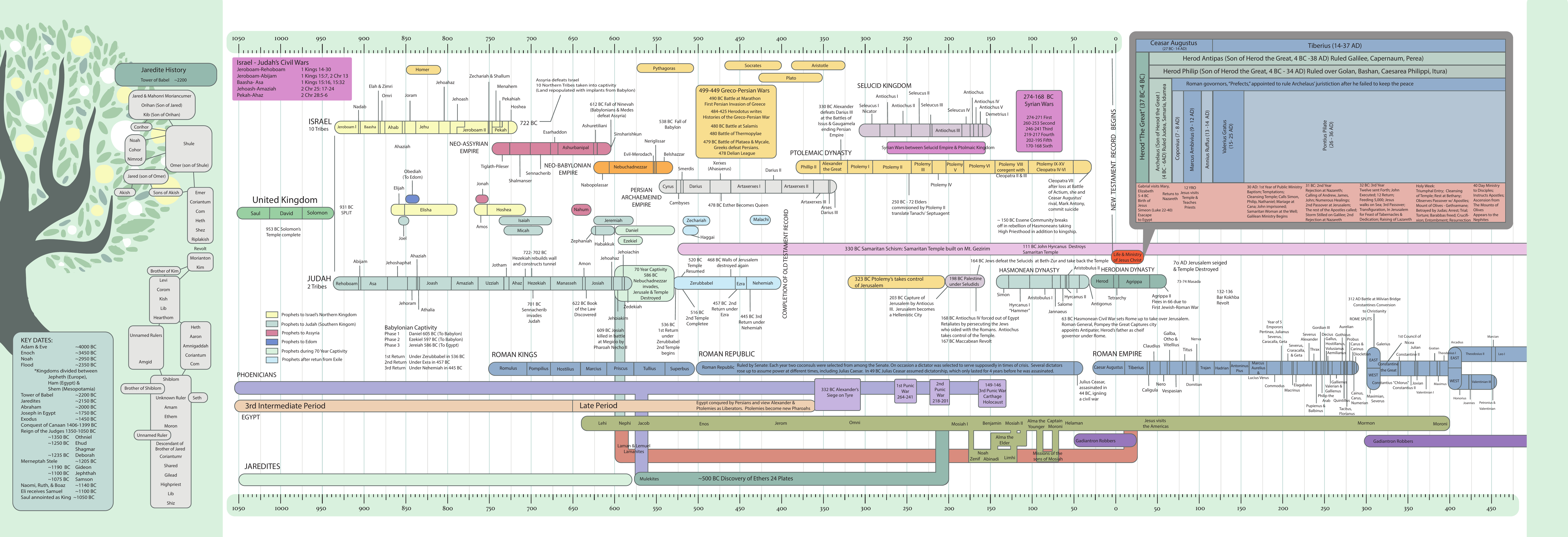
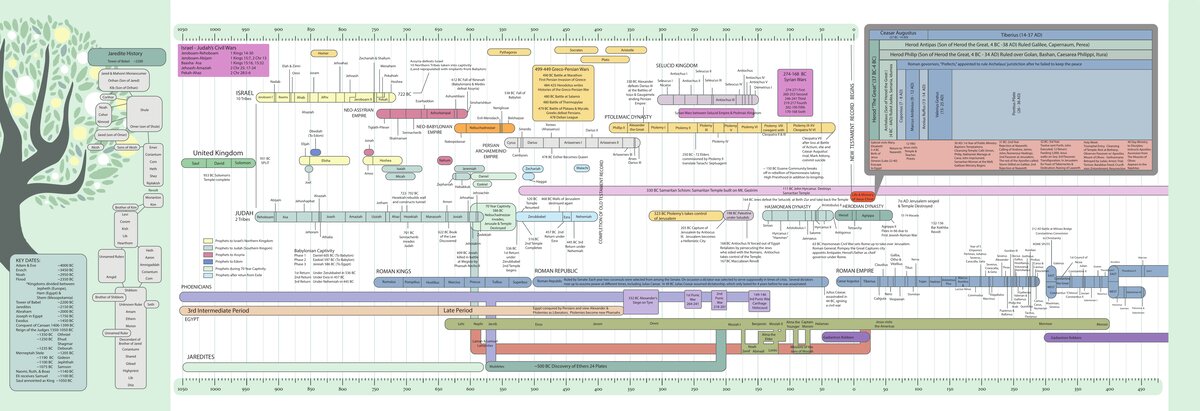
Old Testament Timeline
From Creation through the Persian Period — tap the image to zoom, or download the full PDF.
Tap anywhere to close · Pinch to zoom