| Church Manuals | |
| Come Follow Me Manual | — |
| Scripture Helps | View |
| OT Seminary Teacher Manual | View |
| OT Institute Manual | View |
| Pearl of Great Price Manual | View |
| Scripture Reference | |
| Bible Dictionary | View |
| Topical Guide | View |
| Guide to the Scriptures | View |
| Church Media | |
| Gospel for Kids | View |
| Bible Videos | View |
| Church Publications & Library | |
| Church Magazines | View |
| Gospel Library | View |
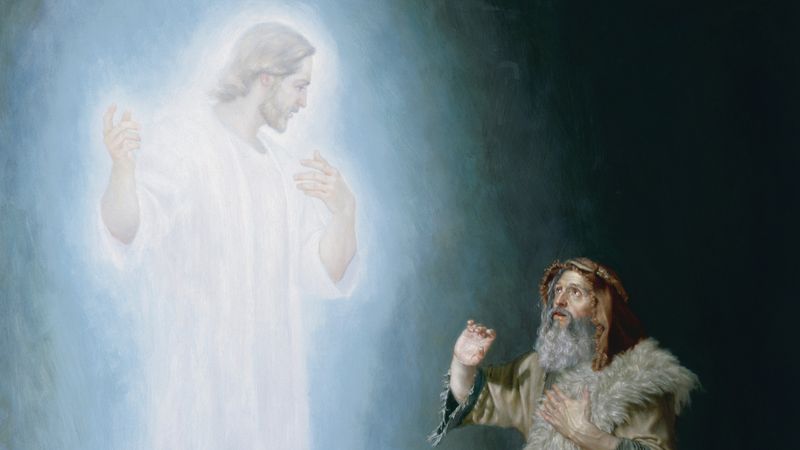
Week 02
God's Work and Glory
Moses 1; Abraham 3
January 5–11, 2026
5-Minute Overview
You'll witness two staggering theophanies that the Bible doesn't preserve. In Moses 1, Moses sees God face to face, learns that God's work and glory is 'to bring to pass the immortality and eternal life of man,' and then withstands Satan's attempt to counterfeit the experience. In Abraham 3, Abraham peers into the cosmos and sees the premortal council where 'one like unto the Son of God' volunteers to be the Savior. These Restoration-exclusive chapters set the stage for everything that follows in Genesis.
Official Church Resources
OFFICIAL CHURCH RESOURCES
▶︎
Video Commentary
Video Commentary (click [i] for details)
▼︎
Specialized Audiences
Women's Perspectives
▶︎
 [i]
[i]Grounded

Family & Children's Resources
▶︎
Reference & Study Materials

Moses 1; Abraham 3
Weekly videos

Moses 1; Abraham 3
Study & Teaching Helps
Bible Project
1 Video This Week
ACADEMIC & SCHOLARLY SITES (Homepages)
▶︎
MAPS & BIBLICAL LOCATIONS
▶︎
JEWISH & SCHOLARLY RESOURCES
▶︎
This Week at a Glance
▶︎
| Element | Details |
|---|---|
| Reading | Moses 1; Abraham 3 |
| CFM Manual | Moses 1; Abraham 3 Lesson |
| Theme | Divine Identity and Purpose |
Why These Chapters Matter
▶︎
This week introduces two of the most doctrinally rich chapters in all of scripture—and neither appears in the Bible. Moses 1 and Abraham 3 are unique to the Restoration, revealed through Joseph Smith to restore truths that were lost from the biblical record.
Together, these chapters answer the most fundamental questions of existence:
- Who is God? — "I am the Lord God Almighty" (Moses 1:3)
- Who am I? — "Thou art my son" (Moses 1:4)
- Why do I exist? — "This is my work and my glory—to bring to pass the immortality and eternal life of man" (Moses 1:39)
- Where did I come from? — The premortal council of "noble and great ones" (Abraham 3:22-23)
- What is Satan's strategy? — Attack identity, demand worship, persist through fear (Moses 1:12-22)
Dr. Lynne Wilson makes a startling observation: The book of Genesis never mentions temptation, Satan, or devil. The entire Old Testament uses "devil" zero times. Moses 1's revelation about Satan is restored truth that helps us understand the adversary—truth that was deliberately removed or lost.
Timeline and Transmission
▶︎
For a fuller story of how Moses 1 and Abraham 3 reached us—including the remarkable journey of the Egyptian papyri from Thebes to Kirtland and the inspired revision that restored Moses's vision—see the Week 02 Overview and Historical & Cultural Context in the Study Guide.
Central Theme: Divine Identity
▶︎
The most attacked truth in both chapters is identity. Everything flows from this battle.
God's Declaration to Moses
▶︎
"Behold, thou art my son... And I have a work for thee, Moses, my son; and thou art in the similitude of mine Only Begotten."
— Moses 1:4, 6
Satan's Immediate Counter-Attack
▶︎
"Moses, son of man, worship me."
— Moses 1:12
Notice the contrast:
- God says: "son of God" — divine identity
- Satan says: "son of man" — reducing Moses to mere mortality
The Irony of "Son of Man"
▶︎
In Aramaic, בַּר אֱנָשׁ (bar enosh) means "son of man"—combining bar (בַּר, H1247, "son") and enosh (אֱנָשׁ, H606, "man, mankind"). This became one of the most significant Messianic titles through Daniel 7:13-14, where "one like the Son of man came with the clouds of heaven" and received everlasting dominion. Jesus used this title for Himself approximately 80 times in the Gospels.
So while Satan uses "son of man" diminutively to strip Moses of divine identity, the TRUE Son of Man from Daniel's vision is divine—Jesus Christ Himself. Satan unknowingly invokes a Messianic title while attempting to demean.
President Nelson's Three Primary Identities
▶︎
In his May 2022 worldwide devotional "Choices for Eternity," President Russell M. Nelson taught that our three primary identities are—in this order:
- Child of God — foundational identity
- Child of the covenant — what the relationship is really like
- Disciple of Jesus Christ — how we serve (anchored in the first two)
Why the Order Matters
▶︎
Kerry Muhlestein and Mike Goodman explain why President Nelson was deliberate about this sequence:
"Disciple(ship) of Christ has to be connected to 'child of the covenant' or it just becomes fluffy—'love Jesus, love is love.' This concept has to start with: you're a child of God. That's our foundational understanding."
The logic builds from the ground up:
- Child of God establishes who you are. This is your origin, your worth, your potential. Without this foundation, everything else floats without anchor.
- Child of the covenant establishes what kind of relationship you have with God. It's not just that you're His child—you're in a binding, two-way covenant relationship. This defines the nature of the connection: promises made, obligations accepted, blessings assured.
- Discipleship of Jesus Christ establishes how you serve. But discipleship only makes sense when anchored in the first two. If you don't know you're God's child, you might serve out of fear or guilt. If you don't understand covenant, your discipleship can become generic spirituality—what Muhlestein calls "fluffy."
President Nelson warned: "Any identifier that is not compatible with these three basic designations will ultimately let you down. Other labels will disappoint you in time because they do not have the power to lead you toward eternal life."
Identity Is Received, Not Created
▶︎
John Hilton III offers a powerful insight: In scripture, identity is something we RECEIVE from God, not something we CREATE or curate.
"Identity is not curated on Instagram or enhanced on Photoshop. It's bestowed by God. If we don't understand that, we'll exhaust ourselves trying to prove something God has already declared."
This is countercultural. The world says: create your identity, brand yourself, define yourself. Scripture says: receive your identity from the One who made you.
"I Am Nothing, But I Am Divine"
▶︎
After seeing God's glory, Moses declares: "I know that man is nothing, which thing I never had supposed" (Moses 1:10).
This isn't discouragement—it's liberation. John Hilton III explains:
"If I have to have some of these things to be something in life, that will crumble. But if I realize I'm nothing, then I actually have a security that I'll never lose. My identity isn't based on what I have or what I've done. It's based on who's I am and what he's done."
Moses 1:39 — The Most Quoted Scripture
▶︎
"For behold, this is my work and my glory—to bring to pass the immortality and eternal life of man."
— Moses 1:39
In the last 80 years, Moses 1:39 has been quoted in General Conference more than twice as often as the #2 most quoted scripture. This verse is central to Latter-day Saint theology.
Dr. Phil Allred's Reframe
▶︎
Dr. Allred offers a transformative way to read this verse: Not just "this IS my work and glory" but "YOU are my work and glory."
Every person is personally the object of God's eternal efforts—not just humanity in general. You are God's work. You are God's glory.
Elder Bednar's Companion Scripture
▶︎
Elder Bednar pairs Moses 1:39 with D&C 11:20: "This is YOUR work: to keep my commandments."
The pattern emerges:
- God's work: Bringing to pass our immortality and eternal life
- Our work: Keeping His commandments
"I Am Able to Do My Own Work"
▶︎
God has declared, "I am able to do my own work" (2 Nephi 27:21). This is not a boast—it's a covenant promise. Getting us ready for eternal life is HIS responsibility, not ours to achieve alone.
Consider the weight of Moses 1:39: God declares that bringing to pass our immortality and eternal life is His work and His glory. He has staked His glory on our salvation. This is personal to Him. We are not an afterthought or a side project—we are the very purpose of His labor.
When we feel inadequate, when the gap between who we are and who we're supposed to become feels insurmountable, this doctrine provides profound comfort. God isn't waiting for us to become perfect before He engages. He is actively working on us—right now, in the midst of our weakness. As Dr. Allred reminds us, "YOU are my work and glory." Not humanity in the abstract. You, specifically.
Our part—keeping the commandments—is not about earning salvation. It's about staying in the relationship, remaining on the covenant path where God can do His work in us. We provide the willingness; He provides the power.
The Glory Pattern in Moses 1
▶︎
The word "glory" appears 13 times in Moses 1—more than any other chapter of comparable length. This repetition creates a theological framework:
| Verse | Glory Reference | Significance |
|---|---|---|
| 1:2 | "the glory of God was upon Moses" | Moses receives glory |
| 1:5 | "no man can behold all my glory" | God's glory is vast |
| 1:9 | "the glory was not upon Moses" | Moses loses glory temporarily |
| 1:11 | "his glory was upon me" | Transfiguration required |
| 1:13-15 | "Where is thy glory?" | Satan has NO glory |
| 1:39 | "this is my... glory" | Our eternal life IS God's glory |
Hebrew Insight: כָּבוֹד (Kavod)
▶︎
The Hebrew word for glory, kavod (כָּבוֹד, H3519), comes from the root kaved (H3513) meaning "to be heavy, weighty." God's glory has weight—substance, significance, heaviness.
Satan has no kavod because he has no substance. When Moses asks "Where is thy glory?" (Moses 1:13), he recognizes that Satan is "darkness" (Moses 1:15)—absence of weighty glory.
This teaches discernment: true messengers carry divine glory; false ones have only darkness, superficial appearances with no substance.Satan's Tactics — And Our Defense
▶︎
Moses 1 provides the clearest scriptural tutorial on how Satan operates and how to overcome him.
Satan's Pattern
▶︎
- Attacks identity — "son of man" instead of "son of God" (v. 12)
- Demands worship — "worship me" (v. 12)
- Persists through fear and intimidation — "Moses began to fear exceedingly" (v. 20)
- Uses increasing intensity — "ranting upon the earth" (v. 22)
Moses's Defense
▶︎
- Asserts divine identity — "I am a son of God, in the similitude of his Only Begotten" (v. 13)
- Recognizes the counterfeit — "Where is thy glory, for it is darkness unto me?" (v. 15)
- Commands in his own name — "Get thee hence, Satan" (v. 16) — doesn't work
- Commands in Christ's name — "In the name of the Only Begotten, depart hence, Satan" (v. 21) — Satan must obey
The Counterfeit Money Principle
▶︎
John Hilton III shares a story: A reporter asked a Treasury agent how he recognized counterfeit bills so easily. The answer: "I don't ever study counterfeit bills. I spend my time studying genuine bills. Then the imperfection is easy to recognize."
Because God's glory had been on Moses, Moses was able to discern Satan's trickery. Study the genuine—then counterfeits become obvious.Only One Person Scares Satan
▶︎
Dr. Phil Allred observes: When Moses commands Satan to depart in his own authority, Satan keeps coming back. Only when Moses invokes "the name of the Only Begotten" does Satan have to obey.
"Only one person scares Satan... Do not call that guy."
Satan fears only Christ. Our power over the adversary comes not from ourselves but from covenant authority in Christ's name.
Abraham 3: The Cosmic and the Personal
▶︎
Abraham 3 takes us into the premortal council, revealing truths about intelligences, governing lights (Kolob), and the plan for earth's creation.
God Weaves Cosmic and Personal Together
▶︎
Dr. Phil Allred notes a beautiful pattern: Throughout Abraham 3, God constantly shifts between cosmic revelation and intimate, personal connection. At first glance, Abraham 3 might seem like an astronomy lesson—Kolob, governing stars, celestial time. But when you read carefully, something remarkable emerges: God never teaches the cosmic without immediately making it personal.
Watch how this unfolds verse by verse:
| Verse | Cosmic Teaching | Personal Touch |
|---|---|---|
| 3:1 | Urim and Thummim, stars | "The Lord my God had given to me" |
| 3:6 | Kolob, governing stars | "The Lord said to me, now Abraham" |
| 3:11 | Astronomical systems | "talked with the Lord face to face" |
| 3:12 | Eternal reckoning | "My son, my son" (hand stretched out, reasoning, explaining) |
| 3:14 | Posterity like stars | "I will multiply thee" |
| 3:23 | Noble and great ones | "Abraham, thou art one of them" |
Notice what's happening: In verse 1, God introduces the Urim and Thummim and the stars—but immediately Abraham notes this was "the Lord my God" who gave it to "me." The relationship is personal from the start.
By verse 6, God is explaining Kolob, the great governing star—but He pauses mid-revelation to say, "The Lord said to me, now Abraham"—using Abraham's name directly. God interrupts cosmic teaching to remind Abraham He knows exactly who He's talking to.
Verse 11 describes astronomical systems, but the verse emphasizes that Abraham "talked with the Lord face to face"—intimate conversation and reasoning, not distant lecture.
Then comes verse 12—perhaps the most tender moment. God is explaining eternal reckoning, time as measured by celestial bodies. And in the midst of this, with "his hand stretched out," God says: "My son, my son." The repetition is not accidental. This is parental affection breaking through cosmological instruction.
This moment reflects a pattern found throughout scripture: God reasons with His children. Isaiah records the Lord's invitation: "Come now, and let us reason together" (Isaiah 1:18). In our dispensation, the Lord promises: "With him that cometh I will reason as with men in days of old, and I will show unto you my strong reasoning" (D&C 45:10). And again: "Hearken and I will reason with you, and I will speak unto you and prophesy, as unto men in days of old" (D&C 45:15).
God stretching out His hand to Abraham is not command—it is invitation to understand. Many prophets have described their wrestle with the Lord: Abraham bargaining for Sodom (Genesis 18), Moses interceding for Israel (Exodus 32), Jacob wrestling through the night (Genesis 32), Enos laboring in mighty prayer (Enos 1), Job demanding answers from the whirlwind (Job 38-42). These are not moments of rebellion—they are moments of testing that forges a personal relationship. God invites the struggle because the struggle deepens trust.
These are moments we all have. The questions that keep us awake. The prayers that feel more like wrestling than worship. The times we need God not just to command but to explain. Abraham 3:12 assures us: God stretches out His hand. He calls us by name. He reasons with us—"as with men in days of old."
By verse 23, God shows Abraham the "noble and great ones"—the vast assembly of premortal spirits. And then He says directly: "Abraham, thou art one of them." The cosmic becomes utterly personal: You belong here. You are one of these. The Point: God doesn't show cosmic power to impress—He does it to establish credibility so we'll trust Him with our lives and families. If God can organize Kolob, He can handle your problems. If He governs galaxies, He can guide your family. The lesson of Abraham 3 is not merely astronomy—it's why God shows Abraham the stars: so Abraham will trust the One who made them with everything that matters most. The God who governs Kolob knows you by name.Symbolic Patterns: Governing Principles of Truth
▶︎
The pattern Dr. Allred discovered is not unique to Abraham 3—it reveals something fundamental about how God teaches. Throughout scripture, patterns help us perceive governing principles of truth. When we learn to recognize these patterns, we begin to see how "all things testify of Christ."
All Things Testify of Christ
▶︎
In D&C 88:42-45, we learn that the patterns governing celestial bodies—the sun, moon, planets, and stars—are related to principles of priesthood order. Genesis describes similar patterns. These aren't coincidental arrangements; they are intentionally designed to give light and enlightenment to man.
Consider what Moses and Abraham teach us about:
- Planetary rotations — principles of time, calendars, days, months, years
- Patterns of light — the Urim and Thummim, governing stars
- Hierarchical order — Kolob governing other celestial bodies
How are these physical principles related to other patterns? Can we observe these principles in time, in ritual, in astronomy? Let's consider patterns of light—the rainbow, the electromagnetic spectrum, vibration patterns that also share similarities or overlap with other patterns like sound or physics? Do these physical patterns teach us principles of enlightenment? Can we observe these patterns theologically, scientifically, socially, or in other ways?
The Disciple as Measurer
▶︎
The Greek word for disciple, mathetes (μαθητής, G3101), and the Hebrew talmid (תַּלְמִיד) both derive from roots meaning "to measure"—the Hebrew lamed (לָמַד, H3925) or madad (מָדַד, H4058). A disciple measures. They observe. They examine. They learn to apply techniques to different circumstances. They learn to predict outcomes.
This is not fortune-telling or astrology. This is scientific reasoning and measured examination. Moses measuring the heavens through the Urim and Thummim. Abraham learning the reckoning of time and the order of celestial bodies. Disciples carefully observing patterns to understand governing principles.
The False Divide Between Religion and Science
▶︎
Modern society often claims that religion and science stand on opposite sides. But these chapters teach differently.
Consider what Abraham 3 actually describes: God explains that time moves differently depending on where you are—a day on Kolob is different from time on earth (Abraham 3:4). God teaches that celestial bodies are organized in hierarchies, with some governing others (Abraham 3:9). He shows Abraham that what appears one way from one vantage point may look entirely different from another.
These aren't mystical abstractions. They're the same principles that govern physics: time is relative to the observer's frame of reference. Celestial systems operate in hierarchical order—moons orbit planets, planets orbit stars, stars orbit galactic centers. Ancient peoples who understood these patterns could navigate, predict seasons, and calculate with precision.
The point isn't that Abraham 3 is a science textbook. The point is that truth learned through revelation and truth learned through observation come from the same source. Interpretations may very due to context, circumstance, and available information, but the underlying foundations ultimately trace back to the same roots. The God who organized Kolob also established the laws that scientists discover and study. When we understand this, the supposed conflict between faith and science dissolves—both are ways of learning the patterns God built into creation.
Patterns That Built Civilization
▶︎
These patterns were not abstract philosophy to ancient communities—they were essential for survival and flourishing. Understanding astronomical patterns shaped every dimension of ancient life:
| Domain | How Patterns Were Applied |
|---|---|
| Agriculture | Knowing when to plant and harvest; predicting seasonal floods (like the Nile); understanding growing seasons |
| Religious observance | Calculating feast days, sabbaths, and sacred festivals; the Hebrew calendar is lunisolar, requiring careful astronomical observation |
| Navigation | Sailors and caravans used stars to cross seas and deserts; Abraham himself traveled from Ur to Canaan to Egypt |
| Mathematics | Calculating angles, measuring land, developing geometry, architecture—all emerged from tracking celestial movements, their angles, recording them, and passing down those traditions |
| Trade & commerce | Standardized weights and measures; consistent timekeeping for contracts and agreements, developed systems for accounting and economics |
| Legal systems | Calendars determined when debts were due, when sabbatical years occurred, when Jubilee released slaves and land |
| Literacy & record-keeping | The need to track patterns drove the development of writing systems and numerical notation |
When Abraham learned the "set time" of celestial bodies and "the reckoning of the Lord's time" (Abraham 3:4), he was learning principles that governed not just astronomy but the entire fabric of civilized life. The same patterns that told farmers when to plant told priests when to offer sacrifice. The same mathematics that calculated star positions calculated fair exchange in the marketplace.
This is why God's revelation to Abraham about Kolob and governing stars was not esoteric—it was deeply practical. A leader who understood these patterns could guide his people through seasons, navigate journeys, establish just laws, and keep covenant with God through properly observed holy days. Abraham's astronomical knowledge made him a more effective patriarch, not less connected to daily life.
Patterns That Illuminate Spiritual Truth
▶︎
What can we learn from patterns we often take for granted?
| Physical Pattern | Spiritual Principle |
|---|---|
| Light dispersion (rainbow, spectrum) | Truth divided into spectral boundaries components we can understand; covenant sign |
| Planetary rotation | Cycles of renewal; sabbath patterns; eternal rounds |
| Governing bodies (sun, moon, stars) | Priesthood order; degrees of glory (D&C 76:70-81) |
| Vibration/sound patterns | "Voice of the Lord" as creative power; words that create reality |
| Day and night cycle | Light vs. darkness; knowledge vs. ignorance; work vs. rest |
The Urim and Thummim—literally "urim" (אוּרִים, H224, "lights") and "thummim" (תֻּמִּים, H8550, "perfections, completeness")—represents instruments for receiving light and truth, sound reasoning, for balancing divine will and order. They were often used as interpreters, and in some records are associated with the compass and square. Abraham used these to understand both celestial order and divine purpose. The physical and spiritual are not separate domains; they are unified expressions of the same eternal law.
As disciples who measure, we are invited to observe these patterns, examine their connections, and discover governing principles that enlighten our understanding of both the cosmos and the Creator.
The Premortal Council
▶︎
"Now the Lord had shown unto me, Abraham, the intelligences that were organized before the world was; and among all these there were many of the noble and great ones."
— Abraham 3:22
What Abraham Saw
▶︎
- Intelligences organized — spirits with varying capacities
- Noble and great ones — those foreordained for specific missions
- Abraham included — "Abraham, thou art one of them" (v. 23)
- Christ's mission accepted — "Here am I, send me" (v. 27)
- Satan's rebellion — "Send me... give me thine honor" (v. 28)
The Hebrew Concept: סוֹד (Sod)
▶︎
The Hebrew word sod (סוֹד, H5475) means both "council" and "secret." Abraham 3 exemplifies sod-level revelation—Abraham enters the divine council and receives its secrets.
Amos 3:7 declares: "Surely the Lord GOD will do nothing, but he revealeth his secret (sod) unto his servants the prophets."
Abraham was brought into intimate fellowship with God—he witnessed the council where eternal decisions were made.
Mid-Deliverance Theology
▶︎
Dr. Phil Allred introduces a powerful concept: We are always in the middle of God's deliverance.
Abraham's Example
▶︎
Consider where Abraham stands when God shows him the stars:
Post-deliverance from the lion couch (Abraham 1)Abraham had already survived a horrific ordeal. In Ur of the Chaldees, the priest of Pharaoh attempted to sacrifice Abraham on an altar—the "lion couch" depicted in Facsimile 1. Abraham describes being "laid upon the bed" with the priest's knife raised (Abraham 1:12). At the last moment, God intervened: "I will deliver thee" (Abraham 1:16-17). Abraham knew God could rescue—he had experienced it.
Mid-deliverance going into EgyptBut Abraham wasn't safe yet. He was journeying toward Egypt—the very nation whose priest had tried to kill him. The famine forced him there (Abraham 2:21). And God warned him that Pharaoh would see Sarah's beauty, that danger awaited (Abraham 2:22-25). Abraham was walking toward peril, not away from it. He was mid-deliverance—past one rescue, not yet through the next trial.
Pre-fulfillment of the promise "I will multiply thee"And the great covenant promise? Still unfulfilled. God had promised Abraham posterity as numerous as the stars (Abraham 3:14), yet Abraham and Sarah remained childless. Years would pass. Decades. The anxiety of waiting—wondering if the promise would ever come—was real. Abraham believed, but belief in unfulfilled promises requires a different kind of faith than gratitude for completed rescues.
The Pattern: Abraham stood simultaneously in three positions: after one deliverance, during another trial, and before the fulfillment of his deepest hopes. This is where most of us live.Application
▶︎
"Don't judge your life by a snapshot. The clock isn't over. We're still in process."
Moses 1 occurs after the burning bush but before delivering Israel. Moses had been delivered from danger but hadn't yet fulfilled his mission. He was mid-deliverance.
So are we. Post some rescues. Pre-completion of promises. Still in process.
The Gym Analogy
▶︎
Dr. Allred offers a memorable metaphor for mortality:
"Mortality is a gym filled with torture devices—not chocolate fountains or pillows. If you walked into a gym expecting comfort, you'd be confused. Mortality is designed for muscle-tearing growth."
The Three-Act Play (Elder Boyd K. Packer)
▶︎
- Act 1: Premortal — brilliant, but curtain drawn
- Act 2: Mortality — tests, trials, temptations, tragedies
- Act 3: Post-mortality — "happily ever after" only here
"Nowhere in Act 2 appears the line 'happily ever after.' That's reserved only for Act 3."
Elder Packer urged: "Don't let a student leave your class without knowing there is a premortal existence. If they don't know it, how can they make sense of mortality?"
The "Prove" Concept
▶︎
Abraham 3:25 says God would "prove them herewith, to see if they will do all things whatsoever the Lord their God shall command them."
Baking Definition
▶︎
To "prove" dough is not to test if it's real—it's the crucial final step where the bread takes shape and matures.
Dr. Allred applies this to mortality:
"The Lord's saying, 'Yes, I'm not testing this dough. I'm proving this dough. I'm giving it the needed time to mature.'"
Mortality isn't about God discovering what we're made of—He already knows. It's about us developing, rising, becoming what He sees in us. In the process he proves us as we learn to trust him.
Temple Connections
▶︎
Moses 1 is essentially temple text. Dr. Lynne Wilson notes that Moses is "caught up to an exceedingly high mountain"—and mountains in the Old Testament are temples. There Moses:
- Enters God's presence
- Is transfigured to endure glory
- Receives revelation about his identity and mission
- Faces and overcomes Satan
- Receives knowledge to take back to God's people
This pattern mirrors the temple experience: preparation → entering sacred space → receiving knowledge → making covenants → returning to bless others.
Barbara Morgan Gardner's Insight
▶︎
"This is the same story. This is not unique to Moses. This is how God reveals to us and prepares us for the work he has for us to do."
She emphasizes that this journey is not only for God's sons. Mothers have vital missions to fulfill, they are primary gospel teachers, called to help children understand their identity just as God helped Moses understand his. The mountain experience is a template for all of us.
Key Hebrew Terms This Week
▶︎
| Hebrew | Transliteration | Meaning | Significance |
|---|---|---|---|
| כָּבוֹד | kavod (H3519) | Glory, weight, honor | God's presence has substance; Satan has none |
| בֵּן | ben (H1121) | Son, child | Identity battle: children of God vs. sons of man |
| בַּר אֱנָשׁ | bar enosh (H1247, H606) | Son of Man (Aramaic) | Messianic title from Daniel 7 |
| שֶׂכֶל | sekel (H7922) | Intelligence, insight | Understanding that produces wise action |
| סוֹד | sod (H5475) | Council, secret | Divine assembly; deepest revelation |
Practical Applications
▶︎
When Satan Attacks Your Identity
▶︎
Remember Moses's pattern:
- Recall your divine identity — "I am a child of God"
- Recognize the counterfeit — Does this messenger carry light or darkness?
- Invoke Christ's name with covenant authority — "In the name of Jesus Christ, depart"
When You Feel Like Nothing
▶︎
Remember: "I am nothing" is liberation, not defeat. Your identity isn't based on what you have or what you've done—it's based on who's you are and what He's done.
When Trials Feel Endless
▶︎
Remember: You're mid-deliverance. Post some rescues. Pre-completion of promises. The clock isn't over.
When You Need Assurance
▶︎
Remember Moses 1:39: Getting you ready for eternal life—God says that's HIS work. And He has said, "I am able to do my own work."
Closing Reflection
▶︎
These chapters establish the cosmic context for human existence. Before Genesis, before the creation narrative, we need to know:
- We existed before this world
- We are children of God with divine identity
- Satan will attack that identity
- Christ has the power to defeat the adversary
- God's entire work and glory is us
Moses 1 and Abraham 3 are the lens through which all scripture should be read. When you understand who you are and Whose you are, everything else falls into place.
"There are two verses by which I filter every other verse of scripture. One is John 3:16 and the other is Moses 1:39. God loves us so much that he spends all his time, all his love, all his energy making it so that we can receive eternal life."
— Kerry Muhlestein, The Scriptures Are Real
File Status: Draft - Ready for Review Created: January 9, 2026 Last Updated: January 9, 2026
Week 2
Moses 1; Abraham 3
Discovering Our Divine Identity and Purpose
January 5-11, 2026
1. Week Overview
| Element | Details |
|---|---|
| Week | 02 |
| Dates | January 5-11, 2026 |
| Reading | Moses 1; Abraham 3 |
| CFM Manual | Moses 1; Abraham 3 Lesson |
| Total Chapters | 2 |
| Approximate Verses | Moses 1 (42 verses), Abraham 3 (28 verses) = 70 verses |
This week introduces two of the most doctrinally rich chapters in all of scripture—both unique to the Restoration. Neither Moses 1 nor Abraham 3 appears in the Bible; they come to us through Joseph Smith as restored texts that unlock Genesis and reveal truths about God, humanity, and Satan that were lost from the biblical record.
Moses 1 records a pre-Genesis vision given to Moses on an "exceedingly high mountain." Here Moses learns God's identity ("I am the Lord God Almighty"), his own identity ("thou art my son"), God's purposes ("This is my work and my glory—to bring to pass the immortality and eternal life of man"), and faces a direct confrontation with Satan. This chapter serves as a lens through which all of Genesis—and indeed, all scripture—should be read.
Abraham 3 takes us into the premortal council, where Abraham learns about the organization of intelligences, God's governing light (Kolob), and the plan for earth's creation. Here we encounter the "noble and great ones" chosen before the world was, Christ's willing acceptance of His mission, and Satan's rebellion. Together, these chapters establish the cosmic context for human existence.
Theme 1: Divine Identity—We Are God's Children
The most attacked truth in both chapters is identity. God tells Moses, "Thou art my son" (Moses 1:4); Abraham sees that the "noble and great ones" were chosen before birth (Abraham 3:22-23). Satan's immediate counter-attack is to call Moses "son of man" (Moses 1:12)—attempting to reduce divine identity to mere mortality.
The irony is profound: in Aramaic, bar enosh (בַּר אֱנָשׁ) means "son of man," and this became one of the most significant Messianic titles through Daniel 7:13-14, where "one like the Son of man came with the clouds of heaven" and received everlasting dominion. Jesus used this title for Himself approximately 80 times in the Gospels, deliberately invoking Daniel's prophecy. So while Satan uses "son of man" diminutively to strip Moses of his divine identity, the TRUE Son of Man from Daniel's vision is divine—Jesus Christ Himself. Satan unknowingly uses a Messianic title while attempting to demean.
President Russell M. Nelson has taught that our three primary identities are: child of God, child of the covenant, and disciple of Jesus Christ—in that order.
Theme 2: God's Work and Glory
Moses 1:39 is the most quoted scripture in General Conference over the past 80 years. "This is my work and my glory—to bring to pass the immortality and eternal life of man" reveals that we are personally the object of God's eternal efforts. As Dr. Phil Allred reframes it: "YOU are my work and glory."
Theme 3: Satan's Tactics and Our Defense
Moses 1 provides the clearest scriptural tutorial on Satan's methods and how to overcome him. Satan attacks identity, demands worship, persists through fear, but ultimately must flee when we invoke Christ's name with covenant authority. This pattern—identity attack → spiritual defense → invoking Christ's name—becomes a template for all spiritual warfare.
| Person | Role | Significance This Week |
|---|---|---|
| Moses | Prophet, Receiver of Vision | Learns his identity as God's son; confronts and defeats Satan; receives the creation account |
| Abraham | Patriarch, Seer | Shown the premortal council, intelligences, and God's governing order |
| Jehovah (Christ) | The Only Begotten | Volunteers for His redemptive mission: "Here am I, send me" |
| Satan | Adversary | Attacks Moses's identity; demands worship; demonstrates how he operates |
| God the Father | Almighty | Reveals His name, character, and work to His prophets |
Historical Period: Premortal (Abraham 3) and Patriarchal Era (Moses 1)
Approximate Dates: Moses 1 occurs after the burning bush but before delivering Israel (~1446 BC traditional dating); Abraham 3 describes events before earth's creation
World Context: Moses had been raised in Pharaoh's court surrounded by Egyptian polytheism. Abraham's vision clarifies the true cosmology versus the corrupted traditions of his day.
Biblical Timeline Position: These chapters precede Genesis chronologically. Moses 1 introduces what follows in Genesis 1-6; Abraham 3 provides the premortal context for all of earth's history.
Dating the Original Events
| Text | Historical Period | Approximate Date | Setting |
|---|---|---|---|
| Abraham 3 (council vision) | Premortal | Before earth's creation | The divine council in heaven |
| Abraham 3 (Abraham's vision) | Patriarchal Era | ~2000-1800 BC | Abraham receives cosmological revelation |
| Moses 1 | Pre-Exodus | ~1446 BC (traditional dating) | "Exceedingly high mountain" after the burning bush |
Transmission: How These Texts Reached Us
The Journey of Abraham's Record
The Book of Abraham didn't come to us like other scripture. Understanding its transmission illuminates the miracle of its preservation.
Abraham's Time (~2000 BC): Abraham records his visions and experiences, likely in a Semitic language (Hebrew or a predecessor). These accounts were preserved through a combination of written records and oral traditions, eventually finding their way into the Jewish communities that flourished in Egypt.
Egypt as Repository: Egypt has been a repository for Israelite tradition since the patriarchal era. Joseph brought his father Jacob and eleven brothers to Egypt (~1876 BC), where the family of Israel lived for over 400 years before the Exodus. This early Israelite presence in Egypt predates Moses and could have influenced the preservation of Abrahamic records. Later, Egypt became a major center for the Jewish community again after the Babylonian exile (586 BC). Jeremiah went there (Jeremiah 43). Jewish temples were built there—at Elephantine and Leontopolis. The city of Alexandria had an enormous Jewish presence, with scholars estimating 100,000 to 200,000 Jews—roughly one-third of the city's total population. In Thebes (where the papyri originated), Jews formed a significant community as well.
Egyptian Transmission (~300 BC - 200 AD): As a polytheistic society, the Egyptians absorbed and incorporated Israelite traditions. Dr. Kerry Muhlestein (BYU Egyptologist) has documented how Abraham's name appears frequently in Egyptian religious texts from 200 BC to 700 AD, often alongside or interchangeable with Egyptian deities. The Egyptians incorporated what they encountered—including Abrahamic traditions—into their own religious practices, preserving elements of the original even as they blended them with Egyptian beliefs.
The Papyri's Physical Journey:
- Thebes, Egypt — Original location
- Across the Mediterranean — Surviving environmental challenges
- Across the Atlantic Ocean — To America
- American exhibition halls — With traveling showman Michael Chandler
- Kirtland, Ohio (July 1835) — Purchased by Joseph Smith for $2,400 (~$150,000 today)
Dr. Muhlestein notes the environmental miracle: When Jean-François Champollion (who deciphered the Rosetta Stone) opened ancient Egyptian papyri in Turin, Italy in 1828, they disintegrated upon exposure to the Mediterranean climate. Yet Joseph's papyri crossed an ocean, toured America in multiple climates, and survived to reach one of the dampest regions in America. "It's a miracle truly that they survived environmentally."
The Book of Moses: Restoration Through Revelation
Moses 1 came through a different process—not physical artifacts, but prophetic revelation.
June 1830: Just three months after the Book of Mormon was published and the Church organized, Joseph Smith began his inspired revision of the Bible. The Lord's first command after the Church was organized? "Get back in the text."
Moses 1 was revealed as Joseph translated Genesis, restoring the pre-Genesis vision that Moses received—content that never made it into the biblical canon. This chapter serves as the lens through which all of Genesis should be read.
Why the Transmission Matters
Both texts demonstrate a crucial principle: God preserves truth across millennia through multiple methods—physical artifacts, oral traditions, and prophetic revelation. The papyri weren't just ancient curiosities; they were, as Dr. Muhlestein describes them, "divine catalysts" that unlocked temple ordinances and priesthood understanding.
> "Every time Joseph works on the Book of Abraham, he starts doing new temple ordinances. That's not a coincidence, I think." > — Dr. Kerry Muhlestein
Book of Moses
- Author: Moses, restored through Joseph Smith
- Source Date: Original content attributed to Moses (~1446 BC); restored June 1830
- Original Audience: Israel; through restoration, the whole church
- Setting: An "exceedingly high mountain" after Moses's call at the burning bush
- Purpose: To establish Moses's prophetic authority and reveal God's purposes before the creation account
- Key Themes: Divine identity, Satan's deceptions, God's work and glory, theophany
- Literary Genre: Prophetic vision/revelation account
Book of Abraham
- Author: Abraham, restored through Joseph Smith via interpretation of Egyptian Papyri
- Source Date : Original content attributed to Abraham (~2000 BC); restored 1835
- Original Audience: Abraham's posterity
- Setting: Premortal council; Abraham receiving astronomical/cosmological revelation
- Purpose: To reveal the premortal existence, council in heaven, and organization of intelligences
- Key Themes: Premortal life, noble and great ones, Christ's mission, agency
- Literary Genre: Apocalyptic vision/cosmological revelation
Book of Mormon Connections
- Alma 13:3-5 – Premortal ordination of high priests ("called and prepared from the foundation of the world")
- 2 Nephi 2:17-18 – Satan seeking to destroy agency and make all miserable
- Helaman 14:17 – Christ brings to pass the resurrection of all
Doctrine and Covenants Connections
- D&C 29:36-39 – Satan's rebellion and casting out
- D&C 76:25-28 – Lucifer's fall ("an angel of God who was in authority in the presence of God")
- D&C 93:29 – Intelligence as uncreated ("Intelligence, or the light of truth, was not created")
- D&C 138:55-56 – "Noble and great ones" confirmed in vision
Pearl of Great Price Connections
- Abraham 4-5 – The creation account that follows Abraham 3
- Moses 2-8 – The Genesis account that Moses 1 introduces
- Premortal Existence: We lived as spirits before this mortal life, where some were foreordained to specific missions (Abraham 3:22-23).
- Divine Identity: We are literal children of God, created in His image, with divine potential (Moses 1:4, 6).
- God's Work and Glory: God's entire purpose is our immortality and eternal life—we are His work (Moses 1:39).
- Agency and the War in Heaven: Satan sought to destroy agency; Christ preserved it. This conflict continues (Abraham 3:27-28).
- Divine Investiture of Authority: Christ speaks for and as the Father in many scriptural passages.
Moses 1 is essentially temple text. Dr. Lynne Wilson notes that Moses is "caught up to an exceedingly high mountain"—mountains in the Old Testament are temples. There Moses:
- Enters God's presence
- Is transfigured to endure glory
- Receives revelation about his identity and mission
- Faces and overcomes Satan
- Receives knowledge to take back to God's people
This pattern mirrors the temple experience: preparation, entering sacred space, receiving knowledge, making covenants, and returning to bless others.
Abraham 3's cosmological revelation—Kolob, governing lights, intelligences—connects to temple symbolism where we learn about the organization of heaven and our place in God's eternal order.
Manual Focus: Understanding our identity as children of God and how that knowledge helps us resist Satan's attacks
Key Questions from Manual:
- What does Moses 1 teach about who I really am?
- How did Moses overcome Satan's temptations?
- What does it mean that God's work and glory is to bring to pass our immortality and eternal life?
- What do I learn from Abraham 3 about my premortal existence?
Manual's Suggested Activities:
- Create a list of truths about your identity from Moses 1
- Discuss how Moses's example can help when facing spiritual opposition
- Study what Abraham 3 teaches about the premortal council
If You Have Limited Time (Essential Reading):
- Moses 1:1-22 — God reveals Himself and Moses's identity; Satan attacks
- Moses 1:39 — God's work and glory
- Abraham 3:22-28 — Noble and great ones; the council
If You Have More Time (Full Reading with Highlights):
- Read both chapters completely
- Note every time "glory" appears in Moses 1 (13 times)
- Track the pattern: revelation → attack → defense → victory
For Deep Study:
- Compare Moses 1 with Moses's later experiences at Sinai (Exodus 33-34)
- Study the 1912 First Presidency statement on divine investiture of authority
- Read President Nelson's teachings on identity
"You ARE My Work and Glory" (Follow Him)
Dr. Phil Allred reframes Moses 1:39: not just "this IS my work and glory" but "YOU are my work and glory." Every person is personally the object of God's eternal efforts. This transforms how we read the verse.
Mid-Deliverance Theology (Follow Him)
We are always in the middle of God's deliverance—post some rescues, pre-completion of promises. Moses had been delivered from the lion couch but hadn't yet fulfilled his mission. The clock isn't over. We're still in process.
Identity Is Received, Not Created (Finding Christ)
John Hilton III emphasizes that in scripture, identity is something we RECEIVE from God, not something we CREATE or curate. "My identity isn't based on what I have or what I've done. It's based on who's I am and what he's done." He notes that in the last 80 years, Moses 1:39 has been quoted in General Conference more than twice as often as the #2 most quoted scripture. Elder Bednar's companion scripture is D&C 11:20—"This is YOUR work: to keep my commandments." God's work is bringing to pass our eternal life; our work is keeping commandments.
President Nelson's Identity Order (Scriptures Are Real)
Kerry Muhlestein and Mike Goodman explain WHY President Nelson ordered our three identities as he did:
- Child of God = foundational identity
- Child of the covenant = what the relationship is really like
- Disciple of Christ = how we serve (anchored in the first two)
They also share: "There are two verses by which I filter every other verse of scripture. One is John 3:16 and the other is Moses 1:39. God loves us so much that he spends all his time, all his love, all his energy making it so that we can receive eternal life."
Mothers as Primary Gospel Teachers (Grounded)
Barbara Morgan Gardner and Shannon Foster emphasize that Moses's experience is a template for how God prepares ALL of us. Mothers are primary gospel teachers, called to help children understand their identity just as God helped Moses understand his.
Creation as Temple Text (Scripture Insights)
Taylor Halverson reveals that Genesis 1/Moses 2 is primarily temple text, not science text. The number seven appears as a covenant signature throughout. God is establishing sacred space.
File Status: Complete Created: January 4, 2026 Last Updated: January 4, 2026 Next File: 02_Historical_Cultural_Context.md
2. Historical & Cultural Context
Time Period
Approximate Dates:
- Moses 1: ~1446 BC (traditional date for the Exodus), occurring after Moses's call at the burning bush
- Abraham 3: Describes premortal events before earth's creation; Abraham received the vision ~2000-1800 BC
Biblical Era: Pre-Genesis (both chapters precede the Genesis narrative)
World Historical Context: Moses had been raised in the Egyptian court amid sophisticated polytheism, where Pharaoh himself was considered divine. Abraham lived in Ur of the Chaldees, where original astronomical and cosmological truths had been corrupted into astrology and celestial worship—the heavenly bodies themselves becoming objects of veneration rather than witnesses of God's order. Abraham 3 represents a restoration of these primordial truths, not a replacement of pagan ideas with new revelation. Both chapters reveal that what had been lost or distorted was being returned to prophets who could teach it again.
Geographic Setting
Primary Locations:
| Location | Modern Region | Significance |
|---|---|---|
| "Exceedingly high mountain" | Unknown (possibly Sinai region) | Where Moses received his theophany |
| Ur of the Chaldees | Debated (see note below) | Abraham's origin, center of idolatrous worship |
Note on Ur's Location: While Leonard Woolley's 1920s excavations popularized the identification of Ur with the Sumerian city in southern Iraq, modern scholarship increasingly favors a northern location near Haran in present-day southern Turkey or northern Syria. Paul Y. Hoskisson (BYU Religious Studies Center) and Cyrus Gordon argue for a northern site based on several factors: (1) The Book of Abraham indicates Egyptian religious influence in Ur—Egypt influenced the Levant, not southern Mesopotamia; (2) A northern location makes the travel route to Haran logical rather than circuitous; (3) Abraham's ancestors Nahor and Serug share names with cities near Haran; (4) Deuteronomy 26:5 describes Israel's ancestors as "wandering Arameans," and the Aramean heartland is in northern Mesopotamia. The Interpreter Foundation notes that when the Book of Abraham is considered, the northern site becomes "much more compelling, and is arguably a logical necessity for the historicity of the text." Traditional Islamic, Jewish, and Christian identification placed Ur at Urfa (modern Şanlıurfa, Turkey), 24 miles northwest of Haran, before Woolley's southern identification gained prominence.
| Egyptian Court | Egypt | Moses's upbringing amid polytheism |
|---|---|---|
| Heaven/Premortal Realm | Non-earthly | Setting for Abraham 3's cosmological vision |
Map Reference: The earthly settings are secondary to the heavenly/visionary context of these chapters.
Political Context
Moses's World:
- Egypt dominated by the New Kingdom pharaohs
- Israel enslaved as labor force for Egyptian building projects
- Moses stood at the intersection of Egyptian royalty and Hebrew heritage
Abraham's World:
- Mesopotamian city-states under various rulers
- Ur dominated by moon-god worship (Sin/Nanna)
- Abraham's father Terah was an idol worshipper (Joshua 24:2)
Why ANE Context Matters for These Chapters
Moses 1 and Abraham 3 directly counter the religious assumptions of surrounding cultures. Understanding what those cultures believed reveals what these chapters correct.
Cosmological Beliefs Being Corrected
Egyptian Cosmology (Moses 1 Context)
Egyptian Beliefs:
- Multiple creator gods (Ra, Ptah, Atum, Khnum)
- Pharaoh as divine or semi-divine
- Creation through divine combat or self-generation
- Humanity created as servants to feed the gods
Moses 1 Correction:
- One God, the "Lord God Almighty" (Moses 1:3)
- Moses learns he is a "son" of God (Moses 1:4)
- Creation is purposeful: "to bring to pass the immortality and eternal life of man" (Moses 1:39)
Mesopotamian Astral Religion (Abraham 3 Context)
Mesopotamian Beliefs:
- Sun, moon, stars worshipped as deities
- Celestial bodies controlled human destiny (astrology)
- Complex pantheons with astral gods (Shamash, Sin, Ishtar)
- Ziggurats built to connect earth and heaven
Abraham 3 Correction:
- Stars/planets are governed, not gods themselves (Abraham 3:2-9)
- One God presides over all, governing through Kolob (Abraham 3:3)
- Celestial order reflects hierarchy under God, not competing deities
- Astronomy replaces astrology
The Divine Council
ANE Background: Ancient Near Eastern cultures commonly conceived of a divine assembly where gods deliberated. The Canaanite pantheon had El presiding over lesser gods; Mesopotamian myths describe councils of deities making decisions.
Biblical/Restoration Understanding: Abraham 3 reveals the actual divine council—not competing gods, but:
- God (the Father) presiding
- Noble and great spirits/intelligences present (Abraham 3:22-23)
- Christ ("one among them that was like unto God") volunteering for His mission (Abraham 3:27)
- Satan (another) seeking to usurp agency (Moses 4:1-3)
This is not polytheism but the Godhead working with spirit children who would become humans.
Theophany Traditions
ANE Background: Ancient peoples expected divine encounters at high mountains, sacred groves, or temples. Mountains were seen as the meeting point between heaven and earth.
Moses 1 Pattern:
- "Exceedingly high mountain" (Moses 1:1)
- Moses sees God "face to face" (Moses 1:2)
- Transfiguration necessary to endure glory (Moses 1:11)
- Follows temple ascent pattern: approach → revelation → transformation
The Jewish PaRDeS Model
Jewish tradition identifies four levels of scriptural meaning. The acronym PaRDeS (פַּרְדֵּס) means "garden" or "paradise":
| Level | Hebrew | Meaning | Application to Moses 1/Abraham 3 |
|---|---|---|---|
| Peshat | פְּשָׁט | Plain | Moses sees God; Abraham sees stars and intelligences |
| Remez | רֶמֶז | Hint | Number patterns (e.g., 7 in creation); cosmological order mirrors spiritual and Priesthood governing order |
| Derash | דְּרָשׁ | Search | How does this relate to me and what does my divine identity mean for how I live? |
| Sod | סוֹד | Secret | Temple connections; covenant implications; mysteries revealed to the faithful |
Elder Gerald N. Lund's Seven Principles
In his October 1986 Ensign article, "Understanding Scriptural Symbols," Gerald N. Lund offered six principles for interpreting scriptural symbolism, to which a seventh has been added:
- Do the Scriptures give an interpretation? — Check if the Bible interprets the symbol elsewhere
- Do the writings of Prophets help? — Cross-reference prophetic teachings (JST, General Conference)
- Use study aids — Bible Dictionary, lexicons, commentaries, maps
- Let the nature of the symbol teach you — What are its inherent characteristics?
- Listen to the promptings of the Spirit — Personal revelation is essential
- Balance with other revelation — Valid interpretations harmonize with established doctrine
- Opposition in all things — Symbols are neutral; context determines positive or negative usage
Joseph Smith's Foundation: > "Whenever God gives a vision of an image, or beast, or figure of any kind, He always holds Himself responsible to give a revelation or interpretation of the meaning thereof." > — Teachings of the Prophet Joseph Smith, p. 291
Applying the Principles: "Kolob" in Abraham 3
Abraham 3 introduces Kolob as "the great one" nearest to God's throne (Abraham 3:3). This revelation may connect to an earlier divine invitation. In Genesis 15:5, God tells Abraham: "Look now toward heaven, and tell the stars, if thou be able to number them." The Hebrew word saphar (סָפַר, Strong's H5608) means not only "to count" but also "to recount, declare, or tell a story"—the same root gives us sepher (book) and sopher (scribe). Perhaps God was inviting Abraham not merely to count the stars but to interpret them—to learn their story. Abraham 3 and its subsequent chapters may be a fulfillment of that divine assignment.
How, then, do we interpret Kolob as a symbol? Let's apply the seven principles:
1. Do the Scriptures give an interpretation? Yes. Abraham 3:9 explains that Kolob governs all planets "which belong to the same order" as earth, and Facsimile 2, Figure 1 identifies it as "the first creation, nearest to the celestial, or the residence of God." Scripture provides a clear framework: Kolob is a governing body near God's throne that demonstrates examples of priesthood order as demonstrated in temple and administrative patterns.
2. Do the writings of Prophets help? The term appears only in the Book of Abraham and the hymn "If You Could Hie to Kolob." Prophets have not elaborated extensively on its nature, which suggests we should be cautious about speculation beyond what has been revealed.
3. Use study aids. The word Kolob may derive from a Semitic root related to the Arabic qalb (قلب), meaning "heart" or "center." The Hebrew cognate leb (לֵב, Strong's H3820) carries the same meaning, and the Hebrew prefix kaph (כְּ) means "like" or "as." Thus k'leb (כְּלֵב) could mean "like the heart" or "as the center"—a fitting description of Kolob's role as the governing center of God's celestial order. Some have speculated a connection to Sirius, the brightest star in the night sky; however, this remains conjecture without theological or scientific confirmation.
4. Let the nature of the symbol teach you. Kolob is described as a governing star that sets time for all lesser bodies. Its very nature teaches hierarchy, order, and organized governance—principles that extend from the cosmos to the priesthood.
5. Listen to the Spirit. Personal study and temple worship may illuminate deeper connections between Kolob's governing role and the order of the priesthood. Such insights come through individual revelation.
6. Balance with other revelation. Any interpretation of Kolob must harmonize with established doctrine—particularly that God governs all things in order and that celestial glory is the highest kingdom, where God Himself resides (D&C 76:70).
7. Opposition in all things. Kolob represents divine order and governance. By contrast, Abraham 1 depicts corrupted priesthood and false worship in Ur—the very opposite of heavenly order. The symbol gains meaning through this contrast.
Reflection: The Balance Between Inquiry and Restraint
This example shows how the seven principles work together to guide responsible interpretation. They help us distinguish between inquiry, what has been revealed, what can reasonably be inferred, and what remains conjecture.
Areas of uncertainty are not cause for anxiety—they invite thoughtful investigation and research. This is the very spirit of the Restoration: a sincere question opened the heavens and ushered in the revelations of this dispensation (Joseph Smith—History 1:10-20). Questions asked in faith lead to light.
At the same time, we must be responsible stewards of sacred things. Our interpretations should remain grounded in scripture, prophetic guidance, and the Spirit—lest we wander into speculation that leads us or others astray. The principles provide both permission to explore and boundaries to protect.
Genre(s) in This Week's Reading
| Genre | Chapters/Passages | How to Read It |
|---|---|---|
| Theophany | Moses 1:1-11, 24-42 | Look for revelation pattern, divine attributes, human response |
| Apocalyptic Vision | Abraham 3 | Symbolic cosmic imagery; progressive unveiling |
| Spiritual Warfare Narrative | Moses 1:12-23 | Attack-defense-victory pattern; dialogue structure |
| Cosmological Teaching | Abraham 3:1-19 | Ascending order, governing principles, eternal truths |
Literary Techniques to Watch For
Dialogue Pattern (Moses 1):
- God speaks first → establishes identity and truth
- Satan speaks → attacks, conflict, and counterfeits
- Moses responds → affirms revealed truth
- Resolution → Satan departs, revelation continues
Ascending Order (Abraham 3):
- Star → greater star → Kolob → God
- Intelligence → spirit → noble and great ones → Christ
- Teaching method: from familiar to transcendent
Contrast Pairs:
- "Son of God" vs. "son of man"
- Light/glory vs. darkness
- Worship God vs. worship Satan
- "Here am I, send me" vs. "Send me... give me thine honor"
Traditional Attribution
Moses 1:
- Original Author: Moses, recording his own vision
- Restoration: June 1830, as Joseph Smith began his inspired revision of the Bible
- LDS Perspective: Part of the "Book of Moses" extracted from Joseph Smith's Translation (JST)
Abraham 3:
- Original Author: Abraham
- Restoration: 1835, as Joseph Smith worked with Egyptian papyri
- LDS Perspective: Restored ancient record, revealed through prophetic gift
Why These Chapters Are Unique
Neither Moses 1 nor Abraham 3 appears in any extant biblical manuscript. They exist only through the Restoration. The Book of Moses was received as revelation while Joseph was revising Genesis; the Book of Abraham came through prophetic translation. Both restore "plain and precious things" (1 Nephi 13:28) lost from the biblical record.
What Was Lost
Dr. Lynne Wilson observes that the Old Testament never mentions Satan, devil, or temptation in Genesis. Moses 1 restores:
- Satan's pre-Genesis attempt to deceive Moses
- The reality of the adversary as active deceiver
- How to resist and overcome Satan
President James E. Faust warned that Satan is "the great imitator, the master deceiver, the arch counterfeiter, and the great forger." He "comes as a thief in the night; he is a wolf in sheep's clothing" with "such perfect disguise that many do not recognize either him or his methods" ("The Great Imitator," October 1987 General Conference). Without the restored truths in Moses 1, we would lack this critical understanding of who the adversary is and how he operates.
This is precisely the kind of "plain and precious" truth 1 Nephi 13:26-29 prophesied would be lost and restored.
- Why does God reveal Moses's identity first?
Because Satan's primary attack is identity. In ANE cultures where pharaohs claimed divinity and common people were servants of gods, knowing you are a literal child of God is revolutionary.
- Why does Abraham 3 focus on astronomy?
Abraham came from a culture that worshipped celestial bodies. God corrected this by showing that stars are governed, not gods—and that the same hierarchy extends to intelligences and spirits.
- Why isn't this material in the Bible?
The Book of Mormon prophesied that plain and precious truths would be removed (1 Nephi 13:26-29). The adversary, premortal life, and divine identity are among the most precious truths—and among the most lost.
- How should we read apocalyptic/visionary texts?
Using the interpretive frameworks above: establish plain meaning, look for patterns and hints, apply to life, seek the Spirit, and expect temple connections.
Recommended Resources
- Bible Dictionary: "Devil" and Bible Dictionary: "Lucifer"
- Blue Letter Bible Lexicon: satan (שָׂטָן, H7854) — "adversary"; heylel (הֵילֵל, H1966) — "shining one" (Lucifer); diabolos (διάβολος, G1228) — "slanderer, false accuser" (Devil)
- Blue Letter Bible Lexicon for "Noble and Great Ones" (Abraham 3:22): nadib (נָדִיב, H5081) — "noble, willing, generous, princely"; gadol (גָּדוֹל, H1419) — "great, elder, mighty"; eugenēs (εὐγενής, G2104) — "well-born, noble-minded" (Greek equivalent used in Acts 17:11)
- Pearl of Great Price Student Manual (2018)
- Guide to the Scriptures: "Premortal Life"
- Gospel Topics: "Premortality"
Bible Project Videos
- Spiritual Beings Series — Excellent context on divine council (8 episodes including Divine Council, Satan and Demons)
- Heaven and Earth — Cosmic geography of temples and theophanies
Scripture Central Resources
- Commentary on Moses 1 — Scholarly analysis of the chapter
- The Book of Moses Introduction — Context for the Joseph Smith Translation
- How Do the Book of Moses and Book of Mormon Help Us Understand the Endowment? — Temple connections
File Status: Complete Created: January 4, 2026 Last Updated: January 4, 2026 Next File: 03_Key_Passages_Study.md
3. Key Passages Study
What This Week Covers
This week features two of the most doctrinally significant chapters in the Pearl of Great Price—both unique restorations through Joseph Smith that do not appear in the Bible.
Moses 1 is a pre-Genesis vision given to Moses on an "exceedingly high mountain" (likely Sinai). The chapter divides into three major sections: (1) God's self-revelation and Moses's identity (vv. 1-11), (2) Satan's attack and Moses's victory (vv. 12-23), and (3) God's further revelation about creation and His purposes (vv. 24-42). This chapter establishes the interpretive lens for all of Genesis.
Abraham 3 shifts to cosmic scale, revealing the premortal council and the organization of intelligences. Abraham learns about governing lights and stars (vv. 1-17), the hierarchy of intelligences and God's supremacy (vv. 18-21), the "noble and great ones" and their foreordination (vv. 22-23), and the council where Christ volunteered and Satan rebelled (vv. 24-28).
Chapter-by-Chapter Summary
| Chapter | Summary |
|---|---|
| Moses 1:1-11 | God reveals Himself to Moses; declares Moses His son; shows creation; Moses recognizes man is "nothing" |
| Moses 1:12-23 | Satan commands worship; Moses resists by declaring identity; Satan persists; Moses invokes Christ's name to cast him out |
| Moses 1:24-42 | God returns; reveals purpose of creation; asks Moses's questions; reveals Moses 1:39—God's work and glory |
| Abraham 3:1-17 | Abraham shown Kolob and governing stars; learns about reckoning of time |
| Abraham 3:18-21 | Intelligences organized; some more intelligent than others; God is most intelligent |
| Abraham 3:22-28 | Noble and great ones; "we will go down"; Christ volunteers; Satan rebels |
Major Themes This Week
- Divine Identity — Both Moses and Abraham learn who they are in relation to God
- God's Work and Glory — The purpose of all creation is the immortality and eternal life of God's children
- Satan's Opposition — Attacks identity, demands worship, must be defeated through covenant power
- Premortal Existence — We lived, were known, and some were foreordained before this life
- Agency — The fundamental issue in the war in heaven and in mortality
Genre & Form
Both chapters are theophany/vision narratives—accounts of prophets receiving direct revelation from God. They combine:
- Divine self-disclosure
- Cosmological teaching
- Prophetic call elements
- Conflict narrative (Moses 1)
Structural Overview
Moses 1 follows a revelation-attack-victory pattern:
- A: God reveals Himself (vv. 1-8)
- B: Moses's response—recognizes his nothingness (vv. 9-11)
- C: Satan attacks (vv. 12-22) ← CONFLICT CENTER
- B': Moses overcomes through God's strength (vv. 20-22)
- A': God reveals creation and purpose (vv. 24-42)
Abraham 3 follows an ascending order:
- Stars and lights (physical cosmos)
- Intelligences (spiritual hierarchy)
- The Council including the Noble and great ones (foreordination, God's Governing Order, resulting climax: Christ vs. Satan)
Key Literary Patterns to Watch For
- Repetition of "glory": Appears 13 times in Moses 1—a key thematic word
- Divine naming: "I am the Lord God Almighty"; "thou art my son"
- Contrast structure: Moses calls Satan's bluff by contrasting God's glory with Satan's darkness
- "Nevertheless" moment: Moses 1:20—the assertion of agency amid fear
Recurring Motifs & Keywords
| Term | Meaning | Occurrences This Week |
|---|---|---|
| Glory | Divine radiance, presence, honor | Moses 1:2, 5, 9, 11, 13, 14, 15, 18, 20, 25, 39; Abraham 3:26 |
| Son | Filial relationship to God | Moses 1:4, 6, 7, 13, 16, 40 |
| Work | God's efforts; human mission | Moses 1:4, 6, 39 |
| Intelligence/Intelligences | Uncreated spiritual entities | Abraham 3:19, 21, 22 |
| Noble and great | Foreordained leaders | Abraham 3:22 |
Scripture Reference
Moses 1:1-6
Scripture Text
> 1 The words of God, which he spake unto Moses at a time when Moses was caught up into an exceedingly high mountain, > > 2 And he saw God face to face, and he talked with him, and the glory of God was upon Moses; therefore Moses could endure his presence. > > 3 And God spake unto Moses, saying: Behold, I am the Lord God Almighty, and Endless is my name; for I am without beginning of days or end of years; and is not this endless? > > 4 And, behold, thou art my son; wherefore look, and I will show thee the workmanship of mine hands; but not all, for my works are without end, and also my words, for they never cease. > > 5 Wherefore, no man can behold all my works, except he behold all my glory; and no man can behold all my glory, and afterwards remain in the flesh on the earth. > > 6 And I have a work for thee, Moses, my son; and thou art in the similitude of mine Only Begotten; and mine Only Begotten is and shall be the Savior, for he is full of grace and truth; but there is no God beside me, and all things are present with me, for I know them all.
Literary Structure
Structure Type: Divine Self-Disclosure Pattern
Pattern: ``` A - Setting: Caught up to high mountain (v. 1) B - Moses sees God face to face; glory enables endurance (v. 2) C - GOD'S IDENTITY: "I am the Lord God Almighty" (v. 3) C' - MOSES'S IDENTITY: "Thou art my son" (v. 4) B' - Limitation: Cannot see all without being consumed (v. 5) A' - Commission: "I have a work for thee" (v. 6) ```
Significance of Structure: God's identity and Moses's identity are placed in parallel at the center. You cannot understand yourself without first understanding God. This structural parallel reinforces the doctrinal truth.
Historical & Cultural Context
Moses receives this vision after the burning bush (Exodus 3) but before delivering Israel. He had been raised in Pharaoh's court surrounded by Egyptian polytheism—a pantheon of gods with limited domains. God's declaration "there is no God beside me" directly counters this worldview.
The mountain setting echoes temple theology—mountains are places of divine encounter (Sinai, Moriah, Tabor, Transfiguration).
Doctrinal Analysis
God's Identity (v. 3):
- "Lord God Almighty" = Yahweh Elohim El Shaddai—combining covenant name with power
- "Endless is my name" = eternal existence; no beginning or end
- This is NOT abstract theology—it's relational revelation preparing Moses for trust
Moses's Identity (v. 4):
- "Thou art my son" = literal spiritual offspring, not metaphor
- This identity precedes mission ("I will show thee")
- We receive identity before we receive assignment
The Commission (v. 6):
- "I have a work for thee" = personalized mission
- "In the similitude of mine Only Begotten" = Moses will be a type of Christ as deliverer
- This prepares Moses for the Exodus role ahead
Video Resource Insights
From Follow Him (Dr. Phil Allred): "God constantly weaves intimate, personal connection alongside galactic, cosmic revelation. Notice the pattern: 'The Lord my God' (v. 1), 'Moses' by name (v. 3), 'My son, my son' (v. 4). God doesn't just show cosmic power to impress—he does it to establish credibility so we'll trust him with our lives."
From Scriptures Are Real (Muhlestein/Goodman): "Joseph Smith taught: 'If men do not comprehend the character of God, they cannot comprehend themselves.' Moses, before I'm able to help you know who you are, let's start with who I am."
From Finding Christ (John Hilton III): "Identity is not curated on Instagram or enhanced on Photoshop. It's bestowed by God. If we don't understand that, we'll exhaust ourselves trying to prove something God has already declared."
Cross-References
Old Testament:
- Exodus 3:13-14 — "I AM THAT I AM" — divine name revelation
- Psalm 8:3-6 — "What is man that thou art mindful of him?"
New Testament:
- John 1:12 — Power to become sons of God
- Romans 8:16-17 — Spirit bears witness we are children of God
Book of Mormon:
- Mosiah 4:9 — "Believe in God; believe that he is"
Doctrine & Covenants:
- D&C 93:21-23 — We were in the beginning with the Father
Latter-day Saint Connections
President Russell M. Nelson taught that our three primary identities must be understood in order:
- Child of God
- Child of the covenant
- Disciple of Jesus Christ
Moses 1:4-6 establishes the first identity before any mission is given. This order matters.
Reflection Questions
- How does knowing God's identity help you understand your own identity?
- What difference does it make that God reveals Moses's identity BEFORE his mission?
- How might recognizing yourself as God's child affect how you face challenges this week?
- In what ways are you tempted to create or curate your own identity rather than receive it from God?
Scripture Reference
Moses 1:12-22
Scripture Text
> 12 And it came to pass that when Moses had said these words, behold, Satan came tempting him, saying: Moses, son of man, worship me. > > 13 And it came to pass that Moses looked upon Satan and said: Who art thou? For behold, I am a son of God, in the similitude of his Only Begotten; and where is thy glory, that I should worship thee? > > 14 For behold, I could not look upon God, except his glory should come upon me, and I were transfigured before him. But I can look upon thee in the natural man. Is it not so, surely? > > 15 Blessed be the name of my God, for his Spirit hath not altogether withdrawn from me, or else where is thy glory, for it is darkness unto me? And I can judge between thee and God; for God said unto me: Worship God, for him only shalt thou serve. > > 16 Get thee hence, Satan; deceive me not; for God said unto me: Thou art after the similitude of mine Only Begotten. > > 17 And he also gave me commandments when he called unto me out of the burning bush, saying: Call upon God in the name of mine Only Begotten, and worship me. > > 18 And again Moses said: I will not cease to call upon God, I have other things to inquire of him: for his glory has been upon me, wherefore I can judge between him and thee. Depart hence, Satan. > > 19 And now, when Moses had said these words, Satan cried with a loud voice, and ranted upon the earth, and commanded, saying: I am the Only Begotten, worship me. > > 20 And it came to pass that Moses began to fear exceedingly; and as he began to fear, he saw the bitterness of hell. Nevertheless, calling upon God, he received strength, and he commanded, saying: Depart from me, Satan, for this one God only will I worship, which is the God of glory. > > 21 And now Satan began to tremble, and the earth shook; and Moses received strength, and called upon God, saying: In the name of the Only Begotten, depart hence, Satan. > > 22 And it came to pass that Satan cried with a loud voice, with weeping, and wailing, and gnashing of teeth; and he departed hence, even from the presence of Moses, that he beheld him not.
Literary Structure
Structure Type: Conflict Narrative with Escalating Confrontation
Pattern: ``` A - Satan's first attack: "son of man, worship me" (v. 12) B - Moses's first defense: identity declaration (vv. 13-15) C - Moses's command: "Get thee hence, Satan" (v. 16) D - Satan's escalation: claims to be Only Begotten (v. 19) E - TURNING POINT: Moses fears; sees bitterness of hell; "NEVERTHELESS" (v. 20) D' - Moses invokes Christ's name explicitly (v. 21) C' - Satan must depart (v. 22) ```
Significance of Structure: The "nevertheless" of verse 20 marks the pivot point. Moses acknowledges fear but chooses faith anyway. The word "nevertheless" is "the marker for the assertion of agency" (Dr. Phil Allred).
Historical & Cultural Context
Satan's "son of man" designation may have carried special weight for Moses, who was adopted—not truly Pharaoh's son. Satan attacks at points of insecurity.
The phrase "son of man" in Hebrew (ben adam) simply means "mortal human." Satan is reducing Moses's divine identity to mere humanity.
The Messianic Irony: The irony deepens when we recognize that "Son of Man" became one of the most significant Messianic titles in scripture. In Aramaic, bar enosh (בַּר אֱנָשׁ) appears in Daniel 7:13-14: "I saw in the night visions, and, behold, one like the Son of man came with the clouds of heaven, and came to the Ancient of days... And there was given him dominion, and glory, and a kingdom... his dominion is an everlasting dominion, which shall not pass away."
This apocalyptic figure—appearing human yet coming on clouds with divine glory and receiving eternal, universal dominion—became central to Jewish Messianic expectation. Jesus deliberately claimed this title, using it approximately 80 times in the Gospels. So while Satan uses "son of man" diminutively to strip Moses of his divine identity, the TRUE "Son of Man" from Daniel's vision is divine—Jesus Christ Himself. Satan unknowingly invokes a Messianic title while attempting to demean.
Doctrinal Analysis
Satan's Attack Pattern:
- Diminishes identity ("son of man" vs. "son of God")
- Demands worship ("worship me")
- Persists despite resistance (doesn't leave after first command)
- Escalates claims ("I am the Only Begotten")
- Induces fear ("Moses began to fear exceedingly")
Moses's Defense Pattern:
- Questions Satan's authority ("Who art thou?")
- Declares divine identity ("I am a son of God")
- Uses discernment ("I can judge between thee and God")
- Commands departure (repeatedly)
- Invokes Christ's name with covenant authority (final victory)
Key Insight: Moses commands Satan to leave three times before invoking Christ's name. Only the invocation of covenant authority—"in the name of the Only Begotten"—results in Satan's departure.
Video Resource Insights
From Follow Him: "Only one person scares Satan... When Moses commands Satan to depart, Satan keeps coming back. Only when Moses invokes 'the name of the only begotten' does Satan have to obey."
From Finding Christ: "The 'nevertheless' of verse 20 is massive. Moses fears. He sees the bitterness of hell. 'Nevertheless, calling upon God, he received strength.' That word marks the assertion of agency—acknowledging difficulty but choosing faith anyway."
From Grounded: "Moses couldn't send Satan away on his own, but with the power and authority of God, Satan had to obey. We can teach our daughters especially—they speak and act in the power and authority of God as they make and keep sacred covenants."
Cross-References
Old Testament:
- Job 1:6-12 — Satan's limited access to God's presence
- Zechariah 3:1-2 — Satan rebuked in the Lord's name
New Testament:
- Matthew 4:1-11 — Jesus's temptation; responds with scripture
- James 4:7 — "Resist the devil, and he will flee from you"
Book of Mormon:
- Helaman 5:12 — Build on the rock of Christ
Doctrine & Covenants:
- D&C 10:5 — "Pray always, that you may come off conqueror"
Latter-day Saint Connections
Temple-attending members receive power to rebuke Satan. Dr. Lynne Wilson notes: "We are taught how and we receive the power to do so as women and as men. That's one of the endowments of power that we have."
Reflection Questions
- How does Satan attack your identity today? What "son of man" messages does the world send?
- What does it mean that Moses had to invoke Christ's name specifically to cast out Satan?
- How can you prepare now for spiritual attacks that will come later?
- What "nevertheless" moments have you experienced—choosing faith despite fear?
Scripture Reference
Moses 1:39
Scripture Text
> For behold, this is my work and my glory—to bring to pass the immortality and eternal life of man.
Literary Structure
Structure Type: Purpose Statement / Divine Mission Declaration
This single verse functions as the thesis statement for all of scripture. Its placement at the climax of Moses 1—after God has revealed creation and His character—makes it the explanatory key to everything.
Doctrinal Analysis
"This is my work":
- God describes His activity as "work"—not passive existence
- The Hebrew concept of divine rest (shabbat) doesn't mean inactivity but completed creative work
- God is actively engaged in our salvation
"And my glory":
- God's glory IS our exaltation
- This is not separate from His work but synonymous with it
- When we succeed, God is glorified
"Immortality and eternal life":
- Immortality = resurrection (universal gift through Christ's Atonement)
- Eternal life = exaltation (conditional on faithfulness)
- Both are God's purpose for us
Video Resource Insights
From Follow Him (Dr. Phil Allred): "Not just 'this IS my work and glory' but 'YOU are my work and glory.' Every person is personally the object of God's eternal efforts."
From Finding Christ (John Hilton III): "In the last 80 years, Moses 1:39 has been quoted in General Conference more than twice as often as the #2 most quoted scripture. Elder Bednar's companion scripture is D&C 11:20—'This is YOUR work: to keep my commandments.' God's work is bringing to pass our eternal life; our work is keeping commandments."
From Scriptures Are Real: "There are two verses by which I filter every other verse of scripture. One is John 3:16 and the other is Moses 1:39. God loves us so much that he spends all his time, all his love, all his energy making it so that we can receive eternal life."
Cross-References
Old Testament:
- Isaiah 43:7 — "I have created him for my glory"
New Testament:
- John 3:16 — "For God so loved the world"
- John 17:3 — "This is life eternal, that they might know thee"
Doctrine & Covenants:
- D&C 14:7 — "Eternal life... the greatest of all the gifts of God"
- D&C 11:20 — "This is your work, to keep my commandments"
Reflection Questions
- How does it change your self-perception to know you are God's "work"?
- What's the difference between immortality and eternal life?
- If God's glory is your eternal life, what does that suggest about His investment in you?
- How might you partner with God in His work this week?
Scripture Reference
Abraham 3:22-26
Scripture Text
> 22 Now the Lord had shown unto me, Abraham, the intelligences that were organized before the world was; and among all these there were many of the noble and great ones; > > 23 And God saw these souls that they were good, and he stood in the midst of them, and he said: These I will make my rulers; for he stood among those that were spirits, and he saw that they were good, and he said unto me: Abraham, thou art one of them; thou wast chosen before thou wast born. > > 24 And there stood one among them that was like unto God, and he said unto those who were with him: We will go down, for there is space there, and we will take of these materials, and we will make an earth whereon these may dwell; > > 25 And we will prove them herewith, to see if they will do all things whatsoever the Lord their God shall command them; > > 26 And they who keep their first estate shall be added upon; and they who keep not their first estate shall not have glory in the same kingdom with those who keep their first estate; and they who keep their second estate shall have glory added upon their heads for ever and ever.
Literary Structure
Structure Type: Vision Narrative with Council Scene
Pattern: ``` A - Intelligences organized before the world (v. 22) B - Noble and great ones identified (v. 22) C - Abraham told "thou art one of them" (v. 23) D - "One like unto God" proposes creation (v. 24) D' - Purpose: to prove them (v. 25) C' - Those keeping estates receive glory (v. 26) ```
Doctrinal Analysis
Intelligences vs. Spirits: Verse 22 distinguishes "intelligences that were organized" from "spirits" (v. 23). D&C 93:29 teaches that "Intelligence... was not created or made." This suggests a progression: uncreated intelligence → organized spirit → mortal body → resurrected body.
The Hebrew word for intelligence/understanding is binah (בִּינָה, H998), derived from the root bin (בִּין, H995), meaning "to discern, perceive, understand." This root shares a linguistic connection with ben (בֵּן, H1121), the Hebrew word for "child"—used inclusively for both sons and daughters (the plural banim often means "children" regardless of gender). Both derive from the concept of building (banah, בָּנָה, H1129)—a child "builds" the family, while understanding "builds" discernment. The theological implication is profound: to become children of God (b'nei Elohim) is connected to gaining divine understanding (binah). Intelligence and divine sonship/daughtership are linguistically and spiritually intertwined—we become God's children as we grow in divine intelligence.
Noble and Great Ones:
- "Noble" = nadib (נָדִיב, H5081) in Hebrew — "noble, willing, generous, princely." The root suggests willingness and generosity of heart, not merely high birth.
- "Great" = gadol (גָּדוֹל, H1419) in Hebrew — "great, elder, mighty."
- "Mighty ones" = gibbor (גִּבּוֹר, H1368) — "mighty one, warrior, champion, hero" (plural: gibborim, גִּבֹּרִים). The Aramaic cognate gebar (גְּבַר, H1400) has plural gevarin (גְּבָרִין). D&C 138:53 uses parallel language: "the great and mighty ones"—these terms illuminate the heroic, valiant nature of the premortal spirits who were foreordained.
- Greek equivalent: eugenēs (εὐγενής, G2104) — "well-born, noble-minded" (used in Acts 17:11 of the Bereans who were "more noble").
- These were foreordained to leadership roles
- Abraham is told he's "one of them"—and by extension, the faithful are included
Two Estates:
- First estate = premortal life (those who kept it came to earth)
- Second estate = mortality (those who keep it receive eternal glory)
Video Resource Insights
From Follow Him: "Boyd K. Packer taught: 'Don't let a student leave your class without knowing there is a premortal existence. If they don't know it, how can they make sense of mortality?'"
From Scriptures Are Real: "I do these interviews with my students at the end of the semester. One student who was struggling asked to see himself through God's eyes. In the temple, he saw light around every person. Then he felt prompted to look in the mirror—and he was brilliant. 'I saw for the first time who I really was.'"
Cross-References
Book of Mormon:
- Alma 13:3 — "Called and prepared from the foundation of the world"
Doctrine & Covenants:
- D&C 138:53-56 — "Among the great and mighty ones... noble and great"
Reflection Questions
- How does knowing about your premortal existence affect how you view challenges now?
- What might it mean that you were among those who "kept your first estate"?
- How can you "keep your second estate" this week?
- What does foreordination suggest about God's investment in your success?
Scripture Reference
Abraham 3:27-28
Scripture Text
> 27 And the Lord said: Whom shall I send? And one answered like unto the Son of Man: Here am I, send me. And another answered and said: Here am I, send me. And the Lord said: I will send the first. > > 28 And the second was angry, and kept not his first estate; and, at that day, many followed after him.
Literary Structure
Structure Type: Contrast Narrative
The parallel structure ("Here am I, send me" / "Here am I, send me") sets up a dramatic contrast. Same words, opposite spirits.
Doctrinal Analysis
Christ's Response:
- "Here am I, send me" = willing submission
- Moses 4:2 adds: "Father, thy will be done, and the glory be thine forever"
- Christ volunteers knowing the cost; glory goes to the Father
Satan's Response:
- Same words, opposite intent
- Moses 4:1: "Give me thine honor" = seeking personal glory
- "Angry" when not chosen = pride
- "Kept not his first estate" = failed the premortal test
The Core Issue: The war in heaven was about agency. D&C 29:36 clarifies that Satan "sought to destroy the agency of man." Christ's plan preserved choice; Satan's plan forced compliance.
Video Resource Insights
From Finding Christ: "The first recorded sin is Satan wanting glory for himself: 'Give me thine honor.' Christ's response: 'Father, thy will be done and the glory be thine forever.' These are the two fundamental approaches to life."
From Grounded: "If I on my best day can say that my work and my glory is to bring to pass immortality and eternal life of man, meaning I'm just going to help bring life—then I'm unified with Christ. We can try to be saviors on Mount Zion and help bring people to him."
Cross-References
Book of Mormon:
- 2 Nephi 2:27 — "Free to choose liberty and eternal life... or captivity and death"
Doctrine & Covenants:
- D&C 29:36-37 — "He sought to destroy the agency of man"
- D&C 76:25-28 — Lucifer's fall from heaven
Reflection Questions
- Both said "Here am I, send me." What made the difference?
- How do you see the glory-seeking vs. glory-giving contrast in your own life?
- What does it mean that Satan's plan would have destroyed agency?
- How can you follow Christ's pattern of willing submission this week?
Moses 1:10 — "Now, for this cause I know that man is nothing"
Key insight: After seeing God's glory, Moses doesn't feel worthless—he feels properly oriented. "I am nothing" is liberating, not depressing. As John Hilton III notes: "If I have to have some of these things to be something in life, that will crumble. But if I realize I'm nothing, then I actually have a security that I'll never lose." Connection: Psalm 8:4 — "What is man, that thou art mindful of him?"
Moses 1:20 — "Nevertheless, calling upon God, he received strength"
Key insight: The word "nevertheless" is the marker for the assertion of agency. Moses fears, sees the bitterness of hell—"nevertheless" he calls upon God. This is the pivot point. Connection: Hebrews 10:35 — "Cast not away therefore your confidence"
Abraham 3:19 — "I am the Lord thy God, I am more intelligent than they all"
Key insight: God's supremacy is not arbitrary power but supreme intelligence—the ultimate capacity to understand, create, and love. This intelligence is what we aspire toward. Connection: D&C 93:36 — "The glory of God is intelligence"
Moses 1:25 — "Blessed art thou, Moses, for I, the Almighty, have chosen thee"
Key insight: After the Satan encounter, God reaffirms Moses's identity and calling. The pattern: revelation → attack → victory → reaffirmation. Connection: D&C 121:7-8 — "My son, peace be unto thy soul"
Key Doctrinal Takeaways
- Divine Identity: We are literally God's children, created in His image, with divine potential—and this identity is received, not created.
- God's Purpose: "This is my work and my glory—to bring to pass the immortality and eternal life of man" (Moses 1:39).
- Satan's Pattern: Attacks identity, demands worship, persists through fear, must be defeated through invoking Christ's name with covenant authority.
- Premortal Existence: We lived, were known, and some were foreordained before this life.
- Agency Is Central: The war in heaven was about preserving vs. destroying agency; this battle continues.
Literary Patterns to Remember
| Pattern | Where Found | Significance |
|---|---|---|
| Revelation-Attack-Victory | Moses 1 | The pattern for spiritual warfare |
| "Nevertheless" moment | Moses 1:20 | Marker for agency assertion |
| Divine Self-Disclosure | Moses 1:1-6 | God's identity precedes our identity |
| Parallel Contrast | Abraham 3:27-28 | Same words, opposite spirits |
Hebrew/Restored Terms to Remember
| Term | Meaning | Significance |
|---|---|---|
| "Son of man" (ben adam) | Mortal human | Satan's diminishing label for Moses |
| Bar enosh (בַּר אֱנָשׁ) | Aramaic "Son of Man" | Messianic title from Daniel 7:13-14; Jesus's preferred self-designation (~80 times in Gospels) |
| "Only Begotten" | Christ | The name with power to cast out Satan |
| "Glory" | Divine radiance/purpose | Appears 13 times in Moses 1 |
| "Intelligences" | Uncreated spiritual entities | Our premortal selves |
| "Prove" | To test and develop | Purpose of mortality (like proving bread dough) |
Insights from Video Resources
From Follow Him: The "dough analogy"—to "prove" dough is not to test if it's real but the crucial final step where bread takes shape. "The Lord's saying, 'I'm not testing this dough. I'm proving this dough. I'm giving it the needed time to mature.'"
From Scripture Insights: Genesis 1/Moses 2 is primarily temple text, not science text. The number seven appears as covenant signature: "I God" appears 28 times (7×4).
From Grounded: Moses's experience is a template for how God prepares ALL of us—including mothers teaching children about identity.
For Further Study
- President Russell M. Nelson: Teachings on identity and covenant
- "The Origin of Man" (1909 First Presidency Statement)
- "Divine Investiture of Authority" (1912 First Presidency Statement)
- Bible Project: "Image of God" video
File Status: Complete Created: January 4, 2026 Last Updated: January 4, 2026 Next File: 04_Word_Studies.md
4. Word Studies
The Old Testament was written primarily in Hebrew (with some Aramaic sections). Unlike the Doctrine and Covenants which was revealed in English, studying the Old Testament requires engaging with the original Hebrew to fully understand the text. This word study uses a Hebrew-first approach:
- Hebrew Analysis (PRIMARY) - The original language of composition
- Greek Analysis (Septuagint) - How ancient Jews translated these terms ~250 BC
- Latin Analysis (Vulgate) - How Jerome translated them ~400 AD
- Etymology - English word development and meaning
- Webster 1828 - How Joseph Smith's contemporaries understood these terms
Special Note for This Week: Moses 1 and Abraham 3 are Restoration scripture—revealed through Joseph Smith in English. However, they restore ancient content originally composed in Hebrew (Moses) and possibly Egyptian/Hebrew (Abraham). Understanding the Hebrew concepts behind the English terms enriches our study.
Quick Reference Table
| Hebrew | Transliteration | Strong's | Primary Meaning | Key Passage |
|---|---|---|---|---|
| כָּבוֹד | kavod | H3519 | Glory, weight, honor | Moses 1:2, 5, 9, 11, 14 |
| בֵּן | ben | H1121 | Son | Moses 1:4, 6, 12, 13 |
| בַּר אֱנָשׁ | bar enosh | H606/H607 | Son of man (Aramaic) | Moses 1:12; Daniel 7:13 |
| סָפַר | saphar | H5608 | To count, recount, declare | Genesis 15:5; Abraham 3 |
| בְּרֵאשִׁית | bereshit | H7225 | In a beginning | Genesis 1:1; Moses 2:1 |
| מוֹעֵד | moed | H4150 | Appointed time, divine order, festival | Genesis 1:14; Abraham 3:4-10 |
| סֵדֶר | seder | H5468 | Order, arrangement | Abraham 3 (concept) |
| שֶׂכֶל | sekel | H7922 | Intelligence, understanding | Abraham 3:19, 21 |
| סוֹד | sod | H5475 | Council, secret, hidden revelation | Abraham 3:22-23; PaRDeS model |
Hebrew Foundation (PRIMARY)
Strong's Number: H3519
Hebrew Script: כָּבוֹד
Transliteration: kavod
Pronunciation: kah-VOHD
Root: כ-ב-ד (k-v-d) — "to be heavy, weighty"
Grammatical Form: Masculine noun
BDB Definition: Glory, honor, abundance, wealth; the visible manifestation of God's presence
HALOT Definition: Weight, importance, splendor; the radiant manifestation of divine presence
Range of Meaning:
- Physical weight or heaviness
- Wealth, abundance, riches
- Honor, reputation, dignity
- Divine glory—the visible, radiant manifestation of God's presence
- The "weightiness" of God's character and being
OT Occurrences: 199 times; concentrated in Exodus, Psalms, Isaiah, Ezekiel
Key Passages Where This Word Appears:
- Exodus 33:18 — "And he said, I beseech thee, shew me thy glory (kavod)."
- Exodus 40:34 — "Then a cloud covered the tent... and the glory (kavod) of the LORD filled the tabernacle."
- Isaiah 6:3 — "The whole earth is full of his glory (kavod)."
- Ezekiel 1:28 — "This was the appearance of the likeness of the glory (kavod) of the LORD."
Usage in This Week's Reading: The word "glory" appears 13 times in Moses 1—more than any other chapter in scripture of comparable length. This repetition is significant:
- Moses 1:2 — "the glory of God was upon Moses"
- Moses 1:5 — "no man can behold all my glory"
- Moses 1:9 — "the presence of God withdrew from Moses, that his glory was not upon Moses"
- Moses 1:11 — "I could not have seen this, for my natural eyes could not have beheld; for I should have withered and died in his presence; but his glory was upon me"
- Moses 1:13-15 — Moses contrasts God's glory with Satan's darkness
- Moses 1:39 — "This is my work and my glory"
The structural use of kavod creates a framework: Moses experiences glory, loses it, recognizes Satan's lack of glory, and then learns that our eternal life IS God's glory.
Greek Analysis (Septuagint)
LXX Translation: δόξα (doxa)
Why This Translation Matters: The Greek doxa originally meant "opinion" or "reputation," but Septuagint translators expanded it to carry the weight of Hebrew kavod—visible divine radiance. This transformed Greek created the theological vocabulary the New Testament writers used.
New Testament Usage:
- John 1:14 — "We beheld his glory (doxa), the glory as of the only begotten of the Father"
- 2 Corinthians 3:18 — "Changed into the same image from glory (doxa) to glory (doxa)"
Latin Analysis (Vulgate)
Vulgate Translation: gloria
Latin Meaning: Fame, renown, praise; radiant splendor
Influence on English: The English word "glory" comes directly from Latin gloria through Old French glorie. This Latin term shaped how Western Christianity understood and spoke of divine presence.
English Etymology
English Equivalent: Glory
Etymology: From Old French glorie (11th century), from Latin gloria "fame, renown, great praise or honor." The shift to meaning "divine radiance" came through biblical usage.
Semantic Development: In modern English, "glory" often means fame or honor. The biblical sense of visible divine radiance—weight you can feel, light you can see—is largely lost. Understanding kavod recovers this.
Webster 1828 Definition
GLORY — "1. Brightness; luster; splendor. The glory of the sun. 2. Splendor; magnificence. 3. Praise; honor; fame; celebrity. 4. The divine presence; or the visible manifestation of the divine perfections."
Joseph Smith Era Understanding: Early Latter-day Saints would have understood glory as both honor/fame AND visible divine manifestation. The 1828 definition preserves both senses—important for reading D&C 76:50-70 (degrees of glory) and Moses 1.
Doctrinal Significance
The Hebrew concept of kavod transforms our reading of Moses 1. Glory is not merely reputation or honor—it is the tangible, visible, weighty presence of God. When Moses says he "could not look upon God, except his glory should come upon me, and I were transfigured" (Moses 1:14), he describes a physical reality: divine kavod is so substantial that mortal bodies require transformation to endure it.
This illuminates Moses 1:39: "This is my work and my glory—to bring to pass the immortality and eternal life of man." God's kavod—His weighty, radiant presence—IS our eternal life. We don't just receive glory; we become part of the divine weight and radiance. The temple teaches this progression: we move from grace to grace, glory to glory, until we can dwell in the presence of the Father.
Satan's offer to Moses reveals his fundamental lack. Moses asks, "Where is thy glory?" (Moses 1:13). Satan has no kavod—no weight, no substance, no divine radiance. He is "darkness" (Moses 1:15). This contrast teaches discernment: true messengers carry divine glory; false ones have only darkness dressed as light.
Cross-References
Old Testament:
- Exodus 33:18-23 — Moses's request to see God's glory
- 1 Kings 8:10-11 — Glory fills Solomon's temple
- Isaiah 60:1-2 — "The glory of the LORD is risen upon thee"
New Testament:
- John 17:22 — "The glory which thou gavest me I have given them"
- Romans 8:18 — "The glory which shall be revealed in us"
Book of Mormon:
- Mosiah 4:11-12 — Always retaining in remembrance the greatness of God and His glory
Doctrine and Covenants:
- D&C 76:50-70 — The glory of the celestial
- D&C 93:36 — "The glory of God is intelligence"
Hebrew Foundation (PRIMARY)
Strong's Number: H1121 (ben); H1247 (bar - Aramaic)
Hebrew Script: בֵּן (Hebrew); בַּר (Aramaic)
Transliteration: ben (Hebrew); bar (Aramaic)
Pronunciation: ben; bar
Root: ב-נ-ה (b-n-h) — "to build" (a son "builds" the family)
Grammatical Form: Masculine noun
BDB Definition: Son, child, descendant; member of a group or class; having the quality of
Range of Meaning:
- Biological son
- Descendant (grandson, later generations)
- Member of a class ("sons of the prophets" = prophets)
- One characterized by a quality ("son of valor" = valiant man)
- Disciple or follower
- Spiritual offspring
OT Occurrences: Ben appears 4,906 times—one of the most common Hebrew words
Key Passages Where This Word Appears:
- Genesis 5:3 — "Adam... begat a son (ben) in his own likeness"
- Exodus 4:22 — "Israel is my son (ben), even my firstborn"
- Psalm 2:7 — "Thou art my Son (ben); this day have I begotten thee"
- Daniel 7:13 — "One like the Son (bar) of man" (Aramaic)
Usage in This Week's Reading: The son/Son contrast is the theological center of Moses 1:
- Moses 1:4 — "Thou art my son" (God to Moses)
- Moses 1:6 — "Thou art in the similitude of mine Only Begotten" (Moses as type of THE Son)
- Moses 1:12 — "Moses, son of man, worship me" (Satan's diminishing address)
- Moses 1:13 — "I am a son of God, in the similitude of his Only Begotten" (Moses's defense)
The battle in Moses 1 is fundamentally about identity: Are we ben adam (mere mortals) or ben Elohim (children of God)?
The Aramaic בַּר אֱנָשׁ (Bar Enosh) — Son of Man
Strong's Numbers: H606 (bar) + H607 (enosh)
Aramaic Script: בַּר אֱנָשׁ
Transliteration: bar enosh
Pronunciation: bar eh-NOHSH
Definition: "Son of man" — literally, "son of humanity/mortality"
The Messianic Dimension: While Satan uses "son of man" diminutively in Moses 1:12, the phrase carries profound Messianic significance through Daniel 7:13-14:
> "I saw in the night visions, and, behold, one like the Son of man (bar enosh) came with the clouds of heaven, and came to the Ancient of days... And there was given him dominion, and glory, and a kingdom, that all people, nations, and languages, should serve him: his dominion is an everlasting dominion, which shall not pass away."
This apocalyptic figure—appearing human yet coming on clouds with divine glory and receiving eternal, universal dominion—became central to Jewish Messianic expectation. Jesus deliberately claimed this title, using it approximately 80 times in the Gospels.
The Irony in Moses 1: Satan uses bar enosh ("son of man") to strip Moses of divine identity—to reduce him to mere mortality. But the TRUE "Son of Man" from Daniel's vision is divine: Jesus Christ Himself. Satan unknowingly invokes a Messianic title while attempting to demean. Moses's response is perfect: "I am a son of God" (Moses 1:13)—both affirming his divine identity AND pointing to the true Son of Man who would come.
Greek Analysis (Septuagint)
LXX Translation: υἱός (huios)
Why This Translation Matters: Greek huios carries the full range of Hebrew ben. The phrase "Son of Man" (huios tou anthrōpou) appears 86 times in the New Testament, almost exclusively as Jesus's self-designation.
New Testament Usage:
- Matthew 16:13-16 — "Whom do men say that I the Son of man am?"
- John 1:12 — "Power to become the sons (huios) of God"
Latin Analysis (Vulgate)
Vulgate Translation: filius
Latin Meaning: Son, child; one belonging to
Influence on English: English "filial" (relating to a son/daughter) comes from filius. "Filiation" describes the relationship of child to parent—key for understanding our divine sonship.
Webster 1828 Definition
SON — "1. A male child; the male issue of a parent, father or mother. 2. A male descendant, however distant. 3. A native or inhabitant of a country. 4. The compellation of a confessor to a penitent. 5. A term of affection. 6. In Scripture, the Son of God, the Messiah."
Joseph Smith Era Understanding: The 1828 definition includes both biological and spiritual meanings. Early Saints understood "son of God" as literal spiritual offspring, not merely metaphorical relationship.
Doctrinal Significance
The Hebrew ben encompasses both literal and covenantal sonship. When God tells Moses "thou art my son" (Moses 1:4), this is not metaphor—it is ontological reality. We are literally spirit offspring of Heavenly Parents, created in Their image with divine potential.
Satan's attack on Moses's identity follows the same pattern he uses today: reducing divine identity to mere mortality. "Son of man" becomes "you're just human." The world's message echoes Satan's: you are only biology, chemistry, social construct—not eternal beings of divine origin.
Moses's defense provides the template: assert your divine identity by connecting to the true Son. "I am a son of God, in the similitude of his Only Begotten" (Moses 1:13). Our sonship is real precisely because THE Son is real. Christ's divine Sonship makes our divine sonship possible.
Cross-References
Old Testament:
- Hosea 11:1 — "When Israel was a child, then I loved him, and called my son out of Egypt"
- Psalm 82:6 — "I have said, Ye are gods; and all of you are children (ben) of the most High"
New Testament:
- Romans 8:14-17 — "As many as are led by the Spirit of God, they are the sons of God"
- 1 John 3:1-2 — "Now are we the sons of God"
Book of Mormon:
- Mosiah 5:7 — "Ye are called the children of Christ, his sons, and his daughters"
Doctrine and Covenants:
- D&C 76:24 — "The inhabitants thereof are begotten sons and daughters unto God"
- D&C 93:21-22 — "Ye were also in the beginning with the Father"
Hebrew Foundation (PRIMARY)
Strong's Number: H5608
Hebrew Script: סָפַר
Transliteration: saphar
Pronunciation: sah-FAHR
Root: ס-פ-ר (s-p-r) — "to count, to inscribe, to recount"
Grammatical Form: Verb (Qal stem)
BDB Definition: To count, number, reckon; to recount, rehearse, declare, tell
HALOT Definition: To count, enumerate; to narrate, tell, relate; to be recounted
Range of Meaning:
- To count or number
- To recount, rehearse, tell a story
- To declare, make known
- To inscribe, write
Related Words from Same Root:
- סֵפֶר (sepher) — book, document, scroll
- סוֹפֵר (sopher) — scribe, one who writes/counts
- מִסְפָּר (mispar) — number, count
OT Occurrences: 161 times
Key Passages Where This Word Appears:
- Genesis 15:5 — "Look now toward heaven, and tell (saphar) the stars, if thou be able to number them"
- Psalm 19:1 — "The heavens declare (saphar) the glory of God"
- Psalm 78:4 — "We will not hide them from their children, shewing (saphar) to the generation to come"
Usage in This Week's Reading: The connection to Abraham 3 is profound. In Genesis 15:5, God tells Abraham: "Look now toward heaven, and saphar the stars, if thou be able to number them."
The Hebrew saphar means not only "to count" but also "to recount, declare, or tell a story." The same root gives us sepher (book) and sopher (scribe). God may have been inviting Abraham to interpret the stars, not merely count them.
Abraham 3's cosmological revelation—where Abraham learns about Kolob, governing lights, and the hierarchy of intelligences—could be the fulfillment of that divine assignment. Abraham doesn't just count the stars; he saphars them—he declares their meaning, recounts their order, inscribes their significance.
Greek Analysis (Septuagint)
LXX Translation: ἀριθμέω (arithmeō) for counting; διηγέομαι (diēgeomai) for recounting
Why This Translation Matters: The Septuagint sometimes uses different Greek words depending on context—arithmeō (to number) versus diēgeomai (to narrate). This shows ancient translators recognized the dual meaning in Hebrew saphar.
Webster 1828 Definition
TELL — "1. To utter; to express in words. 2. To relate; to narrate. 3. To disclose; to communicate. 4. To count; to number."
Joseph Smith Era Understanding: The 1828 definition of "tell" preserves both meanings: to narrate AND to count. "Tell the stars" could mean both "count them" and "recount their story."
Doctrinal Significance
The verb saphar connects counting and narrating—numbers and stories. This is not accidental. In Hebrew thought, to number something is to know it, to have authority over it, to be able to tell its story.
When God commands Abraham to saphar the stars, He invites Abraham into divine cosmology. Abraham 3 shows the result: Abraham learns the stars' order, their governing relationships, their connection to intelligences and spirits. He doesn't just see points of light—he learns their story.
This has implications for our study:
- *Scripture is sepher** — book, inscription, written saphar*
- *We are called to saphar*** — to count the truths AND recount them
- *The heavens saphar** — Psalm 19:1 says the heavens "declare" (saphar*) God's glory
Abraham 3 is Abraham's saphar—his declaration, recounting, and numbering of the celestial order God revealed to him.
Cross-References
Old Testament:
- Genesis 15:5 — "Tell (saphar) the stars"
- Psalm 19:1 — "The heavens declare (saphar) the glory of God"
- Psalm 147:4 — "He telleth (saphar) the number of the stars; he calleth them all by their names"
Book of Mormon:
- Alma 37:8 — Records preserved "that the mysteries of God may be unfolded"
Doctrine and Covenants:
- D&C 88:45-47 — "The earth rolls upon her wings, and the sun... and the stars... all give light to each other"
Hebrew Foundation (PRIMARY)
Strong's Number: H7225
Hebrew Script: בְּרֵאשִׁית
Transliteration: bereshit
Pronunciation: beh-ray-SHEET
Root: ר-א-ש (r-'-sh) — "head, beginning, first"
Grammatical Form: Noun with preposition be- (in) — "in [a] beginning"
BDB Definition: Beginning, first, chief; the first phase or point in time
HALOT Definition: Beginning, start; first fruits; the best, choicest
Range of Meaning:
- Beginning (temporal) — the start of a period or phase
- Beginning (logical) — the foundation or principle
- First fruits — the first and best portion
- Head/chief — the primary or most important
OT Occurrences: 51 times
Critical Translation Issue: "THE" vs. "A" Beginning
The KJV Mistranslation: The KJV renders Genesis 1:1 as "In THE beginning"—but this is grammatically inaccurate. The Hebrew בְּרֵאשִׁית (bereshit) is in the construct state without a definite article. Hebrew has a definite article (ha-), and if the text intended "THE beginning," it would read baroshit (בָּרֹאשִׁית) or bareshit harishonah. Instead, the construct state indicates "in a beginning" or "at [the] beginning of [God's creating]."
The Diminutive Suffix: The word contains the יִת (yod-tav) ending—a diminutive suffix in Hebrew that indicates something smaller emerging from something larger. Just as כַּף (kaph, "palm/hand") becomes כַּפִּית (kaphit, "small spoon/ladle")—a smaller item derived from the larger category—so רֹאשׁ (rosh, "head/beginning") becomes רֵאשִׁית (reshit), indicating a particular beginning within a larger context of existence. This grammatical feature signals that Genesis 1:1 describes a beginning—specifically, the beginning of Earth's organization—not THE absolute beginning of all existence.
Modern Academic Translations: Newer scholarly translations recognize this issue. The NRSV renders it: "In the beginning when God created..." or alternatively "When God began to create..." These translations acknowledge the Hebrew grammar but still miss the deeper significance: that matter and existence preceded this particular creative act.
The Ex Nihilo Problem
How the Mistranslation Shaped Theology: The KJV's "In THE beginning" contributed to the doctrine of creatio ex nihilo—creation from nothing. If this was THE absolute beginning, then nothing existed before it; therefore God must have created from nothing. This became standard Christian doctrine by the 4th century, despite having no clear biblical support.
The Science-Religion Conflict: The ex nihilo doctrine created unnecessary conflict between religion and science:
- If God created everything from nothing at one moment, and that moment was recent (as some calculated from biblical genealogies), then geological and cosmological evidence of ancient processes seemed to contradict scripture
- The conflict is artificial—created by mistranslation, not by the Hebrew text itself
Resolution Through Proper Translation: When properly understood, bereshit describes a beginning—a phase in an ongoing process. This harmonizes with:
- Scientific understanding of matter's conservation and transformation
- Latter-day revelation that "the elements are eternal" (D&C 93:33)
- The Hebrew concept that God organizes existing matter rather than creating from nothing
- Abraham 3's teaching that intelligences are eternal and uncreated
The apparent science-religion conflict resolves when we recognize the KJV added a definite article the Hebrew does not contain.
What Gets Lost in Translation
Even corrected modern translations (like NRSV) miss what the Hebrew text preserves:
- The diminutive suffix — signaling this is a subset of larger existence
- The construct state's implications — pointing to relationship and context
- The eternal backdrop — matter, intelligences, and God all exist before this "beginning"
- The organizational nature — bara (create) in this context means "to organize" existing materials
This demonstrates a fundamental principle: even the best English translations lose significant meaning. The Hebrew text carries grammatical and morphological information that simply cannot transfer into English. Word studies like this help recover what translation inevitably obscures.
Key Passages Where This Word Appears:
- Genesis 1:1 — "In a beginning (bereshit) God created the heaven and the earth"
- Proverbs 8:22 — "The LORD possessed me in the beginning (reshit) of his way"
- Jeremiah 26:1 — "In the beginning (reshit) of the reign of Jehoiakim"
Usage in This Week's Reading: While Moses 1 and Abraham 3 are in English, they introduce the creation account. Moses 1:27-31 previews what Genesis 1 (Moses 2) will describe. Understanding bereshit prepares us for the creation narrative—and helps us avoid the theological errors that stem from mistranslation.
The word is significant because:
- It names the book — Genesis is called "Bereshit" in Hebrew (books named by first word)
- It contains "rosh" (head) — The beginning is the "head" from which everything flows
- It connects to "reshit" (first fruits) — Creation is God's "first fruits," offered as sacred gift
- Its grammar refutes ex nihilo — The construct state and diminutive suffix indicate a beginning within eternal existence
Greek Analysis (Septuagint)
LXX Translation: ἀρχή (archē)
Why This Translation Matters: Greek archē means both "beginning" and "ruling principle/authority." The Septuagint uses en archē ("in beginning")—notably also without a definite article in Greek, preserving the Hebrew ambiguity. John 1:1 follows this pattern: "In beginning (en archē) was the Word." Christ is both the temporal beginning AND the governing principle of creation.
New Testament Usage:
- John 1:1 — "In beginning (en archē) was the Word" (no definite article in Greek)
- Colossians 1:18 — "He is... the beginning (archē), the firstborn from the dead"
Latin Analysis (Vulgate)
Vulgate Translation: in principio
Latin Meaning: In beginning, origin; first principle; foundation
Note on the Vulgate: Jerome's Latin also lacks the definite article—in principio, not in illo principio ("in that beginning"). The definite "THE" entered through English translation traditions, not from the original languages.
Influence on English: English "principle" comes from principium. A principle is a "beginning"—a foundational truth from which others flow. Creation establishes principles.
Webster 1828 Definition
BEGINNING — "1. The first cause; origin. 2. The first state; commencement; entrance into being. 3. The rudiments or first principles."
Joseph Smith Era Understanding: The 1828 definition emphasizes both temporal start AND foundational principle. Joseph Smith's revelations about creation (Moses, Abraham) clarify what the Hebrew indicates: this was a beginning within eternal existence, not the absolute beginning of all things.
Doctrinal Significance
Bereshit is more than a time marker. Hebrew uses reshit for "first fruits"—the best, most sacred portion offered to God. Creation is God's "first fruits" to us: He gives us the best, the foundation, the sacred beginning.
The preposition be- ("in") combined with the construct state is grammatically ambiguous. It could mean:
- "In [a] beginning" — at the start of this creative phase
- "By means of [the] beginning" — through the principle/Word
- "With [the] head/chief" — alongside the Firstborn
- "When [God] began" — temporal clause introducing the creation narrative
Jewish and Christian commentators have explored all these meanings. John 1:1-3 adds depth: Christ (the Word) is both the agent of creation AND present "in [the] beginning."
Latter-day Saint Understanding: For Latter-day Saints, Abraham 3 provides crucial context: before bereshit (this creation's beginning), there was the premortal council. Intelligences existed eternally; spirits were organized; the plan was established. Genesis 1:1 describes Earth's organization from existing matter—not the absolute beginning of existence.
This aligns with:
- D&C 93:29 — "Intelligence... was not created or made, neither indeed can be"
- D&C 93:33 — "The elements are eternal"
- Abraham 3:24 — "We will go down, for there is space there, and we will take of these materials"
- Abraham 4:1 — "They went down... and they, that is the Gods, organized and formed the heavens and the earth"
The Hebrew grammar of bereshit—with its construct state and diminutive suffix—supports Restoration theology: God organized existing eternal matter in a beginning, not THE beginning. The ex nihilo doctrine arose from translation choices, not from the Hebrew text itself. When we return to the original language, supposed conflicts between scripture and science dissolve.
Cross-References
Old Testament:
- Genesis 1:1 — "In the beginning (bereshit)"
- Proverbs 8:22-31 — Wisdom present at creation
New Testament:
- John 1:1-3 — "In the beginning was the Word"
- Hebrews 1:10 — "Thou, Lord, in the beginning hast laid the foundation of the earth"
Book of Mormon:
- 2 Nephi 2:14-15 — "Things to act and things to be acted upon"
Doctrine and Covenants:
- D&C 93:29 — "Intelligence... was not created or made, neither indeed can be"
Hebrew Foundation (PRIMARY)
Strong's Number: H4150
Hebrew Script: מוֹעֵד (singular); מוֹעֲדִים (moedim, plural)
Transliteration: moed (singular); moedim (plural)
Pronunciation: moh-EHD; moh-ah-DEEM
Root: י-ע-ד (y-'-d) — "to appoint, designate, meet"
Grammatical Form: Masculine noun
BDB Definition: Appointed time, place, or meeting; sacred season; festival
HALOT Definition: Fixed time, appointed season; meeting place; congregation
Range of Meaning:
- Appointed time or season
- Sacred festival (Passover, Tabernacles, etc.)
- Meeting place ("tent of meeting" = ohel moed)
- The congregation that assembles
- Celestial signals (sun, moon for moedim — Genesis 1:14)
- Divine order and arrangement
OT Occurrences: 223 times
Key Passages Where This Word Appears:
- Genesis 1:14 — "Let them be for signs, and for seasons (moedim)"
- Leviticus 23:2 — "The feasts (moedim) of the LORD, which ye shall proclaim to be holy convocations"
- Exodus 27:21 — "The tabernacle of the congregation (moed)"
Abraham 3 and Divine Cosmology
Usage in This Week's Reading: Abraham 3 is fundamentally about divine cosmology—God's ordered arrangement of the heavens. Kolob's time, Earth's time, and the moon's time are all discussed (Abraham 3:4-10). This directly expands on Genesis 1:14, where God declares that celestial bodies exist "for signs, and for moedim."
The Dual Purpose of Celestial Bodies: Genesis 1:14 assigns heavenly bodies two interconnected functions:
- Physical Light and Enlightenment — The sun, moon, and stars "give light upon the earth" (Genesis 1:15). But or (אוֹר, "light") in Hebrew carries connotations beyond physical illumination—it includes enlightenment, understanding, and divine revelation. The heavenly bodies don't merely illuminate; they enlighten.
- Teaching Divine Order — The celestial bodies serve "for signs (otot) and for seasons (moedim)." They function as a cosmic teaching curriculum, instructing Israel about:
- Physical seasons — planting, harvest, agricultural rhythms
- Sacred seasons — the moedim (appointed feasts) that structured Israelite worship and learning
- Divine patterns — the orderly cycles that reflect God's character and covenant faithfulness
Abraham 3 as Expanded Revelation: Abraham 3 provides more detail about God's concepts of divine cosmology than Genesis 1:14 alone. Where Genesis mentions that lights mark moedim, Abraham learns the hierarchical structure behind this order:
- Kolob governs time for God's dwelling (Abraham 3:3-4)
- Lesser stars receive their "light" and reckoning from greater ones (Abraham 3:5-9)
- Earth's time is calculated in relation to Kolob's time (Abraham 3:4)
- The moon has its own reckoning, longer than earth's (Abraham 3:5)
This is divine cosmology—not merely astronomy, but the theological order of creation. Abraham sees how God structured the universe to teach through its very arrangement.
The Moedim as Israelite Curriculum
The Ancient Feast Days: The moedim of Leviticus 23 were far more than holidays—they formed the educational backbone of Israelite culture and religious learning:
| Festival | Hebrew | Timing | Teaching Theme |
|---|---|---|---|
| Passover | פֶּסַח (Pesach) | Spring | Redemption, deliverance |
| Unleavened Bread | מַצּוֹת (Matzot) | Spring | Purity, haste of salvation |
| Firstfruits | בִּכּוּרִים (Bikkurim) | Spring | Resurrection, first offerings |
| Weeks/Pentecost | שָׁבֻעוֹת (Shavuot) | Late Spring | Torah, covenant, Spirit |
| Trumpets | יוֹם תְּרוּעָה (Yom Teruah) | Fall | Awakening, judgment |
| Day of Atonement | יוֹם כִּפּוּר (Yom Kippur) | Fall | Repentance, cleansing |
| Tabernacles | סֻכּוֹת (Sukkot) | Fall | God's presence, harvest joy |
Each moed was marked by celestial signs—new moons, full moons, equinoxes—demonstrating that the heavens themselves participated in Israel's instruction. The cosmos was a classroom, and the moedim were the curriculum.
Learning Through Repetition: The annual cycle of moedim meant that each generation learned the same truths through repeated observance. Children grew up experiencing Passover every spring, internalizing redemption theology not through abstract doctrine but through embodied ritual timed to celestial cycles.
Greek Analysis (Septuagint)
LXX Translation: καιρός (kairos) — appointed time; ἑορτή (heortē) — festival
Why This Translation Matters: Greek distinguishes chronos (chronological time) from kairos (appointed/significant time). Moedim are kairos moments—times of divine appointment, not just calendar dates. When celestial bodies mark moedim, they signal that this moment matters—heaven is intersecting with earth.
Doctrinal Significance
The concept of moed transforms how we understand Abraham 3. The cosmological information isn't merely astronomical—it's liturgical and pedagogical. God organizes the heavens to:
- Mark appointed times of meeting — Heaven and earth synchronize at moedim
- Teach divine order — The cosmos demonstrates God's character through structured arrangement
- Give light AND enlightenment — Physical illumination carries spiritual instruction
For Latter-day Saints:
- Temples are modern ohel moed — tents/places of meeting with God
- Ordinances occur at appointed times and seasons
- The Second Coming is a moed — an appointed meeting time marked by celestial signs
- Abraham 3 reveals the cosmic infrastructure behind sacred time—why moedim work
Abraham 3 teaches that the universe itself is ordered for instruction. Kolob governs, lesser lights receive from greater, celestial bodies mark seasons, and God meets His children at appointed times and places throughout eternity. The heavens don't merely exist—they teach.
Cross-References
Old Testament:
- Genesis 1:14-18 — Lights "for signs and for seasons (moedim)"
- Leviticus 23:1-44 — "The feasts (moedim) of the LORD"
- Psalm 104:19 — "He appointed the moon for seasons (moedim)"
- Psalm 19:1-6 — "The heavens declare the glory of God"
Book of Mormon:
- Alma 30:44 — "All things denote there is a God; yea, even the earth, and all things that are upon the face of it, yea, and its motion, yea, and also all the planets which move in their regular form"
Doctrine and Covenants:
- D&C 88:42-47 — "He hath given a law unto all things... the earth rolls upon her wings"
- D&C 121:12 — "In due time... in the appointed time"
Hebrew Foundation (PRIMARY)
Strong's Number: H5468
Hebrew Script: סֵדֶר
Transliteration: seder
Pronunciation: SEH-dehr
Root: ס-ד-ר (s-d-r) — "to arrange, set in order"
Grammatical Form: Masculine noun
BDB Definition: Order, arrangement, row
Range of Meaning:
- Order, sequence, arrangement
- Row, rank
- Liturgical order (Passover Seder)
- Proper arrangement of sacred things
OT Occurrences: Only 1 time in OT (Job 10:22), but the concept pervades
Connection to "Holy Order": The phrase "holy order" (seder kadosh — סֵדֶר קָדוֹשׁ) captures what Abraham 3 describes: the divine arrangement of intelligences, spirits, and celestial bodies in proper hierarchy and relationship. While the exact phrase doesn't appear in the Hebrew Bible, the concept is fundamental:
- God "sets in order" the cosmos (Genesis 1)
- The priesthood operates by "the order of Melchizedek" (Psalm 110:4)
- Abraham 3 reveals the divine seder—the ordered arrangement of intelligences from greatest to least
Greek Analysis (Septuagint)
LXX Translation: τάξις (taxis) — order, arrangement
New Testament Usage:
- Hebrews 5:6 — "A priest for ever after the order (taxis) of Melchisedec"
- 1 Corinthians 14:40 — "Let all things be done decently and in order (taxis)"
Doctrinal Significance
Abraham 3 is fundamentally about divine seder—the holy order of the cosmos. We learn:
- Celestial Order: Kolob governs → lesser stars follow → Earth obeys cosmic time
- Intelligence Order: God is most intelligent → noble and great ones → all spirits
- Priesthood Order: The order of Melchizedek reflects cosmic hierarchy
The concept of seder kadosh (holy order) connects to:
- Temple ordinances — performed in proper order
- Priesthood authority — conferred in proper sequence
- Eternal progression — moving "from grace to grace" in ordered advancement
Abraham 3 reveals that the universe itself is liturgical—arranged according to divine order, with everything in its proper place and relationship.
Cross-References
Old Testament:
- Psalm 110:4 — "A priest for ever after the order of Melchizedek"
Book of Mormon:
- Alma 13:1-9 — "The holy order of God"
Doctrine and Covenants:
- D&C 107:1-4 — "Two priesthoods... the Melchizedek and Aaronic"
Hebrew Foundation (PRIMARY)
Strong's Number: H7922
Hebrew Script: שֶׂכֶל
Transliteration: sekel
Pronunciation: SEH-kehl
Root: ש-כ-ל (s-k-l) — "to be prudent, act wisely, understand"
Grammatical Form: Masculine noun
BDB Definition: Prudence, insight, understanding; success (from wise action)
HALOT Definition: Intelligence, insight, wisdom; skill, expertise
Range of Meaning:
- Understanding, insight
- Intelligence, wisdom
- Prudent behavior
- Success (as result of wise action)
- Skill, expertise
OT Occurrences: 16 times
Key Passages Where This Word Appears:
- 1 Chronicles 22:12 — "The LORD give thee wisdom and understanding (sekel)"
- Proverbs 3:4 — "Shalt thou find favour and good understanding (sekel)"
- Proverbs 13:15 — "Good understanding (sekel) giveth favour"
- Daniel 1:17 — "God gave them knowledge and skill (sekel) in all learning"
Usage in This Week's Reading: Abraham 3:19 declares: "I am the Lord thy God, I am more intelligent than they all." While the English "intelligent" appears, the Hebrew concept behind it is sekel—understanding, wisdom, insight.
Abraham 3:18-21 establishes a hierarchy of intelligences. The Hebrew sekel enriches this: intelligence is not merely cognitive capacity but understanding that leads to wise action. God is "more intelligent" because He has perfect understanding that produces perfect outcomes.
Greek Analysis (Septuagint)
LXX Translation: σύνεσις (sunesis) — understanding, insight
Why This Translation Matters: Greek sunesis (from sun- "together" + hiēmi "send") suggests "putting things together"—comprehension that sees connections. Intelligence (sekel/sunesis) is relational understanding, not isolated data.
Connection to D&C 93:36
"The glory of God is intelligence" uses English "intelligence" but connects to Hebrew sekel and related concepts. D&C 93:29 adds that "intelligence... was not created or made."
Abraham 3's "intelligences" are not merely smart beings—they are entities characterized by sekel: understanding, wisdom, capacity for right action. God is "more intelligent" because His sekel is perfect—He understands all things and acts with perfect wisdom.
Doctrinal Significance
The Hebrew concept of sekel transforms our reading of Abraham 3:
- Intelligence is not just IQ — It's understanding that produces wise action
- God's intelligence is supreme — Perfect comprehension, perfect outcomes
- We grow in intelligence — "From grace to grace" (D&C 93:13) is growth in sekel
- Intelligence is eternal — Sekel entities exist eternally; they cannot be created or destroyed
The temple implications are significant: we receive "light and knowledge" (intelligence) through covenant ordinances. Growth in sekel is growth toward godhood.
Cross-References
Old Testament:
- Proverbs 16:22 — "Understanding (sekel) is a wellspring of life"
- Daniel 12:3 — "They that be wise (sekel) shall shine"
Doctrine and Covenants:
- D&C 93:36 — "The glory of God is intelligence"
- D&C 93:29 — "Intelligence... was not created or made"
- D&C 130:18-19 — "Whatever principle of intelligence we attain unto in this life"
Hebrew Foundation (PRIMARY)
Strong's Number: H5475
Hebrew Script: סוֹד
Transliteration: sod
Pronunciation: sohd
Root: י-ס-ד (y-s-d) — "to establish, found; to sit together in council"
Grammatical Form: Masculine noun
BDB Definition: Council, assembly; secret counsel; intimate fellowship
HALOT Definition: Confidential discussion; circle of confidants; secret; council
Range of Meaning:
- Secret, confidential matter
- Council, assembly
- Intimate circle, group of confidants
- The deliberation or decision of a council
- Divine council (in prophetic contexts)
- Hidden or mystical meaning (in interpretive contexts)
OT Occurrences: 21 times
Key Passages Where This Word Appears:
- Psalm 25:14 — "The secret (sod) of the LORD is with them that fear him"
- Psalm 89:7 — "God is greatly to be feared in the assembly (sod) of the saints"
- Jeremiah 23:18 — "Who hath stood in the counsel (sod) of the LORD?"
- Amos 3:7 — "The Lord GOD will do nothing, but he revealeth his secret (sod) unto his servants the prophets"
Usage in This Week's Reading: Abraham 3:22-28 describes the premortal council—the divine sod where the plan of salvation was presented, Christ volunteered, and Satan rebelled. This is the cosmic sod: God's intimate assembly where eternal decisions are made.
The Hebrew sod has two dimensions:
- Council — the assembly itself (Abraham saw the council of noble and great ones)
- Secret — the confidential deliberations of that council (Abraham receives the secret)
The PaRDeS Model: Sod as the Deepest Level of Scripture
What is PaRDeS? PaRDeS (פַּרְדֵּס) is an acronym representing four levels of scriptural interpretation in Jewish tradition. The word itself means "orchard" or "paradise" (from the same root as English "paradise"), suggesting that deep scripture study leads to Eden-like communion with God.
| Level | Hebrew | Meaning | Method |
|---|---|---|---|
| P | פְּשָׁט (Peshat) | Plain/simple | Literal, surface meaning |
| R | רֶמֶז (Remez) | Hint/allusion | Symbolic, allegorical meaning |
| D | דְּרָשׁ (Derash) | Seek/inquire | Comparative, homiletical meaning |
| S | סוֹד (Sod) | Secret/mystery | Hidden, mystical meaning |
Sod: Bringing Things Together for Revelation The sod level is not merely "secret" in the sense of hidden information—it is revelation that emerges when things are brought together. Consider the root meaning: י-ס-ד (y-s-d) means "to establish, to found, to sit together in council." Sod revelation comes through:
- Assembly — People gathering together (as in the divine council)
- Synthesis — Ideas, texts, and patterns being brought together
- Connection — Seeing relationships between seemingly disparate elements
- Intimacy — Close fellowship that enables trust and disclosure
This is why sod represents both "council" AND "secret"—the deepest truths emerge when the right people/elements come together in the right relationship.
How PaRDeS Works in Practice: Consider Genesis 1:1 (bereshit bara Elohim):
- Peshat (Plain): "In a beginning, God created the heavens and earth" — historical account of creation
- Remez (Hint): The word bereshit contains rosh (head) and reshit (firstfruits) — hinting at Christ as the "head" and creation as sacred offering
- Derash (Inquiry): Comparing Genesis 1 with John 1, Abraham 4, Moses 2 — understanding creation through multiple witnesses
- Sod (Secret): The diminutive suffix and construct state reveal this is a beginning within eternal existence; matter is eternal; ex nihilo is a mistranslation — truths that emerge only when linguistic elements are properly brought together
Genesis as Birth, Rebirth, and Return to the Beginning
The Name "Genesis" Itself: The English title "Genesis" comes from the Greek γένεσις (genesis), meaning "origin, birth, becoming." The Septuagint translators chose this word because the book describes not just cosmic origins but birth—the birth of creation, of humanity, of covenant relationship, of Israel. But the Hebrew title בְּרֵאשִׁית (Bereshit) adds another dimension: this is not merely birth, but a beginning—one that can be returned to, renewed, and experienced again.
The Gospel Pattern: Everything Returns to the Beginning When we bring together (sod) the various threads of scripture, a profound pattern emerges: the entire gospel is structured to bring us back to the beginning:
| Event/Ordinance | How It Returns Us to the Beginning |
|---|---|
| Baptism | Rebirth—we become "new creatures" (2 Cor 5:17), returning to innocence |
| Temple | We symbolically re-enter Eden, receiving what Adam and Eve received |
| Atonement | Christ's sacrifice restores what was lost "from the foundation of the world" (Rev 13:8) |
| Covenant Renewal | Israel repeatedly returns to Sinai experience through feast days |
| Restoration | Joseph Smith received the "restitution of all things" (Acts 3:21), Resh "beginning, head," Torah "Law, instruction, gospel,"-ation "the act or process of" —return to original truth |
| Second Coming | "New heavens and new earth" (Rev 21:1)—creation renewed, paradise restored |
*Covenant Renewal as Return to Bereshit: In ancient Israel, covenant ceremonies functioned as returns to the beginning*. When Israel renewed their covenant (as in Joshua 24, 2 Kings 23, or Nehemiah 8-10), they weren't merely remembering the past—they were ritually returning to Sinai, to the Exodus, and ultimately to creation itself. The covenant brought them back to the moment when God's relationship with His people began.
This pattern appears throughout scripture:
- The Sabbath returns Israel weekly to creation's seventh day
- Passover returns Israel annually to the Exodus birth
- Jubilee returns society every 50 years to original land distribution
- Temple worship returns the worshiper to Eden's sacred space
*The Sod Insight: Birth and Rebirth Are Built Into Creation: When we assemble these patterns (sod = bringing together), we discover something remarkable: the very structure of bereshit anticipates rebirth. The diminutive suffix (-it*) signals that this beginning emerges from something larger—just as every birth emerges from prior existence. The construct state points to relationship and context—just as every covenant renewal connects to the original covenant.
Genesis is not merely about THE beginning that happened once. It establishes the pattern of beginning that repeats throughout salvation history:
- Adam's creation → Noah's new beginning → Abraham's new beginning → Israel's birth at Sinai → David's new beginning → The Restoration's new beginning → Our personal birth and new birth in Christ (being born again)
Each "genesis" moment recapitulates the original, bringing participants back to bereshit—back to the beginning where God creates, orders, and covenants.
Everything in the Gospel Leads to the Beginning: This is the deepest sod of Genesis: the gospel doesn't move us away from the beginning toward some distant future. Rather, it moves us back to the beginning—to Eden, to innocence, to unbroken fellowship with God. The "end" of the gospel story (Revelation 21-22) returns us to the "beginning" (Genesis 1-2): tree of life, God dwelling with humanity, no more curse.
The Hebrew concept of time supports this. Unlike linear Western time (past → present → future), Hebrew thought often sees time as cyclical or spiraling—returning to sacred origins while also progressing. Every moed (appointed time) returns Israel to foundational events. Every ordinance returns the participant to original covenants. Every generation can return to bereshit.
This is why temple worship matters: the temple is the place of return—where we symbolically re-enter Eden, receive the covenants given to Adam, and prepare to return to God's presence. The temple enacts bereshit for each generation.
*The Ultimate Sod: When all these elements are brought together—the linguistic features of bereshit, the pattern of covenant renewal, the gospel's structure of return—we discover that Genesis 1:1 contains the entire plan of salvation in seed form. Every soul's journey is a bereshit*: we come from God's presence (the eternal existence before this "beginning"), enter mortal creation, and through covenant, ordinance, and Christ's atonement, return to the beginning—to God's presence, to Edenic fellowship, to eternal life.
The gospel is, at its heart, a journey home. And home is bereshit—the beginning.
*Abraham 3 as Sod Revelation: Abraham 3 exemplifies sod*-level scripture. Abraham doesn't receive surface information—he is brought into the divine council itself:
- He sees the "noble and great ones" assembled (Abraham 3:22)
- He hears the deliberations about creation and the plan (Abraham 3:24-25)
- He witnesses the choosing of Christ and rejection of Satan (Abraham 3:27-28)
- He receives cosmological knowledge linking heavens to intelligences (Abraham 3:1-21)
This is sod in both senses: Abraham enters the council and receives the secret. The revelation comes because Abraham was brought into intimate fellowship with God—things came together, and truth emerged.
Greek Analysis (Septuagint)
LXX Translation: βουλή (boulē) — counsel, deliberation
Why This Translation Matters: Greek boulē emphasizes the deliberative aspect—the council's purpose is to counsel together, to make decisions. The premortal council was not merely an assembly but a deliberative body where the plan was presented and accepted. The Greek captures the "coming together" dimension of sod.
Doctrinal Significance
The Hebrew sod illuminates Abraham 3 in crucial ways:
- *The Council in Heaven was a sod*** — an intimate assembly where God's confidants gathered
- *Abraham entered the sod*** — He was shown what prophets are shown (Amos 3:7)
- The "secret" of God's plan — The sod includes not just the assembly but its deliberations
- The "noble and great ones" — Council members, part of God's intimate circle
- Revelation through synthesis — Abraham brought together cosmology, intelligences, spirits, and the plan
*For Latter-day Saints, the temple represents entrance into God's sod:*
- We receive "secrets" (sacred knowledge)
- We enter the "council" (divine covenantal assembly)
- We become part of God's intimate circle
- We bring together ordinances, symbols, and covenants to receive revelation
The PaRDeS Principle for Scripture Study: The sod concept teaches us HOW to receive revelation:
- Gather — Bring texts, concepts, and people together
- Compare — Look for patterns and connections across sources
- Synthesize — Let disparate elements illuminate each other
- Wait — Sod revelation often comes when assembly creates the conditions for insight
This is why word studies matter: bringing Hebrew terms together with Greek, Latin, English, and doctrinal contexts creates the conditions for sod-level understanding. The "secret" isn't hidden arbitrarily—it emerges when the right elements are assembled.
The premortal council Abraham witnessed shows that this pattern extends before mortality: God has always worked through sod—council, covenant, intimate fellowship with His children. Revelation comes through holy assembly.
Cross-References
Old Testament:
- 1 Kings 22:19-23 — Micaiah sees the LORD's council
- Job 15:8 — "Hast thou heard the secret (sod) of God?"
- Psalm 82:1 — "God standeth in the congregation (adat) of the mighty"
- Proverbs 3:32 — "His secret (sod) is with the righteous"
Book of Mormon:
- Alma 12:9-11 — Mysteries given according to heed and diligence
- 2 Nephi 27:10 — "The revelation which was sealed shall be kept in the book until... the Lord shall see fit"
Doctrine and Covenants:
- D&C 76:114-116 — "Great and marvelous are the works of the Lord, and the mysteries of his kingdom"
- D&C 138:53-56 — The noble and great ones seen in vision
- D&C 88:77-79 — "Teach one another... seek learning... out of the best books"
עֲבוֹדָה (Avodah) — Work, Service, Worship
Strong's: H5656
Key Insight: The Hebrew avodah encompasses work, service, AND worship as a single concept. When Moses 1:39 declares "this is my work (avodah) and my glory," it implies service and worship as well. God's work is also His service to us and an act of worship (in the sense of sacred action). The same word describes both menial labor AND temple service—suggesting all work can be sacred.
Where It Appears This Week: Moses 1:39 — "This is my work and my glory"
נֶפֶשׁ (Nephesh) — Soul, Being, Life
Strong's: H5315
Key Insight: Nephesh is the whole living being, not a separate "soul" trapped in a body. Abraham 3:23 speaks of "souls that they were good"—nephesh here means complete beings, not disembodied spirits. Latter-day revelation clarifies: "The spirit and the body are the soul (nephesh) of man" (D&C 88:15). The premortal "souls" Abraham saw were spirits awaiting bodies to become complete nephesh.
Where It Appears This Week: Abraham 3:23 — "God saw these souls that they were good"
רוּחַ (Ruach) — Spirit, Wind, Breath
Strong's: H7307
Key Insight: Ruach appears in Abraham 3:23 alongside "spirits" (ruchot, plural). The word encompasses breath, wind, and spirit—all invisible forces that animate. The Spirit of God is ruach Elohim. In Abraham 3, the progression may be: intelligences → spirits (ruchot) → souls (nepheshim with bodies). Ruach is the animating principle that bridges intelligence and embodiment.
Where It Appears This Week: Abraham 3:23 — "He stood among those that were spirits"
צֶלֶם (Tselem) — Image, Likeness
Strong's: H6754
Key Insight: Moses 1:6 declares Moses is "in the similitude" of the Only Begotten. The Hebrew concept behind this is tselem—image, representative figure. Adam was created betselem Elohim (in the image of God). Moses, like Adam, bears the divine image—and specifically images the Son. This connects to Moses's role as deliverer: he "images" Christ's redemptive work.
Where It Appears This Week: Moses 1:6 — "Thou art in the similitude of mine Only Begotten"
The Hebrew Bible often uses wordplay that is lost in translation. Here are examples relevant to this week's reading.
Ben Adam vs. Ben Elohim
Passage: Moses 1:12-13
Hebrew Words: בֶּן אָדָם (ben adam) vs. בֶּן אֱלֹהִים (ben Elohim)
Sound Pattern: Both phrases share the structure ben + noun, creating parallel contrast
English Miss: "Son of man" vs. "son of God" doesn't capture the Hebrew resonance—both use identical structure with opposite meaning
Significance: The battle is linguistic as much as spiritual. Satan uses God's own language structure (ben + X) but fills it with mortality (adam) instead of divinity (Elohim). Moses reclaims the structure with correct content.
Kavod (Glory) vs. Kaved (Heavy/Honored)
Passage: Moses 1:2-39
Hebrew Words: כָּבוֹד (kavod) and כָבֵד (kaved) share the same root
Sound Pattern: The repetition of the k-v-d root 13 times in Moses 1 creates a sonic theme
English Miss: "Glory" doesn't convey the "weight" (kaved) that kavod implies
Significance: God's glory has weight—substance, significance, heaviness. Satan has no kavod because he has no kaved—no substance, no weight. He is "darkness" (Moses 1:15)—absence of weighty glory.
Cluster Theme: "Identity Vocabulary" in Moses 1
| Hebrew | English | Passage |
|---|---|---|
| בֵּן (ben) | Son | Moses 1:4, 6, 12, 13 |
| אָדָם (adam) | Man/humanity | Moses 1:12 |
| אֱלֹהִים (Elohim) | God | Moses 1:4, 6, 13, 15 |
| צֶלֶם (tselem) | Image/similitude | Moses 1:6 |
| יָחִיד (yachid) | Only [Begotten] | Moses 1:6, 13, 16, 17, 21 |
Why These Words Cluster: Moses 1's central conflict is identity. The clustering of identity vocabulary creates a theological network: Who is God? (Elohim, yachid) Who is Moses? (ben, tselem) What is Satan's lie? (adam instead of Elohim). Understanding these terms as a cluster reveals Moses 1's structure.
Cluster Theme: "Cosmic Order Vocabulary" in Abraham 3
| Hebrew | English | Passage |
|---|---|---|
| כּוֹכָב (kokav) | Star | Abraham 3:2-13 |
| מֶמְשָׁלָה (memshalah) | Governing/ruling | Abraham 3:3 |
| עֵת (et) | Time | Abraham 3:4 |
| סֵדֶר (seder) | Order | Abraham 3 (concept) |
| שֶׂכֶל (sekel) | Intelligence | Abraham 3:19 |
Why These Words Cluster: Abraham 3 reveals cosmic governance. The vocabulary cluster moves from physical (kokav, stars) to temporal (et, time) to hierarchical (memshalah, governing) to essential (sekel, intelligence). The seder (order) connects them all—everything in its proper place, proper relationship, proper time.
Key Terms to Remember
| Term | Meaning | Significance |
|---|---|---|
| כָּבוֹד (kavod) | Glory, weight, honor | God's presence has substance; Satan has none |
| בֵּן (ben) / בַּר (bar) | Son | Identity battle—are we sons of God or merely mortal? |
| בַּר אֱנָשׁ (bar enosh) | Son of Man (Aramaic) | Messianic title from Daniel 7; Satan's insult becomes Christ's claim |
| סָפַר (saphar) | To count, recount | Abraham's assignment to interpret the stars |
| בְּרֵאשִׁית (bereshit) | In a beginning | KJV mistranslation; refutes ex nihilo; resolves science-religion conflicts |
| מוֹעֵד (moed) | Appointed time, divine order | Celestial bodies give light AND enlightenment; cosmos as curriculum |
| סֵדֶר (seder) | Order, arrangement | Holy order of priesthood and cosmos |
| שֶׂכֶל (sekel) | Intelligence | Understanding that produces wise action |
| סוֹד (sod) | Council, secret, hidden revelation | PaRDeS deepest level; revelation through bringing things together |
What Hebrew Reveals This Week
The Hebrew terms in Moses 1 and Abraham 3 create interconnected theological networks that English translation obscures.
Moses 1 is fundamentally about kavod (glory) and ben (sonship). The 13 occurrences of "glory" establish a framework: Moses receives glory → loses glory → recognizes Satan's lack of glory → learns our eternal life IS God's glory. The ben adam / ben Elohim contrast structures the identity battle at the chapter's center.
Abraham 3 is about divine seder (order) and sod (council). Abraham learns the cosmic arrangement: stars governed by Kolob, intelligences (sekel) ranked by capacity, spirits (ruach) identified as "noble and great ones," the council (sod) where Christ volunteered. The vocabulary of order—memshalah (governing), moed (appointed time), seder (arrangement)—reveals that the universe is liturgical, organized for divine-human meeting.
Together, these chapters establish the cosmic context for human identity. We are ben Elohim (children of God), created to receive kavod (glory), organized in seder (holy order), admitted to the sod (council) where we learn the saphar (story) of the stars and our eternal destiny.
Temple Connections Through Language
The Hebrew terms connect directly to temple worship:
- *כָּבוֹד (kavod)* — The temple is where God's glory dwells (1 Kings 8:10-11)
- *סוֹד (sod)* — Temple initiates enter God's council and receive secrets
- *סֵדֶר (seder)* — Ordinances performed in proper order reflect cosmic order
- *מוֹעֵד (moed)* — Sacred times and places of meeting with God
- *בֵּן (ben)* — We receive our identity as children of God through covenant
Moses 1 and Abraham 3 are essentially temple texts: they reveal what we learn in sacred space—our identity, God's glory, the cosmic order, the divine council, our eternal destiny.
Online Tools
- Blue Letter Bible — Lexicon and concordance
- Sefaria — Hebrew text with translations
- Ancient Hebrew Research Center — Word studies
- Etymonline — English word origins
Bible Project Word Studies
- Kavod - Glory — Visual word study
- Image of God — Relevant to tselem
Scripture Central Resources
- KnoWhy on Moses 1 — Search "Moses 1"
- KnoWhy on Premortal Life — Search "premortal"
Webster 1828 Dictionary
- Webster's 1828 Dictionary Online — Joseph Smith era definitions
File Status: Complete Terms Analyzed: 8 major terms, 4 brief terms Created: January 5, 2026 Last Updated: January 5, 2026 Next File: 05_Teaching_Applications.md
5. Teaching Applications
This week introduces two of the most doctrinally rich chapters in all of scripture—both unique to the Restoration. Moses 1 provides a template for understanding divine identity and overcoming Satan, while Abraham 3 reveals the premortal council and the cosmic context for human existence. These chapters are foundational for everything that follows in the Old Testament.
The central theme is identity. God establishes Moses's identity ("thou art my son") before giving him a mission. Satan attacks that identity ("son of man"). The battle throughout scripture—and throughout life—is between receiving our identity from God versus having it diminished by the adversary or the world.
Key Teaching Principles:
- Identity is received from God, not created or curated by us
- God reveals His identity first so we can understand our own
- Satan attacks identity; we overcome through covenant power
- Premortal existence gives context to mortal struggles
- "This is my work and my glory—to bring to pass the immortality and eternal life of man" (Moses 1:39)
Five Specific Study Techniques
Technique 1: Identity Inventory Read Moses 1:1-11 and make a list of every truth God reveals about Moses. Then read Moses 1:12-22 and list every lie or diminishment Satan attempts. Journal: Which lies am I tempted to believe? Which truths do I need to internalize?
Technique 2: The "Glory" Word Study The word "glory" appears 13 times in Moses 1. Read through the chapter and mark each occurrence. What does glory mean in each context? How does Moses use God's glory to discern Satan? What does it mean that God's glory is OUR eternal life?
Technique 3: The "Nevertheless" Moment Focus on Moses 1:20—the pivot point where Moses fears, sees the bitterness of hell, "nevertheless" calls upon God. Journal about a time you had a "nevertheless" moment—choosing faith despite fear. What strength did you receive?
Technique 4: Premortal Reflection Read Abraham 3:22-28. Write a letter to your premortal self from your current perspective. What would you tell yourself about what you've learned? What encouragement would you give?
Technique 5: Compare the Two Plans Create a side-by-side comparison of Christ's response (Abraham 3:27; Moses 4:2) and Satan's response (Abraham 3:28; Moses 4:1-3). Note the differences in motivation, outcome, and glory. How do these two approaches manifest in your daily choices?
Five Personal Reflection Questions
- Identity: What "son of man" messages does the world send me? How can I counter them with the "son of God" truth?
- Covenant: God gave Moses power to cast out Satan through covenant authority. How am I accessing that same power through my temple covenants?
- Temple: Moses 1 is temple text—a mountain vision preparing for mission. How does my temple experience prepare me for my work?
- Application: If God's work and glory is my eternal life, how should that affect my self-worth when I fail?
- Premortal: Knowing I kept my first estate (came to earth), what confidence does that give me about my capacity to keep my second estate?
Four Practical Exercises
Exercise 1: Daily Identity Affirmation Each morning this week, read Moses 1:4, 6 aloud, substituting your name: "[Name], thou art my son/daughter... I have a work for thee." Notice how this affects your day.
Exercise 2: Satan's Tactics Journal Track any moment this week when you feel your identity diminished, your worth questioned, or fear creeping in. Note: How does this mirror Moses 1:12-19? How will you respond?
Exercise 3: Temple Visit with Moses 1 in Mind Attend the temple this week. Before going, read Moses 1 as preparation. After, journal connections you noticed between Moses's mountain experience and the temple.
Exercise 4: Teach Moses 1:39 Share Moses 1:39 with someone this week and explain what it means to you. Teaching reinforces learning and invites the Spirit.
Opening Activity: "Who Am I?"
Materials: Paper, markers, mirror
Activity:
- Give each family member paper and markers
- Have them draw themselves with labels (student, friend, athlete, etc.)
- Pass around a mirror—have each person look and say "I am a child of God"
- Discuss: Which identity matters most? Which one never changes?
Debrief Questions:
- What identities might change over time?
- What did God tell Moses about his identity? (Read Moses 1:4)
- How does knowing you're God's child change how you face hard days?
Scripture Story Presentation
Title: "Moses Meets God—And Then Satan"
Story Framework: "Moses was on a mountain when something amazing happened—he met God face to face! God showed Moses everything He had created. Then God said something Moses had never heard before: 'Moses, thou art my son.'
"But as soon as God left, someone else showed up—Satan. And Satan tried to trick Moses. He said, 'Moses, you're just a regular person. Worship me!'
"But Moses remembered what God had said. He told Satan, 'I am a son of God! I've seen God's glory—and you don't have any glory.' Moses had to tell Satan to leave three times. Finally, Moses said, 'In the name of Jesus Christ, depart!' And Satan had to leave."
Interactive Elements:
- Use a flashlight to represent God's glory; turn it off for Satan's appearance
- Read Moses 1:13 together
- Practice saying "I am a child of God" with conviction
- Discuss: Why did Satan leave only when Moses used Jesus's name?
Application Discussion: "How can we remember we're God's children when we feel scared or tempted?"
Discussion Points for Families
For Younger Children (Ages 3-8):
- Heavenly Father knows you and loves you
- You are His child—that's the most important thing about you
- Jesus helps us when we're scared
- God has a special plan just for you
- We can say "In the name of Jesus Christ" when we need help
For Older Children (Ages 9-12):
- Moses learned who he was from God—we need to learn from God too
- Satan tries to make us feel unimportant; God says we're His children
- Using Jesus's name with faith has power
- We lived before we came to earth (Abraham 3)
- We were chosen for this time and place
For Teenagers (Ages 13-18):
- Identity is received from God, not created on social media
- Satan attacks identity—that's his primary strategy
- "Nevertheless" moments define who we become (Moses 1:20)
- Premortal life gives context for mortal struggles
- Your worth isn't based on performance but on whose you are
For Adults:
- The order of President Nelson's three identities matters: child of God → child of the covenant → disciple of Christ
- Moses 1 is temple text—mountains are temples in the Old Testament
- Divine investiture of authority helps us read Old Testament theophanies
- Satan's "son of man" attack can come through cultural messages
- We are mid-deliverance—in process, not yet complete
Object Lessons
Object Lesson 1: The Mirror Test Materials: Small mirror Lesson: Look in the mirror. "What do you see?" (Eyes, hair, nose...) "Now imagine God is looking at you through this mirror. What does He see?" Read Moses 1:4. "He sees His child." Application: When you look in the mirror this week, remember what God sees.
Object Lesson 2: Flashlight vs. Darkness Materials: Flashlight, darkened room Lesson: Turn on flashlight: "This is God's glory." Turn it off: "When Satan came to Moses, Moses could tell the difference. Satan had no light—just darkness." Read Moses 1:15. "We need to know the light so we can recognize the darkness." Application: Scripture study fills us with light so we can discern darkness.
Object Lesson 3: The Name Tag Materials: Blank name tags, markers Lesson: Write "son/daughter of God" on a name tag. "This is your real identity. Moses wrote this on his spiritual 'name tag.' When Satan tried to give him a different label ('son of man'), Moses refused." Application: Wear your identity truth this week.
Object Lesson 4: Bread Dough Proving Materials: Rising bread dough (or video of dough rising) Lesson: "To 'prove' dough isn't to test if it's real—it's the step where bread takes its final shape. God said He would 'prove' us (Abraham 3:25). He's not testing if we're real—He's helping us become our best selves." Application: Hard times are proving times—shaping, not just testing.
Family Activities
Activity 1: Mountain Experience (Ages 5+) Go outside (to a hill, stairs, or elevated location if no mountain is nearby). Read Moses 1:1-6 aloud at the "high place." Discuss how Moses felt seeing God. Walk back down and discuss how Moses faced Satan on the way down—we all face challenges after spiritual experiences.
Activity 2: Star Gazing with Abraham 3 (Ages 7+) On a clear night, look at stars. Read Abraham 3:1-4 about Kolob and governing stars. Discuss: God organized the stars; He also organized us. Just as stars have order and purpose, so do we.
Activity 3: Identity Shield (Ages 6+) Create a "shield" from cardboard. On it, write truths about identity from Moses 1 and Abraham 3: "Child of God," "Work and Glory," "Noble and Great," "Chosen." Discuss how this shield protects against Satan's lies.
Three Class Opening Questions
- Experience-Based: "Have you ever had someone tell you something about yourself that changed how you saw yourself—for better or worse?" (Discuss, then transition: "Today we'll see how God tells Moses something about his identity that changes everything...")
- Connection-Based: "If you could ask God one question about who you really are, what would it be?" (Discuss, then: "Moses got to ask—and God answered in Moses 1...")
- Doctrinal: "Why do you think Satan's first attack on Moses was about his identity ('son of man') rather than tempting him to some specific sin?" (Discuss the strategy of attacking identity first...)
Key Teaching Points with Methods
Teaching Point 1: God Reveals Our Identity
Method - Scripture Mapping:
- Read Moses 1:1-6 together
| - Create two columns on board: "What God Says About Himself" | "What God Says About Moses" |
|---|
- Fill in from the text
- Discuss: Why does God reveal Himself BEFORE revealing Moses's identity?
Application: This week, spend time learning about God's character. As you understand Him better, you'll understand yourself better.
Teaching Point 2: Satan Attacks Identity
Method - Contrast Analysis:
- Read Moses 1:12-15
- Compare Satan's "son of man" with God's "son of God"
- Ask: What "son of man" messages does the world send today? (Social media comparisons, achievement-based worth, etc.)
- Discuss how Moses discerned the difference
Application: Identify one "son of man" lie you've believed. Replace it with a "son of God" truth this week.
Teaching Point 3: Overcoming Through Covenant Power
Method - Pattern Discovery:
- Read Moses 1:16-22
- Track how many times Moses commands Satan to leave
- Note what finally works (invoking Christ's name)
- Discuss: What gives us that same power today? (Temple covenants)
Application: When facing spiritual opposition, explicitly invoke Christ's name with covenant authority.
Small Group Activities
Activity 1: Identity Workshop (15 minutes) In groups of 3-4, create a "God's View of You" poster using only truths from Moses 1 and Abraham 3. Each group presents their poster. Display in classroom.
Activity 2: Modern Satan Attacks (10 minutes) In pairs, identify three ways Satan attacks identity in modern culture. Share with class. Discuss scriptural responses for each attack.
Activity 3: "You ARE My Work and Glory" (12 minutes) Dr. Allred's reframe: not "this is my work and glory" but "YOU are my work and glory." In groups, discuss: How does this personalization change how you read Moses 1:39? What difference does it make in daily life?
Daily Devotional Themes (5 days)
Day 1: You Are God's Child
- Scripture: Moses 1:4
- Devotional Thought: "Before God gave Moses any assignment, He told Moses who he was. Your identity as God's child comes before any role, achievement, or failure. That identity never changes."
- Question: What identity labels do you carry that might change? What identity never changes?
- Challenge: Each time you look in a mirror today, say "I am a child of God."
Day 2: Satan Attacks Identity
- Scripture: Moses 1:12-13
- Devotional Thought: "Satan's first attack wasn't to tempt Moses to do something wrong—it was to make him forget who he was. Satan called him 'son of man' instead of 'son of God.' That's still his strategy today."
- Question: What "son of man" messages have you heard this week?
- Challenge: Notice identity attacks today and counter them with truth.
Day 3: The "Nevertheless" Moment
- Scripture: Moses 1:20
- Devotional Thought: "Moses was afraid. He saw the bitterness of hell. But then comes the most important word: 'Nevertheless.' He chose faith despite fear. That's the moment that matters."
- Question: What does it mean to choose "nevertheless" in your life?
- Challenge: When you feel afraid today, say "nevertheless" and turn to God.
Day 4: God's Work Is You
- Scripture: Moses 1:39
- Devotional Thought: "God says His work and glory is YOUR immortality and eternal life. You are personally His project. He's invested everything in you."
- Question: How does it feel to know you're God's work?
- Challenge: Thank God for working on YOU.
Day 5: Noble and Great
- Scripture: Abraham 3:22-23
- Devotional Thought: "You lived before you were born. You were among those who chose Christ's plan. Abraham was told he was 'one of them'—the noble and great ones. And so are you."
- Question: What does your premortal faithfulness suggest about your capacity now?
- Challenge: Live today like someone who was chosen before birth.
Scripture Mastery Focus
Mastery Verse: Moses 1:39 "For behold, this is my work and my glory—to bring to pass the immortality and eternal life of man."
Memorization Techniques:
- Write it on hand/wrist each morning
- Create a melody/tune for the verse
- Break into sections: "this is my work" / "and my glory" / "to bring to pass" / "immortality and eternal life" / "of man"
- Draw symbols for each phrase
Mastery Application:
- Use when feeling worthless or purposeless
- Share when explaining God's character to investigators
- Connect to temple covenants (eternal life is the goal)
Youth-Relevant Discussions
Discussion 1: Instagram vs. Moses 1 Situation: Social media tells us we need to curate and create our identity—perfect photos, clever captions, building a personal brand. Questions:
- How does social media suggest identity is created?
- How does Moses 1 suggest identity is received?
- What's the difference between curating an identity and receiving one?
Activity: Compare a typical Instagram bio with Moses 1:4-6. What's missing from Instagram? Application: Identity received from God is secure; identity created by us is exhausting.
Discussion 2: When Fear Floods In Situation: You receive a spiritual prompting, start acting on it, then suddenly doubt floods in. Questions:
- How is this similar to Moses's experience after God left?
- What was Satan's timing?
- How did Moses respond?
Activity: Share (if comfortable) a time you felt spiritual confidence attacked. Application: Elder Holland: "Cast not away therefore your confidence." Expect the attack; prepare the response.
Discussion 3: The Power of a Name Situation: Moses commanded Satan to leave multiple times, but only the name of Christ worked. Questions:
- Why does Christ's name have power?
- What does it mean to use His name with authority?
- How do covenants give us that authority?
Activity: Discuss when/how we use Christ's name today. Application: Temple covenants give us access to power we otherwise wouldn't have.
Interactive Activities
Activity 1: Identity Attack/Defense Divide class into two groups. One group writes "Satan's attacks" (modern identity lies). Other group writes "God's truths" (from Moses 1 and Abraham 3). Match attacks with defenses.
Activity 2: The "Nevertheless" Game Read scenarios aloud (failed a test, friend betrayed you, feeling spiritually dry). Students respond starting with "Nevertheless, I will..." Practice choosing faith despite circumstances.
Activity 3: Letter to Your Premortal Self Using Abraham 3 as context, write a brief letter to your premortal self from your current perspective. What encouragement would you give? What have you learned? Share in small groups.
Discussion Topics
Discussion Topic 1: Identity Before Mission Opening: Read Moses 1:4-6. Note that God reveals Moses's identity BEFORE giving him his work. Deep Dive:
- Why does identity precede mission?
- How does the world reverse this order (defining us by what we do)?
- President Nelson taught three identities in order: child of God, child of the covenant, disciple of Christ. Why this order?
Application:
- This week, meditate on identity before task
- When overwhelmed by roles, return to foundational identity
- Help family members understand their identity before their responsibilities
Discussion Topic 2: Moses 1 as Temple Text Opening: Dr. Lynne Wilson notes that Moses 1 is essentially temple text—a mountain vision preparing for mission. Deep Dive:
- How does Moses's mountain experience mirror temple patterns?
- What does Moses receive that we also receive in the temple?
- How does Satan's attack relate to post-temple life?
Application:
- Attend the temple with Moses 1 in mind
- Journal connections between Moses's experience and endowment
- Use temple covenants to access power against adversary
Discussion Topic 3: Mid-Deliverance Opening: Dr. Phil Allred's insight: We are always "mid-deliverance"—post some rescues, pre-completion of promises. Deep Dive:
- Where was Moses in his own deliverance story at this point?
- What promises are you still waiting to see fulfilled?
- How does "mid-deliverance" thinking change our perspective on trials?
Application:
- Identify where you are in your deliverance arc
- Trust the process—the clock isn't over
- Support others who are in their own mid-deliverance
Service Applications
Service Application 1: Identity Ministry Who in your ward needs to be reminded of their divine identity? Consider visiting those who may feel forgotten, purposeless, or defined by failure. Share Moses 1:4-6 and President Nelson's three identities. Connection to Scripture: Moses needed to hear his identity; so do those we minister to.
Service Application 2: Premortal Perspective for the Struggling For those struggling with trials, share Abraham 3's perspective: they kept their first estate; they can keep their second. They were among the noble and great ones who chose to come. Connection to Scripture: Premortal faithfulness suggests present capacity.
Service Application 3: Temple Preparation Help those preparing for temple to study Moses 1 as a preview. Discuss how Moses's mountain experience parallels what they will experience. Connection to Scripture: Moses 1 prepares for temple understanding.
Personal Development Goals
Development Goal 1: Daily Identity Practice Goal: Begin each day by reading Moses 1:4, 6 with your name inserted. Plan:
- Set morning alarm with reminder
- Keep scriptures by bed
- Journal any difference you notice in your days
Progress Tracking: Weekly reflection on how identity awareness affected your week.
Development Goal 2: Temple Connection Study Goal: Attend the temple monthly with specific Moses 1 or Abraham 3 focus. Plan:
- Schedule temple visits
- Before each visit, select specific verses to carry mentally
- Journal insights afterward
Progress Tracking: Monthly journal entries noting connections discovered.
Development Goal 3: "Nevertheless" Practice Goal: Develop the habit of saying "nevertheless" when fear or discouragement arise. Plan:
- Memorize Moses 1:20
- Practice "nevertheless" responses to daily frustrations
- Share the concept with family
Progress Tracking: Note "nevertheless" moments in journal.
Songs and Activities
Song 1: "I Am a Child of God" (Children's Songbook 2) Activity: Before singing, read Moses 1:4. "God said these same words to Moses! He says them to us too!" Emphasize the first line particularly.
Song 2: "The Wise Man and the Foolish Man" (Children's Songbook 281) Activity: Connect to Moses 1—the wise man built on the rock; Moses built on knowing God. When Satan's storm came, Moses didn't fall.
Song 3: "I Will Follow God's Plan" (Children's Songbook 164) Activity: Use with Abraham 3's premortal context. "Before we came to earth, we chose to follow God's plan!"
Movement Activity: "Mountains and Valleys" Have children act out going up a mountain (reaching high) where they meet God, then coming down (crouching) where Satan appears. Practice saying "I am a child of God!" and "In the name of Jesus Christ, depart!" with confidence.
Simple Object Lessons
Object Lesson 1: The Light Test (Ages 4-7) Materials: Flashlight Lesson: "Moses could tell the difference between God and Satan because God has LIGHT." Turn flashlight on/off. "When we know God's light, we can tell when something is dark." Application: Scripture study fills us with light!
Object Lesson 2: The Name Badge (Ages 5-9) Materials: Blank name badges, marker Lesson: Write "Child of God" on a badge. Put it on a child. "This is your real name—the one God gives you. Other people might call you different things, but THIS is who you really are." Application: You're always God's child, no matter what.
Object Lesson 3: The Power of a Name (Ages 7-11) Materials: None Lesson: "If I said 'Get out of this room' to you, would you leave?" (Maybe.) "But what if the prophet said it?" (Yes!) "Jesus's name has even more power. When Moses used Jesus's name, Satan HAD to leave." Application: Jesus's name is powerful when we use it with faith.
Object Lesson 4: Mirror Reflection (Ages 6-10) Materials: Small mirror Lesson: Have child look in mirror. "What do you see?" Read Moses 1:4. "When God looks at you, He sees His child. That's what you should see too." Application: Remember God sees His child when you look at yourself.
Art and Crafts
Craft 1: Identity Shield (Ages 5-10) Materials: Paper plate, markers, yarn for handle Instructions:
- Draw/write "Child of God" in center
- Add other identity truths around edges
- Attach yarn as handle
Teaching: "This shield protects us from Satan's lies about who we are!"
Craft 2: Mountain Scene (Ages 4-8) Materials: Blue paper, brown triangle (mountain), cotton balls (glory), yellow sun Instructions:
- Glue mountain on paper
- Add cotton "glory" clouds at top
- Draw Moses on mountain
Teaching: Moses met God on a mountain. We meet God in the temple!
Craft 3: Star Mobile (Ages 6-10) Materials: Cardboard, gold/silver stars, string, hanger Instructions:
- Cut out several stars
- Write identity truths on stars ("Noble," "Great," "Chosen")
- Hang from hanger or stick
Teaching: Abraham saw the stars and learned we are organized by God too!
Craft 4: "Nevertheless" Bracelet (Ages 8-12) Materials: String, letter beads spelling "NEVERTHELESS" Instructions:
- String beads to spell word
- Tie as bracelet
Teaching: When we're scared, we can say "nevertheless" and choose faith like Moses!
Teaching Principles
Principle 1: Divine Identity Teaching Approach:
- Use Moses 1:4-6 to teach investigators their divine nature
- Everyone is a child of God with eternal potential
- This truth distinguishes Latter-day Saint theology from traditions that see humans as fallen creatures only
Scripture to Share: Moses 1:39 — God's entire purpose is our eternal life Response to Objection: "I don't feel like a child of God" — That's exactly what Satan told Moses. The truth doesn't depend on our feelings; it's declared by God.
Principle 2: Plan of Salvation Context Teaching Approach:
- Abraham 3 provides the premortal context for the plan of salvation
- We lived before, made choices, came here with purpose
- This explains why life has trials (proving ground) and why Jesus was chosen
Scripture to Share: Abraham 3:22-26 — Noble and great ones, two estates Visual Aid: Draw the premortal council scene
Principle 3: Power Over Adversary Teaching Approach:
- Moses 1 demonstrates power over Satan through Christ's name
- Baptismal covenants (and later temple covenants) give access to this power
- The pattern: know identity → resist in Christ's name → prevail
Scripture to Share: Moses 1:20-22 Response to Objection: "I don't feel spiritually strong" — Moses was afraid too. "Nevertheless" he called upon God.
Finding Applications
Application 1: Identity Conversations Start conversations by asking: "What would you say is the most important thing about who you are?" Many will mention roles or achievements. Transition: "I believe we're all children of God—and that changes everything." Share Moses 1:4.
Application 2: Premortal Life Questions When people wonder about life's purpose or why they're here, use Abraham 3: "What if you existed before birth, chose to come to earth, and have a purpose that was set before you arrived?"
Application 3: Why Trials Exist When people struggle with suffering, use Abraham 3:25: "We're being 'proved'—not tested if we're real, but developed into our best selves. Like bread dough being proved before baking."
Member Work
Member Work 1: Covenant Identity For less-active members struggling with worth, share President Nelson's three identities and Moses 1:4-6. Help them remember covenants they've made give them access to power and identity.
Member Work 2: Temple Preparation with Moses 1 For those preparing for the temple, study Moses 1 together. Explain how Moses's mountain experience parallels temple experience. Build anticipation and understanding.
Member Work 3: Mid-Deliverance Encouragement For those in trials, share the "mid-deliverance" concept: They're post some rescues, pre-completion of promises. The clock isn't over. God is working on them.
From Follow Him (Dr. Phil Allred)
Teaching Insight - "You ARE My Work and Glory": Reframe Moses 1:39 personally. Not just "this IS my work" but "YOU are my work and glory." Each person is individually the object of God's eternal effort.
Teaching Insight - Mid-Deliverance: We're always in the middle of God's rescue—post some deliverances, pre-completion of promises. Don't judge your life by a snapshot.
Teaching Insight - The Dough Analogy: To "prove" dough isn't to test if it's real—it's the step where bread takes its shape. God isn't testing us; He's developing us.
Teaching Insight - "Nevertheless" as Agency Marker: The word "nevertheless" in Moses 1:20 marks the assertion of agency—acknowledging difficulty but choosing faith anyway.
From Finding Christ (John Hilton III)
Teaching Insight - Identity Received, Not Created: In scripture, identity is something we RECEIVE from God, not something we CREATE or curate. This counters Instagram culture.
Teaching Insight - "I Am Nothing, But I Am Divine": Moses 1:10 is liberating, not depressing. If identity is based on achievements, it will crumble. If it's based on whose we are, it's secure.
Teaching Insight - Satan Attacks Revelation Just Received: Satan tempts us to doubt the very revelation we just received. This is his pattern with Moses and with us.
Teaching Insight - Most Quoted Scripture: Moses 1:39 has been quoted in General Conference more than twice as often as the #2 most quoted scripture over 80 years.
From Scripture Insights (Taylor & Mike)
Teaching Insight - Creation as Temple Text: Genesis 1/Moses 2 is primarily temple text, not science text. The number seven as covenant signature ("I God" appears 28 times = 7×4).
Teaching Insight - Inversion of Mythology: Genesis inverts Babylonian/Egyptian mythology. Babylonians said humans were created from rebellious god's blood; Genesis says we're God's children, created in His image.
From Lynne Wilson
Teaching Insight - Moses 1 as Temple Text: Mountains in the Old Testament are temples. Moses on the mountain is a temple experience—transfiguration, revelation, overcoming adversary.
Teaching Insight - Satan Removed from OT: Genesis never mentions Satan. Moses 1 restores understanding of the adversary that was lost.
From Scriptures Are Real (Muhlestein & Goodman)
Teaching Insight - President Nelson's Identity Order: The three identities are ordered intentionally: child of God (foundational), child of the covenant (what relationship looks like), disciple of Christ (how we serve).
Teaching Insight - "Teach Them Their Identity": President Nelson's answer for how to help those struggling (with pornography, etc.): "Teach them their identity and potential." Identity is the answer.
Teaching Insight - Humble/Ennoble Cycle: Throughout scripture, God humbles us (corrects pride) and ennobles us (lifts us up). Moses 1 shows this pattern repeatedly.
From Grounded (Gardner & Foster)
Teaching Insight - Mothers as Primary Gospel Teachers: Moses's experience is a template for how God prepares ALL of us. Mothers have the unique gift of nurturing teachers—the ability to read children and respond.
Teaching Insight - Mountains = Temple Experiences: "What are my high mountains? What are my children's high mountains? Where do we have sacred experiences that prepare us for our work?"
Teaching Insight - Casting Out Satan Requires Progression: Moses tried several times before invoking Christ's name with full covenant authority. Women and men receive this power through temple covenants.
File Status: Complete Subsections: Personal Study, Family Home Evening, Sunday School, Seminary, Relief Society/Priesthood, Children, Mission Created: January 4, 2026 Last Updated: January 4, 2026 Next File: 06_Study_Questions.md
6. Study Questions
These questions are designed for multiple contexts:
- Personal Study: Journal responses, meditation, prayer
- Family Discussion: Age-appropriate conversations
- Class Discussion: Sunday School, seminary, institute
- Small Groups: Study groups, companionship study, priesthood/Relief Society
Questions range from basic comprehension to deep application. Don't feel pressured to answer all questions—select those most relevant to your needs and spiritual development. Some questions invite research, others prompt introspection, still others challenge practical application.
Basic Comprehension Questions (Questions 1-20)
Moses 1 Comprehension
- Where was Moses when he received this vision? (Moses 1:1)
- What two things enabled Moses to endure God's presence? (Moses 1:2, 11)
- What three names does God give Himself in Moses 1:3?
- What does God tell Moses about his identity in Moses 1:4?
- What does God say Moses is "in the similitude of"? (Moses 1:6)
- After God's glory withdraws, how does Moses describe himself? (Moses 1:10)
- What does Satan call Moses when he appears? (Moses 1:12)
- How does Moses respond to Satan's address? (Moses 1:13)
- What contrast does Moses draw between God's appearance and Satan's? (Moses 1:13-15)
- How many times does Moses command Satan to depart before invoking Christ's name?
- What does Moses experience while trying to cast out Satan? (Moses 1:20)
- What specific words does Moses use that finally force Satan to leave? (Moses 1:21)
- How does Satan depart? Describe his exit. (Moses 1:22)
- What does God declare is His "work and glory"? (Moses 1:39)
- How many times does the word "glory" appear in Moses 1?
Abraham 3 Comprehension
- What did the Lord show Abraham through the Urim and Thummim? (Abraham 3:1-2)
- What is the name of the "great star" that governs others? (Abraham 3:3)
- How does Kolob's time relate to the Lord's time? (Abraham 3:4)
- What did God show Abraham about intelligences before the world was? (Abraham 3:22)
- What did God tell Abraham about his own standing among the noble and great ones? (Abraham 3:23)
Deeper Analysis Questions (Questions 21-40)
Literary and Structural Analysis
- What is the literary structure of Moses 1? (Hint: revelation → attack → victory → more revelation)
- How does Moses 1 function as an introduction to Genesis? What does it prepare the reader to understand?
- What contrasts/oppositions does the author establish in Moses 1? List at least four pairs.
- What is the "ascending order" pattern in Abraham 3? (stars → intelligences → spirits → council)
- How does the dialogue structure in Moses 1:12-22 create dramatic tension?
- Why might the author have placed Moses 1:39 at the climax of the chapter?
- What is the significance of the "nevertheless" in Moses 1:20?
- How does Abraham 3 parallel and expand Genesis 1:14's statement that lights are "for signs and for seasons"?
Hebrew and Word Study Questions
- What does the Hebrew word kavod (glory) literally mean? How does this deepen understanding of Moses 1?
- What is the difference between ben adam (son of man) and ben Elohim (son of God)? Why does this matter?
- The Aramaic phrase "Son of Man" (bar enosh) became a Messianic title through Daniel 7:13-14. What is ironic about Satan using this phrase?
- What does the Hebrew saphar mean? How might this word in Genesis 15:5 ("tell/count the stars") connect to Abraham 3?
- Why is the Hebrew bereshit better translated "in a beginning" rather than "in THE beginning"? What theological implications does this have?
- What does the Hebrew moed (appointed time/season) reveal about the purpose of celestial bodies in Abraham 3?
- What is sod in Hebrew? How does it connect to Abraham 3's premortal council scene?
Historical and Cultural Context Questions
- Moses was raised in Pharaoh's court amid Egyptian polytheism. How does Moses 1:3 directly counter Egyptian religious beliefs?
- Abraham came from Ur, a center of moon worship. How does Abraham 3 correct Mesopotamian astral religion?
- What is the "divine council" concept in Ancient Near Eastern cultures? How does Abraham 3:22-28 present a corrected version?
- Why is Moses 1 considered "temple text"? What elements mirror temple worship patterns?
- What "plain and precious truths" mentioned in 1 Nephi 13:26-29 does Moses 1 restore that are missing from Genesis?
Cross-Reference Questions (Questions 41-60)
Old Testament Connections
- How does Moses 1:1-11 connect to Moses's later experience in Exodus 33:18-23?
- Compare Moses 1:4 ("thou art my son") with Psalm 2:7. What do these parallel declarations suggest?
- How does Abraham 3:22-23 connect to Psalm 82:6 ("Ye are gods... children of the most High")?
- Compare the divine council scene in Abraham 3:22-28 with 1 Kings 22:19-23 and Isaiah 6:1-8.
- How does Daniel 7:13-14's "Son of Man" vision expand understanding of the term Satan uses in Moses 1:12?
New Testament Connections
- How does John 1:12 ("power to become sons of God") connect to Moses's identity declaration?
- Compare Romans 8:14-17 (Spirit bearing witness we are children of God) with Moses 1:4-6.
- How does Jesus's temptation in Matthew 4:1-11 parallel Moses's confrontation with Satan?
- James 4:7 says "Resist the devil, and he will flee." How does Moses 1 demonstrate this principle?
- How does John 17:22 ("the glory which thou gavest me I have given them") connect to Moses 1's glory theme?
Book of Mormon Connections
- Compare Alma 13:3-5 (called and prepared from the foundation of the world) with Abraham 3:22-23.
- How does 2 Nephi 2:17-18 (Satan seeking to destroy agency) connect to the premortal council in Abraham 3?
- How does Helaman 5:12 ("build upon the rock") relate to Moses's defense against Satan?
Doctrine and Covenants Connections
- Compare D&C 29:36-39 with Abraham 3:27-28 regarding Satan's rebellion.
- How does D&C 93:29 ("Intelligence... was not created") illuminate Abraham 3:18-21?
- What does D&C 93:36 ("The glory of God is intelligence") add to our understanding of kavod in Moses 1?
- How does D&C 138:53-56 (noble and great ones) confirm and expand Abraham 3:22-23?
- Compare D&C 76:25-28 (Lucifer's fall) with the brief account in Abraham 3:28.
Pearl of Great Price Connections
- How does Moses 4:1-4 expand the account of Satan's rebellion given in Abraham 3:27-28?
- What does Abraham 4-5 (creation account) add to the cosmological context established in Abraham 3?
Identity Questions (Questions 61-70)
- God told Moses his identity ("thou art my son") before giving him a mission. What does this order teach you about how God works with you?
- What "son of man" messages does the world send you? (Messages that reduce your worth to achievements, appearance, status, etc.)
- How do you counter those diminishing messages with the "son of God" truth?
- President Nelson teaches our three identities in order: child of God, child of the covenant, disciple of Christ. Why does this order matter for you personally?
- How would your daily decisions change if you consistently remembered you are God's literal spiritual child?
- Moses could discern between God and Satan because he had experienced God's glory. What spiritual experiences give you discernment?
- John Hilton III says identity is "received, not created." How does this challenge our social media culture of curating identity?
- If someone asked you "Who are you?" what would you say first? How does Moses 1 suggest you should answer?
- Moses 1:10 says Moses recognized "man is nothing" after seeing God's glory. Is this liberating or depressing? Why?
- Knowing you "kept your first estate" (came to earth), what confidence does that give you about your capacity to "keep your second estate"?
Spiritual Warfare Questions (Questions 71-80)
- What was Satan's strategy in attacking Moses? How does he use similar strategies against you?
- Moses had to command Satan to leave multiple times before invoking Christ's name worked. What does this teach about persistence in spiritual battles?
- What is the significance that ONLY the name of Christ had power to cast out Satan?
- Moses 1:20 describes Moses fearing and seeing "the bitterness of hell." Have you experienced fear during spiritual opposition? What happened?
- The word "nevertheless" in Moses 1:20 marks Moses's choice of faith despite fear. What "nevertheless" moments have you had?
- How do temple covenants give you access to the same power Moses used to overcome Satan?
- Dr. Lynne Wilson notes women AND men receive power in the temple to rebuke Satan. How have you experienced this covenant power?
- What current spiritual battle are you facing that Moses 1 speaks to?
- How can you prepare NOW for spiritual attacks that will come LATER?
- President Faust called Satan "the great imitator." How do you distinguish his counterfeits from God's truth?
Purpose and Mission Questions (Questions 81-90)
- Moses 1:39 says YOU are God's work and glory. How does this personal application change how you read the verse?
- God said "I have a work for thee, Moses" (Moses 1:6). What work do you believe God has for you?
- The "proving" in Abraham 3:25 isn't testing if we're real—it's developing us, like bread dough. How does this reframe your current trials?
- Dr. Phil Allred says we're always "mid-deliverance"—post some rescues, pre-completion of promises. Where are you in your deliverance story?
- Abraham was told he was "one of" the noble and great ones. Do you believe you are too? Why or why not?
- If premortal existence is real, what might you have known/chosen before birth that affects your current situation?
- The noble and great ones were "rulers" (Abraham 3:23). What stewardship has God given you to rule/lead?
- How does knowing about premortal foreordination affect how you view your callings and opportunities?
- Moses received a vision of creation, then faced Satan, then returned to learn more. How does this pattern apply to your spiritual experiences?
- What does it mean practically that God's glory is YOUR eternal life?
Nature of God Questions (Questions 91-100)
- What does Moses 1:3 ("I am the Lord God Almighty, and Endless is my name") teach about God's nature?
- What does it mean that God has "works without end" and "words for they never cease" (Moses 1:4)?
- Moses 1:6 says God knows "all things"—they are "present" with Him. What does this teach about God's knowledge?
- How does Abraham 3:19 ("I am more intelligent than they all") define God's supremacy?
- What does it mean that God organizes existing matter rather than creating from nothing (ex nihilo)?
- How do Moses 1 and Abraham 3 together reveal that God is personal, relational, and invested in us?
- What does Moses 1:2 ("he saw God face to face") teach about the embodied nature of God?
- How does the premortal council (Abraham 3:22-28) demonstrate God's collaborative approach to salvation?
- What does Moses 1:39 reveal about God's priorities and motivations?
- How does the concept of "divine investiture of authority" help explain Moses 1's theophany?
Premortal Existence Questions (Questions 101-110)
- What is the difference between "intelligences" and "spirits" in Abraham 3:22-23?
- D&C 93:29 says intelligence was "not created or made." What does this mean for our eternal nature?
- What does it mean that some were "more intelligent than other" (Abraham 3:19)?
- Who are the "noble and great ones" (Abraham 3:22)? How were they identified?
- What does foreordination mean? How is it different from predestination?
- What is the "first estate" we kept by coming to earth? What is the "second estate" we're trying to keep?
- What does Abraham 3:26 promise to those who "keep their second estate"?
- How did Christ and Satan differ in their responses to the Father's question "Whom shall I send?" (Abraham 3:27)?
- What was Satan's fundamental error according to Moses 4:1-3 and Abraham 3:28?
- What does the premortal council teach about agency as a core gospel principle?
Satan and Opposition Questions (Questions 111-120)
- Why doesn't Genesis mention Satan, but Moses 1 does? What was "lost"?
- What are Satan's tactics according to Moses 1? List at least five.
- Why does Satan attack identity rather than immediately tempting to sin?
- What power does Satan NOT have according to Moses 1?
- How does Satan persist even after initial resistance? What does this teach us?
- Why does invoking Christ's name have power over Satan when other commands don't?
- What does Satan's "weeping, wailing, and gnashing of teeth" (Moses 1:22) reveal about him?
- How does the premortal war in heaven continue in mortality?
- What does 2 Nephi 2:11 ("opposition in all things") teach about why Satan exists?
- How does knowing Satan's tactics help us resist them?
Identity in Modern Culture Questions (Questions 121-130)
- How does social media create pressure to "curate" identity rather than "receive" it from God?
- What "son of man" lies does our achievement-oriented culture tell us? (Your worth = your productivity, success, appearance, etc.)
- How do Moses 1's identity truths counter mental health struggles related to self-worth?
- President Nelson's "three identities" have gone viral. Why do you think this teaching resonates so deeply today?
- How does knowing you're God's child affect how you treat your body? Your time? Your choices?
- What does Moses 1 teach about finding identity in Christ rather than in labels the world gives us?
- How might understanding premortal existence help someone struggling with feeling purposeless?
- In what ways does Satan still call people "son of man" today through media, peers, or inner voices?
- How does the teaching that identity is "received" apply to gender, sexuality, and identity conversations today?
- What would change in your ward if everyone truly believed they were "noble and great ones"?
Spiritual Challenges Questions (Questions 131-140)
- Moses faced Satan immediately after a sacred experience. Why does spiritual attack often follow spiritual highs?
- Elder Holland's "Cast not away therefore your confidence" addresses post-revelation doubt. How does Moses 1 illustrate this?
- What does Moses 1 teach about not giving up when prayers aren't immediately answered? (Moses commanded Satan to leave multiple times)
- How can temple covenants help someone struggling with addiction, as Moses invoked Christ's name?
- What does "mid-deliverance" theology offer someone in the middle of a years-long trial?
- How does Abraham 3's premortal perspective help when life seems unfair?
- What does Moses 1:20's "nevertheless" teach about choosing faith during depression or anxiety?
- How can families use Moses 1 to prepare children for spiritual attacks they'll face?
- What does Moses 1 teach about the relationship between past spiritual experiences and present challenges?
- How does knowing the "proving" (Abraham 3:25) is developmental (not punitive) change how we view suffering?
Mission and Purpose Questions (Questions 141-150)
- How does Moses 1:39 inform our understanding of God's involvement in current world events?
- What does it mean for Latter-day Saint youth that they were "foreordained" for this specific time?
- How does Abraham 3's cosmology (Kolob governing lesser stars) relate to priesthood order today?
- What does the premortal council teach about the importance of councils in the Church today?
- How does the "noble and great ones" concept apply to our roles in building Zion?
- What does Moses 1 teach about preparation for future spiritual leadership?
- How might Moses 1 and Abraham 3 be used in teaching investigators?
- What does the council in heaven teach about the value of different perspectives and roles?
- How does Moses 1:39 motivate our family history and temple work?
- What does the premortal choosing of Christ teach about sacrifice and service in modern discipleship?
Integration Questions (Questions 151-160)
- What is the single most important truth you learned from Moses 1 this week?
- What is the single most important truth you learned from Abraham 3 this week?
- How do Moses 1 and Abraham 3 work together to establish the context for all of Genesis?
- What surprised you most in this week's study?
- What challenged your previous assumptions this week?
- What comforted you most in this week's reading?
- How has the Holy Ghost taught you specifically through these chapters?
- What question do you want to study further after this week?
- How does this week's study strengthen your testimony of the Restoration?
- If you could summarize this week's reading in one sentence, what would it be?
Commitment Questions (Questions 161-170)
- What specific action will you take this week based on Moses 1's teaching about identity?
- How will you invoke Christ's name differently after studying Moses 1?
- What "nevertheless" commitment will you make when facing fear?
- Who will you share Moses 1:39 with this week?
- What temple visit will you schedule to ponder the connections to Moses 1?
- How will you teach your family about divine identity this week?
- What scripture from this week will you memorize?
- What identity lie will you stop believing as a result of this study?
- How will you view your trials differently after studying Abraham 3:25?
- What will you do differently tomorrow because of what you learned today?
For Group Discussion (Questions 171-180)
- What part of Moses 1 or Abraham 3 impacted you most this week? Why?
- How would you explain the premortal existence to someone who has never heard of it?
- What modern examples of Satan's "son of man" attacks have you observed or experienced?
- How has understanding your divine identity changed your life?
- What "nevertheless" moment have you had where you chose faith despite fear?
- How do you personally distinguish between God's voice and Satan's counterfeits?
- What does it mean to you that YOU are God's "work and glory"?
- How does the premortal council change how you think about your life's challenges?
- What practical application from this week will you implement first?
- How has this week's study strengthened your testimony of Jesus Christ?
For Personal Journaling (Select 5-10)
Best questions: 61, 67, 71, 81, 84, 90, 157, 159, 167
For Family Home Evening (Select 2-3)
Best questions: 4, 7, 61, 68, 80, 174, 176
For Sunday School (Select 3-5)
Best questions: 21, 31, 61, 71, 99, 171, 174, 177
For Seminary (Select 5-7)
Best questions: 8, 31, 61, 75, 121, 131, 170
For Relief Society/Elders Quorum (Select 4-6)
Best questions: 64, 84, 99, 131, 140, 177
For Youth (Select 4-5)
Best questions: 67, 75, 121, 125, 165
For Missionaries (Select 3-4)
Best questions: 99, 109, 147, 172
File Status: Complete Total Questions: 180 Categories: Understanding the Text (60), Personal Application (30), Doctrinal Understanding (30), Modern Relevance (30), Synthesis (20), Discussion (10) Created: January 4, 2026 Last Updated: January 9, 2026 This completes the 6-file set for Week 02
Explore Our Hebrew Language Journey →
Lessons, interactive charts, and tools for learning biblical Hebrew
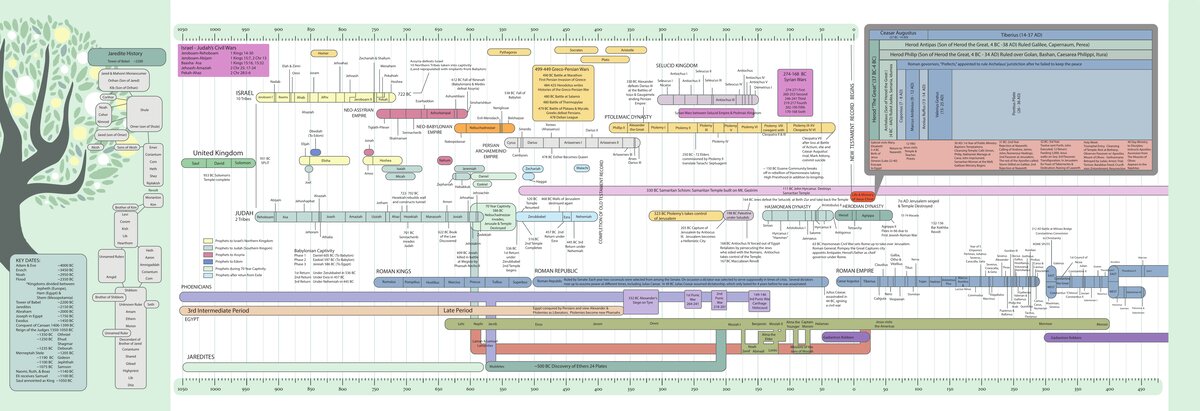
Tap to expand
Old Testament Timeline
From Creation through the Persian Period — tap the image to zoom, or download the full PDF.
Tap anywhere to close · Pinch to zoom