| Church Manuals | |
| Come Follow Me Manual | — |
| Scripture Helps | View |
| OT Seminary Teacher Manual | View |
| OT Institute Manual | View |
| Pearl of Great Price Manual | View |
| Scripture Reference | |
| Bible Dictionary | View |
| Topical Guide | View |
| Guide to the Scriptures | View |
| Church Media | |
| Gospel for Kids | View |
| Bible Videos | View |
| Church Publications & Library | |
| Church Magazines | View |
| Gospel Library | View |
Week 01
Introduction to the Old Testament
Introduction to the Old Testament
December 29, 2025–January 4, 2026
5-Minute Overview
You'll get the lay of the land before diving into the oldest scriptures in our canon. This introductory week orients you to the Old Testament's major divisions — the Pentateuch, historical books, wisdom literature, and prophets — and explains why Latter-day Saints read it alongside the Pearl of Great Price. You'll discover how Restoration scripture fills gaps, restores plain and precious truths, and transforms the Old Testament from an ancient artifact into a living covenant document.
Official Church Resources
OFFICIAL CHURCH RESOURCES
▶︎
Video Commentary
Video Commentary (click [i] for details)
▼︎

Specialized Audiences
Women's Perspectives
▶︎
 [i]
[i]Grounded
Family & Children's Resources
▶︎
Reference & Study Materials

Introduction to the Old Testament
Weekly videos, articles, and study helps from Scripture Central scholars

Introduction to the Old Testament
Study and Teaching Helps from Interpreter Foundation
Bible Project
1 Video This Week
ACADEMIC & SCHOLARLY SITES (Homepages)
▶︎
MAPS & BIBLICAL LOCATIONS
▶︎
JEWISH & SCHOLARLY RESOURCES
▶︎
How This Website Is Organized
▶︎
Each week of the Come, Follow Me curriculum includes three types of resources:
Three Weekly Resources
▶︎
| Resource | Description | Best For |
|---|---|---|
| Study Guide | Comprehensive study materials covering overview, context, key passages, word studies, teaching applications, and study questions | Deep personal study, lesson preparation |
| Weekly Resources | Curated links to official Church materials, video commentary, Bible Project videos, interactive maps, and academic resources | Quick access to supplementary content |
| Weekly Insights | Synthesized insights from video resources, key themes, and practical applications (this page) | Overview and highlights |
What's Included in Weekly Resources
▶︎
Each week's Weekly Resources page provides quick access to:
- Official Church Materials — Come Follow Me Manual, Scripture Helps, Gospel Library resources
- Video Commentary — Follow Him Podcast, Scripture Central, Interpreter Foundation, and other trusted sources
- Bible Project Videos — Beautiful animated overviews of biblical books and themes
- Interactive Maps — Visual geography tools to understand the biblical world
- Academic Study Tools — Encyclopedias, dictionaries, and scholarly resources
- Reference Materials — Timeline tools, cross-references, and study aids
Study Guide
▶︎
The Study Guide is a comprehensive six-part resource designed for deep personal study and lesson preparation. Each week's Study Guide is hosted on GitHub Pages and can be accessed via the "Study Guide" button in Weekly Resources or directly at the Study Guide tab.
The Six-Part Structure:- Week Overview — Big-picture summary, themes, key figures, timeline
- Historical & Cultural Context — Ancient Near Eastern background, interpretive frameworks
- Key Passages Study — Deep dives into a selection of pivotal passages with literary analysis
- Word Studies — Hebrew analysis of key terms with original language insights
- Teaching Applications — Ideas for application from 7 contexts: personal, FHE, Sunday School, Seminary, RS/EQ, Children, Missionaries
- Study Questions — 180+ questions organized by category for various study depths
Each section builds on the others, allowing you to go as deep as time permits. Start with the Week Overview for a quick orientation, or dive straight into Word Studies if you want to explore the Hebrew roots behind key concepts.
Our Approach to Studying the Old Testament
▶︎
The Old Testament can feel foreign—it comes from an ancient culture with unfamiliar practices, and sometimes the stories raise more questions than they answer. Our approach embraces this complexity while keeping Christ at the center.
1. Jesus Christ on Every Page
▶︎
Dr. Joshua Sears (BYU) offers a transformative reframe: when we read the Old Testament looking for Christ, we often "hunt for Messianic prophecies" and skip everything else. But Jehovah IS Jesus Christ acting in real-time throughout the narrative.
"We sometimes have this attitude where when we think 'I want to find Jesus,' what people mean is, I want to hunt all over the place and find anything I can find that points to his mortal ministry. But if we limit ourselves to these cases, we are going to be missing the rich feast of information about Jesus Christ that's right there."Practical Application: Whenever you see "LORD" (all capitals) in your Bible, the underlying Hebrew is YHWH (Yahweh/Jehovah)—substitute "Jesus" and see how the narrative transforms.
— Dr. Joshua Sears, Follow Him Podcast
John Hilton III emphasizes this approach: "The Old Testament doesn't just prophesy of Christ, it proclaims him on every page."
2. Covenant as Relationship (Belonging > Belief + Behavior)
▶︎
Taylor Halverson and Mike Harris offer a revolutionary framework for understanding God's relationship with Israel:
Belonging > Belief + Behavior- Belief alone → Dogmatic
- Behavior alone → Pedantic ("why am I doing this?")
- Either without Belonging → Misses the whole point
God's first move is always relationship: "You are my people." He doesn't wait for Israel to get their act together before claiming them.
This grace-first framework is rooted in two key Hebrew words:
- חֶסֶד (chesed) — Covenantal loyalty, enduring love. "There is nothing you can do to destroy or earn God's chesed. It is always there."
- חֵן (chen) — Favor, grace. When Nephi says he was "highly favored of the Lord," he's identifying God's grace.
"The question is not 'will God love me if I work hard enough?' His love is actually the starting point of everything. The question is, will we love him?"
— Taylor Halverson, Scripture Insights
3. Let God Tell You Who He Is
▶︎
Dr. Kerry Muhlestein challenges us to remove modern "lenses" that distort our reading:
| Obstacle | Description |
|---|---|
| Time | 2,500+ years creates gaps in understanding context |
| Culture | We often live sterilized lives—they experienced very different realities. Violence, war, and death were regular occurrences. Cultural norms were very different: social and family expectations, gender roles, slavery, political structures |
| Expectations of God | We project what we want God to be onto the text, which can sometimes be unsettling in OT studies |
| Canonization | The Old Testament was largely compiled and canonized after the Babylonian Exile (~500 BC). Post-exilic editors shaped the text through their lens of trauma, loss, and return. This affects interpretation and emphasis throughout |
"I've had students say, 'This can't be Jehovah. That's not what He's like.' Read the scriptures without blinders, without lenses that color it, without your expectations, and find out what is actually in there. Then ask yourself, 'Why does God want me to see Him this way?'"Key Insight: The Divine Warrior who holds a "great and terrible sword" (Isaiah 27) is the same God who "wipes away all tears" (Isaiah 25). "The reason Christ can reach out with one hand and wipe away our tears is because in the other hand he holds that mighty sword."
— Dr. Kerry Muhlestein, The Scriptures Are Real
4. The Old Testament as Your Family History
▶︎
Dr. Kerry Muhlestein offers another reframe: the Old Testament is not "someone else's story"—it's YOUR family history.
"Most of us should identify with the house of Israel, whether by adoption or literally descended. Once we make a covenant, we are of the house of Israel."
When reading, don't just think of "great-great-grandma Mildred"—think of great-great-great-grandma Sarah, Rebecca, and Rachel.
5. Embracing the Wrestling
▶︎
Dr. Joshua Sears highlights a key difference between scripture sets:
| Book of Mormon | Old Testament |
|---|---|
| Clear, direct, not subtle | Raises questions, moral ambiguity |
| Mormon tells you the moral | Open-ended stories, wrestling required |
| Heroes and villains are obvious | Complex characters with real struggles |
"The wrestling is maybe where we're going to find the Holy Ghost."
— Dr. Joshua Sears
The PaRDeS Model — Four Levels of Scripture Study
▶︎
Jewish tradition identifies four levels of scriptural meaning, forming an acronym that spells פַּרְדֵּס (PaRDeS)—Hebrew for "garden" or "paradise":
| Level | Hebrew | Meaning | Description |
|---|---|---|---|
| Peshat | פְּשָׁט | Plain | Literal, straightforward meaning |
| Remez | רֶמֶז | Hint | Allegorical meaning; allusions to deeper truths |
| Derash | דְּרָשׁ | Search | Homiletical; interpretive applications |
| Sod | סוֹד | Secret | Mystical or hidden meaning |
Applying PaRDeS as Latter-day Saints
▶︎
| Level | Question to Ask | LDS Application |
|---|---|---|
| Peshat | What does the text actually say? | Don't skip this! Read carefully, noting details. |
| Remez | What patterns, wordplay, or allusions point deeper? | Look for types of Christ, literary structures, cross-references, Hebrew wordplay. |
| Derash | What does this mean for my life? | "Liken" the scriptures (1 Nephi 19:23). Ask: How does this apply to me today? |
| Sod | What does the Spirit reveal? | Temple connections, personal revelation, sacred patterns, and insights. |
The Hebrew Alphabet — Letters as Teachers
▶︎
Hebrew is more than a language—it's a symbolic system where each letter, name, and literary structure can carry deeper meaning. Throughout our study, understanding Hebrew symbols, including the letters themselves can enrich our study and comprehension.
Key Letters to Know
▶︎
| Letter | Name | Meaning | Significance |
|---|---|---|---|
| א | Aleph | Ox, strength, leader | First letter; God as the "strong leader" (El = אל begins with Aleph) |
| ב | Bet | House, dwelling | Second letter; root of "Bethlehem" (house of bread), "Bethel" (house of God) |
| י | Yod | Hand, deed | Smallest letter (Matt 5:18 "jot"); begins the divine name YHWH |
| ה | He | Window, behold, breath | Added to Abram/Sarai names; represents divine breath/spirit/presence |
| ת | Tav | Mark, sign, covenant | Last letter; in ancient script looked like a cross (+) |
The Divine Name: יהוה (YHWH)
▶︎
The most sacred name in Hebrew consists of four letters: Yod-He-Vav-He. This "Tetragrammaton" appears over 6,800 times in the Old Testament, rendered as "LORD" (all capitals) in English Bibles.
How We Get "Jehovah": Ancient Hebrew was written without vowels—only consonants (YHWH). Out of reverence, Jews avoided pronouncing the divine name aloud, instead substituting אֲדֹנָי (Adonai, meaning "Lord"). When medieval scribes added vowel markings to Hebrew texts, they placed the vowels from Adonai (a-o-a) under the consonants YHWH as a reminder to say "Adonai" instead. Later Christian scholars, unfamiliar with this practice, read the combined letters as a single word: YaHoWaH → Latinized as "Jehovah." So "Jehovah" is actually a hybrid—the consonants of the divine name with the vowels of a substitute word. Most scholars believe the original pronunciation was closer to "Yahweh." The Meaning: YHWH derives from the Hebrew verb היה (hayah) — "to be." When Moses asked God's name at the burning bush, God responded: אֶהְיֶה אֲשֶׁר אֶהְיֶה (Ehyeh asher ehyeh) — traditionally translated "I AM THAT I AM" (Exodus 3:14).But the Hebrew is richer than this static translation suggests. Ehyeh is an imperfect (future/ongoing) verb form, meaning the name could equally be rendered:
- "I AM WHO I AM" — Emphasizing God's eternal, unchanging nature
- "I WILL BE WHAT I WILL BE" — Emphasizing God's ongoing, active presence
- "I WILL BE WHO YOU NEED ME TO BE" — Emphasizing God's covenantal responsiveness
This divine name reveals a God who is not distant or abstract, but actively present—becoming what His people need in every circumstance. To the enslaved, He becomes Deliverer. To the wandering, He becomes Guide. To the grieving, He becomes Comforter. The name YHWH is an invitation to relationship with a God who meets us where we are.
Hebrew Word Roots
▶︎
Most Hebrew words derive from three-letter roots. Understanding roots reveals connections between related concepts:
The Moedim — God's Appointed Times
▶︎
The Hebrew word מוֹעֵד (moed, plural: moedim) means "appointed time" or "divine appointment." The root יעד (yaad) indicates an appointment or meeting—these are not merely holidays but divine appointments between God and His covenant people. God established seven annual feasts/festivals for Israel—each pointing to Christ and the plan of salvation.
The Seven Moedim
▶︎
| Feast | Hebrew Name | Time | Christological Fulfillment |
|---|---|---|---|
| Passover | Pesach (פֶּסַח) | Spring (Nisan 14) | Christ's death as the Lamb of God |
| Unleavened Bread | Matzot (מַצּוֹת) | Nisan 15-21 | Christ's sinless body; removing sin from our lives |
| Firstfruits | Bikkurim (בִּכּוּרִים) | Day after Sabbath | Christ's resurrection—"firstfruits of them that slept" (1 Corinthians 15:20) |
| Pentecost/Weeks | Shavuot (שָׁבוּעוֹת) | 50 days later | Giving of the Spirit (Acts 2); Law written on hearts |
| Trumpets | Yom Teruah (יוֹם תְּרוּעָה) | Fall (Tishri 1) | Christ's return announced by trumpet; new beginnings |
| Day of Atonement | Yom Kippur (יוֹם כִּפּוּר) | Tishri 10 | Final judgment; Christ as High Priest entering Holy of Holies. Symbolic of Christ's Atonement and his roles in the first and Second Comming |
| Tabernacles | Sukkot (סֻכּוֹת) | Tishri 15-21 | God dwelling with His people; Millennial reign |
Deeper Connections
▶︎
Shavuot (Pentecost): This feast commemorates the giving of the Law at Sinai—50 days after Passover/Exodus. The pattern repeats: 50 days after Christ's Passover sacrifice, the Spirit descended at Pentecost (Acts 2), writing the law on hearts rather than tablets of stone. The Sermon on the Mount (Matthew 5–7) and Christ's appearance to the Nephites (3 Nephi 11-26) both echo this pattern of covenant instruction given after deliverance.
Yom Teruah (Trumpets): Also known as רֹאשׁ הַשָּׁנָה (Rosh HaShanah—"Head of the Year"), this feast marks new beginnings and the start of a new year/dispensation. Significantly, Joseph Smith received the gold plates from Moroni on September 22, 1827—which fell on Yom Teruah that year. Moroni is often depicted holding a trumpet, connecting to the shofar blasts of this feast and the angelic trumpet calling Israel back to the Temple and announcing the opening of a New Dispensation.
Yom Kippur (Day of Atonement): In the Old Testament, this is often written יוֹם הַכִּפֻּרִים (Yom HaKippurim)—a plural form suggesting "Day of Atonements." Some see here a hint of multiple dimensions of atonement. Interestingly, the Hebrew letter כ (kaph) as a prefix means "like" or "as"—so כְּפוּרִים (K'Purim) could be read as "like Purim." Purim celebrates Esther's story where the Jews were saved from destruction through an unlikely deliverer. Yom Kippur thus points to an even greater salvation—deliverance through Christ's atonement.
Why the Moedim Matter for Our Study
▶︎
Throughout the Old Testament, these appointed times structure Israel's worship calendar. Understanding them illuminates:
- Why certain events happen at specific times (Jesus died on Passover, rose on Firstfruits)
- The symbolic meaning behind rituals and sacrifices
- Prophetic patterns pointing to Christ's first and second comings
- Temple worship and the Day of Atonement ceremonies
Reading Symbolically — Seeing Christ in Types and Shadows
▶︎
Moses taught that "all things have their likeness, and all things are created and made to bear record of me" (Moses 6:63). The Old Testament is filled with symbols, types, and shadows that point to Christ.
Kerry Muhlestein's Warning: Symbolic Literacy Crisis
▶︎
"The less symbol-literate our youth are, the less comfortable they will be in the temple, the more it will seem odd to them. I've heard youth come out of the temple and say, 'That felt like a cult.' That's because they are symbol-illiterate."
— Dr. Kerry Muhlestein
Studying Old Testament symbolism prepares us for temple worship—both use the same symbolic language.
Elder Gerald N. Lund's Seven Principles for Interpreting Symbols
▶︎
- Do the Scriptures give an interpretation? — Check if the Bible interprets the symbol elsewhere
- Do the writings of Prophets help? — Cross-reference prophetic teachings (JST, General Conference)
- Use study aids — Bible Dictionary, lexicons, commentaries, maps
- Let the nature of the symbol teach you — What are its inherent characteristics?
- Listen to the promptings of the Spirit — Personal revelation is essential
- Balance with other revelation — Valid interpretations harmonize with established doctrine
- Opposition in all things — Symbols are neutral; context determines positive or negative usage
Key Old Testament Symbols of Christ
▶︎
| Symbol | Old Testament Context | Christ Connection |
|---|---|---|
| Passover Lamb | Blood on doorposts saves from death (Exodus 12) | "Behold the Lamb of God" (John 1:29) |
| Brazen Serpent | Look and live (Numbers 21) | "As Moses lifted up the serpent" (John 3:14) |
| Manna | Bread from heaven sustains life | "I am the bread of life" (John 6:35) |
| Rock/Water | Moses strikes rock, water flows | "That Rock was Christ" (1 Corinthians 10:4) |
| Tabernacle/Temple | God's dwelling with His people | "The Word was made flesh and dwelt (tabernacled) among us" (John 1:14) |
| High Priest | Mediates between God and people | Christ our "great high priest" (Hebrews 4:14) |
| Day of Atonement | Annual cleansing of sins | Christ's once-for-all sacrifice (Hebrews 9–10) |
The Olive Tree Framework — Doctrine, Principles & Applications
▶︎
Dr. Barbara Morgan Gardner offers a systematic framework for Old Testament study based on the olive tree (Romans 11, Jacob 5):
The Olive Tree Model
▶︎
- ROOTS = Covenants — What binds us to Christ (like anchor pins to bedrock)
- TRUNK = Doctrines — Eternal truths of salvation (do not change)
- BRANCHES = Principles — Doctrinal guidelines for action (relatively stable, though expressions may vary across dispensations—e.g., Kosher laws and the Word of Wisdom both reflect principles of health and obedience, but with different specific guidelines; more enduring than handbook policies)
- LEAVES = Applications — Specific behaviors/policies (CAN change based on circumstances)
Why This Matters for Old Testament Study
▶︎
This framework helps us distinguish between:
- Eternal doctrines (God's love, atonement, covenant relationship)
- Historical applications (dietary laws, sacrificial system, cultural practices)
"True doctrine understood changes attitude and behavior. True doctrine applied and lived changes who we become."
— Dr. Barbara Morgan Gardner
Week 01 at a Glance — Introduction to the Old Testament
▶︎
This Week's Reading
▶︎
Assignment: Introduction to the Old Testament (preparatory week)
CFM Manual: Introduction Lesson
Central Themes
▶︎
- The Old Testament Testifies of Jesus Christ — Every prophecy, symbol, and covenant points to the Redeemer
- Jesus Christ is Jehovah — The God who speaks throughout is Jesus in His premortal state
- Covenants Connect Us to God — The Hebrew word berit appears over 280 times
- Restoration of Plain and Precious Truths — Book of Moses, Book of Abraham, JST illuminate obscured passages
Key Hebrew Terms Introduced
▶︎
Closing Invitation
▶︎
Why Old Testament Study Matters
▶︎
The Old Testament—particularly the Torah (the five books of Moses)—is the foundation upon which all other scripture rests. The Book of Mormon is not a standalone text; it is a commentary on the brass plates, which contained the Torah and the writings of the prophets through Jeremiah's time. Nephi, Jacob, Abinadi, and Alma all quote, interpret, and build upon the Torah. Without understanding the foundation, we miss much of what they are teaching.
President Ezra Taft Benson reminded the Church of the Lord's sobering words in Doctrine and D&C 84:54-57:
"And your minds in times past have been darkened because of unbelief, and because you have treated lightly the things you have received—which vanity and unbelief have brought the whole church under condemnation. And this condemnation resteth upon the children of Zion, even all. And they shall remain under this condemnation until they repent and remember the new covenant, even the Book of Mormon and the former commandments which I have given them."
The "former commandments" include the Old Testament—the scriptures that were foundational to the early Saints and to the Book of Mormon prophets. President Benson declared that we remain under condemnation when we take lightly the things we have received. Serious, faithful study of both the Book of Mormon and the Old Testament is part of how we lift that condemnation.
An Invitation
▶︎
As we begin this journey through the Old Testament, remember: you are not reading ancient history about strangers. You are reading your family history, written by your ancestors, about a God who has bound Himself to you by covenant. The same Jehovah who spoke to Moses, who delivered Israel, who established His temple—He is Jesus Christ, and He speaks to you today through these pages.
Whether you spend five minutes or five hours with these texts each week, approach them with expectation. Let God reveal Himself to you. Look for Christ on every page. And when the wrestling feels hard, remember: "The wrestling is maybe where we're going to find the Holy Ghost."
Welcome to the Old Testament. Welcome to the journey home.
"The central message of the Old Testament is redemption through a God who has bound himself to us by covenant."
— Dr. Joshua Sears
Week 1
Introduction to the Old Testament
Getting Ready to Study the Hebrew Bible
December 29, 2025 – January 4, 2026
1. Week Overview
| Element | Details |
|---|---|
| Week | 01 |
| Dates | December 29, 2025 – January 4, 2026 |
| Reading | Introduction to the Old Testament |
| CFM Manual | Introduction Lesson |
| Total Chapters | Introductory Material |
| Approximate Verses | N/A (Preparatory Week) |
This opening week serves as a foundation for an entire year of studying the Old Testament—one of the oldest and most influential collections of writings in human history. Rather than diving directly into specific chapters, this week invites us to step back and consider how we will approach this ancient text and why it matters for our covenant journey today.
The Come, Follow Me manual acknowledges that feelings about studying the Old Testament may range from eager anticipation to genuine uncertainty. This is natural. The Old Testament comes from an ancient Near Eastern culture that can seem foreign, and its stories sometimes contain difficult or uncomfortable elements. Yet within these pages, we encounter people remarkably like ourselves—experiencing family joy and discord, moments of faith and doubt, successes and failures.
More importantly, this week establishes the central lens through which Latter-day Saints approach the Old Testament: it is a witness of Jesus Christ. From the sacrificial lamb to the brass serpent, from manna in the wilderness to Jonah in the belly of the great fish—the Old Testament is filled with symbols, types, and prophecies that point us toward the Savior and His Atonement.
Theme 1: The Old Testament Testifies of Jesus Christ
President Marion G. Romney declared: "The message of the Old Testament is the message of Christ and his coming and his atonement." Every prophecy, symbol, and covenant in these ancient texts ultimately points to the Redeemer. As Moses taught: "All things have their likeness, and all things are created and made to bear record of me" (Moses 6:63). Learning to see Christ in the Old Testament transforms these ancient writings from historical curiosity into living scripture.
Theme 2: Jesus Christ is Jehovah
A foundational understanding for Latter-day Saint study: the God who speaks throughout the Old Testament is Jesus Christ in His premortal state. When we read "the LORD God" (Hebrew: Yahweh Elohim), we are reading about Jehovah—the premortal Christ who created the world, spoke to Moses, led Israel through the wilderness, and covenanted with Abraham. President Dallin H. Oaks taught that "the scriptural records of words spoken by 'God' or the 'Lord' are almost always the words of Jehovah, our risen Lord, Jesus Christ."
Theme 3: Covenants Connect Us to God
The Old Testament is fundamentally the story of God seeking to make His people a "peculiar treasure" through covenant (Exodus 19:5). The Hebrew word for covenant (berit) appears over 280 times in the Old Testament. Understanding covenants—their nature, their promises, their requirements—is essential to understanding everything from Abraham's journey to Israel's wanderings to the prophets' warnings. President Russell M. Nelson has emphasized that the "everlasting covenant" reveals a God desperately seeking relationship with His children.
| Person | Role | Significance This Week |
|---|---|---|
| Moses | Prophet, Lawgiver, Author | Traditional author of Genesis-Deuteronomy; his restoration of "plain and precious things" through Joseph Smith enriches our study |
| Abraham | Patriarch | The Abrahamic covenant becomes a central theme throughout the Old Testament |
| Jehovah | God of Israel | Understanding Jesus Christ as the pre-mortal Jehovah is foundational |
| Joseph Smith | Latter-day Prophet | Restored clarifying texts (Book of Moses, Book of Abraham, JST) that illuminate Old Testament passages |
Historical Period: Introductory/Overview
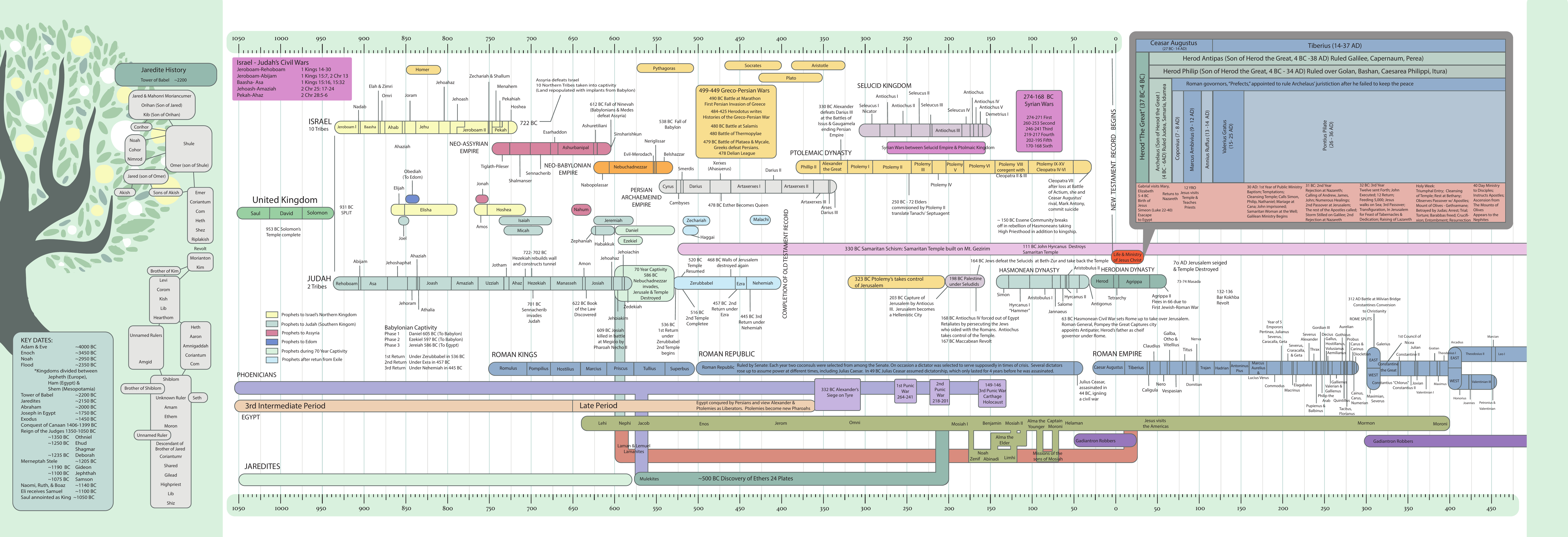
Approximate Dates: The Old Testament covers approximately 4,000 years of history—from Creation through the post-exilic period (roughly 400 BC)
World Context: The Old Testament world spans from the earliest civilizations of Mesopotamia and Egypt through the Persian Empire. Understanding Ancient Near Eastern context illuminates these texts.
Biblical Timeline Position: This week provides the framework for understanding the entire Old Testament narrative arc:
- Creation and Patriarchs (Genesis, Moses, Abraham)
- Exodus and Law (Exodus, Leviticus, Numbers, Deuteronomy)
- Conquest and Judges (Joshua, Judges, Ruth)
- Monarchy (1-2 Samuel, 1-2 Kings, 1-2 Chronicles)
- Exile and Return (Ezra, Nehemiah, Esther)
- Wisdom Literature (Job, Psalms, Proverbs, Ecclesiastes, Song of Solomon)
- Prophets (Isaiah through Malachi)
The Christian Old Testament (39 books)
Arranged in four sections:
- Pentateuch/Torah (5 books): Genesis–Deuteronomy
- Historical Books (12 books): Joshua–Esther
- Poetic/Wisdom Books (5 books): Job–Song of Solomon
- Prophets (17 books): Isaiah–Malachi
The Jewish TaNaK (24 books, same content arranged differently)
- Torah (תורה) – "Instruction" – Genesis–Deuteronomy
- Nevi'im (נביאים) – "Prophets" – Joshua–Malachi (arranged differently)
- Ketuvim (כתובים) – "Writings" – Psalms, Proverbs, Job, etc.
This three-part structure is ancient, referenced in the Dead Sea Scrolls and even by Jesus Himself (Luke 24:44).
Book of Mormon Connections
- 1 Nephi 13:21-29, 38-42 – Nephi's vision explains how "many plain and precious things" were taken from the Bible and how the Lord planned to restore them through "other books"
- 2 Nephi 3:12 – The Bible and Book of Mormon work together to establish truth
- 2 Nephi 11:4 – "All things which have been given of God from the beginning of the world, unto man, are the typifying of [Christ]"
- Mosiah 3:15 – The Lord showed His people "many signs, and wonders, and types, and shadows... concerning his coming"
Doctrine and Covenants Connections
- D&C 84:20 – "In the ordinances... the power of godliness is manifest"
- D&C 132:29 – Abraham's faithfulness to covenants led to his exaltation
Pearl of Great Price Connections
The Book of Moses and Book of Abraham provide essential restored context for Genesis:
- Moses 1 – Pre-Genesis vision of Moses revealing God's purposes
- Moses 5-7 – Expanded accounts of Adam, Eve, Enoch
- Abraham 1-2 – Abraham's background and call
- Abraham 3 – The premortal council and creation
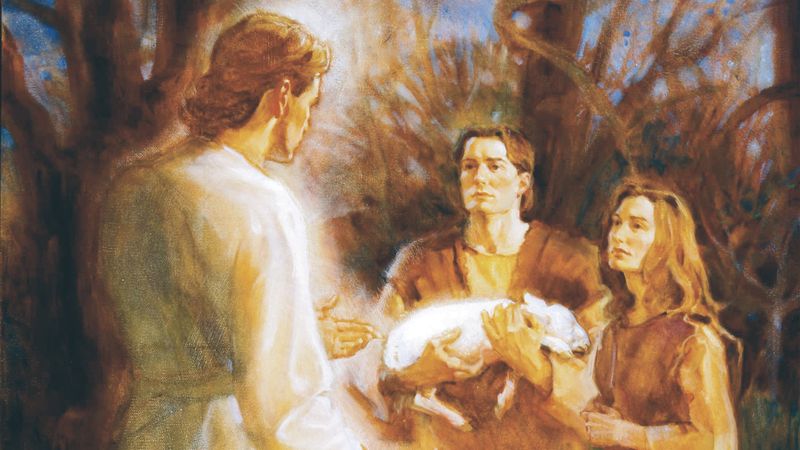
- Christ as Jehovah: Jesus Christ is the God of the Old Testament, acting under the Father's direction as Creator, Lawgiver, and Covenant-maker.
- Types and Shadows: The Old Testament uses symbols, ordinances, and events as "types" pointing to Christ—the sacrificial lamb, the brass serpent, manna, the temple, and countless others.
- Covenant Relationship: God's primary purpose in scripture is to draw His children back to Him through covenants. The Old Testament records this ongoing effort from Adam through Malachi.
- Restoration of Plain and Precious Truths: Through Joseph Smith, God restored clarifying texts and translations that illuminate Old Testament passages obscured or lost over centuries.
The temple is perhaps the most significant through-line connecting the Old Testament to Latter-day Saint worship. This year's study will reveal:
- The Garden of Eden as the first temple—a place of God's presence
- The Tabernacle and Temple of Solomon as sacred space mirroring heavenly realities
- Sacrificial ordinances pointing to Christ's Atonement
- Covenants and clothing connecting ancient Israel to modern temple worship
- The Holy of Holies as the model for entering God's presence
The Old Testament is, in many ways, a temple text. President Russell M. Nelson has taught that understanding the temple helps us understand the scriptures, and vice versa.
Manual Focus: Approaching the Old Testament with faith, looking for Jesus Christ, and understanding covenants
Key Questions from Manual:
- How do you see the Savior in symbols like manna, the sacrificial lamb, the brass serpent, and Jonah?
- Why is it significant to know that Jesus Christ is Jehovah?
- How can studying covenants in the Old Testament strengthen your own covenant relationship with God?
Manual's Suggested Activities:
- Read Elder Dale G. Renlund's message "Jesus Christ Is the Treasure" (Liahona, Nov. 2023)
- Study President Russell M. Nelson's message "The Everlasting Covenant" (Liahona, Oct. 2022)
- Review the types and symbols of Christ in the scriptures
If You Have Limited Time (Essential Reading):
- CFM Manual Introduction lesson
- Moses 6:63 (all things testify of Christ)
- 1 Nephi 13:38-42 (restoration of plain and precious truths)
If You Have More Time (Full Reading with Highlights):
- Read "The Everlasting Covenant" by President Nelson
- Review the Guide to the Scriptures entry on "Jehovah"
- Skim the Bible Dictionary introduction to the Old Testament
For Deep Study:
- Study the Bible Project's "Old Testament Overview" video
- Explore the TaNaK structure and how it differs from the Christian Old Testament arrangement
- Research how the Book of Moses and Book of Abraham came forth through Joseph Smith
Seeing Jehovah in Real-Time (Follow Him | Part 2)
Dr. Josh Sears offers a transformative reframe: the tendency when reading the Old Testament is to "hunt for Messianic prophecies" and skip over everything else. But Jehovah IS Jesus Christ acting in real-time throughout the narrative. When Moses encounters God at the burning bush, that's not just "pointing to" Christ—that IS Christ. In Isaiah 7, there are 13+ references to "the LORD" (Jehovah) versus just one Messianic prophecy (v. 14). Reading for Jehovah rather than just for prophecies transforms every chapter.
Practical Application: Whenever you see "LORD" (all caps), substitute "Jesus" and see how the narrative changes.
Belonging Before Believing (Scripture Insights)
Taylor Halverson and Mike Harris offer a reframe on God's relationship with Israel: Belonging > Belief + Behavior. God doesn't wait for Israel to get their act together before claiming them. He says "you are my people" first. This grace-first framework, rooted in the Hebrew words chesed (covenantal loyalty) and chen (favor/grace), colors how we should read every Old Testament story.
Satan Removed from the Text (Finding Christ)
Dr. Lynne Wilson makes a surprising discovery: the book of Genesis never mentions temptation, Satan, or devil. The entire Old Testament uses "devil" zero times and "Satan" only appears in Job and Chronicles. Dr. Wilson suggests this is "one of those precious things that were removed from the scriptures." This is why Moses 1's revelation about Satan as deceiver is so essential—it's restored truth that helps us understand the adversary in ways other Abrahamic faiths don't.
President James E. Faust reinforced why this restored knowledge matters: Satan is "the great imitator, the master deceiver, the arch counterfeiter, and the great forger." He "comes as a thief in the night; he is a wolf in sheep's clothing" with "such perfect disguise that many do not recognize either him or his methods" ("The Great Imitator," October 1987 General Conference).
Interpretive Lenses Matter (Scriptures Are Real)
Dr. Kerry Muhlestein encourages readers to recognize the lens they bring before reading the Old Testament. Are you reading with assumptions about God's character? Expectations about what scripture "should" say? Let God tell you who He is rather than imposing expectations. The Old Testament reveals a God who is both "divine warrior" with sword in hand AND gentle shepherd—both fully present, not contradictory.
The Olive Tree Framework (Grounded)
For those wanting a systematic approach to Old Testament study, Dr. Barbara Morgan Gardner offers an organizing framework based on the olive tree (Romans 11, Jacob 5):
- Doctrines = The roots (unchanging truths)
- Principles = The trunk (how to live doctrines)
- Applications = The branches and leaves (specific actions, may change)
- Covenants = The anchor pins holding roots to bedrock
This framework helps distinguish between eternal doctrines and cultural applications that may have changed.
Using Modern Translations (Finding Christ)
The Church officially encourages studying from modern translations alongside the King James Version. John Hilton III provides practical recommendations:
- NIV reads at 7th-grade level (vs. KJV at 12th grade)
- NLT (New Living Translation) reads at 6th-grade level
- Bible App and Blue Letter Bible are free digital tools
- Even AI can help clarify difficult passages
This isn't replacing scripture—it's accessing the same truths in clearer language.
Key Restoration Resources for Old Testament Study
- Book of Moses – Restored portions of Genesis 1-6
- Book of Abraham – Restored text expanding Genesis 11-25
- Joseph Smith Translation (JST) – Clarifications throughout (see footnotes and appendix)
Study Tools Available
- Scripture Helps: Old Testament (churchofjesuschrist.org)
- Seminary Teacher Manual: Old Testament
- Bible Maps and Chronology Charts
- Hebrew word study resources
File Status: Complete Created: January 4, 2026 Last Updated: January 4, 2026 Next File: 02_Historical_Cultural_Context.md
2. Historical & Cultural Context
Time Period
Approximate Dates: The Old Testament spans from Creation through approximately 400 BC Biblical Era: All eras—from pre-history through post-exile (this is an overview week) World Historical Context: The Old Testament was composed against the backdrop of the great civilizations of the Ancient Near East: Egypt, Mesopotamia (Sumer, Akkad, Babylon, Assyria), the Hittites, Persians, and various Canaanite city-states.
Geographic Setting
Primary Locations:
| Location | Modern Region | Significance |
|---|---|---|
| Mesopotamia | Iraq/Syria | Origin of Abraham; Babylon and Assyria |
| Canaan | Israel/Palestine | The Promised Land |
| Egypt | Egypt | Site of bondage and exodus |
| Sinai Peninsula | Egypt/Israel border | Covenant-making with Moses |
| Persia | Iran | Freed Israel from exile |
Map Reference: LDS Bible Maps 1-6 provide overview of Old Testament world
Political Context
The Old Testament unfolds across multiple political eras:
- Patriarchal Period (~2000-1700 BC): Small clans moving through lands controlled by Canaanite city-states and Egyptian influence
- Egyptian Bondage (~1700-1446 BC): Israel grows into a nation under Egyptian domination
- Conquest/Judges (~1406-1050 BC): Tribal confederation in Canaan, surrounded by hostile nations
- United Monarchy (~1050-931 BC): Israel becomes a kingdom under Saul, David, Solomon
- Divided Kingdom (~931-586 BC): Israel (north) and Judah (south) amid Assyrian and Babylonian expansion
- Exile and Return (~586-400 BC): Babylonian, then Persian rule
Understanding Why ANE Context Matters
The Old Testament was written by people in the Ancient Near East for people in the Ancient Near East. The original audience understood cultural practices, literary conventions, and religious concepts that modern Western readers often miss. Learning about the ANE world helps us:
- Avoid anachronism — Reading modern ideas back into ancient texts
- Understand polemics — Seeing how biblical texts often critique surrounding religions
- Appreciate uniqueness — Recognizing what made Israelite faith distinctive
- Grasp meaning — Understanding practices like covenant rituals, temple worship, sacrifice
Key ANE Concepts for the Year Ahead
Covenant (Berit)
Description: In the ANE, covenants were binding agreements between parties—often between a greater king (suzerain) and a lesser king (vassal). These treaties followed recognizable patterns: historical prologue, stipulations, blessings/curses, witnesses, and document deposit in a temple.
Biblical Significance: God's covenants with Noah, Abraham, Moses, and David follow similar patterns, but with crucial differences—particularly God's gracious initiative and His binding Himself to bless His people.
Temple as Cosmic Center
Description: Ancient temples were conceived as the meeting place between heaven and earth, the dwelling of deity, and often as a model of the cosmos. Ziggurats in Mesopotamia and temples in Egypt reflected this understanding.
Biblical Significance: The Tabernacle and Temple of Solomon embody these concepts but redirect them toward Yahweh alone. The Garden of Eden itself is described with temple imagery.
Sacrifice and Atonement
Description: All ANE cultures practiced animal sacrifice as a means of approaching deity, making restitution, or securing favor. Blood was considered the carrier of life.
Biblical Significance: The Israelite sacrificial system shares surface similarities with neighbors but serves fundamentally different purposes—particularly as types pointing to Christ's ultimate sacrifice.
Religious Context of Surrounding Cultures
Egyptian Religion:
- Polytheistic pantheon with Ra (sun), Osiris (afterlife), Isis, Horus, etc.
- Pharaoh considered divine or semi-divine
- Elaborate afterlife preparation (mummification, Book of the Dead)
- The Exodus plagues directly challenged Egyptian deities
Mesopotamian Religion:
- Pantheon including Marduk (Babylon), Ashur (Assyria), Enlil, Ishtar
- Creation myths (Enuma Elish) depicting violent divine combat
- Flood narratives (Gilgamesh Epic) with notable parallels to Genesis
- Astral worship (sun, moon, stars as deities)
Canaanite Religion:
- El (high god), Baal (storm/fertility god), Asherah (goddess)
- Fertility cult practices, including sacred prostitution
- Child sacrifice to Molech
- High place shrines on mountains and hills
Contrast with Israelite Worship:
Note: Early Israel shows evidence of henotheism (worship of one God while acknowledging others exist) and awareness of a divine council (see Psalm 82; 1 Kings 22:19-23). The strict "one God alone" emphasis develops particularly from Moses onward. Latter-day Saint theology acknowledges the Godhead as three distinct beings united in purpose—what the Hebrew echad (אֶחָד) in Deuteronomy 6:4 suggests: "united as one."
- Unity of Godhead vs. conflicting pantheons — "Hear, O Israel: The LORD our God is one (echad) LORD" (Deuteronomy 6:4) — three beings perfectly united in purpose, not warring deities
- Ethical deity vs. capricious gods — Yahweh is holy, just, and loving
- Covenant relationship vs. appeasement — God initiates relationship with His people
- History as revelation vs. cyclical mythology — God acts in real time and space
- Image prohibition vs. idol worship — No physical representation of Yahweh
- Divine council under one head vs. competing divine factions — Yahweh presides over the council (Psalm 82:1)
Understanding the Old Testament as Literature
The Old Testament is not a single book but a library of diverse writings composed over centuries in various genres. Approaching it requires genre awareness.
Major Genres in the Old Testament
| Genre | Books/Sections | How to Read It |
|---|---|---|
| Narrative | Genesis-Esther | Look for plot, characterization, dialogue |
| Law/Torah | Exodus 20-40, Leviticus, Deuteronomy | Covenant stipulations; principles behind specifics |
| Poetry/Wisdom | Job, Psalms, Proverbs, Ecclesiastes | Parallelism, imagery, emotional expression |
| Prophecy | Isaiah-Malachi | Forthtelling vs. foretelling; historical context |
| Apocalyptic | Daniel, Ezekiel, Zechariah | Symbolic language, cosmic scope, vindication |
Hebrew Literary Techniques
Parallelism (especially in poetry):
- Synonymous: Second line echoes first (Psalm 24:1)
- Antithetic: Second line contrasts first (Proverbs 10:1)
- Synthetic: Second line builds on first (Psalm 1:3)
Repetition: Hebrew writers repeat key words, phrases, and ideas for emphasis. What appears redundant may signal importance.
Chiasmus: A-B-C-B'-A' structures where the center carries the main point. Common in Hebrew thought.
Type-Scenes: Recurring patterns (meeting at a well, birth announcements, call narratives) that create expectations the reader can follow.
Wordplay: Hebrew uses puns, alliteration, and sound patterns often lost in translation.
Understanding how to read scripture is as important as what we read. Two frameworks prove particularly valuable for Old Testament study.
The Jewish PaRDeS Model
Jewish tradition identifies four levels of scriptural meaning, forming an acronym that spells PaRDeS (פַּרְדֵּס)—Hebrew for "garden" or "paradise":
| Level | Hebrew | Meaning | Description |
|---|---|---|---|
| Peshat | פְּשָׁט | Plain | Literal, straightforward meaning |
| Remez | רֶמֶז | Hint | Allegorical meaning; allusions to deeper truths |
| Derash | דְּרָשׁ | Search | Homiletical; interpretive applications |
| Sod | סוֹד | Secret | Mystical or hidden meaning |
For LDS Study:
- Peshat — What does the text actually say? (Don't skip this!)
- Remez — What patterns, wordplay, or allusions point deeper?
- Derash — What does this mean for my life?
- Sod — What does the Spirit reveal? What temple connections exist?
Elder Gerald N. Lund's Seven Principles
In his October 1986 Ensign article, "Understanding Scriptural Symbols," Gerald N. Lund offered six principles for interpreting scriptural symbolism, to which a seventh has been added:
- Do the Scriptures give an interpretation? — Check if the Bible interprets the symbol elsewhere
- Do the writings of Prophets help? — Cross-reference prophetic teachings (JST, General Conference)
- Use study aids — Bible Dictionary, lexicons, commentaries, maps
- Let the nature of the symbol teach you — What are its inherent characteristics?
- Listen to the promptings of the Spirit — Personal revelation is essential
- Balance with other revelation — Valid interpretations harmonize with established doctrine
- Opposition in all things — Symbols are neutral; context determines positive or negative usage
Joseph Smith's Foundation: > "Whenever God gives a vision of an image, or beast, or figure of any kind, He always holds Himself responsible to give a revelation or interpretation of the meaning thereof." > — Teachings of the Prophet Joseph Smith, p. 291
Traditional Attribution
Author: Moses traditionally credited with the Torah (Genesis-Deuteronomy); various prophets and scribes for other books Writing Period: Spans from Moses (~1400 BC) through post-exilic period (~400 BC) LDS Perspective: Modern prophets affirm Moses as the foundational author of the Torah while acknowledging that prophetic scribes may have made additions and preserved the texts over time
The TaNaK vs. Christian Old Testament
The same books are arranged differently:
TaNaK (Jewish):
- Torah (5): Genesis-Deuteronomy
- Nevi'im/Prophets (8): Joshua, Judges, Samuel, Kings, Isaiah, Jeremiah, Ezekiel, The Twelve
- Ketuvim/Writings (11): Psalms, Proverbs, Job, Five Scrolls, Daniel, Ezra-Nehemiah, Chronicles
Christian Old Testament (39):
- Pentateuch (5)
- Historical Books (12)
- Poetic Books (5)
- Major Prophets (5)
- Minor Prophets (12)
The TaNaK order is more ancient and may reflect original compositional intent. For example, Chronicles as the final book ends with hope for return, while the Christian order ends with Malachi's prophecy of Elijah's return.
Transmission History
The Hebrew text was carefully preserved by Jewish scribes, eventually standardized as the Masoretic Text (MT). The Greek Septuagint (LXX) translation (~250-100 BC) was widely used in Jesus' day and by New Testament authors. The Dead Sea Scrolls (discovered 1947) confirmed remarkable preservation of the biblical text.
Joseph Smith's Contributions
Book of Moses: Received through revelation 1830-1831, restores significant portions of Genesis, including:
- Moses 1: A pre-Genesis vision establishing context
- Moses 2-4: Expanded creation and fall accounts
- Moses 5-6: Adam and Eve's covenant life, Enoch's ministry
- Moses 7: Enoch's vision and the City of Zion
- Moses 8: Noah and the flood context
Book of Abraham: Received 1835 while examining Egyptian papyri, provides:
- Abraham 1-2: Abraham's background in Ur and divine call
- Abraham 3: Premortal existence and council in heaven
- Abraham 4-5: Creation account with additional details
Joseph Smith Translation (JST): Clarifications throughout the Bible, many included in LDS footnotes and appendix. Key changes appear in Genesis, Exodus, Psalms, Isaiah, and throughout.
Prophetic Teachings on Old Testament Study
Joseph Smith: "The Old Testament is one of the best books in the world" and should be studied to understand covenants, prophecy, and types of Christ.
Modern Prophets: Have consistently emphasized that the Old Testament, properly understood through the Spirit and restoration texts, witnesses of Christ and teaches covenant principles central to temple worship.
- Why does the Old Testament sometimes seem strange or foreign?
Because it was written in and for an ancient culture very different from our own. Learning that context helps bridge the gap.
- Why are restoration scriptures so important for Old Testament study?
The Book of Moses, Book of Abraham, and JST restore "plain and precious things" lost or obscured over centuries of transmission.
- How should we approach difficult passages?
With humility, recognizing cultural context, seeking the Spirit's guidance, and trusting that prophetic interpretation will clarify what matters most.
- What makes Israelite religion unique among ancient cultures?
Monotheism, ethical emphasis, covenant relationship, historical revelation, and prophetic tradition distinguish Israel's faith from surrounding religions.
Recommended Resources
- Bible Dictionary (LDS scriptures) — Excellent overviews of books, people, and concepts
- Scripture Helps: Old Testament (churchofjesuschrist.org) — Weekly study aids
- Old Testament Student Manual (CES) — Comprehensive background
Bible Project Videos
- Old Testament Overview — Comprehensive animated introduction
Scripture Central Resources
- Multiple KnoWhy articles on Old Testament backgrounds
- Lynne Hilton Wilson's "Come, Follow Me" video series
File Status: Complete Created: January 4, 2026 Last Updated: January 4, 2026 Next File: 03_Key_Passages_Study.md
3. Key Passages Study
What This Week Covers
This introductory week does not have a specific scripture reading assignment in the traditional sense. Instead, the Come, Follow Me manual focuses on preparing hearts and minds for the year-long journey through the Old Testament. The emphasis is on understanding how to approach these ancient texts and why they matter for Latter-day Saints.
The CFM manual highlights four foundational concepts: (1) The Old Testament testifies of Jesus Christ through types, symbols, and prophecies; (2) Jesus Christ is Jehovah, the God of the Old Testament; (3) Joseph Smith restored "plain and precious things" that clarify Old Testament passages; and (4) Covenants are the central theme connecting God to His people throughout scripture.
This week's key passages are drawn from the scriptures referenced in the CFM manual and preparatory materials rather than from a sequential reading assignment.
Why These Key Passages Were Selected
These passages were chosen because the CFM manual explicitly references them as foundational for understanding the entire Old Testament. They establish the interpretive framework Latter-day Saints use to approach these ancient texts—seeing Christ in types and symbols, understanding Jesus as Jehovah, recognizing restored truths, and appreciating covenant theology.
Genre & Form
This week's passages span multiple genres: law/instruction (Moses 6:63), historical narrative with prophetic vision (1 Nephi 13), and prophetic discourse (Exodus 3, 6). Reading across genres requires flexibility—poetry is meant to evoke and inspire, narrative is meant to show rather than tell, and prophetic vision uses symbolic imagery.
Key Literary Patterns to Watch For
- Divine Self-Disclosure: When God reveals His names and character (Exodus 3:14; 6:3)
- Typology: How physical elements point to spiritual realities (Moses 6:63)
- Restoration Pattern: Something lost → something found/restored (1 Nephi 13:21-42)
Scripture Reference
Moses 6:63
Scripture Text
> And behold, all things have their likeness, and all things are created and made to bear record of me, both things which are temporal, and things which are spiritual; things which are in the heavens above, and things which are on the earth, and things which are in the earth, and things which are under the earth, both above and beneath: all things bear record of me.
Literary Structure
Structure Type: Comprehensive Enumeration with Inclusio
The verse opens with "all things" and closes with "all things," creating an inclusio that emphasizes totality. Between these bookends, the passage systematically lists every realm of creation:
- Temporal / Spiritual
- Heavens above / Earth / Under the earth
- Above / Beneath
Significance of Structure: The exhaustive listing leaves no category uncovered. There is nothing in all creation that does not point to Christ. This totalizing structure mirrors the universal scope of Christ's Atonement.
Historical & Cultural Context
This verse appears in the restored account of Adam receiving instruction about sacrificial ordinances. In the Ancient Near East, sacrifice was universal but often served to appease capricious gods. Here, God explains that sacrifice is pedagogical—it teaches about the coming Redeemer.
Doctrinal Analysis
This is one of the most sweeping Christological statements in scripture. It establishes that:
- Creation is revelatory — The physical world points beyond itself to spiritual truth
- Christ is the interpretive key — Everything ultimately finds meaning in relation to Him
- Types and shadows are intentional — God designed the world as a teaching tool
This verse provides the lens for reading the entire Old Testament. Every sacrifice, every deliverance, every prophetic promise participates in a grand testimony of Jesus Christ.
Hebrew Insights
While this passage comes from restoration scripture rather than biblical Hebrew, the concept aligns with the Hebrew understanding of mashal (מָשָׁל) — parable, likeness, or comparison. Creation functions as God's living parable.
Cross-References
Old Testament:
- Psalm 19:1-4 — "The heavens declare the glory of God"
- Isaiah 55:12 — Mountains and trees participate in praise
New Testament:
- Romans 1:20 — Creation reveals God's invisible qualities
- Colossians 1:16-17 — All things created by, through, and for Christ
Book of Mormon:
- 2 Nephi 11:4 — "All things which have been given of God... are the typifying of him"
- Alma 30:44 — "All things denote there is a God"
Latter-day Saint Connections
This verse is central to temple understanding. Temple symbolism—from the veil to the ordinances—participates in the cosmic testimony of Christ. President Russell M. Nelson has taught that the temple helps us see symbols in scripture, and scripture helps us see symbols in the temple.
Reflection Questions
- What elements of creation have taught you about Christ?
- How might this perspective change how you approach difficult or seemingly mundane passages in the Old Testament?
- If "all things" testify of Christ, what might you notice today that points to Him?
- How does understanding the Old Testament as testimony of Christ affect how you read its difficult passages?
Scripture Reference
Exodus 3:13-15
Scripture Text
> 13 And Moses said unto God, Behold, when I come unto the children of Israel, and shall say unto them, The God of your fathers hath sent me unto you; and they shall say to me, What is his name? what shall I say unto them? > > 14 And God said unto Moses, I AM THAT I AM: and he said, Thus shalt thou say unto the children of Israel, I AM hath sent me unto you. > > 15 And God said moreover unto Moses, Thus shalt thou say unto the children of Israel, The LORD God of your fathers, the God of Abraham, the God of Isaac, and the God of Jacob, hath sent me unto you: this is my name for ever, and this is my memorial unto all generations.
Literary Structure
Structure Type: Call Narrative with Divine Self-Disclosure
This passage follows the biblical call narrative pattern but reaches its climax in divine self-revelation. The structure moves from question (v.13) → answer (v.14) → expansion and perpetual declaration (v.15).
Significance of Structure: Moses asks for information to share with Israel; God responds with revelation about His own nature. The name is not merely identification—it is theology.
Historical & Cultural Context
In Ancient Near Eastern culture, knowing a god's name meant having access to that god's power. Names revealed character and function. Pharaoh's gods had names tied to natural phenomena (Ra = sun, Hapi = Nile). By contrast, YHWH's name reveals being itself—existence, presence, reliability.
Doctrinal Analysis
The Divine Name (YHWH/Jehovah): The Hebrew אֶהְיֶה אֲשֶׁר אֶהְיֶה (ehyeh asher ehyeh) is notoriously difficult to translate. Options include:
- "I AM THAT I AM" — emphasizing eternal self-existence
- "I WILL BE WHAT I WILL BE" — emphasizing freedom and sovereignty
- "I CAUSE TO BE WHAT IS" — emphasizing creative power
The name Yahweh (יהוה) derives from the same root (hayah = to be). It appears over 6,800 times in the Old Testament, rendered as "LORD" (all caps) in English Bibles.
Jesus as Jehovah: This passage is foundational for understanding that Jesus Christ is the God of the Old Testament. When Jesus declared "Before Abraham was, I AM" (John 8:58), He claimed the divine name for Himself—and the Jews understood this, picking up stones to kill Him for blasphemy.
Hebrew Insights
ehyeh (אֶהְיֶה)
- Definition: "I am" or "I will be" — first person singular imperfect of hayah
- Root meaning: To be, become, exist, happen
- Usage in this passage: God's self-identification in the first person
- Significance: The imperfect tense suggests ongoing, continuous existence — not merely "I was" or "I will be" but "I am being"
Yahweh/YHWH (יהוה)
- Definition: The proper name of the God of Israel
- Root meaning: Related to hayah (to be) — "the existing One"
- Usage: Third person form — "He is" or "He causes to be"
- Significance: So sacred that Jews eventually stopped pronouncing it, substituting Adonai (Lord)
Cross-References
Old Testament:
- Exodus 6:2-3 — "I am the LORD: And I appeared unto Abraham, unto Isaac, and unto Jacob, by the name of God Almighty, but by my name JEHOVAH was I not known to them"
New Testament:
- John 8:58 — "Before Abraham was, I AM"
- John 18:5-6 — Soldiers fall back when Jesus says "I am he"
Book of Mormon:
- 3 Nephi 11:14 — The resurrected Christ identifies Himself as "the God of Israel"
Doctrine & Covenants:
- D&C 110:3-4 — "I am the first and the last; I am he who liveth, I am he who was slain; I am your advocate with the Father"
Latter-day Saint Connections
Latter-day revelation clarifies what the Bible hints: Jehovah/YHWH is the premortal Jesus Christ, acting under the direction of the Father. This understanding transforms Old Testament reading—every interaction with "the LORD" is an interaction with Christ before His mortal birth.
Reflection Questions
- What does it mean that God identifies Himself as the "I AM"?
- How does knowing Jesus is Jehovah change how you read Old Testament stories?
- Why might it matter that God ties His name to the patriarchs ("God of Abraham, Isaac, and Jacob")?
- What does this passage teach about the continuity of God's purposes across generations?
Scripture Reference
1 Nephi 13:28-29, 40
Scripture Text
> 28 Wherefore, thou seest that after the book hath gone forth through the hands of the great and abominable church, that there are many plain and precious things taken away from the book, which is the book of the Lamb of God. > > 29 And after these plain and precious things were taken away it goeth forth unto all the nations of the Gentiles; and after it goeth forth unto all the nations of the Gentiles, yea, even across the many waters which thou hast seen with the Gentiles which have gone forth out of captivity, thou seest—because of the many plain and precious things which have been taken out of the book, which were plain unto the understanding of the children of men, according to the plainness which is in the Lamb of God—because of these things which are taken away out of the gospel of the Lamb, an exceedingly great many do stumble, yea, insomuch that Satan hath great power over them. > > 40 And the angel spake unto me, saying: These last records, which thou hast seen among the Gentiles, shall establish the truth of the first, which are of the twelve apostles of the Lamb, and shall make known the plain and precious things which have been taken away from them; and shall make known to all kindreds, tongues, and people, that the Lamb of God is the Son of the Eternal Father, and the Savior of the world; and that all men must come unto him, or they cannot be saved.
Doctrinal Analysis
This vision explains why the Bible (including the Old Testament) sometimes seems unclear, contradictory, or incomplete. It was not originally so—"plain and precious things" were removed through transmission and intentional alteration.
The solution is not to abandon the Bible but to read it alongside restoration scriptures—the Book of Mormon, Book of Moses, Book of Abraham, and Doctrine and Covenants—which restore what was lost.
Implications for Old Testament Study:
- The Book of Moses restores pre-Genesis revelation and clarifies Genesis 1-6
- The Book of Abraham illuminates Abraham's call and the premortal council
- The Joseph Smith Translation offers hundreds of clarifications
- The Book of Mormon quotes extensively from Isaiah with clearer readings
- Doctrine and Covenants provides prophetic commentary on Old Testament passages
Cross-References
Old Testament:
- Isaiah 29:11-14 — The sealed book prophecy
Book of Mormon:
- 2 Nephi 3:12 — Bible and Book of Mormon "shall grow together"
- 2 Nephi 29:6-11 — God speaks to all nations; more than one book of scripture
Doctrine & Covenants:
- D&C 35:20 — Bible to be translated/corrected
- D&C 45:60-61 — New Testament first, then Old Testament
Latter-day Saint Connections
This passage provides the theological rationale for the LDS scripture canon. We treasure the Bible while acknowledging its transmission challenges. Restoration scripture doesn't replace the Bible—it restores, clarifies, and validates it.
Reflection Questions
- How does this vision shape your expectations for Old Testament study?
- Where have you seen restoration scriptures clarify a confusing Old Testament passage?
- What is the relationship between faith in the Bible and acknowledgment of its transmission history?
- How does the Book of Mormon "establish the truth" of biblical records?
Scripture Reference
Exodus 12:3-5; John 1:29
Scripture Text
> Exodus 12:3-5: Speak ye unto all the congregation of Israel, saying, In the tenth day of this month they shall take to them every man a lamb, according to the house of their fathers, a lamb for an house: And if the household be too little for the lamb, let him and his neighbour next unto his house take it according to the number of the souls; every man according to his eating shall make your count for the lamb. Your lamb shall be without blemish, a male of the first year: ye shall take it out from the sheep, or from the goats. > > John 1:29: The next day John seeth Jesus coming unto him, and saith, Behold the Lamb of God, which taketh away the sin of the world.
Doctrinal Analysis
The Passover lamb is the paradigmatic Old Testament type of Christ. Every element points forward:
- Without blemish — Christ's sinlessness
- Male of the first year — In the prime of life
- Blood applied to doorposts — Protection from death
- Eaten completely — Full participation in salvation
- Bones not broken — Fulfilled at the cross (John 19:36)
John the Baptist's declaration explicitly connected Jesus to this type, helping his hearers understand Christ's mission through the lens of Exodus.
Cross-References
Old Testament:
- Isaiah 53:7 — "He is brought as a lamb to the slaughter"
- Leviticus 22:21 — Offerings must be "without blemish"
New Testament:
- 1 Peter 1:18-19 — "Redeemed... with the precious blood of Christ, as of a lamb without blemish"
- 1 Corinthians 5:7 — "Christ our passover is sacrificed for us"
Book of Mormon:
- Mosiah 3:15 — The Lord showed His people "many signs, and wonders, and types, and shadows... concerning his coming"
- 2 Nephi 11:4 — "All things which have been given of God... are the typifying of him"
Reflection Questions
- What other Old Testament symbols remind you of Christ?
- How does understanding typology change how you read the Law of Moses?
- Why do you think God chose to teach through symbols rather than plain statements?
- What symbols in your own life help you remember Christ?
Psalm 119:105 — "Thy word is a lamp unto my feet"
Key insight: This verse captures the purpose of scripture study—divine guidance for life's path. The psalmist describes scripture not as a searchlight revealing distant horizons but as a lamp for the next step. Connection: Referenced in CFM manual as expressing the attitude we should bring to Old Testament study.
Deuteronomy 6:4 — "Hear, O Israel: The LORD our God is one LORD"
Key insight: The Shema is the foundational creed of Israelite faith, declaring monotheism amid a polytheistic world. Jesus called this the first and greatest commandment. Hebrew note: The word echad (אֶחָד) means "one" but can imply unity (as in Genesis 2:24, "one flesh"). Connection: Mark 12:29 — Jesus quotes this as the greatest commandment.
Jeremiah 31:31-34 — "I will make a new covenant"
Key insight: This prophecy anticipates a covenant written on hearts rather than stone—a prophecy Latter-day Saints see fulfilled in the Restoration. Connection: Hebrews 8:8-12 — Directly quotes this passage as fulfilled in Christ.
Isaiah 7:14 — "A virgin shall conceive"
Key insight: One of the great Messianic prophecies, looking forward to Christ's miraculous birth. Hebrew note: The Hebrew word almah (עַלְמָה) means "young woman of marriageable age"; the Septuagint translated it as parthenos (virgin), which Matthew affirms. Connection: Matthew 1:22-23
Isaiah 9:6 — "For unto us a child is born"
Key insight: This beloved passage names the coming Messiah with divine titles: Wonderful Counselor, Mighty God, Everlasting Father, Prince of Peace. Connection: This passage is a major theme in Handel's Messiah and is referenced throughout Latter-day prophetic teachings.
Key Doctrinal Takeaways
- Christ-Centered Reading: The Old Testament's primary purpose is to testify of Jesus Christ through types, symbols, prophecies, and direct revelation.
- Jesus is Jehovah: The pre-mortal Christ is the God who spoke to Moses, covenanted with Abraham, and led Israel.
- Restoration Enriches: The Book of Moses, Book of Abraham, and JST restore "plain and precious things" that clarify and deepen Old Testament understanding.
- Covenant Framework: Understanding covenants is the key to understanding the Old Testament's narrative structure and God's purposes.
Literary Patterns to Remember
| Pattern | Where Found | Significance |
|---|---|---|
| Typology | Throughout | Physical realities point to Christ |
| Divine Self-Disclosure | Exodus 3, 6 | God reveals Himself through names |
| Restoration Pattern | 1 Nephi 13 | Lost truth → Prophetic restoration |
Hebrew Terms to Remember
| Term | Meaning | Significance |
|---|---|---|
| YHWH (יהוה) | "I AM" / "He causes to be" | Divine name revealed to Moses; Jesus is Jehovah |
| Berit (בְּרִית) | Covenant | Central concept connecting all Old Testament narrative |
| Mashal (מָשָׁל) | Parable, likeness | Creation functions as God's living parable of Christ |
| Chesed (חֶסֶד) | Covenantal loyalty/love | God's steadfast love that cannot be earned or destroyed (Scripture Insights) |
| Chen (חֵן) | Grace/favor | God's unmerited favor; same root as "Hannah" (Scripture Insights) |
Insights from Video Resources
Jehovah in Real-Time, Not Just Prophecy (Follow Him): Dr. Josh Sears emphasizes that rather than "hunting for Messianic prophecies," we should recognize Jehovah acting throughout the narrative. Isaiah 7 has 13+ references to "the LORD" versus one Messianic prophecy—every reference to Jehovah IS a reference to Christ.
The Belonging Framework (Scripture Insights): Taylor Halverson notes that in the Old Testament, Belonging comes before Belief + Behavior. God claims Israel as "my people" before they've earned anything. This reframes difficult passages where Israel fails—God's covenant love (chesed) persists.
Moses 1 as Temple Text (Lynne Wilson): The introduction to Genesis through Moses 1 is essentially temple text—Moses on a mountain, receiving revelation about God's purposes, being taught to discern Satan. Mountains in the Old Testament are temples.
Symbol Literacy Crisis (Kerry Muhlestein): We face a crisis of symbol literacy. Ancient people understood that lions, lambs, serpents, and temples all carried meaning. Recovering this literacy unlocks the Old Testament.
For Further Study
- "The Everlasting Covenant" by President Russell M. Nelson (Liahona, Oct. 2022)
- "Jesus Christ Is the Treasure" by Elder Dale G. Renlund (Liahona, Nov. 2023)
- Bible Project: Old Testament Overview
File Status: Complete Created: January 4, 2026 Last Updated: January 4, 2026 Next File: 04_Word_Studies.md
4. Word Studies
The Old Testament was written primarily in Hebrew (with some Aramaic sections). This introductory week establishes foundational terms that will recur throughout the year. Understanding these Hebrew words from the start provides a framework for deeper study all year long.
Our Hebrew-first approach examines:
- Hebrew Analysis (PRIMARY) - The original language of composition
- Greek Analysis (Septuagint) - How ancient Jews translated these terms ~250 BC
- English Etymology - How we came to our current translations
- Webster 1828 - How Joseph Smith's contemporaries understood these terms
Quick Reference Table
| Hebrew | Transliteration | Strong's | Primary Meaning | Key Passage |
|---|---|---|---|---|
| יהוה | YHWH/Yahweh | H3068 | "I AM" / "He Causes to Be" | Exodus 3:14-15 |
| בְּרִית | berit | H1285 | Covenant | Genesis 15:18 |
| תּוֹרָה | torah | H8451 | Instruction, Law, Teaching | Deuteronomy 4:44 |
| מָשִׁיחַ | mashiach | H4899 | Anointed One, Messiah | 1 Samuel 2:10 |
| קָדוֹשׁ | qadosh | H6918 | Holy, Set Apart | Leviticus 19:2 |
Hebrew Foundation (PRIMARY)
Strong's Number: H3068
Hebrew Script: יהוה
Transliteration: YHWH (pronounced Yahweh or Jehovah)
Pronunciation: yah-WEH (traditional scholarly reconstruction)
Root: הוה (hawah) or היה (hayah) - "to be, to exist, to become"
Grammatical Form: Proper noun; Divine Name
BDB Definition: "The proper name of the God of Israel"
Range of Meaning:
- The Self-Existent One
- "He Who Is" or "He Who Causes to Be"
- The God who acts in history
- The covenant-keeping God of Israel
OT Occurrences: 6,828 times across the Old Testament
Key Passages Where This Word Appears:
- Exodus 3:15 - "The LORD God of your fathers... this is my name for ever"
- Exodus 6:3 - "By my name JEHOVAH was I not known to them"
- Deuteronomy 6:4 - "Hear, O Israel: The LORD our God is one LORD"
Usage in This Week's Reading: This divine name appears when God reveals Himself to Moses at the burning bush. The name encapsulates God's eternal self-existence and His covenant faithfulness. Every time we see "LORD" (all caps) in English Bibles, the underlying Hebrew is YHWH.
Greek Analysis (Septuagint)
LXX Translation: κύριος (kyrios) - G2962
Why This Translation Matters: Ancient Jewish translators substituted the divine name with kyrios (Lord) out of reverence, just as they substituted Adonai when reading aloud in Hebrew. This practice influenced the New Testament, where kyrios applied to Jesus carries divine implications.
New Testament Usage: When Thomas calls Jesus "My Lord (kyrios) and my God" (John 20:28), he uses the same term the Septuagint used for YHWH—a stunning declaration of Christ's divinity.
English Etymology
English Equivalent: Jehovah / LORD
Etymology: "Jehovah" arose from combining the consonants YHWH with the vowels from Adonai (a-o-a). This hybrid form appeared in medieval Latin texts and entered English via William Tyndale's translation.
Why "LORD" in English Bibles: Following Jewish reverence for the divine name, English translators render YHWH as "LORD" (all capitals) to distinguish it from Adonai (Lord, mixed case).
Webster 1828 Definition
JEHOVAH - "The Scripture name of the Supreme Being. If, as is supposed, this name is from the Hebrew substantive verb, the word denotes the Permanent Being, or the self-existent Being; the eternal God."
Joseph Smith Era Understanding: Early Latter-day Saints understood Jehovah as the pre-mortal name of Jesus Christ—an understanding confirmed by modern revelation (D&C 110:3-4).
Doctrinal Significance
YHWH is the most sacred name in the Hebrew Bible. Its revelation at the burning bush (Exodus 3) represents a pivotal moment—God not only commissions Moses but reveals His essential nature: eternal, self-existent, and faithful to His promises.
For Latter-day Saints, this name carries additional weight. Modern revelation confirms that Jehovah is Jesus Christ in His pre-mortal state. When we read "the LORD" in the Old Testament, we are reading about Christ before Bethlehem. This transforms our reading—every covenant God makes, every deliverance He accomplishes, every word He speaks through prophets—these are the words and acts of Jesus Christ.
This understanding connects temple worship to scripture study. In the temple, we encounter symbols and covenants that connect us to the same God who spoke to Moses from the burning bush.
Cross-References
Old Testament:
- Exodus 6:2-3 — Progressive revelation of the divine name
- Isaiah 42:8 — "I am the LORD: that is my name"
New Testament:
- John 8:58 — Jesus claims the divine name: "Before Abraham was, I AM"
- Philippians 2:9-11 — Jesus given "the name which is above every name"
Doctrine and Covenants:
- D&C 110:3-4 — Christ appears in Kirtland Temple, identified as Jehovah
Hebrew Foundation (PRIMARY)
Strong's Number: H1285
Hebrew Script: בְּרִית
Transliteration: berit (also spelled berith or brit)
Pronunciation: beh-REET
Root: Uncertain; possibly from בָּרָה (barah) "to cut" (referring to covenant rituals involving cutting animals) or from Akkadian biritu "bond, fetter"
Grammatical Form: Feminine noun
BDB Definition: "Covenant, alliance, pledge; between men, between God and man"
Range of Meaning:
- A binding agreement between parties
- A solemn promise or treaty
- The terms of a relationship
- The obligations that govern relationship
OT Occurrences: 287 times
Key Passages Where This Word Appears:
- Genesis 15:18 - "The LORD made a covenant with Abram"
- Exodus 19:5 - "If ye will... keep my covenant"
- Exodus 24:7 - "The book of the covenant"
- Deuteronomy 4:13 - "He declared unto you his covenant"
Usage in This Week's Reading: The CFM introduction emphasizes covenant as the central organizing theme of the Old Testament. Understanding berit is essential for everything that follows—from God's covenant with Noah, to Abraham, to Moses at Sinai, to David, to the "new covenant" promised in Jeremiah.
Greek Analysis (Septuagint)
LXX Translation: διαθήκη (diathēkē) - G1242
Why This Translation Matters: Greek diathēkē can mean either "covenant" (mutual agreement) or "testament" (unilateral disposition, as in "last will and testament"). The Septuagint's choice emphasizes that biblical covenants, while involving human response, are fundamentally God's gracious initiative—He sets the terms.
New Testament Usage: The word appears throughout Hebrews discussing the "new covenant" (Hebrews 8-10) and in Jesus' words at the Last Supper: "This is my blood of the new covenant" (Matthew 26:28).
English Etymology
English Equivalent: Covenant
Etymology: From Old French covenant "agreement," from Latin convenire "to come together, agree." The English word emphasizes the "coming together" of parties, though biblical covenants are primarily about God coming down to humanity.
Webster 1828 Definition
COVENANT - "A mutual consent or agreement of two or more persons, to do or to forbear some act or thing; a contract; stipulation. A covenant is created by deed in writing, sealed and executed; or it may be implied in the contract."
Joseph Smith Era Understanding: Early Saints understood covenants as central to the Restoration. The "new and everlasting covenant" (D&C 132) encompasses all saving ordinances.
Doctrinal Significance
Berit appears at every crucial turning point in Israel's story. God's covenants are not mere contracts but relationships—He binds Himself to His people with promises of blessing, protection, and eternal life.
President Russell M. Nelson's emphasis on the "everlasting covenant" draws directly from this Hebrew concept. When we make temple covenants, we enter the same berit tradition that began with Adam and continued through every prophet.
The Hebrew etymology connecting berit to "cutting" illuminates Genesis 15, where God passes between cut animals—a ceremony that meant "may I become like these animals if I fail to keep my word." God literally stakes His existence on His faithfulness.
Cross-References
Old Testament:
- Genesis 9:9-17 — Noahic covenant
- Genesis 17:1-14 — Abrahamic covenant
- Jeremiah 31:31-34 — Promise of new covenant
Book of Mormon:
- 1 Nephi 13:26 — Covenants of the Lord
- 3 Nephi 20:25-26 — Abrahamic covenant fulfilled
Doctrine and Covenants:
- D&C 84:48 — "The new and everlasting covenant"
Hebrew Foundation (PRIMARY)
Strong's Number: H8451
Hebrew Script: תּוֹרָה
Transliteration: torah
Pronunciation: toh-RAH
Root: ירה (yarah) - "to throw, cast, shoot; to point out, teach, instruct"
Grammatical Form: Feminine noun
BDB Definition: "Direction, instruction, law; the direction given by a father to his children; divine instruction"
Range of Meaning:
- Instruction, teaching (primary meaning)
- Law, regulation
- The first five books of the Bible (Pentateuch)
- Divine revelation for life guidance
OT Occurrences: 220 times
Key Passages Where This Word Appears:
- Deuteronomy 4:44 - "This is the law (torah) which Moses set before the children of Israel"
- Psalm 1:2 - "His delight is in the law (torah) of the LORD"
- Psalm 119:97 - "O how love I thy law (torah)!"
Usage in This Week's Reading: Understanding Torah as "instruction" rather than merely "law" transforms how we approach the Pentateuch. These are not arbitrary rules but loving guidance from a Father.
Greek Analysis (Septuagint)
LXX Translation: νόμος (nomos) - G3551
Why This Translation Matters: The Greek nomos emphasizes the legal/regulatory aspect of Torah, which unfortunately narrowed the Hebrew concept. Many New Testament passages about "law" reflect this Greek lens rather than the fuller Hebrew meaning.
New Testament Usage: Paul's discussions of "the law" must be read understanding that nomos translates torah—he's discussing Israel's divine instruction, not legalism in the abstract.
Doctrinal Significance
Recovering the meaning of torah as "instruction" changes how we read the first five books. These are not primarily legal codes but divine teaching for covenant life. A father instructs his children because he loves them and wants them to flourish.
The root yarah (to throw, point out) suggests a teacher pointing the way, like an archer pointing an arrow toward the target. Torah shows us the direction of life with God.
Cross-References
Old Testament:
- Psalm 19:7 — "The law of the LORD is perfect, converting the soul"
- Isaiah 2:3 — "The law (torah) shall go forth of Zion"
New Testament:
- Matthew 5:17 — Jesus came to fulfill the law
Hebrew Foundation (PRIMARY)
Strong's Number: H4899
Hebrew Script: מָשִׁיחַ
Transliteration: mashiach
Pronunciation: mah-SHEE-akh
Root: משׁח (mashach) - "to smear, anoint"
Grammatical Form: Noun/adjective (anointed one)
BDB Definition: "Anointed one; of the Messiah, the Messianic prince; of the king of Israel; of a high priest"
Range of Meaning:
- Anyone anointed for sacred service
- Kings (especially David and his line)
- Priests
- The expected future deliverer (The Messiah)
OT Occurrences: 39 times
Key Passages Where This Word Appears:
- 1 Samuel 2:10 - "He shall... exalt the horn of his anointed (mashiach)"
- Psalm 2:2 - "Against the LORD, and against his anointed (mashiach)"
- Daniel 9:25-26 - "Unto the Messiah (mashiach) the Prince"
Greek Analysis (Septuagint)
LXX Translation: χριστός (christos) - G5547
Why This Translation Matters: Christos (from chriō "to anoint") is the direct Greek equivalent of mashiach. When the New Testament calls Jesus "the Christ," it is calling Him "the Messiah"—the Anointed One promised throughout the Old Testament.
Doctrinal Significance
Every time the Old Testament mentions anointed priests or kings, it foreshadows the ultimate Mashiach—Jesus Christ. The anointing with oil symbolized empowerment by God's Spirit for sacred service. Jesus was anointed not with oil but with the Holy Spirit without measure.
Understanding that "Christ" means "Messiah/Anointed One" helps us see the continuity between Testaments. The promised deliverer of the Old Testament is the Jesus of the New.
Hebrew Foundation (PRIMARY)
Strong's Number: H6918
Hebrew Script: קָדוֹשׁ
Transliteration: qadosh
Pronunciation: kah-DOHSH
Root: קדשׁ (qadash) - "to be set apart, consecrated"
Grammatical Form: Adjective
BDB Definition: "Sacred, holy; set apart; of God; of places; of things; of persons"
Range of Meaning:
- Set apart from the common/profane
- Dedicated to sacred purpose
- Morally pure
- Belonging to God
OT Occurrences: 116 times (the root קדשׁ appears over 700 times)
Key Passages Where This Word Appears:
- Leviticus 19:2 - "Be holy (qadosh), for I the LORD your God am holy"
- Isaiah 6:3 - "Holy (qadosh), holy (qadosh), holy (qadosh) is the LORD of hosts"
- Psalm 99:9 - "For the LORD our God is holy (qadosh)"
Doctrinal Significance
Qadosh is fundamentally about separation and dedication—being set apart for God's purposes. Israel was called to be qadosh (holy) because their God was qadosh (Leviticus 19:2).
This concept permeates temple worship. Temple space is qadosh—set apart from ordinary space. Priests were qadosh—set apart for sacred service. Covenant people are qadosh—a holy nation (Exodus 19:6).
Understanding holiness as "set-apartness" helps us see that it's not primarily about moral perfection (though it includes that) but about belonging to God and being dedicated to His purposes.
Elohim (אֱלֹהִים) - God, gods
Strong's: H430 Key Insight: Grammatically plural but takes singular verbs when referring to the God of Israel. Used in Genesis 1:1 ("In the beginning God created..."). The plural form may hint at divine majesty or plurality within deity. LDS Connection: Abraham 4-5 uses "the Gods," which some connect to this plural form.
Nabi (נָבִיא) - Prophet
Strong's: H5030 Key Insight: From a root meaning "to bubble up, pour forth." A prophet is one from whom divine words "bubble up"—one called by God to speak His message. Where It Appears: Over 300 times; central to understanding prophetic literature.
Hesed (חֶסֶד) - Lovingkindness, Covenant Love
Strong's: H2617 Key Insight: One of the richest words in Hebrew—combining love, loyalty, mercy, and covenant faithfulness. Often describes God's attitude toward His covenant people. Key Passage: Exodus 34:6-7 — "Abundant in goodness (hesed) and truth"
Covenant Vocabulary
| Hebrew | Meaning | Usage |
|---|---|---|
| בְּרִית (berit) | Covenant | The agreement itself |
| חֶסֶד (hesed) | Covenant love | God's faithful love within covenant |
| אֱמֶת (emet) | Truth, faithfulness | God's reliability to His word |
| שָׁמַר (shamar) | To keep, guard | Human responsibility in covenant |
Why These Words Cluster: Covenant theology in the Old Testament requires this vocabulary constellation. God initiates covenant (berit) out of covenant love (hesed), demonstrates faithfulness (emet), and calls His people to keep (shamar) their commitments. These terms appear together repeatedly (e.g., Deuteronomy 7:9, 12).
Key Terms to Remember
| Term | Meaning | Significance |
|---|---|---|
| יהוה (YHWH) | "I AM" / "He Causes to Be" | Divine name; Jesus is Jehovah |
| בְּרִית (berit) | Covenant | Central organizing theme of OT |
| תּוֹרָה (torah) | Instruction, teaching | More than "law"—loving guidance |
| מָשִׁיחַ (mashiach) | Anointed One | Christ = Messiah = Anointed One |
| קָדוֹשׁ (qadosh) | Holy, set apart | Temple vocabulary; our calling |
What Hebrew Reveals This Week
This introductory week establishes vocabulary that will recur throughout the entire Old Testament. Understanding that YHWH is Jesus Christ in His premortal ministry transforms how we read every chapter. Understanding berit as covenant—a binding relationship rather than mere contract—helps us see God's relational purposes throughout scripture.
Perhaps most transformative is understanding torah as "instruction" rather than "law." The God of Israel is not primarily a legislator enforcing rules but a Father teaching His children how to live. This perspective prepares us to read Leviticus and Deuteronomy not as tedious legal code but as loving parental guidance.
Temple Connections Through Language
Several key terms directly connect to temple experience:
- Qadosh (holy) describes temple space, temple workers, and covenant people
- Berit (covenant) is enacted through temple ordinances
- YHWH meets His people in sacred space (Exodus 25:22; 29:42-46)
- Mashiach (anointed one) points to sacred anointing
As we study the Old Testament this year, these Hebrew terms will deepen our temple understanding, and temple experience will illuminate these ancient texts.
Online Tools
- Blue Letter Bible - Lexicon and concordance
- Sefaria - Hebrew text with translations
- Ancient Hebrew Research Center - Word studies
Bible Project Word Studies
- Covenant (Berith) - Animated word study
- Holy (Qadosh) - Animated word study
File Status: Complete Terms Analyzed: 5 major terms, 3 brief terms Created: January 4, 2026 Last Updated: January 4, 2026 Next File: 05_Teaching_Applications.md
5. Teaching Applications
This introductory week sets the tone for an entire year of study. Rather than rushing to cover content, focus on building excitement, establishing key interpretive principles, and helping learners see the Old Testament as relevant, accessible, and Christ-centered.
The four foundational principles from the CFM manual provide the framework for all teaching this week: (1) The Old Testament testifies of Jesus Christ; (2) Jesus Christ is Jehovah; (3) The Restoration clarifies the Old Testament; and (4) Covenants connect us to God.
Key Teaching Principles:
- All things in the Old Testament point to Christ (Moses 6:63)
- Jesus Christ is the pre-mortal Jehovah who spoke to prophets
- Restoration scriptures unlock Old Testament meaning
- Covenant is the central organizing theme
- The temple connects ancient Israel to modern worship
Five Specific Study Techniques
Technique 1: Christ-Centered Reading Practice This week, before diving into any Old Testament passage, pause and ask: "How might this point to Christ?" Practice with the examples from the CFM manual (manna, sacrificial lamb, brass serpent, Jonah). Then extend this practice to other passages. Keep a journal of "Types of Christ" you discover throughout the year.
Technique 2: Name Recognition Exercise Read Exodus 3:13-15 and John 8:58 together. Note that "I AM" connects Jesus to Jehovah. For the next week, whenever you see "LORD" (all caps) in the Old Testament, consciously recognize it as referring to the pre-mortal Christ. Let this awareness transform your reading.
Technique 3: Restoration Cross-Reference Study Choose one passage from the Book of Moses or Book of Abraham. Compare it carefully with its Genesis parallel. Note what the restoration adds. Use the JST footnotes throughout the week to see how Joseph Smith clarified difficult passages.
Technique 4: Covenant Tracing Begin a "Covenant Journal." This week, research the Abrahamic covenant (Genesis 12, 15, 17). Each week going forward, note how that covenant appears, is renewed, or is fulfilled. By year's end, you'll have traced the covenant thread through all of scripture.
Technique 5: Hebrew Word Study Choose one Hebrew term from this week's word studies (YHWH, berit, torah, mashiach, qadosh). Use Blue Letter Bible to study its occurrences. Write a one-page reflection on what you learned. This practice prepares you for deeper study all year.
Five Personal Reflection Questions
- Anticipation: What excites or concerns you about studying the Old Testament this year? How might understanding that it testifies of Christ change your approach?
- Covenant: What covenants have you made with God? How does understanding ancient covenant-making (like Genesis 15) deepen your appreciation for your own covenants?
- Temple: How might your temple experience inform your Old Testament reading? What temple elements might you see foreshadowed in Old Testament stories?
- Application: The psalmist called God's word "a lamp unto my feet" (Psalm 119:105). What specific guidance are you seeking this year? How might the Old Testament provide that lamp?
- Identity: Knowing that Jesus is Jehovah, how might you read differently the story of God leading Israel through the wilderness, giving the law, or speaking to prophets?
Four Practical Exercises
Exercise 1: Old Testament Reading Plan Create your personal reading plan for the year. Will you read the full text or focus on the CFM selections? Set a realistic daily time commitment. Consider using the Church's Gospel Library app to track progress.
Exercise 2: Temple Preparation Attend the temple this week with Old Testament themes in mind. Bring a small notebook for reflections afterward (not in the temple itself). Note any connections you sense between temple worship and Old Testament themes.
Exercise 3: Symbol Awareness Week For seven days, look for "likenesses" in daily life that point to Christ (Moses 6:63). Sunrise, meals, seasons, relationships—how might these testify of the Savior? Record at least one observation daily.
Exercise 4: Share Your Learning Share one insight from this week's study with someone—a family member, friend, or on social media. Teaching reinforces learning and invites the Spirit.
Opening Activity: "Hidden Christ" Picture Hunt
Materials: Multiple pictures depicting Old Testament scenes (from Gospel Art Book or printed from Gospel Library)
Activity:
- Display 5-7 Old Testament images around the room
- Give family members 2 minutes to examine each picture
- Challenge: "Find Jesus hidden in each picture"
- Discuss: Even though Jesus isn't physically shown, how does each story point to Him?
Debrief Questions:
- Which picture's connection to Jesus was easiest to see?
- Which was hardest? (Helps identify where we need to learn more)
- How might looking for Jesus make Old Testament stories more meaningful?
Scripture Story Presentation
Title: "The God Who Introduced Himself"
Story Framework: "Moses was taking care of sheep in the desert when something amazing happened. He saw a bush that was on fire—but it wasn't burning up! When Moses went closer to see, God spoke to him from the bush. Moses asked, 'What is your name?' And God said something mysterious: 'I AM THAT I AM.' This special name tells us that God has always existed and always will. Here's the amazing part: Jesus told people that name was HIS name too! When He said 'Before Abraham was, I AM,' He was telling everyone that He is the same God who spoke to Moses."
Interactive Elements:
- Use a flashlight and red/orange tissue paper to simulate the burning bush
- Read Exodus 3:14 together
- Ask: "Why would it matter that Jesus used the same name God used with Moses?"
- Read John 8:58 and discuss the connection
Application Discussion: "How does knowing that Jesus is the God of the Old Testament change how we might read these ancient stories?"
Discussion Points for Families
For Younger Children (Ages 3-8):
- Jesus loves us so much He's been helping people for a very, very long time
- The Old Testament has stories about people who trusted God, just like we can
- God kept His promises to people long ago, and He keeps His promises to us
- Even though Jesus wasn't born yet, He was already taking care of people
- We can look for Jesus in every story we read
For Older Children (Ages 9-12):
- Jesus Christ is called Jehovah in the Old Testament—He's the God who spoke to prophets
- "Covenant" means a special promise between God and us
- The Old Testament has "types" or symbols that teach about Jesus
- Joseph Smith received additional scriptures that help us understand the Old Testament better
- The temple has many connections to Old Testament worship
For Teenagers (Ages 13-18):
- Understanding Jehovah = Jesus transforms Old Testament reading
- The Old Testament's "foreign" feel comes from cultural distance, not irrelevance
- Restoration scriptures (Moses, Abraham, JST) provide essential clarity
- Covenant theology connects temple worship to ancient Israel
- The Old Testament asks hard questions we still face today
For Adults:
- Typological reading unlocks Christ-centered meaning throughout the Hebrew Bible
- The TaNaK structure (Torah, Prophets, Writings) vs. our Old Testament arrangement
- How the Septuagint influenced New Testament quotations
- President Nelson's emphasis on covenant and how it connects to Old Testament themes
- Approaching difficult passages with faith, context, and prophetic guidance
Object Lessons
Object Lesson 1: The Treasure Hunt Map Materials: A simple treasure map, a small prize Lesson: Show the map. "This map leads to treasure, but it uses symbols—X marks the spot, dotted lines show the path. The Old Testament is like a treasure map pointing to Jesus. The symbols (sacrifices, temples, prophets) lead to the ultimate treasure: our Savior." Application: This year, we're learning to read the map!
Object Lesson 2: The Missing Puzzle Pieces Materials: A jigsaw puzzle with 5-10 pieces removed Lesson: Try to see the full picture with missing pieces. "The Bible is amazing, but some pieces were lost over time. Joseph Smith received those missing pieces through the Book of Moses, Book of Abraham, and JST. Now we can see the fuller picture!" Application: Read restored scriptures alongside the Bible this year.
Object Lesson 3: The Lamp and the Path Materials: Flashlight, darkened room Lesson: Turn off lights. "Try walking across the room." (Difficult!) Turn on flashlight pointed at feet. "Now try." (Easier!) "The scriptures are 'a lamp unto our feet'—not a spotlight showing the whole road, but enough light for the next step." Application: We study daily for daily guidance.
Family Activities
Activity 1: Old Testament Timeline (Ages 5+) Create a large timeline on poster board spanning from Creation to Malachi. Each week, add events and figures from your reading. By year's end, you'll have a visual overview of the entire Old Testament narrative.
Activity 2: Covenant Ceremony (Ages 8+) Discuss what covenant means. Create a simple family covenant for the year (e.g., "We will read together, serve together, grow together in Christ"). Have family members sign it. Revisit at year's end.
Activity 3: "LORD" Highlight Study (All Ages) Print a page from the Old Testament. Have everyone highlight or circle every "LORD" (all caps). Discuss: "Each of these is Jehovah—Jesus before His birth. What is He doing in this passage?"
Three Class Opening Questions
- Experience-Based: "When you hear 'Old Testament,' what feelings or thoughts come up? Excitement? Intimidation? Confusion?" (Acknowledge mixed feelings, then transition to how the CFM manual addresses them...)
- Connection-Based: "Have you ever discovered something new about a person you thought you knew well? The Old Testament may feel familiar, but this year we'll discover something amazing: every 'LORD' is Jesus Christ. How might that change your reading?"
- Doctrinal: "If someone asked you, 'Why should I read the Old Testament when we have the Book of Mormon and modern revelation?'—how would you respond?" (Discuss, then explore the CFM manual's answer...)
Key Teaching Points with Methods
Teaching Point 1: The Old Testament Testifies of Jesus Christ
Method - Symbol Exploration:
- Display images: lamb, bread, bronze serpent, stone tablets
- Ask: "How might each of these point to Christ?"
- Read Moses 6:63 together
- Create a class list: "Types of Christ in the Old Testament"
- Commit to looking for Christ throughout the year
Application: This week, find one additional Old Testament type of Christ and share it next week.
Teaching Point 2: Jesus Christ is Jehovah
Method - Scripture Comparison:
- Write on board: "Exodus 3:14" and "John 8:58"
- Assign half the class each reference
- Each group reads aloud their verse
- Ask: "What connection do you see?"
- Introduce: LORD (all caps) = YHWH = Jehovah = pre-mortal Christ
- Share D&C 110:1-4 confirmation
Application: This week, every time you see "LORD" in the Old Testament, pause and think: "This is Jesus."
Teaching Point 3: Restoration Scriptures Clarify the Old Testament
Method - Missing Pieces Discovery:
- Read Genesis 1:1-2 aloud
- Then read Moses 1:1-6, 30-39
- Ask: "What do we learn from Moses 1 that Genesis 1 doesn't tell us?"
- Discuss how the Book of Moses, Book of Abraham, and JST add essential context
- Reference 1 Nephi 13:28-29, 40
Application: Use the JST footnotes whenever you study Genesis this year.
Small Group Activities
Activity 1: Types of Christ Gallery Walk (15 minutes) Post 6 images around the room representing Old Testament types (lamb, manna, temple, high priest, David, Jonah). Groups rotate, spending 2 minutes at each station discussing how it points to Christ. Share findings.
Activity 2: Covenant Definition Workshop (10 minutes) In groups of 3-4, define "covenant" in your own words. Then read the Bible Dictionary entry. Refine your definition. Share: "Why are covenants central to both the Old Testament and our lives today?"
Daily Devotional Themes (5 days)
Day 1: Looking for Jesus
- Scripture: Moses 6:63
- Devotional Thought: "Imagine if everything you saw today reminded you of someone you love. That's what God designed—all creation points to His Son. Today, practice seeing Christ in unexpected places."
- Question: Where did you see Jesus today?
- Challenge: Find three things in nature that remind you of Christ.
Day 2: The Name Above All Names
- Scripture: Exodus 3:14-15
- Devotional Thought: "God told Moses His name: 'I AM.' Centuries later, Jesus claimed that same name for Himself. He wasn't just a great teacher—He's the eternal God who has always been and always will be."
- Question: Why would Jesus calling Himself 'I AM' upset the religious leaders?
- Challenge: Read John 8:48-59 and note the reaction.
Day 3: Missing Pieces Restored
- Scripture: 1 Nephi 13:40
- Devotional Thought: "Imagine getting a letter from someone you love, but half the words are smudged out. You'd still treasure it, but you'd wish you could read everything. Joseph Smith received the missing words—the Book of Moses, Book of Abraham, and inspired corrections."
- Question: Why does God restore 'plain and precious' truths?
- Challenge: Compare Genesis 1:1-2 with Moses 1:1-6.
Day 4: Covenant People
- Scripture: Exodus 19:5-6
- Devotional Thought: "God called Israel His 'peculiar treasure.' That sounds weird in English, but it means 'specially valued possession.' Through covenants, God makes you His treasure too."
- Question: What does it feel like to be treasured by God?
- Challenge: Read President Nelson's 'The Everlasting Covenant' talk.
Day 5: A Lamp for the Journey
- Scripture: Psalm 119:105
- Devotional Thought: "Scripture is a lamp, not a spotlight. It shows the next step, not the whole road. That means we need to return daily for fresh light."
- Question: What guidance are you seeking this year?
- Challenge: Set your Old Testament reading goal for the year.
Youth-Relevant Discussions
Discussion 1: "Why Should I Care About Old Stories?" Situation: A friend says, "The Old Testament is too old and weird to be relevant." Questions:
- What makes ancient stories relevant?
- Can you think of old things that still matter (Constitution, Shakespeare, family traditions)?
- How might stories of faith, doubt, failure, and hope from 3,000 years ago speak to us?
Activity: List 5 things the Old Testament addresses that youth face today (family conflict, doubt, peer pressure, identity, purpose). Application: The Old Testament is ancient but not irrelevant.
Discussion 2: "The God Who Never Changes" Situation: Some people think the Old Testament God is harsh while the New Testament God is loving. Questions:
- Is God different in the Old and New Testaments?
- How does knowing Jesus IS Jehovah change your view?
- Where do you see love and mercy in the Old Testament? (Hint: hesed appears 240+ times)
Application: Same God, same love, same plan—fully revealed in Christ.
Discussion Topics
Discussion Topic 1: The Everlasting Covenant Opening: Read President Russell M. Nelson's statement that the "everlasting covenant" is "the most important concept we can learn in this life." Deep Dive:
- What is the everlasting covenant?
- How does understanding Old Testament covenants deepen temple experience?
- What does it mean to be "covenant people" in daily life?
Application:
- This week, reflect on your own covenants and how you're living them
- Consider increased temple attendance to connect Old Testament study with covenant worship
Discussion Topic 2: Approaching Difficult Passages Opening: The Old Testament contains passages that are difficult—violence, cultural practices foreign to us, hard-to-understand laws. Deep Dive:
- How do we approach difficult scriptures with faith and honesty?
- What tools do we have? (Restoration scriptures, prophetic guidance, historical context, the Spirit)
- How do we hold questions without losing testimony?
Application:
- Keep a "questions journal" this year
- Trust that prophetic guidance and ongoing study will bring answers
Personal Development Goals
Development Goal 1: Consistent Old Testament Study Goal: Read from the Old Testament or related restoration scriptures daily for the year. Plan:
- Choose a realistic time commitment (10-30 minutes)
- Select a reading plan (full text or CFM selections)
- Use Gospel Library app for tracking
Progress Tracking: Weekly check-in with self; monthly reflection on what you're learning.
Development Goal 2: Temple-Old Testament Connection Goal: Attend the temple at least monthly and note connections to Old Testament themes. Plan:
- Schedule temple sessions
- After each visit, journal connections noticed
- Share insights (appropriately) with family
Progress Tracking: Monthly journal entry.
Songs and Activities
Song 1: "I Am a Child of God" (Children's Songbook 2) Activity: The God who loves us in this song is the same God who spoke to Moses, led Israel, and sent prophets. He's been loving His children for a very long time!
Song 2: "I Love to See the Temple" (Children's Songbook 95) Activity: The Old Testament tells us about the very first temples! This year we'll learn about the tabernacle and Solomon's temple—places where God met His people.
Song 3: "Search, Ponder, and Pray" (Children's Songbook 109) Activity: This is how we'll study the Old Testament—searching for Jesus, pondering what we learn, and praying for understanding.
Simple Object Lessons
Object Lesson 1: Flashlight Faith (Ages 4-7) Materials: Flashlight, dark room Lesson: Turn off lights. "Can you see?" (No!) Turn on flashlight. "Now where do you look?" (At the light!) "The scriptures are like this flashlight. They help us see Jesus and know where to go!" Application: We read scriptures to see Jesus better.
Object Lesson 2: The Promise Bracelet (Ages 5-9) Materials: String, beads Lesson: Make simple bracelets together. "This is like a covenant—a special promise. God made promises to people in the Old Testament, and He keeps His promises. We make promises to Him too, like at baptism." Application: Wear the bracelet as a reminder of promises.
Art and Crafts
Craft 1: Burning Bush (Ages 4-8) Materials: Brown paper (trunk), red/orange/yellow tissue paper (flames), green paper (bush), glue Instructions:
- Create bush shape from green paper
- Glue red/orange/yellow tissue paper "flames" around bush
- Add brown trunk
Teaching: "God spoke to Moses from a burning bush. God still speaks to us through scriptures and prophets!"
Craft 2: Old Testament Bookmark (Ages 6-12) Materials: Cardstock, markers, stickers Instructions:
- Cut bookmark shape
- Write "I will find Jesus in the Old Testament"
- Decorate with symbols (lamb, star, scroll)
Teaching: Use this bookmark all year as you read!
Teaching Principles
Principle 1: God Has Always Loved His Children Teaching Approach:
- Use Old Testament stories to show God's consistent love across time
- The same God who led Israel leads His church today
- Covenant relationship = God's plan for all His children
Scripture to Share: Exodus 19:5-6; Moses 1:39 Response to Objection: "If God loves everyone, why did He have a 'chosen people'?" — Being chosen meant being chosen to BLESS others (Genesis 12:2-3), not exclusion.
Principle 2: Prophets Have Always Testified of Christ Teaching Approach:
- Old Testament prophets pointed to Christ
- Modern prophets continue that pattern
- The Restoration continues prophetic ministry
Scripture to Share: Acts 3:24; Jacob 4:4-5
Principle 3: Covenants Connect Us to God Teaching Approach:
- God has always worked through covenants
- Baptism and temple covenants continue this pattern
- Investigators can enter covenant relationship with God
Scripture to Share: The Abrahamic covenant (Genesis 12:1-3) and its fulfillment through the Restoration
Finding Applications
Application 1: Common Ground Many people (Jews, Christians, Muslims) revere the Old Testament. Use shared stories as conversation starters: "What's your favorite Old Testament story? Here's what we learn from it..."
Application 2: Life Questions The Old Testament addresses universal questions: Why am I here? Why is there suffering? Is there hope? Use these entry points for gospel conversations.
From Follow Him (Dr. Josh Sears)
Teaching Insight - Jehovah Mode: Rather than hunting for Messianic prophecies, teach students to see Jehovah (Jesus) acting in every chapter. In Isaiah 7, there are 13+ references to "the LORD" versus one Messianic prophecy. Every interaction with Jehovah IS an interaction with Christ.
Teaching Insight - Covenant as Relationship: Use President Nelson's framework—covenant is about relationship, not just rules. Sacrament is a weekly "date" with the Lord; repentance is relationship repair, not punishment.
From Scripture Insights (Taylor & Mike)
Teaching Insight - Belonging First: God says "you are my people" BEFORE Israel earns it. Belonging > Belief + Behavior. This is the chesed (covenantal love) framework.
Teaching Insight - OT as Love Story: Reframe the Old Testament as God's love story with humanity, not a rule book. Even difficult passages show a God desperately pursuing His children.
From Lynne Wilson
Teaching Insight - Satan Removed: Genesis never mentions Satan, temptation, or devil. This is why Moses 1 is so crucial—it restores the understanding of the adversary that was lost from the text.
Teaching Insight - Temple Text: Moses 1 is temple text. Mountains = temples. Use this framework throughout the year when mountains appear.
From Kerry Muhlestein (Scriptures Are Real)
Teaching Insight - Divine Warrior with Two Hands: The Old Testament shows God with both a "sword hand" (justice) and a "gentle hand" (mercy). Both are equally present. Don't pick one and ignore the other.
Teaching Insight - Symbol Literacy: We face a crisis of symbol literacy. Teach students to read symbols (lions, lambs, serpents, water, mountains) as ancient people would have understood them.
From Barbara Morgan Gardner (Grounded)
Teaching Insight - Olive Tree Framework: Distinguish between:
- Doctrines (roots) = unchanging
- Principles (trunk) = how to apply doctrines
- Applications (branches) = specific practices that may change
- Covenants = anchor pins to bedrock
This helps with difficult OT passages—some were applications for their time, not eternal doctrines.
Teaching Insight - Women's Voices: President Ballard said the Lord needs women "who will speak up." The OT is filled with women whose voices we can elevate.
From John Hilton III (Finding Christ)
Teaching Insight - Modern Translations: The Church officially supports using modern translations. NIV reads at 7th-grade level vs. KJV at 12th. This isn't replacing scripture—it's accessing the same truth in clearer language.
Teaching Insight - 9 Periods of OT History: Use this framework to help students understand where they are in the story:
- Creation/Patriarchs
- Egypt/Exodus
- Wilderness
- Conquest
- Judges
- United Monarchy
- Divided Kingdom
- Exile
- Return
File Status: Complete Subsections: Personal Study, Family Home Evening, Sunday School, Seminary, Relief Society/Priesthood, Children, Mission Created: January 4, 2026 Last Updated: January 4, 2026 Next File: 06_Study_Questions.md
6. Study Questions
These questions are designed for multiple contexts:
- Personal Study: Journal responses, meditation, prayer
- Family Discussion: Age-appropriate conversations
- Class Discussion: Sunday School, seminary, institute
- Small Groups: Study groups, companionship study, priesthood/Relief Society
This introductory week focuses on establishing the framework for the entire year. Questions emphasize the four foundational principles from the CFM manual: (1) The Old Testament testifies of Jesus Christ; (2) Jesus Christ is Jehovah; (3) The Restoration clarifies the Old Testament; and (4) Covenants connect us to God.
Foundational Comprehension Questions
Questions 1-10: Christ-Centered Reading
- What does Moses 6:63 teach about how to read the Old Testament?
- According to the CFM manual, what are examples of Old Testament symbols that point to Christ? Can you explain how each one does?
- What does the phrase "all things bear record of me" suggest about God's purpose in creation?
- How does typology (reading events/people/things as "types" of Christ) differ from allegory?
- What is the difference between reading the Old Testament about Jesus and reading it for information?
- Why might ancient Israelites have understood the sacrificial system better than we do today?
- How does 2 Nephi 11:4 reinforce the principle that all things "typify" Christ?
- What Old Testament symbols do you encounter in the sacrament?
- How might looking for Christ change your experience of reading challenging Old Testament passages?
- What are the "types" of Christ mentioned in the CFM manual (lamb, manna, brass serpent, Jonah)? What do they share in common?
Questions 11-20: Jesus Christ as Jehovah
- What does YHWH (Yahweh/Jehovah) mean, and why is this name significant?
- What is the connection between God's declaration "I AM THAT I AM" (Exodus 3:14) and Jesus' statement "Before Abraham was, I AM" (John 8:58)?
- Why does the English Bible use "LORD" (all caps) to translate YHWH?
- What Latter-day Saint scriptures confirm that Jehovah is the pre-mortal Jesus Christ?
- How does D&C 110:1-4 relate to the divine name revealed to Moses?
- Why does it matter that Jesus—not the Father—is the God who spoke to Old Testament prophets?
- How might knowing that Jesus is Jehovah change your reading of the Exodus story?
- What does Exodus 6:3 teach about the progressive revelation of God's name?
- When Jesus said "I AM" to the soldiers arresting him (John 18:5-6), why did they fall backward?
- How does understanding Jesus as Jehovah affect your understanding of His Atonement?
Questions 21-30: Restoration Scriptures and the Old Testament
- What does 1 Nephi 13:28-29 teach about what happened to the Bible over time?
- What are the "plain and precious things" that were removed from scripture, and why does it matter?
- How does 1 Nephi 13:40 describe the role of the Book of Mormon relative to the Bible?
- What does the Book of Moses add to our understanding of Genesis 1-6?
- What unique contribution does the Book of Abraham make to Old Testament understanding?
- What is the Joseph Smith Translation (JST), and how should we use it?
- Why is the restoration of "plain and precious truths" essential for understanding the Old Testament?
- How does Moses 1 set up the entire Genesis narrative?
- What do we learn from Abraham 3 that Genesis doesn't tell us about creation?
- How does having multiple witnesses (Bible, Book of Mormon, D&C, Pearl of Great Price) strengthen our understanding?
Questions 31-40: Covenant Theology
- What is a covenant in biblical terms, and how does it differ from a contract?
- What is the Hebrew word for covenant (berit), and what might its etymology ("to cut") suggest?
- What are the major covenants in the Old Testament (Noahic, Abrahamic, Mosaic, Davidic)?
- What does President Russell M. Nelson teach about the "everlasting covenant"?
- How does the covenant-making ceremony in Genesis 15 illustrate God's commitment?
- What does it mean to be "covenant people" in Latter-day Saint understanding?
- How do temple covenants relate to Old Testament covenant patterns?
- Why are covenants central to understanding both the Old Testament and the Restoration?
- What is the relationship between covenant and commandment in Israelite thought?
- How does Jeremiah 31:31-34 promise a "new covenant," and how does that connect to the Restoration?
Self-Reflection Questions
Questions 41-50: Approaching the Year Ahead
- What is your current attitude toward the Old Testament? Excitement? Anxiety? Curiosity? Boredom?
- What previous experiences with the Old Testament have shaped your expectations?
- What do you hope to gain from this year's study?
- What specific questions do you bring to Old Testament study?
- How has knowing that Jesus is Jehovah changed your reading of the Old Testament in the past?
- What restoration scripture has most helped you understand a challenging Old Testament passage?
- How will you approach passages that seem violent, confusing, or troubling?
- What is your plan for consistent scripture study this year?
- How might temple attendance complement your Old Testament study?
- Who will you study with or discuss your insights with this year?
Questions 51-60: Covenant Living Today
- What covenants have you made with God? How do they connect to biblical covenants?
- How does understanding ancient covenant-making (animals cut, God passing through) deepen your appreciation for your own covenants?
- What does it mean to you to be part of "covenant Israel" today?
- How might the Abrahamic covenant ("bless all nations") shape your sense of mission?
- Where in your life do you need to renew covenant commitment?
- How does the sacrament function as covenant renewal in your life?
- What promises has God made to you through covenant? How are you seeing them fulfilled?
- How does your covenant identity affect your daily decisions?
- What does it look like to be "faithful" to covenant in your specific circumstances?
- How can you help your family understand and appreciate covenant living?
Core Doctrine Questions
Questions 61-70: The Nature of God
- What does the name YHWH ("I AM") teach about God's nature?
- How does God's covenant-making reveal His character?
- What does it mean that the pre-mortal Jesus Christ was the God of the Old Testament?
- How do creation accounts reveal God's power and purposes?
- What does God's response to human failure (Adam, Cain, etc.) teach about His mercy?
- How does God's consistency across thousands of years strengthen your faith?
- What does God's use of types and symbols reveal about His teaching methods?
- How does the progressive revelation of God's name teach us about how He works with humanity?
- What do restoration scriptures add to our understanding of God's nature?
- How might Old Testament study deepen your relationship with Heavenly Father and Jesus Christ?
Questions 71-80: Scripture and Revelation
- What does the Old Testament's existence teach about God's desire to communicate with His children?
- Why did God choose to reveal Himself through scripture rather than some other way?
- How does understanding the Old Testament's transmission history affect your faith in scripture?
- What role does the Holy Spirit play in understanding ancient scripture?
- How does prophetic interpretation help us understand difficult passages?
- Why might God allow scripture to have "missing pieces" that He later restores?
- What is the relationship between personal revelation and scriptural study?
- How should we handle passages that seem to conflict with modern prophetic teaching?
- What does Nephi's vision (1 Nephi 13) teach about God's plan for scripture?
- How does the Old Testament complement other scriptures in our canon?
This Week's Action Questions
Questions 81-90: Immediate Application
- What specific insight from this week will you apply immediately?
- How will you adjust your approach to Old Testament reading based on what you learned?
- What visual reminder might help you remember to look for Christ in your reading?
- Who will you share one insight from this week with?
- What is your daily time commitment for scripture study this year?
- What tools (study helps, apps, commentaries) will you use?
- How will you track your progress and insights throughout the year?
- What temple connection from this week will you explore further?
- How will you incorporate Hebrew word study into your approach?
- What one thing will you teach your family from this week's study?
Questions 91-100: Long-Term Preparation
- How will you handle weeks when the reading feels overwhelming in length?
- What will you do when you encounter passages you don't understand?
- How will you stay engaged through books that feel less interesting (Leviticus, Numbers)?
- What accountability will help you stay consistent all year?
- How will you review and remember insights from previous weeks?
- What role will journaling play in your study?
- How might you connect your Old Testament study to current events or personal challenges?
- What resources (websites, podcasts, books) might supplement your study?
- How will you balance depth (studying fewer passages deeply) with breadth (covering all the reading)?
- What's your plan if you fall behind in the reading?
For Class and Family Discussion
Questions 101-110: Group Discussion
- What excites you most about studying the Old Testament this year?
- What concerns or challenges do you anticipate?
- How has the concept of "Christ as Jehovah" affected your testimony?
- What restoration scripture has been most helpful in your Old Testament understanding?
- How do you explain covenant to someone unfamiliar with the concept?
- What would you say to someone who thinks the Old Testament is irrelevant?
- How do you approach difficult Old Testament passages without losing faith?
- What temple connections to the Old Testament are you most eager to explore?
- How might this year's study strengthen your family?
- What commitment will you make for your Old Testament study this year?
Questions 111-120: Deeper Exploration
- If the Old Testament testifies of Christ, why isn't Jesus mentioned by name?
- How do you reconcile the God of the Old Testament with the Jesus of the New Testament?
- What does it mean that ancient prophets "knew of Christ" (Jacob 4:4-5)?
- How might understanding typology protect against allegorizing everything?
- What makes the Latter-day Saint approach to the Old Testament unique?
- How does the Old Testament inform current prophetic emphasis on covenant and temple?
- What role should historical/cultural context play in interpretation?
- How do we balance scholarly insights with prophetic teaching?
- What do you wish you had known before previous Old Testament studies?
- How can we help each other through challenging passages this year?
Integration Questions
Questions 121-130: Bringing It Together
- What is the single most important principle from this week's introduction?
- How has your attitude toward the Old Testament changed (if at all)?
- What question do you most want answered through this year's study?
- How will you remember that YHWH = Jehovah = Jesus Christ throughout your reading?
- What role will the Book of Moses and Book of Abraham play in your Genesis study?
- How will you use the JST footnotes and appendix?
- What covenant renewal will you pursue as you study about covenants?
- How will temple attendance connect to your scripture study?
- Who is your study companion or accountability partner for the year?
- What is your "word" or theme for your Old Testament study this year?
Commitment Questions
Questions 131-140: Action Steps
- I commit to read from the Old Testament or related restoration scripture _____ minutes daily.
- I will attend the temple at least _____ times during this year's study.
- When I encounter difficult passages, I will ___________________________.
- I will share insights with _____________________ regularly.
- I will journal my insights _____________________ (how often?).
- My primary resource besides scriptures will be ___________________________.
- I will review what I've learned _____________________ (when?).
- The Hebrew words I most want to learn this year are ___________________________.
- By year's end, I hope to understand ___________________________ better.
- The covenant I will focus on deepening this year is ___________________________.
Question 141: The One Thing
If you could only remember ONE thing from this week's introduction to carry through the entire year of Old Testament study, what would it be? Why?
[Space for reflection]
File Status: Complete Total Questions: 141 Categories: Understanding the Framework (40), Personal Application (20), Doctrinal Understanding (20), Practical Application (20), Discussion Starters (20), Synthesis (21) Created: January 4, 2026 Last Updated: January 4, 2026 This completes the 6-file set for Week 01
Explore Our Hebrew Language Journey →
Lessons, interactive charts, and tools for learning biblical Hebrew
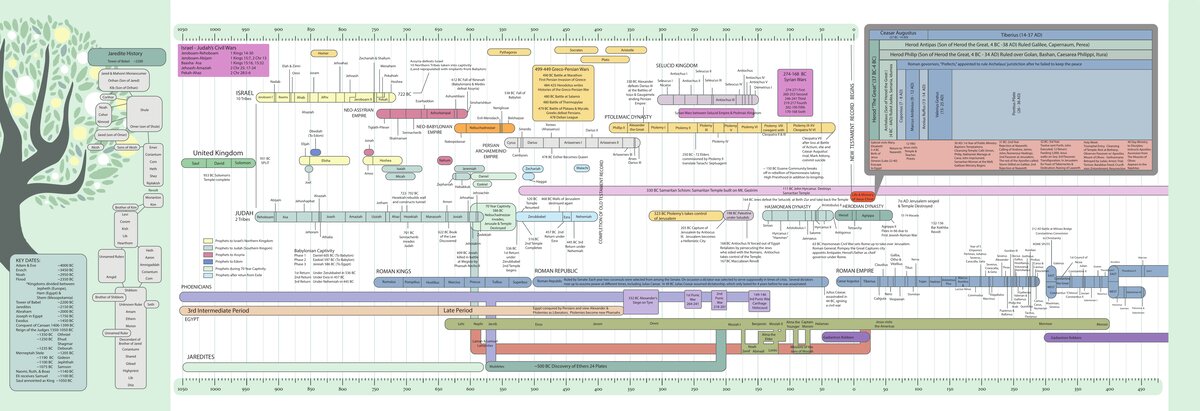
Tap to expand
Old Testament Timeline
From Creation through the Persian Period — tap the image to zoom, or download the full PDF.
Tap anywhere to close · Pinch to zoom