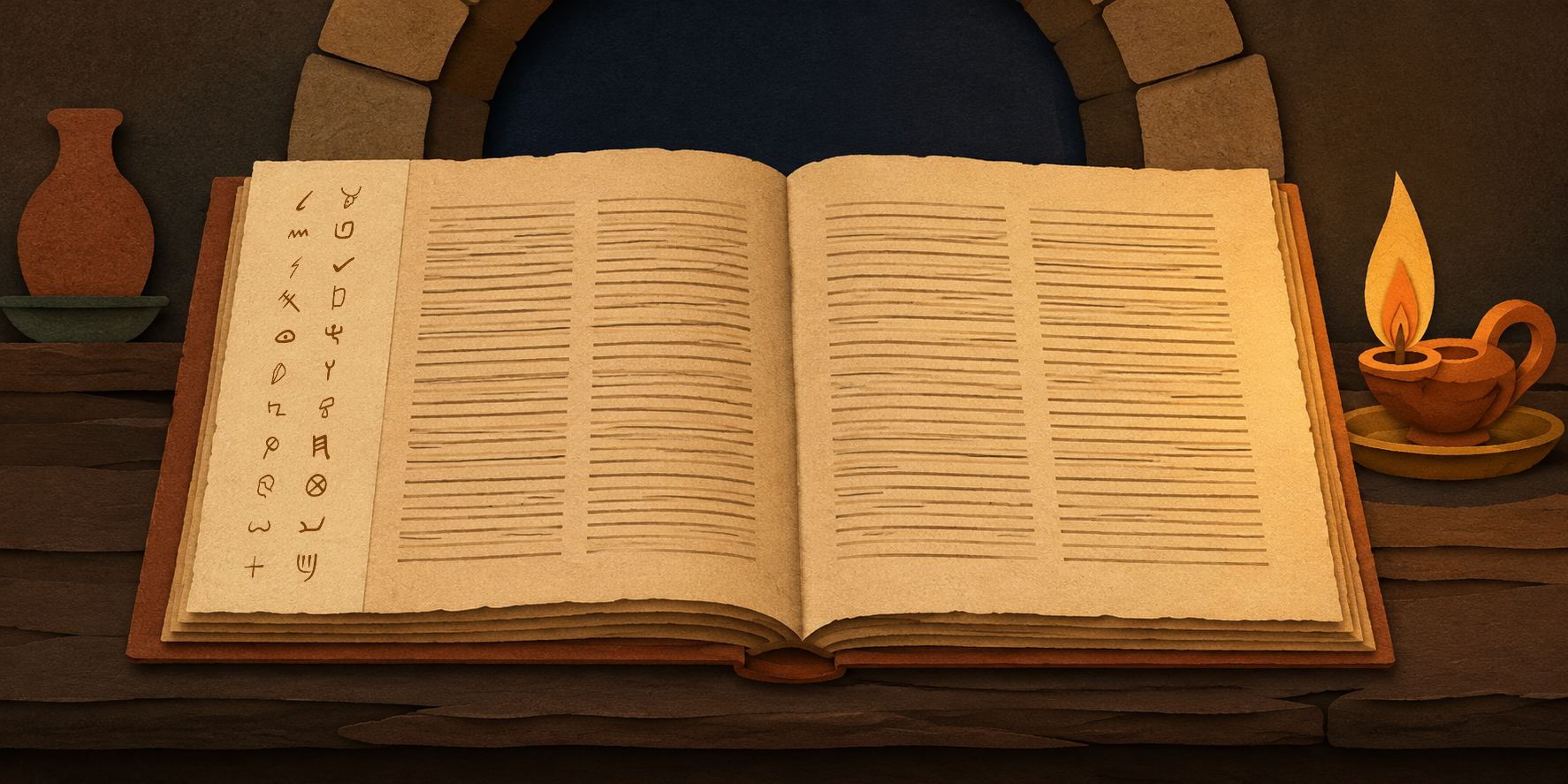
Look at the Margin First
Turn to Psalm 119 in your own Bible and look down the left-hand side.
Above verse 1 you will find ALEPH. Above verse 9, BETH. Above verse 105 — the verse you already know by heart — NUN. Keep going and you will count twenty-two of them, ending at TAU above verse 169.
Those are not a commentator’s additions. They are printed in the King James text itself, and they are the skeleton of the poem.
Psalm 119 has 176 verses arranged in twenty-two stanzas of eight. In Hebrew, every verse of a stanza begins with that stanza’s letter — eight verses starting with aleph, then eight with beth, straight through to tav. Twenty-two stanzas, because the Hebrew alphabet has twenty-two letters. A poem built this way is called an acrostic.
The longest chapter in scripture is shaped like an alphabet chart, and the translators left the letter names in so you can see it without reading a word of Hebrew.
How to Use This Map
Below are all twenty-two letters. Each card holds four things:
- The letter itself — its name, how it sounds, its numeric value, and what it means as a Hebrew word.
- What the ancient sign shows. These letters began as pictures of ordinary things: an ox, a house, a door, a hand, water, an eye. The oldest examples we have found were scratched into rock in the Sinai around the eighteenth century before Christ — though that is where the earliest surviving inscriptions turned up, not necessarily where the alphabet began. For most letters the picture and the name plainly agree; for a few the origin is genuinely debated among scholars, and the table gives the leading proposal rather than a settled fact.
- The journey of the shape — Egyptian, Proto-Sinaitic, Phoenician, Aramaic, Hebrew, Greek, Latin. Read that row left to right and you will watch an ox head become the letter A.
Where the alphabet came from. Scholars generally hold that these letters were adapted from Egyptian hieroglyphs — a picture-sign was borrowed, and instead of standing for a word it was made to stand for the first sound of that word’s name. An ox head, aleph, came to mean the sound at the start of aleph. That is why the first column of every row below is Egyptian.
And Proto-Sinaitic — the second column — is the earliest alphabet known to us. Writing itself is much older; Egypt and Mesopotamia had been writing for well over a thousand years. But those systems needed hundreds of signs. An alphabet needs about two dozen, because each sign carries a sound rather than a whole word, and every alphabet in use today — Hebrew, Greek, Latin, Cyrillic, Arabic — descends from that one idea. The alphabet Psalm 119 is built on is the ancestor of the one you are reading right now.
A caution about where it began, because it is easy to state too confidently. The Sinai inscriptions are the earliest examples anyone has found. That is not the same as the place the alphabet was invented. The letter names are Northwest Semitic — the language family of Hebrew, Phoenician and Aramaic, spoken across Canaan and the Levant — so the alphabet may well have taken shape somewhere in that world and simply not survived anywhere we have dug. Stone in a desert mining camp lasts; ink on leather in a Canaanite town does not. What we can say is where the earliest surviving evidence is. Where it started is a separate question, and an open one.
- Its eight verses of Psalm 119, behind a dropdown. Open it and you will find the Hebrew with the stanza’s opening word marked in orange, the King James translation, and a link straight into the lexicon entry for that word.
A note on the opening words. An acrostic constrains the first letter of a line — it does not require the first word to mean what the letter’s name means. So this is not a puzzle where each stanza should “match” its letter. Where an opening word does reach for the letter’s own vocabulary it is worth noticing, and where it does not, the stanza is simply doing what the poem asked of it.
Two are worth watching for as you explore — and the criterion is a narrow one: the stanza’s opening word is itself the letter’s own word. That is a lexical match, one lens among several, and it is not the only way a stanza and its letter meet. Yod (verse 73) opens “Thy hands have made me” — and yod is a hand; the word is the letter’s own word. Gimel (verse 17) opens “Deal bountifully with thy servant”, from the root that also gives “camel.” And in the Lamed stanza, verses 94 and 95 open with the letter lamed standing alone as a preposition — the letter is the word.
what the ancient sign shows
how the letter is used in Hebrew
First letter of the Hebrew alphabet, numeric value 1. The ancient form depicts an ox head. Not a vowel — it carries a glottal stop, the catch in the throat before a vowel.
The sign showsan ox head
How it is usedAs a verb prefix, marks first person singular in the imperfect — I will… . One of the four letters (א ה ו י) that can stand for a vowel instead of a consonant.
𓃾ox headEgyptianaProto-Sinaitic𐤀Phoenician𐡀AramaicאHebrewΑGreekAaLatin
Read Psalm 119:1–8 — all eight verses
אַשְׁרֵ֥י תְמִֽימֵי דָ֑רֶךְ הַֽ֝הֹלְכִ֗ים בְּתוֹרַ֥ת יְהוָֽה
Blessed are the undefiled in the way, who walk in the law of the LORD.
אַ֭שְׁרֵי נֹצְרֵ֥י עֵדֹתָ֗יו בְּכָל לֵ֥ב יִדְרְשֽׁוּהוּ
Blessed are they that keep his testimonies, and that seek him with the whole heart.
אַ֭ף לֹֽא פָעֲל֣וּ עַוְלָ֑ה בִּדְרָכָ֥יו הָלָֽכוּ
They also do no iniquity: they walk in his ways.
אַ֭תָּה צִוִּ֥יתָה פִקֻּדֶ֗יךָ לִשְׁמֹ֥ר מְאֹֽד
Thou hast commanded us to keep thy precepts diligently.
אַ֭חֲלַי יִכֹּ֥נוּ דְרָכָ֗י לִשְׁמֹ֥ר חֻקֶּֽיךָ
O that my ways were directed to keep thy statutes!
אָ֥ז לֹא אֵב֑וֹשׁ בְּ֝הַבִּיטִ֗י אֶל כָּל מִצְוֺתֶֽיךָ
Then shall I not be ashamed, when I have respect unto all thy commandments.
א֭וֹדְךָ בְּיֹ֣שֶׁר לֵבָ֑ב בְּ֝לָמְדִ֗י מִשְׁפְּטֵ֥י צִדְקֶֽךָ
I will praise thee with uprightness of heart, when I shall have learned thy righteous judgments.
אֶת חֻקֶּ֥יךָ אֶשְׁמֹ֑ר אַֽל תַּעַזְבֵ֥נִי עַד מְאֹֽד
I will keep thy statutes: O forsake me not utterly.
Second letter, value 2. The name means house , and the ancient form is a floor-plan of a house or tent. Sounds b ; without the inner dot, v .
The sign showsthe floor-plan of a house or tent
How it is usedPrefixed בְּ — in, with, by, among . One of the six begadkephat letters that soften when they lose the inner dot.
𓉐house planEgyptianbProto-Sinaitic𐤁Phoenician𐡁AramaicבHebrewΒGreekBbLatin
Read Psalm 119:9–16 — all eight verses
בַּמֶּ֣ה יְזַכֶּה נַּ֭עַר אֶת אָרְח֑וֹ לִ֝שְׁמֹ֗ר כִּדְבָרֶֽךָ
Wherewithal shall a young man cleanse his way? by taking heed thereto according to thy word.
בְּכָל לִבִּ֥י דְרַשְׁתִּ֑יךָ אַל תַּ֝שְׁגֵּ֗נִי מִמִּצְוֺתֶֽיךָ
With my whole heart have I sought thee: O let me not wander from thy commandments.
בְּ֭לִבִּי צָפַ֣נְתִּי אִמְרָתֶ֑ךָ לְ֝מַ֗עַן לֹ֣א אֶֽחֱטָא לָֽךְ
Thy word have I hid in mine heart, that I might not sin against thee.
בָּר֖וּךְ אַתָּ֥ה יְהוָ֗ה לַמְּדֵ֥נִי חֻקֶּֽיךָ
Blessed art thou, O LORD: teach me thy statutes.
בִּשְׂפָתַ֥י סִפַּ֑רְתִּי כֹּ֝֗ל מִשְׁפְּטֵי פִֽיךָ
With my lips have I declared all the judgments of thy mouth.
בְּדֶ֖רֶךְ עֵדְוֺתֶ֥יךָ שַׂ֗שְׂתִּי כְּעַ֣ל כָּל הֽוֹן
I have rejoiced in the way of thy testimonies, as much as in all riches.
בְּפִקֻּדֶ֥יךָ אָשִׂ֑יחָה וְ֝אַבִּ֗יטָה אֹרְחֹתֶֽיךָ
I will meditate in thy precepts, and have respect unto thy ways.
בְּחֻקֹּתֶ֥יךָ אֶֽשְׁתַּעֲשָׁ֑ע לֹ֭א אֶשְׁכַּ֣ח דְּבָרֶֽךָ
I will delight myself in thy statutes: I will not forget thy word.
Third letter, value 3. Sounds g . The origin is contested: the name is traditionally linked to gamal , camel, while the oldest sign is read by some as a throw stick and by others as a ring stand for water jars (Egyptian W011).
The sign showsa throw stick, a camel, or a stand that holds a water jar — the three readings compete
How it is usedOne of the six begadkephat letters. No common prefix use.
𓌙 𓎼throw stick / jar standEgyptiangProto-Sinaitic𐤂Phoenician𐡂AramaicגHebrewΓGreekCc, GgLatin
Read Psalm 119:17–24 — all eight verses
גְּמֹ֖ל עַֽל עַבְדְּךָ֥ אֶֽחְיֶ֗ה וְאֶשְׁמְרָ֥ה דְבָרֶֽךָ
Deal bountifully with thy servant, that I may live, and keep thy word.
opens with (גְּמֹ֖ל) ·
H1580 גַּל עֵינַ֥י וְאַבִּ֑יטָה נִ֝פְלָא֗וֹת מִתּוֹרָתֶֽךָ
Open thou mine eyes, that I may behold wondrous things out of thy law.
גֵּ֣ר אָנֹכִ֣י בָאָ֑רֶץ אַל תַּסְתֵּ֥ר מִ֝מֶּ֗נִּי מִצְוֺתֶֽיךָ
I am a stranger in the earth: hide not thy commandments from me.
גָּרְסָ֣ה נַפְשִׁ֣י לְתַאֲבָ֑ה אֶֽל מִשְׁפָּטֶ֥יךָ בְכָל עֵֽת
My soul breaketh for the longing that it hath unto thy judgments at all times.
גָּ֭עַרְתָּ זֵדִ֣ים אֲרוּרִ֑ים הַ֝שֹּׁגִים מִמִּצְוֺתֶֽיךָ
Thou hast rebuked the proud that are cursed, which do err from thy commandments.
גַּ֣ל מֵֽ֭עָלַי חֶרְפָּ֣ה וָב֑וּז כִּ֖י עֵדֹתֶ֣יךָ נָצָֽרְתִּי
Remove from me reproach and contempt; for I have kept thy testimonies.
opens with (גַּ֣ל) ·
H1556 גַּ֤ם יָֽשְׁב֣וּ שָׂ֭רִים בִּ֣י נִדְבָּ֑רוּ עַ֝בְדְּךָ֗ יָשִׂ֥יחַ בְּחֻקֶּֽיךָ
Princes also did sit and speak against me: but thy servant did meditate in thy statutes.
opens with (גַּ֤ם) ·
H1571 גַּֽם עֵ֭דֹתֶיךָ שַׁעֲשֻׁעָ֗י אַנְשֵׁ֥י עֲצָתִֽי
Thy testimonies also are my delight and my counsellors.
opens with (גַּֽם) ·
H1571 Fourth letter, value 4. The name means door , and the ancient form draws one. Sounds d .
The sign showsa door
How it is usedOne of the six begadkephat letters. In Aramaic, prefixed דְּ marks the relative — which, of .
𓇯doorEgyptiandProto-Sinaitic𐤃Phoenician𐡃AramaicדHebrewΔGreekDdLatin
Read Psalm 119:25–32 — all eight verses
דָּֽבְקָ֣ה לֶעָפָ֣ר נַפְשִׁ֑י חַ֝יֵּ֗נִי כִּדְבָרֶֽךָ
My soul cleaveth unto the dust: quicken thou me according to thy word.
דְּרָכַ֣י סִ֭פַּרְתִּי וַֽתַּעֲנֵ֗נִי לַמְּדֵ֥נִי חֻקֶּֽיךָ
I have declared my ways, and thou heardest me: teach me thy statutes.
דֶּֽרֶךְ פִּקּוּדֶ֥יךָ הֲבִינֵ֑נִי וְ֝אָשִׂ֗יחָה בְּנִפְלְאוֹתֶֽיךָ
Make me to understand the way of thy precepts: so shall I talk of thy wondrous works.
דָּלְפָ֣ה נַ֭פְשִׁי מִתּוּגָ֑ה קַ֝יְּמֵ֗נִי כִּדְבָרֶֽךָ
My soul melteth for heaviness: strengthen thou me according unto thy word.
דֶּֽרֶךְ שֶׁ֭קֶר הָסֵ֣ר מִמֶּ֑נִּי וְֽתוֹרָתְךָ֥ חָנֵּֽנִי
Remove from me the way of lying: and grant me thy law graciously.
דֶּֽרֶךְ אֱמוּנָ֥ה בָחָ֑רְתִּי מִשְׁפָּטֶ֥יךָ שִׁוִּֽיתִי
I have chosen the way of truth: thy judgments have I laid before me.
דָּבַ֥קְתִּי בְעֵֽדְוֺתֶ֑יךָ יְ֝הוָ֗ה אַל תְּבִישֵֽׁנִי
I have stuck unto thy testimonies: O LORD, put me not to shame.
דֶּֽרֶךְ מִצְוֺתֶ֥יךָ אָר֑וּץ כִּ֖י תַרְחִ֣יב לִבִּֽי
I will run the way of thy commandments, when thou shalt enlarge my heart.
Fifth letter, value 5. The ancient form shows a figure with raised arms; the name is usually glossed behold or window . Sounds h , and is often silent at the end of a word. Prefixed to a noun, it is the definite article — the .
The sign showsa figure with raised arms; a window
How it is usedPrefixed הַ — the , the definite article. Also the question marker, turning a statement into a question. Suffixed, the common feminine ending, and the directional toward . One of the four vowel-letters.
𓀠jubilation/raised armsEgyptianhProto-Sinaitic𐤄Phoenician𐡄AramaicהHebrewΕGreekEeLatin
Read Psalm 119:33–40 — all eight verses
הוֹרֵ֣נִי יְ֭הוָה דֶּ֥רֶךְ חֻקֶּ֗יךָ וְאֶצְּרֶ֥נָּה עֵֽקֶב
Teach me, O LORD, the way of thy statutes; and I shall keep it unto the end.
הֲ֭בִינֵנִי וְאֶצְּרָ֥ה תֽוֹרָתֶ֗ךָ וְאֶשְׁמְרֶ֥נָּה בְכָל לֵֽב
Give me understanding, and I shall keep thy law; yea, I shall observe it with my whole heart.
opens with bîn (הֲ֭בִינֵנִי) ·
H995 הַ֭דְרִיכֵנִי בִּנְתִ֣יב מִצְוֺתֶ֑יךָ כִּי ב֥וֹ חָפָֽצְתִּי
Make me to go in the path of thy commandments; for therein do I delight.
הַט לִ֭בִּי אֶל עֵדְוֺתֶ֗יךָ וְאַ֣ל אֶל בָּֽצַע
Incline my heart unto thy testimonies, and not to covetousness.
הַעֲבֵ֣ר עֵ֭ינַי מֵרְא֣וֹת שָׁ֑וְא בִּדְרָכֶ֥ךָ חַיֵּֽנִי
Turn away mine eyes from beholding vanity; and quicken thou me in thy way.
הָקֵ֣ם לְ֭עַבְדְּךָ אִמְרָתֶ֑ךָ אֲ֝שֶׁ֗ר לְיִרְאָתֶֽךָ
Stablish thy word unto thy servant, who is devoted to thy fear.
הַעֲבֵ֣ר חֶ֭רְפָּתִי אֲשֶׁ֣ר יָגֹ֑רְתִּי כִּ֖י מִשְׁפָּטֶ֣יךָ טוֹבִֽים
Turn away my reproach which I fear: for thy judgments are good.
הִ֭נֵּה תָּאַ֣בְתִּי לְפִקֻּדֶ֑יךָ בְּצִדְקָתְךָ֥ חַיֵּֽנִי
Behold, I have longed after thy precepts: quicken me in thy righteousness.
Sixth letter, value 6. The name means hook or tent peg . Prefixed to a word it is the conjunction and — the commonest use of any Hebrew letter. Also marks the vowels o and u .
The sign showsa tent peg, hook or nail
How it is usedPrefixed וְ — and , the commonest prefix in the Bible. Also the vav-consecutive , which flips a verb's tense in narrative — the engine of biblical storytelling. Marks the vowels o and u .
𓍢mace/pegEgyptianwProto-Sinaitic𐤅Phoenician𐡅AramaicוHebrewΥ ϜDigammaGreekFf, Vv, Uu, WwLatin
Read Psalm 119:41–48 — all eight verses
וִֽיבֹאֻ֣נִי חֲסָדֶ֣ךָ יְהוָ֑ה תְּ֝שֽׁוּעָתְךָ֗ כְּאִמְרָתֶֽךָ
Let thy mercies come also unto me, O LORD, even thy salvation, according to thy word.
opens with bô' (וִֽיבֹאֻ֣נִי) ·
H935 וְאֶֽעֱנֶ֣ה חֹרְפִ֣י דָבָ֑ר כִּֽי בָ֝טַחְתִּי בִּדְבָרֶֽךָ
So shall I have wherewith to answer him that reproacheth me: for I trust in thy word.
וְֽאַל תַּצֵּ֬ל מִפִּ֣י דְבַר אֱמֶ֣ת עַד מְאֹ֑ד כִּ֖י לְמִשְׁפָּטֶ֣ךָ יִחָֽלְתִּי
And take not the word of truth utterly out of my mouth; for I have hoped in thy judgments.
וְאֶשְׁמְרָ֖ה תוֹרָתְךָ֥ תָמִ֗יד לְעוֹלָ֥ם וָעֶֽד
So shall I keep thy law continually for ever and ever.
וְאֶתְהַלְּכָ֥ה בָרְחָבָ֑ה כִּ֖י פִקֻּדֶ֣יךָ דָרָֽשְׁתִּי
And I will walk at liberty: for I seek thy precepts.
וַאֲדַבְּרָ֣ה בְ֭עֵדֹתֶיךָ נֶ֥גֶד מְלָכִ֗ים וְלֹ֣א אֵבֽוֹשׁ
I will speak of thy testimonies also before kings, and will not be ashamed.
וְאֶשְׁתַּֽעֲשַׁ֥ע בְּמִצְוֺתֶ֗יךָ אֲשֶׁ֣ר אָהָֽבְתִּי
And I will delight myself in thy commandments, which I have loved.
וְאֶשָּֽׂא כַפַּ֗י אֶֽל מִ֭צְוֺתֶיךָ אֲשֶׁ֥ר אָהָ֗בְתִּי וְאָשִׂ֥יחָה בְחֻקֶּֽיךָ
My hands also will I lift up unto thy commandments, which I have loved; and I will meditate in thy statutes.
Seventh letter, value 7. The name is linked to weapon ; the ancient form is a mattock or blade. Sounds z .
The sign showsa mattock or plow as readily as a sword — a tool of planting and nourishment, not only a weapon
How it is usedNo common prefix or grammatical function — it appears only as a root letter.
𓍁weaponEgyptianzProto-Sinaitic𐤆Phoenician𐡆AramaicזHebrewΖGreekZzLatin
Read Psalm 119:49–56 — all eight verses
זְכֹר דָּבָ֥ר לְעַבְדֶּ֑ךָ עַ֝֗ל אֲשֶׁ֣ר יִֽחַלְתָּֽנִי
Remember the word unto thy servant, upon which thou hast caused me to hope.
זֹ֣את נֶחָמָתִ֣י בְעָנְיִ֑י כִּ֖י אִמְרָתְךָ֣ חִיָּֽתְנִי
This is my comfort in my affliction: for thy word hath quickened me.
זֵ֭דִים הֱלִיצֻ֣נִי עַד מְאֹ֑ד מִ֝תּֽוֹרָתְךָ֗ לֹ֣א נָטִֽיתִי
The proud have had me greatly in derision: yet have I not declined from thy law.
זָ֘כַ֤רְתִּי מִשְׁפָּטֶ֖יךָ מֵעוֹלָ֥ם יְהוָ֗ה וָֽאֶתְנֶחָֽם
I remembered thy judgments of old, O LORD; and have comforted myself.
זַלְעָפָ֣ה אֲ֭חָזַתְנִי מֵרְשָׁעִ֑ים עֹ֝זְבֵ֗י תּוֹרָתֶֽךָ
Horror hath taken hold upon me because of the wicked that forsake thy law.
זְ֭מִרוֹת הָֽיוּ לִ֥י חֻקֶּ֗יךָ בְּבֵ֣ית מְגוּרָֽי
Thy statutes have been my songs in the house of my pilgrimage.
זָ֘כַ֤רְתִּי בַלַּ֣יְלָה שִׁמְךָ֣ יְהוָ֑ה וָֽ֝אֶשְׁמְרָ֗ה תּוֹרָתֶֽךָ
I have remembered thy name, O LORD, in the night, and have kept thy law.
זֹ֥את הָֽיְתָה לִּ֑י כִּ֖י פִקֻּדֶ֣יךָ נָצָֽרְתִּי
This I had, because I kept thy precepts.
Eighth letter, value 8. The ancient form is a courtyard wall or fence. A voiceless pharyngeal fricative — the ch of Bach, made deep in the throat.
The sign showsa courtyard wall, fence or ladder
How it is usedNo common prefix or grammatical function — it appears only as a root letter.
𓉗courtyard/fenceEgyptianxProto-Sinaitic𐤇Phoenician𐡇AramaicחHebrewΗGreekHhLatin
Read Psalm 119:57–64 — all eight verses
חֶלְקִ֖י יְהוָ֥ה אָמַ֗רְתִּי לִשְׁמֹ֥ר דְּבָרֶֽיךָ
Thou art my portion, O LORD: I have said that I would keep thy words.
חִלִּ֣יתִי פָנֶ֣יךָ בְכָל לֵ֑ב חָ֝נֵּ֗נִי כְּאִמְרָתֶֽךָ
I intreated thy favour with my whole heart: be merciful unto me according to thy word.
חִשַּׁ֥בְתִּי דְרָכָ֑י וָאָשִׁ֥יבָה רַ֝גְלַ֗י אֶל עֵדֹתֶֽיךָ
I thought on my ways, and turned my feet unto thy testimonies.
חַ֭שְׁתִּי וְלֹ֣א הִתְמַהְמָ֑הְתִּי לִ֝שְׁמֹ֗ר מִצְוֺתֶֽיךָ
I made haste, and delayed not to keep thy commandments.
חֶבְלֵ֣י רְשָׁעִ֣ים עִוְּדֻ֑נִי תּֽ֝וֹרָתְךָ֗ לֹ֣א שָׁכָֽחְתִּי
The bands of the wicked have robbed me: but I have not forgotten thy law.
חֲצֽוֹת לַ֗יְלָה אָ֭קוּם לְהוֹד֣וֹת לָ֑ךְ עַ֝֗ל מִשְׁפְּטֵ֥י צִדְקֶֽךָ
At midnight I will rise to give thanks unto thee because of thy righteous judgments.
חָבֵ֣ר אָ֭נִי לְכָל אֲשֶׁ֣ר יְרֵא֑וּךָ וּ֝לְשֹׁמְרֵ֗י פִּקּוּדֶֽיךָ
I am a companion of all them that fear thee, and of them that keep thy precepts.
חַסְדְּךָ֣ יְ֭הוָה מָלְאָ֥ה הָאָ֗רֶץ חֻקֶּ֥יךָ לַמְּדֵֽנִי
The earth, O LORD, is full of thy mercy: teach me thy statutes.
Ninth letter, value 9. The ancient form is a basket or coil. Sounds t , emphatic in older Hebrew.
The sign showsa basket, coil or cup
How it is usedNo common prefix or grammatical function — it appears only as a root letter.
𓈎basket/wheelEgyptianjProto-Sinaitic𐤈Phoenician𐡈AramaicטHebrewΘGreekTt, ThLatin
Read Psalm 119:65–72 — all eight verses
ט֭וֹב עָשִׂ֣יתָ עִֽם עַבְדְּךָ֑ יְ֝הוָ֗ה כִּדְבָרֶֽךָ
Thou hast dealt well with thy servant, O LORD, according unto thy word.
ט֤וּב טַ֣עַם וָדַ֣עַת לַמְּדֵ֑נִי כִּ֖י בְמִצְוֺתֶ֣יךָ הֶאֱמָֽנְתִּי
Teach me good judgment and knowledge: for I have believed thy commandments.
טֶ֣רֶם אֶ֭עֱנֶה אֲנִ֣י שֹׁגֵ֑ג וְ֝עַתָּ֗ה אִמְרָתְךָ֥ שָׁמָֽרְתִּי
Before I was afflicted I went astray: but now have I kept thy word.
טוֹב אַתָּ֥ה וּמֵטִ֗יב לַמְּדֵ֥נִי חֻקֶּֽיךָ
Thou art good, and doest good; teach me thy statutes.
טָפְל֬וּ עָלַ֣י שֶׁ֣קֶר זֵדִ֑ים אֲ֝נִ֗י בְּכָל לֵ֤ב אֱצֹּ֬ר פִּקּוּדֶֽיךָ
The proud have forged a lie against me: but I will keep thy precepts with my whole heart.
טָפַ֣שׁ כַּחֵ֣לֶב לִבָּ֑ם אֲ֝נִ֗י תּוֹרָתְךָ֥ שִֽׁעֲשָֽׁעְתִּי
Their heart is as fat as grease; but I delight in thy law.
טֽוֹב לִ֥י כִֽי עֻנֵּ֑יתִי לְ֝מַ֗עַן אֶלְמַ֥ד חֻקֶּֽיךָ
It is good for me that I have been afflicted; that I might learn thy statutes.
טֽוֹב לִ֥י תֽוֹרַת פִּ֑יךָ מֵ֝אַלְפֵ֗י זָהָ֥ב וָכָֽסֶף
The law of thy mouth is better unto me than thousands of gold and silver.
Tenth letter, value 10. The name means hand or arm . The smallest letter in the alphabet. Sounds y , and marks the vowel i .
The sign showsa hand or arm
How it is usedPrefixed, marks third person masculine in the imperfect — he will… . Suffixed ִי — my . Also forms gentilic adjectives (Israel → Israeli). One of the four vowel-letters.
𓂝arm/handEgyptianyProto-Sinaitic𐤉Phoenician𐡉AramaicיHebrewΙGreekIi, Yy, JjLatin
Read Psalm 119:73–80 — all eight verses
יָדֶ֣יךָ עָ֭שׂוּנִי וַֽיְכוֹנְנ֑וּנִי הֲ֝בִינֵ֗נִי וְאֶלְמְדָ֥ה מִצְוֺתֶֽיךָ
Thy hands have made me and fashioned me: give me understanding, that I may learn thy commandments.
יְ֭רֵאֶיךָ יִרְא֣וּנִי וְיִשְׂמָ֑חוּ כִּ֖י לִדְבָרְךָ֣ יִחָֽלְתִּי
They that fear thee will be glad when they see me; because I have hoped in thy word.
יָדַ֣עְתִּי יְ֭הוָה כִּי צֶ֣דֶק מִשְׁפָּטֶ֑יךָ וֶ֝אֱמוּנָ֗ה עִנִּיתָֽנִי
I know, O LORD, that thy judgments are right, and that thou in faithfulness hast afflicted me.
יְהִי נָ֣א חַסְדְּךָ֣ לְנַחֲמֵ֑נִי כְּאִמְרָתְךָ֥ לְעַבְדֶּֽךָ
Let, I pray thee, thy merciful kindness be for my comfort, according to thy word unto thy servant.
יְבֹא֣וּנִי רַחֲמֶ֣יךָ וְאֶֽחְיֶ֑ה כִּי תֽ֝וֹרָתְךָ֗ שַֽׁעֲשֻׁעָֽי
Let thy tender mercies come unto me, that I may live: for thy law is my delight.
opens with bô' (יְבֹא֣וּנִי) ·
H935 יֵבֹ֣שׁוּ זֵ֭דִים כִּי שֶׁ֣קֶר עִוְּת֑וּנִי אֲ֝נִ֗י אָשִׂ֥יחַ בְּפִקּוּדֶֽיךָ
Let the proud be ashamed; for they dealt perversely with me without a cause: but I will meditate in thy precepts.
יָשׁ֣וּבוּ לִ֣י יְרֵאֶ֑יךָ וידעו עֵדֹתֶֽיךָ
Let those that fear thee turn unto me, and those that have known thy testimonies.
יְהִֽי לִבִּ֣י תָמִ֣ים בְּחֻקֶּ֑יךָ לְ֝מַ֗עַן לֹ֣א אֵבֽוֹשׁ
Let my heart be sound in thy statutes; that I be not ashamed.
Eleventh letter, value 20; final form ך , value 500. The name means palm of the hand . Sounds k ; without the inner dot, kh .
The sign showsan open palm
How it is usedPrefixed כְּ — like, as , the particle of comparison. Suffixed ךָ — your . One of the six begadkephat letters.
𓂧open palmEgyptiankProto-Sinaitic𐤊Phoenician𐡊AramaicכHebrewΚGreekKkLatin
Read Psalm 119:81–88 — all eight verses
כָּלְתָ֣ה לִתְשׁוּעָתְךָ֣ נַפְשִׁ֑י לִדְבָרְךָ֥ יִחָֽלְתִּי
My soul fainteth for thy salvation: but I hope in thy word.
כָּל֣וּ עֵ֭ינַי לְאִמְרָתֶ֑ךָ לֵ֝אמֹ֗ר מָתַ֥י תְּֽנַחֲמֵֽנִי
Mine eyes fail for thy word, saying, When wilt thou comfort me?
כִּֽי הָ֭יִיתִי כְּנֹ֣אד בְּקִיט֑וֹר חֻ֝קֶּ֗יךָ לֹ֣א שָׁכָֽחְתִּי
For I am become like a bottle in the smoke; yet do I not forget thy statutes.
כַּמָּ֥ה יְמֵֽי עַבְדֶּ֑ךָ מָתַ֬י תַּעֲשֶׂ֖ה בְרֹדְפַ֣י מִשְׁפָּֽט
How many are the days of thy servant? when wilt thou execute judgment on them that persecute me?
כָּֽרוּ לִ֣י זֵדִ֣ים שִׁיח֑וֹת אֲ֝שֶׁ֗ר לֹ֣א כְתוֹרָתֶֽךָ
The proud have digged pits for me, which are not after thy law.
כָּל מִצְוֺתֶ֥יךָ אֱמוּנָ֑ה שֶׁ֖קֶר רְדָפ֣וּנִי עָזְרֵֽנִי
All thy commandments are faithful: they persecute me wrongfully; help thou me.
כִּ֭מְעַט כִּלּ֣וּנִי בָאָ֑רֶץ וַ֝אֲנִ֗י לֹא עָזַ֥בְתִּי פִקֻּודֶֽיךָ
They had almost consumed me upon earth; but I forsook not thy precepts.
כְּחַסְדְּךָ֥ חַיֵּ֑נִי וְ֝אֶשְׁמְרָ֗ה עֵד֥וּת פִּֽיךָ
Quicken me after thy lovingkindness; so shall I keep the testimony of thy mouth.
Twelfth letter, value 30. The name is a shepherd's staff or goad, and the root l-m-d gives both to learn and to teach . The only letter that rises above the line.
The sign showsa shepherd's staff or goad
How it is usedPrefixed לְ — to, for, belonging to . Marks the indirect object, and forms the infinitive — to write .
𓋴shepherd crookEgyptianlProto-Sinaitic𐤋Phoenician𐡋AramaicלHebrewΛGreekLlLatin
Read Psalm 119:89–96 — all eight verses
לְעוֹלָ֥ם יְהוָ֑ה דְּ֝בָרְךָ֗ נִצָּ֥ב בַּשָּׁמָֽיִם
For ever, O LORD, thy word is settled in heaven.
לְדֹ֣ר וָ֭דֹר אֱמֽוּנָתֶ֑ךָ כּוֹנַ֥נְתָּ אֶ֝֗רֶץ וַֽתַּעֲמֹֽד
Thy faithfulness is unto all generations: thou hast established the earth, and it abideth.
לְֽ֭מִשְׁפָּטֶיךָ עָמְד֣וּ הַיּ֑וֹם כִּ֖י הַכֹּ֣ל עֲבָדֶֽיךָ
They continue this day according to thine ordinances: for all are thy servants.
לוּלֵ֣י ת֭וֹרָתְךָ שַׁעֲשֻׁעָ֑י אָ֝֗ז אָבַ֥דְתִּי בְעָנְיִֽי
Unless thy law had been my delights, I should then have perished in mine affliction.
לְ֭עוֹלָם לֹא אֶשְׁכַּ֣ח פִּקּוּדֶ֑יךָ כִּ֥י בָ֝֗ם חִיִּיתָֽנִי
I will never forget thy precepts: for with them thou hast quickened me.
לְֽךָ אֲ֭נִי הוֹשִׁיעֵ֑נִי כִּ֖י פִקּוּדֶ֣יךָ דָרָֽשְׁתִּי
I am thine, save me; for I have sought thy precepts.
opens with (לְֽךָ) · prefix particle — no separate lexicon entry
לִ֤י קִוּ֣וּ רְשָׁעִ֣ים לְאַבְּדֵ֑נִי עֵ֝דֹתֶ֗יךָ אֶתְבּוֹנָֽן
The wicked have waited for me to destroy me: but I will consider thy testimonies.
opens with (לִ֤י) · prefix particle — no separate lexicon entry
לְֽכָל תִּ֭כְלָה רָאִ֣יתִי קֵ֑ץ רְחָבָ֖ה מִצְוָתְךָ֣ מְאֹֽד
I have seen an end of all perfection: but thy commandment is exceeding broad.
Thirteenth letter, value 40; final form ם , value 600. The name means water , and the ancient form is a wave. Sounds m .
The sign showswater — a wave
How it is usedPrefixed מִ — from, out of . Also turns verbs into nouns : a root meaning to be holy gives miqdash , sanctuary — nouns of place and instrument. Suffixed ִים — the masculine plural.
𓈖waterEgyptianmProto-Sinaitic𐤌Phoenician𐡌AramaicמHebrewΜGreekMmLatin
Read Psalm 119:97–104 — all eight verses
מָֽה אָהַ֥בְתִּי תוֹרָתֶ֑ךָ כָּל הַ֝יּ֗וֹם הִ֣יא שִׂיחָתִֽי
O how love I thy law! it is my meditation all the day.
מֵ֭אֹ֣יְבַי תְּחַכְּמֵ֣נִי מִצְוֺתֶ֑ךָ כִּ֖י לְעוֹלָ֣ם הִיא לִֽי
Thou through thy commandments hast made me wiser than mine enemies: for they are ever with me.
מִכָּל מְלַמְּדַ֥י הִשְׂכַּ֑לְתִּי כִּ֥י עֵ֝דְוֺתֶ֗יךָ שִׂ֣יחָה לִֽֿי
I have more understanding than all my teachers: for thy testimonies are my meditation.
מִזְּקֵנִ֥ים אֶתְבּוֹנָ֑ן כִּ֖י פִקּוּדֶ֣יךָ נָצָֽרְתִּי
I understand more than the ancients, because I keep thy precepts.
מִכָּל אֹ֣רַח רָ֭ע כָּלִ֣אתִי רַגְלָ֑י לְ֝מַ֗עַן אֶשְׁמֹ֥ר דְּבָרֶֽךָ
I have refrained my feet from every evil way, that I might keep thy word.
מִמִּשְׁפָּטֶ֥יךָ לֹא סָ֑רְתִּי כִּֽי אַ֝תָּ֗ה הוֹרֵתָֽנִי
I have not departed from thy judgments: for thou hast taught me.
מַה נִּמְלְצ֣וּ לְ֭חִכִּי אִמְרָתֶ֗ךָ מִדְּבַ֥שׁ לְפִֽי
How sweet are thy words unto my taste! yea, sweeter than honey to my mouth!
מִפִּקּוּדֶ֥יךָ אֶתְבּוֹנָ֑ן עַל כֵּ֝֗ן שָׂנֵ֤אתִי כָּל אֹ֬רַח שָֽׁקֶר
Through thy precepts I get understanding: therefore I hate every false way.
Fourteenth letter, value 50; final form ן , value 700. The name means fish in Aramaic; the ancient form is a sprout or serpent. Sounds n .
The sign showsa sprout or seed; a serpent or fish
How it is usedPrefixed, marks first person plural in the imperfect — we will… . Also marks the niphal , the passive and reflexive verb pattern.
𓆓snake/fishEgyptiannProto-Sinaitic𐤍Phoenician𐡍AramaicנHebrewΝGreekNnLatin
Read Psalm 119:105–112 — all eight verses
נֵר לְרַגְלִ֥י דְבָרֶ֑ךָ וְ֝א֗וֹר לִנְתִיבָתִֽי
Thy word is a lamp unto my feet, and a light unto my path.
נִשְׁבַּ֥עְתִּי וָאֲקַיֵּ֑מָה לִ֝שְׁמֹ֗ר מִשְׁפְּטֵ֥י צִדְקֶֽךָ
I have sworn, and I will perform it, that I will keep thy righteous judgments.
נַעֲנֵ֥יתִי עַד מְאֹ֑ד יְ֝הוָ֗ה חַיֵּ֥נִי כִדְבָרֶֽךָ
I am afflicted very much: quicken me, O LORD, according unto thy word.
נִדְב֣וֹת פִּ֭י רְצֵה נָ֣א יְהוָ֑ה וּֽמִשְׁפָּטֶ֥יךָ לַמְּדֵֽנִי
Accept, I beseech thee, the freewill offerings of my mouth, O LORD, and teach me thy judgments.
נַפְשִׁ֣י בְכַפִּ֣י תָמִ֑יד וְ֝תֽוֹרָתְךָ֗ לֹ֣א שָׁכָֽחְתִּי
My soul is continually in my hand: yet do I not forget thy law.
נָתְנ֬וּ רְשָׁעִ֣ים פַּ֣ח לִ֑י וּ֝מִפִּקּוּדֶ֗יךָ לֹ֣א תָעִֽיתִי
The wicked have laid a snare for me: yet I erred not from thy precepts.
נָחַ֣לְתִּי עֵדְוֺתֶ֣יךָ לְעוֹלָ֑ם כִּֽי שְׂשׂ֖וֹן לִבִּ֣י הֵֽמָּה
Thy testimonies have I taken as an heritage for ever: for they are the rejoicing of my heart.
נָטִ֣יתִי לִ֭בִּי לַעֲשׂ֥וֹת חֻקֶּ֗יךָ לְעוֹלָ֥ם עֵֽקֶב
I have inclined mine heart to perform thy statutes alway, even unto the end.
Fifteenth letter, value 60. The name is linked to support ; the ancient form is a pillar. Sounds s .
The sign showsa pillar or support
How it is usedNo common prefix or grammatical function — it appears only as a root letter.
𓊽djed pillar/supportEgyptiansProto-Sinaitic𐤎Phoenician𐡎AramaicסHebrewΞGreekSs, CcLatin
Read Psalm 119:113–120 — all eight verses
סֵעֲפִ֥ים שָׂנֵ֑אתִי וְֽתוֹרָתְךָ֥ אָהָֽבְתִּי
I hate vain thoughts: but thy law do I love.
סִתְרִ֣י וּמָגִנִּ֣י אָ֑תָּה לִדְבָרְךָ֥ יִחָֽלְתִּי
Thou art my hiding place and my shield: I hope in thy word.
סֽוּרוּ מִמֶּ֥נִּי מְרֵעִ֑ים וְ֝אֶצְּרָ֗ה מִצְוֺ֥ת אֱלֹהָֽי
Depart from me, ye evildoers: for I will keep the commandments of my God.
סָמְכֵ֣נִי כְאִמְרָתְךָ֣ וְאֶֽחְיֶ֑ה וְאַל תְּ֝בִישֵׁ֗נִי מִשִּׂבְרִֽי
Uphold me according unto thy word, that I may live: and let me not be ashamed of my hope.
סְעָדֵ֥נִי וְאִוָּשֵׁ֑עָה וְאֶשְׁעָ֖ה בְחֻקֶּ֣יךָ תָמִֽיד
Hold thou me up, and I shall be safe: and I will have respect unto thy statutes continually.
סָ֭לִיתָ כָּל שׁוֹגִ֣ים מֵחֻקֶּ֑יךָ כִּי שֶׁ֝֗קֶר תַּרְמִיתָֽם
Thou hast trodden down all them that err from thy statutes: for their deceit is falsehood.
סִגִ֗ים הִשְׁבַּ֥תָּ כָל רִשְׁעֵי אָ֑רֶץ לָ֝כֵ֗ן אָהַ֥בְתִּי עֵדֹתֶֽיךָ
Thou puttest away all the wicked of the earth like dross: therefore I love thy testimonies.
סָמַ֣ר מִפַּחְדְּךָ֣ בְשָׂרִ֑י וּֽמִמִּשְׁפָּטֶ֥יךָ יָרֵֽאתִי
My flesh trembleth for fear of thee; and I am afraid of thy judgments.
Sixteenth letter, value 70. The name means eye . A voiced pharyngeal — silent to most English speakers, though it shapes the vowel around it.
The sign showsan eye; a well or spring
How it is usedNo common prefix or grammatical function — it appears only as a root letter.
𓁹eyeEgyptian[Proto-Sinaitic𐤏Phoenician𐡏AramaicעHebrewΟGreekOoLatin
Read Psalm 119:121–128 — all eight verses
עָ֭שִׂיתִי מִשְׁפָּ֣ט וָצֶ֑דֶק בַּל תַּ֝נִּיחֵ֗נִי לְעֹֽשְׁקָֽי
I have done judgment and justice: leave me not to mine oppressors.
עֲרֹ֣ב עַבְדְּךָ֣ לְט֑וֹב אַֽל יַעַשְׁקֻ֥נִי זֵדִֽים
Be surety for thy servant for good: let not the proud oppress me.
עֵ֭ינַי כָּל֣וּ לִֽישׁוּעָתֶ֑ךָ וּלְאִמְרַ֥ת צִדְקֶֽךָ
Mine eyes fail for thy salvation, and for the word of thy righteousness.
עֲשֵׂ֖ה עִם עַבְדְּךָ֥ כְחַסְדֶּ֗ךָ וְחֻקֶּ֥יךָ לַמְּדֵֽנִי
Deal with thy servant according unto thy mercy, and teach me thy statutes.
עַבְדְּךָ אָ֥נִי הֲבִינֵ֑נִי וְ֝אֵדְעָ֗ה עֵדֹתֶֽיךָ
I am thy servant; give me understanding, that I may know thy testimonies.
עֵ֭ת לַעֲשׂ֣וֹת לַיהוָ֑ה הֵ֝פֵ֗רוּ תּוֹרָתֶֽךָ
It is time for thee, LORD, to work: for they have made void thy law.
עַל כֵּ֭ן אָהַ֣בְתִּי מִצְוֺתֶ֑יךָ מִזָּהָ֥ב וּמִפָּֽז
Therefore I love thy commandments above gold; yea, above fine gold.
עַל כֵּ֤ן כָּל פִּקּ֣וּדֵי כֹ֣ל יִשָּׁ֑רְתִּי כָּל אֹ֖רַח שֶׁ֣קֶר שָׂנֵֽאתִי
Therefore I esteem all thy precepts concerning all things to be right; and I hate every false way.
Seventeenth letter, value 80; final form ף , value 800. The name means mouth . Sounds p ; without the inner dot, f .
The sign showsa mouth; a corner
How it is usedOne of the six begadkephat letters. No common prefix use.
𓂋mouthEgyptianpProto-Sinaitic𐤐Phoenician𐡐AramaicפHebrewΠGreekPp, Ff, PhLatin
Read Psalm 119:129–136 — all eight verses
פְּלָא֥וֹת עֵדְוֺתֶ֑יךָ עַל כֵּ֝֗ן נְצָרָ֥תַם נַפְשִֽׁי
Thy testimonies are wonderful: therefore doth my soul keep them.
פֵּ֖תַח דְּבָרֶ֥יךָ יָאִ֗יר מֵבִ֥ין פְּתָיִֽים
The entrance of thy words giveth light; it giveth understanding unto the simple.
פִּֽי פָ֭עַרְתִּי וָאֶשְׁאָ֑פָה כִּ֖י לְמִצְוֺתֶ֣יךָ יָאָֽבְתִּי
I opened my mouth, and panted: for I longed for thy commandments.
פְּנֵה אֵלַ֥י וְחָנֵּ֑נִי כְּ֝מִשְׁפָּ֗ט לְאֹהֲבֵ֥י שְׁמֶֽךָ
Look thou upon me, and be merciful unto me, as thou usest to do unto those that love thy name.
פְּ֭עָמַי הָכֵ֣ן בְּאִמְרָתֶ֑ךָ וְֽאַל תַּשְׁלֶט בִּ֥י כָל אָֽוֶן
Order my steps in thy word: and let not any iniquity have dominion over me.
פְּ֭דֵנִי מֵעֹ֣שֶׁק אָדָ֑ם וְ֝אֶשְׁמְרָ֗ה פִּקּוּדֶֽיךָ
Deliver me from the oppression of man: so will I keep thy precepts.
פָּ֭נֶיךָ הָאֵ֣ר בְּעַבְדֶּ֑ךָ וְ֝לַמְּדֵ֗נִי אֶת חֻקֶּֽיךָ
Make thy face to shine upon thy servant; and teach me thy statutes.
פַּלְגֵי מַ֭יִם יָרְד֣וּ עֵינָ֑י עַ֝֗ל לֹא שָׁמְר֥וּ תוֹרָתֶֽךָ
Rivers of waters run down mine eyes, because they keep not thy law.
Eighteenth letter, value 90; final form ץ , value 900. The ancient form is a harpoon or plant stalk. An emphatic s , pronounced ts .
The sign showsa harpoon, hook or plant stalk
How it is usedNo common prefix or grammatical function — it appears only as a root letter.
𓇯papyrus/plantEgyptiancProto-Sinaitic𐤑Phoenician𐡑AramaicצHebrewϺSanGreekTzLatin
Read Psalm 119:137–144 — all eight verses
צַדִּ֣יק אַתָּ֣ה יְהוָ֑ה וְ֝יָשָׁ֗ר מִשְׁפָּטֶֽיךָ
Righteous art thou, O LORD, and upright are thy judgments.
צִ֭וִּיתָ צֶ֣דֶק עֵדֹתֶ֑יךָ וֶֽאֱמוּנָ֥ה מְאֹֽד
Thy testimonies that thou hast commanded are righteous and very faithful.
צִמְּתַ֥תְנִי קִנְאָתִ֑י כִּֽי שָׁכְח֖וּ דְבָרֶ֣יךָ צָרָֽי
My zeal hath consumed me, because mine enemies have forgotten thy words.
צְרוּפָ֖ה אִמְרָתְךָ֥ מְאֹ֗ד וְֽעַבְדְּךָ֥ אֲהֵבָֽהּ
Thy word is very pure: therefore thy servant loveth it.
צָעִ֣יר אָנֹכִ֣י וְנִבְזֶ֑ה פִּ֝קֻּדֶ֗יךָ לֹ֣א שָׁכָֽחְתִּי
I am small and despised: yet do not I forget thy precepts.
צִדְקָתְךָ֣ צֶ֣דֶק לְעוֹלָ֑ם וְֽתוֹרָתְךָ֥ אֱמֶֽת
Thy righteousness is an everlasting righteousness, and thy law is the truth.
צַר וּמָצ֥וֹק מְצָא֑וּנִי מִ֝צְוֺתֶ֗יךָ שַׁעֲשֻׁעָֽי
Trouble and anguish have taken hold on me: yet thy commandments are my delights.
צֶ֖דֶק עֵדְוֺתֶ֥יךָ לְעוֹלָ֗ם הֲבִינֵ֥נִי וְאֶחְיֶֽה
The righteousness of thy testimonies is everlasting: give me understanding, and I shall live.
Nineteenth letter, value 100. The name is linked to the eye of a needle, or to the back of the head. A k made further back in the throat than kaph.
The sign showsthe eye of a needle; a cord or knot — this one is debated; scholars also propose the back of the head
How it is usedNo common prefix or grammatical function — it appears only as a root letter.
𓏤cord/knotEgyptianqProto-Sinaitic𐤒Phoenician𐡒AramaicקHebrewϘQoppaGreekQqLatin
Read Psalm 119:145–152 — all eight verses
קָרָ֣אתִי בְכָל לֵ֭ב עֲנֵ֥נִי יְהוָ֗ה חֻקֶּ֥יךָ אֶצֹּֽרָה
I cried with my whole heart; hear me, O LORD: I will keep thy statutes.
קְרָאתִ֥יךָ הוֹשִׁיעֵ֑נִי וְ֝אֶשְׁמְרָ֗ה עֵדֹתֶֽיךָ
I cried unto thee; save me, and I shall keep thy testimonies.
קִדַּ֣מְתִּי בַ֭נֶּשֶׁף וָאֲשַׁוֵּ֑עָה לדבריך יִחָֽלְתִּי
I prevented the dawning of the morning, and cried: I hoped in thy word.
קִדְּמ֣וּ עֵ֭ינַי אַשְׁמֻר֑וֹת לָ֝שִׂ֗יחַ בְּאִמְרָתֶֽךָ
Mine eyes prevent the night watches, that I might meditate in thy word.
ק֭וֹלִי שִׁמְעָ֣ה כְחַסְדֶּ֑ךָ יְ֝הוָ֗ה כְּֽמִשְׁפָּטֶ֥ךָ חַיֵּֽנִי
Hear my voice according unto thy lovingkindness: O LORD, quicken me according to thy judgment.
קָ֭רְבוּ רֹדְפֵ֣י זִמָּ֑ה מִתּוֹרָתְךָ֥ רָחָֽקוּ
They draw nigh that follow after mischief: they are far from thy law.
קָר֣וֹב אַתָּ֣ה יְהוָ֑ה וְֽכָל מִצְוֺתֶ֥יךָ אֱמֶֽת
Thou art near, O LORD; and all thy commandments are truth.
קֶ֣דֶם יָ֭דַעְתִּי מֵעֵדֹתֶ֑יךָ כִּ֖י לְעוֹלָ֣ם יְסַדְתָּֽם
Concerning thy testimonies, I have known of old that thou hast founded them for ever.
Twentieth letter, value 200. The name means head , and the related root gives beginning and chief . Sounds r .
The sign showsa head in profile
How it is usedNo common prefix or grammatical function — it appears only as a root letter.
𓁶head profileEgyptianrProto-Sinaitic𐤓Phoenician𐡓AramaicרHebrewΡGreekRrLatin
Read Psalm 119:153–160 — all eight verses
רְאֵֽה עָנְיִ֥י וְחַלְּצֵ֑נִי כִּי תֽ֝וֹרָתְךָ֗ לֹ֣א שָׁכָֽחְתִּי
Consider mine affliction, and deliver me: for I do not forget thy law.
רִיבָ֣ה רִ֭יבִי וּגְאָלֵ֑נִי לְאִמְרָתְךָ֥ חַיֵּֽנִי
Plead my cause, and deliver me: quicken me according to thy word.
רָח֣וֹק מֵרְשָׁעִ֣ים יְשׁוּעָ֑ה כִּֽי חֻ֝קֶּיךָ לֹ֣א דָרָֽשׁוּ
Salvation is far from the wicked: for they seek not thy statutes.
רַחֲמֶ֖יךָ רַבִּ֥ים יְהוָ֑ה כְּֽמִשְׁפָּטֶ֥יךָ חַיֵּֽנִי
Great are thy tender mercies, O LORD: quicken me according to thy judgments.
רַ֭בִּים רֹדְפַ֣י וְצָרָ֑י מֵ֝עֵדְוֺתֶ֗יךָ לֹ֣א נָטִֽיתִי
Many are my persecutors and mine enemies; yet do I not decline from thy testimonies.
רָאִ֣יתִי בֹ֭גְדִים וָֽאֶתְקוֹטָ֑טָה אֲשֶׁ֥ר אִ֝מְרָתְךָ֗ לֹ֣א שָׁמָֽרוּ
I beheld the transgressors, and was grieved; because they kept not thy word.
רְ֭אֵה כִּי פִקּוּדֶ֣יךָ אָהָ֑בְתִּי יְ֝הוָ֗ה כְּֽחַסְדְּךָ֥ חַיֵּֽנִי
Consider how I love thy precepts: quicken me, O LORD, according to thy lovingkindness.
רֹאשׁ דְּבָרְךָ֥ אֱמֶ֑ת וּ֝לְעוֹלָ֗ם כָּל מִשְׁפַּ֥ט צִדְקֶֽךָ
Thy word is true from the beginning: and every one of thy righteous judgments endureth for ever.
Twenty-first letter, value 300. The name means tooth . With the dot at upper right it is sh ; at upper left, s — the same letter, two sounds.
The sign showsteeth; a composite bow
How it is usedPrefixed שֶׁ — that, which , the relative particle. Rare in early Biblical Hebrew, common in Ecclesiastes and Song of Songs, and standard in later Hebrew.
𓌙composite bow/teethEgyptianvProto-Sinaitic𐤔Phoenician𐡔AramaicשHebrewΣGreekSs, ShLatin
Read Psalm 119:161–168 — all eight verses
שָׂ֭רִים רְדָפ֣וּנִי חִנָּ֑ם ומדבריך פָּחַ֥ד לִבִּֽי
Princes have persecuted me without a cause: but my heart standeth in awe of thy word.
שָׂ֣שׂ אָ֭נֹכִֽי עַל אִמְרָתֶ֑ךָ כְּ֝מוֹצֵ֗א שָׁלָ֥ל רָֽב
I rejoice at thy word, as one that findeth great spoil.
שֶׁ֣קֶר שָׂ֭נֵאתִי וַאֲתַעֵ֑בָה תּוֹרָתְךָ֥ אָהָֽבְתִּי
I hate and abhor lying: but thy law do I love.
שֶׁ֣בַע בַּ֭יּוֹם הִלַּלְתִּ֑יךָ עַ֝֗ל מִשְׁפְּטֵ֥י צִדְקֶֽךָ
Seven times a day do I praise thee because of thy righteous judgments.
שָׁל֣וֹם רָ֭ב לְאֹהֲבֵ֣י תוֹרָתֶ֑ךָ וְאֵֽין לָ֥מוֹ מִכְשֽׁוֹל
Great peace have they which love thy law: and nothing shall offend them.
שִׂבַּ֣רְתִּי לִֽישׁוּעָתְךָ֣ יְהוָ֑ה וּֽמִצְוֺתֶ֥יךָ עָשִֽׂיתִי
LORD, I have hoped for thy salvation, and done thy commandments.
שָֽׁמְרָ֣ה נַ֭פְשִׁי עֵדֹתֶ֑יךָ וָאֹהֲבֵ֥ם מְאֹֽד
My soul hath kept thy testimonies; and I love them exceedingly.
שָׁמַ֣רְתִּי פִ֭קּוּדֶיךָ וְעֵדֹתֶ֑יךָ כִּ֖י כָל דְּרָכַ֣י נֶגְדֶּֽךָ
I have kept thy precepts and thy testimonies: for all my ways are before thee.
Twenty-second and final letter, value 400. The name means mark or sign , and the ancient form is a cross. Sounds t .
The sign showsa cross or mark — a signature on a contract
How it is usedPrefixed, marks second person in the imperfect — you will… — and third person feminine. Suffixed, the feminine ending, and forms abstract nouns. One of the six begadkephat letters.
𓏴cross markEgyptiantProto-Sinaitic𐤕Phoenician𐡕AramaicתHebrewΤGreekTtLatin
Read Psalm 119:169–176 — all eight verses
תִּקְרַ֤ב רִנָּתִ֣י לְפָנֶ֣יךָ יְהוָ֑ה כִּדְבָרְךָ֥ הֲבִינֵֽנִי
Let my cry come near before thee, O LORD: give me understanding according to thy word.
תָּב֣וֹא תְּחִנָּתִ֣י לְפָנֶ֑יךָ כְּ֝אִמְרָתְךָ֗ הַצִּילֵֽנִי
Let my supplication come before thee: deliver me according to thy word.
תַּבַּ֣עְנָה שְׂפָתַ֣י תְּהִלָּ֑ה כִּ֖י תְלַמְּדֵ֣נִי חֻקֶּֽיךָ
My lips shall utter praise, when thou hast taught me thy statutes.
תַּ֣עַן לְ֭שׁוֹנִי אִמְרָתֶ֑ךָ כִּ֖י כָל מִצְוֺתֶ֣יךָ צֶּֽדֶק
My tongue shall speak of thy word: for all thy commandments are righteousness.
תְּהִֽי יָדְךָ֥ לְעָזְרֵ֑נִי כִּ֖י פִקּוּדֶ֣יךָ בָחָֽרְתִּי
Let thine hand help me; for I have chosen thy precepts.
תָּאַ֣בְתִּי לִֽישׁוּעָתְךָ֣ יְהוָ֑ה וְ֝תֽוֹרָתְךָ֗ שַׁעֲשֻׁעָֽי
I have longed for thy salvation, O LORD; and thy law is my delight.
תְּֽחִי נַ֭פְשִׁי וּֽתְהַֽלְלֶ֑ךָּ וּֽמִשְׁפָּטֶ֥ךָ יַעֲזְרֻֽנִי
Let my soul live, and it shall praise thee; and let thy judgments help me.
תָּעִ֗יתִי כְּשֶׂ֣ה אֹ֭בֵד בַּקֵּ֣שׁ עַבְדֶּ֑ךָ כִּ֥י מִ֝צְוֺתֶ֗יךָ לֹ֣א שָׁכָֽחְתִּי
I have gone astray like a lost sheep; seek thy servant; for I do not forget thy commandments.
---
The Whole Alphabet, Read This Way — and It Is Old
The gimel example above is not a curiosity someone noticed once. It is one link in a chain that runs the entire alphabet, and it sits in that same page of the Talmud.
In Shabbat 104a, schoolchildren pair the letters off and read a lesson from each pair, straight through the alef-bet. The Sages record it because they found it remarkable — “things the likes of which were not said even in the days of Joshua bin Nun.”
| the letters paired | read as | the lesson |
|---|
| alef · bet | elaf bina | learn the wisdom of the Torah |
| gimel · dalet | gemol dalim | give to the poor |
| hey · vav | — | the principal name of the Holy One |
| zayin · chet · tet · yod · kaf · lamed | zan · chan · meitiv · yerusha · keter | God feeds you, shows you favour, does good to you, gives you an inheritance, and ties a crown for you in the World to Come |
| samech · ayin | semokh aniyyim | support the poor before they fall further |
| the same pair, another version | simanim aseh | make signs to remember the Torah and acquire it |
It reads the shapes as well as the names. Why does the leg of the gimel reach toward the dalet? Because the giver pursues the poor. Why does the dalet face away? So that charity is given discreetly and the person receiving it is not embarrassed. The open and closed mem stand for a teaching that is plain and a teaching that is hidden; the bent and straight nun, for a faithful person who is modest now and will be known later.
Why this belongs in a reader’s map. It shows that reading meaning in the letters is not a modern habit or a one-off. It is systematic — it runs the whole alphabet — and it is old, recorded in a mainstream legal compilation roughly seven hundred years before the medieval period it is sometimes credited to.
A word about method, because this is easy to misuse. This article does identify the letters. Their names are ordinary Hebrew words — aleph an ox, bet a house, mem water, ayin an eye — and the ancient signs are pictures of those same things. That is lexicography and archaeology, it is on every card above, and you can check all of it.
What it does not do is advance a definitive symbolic interpretation of them. That a letter carries deeper significance beyond its name and its picture is attested, but it is not conclusive. Where the passages above draw a lesson out of a letter, that is reported as what the Talmud teaches, demonstrating that this was a traditional practice. However, the degree to which this extends, and how such interpretations were intended, is a subject of debate and can be misused, leading to significant confusion — and that is not the purpose of this article. Whether the alphabet holds more than its plain sense is a real question, and a genuinely open one, heavily contested among scholars and within the Jewish community itself. This piece is an introduction, and it leaves that question as something the curious reader can search out and discover for themselves.
These are Jewish sources, and they are quoted here as evidence rather than as authority. They show what was taught, when, and something of how it developed — not what a Latter-day Saint reader is obliged to conclude. Many readers may find connections that resonate with Christian and Latter-day Saint doctrine, but they should do so cautiously, making sure the context and history are verifiable to ensure accuracy and to avoid confusion and misunderstanding. And this kind of study takes a lot of research and practice.
Introducing the letters here is not a judgement on their value, nor on how any community understands them. But a witness this old, this specific and this significant is worth taking seriously — which is exactly why it is cited.
And notice the last row, because it lands where this article started. One reading of samech ayin is simanim aseh — “make signs to remember the Torah.” The Talmud’s own alphabet lesson says the letters are a device for holding scripture in the memory. Which is precisely what Psalm 119 is.
Why the Shape Was Chosen
Psalm 119 is about God’s word — his law, testimonies, precepts, statutes, commandments, judgments, ways. Nearly every one of its 176 verses names it under one of those terms. And the poet chose to say all of it using every letter, beginning to end: everything the language can hold, turned toward one subject.
The psalm tells you plainly why:
“Thy word have I hid in mine heart, that I might not sin against thee.” — Psalm 119:11
An acrostic is built to be memorised. This is a poem about keeping scripture inside you, made in a shape that helps you do it.
And there is one more turn the map quietly contains. The letters in the third row of each card are not the letters in the fifth. The square script we read was adopted from Aramaic around the fifth century before Christ; the older forms — the ox head, the house plan, the eye — had largely fallen out of use by the time of Christ, so that most people who sang this psalm could no longer read the alphabet it was built on.
The poem outlasted them. A psalm about the permanence of God’s word survived the very letters it was written with, which is the psalm making its own case:
“For ever, O LORD, thy word is settled in heaven.” — Psalm 119:89
Where This Tradition Comes From
Readers who want the longer history — how far back the practice of finding meaning in the Hebrew letters actually goes, and why the claim that it began with medieval Kabbalah does not hold up — will find it laid out with the primary sources in More Than Modern: The Ancient Roots of Hebrew Letter Traditions.
Try This
Pick one letter and read only its eight verses. Twenty-two stanzas at a sitting is a great deal; one stanza is a morning.
Twenty-two mornings, and you will have read the longest chapter in the Bible the way it was built to be read: one letter at a time — which is, after all, how anybody learns to read.
Hebrew text and word parsing from the Open Scriptures Hebrew Bible; translation from the King James Version; letter data from the CFM Hebrew letter reference. Lexicon links go to Blue Letter Bible.