Culture & Traditions
Understanding the Bible on its own terms means stepping into the world that produced it — its customs, calendar, and worship patterns. The resources below can help you hear the scriptures the way their original audiences did.
The Biblical Calendar
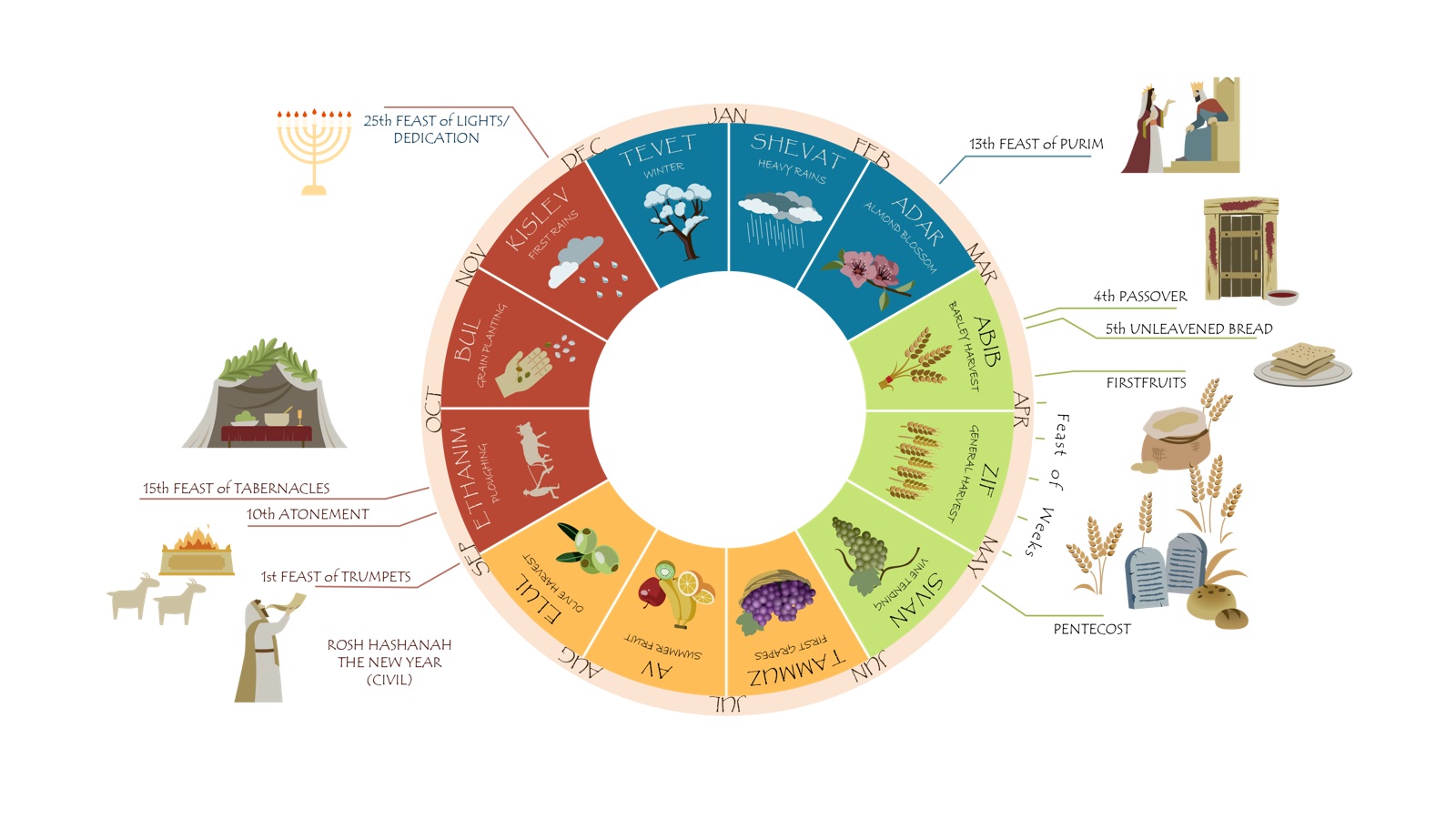
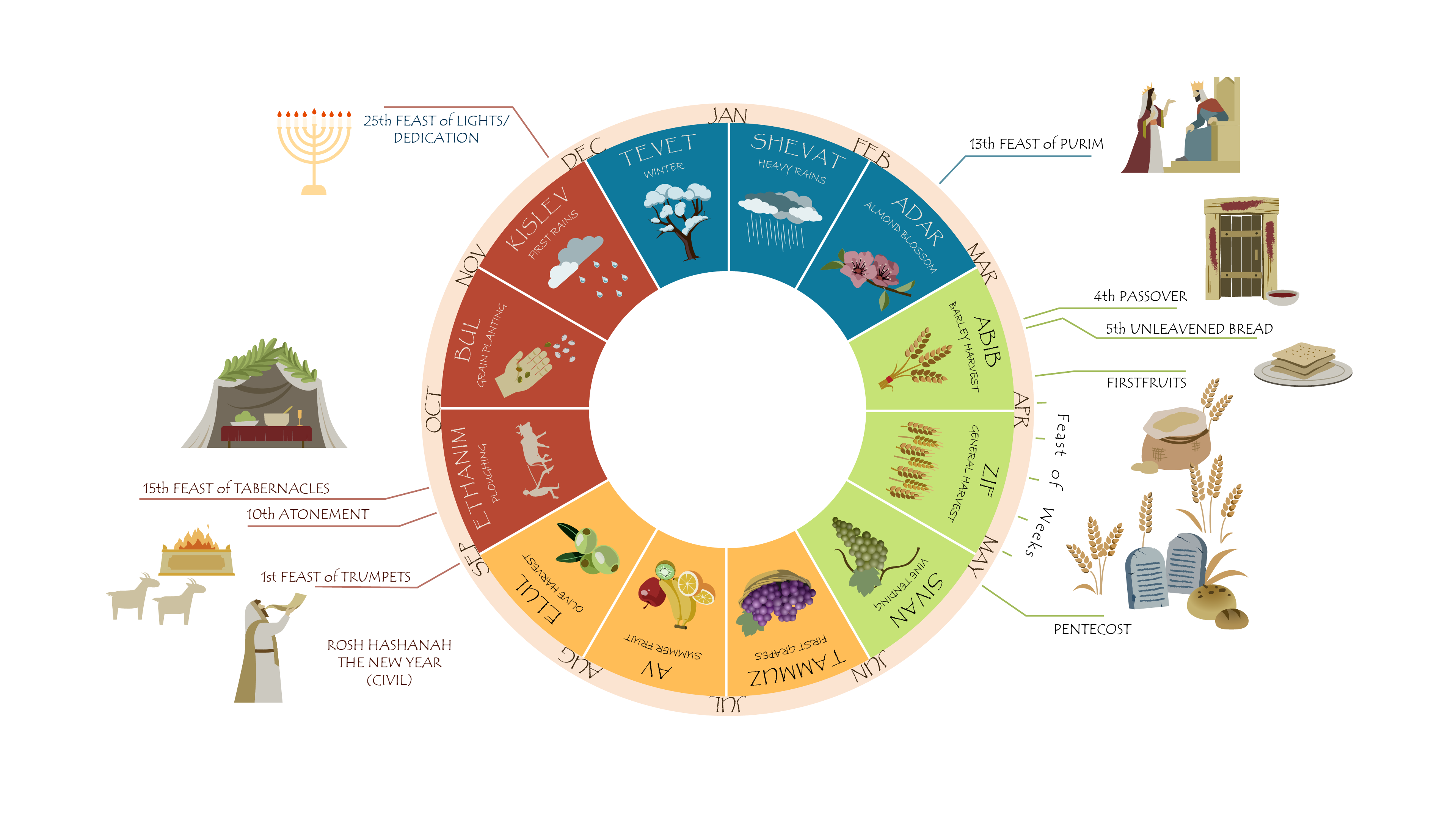
The Hebrew calendar with agricultural seasons and appointed times. From The Parable of Music by Kymber Brockbank.
The Seven Moedim at a Glance
The Hebrew word מועדים (moedim) means “appointed times” — divine appointments woven into creation itself (Genesis 1:14). The seven feasts of Leviticus 23 trace God’s redemptive plan:
More detailed feast day studies are coming soon.
Resources
- Chabad.org — Jewish Holidays — Authoritative Jewish perspective on each feast’s observance and meaning
- Hebrew for Christians — The Feasts — Each feast with Hebrew vocabulary and Christ-centered application
- My Jewish Learning — Holidays — Accessible overview of the Jewish calendar year
Ancient Israelite Culture
Understanding the daily life, social structures, and worldview of ancient Israel illuminates countless passages that otherwise feel distant or confusing.
Daily Life & Archaeology
- Bible Project — Cultural Context Videos — Beautifully animated videos exploring themes, word studies, and cultural context throughout the Bible
- Biblical Archaeology Society — The leading popular publication connecting archaeological discoveries to biblical texts. Their free Bible History Daily newsletter is excellent.
- Ten Minute Bible Hour — Matt Baker’s accessible explorations of biblical history, denominations, and context
Jewish Traditions & Commentary
- Chabad.org — Torah & Mitzvot — Gateway to Jewish law, custom, and Torah commentary, including Rashi’s classic verse-by-verse commentary
- My Jewish Learning — Accessible articles on Jewish practice, belief, history, and culture
- Sefaria — Free digital library of Jewish texts — Torah, Mishnah, Talmud, Midrash, commentaries — all interconnected and searchable
BYU & LDS Scholarly Resources
Latter-day Saint scholars have produced exceptional work on biblical context, parables, and ancient Near Eastern culture. These peer-reviewed and faith-affirming resources bring academic rigor to gospel study.
BYU Religious Studies Center
The Religious Studies Center publishes scholarly articles, books, and the Religious Educator journal.
Parables & Teaching:
- The Savior’s Questions: Teachings from the Last Week — Rick B. Jorgensen on Christ’s teaching methods during Holy Week
- Names of the Parables — Thomas A. Wayment on how parable titles shape interpretation
- Revealing Parables: A Call to Action — Amy Easton-Flake on parables in the Doctrine & Covenants
- The Great Commandment: Principle or Platitude? — Howard A. Christy on love as active discipleship
Olivet Discourse & Last Week:
- Discipleship in the Olivet Discourse — Gaye Strathearn on Mark 13 and watchfulness
Neal A. Maxwell Institute
The Maxwell Institute produces scholarly work on scripture, religion, and the ancient world.
- Maxwell Institute Podcast — In-depth conversations with scholars on scripture and faith
- Podcast #28: Parables with Amy-Jill Levine — Jewish scholar perspective on Jesus’ parables
Scripture Central
Scripture Central provides free scholarly resources on the Bible and Book of Mormon.
- KnoWhy Articles — Brief scholarly insights on specific scripture passages
- Ten Virgins KnoWhy — Parable of the Ten Virgins explained
- Counting to Ten — John W. Welch on symbolic numbers in scripture
Other LDS Academic Sources
- BYU Studies — Scholarly journal on LDS history, scripture, and theology
- Interpreter Foundation — Peer-reviewed journal on scripture and LDS topics
- Book of Mormon Central — Scholarly resources on the Book of Mormon