Passover — The Pesach Seder
A Messianic Seder guide exploring the 15 steps of the Passover meal — with connections to the Savior's Atonement and Latter-day Saint covenant theology.
A Note on This Guide
This is not a traditional Jewish Seder. The Passover Seder is a sacred tradition that has been meticulously preserved by the Jewish people for centuries, and to re-render it for Christian or Latter-day Saint purposes could be seen as misappropriation. We want to honor that concern directly.
Rather, this guide is intended to show how ancient Passover traditions can help members of the Church today recognize these same themes in our own covenant theology — particularly in connection to the Temple and to the Book of Mormon. In Alma 5, Alma appears to lead the Nephites through what we might call a 15-step Nephite Seder — a structured sequence of repentance, sanctification, and being accepted by God. We explore this connection in our Study Library article: “Alma 5: The Nephite Seder”. For a deeper study of the four cups, the kinsman redeemer, and how the Passover reveals God’s covenant as a marriage, see “The Four Cups and the Wedding Covenant”
We approach the Seder with deep respect and gratitude for the Jewish tradition that preserved it, and that helps us, as members of The Church of Jesus Christ of Latter-day Saints, to understand our own scripture and doctrine better.
Overview
Hebrew Name: פֶּסַח (Pesach, “Passover”)
When: 15th of Nisan (typically March or April)
Biblical Basis: Exodus 12–13; Leviticus 23:5–8
Key Themes: Bondage and deliverance, sanctification, redemption, covenant renewal, being accepted by God
A Sacred Pattern
The Passover Seder follows a sacred pattern — an ordered sequence of 15 steps that tells the story of bondage and deliverance. The Hebrew word Seder means “order,” and each step invites us to remember stories of deliverance:
The Israelites’ exodus from Egypt
The Nephites’ escape from Jerusalem
The escape of Limhi’s people from the Lamanites
Alma the Elder’s people from King Noah and the Amulonites
And our own deliverance from sin and death through Jesus Christ
At the Last Supper, Jesus observed this same sacred pattern with His disciples. Alma refers to this divine sequence as the Seder Kadosh, the Holy Order (see Alma 13). These steps are not just rituals — they represent a journey of the soul toward sanctification, redemption, and being accepted of the Lord.
As we move through this guide, each food, gesture, and question holds symbolic meaning. This is not only a remembrance — it is an invitation:
“Come unto Christ, and be made whole.”
The Four Cups and Temple Covenants
The Seder is structured around four cups of wine (or grape juice), each tied to one of God’s four promises in Exodus 6:6–7. In his April 2019 General Conference address, Elder David A. Bednar taught that in the temple we make covenants “to keep the law of obedience, the law of sacrifice, the law of the gospel, the law of chastity, and the law of consecration.” These five covenants map beautifully onto the Seder’s structure:
| Cup | Name | Promise (Exodus 6:6–7) | Seder Step | Temple Covenant |
|---|---|---|---|---|
| — | The blood on the doorpost — choosing to hear and obey | Before Step 0 | Law of Obedience | |
| 1 | Sanctification | "I will bring you out" | Kadesh Step 1 | Law of Sacrifice |
| 2 | Deliverance | "I will deliver you" | Maggid Step 5 | Law of the Gospel |
| 3 | Redemption | "I will redeem you" | Barech Step 13 | Law of Chastity |
| 4 | Praise | "I will take you as my people" | Hallel Step 14 | Law of Consecration |
Cup 1 — Law of Sacrifice: To be sanctified and "brought out," we must leave behind our old life — sacrificing worldly attachments to follow God.
Cup 2 — Law of the Gospel: At Maggid, the story is told. Deliverance comes through receiving and living the higher law Christ taught.
Cup 3 — Law of Chastity: This is the wedding cup. The Kinsman Redeemer takes Israel as His bride. Redemption is covenant fidelity — faithfulness to Christ alone.
Cup 4 — Law of Consecration: "I will take you as my people" — we become fully His, giving all we have and are. This is acceptance into the family of God.
Before the First Cup: The Covenant at the Door
Before the Seder begins — before the first cup is poured — there was a covenant act at the threshold.
On the night of the Passover, each family was commanded to take a lamb, slay it, and apply its blood to the doorposts and lintel of their home:
"And they shall take of the blood, and strike it on the two side posts and on the upper door post of the houses, wherein they shall eat it."
— Exodus 12:7
"And the blood shall be to you for a token upon the houses where ye are: and when I see the blood, I will pass over you."
— Exodus 12:13
This was not merely ritual — it was a choice. Every household who marked their door was declaring: We choose to hear and obey the Lord.
This act of obedience preceded the deliverance. Before God brought them out, before He delivered or redeemed them, before He took them as His people — they had to choose first. The blood on the doorpost was the sign of that choice.
The Temple Connection: In his April 2019 General Conference address, Elder David A. Bednar taught that in the temple we make covenants "to keep the law of obedience, the law of sacrifice, the law of the gospel, the law of chastity, and the law of consecration."
The law of obedience comes first — before the other covenants unfold. In the same way, the blood on the doorpost preceded the four cups. Obedience is the threshold covenant.
The Passover doorpost is the ancient echo of this pattern. Before the four cups of promise unfold, we stand at the door and choose: Will I hear His voice and obey?
"And I will walk among you, and will be your God, and ye shall be my people."
— Leviticus 26:12
This covenant at the door is the foundation upon which all that follows is built.
The 15 Steps of the Seder
The Seder unfolds in a deliberate order — from sanctification to acceptance, from bondage to freedom. Each step below explores the Hebrew meaning, the action, the symbolism, and its connection to the Savior’s mission.
Preparation for the Coming of the Messiah
1. קֹדֶשׁ Kadesh (Sanctify)
Theme: Sanctification and readiness to enter into a covenant with God.
Psalm: Psalm 120
The word Kadesh means “Holy,” “Sanctified,” or “Consecrated.” The first cup of wine — the Cup of Sanctification — is poured, declaring our intention to be set apart for God’s purposes.
🍷 Drink the First Cup — The Cup of Sanctification
"Have ye sufficiently retained in remembrance the captivity of your fathers?"
— Alma 5:6
2. וּרְחַץ Urchatz (Wash)
Theme: Baptism and the covenant of remembrance.
Psalm: Psalm 121
The first ritual hand washing occurs without a blessing — symbolic of baptism, the washing away of the old self. At the waters of Mormon, the covenant promises were clear: to bear one another’s burdens, mourn with those who mourn, comfort those in need, and stand as witnesses of God (Mosiah 18:8–10). We renew this covenant each week through the sacrament — “that they may always remember him” (Moroni 4:3).
"Have you sufficiently retained in remembrance his mercy and long-suffering towards them?"
— Alma 5:6

3. כַּרְפַּס Karpas (Greens)
Theme: Renewal and new beginnings — but also the tears of bondage.
Psalm: Psalm 122
A green vegetable is dipped in salt water, representing both new life and the tears of slavery. The word karpas also means “fine linen” — connecting to Joseph’s coat. The brothers dipped Joseph’s coat in blood; now we dip the greens in salt water, remembering the bitterness that jealousy and contention bring to families and nations.
"Have you sufficiently retained in remembrance that he has delivered their souls from hell?"
— Alma 5:6

4. יַחַץ Yachatz (Break)
Theme: Humility and recognizing dependence on God. A broken heart and contrite spirit.
Psalm: Psalm 123
The middle matzah is broken. The larger piece — the afikoman (Greek: “that which comes after”) — is hidden to be found later. This breaking symbolizes Christ’s broken body, the scattering of Israel, and the division of families through sin. Yet what is broken will be reunited.
"And ye shall offer for a sacrifice unto me a broken heart and a contrite spirit."
— 3 Nephi 9:20
5. מַגִּיד Maggid (Tell)
Theme: Recounting spiritual heritage and deliverance.
Psalm: Psalm 124
The story of the Exodus is told. The Maggid traditionally includes the Four Questions and the story of the Four Sons. Alma describes the deliverance through Abinadi and asks nearly fifty questions throughout his sermon, far exceeding the traditional four.
🍷 Drink the Second Cup — The Cup of Deliverance
"Behold, I can tell you — did not my father Alma believe in the words which were delivered by the mouth of Abinadi?"
— Alma 5:11
The Life and Ministry of Jesus Christ
6. רַחְצָה Rachtzah (Second Washing)
Theme: Further refinement. Baptism of fire, being born again.
Psalm: Psalm 125
A second hand washing, this time with a blessing. This represents deeper purification — the baptism of fire and the Holy Ghost. As Aaron and his sons were washed at the door of the tabernacle, so we must be cleansed to enter God’s presence.
"There can no man be saved except his garments are washed white; yea, his garments must be purified until they are cleansed from all stain, through the blood of him... who should come to redeem his people from their sins."
— Alma 5:21
7. מוֹצִיא Motzi (Bring Forth)
Theme: Blessings over sustenance. Gratitude for God’s provision.
Psalm: Psalm 126
The traditional blessing over bread is recited: “Blessed are You… who brings forth bread from the earth.” This is a call to bring forth our offerings and works of righteousness — the gathering of the body of Christ.
"Yea, come unto me and bring forth works of righteousness... For behold, the time is at hand that whosoever bringeth forth not good fruit, or whosoever doeth not the works of righteousness, the same have cause to wail and mourn."
— Alma 5:35–36
8. מַצָּה Matzah (Unleavened Bread)
Theme: Simplicity and purity of heart.
Psalm: Psalm 127
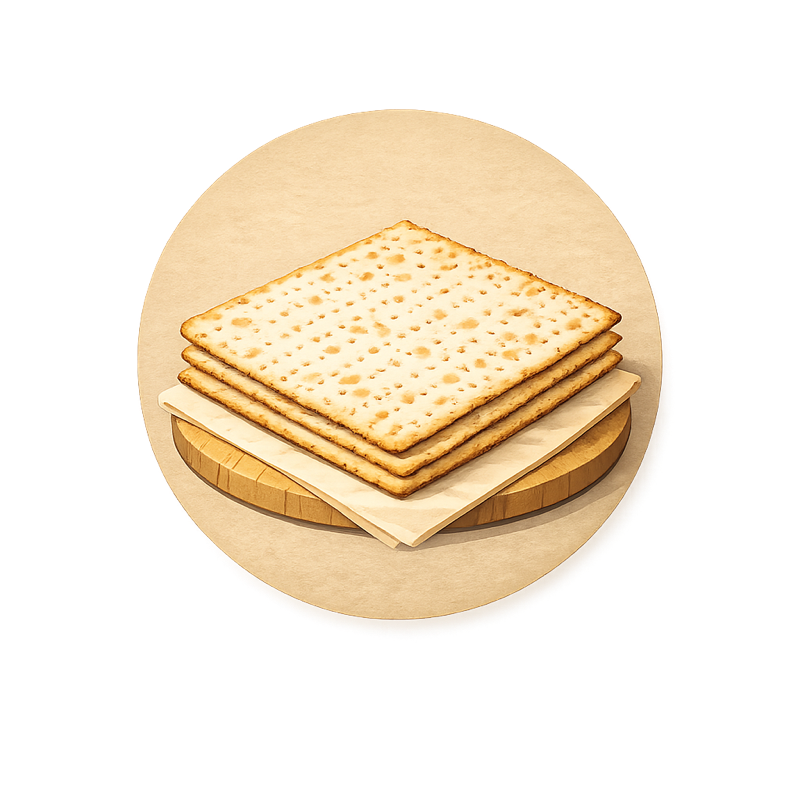
The matzah is eaten — simple, flat, unleavened. During the Last Supper, Christ presented Himself as the Bread of Life. Leaven symbolizes pride; the unleavened bread represents humility. Alma warns against being “puffed up” — leavened with pride.
"O ye workers of iniquity; ye that are puffed up in the vain things of the world... the good shepherd doth call you; yea, and in his own name he doth call you, which is the name of Christ."
— Alma 5:37–38
9. מָרוֹר Maror (Bitter Herbs)
Theme: Growth through weakness and adversity.
Psalm: Psalm 128
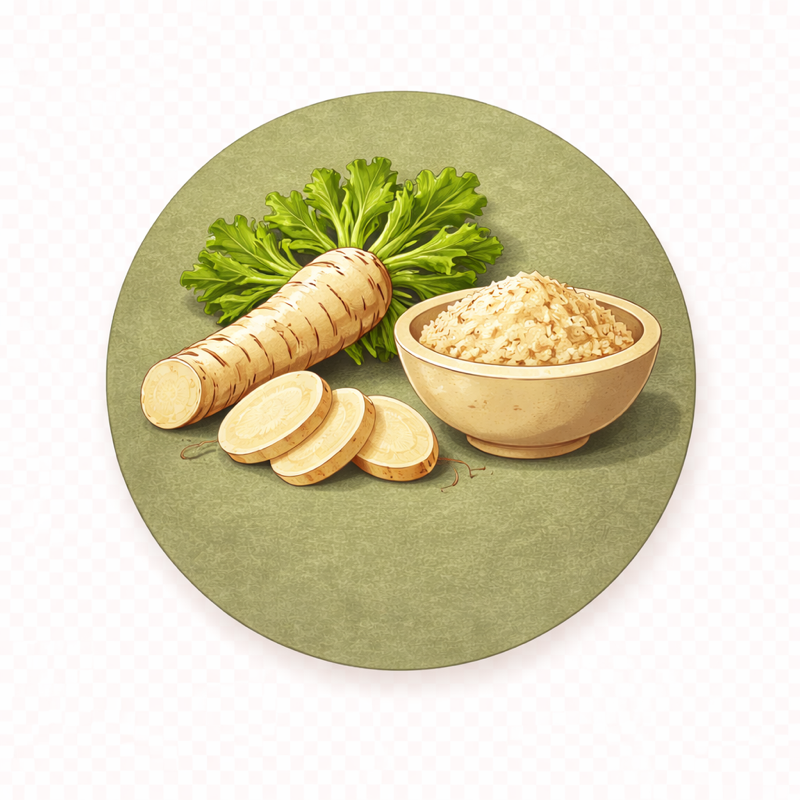
Bitter herbs are eaten to remember the bitterness of bondage. In Gethsemane, Jesus partook of the “bitter cup” — the maror — so that we would not have to bear our burdens alone. Our adversities are “but a small moment,” and if we endure well, we shall be exalted.
"Which suffering caused myself... to tremble because of pain, and to bleed at every pore, and to suffer both body and spirit — and would that I might not drink the bitter cup, and shrink — Nevertheless, glory be to the Father, and I partook."
— D&C 19:18–19
10. כֹּרֵךְ Korech (Sandwich)
Theme: Combining hardship and redemption through the Atonement.
Psalm: Psalm 129
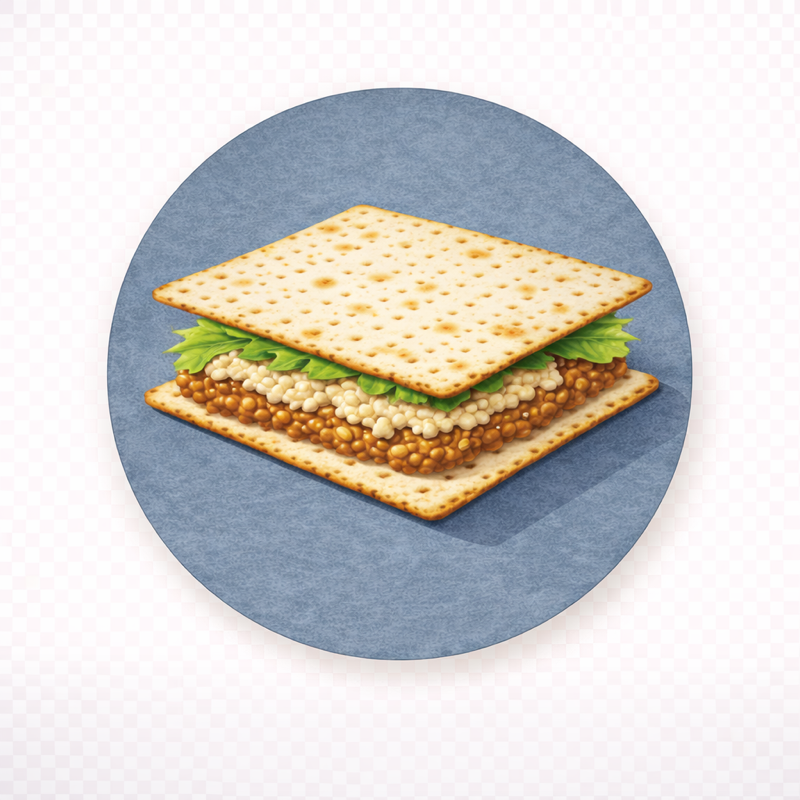
The Korech sandwich combines matzah, lamb, and bitter herbs — purity, sacrifice, and suffering bound together. This is the Atonement in miniature: the Lamb of God, broken and pierced, transforms our bitterness into redemption.
"For dogs have compassed me: the assembly of the wicked have inclosed me: they pierced my hands and my feet."
— Psalm 22:16
11. שֻׁלְחָן עוֹרֵךְ Shulchan Orech (Set Table)
Theme: Partaking of the Lord’s Feast. The Sacrament.
Psalm: Psalm 130
The festive meal is served. This step symbolizes community, unity, and God’s provision. Just as Abraham “laid the wood in order (seder)” on the altar, we set our lives in order to receive the Lord’s blessings. The sacrament table is the modern continuation of this covenant meal.
"Yea, he saith: Come unto me and ye shall partake of the fruit of the tree of life; yea, ye shall eat and drink of the bread and the waters of life freely."
— Alma 5:34
The Resurrection, Gathering, Second Coming, and Millennium
12. צָפוּן Tzafun (Hidden)
Theme: Revealing hidden truths. The Resurrection.
Psalm: Psalm 131
The hidden afikoman is found and eaten. What was broken and hidden is now revealed — just as Christ, hidden in the tomb for three days, rose in triumph. Christians connect this to the Feast of Firstfruits: “Christ the firstfruits of them that slept.”
"Can ye look up to God at that day with a pure heart and clean hands?"
— Alma 5:19
13. בָּרֵךְ Barech (Bless)
Theme: Reciting blessings and giving thanks. The Gathering of Israel.
Psalm: Psalm 132
Blessings of thanksgiving are recited. In Alma 5, Alma refrains from blessing the prideful people of Zarahemla; but in Alma 7, he pronounces blessings upon the faithful people of Gideon. The gathering of Israel is the fulfillment of these covenant blessings.
🍷 Drink the Third Cup — The Cup of Redemption
🚪 Pour a cup for Elijah and open the door — On April 3, 1836, the last day of Passover, Elijah appeared at the Kirtland Temple to restore the sealing keys (D&C 110:13–16).
"And may the Lord bless you, and keep your garments spotless, that ye may at last be brought to sit down with Abraham, Isaac, and Jacob... in the kingdom of heaven."
— Alma 7:25
14. הַלֵּל Hallel (Praise)
Theme: Singing hymns of praise to God. Preparing for the Second Coming.
Psalm: Psalm 133
The Hallel Psalms (113–118) are recited. Intriguingly, the Hebrew hallel can mean both “praise” and “pride” — two sides of the same coin. True worship requires a humble heart, not a puffed-up one.
🍷 Drink the Fourth Cup — The Cup of Praise
"Can ye think of being saved when you have yielded yourselves to become subjects to the devil?... Can ye be puffed up in the pride of your hearts?"
— Alma 5:20, 28

15. נִרְצָה Nirtzah (Accepted)
Theme: Prayer for acceptance. The Final Judgment and Celestial Inheritance.
Psalm: Psalm 134
The Seder concludes with the declaration that our service has been accepted by God. This is the sealing of the covenant — the hope that when we stand before God, our names will be written in the Book of Life. The journey from bondage to freedom is complete.
"Come ye out from the wicked, and be ye separate... that the names of the wicked shall not be numbered among the names of the righteous, that the word of God may be fulfilled... for the names of the righteous shall be written in the book of life, and unto them will I grant an inheritance at my right hand."
— Alma 5:57–58
Conclusion: The Seder and the Soul’s Journey
By aligning the sermon of Alma with the fifteen steps of the Seder, we gain a deeper understanding of how ancient Israelite patterns of spiritual ascent were preserved among the Nephites. The Seder is not merely a meal — it is a liturgical journey from bondage to freedom, from death to life, from separation to union with God.
For Latter-day Saints, recognizing these patterns in the Book of Mormon enriches our understanding of the temple, the sacrament, and the covenant path. Each step invites us to ask Alma’s probing questions of our own hearts: Have I experienced the mighty change? Can I feel so now? Am I prepared to meet God?
"For I am called to speak after this manner, according to the holy order of God."
— Alma 5:44
The Hebrew word for “order” is seder. Alma speaks according to the Seder Kadosh — the Holy Order — guiding his people through the same sacred pattern that Israel has followed for millennia, and that leads every soul home to God.
Sources and Recommended Reading
Books:
- Lynda Cherry, The Redemption of the Bride
- Lynda Cherry, What Latter-day Saints Can Learn From Ancient Jewish Feasts & Festivals
- Lynda Cherry, Feasts and Festivals of the Messiah (also available as video)
- Gayle Boyd, Days of Awe
- Daniel Smith, Symbols of the Messiah
- Alfred Edersheim, The Temple: Its Ministry and Services — A classic 19th-century work by a Jewish convert to Christianity, providing detailed historical reconstruction of Temple worship and the Passover service.
Historical Sources:
- The Bird's Head Haggadah — The oldest known illustrated Jewish Haggadah in existence, dating to the 13th century in Germany. (Although Alma's Nephite Seder predates this by over a millennium.)
- Pesach Haggadah — Traditional liturgy preserved through centuries of Jewish practice (available on Sefaria).
Recipe Resources:
- Chabad.org — Charoset Recipes — Traditional recipes for the sweet paste representing mortar.
- Kosher.com — Passover Recipes — Extensive collection of kosher-for-Passover dishes.
- Jewish Food Society — Passover Recipes — Traditional recipes from Jewish communities worldwide.
- Taste of Home — Passover Side Dishes — Family-friendly Passover recipes.
- Reform Judaism — Passover Recipes — Modern and traditional Seder recipes.