📅 Choose a Chronology
In the alternative chronology, the crucifixion occurred Thursday; Friday is the first day in the tomb.
The Day
Date: Friday, 15 Nisan (March/April)
Location: Jerusalem — from Caiaphas’s house to Pilate’s court to Golgotha
Key Events:
- Trial before Caiaphas and the Sanhedrin
- Peter’s denials
- Trial before Pilate; sent to Herod
- Barabbas released; Jesus condemned
- Scourging and mocking
- The Via Dolorosa (way of suffering)
- Crucifixion at Golgotha (9 AM – 3 PM)
- The seven last words from the cross
- Death of Jesus (3 PM)
- Temple veil torn; earthquake
- Burial in Joseph’s tomb
⏰ Timeline of Good Friday
📜 Scholar's Note: When Did Christ Die?
The precise timing of Christ's death has been debated by scholars for centuries. The Book of Mormon provides a unique contribution to this discussion.
The Year: AD 30
New Testament scholars have narrowed the possible years to AD 27, 30, or 33 — the only years during Pilate's governorship when Passover fell within three days of Sunday. Most scholars favor AD 30. The Book of Mormon strengthens this conclusion. Since Christ was born ca. 5–4 BC, and died in "the first month of the thirty and fourth year" of the Nephite calendar (3 Nephi 8:5), AD 27 is too short and AD 33 is too long.
The Day: Thursday or Friday?
Tradition holds that Christ died on Friday. However, some scholars argue for Thursday, based on Jesus's prophecy of "three days and three nights" (Matthew 12:40) and John's description of the upcoming Sabbath as "an high day" (John 19:31).
The Book of Mormon adds crucial evidence. Nephite prophets predicted three days of darkness from Christ's death until His resurrection (Helaman 14:20). Due to the time difference between Jerusalem and the Americas, a Friday crucifixion produces only two days of darkness before Sunday morning — but a Thursday crucifixion produces exactly three.
If both day and year are correct: Thursday, April 6, AD 30 — precisely 1800 years before the Restoration of the Church.
Source: KnoWhy #300, citing Jeffrey R. Chadwick, "Dating the Death of Jesus Christ," BYU Studies 54, no. 4 (2015).
Scripture Harmony: The Trials
Click any event to expand its details. The night had been long, and the day would be longer still.
▶ Before Caiaphas
From the garden of Gethsemane, soldiers brought Jesus first to Annas, the former high priest. Though he had been deposed by Rome in 15 AD, Annas remained the power behind the throne — his son-in-law Caiaphas was the current high priest, and five of Annas’s own sons would eventually hold that office.
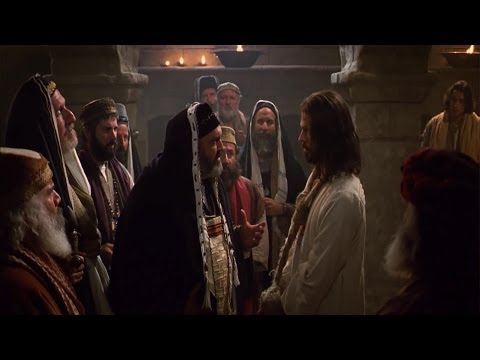
From Annas, Jesus was sent to Caiaphas for a formal hearing before the Sanhedrin. The council had assembled in the middle of the night — a proceeding that violated Jewish law on multiple counts. Trials were not supposed to occur at night, during festivals, or in the high priest’s house.
False witnesses came forward, but their testimony contradicted. Finally, Caiaphas demanded directly: “I adjure thee by the living God, that thou tell us whether thou be the Christ, the Son of the Blessed.”
Jesus answered: “I am: and ye shall see the Son of man sitting on the right hand of power, and coming in the clouds of heaven.”
It was an unmistakable claim. “I AM” — the divine name. Caiaphas tore his robes: “What need we any further witnesses? Ye have heard the blasphemy.”
“He is guilty of death.”
They spat in His face. They blindfolded Him and struck Him, taunting: “Prophesy unto us, thou Christ, Who is he that smote thee?”
▶ Peter's denials—
Meanwhile, in the courtyard below, Peter waited by a charcoal fire. He had followed at a distance.
A servant girl peered at him in the firelight: “Thou also wast with Jesus of Galilee.” Peter denied it: “I know not what thou sayest.”
Another girl recognized him. He denied again, with an oath: “I do not know the man.”
About an hour later, bystanders approached: “Surely thou also art one of them; for thy speech betrayeth thee.” (Peter’s Galilean accent gave him away.)
Peter began to curse and swear: “I know not the man!”
Immediately, the rooster crowed.
At that moment — Luke alone records this detail — Jesus, being led through the courtyard, turned and looked at Peter.
Just hours earlier, Peter had boasted that he would never forsake Jesus. Now it had happened. He went out and “wept bitterly.”
▶ Before Pilate
At dawn, the Sanhedrin brought Jesus to Pontius Pilate. The Jewish leaders faced a problem: only Rome could execute. And the charge of blasphemy meant nothing to Romans. So they changed the accusation:
“We found this fellow perverting the nation, and forbidding to give tribute to Caesar, saying that he himself is Christ, a King.”
Pilate asked: “Art thou the King of the Jews?” Jesus answered: “My kingdom is not of this world.”
Pilate found no fault worthy of death. He offered a choice: Jesus, or Barabbas — an insurrectionist and murderer. The crowd, stirred up by the chief priests, shouted for Barabbas.
“What shall I do then with Jesus which is called Christ?”
“Let him be crucified!”
Pilate took water and washed his hands: “I am innocent of the blood of this just person.”
The crowd answered: “His blood be on us, and on our children.”
▶ Before Herod————
Learning Jesus was Galilean, Pilate sent Him to Herod Antipas, who happened to be in Jerusalem for the feast.
Herod was delighted to see Jesus — he had heard about the miracles and hoped to see one performed. He questioned Jesus at length.
Jesus answered nothing.
Herod and his soldiers mocked Jesus, dressed Him in a gorgeous robe (as if to say, “Here’s your ‘king’”), and sent Him back to Pilate.
Luke notes something strange: “The same day Pilate and Herod were made friends together: for before they were at enmity between themselves.” Jesus’ silence reconciled former enemies — an ironic preview of how His death would reconcile humanity to God.
▶ Judas's remorse and death————
When Judas saw that Jesus was condemned, he was seized with remorse. He brought back the thirty pieces of silver to the chief priests and elders.
“I have sinned in that I have betrayed the innocent blood.”
They replied coldly: “What is that to us? see thou to that.”
Judas threw the silver pieces into the temple and went out and hanged himself.
The chief priests took the money and bought the potter’s field as a burial place for foreigners — fulfilling Zechariah’s prophecy in precise detail. The field became known as “the Field of Blood.”
Scripture Harmony: The Crucifixion
▶ Scourging & mocking——
Before crucifixion came scourging — the Roman flagellum. This was not a simple whipping. The flagellum was a multi-thonged whip embedded with pieces of bone, metal, and glass. Victims were stripped and tied to a post. The lashes tore skin from muscle, sometimes exposing bone. Many prisoners died from scourging alone.
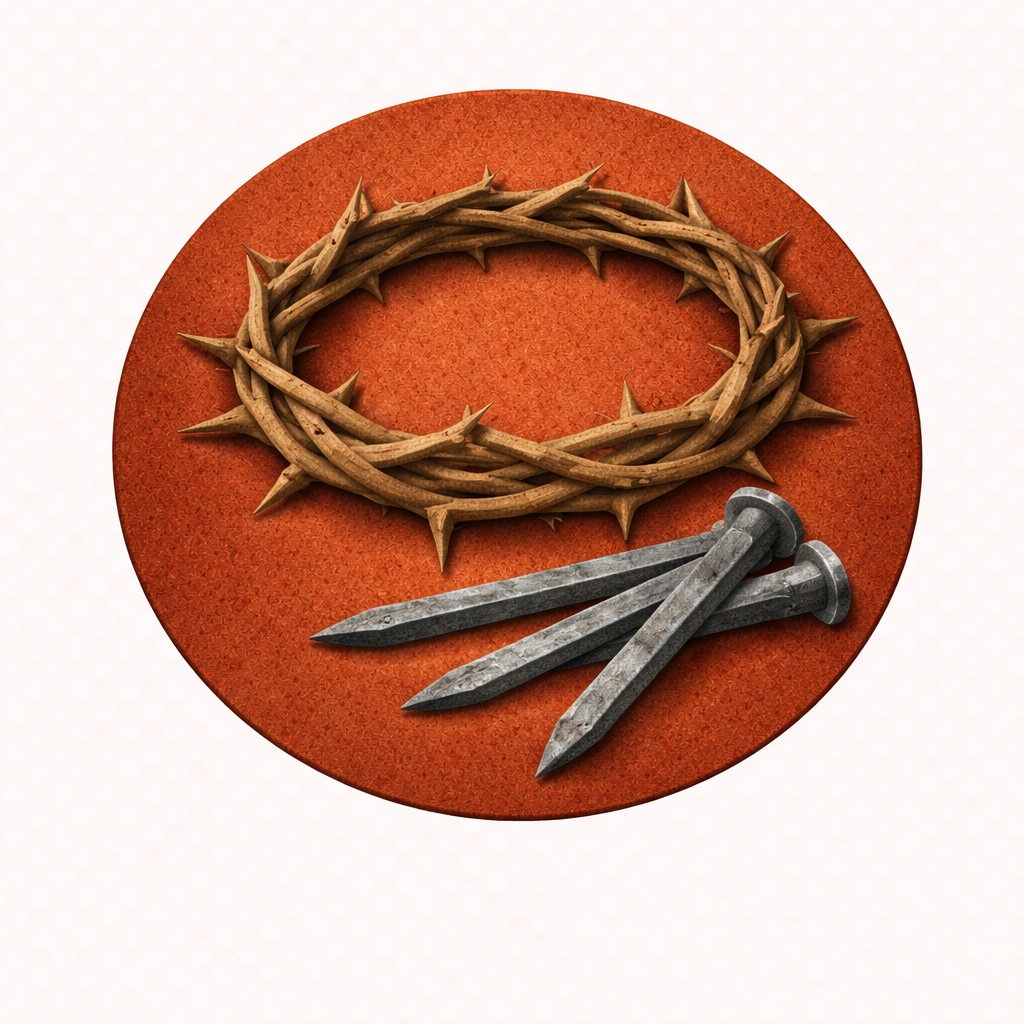
After the scourging, soldiers wove a crown from thorns — likely from the ziziphus plant, with spines an inch long — and pressed it onto Jesus’ head. They clothed Him in a purple robe (mocking His kingship), placed a reed in His hand (a mock scepter), and knelt before Him in mockery: “Hail, King of the Jews!”
They spat on Him. They struck Him in the face. They beat Him on the head with the reed, driving the thorns deeper.
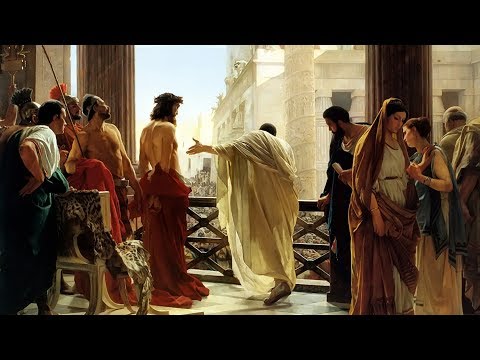
Pilate brought Jesus out before the crowd: “Behold the man!” — Ecce homo. Perhaps he hoped the sight of Jesus, beaten beyond recognition, would satisfy them.
It did not. “Crucify him, crucify him!”
▶ Via Dolorosa—
At about nine in the morning — the third hour by Jewish reckoning — the crucifixion procession began.
Condemned prisoners carried the crossbeam (patibulum) to the execution site, often through crowded streets. Jesus carried His until He could not — the scourging had taken too much. The soldiers pressed Simon of Cyrene, a visitor from North Africa, into service.
Women of Jerusalem followed, weeping. Jesus turned to them with words of warning: “Daughters of Jerusalem, weep not for me, but weep for yourselves, and for your children.” He foresaw the destruction of 70 AD.
At Golgotha (Aramaic for “place of the skull” — Latin Calvaria, from which we get “Calvary”), they offered Him wine mixed with gall — a narcotic to dull the pain. He tasted it but refused to drink. He would face death fully conscious.
▶ Crucifixion
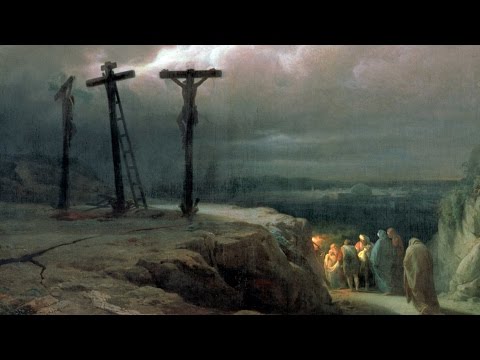
They nailed Him to the cross — spikes through the wrists and feet. Crucifixion killed slowly, through exhaustion, shock, dehydration, and eventually asphyxiation as the victim could no longer push up to breathe.
Above His head, Pilate posted the official charge in Hebrew, Greek, and Latin: JESUS OF NAZARETH, THE KING OF THE JEWS
The chief priests objected: “Write not, The King of the Jews; but that he said, I am King of the Jews.” Pilate refused: “What I have written I have written.”
They crucified two thieves with Him, one on each side. Scripture was fulfilled: “He was numbered with the transgressors.”
From the cross, Jesus spoke seven final statements that fulfilled Messianic prophecies. See the detailed analysis with Psalm connections in “The Seven Last Sermons of Christ” section below.
▶ Darkness for 3 hours——
At noon, darkness fell over the entire land — supernatural darkness that lasted three hours.
This was not an eclipse (Passover always falls at full moon, when solar eclipses are impossible). It was a sign. Creation itself responded to the death of its Creator.
The darkness echoed the ninth plague of Egypt. As God’s people were being freed from bondage, darkness covered the land. Now, as God’s Son freed all humanity from the bondage of sin, darkness covered the land again.
▶ Death of Jesus—
At about three in the afternoon — the ninth hour, the very moment when Passover lambs were being slaughtered in the Temple below — Jesus cried out with a loud voice and yielded up His spirit.
“It is finished.” The Greek word is tetelestai — a commercial term meaning “paid in full.” The debt was settled. The work was complete.
“Father, into thy hands I commend my spirit.” Quoting Psalm 31:5, Jesus chose to lay down His life. No one took it from Him.
The timing was not coincidental. As the priests killed the sacrificial lambs, the true Lamb of God was dying on the hill above.
▶ Veil torn; earthquake——
At the moment of Jesus’ death, the Temple veil — the massive curtain separating the Holy Place from the Holy of Holies — tore from top to bottom.
This veil was approximately 60 feet high, 30 feet wide, and several inches thick. Jewish tradition says it took 300 priests to handle. It could not be torn by human hands — and it tore from the top, not the bottom.
The Holy of Holies had been the dwelling place of God’s presence, accessible only to the high priest, only once a year, only with sacrificial blood. When Jesus died, that barrier was torn away. The way into God’s presence was now open to all.
An earthquake shook the city. Rocks split. Tombs opened. Matthew records that many saints who had died rose from their graves and appeared in Jerusalem after Jesus’ resurrection.
A Roman centurion, who had overseen countless crucifixions, watched Jesus die. He declared: “Truly this man was the Son of God.”
▶ Burial
Evening approached. The Sabbath would begin at sunset, and Jewish law forbade leaving bodies on crosses overnight during a festival.
Joseph of Arimathea — a wealthy member of the Sanhedrin who had not consented to the verdict against Jesus — went boldly to Pilate and asked for the body. This took courage; requesting the body of an executed criminal could mark him as a sympathizer.
Nicodemus — the Pharisee who had come to Jesus by night in John 3 — joined him, bringing about a hundred pounds of myrrh and aloes. This was a massive amount, fit for a king’s burial.
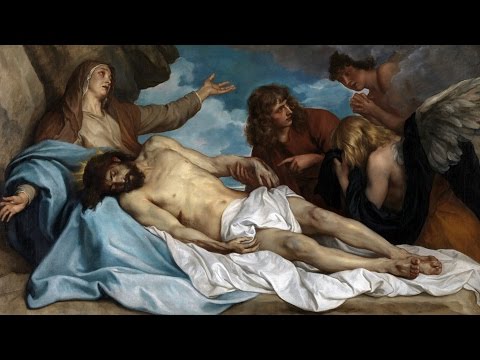
They wrapped Jesus’ body in linen cloths with the spices and laid Him in Joseph’s own new tomb, hewn from rock in a garden near Golgotha. A great stone was rolled across the entrance.
Mary Magdalene and Mary the mother of Joses watched where He was laid.
The sun was setting. The Sabbath was beginning. The women would have to wait until Sunday morning to properly anoint the body.
The Passover Lamb had been sacrificed. Now came the silence of the tomb.
The Seven Last Sermons of Christ
Each statement from the cross connects to and fulfills the Messianic Psalms, demonstrating Christ’s role as the prophesied Suffering Servant.
| # | Words | Scripture | Psalm Connection | Theme |
|---|---|---|---|---|
| 1 | “Father, forgive them; for they know not what they do.” | Luke 23:34 | Psalm 22:1-2 | Forgiveness |
| 2 | “Today shalt thou be with me in paradise.” | Luke 23:43 | Psalm 32:1-2 | Salvation |
| 3 | “Woman, behold thy son… Behold thy mother!” | John 19:26–27 | Psalm 35:14 | Relationship |
| 4 | “Eli, Eli, lama sabachthani?” (My God, why hast thou forsaken me?) | Matthew 27:46 | Psalm 22:1 (direct quote) | Purpose |
| 5 | “I thirst.” | John 19:28 | Psalm 69:21 (fulfillment) | Humanity |
| 6 | “It is finished.” | John 19:30 | Psalm 22:31 | Victory |
| 7 | “Father, into thy hands I commend my spirit.” | Luke 23:46 | Psalm 31:5 (direct quote) | Trust |
Word Studies
Golgotha — Γολγοθᾶ
Γολγοθᾶ (Golgotha) — from Aramaic gulgulta, “skull”
The Latin translation is Calvaria — from which we get “Calvary.” The site was named either for its skull-like rock formation or its association with executions. Located just outside Jerusalem’s walls, it was visible to all who entered or left the city.
It Is Finished — τετέλεσται
τετέλεσται (tetelestai) — perfect passive indicative of teleō, “to complete, accomplish”
This word was a commercial term meaning “paid in full.” When a debt was satisfied, tetelestai was written across the receipt. On the cross, Jesus declared that the debt of sin was paid — completely, finally, forever. The perfect tense indicates an action completed with ongoing results.
Crucify — σταυρόω
σταυρόω (stauroō) — from stauros, “cross” or “stake”
Roman crucifixion was designed for maximum suffering and public humiliation. Victims could linger for days. The fact that Jesus died in approximately six hours (unusually fast) prompted Pilate’s surprise (Mark 15:44). Jesus laid down His life; no one took it from Him.
📖 Book of Mormon Witness
The Book of Mormon records the signs of Christ's death experienced in the Americas — thousands of miles from Jerusalem, confirming the cosmic significance of this moment:
"There was thick darkness upon all the face of the land... there could be no light... neither candles, neither torches... neither fire kindled with their fine and exceedingly dry wood."
Storms, earthquakes, fires, and three days of impenetrable darkness testified that the Creator of the world had been slain. The very elements mourned.
Reflection Questions
Why is this day called “Good” Friday? What is good about it?
Jesus cried, “My God, why hast thou forsaken me?” What does this moment of divine withdrawal mean for our salvation?
“It is finished.” What was finished? How does this affect your life today?
Messages of Christ: Good Friday


Additional Resources
Official Church Videos
Location Tours
Study Resources
BYU Academic Sources:
The Crucifixion:
- Christ’s Crucifixion: Reclamation of the Cross — Why the cross should matter to Latter-day Saints
- “It Is Finished”: The Divine Accomplishment of the Crucifixion — The meaning of tetelestai
- The Crucifixion — Historical and cultural context
- Preaching Jesus, and Him Crucified — Eric D. Huntsman on embracing the cross
- Good Friday — Understanding why it’s called “good”
The Seven Last Words:
- Teachings of Church Leaders on Christ’s Final Seven Statements — Prophetic insights on each word from the cross
The Trials & Peter’s Denial:
- Why Did Peter Deny Knowing Jesus? — Scripture Central KnoWhy
Dating Christ’s Death:
- How Does the Book of Mormon Help Date Christ’s Death? — KnoWhy #300
Scripture Central:
- Why Was Jesus Put On Trial and Crucified?
- 4 Reasons Latter-day Saints Should Study the Crucifixion More
- How Are Atonement, Resurrection, Judgment, and Redemption Interconnected?
Greek Study Tools:
Choose your path through Holy Week:
TRADITIONAL TIMELINE
ALTERNATIVE TIMELINE