📅 Choose a Chronology
Some scholars propose the Last Supper occurred Wednesday evening, placing the crucifixion on Thursday.
The Day
Date: Thursday, 14 Nisan (March/April)
Location: Upper Room (Mount Zion) → Gethsemane (Mount of Olives)
Key Events:
- Preparation of the Passover meal
- Jesus washes the disciples’ feet
- The Last Supper — institution of the Sacrament
- Identification of the betrayer
- The New Commandment: “Love one another”
- The Farewell Discourse (John 14–16)
- The Intercessory Prayer (John 17)
- Gethsemane — the Atonement begins
- Betrayal and arrest
Scripture Harmony: The Last Supper
Click any event to expand its details.
▶ Upper Room prepared——
Thursday began with practical preparations. Jesus sent Peter and John ahead to Jerusalem: “Go and prepare us the passover, that we may eat.”
They asked where. Jesus gave them a curious sign — they would meet a man carrying a water pitcher (unusual, since women typically carried water; a man with a pitcher would stand out). They were to follow him to a house and ask the master for the guest chamber. There they would find a large upper room, already furnished and ready.
Why the secrecy? Jesus knew Judas was looking for an opportunity to betray Him “in the absence of the multitude” (Luke 22:6). By keeping the location secret until the last moment, Jesus ensured He could share this final meal with His disciples without interruption.
The disciples prepared everything: the Passover lamb (slaughtered at the Temple that afternoon), the bitter herbs, the unleavened bread, the four cups of wine. By evening, all was ready.
“With desire I have desired to eat this passover with you before I suffer,” Jesus said. The language is unusually intense — literally, “I have longed with longing.” The Greek construction (epithymia epithymēsa) conveys deep emotional yearning. Jesus knew what was coming. He knew this was His last night. And He wanted to be with them.
▶ Jesus washes disciples' feet————
The meal progressed through the traditional Passover elements. But then Jesus did something shocking.
He rose from supper, laid aside His outer garment, wrapped a towel around His waist, poured water into a basin, and began washing the disciples’ feet.
This was the work of the lowest household slave — a task so menial that Jewish slaves were exempt from it. Yet here was the Master, the Lord, the Son of God, kneeling before His disciples with a basin and towel.
Peter was horrified: “Lord, dost thou wash my feet?”
Jesus replied that Peter would understand later. Peter refused outright: “Thou shalt never wash my feet!”
Jesus’ response cut to the heart: “If I wash thee not, thou hast no part with me.”
Peter immediately overcorrected: “Lord, not my feet only, but also my hands and my head!”
When Jesus finished, He returned to His place and explained:
“Ye call me Master and Lord: and ye say well; for so I am. If I then, your Lord and Master, have washed your feet; ye also ought to wash one another’s feet. For I have given you an example, that ye should do as I have done to you.”
The King of Kings had become the servant of all. His followers must do likewise. Greatness in His kingdom would be measured not by power but by service.
▶ "One of you shall betray me"
The mood shifted suddenly.
“Verily I say unto you, that one of you shall betray me.”
The disciples looked at each other, grieved and confused. They began asking, one by one: “Lord, is it I?” Even Judas asked.
John, reclining next to Jesus in the place of honor, leaned back and asked who it was. Jesus answered: “He it is, to whom I shall give a sop, when I have dipped it.”
He dipped a piece of bread and gave it to Judas — ironically, a gesture of special favor from the host. Then He said: “That thou doest, do quickly.”
The other disciples didn’t understand. Some thought Jesus was sending Judas to buy something for the feast or to give something to the poor. Judas took the bread and went out.
John records four haunting words: “And it was night.”
▶ Sacrament instituted——
With the betrayer gone, Jesus transformed the Passover meal into something new.
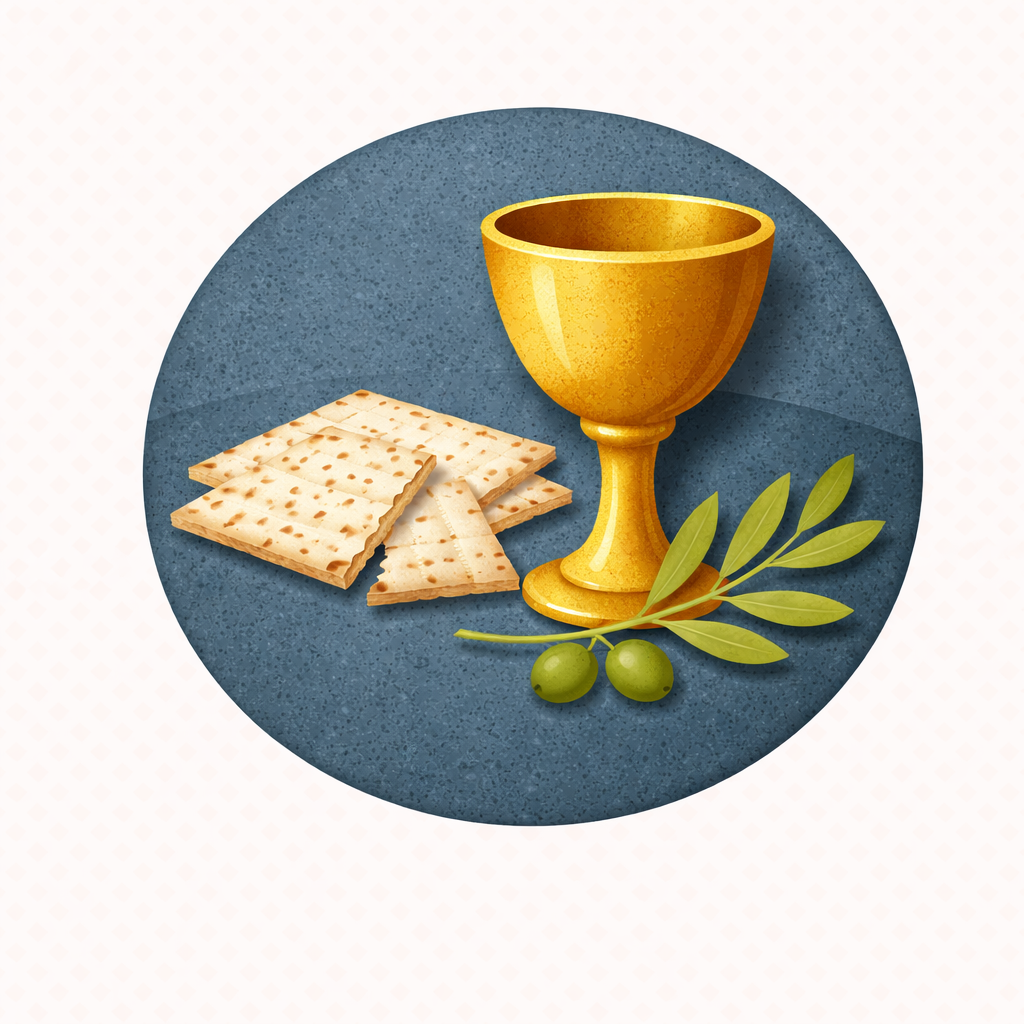
He took bread, blessed it, broke it, and gave it to the disciples, saying: “Take, eat; this is my body which is given for you: this do in remembrance of me.”
He took the cup (likely the third cup of the Passover, called the “cup of blessing”): “This cup is the new testament in my blood, which is shed for you. Drink ye all of it.”
For 1,500 years, the Passover meal had commemorated Israel’s deliverance from Egypt. The lamb’s blood on the doorposts had saved Israel’s firstborn from the destroying angel. Now Jesus revealed what Passover had always pointed to: He was the Lamb. His blood would deliver humanity — not from Pharaoh, but from sin and death.
Every time His followers ate the bread and drank the wine, they would remember His broken body and shed blood. They would renew their covenant with Him. The old covenant, sealed with animal sacrifice, was giving way to the new covenant, sealed with the blood of the Son of God.
▶ The New Commandment————
The new commandment rang out:
“A new commandment I give unto you, That ye love one another; as I have loved you, that ye also love one another. By this shall all men know that ye are my disciples, if ye have love one to another.”
Not merely “love your neighbor as yourself” — the standard Jesus Himself had cited from Leviticus. Now the standard was higher: “As I have loved you.” The measure of love was Christ’s own self-giving sacrifice.
This is why Maundy Thursday is called “Maundy” — from the Latin mandatum (commandment).
▶ Farewell Discourse————
Then came the Farewell Discourse — Jesus’ longest and most intimate teaching, recorded only in John (chapters 14–16). On this last night, He poured out His heart:
The Way to the Father: “I am the way, the truth, and the life: no man cometh unto the Father, but by me.”
The Promise of the Comforter: “I will pray the Father, and he shall give you another Comforter, that he may abide with you for ever; even the Spirit of truth.”
The Vine and the Branches: “I am the vine, ye are the branches: He that abideth in me, and I in him, the same bringeth forth much fruit: for without me ye can do nothing.”
Peace Amid Tribulation: “In the world ye shall have tribulation: but be of good cheer; I have overcome the world.”
▶ Intercessory Prayer———
Finally, Jesus prayed aloud — the great Intercessory Prayer of John 17, sometimes called the “High Priestly Prayer.”
He prayed for Himself: “Father, the hour is come; glorify thy Son, that thy Son also may glorify thee.” He prayed to be glorified in the work He was about to accomplish — that through His suffering, the Father’s glory would be revealed.
He prayed for His disciples: “I pray for them: I pray not for the world, but for them which thou hast given me… Holy Father, keep through thine own name those whom thou hast given me, that they may be one, as we are.”
He prayed for all believers through all time: “Neither pray I for these alone, but for them also which shall believe on me through their word; that they all may be one; as thou, Father, art in me, and I in thee, that they also may be one in us.”
On the night of His betrayal, facing torture and death, Jesus’ concern was for His followers — then and forever.
▶ Prophecy: Flock scattered——
Jesus prophesied what was about to happen: “All ye shall be offended because of me this night: for it is written, I will smite the shepherd, and the sheep of the flock shall be scattered abroad.”
Peter protested: “Though all men shall be offended because of thee, yet will I never be offended.”
Jesus responded with sobering specificity: “Verily I say unto thee, That this night, before the cock crow, thou shalt deny me thrice.”
Peter doubled down: “Though I should die with thee, yet will I not deny thee.” All the disciples said the same. Within hours, they would all flee.
▶ Sang hymn before Gethsemane——
When the hymn was sung — likely the second half of the Hallel (Psalms 115–118), traditionally sung at the close of the Passover meal — they went out into the night, crossed the Kidron Valley, and came to the Mount of Olives.
The Hallel’s words would have been especially poignant: “The LORD is on my side; I will not fear: what can man do unto me?” (Psalm 118:6). And: “The stone which the builders refused is become the head stone of the corner” (Psalm 118:22).
Discover how Christ fulfilled each element of the ancient Passover meal
Scripture Harmony: Gethsemane
▶ Arrival at Gethsemane—
In a garden called Gethsemane (Hebrew gat shemanim, “oil press”), Jesus told most of the disciples to sit and wait. He took Peter, James, and John further in.
“My soul is exceeding sorrowful, even unto death: tarry ye here, and watch with me.”
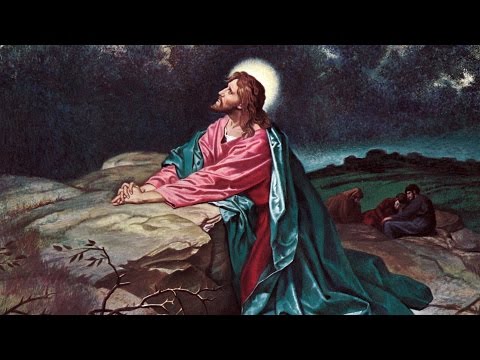
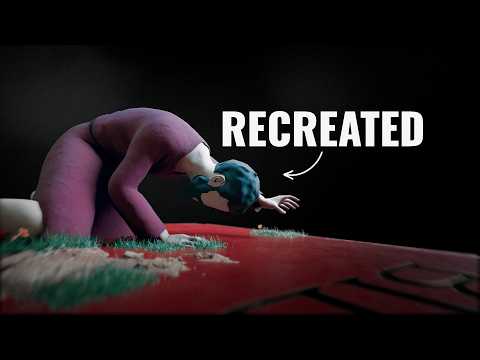
He went a stone’s throw further, fell to the ground, and prayed: “O my Father, if it be possible, let this cup pass from me: nevertheless not as I will, but as thou wilt.”
▶ Jesus prays; sweats blood—
Three times He prayed. Three times He returned to find His disciples sleeping — “for their eyes were heavy.”
Luke alone records what happened during this agonized prayer: “And being in an agony he prayed more earnestly: and his sweat was as it were great drops of blood falling down to the ground.”
This phenomenon, called hematidrosis, occurs under extreme psychological distress — the capillaries in the sweat glands rupture, mixing blood with sweat. Medical literature confirms its reality.
Luke also records that “there appeared an angel unto him from heaven, strengthening him.” Even with angelic help, Jesus did not ask to be delivered from the cup. He asked for strength to drink it.
What was happening in Gethsemane? Latter-day revelation provides additional understanding:
“Which suffering caused myself, even God, the greatest of all, to tremble because of pain, and to bleed at every pore, and to suffer both body and spirit — and would that I might not drink the bitter cup, and shrink.” — D&C 19:18
In Gethsemane, Jesus took upon Himself the sins, pains, and sicknesses of all humanity. The full weight of mortal suffering — every sin, every grief, every illness, every abuse, every heartbreak across all human history — pressed upon Him until He bled from every pore. What began here would continue through the scourging, the mocking, and the cross. The Atonement had begun.
▶ Betrayal and arrest—
Then came torchlight through the olive trees — lanterns, torches, a mob with swords and clubs, sent by the chief priests and elders.
Judas approached with a kiss, the prearranged signal: “Whomsoever I shall kiss, that same is he: hold him fast.”
Jesus knew everything that was happening. He asked: “Whom seek ye?”
“Jesus of Nazareth.”
“I am he.”
At those words — egō eimi, “I AM” — the soldiers drew back and fell to the ground. Even in this moment, His divine identity flashed forth.
Peter drew his sword and struck the high priest’s servant Malchus, cutting off his right ear. Jesus stopped him: “Put up thy sword into the sheath: the cup which my Father hath given me, shall I not drink it?” Then He touched the servant’s ear and healed him — His last miracle before the cross, an act of mercy toward His enemies.
To the mob He said: “Are ye come out as against a thief with swords and staves for to take me? I sat daily with you teaching in the temple, and ye laid no hold on me.”
The disciples fled. Mark records that a young man (possibly Mark himself) followed, wearing only a linen cloth; when soldiers seized him, he fled naked, leaving the cloth behind.
Jesus was bound and led away to face His accusers. The longest night had begun.
Word Studies
Gethsemane — גַּת שְׁמָנִים
Γεθσημανῆ (Gethsēmanē) — from Hebrew גַּת (gath, “press”) + שֶׁמֶן (shemen, “oil”)
Meaning: “Oil press” — the place where olives were crushed to extract oil.
The symbolism is profound: Just as olives are crushed to produce oil — used for light, healing, and anointing — so Christ was “crushed” under the weight of our sins to bring light, healing, and anointing to the world.
Maundy — mandatum
The name “Maundy Thursday” comes from the Latin mandatum (commandment), referring to Jesus’ “new commandment”:
“A new commandment I give unto you, That ye love one another; as I have loved you.” — John 13:34
Agony — ἀγωνία
ἀγωνία (agōnia) — from agōn, “contest” or “struggle”
This Greek word describes the intense mental anguish of an athlete straining for victory. Luke uses it to describe Jesus’ state in Gethsemane — a cosmic struggle, the ultimate spiritual contest. From this word we get the English “agony.”
🏛️ The Setting of the Last Supper
Location
An upper room on Mount Zion, likely in a wealthy home. The owner provided a "large upper room, furnished" — prepared for the Passover meal.
The Table
A triclinium — a U-shaped Roman-style table adopted by Jews. Guests reclined on cushions, leaning on their left elbow.
Seating
Jesus sat second from the left (not at center as often depicted). John reclined next to Jesus. Judas was likely in a position of honor — Jesus' love extended even to His betrayer.
📜 Scholar's Note: The Atonement in Gethsemane
Luke, the physician, alone records that Jesus' sweat was "as it were great drops of blood" (Luke 22:44). This phenomenon, called hematidrosis, is medically documented — under extreme psychological distress, capillaries in the sweat glands can rupture, mixing blood with sweat.
Latter-day scripture provides unique insight into what happened in Gethsemane. The Doctrine and Covenants records Christ's own words: "Which suffering caused myself, even God, the greatest of all, to tremble because of pain, and to bleed at every pore, and to suffer both body and spirit" (D&C 19:18).
The Book of Mormon adds that Christ would take upon Himself not only sins but also "pains and afflictions and temptations of every kind... the pains and the sicknesses of his people... that his bowels may be filled with mercy" (Alma 7:11–12). The Atonement was not only for sin — but for every mortal suffering.
Reflection Questions
Jesus washed Judas’s feet, knowing what was coming. What does this reveal about the nature of divine love?
In Gethsemane, Jesus asked the Father to remove the cup, “nevertheless not my will, but thine, be done.” What does Jesus’ prayer teach about the relationship between the Father and the Son?
The name Gethsemane means “oil press” — a place of crushing. Why might this location be significant for the beginning of the Atonement?
Messages of Christ: Maundy Thursday



Additional Resources
Official Church Videos
Location Tours
The Great Hallel
After the Last Supper, Jesus and the disciples “sang a hymn” before going to Gethsemane. This was likely the Hallel — Psalms 113–118, traditionally sung at Passover.
Listen to a traditional rendition: The Hallel at the Western Wall
Study Resources
BYU Academic Sources:
The Last Supper & Passover:
- The Lamb of God: Unique Aspects of the Passion Narrative — John’s account of the Last Supper and Passover timing
- The Sacrament: Building upon Christ’s Rock — The institution of the sacrament
- The Bread of Life Sermon — Passover imagery in Jesus’ teachings
- The Setting and Sacrament of the Christian Community — Historical context
Foot Washing & Servanthood:
- A New Commandment — The transformative power of Christ’s example of washing feet
Gethsemane & the Atonement:
- Joseph Smith, Gethsemane, and the Crucifixion — John Hilton III on LDS perspectives
- Gethsemane and Golgotha: Why and What the Savior Suffered — Comprehensive study
- Autumn, Olives, and the Atonement — The symbolism of Gethsemane’s olive press
- What the Atoning Sacrifice Meant for Jesus — The personal cost to the Savior
The Intercessory Prayer:
- Christ, Our Advocate and High Priest — Jesus’ role as intercessor (John 17)
- Lessons from the Atonement — Including the Intercessory Prayer
Scripture Central:
- Secrets of Gethsemane — Unearthing the place of Jesus’ agony
- Gethsemane and Golgotha: The Book of Mormon’s Illumination
- The Olive Press: A Symbol of Christ
- Why Was Jesus Put On Trial and Crucified?
Greek Study Tools:
- Matthew 26:26–29 Interlinear (Sacrament)
- John 13:1–17 Interlinear (Foot Washing)
- John 17 Interlinear (Intercessory Prayer)

Choose your path through Holy Week:
TRADITIONAL TIMELINE
ALTERNATIVE TIMELINE