
The Setting
Date: Friday–Saturday before Palm Sunday (8–9 Nisan)
Location: Bethany, about 2 miles east of Jerusalem on the Mount of Olives
Key Events:
- Jesus arrives in Bethany six days before Passover
- Crowds gather to see both Jesus and Lazarus (raised from the dead weeks earlier)
- Mary of Bethany anoints Jesus’ feet with costly spikenard
- Judas objects to the “waste” of the ointment
- Chief priests plot to kill both Jesus and Lazarus
Scripture Harmony
Click any event below to read the full narrative.
▶ Arrival in Bethany————
“Then Jesus six days before the passover came to Bethany, where Lazarus was which had been dead, whom he raised from the dead.” (John 12:1)
Jesus returned to the home of Mary, Martha, and Lazarus — a small village about two miles east of Jerusalem on the Mount of Olives. A dinner was prepared; Martha served, and Lazarus sat at the table with Jesus.
Word had spread about the man who had been four days in the tomb. Crowds came not only to see Jesus but also to see Lazarus — living proof of divine power. (For the full account of the raising, see the Background section below.)
▶ Background: Raising of Lazarus———
Timeline: This miracle occurred weeks earlier, not during Pre-Holy Week. Afterward, Jesus withdrew to Ephraim (John 11:54) until returning “six days before the Passover.”
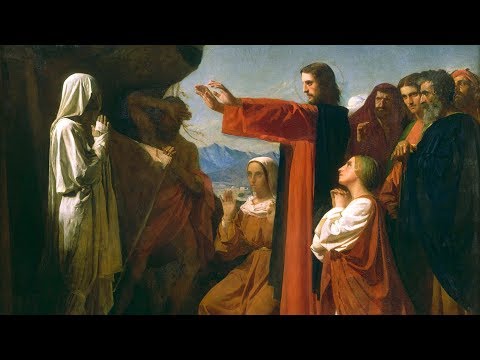
When Jesus arrived in Bethany on that earlier occasion, Lazarus had been dead four days — beyond any hope of resuscitation according to Jewish belief.
Martha met Jesus with faith and grief: “Lord, if thou hadst been here, my brother had not died.” Jesus responded:
“I am the resurrection, and the life: he that believeth in me, though he were dead, yet shall he live.”
At the tomb, Martha objected to removing the stone — “Lord, by this time he stinketh.” But Jesus called with a loud voice: “Lazarus, come forth.” And Lazarus emerged, still bound in grave clothes — a dramatic foreshadowing of Christ’s own resurrection.
▶ Mary of Bethany anoints Jesus' feet———
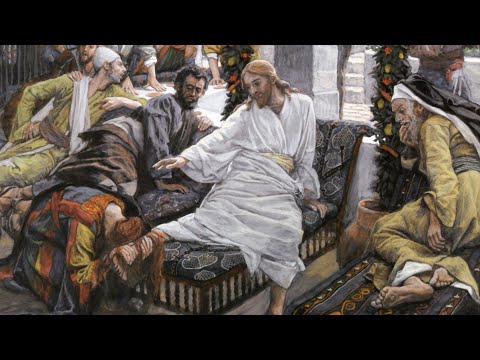
At the dinner, Mary of Bethany — sister of Martha and Lazarus — took a pound of spikenard, pure and extremely costly (worth nearly a year’s wages), and anointed Jesus’ feet, wiping them with her hair. The house was filled with the fragrance.
This was no casual gift but an extravagant act of worship. Mary seemed to understand, at some level, what the disciples had not yet grasped: that Jesus would soon die.
Judas Iscariot objected to the “waste,” but Jesus defended Mary: “Let her alone: against the day of my burying hath she kept this.” She was anointing Him for burial — even before His death. In ancient Israel, prophets, priests, and kings were set apart through anointing. By anointing Jesus’ feet before His triumphal entry, Mary symbolically anointed Him as King.
▶ Judas criticizes the anointing————
Judas Iscariot objected: “Why was not this ointment sold for three hundred pence, and given to the poor?”
John’s Gospel provides a devastating editorial comment: “This he said, not that he cared for the poor; but because he was a thief, and had the bag, and bare what was put therein.” Judas, the treasurer, had been stealing from the common fund.
Jesus rebuked him: “Let her alone… For the poor always ye have with you; but me ye have not always.”
Where Judas saw waste, Jesus saw worship. Where Judas calculated worldly value, Mary recognized eternal worth. The contrast between them foreshadows what was to come: within days, Judas would betray Jesus for thirty pieces of silver — far less than the value of Mary’s ointment.
▶ Priests plot against Jesus & Lazarus————
The chief priests began consulting together — not only to kill Jesus, but Lazarus as well.
“Because that by reason of him many of the Jews went away, and believed on Jesus.”
Lazarus was living proof of Jesus’ divine power. As long as he walked the streets of Bethany, people would keep believing. The religious leaders had no theological argument against a man who had been dead four days and now lived. Their only solution was to eliminate the evidence.
The miracle that brought Lazarus from the grave would lead Jesus to His own. Scholar John W. Welch argues that when Christ raised Lazarus, He understood this act would likely result in His own execution. The Jewish leaders had been seeking a legal pretext against Jesus, and Deuteronomy 13:1–5 warned against prophets who perform “signs” that lead people astray. By raising a man who had been dead four days, Jesus effectively signed His own death warrant.
📜 Scholar's Note: Temple Imagery in John 11–12
Latter-day Saint scholar William J. Hamblin notes that John structures the events of chapters 11–17 as a symbolic journey into the Holy of Holies. The raising of Lazarus and Mary of Bethany’s anointing form the threshold of this sacred narrative.
The Resurrection as Temple Portal: Jesus’s declaration “I am the resurrection and the life” establishes resurrection as the threshold to God’s presence — just as the high priest passed through the veil to enter the Holy of Holies, Christ offers Himself as the way.
The Anointing as Temple Incense: When Mary anointed Jesus, “the house was filled with the odour of the ointment” (John 12:3). Scholar John S. Thompson sees an allusion to Isaiah’s vision of the heavenly temple “filled with smoke” from the incense altar (Isaiah 6:4). The fragrance that filled the house symbolically transformed it into sacred space.
The Three Anointed Offices
In ancient Israel, three groups were set apart through anointing with holy oil — prophets, priests, and kings. Anointing symbolized being consecrated for God’s service, empowered by His Spirit.
The Two Anointings of Holy Week
The Gospel accounts preserve two anointings during Holy Week, each with distinct symbolism:
Mary of Bethany Anoints His Feet
John places this anointing the day before the Triumphal Entry — symbolically anointing Jesus as King before He rode into Jerusalem on a donkey.
Just as Solomon was anointed before riding David's mule to his coronation (1 Kings 1:33–39).
Unnamed Woman Anoints His Head
Matthew and Mark place this anointing at Simon the Leper's house. By anointing Jesus' head, she symbolically anointed Him as the great High Priest.
He would soon enter God's presence — not with the blood of bulls and goats, but with His own blood.
Theological Significance
Mary's Prophetic Act
Mary of Bethany performed what Jesus called a "good work" — anointing Him for His burial before His death. While others missed the significance of what was coming, Mary seemed to understand, at some level, that Jesus would soon die.
"Wheresoever this gospel shall be preached throughout the whole world, this also that she hath done shall be spoken of for a memorial of her."
Women as Witnesses
The anointing events highlight the role of women as powerful witnesses of Christ's divinity. In a patriarchal society, Jesus elevated and honored Mary's devotion, rebuking those who criticized her.
Temple Connections
The anointing with oil connects to Latter-day Saint temple ordinances where members are anointed as part of sacred covenants. Just as Mary anointed Christ's body, temple participants are symbolically prepared for sacred purposes.
Reflection Questions
Mary's gift cost a year's wages. What moved her to give so extravagantly — and what does Jesus' response reveal about how He receives our offerings?
Judas saw "waste" where Jesus saw worship. What might this contrast teach us about how God values things differently than the world does?
Jesus said Mary's act would be remembered "wherever the gospel is preached." What does this tell us about how He honors sincere devotion?
Messages of Christ: Bethany
Additional Resources
Official Church Videos
Location Tours
Study Resources
BYU Academic Sources:
The Raising of Lazarus:
- Raising Lazarus: Jesus’s Signing of His Own Death Warrant — John W. Welch on the legal consequences of this miracle
- Lazarus: Jesus’ Friend in Bethany — Religious Studies Center analysis of the Lazarus narratives
- The Lamb of God: Unique Aspects of the Passion Narrative in John — John’s distinctive perspective on Jesus’ final days
The Anointing & Temple Imagery:
- Jesus Anointed as Kings, Priests, and Prophets in the Old Testament — The three anointed offices and their fulfillment in Christ
- The Hidden Temple in John 17 — William J. Hamblin on temple symbolism in John’s Gospel
Mary, Martha, and Lazarus:
- Martha: Sister of Mary and Lazarus — The faithful family of Bethany
- Women in the Gospels — The role of women as witnesses of Christ
Scripture Central:
- KnoWhy #508: Why Did Christ Perform Miracles?
- KnoWhy #668: How Does John Portray Jesus as the Way of the Temple?
- Messages of Christ: The Raising of Lazarus
- Messages of Christ: The Anointing of Jesus by Women
Greek & Hebrew Study Tools:
- John 11:1–44 Interlinear — Raising of Lazarus
- John 12:1–8 Interlinear — The Anointing at Bethany
- Spikenard (νάρδος) — Greek Lexicon
- Anoint (χρίω) — Greek Lexicon