Field Guide · Solomon's Temple
Overview
Sacred geography — the mountain, the spring, and the tent the Temple replaced, and the four ways of knowing that keep it in focus.
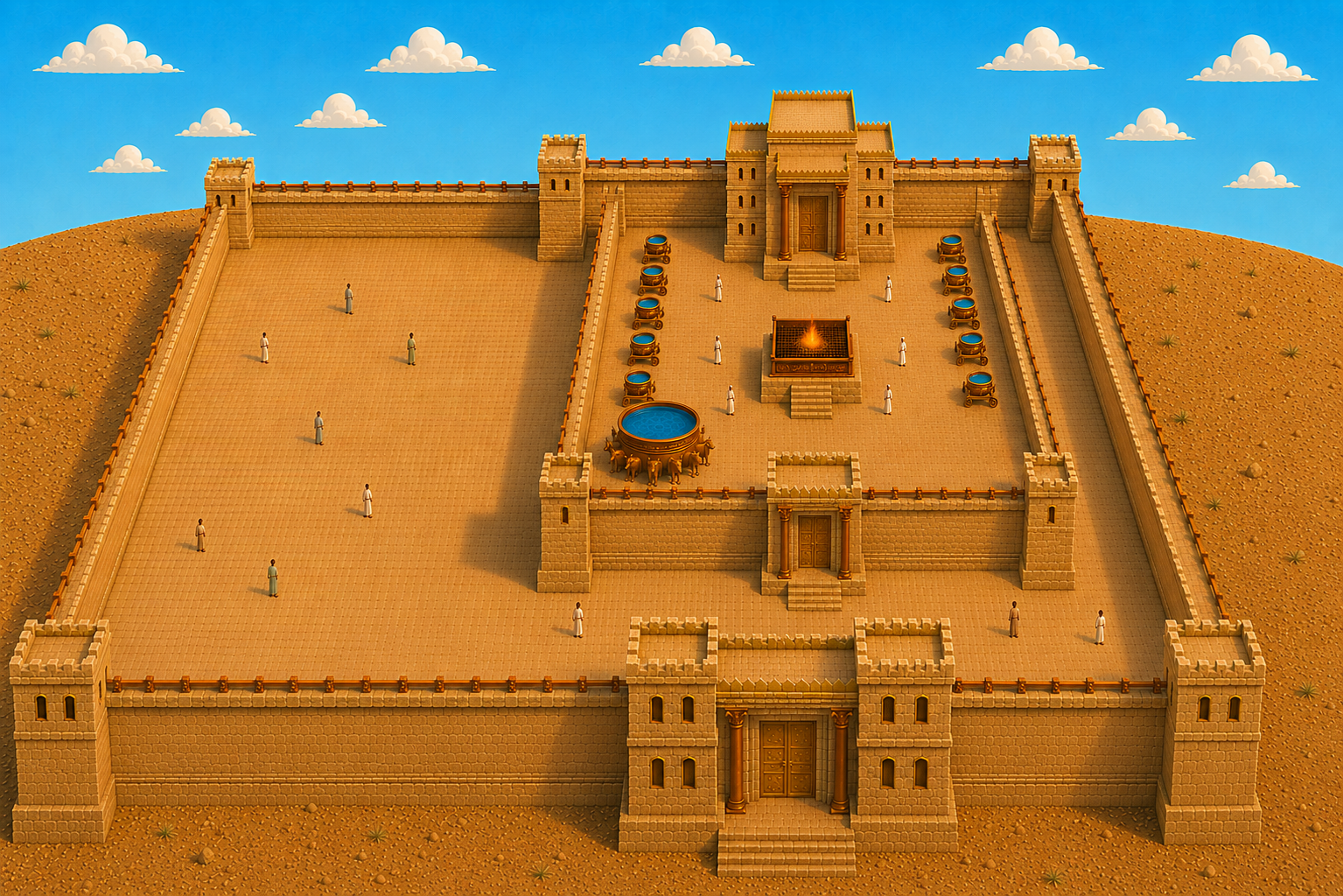
To understand Solomon’s Temple you have to start with the ground it stood on and the tent it replaced. The Temple was not dropped onto a blank hill; it crowned a mountain already thick with memory, at the top of a city that climbed from a single spring, and it housed a God who had spent centuries dwelling in a portable tent. This guide follows that logic — from the spring to the summit, from the tent to the house — and keeps four kinds of knowing distinct as it goes: the biblical text, the archaeology, interpretation, and the Latter-day Saint frame. Hold those apart, and the Temple comes into focus without anything getting flattened.
A Mountain with a Memory
Solomon “began to build the house of the LORD at Jerusalem in mount Moriah, where the LORD appeared unto David his father, in the place that David had prepared in the threshingfloor of Ornan the Jebusite” (2 Chronicles 3:1). That single verse stacks three covenant moments on one summit. Moriah is where Abraham was sent to offer Isaac — “get thee into the land of Moriah… offer him there” (Genesis 22:2). It is the threshing floor David bought after the plague, where “David built there an altar unto the LORD… and the plague was stayed” (2 Samuel 24:25). And it became the foundation of the Temple itself. Abraham’s test, David’s mercy, Solomon’s house — the same rock. The Temple’s location is an argument: God meets His people where He has met them before.
(Note: “Ornan” in 2 Chronicles and “Araunah” in 2 Samuel are two spellings of the same Jebusite, not two people.)
What the name carries. Break the name Moriah (מֹרִיָּה) in two and its meaning surfaces. The first piece, moreh (מוֹרֶה), means “teacher” — from yarah (יָרָה), the root meaning “to point out, direct, teach” — the same root that gives us torah (תּוֹרָה), “instruction.” The second piece, Yah, is the short form of the divine name Jehovah. Joined together — moreh + Yah — the name can be read as the place where Jehovah teaches: a mountain not only where God is met, but where He instructs His people and where they come to know Him. Hebrew names hold more than one meaning at once, and this one runs in layers: the same name also echoes ra’ah (רָאָה), “to see / to provide” — Abraham calls the spot Jehovah-jireh, “In the mount of the LORD it shall be seen” (Genesis 22:14). These are not rival readings to choose between, but layers that hold together — the mountain is where Jehovah teaches, and where Jehovah sees and provides: both at once, each deepening the other.
A Latter-day Saint echo. Latter-day Saint readers have long noticed that Cumorah — the hill where Moroni preserved and buried the gold plates — shares that same -morah element, and reads naturally in Hebrew with the prefix kaph (כְּ, “like / as”): Cumorah, “like Moriah.” The parallel is apt: both are hills where sacred records and treasures were kept and guarded — Moriah’s temple sheltering the ark and the covenant, Cumorah sheltering the Nephite record until its time. (A devotional reading offered in the Latter-day Saint frame, not an established etymology.)
Spring to Summit
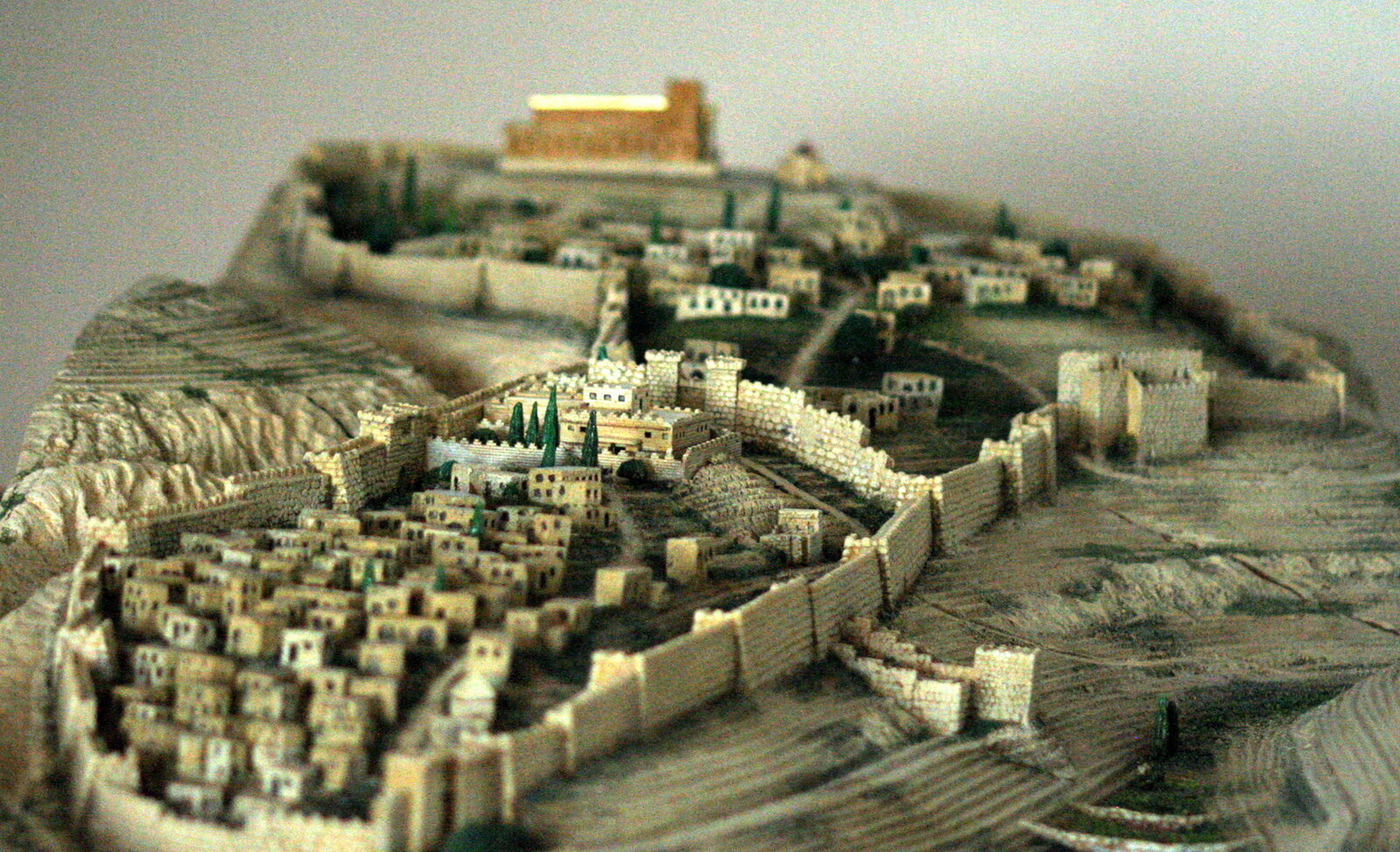
The sacred space is best read as a journey upward. At the bottom of the eastern ridge is the Gihon Spring; from it the City of David climbs north toward the high point where the Temple stood. The Psalms turn that climb into a question every pilgrim asked: “Who shall ascend into the hill of the LORD? or who shall stand in his holy place?” (Psalm 24:3). To approach the Temple was to go up — through the courts, past the altar of sacrifice, into ascending degrees of holiness, toward the cube of gold where God had promised to dwell. The guide’s flagship floor plan lets you walk that ascent.
From Tent to House
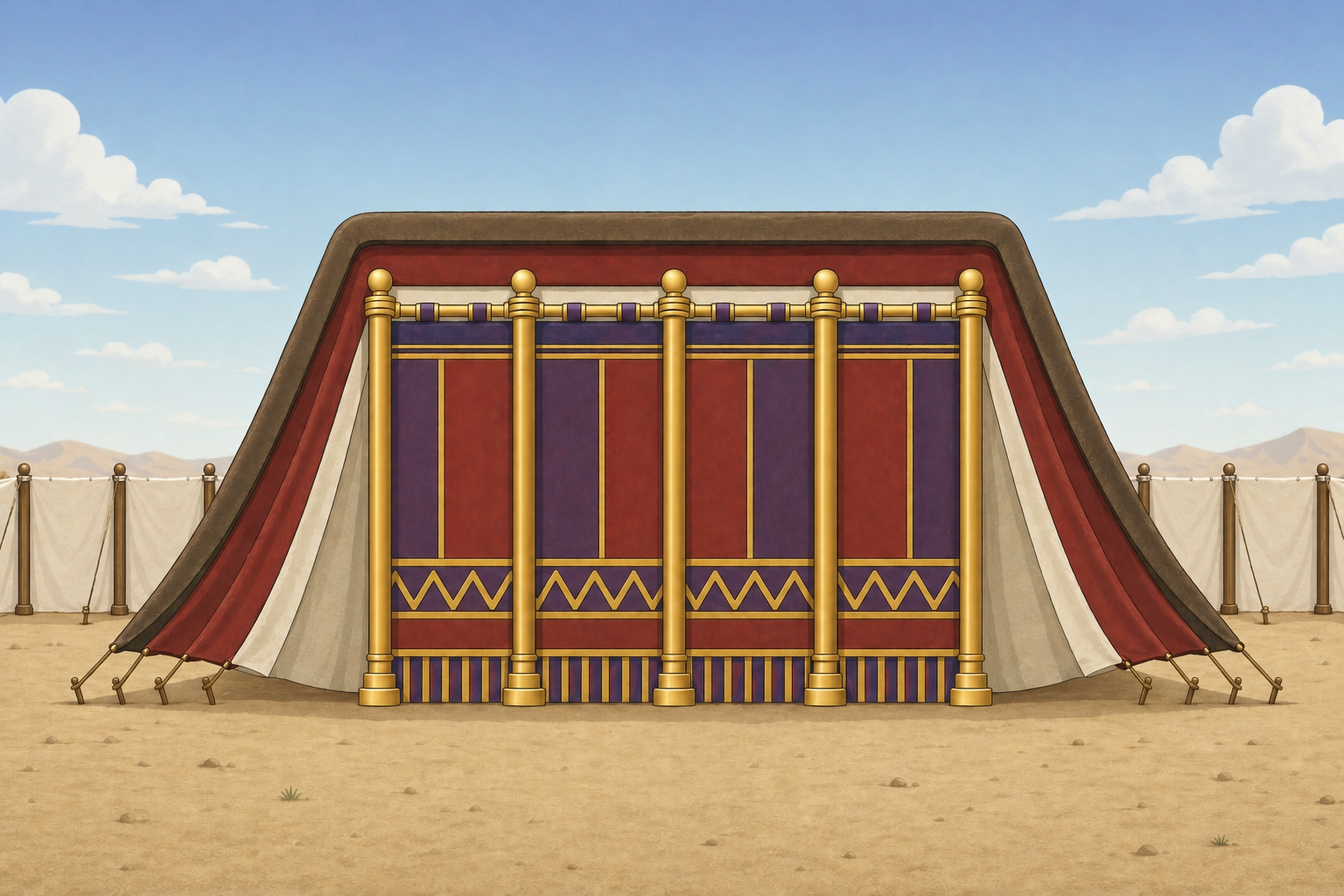
The Temple did not invent Israel’s worship; it made permanent what the Tabernacle had carried. “In the four hundred and eightieth year after the children of Israel were come out of the land of Egypt… [Solomon] began to build the house of the LORD” (1 Kings 6:1) — nearly five centuries during which God’s dwelling had been a tent, moving from Sinai to Shiloh to David’s tent in Jerusalem. The continuity is made literal at the dedication: “they brought up the ark of the LORD, and the tabernacle of the congregation, and all the holy vessels that were in the tabernacle” (1 Kings 8:4). The old tent and its vessels were carried up into the new house. The God who had dwelt in cloth now dwelt in cedar and gold — the same God, the same covenant, a new permanence.
Start with the tent. This guide is the next installment in the ancient sacred space series after the Tabernacle field guide — the portable sanctuary whose pattern the Temple fulfills. For the tent’s full design, and for the priestly garments — the symbolism woven into each vestment the priests wore to serve in both tent and temple — start there.
How to Read This Guide
The pages that follow move through that sacred geography:
- The City of David — the ridge, the spring, the archaeology where text meets spade.
- The Temple itself — the annotated floor plan: Ulam, Hekhal, Devir, the bronze and the gold. (flagship interactive)
- Furnishings & bronze · The Temple Mount through time
- Dedication & theology — the glory fills the house; Solomon’s prayer; the Latter-day Saint temple ties.
- Sources & layers — how to tell biblical text, reconstruction, interpretation, and doctrine apart.
A word on certainty. No remains of Solomon’s Temple have ever been excavated — it lies beneath the Dome of the Rock, and the Temple Mount cannot be dug. Every depiction in this guide is inference from the text, comparative ancient architecture, and the shape of the exposed bedrock at the summit (which limits where the building could have stood). The City of David below has been excavated; the Temple above has not. We’ll say which is which, every time.