Field Guide · Solomon's Temple
Dedication & Theology
When the house was finished, the glory filled it. Solomon's prayer, the cloud, and the question at the heart of the Temple — can the God of heaven dwell on the earth?
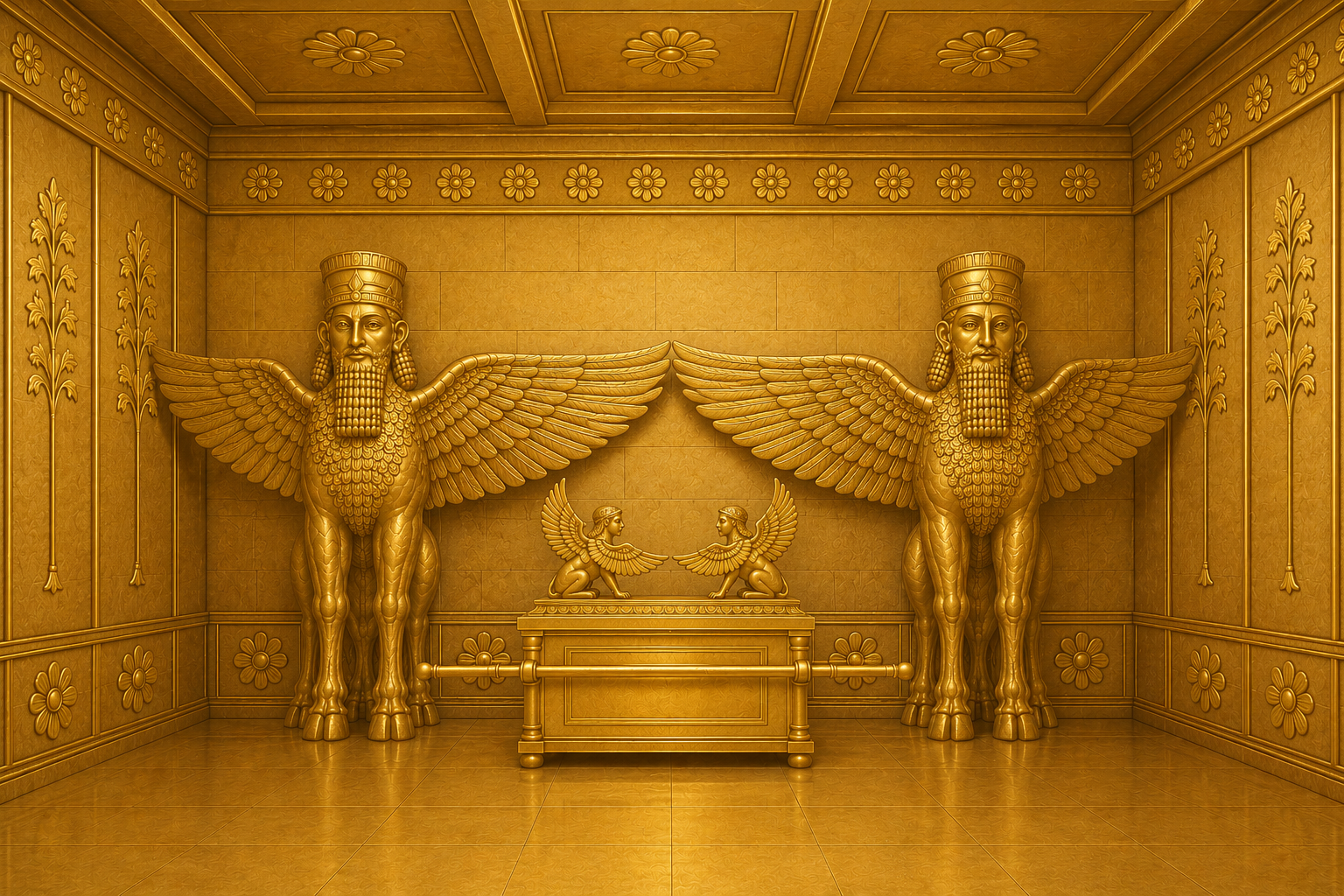
When the house was finished, Solomon did not simply open its doors — he gathered Israel to it. In the seventh month, at the feast, the elders and tribal heads came up to Jerusalem, the priests carried the Ark of the Covenant into the devir (דְּבִיר) beneath the wings of the cherubim; and when the priests came out, “the cloud filled the house of the LORD… for the glory of the LORD had filled the house of God” (1 Kings 8:10–11). Then Solomon turned to the people, spread his hands toward heaven, and prayed. The dedication is the theological center of the whole building account: not the cedar, not the gold, but the moment the kavod (כָּבוֹד) — the weight and glory of God’s presence — descended on the place Israel had built for His name.
A House Dedicated at the Feast of Tabernacles
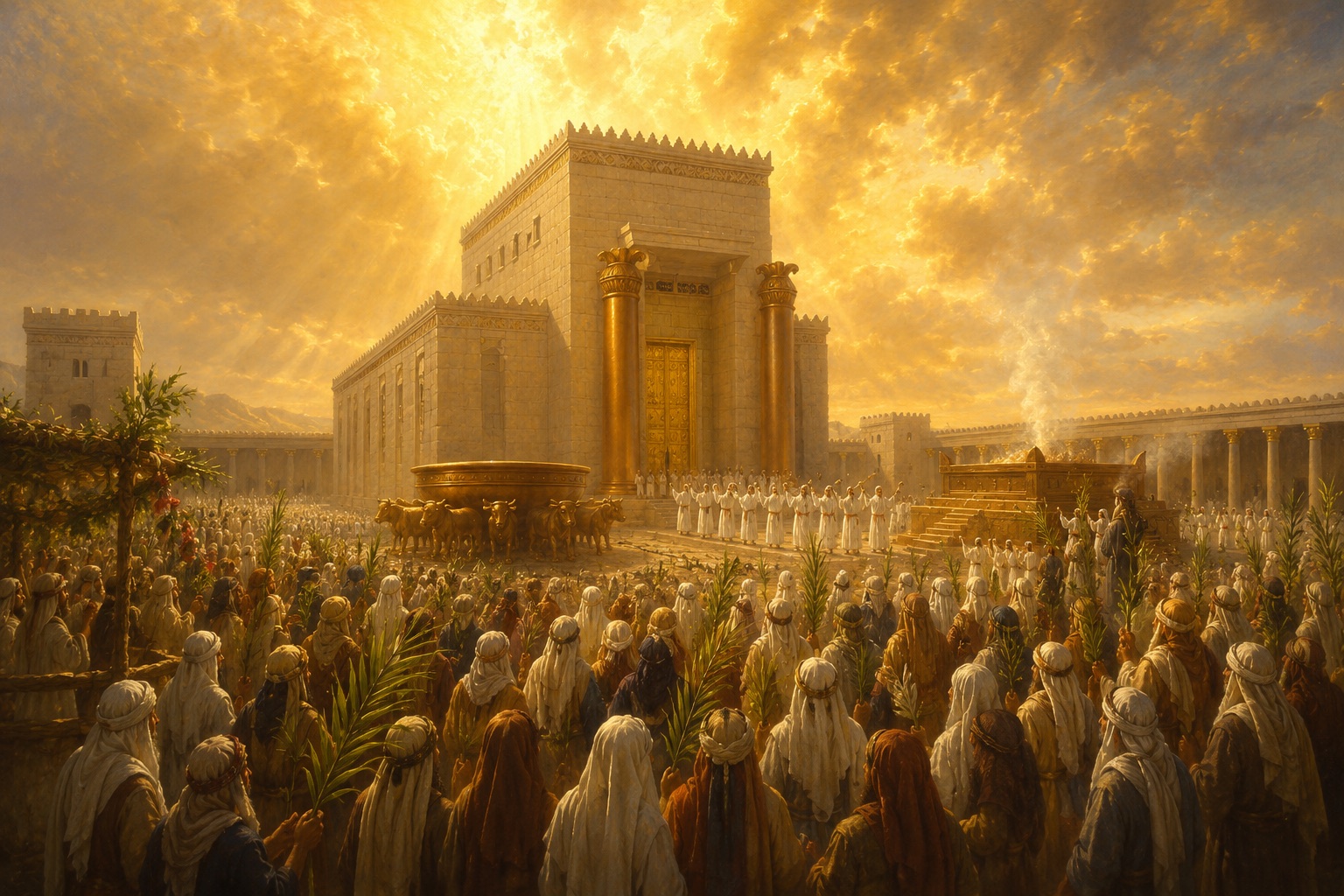
The text sets the dedication “at the feast in the seventh month” (1 Kings 8:2) — the Feast of Tabernacles (Sukkot (סֻכּוֹת)), when Israel left their houses to dwell in booths and remember the forty years of wilderness wandering, when God’s presence had gone with them in a tent. There is a deliberate poetry in dedicating the permanent house of God during the festival that remembers His portable dwelling: the Tabernacle gives way to the Temple, but the God who filled the tent is the God who now fills the house.
The Gathering · three peoples, one pattern
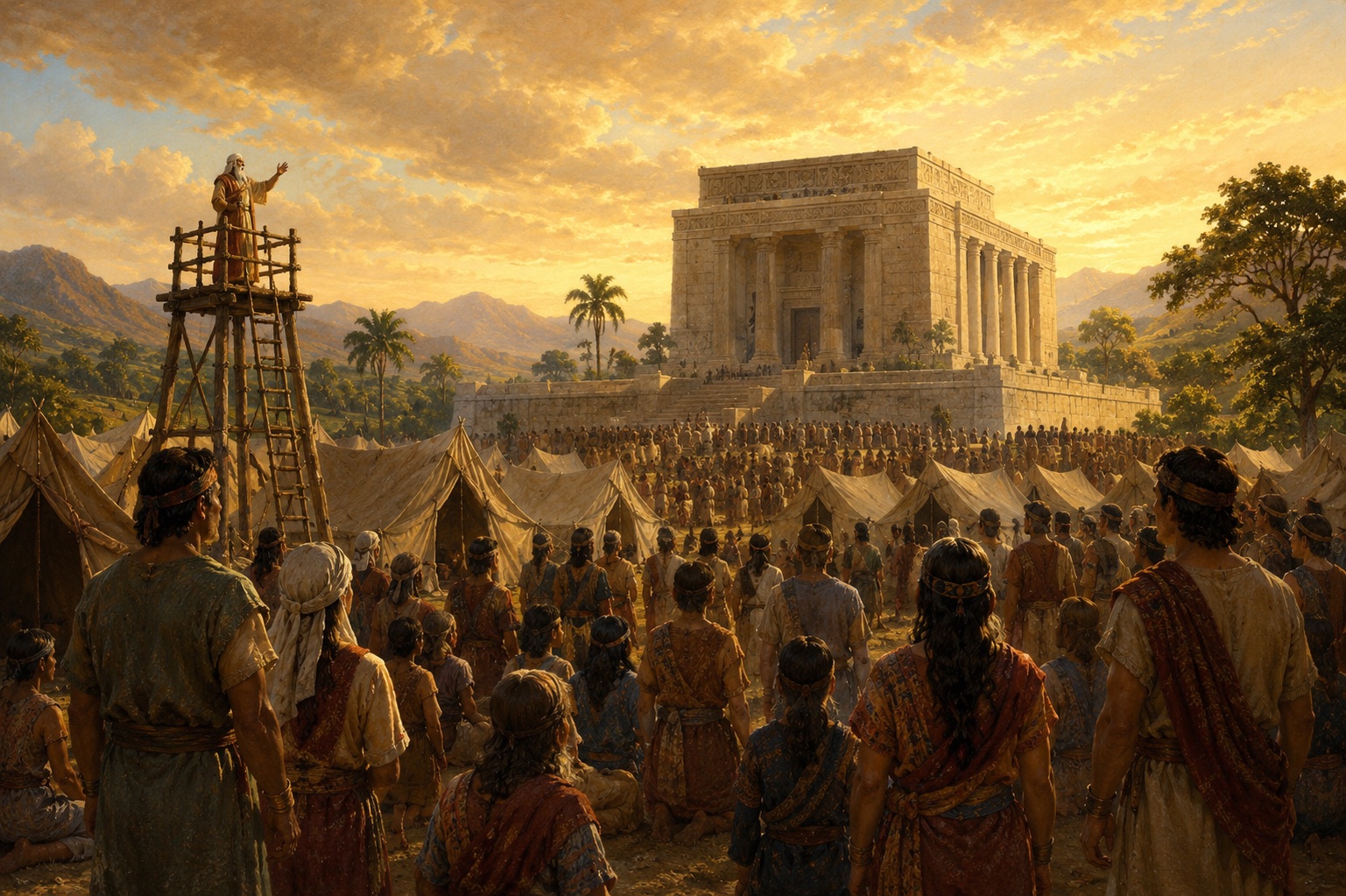
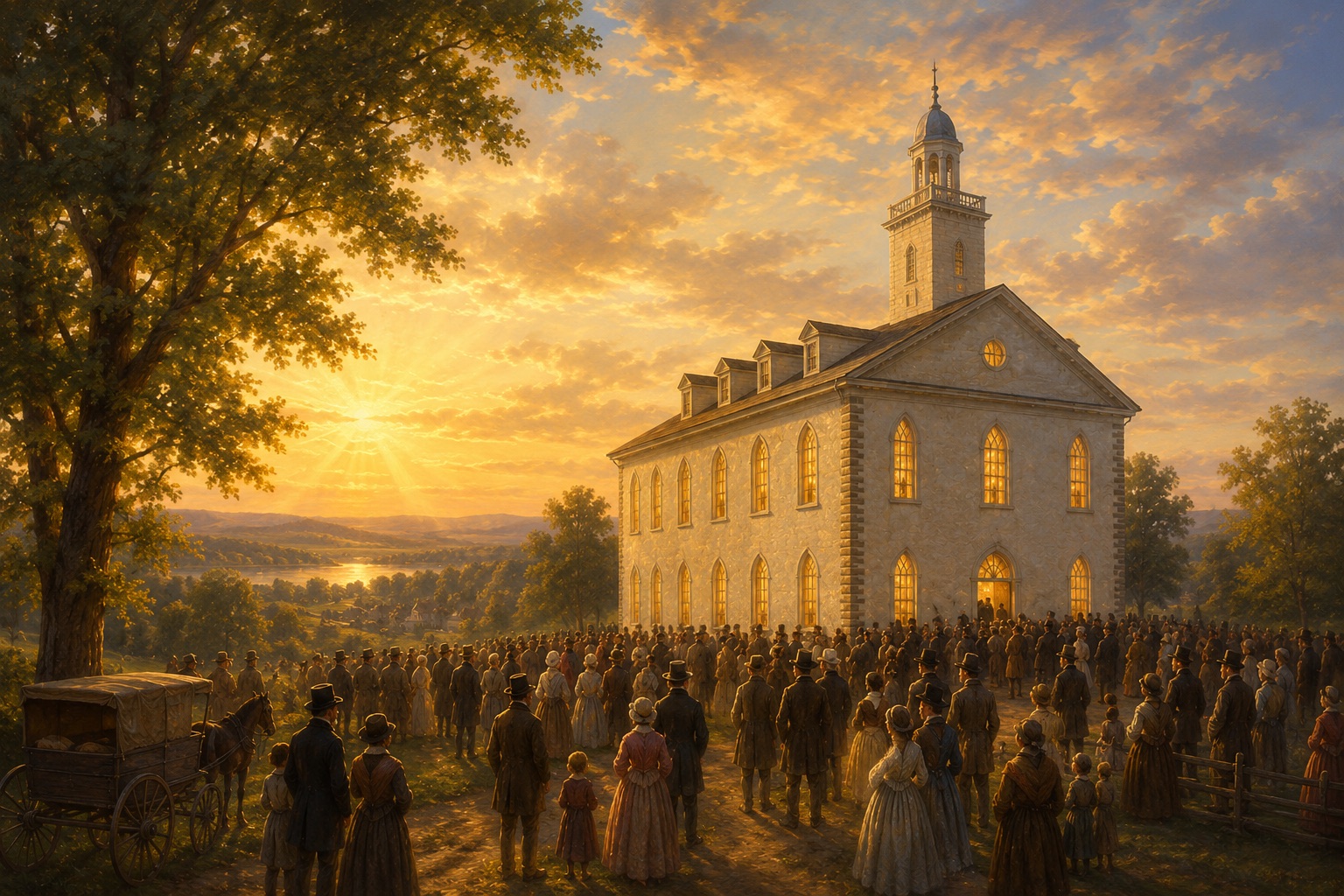
When a house of the Lord was finished, the people gathered to it. Israel assembled at the autumn feast for Solomon’s temple; King Benjamin’s people pitched their tents around the Nephite temple in the New World; and long after, the Saints gathered to the Kirtland Temple. Three peoples, three houses — one act.
Israel gathers to the First Temple · 1 Kings 8
King Benjamin’s people gather · Mosiah 2
The Saints gather to Kirtland · 1836
Interpretive layer. A substantial strand of Latter-day Saint scholarship reads this same festival setting alongside King Benjamin’s gathering of his people to the temple in Zarahemla (Mosiah 2), where the people likewise “pitched their tents round about the temple” at what appears to be a fall-festival coronation and covenant renewal. This is a recurring thread across Interpreter Foundation work — among others, Lynne Hilton Wilson, John A. Tvedtnes, Bradley J. Kramer, and Lynda Cherry have developed it. It is interpretive synthesis drawn from the festival timing, not a claim the biblical text makes — but it is a well-supported reading, not a lone conjecture.
The Ark and What Was Missing
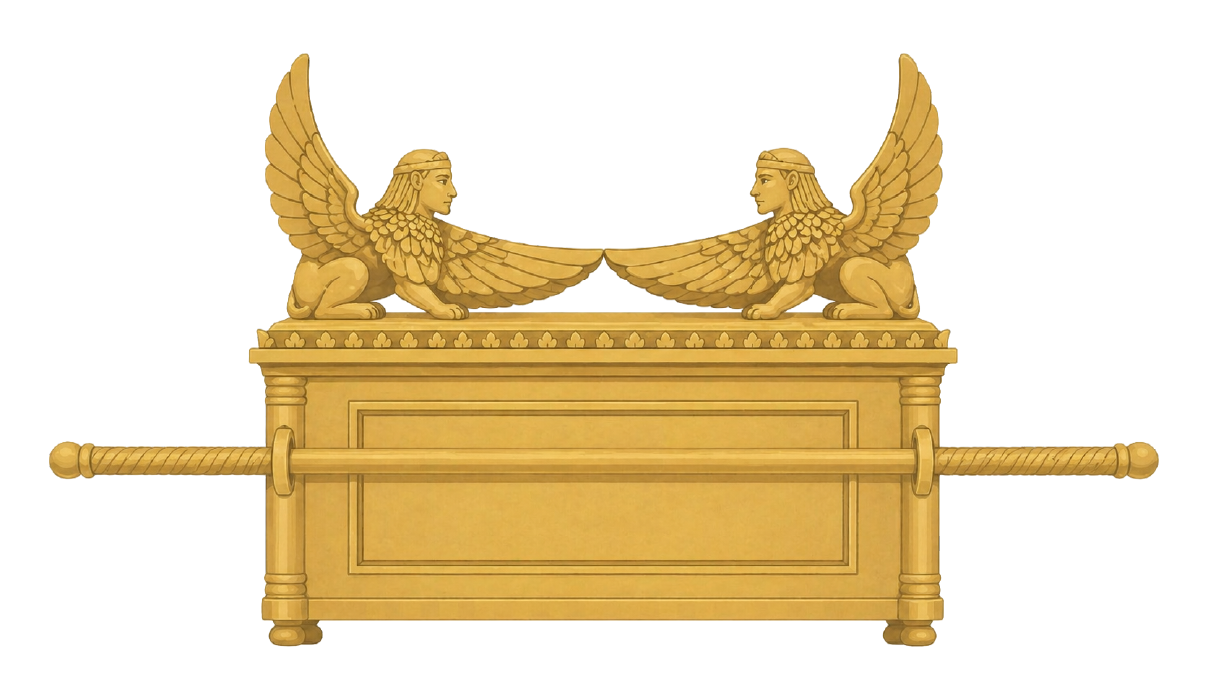
When the priests set the Ark in its place, the narrator pauses to tell us what was inside: “There was nothing in the ark save the two tables of stone, which Moses put there at Horeb” (1 Kings 8:9). Earlier, the Ark had also held a golden pot of manna and Aaron’s rod that budded (Hebrews 9:4; cf. Exodus 16:33–34; Numbers 17:10).
Interpretive layer. Lynne Hilton Wilson reads the absence of the manna and the rod as quietly significant: the two missing objects were tokens of God’s miraculous provision and of divinely-chosen priestly authority — and they are gone in the very era when Israel had insisted on a king “like all the nations” (1 Samuel 8:5). This is one named scholar’s faithful reading of a real textual detail; the biblical text does not explain why only the tablets remain.
“But Will God Indeed Dwell on the Earth?”
The heart of Solomon’s prayer is a question the rest of the account never lets us forget: “But will God indeed dwell on the earth? behold, the heaven and heaven of heavens cannot contain thee; how much less this house that I have builded?” (1 Kings 8:27). The root behind Israel’s whole theology of presence is shakan (שָׁכַן), “to dwell” — the same root that gives us mishkan (the Tabernacle, the “dwelling”) and, in later tradition, Shekhinah, the dwelling-presence of God. Solomon holds two truths together without collapsing either: the God who cannot be contained by the highest heavens has, by His own covenant choice, put His name in this bayit (בַּיִת), this house (1 Kings 8:29). Transcendence and nearness at once. The Temple is not a box that holds God; it is the place where the unbounded God has promised to meet His people.
The Glory Fills the House
The descent of the cloud (1 Kings 8:10–11) deliberately echoes the moment the kavod filled the newly-finished Tabernacle, when “Moses was not able to enter into the tent of the congregation, because the cloud abode thereon, and the glory of the LORD filled the tabernacle” (Exodus 40:34–35). The same sign seals both sanctuaries. For a reader tracing the pattern, the message is continuity: the God of Sinai, the God of the wilderness tent, is the God who now claims the house in Jerusalem.
The Glory Fills the House · the same sign seals both sanctuaries
The cloud that filled Solomon’s temple is the very sign that had filled the Tabernacle generations before — and the wording is almost word for word. Hover or tap a highlighted phrase to light up its echo.
The Tabernacle · Exodus 40
Solomon’s Temple · 1 Kings 8
Solomon’s Prayer and the Kirtland Pattern
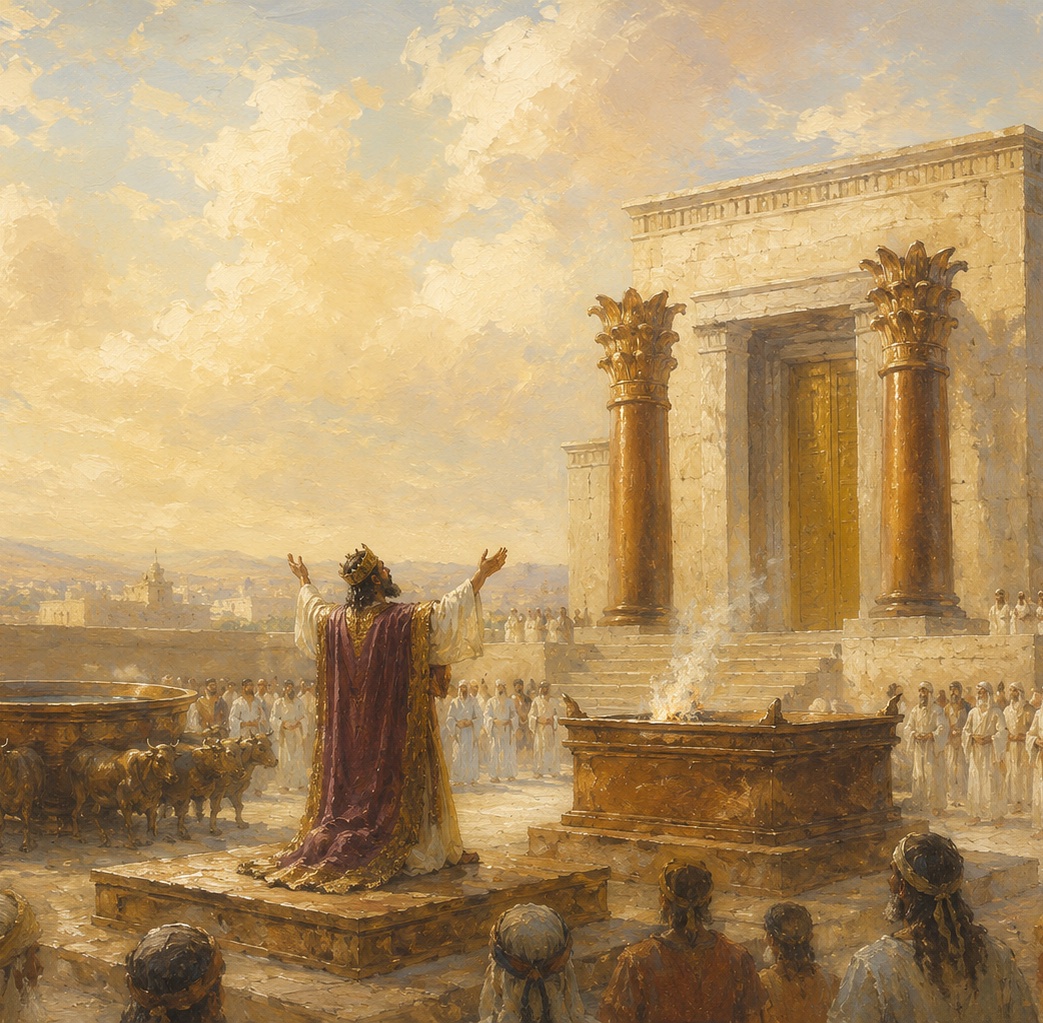
For Latter-day Saint readers, Solomon’s dedicatory prayer rewards reading beside the dedicatory prayer of the Kirtland Temple (Doctrine and Covenants 109), which Joseph Smith received “by revelation” to read at the dedication. Set the two side by side and the shared language lights up:
The Dedicatory Prayer · across two dispensations
Solomon’s dedicatory prayer and the prayer Joseph Smith received “by revelation” for the Kirtland Temple were offered three thousand years apart — yet they share a posture and a vocabulary. Hover or tap a highlighted phrase to light up its echo on the other side.
Solomon’s prayer · 1 Kings 8
“And he said, Lord God of Israel, there is no God like thee, in heaven above, or on earth beneath, who keepest covenant and mercy with thy servants that walk before thee with all their heart” (8:23).
“…the place of which thou hast said, My name shall be there” (8:29).
The Kirtland Temple · D&C 109
“Thanks be to thy name, O Lord God of Israel, who keepest covenant and showest mercy unto thy servants who walk uprightly before thee, with all their hearts” (109:1).
“…that thy name may be upon them, and thy glory be round about them” (109:22).
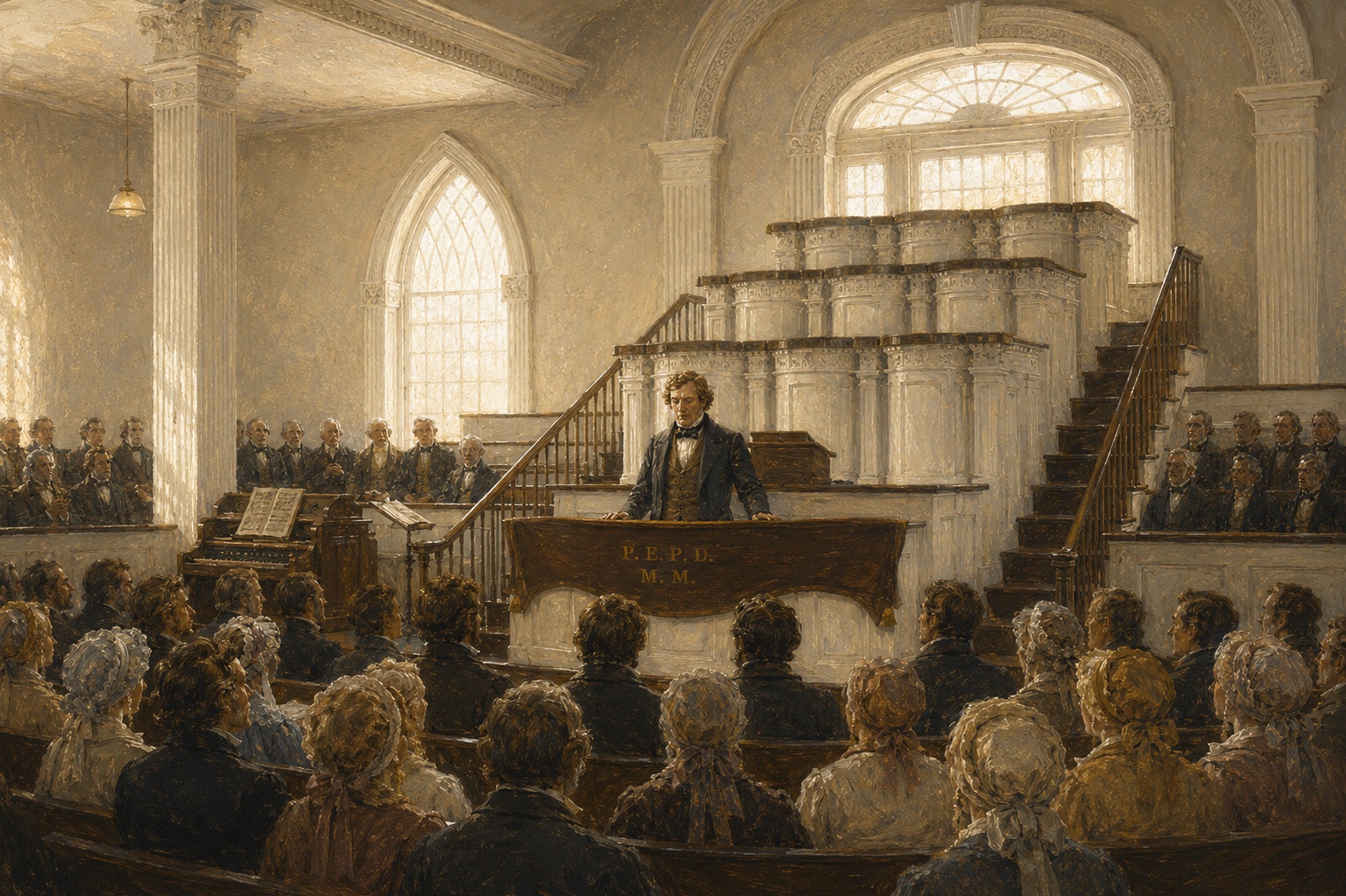
Latter-day Saint doctrinal layer. The point is not that Joseph Smith copied Solomon, but that the same God, organizing temple worship in two dispensations, drew on the same pattern — covenant, name, presence, mercy toward the praying people. This is the guide’s “deepens, not debunks” payoff: knowing the shape of an ancient temple dedication makes the Restoration’s temple dedications legible as part of one continuous story.
From the Bronze Sea to Living Water
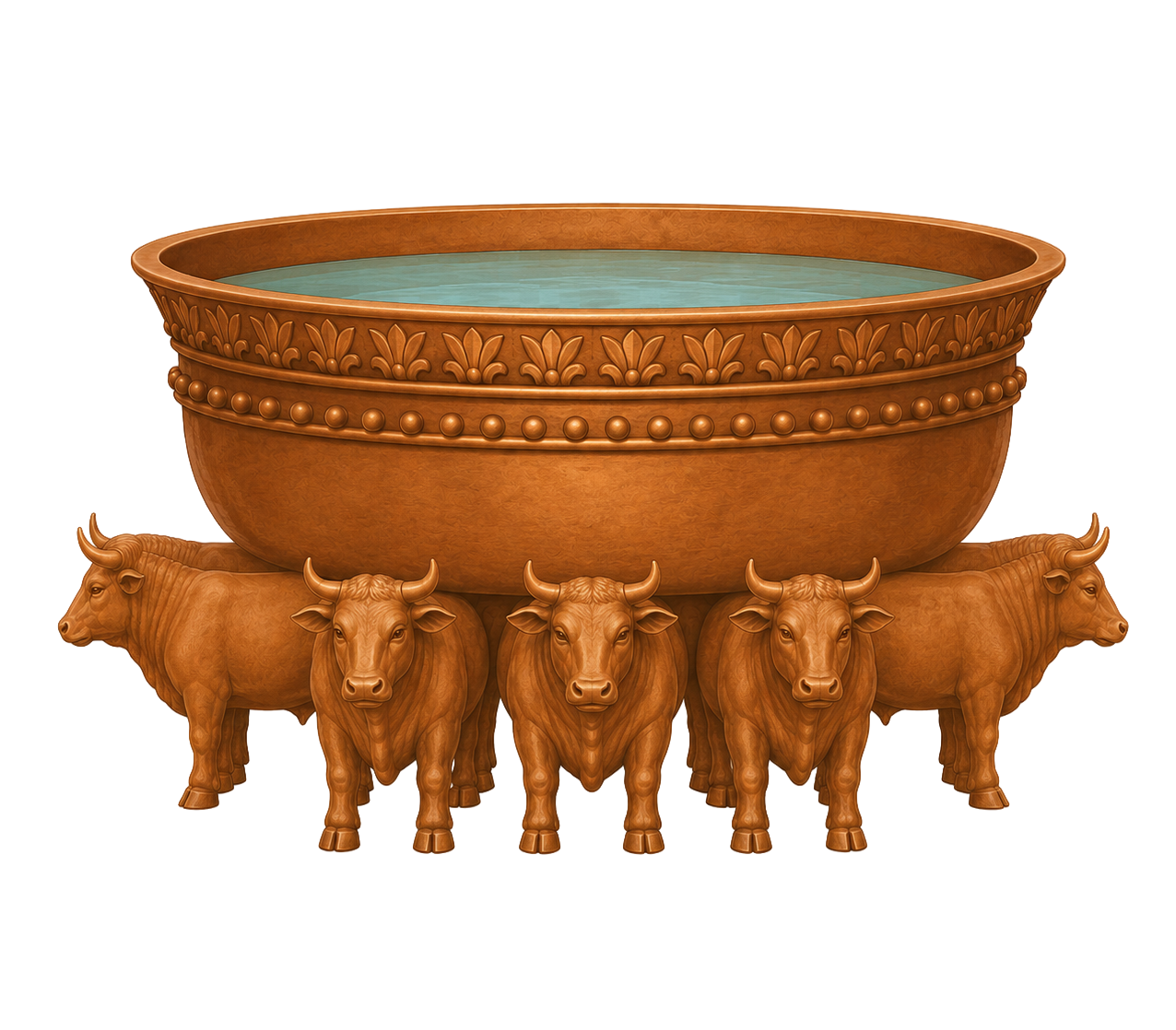
The dedication also reframes the Temple’s most striking furnishing. The enormous bronze “sea” (1 Kings 7:23–26) — holding two to three thousand baths, more than ten thousand gallons, in a landlocked city fed only by the Gihon spring — stood for priestly washing. Latter-day Saint readers connect this to the Lord’s instruction in Doctrine and Covenants 124:38–39 that “washings and… anointings” — ordinances “hid from before the world” — belong to the house He commands His people to build.
The Waters · the same basin, three thousand years apart
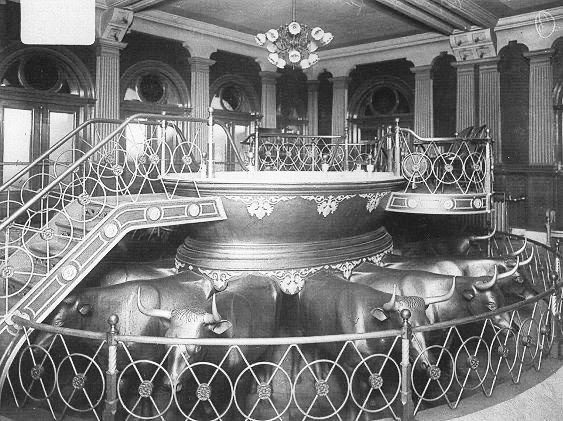
Solomon’s bronze sea rested on twelve oxen, three facing each quarter of the compass. When the Restoration built fonts for baptism, it set them on twelve oxen too — expressly after the pattern of Solomon’s sea.
The molten sea · 1 Kings 7
The temple font · Salt Lake, c. 1909
So the dedication gathers the whole guide into a single claim: a house of cedar and gold, built by inference and reconstruction in these pages, was for Israel the place where the uncontainable God chose to put His name and meet His people — and that pattern did not end with Solomon. Return to the plan and walk it again: explore Solomon’s Temple floor plan →