Field Guide · Solomon's Temple
City of David
The ridge, the spring, and the spade — the one place where the world of Kings meets archaeology, and where the line between solid and contested matters most.
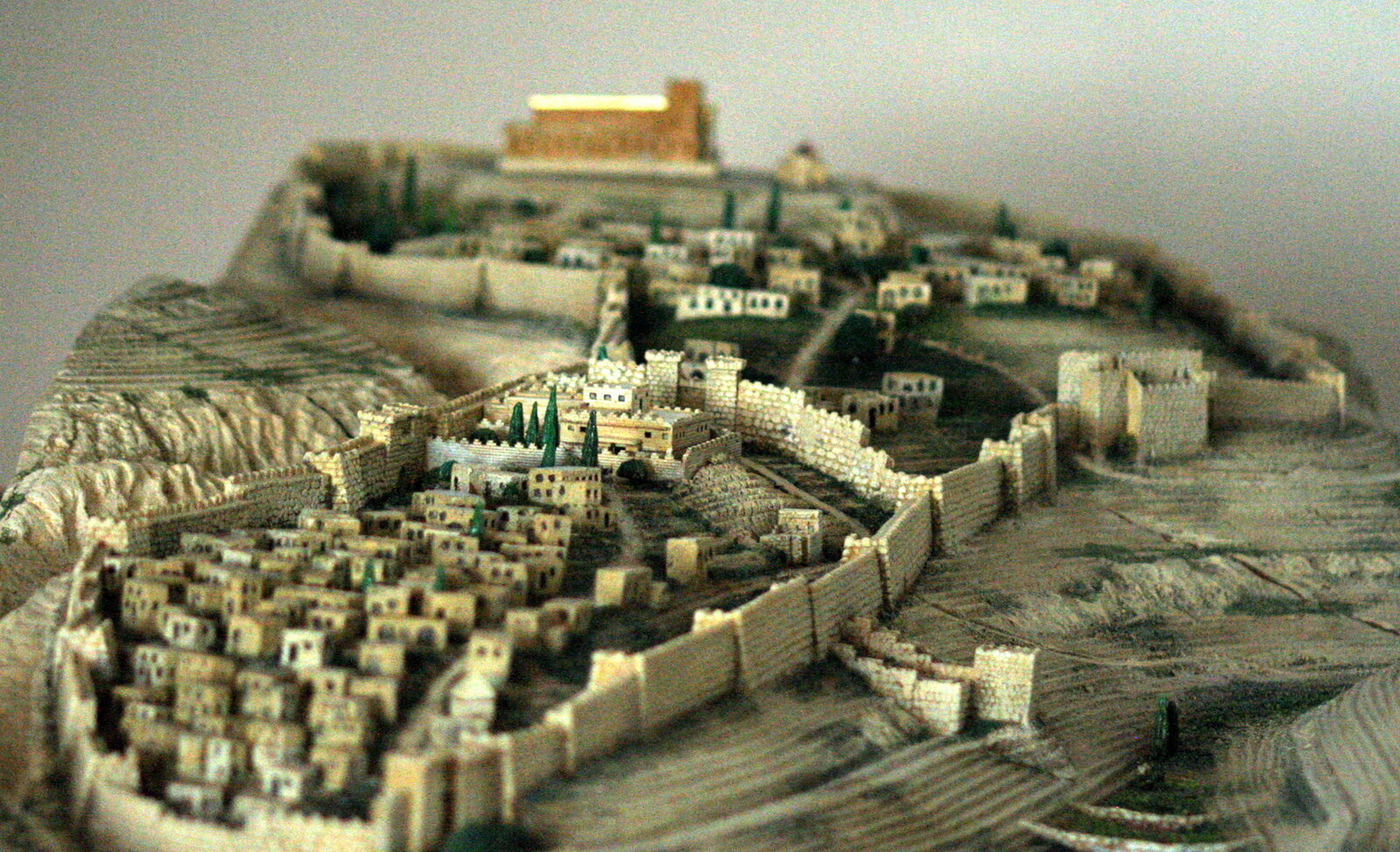
The Temple sat at the summit; the city that fed it spilled down the ridge to the south — a narrow spur barely 12 acres, wedged between two valleys and watered by a single spring. This is the City of David, the stronghold David captured from the Jebusites and made his capital. Unlike the Temple Mount above it — where no excavation is possible and every reconstruction is inference — the City of David has been dug for over a century. It is the one place where the world of Kings meets the spade. That makes it exciting, and it makes it contested: some of what’s been found is rock-solid, and some of the headline identifications are live arguments. This page keeps the two apart.
How David Took the City
Jerusalem began as a Jebusite stronghold so confident in its walls that its defenders taunted David: “Except thou take away the blind and the lame, thou shalt not come in hither” (2 Samuel 5:6). “Nevertheless David took the strong hold of Zion (צִיּוֹן): the same is the city of David” (2 Samuel 5:7). The how is famously cryptic: “Whosoever getteth up to the gutter, and smiteth the Jebusites… he shall be chief” (2 Samuel 5:8). The Hebrew word is tsinnor (צִנּוֹר) — something like “water-channel” or “shaft.”
Contested reading. A popular reconstruction links the tsinnor to Warren’s Shaft (named for Charles Warren, the Victorian explorer who mapped it), a natural vertical channel in the rock, and pictures David’s men climbing the water system to take the city from within. It’s a vivid theory — but the meaning of tsinnor is uncertain, and excavators Ronny Reich and Eli Shukron have shown the shaft may not have been usable that way in David’s day. Present it as one hypothesis, not established fact.
The Gihon Spring — the City’s Lifeline
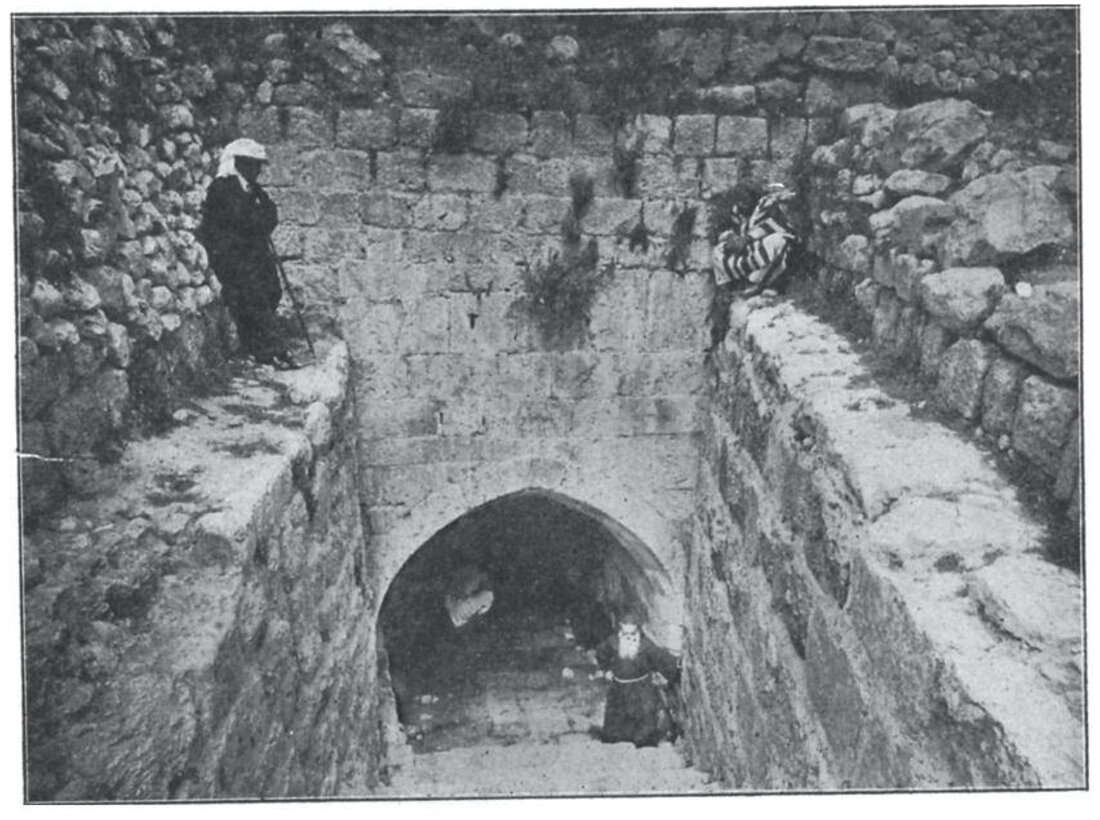
The whole city existed where it did for one reason: the Gihon Spring (גִּיחוֹן), “gusher,” the only reliable water on the ridge. It was sacred as well as practical — when David made Solomon king, “they… brought him to Gihon” to be anointed (1 Kings 1:38). The spring sits low on the eastern slope, and the city climbs from it toward the summit — the spring-to-summit ascent that the Temple crowns.
“David’s Palace”? The Large Stone Structure
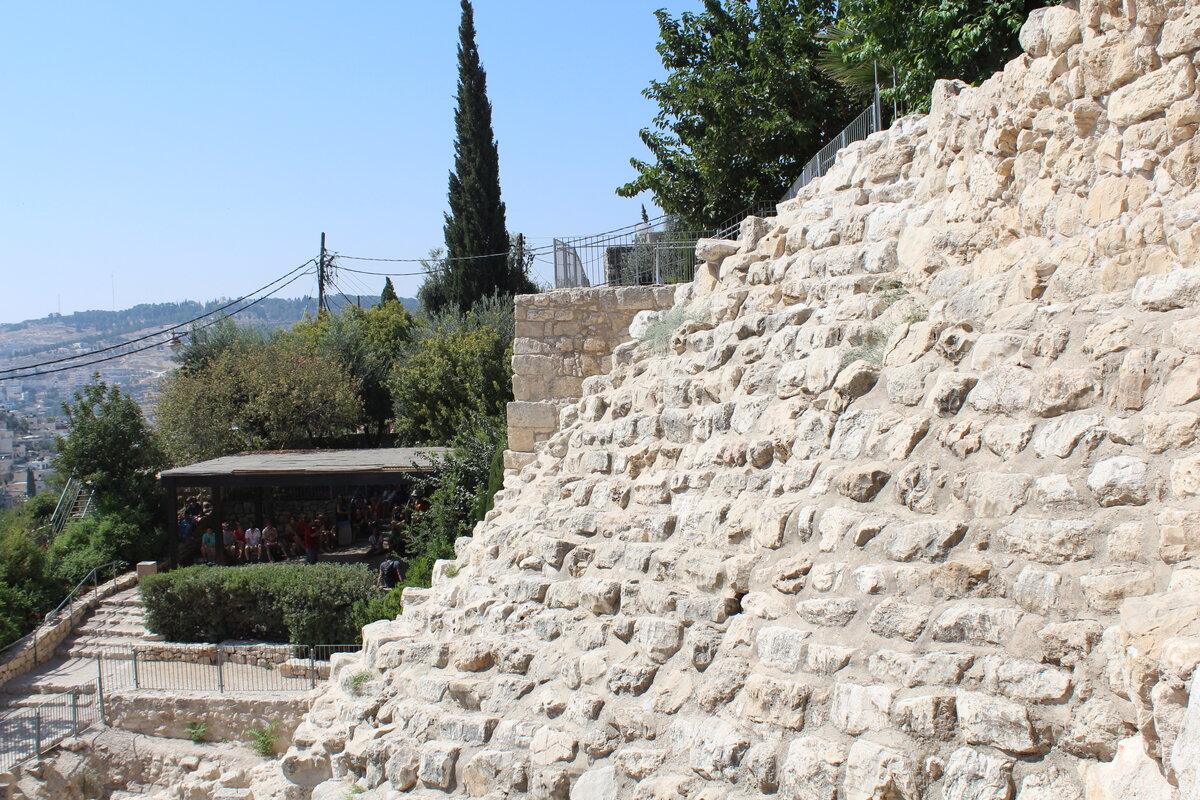
Near the top of the ridge, archaeologist Eilat Mazar uncovered a massive building she identified as King David’s palace — the “Large Stone Structure” — sitting atop the older terraced “Stepped Stone Structure,” which many connect to the biblical Millo (מִלּוֹא), “the filling” (2 Samuel 5:9; 1 Kings 9:15; 11:27). If she is right, it is a piece of David’s own capital.
Contested reading. The “David’s palace” identification is disputed — over dating, over whether the Large and Stepped structures are one building, and over the link to Millo. Present Mazar’s reading as a serious hypothesis under active debate, not a settled discovery (Mazar, Biblical Archaeology Review 32.1, 2006). The Stepped Stone Structure itself is monumental and real; what it was is the open question.
Hezekiah’s Tunnel and the Pool of Siloam
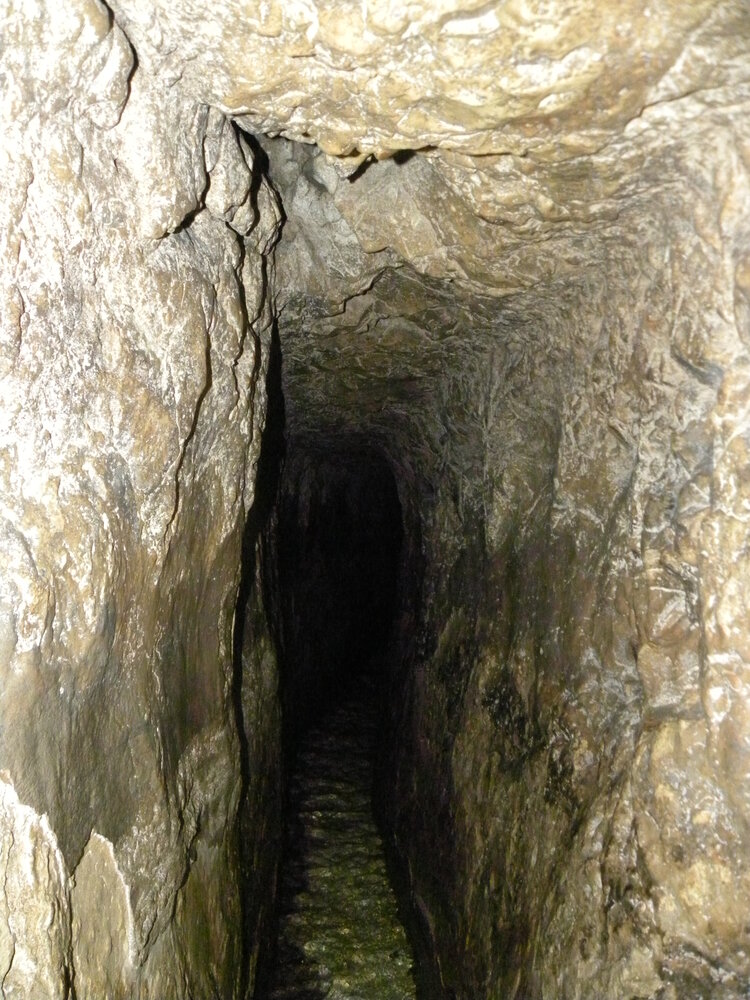
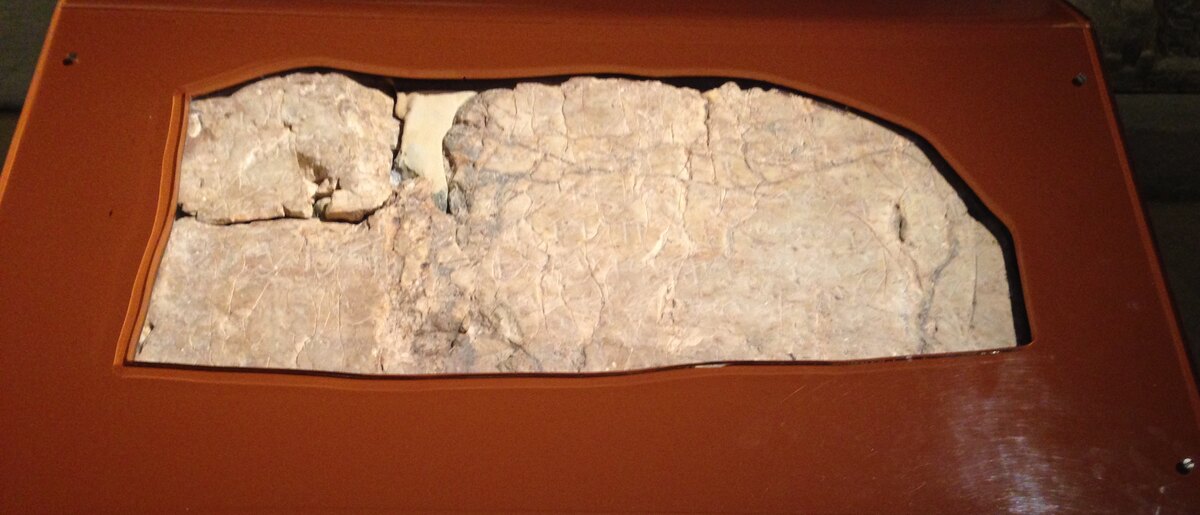
The most spectacular — and least disputed — works belong to King Hezekiah, bracing for the Assyrian siege. He “made a pool, and a conduit, and brought water into the city” (2 Kings 20:20); he “stopped the upper watercourse of Gihon, and brought it straight down to the west side of the city of David” (2 Chronicles 32:30) — moving the vulnerable eastern spring’s water safely inside the walls. That is Hezekiah’s Tunnel — a 1,750-foot channel cut through bedrock from the Gihon to the Pool of Siloam (שִׁלֹחַ), “sent” — its rock wall still bearing an ancient Hebrew inscription that records the two digging teams meeting in the middle. Centuries later the same pool reappears in the Gospel: “Go, wash in the pool of Siloam, (which is by interpretation, Sent)” (John 9:7) — the monumental stepped pool rediscovered in 2004, still fed by the channel Hezekiah cut.
▶ The Healing of the Blind Man at the Pool of Siloam — video by Messages of Christ (Daniel Smith), used with permission.
Names from the Ground: The Bullae
In the same area Mazar’s team recovered bullae — small clay seal-impressions — bearing names that step straight out of the book of Jeremiah: Yehucal (Jehucal) son of Shelemiah and Gedaliah son of Pashhur — two royal officials named together in Jeremiah 38:1 (cf. 37:3) as opponents of the prophet. To hold a seal stamped with the name of a man the Bible places in Jeremiah’s Jerusalem is about as direct as the contact between text and dirt gets.
The bullae are tiny — about a centimeter across — and their published photographs are copyrighted, so we don’t reproduce them here. See the actual seal impressions at the Biblical Archaeology Society and in the excavators’ own photographs (Mazar / Hebrew University).
Where Text and Spade Meet
The City of David is the strongest archaeological anchor in either guide — but its value depends on honesty about confidence.
- Solid and widely accepted: the Gihon Spring, Hezekiah’s Tunnel, the Pool of Siloam, the Siloam inscription, the Jeremiah-era bullae.
- Genuinely contested: the tsinnor-as-conquest-route, and the Large Stone Structure as David’s palace.
Keeping that line bright is exactly the discipline this whole guide is built on — and it is the reason the City of David, where the spade can dig, is treated so differently from the Temple Mount above it, where it cannot.
From the spring at the foot of the ridge, the road runs up — past the palace and the stepped terraces, toward the summit the whole city served. That summit is where we go next: explore Solomon’s Temple floor plan →