Field Guide · The Divided Kingdom
The Split
At Shechem, Solomon's son threw away ten tribes over a tax dispute — and the text calls it both his folly and God's judgment, at once. The fracture that made the Divided Kingdom.
The united kingdom that David built and Solomon adorned lasted exactly three reigns. At Shechem (שְׁכֶם) — where the tribes had gathered to crown Solomon’s son Rehoboam — a single bad decision tore it in two, and it never came back together. The northern ten tribes broke away under Jeroboam to become Israel; the south, loyal to David’s line, became Judah. Everything in the rest of this guide — the rival shrines, the prophetic verdicts, the long slide to two exiles — flows from this fracture. And the text tells the story on two levels at once: a tale of human folly, and a tale of divine purpose.
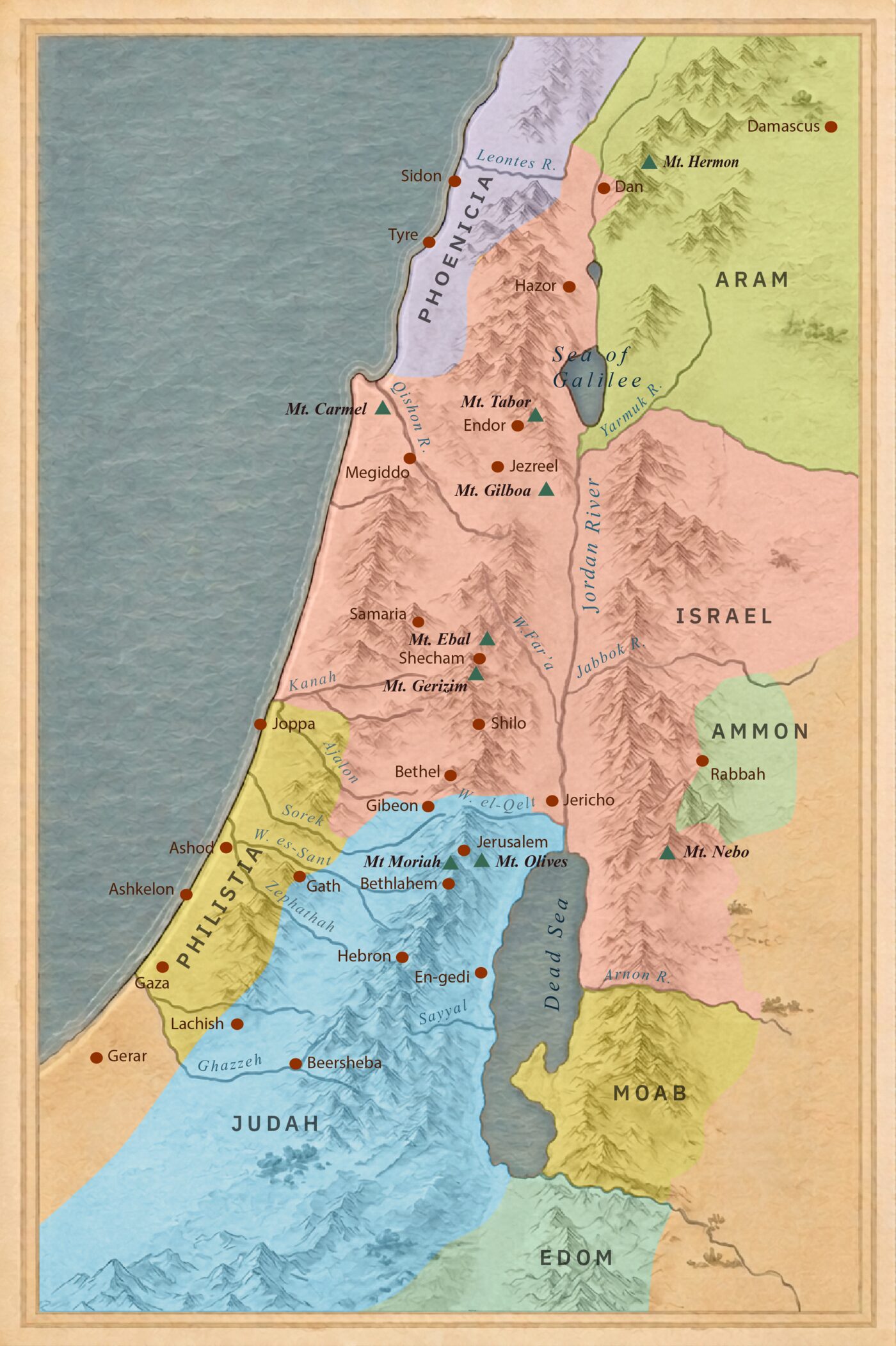 Golden‑calf shrine · Dan
Golden‑calf shrine · Bethel
Golden‑calf shrine · Dan
Golden‑calf shrine · BethelThe Tax Revolt at Shechem
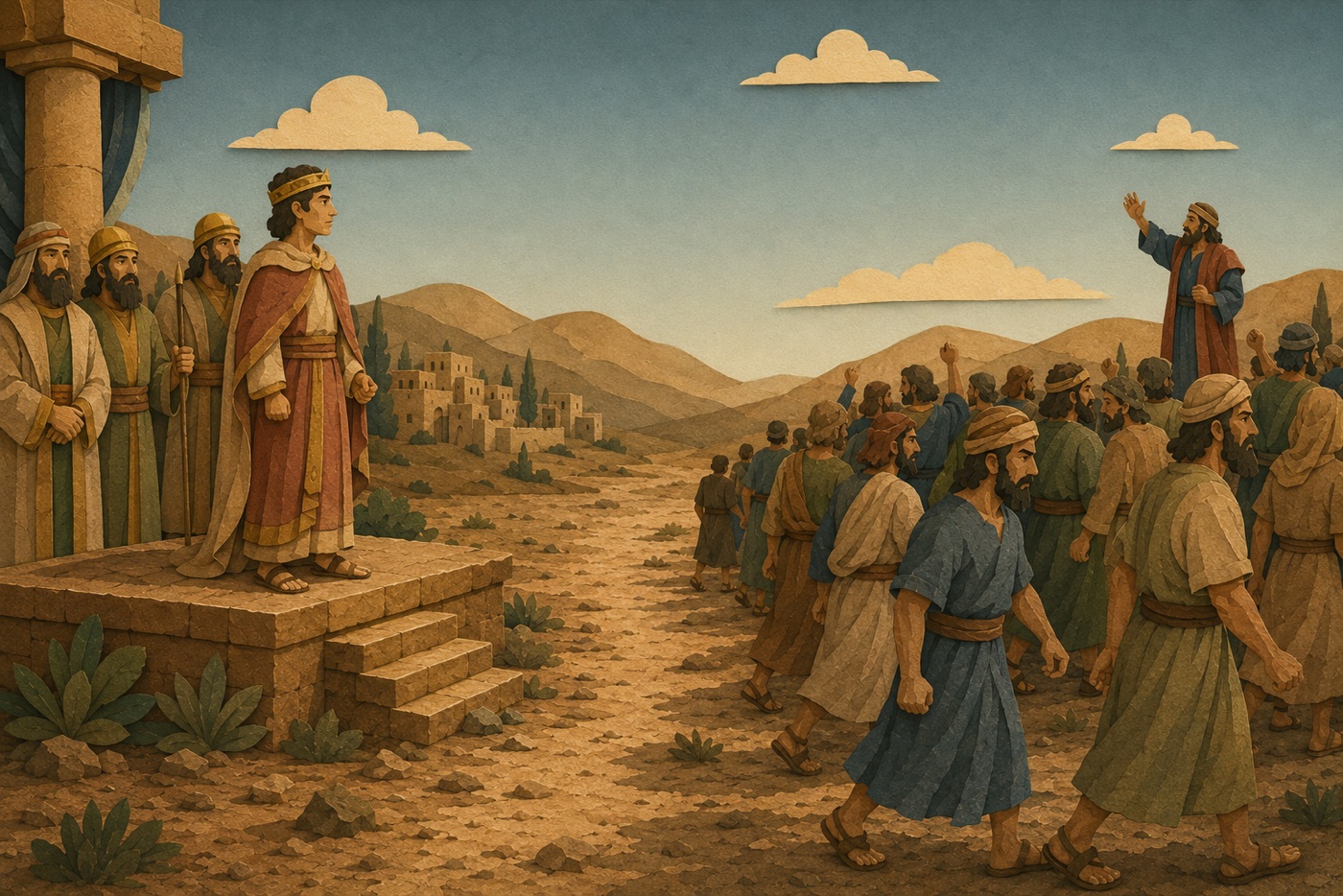
The northern tribes come to Rehoboam with a reasonable request: “Thy father made our yoke grievous: now therefore make thou the grievous service of thy father, and his heavy yoke which he put upon us, lighter, and we will serve thee” (1 Kings 12:4). Solomon’s glory had been built on conscripted labor and heavy taxation, and the north wants relief from that yoke (עֹל). The older counselors urge the king to grant it. But he listens instead to the young men he grew up with and answers with a taunt: “my father hath chastised you with whips, but I will chastise you with scorpions” (1 Kings 12:11) — the “scorpions” a whip barbed with metal tips. The response is immediate and final: “What portion have we in David?… to your tents, O Israel… So Israel departed unto their tents” (12:16). “So Israel rebelled against the house of David unto this day” (12:19); “the tribe of Judah only” stayed loyal (12:20).
The Young Men and the Elders
There may be more to that clash of advisers than youth versus age — at least on one scholarly reading worth weighing. Rehoboam turns from “the old men, that stood before Solomon his father” to “the young men that were grown up with him” (1 Kings 12:6, 8), and the biblical scholar William Schniedewind, in his 2024 book Who Really Wrote the Bible, suggests the two Hebrew words may mark two rival institutions rather than two age brackets. The counsel he spurns comes from the zeqenim (זְקֵנִים) — the elders, the traditional voice of the tribes and clans. The advisers he heeds are the yeladim (יְלָדִים) — literally “children,” but which Schniedewind reads as a class of palace youths groomed for royal service and trained to write, on his account the crown’s new scribal bureaucracy. (Schniedewind compares them to the Egyptian “children of Pharaoh’s nursery,” boys raised inside the king’s administration.) Read this way, the fracture is also a collision of worlds — the palace’s professional scribes talking past the old tribal wisdom, until the tribes simply walk out. And if the reading holds, it is an early glimpse of the very scribal class this guide keeps returning to: the trained hands in the throne room, kin to the scribes who would one day write the throne room’s history (see The Deuteronomists’ Lens). (An educated reading of the Hebrew — offered as one way to hear the scene, not a claim the narrative makes outright.)
Folly and Providence
Here the narrators do something theologically striking — they hold two explanations together without flinching. On the surface it is pure human folly: an arrogant young king throws away a kingdom over a tax dispute. But the text also says, flatly, that “the cause was from the LORD, that he might perform his saying, which the LORD spake by Ahijah the Shilonite unto Jeroboam” (1 Kings 12:15) — a reference back to the prophet who had already told Jeroboam, “I will rend the kingdom out of the hand of Solomon, and will give ten tribes to thee” (1 Kings 11:31). And when Rehoboam raises an army to force reunion, God stops him: “Ye shall not go up… for this thing is from me” (1 Kings 12:24). The split is at once Rehoboam’s sin and God’s judgment on Solomon’s idolatry, working itself out through real human choices. Scripture lets both be true.
Faithful framing. This is the Deuteronomists’ theology in action — the lens of the exile-era editors who shaped Kings: the LORD is sovereign over the history, and human agents are fully responsible for their choices — at the same time. The discipline is not to flatten it either way, into “it was all fated” or “it was only politics.” (The lens itself gets its own section later in this guide.)
The Man of God from Judah
The chapter that follows is one of the strangest in Kings, and it points far down the timeline. An unnamed “man of God” comes from Judah and cries against Jeroboam’s new altar at Bethel, naming the king who will one day defile it — three centuries early: “Behold, a child shall be born unto the house of David, Josiah by name… and men’s bones shall be burnt upon thee” (1 Kings 13:2). That is the same Josiah whose reform anchors the book’s whole shape (the subject of a later section). The narrative arc is being set from the very first chapter of the divided kingdom.
The episode then takes a tragic turn. An old prophet deceives the man of God into disobeying the word he was given, and “a lion met him by the way, and slew him” (1 Kings 13:24). The sober lesson the text presses is hard but clear: even a true messenger must hold to the word he actually received — a theme that returns when this guide reaches the strange “lying spirit” passage near its end.
Scholarship notices the same design. Schniedewind sees the intense focus on Bethel in these opening chapters as one end of a great arch built deliberately across the whole story: the condemnation of Jeroboam’s altar that begins here is finally answered, three centuries later, when King Josiah tears that very altar down (2 Kings 23:15–20). As Schniedewind puts it, “even the supposed destruction of Bethel is actually about Jerusalem” — the northern shrine is condemned at the start and demolished at the end, both to make a point about the southern one. The nameless Man of God’s warning and the reforming king’s hammer are the two ends of a single span, and the entire Divided-Kingdom story unfolds in the arch between them. (This is a reading of the story’s overall shape — a scholarly interpretation, not something the text states outright.)
Why the Split Is the Hinge
Politically, Jeroboam now rules the north but his people’s worship still centers on the south’s capital — an intolerable arrangement that will drive him to build the calf-shrines of the next section. Theologically, the fracture is the stage on which the whole drama of covenant fidelity will be played out: king by king, verdict by verdict, all the way to the exile. The split is where the Divided Kingdom becomes the Divided Kingdom.
From Shechem to Exile
Everything the rest of this guide unfolds is set in motion right here. In five scenes — the whole arc: the fracture at Shechem, the golden calves that defined the north, the fire of its great prophets, and the two exiles the divided kingdom finally falls into.
 1
1The Split 1 Kings 12
At Shechem the ten northern tribes reject Rehoboam's harsh answer and follow Jeroboam. The kingdom tears in two — Israel in the north, Judah in the south.
 2
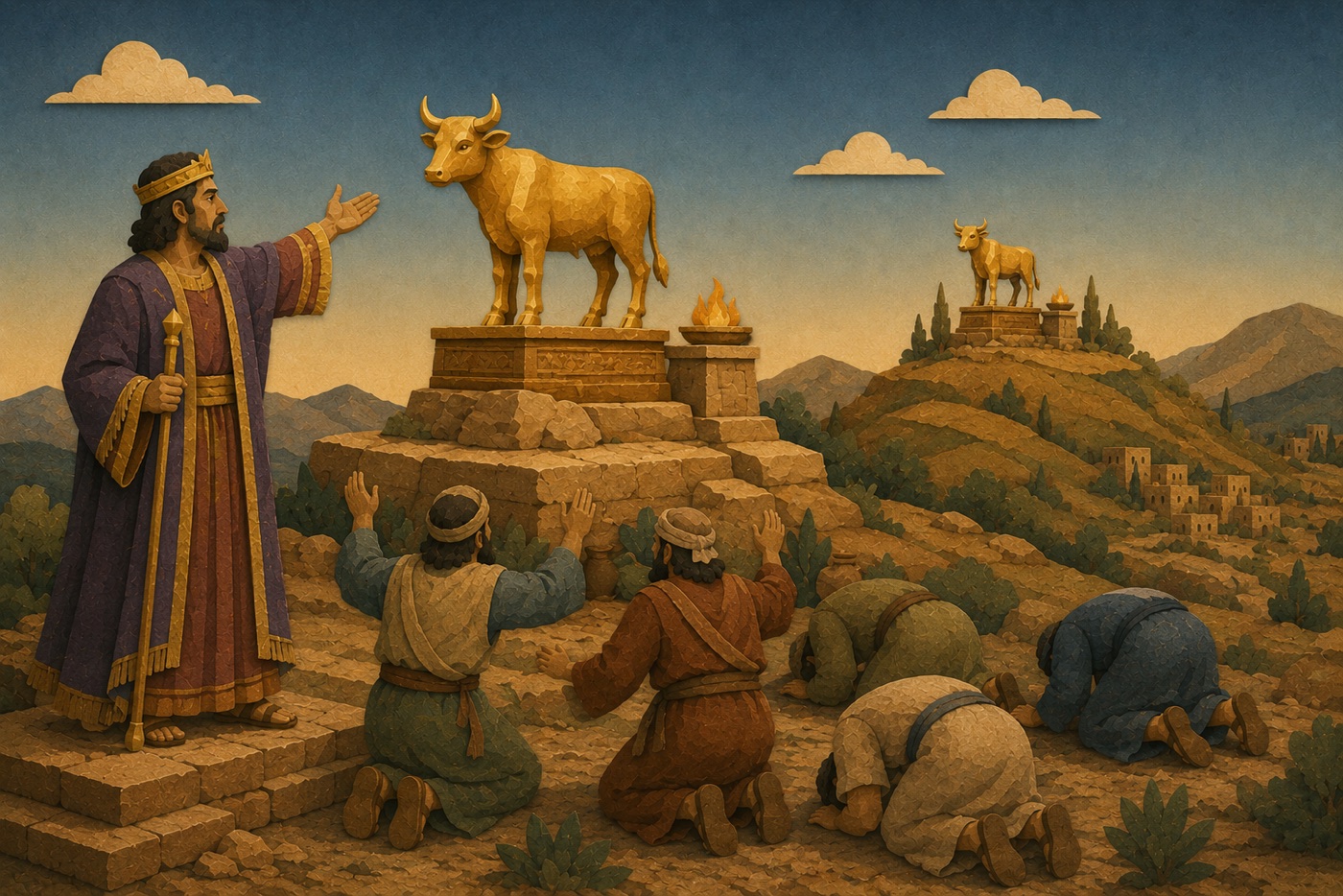
2The Golden Calves 1 Kings 12:28–29
To keep his people from worshipping in Jerusalem, Jeroboam sets up golden calves at Dan and Bethel — “the sin of Jeroboam” that will measure every northern king.
 3
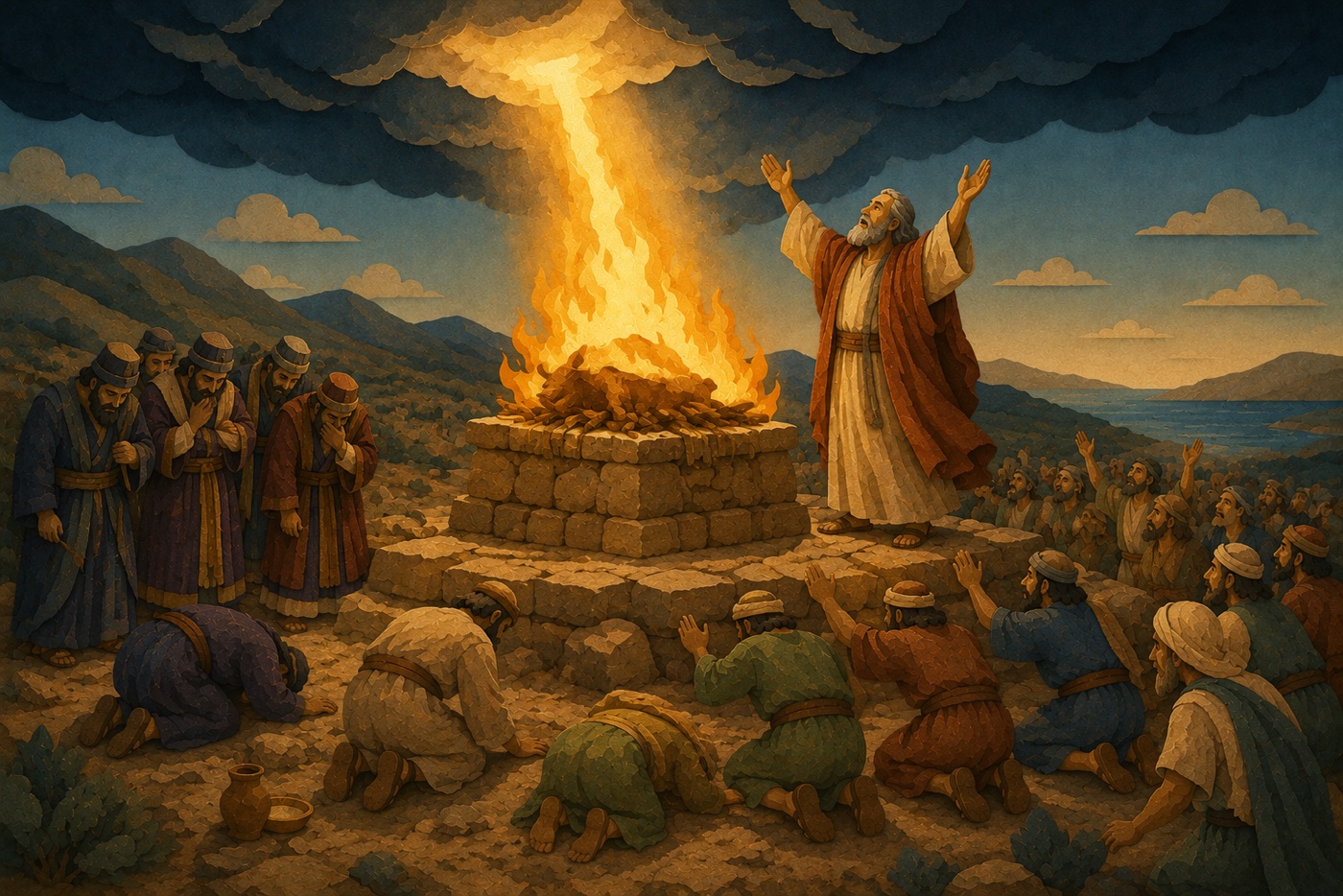
3Fire on Carmel 1 Kings 18
In the North's darkest years God sends his greatest prophets. Elijah calls down fire on Carmel, standing against Ahab, Jezebel, and the Baal cult.
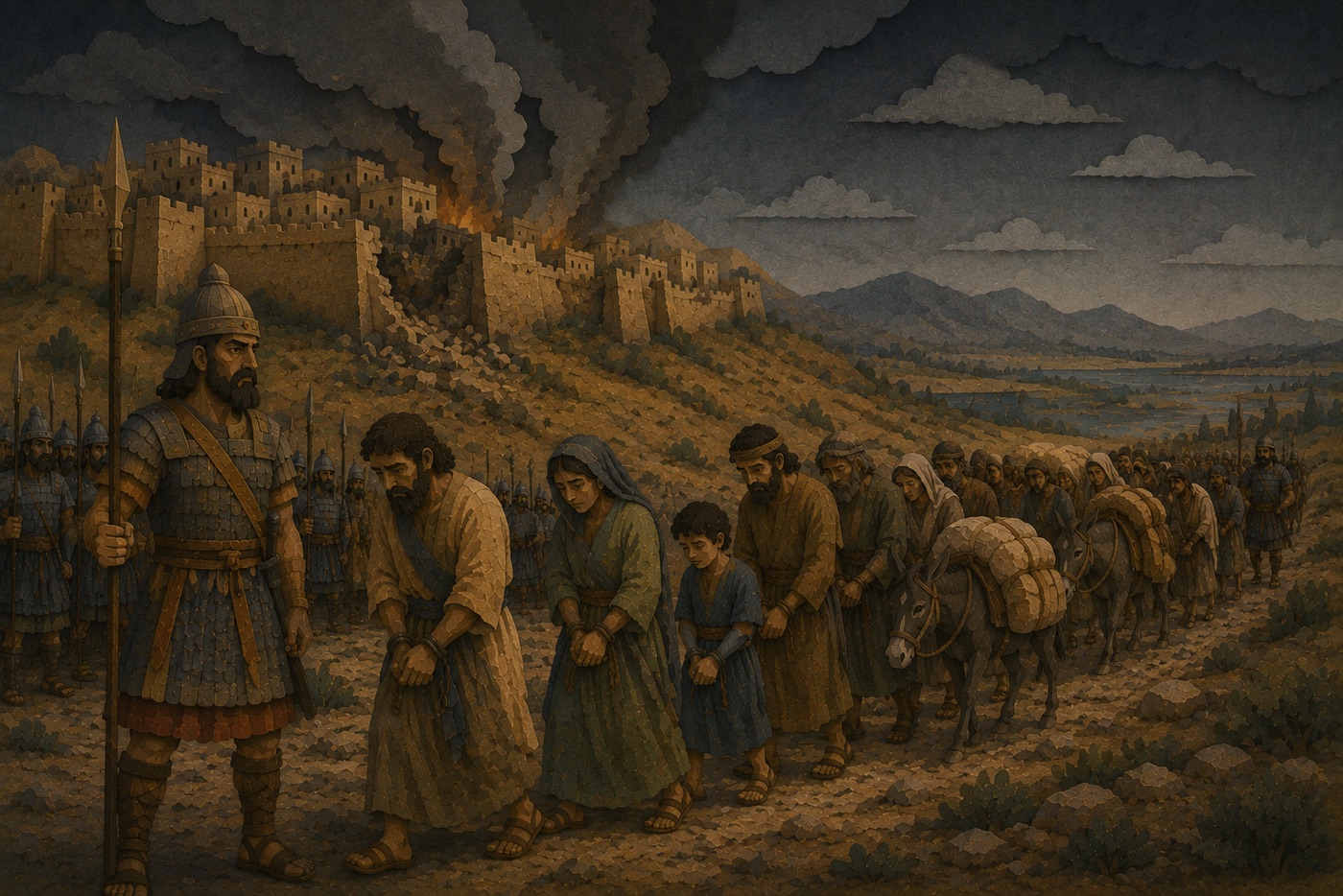 4
4Samaria Falls 2 Kings 17
In 722 BC Assyria breaches Samaria and carries the ten tribes away. The northern kingdom is scattered into exile — and into legend as the “lost tribes.”
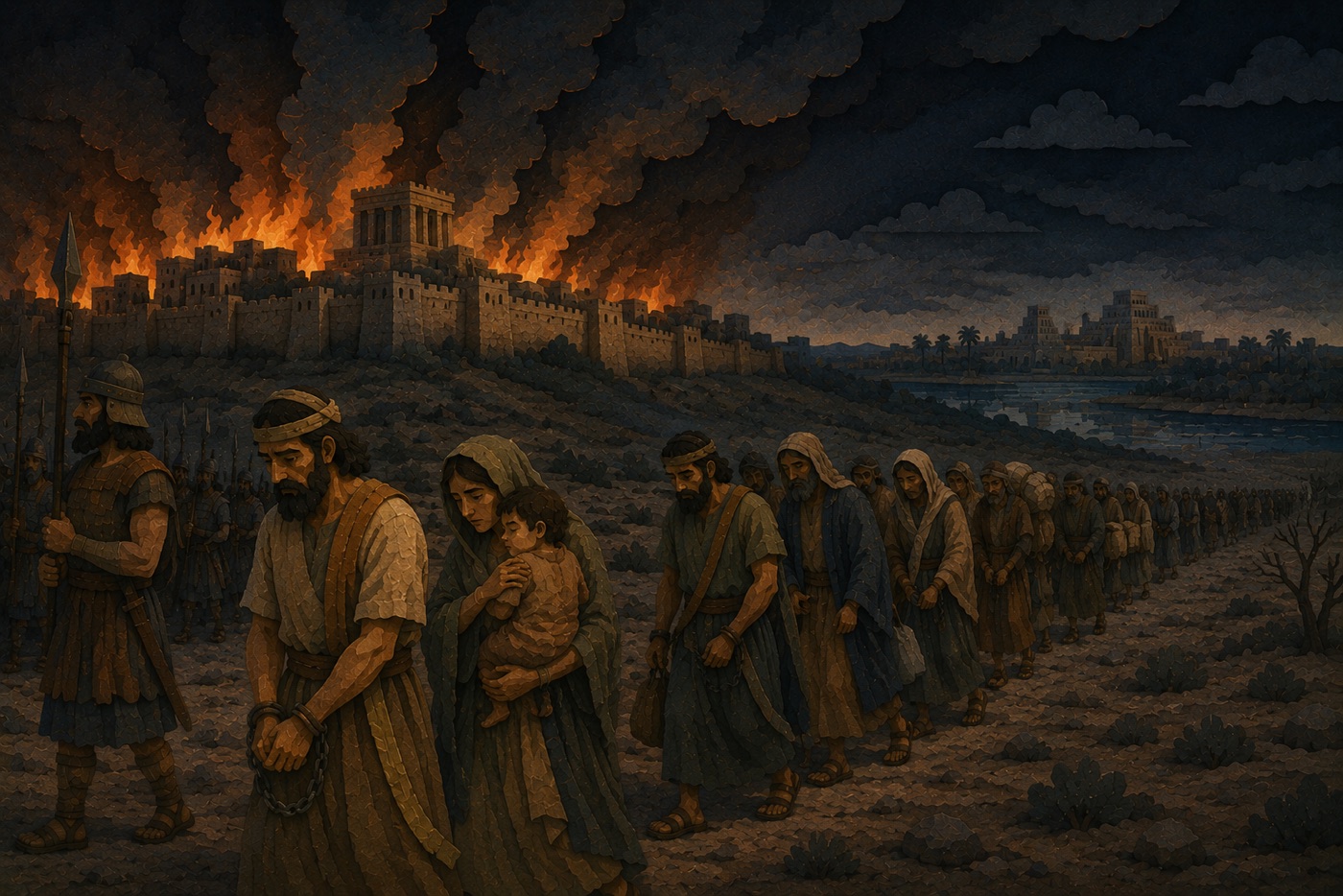 5
5The Exile 2 Kings 25
In 586 BC Babylon burns Jerusalem and the temple, and leads Judah away captive. The fracture that began at Shechem ends in the long night of exile.
← scroll or swipe the five scenes →
Next: The Sin of Jeroboam → — how the golden calves became the sin the book of Kings never stops measuring against. (Return to the field-guide home for the full contents.)