The Canaanite Peoples
Not one nation but many — the city-states and peoples Israel found already in the land
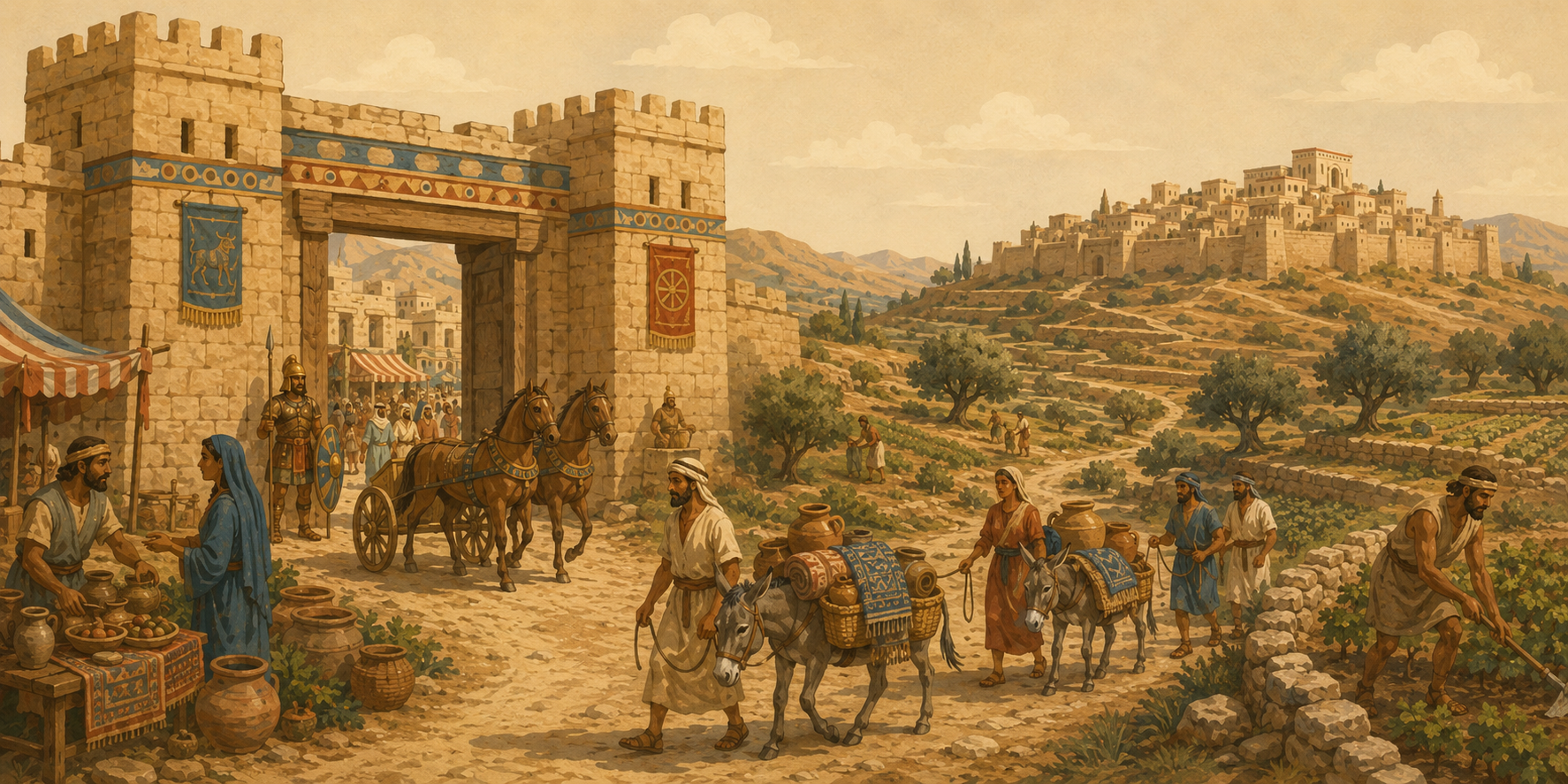
When Israel crossed the Jordan, they did not enter a country. They entered a patchwork. Canaan had no central government, no unified army, no national identity. It was a land of independent city-states — each with its own king, its own walls, its own patron deity, and its own foreign policy. The “Canaanites” were not a single people but a collection of peoples who shared a general culture, a family of related languages, and a common religious framework while maintaining fierce local independence.
Understanding who these peoples were — and how they organized themselves — is essential for understanding what Israel faced, why the conquest was partial, and why the prophets spent centuries fighting the religious influence of nations that had supposedly been defeated.
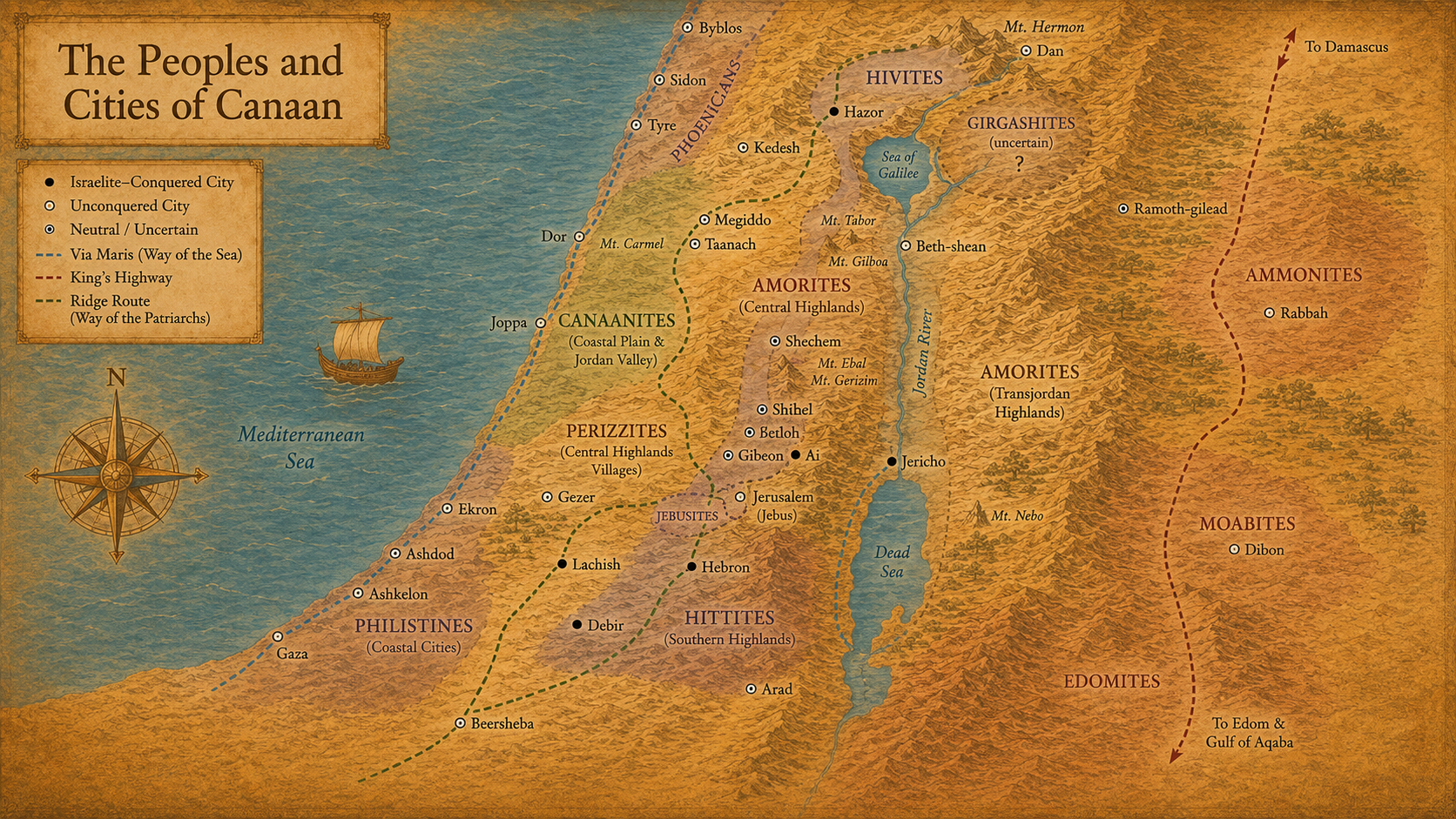
The Seven Nations of Deuteronomy 7
Moses named them explicitly:
“When the LORD thy God shall bring thee into the land whither thou goest to possess it, and hath cast out many nations before thee, the Hittites, and the Girgashites, and the Amorites, and the Canaanites, and the Perizzites, and the Hivites, and the Jebusites, seven nations greater and mightier than thou…”
The number seven appears deliberate — representing completeness, as in “all the peoples of the land.” Other biblical lists vary: some include the Rephaim, some omit the Girgashites, and Genesis 15:19–21 lists ten peoples in God’s covenant with Abraham. The seven-nation list was a standard way of saying “the entire population of Canaan.”
What we know about each group varies enormously. Some left extensive archaeological traces; others are little more than a name.
| People | Hebrew | Region | Key Details |
|---|---|---|---|
| Hittites | Chitti (חִתִּי) | Hebron area; southern highlands | Abraham bought the cave of Machpelah from Ephron the Hittite (Genesis 23:10). These “Hittites” in Canaan may represent a local Semitic group rather than the great Anatolian Hittite Empire — the relationship between the two is debated. Uriah the Hittite, David’s loyal soldier, bore a YHWH-based name, suggesting integration into Israelite culture. |
| Girgashites | Girgashi (גִּרְגָּשִׁי) | Unknown | The most obscure of the seven. No biblical narrative features them individually. Some scholars connect them to the “Qarqisha” mentioned in Ugaritic texts, but the identification is uncertain. Their persistent appearance in the lists suggests they were a recognized group, even though their territory and history are lost. |
| Amorites | Emori (אֱמֹרִי) | Hill country; Transjordan | One of the most prominent groups. In Mesopotamian texts, “Amurru” meant “westerners” — a broad term for peoples from the Levant. In the Bible, “Amorites” often refers to the highland population generally. Sihon and Og, the Transjordanian kings defeated by Moses (Numbers 21:21–35), were Amorite rulers. The five kings who attacked Gibeon were called Amorite (Joshua 10:5). |
| Canaanites | Kena’ani (כְּנַעֲנִי) | Coastal plain; Jordan Valley; lowlands | The name is used both broadly (all the peoples of the land) and narrowly (a specific lowland group). In the narrow sense, “Canaanites” inhabited the fertile lowlands and valleys. Interestingly, the root kena’an may be connected to the word for “merchant” or “trader” — reflecting the commercial character of the lowland cities. |
| Perizzites | Perizzi (פְּרִזִּי) | Central highlands; forested hill country | Mentioned alongside the Canaanites multiple times (Genesis 13:7; Judges 1:4–5). Some scholars connect the name to perazot (פְּרָזוֹת — “unwalled villages”), suggesting they were rural, unfortified villagers rather than city-dwellers — a social description rather than an ethnic one. |
| Hivites | Chivvi (חִוִּי) | Central hills (Gibeon area); Lebanon foothills | Best known through the Gibeonites, who deceived Joshua into a treaty by pretending to be from a distant land (Joshua 9:3–27). That treaty, sworn in YHWH’s name, proved unbreakable — centuries later, Saul’s violation of it brought famine on Israel (2 Samuel 21:1). Shechem was also a Hivite city (Genesis 34:2). |
| Jebusites | Yevusi (יְבוּסִי) | Jerusalem (Jebus) | The inhabitants of Jebus — the pre-Israelite name for Jerusalem. Despite being listed for dispossession, they held the city until David conquered it centuries later (2 Samuel 5:6–7). The note in Joshua 15:63 — “the Jebusites dwell with the children of Judah at Jerusalem unto this day” — marks one of the most significant failures of the incomplete conquest. |
The City-State System
Canaan was not organized like Egypt (one pharaoh, one central government) or even like later Israel (tribal confederation under judges, then monarchy). Canaan was a world of city-states — small, independent political units centered on a fortified city and the agricultural land around it.
How a City-State Worked
Each city-state was ruled by a king — the Hebrew melekh (מֶלֶךְ), though “king” overstates the scale. These were local rulers, more like warlords or mayors of fortified towns than monarchs of nations. Joshua 12 lists thirty-one kings defeated in the conquest — an astonishing number for such a small territory, and a clear indicator of how fragmented the political landscape was.
A typical Canaanite city-state consisted of:
- The fortified city — surrounded by massive walls (Jericho, Hazor, Megiddo, and Lachish all had impressive fortification systems). The city contained the palace, the temple, administrative buildings, and residences for the elite.
- Agricultural hinterland — the farmland, orchards, and pastures surrounding the city, worked by the rural population. These people depended on the city for protection; the city depended on them for food and labor.
- A patron deity — each city had its primary god or goddess. Baal worship was universal, but each city had its own local Baal: Baal-Peor, Baal-Hermon, Baal-Zebub of Ekron. The temple was both a religious center and an economic institution that controlled significant land and resources.
- A warrior aristocracy — the maryannu (a term borrowed from Indo-Aryan languages), the chariot-warrior elite who formed the military backbone of the city-state. Chariots were expensive — they required horses, bronze fittings, trained drivers, and maintained roads — and only the wealthy elite could afford them. This is why chariots were concentrated in the lowland cities and why Israel, a highland people without access to this technology, could not dislodge the valley dwellers (Judges 1:19).
Fragmentation as Weakness
The city-state system meant that Canaan never mounted a unified defense. When Joshua invaded, the response was piecemeal: a southern coalition of five Amorite kings (Joshua 10:3–5), a northern coalition under Jabin of Hazor (Joshua 11:1–5). But these coalitions were ad hoc and temporary. The Gibeonites chose to make a separate peace rather than join either alliance (Joshua 9:3–27). Each city-state calculated its own survival independently.
The Amarna Letters (14th century BC) vividly illustrate this fragmentation. Canaanite vassal kings wrote to Pharaoh complaining about their neighbors, accusing rival kings of disloyalty, and begging for Egyptian troops — not against external invaders but against each other. The letters reveal a world of petty rivalries, shifting alliances, and chronic instability.
Social Structure
Canaanite society was sharply stratified:
| Social Layer | Description |
|---|---|
| King & royal household | Ruled the city-state; controlled diplomacy, military, and the temple economy. Often an Egyptian vassal during the Late Bronze Age. |
| Chariot warriors (maryannu) | A hereditary warrior aristocracy. Their chariots were the dominant military technology of the Late Bronze Age. Land grants sustained their service. |
| Priests & temple personnel | Managed the cult, the temple economy, and ritual life. The Ugaritic texts reveal a complex priestly hierarchy with multiple grades of cultic functionaries. |
| Merchants & artisans | Trade was the lifeblood of Canaanite cities. Merchants connected the city to international networks; artisans produced the pottery, metalwork, textiles, and luxury goods that drove commerce. |
| Farmers & laborers | The vast majority. Worked the land around the city under varying degrees of obligation to the king. Subject to forced labor (corvée) and military conscription. |
| Slaves & dependent laborers | War captives, debt slaves, and others bound to service. Slavery was widespread throughout the ancient Near East. |
This top-heavy social structure is one reason the Amarna Letters are so revealing: the kings wrote as though the population beneath them barely existed. The letters are about royal politics, not about the people who farmed the land and built the walls.
Israel’s radical alternative: The tribal confederation that Israel established in Canaan was structurally different from the city-state system it replaced. No king (Gideon refused: “I will not rule over you… the LORD shall rule over you” — Judges 8:23). No standing army. No chariot aristocracy. Leadership was charismatic and temporary — judges raised up by God for specific crises, not dynasties built on inherited power. The contrast between Canaanite kingship and Israelite theocracy was not accidental; it was theological. Israel’s social structure was designed to embody the principle that God, not a human king, was sovereign.
Archaeological Evidence
What does the physical evidence tell us about the peoples Israel encountered?
The Canaanite Cities
Excavations at major Canaanite sites have revealed a sophisticated urban civilization:
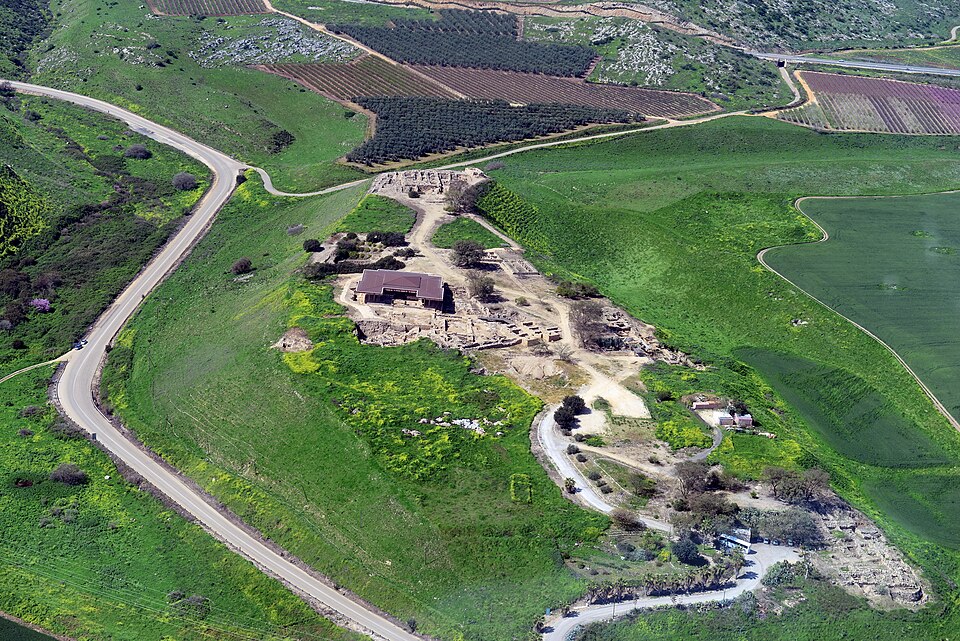
- Hazor — The largest Canaanite city, covering approximately 200 acres at its peak. Joshua 11:10 calls it “the head of all those kingdoms.” Yigael Yadin’s excavations (1955–1958, continued by Amnon Ben-Tor) revealed massive fortifications, temples, and a royal palace. A destruction layer dated to the 13th century BC is consistent with the biblical account of Joshua burning the city (Joshua 11:11).
- Megiddo — Guarding the crucial pass where the Via Maris cut through the Carmel ridge, Megiddo was one of the most strategically important cities in the ancient world. Excavations have uncovered over twenty layers of occupation spanning thousands of years, including Late Bronze Age palaces, temples, and a sophisticated water system.
- Lachish — A major fortified city in the Shephelah, guarding the approach to Hebron and the southern highlands. The site shows a massive Late Bronze Age destruction, followed by a gap in occupation — a pattern consistent with the conquest narrative.
- Jericho — One of the most debated sites in biblical archaeology. Kathleen Kenyon’s excavations (1950s) placed the city’s destruction earlier than the traditional Exodus chronology. Bryant Wood later argued for a date more consistent with the biblical timeline. The debate continues, but the site confirms a fortified city at the western approach to the Jordan — exactly as the text describes.
Highland Settlement
Perhaps the most significant archaeological development for understanding the Israelite entry is the highland settlement survey data. Surveys by Israel Finkelstein and others documented a dramatic increase in small, unwalled villages in the central highlands during Iron Age I (c. 1200–1000 BC):
- Approximately 30 highland settlements in the Late Bronze Age grew to roughly 250 in Iron Age I
- These villages were small (typically 1–3 acres), unfortified, and agricultural
- Their material culture was simple compared to the lowland cities — less imported pottery, minimal luxury goods
- The settlement pattern began in the less-populated areas and expanded over time
Scholars debate whether these settlers were Israelites, displaced Canaanites, pastoral nomads settling down, or some combination. The biblical text presents them as Israel entering from the east; the archaeological record shows a population expansion in the highlands that is consistent with — though not uniquely explained by — that narrative. What is clear is that a new population established itself in the highlands during precisely the period the Bible describes.
The Merneptah Stele (c. 1208 BC)
The earliest extrabiblical reference to “Israel” appears on a victory stele of Pharaoh Merneptah, son of Ramesses II. The inscription boasts: “Israel is laid waste; his seed is no more.” The Egyptian hieroglyphic determinative identifies “Israel” as a people (not a place or city-state) — indicating that by the late 13th century BC, Israel existed as a recognized group in Canaan, but was not yet associated with a specific territory or settled governance. This fits the biblical picture of a people in transition — present in the land but not yet in control of it.
The Incomplete Conquest
The book of Judges opens with a sobering catalogue of failure:
“Neither did Manasseh drive out the inhabitants of Beth-shean and her towns, nor Taanach and her towns, nor the inhabitants of Dor and her towns, nor the inhabitants of Ibleam and her towns, nor the inhabitants of Megiddo and her towns: but the Canaanites would dwell in that land.”
The pattern repeats for tribe after tribe: Ephraim did not drive out the Canaanites of Gezer (Judges 1:29). Zebulun did not drive out those of Kitron and Nahalol (Judges 1:30). Asher did not drive out the inhabitants of Acco, Sidon, or several other cities (Judges 1:31–32). Naphtali did not drive out the inhabitants of Beth-shemesh or Beth-anath (Judges 1:33). Dan was pushed into the hills entirely (Judges 1:34).
The cities they failed to take were overwhelmingly lowland cities with chariot forces. Israel controlled the highlands; the Canaanites held the plains and the valleys. The technological gap — iron chariots versus hill-country infantry — created a military stalemate that lasted for generations.
The theological reading is explicit: God allowed these nations to remain as a test. “I also will not henceforth drive out any from before them of the nations which Joshua left when he died: That through them I may prove Israel, whether they will keep the way of the LORD to walk therein, as their fathers did keep it, or not” (Judges 2:21–22). The peoples Israel failed to displace became the peoples whose gods Israel was tempted to worship — and the cycle of apostasy, oppression, repentance, and deliverance that defines the entire book of Judges was the result. (See Section 07: Israel Among the Nations for the full narrative.)
Peoples Beyond the Seven
The Deuteronomy 7 list focuses on the peoples within Canaan proper, but Israel also encountered and interacted with several peoples on the margins:
- Philistines — Sea Peoples who settled the southern coast around 1175 BC, establishing the five-city Pentapolis (Gaza, Ashkelon, Ashdod, Ekron, Gath). They became Israel’s most persistent military rival during the Judges and early monarchy. (See Section 06.)
- Phoenicians — The coastal peoples of Tyre, Sidon, and Byblos — master sailors, traders, and inventors of the alphabet. Hiram of Tyre later became Solomon’s ally and business partner; Jezebel of Sidon married Ahab and imported Baal worship into the northern kingdom. (See Section 05.)
- Edomites — Descendants of Esau, settled south and east of the Dead Sea. They refused Israel passage on the King’s Highway (Numbers 20:18).
- Moabites — East of the Dead Sea. Balak hired Balaam to curse Israel (Numbers 22:1–6). Ruth the Moabitess, like Rahab, became an ancestor of David and Christ.
- Ammonites — Northeast of the Dead Sea. Persistent enemies during the Judges period; Jephthah fought them (Judges 11:4–33).
- Rephaim / Anakim — The “giants” of the land. The ten spies feared them (Numbers 13:33); Caleb drove them out of Hebron (Joshua 14:12); Goliath of Gath may have been a descendant. The term Rephaim (רְפָאִים) is also used in Ugaritic texts for the shades of the dead, creating an ambiguity between “ancient warriors” and “the dead” that may have been intentional.
What Happened to the Canaanite Peoples?
They did not vanish. Despite the conquest narratives, the biblical text itself makes clear that Canaanite populations persisted throughout the Judges period and into the monarchy:
- Intermarriage was common (Judges 3:5–6)
- Canaanite cities continued to function (Jerusalem remained Jebusite until David)
- Canaanite religious practices were adopted widely (the entire book of Judges documents this)
- Solomon eventually conscripted surviving Canaanite populations for forced labor (1 Kings 9:20–21)
Over centuries, the distinction between “Israelite” and “Canaanite” became cultural and religious rather than ethnic. The prophets’ battle was never about genetics; it was about worship. The question was not “who are you descended from?” but “whom do you serve?” Rahab the Canaanite became an ancestor of Christ; Achan the Israelite was destroyed for covenant violation. Identity in Israel was defined by covenant, not by blood — a principle that resonates throughout Latter-day Saint theology, where the covenant gathers from “every nation, kindred, tongue, and people.”
Sources
Peoples & City-States:
- Amihai Mazar, Archaeology of the Land of the Bible, 10,000–586 BCE (Doubleday, 1990) — Comprehensive archaeological overview of Bronze and Iron Age Canaan.
- Israel Finkelstein & Neil Asher Silberman, The Bible Unearthed (Free Press, 2001) — Highland settlement survey data and the Israelite emergence debate.
- William G. Dever, Who Were the Early Israelites and Where Did They Come From? (Eerdmans, 2003) — Archaeological assessment of Israelite origins and relationship to Canaanite culture.
- K. Lawson Younger Jr., “The Conquest of the South (Jos 10:28–39),” in Ancient Conquest Accounts (Sheffield Academic Press, 1990) — Ancient Near Eastern conquest account conventions.
The Amarna Letters:
- William L. Moran, The Amarna Letters (Johns Hopkins University Press, 1992) — The standard English translation of the correspondence between Canaanite vassal kings and the Egyptian court.
Online Resources:
- World History Encyclopedia — Canaan (CC BY-NC-SA 4.0)
- World History Encyclopedia — Merneptah Stele (CC BY-NC-SA 4.0)
Scripture Citations:
- Genesis 13:7; 15:19–21; 23:10; 34:2 | Numbers 13:33; 20:18; 21:21–35; 22:1–6 | Deuteronomy 7:1 | Joshua 9:3–27; 10:3–5; 11:1–5, 10–11; 12; 14:12; 15:63 | Judges 1:4–5, 19, 27, 29, 30, 31–32, 33, 34; 2:21–22; 3:5–6; 8:23; 11:4–33 | 2 Samuel 5:6–7; 21:1 | 1 Kings 9:20–21