Nebuchadnezzar & the Kings of Babylon
The men behind the names in Kings, Jeremiah, and Daniel
Scripture gives Babylon’s kings some of the Old Testament’s most vivid scenes: envoys bearing flattering letters, a golden image on the plain of Dura, a hand writing on a palace wall. Babylonian records show us the same men from the other side: in building inscriptions, chronicles, ration lists, and contracts. This page puts the two portraits side by side. And remarkably often, they agree — and for one event the chronicle supplies a day no biblical writer records.
Merodach-baladan: The Rebel Who Came Calling (r. 721–710, 703 BC)
The first Babylonian king to step onto the Bible’s stage was not an emperor at all. He was a survivor. Marduk-apla-iddina II, the Bible’s Merodach-baladan, was chieftain of Bit-Yakin, the greatest of the Chaldean tribes of the southern marshes. Twice he seized the throne of Babylon out from under Assyria: for over a decade beginning in 721 BC, and again briefly in 703. Between and after his reigns, he did what marsh chieftains do. He vanished into the reeds, out of Assyria’s reach, and started organizing the next round.
His embassy to Hezekiah (2 Kings 20:12–19; Isaiah 39) belongs to this lifelong project. On the surface, the envoys came with letters and a gift for a king recovering from illness. In reality, a rebel against Assyria was sizing up a potential western ally — and Hezekiah showed him everything: “the silver, and the gold, and the spices… there was nothing in his house, nor in all his dominion, that Hezekiah shewed them not” (2 Kings 20:13). Isaiah’s response is one of prophecy’s long arcs. Everything the envoys had seen, he said, would one day be carried to Babylon, along with royal sons to serve in its palace (2 Kings 20:17–18). At the time, the words must have sounded almost absurd. Babylon was the hunted party; Assyria was the hunter. Yet a century later, Daniel and his companions stood in Nebuchadnezzar’s court (Daniel 1:3–4).
One king, two spellings: the King James Version calls him Berodach-baladan in 2 Kings 20:12 and Merodach-baladan in Isaiah 39:1. The Isaiah form matches his Akkadian name (Marduk-apla-iddina, “Marduk has given an heir”), and the Kings form likely comes from an ancient copyist’s slip between two similar Hebrew letters (b and m). It is a tiny, humanizing glimpse of how carefully — and how humanly — these texts were passed down.
Nabopolassar: The Founder (r. 626–605 BC)
We know surprisingly little about the man who founded the Neo-Babylonian empire. He tells us himself that he was “the son of a nobody,” a general of Chaldean stock who took Babylon’s throne in 626 BC as Assyria’s grip failed. What followed was sixteen years of grinding warfare up the Tigris and Euphrates, fought in alliance with the Medes. It ended with the destruction of the Assyrian capitals (Assur in 614, Nineveh in 612) and the extinction of the world’s first great empire. The prophet Nahum’s entire book is a thunderclap over Nineveh’s fall. Zephaniah saw it coming too (Zephaniah 2:13).
Nabopolassar’s own inscriptions strike a note rare among ancient conquerors. He presents the war not as glory-seeking but as Marduk’s justice on Assyria for its sacrileges against Babylon. He spent his last years rebuilding what Assyria had broken, including beginning the restoration of the great ziggurat Etemenanki (see Section 06), while his crown prince ran the army. He died in August 605 BC, just weeks after that crown prince’s victory at Carchemish changed the map of the world.
Nebuchadnezzar II: The Empire in One Man (r. 605–562 BC)
Nebuchadnezzar (Akkadian Nabu-kudurri-usur, “O Nabu, protect my heir”) ruled for forty-three years and left a deeper mark on scripture than any foreign king. He appears by name some ninety times, more than any other Gentile ruler. Judah knew him first as a general (Carchemish, 605 BC), then as a tax collector, then as a destroyer, and finally, in Daniel, as something stranger: a tyrant God insisted on teaching.
The general and the destroyer
His own chronicle for 597 BC reads almost like a verse of Kings. In his seventh year, the king of Akkad (the chronicle’s title for the king of Babylon) mustered his troops and marched to Hatti-land, the Babylonian name for Syria and the lands toward the Mediterranean. There he “encamped against the city of Judah,” captured it on the second day of the month Adar (March 16, 597 BC by our calendar), seized its king, appointed a king of his own choosing, and took its heavy tribute back to Babylon. That is 2 Kings 24:10–17 told from the other side of the siege wall. The deposed king is Jehoiachin. The appointed king is Zedekiah. The two accounts agree on every event, and differ on one number: the chronicle dates the capture to Nebuchadnezzar’s seventh year, and so does Jeremiah 52:28, while 2 Kings 24:12 says the eighth: the difference between counting a king’s accession year and starting from his first full year (see Section 08 for the full text-against-text comparison). A decade later, Zedekiah revolted with Egypt’s backing, and Nebuchadnezzar returned to end everything. The siege lasted eighteen months. The walls were breached. The temple burned in the summer of 586 BC. And the king of David’s line was forced to watch his sons die — the last thing he ever saw, because his captors then put out his eyes (2 Kings 25:6–7). Here is the startling part. Jeremiah, who had counseled surrender for years, calls Nebuchadnezzar, three times, “my servant” in the Lord’s own voice (Jeremiah 25:9; 27:6; 43:10). In other words, God could wield the empire as His instrument — but being His instrument never excused what the empire did.
The builder
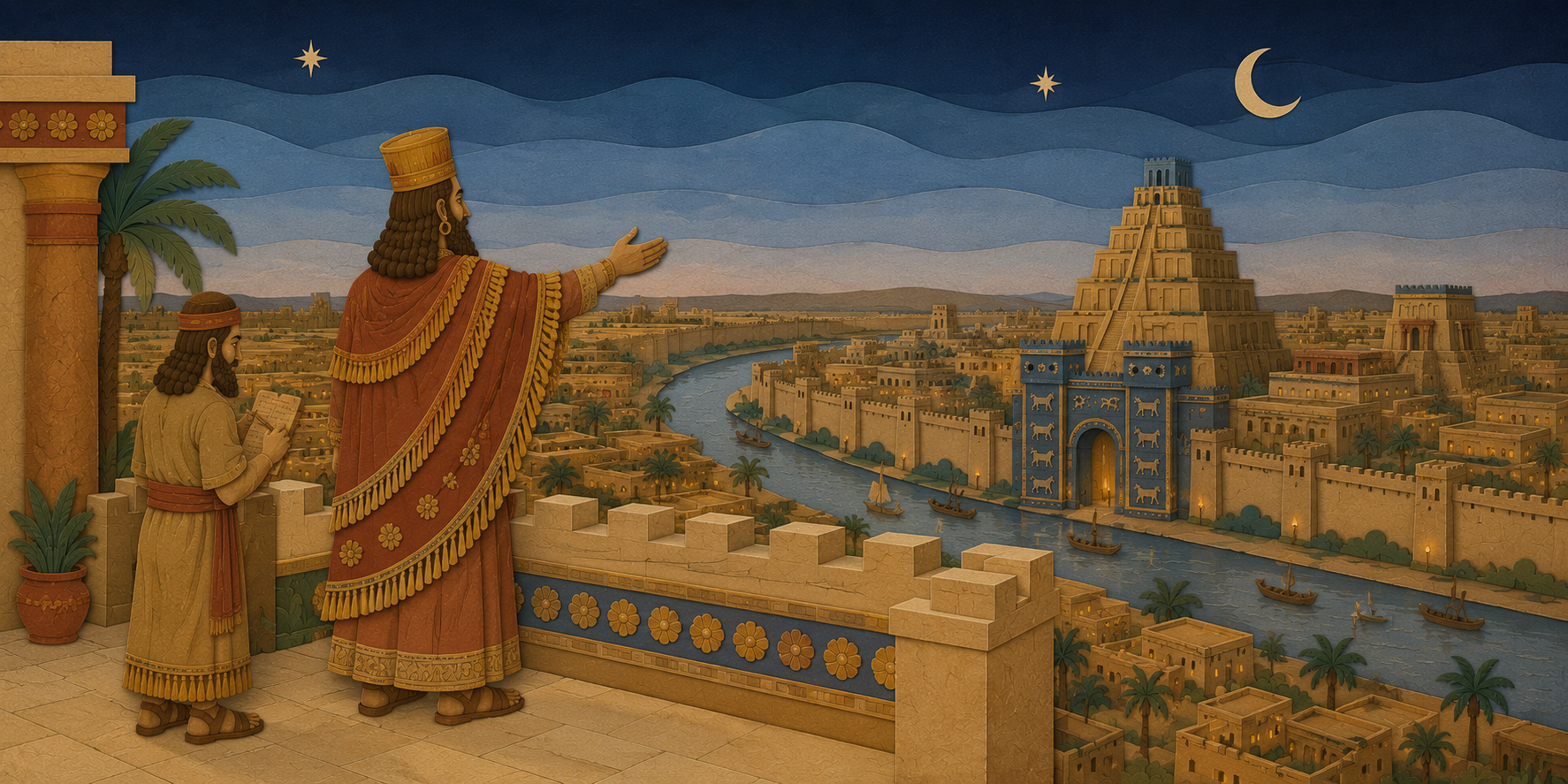
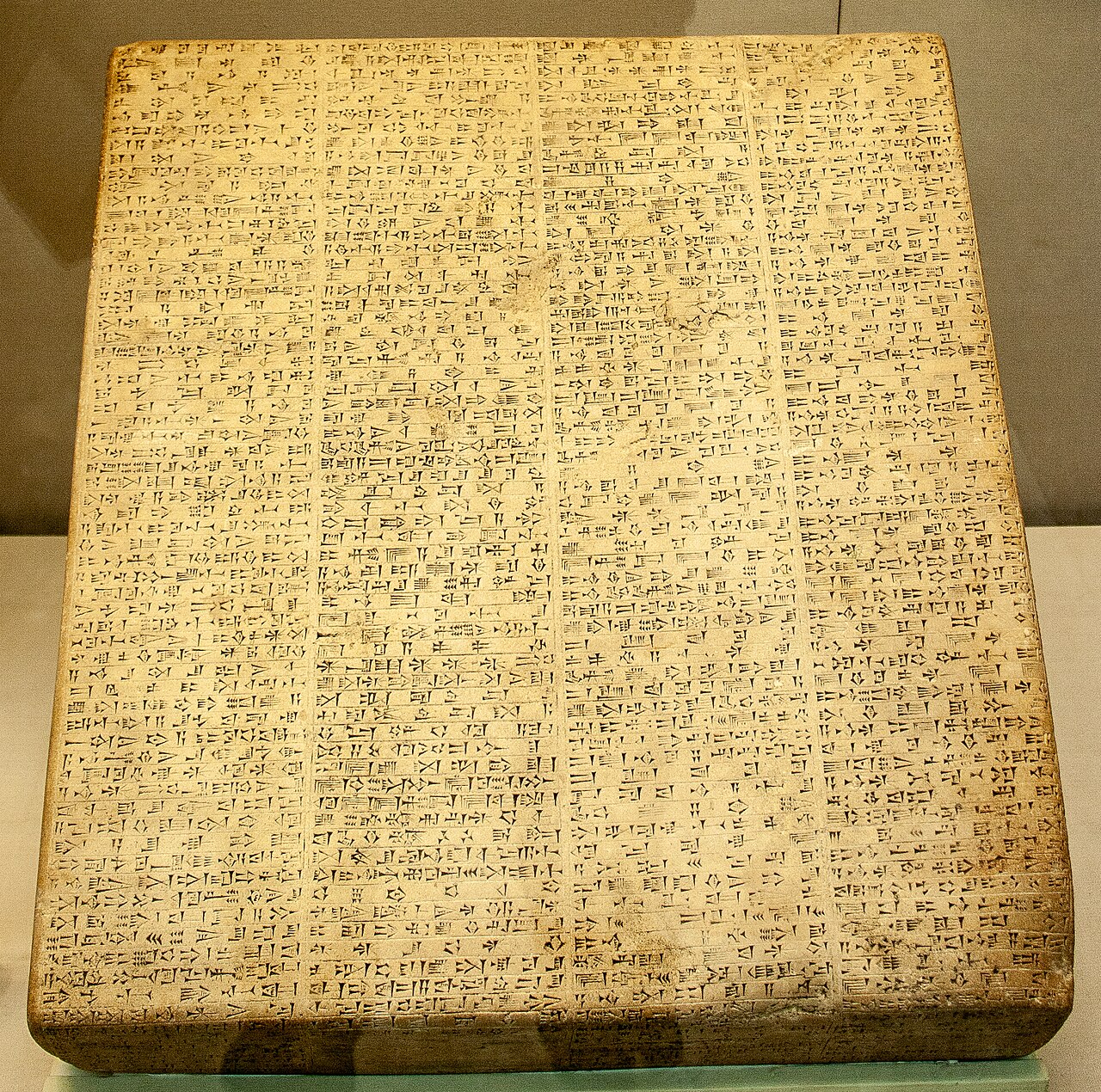
Yet in his own inscriptions, Nebuchadnezzar barely mentions war. What he wanted remembered was construction: the double walls of Babylon, the Ishtar Gate and its Processional Way gleaming with glazed lapis-blue brick, the completed ziggurat Etemenanki, the vast palace complexes, temples renewed in a dozen cities, canals, and quays. Nearly every fired brick in his Babylon is stamped with his name — and archaeologists have moved millions of them. Now listen to Daniel’s portrait of the king pacing his palace roof: “Is not this great Babylon, that I have built for the house of the kingdom by the might of my power, and for the honour of my majesty?” (Daniel 4:30). It matches the voice of his own bricks with almost uncomfortable precision. (The city he built is toured in Section 06.)

The king in Daniel
The book of Daniel spends more time inside Nebuchadnezzar’s head than any Babylonian source does. It gives us the troubled dreams (Daniel 2), the golden image and the furnace (Daniel 3), and the seven years of madness that ended in the pride-broken doxology of a pagan emperor (Daniel 4:37). Babylonian records preserve no account of a royal madness — though court scribes would hardly have advertised one. And there is an intriguing wrinkle. A Dead Sea Scrolls fragment (the “Prayer of Nabonidus,” 4Q242) preserves a Jewish tradition of a Babylonian king (there named Nabonidus) afflicted by God for seven years and healed through a Jewish exile’s counsel. Many scholars see this as a related tradition. Others defend the Daniel account as it stands, noting how well its portrait of the king’s builder-pride fits Nebuchadnezzar’s own words. However one resolves the historical question, the theological one is the point of the chapter — and the king himself states it: “those that walk in pride he is able to abase” (Daniel 4:37).
Amel-Marduk: Two Years and One Act of Mercy (r. 562–560 BC)
Nebuchadnezzar’s son and successor reigned barely two years before his brother-in-law overthrew him — and likely killed him. Babylonian tradition remembered him poorly. The Bible remembers him for a single act, and it chose that act as the final scene of the entire book of Kings: “Evil-merodach king of Babylon in the year that he began to reign did lift up the head of Jehoiachin king of Judah out of prison” (2 Kings 25:27–30). He gave Jehoiachin a seat above the other captive kings, and granted him a daily allowance for life.
Astonishingly, the paperwork survives. Cuneiform administrative tablets, excavated from a storeroom in Nebuchadnezzar’s Southern Palace and published by Ernst Weidner in 1939, record rations of oil issued to “Yaʾu-kīnu, king of the land of Yahudu” (Jehoiachin, king of Judah) and his five sons, alongside other detained royalty and craftsmen. So the book of Kings ends its long tragedy on a deliberately quiet note of grace. The house of David is captive but alive, fed at the king’s table. That was a seed of hope the exiles could hold. And it is the thread through which the royal line runs on toward the genealogy of Matthew 1 (where Jehoiachin appears as “Jechonias”). (More on the ration tablets in Section 07.)
Neriglissar and Labashi-Marduk: The Short Reigns (560–556 BC)
The usurper Neriglissar (Nergal-shar-usur) was a court grandee who had married Nebuchadnezzar’s daughter. He is also very probably the same “Nergal-sharezer” who sat among the Babylonian officials in the gate of conquered Jerusalem in 586 BC (Jeremiah 39:3), one of several officials in that verse whom Babylonian records independently attest (see Section 08 for the remarkable case of Nebo-Sarsekim). He reigned four years and died. His young son Labashi-Marduk lasted only weeks before the court removed him in favor of an elderly outsider named Nabonidus. Count it up: four kings in seven years. The dynasty of Nebuchadnezzar was eating itself — exactly the instability Jeremiah had implied when he set a limit on Babylon’s season. The nations, he said, would serve “him, and his son, and his son’s son, until the very time of his land come” (Jeremiah 27:7).
Nabonidus & Belshazzar: The Absentee and the Regent (556–539 BC)
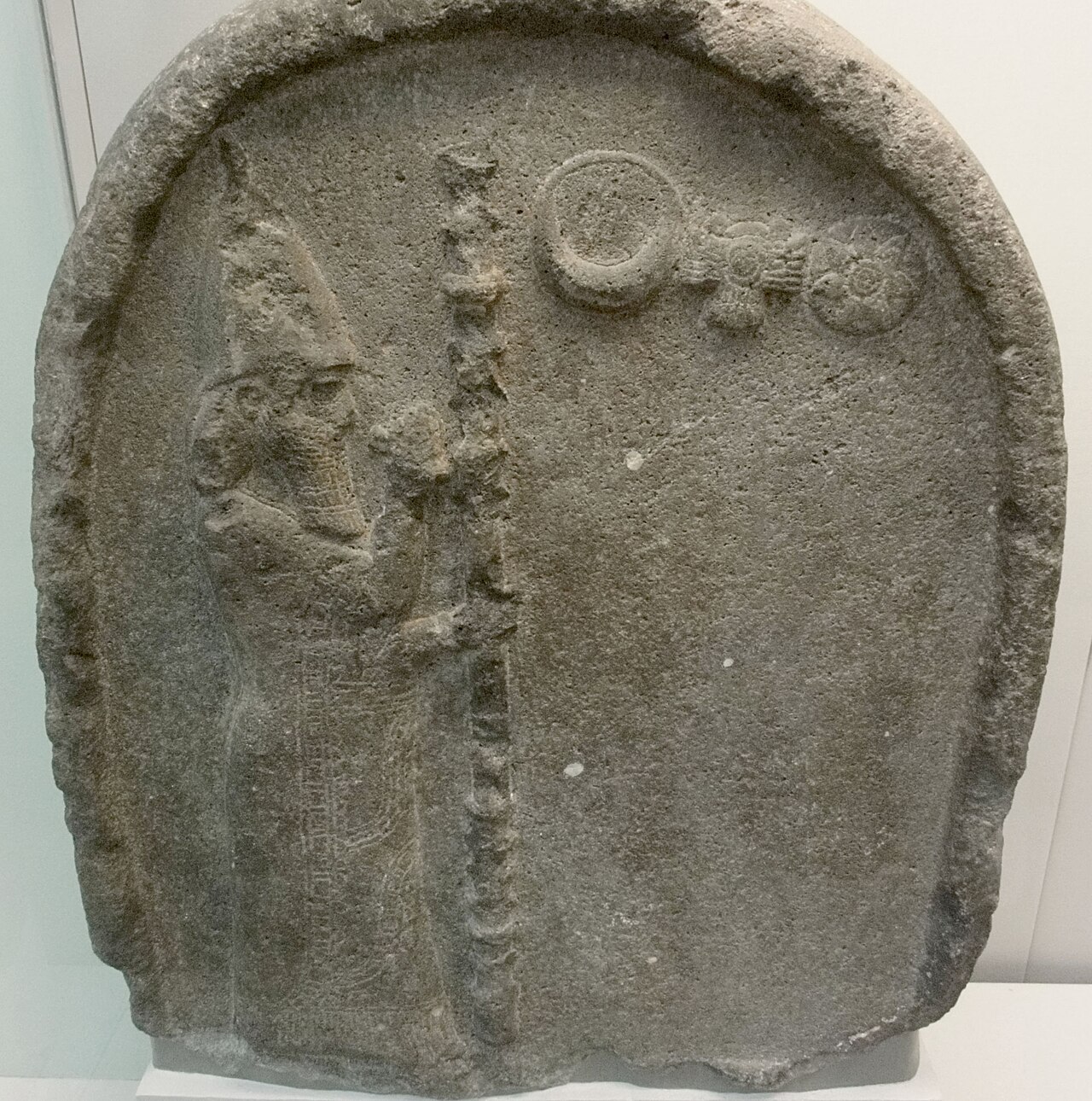

The last king of Babylon was the strangest. Nabonidus was no Chaldean prince. He was the son of a priestess of the moon god Sin from Harran, in the old Assyrian north, and he was already elderly at his accession. He was also an antiquarian who excavated the foundations of ancient temples to recover their original dedications; he has been called, half-seriously, the first archaeologist. His devotion to Sin over Marduk put him on a collision course with Babylon’s powerful priesthood. And then, inexplicably to his contemporaries, he left. For roughly ten years the king of Babylon lived at the desert oasis of Teima in northwest Arabia, while back home the New Year festival, which required the king’s presence, simply could not be celebrated. In his place at the capital he left his eldest son: Belshazzar.
For centuries, skeptical readers treated Daniel’s Belshazzar as a fiction. Every classical historian named Nabonidus as Babylon’s last king, and no Belshazzar appeared anywhere. Then the cuneiform archives began to speak. The Nabonidus Cylinder from Ur names “Belshazzar, the eldest son, my offspring” in the king’s own prayer. Administrative texts show the crown prince exercising royal authority in Babylon during his father’s long absence: a co-regency in fact if not in formal title. Daniel’s scene even preserves the arrangement’s odd arithmetic. Belshazzar offers Daniel promotion to third ruler in the kingdom (Daniel 5:29), the highest rank actually available in a realm whose first two places were already occupied by an absent king and his regent son.
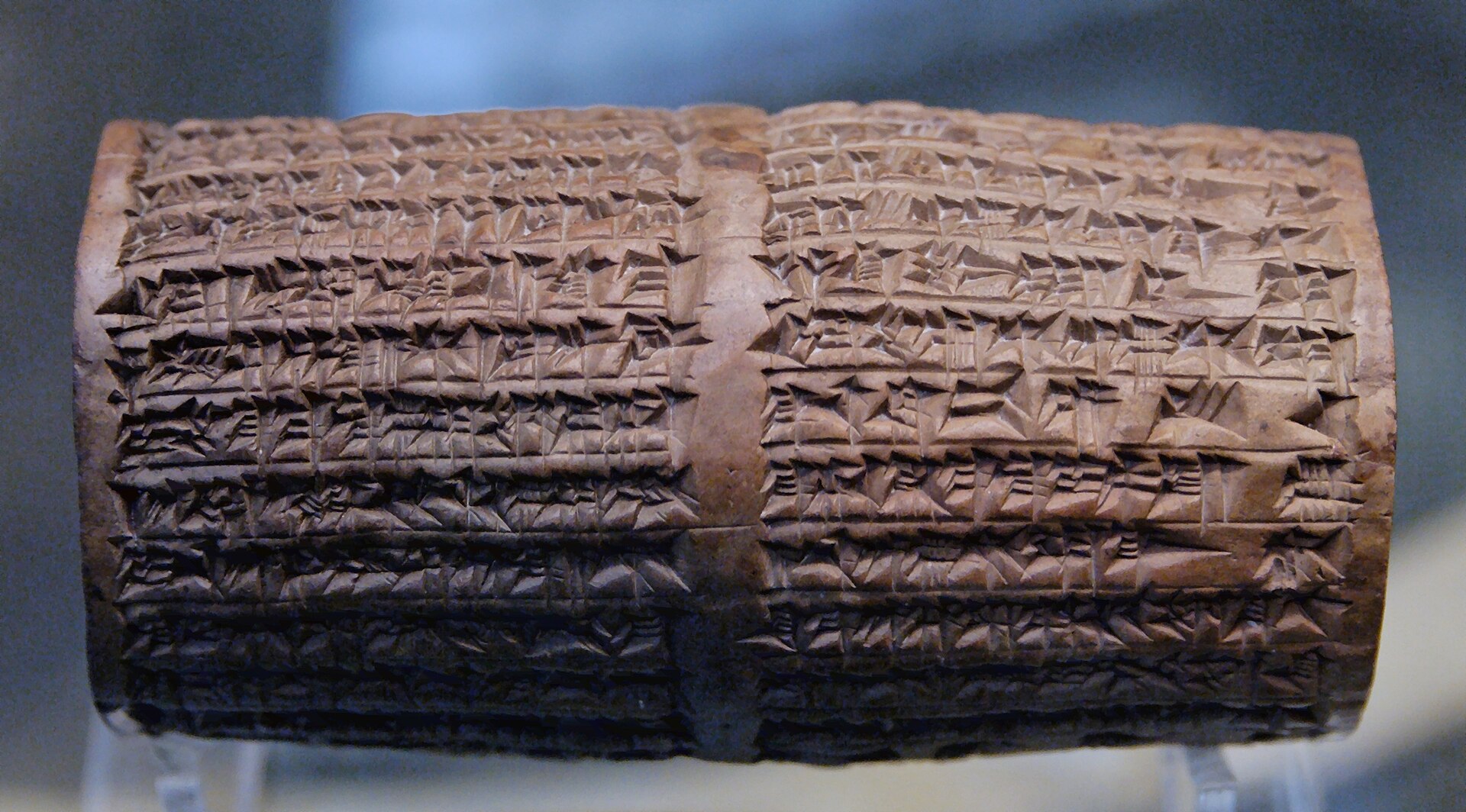

The end came in October 539 BC. Cyrus defeated the Babylonian army at Opis on the Tigris. Days later, his forces entered Babylon without a battle, by the account of both the Babylonian chronicle and Cyrus’s own cylinder, welcomed by a priesthood and populace long alienated from their king. Daniel remembers the last night inside the palace: the profaned temple vessels, the fingers of a man’s hand against the plaster, and the verdict: “Thou art weighed in the balances, and art found wanting” (Daniel 5:27). “In that night was Belshazzar the king of the Chaldeans slain” (Daniel 5:30). Nabonidus himself was captured and, per one late tradition, pensioned into exile — the fate he had, in effect, already chosen for himself years before.
Two royal houses, one lesson: set Babylon’s kings beside Judah’s last kings (Jehoiakim the opportunist, Jehoiachin the three-month king, Zedekiah the weathervane), and the argument of the book of Kings comes into focus. Judah did not fall because its enemy was strong; empires had been strong before. It fell, the text insists, because its own covenant was broken (2 Kings 24:3). And even so, the story is threaded with mercies: a prophet at every stage, seventy years with a fixed end, and a Davidic king alive at a Babylonian table in the final verses. Judgment, in Kings, is never the last word.
Sources and Further Reading
- D. J. Wiseman, Nebuchadrezzar and Babylon (The Schweich Lectures 1983; Oxford University Press, 1985) — The standard scholarly portrait of Nebuchadnezzar, by the scholar who first published his chronicles.
- D. J. Wiseman, Chronicles of Chaldaean Kings (626–556 B.C.) (British Museum, 1956) — Editions and translations of the chronicle tablets, including the 597 BC Jerusalem entry.
- Paul-Alain Beaulieu, The Reign of Nabonidus, King of Babylon 556–539 B.C. (Yale University Press, 1989) — The definitive treatment of Nabonidus, Teima, and Belshazzar’s regency.
- Paul-Alain Beaulieu, A History of Babylon, 2200 BC–AD 75 (Wiley-Blackwell, 2018) — Current synthesis for all the reigns on this page.
- J. A. Brinkman, Prelude to Empire: Babylonian Society and Politics, 747–626 B.C. (Babylonian Fund, 1984) — The Chaldean tribes and Merodach-baladan’s world.
- Ernst F. Weidner, “Jojachin, König von Juda, in babylonischen Keilschrifttexten,” in Mélanges syriens offerts à Monsieur René Dussaud (Geuthner, 1939) — The original publication of the Jehoiachin ration tablets.
- Oded Lipschits, The Fall and Rise of Jerusalem: Judah under Babylonian Rule (Eisenbrauns, 2005) — Judah’s last kings from both sides of the evidence.
Online Resources:
- WHE — Nebuchadnezzar II (CC BY-NC-SA 4.0)
- Livius.org — Nabonidus — with the Nabonidus Chronicle and Verse Account in translation.
- British Museum — the Jerusalem Chronicle (ABC 5)