Caught Between Two Empires
Why Judah’s last kings kept betting on Egypt — and why the prophets said Babylon
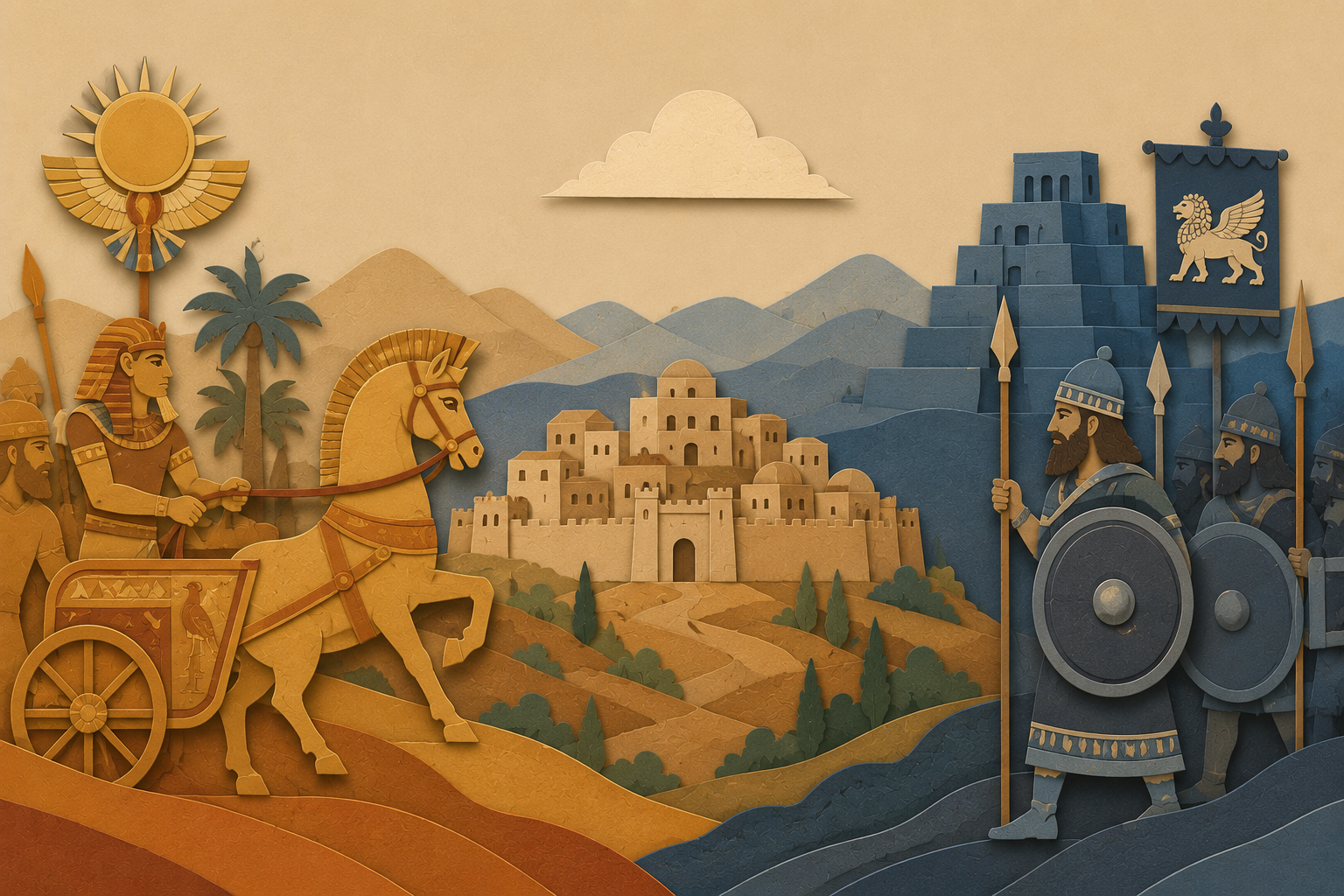
For the last forty years of its life, the kingdom of Judah faced one question, over and over — and each answer decided everything: when the great powers collide, whose side are you on? To the south lay Egypt, the old familiar patron. To the east rose Babylon, new and terrible. Judah was too small to stand alone. And it sat right on the road between the two, so it could not be left alone either. Again and again, its kings bet on Egypt. Every bet failed. Here is what lifts this above ordinary politics: Judah’s prophets were not neutral observers. Jeremiah, above all, insisted that Babylon was the safer road, and the God-appointed one. For saying so, he was branded a traitor. This section is the why behind the dates in Section 02 and the portraits in Section 03.
Judah Between the Empires
Slide through the century that trapped Judah — from Assyria’s iron grip to the rise of Babylon.
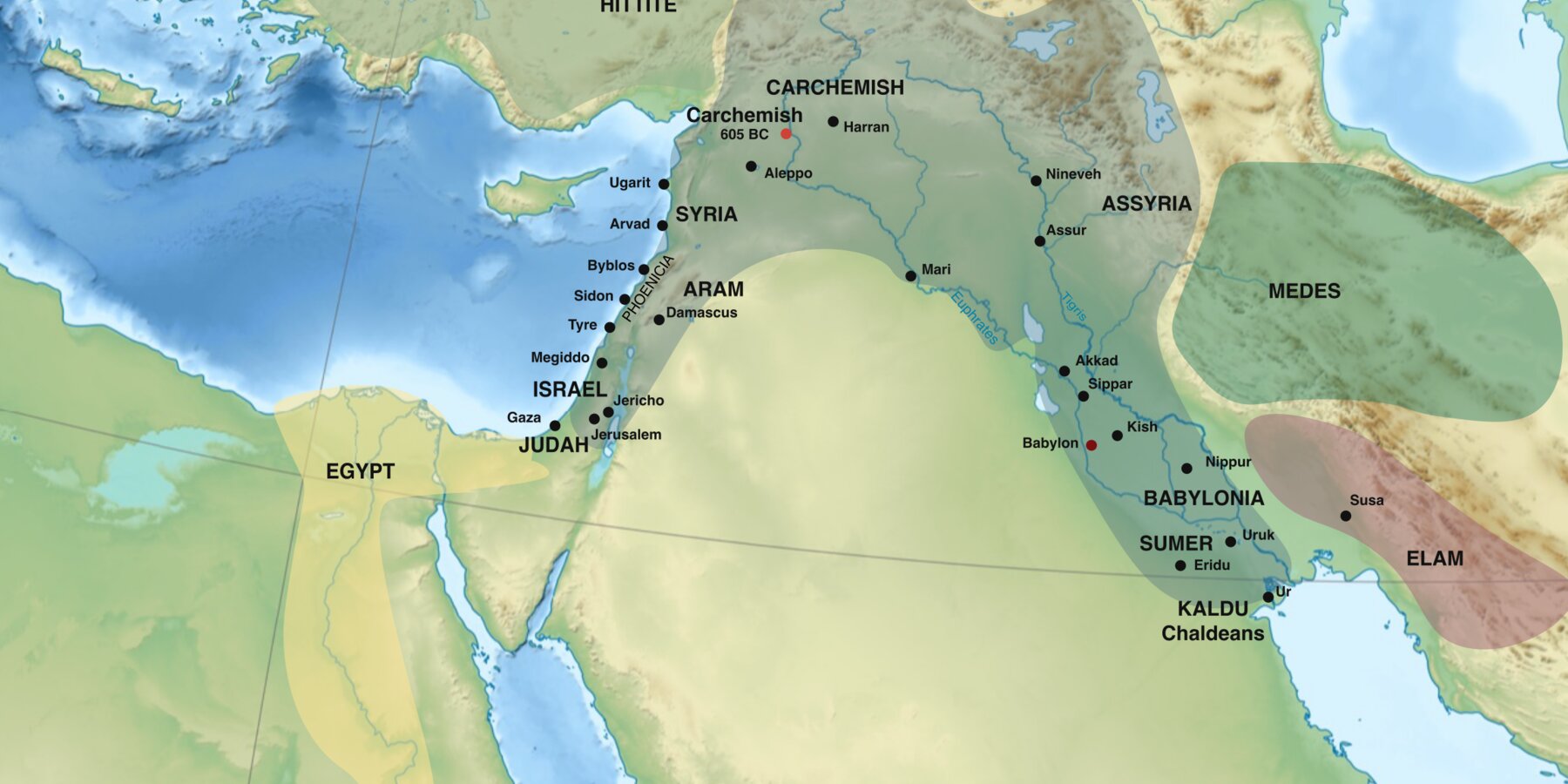
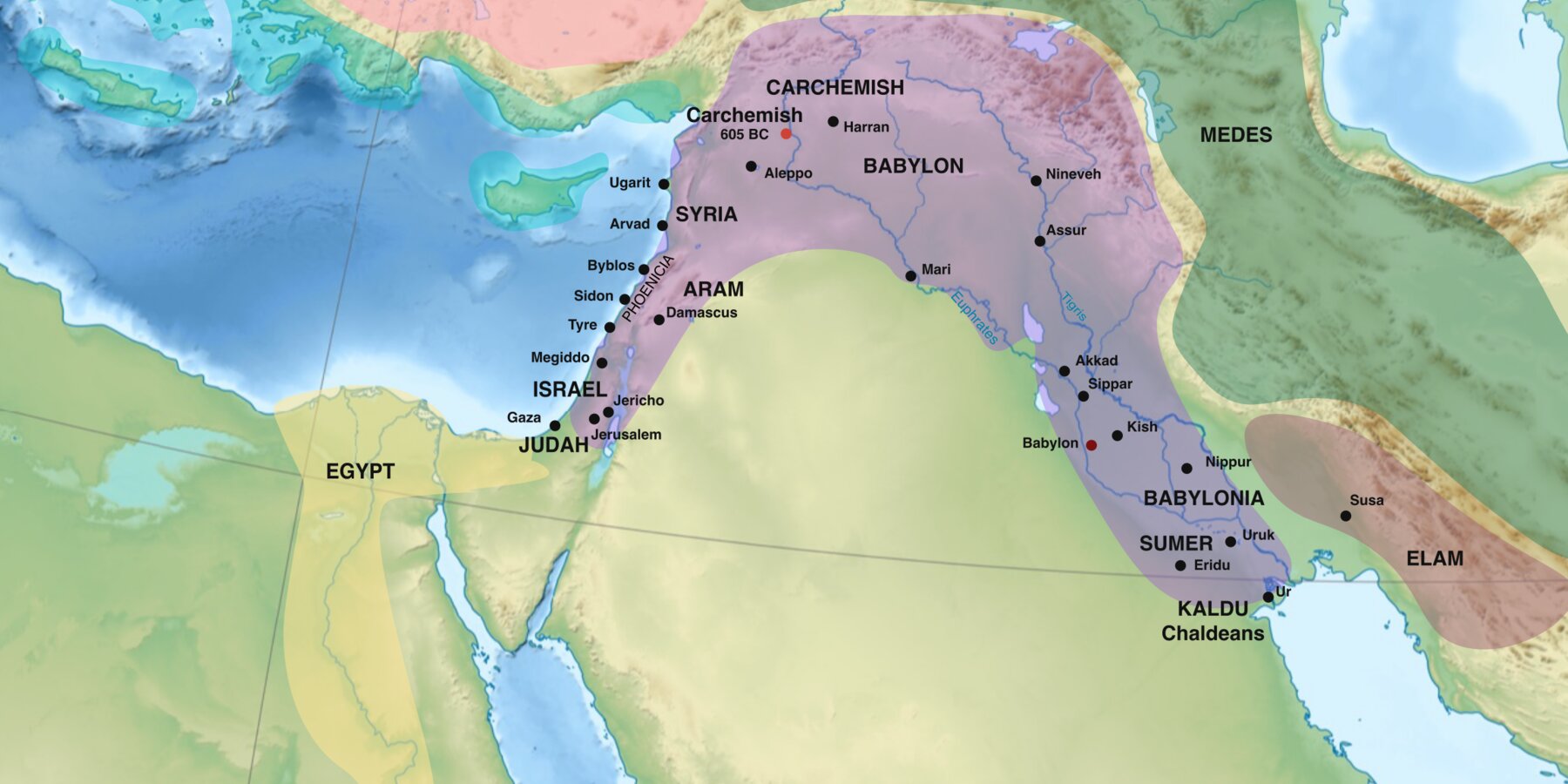
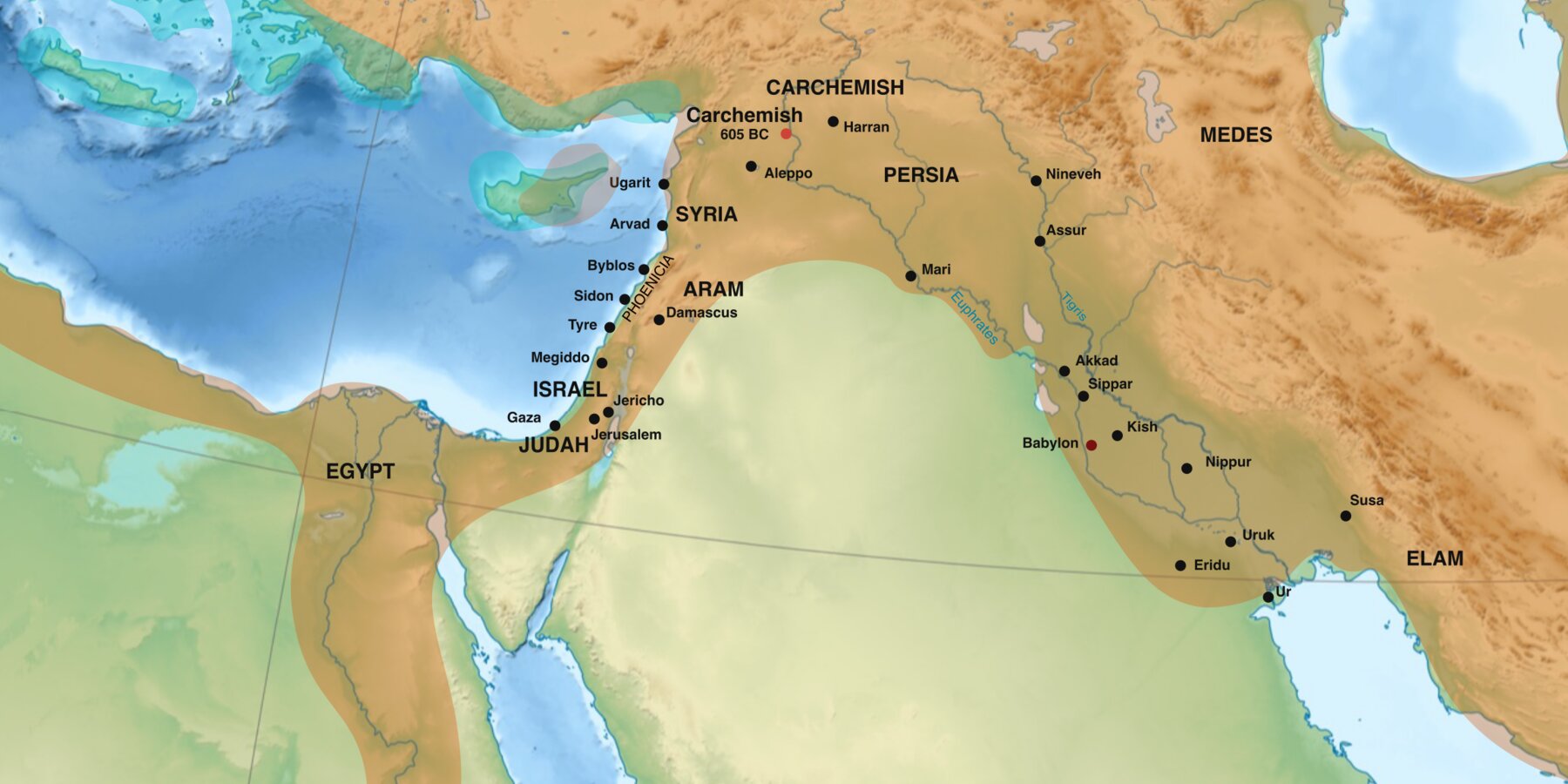
Josiah’s Fatal Gamble (609 BC)
The turning point came before Babylon ever threatened Jerusalem. In 609 BC, Pharaoh Necho II marched his army north — not to attack Assyria, but to prop it up. Assyria was collapsing under Babylonian and Median blows. Egypt preferred a weak old neighbor to a strong new one, so it moved to save the dying giant. That sounds backwards if you know the King James Version (see the note below on one small Hebrew preposition), but the Babylonian Chronicle settles it: in 609 Egypt and Assyria were allies, jointly trying to retake Harran from Babylon. Modern translations read “went up to the king of Assyria,” to help him.
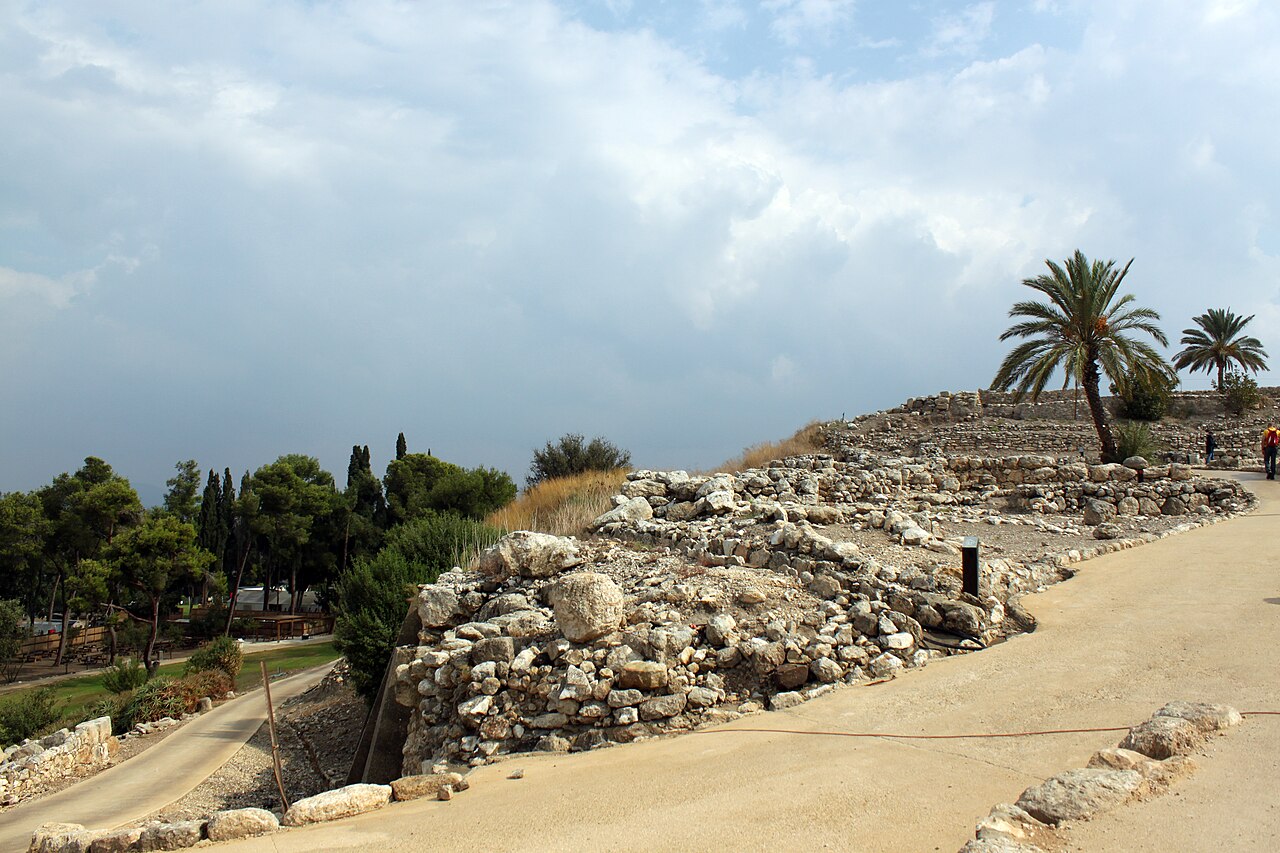
Into that march stepped King Josiah of Judah. He intercepted Necho at Megiddo, and Josiah was killed there (2 Chronicles 35:20–24). Whatever he intended, the effect is plain: by trying to keep Egypt from reinforcing Assyria, Josiah’s death-ride objectively served Babylon. And notice who ruled Babylon at that moment. Not Nebuchadnezzar, not yet, but his father, Nabopolassar. Nebuchadnezzar was still the crown prince. He would not win Carchemish or take the throne until 605, four years after Josiah was already dead.

One preposition, two directions: 2 Kings 23:29 has Necho going “against the king of Assyria,” and for most of history that was read as war between them. But the Hebrew ‘al is simply ambiguous: “against,” but also “to” or “alongside.” The cuneiform record of 609 BC shows Egyptian and Assyrian troops besieging Harran together, so the second sense is the right one. A single small word, and the whole shape of the war turns on which way it points.
Why did Josiah do it? That is genuinely debated, and here the guide is reading between the lines rather than quoting them. Scripture never states his motive, and there is no record of a formal treaty between Judah and Babylon. Some historians see a simple bid to protect the independence he had won. Others notice that his reforms had reached north into the old kingdom of Israel, to Bethel and “the cities of Samaria” (2 Kings 23:15–20; 2 Chronicles 34:6), and they read in his stand a larger hope: that a Davidic king who broke Assyria’s and Egypt’s grip on the north might one day gather the scattered northern tribes home. That is a reasonable and moving reading. But it is a reading. What the sources give us is the act and its consequence, not the inside of the king’s mind.
The Two Parties
Josiah’s death handed Judah straight back to Egypt. Necho deposed Jehoahaz, Josiah’s chosen heir, installed Jehoiakim in his place, and levied a crushing tribute (2 Kings 23:33–35). For the next generation, Judah’s court was Egypt’s client by default. A pro-Egypt party ran its foreign policy — always betting the southern patron would ride to the rescue.
Against that party stood the prophets, and above all Jeremiah. His counsel never wavered, and to the court it sounded like treason: submit to Babylon and live. “Bring your necks under the yoke of the king of Babylon, and serve him and his people, and live,” he told Zedekiah (Jeremiah 27:12). He did not just say it — he wore a wooden yoke on his own neck as a walking picture of that submission. And his grounds were not strategic but theological: Babylon was the instrument of God’s judgment, so to resist it was to fight God. In the Lord’s own voice he calls Nebuchadnezzar “my servant” (Jeremiah 27:6). The optimists promised Babylon would fall within two years, and they spoke for the pro-Egypt hope. The prophet Hananiah went so far as to snap Jeremiah’s wooden yoke in the temple court (Jeremiah 28). They were sincere, and they were wrong, and Jeremiah told them so to their faces.
The Pattern of Ruin
What followed was the same mistake, three times over. In 601 BC, Babylon and Egypt fought an inconclusive clash, and Jehoiakim smelled Babylonian weakness. He withheld tribute and rebelled (2 Kings 24:1) — betting on Egypt. Babylon answered with the siege of 597 BC. Jerusalem was taken. King Jehoiachin and the elite were carried into exile. And Nebuchadnezzar set Josiah’s son Mattaniah on the throne as a puppet, renaming him Zedekiah (2 Kings 24:17), an overlord’s gesture and a bid for a loyal client. Zedekiah broke faith in turn, “sending his ambassadors into Egypt, that they might give him horses and much people” (Ezekiel 17:15).
Egypt did come — briefly. When Pharaoh’s army approached, the Babylonians lifted the siege of Jerusalem. Then Egypt thought better of the fight and withdrew, and the Babylonians came back and finished the work (Jeremiah 37:5–7). In the summer of 586 BC the walls were breached and the temple burned. Every time Judah leaned on Egypt, Egypt proved exactly what an earlier taunt had named it: a “bruised reed” that runs into the hand of the one who leans on it (2 Kings 18:21). And the prophets who had said so were vindicated in the cruelest possible way.
The Neighbors Who Cheered
Judah did not make its last gamble alone. When Zedekiah plotted revolt, envoys of Edom, Moab, Ammon, Tyre, and Sidon gathered in Jerusalem to coordinate the rising (Jeremiah 27:3). The Phoenician cities were Judah’s partners in the anti-Babylon coalition, not its enemies. That is what makes Tyre’s response to Jerusalem’s fall so bitter. When the city broke, Tyre did not mourn a fellow rebel. It gloated, and counted its gain: “Aha, she is broken that was the gates of the people: she is turned unto me: I shall be replenished, now she is laid waste” (Ezekiel 26:2). Jerusalem had been a rival on the caravan roads; her ruin meant Tyre’s profit. The prophet Amos had already named the sin: Tyre “remembered not the brotherly covenant” (Amos 1:9). It was not a military betrayal. It was, in its way, worse — an ally cashing in on a partner’s funeral.
And yet scripture saves one of its quieter ironies for the end. When Judah at last came home a lifetime later to rebuild, it was again to Tyre and Sidon that they sent for cedar — exactly as Solomon had for the first temple (Ezra 3:7). The neighbors who cheered the fall also helped raise the house that rose from it. What that homecoming was like (who was welcomed, who was kept out, and why) belongs to the story of the Persian return, which the coming Achaemenid guide will tell.
Sources and Further Reading
- Abraham Malamat, “Josiah’s Bid for Armageddon: The Background of the Judean-Egyptian Encounter in 609 B.C.,” Journal of the Ancient Near Eastern Society 5 (1973) — The classic treatment of Josiah, Necho, and Megiddo.
- Nadav Na’aman, “The Kingdom of Judah under Josiah,” Tel Aviv 18 (1991) — On the extent (and limits) of Josiah’s northern reach.
- Mordechai Cogan and Hayim Tadmor, II Kings (Anchor Bible, 1988) — The standard commentary; treats the ‘al “against / to” problem in 23:29.
- A. K. Grayson, Assyrian and Babylonian Chronicles (J. J. Augustin, 1975) — The Fall of Nineveh Chronicle (ABC 3), which places Egypt and Assyria together against Babylon at Harran in 609.
- Oded Lipschits, The Fall and Rise of Jerusalem: Judah under Babylonian Rule (Eisenbrauns, 2005) — Judah’s last kings from both sides of the evidence.
Online Resources:
- Livius.org — the Fall of Nineveh Chronicle (ABC 3) — the primary text for 609 BC.
- WHE — Necho II (CC BY-NC-SA 4.0)