Major Sites
The capitals and monuments of the empire that sent Judah home
The Achaemenid kings did not rule from one capital. They ruled from several, moving with the seasons and the rhythms of state among a handful of great centers scattered across the Iranian plateau and Mesopotamia. Four of these — and one spectacular cliff — carry the story of Persia and the Bible. Several appear in Scripture by name. These sites lie within modern Iran. Through their monuments, inscriptions, and archaeological remains, we can explore the world of the Persian kings and the biblical events connected with it.
Choose a place on the map or in the list to read its story in the guide.
Shading shows the empire’s approximate extent around 500 BC. The marked places span the different periods discussed in this guide.
Explore all 18 locations
Pasargadae
Achaemenid setting
Pasargadae

Pasargadae, in the highlands of Fars, was the first Achaemenid capital.
But Pasargadae’s enduring monument is the tomb of Cyrus: a simple, dignified gabled stone chamber raised on six broad steps, standing alone on the plain.
Persepolis
Achaemenid setting
Persepolis

Persepolis (Old Persian Parsa) was the empire’s great ceremonial capital. Darius the Great began it; Xerxes and their successors expanded it.
It was also where the Persepolis Fortification tablets were found (see Section 08).
Naqsh-e Rustam
Achaemenid setting
Naqsh-e Rustam

Naqsh-e Rustam: a short distance from Persepolis lies the cliff-face burial ground (necropolis) of Naqsh-e Rustam, holding the rock-cut tombs of Darius the Great and several successors.
Susa / Shushan
Achaemenid setting
Susa / Shushan

Susa — the “Shushan” of the Bible — was the administrative and winter capital, on the warm lowland plains. Excavations uncovered the great columned audience hall (apadana) of Darius and Xerxes, along with the glazed-brick reliefs of royal guards. By tradition, Susa is also home to a shrine revered as the tomb of Daniel, honored by Jews, Christians, and Muslims alike. For the court, and for Esther, Nehemiah and Daniel at Susa, see Section 07.
Ecbatana / Achmetha
Achaemenid setting
Ecbatana / Achmetha

Ecbatana (biblical Achmetha) was the old Median capital, high in the Zagros mountains — modern Hamadan. It served as the Achaemenids’ cool summer residence.
Cyrus’s decree found filed here (Ezra 6:2)
Behistun / Bisotun
Achaemenid setting
Behistun / Bisotun

On the mountain road between Babylon and Ecbatana rises the Behistun cliff. There Darius the Great carved his trilingual monument of victory (see Section 08).
Babylon
539 BC
Babylon

Babylon falls to Cyrus — one battle at Opis; the capital opens its gates (Daniel 5:30)
Opis
539 BC
Opis

Babylon falls to Cyrus — one battle at Opis; the capital opens its gates (Daniel 5:30)
Approximate site location.
Jerusalem
Achaemenid setting
Jerusalem

The first returnees under Sheshbazzar and then Zerubbabel rebuilt the altar and laid the temple’s foundation within a couple of years (Ezra 3:8–10). Then the work stalled — for about fifteen years.
Samaria
407 BC petition
Samaria

In a petition dated 407 BC, the priests of Elephantine asked Bagohi, the governor of Judah, for help rebuilding their temple, which had been destroyed in 410 BC.
They had already appealed to Jerusalem’s high priest without receiving an answer, and also wrote to the sons of Sanballat, governor of Samaria. This was an established temple community seeking help through the same religious and political networks that appear in Ezra and Nehemiah.
Nazareth
Later Christian comparison
Nazareth

And the story runs further still. The Jews carried this Aramaic home, and it remained the daily speech of Judea for centuries — so that the language of the Persian bureaucracy became, in time, the mother tongue of Jesus of Nazareth.
This pin accompanies the guide’s later language comparison; it is not a Persian-period event.
Elephantine
Fifth century BC
Elephantine

Jerusalem was not the only place where Jews worshipped Israel’s God in a temple. At Elephantine, near modern Aswan in Egypt, a Jewish military community left Aramaic letters, contracts, and records of family and religious life. Its sanctuary was dedicated to Yahu, a form of the name Yahweh.
In a petition dated 407 BC, its priests asked Bagohi, the governor of Judah, for help rebuilding their temple, which had been destroyed in 410 BC.
Sardis
Achaemenid setting
Sardis

An empire that large lived or died by communication. So Persia built and maintained the Royal Road — a highway running some 2,700 kilometers from Susa in the heartland to Sardis near the Aegean coast, with about 111 posting-stations a day’s ride apart, each stocked with fresh horses and riders.
Marathon
490 BC
Marathon

Darius’s invasion of Greece stopped at the battle of Marathon — the famous Greek upset
Approximate site location.
Athens
480 BC
Athens

Xerxes invades Greece — the famous last stand at Thermopylae, the burning of Athens, then Xerxes’s defeat at Salamis, the sea battle that turned the war;
Salamis (Aegean)
480 BC
Salamis (Aegean)

Xerxes invades Greece — the famous last stand at Thermopylae, the burning of Athens, then Xerxes’s defeat at Salamis, the sea battle that turned the war;
Approximate site location.
Thermopylae
480 BC
Thermopylae

Xerxes invades Greece — the famous last stand at Thermopylae, the burning of Athens, then Xerxes’s defeat at Salamis, the sea battle that turned the war;
Gaugamela
331–330 BC
Gaugamela

Alexander the Great destroys the empire — Darius III defeated at Gaugamela (the battle that ended the empire), Persepolis burned. This is the age Daniel foresaw as the “he goat… from the west” (Daniel 8:5), interpreted as “the king of Grecia” (Daniel 8:21)
Approximate site location.
Map sources and credits
Relief: © Sémhur, Middle East topographic map. Imperial extent: Enyavar, Near East and Persia, 500 BC. Adapted for CFM Corner under CC BY-SA 4.0. Place locations: Pleiades and UNESCO (linked in each entry). Excerpts are drawn from the Achaemenid field guide.


Pasargadae — Cyrus’s Capital and Tomb
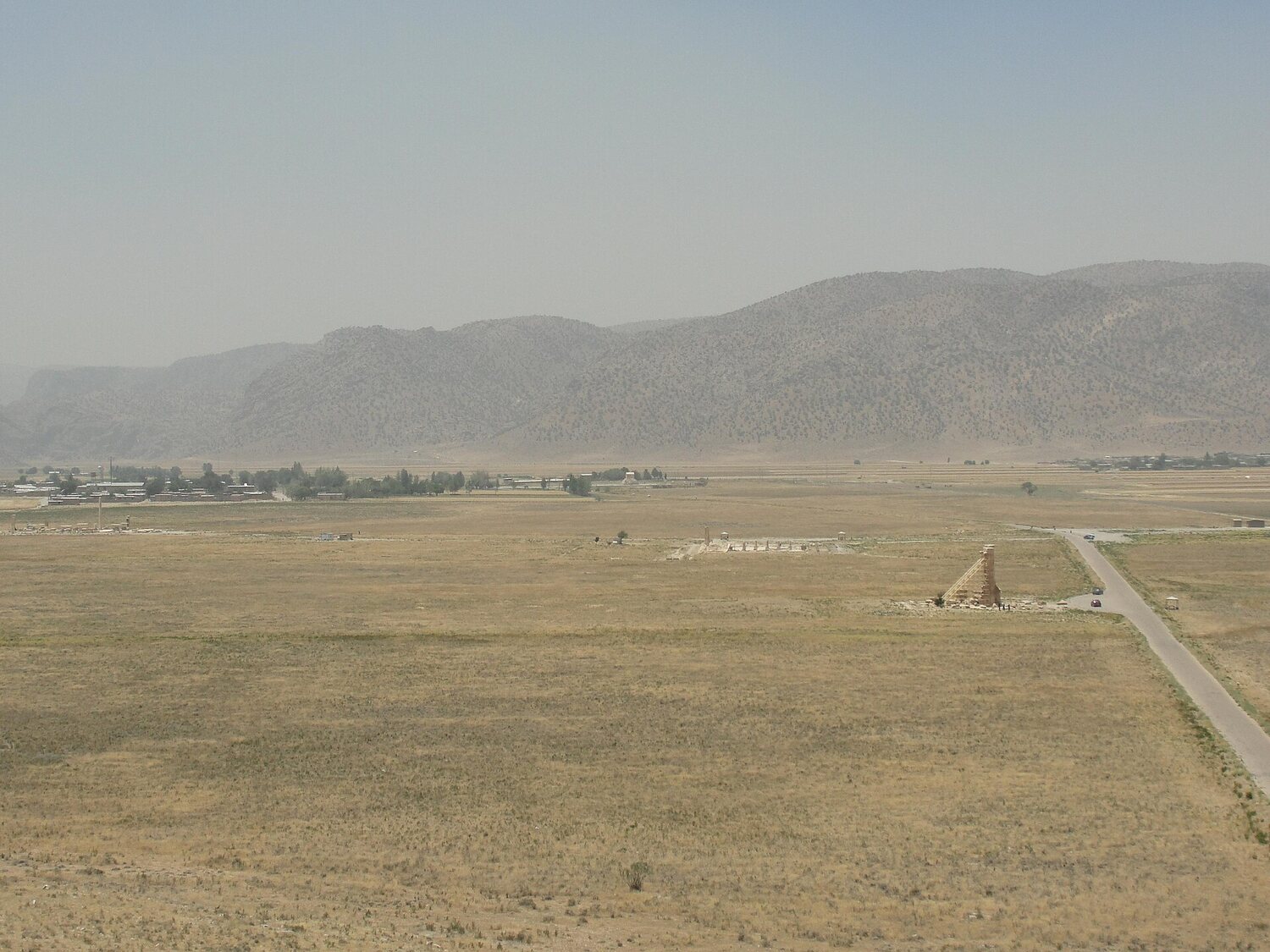
Pasargadae, in the highlands of Fars, was the first Achaemenid capital. Cyrus the Great founded it on the site of his victory over the Medes. Its scattered palaces, gardens, and columned halls introduced ideas the later capitals would magnify — including the walled royal paradise garden (see Section 03). But Pasargadae’s enduring monument is the tomb of Cyrus: a simple, dignified gabled stone chamber raised on six broad steps, standing alone on the plain. Why does it survive? Largely because, centuries later, Alexander the Great is said to have ordered it protected and restored — honoring the founder even as he ended the dynasty. That plain limestone tomb is the resting place of the man Isaiah called the LORD’s “shepherd” and “anointed” (see Section 05) — the deliverer who ended the exile. Its restraint is itself a kind of eloquence.
Persepolis — the Ceremonial Heart
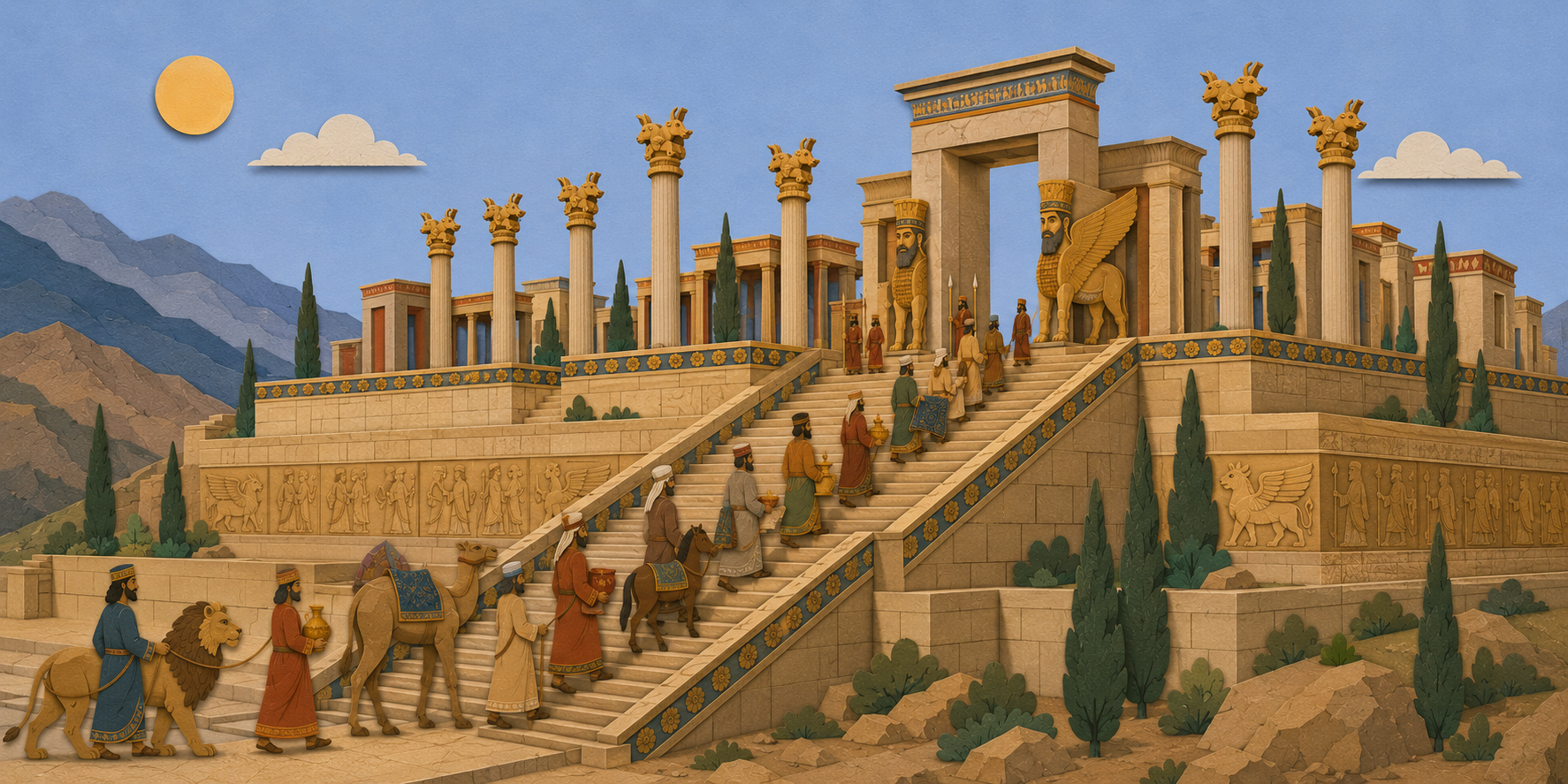
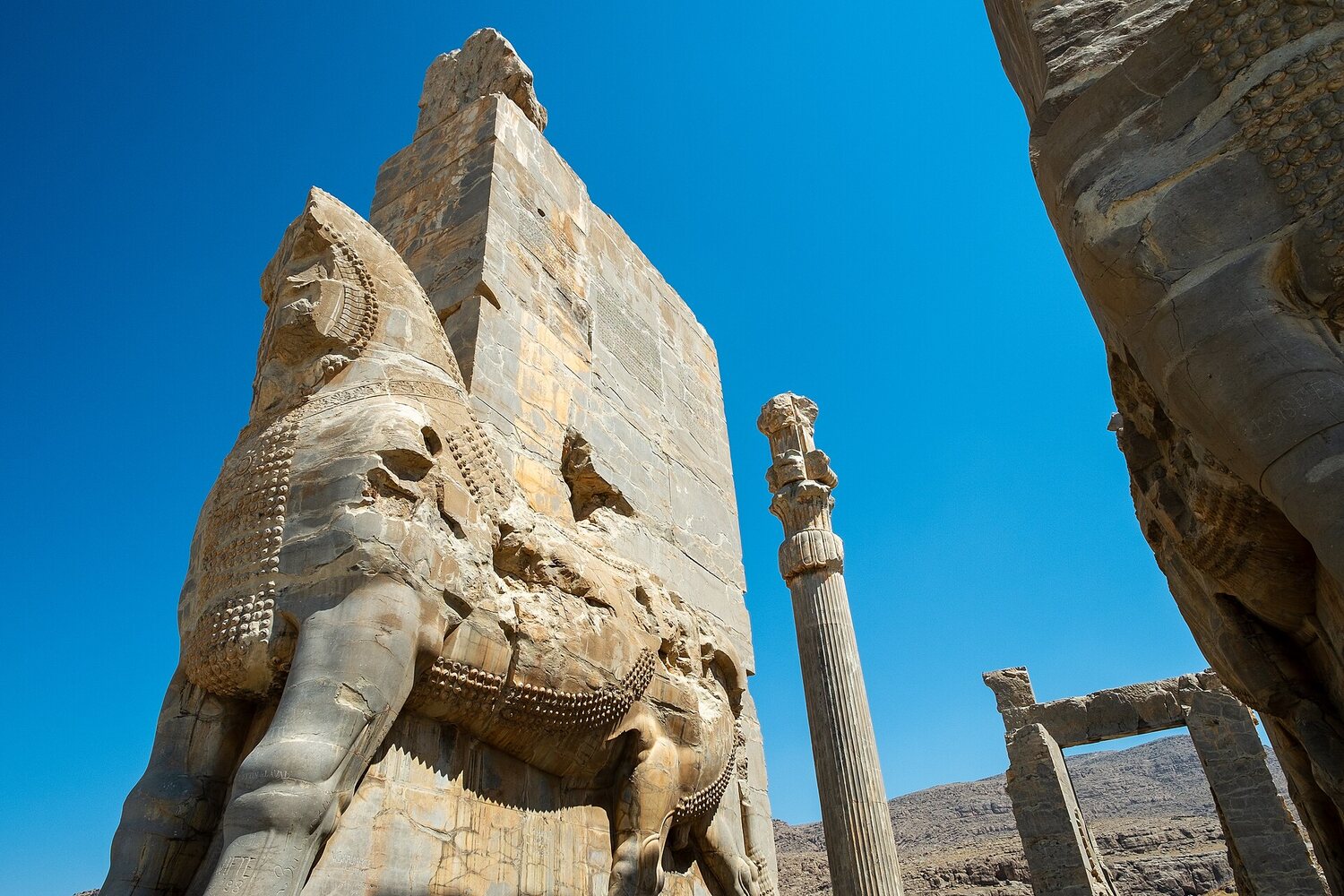
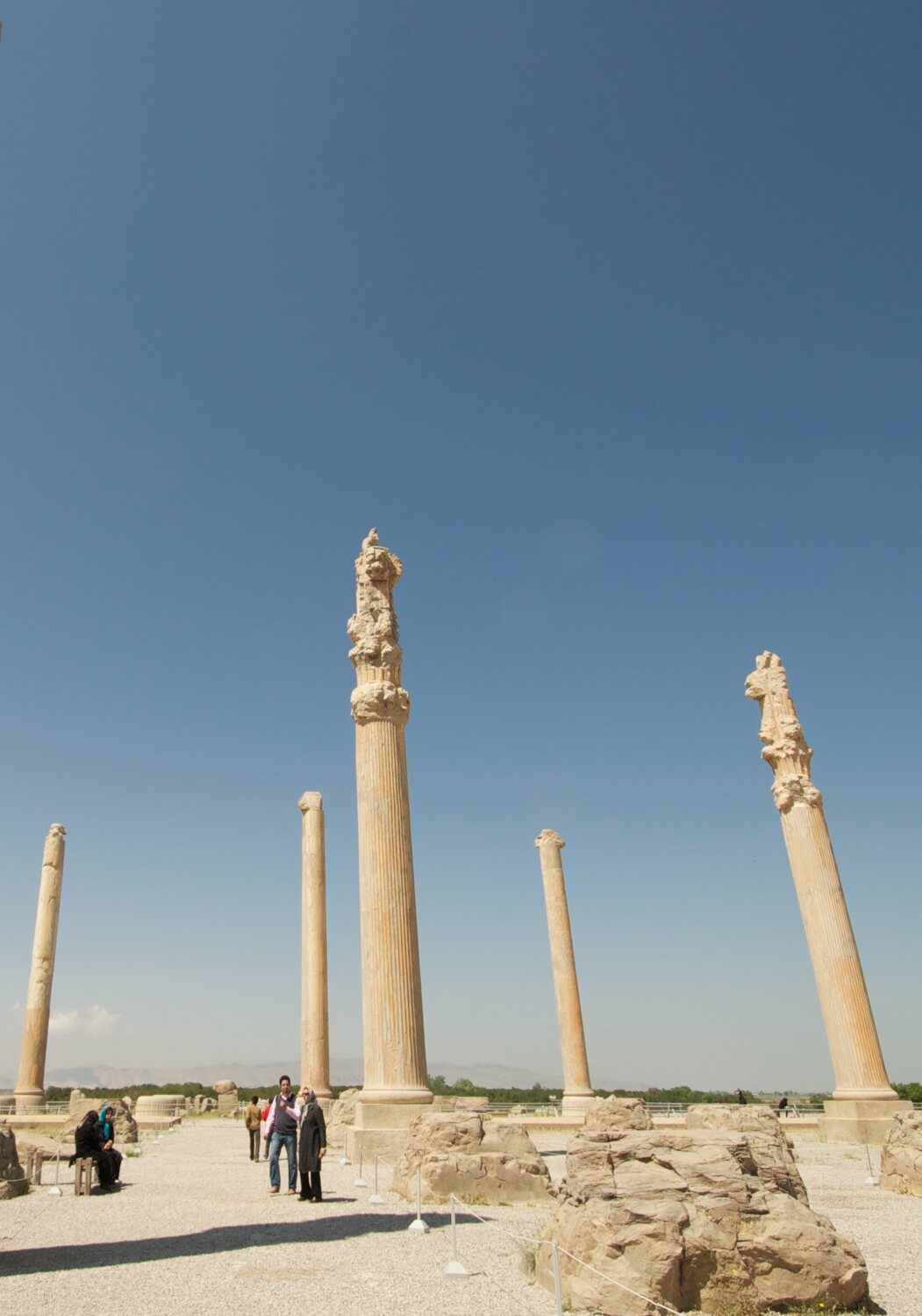
Persepolis (Old Persian Parsa) was the empire’s great ceremonial capital. Darius the Great began it; Xerxes and their successors expanded it. Picture a vast terraced complex of audience halls, palaces, and a treasury, approached by monumental stairways. This was where the kings celebrated the New Year and received the empire. It was also where the Persepolis Fortification tablets were found (see Section 08).
Its most famous carvings show the procession of subject nations bringing tribute to the king. Medes, Elamites, Babylonians, Egyptians, Ionians, Bactrians, and more — each in distinctive dress, each bearing the gifts of their lands. It is a stone catalogue of the empire’s astonishing diversity. It is also the visual embodiment of Esther’s “hundred and seven and twenty provinces” (see Section 03).
Then came the fire. In 330 BC Alexander the Great burned it — whether by drunken accident or deliberate revenge for Xerxes’s burning of Athens, the sources dispute. Its blackened ruins mark the end of the empire — the closing of the age Daniel had glimpsed as the “he goat” charging from the west (Daniel 8:5–7).
Naqsh-e Rustam: a short distance from Persepolis lies the cliff-face burial ground (necropolis) of Naqsh-e Rustam, holding the rock-cut tombs of Darius the Great and several successors. Each tomb is a huge cross-shaped facade carved into the cliff, showing the king worshipping before a fire altar under the winged emblem of Ahura Mazda (see Section 04). Darius’s tomb inscription there is one of the noblest statements of Achaemenid kingship. It presents the king as a just ruler — one who rewards the faithful, punishes the wrongdoer, and holds the sprawling empire together by law.
Susa (Shushan) — the Winter Capital
Susa — the “Shushan” of the Bible — was the administrative and winter capital, on the warm lowland plains. Excavations uncovered the great columned audience hall (apadana) of Darius and Xerxes, along with the glazed-brick reliefs of royal guards. By tradition, Susa is also home to a shrine revered as the tomb of Daniel, honored by Jews, Christians, and Muslims alike. For the court, and for Esther, Nehemiah and Daniel at Susa, see Section 07.
Ecbatana (Achmetha) — Where the Decree Was Filed
Ecbatana (biblical Achmetha) was the old Median capital, high in the Zagros mountains — modern Hamadan. It served as the Achaemenids’ cool summer residence. And it earns its biblical moment in one of the most satisfying scenes in Ezra. The Jews’ opponents challenge their permit to rebuild. Darius orders a search of the archives. And Cyrus’s original decree is found — not in Babylon, but filed away at Ecbatana: “there was found at Achmetha, in the palace… a roll, and therein was a record thus written” (Ezra 6:2). It was the exact document, in the exact kind of provincial archive, that vindicated the whole enterprise (see Section 06). The detail that the decree turned up at the summer capital, where Cyrus may well have been residing when he issued it, is the kind of incidental precision that marks a writer who knew the empire’s workings.
Behistun — the Empire’s Cliff
On the mountain road between Babylon and Ecbatana rises the Behistun cliff. There Darius the Great carved his trilingual monument of victory (see Section 08). Behistun names no biblical figure. It belongs on any list of the empire’s great sites anyway — both as the fullest statement of Achaemenid royal ideology and as the “Rosetta Stone of cuneiform” that reopened the writing of the entire ancient Near East to the modern world.
| Site (modern) | Role | Biblical connection |
|---|---|---|
| Pasargadae | Cyrus’s first capital; his tomb | Resting place of Isaiah’s “anointed” (Isa 45:1) |
| Persepolis (Takht-e Jamshid) | Ceremonial capital; New Year | The tribute of the “127 provinces” carved in stone; end of the empire (Dan 8) |
| Susa / Shushan (Shush) | Winter capital; administration | Esther; Nehemiah 1:1; Daniel 8:2 |
| Ecbatana / Achmetha (Hamadan) | Summer capital; archive | Cyrus’s decree found filed here (Ezra 6:2) |
| Behistun (Bisotun) | Darius’s victory monument | The key that made Babylon’s records readable |
Sources and Further Reading
- John Curtis & Nigel Tallis, eds., Forgotten Empire: The World of Ancient Persia (British Museum Press, 2005) — The landmark exhibition catalogue; superb on the sites and objects.
- Margaret Cool Root, The King and Kingship in Achaemenid Art (Brill, 1979) — On Persepolis, Naqsh-e Rustam, and royal imagery.
- Pierre Briant, From Cyrus to Alexander (Eisenbrauns, 2002) — The capitals in their administrative and ceremonial roles.
- Ali Mousavi, Persepolis: Discovery and Afterlife of a World Wonder (De Gruyter, 2012) — The site’s history and excavation.
Online Resources:
- UNESCO — Pasargadae and Persepolis (World Heritage listings)
- WHE — Persepolis (CC BY-NC-SA 4.0)
- Livius.org — Achaemenid sites and inscriptions