The Achaemenid Empire: Persia and the Return
A deep-dive cultural guide to the Persian (Achaemenid) Empire — Cyrus and the decree of return, the rebuilding of the temple and Jerusalem, the world of Esther, and the faith of the Persian kings. Essential background for Ezra, Nehemiah, Esther, Haggai, Zechariah, and Daniel.
A Note on This Guide
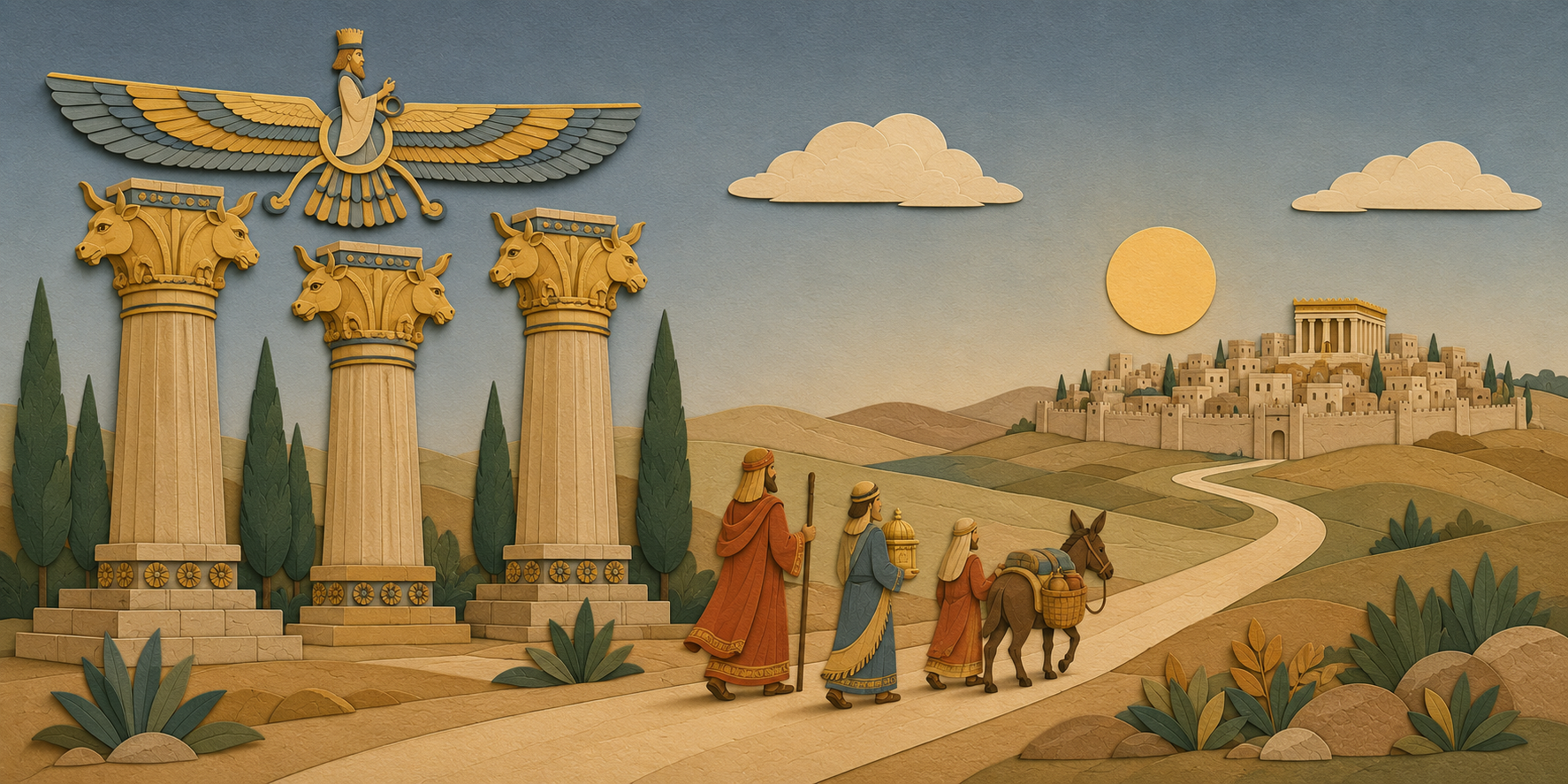
If Babylon is the empire that carried Judah away, Persia is the empire that brought Judah back. The Achaemenid Empire — the first true world empire, founded by Cyrus the Great — is the stage on which the Old Testament reaches its resolution: the exile ends, the temple rises again, Jerusalem’s walls are rebuilt, the law is restored, and a hidden Jewish queen saves her people in the palace of the king.
Understanding Persia is essential for reading the last act of the Hebrew Bible honestly — Ezra, Nehemiah, Esther, the post-exilic prophets Haggai, Zechariah, and Malachi, and the Persian-court chapters of Daniel. It is the world of the decree of Cyrus and the Cyrus Cylinder, of satraps and the Royal Road, of irrevocable laws and multilingual couriers, of Ahura Mazda and the fire altars — and of a small restored province praying, by royal command, for the life of the king who let them go home.
We approach Persia’s history, religion, and archaeology with respect for the evidence, and with an eye toward what that evidence reveals about the God who called Cyrus “my shepherd” and “his anointed” — the God who governs the rise and fall of empires and turns even the exile into a homecoming.
How This Guide Is Organized
This supplement is divided into ten sections. The first two build the framework — who the Persians were and the sequence of their kings — and everything else stands on them. Read in order, or jump to whatever pulls at you.
The Framework
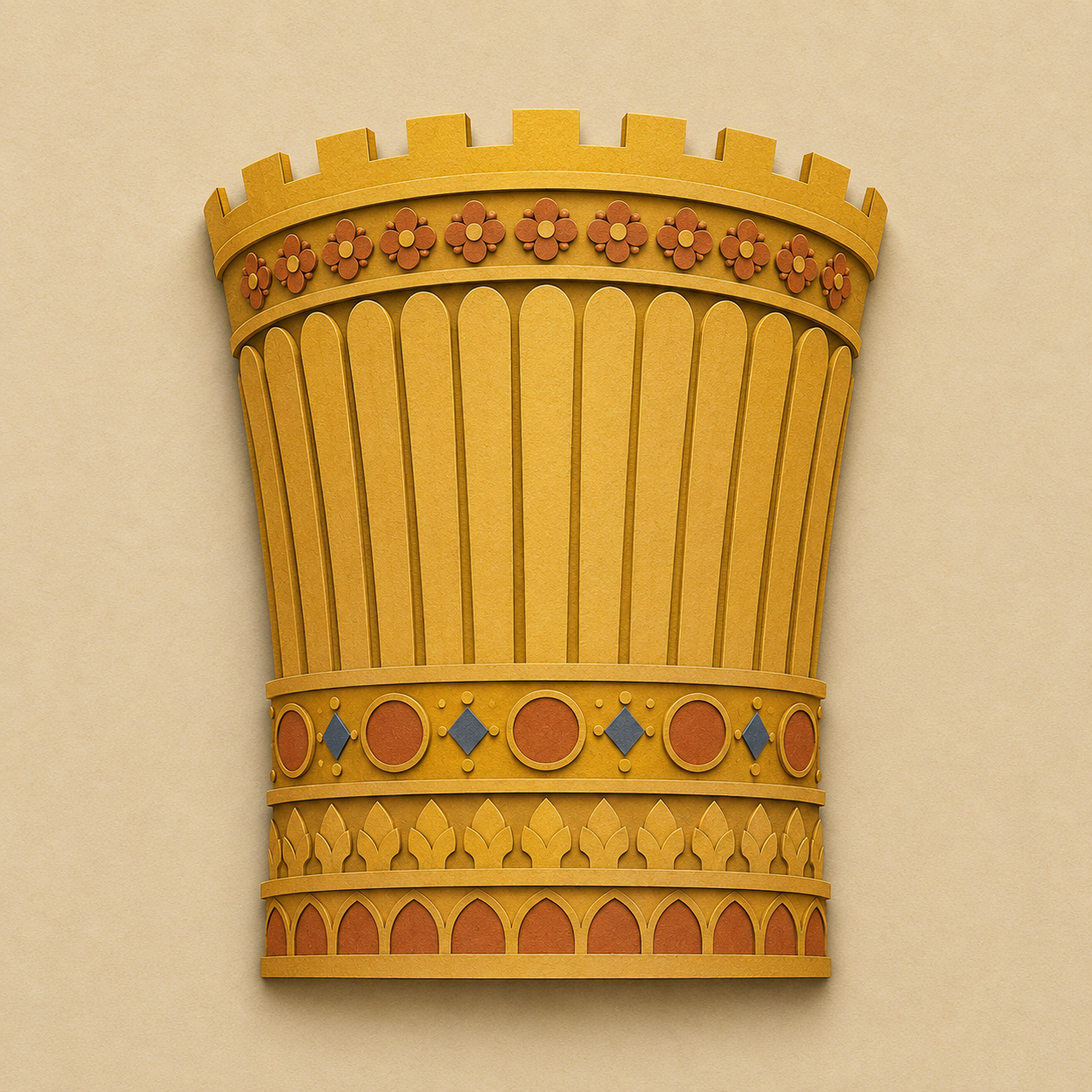
Who the Persians were, how Cyrus the Great swallowed Media, Lydia, and Babylon in a generation, and why Isaiah named the king who would send Judah home.
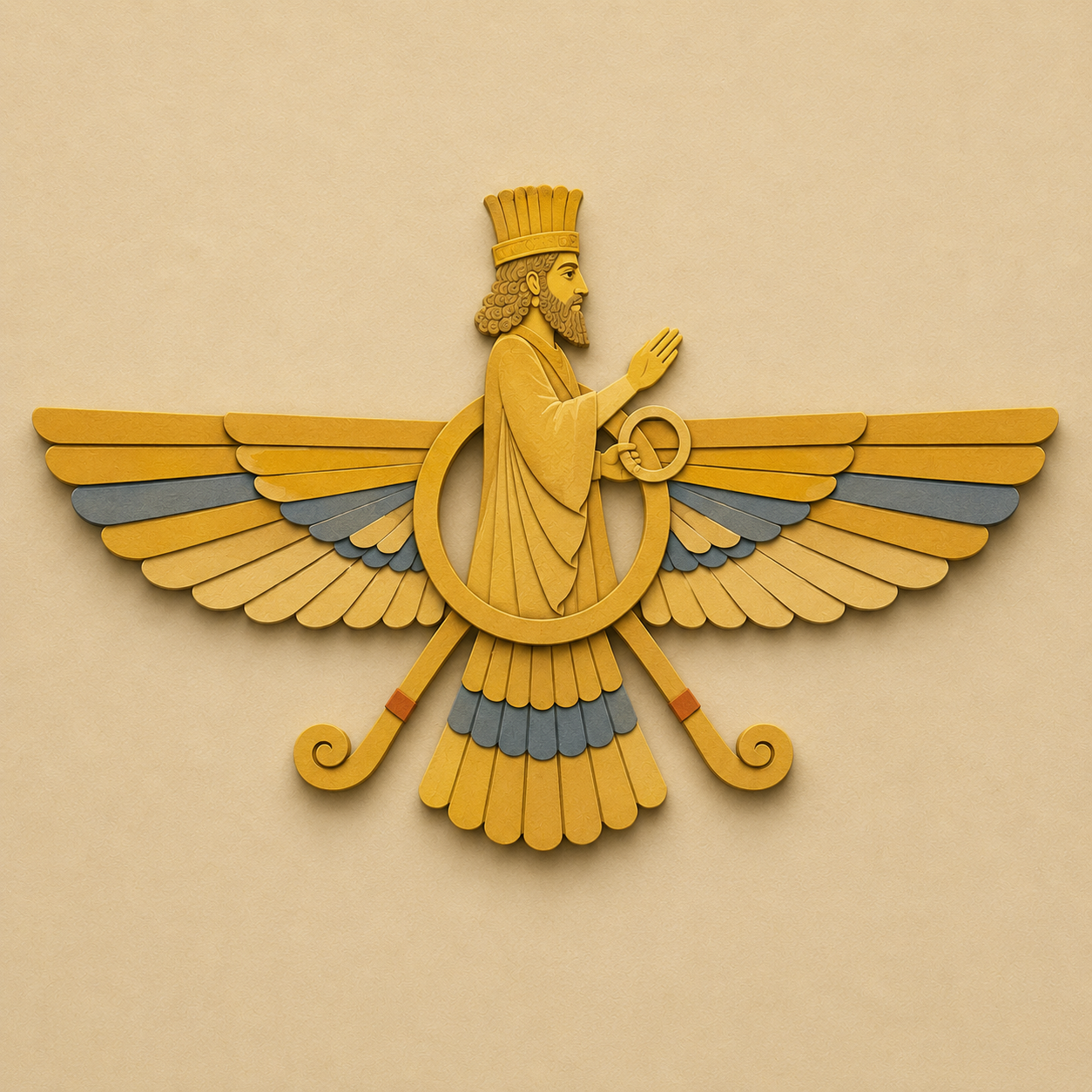
The Empire
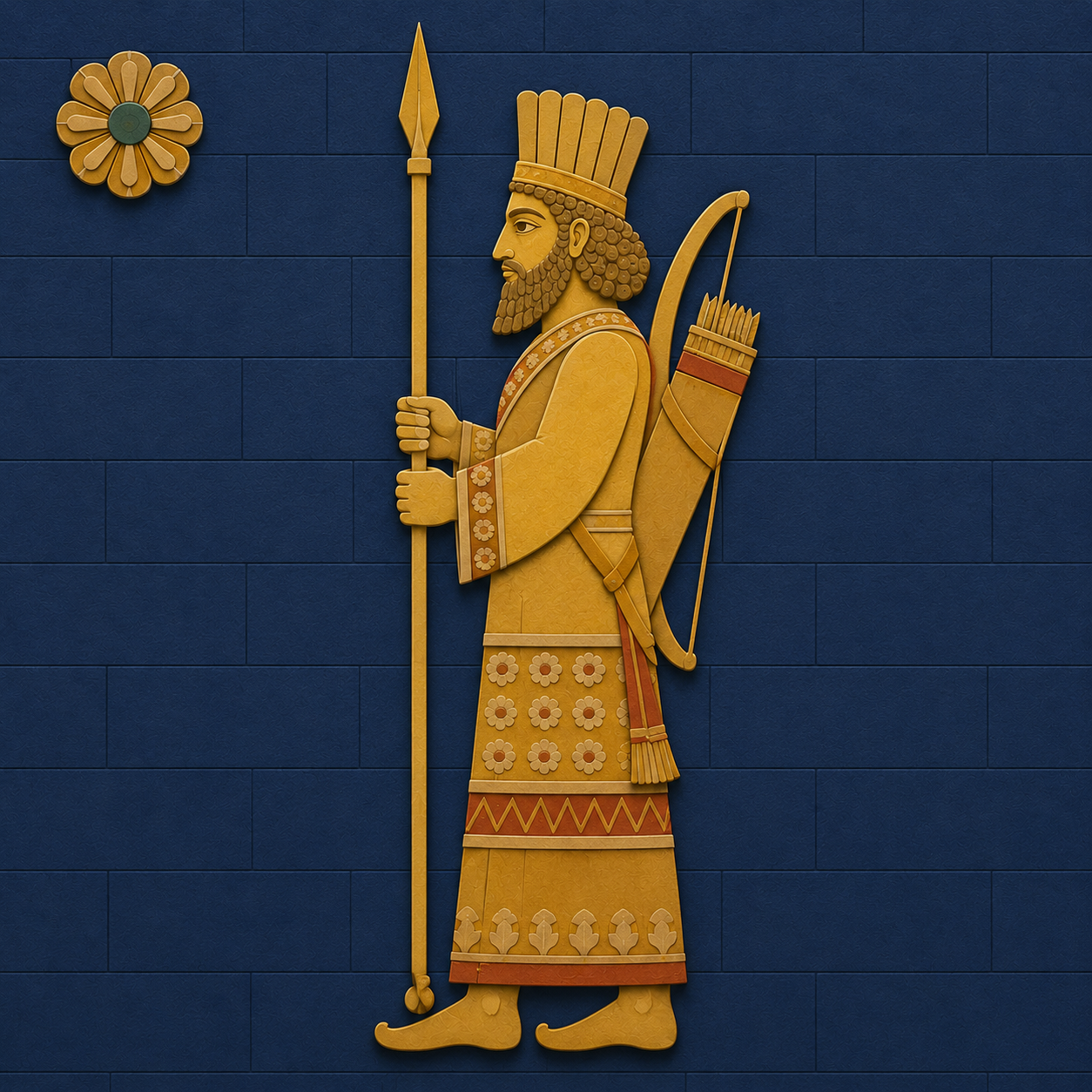
Satrapies, the Royal Road, imperial Aramaic, the law that “altereth not,” and the unheard-of tolerance policy that funded the rebuilding of a foreign people’s temple — the machinery behind the return.
Ahura Mazda, Zarathustra, and the fire altars of Persia — and a careful, honest look at the much-debated question of whether Persian religion shaped Judaism, presented as scholarship, not settled fact.
Persia & Israel
The Second Temple, Ezra the scribe reading the law to the people, Nehemiah’s wall raised in fifty-two days, and the surprise witness of the Elephantine papyri — restoration against the odds.

Inside the Persian court at Susa — the harem, the banquets, the irrevocable decrees, and a hidden Jewish queen “come to the kingdom for such a time as this.”
Records & Legacy
Old Persian cuneiform, the trilingual Behistun cliff that became the Rosetta Stone of the ancient Near East, the Persepolis tablets, and the Aramaic that carried the empire — and the books of Ezra.
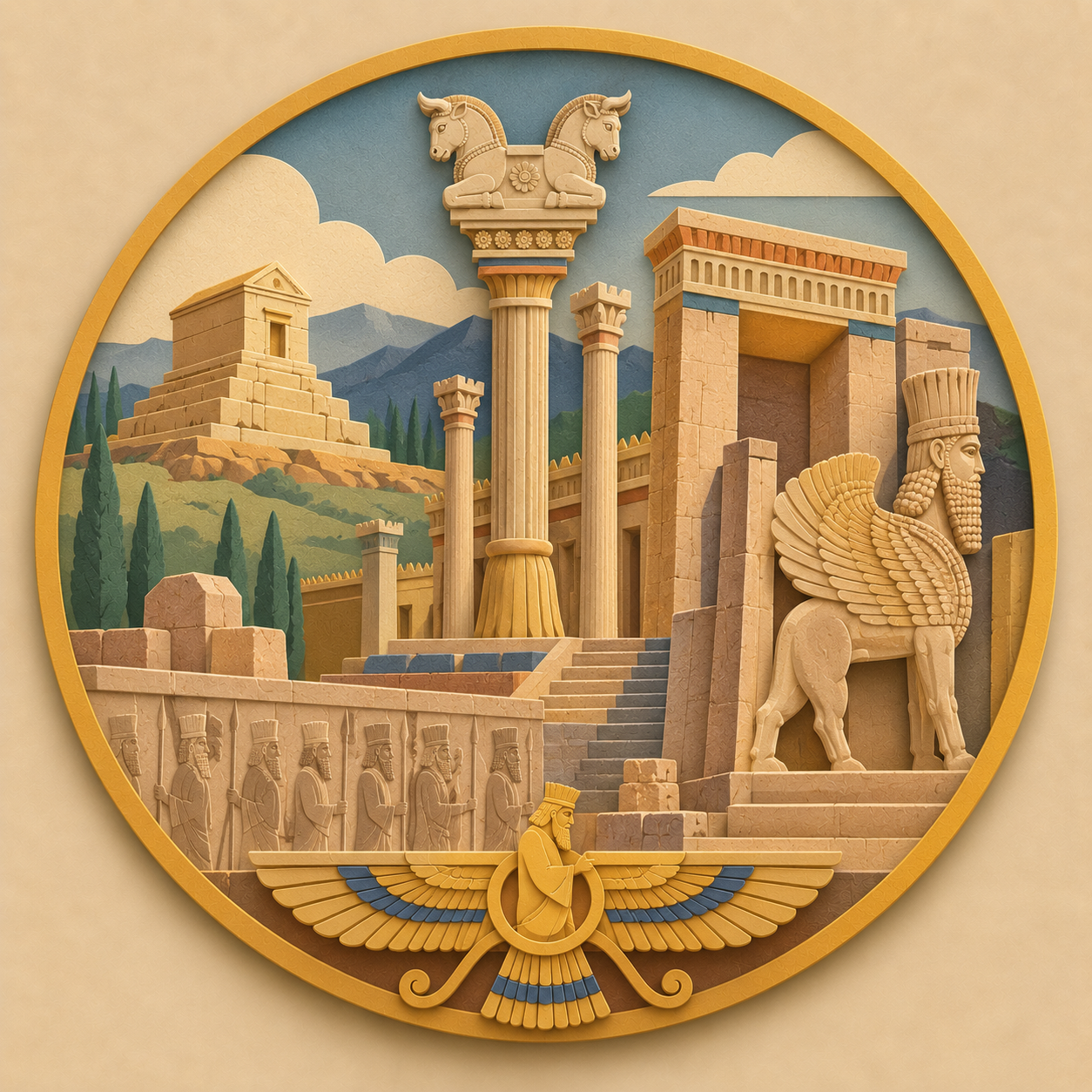
Pasargadae and the tomb of Cyrus, the ceremonial splendor of Persepolis, Susa the winter capital of Esther and Nehemiah, Ecbatana where Cyrus’s decree was filed, and the Behistun cliff.
Cyrus as the Lord’s anointed instrument, the return from exile as the pattern of the latter-day gathering of Israel, temple restoration, Ezra’s return to the word, and Esther’s hidden providence.
Sources and Recommended Reading
The Persian Empire:
- Pierre Briant, From Cyrus to Alexander: A History of the Persian Empire (Eisenbrauns, 2002) — The monumental standard history.
- Matt Waters, Ancient Persia: A Concise History of the Achaemenid Empire, 550–330 BCE (Cambridge University Press, 2014) — The best one-volume introduction.
- Amélie Kuhrt, The Persian Empire: A Corpus of Sources (Routledge, 2007) — The essential sourcebook of inscriptions and documents.
- John Curtis & Nigel Tallis, eds., Forgotten Empire: The World of Ancient Persia (British Museum Press, 2005) — The great exhibition catalogue on the sites and objects.
The Bible in the Persian Period:
- Edwin Yamauchi, Persia and the Bible (Baker, 1990) — The fullest correlation of Persian history with the biblical books.
- H. G. M. Williamson, Ezra, Nehemiah (Word Biblical Commentary, 1985) — The standard critical commentary.
- Lester L. Grabbe, A History of the Jews and Judaism in the Second Temple Period, Vol. 1: Yehud (T&T Clark, 2004) — The province of Judah under Persia.
- Adele Berlin, Esther (JPS Bible Commentary, 2001) — On the world of the Persian court.
Online Resources:
- World History Encyclopedia — Achaemenid Empire (CC BY-NC-SA 4.0)
- Livius.org — the Achaemenids — well-sourced articles and translated inscriptions.
- Encyclopædia Iranica — the authoritative scholarly reference on ancient Iran.