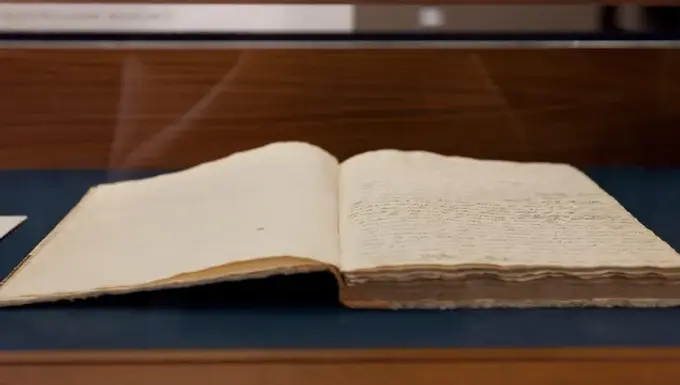
Doctrine & Covenants 69 — Preserving Revelation, Record, and Stewardship
Overview
Date of Revelation: November 11, 1831
Location: Hiram, Ohio
Recipient(s): John Whitmer (also mentions Oliver Cowdery)
Section Summary: This revelation assigns John Whitmer to accompany Oliver Cowdery to Missouri with sacred funds and the manuscript revelations destined for publication. The Lord instructs that sacred stewardships should not rest on one individual alone, but be shared by faithful companions. John Whitmer is also formally directed to continue his role as Church historian—traveling, recording, and preserving key events of the Church for current and future generations.
Timeframe & Setting
Received shortly after a special conference (Nov. 1–2, 1831) in which the decision was made to publish the Book of Commandments.
Section 133, the “Appendix,” had just been added on November 3.
This section is a practical directive about security, stewardship, and historical preservation during a formative moment for the Church.
Key Circumstances
Oliver Cowdery had been chosen to carry manuscripts and donated funds to Missouri.
The Lord reveals it is not wise for him to go alone.
John Whitmer is assigned to accompany him and gather records for the Church’s historical archive.
Purpose of the Revelation
To provide divine instruction for safeguarding both sacred funds and scripture manuscripts.
To formally designate John Whitmer’s dual role as companion and Church historian.
To establish a divine pattern of recordkeeping, companionship, and accountability.
Significance
Highlights the early Church’s emphasis on sacred records and eyewitness documentation.
Reinforces the covenantal principle of stewardship by companionship.
Sets a precedent for scriptural publication and historical preservation within Zion.
Underlines the prophetic vision for Zion as an administrative and spiritual center.
Doctrine & Covenants 69:1–2 — A Companion for Oliver
Verses 1-2
1 Hearken unto me, saith the Lord your God, for my servant Oliver Cowdery’s sake. It is not wisdom in me that he should be entrusted with the commandments and the moneys which he shall carry unto the land of Zion, except one go with him who will be true and faithful.
2 Wherefore, I, the Lord, will that my servant, John Whitmer, should go with my servant Oliver Cowdery;
Linguistic & Cultural Insights:
“Hearken” (שָׁמַע shamaʿ): To hear with intent to obey. This covenantal word frames divine instruction in both Old and New Testaments.
Traveling in pairs aligns with Christ’s instructions in Luke 10:1 and the principle in Ecclesiastes 4:9–10: “Two are better than one... for if they fall, the one will lift up his fellow.”
Reflection Question:
What principles of accountability and divine companionship do we learn from this command?
D&C 69:3–4 — Commission to Record Sacred History
Verses 3-4
3 And also that he shall continue in writing and making a history of all the important things which he shall observe and know concerning my church;
4 And also that he receive counsel and assistance from my servant Oliver Cowdery and others.
Summary: John Whitmer is to begin compiling the Church’s history, aided by Oliver Cowdery and other Saints. This formalizes his call as Church historian first given in D&C 47:1–3.
Linguistic & Cultural Insights:
“History” echoes the biblical command to remember and record God’s deeds: see Exodus 17:14 and Deuteronomy 6:6–9.
“Remember” in Hebrew is זָכַר zakar — not just to recall, but to act in loyal covenant memory.
Reflection Question:
How can personal or family record-keeping become a sacred act of remembrance?
D&C 69:5–6 — Stewardship Reports Sent to Zion
Verses 5–6
5 And also, my servants who are abroad in the earth should send forth the accounts of their stewardships to the land of Zion;
6 For the land of Zion shall be a seat and a place to receive and do all these things.
Linguistic & Cultural Insights:
“Stewardship” is closely tied to the Greek oikonomia (οἰκονομία), meaning household management or divine economy (Luke 12:42–44; D&C 104:11–13).
“Zion” here reflects more than a physical location — it represents a consecrated society (D&C 45:66–67).
Reflection Question:
How do we define and fulfill our personal stewardships in modern Zion?
D&C 69:7–8 — A Traveling Historian for Future Generations
Verses 7-8
7 Nevertheless, let my servant John Whitmer travel many times from place to place, and from church to church, that he may the more easily obtain knowledge—
8 Preaching and expounding, writing, copying, selecting, and obtaining all things which shall be for the good of the church, and for the rising generations that shall grow up on the land of Zion, to possess it from generation to generation, forever and ever. Amen.
Summary: John Whitmer’s mission involves gathering knowledge and preserving it for both the Church and future Saints. His record-keeping is apostolic in nature—meant to strengthen the Church across generations.
Linguistic & Cultural Insights:
“Rising generations” echoes Psalm 102:18: “This shall be written for the generation to come.”
“Expound” is from the Latin exponere—to set forth, explain, or interpret. Compare Luke 24:27 where Christ “expounded unto them” the scriptures.
See also 1 Nephi 9:5–6 for Nephi’s role in sacred record preservation.
Reflection Question:
In what ways can we serve as faithful historians or witnesses for future generations?